
Articles | Volume 19, issue 21
https://doi.org/10.5194/gmd-19-10551-2026
© Author(s) 2026. This work is distributed under
the Creative Commons Attribution 4.0 License.
the Creative Commons Attribution 4.0 License.
https://doi.org/10.5194/gmd-19-10551-2026
© Author(s) 2026. This work is distributed under
the Creative Commons Attribution 4.0 License.
the Creative Commons Attribution 4.0 License.
Model description paper
| 
06 Nov 2026
Model description paper |
| 06 Nov 2026
| 06 Nov 2026
Earth system modelling of mercury using CESM2 – Part 3: Oceanic model POP2/Hg v1.0
Mao Mao
School of Atmospheric Science, Nanjing University, Nanjing, 210003, China
Earth & Environmental Sciences, Tulane University, New Orleans, Louisiana 70118, United States
Yujuan Wang
School of Environmental Science and Engineering, Nanjing University of Information Science and Technology, Nanjing, Jiangsu, 210044, China
Peng Zhang
School of Environment, Hangzhou Institute for Advanced Study, University of Chinese Academy of Sciences, Hangzhou, 310024, China
Ling Li
Earth & Environmental Sciences, Tulane University, New Orleans, Louisiana 70118, United States
Shaojian Huang
School of Atmospheric Science, Nanjing University, Nanjing, 210003, China
Chen Zhou
School of Atmospheric Science, Nanjing University, Nanjing, 210003, China

Earth & Environmental Sciences, Tulane University, New Orleans, Louisiana 70118, United States
Related authors
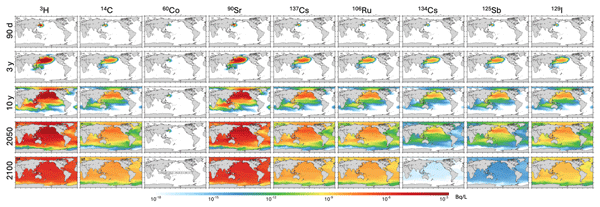
Mao Mao, Yujuan Wang, Peipei Wu, Shaojian Huang, Zhengcheng Song, and Yanxu Zhang
Geosci. Model Dev., 18, 10169–10183, https://doi.org/10.5194/gmd-18-10169-2025, https://doi.org/10.5194/gmd-18-10169-2025, 2025
Short summary
Short summary
This study examines how radionuclides released from nuclear power plants are transported and transformed in the global ocean over time. Using an advanced ocean simulation model, it focuses on radionuclides released during the Fukushima accident and from planned wastewater discharges. The findings show that some radionuclides can travel across the Pacific within a few years and gradually spread to other ocean basins by mid-century, emphasizing potential long-term environmental impacts.
Jinpeng Lu, Sijia Lou, Wuke Wang, Jiankai Zhang, Ke Ding, Xin Huang, Yiquan Jiang, Tengyu Liu, Yawen Liu, Qingyan Xie, Lian Xue, Zilin Wang, Chen Zhou, Anbao Zhu, and Aijun Ding
EGUsphere, https://doi.org/10.5194/egusphere-2026-5104, https://doi.org/10.5194/egusphere-2026-5104, 2026
Short summary
Short summary
The 2022 Hunga Tonga eruption injected sulfur gases and massive water vapor into the stratosphere. With observations and simulations, we assessed effects on the tropical quasi-biennial oscillation (QBO). Pollutants lingered over a year; the water-rich eruption notably altered QBO winds. Cooling from excess vapor and particles, concentrated south of 15° N, reshaped upper circulation and drove downward wind anomalies modulating the QBO, with April–October 2022 cooling causing more wind shifts.
Boyang Zheng, Yannian Zhu, Yang Cao, Kang-En Huang, Jihu Liu, Yichuan Wang, Jun Shi, Yicheng Wei, Daniel Rosenfeld, Chen Zhou, and Minghuai Wang
Earth Syst. Sci. Data Discuss., https://doi.org/10.5194/essd-2026-360, https://doi.org/10.5194/essd-2026-360, 2026
Revised manuscript accepted for ESSD
Short summary
Short summary
We created a global dataset of clear‑sky energy at the top of the atmosphere over the ocean that matches real satellite overpass times. Knowing how much energy the Earth reflects and emits under cloud‑free conditions helps assess how clouds influence climate. We trained a model with satellite measurements and atmospheric data to estimate clear‑sky energy fluxes at observation times. This dataset can support studies of atmospheric processes and improve comparisons between models and observations.
Calvin Coulbury, Ivy Tan, David Turner, and Chen Zhou
EGUsphere, https://doi.org/10.5194/egusphere-2025-6553, https://doi.org/10.5194/egusphere-2025-6553, 2026
Short summary
Short summary
Observations of low-level, single-layer clouds above the North Slope of Alaska, within the Arctic circle, are used to assess how cloud properties have changed from 2004 to 2023. Evidence is provided for a cooling influence of cloud property changes on Arctic amplified warming. Local temperature changes result in clouds becoming more opaque, driven by changes in cloud liquid water content. This work represents an avenue for the evaluation and improvement of model representations of Arctic clouds.
Mao Mao, Yujuan Wang, Peipei Wu, Shaojian Huang, Zhengcheng Song, and Yanxu Zhang
Geosci. Model Dev., 18, 10169–10183, https://doi.org/10.5194/gmd-18-10169-2025, https://doi.org/10.5194/gmd-18-10169-2025, 2025
Short summary
Short summary
This study examines how radionuclides released from nuclear power plants are transported and transformed in the global ocean over time. Using an advanced ocean simulation model, it focuses on radionuclides released during the Fukushima accident and from planned wastewater discharges. The findings show that some radionuclides can travel across the Pacific within a few years and gradually spread to other ocean basins by mid-century, emphasizing potential long-term environmental impacts.
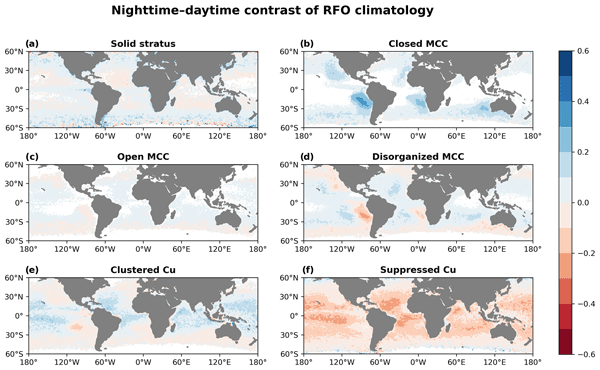
Yuanyuan Wu, Jihu Liu, Yannian Zhu, Yu Zhang, Yang Cao, Kang-En Huang, Boyang Zheng, Yichuan Wang, Yanyun Li, Quan Wang, Chen Zhou, Yuan Liang, Jianning Sun, Minghuai Wang, and Daniel Rosenfeld
Earth Syst. Sci. Data, 17, 3243–3258, https://doi.org/10.5194/essd-17-3243-2025, https://doi.org/10.5194/essd-17-3243-2025, 2025
Short summary
Short summary
Based on a deep-learning method, we established a global classification dataset of daytime and nighttime marine low-cloud mesoscale morphology. This aims to promote a comprehensive understanding of cloud dynamics and cloud–climate feedback. Closed mesoscale cellular convection (MCC) clouds occur more frequently at night, while suppressed cumulus clouds exhibit remarkable decreases. Solid stratus and MCC cloud types show clear seasonal variations.

Qingmin Wang, Yincheng Liu, Lujun Zhang, and Chen Zhou
Atmos. Chem. Phys., 25, 6741–6755, https://doi.org/10.5194/acp-25-6741-2025, https://doi.org/10.5194/acp-25-6741-2025, 2025
Short summary
Short summary
Our research explores how SST (sea surface temperature) changes in non-polar regions impact the polar energy budget. Through idealized SST experiments, we found that warming in tropical and mid-latitude oceans raises polar temperatures through enhanced atmospheric energy transport, leading to surface warming and top-of-atmosphere cooling in polar areas. This study highlights the distinct impacts of tropical Pacific and Indian Ocean SST changes on Arctic and Antarctic climates.
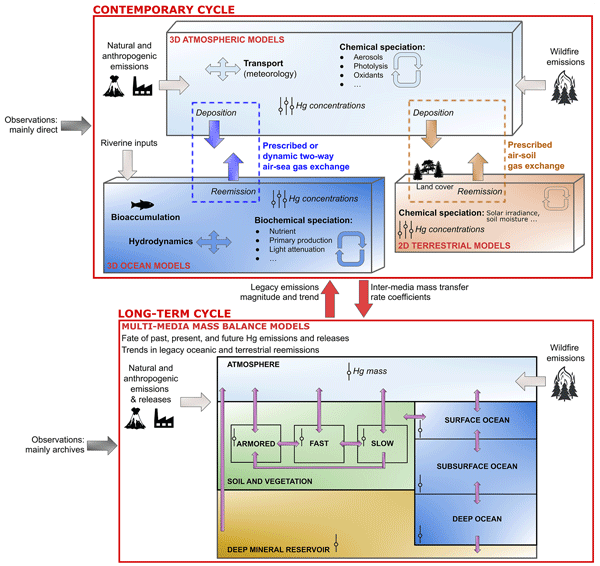
Ashu Dastoor, Hélène Angot, Johannes Bieser, Flora Brocza, Brock Edwards, Aryeh Feinberg, Xinbin Feng, Benjamin Geyman, Charikleia Gournia, Yipeng He, Ian M. Hedgecock, Ilia Ilyin, Jane Kirk, Che-Jen Lin, Igor Lehnherr, Robert Mason, David McLagan, Marilena Muntean, Peter Rafaj, Eric M. Roy, Andrei Ryjkov, Noelle E. Selin, Francesco De Simone, Anne L. Soerensen, Frits Steenhuisen, Oleg Travnikov, Shuxiao Wang, Xun Wang, Simon Wilson, Rosa Wu, Qingru Wu, Yanxu Zhang, Jun Zhou, Wei Zhu, and Scott Zolkos
Geosci. Model Dev., 18, 2747–2860, https://doi.org/10.5194/gmd-18-2747-2025, https://doi.org/10.5194/gmd-18-2747-2025, 2025
Short summary
Short summary
This paper introduces the Multi-Compartment Mercury (Hg) Modeling and Analysis Project (MCHgMAP) aimed at informing the effectiveness evaluations of two multilateral environmental agreements: the Minamata Convention on Mercury and the Convention on Long-Range Transboundary Air Pollution. The experimental design exploits a variety of models (atmospheric, land, oceanic ,and multimedia mass balance models) to assess the short- and long-term influences of anthropogenic Hg releases into the environment.
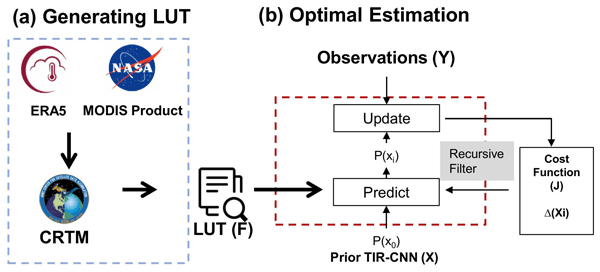
He Huang, Quan Wang, Chao Liu, and Chen Zhou
Atmos. Meas. Tech., 17, 7129–7141, https://doi.org/10.5194/amt-17-7129-2024, https://doi.org/10.5194/amt-17-7129-2024, 2024
Short summary
Short summary
This study introduces a cloud property retrieval method which integrates traditional radiative transfer simulations with a machine learning method. Retrievals from a machine learning algorithm are used to provide a priori states, and a radiative transfer model is used to create lookup tables for later iteration processes. The new method combines the advantages of traditional and machine learning algorithms, and it is applicable to both daytime and nighttime conditions.
Ling Li, Peipei Wu, Peng Zhang, Shaojian Huang, and Yanxu Zhang
Geosci. Model Dev., 17, 8683–8695, https://doi.org/10.5194/gmd-17-8683-2024, https://doi.org/10.5194/gmd-17-8683-2024, 2024
Short summary
Short summary
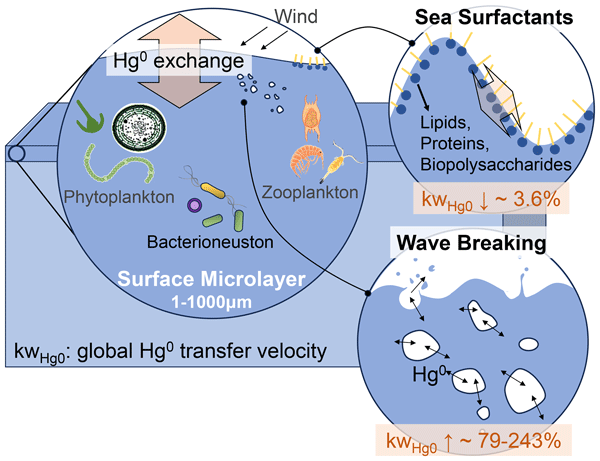
In this study, we incorporate sea surfactants and wave-breaking processes into MITgcm-ECCOv4-Hg. The updated model shows increased fluxes in high-wind-speed and high-wave regions and vice versa, enhancing spatial heterogeneity. It shows that elemental mercury (Hg0) transfer velocity is more sensitive to wind speed. These findings may elucidate the discrepancies in previous estimations and offer insights into global Hg cycling.
Yujuan Wang, Peng Zhang, Jie Li, Yaman Liu, Yanxu Zhang, Jiawei Li, and Zhiwei Han
Geosci. Model Dev., 17, 7995–8021, https://doi.org/10.5194/gmd-17-7995-2024, https://doi.org/10.5194/gmd-17-7995-2024, 2024
Short summary
Short summary
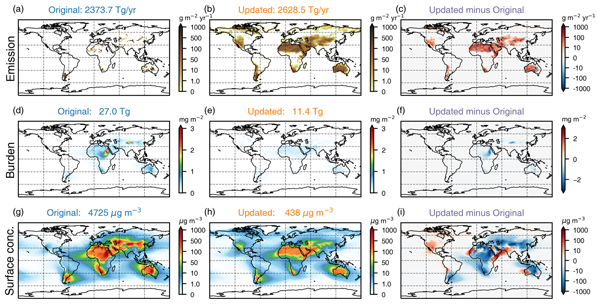
This study updates the CESM's aerosol schemes, focusing on dust, marine aerosol emissions, and secondary organic aerosol (SOA) . Dust emission modifications make deflation areas more continuous, improving results in North America and the sub-Arctic. Humidity correction to sea-salt emissions has a minor effect. Introducing marine organic aerosol emissions, coupled with ocean biogeochemical processes, and adding aqueous reactions for SOA formation advance the CESM's aerosol modelling results.
He Huang, Quan Wang, Chao Liu, and Chen Zhou
Atmos. Meas. Tech. Discuss., https://doi.org/10.5194/amt-2024-36, https://doi.org/10.5194/amt-2024-36, 2024
Preprint withdrawn
Short summary
Short summary
This study introduces a cloud property retrieval method which integrates traditional radiative transfer simulations with a machine-learning method. Retrievals from a machine learning algorithm are used to provide initial guesses, and a radiative transfer model is used to create radiance lookup tables for later iteration processes. The new method combines the advantages of traditional and machine learning algorithms, and is applicable both daytime and nighttime conditions.
Siyu Zhu, Peipei Wu, Siyi Zhang, Oliver Jahn, Shu Li, and Yanxu Zhang
Geosci. Model Dev., 16, 5915–5929, https://doi.org/10.5194/gmd-16-5915-2023, https://doi.org/10.5194/gmd-16-5915-2023, 2023
Short summary
Short summary
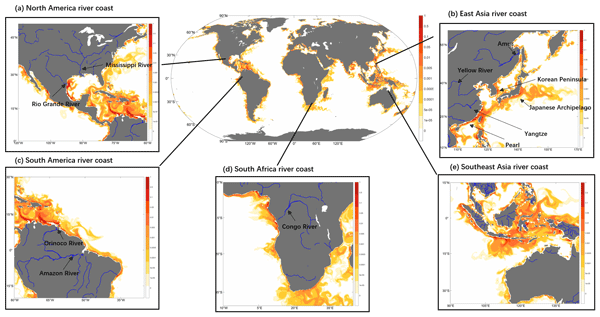
In this study, we estimate the global biogeochemical cycling of Hg in a state-of-the-art physical-ecosystem ocean model (high-resolution-MITgcm/Hg), providing a more accurate portrayal of surface Hg concentrations in estuarine and coastal areas, strong western boundary flow and upwelling areas, and concentration diffusion as vortex shapes. The high-resolution model can help us better predict the transport and fate of Hg in the ocean and its impact on the global Hg cycle.

Xiaotian Xu, Xu Feng, Haipeng Lin, Peng Zhang, Shaojian Huang, Zhengcheng Song, Yiming Peng, Tzung-May Fu, and Yanxu Zhang
Geosci. Model Dev., 15, 3845–3859, https://doi.org/10.5194/gmd-15-3845-2022, https://doi.org/10.5194/gmd-15-3845-2022, 2022
Short summary
Short summary
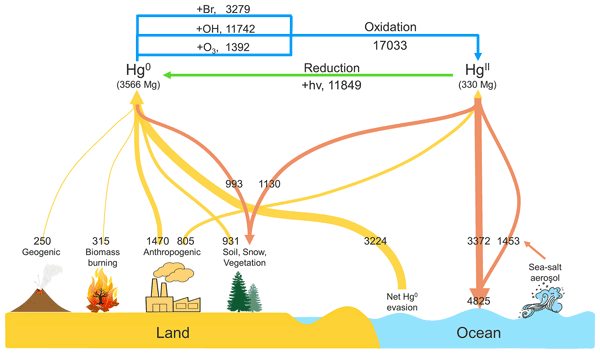
Mercury is one of the most toxic pollutants in the environment, and wet deposition is a major process for atmospheric mercury to enter, causing ecological and human health risks. High-mercury wet deposition in the southeastern US has been a problem for many years. Here we employed a newly developed high-resolution WRF-GC model with the capability to simulate mercury to study this problem. We conclude that deep convection caused enhanced mercury wet deposition in the southeastern US.
Peng Zhang and Yanxu Zhang
Geosci. Model Dev., 15, 3587–3601, https://doi.org/10.5194/gmd-15-3587-2022, https://doi.org/10.5194/gmd-15-3587-2022, 2022
Short summary
Short summary
Mercury is a global pollutant that can be transported over long distance through the atmosphere. We develop a new online global model for atmospheric mercury. The model reproduces the observed global atmospheric mercury concentrations and deposition distributions by simulating the emissions, transport, and physicochemical processes of atmospheric mercury. And we find that the seasonal variations of atmospheric Hg are the result of multiple processes and have obvious regional characteristics.

Ruochong Xu, Joel A. Thornton, Ben H. Lee, Yanxu Zhang, Lyatt Jaeglé, Felipe D. Lopez-Hilfiker, Pekka Rantala, and Tuukka Petäjä
Atmos. Chem. Phys., 22, 5477–5494, https://doi.org/10.5194/acp-22-5477-2022, https://doi.org/10.5194/acp-22-5477-2022, 2022
Short summary
Short summary
Monoterpenes are emitted into the atmosphere by vegetation and by the use of certain consumer products. Reactions of monoterpenes in the atmosphere lead to low-volatility products that condense to grow particulate matter or participate in new particle formation and, thus, affect air quality and climate. We use a model of atmospheric chemistry and transport to evaluate the global-scale importance of recent updates to our understanding of monoterpene chemistry in particle formation and growth.
Cited articles
Bieser, J., Amptmeijer, D. J., Daewel, U., Kuss, J., Soerensen, A. L., and Schrum, C.: The 3D biogeochemical marine mercury cycling model MERCY v2.0 – linking atmospheric Hg to methylmercury in fish, Geosci. Model Dev., 16, 2649–2688, https://doi.org/10.5194/gmd-16-2649-2023, 2023.
Black, F. J., Conaway, C. H., and Flegal, A. R.: Stability of dimethyl mercury in seawater and its conversion to monomethyl mercury, Environ. Sci. Technol., 43, 4056–4062, https://doi.org/10.1021/es9001218, 2009.
Chen, Q., Wu, Q., Cui, Y., and Wang, S.: Global seafood production practices and trade patterns contribute to disparities in exposure to methylmercury, Nat. Food, 6, 491–502, https://doi.org/10.1038/s43016-025-01136-9, 2025.
Dastoor, A., Angot, H., Bieser, J., Brocza, F., Edwards, B., Feinberg, A., Feng, X., Geyman, B., Gournia, C., He, Y., Hedgecock, I. M., Ilyin, I., Kirk, J., Lin, C.-J., Lehnherr, I., Mason, R., McLagan, D., Muntean, M., Rafaj, P., Roy, E. M., Ryjkov, A., Selin, N. E., De Simone, F., Soerensen, A. L., Steenhuisen, F., Travnikov, O., Wang, S., Wang, X., Wilson, S., Wu, R., Wu, Q., Zhang, Y., Zhou, J., Zhu, W., and Zolkos, S.: The Multi-Compartment Hg Modeling and Analysis Project (MCHgMAP): mercury modeling to support international environmental policy, Geosci. Model Dev., 18, 2747–2860, https://doi.org/10.5194/gmd-18-2747-2025, 2025.
Dutay, J. C., Bullister, J. L., Doney, S. C., Orr, J. C., Najjar, R., Caldeira, K., Campin, J.-M., Drange, H., Follows, M., Gao, Y., Gruber, N., Hecht, M. W., Ishida, A., Joos, F., Lindsay, K., Madec, G., Maier-Reimer, E., Marshall, J. C., Matear, R. J., Monfray, P., Mouchet, A., Plattner, G.-K., Sarmiento, J., Schlitzer, R., Slater, R., Totterdell, I. J., Weirig, M.-F., Yamanaka, Y., and Yool, A.: Evaluation of ocean model ventilation with CFC-11: comparison of 13 global ocean models, Ocean Model., 4, 89–120, https://doi.org/10.1016/S1463-5003(01)00013-0, 2002.
Kalinchuk, V. V., Lopatnikov, E. A., Astakhov, A. S., Ivanov, M. V., and Hu, L.: Distribution of atmospheric gaseous elemental mercury (Hg(0)) from the Sea of Japan to the Arctic, and Hg(0) evasion fluxes in the Eastern Arctic Seas: Results from a joint Russian-Chinese cruise in fall 2018, Sci. Total Environ., 753, 142003, https://doi.org/10.1016/j.scitotenv.2020.142003, 2021.
Kuss, J., Zülicke, C., Pohl, C., and Schneider, B.: Atlantic mercury emission determined from continuous analysis of the elemental mercury sea-air concentration difference within transects between 50°N and 50°S, Global Biogeochem. Cy., 25, GB3021, https://doi.org/10.1029/2010GB003998, 2011.
Long, M. C., Moore, J. K., Lindsay, K., Levy, M., Doney, S. C., Luo, J. Y., Krumhardt, K. M., Letscher, R. T., Grover, M., and Sylvester, Z. T.: Simulations With the Marine Biogeochemistry Library (MARBL), J. Adv. Model. Earth Sy., 13, e2021MS002647, https://doi.org/10.1029/2021MS002647, 2021.
Mao, M. and Zhang, Y.: CESM2_POP2/Hg_mod, Zenodo [code], https://doi.org/10.5281/zenodo.17766499, 2025.
Mason, R. P., Fitzgerald, W. F., and Morel, F. M. M.: The biogeochemical cycling of elemental mercury: Anthropogenic influences, Geochim. Cosmochim. Ac., 58, 3191–3198, https://doi.org/10.1016/0016-7037(94)90046-9, 1994.
Moore, J. K., Doney, S. C., Kleypas, J. A., Glover, D. M., and Fung, I. Y.: An intermediate complexity marine ecosystem model for the global domain, Deep-Sea Res. Pt. II, 49, 403–462, https://doi.org/10.1016/S0967-0645(01)00108-4, 2001.
Moore, J. K., Doney, S. C., and Lindsay, K.: Upper ocean ecosystem dynamics and iron cycling in a global three-dimensional model, Global Biogeochem. Cy., 18, GB4028, https://doi.org/10.1029/2004GB002220, 2004.
Morel, F. M. M., Kraepiel, A. M. L., and Amyot, M.: The chemical cycle and bioaccumulation of mercury, Annu. Rev. Ecol. Syst., 29, 543–566, https://doi.org/10.1146/annurev.ecolsys.29.1.543, 1998.
Nerentorp Mastromonaco, M. G., Gårdfeldt, K., and Langer, S.: Mercury flux over West Antarctic Seas during winter, spring and summer, Mar. Chem., 193, 44–54, https://doi.org/10.1016/j.marchem.2016.08.005, 2017.
Peng, D., Tan, Z., Yuan, T., Wu, P., Song, Z., Zhang, P., Huang, S., Zhang, Y., Lei, T., Middleton, B. A., Sonke, J. E., Lei, G., and Gao, J.: Human perturbations to mercury in global rivers, Sci. Adv., 11, eadw0471, https://doi.org/10.1126/sciadv.adw0471, 2025.
Smith, R., Jones, P., Briegleb, B. P., Bryan, F. O., Danabasoglu, G., Dennis, J. M., Dukowicz, J., Eden, C., Fox-Kemper, B., Gent, P. R., Hecht, M., Jayne, S., Jochum, M., Large, W. G., Lindsay, K., Maltrud, M., Norton, N. J., Peacock, S. L., Vertenstein, M., and Yeager, S.: The Parallel Ocean Program (POP) Reference Manual: Ocean Component of the Community Climate System Model (CCSM) and Community Earth System Model (CESM), LAUR-10-01853, Los Alamos National Laboratory, Los Alamos, NM, USA, https://files.cesm.ucar.edu/models/pop/2/POPRefManual.pdf (last access: 26 September 2025), 2010.
Soerensen, A. L., Sunderland, E. M., Holmes, C. D., Jacob, D. J., Yantosca, R. M., Skov, H., Christensen, J. H., Strode, S. A., and Mason, R. P.: An Improved Global Model for Air-Sea Exchange of Mercury: High Concentrations over the North Atlantic, Environ. Sci. Technol., 44, 8574–8580, https://doi.org/10.1021/es102032g, 2010.
Soerensen, A. L., Mason, R. P., Balcom, P. H., and Sunderland, E. M.: Drivers of Surface Ocean Mercury Concentrations and Air–Sea Exchange in the West Atlantic Ocean, Environ. Sci. Technol., 47, 7757–7765, https://doi.org/10.1021/es401354q, 2013.
Soerensen, A. L., Mason, R. P., Balcom, P. H., Jacob, D. J., Zhang, Y., Kuss, J., and Sunderland, E. M.: Elemental Mercury Concentrations and Fluxes in the Tropical Atmosphere and Ocean, Environ. Sci. Technol., 48, 11312–11319, https://doi.org/10.1021/es503109p, 2014.
Strode, S., Jaeglé, L., and Emerson, S.: Vertical transport of anthropogenic mercury in the ocean, Global Biogeochem. Cy., 24, GB4014, https://doi.org/10.1029/2009GB003728, 2010.
Sunderland, E. M. and Mason, R. P.: Human impacts on open ocean mercury concentrations, Global Biogeochem. Cy., 21, GB4022, https://doi.org/10.1029/2006GB002876, 2007.
UCAR/NCAR: CESM v2.1.3, GitHub [code], https://github.com/ESCOMP/CESM/tree/release-cesm2.1.3 (last access: 2 November 2026), 2020.
Wang, J., Xie, Z., Wang, F., and Kang, H.: Gaseous elemental mercury in the marine boundary layer and air-sea flux in the Southern Ocean in austral summer, Sci. Total Environ., 603–604, 510–518, https://doi.org/10.1016/j.scitotenv.2017.06.120, 2017.
Wang, Y., Wu, P., and Zhang, Y.: Climate-driven changes of global marine mercury cycles in 2100, P. Natl. Acad. Sci. USA, 120, e2202488120, https://doi.org/10.1073/pnas.2202488120, 2023.
Yuan, T., Zhang, P., Song, Z., Huang, S., Wang, X., and Zhang, Y.: Buffering effect of global vegetation on the air-land exchange of mercury: Insights from a novel terrestrial mercury model based on CESM2-CLM5, Environ. Int., 174, 107904, https://doi.org/10.1016/j.envint.2023.107904, 2023.
Zhang, P. and Zhang, Y.: Earth system modeling of mercury using CESM2 – Part 1: Atmospheric model CAM6-Chem/Hg v1.0, Geosci. Model Dev., 15, 3587–3601, https://doi.org/10.5194/gmd-15-3587-2022, 2022.
Zhang, Y., Jaeglé, L., and Thompson, L.: Natural biogeochemical cycle of mercury in a global three-dimensional ocean tracer model, Global Biogeochem. Cy., 28, 553–570, https://doi.org/10.1002/2014GB004814, 2014a.
Zhang, Y., Jaeglé, L., Thompson, L., and Streets, D. G.: Six centuries of changing oceanic mercury, Global Biogeochem. Cy., 28, 1251–1261, https://doi.org/10.1002/2014GB004939, 2014b.
Zhang, Y., Soerensen, A. L., Schartup, A. T., and Sunderland, E. M.: A Global Model for Methylmercury Formation and Uptake at the Base of Marine Food Webs, Global Biogeochem. Cy., 34, e2019GB006348, https://doi.org/10.1029/2019GB006348, 2020.
Zhang, Y., Song, Z., Huang, S., Zhang, P., Peng, Y., Wu, P., Gu, J., Dutkiewicz, S., Zhang, H., Wu, S., Wang, F., Chen, L., Wang, S., and Li, P.: Global health effects of future atmospheric mercury emissions, Nat. Commun., 12, 3035, https://doi.org/10.1038/s41467-021-23391-7, 2021.
Short summary
We developed a new global ocean model to understand how mercury moves and changes in seawater. The model closely matches observed mercury patterns, providing confidence in its results. It will serve as the ocean part of a fully coupled Earth system mercury model (CESM2-Hg) with air, land, and river processes, improving predictions of future mercury pollution and guiding strategies to protect marine life and human health.
We developed a new global ocean model to understand how mercury moves and changes in seawater....


Altmetrics
Final-revised paper
Preprint