
Articles | Volume 19, issue 21
https://doi.org/10.5194/gmd-19-10479-2026
© Author(s) 2026. This work is distributed under
the Creative Commons Attribution 4.0 License.
the Creative Commons Attribution 4.0 License.
https://doi.org/10.5194/gmd-19-10479-2026
© Author(s) 2026. This work is distributed under
the Creative Commons Attribution 4.0 License.
the Creative Commons Attribution 4.0 License.
Development and technical paper
| 
05 Nov 2026
Development and technical paper |
| 05 Nov 2026
| 05 Nov 2026
cSINGV v1.0: development and evaluation of a 1.5 km coupled atmosphere–ocean–wave modelling system for the Western Maritime Continent
Rajesh Kumar
CORRESPONDING AUTHOR

Centre for Climate Research Singapore, Meteorological Service Singapore, Singapore 537054, Singapore
Claudio Sanchez
Met Office, Exeter, EX1 3PB, United Kingdom
Juan Manuel Castillo
Met Office, Exeter, EX1 3PB, United Kingdom
Jian-Guo Li
Met Office, Exeter, EX1 3PB, United Kingdom
Bijoy Thompson
Technology Centre for Offshore and Marine Singapore, 12 Prince George's Pk, Singapore 118411, Singapore
Pratiman Patel
Centre for Climate Research Singapore, Meteorological Service Singapore, Singapore 537054, Singapore
Department of Mathematics, National University of Singapore, Singapore 119222, Singapore
Kaushik Sasmal
Technology Centre for Offshore and Marine Singapore, 12 Prince George's Pk, Singapore 118411, Singapore
Kalli Furtado
Centre for Climate Research Singapore, Meteorological Service Singapore, Singapore 537054, Singapore
Hailin Yan
Centre for Climate Research Singapore, Meteorological Service Singapore, Singapore 537054, Singapore
Liu Jianyu
Centre for Climate Research Singapore, Meteorological Service Singapore, Singapore 537054, Singapore
Hugh Zhang
Centre for Climate Research Singapore, Meteorological Service Singapore, Singapore 537054, Singapore
Related authors
No articles found.
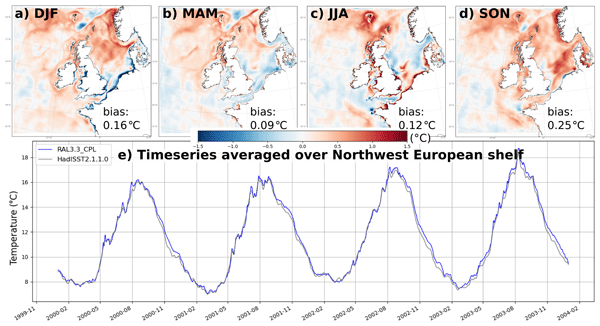
Ségolène Berthou, Juan Manuel Castillo, Vivian Fraser-Leonhardt, Sana Mahmood, Nefeli Makrygianni, Alex Arnold, Claudio Sanchez, Huw W. Lewis, Dale Partridge, Martin Best, Lucy Bricheno, Helen Davies, Douglas B. Clark, James R. Clark, Jeff A. Polton, Andrew Saulter, Chris J. Short, Jonathan Tinker, Simon Tucker, and Maisie Wright
Geosci. Model Dev., 19, 8535–8564, https://doi.org/10.5194/gmd-19-8535-2026, https://doi.org/10.5194/gmd-19-8535-2026, 2026
Short summary
Short summary
The UK’s new RCS-UKC4 (Regional Coupled Suite – UK Coupled domain version 4) system combines atmosphere, ocean, waves, land, rivers, and biogeochemistry models to improve coastal weather and climate predictions. It offers better storm wave predictions, more accurate river flows, and captures rapid sea-level changes. These advances help predict multiple hazards more reliably, supporting safer communities and helping better planning.
Andressa Andrade Cardoso, Suzanne L. Gray, Ambrogio Volonté, Ben J. Harvey, and Claudio Sánchez
EGUsphere, https://doi.org/10.5194/egusphere-2026-4757, https://doi.org/10.5194/egusphere-2026-4757, 2026
Short summary
Short summary
We studied whether high-resolution weather models that simulate thunderstorm clouds directly, rather than estimating their effects, improve forecasts of hazardous Mediterranean storms. Unlike more typical Mediterranean storms, tropical-cyclone-like medicanes became much stronger in the high-resolution simulations. However, the results also depended on how physical processes were represented, showing that more accurate forecasts require both better model design and higher resolution.
Jake Patrick Keller, Oscar Martínez-Alvarado, Ben J. Harvey, Claudio Sanchez, and Benoît Vannière
EGUsphere, https://doi.org/10.5194/egusphere-2026-4273, https://doi.org/10.5194/egusphere-2026-4273, 2026
Short summary
Short summary
Storm Daniel led to severe flooding in Greece and Bulgaria, followed by a catastrophic flood in Derna, Libya. We establish that the event was difficult to predict because small errors in the track of Hurricane Franklin over the Atlantic several days earlier grew into large differences in forecasts over Europe. This study highlights the need for improved operational global weather forecasts and raises awareness of the early warning signs that can lead to high-impact weather.
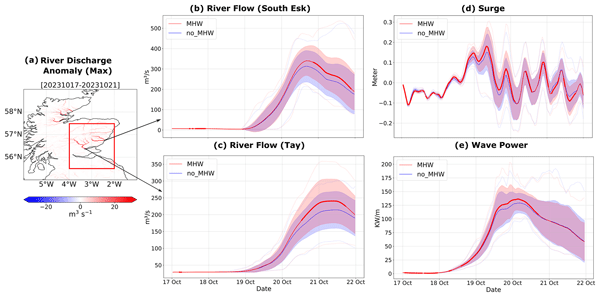
Piyali Goswami, Ségolène Berthou, Theodore G. Shepherd, Ambrogio Volonté, Sana Mahmood, Juan Manuel Castillo, Anne-Christine Péquignet, Yong-June Park, Mark Worsfold, Regina Rodrigues, and Magdalena A. Balmaseda
Nat. Hazards Earth Syst. Sci., 26, 3213–3230, https://doi.org/10.5194/nhess-26-3213-2026, https://doi.org/10.5194/nhess-26-3213-2026, 2026
Short summary
Short summary
We examined how a marine heatwave - period of unusually warm ocean conditions - affected flooding and coastal erosion during a storm in northwest Europe. Using a state-of-the-art regional coupled model at km-scale, we compared simulations with and without the marine heatwave to isolate its effects on the storm hazards. Warmer shallow seas intensified rainfall, winds and surface depression of the storm, which integrated into larger increases of surge, wave power and river flows.
Zhangcheng Pei, Sonya L. Fiddes, Marc D. Mallet, Matthew T. Woodhouse, Simon P. Alexander, Alain Protat, Kalli Furtado, and Paul R. Field
EGUsphere, https://doi.org/10.5194/egusphere-2026-3541, https://doi.org/10.5194/egusphere-2026-3541, 2026
This preprint is open for discussion and under review for Atmospheric Chemistry and Physics (ACP).
Short summary
Short summary
Climate models misrepresent Southern Ocean clouds, causing warming biases. Using ship data, we updated a weather model to test how sea spray affects cloud ice. Adding realistic ocean particles prevents deep clouds from freezing too fast, correcting sunlight trasmissions. Yet, shallow clouds remain flawed due to missing moisture. Thus, accurate climate predictions require improving both aerosol-cloud interactions and large-scale weather dynamics.
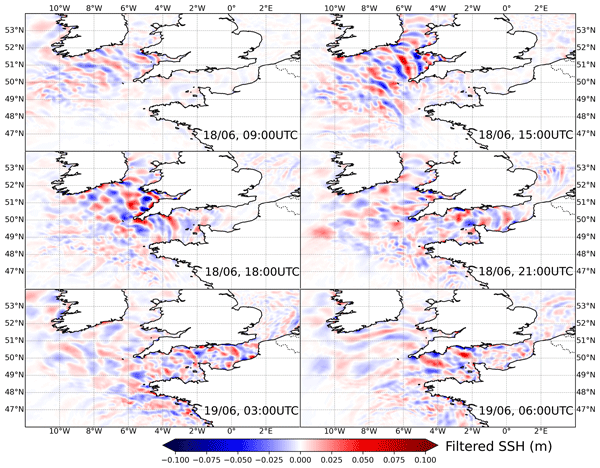
Nefeli Makrygianni, Ségolène Berthou, David L. A. Flack, Cindy Lebeaupin Brossier, Jonathan Beuvier, Juan Manuel Castillo, Emiliano Renzi, Clare O'Neill, Daniel Peláez-Zapata, Frederic Dias, Huw Lewis, and Diego Bruciaferri
Nat. Hazards Earth Syst. Sci., 26, 3185–3211, https://doi.org/10.5194/nhess-26-3185-2026, https://doi.org/10.5194/nhess-26-3185-2026, 2026
Short summary
Short summary
Meteotsunamis are rare but dangerous anomalous waves triggered by atmospheric disturbances, they are not currently forecast in Northwest Europe. We analysed the strongest recorded event on June 18, 2022, which reached 1 m amplitude. We showed high-resolution, high-frequency coupled models can represent such events up to three days ahead and help better understand their atmospheric triggers. These models, together with improved observations, can enhance early warnings and coastal safety.
Tao Sun, I-Han Chen, Craig S. Schwartz, Zhiquan Liu, Hugh Zhang, and Dale Barker
EGUsphere, https://doi.org/10.5194/egusphere-2026-2476, https://doi.org/10.5194/egusphere-2026-2476, 2026
Short summary
Short summary
We implemented an effective way to use weather radar observations in a modern weather analysis and forecasting system. By linking radar information with temperature, moisture, and rainfall processes, the method enables the model to adjust these conditions more consistently. Case studies show clear improvements in the location and intensity of rainfall forecasts over the deep tropics.
Martin R. Willett, Melissa E. Brooks, Andrew Bushell, Paul Earnshaw, Charline Marzin, Samantha Smith, Lorenzo Tomassini, Nathan Luke Abraham, Martin Best, John M. Edwards, Kalli Furtado, Catherine Hardacre, Alan J. Hewitt, Ben Johnson, Adrian Lock, Jane P. Mulcahy, James Manners, Alistair Sellar, Peter Sheridan, Warren Tennant, Kwinten Van Weverberg, Vidya Varma, and Michael Whitall
EGUsphere, https://doi.org/10.5194/egusphere-2026-2425, https://doi.org/10.5194/egusphere-2026-2425, 2026
Short summary
Short summary
Global Atmosphere and Land (GAL) configurations of the Unified Model (UM) and JULES are developed for use in any global atmospheric modelling application. We describe the latest version, GAL9. We compare GAL9 with its predecessor and show that it gives improved forecasts of weather and climate. GAL9 has been used for weather forecasts in the UK from early 2026 and it will be used to study the Earth's climate.
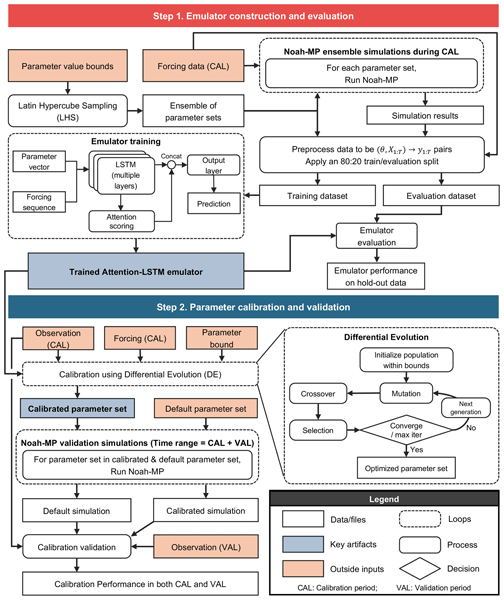
Yanyan Cheng, Yaomin Wang, Kalli Furtado, Cenlin He, Fei Chen, Alan D. Ziegler, Song Chen, Matteo Detto, Yuna Mao, Baoxiang Pan, Yoshiko Kosugi, Marryanna Lion, Shoji Noguchi, Satoru Takanashi, Lulie Melling, and Baoqing Zhang
Geosci. Model Dev., 19, 2197–2217, https://doi.org/10.5194/gmd-19-2197-2026, https://doi.org/10.5194/gmd-19-2197-2026, 2026
Short summary
Short summary
Tropical land surface processes shape the Earth's climate, but models often lack accuracy in the tropics due to limited data for validation. We improved the Noah with Multi-Parameterizations (Noah-MP) land surface model for the tropics using data from forests in Panama and Malaysia. Calibration enhanced simulations of energy and water fluxes, and revealed key vegetation and soil parameters, as well as future directions for model improvement in tropical regions.
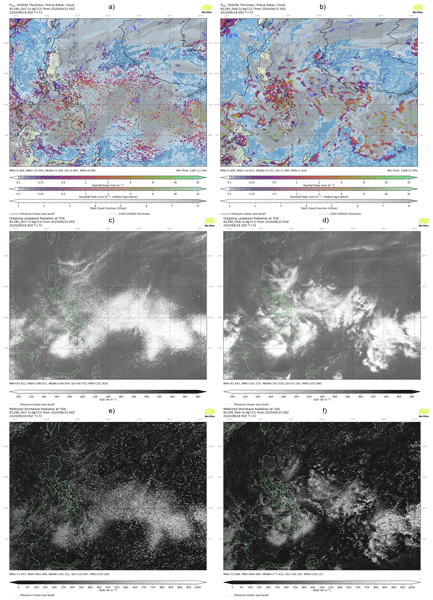
Martin Willett, Melissa Brooks, Andrew Bushell, Paul Earnshaw, Samantha Smith, Lorenzo Tomassini, Martin Best, Ian Boutle, Jennifer Brooke, John M. Edwards, Andrew D. Elvidge, Kalli Furtado, Catherine Hardacre, Andrew J. Hartley, Alan J. Hewitt, Ben Johnson, Adrian Lock, Andy Malcolm, Jane Mulcahy, Eike Müller, Ian A. Renfrew, Heather Rumbold, Gabriel G. Rooney, Alistair Sellar, Masashi Ujiie, Annelize van Niekerk, Andy Wiltshire, and Michael Whitall
Geosci. Model Dev., 19, 1473–1517, https://doi.org/10.5194/gmd-19-1473-2026, https://doi.org/10.5194/gmd-19-1473-2026, 2026
Short summary
Short summary
Global Atmosphere (GA) configurations of the Unified Model (UM) and Global Land (GL) configurations of Joint UK Land Environment Simulator (JULES) are developed for use in any global atmospheric modelling application. We describe a recent iteration of these configurations, GA8GL9, which includes improvements to the representation of convection and other physical processes. GA8GL9 is used for operational weather prediction in the UK and forms the basis for the next GA and GL configuration.
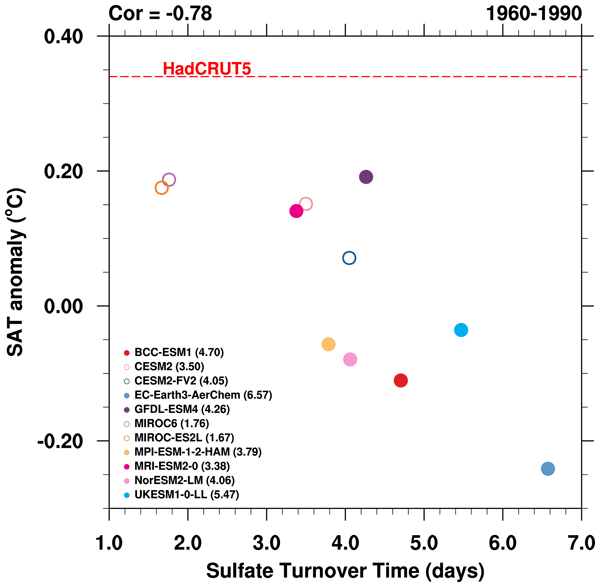
Jie Zhang, Kalli Furtado, Steven T. Turnock, Yixiong Lu, Tongwen Wu, Fang Zhang, Xiaoge Xin, and Yuyun Liu
Atmos. Chem. Phys., 26, 2175–2189, https://doi.org/10.5194/acp-26-2175-2026, https://doi.org/10.5194/acp-26-2175-2026, 2026
Short summary
Short summary
Aerosol cooling has been identified as a key driver of the cold biases in CMIP6 (sixth Coupled Model Inter-comparison Project) models. We demonstrate the critical role of sulfate burden anomaly and the contribution of sulfur removal processes. Faster sulfate deposition directly lowers atmospheric sulfate levels, while enhanced SO₂ deposition reduces the precursor for sulfate formation. The systematically short sulfate lifetime implies that model improvements should focus on SO₂ deposition processes, rather than sulfate deposition.
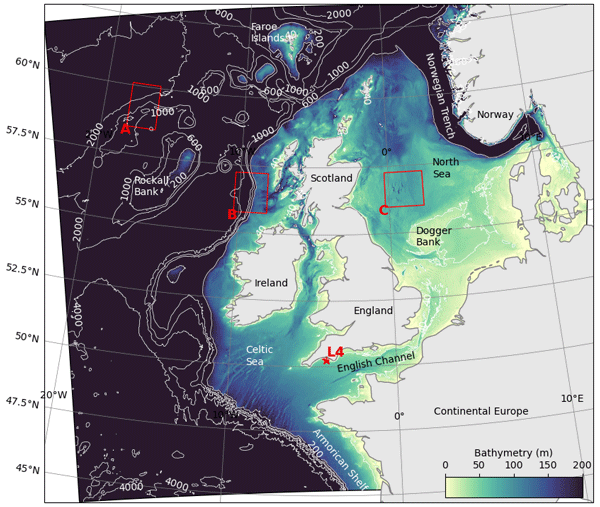
Dale Partridge, Ségolène Berthou, Rebecca Millington, James R. Clark, Lucy Bricheno, Juan Manuel Castillo, Julia Rulent, and Huw Lewis
Ocean Sci., 22, 345–366, https://doi.org/10.5194/os-22-345-2026, https://doi.org/10.5194/os-22-345-2026, 2026
Short summary
Short summary
Phytoplankton blooms are governed by the availability of light and nutrients, both of which are affected by mixing in the upper layers of the ocean, which is impacted by wave activity on the surface. Most numerical ocean models estimate waves through a parameterisation, here we explicitly resolve waves through a coupled wave model to examine the impact on the strength and timing of phytoplankton blooms, particular during storms when wave activity is elevated.
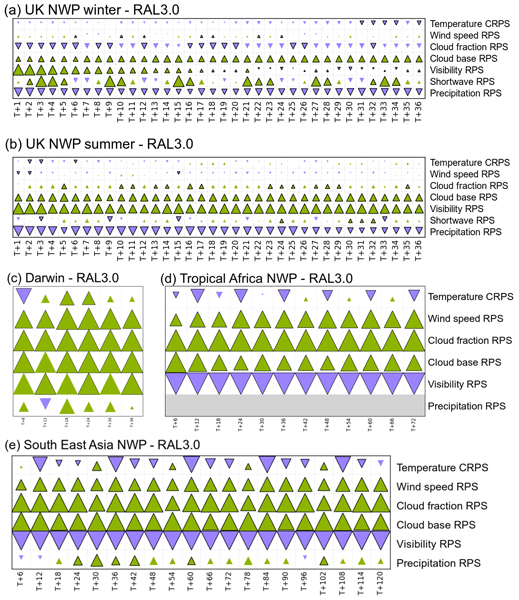
Mike Bush, David L. A. Flack, Huw W. Lewis, Sylvia I. Bohnenstengel, Chris J. Short, Charmaine Franklin, Adrian P. Lock, Martin Best, Paul Field, Anne McCabe, Kwinten Van Weverberg, Segolene Berthou, Ian Boutle, Jennifer K. Brooke, Seb Cole, Shaun Cooper, Gareth Dow, John Edwards, Anke Finnenkoetter, Kalli Furtado, Kate Halladay, Kirsty Hanley, Margaret A. Hendry, Adrian Hill, Aravindakshan Jayakumar, Richard W. Jones, Humphrey Lean, Joshua C. K. Lee, Andy Malcolm, Marion Mittermaier, Saji Mohandas, Stuart Moore, Cyril Morcrette, Rachel North, Aurore Porson, Susan Rennie, Nigel Roberts, Belinda Roux, Claudio Sanchez, Chun-Hsu Su, Simon Tucker, Simon Vosper, David Walters, James Warner, Stuart Webster, Mark Weeks, Jonathan Wilkinson, Michael Whitall, Keith D. Williams, and Hugh Zhang
Geosci. Model Dev., 18, 3819–3855, https://doi.org/10.5194/gmd-18-3819-2025, https://doi.org/10.5194/gmd-18-3819-2025, 2025
Short summary
Short summary
RAL configurations define settings for the Unified Model atmosphere and Joint UK Land Environment Simulator. The third version of the Regional Atmosphere and Land (RAL3) science configuration for kilometre- and sub-kilometre-scale modelling represents a major advance compared to previous versions (RAL2) by delivering a common science definition for applications in tropical and mid-latitude regions. RAL3 has more realistic precipitation distributions and an improved representation of clouds and visibility.
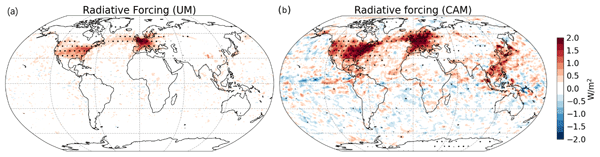
Weiyu Zhang, Kwinten Van Weverberg, Cyril J. Morcrette, Wuhu Feng, Kalli Furtado, Paul R. Field, Chih-Chieh Chen, Andrew Gettelman, Piers M. Forster, Daniel R. Marsh, and Alexandru Rap
Atmos. Chem. Phys., 25, 473–489, https://doi.org/10.5194/acp-25-473-2025, https://doi.org/10.5194/acp-25-473-2025, 2025
Short summary
Short summary
Contrail cirrus is the largest, but also most uncertain, contribution of aviation to global warming. We evaluate, for the first time, the impact of the host climate model on contrail cirrus properties. Substantial differences exist between contrail cirrus formation, persistence, and radiative effects in the host climate models. Reliable contrail cirrus simulations require advanced representation of cloud optical properties and microphysics, which should be better constrained by observations.
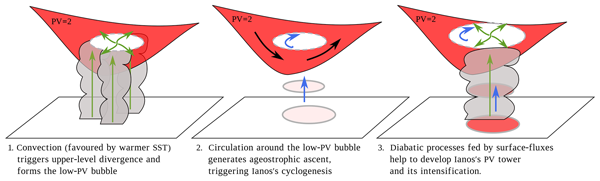
Claudio Sánchez, Suzanne Gray, Ambrogio Volonté, Florian Pantillon, Ségolène Berthou, and Silvio Davolio
Weather Clim. Dynam., 5, 1429–1455, https://doi.org/10.5194/wcd-5-1429-2024, https://doi.org/10.5194/wcd-5-1429-2024, 2024
Short summary
Short summary
Medicane Ianos was a very intense cyclone that led to harmful impacts over Greece. We explore what processes are important for the forecasting of Medicane Ianos, with the use of the Met Office weather model. There was a preceding precipitation event before Ianos’s birth, whose energetics generated a bubble in the tropopause. This bubble created the necessary conditions for Ianos to emerge and strengthen, and the processes are enhanced in simulations with a warmer Mediterranean Sea.
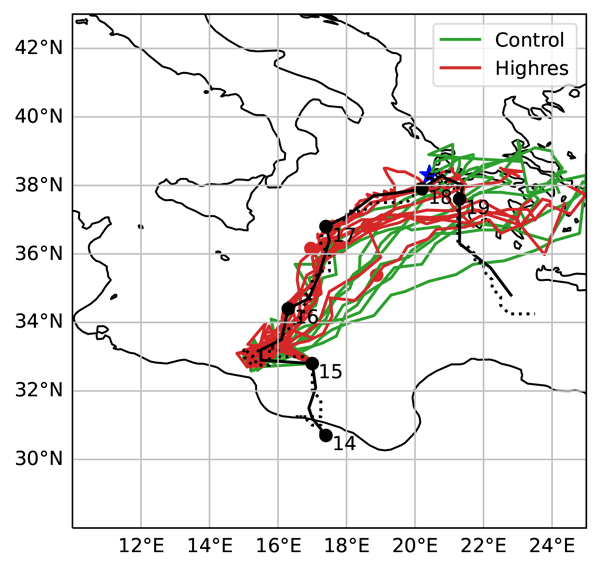
Florian Pantillon, Silvio Davolio, Elenio Avolio, Carlos Calvo-Sancho, Diego Saul Carrió, Stavros Dafis, Emanuele Silvio Gentile, Juan Jesus Gonzalez-Aleman, Suzanne Gray, Mario Marcello Miglietta, Platon Patlakas, Ioannis Pytharoulis, Didier Ricard, Antonio Ricchi, Claudio Sanchez, and Emmanouil Flaounas
Weather Clim. Dynam., 5, 1187–1205, https://doi.org/10.5194/wcd-5-1187-2024, https://doi.org/10.5194/wcd-5-1187-2024, 2024
Short summary
Short summary
Cyclone Ianos of September 2020 was a high-impact but poorly predicted medicane (Mediterranean hurricane). A community effort of numerical modelling provides robust results to improve prediction. It is found that the representation of local thunderstorms controlled the interaction of Ianos with a jet stream at larger scales and its subsequent evolution. The results help us understand the peculiar dynamics of medicanes and provide guidance for the next generation of weather and climate models.

Emma Howard, Steven Woolnough, Nicholas Klingaman, Daniel Shipley, Claudio Sanchez, Simon C. Peatman, Cathryn E. Birch, and Adrian J. Matthews
Geosci. Model Dev., 17, 3815–3837, https://doi.org/10.5194/gmd-17-3815-2024, https://doi.org/10.5194/gmd-17-3815-2024, 2024
Short summary
Short summary
This paper describes a coupled atmosphere–mixed-layer ocean simulation setup that will be used to study weather processes in Southeast Asia. The set-up has been used to compare high-resolution simulations, which are able to partially resolve storms, to coarser simulations, which cannot. We compare the model performance at representing variability of rainfall and sea surface temperatures across length scales between the coarse and fine models.
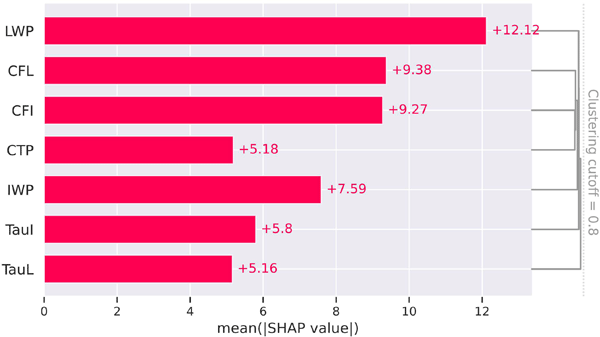
Sonya L. Fiddes, Marc D. Mallet, Alain Protat, Matthew T. Woodhouse, Simon P. Alexander, and Kalli Furtado
Geosci. Model Dev., 17, 2641–2662, https://doi.org/10.5194/gmd-17-2641-2024, https://doi.org/10.5194/gmd-17-2641-2024, 2024
Short summary
Short summary
In this study we present an evaluation that considers complex, non-linear systems in a holistic manner. This study uses XGBoost, a machine learning algorithm, to predict the simulated Southern Ocean shortwave radiation bias in the ACCESS model using cloud property biases as predictors. We then used a novel feature importance analysis to quantify the role that each cloud bias plays in predicting the radiative bias, laying the foundation for advanced Earth system model evaluation and development.
Christian Ferrarin, Florian Pantillon, Silvio Davolio, Marco Bajo, Mario Marcello Miglietta, Elenio Avolio, Diego S. Carrió, Ioannis Pytharoulis, Claudio Sanchez, Platon Patlakas, Juan Jesús González-Alemán, and Emmanouil Flaounas
Nat. Hazards Earth Syst. Sci., 23, 2273–2287, https://doi.org/10.5194/nhess-23-2273-2023, https://doi.org/10.5194/nhess-23-2273-2023, 2023
Short summary
Short summary
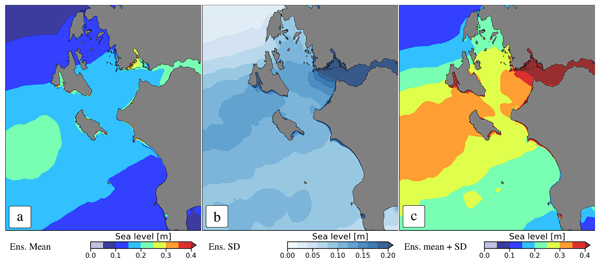
The combined use of meteorological and ocean models enabled the analysis of extreme sea conditions driven by Medicane Ianos, which hit the western coast of Greece on 18 September 2020, flooding and damaging the coast. The large spread associated with the ensemble highlighted the high model uncertainty in simulating such an extreme weather event. The different simulations have been used for outlining hazard scenarios that represent a fundamental component of the coastal risk assessment.
Nieves G. Valiente, Andrew Saulter, Breogan Gomez, Christopher Bunney, Jian-Guo Li, Tamzin Palmer, and Christine Pequignet
Geosci. Model Dev., 16, 2515–2538, https://doi.org/10.5194/gmd-16-2515-2023, https://doi.org/10.5194/gmd-16-2515-2023, 2023
Short summary
Short summary
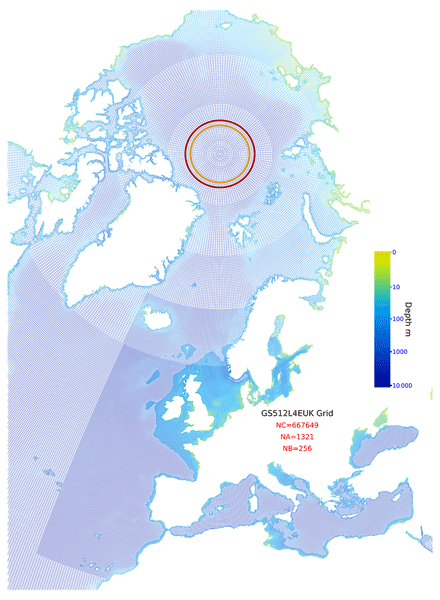
We document the Met Office operational global and regional wave models which provide wave forecasts up to 7 d ahead. Our models present coarser resolution offshore to higher resolution near the coastline. The increased resolution led to replication of the extremes but to some overestimation during modal conditions. If currents are included, wave directions and long period swells near the coast are significantly improved. New developments focus on the optimisation of the models with resolution.
Juan Manuel Castillo, Huw W. Lewis, Akhilesh Mishra, Ashis Mitra, Jeff Polton, Ashley Brereton, Andrew Saulter, Alex Arnold, Segolene Berthou, Douglas Clark, Julia Crook, Ananda Das, John Edwards, Xiangbo Feng, Ankur Gupta, Sudheer Joseph, Nicholas Klingaman, Imranali Momin, Christine Pequignet, Claudio Sanchez, Jennifer Saxby, and Maria Valdivieso da Costa
Geosci. Model Dev., 15, 4193–4223, https://doi.org/10.5194/gmd-15-4193-2022, https://doi.org/10.5194/gmd-15-4193-2022, 2022
Short summary
Short summary
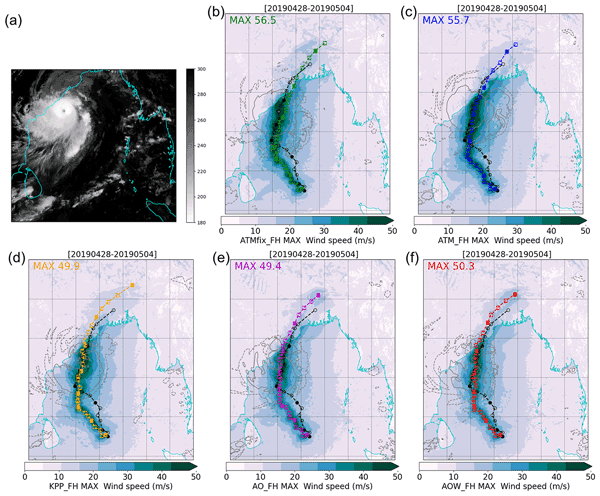
A new environmental modelling system has been developed to represent the effect of feedbacks between atmosphere, land, and ocean in the Indian region. Different approaches to simulating tropical cyclones Titli and Fani are demonstrated. It is shown that results are sensitive to the way in which the ocean response to cyclone evolution is captured in the system. Notably, we show how a more rigorous formulation for the near-surface energy budget can be included when air–sea coupling is included.
Cited articles
Alday, M., Ardhuin, F., Dodet, G., and Accensi, M.: Accuracy of numerical wave model results: application to the Atlantic coasts of Europe, Ocean Sci., 18, 1665–1689, https://doi.org/10.5194/os-18-1665-2022, 2022.
Aldrian, E., Sein, D., Jacob, D., Gates, L. D., and Podzun, R.: Modelling Indonesian rainfall with a coupled regional model, Clim. Dynam., 25, 1–17, https://doi.org/10.1007/s00382-004-0483-0, 2005.
Ardhuin, F., Rogers, E., Babanin, A. V., Filipot, J. F., Magne, R., Roland, A., van der Westhuysen, A., Queffeulou, P., Lefevre, J. M., Aouf, L., and Collard, F.: Semi-empirical dissipation source functions for ocean waves. Part I: Definition, calibration and validation, J. Phys. Oceanogr., 40, 1917–1941, https://doi.org/10.1175/2010JPO4324.1, 2010.
Argüeso, D., Romero, R., and Homar, V.: Precipitation Features of the Maritime Continent in Parameterized and Explicit Convection Models, J. Climate, 33, 2449–2466, https://doi.org/10.1175/JCLI-D-19-0416.1, 2020.
Babanin, A. V.: On a wave-induced turbulence and a wave-mixed upper ocean layer, Geohpys. Res. Lett., 33, L20605, https://doi.org/10.1029/2006GL027308, 2006.
Battjes, J. A. and Janssen, J. P. F. M.: Energy loss and set-up due to breaking of random waves, in: Proc. 16th Int. Conf. Coastal Eng., 569–587, https://doi.org/10.1061/9780872621909.034, 1978.
Best, M. J., Beljaars, A., Polcher, J., and Viterbo, P.: A proposed structure for coupling tiled surfaces with the planetary boundary layer, J. Hydrometeorol., 5, 1271–1278, https://doi.org/10.1175/JHM-382.1, 2004.
Best, M. J., Pryor, M., Clark, D. B., Rooney, G. G., Essery, R. L. H., Ménard, C. B., Edwards, J. M., Hendry, M. A., Porson, A., Gedney, N., Mercado, L. M., Sitch, S., Blyth, E., Boucher, O., Cox, P. M., Grimmond, C. S. B., and Harding, R. J.: The Joint UK Land Environment Simulator (JULES), model description – Part 1: Energy and water fluxes, Geosci. Model Dev., 4, 677–699, https://doi.org/10.5194/gmd-4-677-2011, 2011.
Birch, C. E., Webster, S., Peatman, S. C., Parker, D. J., Matthews, A. J., Li, Y., and Hassim, M. E. E.: Scale interactions between the MJO and the western Maritime Continent, J. Climate, 29, 2471–2492, https://doi.org/10.1175/JCLI-D-15-0557.1, 2016.
Bonino, G., Iovino, D., Brodeau, L., and Masina, S.: The bulk parameterizations of turbulent air–sea fluxes in NEMO4: The origin of sea surface temperature differences in a global model study, Geosci. Model Dev., 15, 6873–6889, https://doi.org/10.5194/gmd-15-6873-2022, 2022.
Booij, N. and Holthuijsen, L. H.: Propagation of ocean waves in discrete spectral wave models, J. Comput. Phys., 68, 307–326, https://doi.org/10.1016/0021-9991(87)90060-X, 1987.
Boutle, I. A., Eyre, J. E. J., and Lock, A. P.: Seamless stratocumulus simulation across the turbulent gray zone, Mon. Weather Rev., 142, 1655–1668, https://doi.org/10.1175/MWR-D-13-00229.1, 2014.
Breivik, Ø., Mogensen, K., Bidlot, J.-R., Balmaseda, M. A., and Janssen, P. A. E. M.: Surface wave effects in the NEMO ocean model: Forced and coupled experiments, J. Geophys. Res.-Oceans, 120, 2973–2992, https://doi.org/10.1002/2014JC010565, 2015.
Bruciaferri, D., Tonani, M., Lewis, H. W., Siddorn, J. R., Saulter, A., Castillo, J. M., Valiente, N. G., Conley, D., Sykes, P., Ascione, I., McConnell, N.: The impact of ocean-wave coupling on the upper ocean circulation during storm events, J. Geophys. Res.-Oceans, 126, e2021JC017343, https://doi.org/10.1029/2021JC017343, 2021.
Bush, M., Boutle, I., Edwards, J., Finnenkoetter, A., Franklin, C., Hanley, K., Jayakumar, A., Lewis, H., Lock, A., Mittermaier, M., Mohandas, S., North, R., Porson, A., Roux, B., Webster, S., and Weeks, M.: The second Met Office Unified Model–JULES Regional Atmosphere and Land configuration, RAL2, Geosci. Model Dev., 16, 1713–1734, https://doi.org/10.5194/gmd-16-1713-2023, 2023.
Castillo, J. M., Lewis, H. W., Mishra, A., Mitra, A., Polton, J., Brereton, A., Saulter, A., Arnold, A., Berthou, S., Clark, D., Crook, J., Das, A., Edwards, J., Feng, X., Gupta, A., Joseph, S., Klingaman, N., Momin, I., Pequignet, C., Sanchez, C., Saxby, J., and Valdivieso da Costa, M.: The Regional Coupled Suite (RCS-IND1): application of a flexible regional coupled modelling framework to the Indian region at kilometre scale, Geosci. Model Dev., 15, 4193–4223, https://doi.org/10.5194/gmd-15-4193-2022, 2022.
Cavaleri, L., Fox-Kemper, B., and Hemer, M.: Wind waves in the coupled climate system, B. Am. Meteorol. Soc., 93, 1651–1661, https://doi.org/10.1175/BAMS-D-11-00170.1, 2012.
Craig, A., Valcke, S., and Coquart, L.: Development and performance of a new version of the OASIS coupler, OASIS3-MCT_3.0, Geosci. Model Dev., 10, 3297–3308, https://doi.org/10.5194/gmd-10-3297-2017, 2017.
Dai, A. and Trenberth, K. E.: Estimates of freshwater discharge from continents: Latitudinal and seasonal variations, J. Hydrometeorol., 3, 660–687, https://doi.org/10.1175/1525-7541(2002)003<0660:EOFDFC>2.0.CO;2, 2002.
DaSilva, N. A., Webber, B. G. M., Matthews, A. J., Feist, M. M., Stein, T. H. M., Holloway, C. E., and Abdullah, M. F. A. B.: Validation of GPM IMERG extreme precipitation in the Maritime Continent by station and radar data. Earth Space Sci., 8, e2021EA001738, https://doi.org/10.1029/2021EA001738, 2021.
Davies, H.: A lateral boundary formulation for multi-level prediction models, Q. J. Roy. Meteorol. Soc., 102, 405–418, https://doi.org/10.1002/qj.49710243210, 1976.
DeMott, C. A., Klingaman, N. P., and Woolnough, S. J.: Atmosphere-ocean coupled processes in the Madden-Julian oscillation, Rev. Geophys., 53, 1099–1154, https://doi.org/10.1002/2014RG000478, 2015.
Dipankar, A., Webster, S., Huang, X., and Doan, V. Q.: Understanding Biases in Simulating the Diurnal Cycle of Convection over the Western Coast of Sumatra: Comparison with Pre-YMC Observation Campaign, Mon. Weather Rev., 147, 1615–1631, https://doi.org/10.1175/MWR-D-18-0432.1, 2019.
Donlon, C. J., Martin, M., Stark, J. D., Roterts-Jones, J., Fiedler, E., and Wimmer, W.: The Operational Sea Surface Temperature and Sea Ice analysis (OSTIA), Remote Sens. Environ., 116, 140–158, https://doi.org/10.1016/j.rse.2010.10.017, 2012.
Edwards, J. M. and Slingo, A.: Studies with a flexible new radiation code. I: Choosing a configuration for a large-scale model, Q. J. Roy. Meteorol. Soc., 122, 689–719, https://doi.org/10.1002/qj.49712253107, 1996.
Flather, R. A.: A tidal model of the northeast pacific, Atmos.-Ocean, 25, 22–45, https://doi.org/10.1080/07055900.1987.9649262, 1987.
Hasselmann, K., Barnett, T. P., Bouws, E., Carlson, H., Cartwright, D. E., Enke, K., Ewing, J. A., Gienapp, H., Hasselmann, D. E., Kruseman, P., Meerburg, A., Müller, P., Olbers, D. J., Richter, K., Sell, W., and Walden, H.: Measurements of wind-wave growth and swell decay during the Joint North Sea Wave Project (JONSWAP), Ergaenzungsheft zur Deutschen Hydrographischen Zeitschrift, Reihe A, 10095, https://hdl.handle.net/21.11116/0000-0007-DD3C-E (last access: 2 November 2026), 1973.
Hasselmann, S., Hasselmann, K., Allender, J. H., and Barnett, T. P.: Computations and Parameterizations of the Nonlinear Energy Transfer in a Gravity-Wave Specturm. Part II: Parameterizations of the Nonlinear Energy Transfer for Application in Wave Models, J. Phys. Oceanogr., 15, 1378–1391, https://doi.org/10.1175/1520-0485(1985)015<1378:CAPOTN>2.0.CO;2, 1985.
Heng, B. C. P., Tubbs, R. N., Huang, X.-Y., Macpherson, B., Barker, D. M., Boyd, D. F. A., Kelly, G., NorthL Stewart, R., Webster, S., and Wlasak, M.: SINGV-DA: a data assimilation system for convective-scale numerical weather prediction over Singapore, Q. J. Roy. Meteorol. Soc., 146, 1923–1938, https://doi.org/10.1002/qj.3774, 2020.
Hersbach, H., Bell, B., Berrisford, P., Hirahara, S., Horányi, A., Muñoz-Sabater, J., Nicolas, J., Peubey, C., Radu, R., Schepers, D., Simmons, A., Soci, C., Abdalla, S., Abellan, X., Balsamo, G., Bechtold, P., Biavati, G., Bidlot, J., Bonavita, M., De Chiara, G., Dahlgren, P., Dee, D., Diamantakis, M., Dragani, R., Flemming, J., Forbes, R., Fuentes, M., Geer, A., Haimberger, L., Healy, S., Hogan, R. J., Hólm, E., Janisková, M., Keeley, S., Laloyaux, P., Lopez, P., Lupu, C., Radnoti, G., de Rosnay, P., Rozum, I., Vamborg, F., Villaume, S., and Thépaut, J.-N.: The ERA5 global reanalysis, Q. J. Roy. Meteorol. Soc., 146, 1999–2049, https://doi.org/10.1002/qj.3803, 2020.
Hilmi, I., Ningsih, N. S., Sofian, I., Hanifah, F., and Rizal, A. M.: The study of MJO impact on wave height and wind speed in Indonesian Seas, IOP Conf. Ser. Earth Environ. Sci., 162, 012004, https://doi.org/10.1088/1755-1315/162/1/012004, 2018.
Hooker, S. B. and McClain, C. R.: The calibration and validation of SeaWiFS data, Prog. Oceanogr., 45, 427–465, https://doi.org/10.1016/S0079-6611(00)00012-4, 2000.
Howard, E., Woolnough, S., Klingaman, N., Shipley, D., Sanchez, C., Peatman, S. C., Birch, C. E., and Matthews, A. J.: Evaluation of multi-season convection-permitting atmosphere-mixed-layer ocean simulations of the Maritime Continent, Geosci. Model Dev., 17, 3815–3837, https://doi.org/10.5194/gmd-17-3815-2024, 2024.
Huang, X.-Y., Barker, D., Webster, S., Dipankar, A., Lock, A., Mittermaier, M., Sun, X. M., North, R., Darvell, R., Boyd, D., Lo, J., Liu, J. Y., Macpherson, B., Heng, P., Maycock, A., Pitcher, L., Tubbs, R., McMillan, M., Zhang, S. J., Hagelin, S., Porson, A., Song, G. T., Beckett, B., Cheong, W. K., Semple, A., and Gordon, C.: SINGV – the convective-scale numerical weather prediction system for Singapore, ASEAN J. Sci. Tech. Dev., 36, 81–90, https://doi.org/10.29037/ajstd.581, 2019.
Huffman, G. J., Stocker, E. F., Bolvin, D. T., Nelkin, E. J., and Tan, J.: GPM IMERG final precipitation L3 half hourly 0.1 degree × 0.1 degree V06, GES DISC – Goddard Earth Sciences Data and Information Services Center [data set], https://doi.org/10.5067/GPM/IMERG/3B-HH/06, 2019.
Ikuyajolu, O. J., Van Roekel, L., Brus, S. R., Thomas, E. E., Deng, Y., and Benedict, J. J.: Effects of surface turbulence flux parameterizations on the MJO: The role of ocean surface waves, J. Climate, 37, 3011–3036, https://doi.org/10.1175/JCLI-D-23-0490.1, 2024.
Itterly, K., Taylor, P., and Roberts, J. B.: Satellite perspectives of sea surface temperature diurnal warming on atmospheric moistening and radiative heating during MJO, J. Climate, 34, 1203–1226, https://doi.org/10.1175/JCLI-D-20-0350.1, 2021.
Jiang, L. and Li, T.: Why rainfall response to El Niño over Maritime Continent is weaker and non-uniform in boreal winter than in boreal summer, Clim. Dynam., 51, 1465–1483, https://doi.org/10.1007/s00382-017-3965-6, 2018.
Jiang, X., Adames, Á. F., Kim, D., Maloney, E. D., Lin, H., Kim, H., Zhang, C., DeMott, C. A., and Klingaman, N. P.: Fifty years of research on the Madden-Julian Oscillation: recent progress, challenges, and perspectives, J. Geophys. Res.-Atmos., 125, e2019JD030911, https://doi.org/10.1029/2019JD030911, 2020.
Jing, Y., Sun, J., Li, R., Wu, K., Yu, Z., Lin, P., Dong, X., and Babanin, A. V.: The impact of wave-induced mixing on the simulation of the upper mixed layer in climate models, Ocean Model., 197, 102583, https://doi.org/10.1016/j.ocemod.2025.102583, 2025.
Karlowska, E., Matthews, A. J., Webber, B. G. M., Graham, T., and Xavier, P.: Two-way feedback between the Madden–Julian Oscillation and diurnal warm layers in a coupled ocean–atmosphere model, Q. J. Roy. Meteorol. Soc., 150, 4113–4132, https://doi.org/10.1002/qj.4807, 2024a.
Karlowska, E., Matthews, A. J., Webber, B. G. M., Graham, T., and Xavier, P.: The effect of diurnal warming of sea-surface temperatures on the propagation speed of the Madden–Julian oscillation, Q. J. Roy. Meteorol. Soc., 150, 334–354, https://doi.org/10.1002/qj.4599, 2024b.
Kim, H.-R., Ha, K.-J., Moon, S., Oh, H., and Sharma, S.: Impact of the Indo-Pacific warm pool on the Hadley, Walker, and monsoon circulations, Atmosphere, 11, 1030, https://doi.org/10.3390/atmos11101030, 2020.
Kumar, R.: Model Configuration, Namelists, and Forcing Data for the cSINGV Coupled Regional Modelling System [Dataset], Zenodo [data set], https://doi.org/10.5281/zenodo.21449437, 2026.
Kumar, R. and Alvin, N. Z. H.: Supporting data: Evaluation of the cSINGV v1.0 coupled atmosphere-ocean-wave modelling system for the Western Maritime Continent, Zenodo [data set], https://doi.org/10.5281/zenodo.18797904, 2026.
Kumar, R., Lemos, G., Semedo, Á., and Li, J.-G.: A global high-resolution CMIP6 ensemble of wave climate simulations and projections using a coastal multigrid: Configuration and performance evaluation, Ocean Model., 197, 102566, https://doi.org/10.1016/j.ocemod.2025.102566, 2025.
Lan, Y.-Y., Hsu, H.-H., and Tseng, W.-L.: Quantifying the impact of SST feedback frequency on Madden–Julian oscillation simulations, Geosci. Model Dev., 17, 3897–3918, https://doi.org/10.5194/gmd-17-3897-2024, 2024.
Lau, N.-C. and Nath, M. J.: Atmosphere-ocean variations in the Indo-Pacific sector during ENSO episodes, J. Climate, 16, 3–20, https://doi.org/10.1175/1520-0442(2003)016<0003:AOVITI>2.0.CO;2, 2003.
Lellouche, J.-M., Greiner, E., Bourdallé-Badie, R., Garric, G., Melet, A., Drévillon, M., Bricaud, C., Hamon, M., Le Galloudec, O., Regnier, C., Candela, T., Testut, C.-E., Gasparin, F., Ruggiero, G., Benkiran, M., Drillet, Y., and Le Traon, P.-Y.: The Copernicus global 1/12° oceanic and sea ice GLORYS12 reanalysis, Front. Earth Sci., 9, 698876, https://doi.org/10.3389/feart.2021.698876, 2021.
Li, J. G.: Upstream nonoscillatory advection schemes, Mon. Weather Rev., 136, 4709–4729, https://doi.org/10.1175/2008MWR2451.1, 2008.
Li, J. G.: Propagation of ocean surface waves on a spherical multiple-cell grid, J. Comput. Phys., 231, 8262–8277, https://doi.org/10.1016/j.jcp.2012.08.007, 2012.
Li, J.-G.: An efficient multi-resolution grid for global models and coupled systems, Adv. Sci. Res. 16, 137–142, https://doi.org/10.5194/asr-16-137-2019, 2019.
Li, Y., Jourdain, N. C., Taschetto, A. S., Gupta, A. S., Argüeso, D., Masson, S., and Cai, W.: Resolution dependence of the simulated precipitation and diurnal cycle over the Maritime Continent, Clim. Dynam., 48, 4009–4028, https://doi.org/10.1007/s00382-016-3317-y, 2017.
Lilly, D. K.: On the numerical simulation of buoyant convection, Tellus, 14, 148–172, https://doi.org/10.3402/tellusa.v14i2.9537, 1962.
Lo, J. C.-F. and Orton, T.: The general features of tropical Sumatra squalls, Weather, 71, 173–178, https://doi.org/10.1002/wea.2748, 2016.
Lock, A. P., Brown, A. R., Bush, M. R., Martin, G. M., and Smith, R. N. B.: A new boundary layer mixing scheme. Part I: Scheme description and single-column model tests, Mon. Weather Rev., 128, 3187–3199, https://doi.org/10.1175/1520-0493(2000)128<3187:ANBLMS>2.0.CO;2, 2000.
Lyard, F. H., Allain, D. J., Cancet, M., Carrère, L., and Picot, N.: FES2014 global ocean tide atlas: design and performance, Ocean Sci., 17, 615–649, https://doi.org/10.5194/os-17-615-2021, 2021.
Madec, G., Bourdallé-Badie, R., Bouttier, P.-A., Bricaud, C., Bruciaferri, D., Calvert, D., Chanut, J., Clementi, E., Coward, A., Delrosso, D., Ethé, C., Flavoni, S., Graham, T., Harle, J., Iovino, D., Lea, D., Lévy, C., Lovato, T., Martin, N., Masson, S., Mocavero, S., Paul, J., Rousset, C., Storkey, D., Storto, A., and Vancoppenolle, M.: NEMO ocean engine (version 3.6-patch), Notes du Pôle de modélisation de l'Institut Pierre-Simon Laplace (IPSL), 27, Zenodo [code], https://doi.org/10.5281/zenodo.3248739, 2017.
Makrygianni, N., Berthou, S., Flack, D. L. A., Lebeaupin Brossier, C., Beuvier, J., Castillo, J. M., Renzi, E., O'Neill, C., Peláez-Zapata, D., Dias, F., Lewis, H., and Bruciaferri, D.: Representation of meteotsunamis in km-scale regional simulations coupled at high frequency, Nat. Hazards Earth Syst. Sci., 26, 3185–3211, https://doi.org/10.5194/nhess-26-3185-2026, 2026.
Manners, J., Vosper, S. B., and Roberts, N.: Radiative transfer over resolved topographic features for high-resolution weather prediction, Q. J. Roy. Meteorol. Soc., 138, 720–733, https://doi.org/10.1002/qj.956, 2012.
Massey Jr., F. J.: The Kolmogorov–Smirnov test for goodness of fit, J. Am. Stat. Assoc., 46, 68–78, https://doi.org/10.1080/01621459.1951.10500769, 1951.
Met Office: LAND SYNOP reports from land stations collected by the Met Office MetDB System, NCAS British Atmospheric Data Centre, https://catalogue.ceda.ac.uk/uuid/9f80d42106ba708f92ada730ba321831/ (last access: December 2024), 2008.
Mori, S., Hamada, J.-I., Tauhid, Y. I., Yamanaka, M. D., Okamoto, N., Murata, F., Sakurai, N., Hashiguchi, H., and Sribimawati, T.: Diurnal land–sea rainfall peak migration over Sumatera Island, Indonesian Maritime Continent, observed by TRMM satellite and intensive rawinsonde soundings, Mon. Weather Rev., 132, 2021–2039, https://doi.org/10.1175/1520-0493(2004)132<2021:DLRPMO>2.0.CO;2, 2004.
Neale, R. B. and Slingo, J. M.: The Maritime Continent and its role in the global climate: A GCM study, J. Climate, 16, 834–848, https://doi.org/10.1175/1520-0442(2003)016<0834:TMCAIR>2.0.CO;2, 2003.
NEMO development team: NEMO ocean model, NEMO ocean engine, in: Notes du Pôle de modélisation de l'Institut Pierre-Simon Laplace (IPSL) (Version v4.0, Issue 27), Zenodo [code], https://doi.org/10.5281/zenodo.3878122, 2021.
Odland, T.: tommyod/KDEpy: Kernel Density Estimation in Python (v0.9.10), Zenodo [code], https://doi.org/10.5281/zenodo.2392268, 2018.
Oliver, H., Shin, M., Matthews, D., Sanders, O., Bartholomew, S., Clark, A., Fitzpatrick, B., van Haren, R., Hut, R., and Drost, N.: Workflow Automation for Cycling Systems, Comput. Sci. Eng., 21, 7–21, https://doi.org/10.1109/mcse.2019.2906593, 2019.
Parzen, E.: On Estimation of a Probability Density Function and Mode, Ann. Math. Stat., 33, 1065–1076, https://doi.org/10.1214/aoms/1177704472, 1962.
Paski, J. A. I., Permana, D. S., Alfuadi, N., Handoyo, M. F., Nurrahmat, M. H., and Makmur, E. E. S.: A multiscale analysis of the extreme rainfall triggering flood and landslide events over Bengkulu on 27th April 2019, AIP Conf. Proc., 2320, 040019, https://doi.org/10.1063/5.0037508, 2021.
Peatman, S. C., Matthews, A. J., and Stevens, D. P.: Propagation of the Madden–Julian Oscillation through the Maritime Continent and scale interaction with the diurnal cycle of precipitation, Q. J. Roy. Meteorol. Soc., 140, 814–825, https://doi.org/10.1002/qj.2161, 2014.
Peatman, S. C., Schwendike, J., Birch, C. E., Marsham, J. H., Matthews, A. J., and Yang, G.-Y.: A local-to-large scale view of Maritime Continent rainfall: control by ENSO, MJO, and equatorial waves, J. Climate, 34, 8933–8953, https://doi.org/10.1175/JCLI-D-21-0263.1, 2021.
Peatman, S. C., Birch, C. E., Schwendike, J., Marsham, J. H., Howard, E., Woolnough, S. J., Mustafa, J. M., and Matthews, A. J.: Physical controls on the variability of offshore propagation of convection from Sumatra, J. Geophys. Res.-Atmos., 130, e2024JD042458, https://doi.org/10.1029/2024JD042458, 2025.
Piollé, J.-F., Dodet, G., and Quilfen, Y.: ESA Sea State Climate Change Initiative (Sea_State_cci): Global remote sensing daily merged multi-mission along-track significant wave height from altimetry, L3 product, version 3, NERC EDS Centre for Environmental Data Analysis, https://doi.org/10.5285/e6af67fca81c40b7bb3eddaadde06909, 2022.
Prasanna, V., Dipankar, A., Liu, J., Lim, G., Moise, A., Chua, X. R., Chen, C., Yu, J. J., Raavi, P. H., Luo, F., Hassim, M. E., Sahany, S., Sanchez, C., and Webster, S.: Evaluating SINGV-RCM for long-term high-resolution climate simulations over Southeast Asia, Int. J. Climatol., 45, e8932, https://doi.org/10.1002/joc.8932, 2025.
Roberts, N. M. and Lean, H. W.: Scale-selective verification of rainfall accumulations from high-resolution forecasts of convective events, Mon. Weather Rev., 136, 78–97, https://doi.org/10.1175/2007MWR2123.1, 2008.
Ruppert, J. H. and Johnson, R. H.: Diurnally modulated cumulus moistening in the preonset stage of the Madden–Julian oscillation during DYNAMO, J. Atmos. Sci., 72, 1622–1647, https://doi.org/10.1175/JAS-D-14-0218.1, 2015.
Rutgersson, A., Nilsson, E. O., and Kumar, R.: Introducing surface waves in a coupled wave-atmosphere regional climate model: Impact on atmospheric mixing length, J. Geophys. Res., 117, C00J15, https://doi.org/10.1029/2012JC007940, 2012.
Savarin, A. and Chen, S. S.: Pathways to better prediction of the MJO: 2. Impacts of atmosphere–ocean coupling on the upper ocean and MJO propagation, J. Adv. Model. Earth Syst., 14, e2021MS002929, https://doi.org/10.1029/2021MS002929, 2022.
Senior, N. V., Matthews, A. J., Webber, B. G. M., Paski, J. A. I., Nuryanto, D. E., Jones, R. W., Permana, D. S., and Febriyanti, A. H.: Abrupt ending of the Madden–Julian Oscillation by convectively coupled Kelvin wave precipitation leaves a swath of flooding across Indonesia, Q. J. Roy. Meteorol. Soc., 151, e4997, https://doi.org/10.1002/qj.4997, 2025.
Seo, H., Subramanian, A. C., Miller, A. J., and Cavanaugh, N. R.: Coupled impacts of the diurnal cycle of sea surface temperature on the Madden–Julian Oscillation, J. Climate, 27, 8422–8443, https://doi.org/10.1175/JCLI-D-14-00141.1, 2014.
Siddorn, J. R. and Furner, R.: An analytical stretching function that combines the best attributes of geopotential and terrain-following vertical coordinates, Ocean. Model., 66, 1–3, https://doi.org/10.1016/j.ocemod.2013.02.001, 2013.
Stone, P. H. and Chervin, R. M.: The influence of ocean surface temperature gradient and continentality on the Walker circulation. Part II: Prescribed global changes, Mon. Weather Rev., 112, 1524–1534, https://doi.org/10.1175/1520-0493(1984)112<1524:TIOOST>2.0.CO;2, 1984.
Thompson, B., Sanchez, C., Heng, B. C. P., Kumar, R., Liu, J., Huang, X.-Y., and Tkalich, P.: Development of a MetUM (v 11.1) and NEMO (v 3.6) coupled operational forecast model for the Maritime Continent – Part 1: Evaluation of ocean forecasts, Geosci. Model Dev., 14, 1081–1100, https://doi.org/10.5194/gmd-14-1081-2021, 2021.
Tolman, H. L.: User manual and system documentation of WAVEWATCH III® version 4.18, http://polar.ncep.noaa.gov/waves/wavewatch/manual.v4.18.pdf (last access: 26 August 2026) 2014.
Umlauf, L. and Burchard, H.: A generic length-scale equation for geophysical turbulence models, J. Mar. Res., 61, 235–265, 2003.
Wang, P., McWilliams, J. C., Wang, D., and Yi, D. L.: Conservative Surface Wave Effects on a Wind-Driven Coastal Upwelling System, J. Phys. Oceanogr., 53, 37–55, https://doi.org/10.1175/JPO-D-22-0120.1, 2022.
Wei, J., Malanotte-Rizzoli, P., Eltahir, E., Xue, P., Zhang, D., and Xu, D.: Coupling of a regional atmospheric model (RegCM3) and a regional oceanic model (FVCOM) over the Maritime Continent, Clim. Dynam., 43, 1575–1594, https://doi.org/10.1007/s00382-013-1986-3, 2014.
Wei, Y., Pu, Z., and Zhang, C.: Diurnal Cycle of Precipitation Over the Maritime Continent Under Modulation of MJO: Perspectives From Cloud-Permitting Scale Simulations, J. Geophys. Res.-Atmos., 125, e2020JD032529, https://doi.org/10.1029/2020JD032529, 2020.
Wilson, D. R. and Ballard, S. P.: A microphysically based precipitation scheme for the UK Meteorological Office Unified Model, Q. J. Roy. Meteorol. Soc., 125, 1607–1636, https://doi.org/10.1002/qj.49712555707, 1999.
Wilson, D. R., Bushell, A. C., Kerr-Munslow, A. M., Price, J. D., and Morcrette, C. J.: PC2: a prognostic cloud fraction and condensation scheme. I: Scheme description, Q. J. Roy. Meteorol. Soc., 134, 2093–2107, https://doi.org/10.1002/qj.333, 2008.
Wu, L., Breivik, O., and Rutgersson, A.: Ocean-wave-atmosphere interaction processes in a fully coupled modeling system, J. Adv. Model. Earth Syst., 11, 3852–3874, https://doi.org/10.1029/2019MS001761, 2019.
WW3DG – The WAVEWATCH III® Development Group: User manual and system documentation of WAVEWATCH III® version 6.07, Tech. Note 333, NOAA/NWS/NCEP/MMAB, College Park,MD, USA, GitHub [software document], https://github.com/NOAA-EMC/WW3/wiki/Manual (last access: 26 August 2026), 2019.
Xue, P., Malanotte-Rizzoli, P., Wei, J., and Eltahir, E. A.: Coupled ocean-atmosphere modeling over the Maritime Continent: A review, J. Geophys. Res.-Oceans, 125, e2019JC014978, https://doi.org/10.1029/2019JC014978, 2020.
Yamanaka, M. D.: Physical climatology of Indonesian maritime continent: An outline to comprehend observational studies, Atmos. Res., 178–179, 231–259, https://doi.org/10.1016/j.atmosres.2016.03.017, 2016.
Yan, Y., Zhang, L., Yu, Y., Chen, C., Xi, J., and Chai, F.: Rectification of the intraseasonal SST variability by the diurnal cycle of SST revealed by the Global Tropical Moored Buoy Array, Geophys. Res. Lett., 48, e2020GL090913, https://doi.org/10.1029/2020GL090913, 2021.
Yokoi, S., Mori, S., Katsumata, M., Geng, B., Yasunaga, K., Syamsudin, F., Nurhayati, and Yoneyama, K.,: Diurnal cycle of precipitation observed in the western coastal area of Sumatra Island: Offshore preconditioning by gravity waves, Mon. Wea. Rev., 145, 3745–3761, https://doi.org/10.1175/MWR-D-16-0468.1, 2017.
Yoneyama, K. and Zhang, C.: Years of the Maritime Continent, Geophys. Res. Lett., 47, e2020GL087182, https://doi.org/10.1029/2020GL087182, 2020.
Zhang, C.: Madden–Julian Oscillation, Rev. Geophys., 43, https://doi.org/10.1029/2004RG000158, 2005.
Zhao, N. and Nasuno, T.: How does the air-sea coupling frequency affect convection during the MJO passage?, J. Adv. Model. Earth Syst., 12, e2020MS002058, https://doi.org/10.1029/2020MS002058, 2020.
Short summary
Weather over Southeast Asia is shaped by complex interactions between the air, ocean, and waves. We developed a high-resolution model that links these processes to better understand and predict rainfall patterns in the region. The results show that ocean–atmosphere interactions improve the representation and prediction of squall events that affect daily life in Singapore and surrounding regions. This work supports more accurate weather forecasting in the region.
Weather over Southeast Asia is shaped by complex interactions between the air, ocean, and waves....


Altmetrics
Final-revised paper
Preprint