
Articles | Volume 18, issue 23
https://doi.org/10.5194/gmd-18-9805-2025
© Author(s) 2025. This work is distributed under
the Creative Commons Attribution 4.0 License.
the Creative Commons Attribution 4.0 License.
https://doi.org/10.5194/gmd-18-9805-2025
© Author(s) 2025. This work is distributed under
the Creative Commons Attribution 4.0 License.
the Creative Commons Attribution 4.0 License.
Development and technical paper
| 
09 Dec 2025
Development and technical paper |
| 09 Dec 2025
| 09 Dec 2025
Enhancing volcanic eruption simulations with the WRF-Chem v4.8
Alexander Ukhov
King Abdullah University of Science and Technology, Division of Physical Sciences and Engineering, Thuwal, Saudi Arabia
Georgiy Stenchikov
King Abdullah University of Science and Technology, Division of Physical Sciences and Engineering, Thuwal, Saudi Arabia
Jordan Schnell
NOAA Global Systems Laboratory, Boulder, CO, USA
CIRES, University of Colorado, Boulder, CO, USA
Ravan Ahmadov
NOAA Global Systems Laboratory, Boulder, CO, USA
Umberto Rizza
National Research Council – Institute of Atmospheric Sciences and Climate (CNR-ISAC), 73100 Lecce, Italy
Georg Grell
NOAA Global Systems Laboratory, Boulder, CO, USA
Ibrahim Hoteit
CORRESPONDING AUTHOR

King Abdullah University of Science and Technology, Division of Physical Sciences and Engineering, Thuwal, Saudi Arabia
Related authors
Sagar P. Parajuli, Georgiy L. Stenchikov, Alexander Ukhov, Suleiman Mostamandi, Paul A. Kucera, Duncan Axisa, William I. Gustafson Jr., and Yannian Zhu
Atmos. Chem. Phys., 22, 8659–8682, https://doi.org/10.5194/acp-22-8659-2022, https://doi.org/10.5194/acp-22-8659-2022, 2022
Short summary
Short summary
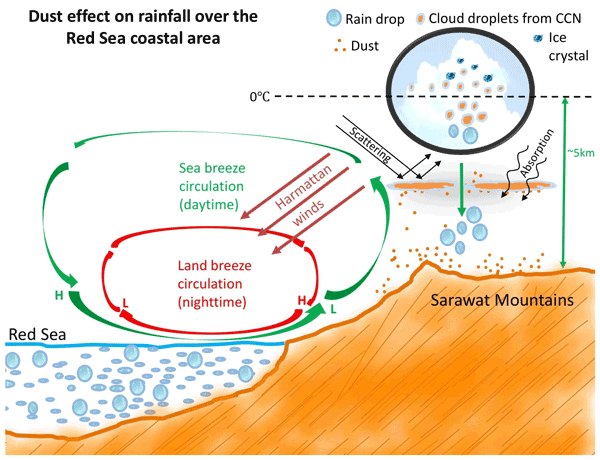
Rainfall affects the distribution of surface- and groundwater resources, which are constantly declining over the Middle East and North Africa (MENA) due to overexploitation. Here, we explored the effects of dust on rainfall using WRF-Chem model simulations. Although dust is considered a nuisance from an air quality perspective, our results highlight the positive fundamental role of dust particles in modulating rainfall formation and distribution, which has implications for cloud seeding.
Li Zhang, Haiqin Li, Georg A. Grell, Partha S. Bhattacharjee, Gonzalo A. Ferrada, Benjamin W. Green, Shan Sun, Ligia Bernardet, Anders Jensen, Barry Baker, Li Pan, Jian He, Jordan Schnell, Ravan Ahmadov, Samuel Trahan, Dustin Swales, Anning Cheng, Fanglin Yang, Rebecca H. Schwantes, Brian C. McDonald, Dominikus Heinzeller, and Shobha Kondragunta
Geosci. Model Dev., 19, 8597–8626, https://doi.org/10.5194/gmd-19-8597-2026, https://doi.org/10.5194/gmd-19-8597-2026, 2026
Short summary
Short summary
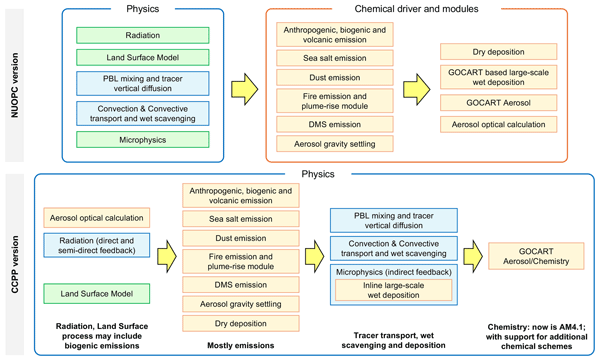
Based on the operational Global Ensemble Forecast System-Aerosols at the National Centers for Environmental Prediction, we developed an upgraded system using the Common Community Physics Package framework that allows aerosol particles to directly influence radiation and cloud formation, including how precipitation removes particles from the atmosphere. Evaluation against observations and reanalysis data demonstrates improved forecast skill for weather and subseasonal prediction.
George Krokos, Junchuan Sun, Panagiotis Vasou, Peng Zhan, Daquan Guo, Dionysios E. Raitsos, Jithendra Raju Nadimpalli, Sarantis Sofianos, and Ibrahim Hoteit
State Planet Discuss., https://doi.org/10.5194/sp-2026-24, https://doi.org/10.5194/sp-2026-24, 2026
Preprint under review for SP
Short summary
Short summary
Climate change is warming the Arabian Seas, but the changes are not the same everywhere. We studied more than 40 years of temperature records to understand how warming and periods of unusually high temperatures vary between regions. We found that the Arabian Gulf warms fastest, the Red Sea experiences prolonged heat exposure, and the Arabian Sea is shaped by seasonal monsoon cycles. Recent years reveal a shift toward warmer conditions, challenging marine ecosystems facing frequent heat stress.
Jordan Schnell, Ravan Ahmadov, Georg A. Grell, Joseph B. Olson, Eric James, Ming Hu, Ka Yee Wong, Brian McDonald, Rebecca H. Schwantes, Jian He, Colin Harkins, Wayne M. Angevine, Brian Jamison, R. Bradley Pierce, Matthew Coggon, Barry Baker, Saulo Freitas, Gabriel Pereira, and Marina Tsidulko
EGUsphere, https://doi.org/10.5194/egusphere-2026-4786, https://doi.org/10.5194/egusphere-2026-4786, 2026
This preprint is open for discussion and under review for Geoscientific Model Development (GMD).
Short summary
Short summary
The Rapid-Refresh model coupled to Chemistry is an experimental weather and chemistry model that includes emissions from human and natural sources that are connected to simulated weather, the effect of aerosols on radiation and clouds, and updated vertical mixing. We compare simulated air quality and weather to ground-based and remotely-sensed observations during the 2020 North American wildfires, demonstrating that our model physics developments and coupling with chemistry improves predictions.
Matteo Zampieri, Marco Girardello, Saquib Md Saharwardi, Guido Ceccherini, Emanuele Massaro, Mirco Migliavacca, Ibrahim Hoteit, and Alessandro Cescatti
Earth Syst. Sci. Data Discuss., https://doi.org/10.5194/essd-2026-296, https://doi.org/10.5194/essd-2026-296, 2026
Preprint under review for ESSD
Short summary
Short summary
The Cooling Efficiency Factor Index (CEFI) is a new satellite-based dataset that shows how effectively the land surface cools itself by releasing heat to the air. It is updated in near real time from 2005 onward across Europe, Africa, and nearby regions. The dataset reveals drought stress in vegetation, wind-driven dust in deserts, fire risk, crop losses, and urban heat susceptibility. It offers a practical tool for research and early warning systems.
Ilaria Quaglia, Daniele Visioni, Ewa M. Bednarz, Yunqian Zhu, Georgiy Stenchikov, Valentina Aquila, Cheng-Cheng Liu, Graham W. Mann, Yifeng Peng, Takashi Sekiya, Simone Tilmes, Xinyue Wang, Shingo Watanabe, Pengfei Yu, Jun Zhang, Wandi Yu, and Zhihong Zhuo
Atmos. Chem. Phys., 26, 7677–7704, https://doi.org/10.5194/acp-26-7677-2026, https://doi.org/10.5194/acp-26-7677-2026, 2026
Short summary
Short summary
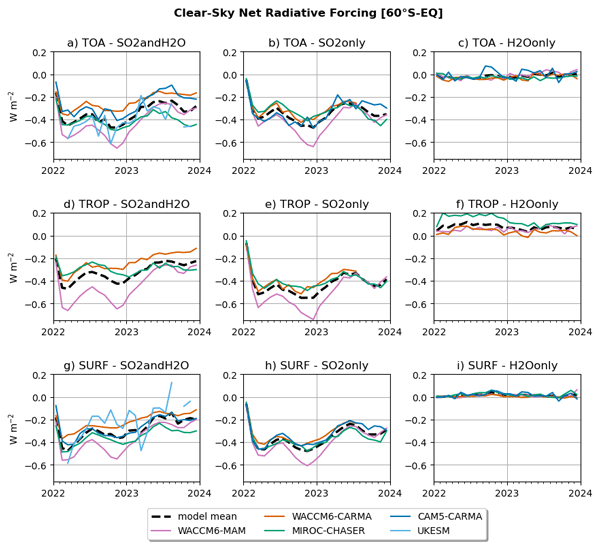
On January 15, 2022, the Hunga volcano eruption released unprecedented amounts of water vapor into the atmosphere alongside a modest amount of SO2. In this work we analyse results from multiple Earth system models. The models agree that the eruption led to small negative radiative forcing from sulfate aerosols and that the contribution from water vapor was minimal. Therefore, the Hunga eruption cannot explain the exceptional surface warming observed in 2023.
Ewa M. Bednarz, Amy H. Butler, Xinyue Wang, Zhihong Zhuo, Wandi Yu, Georgiy Stenchikov, Matthew Toohey, and Yunqian Zhu
Atmos. Chem. Phys., 26, 197–215, https://doi.org/10.5194/acp-26-197-2026, https://doi.org/10.5194/acp-26-197-2026, 2026
Short summary
Short summary
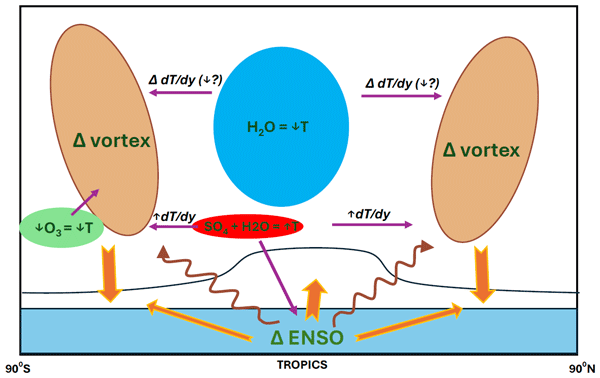
We investigate whether the 2022 Hunga eruption could affect surface climate via indirect pathways using large ensembles of Earth System Model simulations. These suggest that the eruption could have a non-negligible influence on regional surface climate, and we discuss the mechanisms via which such an influence could occur but also highlight that the forcing is relatively weak compared to natural climate variability which significantly hinders the detection of such impacts in the real world.
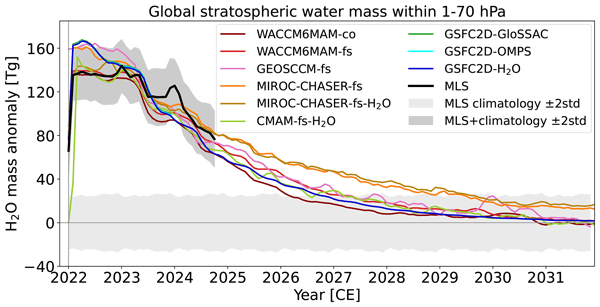
Zhihong Zhuo, Xinyue Wang, Yunqian Zhu, Wandi Yu, Ewa M. Bednarz, Eric Fleming, Peter R. Colarco, Shingo Watanabe, David Plummer, Georgiy Stenchikov, William Randel, Adam Bourassa, Valentina Aquila, Takashi Sekiya, Mark R. Schoeberl, Simone Tilmes, Jun Zhang, Paul J. Kushner, and Francesco S. R. Pausata
Atmos. Chem. Phys., 25, 13161–13176, https://doi.org/10.5194/acp-25-13161-2025, https://doi.org/10.5194/acp-25-13161-2025, 2025
Short summary
Short summary
The 2022 Hunga eruption caused unprecedented stratospheric water injection, triggering unique atmospheric impacts. This study combines observations and model simulations, projecting a stratospheric water vapor anomaly lasting 4–7 years, with significant temperature variations and ozone depletion in the upper atmosphere lasting 7–10 years. These findings offer critical insights into the role of stratospheric water vapor in shaping climate and atmospheric chemistry.
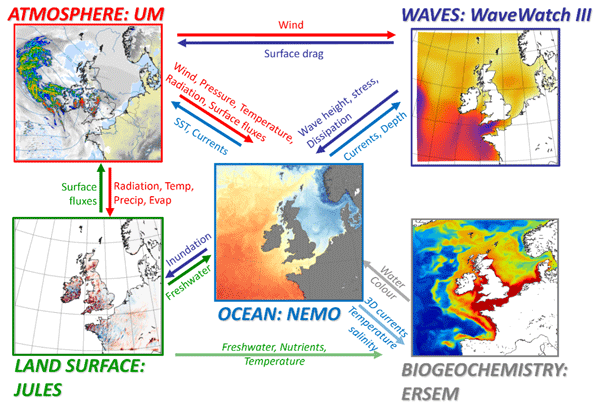
Ségolène Berthou, John Siddorn, Vivian Fraser-Leonhardt, Pierre-Yves Le Traon, and Ibrahim Hoteit
State Planet, 5-opsr, 20, https://doi.org/10.5194/sp-5-opsr-20-2025, https://doi.org/10.5194/sp-5-opsr-20-2025, 2025
Short summary
Short summary
Ocean forecasting is traditionally done independently from atmospheric, wave, or river modelling. We discuss the benefits and challenges of bringing all these modelling systems together for ocean forecasting.
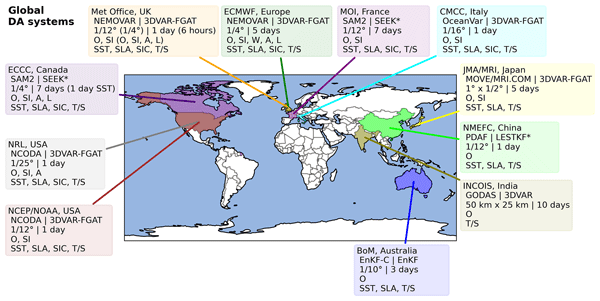
Matthew J. Martin, Ibrahim Hoteit, Laurent Bertino, and Andrew M. Moore
State Planet, 5-opsr, 9, https://doi.org/10.5194/sp-5-opsr-9-2025, https://doi.org/10.5194/sp-5-opsr-9-2025, 2025
Short summary
Short summary
Observations of the ocean from satellites and platforms in the ocean are combined with information from computer models to produce predictions of how the ocean temperature, salinity, and currents will evolve over the coming days and weeks and to describe how the ocean has evolved in the past. This paper summarises the methods used to produce these ocean forecasts at various centres around the world and outlines the practical considerations for implementing such forecasting systems.
Andreas Schiller, Simon A. Josey, John Siddorn, and Ibrahim Hoteit
State Planet, 5-opsr, 18, https://doi.org/10.5194/sp-5-opsr-18-2025, https://doi.org/10.5194/sp-5-opsr-18-2025, 2025
Short summary
Short summary
The study illustrates the way atmospheric fields are used in ocean models as boundary conditions for the provisioning of the exchanges of heat, freshwater, and momentum fluxes. Such fluxes can be based on remote sensing instruments or provided directly by numerical weather prediction systems. Air–sea flux datasets are defined by their spatial and temporal resolutions and are limited by associated biases. Air–sea flux datasets for ocean models should be chosen with the applications in mind.
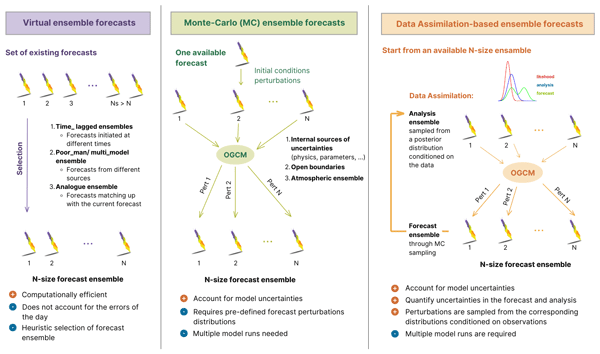
Ibrahim Hoteit, Eric Chassignet, and Mike Bell
State Planet, 5-opsr, 21, https://doi.org/10.5194/sp-5-opsr-21-2025, https://doi.org/10.5194/sp-5-opsr-21-2025, 2025
Short summary
Short summary
This paper explores how using multiple predictions instead of just one can improve ocean forecasts and help prepare for changes in ocean conditions. By combining different forecasts, scientists can better understand the uncertainty in predictions, leading to more reliable forecasts and better decision-making. This method is useful for responding to hazards like oil spills, improving climate forecasts, and supporting decision-making in fields like marine safety and resource management.
Manal Hamdeno, Aida Alvera-Azcárate, George Krokos, and Ibrahim Hoteit
Ocean Sci., 20, 1087–1107, https://doi.org/10.5194/os-20-1087-2024, https://doi.org/10.5194/os-20-1087-2024, 2024
Short summary
Short summary
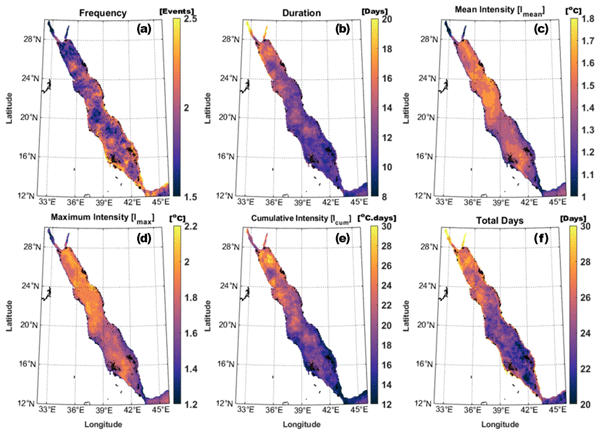
Our study focuses on the characteristics of MHWs in the Red Sea during the last 4 decades. Using satellite-derived sea surface temperatures (SSTs), we found a clear warming trend in the Red Sea since 1994, which has intensified significantly since 2016. This SST rise was associated with an increase in the frequency and days of MHWs. In addition, a correlation was found between the frequency of MHWs and some climate modes, which was more pronounced in some years of the study period.
Anton Lopatin, Oleg Dubovik, Georgiy Stenchikov, Ellsworth J. Welton, Illia Shevchenko, David Fuertes, Marcos Herreras-Giralda, Tatsiana Lapyonok, and Alexander Smirnov
Atmos. Meas. Tech., 17, 4445–4470, https://doi.org/10.5194/amt-17-4445-2024, https://doi.org/10.5194/amt-17-4445-2024, 2024
Short summary
Short summary
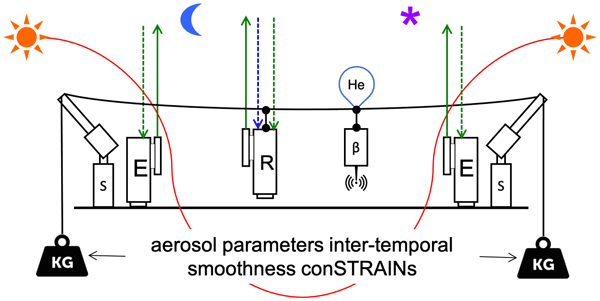
We compare aerosol properties over the King Abdullah University of Science and Technology campus using Generalized Retrieval of Aerosol and Surface Properties (GRASP) and the Micro-Pulse Lidar Network (MPLNET). We focus on the impact of different aerosol retrieval assumptions on daytime and nighttime retrievals and analyze seasonal variability in aerosol properties, aiding in understanding aerosol behavior and improving retrieval. Our work has implications for climate and public health.
Christoph Staehle, Harald E. Rieder, Arlene M. Fiore, and Jordan L. Schnell
Atmos. Chem. Phys., 24, 5953–5969, https://doi.org/10.5194/acp-24-5953-2024, https://doi.org/10.5194/acp-24-5953-2024, 2024
Short summary
Short summary
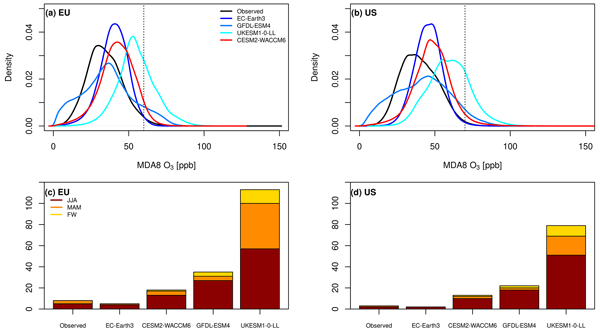
Chemistry–climate models show biases compared to surface ozone observations and thus require bias correction for impact studies and the assessment of air quality changes. We compare the performance of commonly used correction techniques for model outputs available via CMIP6. While all methods can reduce model biases, better results are obtained from more complex approaches. Thus, our study suggests broader use of these techniques in studies seeking to inform air quality management and policy.
Qindan Zhu, Rebecca H. Schwantes, Matthew Coggon, Colin Harkins, Jordan Schnell, Jian He, Havala O. T. Pye, Meng Li, Barry Baker, Zachary Moon, Ravan Ahmadov, Eva Y. Pfannerstill, Bryan Place, Paul Wooldridge, Benjamin C. Schulze, Caleb Arata, Anthony Bucholtz, John H. Seinfeld, Carsten Warneke, Chelsea E. Stockwell, Lu Xu, Kristen Zuraski, Michael A. Robinson, J. Andrew Neuman, Patrick R. Veres, Jeff Peischl, Steven S. Brown, Allen H. Goldstein, Ronald C. Cohen, and Brian C. McDonald
Atmos. Chem. Phys., 24, 5265–5286, https://doi.org/10.5194/acp-24-5265-2024, https://doi.org/10.5194/acp-24-5265-2024, 2024
Short summary
Short summary
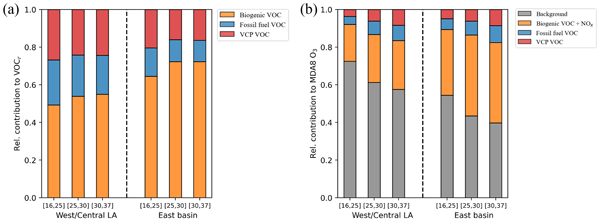
Volatile organic compounds (VOCs) fuel the production of air pollutants like ozone and particulate matter. The representation of VOC chemistry remains challenging due to its complexity in speciation and reactions. Here, we develop a chemical mechanism, RACM2B-VCP, that better represents VOC chemistry in urban areas such as Los Angeles. We also discuss the contribution of VOCs emitted from volatile chemical products and other anthropogenic sources to total VOC reactivity and O3.
Yasser O. Abualnaja, Alexandra Pavlidou, James H. Churchill, Ioannis Hatzianestis, Dimitris Velaoras, Harilaos Kontoyiannis, Vassilis P. Papadopoulos, Aristomenis P. Karageorgis, Georgia Assimakopoulou, Helen Kaberi, Theodoros Kannelopoulos, Constantine Parinos, Christina Zeri, Dionysios Ballas, Elli Pitta, Vassiliki Paraskevopoulou, Afroditi Androni, Styliani Chourdaki, Vassileia Fioraki, Stylianos Iliakis, Georgia Kabouri, Angeliki Konstantinopoulou, Georgios Krokos, Dimitra Papageorgiou, Alkiviadis Papageorgiou, Georgios Pappas, Elvira Plakidi, Eleni Rousselaki, Ioanna Stavrakaki, Eleni Tzempelikou, Panagiota Zachioti, Anthi Yfanti, Theodore Zoulias, Abdulah Al Amoudi, Yasser Alshehri, Ahmad Alharbi, Hammad Al Sulami, Taha Boksmati, Rayan Mutwalli, and Ibrahim Hoteit
Earth Syst. Sci. Data, 16, 1703–1731, https://doi.org/10.5194/essd-16-1703-2024, https://doi.org/10.5194/essd-16-1703-2024, 2024
Short summary
Short summary
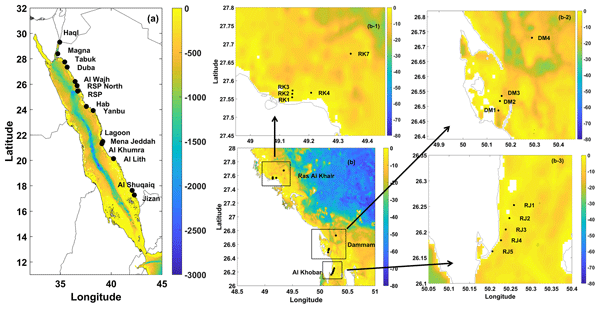
We present oceanographic measurements obtained during two surveillance cruises conducted in June and September 2021 in the Red Sea and the Arabian Gulf. It is the first multidisciplinary survey within the Saudi Arabian coastal zone, extending from near the Saudi–Jordanian border in the north of the Red Sea to the south close to the Saudi--Yemen border and in the Arabian Gulf. The objective was to record the pollution status along the coastal zone of the kingdom related to specific pressures.
Haiqin Li, Georg A. Grell, Ravan Ahmadov, Li Zhang, Shan Sun, Jordan Schnell, and Ning Wang
Geosci. Model Dev., 17, 607–619, https://doi.org/10.5194/gmd-17-607-2024, https://doi.org/10.5194/gmd-17-607-2024, 2024
Short summary
Short summary
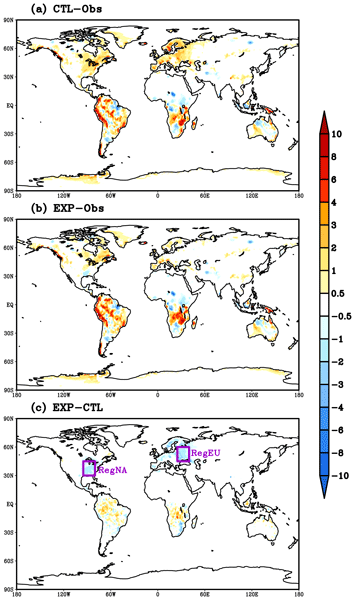
We developed a simple and realistic method to provide aerosol emissions for aerosol-aware microphysics in a numerical weather forecast model. The cloud-radiation differences between the experimental (EXP) and control (CTL) experiments responded to the aerosol differences. The strong positive precipitation biases over North America and Europe from the CTL run were significantly reduced in the EXP run. This study shows that a realistic representation of aerosol emissions should be considered.
Li Pan, Partha S. Bhattacharjee, Li Zhang, Raffaele Montuoro, Barry Baker, Jeff McQueen, Georg A. Grell, Stuart A. McKeen, Shobha Kondragunta, Xiaoyang Zhang, Gregory J. Frost, Fanglin Yang, and Ivanka Stajner
Geosci. Model Dev., 17, 431–447, https://doi.org/10.5194/gmd-17-431-2024, https://doi.org/10.5194/gmd-17-431-2024, 2024
Short summary
Short summary
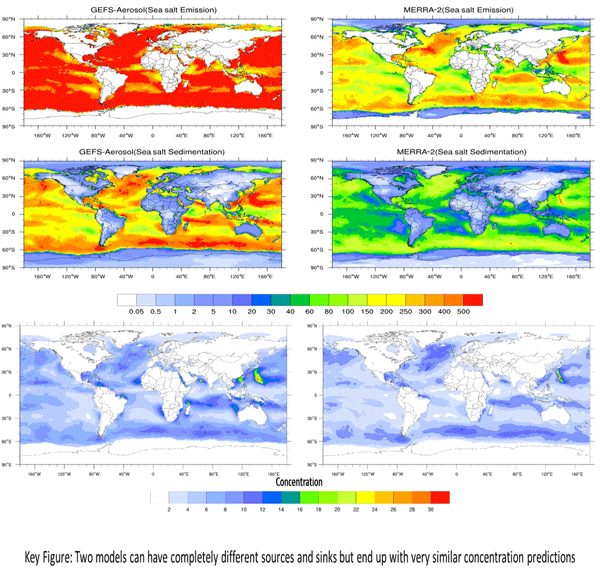
A GEFS-Aerosols simulation was conducted from 1 September 2019 to 30 September 2020 to evaluate the model performance of GEFS-Aerosols. The purpose of this study was to understand how aerosol chemical and physical processes affect ambient aerosol concentrations by placing aerosol wet deposition, dry deposition, reactions, gravitational deposition, and emissions into the aerosol mass balance equation.
Stefania A. Ciliberti, Enrique Alvarez Fanjul, Jay Pearlman, Kirsten Wilmer-Becker, Pierre Bahurel, Fabrice Ardhuin, Alain Arnaud, Mike Bell, Segolene Berthou, Laurent Bertino, Arthur Capet, Eric Chassignet, Stefano Ciavatta, Mauro Cirano, Emanuela Clementi, Gianpiero Cossarini, Gianpaolo Coro, Stuart Corney, Fraser Davidson, Marie Drevillon, Yann Drillet, Renaud Dussurget, Ghada El Serafy, Katja Fennel, Marcos Garcia Sotillo, Patrick Heimbach, Fabrice Hernandez, Patrick Hogan, Ibrahim Hoteit, Sudheer Joseph, Simon Josey, Pierre-Yves Le Traon, Simone Libralato, Marco Mancini, Pascal Matte, Angelique Melet, Yasumasa Miyazawa, Andrew M. Moore, Antonio Novellino, Andrew Porter, Heather Regan, Laia Romero, Andreas Schiller, John Siddorn, Joanna Staneva, Cecile Thomas-Courcoux, Marina Tonani, Jose Maria Garcia-Valdecasas, Jennifer Veitch, Karina von Schuckmann, Liying Wan, John Wilkin, and Romane Zufic
State Planet, 1-osr7, 2, https://doi.org/10.5194/sp-1-osr7-2-2023, https://doi.org/10.5194/sp-1-osr7-2-2023, 2023
Rui Sun, Alison Cobb, Ana B. Villas Bôas, Sabique Langodan, Aneesh C. Subramanian, Matthew R. Mazloff, Bruce D. Cornuelle, Arthur J. Miller, Raju Pathak, and Ibrahim Hoteit
Geosci. Model Dev., 16, 3435–3458, https://doi.org/10.5194/gmd-16-3435-2023, https://doi.org/10.5194/gmd-16-3435-2023, 2023
Short summary
Short summary
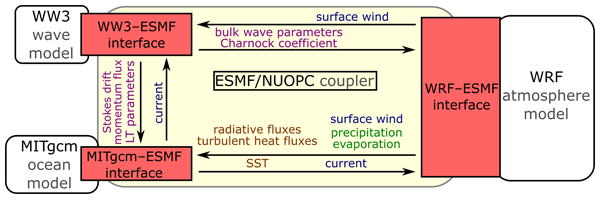
In this work, we integrated the WAVEWATCH III model into the regional coupled model SKRIPS. We then performed a case study using the newly implemented model to study Tropical Cyclone Mekunu, which occurred in the Arabian Sea. We found that the coupled model better simulates the cyclone than the uncoupled model, but the impact of waves on the cyclone is not significant. However, the waves change the sea surface temperature and mixed layer, especially in the cold waves produced due to the cyclone.
Yunyao Li, Daniel Tong, Siqi Ma, Saulo R. Freitas, Ravan Ahmadov, Mikhail Sofiev, Xiaoyang Zhang, Shobha Kondragunta, Ralph Kahn, Youhua Tang, Barry Baker, Patrick Campbell, Rick Saylor, Georg Grell, and Fangjun Li
Atmos. Chem. Phys., 23, 3083–3101, https://doi.org/10.5194/acp-23-3083-2023, https://doi.org/10.5194/acp-23-3083-2023, 2023
Short summary
Short summary
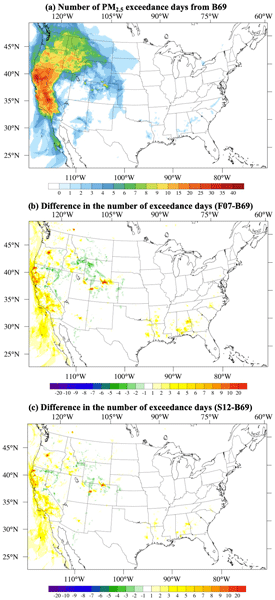
Plume height is important in wildfire smoke dispersion and affects air quality and human health. We assess the impact of plume height on wildfire smoke dispersion and the exceedances of the National Ambient Air Quality Standards. A higher plume height predicts lower pollution near the source region, but higher pollution in downwind regions, due to the faster spread of the smoke once ejected, affects pollution exceedance forecasts and the early warning of extreme air pollution events.

Mohamed Abdelkader, Georgiy Stenchikov, Andrea Pozzer, Holger Tost, and Jos Lelieveld
Atmos. Chem. Phys., 23, 471–500, https://doi.org/10.5194/acp-23-471-2023, https://doi.org/10.5194/acp-23-471-2023, 2023
Short summary
Short summary
We study the effect of injected volcanic ash, water vapor, and SO2 on the development of the volcanic cloud and the stratospheric aerosol optical depth (AOD). Both are sensitive to the initial injection height and to the aging of the volcanic ash shaped by heterogeneous chemistry coupled with the ozone cycle. The paper explains the large differences in AOD for different injection scenarios, which could improve the estimate of the radiative forcing of volcanic eruptions.
Aditya Kumar, R. Bradley Pierce, Ravan Ahmadov, Gabriel Pereira, Saulo Freitas, Georg Grell, Chris Schmidt, Allen Lenzen, Joshua P. Schwarz, Anne E. Perring, Joseph M. Katich, John Hair, Jose L. Jimenez, Pedro Campuzano-Jost, and Hongyu Guo
Atmos. Chem. Phys., 22, 10195–10219, https://doi.org/10.5194/acp-22-10195-2022, https://doi.org/10.5194/acp-22-10195-2022, 2022
Short summary
Short summary
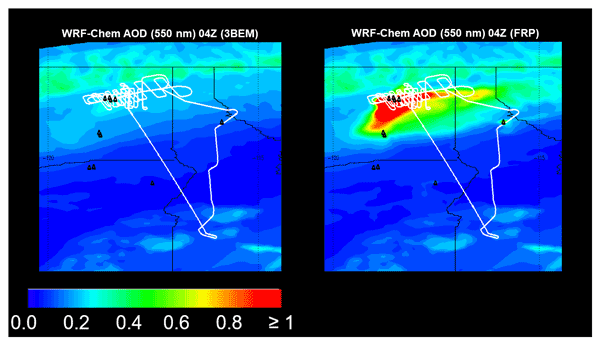
We use the WRF-Chem model with new implementations of GOES-16 wildfire emissions and plume rise based on fire radiative power (FRP) to interpret aerosol observations during the 2019 NASA–NOAA FIREX-AQ field campaign and perform model evaluations. The model shows significant improvements in simulating the variety of aerosol loading environments sampled during FIREX-AQ. Our results also highlight the importance of accurate wildfire diurnal cycle and aerosol chemical mechanisms in models.
Li Zhang, Raffaele Montuoro, Stuart A. McKeen, Barry Baker, Partha S. Bhattacharjee, Georg A. Grell, Judy Henderson, Li Pan, Gregory J. Frost, Jeff McQueen, Rick Saylor, Haiqin Li, Ravan Ahmadov, Jun Wang, Ivanka Stajner, Shobha Kondragunta, Xiaoyang Zhang, and Fangjun Li
Geosci. Model Dev., 15, 5337–5369, https://doi.org/10.5194/gmd-15-5337-2022, https://doi.org/10.5194/gmd-15-5337-2022, 2022
Short summary
Short summary
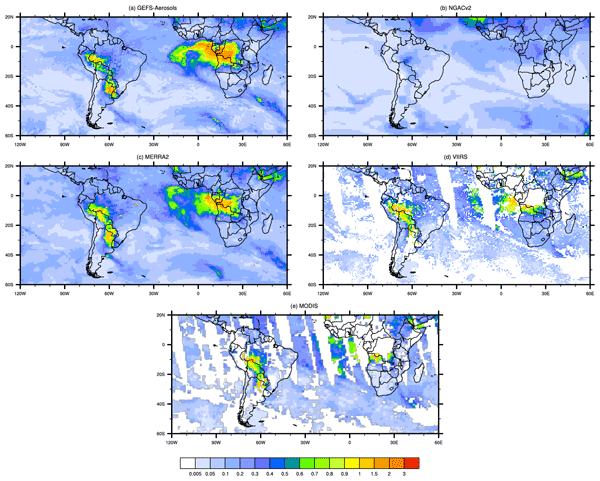
The NOAA’s air quality predictions contribute to protecting lives and health in the US, which requires sustainable development and improvement of forecast systems. GEFS-Aerosols v1 has been developed in a collaboration between the NOAA research laboratories for operational forecast since September 2020 in the NCEP. The predictions demonstrate substantial improvements for both composition and variability of aerosol distributions over those from the former operational system.
Sagar P. Parajuli, Georgiy L. Stenchikov, Alexander Ukhov, Suleiman Mostamandi, Paul A. Kucera, Duncan Axisa, William I. Gustafson Jr., and Yannian Zhu
Atmos. Chem. Phys., 22, 8659–8682, https://doi.org/10.5194/acp-22-8659-2022, https://doi.org/10.5194/acp-22-8659-2022, 2022
Short summary
Short summary
Rainfall affects the distribution of surface- and groundwater resources, which are constantly declining over the Middle East and North Africa (MENA) due to overexploitation. Here, we explored the effects of dust on rainfall using WRF-Chem model simulations. Although dust is considered a nuisance from an air quality perspective, our results highlight the positive fundamental role of dust particles in modulating rainfall formation and distribution, which has implications for cloud seeding.
M. G. Ziliani, M. U. Altaf, B. Aragon, R. Houborg, T. E. Franz, Y. Lu, J. Sheffield, I. Hoteit, and M. F. McCabe
Int. Arch. Photogramm. Remote Sens. Spatial Inf. Sci., XLIII-B3-2022, 1045–1052, https://doi.org/10.5194/isprs-archives-XLIII-B3-2022-1045-2022, https://doi.org/10.5194/isprs-archives-XLIII-B3-2022-1045-2022, 2022

Li Zhang, Georg A. Grell, Stuart A. McKeen, Ravan Ahmadov, Karl D. Froyd, and Daniel Murphy
Geosci. Model Dev., 15, 467–491, https://doi.org/10.5194/gmd-15-467-2022, https://doi.org/10.5194/gmd-15-467-2022, 2022
Short summary
Short summary
Applying the chemistry package from WRF-Chem into the Flow-following finite-volume Icosahedra Model, we essentially make it possible to explore the importance of different levels of complexity in gas and aerosol chemistry, as well as in physics parameterizations, for the interaction processes in global modeling systems. The model performance validated by the Atmospheric Tomography Mission aircraft measurements in summer 2016 shows good performance in capturing the aerosol and gas-phase tracers.
Xinxin Ye, Pargoal Arab, Ravan Ahmadov, Eric James, Georg A. Grell, Bradley Pierce, Aditya Kumar, Paul Makar, Jack Chen, Didier Davignon, Greg R. Carmichael, Gonzalo Ferrada, Jeff McQueen, Jianping Huang, Rajesh Kumar, Louisa Emmons, Farren L. Herron-Thorpe, Mark Parrington, Richard Engelen, Vincent-Henri Peuch, Arlindo da Silva, Amber Soja, Emily Gargulinski, Elizabeth Wiggins, Johnathan W. Hair, Marta Fenn, Taylor Shingler, Shobha Kondragunta, Alexei Lyapustin, Yujie Wang, Brent Holben, David M. Giles, and Pablo E. Saide
Atmos. Chem. Phys., 21, 14427–14469, https://doi.org/10.5194/acp-21-14427-2021, https://doi.org/10.5194/acp-21-14427-2021, 2021
Short summary
Short summary
Wildfire smoke has crucial impacts on air quality, while uncertainties in the numerical forecasts remain significant. We present an evaluation of 12 real-time forecasting systems. Comparison of predicted smoke emissions suggests a large spread in magnitudes, with temporal patterns deviating from satellite detections. The performance for AOD and surface PM2.5 and their discrepancies highlighted the role of accurately represented spatiotemporal emission profiles in improving smoke forecasts.
Cited articles
Abdelkader, M., Stenchikov, G., Pozzer, A., Tost, H., and Lelieveld, J.: The effect of ash, water vapor, and heterogeneous chemistry on the evolution of a Pinatubo-size volcanic cloud, Atmos. Chem. Phys., 23, 471–500, https://doi.org/10.5194/acp-23-471-2023, 2023. a
Abdul-Razzak, H. and Ghan, S. J.: Parameterization of the influence of organic surfactants on aerosol activation, Journal of Geophysical Research: Atmospheres, 109, https://doi.org/10.1029/2003JD004043, 2004. a
Aquila, V., Oman, L. D., Stolarski, R. S., Colarco, P. R., and Newman, P. A.: Dispersion of the volcanic sulfate cloud from a Mount Pinatubo-like eruption, Journal of Geophysical Research: Atmospheres, 117, https://doi.org/10.1029/2011JD016968, 2012. a
Barnard, J. C., Fast, J. D., Paredes-Miranda, G., Arnott, W. P., and Laskin, A.: Technical Note: Evaluation of the WRF-Chem “Aerosol Chemical to Aerosol Optical Properties” Module using data from the MILAGRO campaign, Atmos. Chem. Phys., 10, 7325–7340, https://doi.org/10.5194/acp-10-7325-2010, 2010. a
Bluth, G. J., Doiron, S. D., Schnetzler, C. C., Krueger, A. J., and Walter, L. S.: Global tracking of the SO2 clouds from the June, 1991 Mount Pinatubo eruptions, Geophysical Research Letters, 19, 151–154, 1992. a
Borrmann, S., Dye, J., Baumgardner, D., Proffitt, M., Margitan, J., Wilson, J., Jonsson, H., Brock, C., Loewenstein, M., Podolske, J., and Ferry, G.: Aerosols as dynamical tracers in the lower stratosphere: Ozone versus aerosol correlation after the Mount Pinatubo eruption, Journal of Geophysical Research: Atmospheres, 100, 11147–11156, 1995. a
Brodtkorb, A. R., Benedictow, A., Klein, H., Kylling, A., Nyiri, A., Valdebenito, A., Sollum, E., and Kristiansen, N.: Estimating volcanic ash emissions using retrieved satellite ash columns and inverse ash transport modeling using VolcanicAshInversion v1.2.1, within the operational eEMEP (emergency European Monitoring and Evaluation Programme) volcanic plume forecasting system (version rv4_17), Geosci. Model Dev., 17, 1957–1974, https://doi.org/10.5194/gmd-17-1957-2024, 2024. a
Burkholder, J., Sander, S., Abbatt, J., Barker, J., Cappa, C., Crounse, J., Dibble, T., Huie, R., Kolb, C., Kurylo, M., Orkin, V., Percival, C., Wilmouth, D., and Wine P.: Chemical kinetics and photochemical data for use in atmospheric studies; evaluation number 19, Tech. rep., Jet Propulsion Laboratory, National Aeronautics and Space Administration, Pasadena, CA, USA, https://jpldataeval.jpl.nasa.gov/pdf/NASA-JPL%20Evaluation%2019-5.pdf (last access: 8 December 2025), 2020. a
Carn, S. and Krotkov, N.: Ultraviolet satellite measurements of volcanic ash, in: Volcanic ash, Elsevier, 217–231, https://doi.org/10.1016/B978-0-08-100405-0.00018-5, 2016. a
Casadevall, T. J.: The 1989–1990 eruption of Redoubt Volcano, Alaska: impacts on aircraft operations, Journal of volcanology and geothermal research, 62, 301–316, 1994. a
Chin, M., Ginoux, P., Kinne, S., Torres, O., Holben, B. N., Duncan, B. N., Martin, R. V., Logan, J. A., Higurashi, A., and Nakajima, T.: Tropospheric aerosol optical thickness from the GOCART model and comparisons with satellite and Sun photometer measurements, Journal of the atmospheric sciences, 59, 461–483, 2002. a, b
Clift, R. and Gauvin, W.: Motion of entrained particles in gas streams, The Canadian Journal of Chemical Engineering, 49, 439–448, 1971. a
Cunningham, E.: On the velocity of steady fall of spherical particles through fluid medium, Proceedings of the Royal Society of London, Series A, Containing Papers of a Mathematical and Physical Character, 83, 357–365, 1910. a
Damian, V., Sandu, A., Damian, M., Potra, F., and Carmichael, G. R.: The kinetic preprocessor KPP-a software environment for solving chemical kinetics, Computers & Chemical Engineering, 26, 1567–1579, 2002. a
Davies, C.: Definitive equations for the fluid resistance of spheres, Proceedings of the Physical Society, 57, 259, https://doi.org/10.1088/0959-5309/57/4/301, 1945. a
de Bem, D. L., Anabor, V., Puhales, F. S., Pinheiro, D. K., Grasso, F., Steffenel, L. A., Brenner, L., and Rizza, U.: Investigating Synoptic Influences on Tropospheric Volcanic Ash Dispersion from the 2015 Calbuco Eruption Using WRF-Chem Simulations and Satellite Data, Remote Sensing, 16, 4455, https://doi.org/10.3390/rs16234455, 2024. a
Dee, D. P., Uppalaa, S. M., Simmons, A. J., Berrisford, P., Poli, P., Kobayashi, S., Andrae, U., Balmaseda, M. A., Balsamo, G., Bauer, P., Bechtold, P., Beljaars, A. C. M., van de Berg, L., Bidlot, J., Bormann, N., Delsol, C., Dragani, R., Fuentes, M., Geer, A. J., Haimberger, L., Healy, S. B., Hersbach, H., Holm, E. V., Isaksen, L., Kallberg, P., Kohler, M., Matricardi, M., McNally, A. P., Monge-Sanz, B. M., Morcrette, J.-J., Park, B.-K., Peubey, C., de Rosnay, P., Tavolato, C., Thepaut, J.-N., and Vitart, F.: The ERA-Interim reanalysis: Configuration and performance of the data assimilation system, Quarterly Journal of the royal meteorological society, 137, 553–597, 2011. a
Dessler, A., Schoeberl, M., Wang, T., Davis, S., Rosenlof, K., and Vernier, J.-P.: Variations of stratospheric water vapor over the past three decades, Journal of Geophysical Research: Atmospheres, 119, 12–588, https://doi.org/10.1002/2014JD021712, 2014. a
Egan, S. D., Stuefer, M., Webley, P. W., Lopez, T., Cahill, C. F., and Hirtl, M.: Modeling volcanic ash aggregation processes and related impacts on the April–May 2010 eruptions of Eyjafjallajökull volcano with WRF-Chem, Nat. Hazards Earth Syst. Sci., 20, 2721–2737, https://doi.org/10.5194/nhess-20-2721-2020, 2020. a
Fast, J., Gustafson Jr, W., Easter, R., Zaveri, R., Barnard, J., Chapman, E., Grell, G., and Peckham, S.: Evolution of ozone, particulates, and aerosol direct forcing in an urban area using a new fully-coupled meteorology, chemistry, and aerosol model, J. Geophys. Res, 111, D21305, https://doi.org/10.1029/2005JD006721, 2006. a, b
Folch, A., Costa, A., and Macedonio, G.: FALL3D: A computational model for transport and deposition of volcanic ash, Computers & Geosciences, 35, 1334–1342, 2009. a
Freitas, S. R., Longo, K. M., Alonso, M. F., Pirre, M., Marecal, V., Grell, G., Stockler, R., Mello, R. F., and Sánchez Gácita, M.: PREP-CHEM-SRC – 1.0: a preprocessor of trace gas and aerosol emission fields for regional and global atmospheric chemistry models, Geosci. Model Dev., 4, 419–433, https://doi.org/10.5194/gmd-4-419-2011, 2011. a, b
Ghan, S. J. and Zaveri, R. A.: Parameterization of optical properties for hydrated internally mixed aerosol, Journal of Geophysical Research: Atmospheres, 112, https://doi.org/10.1029/2006JD007927, 2007. a
Grell, G. A. and Dévényi, D.: A generalized approach to parameterizing convection combining ensemble and data assimilation techniques, Geophysical Research Letters, 29, 38–1, https://doi.org/10.1029/2002GL015311, 2002. a
Guo, S., Bluth, G. J., Rose, W. I., Watson, I. M., and Prata, A.: Re-evaluation of SO2 release of the 15 June 1991 Pinatubo eruption using ultraviolet and infrared satellite sensors, Geochemistry, Geophysics, Geosystems, 5, https://doi.org/10.1029/2003GC000654, 2004. a, b, c
Hirtl, M., Scherllin-Pirscher, B., Stuefer, M., Arnold, D., Baro, R., Maurer, C., and Mulder, M. D.: Extension of the WRF-Chem volcanic emission preprocessor to integrate complex source terms and evaluation for different emission scenarios of the Grimsvötn 2011 eruption, Nat. Hazards Earth Syst. Sci., 20, 3099–3115, https://doi.org/10.5194/nhess-20-3099-2020, 2020. a
Hong, S.-Y., Dudhia, J., and Chen, S.-H.: A revised approach to ice microphysical processes for the bulk parameterization of clouds and precipitation, Monthly weather review, 132, 103–120, 2004. a
Hong, S.-Y., Noh, Y., and Dudhia, J.: A new vertical diffusion package with an explicit treatment of entrainment processes, Monthly weather review, 134, 2318–2341, 2006. a
Iacono, M. J., Delamere, J. S., Mlawer, E. J., Shephard, M. W., Clough, S. A., and Collins, W. D.: Radiative forcing by long-lived greenhouse gases: Calculations with the AER radiative transfer models, Journal of Geophysical Research: Atmospheres, 113, https://doi.org/10.1029/2008JD009944, 2008. a, b
Inness, A., Ades, M., Agustí-Panareda, A., Barré, J., Benedictow, A., Blechschmidt, A.-M., Dominguez, J. J., Engelen, R., Eskes, H., Flemming, J., Huijnen, V., Jones, L., Kipling, Z., Massart, S., Parrington, M., Peuch, V.-H., Razinger, M., Remy, S., Schulz, M., and Suttie, M.: The CAMS reanalysis of atmospheric composition, Atmos. Chem. Phys., 19, 3515–3556, https://doi.org/10.5194/acp-19-3515-2019, 2019. a
Jones, A., Thomson, D., Hort, M., and Devenish, B.: The UK Met Office's next-generation atmospheric dispersion model, NAME III, in: Air pollution modeling and its application XVII, Springer, 580–589, https://doi.org/10.1007/978-0-387-68854-1_62, 2007. a
Liu, M., Hoffmann, L., Griessbach, S., Cai, Z., Heng, Y., and Wu, X.: Improved representation of volcanic sulfur dioxide depletion in Lagrangian transport simulations: a case study with MPTRAC v2.4, Geosci. Model Dev., 16, 5197–5217, https://doi.org/10.5194/gmd-16-5197-2023, 2023. a
Mailler, S., Menut, L., Cholakian, A., and Pennel, R.: AerSett v1.0: a simple and straightforward model for the settling speed of big spherical atmospheric aerosols, Geosci. Model Dev., 16, 1119–1127, https://doi.org/10.5194/gmd-16-1119-2023, 2023. a
Mastin, L. G. and Van Eaton, A. R.: Comparing simulations of umbrella-cloud growth and ash transport with observations from Pinatubo, Kelud, and Calbuco volcanoes, Atmosphere, 11, 1038, https://doi.org/10.3390/atmos11101038, 2020. a
Mastin, L. G., Guffanti, M., Servranckx, R., Webley, P., Barsotti, S., Dean, K., Durant, A., Ewert, J. W., Neri, A., Rose, W. I., Schneider, D., Siebert, L., Stunder, B., Swanson, G., Tupper, A., Volentik, A., and Waythomas, C. F.: A multidisciplinary effort to assign realistic source parameters to models of volcanic ash-cloud transport and dispersion during eruptions, Journal of volcanology and Geothermal Research, 186, 10–21, 2009. a
Miguez-Macho, G., Stenchikov, G. L., and Robock, A.: Spectral nudging to eliminate the effects of domain position and geometry in regional climate model simulations, Journal of Geophysical Research: Atmospheres, 109, https://doi.org/10.1029/2003JD004495, 2004. a
Paladio-Melosantos, M. L. O., Solidum, R. U., Scott, W. E., Quiambao, R. B., Umbal, J. V., Rodolfo, K. S., Tubianosa, B. S., Delos Reyes, P. J., Alonso, R. A., and Ruelo, H. B.: Tephra falls of the 1991 eruptions of Mount Pinatubo, in: Fire and mud: eruptions and lahars of Mount Pinatubo, Philippines, edited by: Newhall, C. G., and Punongbayan, R. S., 513–535, ISBN-10 0-295-97585-7, 1996. a
Petters, M. D. and Kreidenweis, S. M.: A single parameter representation of hygroscopic growth and cloud condensation nucleus activity, Atmos. Chem. Phys., 7, 1961–1971, https://doi.org/10.5194/acp-7-1961-2007, 2007. a
Pollack, J. B., Toon, O. B., and Khare, B. N.: Optical properties of some terrestrial rocks and glasses, Icarus, 19, 372–389, 1973. a
Pommrich, R., Müller, R., Grooß, J.-U., Konopka, P., Ploeger, F., Vogel, B., Tao, M., Hoppe, C. M., Günther, G., Spelten, N., Hoffmann, L., Pumphrey, H.-C., Viciani, S., D'Amato, F., Volk, C. M., Hoor, P., Schlager, H., and Riese, M.: Tropical troposphere to stratosphere transport of carbon monoxide and long-lived trace species in the Chemical Lagrangian Model of the Stratosphere (CLaMS), Geosci. Model Dev., 7, 2895–2916, https://doi.org/10.5194/gmd-7-2895-2014, 2014. a
Ramachandran, S., Ramaswamy, V., Stenchikov, G. L., and Robock, A.: Radiative impact of the Mount Pinatubo volcanic eruption: Lower stratospheric response, Journal of Geophysical Research: Atmospheres, 105, 24409–24429, 2000. a
Rizza, U., Donnadieu, F., Morichetti, M., Avolio, E., Castorina, G., Semprebello, A., Magazu, S., Passerini, G., Mancinelli, E., and Biensan, C.: Airspace contamination by volcanic ash from sequences of Etna paroxysms: Coupling the WRF-Chem dispersion model with near-source L-band radar observations, Remote Sensing, 15, 3760, https://doi.org/10.3390/rs15153760, 2023. a
Searcy, C., Dean, K., and Stringer, W.: PUFF: A high-resolution volcanic ash tracking model, Journal of Volcanology and Geothermal Research, 80, 1–16, 1998. a
Skamarock, W. C., Klemp, J. B., Dudhia, J., Gill, D. O., Barker, D. M., Wang, W., and Powers, J. G.: A description of the advanced research WRF version 2, Tech. rep., National Center For Atmospheric Research Boulder Co Mesoscale and Microscale Meteorology Div, NCAR/TN-468+STR, 2005. a
Stefanetti, F., Vattioni, S., Dykema, J. A., Chiodo, G., Sedlacek, J., Keutsch, F. N., and Sukhodolov, T.: Stratospheric injection of solid particles reduces side effects on circulation and climate compared to SO2 injections, Environmental Research: Climate, 3, 045028, https://doi.org/10.1088/2752-5295/ad9f93, 2024. a
Stein, A. F., Draxler, R. R., Rolph, G. D., Stunder, B. J., Cohen, M. D., and Ngan, F.: NOAA's HYSPLIT atmospheric transport and dispersion modeling system, Bulletin of the American Meteorological Society, 96, 2059–2077, 2015. a
Stenchikov, G., Ukhov, A., Osipov, S., Ahmadov, R., Grell, G., Cady-Pereira, K., Mlawer, E., and Iacono, M.: How does a Pinatubo-size volcanic cloud reach the middle stratosphere?, Journal of Geophysical Research: Atmospheres, 126, e2020JD033829, https://doi.org/10.1029/2020JD033829, 2021. a, b, c, d, e, f, g, h, i, j, k
Stenchikov, G., Ukhov, A., and Osipov, S.: Modeling the Radiative Forcing and Atmospheric Temperature Perturbations Caused by the 2022 Hunga Volcano Explosion, Journal of Geophysical Research: Atmospheres, 130, e2024JD041940, https://doi.org/10.1029/2024JD041940, 2025. a, b, c
Stewart, C., Damby, D. E., Horwell, C. J., Elias, T., Ilyinskaya, E., Tomašek, I., Longo, B. M., Schmidt, A., Carlsen, H. K., Mason, E., Baxter, P. J., Cronin, S., and Witham, C.: Volcanic air pollution and human health: recent advances and future directions, Bulletin of Volcanology, 84, https://doi.org/10.1007/s00445-021-01513-9, 2022. a
Stohl, A., Forster, C., Frank, A., Seibert, P., and Wotawa, G.: Technical note: The Lagrangian particle dispersion model FLEXPART version 6.2, Atmos. Chem. Phys., 5, 2461–2474, https://doi.org/10.5194/acp-5-2461-2005, 2005. a
Stokes, G. G.: On the effect of the internal friction of fluids on the motion of pendulums, 1850. a
Stuefer, M., Freitas, S. R., Grell, G., Webley, P., Peckham, S., McKeen, S. A., and Egan, S. D.: Inclusion of ash and SO2 emissions from volcanic eruptions in WRF-Chem: development and some applications, Geosci. Model Dev., 6, 457–468, https://doi.org/10.5194/gmd-6-457-2013, 2013. a, b, c, d
Suzuki, T.: A theoretical model for dispersion of tephra, Arc volcanism: physics and tectonics, 95–113, https://pages.mtu.edu/~raman/papers2/Suzuki83.pdf (last access: 9 December 2025), 1983. a
Tewari, M., Chen, F., Wang, W., Dudhia, J., LeMone, M. A., Mitchell, K., Ek, M., Gayno, G., Wegiel, J., and Cuenca, H.: Implementation and verification of the unified NOAH land surface model in the WRF model, 20th conference on weather analysis and forecasting/16th conference on numerical weather prediction, 11–15, https://www.researchgate.net/publication/286272692_Implementation_and_verification_of_the_united_NOAH_land_surface_model_in_the_WRF_model (last access: 9 December 2025), 2004. a
Ukhov, A.: WRF-Chem code used in this publication along with namelist files and scripts for OH and H2O2 interpolation, Zenodo [code], https://doi.org/10.5281/zenodo.16894619, 2025. a
Ukhov, A., Mostamandi, S., da Silva, A., Flemming, J., Alshehri, Y., Shevchenko, I., and Stenchikov, G.: Assessment of natural and anthropogenic aerosol air pollution in the Middle East using MERRA-2, CAMS data assimilation products, and high-resolution WRF-Chem model simulations, Atmos. Chem. Phys., 20, 9281–9310, https://doi.org/10.5194/acp-20-9281-2020, 2020a. a
Ukhov, A., Mostamandi, S., Krotkov, N., Flemming, J., da Silva, A., Li, C., Fioletov, V., McLinden, C., Anisimov, A., Alshehri, Y. M., and Stenchikov, G.: Study of SO Pollution in the Middle East Using MERRA-2, CAMS Data Assimilation Products, and High-Resolution WRF-Chem Simulations, Journal of Geophysical Research: Atmospheres, 125, e2019JD031993, https://doi.org/10.1029/2019JD031993, 2020b. a
Ukhov, A., Ahmadov, R., Grell, G., and Stenchikov, G.: Improving dust simulations in WRF-Chem v4.1.3 coupled with the GOCART aerosol module, Geosci. Model Dev., 14, 473–493, https://doi.org/10.5194/gmd-14-473-2021, 2021. a, b, c, d
Ukhov, A., Stenchikov, G., Osipov, S., Krotkov, N., Gorkavyi, N., Li, C., Dubovik, O., and Lopatin, A.: Inverse modeling of the initial stage of the 1991 Pinatubo volcanic cloud accounting for radiative feedback of volcanic ash, Journal of Geophysical Research: Atmospheres, 128, e2022JD038446, https://doi.org/10.1029/2022JD038446, 2023. a, b, c, d, e, f
Ukhov, A., Stohl, A., Stenchikov, G., and Hoteit, I.: Inverse modeling of SO2 point source emissions in the Middle East, Journal of Geophysical Research: Atmospheres, 130, e2025JD043334, https://doi.org/10.1029/2025JD043334, 2025. a
Webley, P., Steensen, T., Stuefer, M., Grell, G., Freitas, S., and Pavolonis, M.: Analyzing the Eyjafjallajökull 2010 eruption using satellite remote sensing, lidar and WRF-Chem dispersion and tracking model, Journal of Geophysical Research: Atmospheres, 117, https://doi.org/10.1029/2011JD016817, 2012. a, b
Wesely, M.: Parameterization of surface resistances to gaseous dry deposition in regional-scale numerical models, Atmospheric environment, 41, 52–63, 2007. a
Wiesner, M. G., Wang, Y., and Zheng, L.: Fallout of volcanic ash to the deep South China Sea induced by the 1991 eruption of Mount Pinatubo (Philippines), Geology, 23, 885–888, 1995. a
Zaveri, R. A., Easter, R. C., Fast, J. D., and Peters, L. K.: Model for simulating aerosol interactions and chemistry (MOSAIC), Journal of Geophysical Research: Atmospheres, 113, https://doi.org/10.1029/2007JD008782, 2008. a
Short summary
Volcanic eruptions are natural hazards impacting aviation, the environment, and climate. Here, we improve the simulation of volcanic material transport using the Weather Research and Forecasting (WRF-Chem) version 4.8. Analysis of ash, sulfate, and SO2 mass budgets was performed. The direct radiative effect of volcanic aerosols was implemented. A preprocessor, PrepEmisSources, was developed to streamline the preparation of volcanic emissions.
Volcanic eruptions are natural hazards impacting aviation, the environment, and climate. Here,...


