
Articles | Volume 18, issue 23
https://doi.org/10.5194/gmd-18-9433-2025
© Author(s) 2025. This work is distributed under
the Creative Commons Attribution 4.0 License.
the Creative Commons Attribution 4.0 License.
https://doi.org/10.5194/gmd-18-9433-2025
© Author(s) 2025. This work is distributed under
the Creative Commons Attribution 4.0 License.
the Creative Commons Attribution 4.0 License.
Methods for assessment of models
| 
03 Dec 2025
Methods for assessment of models |
| 03 Dec 2025
| 03 Dec 2025
Standardising the “Gregory method” for calculating equilibrium climate sensitivity
Anna Zehrung
CORRESPONDING AUTHOR

School of Geography, Earth and Atmospheric Sciences, The University of Melbourne, Melbourne, 3010, Australia
Andrew D. King
School of Geography, Earth and Atmospheric Sciences, The University of Melbourne, Melbourne, 3010, Australia
Australian Research Council Centre of Excellence for Weather of the 21st Century, Clayton, 3800, Australia
Zebedee Nicholls
School of Geography, Earth and Atmospheric Sciences, The University of Melbourne, Melbourne, 3010, Australia
International Institute for Applied Systems Analysis (IIASA), Schloßplatz 1, 2361 Laxenburg, Austria
Climate Resource, Melbourne, 3000, Australia
Mark D. Zelinka
Lawrence Livermore National Laboratory, Livermore, CA 94551, USA
Malte Meinshausen
School of Geography, Earth and Atmospheric Sciences, The University of Melbourne, Melbourne, 3010, Australia
Climate Resource, Melbourne, 3000, Australia
Related authors
No articles found.
Trevor Sloughter, Zebedee Nicholls, Gang Tang, Thomas Kleinen, Zhen Zhang, and Joeri Rogelj
Geosci. Model Dev., 19, 9063–9076, https://doi.org/10.5194/gmd-19-9063-2026, https://doi.org/10.5194/gmd-19-9063-2026, 2026
Short summary
Short summary
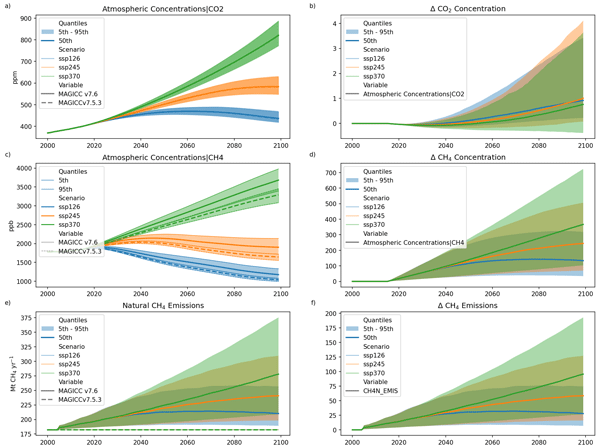
High resolution models of the earth system exhibit some disagreement and uncertainty on future methane emissions from natural sources, in particular wetlands, with some studies predicting wetlands alone could be very significant sources over the 21st century. Modelling these emissions as a response to global temperature is one option for simple models to approximate the climate impact of wetlands. The effect is a small increase in overall temperatures and a widening of the uncertainty range.
Paulo Ceppi, Alejandro Bodas-Salcedo, Mark D. Zelinka, Timothy Andrews, Florent Brient, Robin Chadwick, An-Zhuo Dai, Jonathan M. Gregory, Yen-Ting Hwang, Sarah M. Kang, Jennifer E. Kay, Thorsten Mauritsen, Tomoo Ogura, George Tselioudis, Masahiro Watanabe, Mark J. Webb, and Allison A. Wing
Geosci. Model Dev., 19, 8693–8708, https://doi.org/10.5194/gmd-19-8693-2026, https://doi.org/10.5194/gmd-19-8693-2026, 2026
Short summary
Short summary
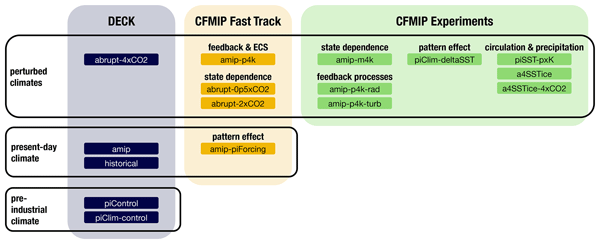
Clouds constitute a key uncertainty for climate change projections. The Cloud Feedback Model Intercomparison Project (CFMIP) aims to address this challenge by evaluating and understanding clouds and their impacts on atmospheric circulation, precipitation, and climate sensitivity. The present paper describes the CFMIP experiment protocol for the Coupled Model Intercomparison Project phase 7 (CMIP7), and discusses the accompanying science questions and opportunities for progress.
Alexander Nauels, Tessa Möller, Victor Couplet, Robert E. Kopp, Praveen Kumar, Matthias Mengel, Gregory Munday, Zebedee R. J. Nicholls, Lennart Ramme, Aimée B. A. Slangen, Chris Smith, Jennifer H. Weeks, and Tony E. Wong
EGUsphere, https://doi.org/10.5194/egusphere-2026-3874, https://doi.org/10.5194/egusphere-2026-3874, 2026
This preprint is open for discussion and under review for Geoscientific Model Development (GMD).
Short summary
Short summary
Sea levels will keep rising for centuries, so coastal planning needs long-term outlooks. For the first time, we brought together seven simplified models, called emulators, and combined their estimates of future sea level rise to year 2300, including a scenario with strong temperature overshoot before returning to 1.5 °C of warming. The emulators differ most over how much ice Antarctica will lose. Even if global temperatures fall again, extra sea level rise stays locked in for centuries.
Alejandro Romero-Prieto, Marit Sandstad, Benjamin M. Sanderson, Zebedee R. J. Nicholls, Norman J. Steinert, Thomas Gasser, Camilla Mathison, Jarmo Kikstra, Thomas J. Aubry, Katsumasa Tanaka, Konstantin Weber, and Chris Smith
Geosci. Model Dev., 19, 7111–7133, https://doi.org/10.5194/gmd-19-7111-2026, https://doi.org/10.5194/gmd-19-7111-2026, 2026
Short summary
Short summary
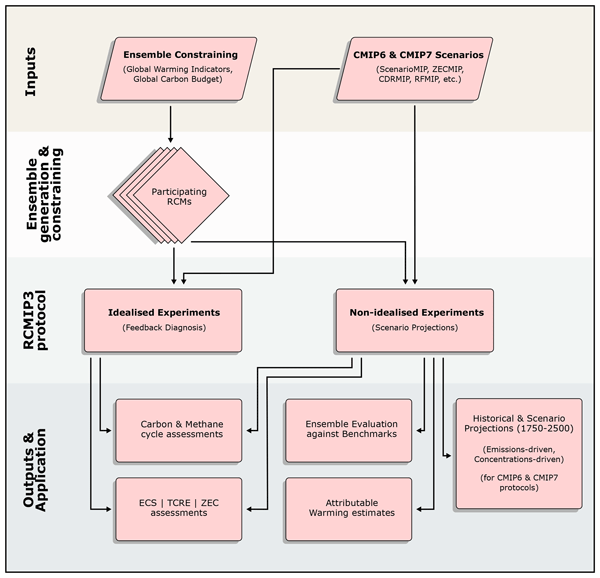
Reduced-complexity models are an important tool in climate science, helping us understand and estimate future climate change. We present the experimental protocol for the next phase of the reduced-complexity model intercomparison project, which aims to compare results from many such models to better understand their behaviour. This knowledge will guide how these models are developed and used in the future, including in the upcoming Intergovernmental Panel on Climate Change (IPCC) assessment report (AR7).
Niklas Schwind, Mahé Perrette, Edward Byers, Annika Högner, Quentin Lejeune, Tessa Möller, Zebedee Nicholls, Peter Pfleiderer, Sarah Schöngart, Michaela Werning, and Carl-Friedrich Schleussner
Geosci. Model Dev., 19, 6797–6828, https://doi.org/10.5194/gmd-19-6797-2026, https://doi.org/10.5194/gmd-19-6797-2026, 2026
Short summary
Short summary
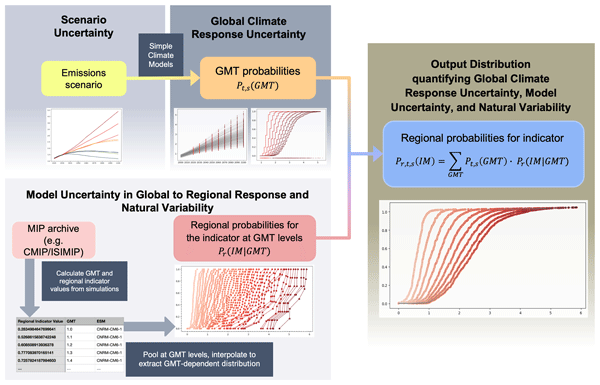
We study how regional climate and climate impact indicators may respond to different emissions scenarios. Their possible outcomes are shaped by uncertainties in future emissions, global warming, regional effects of global warming, and the chaotic climate system. We introduce RIME-X (Rapid Impact Model Emulator Extended), an emulator that combines multiple tools and datasets to estimate probabilistically how any emissions path may influence regional outcomes.
Liam J. Cassidy, Andrew D. King, Josephine R. Brown, and Tilo Ziehn
EGUsphere, https://doi.org/10.5194/egusphere-2026-3644, https://doi.org/10.5194/egusphere-2026-3644, 2026
Short summary
Short summary
Human emissions of greenhouse gases have warmed the planet rapidly, and without reductions in emissions, it is likely that Earth will exceed 2°C global warming by 2100. Periods of net-negative emissions may be required to satisfy Paris Agreement goals. We explore climate change under net-zero and net-negative emissions using plausible future scenarios.
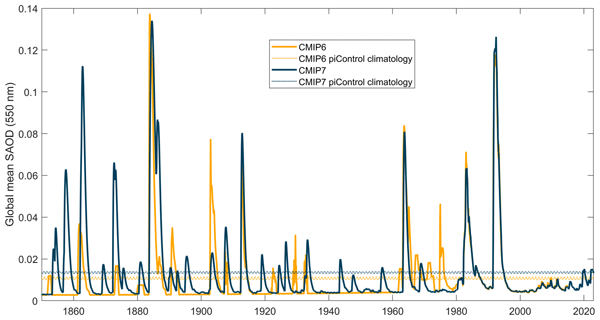
Thomas J. Aubry, Matthew Toohey, Sujan Khanal, Man Mei Chim, Magali Verkerk, Ben Johnson, Anja Schmidt, Mahesh Kovilakam, Michael Sigl, Zebedee Nicholls, Larry Thomason, Vaishali Naik, Landon Rieger, Dominik Stiller, Elisa Ziegler, Paul Durack, and Isabel H. Smith
Geosci. Model Dev., 19, 3725–3756, https://doi.org/10.5194/gmd-19-3725-2026, https://doi.org/10.5194/gmd-19-3725-2026, 2026
Short summary
Short summary
Climate forcings, such as solar radiation or anthropogenic greenhouse gases, are required to run global climate model simulations. Stratospheric aerosols, which mostly originate from large volcanic eruptions, are a key natural forcing. In this paper, we document the stratospheric aerosol forcing dataset that will feed the next generation (CMIP7) of climate models. Our dataset is very different from its predecessor (CMIP6), which might affect simulations of the 1850–2021 climate.
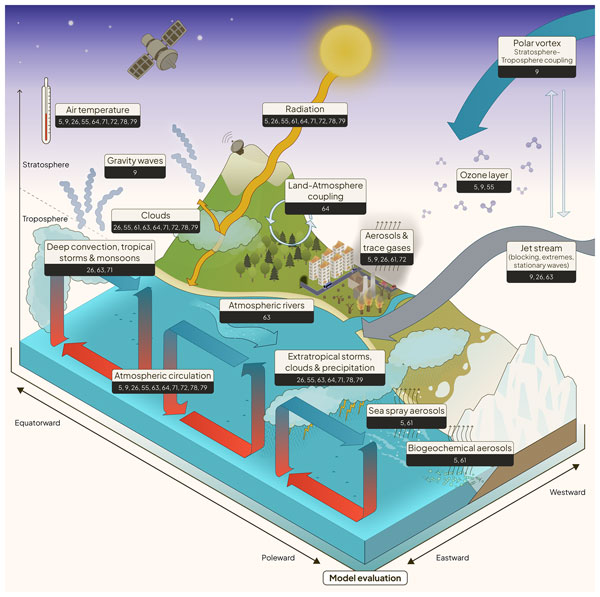
Beth Dingley, James A. Anstey, Marta Abalos, Carsten Abraham, Tommi Bergman, Lisa Bock, Sonya Fiddes, Birgit Hassler, Ryan J. Kramer, Fei Luo, Fiona M. O'Connor, Petr Šácha, Isla R. Simpson, Laura J. Wilcox, and Mark D. Zelinka
Geosci. Model Dev., 19, 2945–2984, https://doi.org/10.5194/gmd-19-2945-2026, https://doi.org/10.5194/gmd-19-2945-2026, 2026
Short summary
Short summary
This manuscript defines as a list of variables and scientific opportunities which are requested from the Coupled Model Intercomparison Project Phase 7 (CMIP7) Assessment Fast Track to address open atmospheric science questions. The list reflects the output of a large public community engagement effort, coordinated across autumn 2025 through to summer 2025.
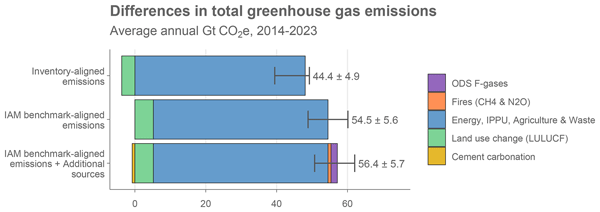
William F. Lamb, Robbie M. Andrew, Matthew Jones, Zebedee Nicholls, Glen P. Peters, Chris Smith, Marielle Saunois, Giacomo Grassi, Julia Pongratz, Steven J. Smith, Francesco N. Tubiello, Monica Crippa, Matthew Gidden, Pierre Friedlingstein, Jan Minx, and Piers M. Forster
Earth Syst. Sci. Data, 18, 2549–2572, https://doi.org/10.5194/essd-18-2549-2026, https://doi.org/10.5194/essd-18-2549-2026, 2026
Short summary
Short summary
This study explores why global greenhouse gas (GHG) emissions estimates vary. Key reasons include different coverage of gases and sectors, varying definitions of anthropogenic land use change emissions, and the Paris Agreement not covering all emission sources. The study highlights three main ways emissions data is reported, each with different objectives and resulting in varying global emission totals. It emphasizes the need for transparency in choosing datasets and setting assessment scopes.
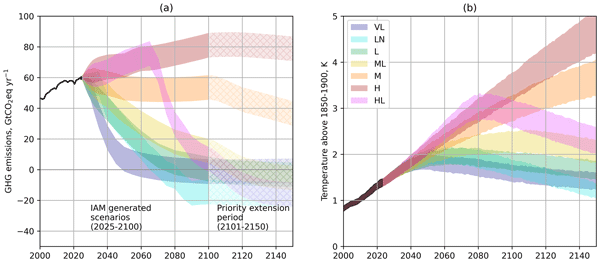
Detlef P. Van Vuuren, Brian C. O'Neill, Claudia Tebaldi, Benjamin M. Sanderson, Louise P. Chini, Pierre Friedlingstein, Tomoko Hasegawa, Keywan Riahi, Bala Govindasamy, Nico Bauer, Veronika Eyring, Cheikh M. N. Fall, Katja Frieler, Matthew J. Gidden, Laila K. Gohar, Annika Högner, Andrew D. Jones, Jarmo Kikstra, Andrew King, Reto Knutti, Elmar Kriegler, Peter Lawrence, Chris Lennard, Jason Lowe, Camilla Mathison, Shahbaz Mehmood, Zebedee Nicholls, Luciana F. Prado, Qiang Zhang, Steven K. Rose, Alex C. Ruane, Marit Sandstad, Carl-Friedrich Schleussner, Roland Seferian, Jana Sillmann, Chris Smith, Anna A. Sörensson, Swapna Panickal, Kaoru Tachiiri, Naomi Vaughan, Saritha S. Vishwanathan, Tokuta Yokohata, Marco Zecchetto, and Tilo Ziehn
Geosci. Model Dev., 19, 2627–2656, https://doi.org/10.5194/gmd-19-2627-2026, https://doi.org/10.5194/gmd-19-2627-2026, 2026
Short summary
Short summary
We propose a set of seven plausible 21st century emission scenarios, and their multi-century extensions, that will be used by the international community of climate modeling centers to produce the next generation of climate projections. These projections will support climate, impact and mitigation researchers, provide information to practitioners to address future risks from climate change, and contribute to policymakers’ considerations of the trade-offs among various levels of mitigation.
Rachel Yuen Sum Tam, Timothy A. Myers, Mark D. Zelinka, Cristian Proistosescu, Yuan-Jen Lin, and Kate Marvel
Atmos. Chem. Phys., 26, 4289–4311, https://doi.org/10.5194/acp-26-4289-2026, https://doi.org/10.5194/acp-26-4289-2026, 2026
Short summary
Short summary
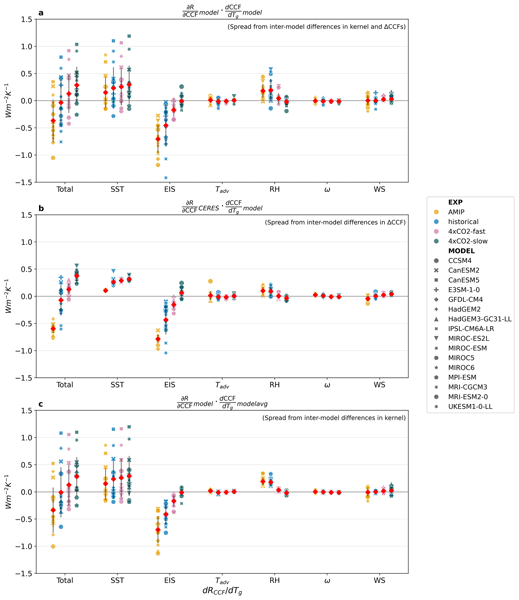
This work identifies the key driver to the change of present and future climate response, known as the pattern effect, by breaking down low-cloud feedback as the radiative changes to meteorology and the meteorology changes to warming using a cloud controlling factor framework. We identify inversion strength in the Southern Ocean and the South East Pacific as the main driver to the pattern effect, and larger uncertainty remains in the sensitivities of radiative flux to meteorology.
Paulo Ceppi, Sarah Wilson Kemsley, Hendrik Andersen, Timothy Andrews, Ryan J. Kramer, Peer Nowack, Casey J. Wall, and Mark D. Zelinka
Atmos. Chem. Phys., 26, 4153–4171, https://doi.org/10.5194/acp-26-4153-2026, https://doi.org/10.5194/acp-26-4153-2026, 2026
Short summary
Short summary
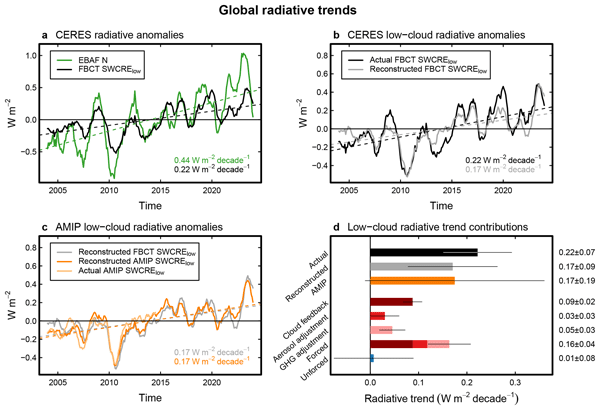
Recent decades have seen a marked decrease in global low-level cloud cover, leading to more sunlight heating the Earth. This trend is poorly understood, raising the concern that clouds may amplify global warming more than previously thought. We show that the cloud decrease is mostly caused by human forcing on climate, and that it agrees with previous estimates of how clouds respond to decreasing aerosol pollution, increasing greenhouse gas concentration, and their effects on global temperature.
Andrew D. King, Nerilie J. Abram, Eduardo Alastrué de Asenjo, and Tilo Ziehn
Earth Syst. Dynam., 16, 1605–1609, https://doi.org/10.5194/esd-16-1605-2025, https://doi.org/10.5194/esd-16-1605-2025, 2025
Short summary
Short summary
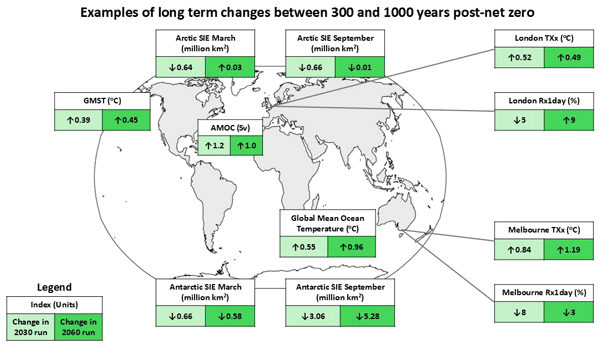
It is vital that climate changes under net zero emissions are well understood to support decision making processes. Current modelling efforts are insufficient, partly due to limited simulation lengths. We propose a framework for 1000-year-long simulations that attempts to minimise computing resources by leveraging existing simulations. This will increase understanding of the implications of current climate policies for the Earth System over coming decades and centuries.
John P. Dunne, Helene T. Hewitt, Julie M. Arblaster, Frédéric Bonou, Olivier Boucher, Tereza Cavazos, Beth Dingley, Paul J. Durack, Birgit Hassler, Martin Juckes, Tomoki Miyakawa, Matt Mizielinski, Vaishali Naik, Zebedee Nicholls, Eleanor O'Rourke, Robert Pincus, Benjamin M. Sanderson, Isla R. Simpson, and Karl E. Taylor
Geosci. Model Dev., 18, 6671–6700, https://doi.org/10.5194/gmd-18-6671-2025, https://doi.org/10.5194/gmd-18-6671-2025, 2025
Short summary
Short summary
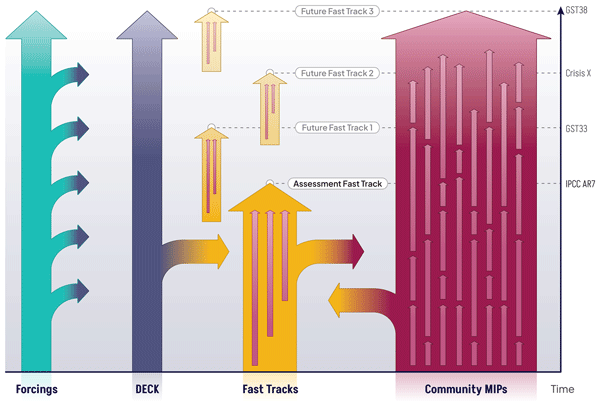
The seventh phase of the Coupled Model Intercomparison Project (CMIP7) coordinates efforts to answer key and timely climate science questions and facilitate delivery of relevant multi-model simulations for prediction and projection; characterization, attribution, and process understanding; and vulnerability, impact, and adaptation analysis. Key to the CMIP7 design are the mandatory Diagnostic, Evaluation and Characterization of Klima and optional Assessment Fast Track experiments.
Benjamin M. Sanderson, Victor Brovkin, Rosie A. Fisher, David Hohn, Tatiana Ilyina, Chris D. Jones, Torben Koenigk, Charles Koven, Hongmei Li, David M. Lawrence, Peter Lawrence, Spencer Liddicoat, Andrew H. MacDougall, Nadine Mengis, Zebedee Nicholls, Eleanor O'Rourke, Anastasia Romanou, Marit Sandstad, Jörg Schwinger, Roland Séférian, Lori T. Sentman, Isla R. Simpson, Chris Smith, Norman J. Steinert, Abigail L. S. Swann, Jerry Tjiputra, and Tilo Ziehn
Geosci. Model Dev., 18, 5699–5724, https://doi.org/10.5194/gmd-18-5699-2025, https://doi.org/10.5194/gmd-18-5699-2025, 2025
Short summary
Short summary
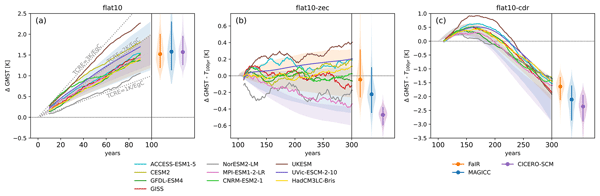
This study investigates how climate models warm in response to simplified carbon emissions trajectories, refining the understanding of climate reversibility and commitment. Metrics are defined for warming response to cumulative emissions and for the cessation of emissions or ramp-down to net-zero and net-negative levels. Results indicate that previous concentration-driven experiments may have overstated the Zero Emissions Commitment due to emissions rates exceeding historical levels.
Gang Tang, Zebedee Nicholls, Alexander Norton, Sönke Zaehle, and Malte Meinshausen
Geosci. Model Dev., 18, 2193–2230, https://doi.org/10.5194/gmd-18-2193-2025, https://doi.org/10.5194/gmd-18-2193-2025, 2025
Short summary
Short summary
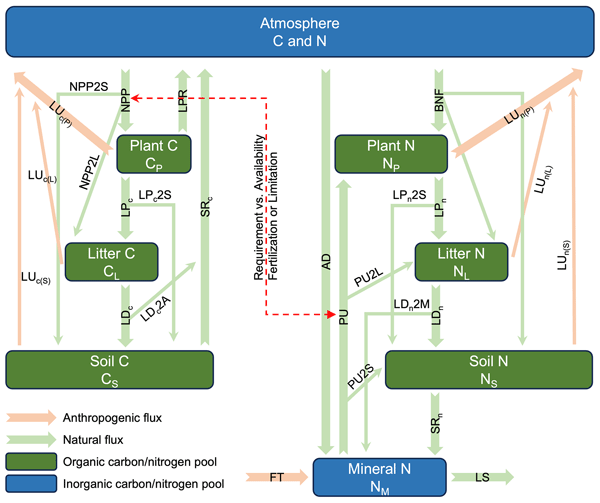
We studied carbon–nitrogen coupling in Earth system models by developing a global carbon–nitrogen cycle model (CNit v1.0) within the widely used emulator MAGICC. CNit effectively reproduced the global carbon–nitrogen cycle dynamics observed in complex models. Our results show persistent nitrogen limitations on plant growth (net primary production) from 1850 to 2100, suggesting that nitrogen deficiency may constrain future land carbon sequestration.
Gang Tang, Zebedee Nicholls, Chris Jones, Thomas Gasser, Alexander Norton, Tilo Ziehn, Alejandro Romero-Prieto, and Malte Meinshausen
Geosci. Model Dev., 18, 2111–2136, https://doi.org/10.5194/gmd-18-2111-2025, https://doi.org/10.5194/gmd-18-2111-2025, 2025
Short summary
Short summary
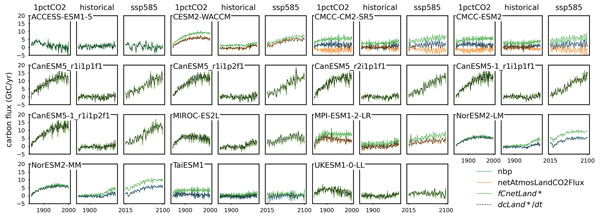
We analyzed carbon and nitrogen mass conservation in data from various Earth system models. Our findings reveal significant discrepancies between flux and pool size data, where cumulative imbalances can reach hundreds of gigatons of carbon or nitrogen. These imbalances appear primarily due to missing or inconsistently reported fluxes – especially for land-use and fire emissions. To enhance data quality, we recommend that future climate data protocols address this issue at the reporting stage.
Mark D. Zelinka, Li-Wei Chao, Timothy A. Myers, Yi Qin, and Stephen A. Klein
Atmos. Chem. Phys., 25, 1477–1495, https://doi.org/10.5194/acp-25-1477-2025, https://doi.org/10.5194/acp-25-1477-2025, 2025
Short summary
Short summary
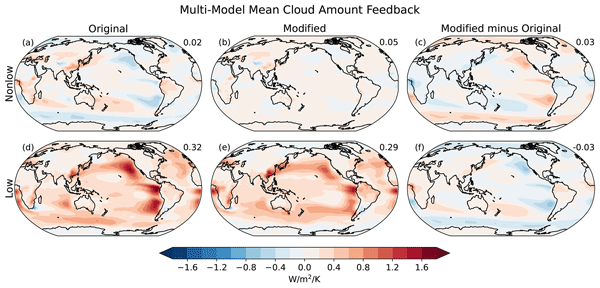
Clouds lie at the heart of uncertainty in both climate sensitivity and radiative forcing, making it imperative to properly diagnose their radiative effects. Here we provide a recommended methodology and code base for the community to use in performing such diagnoses using cloud radiative kernels. We show that properly accounting for changes in obscuration of lower-level clouds by upper-level clouds is important for accurate diagnosis and attribution of cloud feedbacks and adjustments.
Chris Smith, Donald P. Cummins, Hege-Beate Fredriksen, Zebedee Nicholls, Malte Meinshausen, Myles Allen, Stuart Jenkins, Nicholas Leach, Camilla Mathison, and Antti-Ilari Partanen
Geosci. Model Dev., 17, 8569–8592, https://doi.org/10.5194/gmd-17-8569-2024, https://doi.org/10.5194/gmd-17-8569-2024, 2024
Short summary
Short summary
Climate projections are only useful if the underlying models that produce them are well calibrated and can reproduce observed climate change. We formalise a software package that calibrates the open-source FaIR simple climate model to full-complexity Earth system models. Observations, including historical warming, and assessments of key climate variables such as that of climate sensitivity are used to constrain the model output.
Benjamin M. Sanderson, Ben B. B. Booth, John Dunne, Veronika Eyring, Rosie A. Fisher, Pierre Friedlingstein, Matthew J. Gidden, Tomohiro Hajima, Chris D. Jones, Colin G. Jones, Andrew King, Charles D. Koven, David M. Lawrence, Jason Lowe, Nadine Mengis, Glen P. Peters, Joeri Rogelj, Chris Smith, Abigail C. Snyder, Isla R. Simpson, Abigail L. S. Swann, Claudia Tebaldi, Tatiana Ilyina, Carl-Friedrich Schleussner, Roland Séférian, Bjørn H. Samset, Detlef van Vuuren, and Sönke Zaehle
Geosci. Model Dev., 17, 8141–8172, https://doi.org/10.5194/gmd-17-8141-2024, https://doi.org/10.5194/gmd-17-8141-2024, 2024
Short summary
Short summary
We discuss how, in order to provide more relevant guidance for climate policy, coordinated climate experiments should adopt a greater focus on simulations where Earth system models are provided with carbon emissions from fossil fuels together with land use change instructions, rather than past approaches that have largely focused on experiments with prescribed atmospheric carbon dioxide concentrations. We discuss how these goals might be achieved in coordinated climate modeling experiments.
Andrew D. King, Tilo Ziehn, Matthew Chamberlain, Alexander R. Borowiak, Josephine R. Brown, Liam Cassidy, Andrea J. Dittus, Michael Grose, Nicola Maher, Seungmok Paik, Sarah E. Perkins-Kirkpatrick, and Aditya Sengupta
Earth Syst. Dynam., 15, 1353–1383, https://doi.org/10.5194/esd-15-1353-2024, https://doi.org/10.5194/esd-15-1353-2024, 2024
Short summary
Short summary
Governments are targeting net-zero emissions later this century with the aim of limiting global warming in line with the Paris Agreement. However, few studies explore the long-term consequences of reaching net-zero emissions and the effects of a delay in reaching net-zero. We use the Australian Earth system model to examine climate evolution under net-zero emissions. We find substantial changes which differ regionally, including continued Southern Ocean warming and Antarctic sea ice reduction.
Malte Meinshausen, Carl-Friedrich Schleussner, Kathleen Beyer, Greg Bodeker, Olivier Boucher, Josep G. Canadell, John S. Daniel, Aïda Diongue-Niang, Fatima Driouech, Erich Fischer, Piers Forster, Michael Grose, Gerrit Hansen, Zeke Hausfather, Tatiana Ilyina, Jarmo S. Kikstra, Joyce Kimutai, Andrew D. King, June-Yi Lee, Chris Lennard, Tabea Lissner, Alexander Nauels, Glen P. Peters, Anna Pirani, Gian-Kasper Plattner, Hans Pörtner, Joeri Rogelj, Maisa Rojas, Joyashree Roy, Bjørn H. Samset, Benjamin M. Sanderson, Roland Séférian, Sonia Seneviratne, Christopher J. Smith, Sophie Szopa, Adelle Thomas, Diana Urge-Vorsatz, Guus J. M. Velders, Tokuta Yokohata, Tilo Ziehn, and Zebedee Nicholls
Geosci. Model Dev., 17, 4533–4559, https://doi.org/10.5194/gmd-17-4533-2024, https://doi.org/10.5194/gmd-17-4533-2024, 2024
Short summary
Short summary
The scientific community is considering new scenarios to succeed RCPs and SSPs for the next generation of Earth system model runs to project future climate change. To contribute to that effort, we reflect on relevant policy and scientific research questions and suggest categories for representative emission pathways. These categories are tailored to the Paris Agreement long-term temperature goal, high-risk outcomes in the absence of further climate policy and worlds “that could have been”.
Jiwoo Lee, Peter J. Gleckler, Min-Seop Ahn, Ana Ordonez, Paul A. Ullrich, Kenneth R. Sperber, Karl E. Taylor, Yann Y. Planton, Eric Guilyardi, Paul Durack, Celine Bonfils, Mark D. Zelinka, Li-Wei Chao, Bo Dong, Charles Doutriaux, Chengzhu Zhang, Tom Vo, Jason Boutte, Michael F. Wehner, Angeline G. Pendergrass, Daehyun Kim, Zeyu Xue, Andrew T. Wittenberg, and John Krasting
Geosci. Model Dev., 17, 3919–3948, https://doi.org/10.5194/gmd-17-3919-2024, https://doi.org/10.5194/gmd-17-3919-2024, 2024
Short summary
Short summary
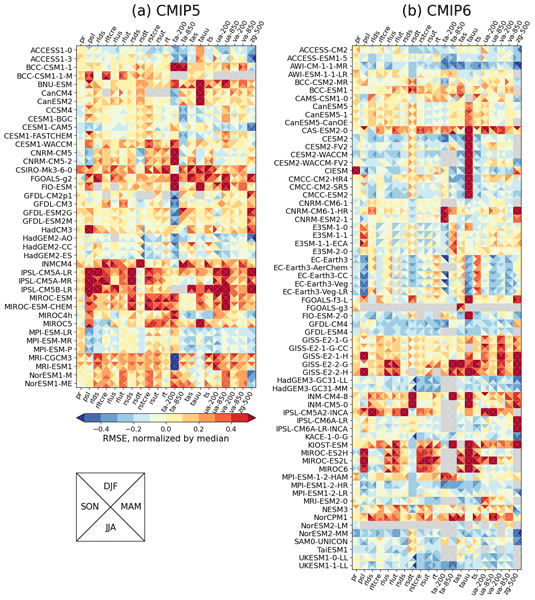
We introduce an open-source software, the PCMDI Metrics Package (PMP), developed for a comprehensive comparison of Earth system models (ESMs) with real-world observations. Using diverse metrics evaluating climatology, variability, and extremes simulated in thousands of simulations from the Coupled Model Intercomparison Project (CMIP), PMP aids in benchmarking model improvements across generations. PMP also enables efficient tracking of performance evolutions during ESM developments.
Mark D. Zelinka, Christopher J. Smith, Yi Qin, and Karl E. Taylor
Atmos. Chem. Phys., 23, 8879–8898, https://doi.org/10.5194/acp-23-8879-2023, https://doi.org/10.5194/acp-23-8879-2023, 2023
Short summary
Short summary
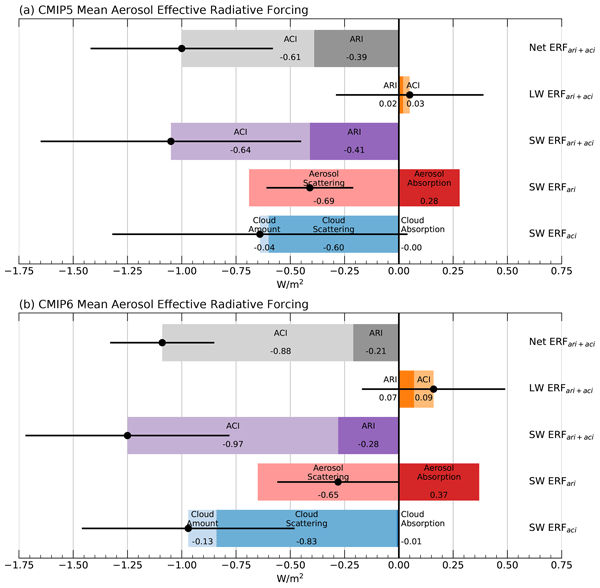
The primary uncertainty in how strongly Earth's climate has been perturbed by human activities comes from the unknown radiative impact of aerosol changes. Accurately quantifying these forcings – and their sub-components – in climate models is crucial for understanding the past and future simulated climate. In this study we describe biases in previously published estimates of aerosol radiative forcing in climate models and provide corrected estimates along with code for users to compute them.
Susanne Baur, Alexander Nauels, Zebedee Nicholls, Benjamin M. Sanderson, and Carl-Friedrich Schleussner
Earth Syst. Dynam., 14, 367–381, https://doi.org/10.5194/esd-14-367-2023, https://doi.org/10.5194/esd-14-367-2023, 2023
Short summary
Short summary
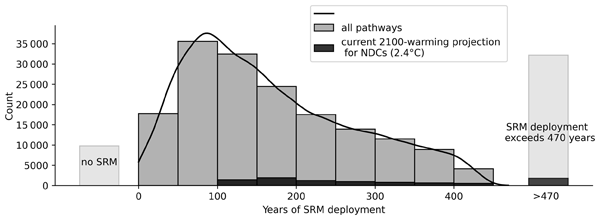
Solar radiation modification (SRM) artificially cools global temperature without acting on the cause of climate change. This study looks at how long SRM would have to be deployed to limit warming to 1.5 °C and how this timeframe is affected by different levels of mitigation, negative emissions and climate uncertainty. None of the three factors alone can guarantee short SRM deployment. Due to their uncertainty at the time of SRM initialization, any deployment risks may be several centuries long.
Jarmo S. Kikstra, Zebedee R. J. Nicholls, Christopher J. Smith, Jared Lewis, Robin D. Lamboll, Edward Byers, Marit Sandstad, Malte Meinshausen, Matthew J. Gidden, Joeri Rogelj, Elmar Kriegler, Glen P. Peters, Jan S. Fuglestvedt, Ragnhild B. Skeie, Bjørn H. Samset, Laura Wienpahl, Detlef P. van Vuuren, Kaj-Ivar van der Wijst, Alaa Al Khourdajie, Piers M. Forster, Andy Reisinger, Roberto Schaeffer, and Keywan Riahi
Geosci. Model Dev., 15, 9075–9109, https://doi.org/10.5194/gmd-15-9075-2022, https://doi.org/10.5194/gmd-15-9075-2022, 2022
Short summary
Short summary
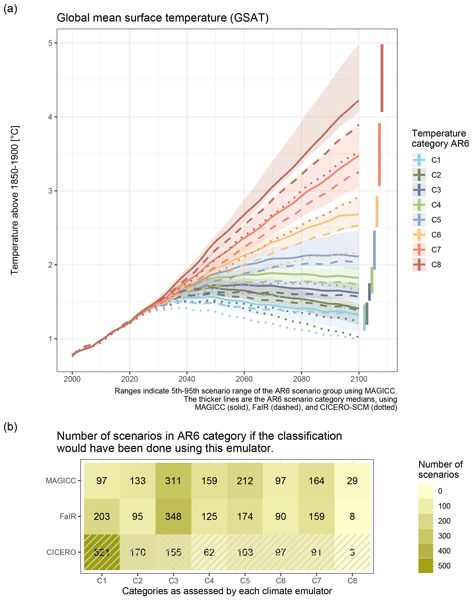
Assessing hundreds or thousands of emission scenarios in terms of their global mean temperature implications requires standardised procedures of infilling, harmonisation, and probabilistic temperature assessments. We here present the open-source
climate-assessmentworkflow that was used in the IPCC AR6 Working Group III report. The paper provides key insight for anyone wishing to understand the assessment of climate outcomes of mitigation pathways in the context of the Paris Agreement.
Charles D. Koven, Vivek K. Arora, Patricia Cadule, Rosie A. Fisher, Chris D. Jones, David M. Lawrence, Jared Lewis, Keith Lindsay, Sabine Mathesius, Malte Meinshausen, Michael Mills, Zebedee Nicholls, Benjamin M. Sanderson, Roland Séférian, Neil C. Swart, William R. Wieder, and Kirsten Zickfeld
Earth Syst. Dynam., 13, 885–909, https://doi.org/10.5194/esd-13-885-2022, https://doi.org/10.5194/esd-13-885-2022, 2022
Short summary
Short summary
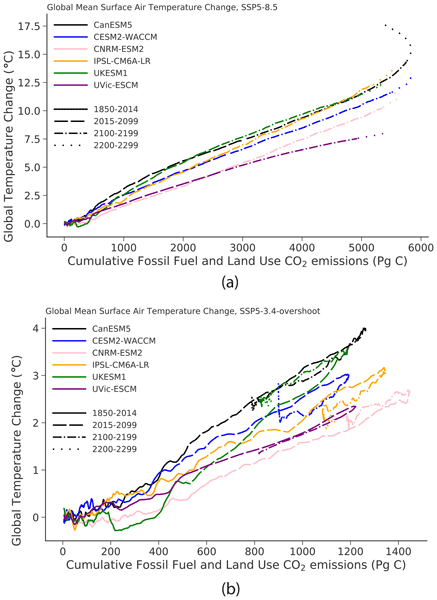
We explore the long-term dynamics of Earth's climate and carbon cycles under a pair of contrasting scenarios to the year 2300 using six models that include both climate and carbon cycle dynamics. One scenario assumes very high emissions, while the second assumes a peak in emissions, followed by rapid declines to net negative emissions. We show that the models generally agree that warming is roughly proportional to carbon emissions but that many other aspects of the model projections differ.
Po-Lun Ma, Bryce E. Harrop, Vincent E. Larson, Richard B. Neale, Andrew Gettelman, Hugh Morrison, Hailong Wang, Kai Zhang, Stephen A. Klein, Mark D. Zelinka, Yuying Zhang, Yun Qian, Jin-Ho Yoon, Christopher R. Jones, Meng Huang, Sheng-Lun Tai, Balwinder Singh, Peter A. Bogenschutz, Xue Zheng, Wuyin Lin, Johannes Quaas, Hélène Chepfer, Michael A. Brunke, Xubin Zeng, Johannes Mülmenstädt, Samson Hagos, Zhibo Zhang, Hua Song, Xiaohong Liu, Michael S. Pritchard, Hui Wan, Jingyu Wang, Qi Tang, Peter M. Caldwell, Jiwen Fan, Larry K. Berg, Jerome D. Fast, Mark A. Taylor, Jean-Christophe Golaz, Shaocheng Xie, Philip J. Rasch, and L. Ruby Leung
Geosci. Model Dev., 15, 2881–2916, https://doi.org/10.5194/gmd-15-2881-2022, https://doi.org/10.5194/gmd-15-2881-2022, 2022
Short summary
Short summary
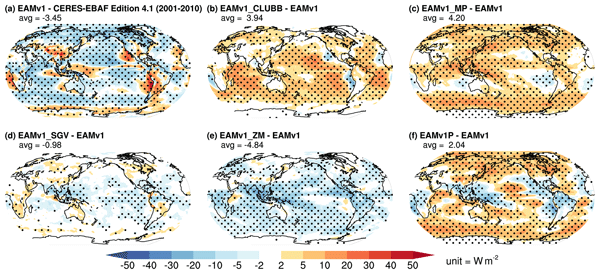
An alternative set of parameters for E3SM Atmospheric Model version 1 has been developed based on a tuning strategy that focuses on clouds. When clouds in every regime are improved, other aspects of the model are also improved, even though they are not the direct targets for calibration. The recalibrated model shows a lower sensitivity to anthropogenic aerosols and surface warming, suggesting potential improvements to the simulated climate in the past and future.
Lea Beusch, Zebedee Nicholls, Lukas Gudmundsson, Mathias Hauser, Malte Meinshausen, and Sonia I. Seneviratne
Geosci. Model Dev., 15, 2085–2103, https://doi.org/10.5194/gmd-15-2085-2022, https://doi.org/10.5194/gmd-15-2085-2022, 2022
Short summary
Short summary
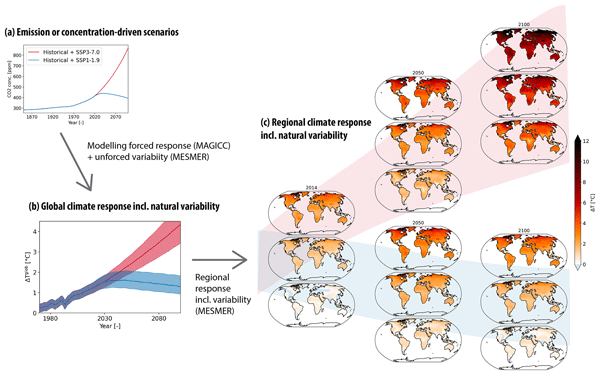
We introduce the first chain of computationally efficient Earth system model (ESM) emulators to translate user-defined greenhouse gas emission pathways into regional temperature change time series accounting for all major sources of climate change projection uncertainty. By combining the global mean emulator MAGICC with the spatially resolved emulator MESMER, we can derive ESM-specific and constrained probabilistic emulations to rapidly provide targeted climate information at the local scale.
Cited articles
Andrews, T., Gregory, J. M., Webb, M. J., and Taylor, K. E.: Forcing, feedbacks and climate sensitivity in CMIP5 coupled atmosphere–ocean climate models, Geophys. Res. Lett., 39, https://doi.org/10.1029/2012GL051607, 2012.
Andrews, T., Gregory, J. M., and Webb, M. J.: The Dependence of Radiative Forcing and Feedback on Evolving Patterns of Surface Temperature Change in Climate Models, https://doi.org/10.1175/JCLI-D-14-00545.1, 2015.
Armour, K. C.: Energy budget constraints on climate sensitivity in light of inconstant climate feedbacks, Nat. Clim. Change, 7, 331–335, https://doi.org/10.1038/nclimate3278, 2017.
Armour, K. C., Bitz, C. M., and Roe, G. H.: Time-Varying Climate Sensitivity from Regional Feedbacks, https://doi.org/10.1175/JCLI-D-12-00544.1, 2013.
Bloch-Johnson, J., Pierrehumbert, R. T., and Abbot, D. S.: Feedback temperature dependence determines the risk of high warming, Geophys. Res. Lett., 42, 4973–4980, https://doi.org/10.1002/2015GL064240, 2015.
Bloch-Johnson, J., Rugenstein, M., Stolpe, M. B., Rohrschneider, T., Zheng, Y., and Gregory, J. M.: Climate Sensitivity Increases Under Higher CO2 Levels Due to Feedback Temperature Dependence, Geophys. Res. Lett., 48, e2020GL089074, https://doi.org/10.1029/2020GL089074, 2021.
Boer, G. J. and Yu, B.: Dynamical aspects of climate sensitivity, Geophys. Res. Lett., 30, 2002GL016549, https://doi.org/10.1029/2002GL016549, 2003.
Bryan, K., Manabe, S., and Spelman, M. J.: Interhemispheric Asymmetry in the Transient Response of a Coupled Ocean–Atmosphere Model to a CO2 Forcing, J. Phys. Oceanogr., 18, 851–867, https://doi.org/10.1175/1520-0485(1988)018<0851:IAITTR>2.0.CO;2, 1988.
Byrne, B. and Goldblatt, C.: Radiative forcing at high concentrations of well-mixed greenhouse gases, Geophys. Res. Lett., 41, 152–160, https://doi.org/10.1002/2013GL058456, 2014.
Caldwell, P. M., Zelinka, M. D., Taylor, K. E., and Marvel, K.: Quantifying the Sources of Intermodel Spread in Equilibrium Climate Sensitivity, https://doi.org/10.1175/JCLI-D-15-0352.1, 2016.
Ceppi, P. and Gregory, J. M.: A refined model for the Earth’s global energy balance, Clim. Dyn., 53, 4781–4797, https://doi.org/10.1007/s00382-019-04825-x, 2019.
Chalmers, J., Kay, J. E., Middlemas, E. A., Maroon, E. A., and DiNezio, P.: Does Disabling Cloud Radiative Feedbacks Change Spatial Patterns of Surface Greenhouse Warming and Cooling?, https://doi.org/10.1175/JCLI-D-21-0391.1, 2022.
Chao, L.-W. and Dessler, A. E.: An Assessment of Climate Feedbacks in Observations and Climate Models Using Different Energy Balance Frameworks, https://doi.org/10.1175/JCLI-D-21-0226.1, 2021.
Cowtan, K., Hausfather, Z., Hawkins, E., Jacobs, P., Mann, M. E., Miller, S. K., Steinman, B. A., Stolpe, M. B., and Way, R. G.: Robust comparison of climate models with observations using blended land air and ocean sea surface temperatures, Geophys. Res. Lett., 42, 6526–6534, https://doi.org/10.1002/2015GL064888, 2015.
Dai, A., Huang, D., Rose, B. E. J., Zhu, J., and Tian, X.: Improved methods for estimating equilibrium climate sensitivity from transient warming simulations, Clim. Dyn., 54, 4515–4543, https://doi.org/10.1007/s00382-020-05242-1, 2020.
Danabasoglu, G. and Gent, P. R.: Equilibrium Climate Sensitivity: Is It Accurate to Use a Slab Ocean Model?, https://doi.org/10.1175/2008JCLI2596.1, 2009.
Dessler, A. E. and Forster, P. M.: An Estimate of Equilibrium Climate Sensitivity From Interannual Variability, J. Geophys. Res. Atmospheres, 123, 8634–8645, https://doi.org/10.1029/2018JD028481, 2018.
Dong, Y., Armour, K. C., Zelinka, M. D., Proistosescu, C., Battisti, D. S., Zhou, C., and Andrews, T.: Intermodel Spread in the Pattern Effect and Its Contribution to Climate Sensitivity in CMIP5 and CMIP6 Models, https://doi.org/10.1175/JCLI-D-19-1011.1, 2020.
Dunne, J. P., Winton, M., Bacmeister, J., Danabasoglu, G., Gettelman, A., Golaz, J.-C., Hannay, C., Schmidt, G. A., Krasting, J. P., Leung, L. R., Nazarenko, L., Sentman, L. T., Stouffer, R. J., and Wolfe, J. D.: Comparison of Equilibrium Climate Sensitivity Estimates From Slab Ocean, 150-Year, and Longer Simulations, Geophys. Res. Lett., 47, e2020GL088852, https://doi.org/10.1029/2020GL088852, 2020.
Dunne, J. P., Hewitt, H. T., Arblaster, J. M., Bonou, F., Boucher, O., Cavazos, T., Dingley, B., Durack, P. J., Hassler, B., Juckes, M., Miyakawa, T., Mizielinski, M., Naik, V., Nicholls, Z., O'Rourke, E., Pincus, R., Sanderson, B. M., Simpson, I. R., and Taylor, K. E.: An evolving Coupled Model Intercomparison Project phase 7 (CMIP7) and Fast Track in support of future climate assessment, Geosci. Model Dev., 18, 6671–6700, https://doi.org/10.5194/gmd-18-6671-2025, 2025.
Eiselt, K.-U. and Graversen, R. G.: Change in Climate Sensitivity and Its Dependence on the Lapse-Rate Feedback in 4×CO2 Climate Model Experiments, https://doi.org/10.1175/JCLI-D-21-0623.1, 2022.
Eiselt, K.-U. and Graversen, R. G.: On the Control of Northern Hemispheric Feedbacks by AMOC: Evidence from CMIP and Slab Ocean Modeling, J. Clim., 36, 6777–6795, https://doi.org/10.1175/JCLI-D-22-0884.1, 2023.
ESGF LLNL Metagrid: CMIP6, ESGF [data set], https://aims2.llnl.gov/search/cmip6, last access: 26 May 2025.
Etminan, M., Myhre, G., Highwood, E. J., and Shine, K. P.: Radiative forcing of carbon dioxide, methane, and nitrous oxide: A significant revision of the methane radiative forcing, Geophys. Res. Lett., 43, 12614–12623, https://doi.org/10.1002/2016GL071930, 2016.
Eyring, V., Bony, S., Meehl, G. A., Senior, C. A., Stevens, B., Stouffer, R. J., and Taylor, K. E.: Overview of the Coupled Model Intercomparison Project Phase 6 (CMIP6) experimental design and organization, Geosci. Model Dev., 9, 1937–1958, https://doi.org/10.5194/gmd-9-1937-2016, 2016.
Flynn, C. M. and Mauritsen, T.: On the climate sensitivity and historical warming evolution in recent coupled model ensembles, Atmos. Chem. Phys., 20, 7829–7842, https://doi.org/10.5194/acp-20-7829-2020, 2020.
Forster, P. M., Richardson, T., Maycock, A. C., Smith, C. J., Samset, B. H., Myhre, G., Andrews, T., Pincus, R., and Schulz, M.: Recommendations for diagnosing effective radiative forcing from climate models for CMIP6, J. Geophys. Res. Atmospheres, 121, 12460–12475, https://doi.org/10.1002/2016JD025320, 2016.
Forster, P. M. F. and Gregory, J. M.: The Climate Sensitivity and Its Components Diagnosed from Earth Radiation Budget Data, J. Clim., 19, 39–52, https://doi.org/10.1175/JCLI3611.1, 2006.
Forster, P. M. F., Andrews, T., Good, P., Gregory, J. M., Jackson, L. S., and Zelinka, M.: Evaluating adjusted forcing and model spread for historical and future scenarios in the CMIP5 generation of climate models, J. Geophys. Res. Atmospheres, 118, 1139–1150, https://doi.org/10.1002/jgrd.50174, 2013.
Forster, P. M. F., Storelvmo, T., Armour, K. C., Collins, W., Dufresne, J.-L., Frame, D., Lunt, D. J., Mauritsen, T., Palmer, M. D., Watanabe, M., Wild, M., and Zhang, H.: The Earth's Energy Budget, Climate Feedbacks, and Climate Sensitivity, Clim. Change 2021 Phys. Sci. Basis Contrib. Work. Group Sixth Assess. Rep. Intergov. Panel Clim. Change, 923–1054, https://doi.org/10.1017/9781009157896.009, 2021.
Geoffroy, O., Saint-Martin, D., Bellon, G., Voldoire, A., Olivié, D. J. L., and Tytéca, S.: Transient Climate Response in a Two-Layer Energy-Balance Model. Part II: Representation of the Efficacy of Deep-Ocean Heat Uptake and Validation for CMIP5 AOGCMs, https://doi.org/10.1175/JCLI-D-12-00196.1, 2013.
Gilda, S.: tsbootstrap, Zenodo [code], https://doi.org/10.5281/zenodo.8226495, 2024.
Gregory, J. M., Ingram, W. J., Palmer, M. A., Jones, G. S., Stott, P. A., Thorpe, R. B., Lowe, J. A., Johns, T. C., and Williams, K. D.: A new method for diagnosing radiative forcing and climate sensitivity, Geophys. Res. Lett., 31, https://doi.org/10.1029/2003GL018747, 2004.
Gregory, J. M., Andrews, T., Ceppi, P., Mauritsen, T., and Webb, M. J.: How accurately can the climate sensitivity to CO2 be estimated from historical climate change?, Clim. Dyn., 54, 129–157, https://doi.org/10.1007/s00382-019-04991-y, 2020.
Gupta, A. S., Muir, L. C., Brown, J. N., Phipps, S. J., Durack, P. J., Monselesan, D., and Wijffels, S. E.: Climate Drift in the CMIP3 Models, https://doi.org/10.1175/JCLI-D-11-00312.1, 2012.
Gupta, A. S., Jourdain, N. C., Brown, J. N., and Monselesan, D.: Climate Drift in the CMIP5 Models, https://doi.org/10.1175/JCLI-D-12-00521.1, 2013.
Hansen, J., Sato, M., Ruedy, R., Nazarenko, L., Lacis, A., Schmidt, G. A., Russell, G., Aleinov, I., Bauer, M., Bauer, S., Bell, N., Cairns, B., Canuto, V., Chandler, M., Cheng, Y., Del Genio, A., Faluvegi, G., Fleming, E., Friend, A., Hall, T., Jackman, C., Kelley, M., Kiang, N., Koch, D., Lean, J., Lerner, J., Lo, K., Menon, S., Miller, R., Minnis, P., Novakov, T., Oinas, V., Perlwitz, Ja., Perlwitz, Ju., Rind, D., Romanou, A., Shindell, D., Stone, P., Sun, S., Tausnev, N., Thresher, D., Wielicki, B., Wong, T., Yao, M., and Zhang, S.: Efficacy of climate forcings, J. Geophys. Res. Atmospheres, 110, https://doi.org/10.1029/2005JD005776, 2005.
He, H., Soden, B., and Kramer, R. J.: Improved Estimates of Equilibrium Climate Sensitivity from Non-Equilibrated Climate Simulations, https://doi.org/10.22541/essoar.175157564.42459435/v1, 3 July 2025.
Him, W. (Kinen) K. and Pendergrass, A. G.: Timescale Dependence of the Precipitation Response to CO2-Induced Warming in Millennial-Length Climate Simulations, Geophys. Res. Lett., 51, e2024GL111609, https://doi.org/10.1029/2024GL111609, 2024.
Hobbs, W., Palmer, M. D., and Monselesan, D.: An Energy Conservation Analysis of Ocean Drift in the CMIP5 Global Coupled Models, https://doi.org/10.1175/JCLI-D-15-0477.1, 2016.
Irving, D., Hobbs, W., Church, J., and Zika, J.: A Mass and Energy Conservation Analysis of Drift in the CMIP6 Ensemble, https://doi.org/10.1175/JCLI-D-20-0281.1, 2021.
Isobe, T., Feigelson, E. D., Akritas, M. G., and Babu, G. J.: Linear regression in astronomy. I., 364, 104, https://doi.org/10.1086/169390, 1990.
Jain, S., Chhin, R., Doherty, R. M., Mishra, S. K., and Yoden, S.: A New Graphical Method to Diagnose the Impacts of Model Changes on Climate Sensitivity, J. Meteorol. Soc. Jpn. Ser II, 99, 437–448, https://doi.org/10.2151/jmsj.2021-021, 2021.
Klocke, D., Quaas, J., and Stevens, B.: Assessment of different metrics for physical climate feedbacks, Clim. Dyn., 41, 1173–1185, https://doi.org/10.1007/s00382-013-1757-1, 2013.
Kuma, P., Bender, F. A.-M., and Jönsson, A. R.: Climate Model Code Genealogy and Its Relation to Climate Feedbacks and Sensitivity, J. Adv. Model. Earth Syst., 15, e2022MS003588, https://doi.org/10.1029/2022MS003588, 2023.
Lewis, N. and Curry, J.: The Impact of Recent Forcing and Ocean Heat Uptake Data on Estimates of Climate Sensitivity, https://doi.org/10.1175/JCLI-D-17-0667.1, 2018.
Li, C., von Storch, J.-S., and Marotzke, J.: Deep-ocean heat uptake and equilibrium climate response, Clim. Dyn., 40, 1071–1086, https://doi.org/10.1007/s00382-012-1350-z, 2013.
Lutsko, N. J., Luongo, M. T., Wall, C. J., and Myers, T. A.: Correlation Between Cloud Adjustments and Cloud Feedbacks Responsible for Larger Range of Climate Sensitivities in CMIP6, J. Geophys. Res. Atmospheres, 127, e2022JD037486, https://doi.org/10.1029/2022JD037486, 2022.
Meehl, G. A., Senior, C. A., Eyring, V., Flato, G., Lamarque, J.-F., Stouffer, R. J., Taylor, K. E., and Schlund, M.: Context for interpreting equilibrium climate sensitivity and transient climate response from the CMIP6 Earth system models, Sci. Adv., 6, eaba1981, https://doi.org/10.1126/sciadv.aba1981, 2020.
Meinshausen, M., Nicholls, Z. R. J., Lewis, J., Gidden, M. J., Vogel, E., Freund, M., Beyerle, U., Gessner, C., Nauels, A., Bauer, N., Canadell, J. G., Daniel, J. S., John, A., Krummel, P. B., Luderer, G., Meinshausen, N., Montzka, S. A., Rayner, P. J., Reimann, S., Smith, S. J., van den Berg, M., Velders, G. J. M., Vollmer, M. K., and Wang, R. H. J.: The shared socio-economic pathway (SSP) greenhouse gas concentrations and their extensions to 2500, Geosci. Model Dev., 13, 3571–3605, https://doi.org/10.5194/gmd-13-3571-2020, 2020.
Meraner, K., Mauritsen, T., and Voigt, A.: Robust increase in equilibrium climate sensitivity under global warming, Geophys. Res. Lett., 40, 5944–5948, https://doi.org/10.1002/2013GL058118, 2013.
Mitevski, I., Orbe, C., Chemke, R., Nazarenko, L., and Polvani, L. M.: Non-Monotonic Response of the Climate System to Abrupt CO2 Forcing, Geophys. Res. Lett., 48, e2020GL090861, https://doi.org/10.1029/2020GL090861, 2021.
Mitevski, I., Polvani, L. M., and Orbe, C.: Asymmetric Warming/Cooling Response to CO2 Increase/Decrease Mainly Due To Non-Logarithmic Forcing, Not Feedbacks, Geophys. Res. Lett., 49, e2021GL097133, https://doi.org/10.1029/2021GL097133, 2022.
Mitevski, I., Dong, Y., Polvani, L. M., Rugenstein, M., and Orbe, C.: Non-Monotonic Feedback Dependence Under Abrupt CO2 Forcing Due To a North Atlantic Pattern Effect, Geophys. Res. Lett., 50, e2023GL103617, https://doi.org/10.1029/2023GL103617, 2023.
Murphy, D. M., Solomon, S., Portmann, R. W., Rosenlof, K. H., Forster, P. M., and Wong, T.: An observationally based energy balance for the Earth since 1950, J. Geophys. Res. Atmospheres, 114, https://doi.org/10.1029/2009JD012105, 2009.
National Research Council: Carbon dioxide and climate: A scientific assessment, The National Academies Press, Washington, DC, https://doi.org/10.17226/12181, 1979.
Nijsse, F. J. M. M., Cox, P. M., and Williamson, M. S.: Emergent constraints on transient climate response (TCR) and equilibrium climate sensitivity (ECS) from historical warming in CMIP5 and CMIP6 models, Earth Syst. Dynam., 11, 737–750, https://doi.org/10.5194/esd-11-737-2020, 2020.
Po-Chedley, S., Armour, K. C., Bitz, C. M., Zelinka, M. D., Santer, B. D., and Fu, Q.: Sources of Intermodel Spread in the Lapse Rate and Water Vapor Feedbacks, https://doi.org/10.1175/JCLI-D-17-0674.1, 2018.
Qu, X., Hall, A., DeAngelis, A. M., Zelinka, M. D., Klein, S. A., Su, H., Tian, B., and Zhai, C.: On the Emergent Constraints of Climate Sensitivity, https://doi.org/10.1175/JCLI-D-17-0482.1, 2018.
Richardson, M., Cowtan, K., Hawkins, E., and Stolpe, M. B.: Reconciled climate response estimates from climate models and the energy budget of Earth, Nat. Clim. Change, 6, 931–935, https://doi.org/10.1038/nclimate3066, 2016.
Richardson, M., Cowtan, K., and Millar, R. J.: Global temperature definition affects achievement of long-term climate goals, Environ. Res. Lett., 13, 054004, https://doi.org/10.1088/1748-9326/aab305, 2018.
Ringer, M. A., Andrews, T., and Webb, M. J.: Global-mean radiative feedbacks and forcing in atmosphere-only and coupled atmosphere–ocean climate change experiments, Geophys. Res. Lett., 41, 4035–4042, https://doi.org/10.1002/2014GL060347, 2014.
Rugenstein, M. and Armour, K. C.: Three Flavors of Radiative Feedbacks and Their Implications for Estimating Equilibrium Climate Sensitivity, Geophys. Res. Lett., 48, e2021GL092983, https://doi.org/10.1029/2021GL092983, 2021.
Rugenstein, M., Bloch-Johnson, J., Gregory, J., Andrews, T., Mauritsen, T., Li, C., Frölicher, T. L., Paynter, D., Danabasoglu, G., Yang, S., Dufresne, J.-L., Cao, L., Schmidt, G. A., Abe-Ouchi, A., Geoffroy, O., and Knutti, R.: Equilibrium Climate Sensitivity Estimated by Equilibrating Climate Models, Geophys. Res. Lett., 47, e2019GL083898, https://doi.org/10.1029/2019GL083898, 2020.
Russell, G. L., Lacis, A. A., Rind, D. H., Colose, C., and Opstbaum, R. F.: Fast atmosphere–ocean model runs with large changes in CO2, Geophys. Res. Lett., 40, 5787–5792, https://doi.org/10.1002/2013GL056755, 2013.
Sanderson, B. M. and Rugenstein, M.: Potential for bias in effective climate sensitivity from state-dependent energetic imbalance, Earth Syst. Dynam., 13, 1715–1736, https://doi.org/10.5194/esd-13-1715-2022, 2022.
Sherwood, S. C., Webb, M. J., Annan, J. D., Armour, K. C., Forster, P. M., Hargreaves, J. C., Hegerl, G., Klein, S. A., Marvel, K. D., Rohling, E. J., Watanabe, M., Andrews, T., Braconnot, P., Bretherton, C. S., Foster, G. L., Hausfather, Z., von der Heydt, A. S., Knutti, R., Mauritsen, T., Norris, J. R., Proistosescu, C., Rugenstein, M., Schmidt, G. A., Tokarska, K. B., and Zelinka, M. D.: An Assessment of Earth's Climate Sensitivity Using Multiple Lines of Evidence, Rev. Geophys., 58, e2019RG000678, https://doi.org/10.1029/2019RG000678, 2020.
Smith, C. J., Kramer, R. J., Myhre, G., Alterskjær, K., Collins, W., Sima, A., Boucher, O., Dufresne, J.-L., Nabat, P., Michou, M., Yukimoto, S., Cole, J., Paynter, D., Shiogama, H., O'Connor, F. M., Robertson, E., Wiltshire, A., Andrews, T., Hannay, C., Miller, R., Nazarenko, L., Kirkevåg, A., Olivié, D., Fiedler, S., Lewinschal, A., Mackallah, C., Dix, M., Pincus, R., and Forster, P. M.: Effective radiative forcing and adjustments in CMIP6 models, Atmos. Chem. Phys., 20, 9591–9618, https://doi.org/10.5194/acp-20-9591-2020, 2020.
Tang, Y., Zhang, R.-H., Liu, T., Duan, W., Yang, D., Zheng, F., Ren, H., Lian, T., Gao, C., Chen, D., and Mu, M.: Progress in ENSO prediction and predictability study, Natl. Sci. Rev., 5, 826–839, https://doi.org/10.1093/nsr/nwy105, 2018.
Wang, X., Li, L., Wang, H., Zuo, L., Wang, B., and Xie, F.: Understanding equilibrium climate sensitivity changes from CMIP5 to CMIP6: Feedback, AMOC, and precipitation responses, Atmospheric Res., 315, 107917, https://doi.org/10.1016/j.atmosres.2025.107917, 2025.
Washington, W. M. and Meehl, G. A.: General circulation model experiments on the climatic effects due to a doubling and quadrupling of carbon dioxide concentration, J. Geophys. Res. Oceans, 88, 6600–6610, https://doi.org/10.1029/JC088iC11p06600, 1983.
Wu, C. and Yu, J. Z.: Evaluation of linear regression techniques for atmospheric applications: the importance of appropriate weighting, Atmos. Meas. Tech., 11, 1233–1250, https://doi.org/10.5194/amt-11-1233-2018, 2018.
Zelinka, M. D., Klein, S. A., Taylor, K. E., Andrews, T., Webb, M. J., Gregory, J. M., and Forster, P. M.: Contributions of Different Cloud Types to Feedbacks and Rapid Adjustments in CMIP5, https://doi.org/10.1175/JCLI-D-12-00555.1, 2013.
Zelinka, M. D., Myers, T. A., McCoy, D. T., Po-Chedley, S., Caldwell, P. M., Ceppi, P., Klein, S. A., and Taylor, K. E.: Causes of Higher Climate Sensitivity in CMIP6 Models, Geophys. Res. Lett., 47, e2019GL085782, https://doi.org/10.1029/2019GL085782, 2020.
Zhou, C., Zelinka, M. D., Dessler, A. E., and Wang, M.: Greater committed warming after accounting for the pattern effect, Nat. Clim. Change, 11, 132–136, https://doi.org/10.1038/s41558-020-00955-x, 2021.
Zehrung, A. and Nicholls, Z.: ECS Gregory method analysis, Zenodo [code], https://doi.org/10.5281/zenodo.15485520, 2025.
Short summary
The Gregory method is a common approach for calculating the equilibrium climate sensitivity (ECS). However, studies which apply this method lack transparency in how model data is processed prior to calculating the ECS, inhibiting replicability. Different choices of global weighting, net radiative flux variable, anomaly calculation, and linear regression fit can affect the ECS estimates. We investigate the impact of these choices and propose a standardised method for future ECS calculations.
The Gregory method is a common approach for calculating the equilibrium climate sensitivity...


