Articles | Volume 18, issue 22
https://doi.org/10.5194/gmd-18-9237-2025
© Author(s) 2025. This work is distributed under
the Creative Commons Attribution 4.0 License.
https://doi.org/10.5194/gmd-18-9237-2025
© Author(s) 2025. This work is distributed under
the Creative Commons Attribution 4.0 License.
Urban heat forecasting in small cities: evaluation of a high-resolution operational numerical weather prediction model

Yuqi Huang
School of Meteorology, University of Oklahoma, Norman, OK 73072, USA
Department of Geography and Sustainability, University of Oklahoma, Norman, OK 73019, USA
Tyler Danzig
Department of Geosciences, Texas Tech University, Lubbock, TX 79409, USA
Temple R. Lee
NOAA/Air Resources Laboratory, Oak Ridge, TN 37830, USA
Sandip Pal
Department of Geosciences, Texas Tech University, Lubbock, TX 79409, USA
Related authors
No articles found.
Ying Li, Chenghao Wang, Qiuhong Tang, Shibo Yao, Bo Sun, Hui Peng, and Shangbin Xiao
Atmos. Chem. Phys., 24, 10741–10758, https://doi.org/10.5194/acp-24-10741-2024, https://doi.org/10.5194/acp-24-10741-2024, 2024
Short summary
Short summary
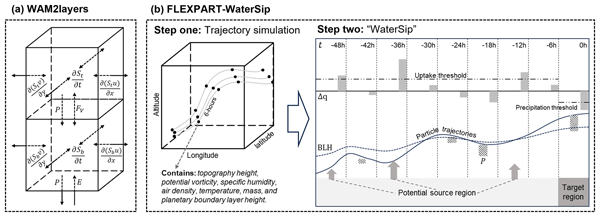
For moisture tracking over the Tibetan Plateau, we recommend using high-resolution forcing datasets, prioritizing temporal resolution over spatial resolution for WAM2layers, while for FLEXPART coupled with WaterSip, we suggest applying bias corrections to optimize the filtering of precipitation particles and adjust evaporation estimates.
Haiwei Li, Yongling Zhao, Chenghao Wang, Diana Ürge-Vorsatz, Jan Carmeliet, and Ronita Bardhan
EGUsphere, https://doi.org/10.5194/egusphere-2024-234, https://doi.org/10.5194/egusphere-2024-234, 2024
Short summary
Short summary
We investigated the cooling efficacy of urban trees in different climate zones through a robust meta-analysis, we determine that the cooling efficacy of trees is significantly influenced by the interplay of urban morphology, tree traits, and climate zones. We complement the study by an interactive map, offering a visual and quantitative examination and comparison of the cooling effects of urban trees in different climate zones.
Ying Li, Chenghao Wang, Ru Huang, Denghua Yan, Hui Peng, and Shangbin Xiao
Hydrol. Earth Syst. Sci., 26, 6413–6426, https://doi.org/10.5194/hess-26-6413-2022, https://doi.org/10.5194/hess-26-6413-2022, 2022
Short summary
Short summary
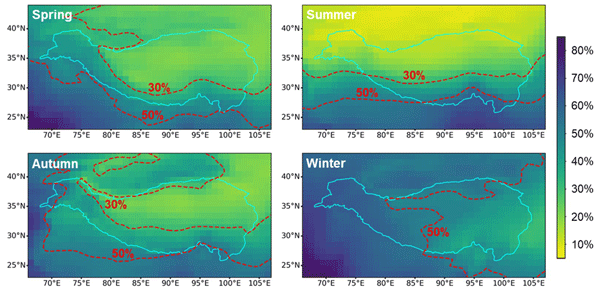
Spatial quantification of oceanic moisture contribution to the precipitation over the Tibetan Plateau (TP) contributes to the reliable assessments of regional water resources and the interpretation of paleo archives in the region. Based on atmospheric reanalysis datasets and numerical moisture tracking, this work reveals the previously underestimated oceanic moisture contributions brought by the westerlies in winter and the overestimated moisture contributions from the Indian Ocean in summer.
Xueli Yang, Zhi-Hua Wang, and Chenghao Wang
Hydrol. Earth Syst. Sci., 26, 1845–1856, https://doi.org/10.5194/hess-26-1845-2022, https://doi.org/10.5194/hess-26-1845-2022, 2022
Short summary
Short summary
In this study, we investigated potentially catastrophic transitions in hydrological processes by identifying the early-warning signals which manifest as a
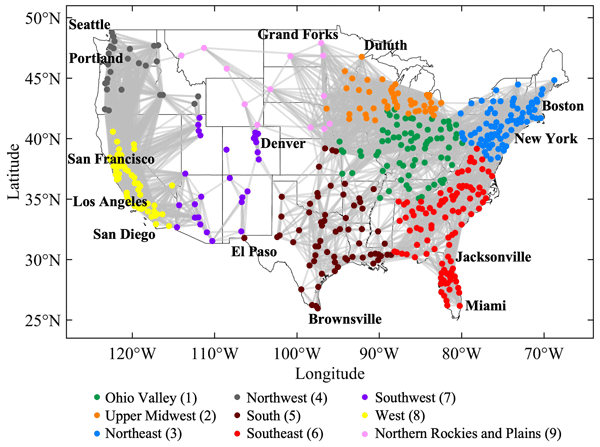
critical slowing downin complex dynamic systems. We then analyzed the precipitation network of cities in the contiguous United States and found that key network parameters, such as the nodal density and the clustering coefficient, exhibit similar dynamic behaviour, which can serve as novel early-warning signals for the hydrological system.
Temple R. Lee, Travis J. Schuyler, Michael Buban, Edward J. Dumas, Tilden P. Meyers, and C. Bruce Baker
Earth Syst. Sci. Data Discuss., https://doi.org/10.5194/essd-2022-93, https://doi.org/10.5194/essd-2022-93, 2022
Preprint withdrawn
Short summary
Short summary
Small uncrewed aircraft systems (sUxS), or drones, can be used to sample temperature, moisture, and wind in the lowest part of the atmosphere. In this study, we performed nearly 250 flights with our sUxS at a site about 20 miles northwest of Knoxville, Tennessee. We provided these datasets to forecasters at the local National Weather Service Weather Forecast Office to assist them with making their weather forecasts.
Matthew W. Christensen, Andrew Gettelman, Jan Cermak, Guy Dagan, Michael Diamond, Alyson Douglas, Graham Feingold, Franziska Glassmeier, Tom Goren, Daniel P. Grosvenor, Edward Gryspeerdt, Ralph Kahn, Zhanqing Li, Po-Lun Ma, Florent Malavelle, Isabel L. McCoy, Daniel T. McCoy, Greg McFarquhar, Johannes Mülmenstädt, Sandip Pal, Anna Possner, Adam Povey, Johannes Quaas, Daniel Rosenfeld, Anja Schmidt, Roland Schrödner, Armin Sorooshian, Philip Stier, Velle Toll, Duncan Watson-Parris, Robert Wood, Mingxi Yang, and Tianle Yuan
Atmos. Chem. Phys., 22, 641–674, https://doi.org/10.5194/acp-22-641-2022, https://doi.org/10.5194/acp-22-641-2022, 2022
Short summary
Short summary
Trace gases and aerosols (tiny airborne particles) are released from a variety of point sources around the globe. Examples include volcanoes, industrial chimneys, forest fires, and ship stacks. These sources provide opportunistic experiments with which to quantify the role of aerosols in modifying cloud properties. We review the current state of understanding on the influence of aerosol on climate built from the wide range of natural and anthropogenic laboratories investigated in recent decades.
Ying Li, Chenghao Wang, Hui Peng, Shangbin Xiao, and Denghua Yan
Hydrol. Earth Syst. Sci., 25, 4759–4772, https://doi.org/10.5194/hess-25-4759-2021, https://doi.org/10.5194/hess-25-4759-2021, 2021
Short summary
Short summary
Precipitation change in the Three Gorges Reservoir Region (TGRR) plays a critical role in the operation and regulation of the Three Gorges Dam and the protection of residents and properties. We investigated the long-term contribution of moisture sources to precipitation changes in this region with an atmospheric moisture tracking model. We found that southwestern source regions (especially the southeastern tip of the Tibetan Plateau) are the key regions that control TGRR precipitation changes.
Tao Zheng, Sha Feng, Kenneth J. Davis, Sandip Pal, and Josep-Anton Morguí
Geosci. Model Dev., 14, 3037–3066, https://doi.org/10.5194/gmd-14-3037-2021, https://doi.org/10.5194/gmd-14-3037-2021, 2021
Short summary
Short summary
Carbon dioxide is the most important greenhouse gas. We develop the numerical model that represents carbon dioxide transport in the atmosphere. This model development is based on the MPAS model, which has a variable-resolution capability. The purpose of developing carbon dioxide transport in MPAS is to allow for high-resolution transport model simulation that is not limited by the lateral boundaries. It will also form the base for a future development of MPAS-based carbon inversion system.
Cited articles
Agarwal, M. and Tandon, A.: Modeling of the urban heat island in the form of mesoscale wind and of its effect on air pollution dispersal, Appl. Math. Model., 34, 2520–2530, https://doi.org/10.1016/j.apm.2009.11.016, 2010.
Angevine, W. M., White, A. B., Senff, C. J., Trainer, M., Banta, R. M., and Ayoub, M. A.: Urban–rural contrasts in mixing height and cloudiness over Nashville in 1999, J. Geophys. Res., 108, 2001JD001061, https://doi.org/10.1029/2001JD001061, 2003.
Barlow, J. F.: Progress in observing and modelling the urban boundary layer, Urban Clim., 10, 216–240, https://doi.org/10.1016/j.uclim.2014.03.011, 2014.
Bassett, R., Cai, X., Chapman, L., Heaviside, C., Thornes, J. E., Muller, C. L., Young, D. T., and Warren, E. L.: Observations of urban heat island advection from a high-density monitoring network, Q. J. R. Meteorol. Soc., 142, 2434–2441, https://doi.org/10.1002/qj.2836, 2016.
Bassett, R., Cai, X., Chapman, L., Heaviside, C., and Thornes, J. E.: The effects of heat advection on UK weather and climate observations in the vicinity of small urbanized areas, Bound.-Layer Meteorol., 165, 181–196, https://doi.org/10.1007/s10546-017-0263-0, 2017.
Bassett, R., Cai, X., Chapman, L., Heaviside, C., and Thornes, J. E.: Semi-idealized urban heat advection simulations using the Weather Research and Forecasting mesoscale model, Int. J. Climatol., 39, 1345–1358, https://doi.org/10.1002/joc.5885, 2019.
Benjamin, S. G., Dévényi, D., Weygandt, S. S., Brundage, K. J., Brown, J. M., Grell, G. A., Kim, D., Schwartz, B. E., Smirnova, T. G., Smith, T. L., and Manikin, G. S.: An hourly assimilation–forecast cycle: The RUC, Mon. Weather Rev., 132, 495–518, https://doi.org/10.1175/1520-0493(2004)132<0495:AHACTR>2.0.CO;2, 2004.
Benjamin, S. G., Weygandt, S. S., Brown, J. M., Hu, M., Alexander, C. R., Smirnova, T. G., Olson, J. B., James, E. P., Dowell, D. C., Grell, G. A., Lin, H., Peckham, S. E., Smith, T. L., Moninger, W. R., Kenyon, J. S., and Manikin, G. S.: A North American hourly assimilation and model forecast cycle: The Rapid Refresh, Mon. Weather Rev., 144, 1669–1694, https://doi.org/10.1175/MWR-D-15-0242.1, 2016.
Benjamin, S. G., James, E. P., Brown, J. M., Szoke, E. J., Kenyon, J. S., Ahmadov, R., and Turner, D. D.: Diagnostic fields developed for hourly updated NOAA weather models, NOAA Technical Memorandum OAR GSL-66, https://doi.org/10.25923/f7b4-rx42, 2021.
Best, M. J.: Representing urban areas within operational numerical weather prediction models, Bound.-Layer Meteorol., 114, 91–109, https://doi.org/10.1007/s10546-004-4834-5, 2005.
Bohnenstengel, S. I., Evans, S., Clark, P. A., and Belcher, S. E.: Simulations of the London urban heat island, Q. J. R. Meteorol. Soc., 137, 1625–1640, https://doi.org/10.1002/qj.855, 2011.
Brandsma, T. and Wolters, D.: Measurement and statistical modeling of the urban heat island of the city of Utrecht (the Netherlands), J. Appl. Meteorol. Climatol., 51, 1046–1060, https://doi.org/10.1175/JAMC-D-11-0206.1, 2012.
Bytheway, J. L., Kummerow, C. D., and Alexander, C.: A features-based assessment of the evolution of warm season precipitation forecasts from the HRRR model over three years of development, Weather Forecast., 32, 1841–1856, https://doi.org/10.1175/WAF-D-17-0050.1, 2017.
Caicedo, V., Rappenglueck, B., Cuchiara, G., Flynn, J., Ferrare, R., Scarino, A. J., Berkoff, T., Senff, C., Langford, A., and Lefer, B.: Bay breeze and sea breeze circulation impacts on the planetary boundary layer and air quality from an observed and modeled DISCOVER-AQ Texas case study, J. Geophys. Res.-Atmos., 124, 7359–7378, https://doi.org/10.1029/2019JD030523, 2019.
Charney, J., Quirk, W. J., Chow, S., and Kornfield, J.: A comparative study of the effects of albedo change on drought in semi-arid regions, J. Atmospheric Sci., 34, 1366–1385, https://doi.org/10.1175/1520-0469(1977)034<1366:ACSOTE>2.0.CO;2, 1977.
Chen, F. and Dudhia, J.: Coupling an advanced land surface–hydrology model with the Penn State–NCAR MM5 modeling system. Part I: model implementation and sensitivity, Mon. Weather Rev., 129, 569–585, https://doi.org/10.1175/1520-0493(2001)129<0569:CAALSH>2.0.CO;2, 2001.
Chen, F., Kusaka, H., Bornstein, R., Ching, J., Grimmond, C. S. B., Grossman-Clarke, S., Loridan, T., Manning, K. W., Martilli, A., Miao, S., Sailor, D., Salamanca, F. P., Taha, H., Tewari, M., Wang, X., Wyszogrodzki, A. A., and Zhang, C.: The integrated WRF/urban modelling system: development, evaluation, and applications to urban environmental problems, Int. J. Climatol., 31, 273–288, https://doi.org/10.1002/joc.2158, 2011.
Chen, S., Yang, Y., Deng, F., Zhang, Y., Liu, D., Liu, C., and Gao, Z.: A high-resolution monitoring approach of canopy urban heat island using a random forest model and multi-platform observations, Atmos. Meas. Tech., 15, 735–756, https://doi.org/10.5194/amt-15-735-2022, 2022.
Coelho, G. D. A., Ferreira, C. M., and Kinter III, J. L.: Multiscale and multi event evaluation of short-range real-time flood forecasting in large metropolitan areas, J. Hydrol., 612, 128212, https://doi.org/10.1016/j.jhydrol.2022.128212, 2022.
Cui, D., Liang, S., Wang, D., and Liu, Z.: A 1 km global dataset of historical (1979–2013) and future (2020–2100) Köppen–Geiger climate classification and bioclimatic variables, Earth Syst. Sci. Data, 13, 5087–5114, https://doi.org/10.5194/essd-13-5087-2021, 2021.
Dai, Y., Zeng, X., Dickinson, R. E., Baker, I., Bonan, G. B., Bosilovich, M. G., Denning, A. S., Dirmeyer, P. A., Houser, P. R., Niu, G., Oleson, K. W., Schlosser, C. A., and Yang, Z.-L.: The Common Land Model, Bull. Am. Meteorol. Soc., 84, 1013–1024, https://doi.org/10.1175/BAMS-84-8-1013, 2003.
Danzig, T. B., Pal, S., Medley, Z., Dhaliwal, H., Hamel, M., Sorensen, M., Das, D., Menon, K. V., Lee, T. R. and Conder, M.: Impact of advection on the urban heat of a small-sized city: The Urban Heat Island Experiment Around Lubbock, Texas (U-HEAT), Urban Clim., https://doi.org/10.1016/j.uclim.2025.102714, in press 2025.
Di Bernardino, A., Mazzarella, V., Pecci, M., Casasanta, G., Cacciani, M., and Ferretti, R.: Interaction of the sea breeze with the urban area of Rome: WRF mesoscale and WRF large-eddy simulations compared to ground-based observations, Bound.-Layer Meteorol., 185, 333–363, https://doi.org/10.1007/s10546-022-00734-5, 2022.
Dowell, D. C., Alexander, C. R., James, E. P., Weygandt, S. S., Benjamin, S. G., Manikin, G. S., Blake, B. T., Brown, J. M., Olson, J. B., Hu, M., Smirnova, T. G., Ladwig, T., Kenyon, J. S., Ahmadov, R., Turner, D. D., Duda, J. D., and Alcott, T. I.: An hourly updating convection-allowing forecast model. Part I: motivation and system description, Weather Forecast., 37, 1371–1395, https://doi.org/10.1175/WAF-D-21-0151.1, 2022.
Fenner, D., Christen, A., Grimmond, S., Meier, F., Morrison, W., Zeeman, M., Barlow, J., Birkmann, J., Blunn, L., Chrysoulakis, N., Clements, M., Glazer, R., Hertwig, D., Kotthaus, S., König, K., Looschelders, D., Mitraka, Z., Poursanidis, D., Tsirantonakis, D., Bechtel, B., Benjamin, K., Beyrich, F., Briegel, F., Feigel, G., Gertsen, C., Iqbal, N., Kittner, J., Lean, H., Liu, Y., Luo, Z., McGrory, M., Metzger, S., Paskin, M., Ravan, M., Ruhtz, T., Saunders, B., Scherer, D., Smith, S. T., Stretton, M., Trachte, K., and Van Hove, M.: urbisphere-Berlin Campaign: Investigating multiscale urban impacts on the atmospheric boundary layer, Bull. Am. Meteorol. Soc., 105, E1929–E1961, https://doi.org/10.1175/BAMS-D-23-0030.1, 2024.
Fovell, R. G. and Capps, S. B.: Sustained wind forecasts from the High-Resolution Rapid Refresh model: skill assessment and bias mitigation, Atmosphere, 16, 16, https://doi.org/10.3390/atmos16010016, 2024
Fovell, R. G. and Gallagher, A.: An evaluation of surface wind and gust forecasts from the High-Resolution Rapid Refresh model, Weather Forecast., 37, 1049–1068, https://doi.org/10.1175/WAF-D-21-0176.1, 2022.
Griffin, S. M., Otkin, J. A., Rozoff, C. M., Sieglaff, J. M., Cronce, L. M., Alexander, C. R., Jensen, T. L., and Wolff, J. K.: Seasonal analysis of cloud objects in the High-Resolution Rapid Refresh (HRRR) model using object-based verification, J. Appl. Meteorol. Climatol., 56, 2317–2334, https://doi.org/10.1175/JAMC-D-17-0004.1, 2017.
He, S., Turner, D. D., Benjamin, S. G., Olson, J. B., Smirnova, T. G., and Meyers, T.: Evaluation of the near-surface variables in the HRRR weather model using observations from the ARM SGP site, J. Appl. Meteorol. Climatol., 62, 769–780, https://doi.org/10.1175/JAMC-D-23-0003.1, 2023.
Heaviside, C., Cai, X.-M., and Vardoulakis, S.: The effects of horizontal advection on the urban heat island in Birmingham and the West Midlands, United Kingdom during a heatwave, Q. J. R. Meteorol. Soc., 141, 1429–1441, https://doi.org/10.1002/qj.2452, 2015.
Huang, J., Li, Y., Fu, C., Chen, F., Fu, Q., Dai, A., Shinoda, M., Ma, Z., Guo, W., Li, Z., Zhang, L., Liu, Y., Yu, H., He, Y., Xie, Y., Guan, X., Ji, M., Lin, L., Wang, S., Yan, H., and Wang, G.: Dryland climate change: Recent progress and challenges, Rev. Geophys., 55, 719–778, https://doi.org/10.1002/2016RG000550, 2017.
Huang, Y. and Wang, C.: Evaluation of High-Resolution Rapid Refresh forecasts in small cities, Zenodo [code and data set], https://doi.org/10.5281/zenodo.15885174, 2025.
Huang, Y., Wang, C., and Wang, Z.-H. Multi-parameterization of hydrological processes in an urban canopy model, Build. Environ., 285, 113567, https://doi.org/10.1016/j.buildenv.2025.113567, 2025.
Jongen, H. J., Lipson, M., Teuling, A. J., Grimmond, S., Baik, J.-J., Best, M., Demuzere, M., Fortuniak, K., Huang, Y., De Kauwe, M. G., Li, R., McNorton, J., Meili, N., Oleson, K., Park, S. -B., Sun, T., Tsiringakis, A., Varentsov, M., Wang, C., Wang, Z. -H., and Steeneveld, G. J.: The water balance representation in Urban-PLUMBER land surface models, J. Adv. Model. Earth Syst., 16, e2024MS004231, https://doi.org/10.1029/2024MS004231, 2024.
Kacker, K., Srivastava, P., and Mukherjee, M.: Personalized heat stress early warning system for an urban area, Environ. Int., 199, 109507, https://doi.org/10.1016/j.envint.2025.109507, 2025.
Katona, B., Markowski, P., Alexander, C., and Benjamin, S.: The influence of topography on convective storm environments in the eastern United States as deduced from the HRRR, Weather Forecast., 31, 1481–1490, https://doi.org/10.1175/WAF-D-16-0038.1, 2016.
Kidder, S. Q. and Essenwanger, O. M.: The effect of clouds and wind on the difference in nocturnal cooling rates between urban and rural areas, J. Appl. Meteorol., 34, 2440–2448, https://doi.org/10.1175/1520-0450(1995)034<2440:TEOCAW>2.0.CO;2, 1995.
Klein, P. M., Hu, X.-M., and Xue, M.: Impacts of mixing processes in nocturnal atmospheric boundary layer on urban ozone concentrations, Bound.-Layer Meteorol., 150, 107–130, https://doi.org/10.1007/s10546-013-9864-4, 2014.
Lac, C., Donnelly, R. P., Masson, V., Pal, S., Riette, S., Donier, S., Queguiner, S., Tanguy, G., Ammoura, L., and Xueref-Remy, I.: CO2 dispersion modelling over Paris region within the CO2-MEGAPARIS project, Atmos. Chem. Phys., 13, 4941–4961, https://doi.org/10.5194/acp-13-4941-2013, 2013.
Lee, T. R., Buban, M., Turner, D. D., Meyers, T. P., and Baker, C. B.: Evaluation of the High-Resolution Rapid Refresh (HRRR) model using near-surface meteorological and flux observations from northern Alabama, Weather Forecast., 34, 635–663, https://doi.org/10.1175/WAF-D-18-0184.1, 2019.
Lee, T. R., Pal, S., Krishnan, P., Hirth, B., Heuer, M., Meyers, T. P., Saylor, R. D., and Schroeder, J.: On the efficacy of Monin–Obukhov and bulk Richardson surface-layer parameterizations over drylands, J. Appl. Meteorol. Climatol., 62, 1655–1675, https://doi.org/10.1175/JAMC-D-23-0092.1, 2023a.
Lee, T. R., Leeper, R. D., Wilson, T., Diamond, H. J., Meyers, T. P., and Turner, D. D.: Using the U.S. Climate Reference Network to identify biases in near- and subsurface meteorological fields in the High-Resolution Rapid Refresh (HRRR) weather prediction model, Weather Forecast., 38, 879–900, https://doi.org/10.1175/WAF-D-22-0213.1, 2023b.
Lee, T. R., Pal, S., Leeper, R. D., Wilson, T., Diamond, H. J., Meyers, T. P., and Turner, D. D.: On the importance of regime-specific evaluations for numerical weather prediction models as demonstrated, Weather Forecast., https://doi.org/10.1175/WAF-D-23-0177.1, 2024.
Lee, T. R., Pal, S., Meyers, T. P., Krishnan, P., Hirth, B., Heuer, M., Saylor, R. D., Kochendorfer, J., and Schroeder, J.: Impact of the Bowen ratio on surface-layer parameterizations of heat, moisture, and turbulent fluxes in drylands, J. Appl. Meteorol. Climatol., 64, 549–568, https://doi.org/10.1175/JAMC-D-24-0075.1, 2025.
Leeper, R. D., Bell, J. E., Vines, C., and Palecki, M.: An evaluation of the North American Regional Reanalysis simulated soil moisture conditions during the 2011–13 drought period, J. Hydrometeorol., 18, 515–527, https://doi.org/10.1175/JHM-D-16-0132.1, 2017.
Li, C., Fu, B., Wang, S., Stringer, L. C., Wang, Y., Li, Z., Liu, Y., and Zhou, W.: Drivers and impacts of changes in China's drylands, Nat. Rev. Earth Environ., 2, 858–873, https://doi.org/10.1038/s43017-021-00226-z, 2021.
Lipson, M. J., Grimmond, S., Best, M., Abramowitz, G., Coutts, A., Tapper, N., Baik, J., Beyers, M., Blunn, L., Boussetta, S., Bou-Zeid, E., De Kauwe, M. G., De Munck, C., Demuzere, M., Fatichi, S., Fortuniak, K., Han, B., Hendry, M. A., Kikegawa, Y., Kondo, H., Lee, D., Lee, S., Lemonsu, A., Machado, T., Manoli, G., Martilli, A., Masson, V., McNorton, J., Meili, N., Meyer, D., Nice, K. A., Oleson, K. W., Park, S., Roth, M., Schoetter, R., Simón-Moral, A., Steeneveld, G., Sun, T., Takane, Y., Thatcher, M., Tsiringakis, A., Varentsov, M., Wang, C., Wang, Z., and Pitman, A. J.: Evaluation of 30 urban land surface models in the Urban-PLUMBER project: Phase 1 results, Q. J. R. Meteorol. Soc., 150, 126–169, https://doi.org/10.1002/qj.4589, 2024.
Lowry, W. P.: Empirical estimation of urban effects on climate: A problem analysis, J. Appl. Meteorol., 16, 129–135, https://doi.org/10.1175/1520-0450(1977)016<0129:EEOUEO>2.0.CO;2, 1977.
Lu, Y., Yu, Z., Albertson, J. D., Chen, H., Hu, L., Pendergrass, A., Chen, X., and Li, Q.: Understanding the influence of urban form on the spatial pattern of precipitation, Earth's Future, 12, e2023EF003846, https://doi.org/10.1029/2023EF003846, 2024.
Mason, P. J.: The formation of areally-averaged roughness lengths, Q. J. R. Meteorol. Soc., 114, 399–420, https://doi.org/10.1002/qj.49711448007, 1988.
Masson, V., Lemonsu, A., Hidalgo, J., and Voogt, J.: Urban climates and climate change, Annu. Rev. Environ. Resour., 45, 411–444, https://doi.org/10.1146/annurev-environ-012320-083623, 2020.
Meehl, G. A. and Tebaldi, C.: More intense, more frequent, and longer lasting heat waves in the 21st century, Science, 305, 994–997, https://doi.org/10.1126/science.1098704, 2004.
National Center for Atmospheric Research: WRF Source Codes and Graphics Software Downloads, https://www2.mmm.ucar.edu/wrf/users/download/get_source.html, last access: 4 October 2025.
National Oceanic and Atmospheric Administration: The High-Resolution Rapid Refresh (HRRR), https://rapidrefresh.noaa.gov/hrrr/, last access: 25 July 2025.
National Weather Service: NOWData – NOAA Online Weather Data, https://www.weather.gov/wrh/Climate?wfo=lub, last access: 25 July 2025.
Oke, T. R.: The distinction between canopy and boundary-layer urban heat islands, Atmosphere, 14, 268–277, https://doi.org/10.1080/00046973.1976.9648422, 1976.
Oke, T. R., Mills, G., Christen, A., and Voogt, J. A.: Urban Climates, Cambridge University Press, https://doi.org/10.1017/9781139016476, 2017.
Oleson, K. W., Bonan, G. B., Feddema, J., Vertenstein, M., and Grimmond, C. S. B.: An urban parameterization for a global climate model. Part I: formulation and evaluation for two cities, J. Appl. Meteorol. Climatol., 47, 1038–1060, https://doi.org/10.1175/2007JAMC1597.1, 2008.
Pal, S., Xueref-Remy, I., Ammoura, L., Chazette, P., Gibert, F., Royer, P., Dieudonné, E., Dupont, J.-C., Haeffelin, M., Lac, C., Lopez, M., Morille, Y., and Ravetta, F.: Spatio-temporal variability of the atmospheric boundary layer depth over the Paris agglomeration: An assessment of the impact of the urban heat island intensity, Atmos. Environ., 63, 261–275, https://doi.org/10.1016/j.atmosenv.2012.09.046, 2012.
Pal, S., Prince, N. E., Anand, M., and Hamel, M.: Aerosol transport and associated boundary layer thermodynamics under contrasting synoptic conditions over a semiarid site, Sci. Total Environ., 962, 178357, https://doi.org/10.1016/j.scitotenv.2024.178357, 2025.
Park, S., Sayeed, A., Seo, J., Henderson, B. H., Naeger, A. R., and Gupta, P.: Hour by hour PM2.5 mapping using geostationary satellites, ACS ES&T Air, 2, 1816–1830, https://doi.org/10.1021/acsestair.4c00365, 2025.
Ribeiro, F. N. D., Oliveira, A. P. D., Soares, J., Miranda, R. M. D., Barlage, M., and Chen, F.: Effect of sea breeze propagation on the urban boundary layer of the metropolitan region of Sao Paulo, Brazil, Atmospheric Res., 214, 174–188, https://doi.org/10.1016/j.atmosres.2018.07.015, 2018.
Salamanca, F., Zhang, Y., Barlage, M., Chen, F., Mahalov, A., and Miao, S.: Evaluation of the WRF-urban modeling system coupled to Noah and Noah-MP land surface models over a semiarid urban environment, J. Geophys. Res.-Atmos., 123, 2387–2408, https://doi.org/10.1002/2018JD028377, 2018.
Smirnova, T. G., Brown, J. M., Benjamin, S. G., and Kenyon, J. S.: Modifications to the Rapid Update Cycle land surface model (RUC LSM) available in the Weather Research and Forecasting (WRF) model, Mon. Weather Rev., 144, 1851–1865, https://doi.org/10.1175/MWR-D-15-0198.1, 2016.
Spronken-Smith, R. A. and Oke, T. R.: Scale modelling of nocturnal cooling in urban parks, Bound.-Layer Meteorol., 93, 287–312, https://doi.org/10.1023/A:1002001408973, 1999.
Stewart, I. D., Oke, T. R., and Krayenhoff, E. S.: Evaluation of the “local climate zone” scheme using temperature observations and model simulations, Int. J. Climatol., 34, 1062–1080, https://doi.org/10.1002/joc.3746, 2014.
Thompson, L., Wang, C., He, C., Lin, T.-S., Liu, C., and Dudhia, J.: Assessment of convection-permitting hydroclimate modeling in urban areas across the contiguous United States, Urban Clim., 61, 102375, https://doi.org/10.1016/j.uclim.2025.102375, 2025.
Unger, J., Savić, S., and Gál, T.: Modelling of the annual mean urban heat island pattern for planning of representative urban climate station network, Adv. Meteorol., 2011, 1–9, https://doi.org/10.1155/2011/398613, 2011.
U.S. Census Bureau, Population Division: Annual Estimates of the Resident Population for Incorporated Places of 20,000 or More, Ranked by July 1, 2023 Population: April 1, 2020 to July 1, 2023 (SUB-IP-EST2023-ANNRNK), https://www.census.gov/newsroom/press-kits/2024/subcounty-population-estimates.html (last access: 4 October 2025), 2024.
Vo, T. T., Hu, L., Xue, L., Li, Q., and Chen, S.: Urban effects on local cloud patterns, Proc. Natl. Acad. Sci. USA, 120, e2216765120, https://doi.org/10.1073/pnas.2216765120, 2023.
Wagner, T. J., Klein, P. M., and Turner, D. D.: A new generation of ground-based mobile platforms for active and passive profiling of the boundary layer, Bull. Am. Meteorol. Soc., 100, 137–153, https://doi.org/10.1175/BAMS-D-17-0165.1, 2019.
Wang, C. and Wang, Z.-H.: A network-based toolkit for evaluation and intercomparison of weather prediction and climate modeling, J. Environ. Manage., 268, 110709, https://doi.org/10.1016/j.jenvman.2020.110709, 2020.
Wang, C., Li, Q., and Wang, Z.-H.: Quantifying the impact of urban trees on passive pollutant dispersion using a coupled large-eddy simulation–Lagrangian stochastic model, Build. Environ., 145, 33–49, https://doi.org/10.1016/j.buildenv.2018.09.014, 2018a.
Wang, C., Deng, C., Horsey, H., Reyna, J. L., Liu, D., Feron, S., Cordero, R. R., Song, J., and Jackson, R. B.: CHUWD-H v1.0: a comprehensive historical hourly weather database for U.S. urban energy system modeling, Sci. Data, 11, 1383, https://doi.org/10.1038/s41597-024-04238-4, 2024.
Wang, C., Zhao, Y., Li, Q., Wang, Z., and Fan, J.: Ultrafine-resolution urban climate modeling: Resolving processes across scales, J. Adv. Model. Earth Sy., 17, e2025MS005053, https://doi.org/10.1029/2025MS005053, 2025.
Wang, J., Feng, J., and Yan, Z.: Impact of extensive urbanization on summertime rainfall in the Beijing region and the role of local precipitation recycling, J. Geophys. Res.-Atmos., 123, 3323–3340, https://doi.org/10.1002/2017JD027725, 2018b.
Wilks, D. S.: Statistical methods in the atmospheric sciences, 3rd Edn., Elsevier/Academic Press, Amsterdam, 676 pp., ISBN 9780123850225, 2011.
Xia, Y., Ek, M. B., Wu, Y., Ford, T., and Quiring, S. M.: Comparison of NLDAS-2 simulated and NASMD observed daily soil moisture. Part I: comparison and analysis, J. Hydrometeorol., 16, 1962–1980, https://doi.org/10.1175/JHM-D-14-0096.1, 2015.
Yang, L., Yang, Y., Shen, Y., Yang, J., Zheng, G., Smith, J., and Niyogi, D.: Urban development pattern's influence on extreme rainfall occurrences, Nat. Commun., 15, 3997, https://doi.org/10.1038/s41467-024-48533-5, 2024.
Yang, T.-H., Hwang, G.-D., Tsai, C.-C., and Ho, J.-Y.: Using rainfall thresholds and ensemble precipitation forecasts to issue and improve urban inundation alerts, Hydrol. Earth Syst. Sci., 20, 4731–4745, https://doi.org/10.5194/hess-20-4731-2016, 2016.
Youngquist, K., Shrestha, M., Ryan, B., and Mitra, C.: A global scoping review on sustainability, climate migration, and climate resilience of small and medium-sized cities (SMSC), Urban Clim., 49, 101546, https://doi.org/10.1016/j.uclim.2023.101546, 2023.
Zhang, F., Wang, C., and Wang, Z.-H.: Response of natural vegetation to climate in dryland ecosystems: A comparative study between Xinjiang and Arizona, Remote Sens., 12, 3567, https://doi.org/10.3390/rs12213567, 2020.
Zhang, K., Fang, B., Oleson, K., Zhao, L., He, C., Huang, Q., Liu, Z., Cao, C., and Lee, X.: Urban land expansion amplifies surface warming more in dry climate than in wet climate: A global sensitivity study, J. Geophys. Res.-Atmos., 130, e2024JD041696, https://doi.org/10.1029/2024JD041696, 2025.
Zhou, D., Xiao, J., Bonafoni, S., Berger, C., Deilami, K., Zhou, Y., Frolking, S., Yao, R., Qiao, Z., and Sobrino, J. A.: Satellite remote sensing of surface urban heat islands: Progress, challenges, and perspectives, Remote Sens., 11, 48, https://doi.org/10.3390/rs11010048, 2018.
Short summary
We evaluated a high-resolution numerical weather prediction model in a small, semi-arid U.S. city using dense ground-based measurements. While the forecasts demonstrated good skill for temperature and humidity, they consistently overestimated wind and underestimated nighttime cooling, with inaccurate heat advection predictions. The results highlight the need for improved urban representation in forecast models to better support heat warning systems for small cities.
We evaluated a high-resolution numerical weather prediction model in a small, semi-arid U.S....