
Articles | Volume 19, issue 19
https://doi.org/10.5194/gmd-19-9581-2026
© Author(s) 2026. This work is distributed under
the Creative Commons Attribution 4.0 License.
the Creative Commons Attribution 4.0 License.
https://doi.org/10.5194/gmd-19-9581-2026
© Author(s) 2026. This work is distributed under
the Creative Commons Attribution 4.0 License.
the Creative Commons Attribution 4.0 License.
Development and technical paper
| 
12 Oct 2026
Development and technical paper |
| 12 Oct 2026
| 12 Oct 2026
Improving the CLASSIC (v1.8) snow model to better simulate Arctic snowpacks
Mickaël Lalande
CORRESPONDING AUTHOR

Centre for Research on Watershed-Aquatic Ecosystem Interactions, Department of Environmental Sciences, Université du Québec à Trois-Rivières, Trois-Rivières, QC, Canada
Centre for Northern Studies, Université Laval, Québec, QC, Canada
now at: Takuvik Joint International Laboratory, Université Laval (Canada) and CNRS-INSU (France), Québec, QC, Canada
now at: Department of Chemistry, Université Laval, Québec, QC, Canada
Alexandre Roy
Centre for Research on Watershed-Aquatic Ecosystem Interactions, Department of Environmental Sciences, Université du Québec à Trois-Rivières, Trois-Rivières, QC, Canada
Centre for Northern Studies, Université Laval, Québec, QC, Canada
Libo Wang
Climate Research Division, Environment and Climate Change Canada, Toronto, ON, Canada
Diana Verseghy
Formerly at Climate Research Division, Environment and Climate Change Canada, Toronto, ON, Canada
retired
Vincent Vionnet
Meteorological Research Division, Environment and Climate Change Canada, Dorval, QC, Canada
Florent Dominé
Centre for Northern Studies, Université Laval, Québec, QC, Canada
Takuvik Joint International Laboratory, Université Laval (Canada) and CNRS-INSU (France), Québec, QC, Canada
Department of Chemistry, Université Laval, Québec, QC, Canada
Christophe Kinnard
Centre for Research on Watershed-Aquatic Ecosystem Interactions, Department of Environmental Sciences, Université du Québec à Trois-Rivières, Trois-Rivières, QC, Canada
Centre for Northern Studies, Université Laval, Québec, QC, Canada
Related authors
Libo Wang, Lawrence Mudryk, Joe R. Melton, Colleen Mortimer, Jason Cole, Gesa Meyer, Paul Bartlett, and Mickaël Lalande
Geosci. Model Dev., 18, 6597–6621, https://doi.org/10.5194/gmd-18-6597-2025, https://doi.org/10.5194/gmd-18-6597-2025, 2025
Short summary
Short summary
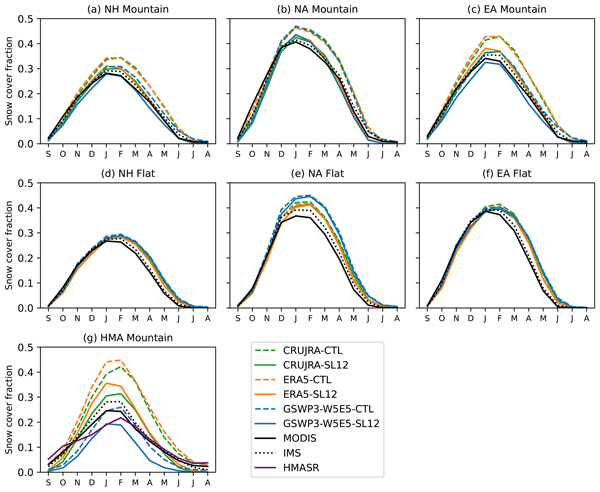
This study shows that an alternate snow cover fraction parameterization significantly improves snow simulation by CLASSIC in mountainous areas for all three choices of meteorological datasets. Annual mean bias, unbiased root mean squared area, and correlation improve by 75 %, 32 %, and 7 % when evaluated with MODIS observations over the Northern Hemisphere. We also link relative biases in the meteorological forcing data to differences in simulated snow water equivalent and snow cover fraction.
Mickaël Lalande, Martin Ménégoz, Gerhard Krinner, Catherine Ottlé, and Frédérique Cheruy
The Cryosphere, 17, 5095–5130, https://doi.org/10.5194/tc-17-5095-2023, https://doi.org/10.5194/tc-17-5095-2023, 2023
Short summary
Short summary
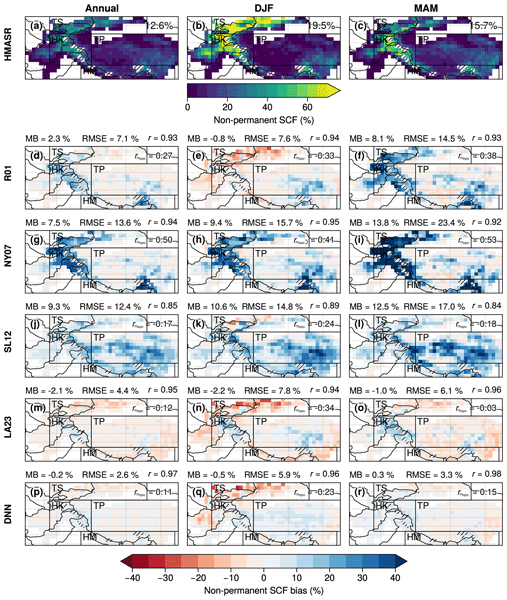
This study investigates the impact of topography on snow cover parameterizations using models and observations. Parameterizations without topography-based considerations overestimate snow cover. Incorporating topography reduces snow overestimation by 5–10 % in mountains, in turn reducing cold biases. However, some biases remain, requiring further calibration and more data. Assessing snow cover parameterizations is challenging due to limited and uncertain data in mountainous regions.
Mickaël Lalande, Martin Ménégoz, Gerhard Krinner, Kathrin Naegeli, and Stefan Wunderle
Earth Syst. Dynam., 12, 1061–1098, https://doi.org/10.5194/esd-12-1061-2021, https://doi.org/10.5194/esd-12-1061-2021, 2021
Short summary
Short summary
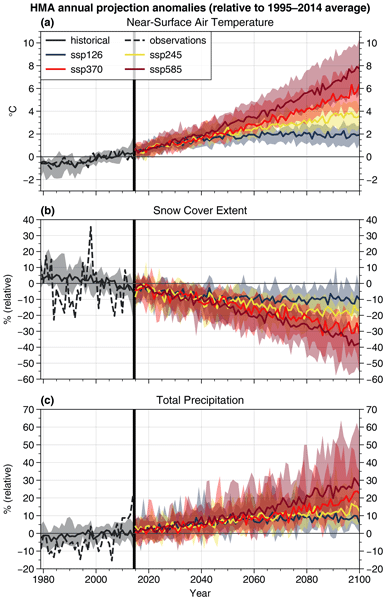
Climate change over High Mountain Asia is investigated with CMIP6 climate models. A general cold bias is found in this area, often related to a snow cover overestimation in the models. Ensemble experiments generally encompass the past observed trends, suggesting that even biased models can reproduce the trends. Depending on the future scenario, a warming from 1.9 to 6.5 °C, associated with a snow cover decrease and precipitation increase, is expected at the end of the 21st century.
Rémi Madelon, K. Arthur Endsley, John S. Kimball, Gabriëlle J. M. De Lannoy, Oliver Sonnentag, Haley Alcock, Alex Mavrovic, Scott N. Williamson, Vincent Maire, Arnaud Mialon, and Alexandre Roy
Biogeosciences, 23, 6359–6407, https://doi.org/10.5194/bg-23-6359-2026, https://doi.org/10.5194/bg-23-6359-2026, 2026
Short summary
Short summary
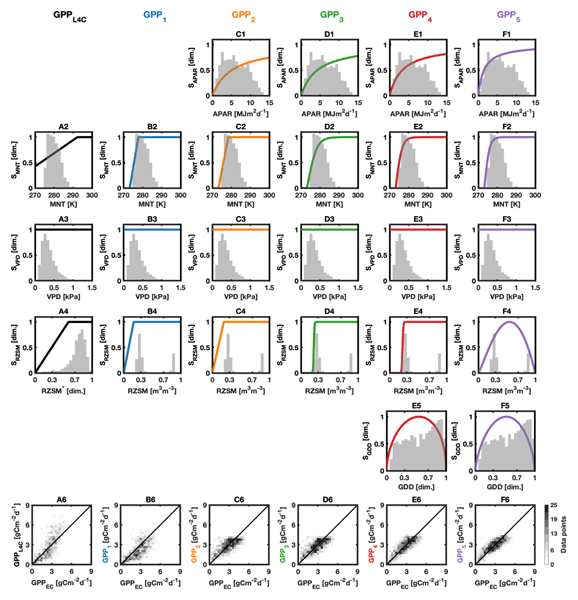
This study aims to improve estimates of carbon dioxide release and uptake in the North American Arctic and subarctic regions. Several modeling approaches were tested, showing that a better representation of sunlight and temperature effects on ecosystems leads to improved estimates. This work provides new perspectives to better assess whether these regions act as sources or sinks of greenhouse gases and how they may influence the climate system by amplifying or slowing global warming.
Anna-Maria Virkkala, Isabel Wargowsky, Judith Vogt, McKenzie A. Kuhn, Simran Madaan, Tiffany Windholz, Kyle A. Arndt, Gerard Rocher-Ros, Mathias Göckede, David Olefeldt, Edward A. G. Schuur, David Bastviken, Richard O'Keefe, Brendan M. Rogers, Jennifer D. Watts, Kelcy Kent, Kristoffer Aalstad, Kelly Aho, Joonatan Ala-Könni, Haley Alcock, Inge Althuizen, Christopher D. Arp, Jun Asanuma, Mika Aurela, Sivakiruthika Balathandayuthabani, Katrin Attermeyer, Alan Barr, Maialen Barret, Ochirbat Batkhishig, Christina Biasi, Mats P. Björkman, Andrew Black, Elena Blanc-Betes, Pascal Bodmer, Julia Boike, Abdullah Bolek, Frédéric Bouchard, Ingeborg Bussmann, Lea Cabrol, Eleonora Canfora, Sean Carey, Karel Castro-Morales, Namyi Chae, Andreas Christen, Torben R. Christensen, Casper T. Christiansen, Housen Chu, Graham Clark, Francois Clayer, Patrick Crill, Christopher Cunada, Scott J. Davidson, Joshua F. Dean, Sigrid Dengel, Matteo Detto, Catherine Dieleman, Florent Domine, Egor Dyukarev, Colin Edgar, Bo Elberling, Craig A. Emmerton, Eugenie Euskirchen, Grant Falvo, Thomas Friborg, Michelle Garneau, Mariasilvia Giamberini, Mikhail V. Glagolev, Miquel A. Gonzalez-Meler, Gustaf Granath, Jón Guðmundsson, Konsta Happonen, Yoshinobu Harazono, Lorna Harris, Josh Hashemi, Nicholas Hasson, Janna Heerah, Liam Heffernan, Manuel Helbig, Warren Helgason, Michal Heliasz, Greg Henry, Geert Hensgens, Tetsuya Hiyama, Beth Holmes, Macall Hock, David Holl, Jutta Holst, Thomas Holst, Gabriel Hould-Gosselin, Elyn Humphreys, Jacqueline Hung, Jussi Huotari, Hiroki Ikawa, Danil V. Ilyasov, Mamoru Ishikawa, Go Iwahana, Hiroki Iwata, Marcin Antoni Jackowicz-Korczynski, Joachim Jansen, Järvi Järveoja, Vincent E. J. Jassey, Rasmus Jensen, Katharina Jentzsch, Robert G. Jespersen, Carl-Fredrik Johannesson, Cheristy P. Jones, Anders Jonsson, Ji Young Jung, Sari Juutinen, Evan Kane, Jan Karlsson, Sergey Karsanaev, Kuno Kasak, Julia Kelly, Kasha Kempton, Marcus Klaus, George W. Kling, Natascha Kljun, Jacqueline Knutson, Hideki Kobayashi, John Kochendorfer, Kukka-Maaria Kohonen, Pasi Kolari, Mika Korkiakoski, Aino Korrensalo, Pirkko Kortelainen, Egle Koster, Kajar Koster, Ayumi Kotani, Praveena Krishnan, Juliya Kurbatova, Lars Kutzbach, Min Jung Kwon, Ethan D. Kyzivat, Jessica Lagroix, Theodore Langhorst, Elena Lapshina, Tuula Larmola, Klaus S. Larsen, Isabelle Laurion, Justin Ledman, Hanna Lee, A. Joshua Leffler, Lance Lesack, Anders Lindroth, David Lipson, Annalea Lohila, Efrén López-Blanco, Vincent L. St. Louis, Erik Lundin, Miska Luoto, Takashi Machimura, Marta Magnani, Avni Malhotra, Marja Maljanen, Ivan Mammarella, Elisa Männistö, Luca Belelli Marchesini, Phil Marsh, Pertti J. Martikainen, Maija E. Marushchak, Mikhail Mastepanov, Alex Mavrovic, Trofim Maximov, Christina Minions, Daniel F. Nadeau, Marco Montemayor, Tomoaki Morishita, Patrick Murphy, Erin Nicholls, Mats B. Nilsson, Anastasia Niyazova, Jenni Nordén, Koffi Dodji Noumonvi, Hannu Nykänen, Walter Oechel, Anne Ojala, Tomohiro Okadera, Sujan Pal, Alexey V. Panov, Tim Papakyriakou, Dario Papale, Sang-Jong Park, Frans-Jan W. Parmentier, Gilberto Pastorello, Mike Peacock, Matthias Peichl, Roman Petrov, Kyra St. Pierre, Norbert Pirk, Jessica Plein, Vilmantas Preskienis, Anatoly Prokushkin, Jukka Pumpanen, Hilary A. Rains, Niklas Rakos, Aleksi Räsänen, Helena Rautakoski, Riikka Rinnan, Janne Rinne, Adrian Rocha, Nigel Roulet, Alexandre Roy, Anna Rutgersson, Aleksandr F. Sabrekov, Torsten Sachs, Erik Sahlée, Alejandro Salazar, Henrique Oliveira Sawakuchi, Christopher Schulze, Roger Seco, Armando Sepulveda-Jauregui, Svetlana Serikova, Abbey Serrone, Hanna M. Silvennoinen, Sofie Sjogersten, June Skeeter, Jo Snöälv, Sebastian Sobek, Oliver Sonnentag, Emily H. Stanley, Maria Strack, Lena Strom, Patrick Sullivan, Ryan Sullivan, Anna Sytiuk, Torbern Tagesson, Pierre Taillardat, Julie Talbot, Suzanne E. Tank, Mario Tenuta, Irina Terenteva, Frederic Thalasso, Antoine Thiboult, Halldor Thorgeirsson, Fenix Garcia Tigreros, Margaret Torn, Amy Townsend-Small, Claire Treat, Alain Tremblay, Carlo Trotta, Eeva-Stiina Tuittila, Merritt Turetsky, Masahito Ueyama, Muhammad Umair, Aki Vähä, Lona van Delden, Maarten van Hardenbroek, Andrej Varlagin, Ruth K. Varner, Tarmo Virtanen, Elena Veretennikova, Timo Vesala, Carolina Voigt, Jorien E. Vonk, Robert Wagner, Katey Walter Anthony, Qinxue Wang, Masataka Watanabe, Hailey Webb, Jeffrey M. Welker, Andreas Westergaard-Nielsen, Sebastian Westermann, Jeffrey R. White, Christian Wille, Scott N. Williamson, Scott Zolkos, Donatella Zona, and Susan M. Natali
Earth Syst. Sci. Data, 18, 6357–6409, https://doi.org/10.5194/essd-18-6357-2026, https://doi.org/10.5194/essd-18-6357-2026, 2026
Short summary
Short summary
This dataset includes monthly measurements of carbon dioxide and methane exchange between land, water, and the atmosphere from over 1000 sites in Arctic and boreal regions. It combines measurements from a variety of ecosystems, including wetlands, forests, tundra, lakes, and rivers, gathered by over 260 researchers from 1984–2024. This dataset can be used to improve and reduce uncertainty in carbon budgets in order to strengthen our understanding of climate feedbacks in a warming world.
Benjamin Bouchard, Vincent Vionnet, Étienne Gaborit, and Vincent Fortin
Hydrol. Earth Syst. Sci., 30, 4823–4846, https://doi.org/10.5194/hess-30-4823-2026, https://doi.org/10.5194/hess-30-4823-2026, 2026
Short summary
Short summary
Enhancing frozen soil infiltration based on soil liquid water significantly improves streamflow simulation in the SVS land surface model. Tested at over 580 stations in the Great-Lakes and Saint-Lawrence region for five years, this approach can be easily transferred to other land surface models (LSM). Our results suggest that promoting frozen soil infiltration in LSM is key for realistic large-scale streamflow simulations and critical for operational hydrological prediction in cold regions.
Victoria R. Dutch, Nick Rutter, Muhammad Waqas Khan, Alex Mavrovic, Alexandre Roy, Sevi Modestou, Oliver Sonnentag, Carolina Voigt, Philip Marsh, and Paul J. Mann
EGUsphere, https://doi.org/10.5194/egusphere-2026-3835, https://doi.org/10.5194/egusphere-2026-3835, 2026
This preprint is open for discussion and under review for Biogeosciences (BG).
Short summary
Short summary
We use low-cost CO2 sensors to measure the release of CO2 from an Arctic tundra environment in two winters. We find CO2 emissions to be positive across a range of snow depths and different vegetation types. The winter-to-spring transition influences the release of CO2, with warming temperatures allowing more CO2 to be released, similar to other data from across the Arctic. We show our low-cost sensors may be used to investigate processes controlling CO2 release at high temporal resolution.
Matthieu Lafaysse, Marie Dumont, Basile De Fleurian, Mathieu Fructus, Rafife Nheili, Léo Viallon-Galinier, Matthieu Baron, Aaron Boone, Axel Bouchet, Julien Brondex, Carlo Carmagnola, Bertrand Cluzet, Kévin Fourteau, Ange Haddjeri, Pascal Hagenmuller, Giulia Mazzotti, Marie Minvielle, Samuel Morin, Louis Quéno, Léon Roussel, Pierre Spandre, François Tuzet, and Vincent Vionnet
Geosci. Model Dev., 19, 6273–6334, https://doi.org/10.5194/gmd-19-6273-2026, https://doi.org/10.5194/gmd-19-6273-2026, 2026
Short summary
Short summary
This article is a comprehensive description of the 3.0.2 stable release of the Crocus snowpack model. It describes various new implementations since the last reference article in 2012 and a review of the available scientific evaluations and applications of the model. This provides guidance for the future of numerical snow modelling.
Charlotte Crevier, Alexandre Langlois, Chris Derksen, and Alexandre Roy
The Cryosphere, 20, 3369–3385, https://doi.org/10.5194/tc-20-3369-2026, https://doi.org/10.5194/tc-20-3369-2026, 2026
Short summary
Short summary
A multisensor C-Band Synthetic Aperture Radar (SAR) near-daily time series in an Arctic environment was developed to create a high-resolution freeze/thaw (FT) algorithm with an accuracy of 96 %. The FT detection was highly correlated to near-surface state as measured by soil temperature. Small but significant FT date differences were identified for different Arctic ecotypes, showing the spatial variability of freeze/thaw process in Arctic environment.
Alex Gélinas, Benoît Montpetit, Julien Meloche, Peter Toose, Zeinab Akhavan, Wei Wang, Richard Kelly, Alexandre Langlois, and Alexandre Roy
EGUsphere, https://doi.org/10.5194/egusphere-2026-656, https://doi.org/10.5194/egusphere-2026-656, 2026
Short summary
Short summary
This research validates a method to link radar measurements to soil properties beneath snow in a temperate farming region. By using multiple radar sensors and computer models, we successfully decoupled the ground's interference from the snow signal. Our results show that radar captures unique information that traditional ground tools miss during freeze-thaw cycles. This work provides a vital framework for the future Canadian Terrestrial Snow Mass Mission to monitor water resources.
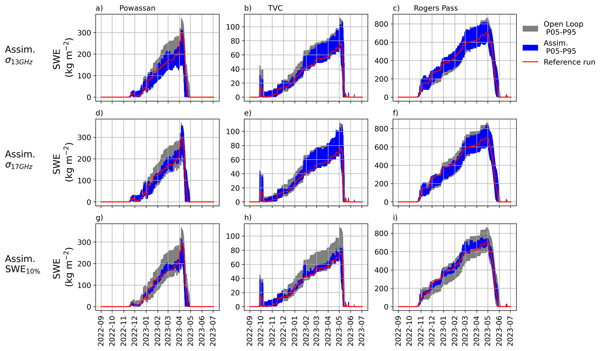
Nicolas R. Leroux, Vincent Vionnet, Courtney Bayer, Julien Meloche, Arlan Dirkson, Franck Lespinas, Mark Buehner, Marco Carrera, Benoit Montpetit, Bernard Bilodeau, Maria Abrahamowicz, and Chris Derksen
The Cryosphere, 20, 2773–2792, https://doi.org/10.5194/tc-20-2773-2026, https://doi.org/10.5194/tc-20-2773-2026, 2026
Short summary
Short summary
This study evaluates the assimilation of Ku-band radar backscatter into a multilayer snowpack model to support the upcoming Terrestrial Snow Mass Mission. Synthetic experiments were conducted at Arctic, continental, and alpine sites over three winters using a particle filter. Results show that assimilating backscatter improves estimates of snow water equivalent, depth, and vertical snow properties, laying the groundwork for future satellite missions focused on radar-based snow monitoring.
Zeinab Akhavan, Richard Kelly, Peter Toose, Aaron Thompson, Wei Wang, Benoit Montpetit, Alex Gélinas, and Alexandre Roy
EGUsphere, https://doi.org/10.5194/egusphere-2026-1065, https://doi.org/10.5194/egusphere-2026-1065, 2026
Short summary
Short summary
Soils in cold regions freeze and thaw seasonally, affecting water flow, flooding, and carbon exchange, but these changes are hard to track beneath snow. We studied a Canadian agricultural field using high-resolution airborne radar and ground measurements through winter. Radar signals changed clearly as soils froze and thawed, with one polarization being most sensitive. Our results improve understanding of frozen soils and support future satellite monitoring.
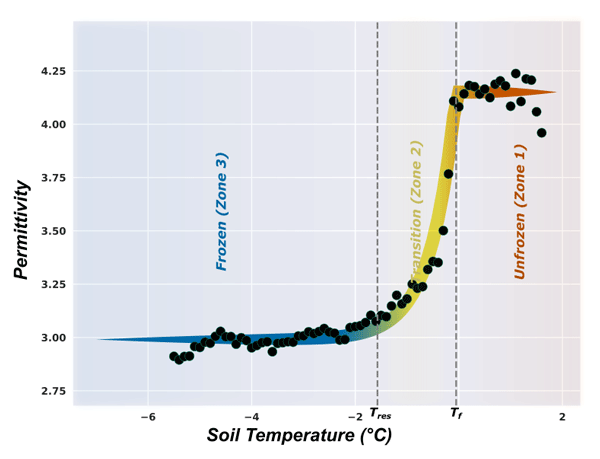
Hesam Salmabadi, Renato Pardo Lara, Aaron Berg, Alex Mavrovic, Chelene Hanes, Benoit Montpetit, and Alexandre Roy
The Cryosphere, 20, 1635–1654, https://doi.org/10.5194/tc-20-1635-2026, https://doi.org/10.5194/tc-20-1635-2026, 2026
Short summary
Short summary
Current satellite monitoring often oversimplifies soil freezing by assuming it happens exactly at 0°C. We analyzed ground data across Canada and found that soil often stays in a partially frozen state for months, even when air temperatures are well below freezing, revealing a major gap in how we track seasonally frozen ground.
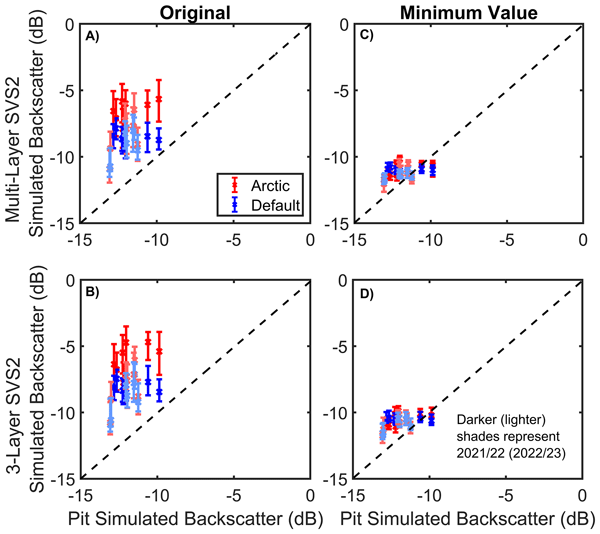
Georgina J. Woolley, Nick Rutter, Leanne Wake, Vincent Vionnet, Chris Derksen, Julien Meloche, Benoit Montpetit, Nicolas R. Leroux, Richard Essery, Gabriel Hould Gosselin, and Philip Marsh
The Cryosphere, 20, 1315–1338, https://doi.org/10.5194/tc-20-1315-2026, https://doi.org/10.5194/tc-20-1315-2026, 2026
Short summary
Short summary
The impact of uncertainties in the simulation of density and specific surface area (SSA) by the snow model Crocus (embedded in the Soil, Vegetation and Snow v2 land surface model) on the simulation of snow backscatter (13.5 GHz) using the Snow Microwave Radiative Transfer model were quantified. The simulation of SSA was found to be a key model uncertainty. Underestimated SSA values lead to high errors in the simulation of backscatter, reduced by implementing a minimum SSA value (8.7 m2 kg−1).
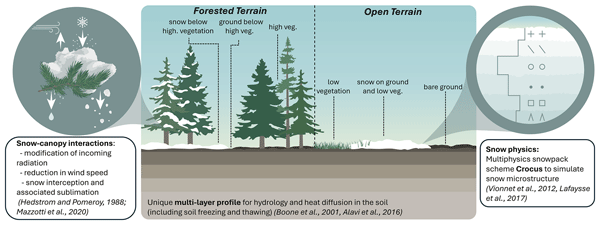
Vincent Vionnet, Nicolas R. Leroux, Vincent Fortin, Maria Abrahamowicz, Georgina Woolley, Giulia Mazzotti, Manon Gaillard, Matthieu Lafaysse, Alain Royer, Florent Domine, Nathalie Gauthier, Nick Rutter, Chris Derksen, and Stéphane Bélair
Geosci. Model Dev., 18, 9119–9147, https://doi.org/10.5194/gmd-18-9119-2025, https://doi.org/10.5194/gmd-18-9119-2025, 2025
Short summary
Short summary
Snow microstructure controls snowpack properties, but most land surface models overlook this factor. To support future satellite missions, we created a new land surface model based on the Crocus scheme that simulates snow microstructure. Key improvements include better snow albedo representation, enhanced Arctic snow modeling, and improved forest module to capture Canada's diverse snow conditions. Results demonstrate improved simulations of snow density and melt across large regions of Canada.
Benoit Montpetit, Julien Meloche, Vincent Vionnet, Chris Derksen, Georgina Woolley, Nicolas R. Leroux, Paul Siqueira, J. Max Adam, and Mike Brady
The Cryosphere, 19, 5465–5484, https://doi.org/10.5194/tc-19-5465-2025, https://doi.org/10.5194/tc-19-5465-2025, 2025
Short summary
Short summary
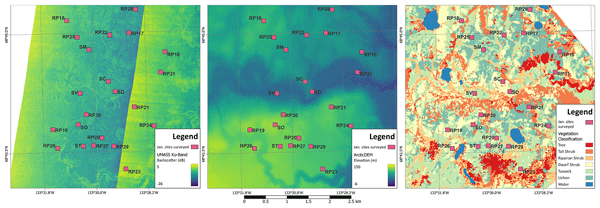
This paper presents the workflow to retrieve snow water equivalent from radar measurements for the future Canadian radar satellite mission, Terrestrial Snow Mass Mission. The workflow is validated by using airborne radar data collected at Trail Valley Creek, Canada, during winter 2018–2019. We detail important considerations to have in the context of a satellite mission over a vast region such as Canada. Results show that it is possible to achieve the desired accuracy over an Arctic environment.
Libo Wang, Lawrence Mudryk, Joe R. Melton, Colleen Mortimer, Jason Cole, Gesa Meyer, Paul Bartlett, and Mickaël Lalande
Geosci. Model Dev., 18, 6597–6621, https://doi.org/10.5194/gmd-18-6597-2025, https://doi.org/10.5194/gmd-18-6597-2025, 2025
Short summary
Short summary
This study shows that an alternate snow cover fraction parameterization significantly improves snow simulation by CLASSIC in mountainous areas for all three choices of meteorological datasets. Annual mean bias, unbiased root mean squared area, and correlation improve by 75 %, 32 %, and 7 % when evaluated with MODIS observations over the Northern Hemisphere. We also link relative biases in the meteorological forcing data to differences in simulated snow water equivalent and snow cover fraction.
Juliette Ortet, Arnaud Mialon, Alain Royer, Mike Schwank, Manu Holmberg, Kimmo Rautiainen, Simone Bircher-Adrot, Andreas Colliander, Yann Kerr, and Alexandre Roy
The Cryosphere, 19, 3571–3598, https://doi.org/10.5194/tc-19-3571-2025, https://doi.org/10.5194/tc-19-3571-2025, 2025
Short summary
Short summary
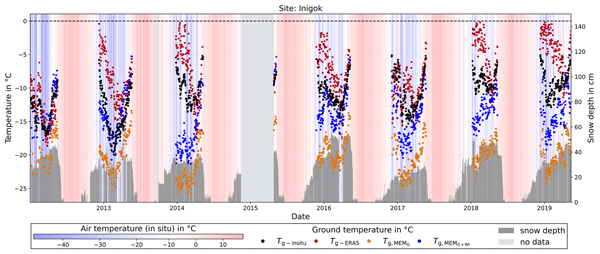
We propose a new method to determine the ground surface temperature under the snowpack in the Arctic area from satellite observations. The obtained ground temperature time series were evaluated over 21 reference sites in Northern Alaska and compared with ground temperatures obtained with global models. The method is extremely promising for monitoring ground temperature below the snowpack and studying the spatio-temporal variability thanks to 15 years of observations over the whole Arctic area.
Julien Meloche, Nicolas R. Leroux, Benoit Montpetit, Vincent Vionnet, and Chris Derksen
The Cryosphere, 19, 2949–2962, https://doi.org/10.5194/tc-19-2949-2025, https://doi.org/10.5194/tc-19-2949-2025, 2025
Short summary
Short summary
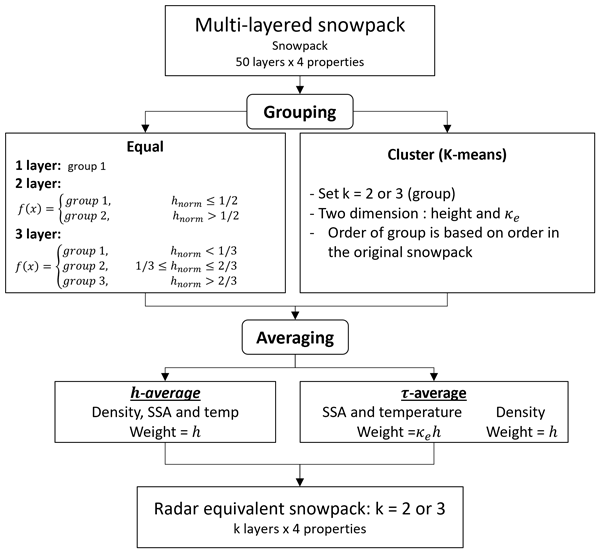
Measuring snow mass from radar measurements is possible with information on snow and a radar model to link the measurements to snow. A key variable in a retrieval is the number of snow layers, with more layers yielding richer information but at increased computational cost. Here, we show the capabilities of a new method for simplifying a complex snowpack while preserving the scattering behavior of the snowpack and conserving its mass.
Colleen Mortimer and Vincent Vionnet
Earth Syst. Sci. Data, 17, 3619–3640, https://doi.org/10.5194/essd-17-3619-2025, https://doi.org/10.5194/essd-17-3619-2025, 2025
Short summary
Short summary
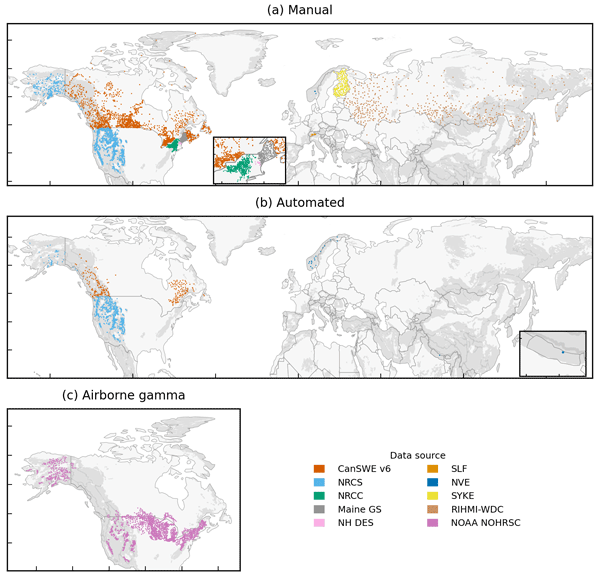
In situ observations of snow water equivalent (SWE) are critical for climate applications and resource management. NorSWE is a dataset of in situ SWE observations covering North America, Norway, Finland, Switzerland, Russia, and Nepal over the period 1979–2021. It includes more than 11.5 million observations from more than 10 000 different locations compiled from nine different sources. Snow depth and derived bulk snow density are included when available.

Alireza Amani, Marie-Amélie Boucher, Alexandre R. Cabral, Vincent Vionnet, and Étienne Gaborit
Hydrol. Earth Syst. Sci., 29, 2445–2465, https://doi.org/10.5194/hess-29-2445-2025, https://doi.org/10.5194/hess-29-2445-2025, 2025
Short summary
Short summary
Accurately estimating groundwater recharge using numerical models is particularly difficult in cold regions with snow and soil freezing. This study evaluated a physics-based model against high-resolution field measurements. Our findings highlight a need for a better representation of soil-freezing processes, offering a roadmap for future model development. This leads to more accurate models to aid in water resource management decisions in cold climates.
Florent Domine, Mireille Quémener, Ludovick Bégin, Benjamin Bouchard, Valérie Dionne, Sébastien Jerczynski, Raphaël Larouche, Félix Lévesque-Desrosiers, Simon-Olivier Philibert, Marc-André Vigneault, Ghislain Picard, and Daniel C. Côté
The Cryosphere, 19, 1757–1774, https://doi.org/10.5194/tc-19-1757-2025, https://doi.org/10.5194/tc-19-1757-2025, 2025
Short summary
Short summary
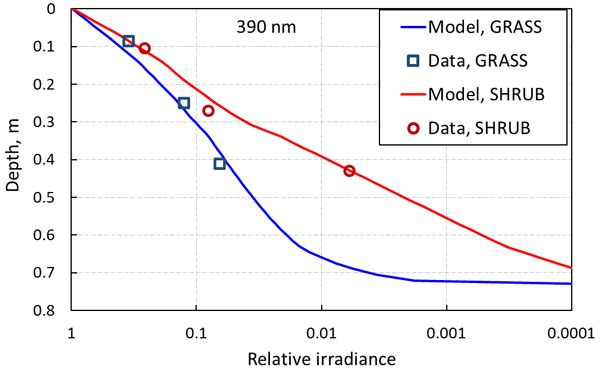
Shrubs buried in snow absorb solar radiation and reduce irradiance in the snowpack. This decreases photochemical reaction rates and emissions to the atmosphere. By monitoring irradiance in snowpacks with and without shrubs, we conclude that shrubs absorb solar radiation as much as 140 ppb of soot and reduce irradiance by a factor of 2. Shrub expansion in the Arctic may therefore affect tropospheric composition during the snow season with climatic effects.
Manon Gaillard, Vincent Vionnet, Matthieu Lafaysse, Marie Dumont, and Paul Ginoux
The Cryosphere, 19, 769–792, https://doi.org/10.5194/tc-19-769-2025, https://doi.org/10.5194/tc-19-769-2025, 2025
Short summary
Short summary
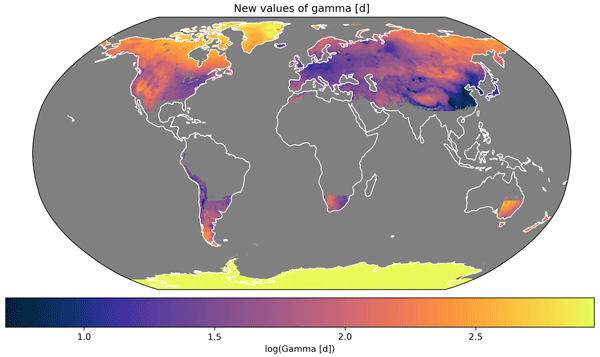
This study presents an efficient method to improve large-scale snow albedo simulations by considering the spatial variability in light-absorbing particles (LAPs) like black carbon and dust. A global climatology of LAP deposition was created and used to optimize a parameter in the Crocus snow model. Testing at 10 global sites improved albedo predictions by 10 % on average and over 25 % in the Arctic. This method can enhance other snow models' predictions without complex simulations.
Georgina J. Woolley, Nick Rutter, Leanne Wake, Vincent Vionnet, Chris Derksen, Richard Essery, Philip Marsh, Rosamond Tutton, Branden Walker, Matthieu Lafaysse, and David Pritchard
The Cryosphere, 18, 5685–5711, https://doi.org/10.5194/tc-18-5685-2024, https://doi.org/10.5194/tc-18-5685-2024, 2024
Short summary
Short summary
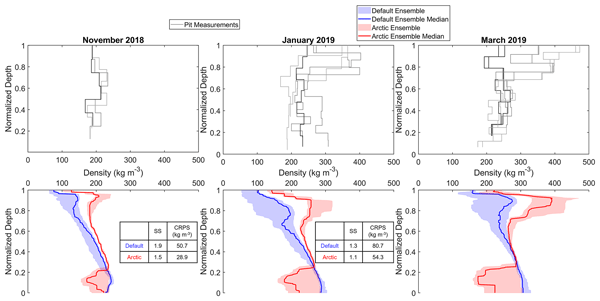
Parameterisations of Arctic snow processes were implemented into the multi-physics ensemble version of the snow model Crocus (embedded within the Soil, Vegetation, and Snow version 2 land surface model) and evaluated at an Arctic tundra site. Optimal combinations of parameterisations that improved the simulation of density and specific surface area featured modifications that raise wind speeds to increase compaction in surface layers, prevent snowdrift, and increase viscosity in basal layers.
Cecile B. Menard, Sirpa Rasmus, Ioanna Merkouriadi, Gianpaolo Balsamo, Annett Bartsch, Chris Derksen, Florent Domine, Marie Dumont, Dorothee Ehrich, Richard Essery, Bruce C. Forbes, Gerhard Krinner, David Lawrence, Glen Liston, Heidrun Matthes, Nick Rutter, Melody Sandells, Martin Schneebeli, and Sari Stark
The Cryosphere, 18, 4671–4686, https://doi.org/10.5194/tc-18-4671-2024, https://doi.org/10.5194/tc-18-4671-2024, 2024
Short summary
Short summary
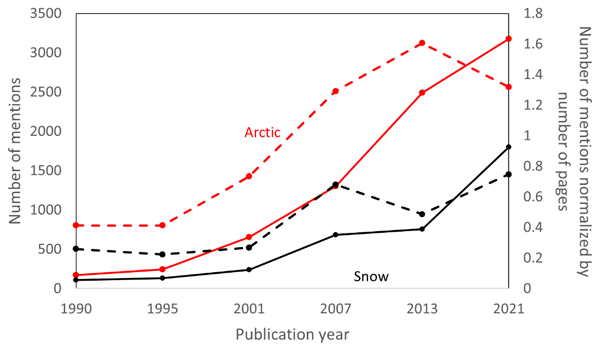
Computer models, like those used in climate change studies, are written by modellers who have to decide how best to construct the models in order to satisfy the purpose they serve. Using snow modelling as an example, we examine the process behind the decisions to understand what motivates or limits modellers in their decision-making. We find that the context in which research is undertaken is often more crucial than scientific limitations. We argue for more transparency in our research practice.
Giulia Mazzotti, Jari-Pekka Nousu, Vincent Vionnet, Tobias Jonas, Rafife Nheili, and Matthieu Lafaysse
The Cryosphere, 18, 4607–4632, https://doi.org/10.5194/tc-18-4607-2024, https://doi.org/10.5194/tc-18-4607-2024, 2024
Short summary
Short summary
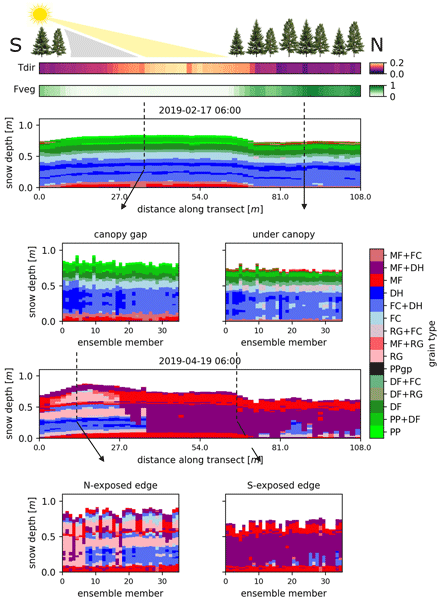
As many boreal and alpine forests have seasonal snow, models are needed to predict forest snow under future environmental conditions. We have created a new forest snow model by combining existing, very detailed model components for the canopy and the snowpack. We applied it to forests in Switzerland and Finland and showed how complex forest cover leads to a snowpack layering that is very variable in space and time because different processes prevail at different locations in the forest.
Louise Arnal, Martyn P. Clark, Alain Pietroniro, Vincent Vionnet, David R. Casson, Paul H. Whitfield, Vincent Fortin, Andrew W. Wood, Wouter J. M. Knoben, Brandi W. Newton, and Colleen Walford
Hydrol. Earth Syst. Sci., 28, 4127–4155, https://doi.org/10.5194/hess-28-4127-2024, https://doi.org/10.5194/hess-28-4127-2024, 2024
Short summary
Short summary
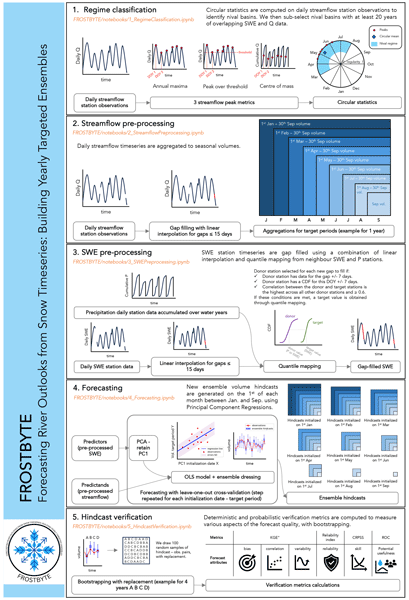
Forecasting river flow months in advance is crucial for water sectors and society. In North America, snowmelt is a key driver of flow. This study presents a statistical workflow using snow data to forecast flow months ahead in North American snow-fed rivers. Variations in the river flow predictability across the continent are evident, raising concerns about future predictability in a changing (snow) climate. The reproducible workflow hosted on GitHub supports collaborative and open science.
Melody Sandells, Nick Rutter, Kirsty Wivell, Richard Essery, Stuart Fox, Chawn Harlow, Ghislain Picard, Alexandre Roy, Alain Royer, and Peter Toose
The Cryosphere, 18, 3971–3990, https://doi.org/10.5194/tc-18-3971-2024, https://doi.org/10.5194/tc-18-3971-2024, 2024
Short summary
Short summary
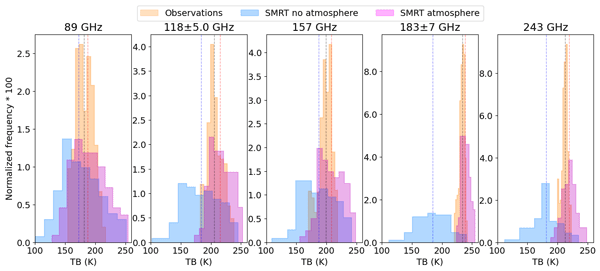
Satellite microwave observations are used for weather forecasting. In Arctic regions this is complicated by natural emission from snow. By simulating airborne observations from in situ measurements of snow, this study shows how snow properties affect the signal within the atmosphere. Fresh snowfall between flights changed airborne measurements. Good knowledge of snow layering and structure can be used to account for the effects of snow and could unlock these data to improve forecasts.
Benoit Montpetit, Joshua King, Julien Meloche, Chris Derksen, Paul Siqueira, J. Max Adam, Peter Toose, Mike Brady, Anna Wendleder, Vincent Vionnet, and Nicolas R. Leroux
The Cryosphere, 18, 3857–3874, https://doi.org/10.5194/tc-18-3857-2024, https://doi.org/10.5194/tc-18-3857-2024, 2024
Short summary
Short summary
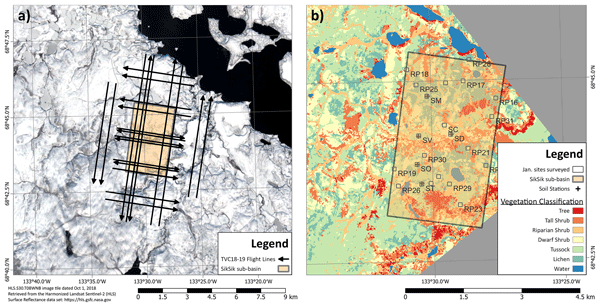
This paper validates the use of free open-source models to link distributed snow measurements to radar measurements in the Canadian Arctic. Using multiple radar sensors, we can decouple the soil from the snow contribution. We then retrieve the "microwave snow grain size" to characterize the interaction between the snow mass and the radar signal. This work supports future satellite mission development to retrieve snow mass information such as the future Canadian Terrestrial Snow Mass Mission.
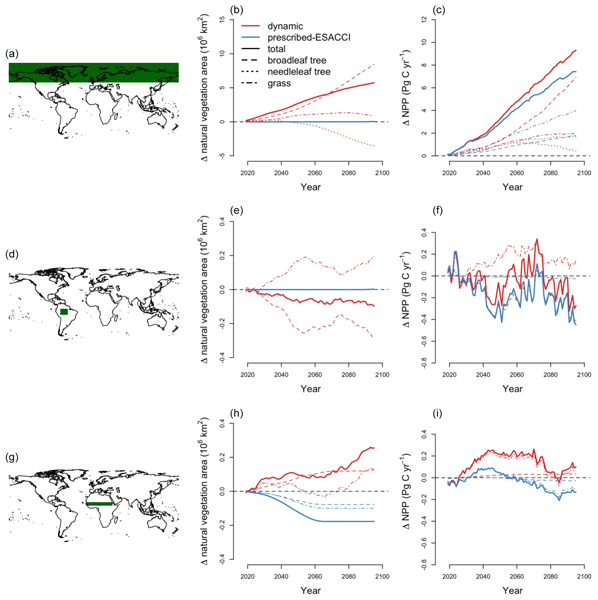
Sian Kou-Giesbrecht, Vivek K. Arora, Christian Seiler, and Libo Wang
Biogeosciences, 21, 3339–3371, https://doi.org/10.5194/bg-21-3339-2024, https://doi.org/10.5194/bg-21-3339-2024, 2024
Short summary
Short summary
Terrestrial biosphere models can either prescribe the geographical distribution of biomes or simulate them dynamically, capturing climate-change-driven biome shifts. We isolate and examine the differences between these different land cover implementations. We find that the simulated terrestrial carbon sink at the end of the 21st century is twice as large in simulations with dynamic land cover than in simulations with prescribed land cover due to important range shifts in the Arctic and Amazon.
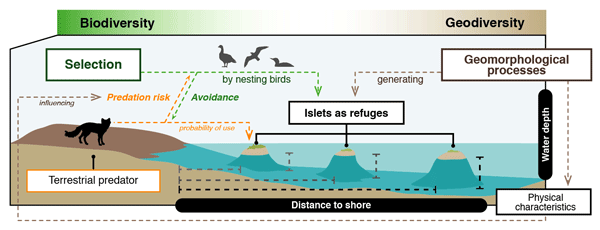
Madeleine-Zoé Corbeil-Robitaille, Éliane Duchesne, Daniel Fortier, Christophe Kinnard, and Joël Bêty
Biogeosciences, 21, 3401–3423, https://doi.org/10.5194/bg-21-3401-2024, https://doi.org/10.5194/bg-21-3401-2024, 2024
Short summary
Short summary
In the Arctic tundra, climate change is transforming the landscape, and this may impact wildlife. We focus on three nesting bird species and the islets they select as refuges from their main predator, the Arctic fox. A geomorphological process, ice-wedge polygon degradation, was found to play a key role in creating these refuges. This process is likely to affect predator–prey dynamics in the Arctic tundra, highlighting the connections between nature's physical and ecological systems.
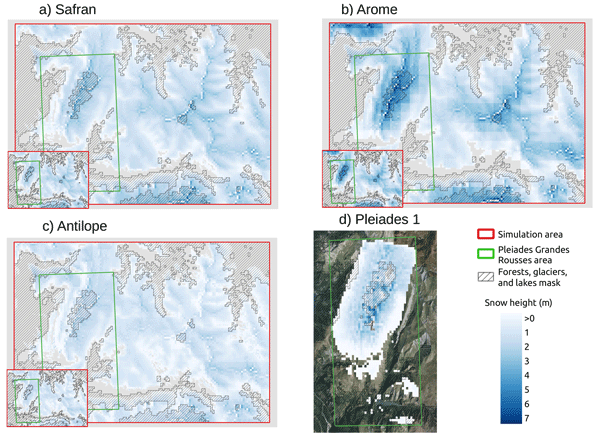
Ange Haddjeri, Matthieu Baron, Matthieu Lafaysse, Louis Le Toumelin, César Deschamps-Berger, Vincent Vionnet, Simon Gascoin, Matthieu Vernay, and Marie Dumont
The Cryosphere, 18, 3081–3116, https://doi.org/10.5194/tc-18-3081-2024, https://doi.org/10.5194/tc-18-3081-2024, 2024
Short summary
Short summary
Our study addresses the complex challenge of evaluating distributed alpine snow simulations with snow transport against snow depths from Pléiades stereo imagery and snow melt-out dates from Sentinel-2 and Landsat-8 satellites. Additionally, we disentangle error contributions between blowing snow, precipitation heterogeneity, and unresolved subgrid variability. Snow transport enhances the snow simulations at high elevations, while precipitation biases are the main error source in other areas.
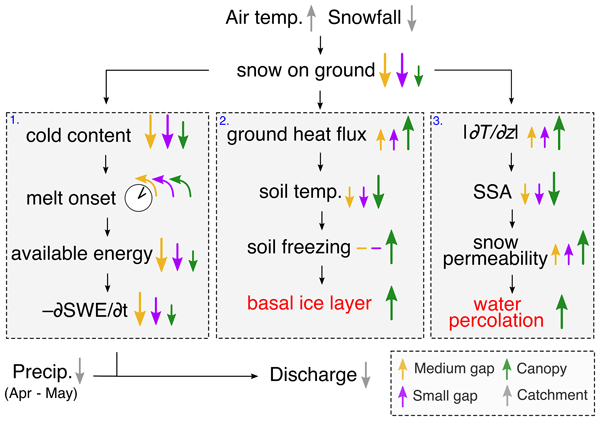
Benjamin Bouchard, Daniel F. Nadeau, Florent Domine, François Anctil, Tobias Jonas, and Étienne Tremblay
Hydrol. Earth Syst. Sci., 28, 2745–2765, https://doi.org/10.5194/hess-28-2745-2024, https://doi.org/10.5194/hess-28-2745-2024, 2024
Short summary
Short summary
Observations and simulations from an exceptionally low-snow and warm winter, which may become the new norm in the boreal forest of eastern Canada, show an earlier and slower snowmelt, reduced soil temperature, stronger vertical temperature gradients in the snowpack, and a significantly lower spring streamflow. The magnitude of these effects is either amplified or reduced with regard to the complex structure of the canopy.
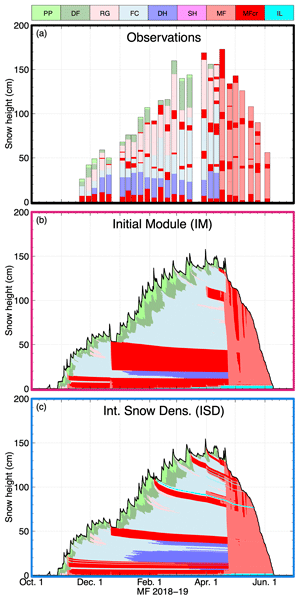
Benjamin Bouchard, Daniel F. Nadeau, Florent Domine, Nander Wever, Adrien Michel, Michael Lehning, and Pierre-Erik Isabelle
The Cryosphere, 18, 2783–2807, https://doi.org/10.5194/tc-18-2783-2024, https://doi.org/10.5194/tc-18-2783-2024, 2024
Short summary
Short summary
Observations over several winters at two boreal sites in eastern Canada show that rain-on-snow (ROS) events lead to the formation of melt–freeze layers and that preferential flow is an important water transport mechanism in the sub-canopy snowpack. Simulations with SNOWPACK generally show good agreement with observations, except for the reproduction of melt–freeze layers. This was improved by simulating intercepted snow microstructure evolution, which also modulates ROS-induced runoff.
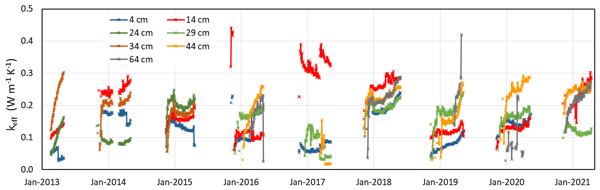
Florent Domine, Denis Sarrazin, Daniel F. Nadeau, Georg Lackner, and Maria Belke-Brea
Earth Syst. Sci. Data, 16, 1523–1541, https://doi.org/10.5194/essd-16-1523-2024, https://doi.org/10.5194/essd-16-1523-2024, 2024
Short summary
Short summary
The forest–tundra ecotone is the transition region between the boreal forest and Arctic tundra. It spans over 13 000 km across the Arctic and is evolving rapidly because of climate change. We provide extensive data sets of two sites 850 m apart, one in tundra and one in forest in this ecotone for use in various models. Data include meteorological and flux data and unique snow and soil physics data.
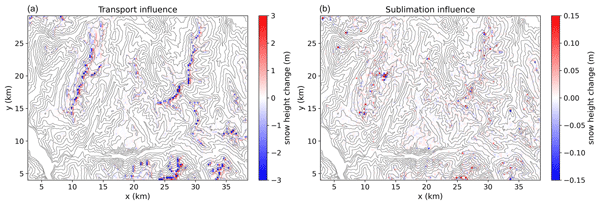
Matthieu Baron, Ange Haddjeri, Matthieu Lafaysse, Louis Le Toumelin, Vincent Vionnet, and Mathieu Fructus
Geosci. Model Dev., 17, 1297–1326, https://doi.org/10.5194/gmd-17-1297-2024, https://doi.org/10.5194/gmd-17-1297-2024, 2024
Short summary
Short summary
Increasing the spatial resolution of numerical systems simulating snowpack evolution in mountain areas requires representing small-scale processes such as wind-induced snow transport. We present SnowPappus, a simple scheme coupled with the Crocus snow model to compute blowing-snow fluxes and redistribute snow among grid points at 250 m resolution. In terms of numerical cost, it is suitable for large-scale applications. We present point-scale evaluations of fluxes and snow transport occurrence.
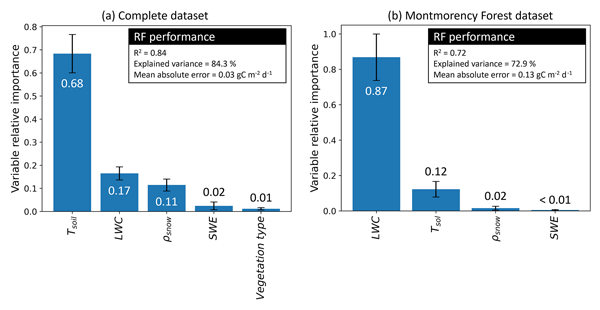
Alex Mavrovic, Oliver Sonnentag, Juha Lemmetyinen, Carolina Voigt, Nick Rutter, Paul Mann, Jean-Daniel Sylvain, and Alexandre Roy
Biogeosciences, 20, 5087–5108, https://doi.org/10.5194/bg-20-5087-2023, https://doi.org/10.5194/bg-20-5087-2023, 2023
Short summary
Short summary
We present an analysis of soil CO2 emissions in boreal and tundra regions during the non-growing season. We show that when the soil is completely frozen, soil temperature is the main control on CO2 emissions. When the soil is around the freezing point, with a mix of liquid water and ice, the liquid water content is the main control on CO2 emissions. This study highlights that the vegetation–snow–soil interactions must be considered to understand soil CO2 emissions during the non-growing season.
Hadleigh D. Thompson, Julie M. Thériault, Stephen J. Déry, Ronald E. Stewart, Dominique Boisvert, Lisa Rickard, Nicolas R. Leroux, Matteo Colli, and Vincent Vionnet
Earth Syst. Sci. Data, 15, 5785–5806, https://doi.org/10.5194/essd-15-5785-2023, https://doi.org/10.5194/essd-15-5785-2023, 2023
Short summary
Short summary
The Saint John River experiment on Cold Season Storms was conducted in northwest New Brunswick, Canada, to investigate the types of precipitation that can lead to ice jams and flooding along the river. We deployed meteorological instruments, took precipitation measurements and photographs of snowflakes, and launched weather balloons. These data will help us to better understand the atmospheric conditions that can affect local communities and townships downstream during the spring melt season.
Mickaël Lalande, Martin Ménégoz, Gerhard Krinner, Catherine Ottlé, and Frédérique Cheruy
The Cryosphere, 17, 5095–5130, https://doi.org/10.5194/tc-17-5095-2023, https://doi.org/10.5194/tc-17-5095-2023, 2023
Short summary
Short summary
This study investigates the impact of topography on snow cover parameterizations using models and observations. Parameterizations without topography-based considerations overestimate snow cover. Incorporating topography reduces snow overestimation by 5–10 % in mountains, in turn reducing cold biases. However, some biases remain, requiring further calibration and more data. Assessing snow cover parameterizations is challenging due to limited and uncertain data in mountainous regions.
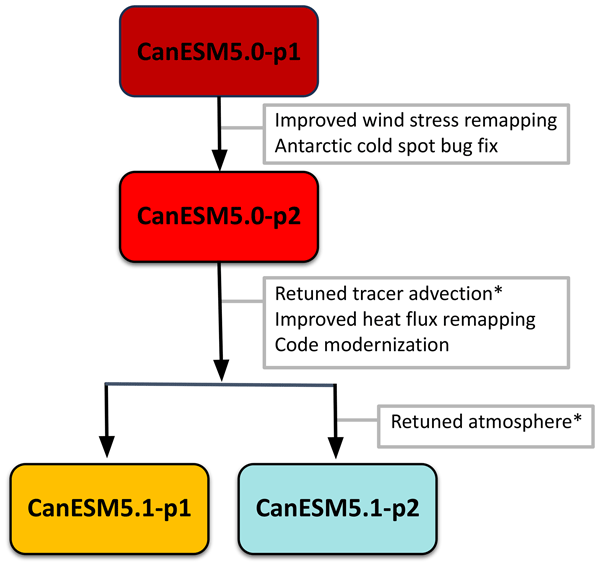
Michael Sigmond, James Anstey, Vivek Arora, Ruth Digby, Nathan Gillett, Viatcheslav Kharin, William Merryfield, Catherine Reader, John Scinocca, Neil Swart, John Virgin, Carsten Abraham, Jason Cole, Nicolas Lambert, Woo-Sung Lee, Yongxiao Liang, Elizaveta Malinina, Landon Rieger, Knut von Salzen, Christian Seiler, Clint Seinen, Andrew Shao, Reinel Sospedra-Alfonso, Libo Wang, and Duo Yang
Geosci. Model Dev., 16, 6553–6591, https://doi.org/10.5194/gmd-16-6553-2023, https://doi.org/10.5194/gmd-16-6553-2023, 2023
Short summary
Short summary
We present a new activity which aims to organize the analysis of biases in the Canadian Earth System model (CanESM) in a systematic manner. Results of this “Analysis for Development” (A4D) activity includes a new CanESM version, CanESM5.1, which features substantial improvements regarding the simulation of dust and stratospheric temperatures, a second CanESM5.1 variant with reduced climate sensitivity, and insights into potential avenues to reduce various other model biases.
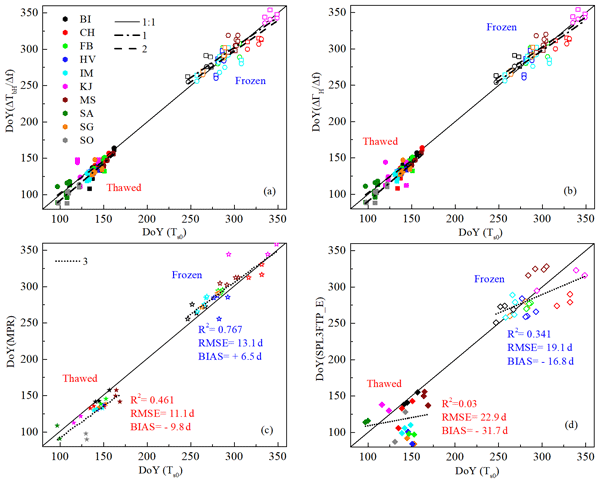
Konstantin Muzalevskiy, Zdenek Ruzicka, Alexandre Roy, Michael Loranty, and Alexander Vasiliev
The Cryosphere, 17, 4155–4164, https://doi.org/10.5194/tc-17-4155-2023, https://doi.org/10.5194/tc-17-4155-2023, 2023
Short summary
Short summary
A new all-weather method for determining the frozen/thawed (FT) state of soils in the Arctic region based on satellite data was proposed. The method is based on multifrequency measurement of brightness temperatures by the SMAP and GCOM-W1/AMSR2 satellites. The created method was tested at sites in Canada, Finland, Russia, and the USA, based on climatic weather station data. The proposed method identifies the FT state of Arctic soils with better accuracy than existing methods.
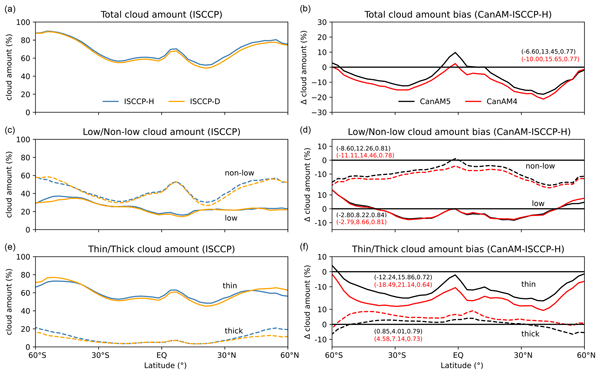
Jason Neil Steven Cole, Knut von Salzen, Jiangnan Li, John Scinocca, David Plummer, Vivek Arora, Norman McFarlane, Michael Lazare, Murray MacKay, and Diana Verseghy
Geosci. Model Dev., 16, 5427–5448, https://doi.org/10.5194/gmd-16-5427-2023, https://doi.org/10.5194/gmd-16-5427-2023, 2023
Short summary
Short summary
The Canadian Atmospheric Model version 5 (CanAM5) is used to simulate on a global scale the climate of Earth's atmosphere, land, and lakes. We document changes to the physics in CanAM5 since the last major version of the model (CanAM4) and evaluate the climate simulated relative to observations and CanAM4. The climate simulated by CanAM5 is similar to CanAM4, but there are improvements, including better simulation of temperature and precipitation over the Amazon and better simulation of cloud.
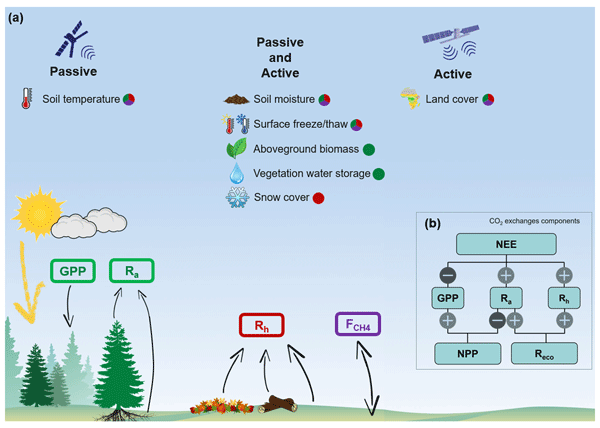
Alex Mavrovic, Oliver Sonnentag, Juha Lemmetyinen, Jennifer L. Baltzer, Christophe Kinnard, and Alexandre Roy
Biogeosciences, 20, 2941–2970, https://doi.org/10.5194/bg-20-2941-2023, https://doi.org/10.5194/bg-20-2941-2023, 2023
Short summary
Short summary
This review supports the integration of microwave spaceborne information into carbon cycle science for Arctic–boreal regions. The microwave data record spans multiple decades with frequent global observations of soil moisture and temperature, surface freeze–thaw cycles, vegetation water storage, snowpack properties, and land cover. This record holds substantial unexploited potential to better understand carbon cycle processes.
Bo Qu, Alexandre Roy, Joe R. Melton, Jennifer L. Baltzer, Youngryel Ryu, Matteo Detto, and Oliver Sonnentag
EGUsphere, https://doi.org/10.5194/egusphere-2023-1167, https://doi.org/10.5194/egusphere-2023-1167, 2023
Preprint archived
Short summary
Short summary
Accurately simulating photosynthesis and evapotranspiration challenges terrestrial biosphere models across North America’s boreal biome, in part due to uncertain representation of the maximum rate of photosynthetic carboxylation (Vcmax). This study used forest stand scale observations in an optimization framework to improve Vcmax values for representative vegetation types. Several stand characteristics well explained spatial Vcmax variability and were useful to improve boreal forest modelling.
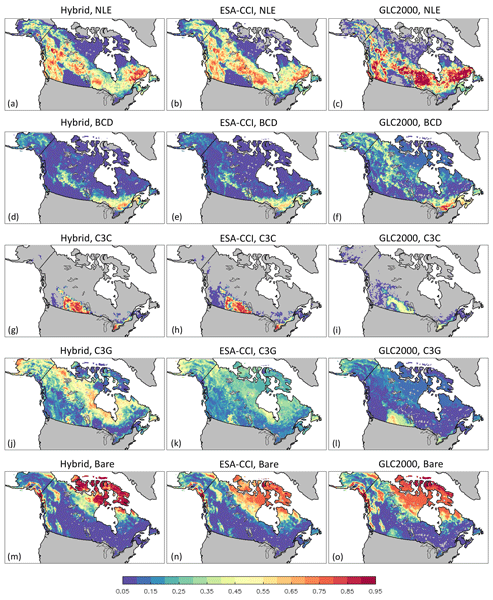
Libo Wang, Vivek K. Arora, Paul Bartlett, Ed Chan, and Salvatore R. Curasi
Biogeosciences, 20, 2265–2282, https://doi.org/10.5194/bg-20-2265-2023, https://doi.org/10.5194/bg-20-2265-2023, 2023
Short summary
Short summary
Plant functional types (PFTs) are groups of plant species used to represent vegetation distribution in land surface models. There are large uncertainties associated with existing methods for mapping land cover datasets to PFTs. This study demonstrates how fine-resolution tree cover fraction and land cover datasets can be used to inform the PFT mapping process and reduce the uncertainties. The proposed largely objective method makes it easier to implement new land cover products in models.
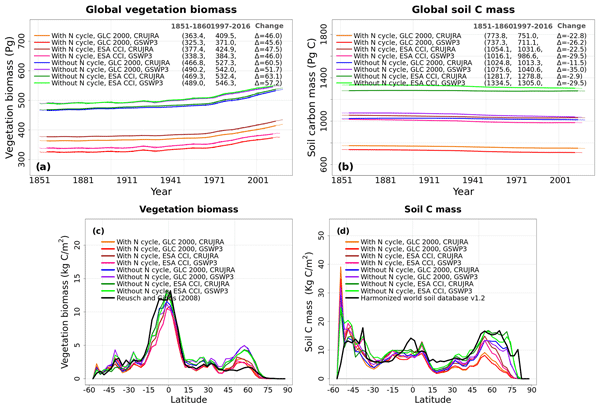
Vivek K. Arora, Christian Seiler, Libo Wang, and Sian Kou-Giesbrecht
Biogeosciences, 20, 1313–1355, https://doi.org/10.5194/bg-20-1313-2023, https://doi.org/10.5194/bg-20-1313-2023, 2023
Short summary
Short summary
The behaviour of natural systems is now very often represented through mathematical models. These models represent our understanding of how nature works. Of course, nature does not care about our understanding. Since our understanding is not perfect, evaluating models is challenging, and there are uncertainties. This paper illustrates this uncertainty for land models and argues that evaluating models in light of the uncertainty in various components provides useful information.
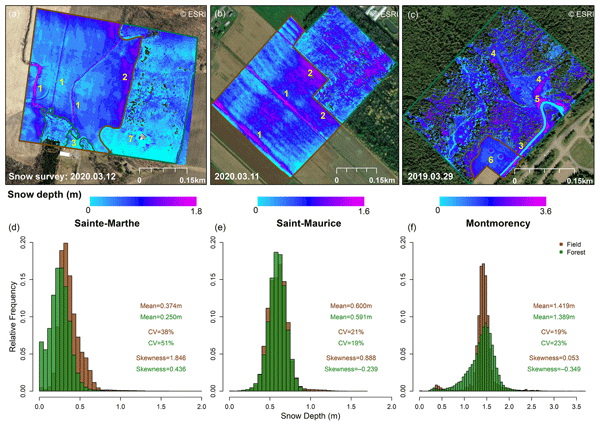
Vasana Dharmadasa, Christophe Kinnard, and Michel Baraër
The Cryosphere, 17, 1225–1246, https://doi.org/10.5194/tc-17-1225-2023, https://doi.org/10.5194/tc-17-1225-2023, 2023
Short summary
Short summary
This study highlights the successful usage of UAV lidar to monitor small-scale snow depth distribution. Our results show that underlying topography and wind redistribution of snow along forest edges govern the snow depth variability at agro-forested sites, while forest structure variability dominates snow depth variability in the coniferous environment. This emphasizes the importance of including and better representing these processes in physically based models for accurate snowpack estimates.
Gauthier Vérin, Florent Domine, Marcel Babin, Ghislain Picard, and Laurent Arnaud
The Cryosphere, 16, 3431–3449, https://doi.org/10.5194/tc-16-3431-2022, https://doi.org/10.5194/tc-16-3431-2022, 2022
Short summary
Short summary
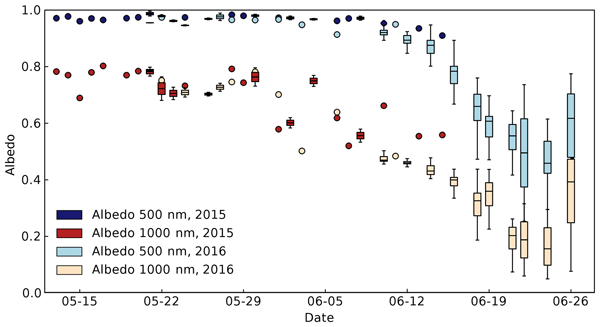
Snow physical properties on Arctic sea ice are monitored during the melt season. As snow grains grow, and the snowpack thickness is reduced, the surface albedo decreases. The extra absorbed energy accelerates melting. Radiative transfer modeling shows that more radiation is then transmitted to the snow–sea-ice interface. A sharp increase in transmitted radiation takes place when the snowpack thins significantly, and this coincides with the initiation of the phytoplankton bloom in the seawater.
Georg Lackner, Florent Domine, Daniel F. Nadeau, Matthieu Lafaysse, and Marie Dumont
The Cryosphere, 16, 3357–3373, https://doi.org/10.5194/tc-16-3357-2022, https://doi.org/10.5194/tc-16-3357-2022, 2022
Short summary
Short summary
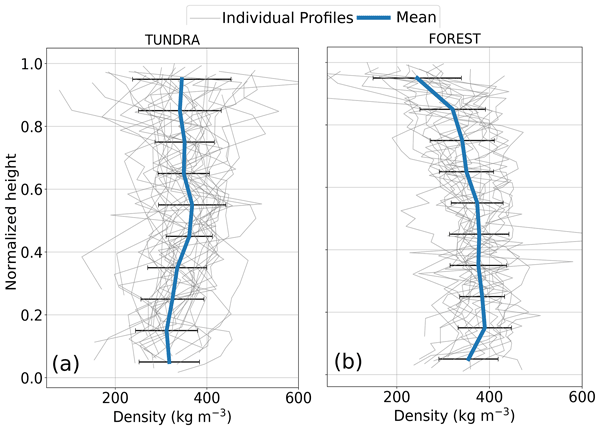
We compared the snowpack at two sites separated by less than 1 km, one in shrub tundra and the other one within the boreal forest. Even though the snowpack was twice as thick at the forested site, we found evidence that the vertical transport of water vapor from the bottom of the snowpack to its surface was important at both sites. The snow model Crocus simulates no water vapor fluxes and consequently failed to correctly simulate the observed density profiles.
Christophe Kinnard, Olivier Larouche, Michael N. Demuth, and Brian Menounos
The Cryosphere, 16, 3071–3099, https://doi.org/10.5194/tc-16-3071-2022, https://doi.org/10.5194/tc-16-3071-2022, 2022
Short summary
Short summary
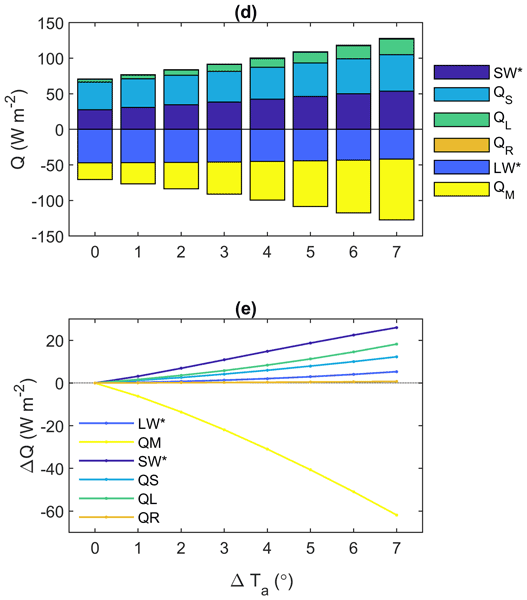
This study implements a physically based, distributed glacier mass balance model in a context of sparse direct observations. Carefully constraining model parameters with ancillary data allowed for accurately reconstructing the mass balance of Saskatchewan Glacier over a 37-year period. We show that the mass balance sensitivity to warming is dominated by increased melting and that changes in glacier albedo and air humidity are the leading causes of increased glacier melt under warming scenarios.
Juliane Mai, Hongren Shen, Bryan A. Tolson, Étienne Gaborit, Richard Arsenault, James R. Craig, Vincent Fortin, Lauren M. Fry, Martin Gauch, Daniel Klotz, Frederik Kratzert, Nicole O'Brien, Daniel G. Princz, Sinan Rasiya Koya, Tirthankar Roy, Frank Seglenieks, Narayan K. Shrestha, André G. T. Temgoua, Vincent Vionnet, and Jonathan W. Waddell
Hydrol. Earth Syst. Sci., 26, 3537–3572, https://doi.org/10.5194/hess-26-3537-2022, https://doi.org/10.5194/hess-26-3537-2022, 2022
Short summary
Short summary
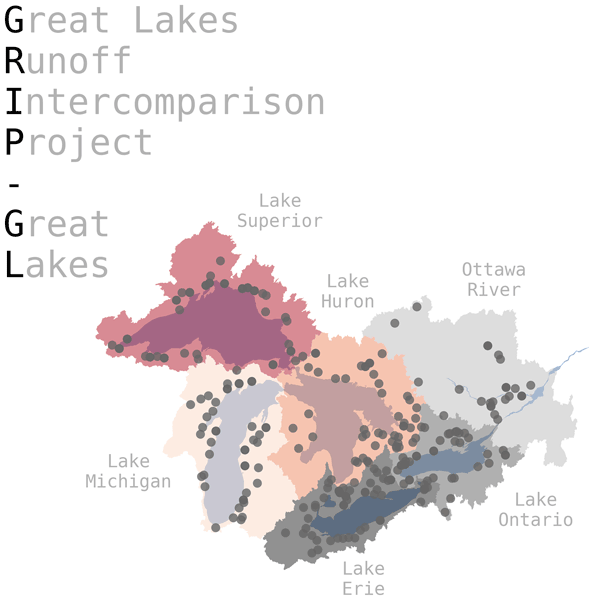
Model intercomparison studies are carried out to test various models and compare the quality of their outputs over the same domain. In this study, 13 diverse model setups using the same input data are evaluated over the Great Lakes region. Various model outputs – such as streamflow, evaporation, soil moisture, and amount of snow on the ground – are compared using standardized methods and metrics. The basin-wise model outputs and observations are made available through an interactive website.
Georg Lackner, Florent Domine, Daniel F. Nadeau, Annie-Claude Parent, François Anctil, Matthieu Lafaysse, and Marie Dumont
The Cryosphere, 16, 127–142, https://doi.org/10.5194/tc-16-127-2022, https://doi.org/10.5194/tc-16-127-2022, 2022
Short summary
Short summary
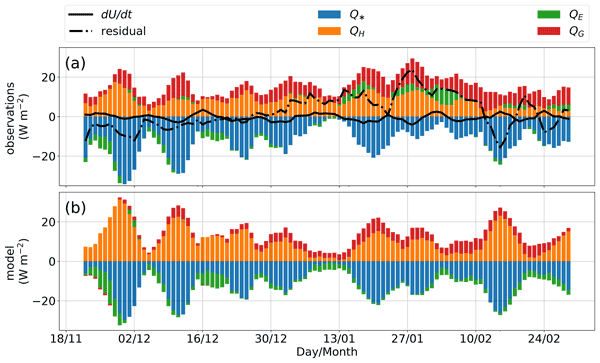
The surface energy budget is the sum of all incoming and outgoing energy fluxes at the Earth's surface and has a key role in the climate. We measured all these fluxes for an Arctic snowpack and found that most incoming energy from radiation is counterbalanced by thermal radiation and heat convection while sublimation was negligible. Overall, the snow model Crocus was able to simulate the observed energy fluxes well.

Alain Royer, Alexandre Roy, Sylvain Jutras, and Alexandre Langlois
The Cryosphere, 15, 5079–5098, https://doi.org/10.5194/tc-15-5079-2021, https://doi.org/10.5194/tc-15-5079-2021, 2021
Short summary
Short summary
Dense spatially distributed networks of autonomous instruments for continuously measuring the amount of snow on the ground are needed for operational water resource and flood management and the monitoring of northern climate change. Four new-generation non-invasive sensors are compared. A review of their advantages, drawbacks and accuracy is discussed. This performance analysis is intended to help researchers and decision-makers choose the one system that is best suited to their needs.
Maria Belke-Brea, Florent Domine, Ghislain Picard, Mathieu Barrere, and Laurent Arnaud
Biogeosciences, 18, 5851–5869, https://doi.org/10.5194/bg-18-5851-2021, https://doi.org/10.5194/bg-18-5851-2021, 2021
Short summary
Short summary
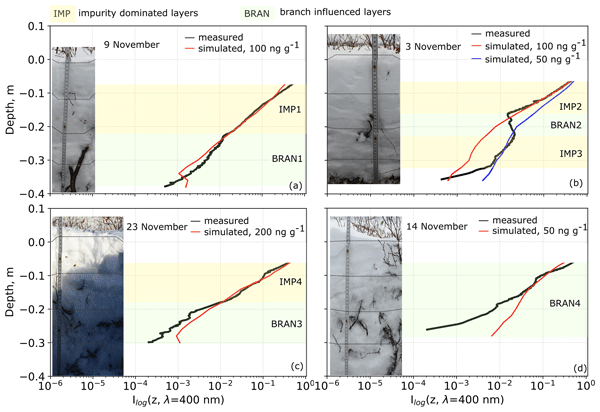
Expanding shrubs in the Arctic change snowpacks into a mix of snow, impurities and buried branches. Snow is a translucent medium into which light penetrates and gets partly absorbed by branches or impurities. Measurements of light attenuation in snow in Northern Quebec, Canada, showed (1) black-carbon-dominated light attenuation in snowpacks without shrubs and (2) buried branches influence radiation attenuation in snow locally, leading to melting and pockets of large crystals close to branches.
Mickaël Lalande, Martin Ménégoz, Gerhard Krinner, Kathrin Naegeli, and Stefan Wunderle
Earth Syst. Dynam., 12, 1061–1098, https://doi.org/10.5194/esd-12-1061-2021, https://doi.org/10.5194/esd-12-1061-2021, 2021
Short summary
Short summary
Climate change over High Mountain Asia is investigated with CMIP6 climate models. A general cold bias is found in this area, often related to a snow cover overestimation in the models. Ensemble experiments generally encompass the past observed trends, suggesting that even biased models can reproduce the trends. Depending on the future scenario, a warming from 1.9 to 6.5 °C, associated with a snow cover decrease and precipitation increase, is expected at the end of the 21st century.
Cited articles
Abolafia-Rosenzweig, R., He, C., McKenzie Skiles, S., Chen, F., and Gochis, D.: Evaluation and Optimization of Snow Albedo Scheme in Noah-MP Land Surface Model Using In Situ Spectral Observations in the Colorado Rockies, J. Adv. Model. Earth Syst., 14, e2022MS003141, https://doi.org/10.1029/2022MS003141, 2022. a
Abolafia-Rosenzweig, R., He, C., Chen, F., and Barlage, M.: Evaluating and Enhancing Snow Compaction Process in the Noah-MP Land Surface Model, J. Adv. Model. Earth Syst., 16, e2023MS003869, https://doi.org/10.1029/2023MS003869, 2024. a
AMAP: AMAP Arctic Climate Change Update 2024: Key Trends and Impacts, AMAP – Arctic Monitoring and Assessment Programme, Tromsø, Norway, https://doi.org/10.21352/fz60-s852, 2024. a
Amory, C., Kittel, C., Le Toumelin, L., Agosta, C., Delhasse, A., Favier, V., and Fettweis, X.: Performance of MAR (v3.11) in Simulating the Drifting-Snow Climate and Surface Mass Balance of Adélie Land, East Antarctica, Geosci. Model Dev., 14, 3487–3510, https://doi.org/10.5194/gmd-14-3487-2021, 2021. a
Augas, J., Abbasnezhadi, K., Rousseau, A. N., and Baraer, M.: What Is the Trade-Off between Snowpack Stratification and Simulated Snow Water Equivalent in a Physically-Based Snow Model?, Water, 12, 3449, https://doi.org/10.3390/w12123449, 2020. a
Barnett, T. P., Adam, J. C., and Lettenmaier, D. P.: Potential Impacts of a Warming Climate on Water Availability in Snow-Dominated Regions, Nature, 438, 303–309, https://doi.org/10.1038/nature04141, 2005. a
Barrere, M., Domine, F., Decharme, B., Morin, S., Vionnet, V., and Lafaysse, M.: Evaluating the Performance of Coupled Snow–Soil Models in SURFEXv8 to Simulate the Permafrost Thermal Regime at a High Arctic Site, Geosci. Model Dev., 10, 3461–3479, https://doi.org/10.5194/gmd-10-3461-2017, 2017. a, b, c, d
Bartelt, P. and Lehning, M.: A Physical SNOWPACK Model for the Swiss Avalanche Warning: Part I: Numerical Model, Cold Reg. Sci. Technol., 35, 123–145, https://doi.org/10.1016/S0165-232X(02)00074-5, 2002. a
Bartlett, P. A. and Verseghy, D. L.: Modified Treatment of Intercepted Snow Improves the Simulated Forest Albedo in the Canadian Land Surface Scheme, Hydrol. Process., 29, 3208–3226, https://doi.org/10.1002/hyp.10431, 2015. a
Bartlett, P. A., MacKay, M. D., and Verseghy, D. L.: Modified Snow Algorithms in the Canadian Land Surface Scheme: Model Runs and Sensitivity Analysis at Three Boreal Forest Stands, Atmos.-Ocean, 44, 207–222, https://doi.org/10.3137/ao.440301, 2006. a, b
Bayle, A., Roy, A., Dedieu, J.-P., Boudreau, S., Choler, P., and Lévesque, E.: Two distinct waves of greening in northeastern Canada: summer warming does not tell the whole story, Environ. Res. Lett., 17, 064051, https://doi.org/10.1088/1748-9326/ac74d6, 2022. a, b
Beringer, J., Lynch, A. H., Chapin, F. S., Mack, M., and Bonan, G. B.: The Representation of Arctic Soils in the Land Surface Model: The Importance of Mosses, J. Climate, 14, 3324–3335, https://doi.org/10.1175/1520-0442(2001)014<3324:TROASI>2.0.CO;2, 2001. a
Best, M. J., Pryor, M., Clark, D. B., Rooney, G. G., Essery, R. L. H., Ménard, C. B., Edwards, J. M., Hendry, M. A., Porson, A., Gedney, N., Mercado, L. M., Sitch, S., Blyth, E., Boucher, O., Cox, P. M., Grimmond, C. S. B., and Harding, R. J.: The Joint UK Land Environment Simulator (JULES), Model Description – Part 1: Energy and Water Fluxes, Geosci. Model Dev., 4, 677–699, https://doi.org/10.5194/gmd-4-677-2011, 2011. a
Boike, J., Miesner, F., Bornemann, N., Cable, W. L., and Grünberg, I.: Trail Valley Creek, NWT, Canada Soil Moisture and Temperature 2016 et Seq, PANGAEA [data set], https://doi.org/10.1594/PANGAEA.962726, 2023. a
Bokhorst, S., Pedersen, S. H., Brucker, L., Anisimov, O., Bjerke, J. W., Brown, R. D., Ehrich, D., Essery, R. L. H., Heilig, A., Ingvander, S., Johansson, C., Johansson, M., Jónsdóttir, I. S., Inga, N., Luojus, K., Macelloni, G., Mariash, H., McLennan, D., Rosqvist, G. N., Sato, A., Savela, H., Schneebeli, M., Sokolov, A., Sokratov, S. A., Terzago, S., Vikhamar-Schuler, D., Williamson, S., Qiu, Y., and Callaghan, T. V.: Changing Arctic Snow Cover: A Review of Recent Developments and Assessment of Future Needs for Observations, Modelling, and Impacts, Ambio, 45, 516–537, https://doi.org/10.1007/s13280-016-0770-0, 2016. a
Boone, A. and Etchevers, P.: An Intercomparison of Three Snow Schemes of Varying Complexity Coupled to the Same Land Surface Model: Local-Scale Evaluation at an Alpine Site, J. Hydrometeorol., 2, 374–394, https://doi.org/10.1175/1525-7541(2001)002<0374:AIOTSS>2.0.CO;2, 2001. a
Bring, A., Fedorova, I., Dibike, Y., Hinzman, L., Mård, J., Mernild, S. H., Prowse, T., Semenova, O., Stuefer, S. L., and Woo, M.-K.: Arctic Terrestrial Hydrology: A Synthesis of Processes, Regional Effects, and Research Challenges, J. Geophys. Res.-Biogeo., 121, 621–649, https://doi.org/10.1002/2015JG003131, 2016. a, b, c
Brondex, J., Fourteau, K., Dumont, M., Hagenmuller, P., Calonne, N., Tuzet, F., and Löwe, H.: A Finite-Element Framework to Explore the Numerical Solution of the Coupled Problem of Heat Conduction, Water Vapor Diffusion, and Settlement in Dry Snow (IvoriFEM v0.1.0), Geosci. Model Dev., 16, 7075–7106, https://doi.org/10.5194/gmd-16-7075-2023, 2023. a
Bruce, J. P. and Clark, R. H.: Introduction to Hydrometeorology, Elsevier Science & Technology, ISBN 978-0-08-011714-0, 1966. a
Burke, E. J., Ekici, A., Huang, Y., Chadburn, S. E., Huntingford, C., Ciais, P., Friedlingstein, P., Peng, S., and Krinner, G.: Quantifying Uncertainties of Permafrost Carbon–Climate Feedbacks, Biogeosciences, 14, 3051–3066, https://doi.org/10.5194/bg-14-3051-2017, 2017. a
Calonne, N., Flin, F., Morin, S., Lesaffre, B., du Roscoat, S. R., and Geindreau, C.: Numerical and Experimental Investigations of the Effective Thermal Conductivity of Snow, Geophys. Res. Lett., 38, L23501, https://doi.org/10.1029/2011GL049234, 2011. a, b, c, d, e, f, g, h, i, j, k, l, m, n, o, p, q, r, s, t
Calonne, N., Milliancourt, L., Burr, A., Philip, A., Martin, C. L., Flin, F., and Geindreau, C.: Thermal Conductivity of Snow, Firn, and Porous Ice From 3-D Image-Based Computations, Geophys. Res. Lett., 46, 13079–13089, https://doi.org/10.1029/2019GL085228, 2019. a
Campbell, J. L. and Laudon, H.: Carbon Response to Changing Winter Conditions in Northern Regions: Current Understanding and Emerging Research Needs, Environ. Rev., 27, 545–566, https://doi.org/10.1139/er-2018-0097, 2019. a
Chadburn, S., Burke, E., Essery, R., Boike, J., Langer, M., Heikenfeld, M., Cox, P., and Friedlingstein, P.: An Improved Representation of Physical Permafrost Dynamics in the JULES Land-Surface Model, Geosci. Model Dev., 8, 1493–1508, https://doi.org/10.5194/gmd-8-1493-2015, 2015. a
Chen, F., Barlage, M., Tewari, M., Rasmussen, R., Jin, J., Lettenmaier, D., Livneh, B., Lin, C., Miguez-Macho, G., Niu, G.-Y., Wen, L., and Yang, Z.-L.: Modeling seasonal snowpack evolution in the complex terrain and forested Colorado Headwaters region: A model intercomparison study, J. Geophys. Res.-Atmos., 119, 13795–13819, https://doi.org/10.1002/2014JD022167, 2014. a
Cohen, J. L., Furtado, J. C., Barlow, M. A., Alexeev, V. A., and Cherry, J. E.: Arctic Warming, Increasing Snow Cover and Widespread Boreal Winter Cooling, Environ. Res. Lett., 7, 014007, https://doi.org/10.1088/1748-9326/7/1/014007, 2012. a
Comyn-Platt, E., Hayman, G., Huntingford, C., Chadburn, S. E., Burke, E. J., Harper, A. B., Collins, W. J., Webber, C. P., Powell, T., Cox, P. M., Gedney, N., and Sitch, S.: Carbon Budgets for 1.5 and 2 °C Targets Lowered by Natural Wetland and Permafrost Feedbacks, Nat. Geosci., 11, 568–573, https://doi.org/10.1038/s41561-018-0174-9, 2018. a
Cook, B. I., Bonan, G. B., Levis, S., and Epstein, H. E.: The Thermoinsulation Effect of Snow Cover within a Climate Model, Clim. Dynam., 31, 107–124, https://doi.org/10.1007/s00382-007-0341-y, 2008. a
Cosby, B. J., Hornberger, G. M., Clapp, R. B., and Ginn, T. R.: A Statistical Exploration of the Relationships of Soil Moisture Characteristics to the Physical Properties of Soils, Water Resour. Res., 20, 682–690, https://doi.org/10.1029/WR020i006p00682, 1984. a
Cristea, N. C., Bennett, A., Nijssen, B., and Lundquist, J. D.: When and Where Are Multiple Snow Layers Important for Simulations of Snow Accumulation and Melt?, Water Resour. Res., 58, e2020WR028993, https://doi.org/10.1029/2020WR028993, 2022. a
Dai, A.: Temperature and pressure dependence of the rain-snow phase transition over land and ocean, Geophys. Res. Lett., 35, https://doi.org/10.1029/2008GL033295, 2008. a
Dai, Y., Zeng, X., Dickinson, R. E., Baker, I., Bonan, G. B., Bosilovich, M. G., Denning, A. S., Dirmeyer, P. A., Houser, P. R., Niu, G., Oleson, K. W., Schlosser, C. A., and Yang, Z.-L.: The Common Land Model, B. Am. Meteorol. Soc., 84, 1013–1024, https://doi.org/10.1175/BAMS-84-8-1013, 2003. a
Damseaux, A., Matthes, H., Dutch, V. R., Wake, L., and Rutter, N.: Impact of Snow Thermal Conductivity Schemes on Pan-Arctic Permafrost Dynamics in the Community Land Model Version 5.0, The Cryosphere, 19, 1539–1558, https://doi.org/10.5194/tc-19-1539-2025, 2025. a
Decharme, B., Brun, E., Boone, A., Delire, C., Le Moigne, P., and Morin, S.: Impacts of Snow and Organic Soils Parameterization on Northern Eurasian Soil Temperature Profiles Simulated by the ISBA Land Surface Model, The Cryosphere, 10, 853–877, https://doi.org/10.5194/tc-10-853-2016, 2016. a
Domine, F., Bock, J., Morin, S., and Giraud, G.: Linking the Effective Thermal Conductivity of Snow to Its Shear Strength and Density, J. Geophys. Res.-Earth, 116, https://doi.org/10.1029/2011JF002000, 2011. a
Domine, F., Barrere, M., Sarrazin, D., Morin, S., and Arnaud, L.: Automatic Monitoring of the Effective Thermal Conductivity of Snow in a Low-Arctic Shrub Tundra, The Cryosphere, 9, 1265–1276, https://doi.org/10.5194/tc-9-1265-2015, 2015. a
Domine, F., Barrere, M., and Sarrazin, D.: Seasonal Evolution of the Effective Thermal Conductivity of the Snow and the Soil in High Arctic Herb Tundra at Bylot Island, Canada, The Cryosphere, 10, 2573–2588, https://doi.org/10.5194/tc-10-2573-2016, 2016. a
Domine, F., Belke-Brea, M., Sarrazin, D., Arnaud, L., Barrere, M., and Poirier, M.: Soil Moisture, Wind Speed and Depth Hoar Formation in the Arctic Snowpack, J. Glaciol., 64, 990–1002, https://doi.org/10.1017/jog.2018.89, 2018a. a
Domine, F., Gauthier, G., Vionnet, V., Fauteux, D., Dumont, M., and Barrere, M.: Snow Physical Properties May Be a Significant Determinant of Lemming Population Dynamics in the High Arctic, Arctic Sci., 4, 813–826, https://doi.org/10.1139/as-2018-0008, 2018b. a
Domine, F., Picard, G., Morin, S., Barrere, M., Madore, J.-B., and Langlois, A.: Major Issues in Simulating Some Arctic Snowpack Properties Using Current Detailed Snow Physics Models: Consequences for the Thermal Regime and Water Budget of Permafrost, J. Adv. Model. Earth Syst., 11, 34–44, https://doi.org/10.1029/2018MS001445, 2019. a, b, c
Domine, F., Lackner, G., Sarrazin, D., Poirier, M., and Belke-Brea, M.: Meteorological, Snow and Soil Data (2013–2019) from a Herb Tundra Permafrost Site at Bylot Island, Canadian High Arctic, for Driving and Testing Snow and Land Surface Models, Earth Syst. Sci. Data, 13, 4331–4348, https://doi.org/10.5194/essd-13-4331-2021, 2021a. a, b, c, d, e, f, g, h, i
Domine, F., Lackner, G., Sarrazin, D., Poirier, M., and Belke-Brea, M.: Meteorological, Snow and Soil Data from Bylot Island, Canadian High Arctic, for Driving and Testing Snow and Land Surface Models, v. 1.100000 (2013–2019), Nordicana D86 [data set], https://doi.org/10.5885/45693CE-02685A5200DD4C38, 2021b. a
Domine, F., Fourteau, K., and Choler, P.: Exploration of Thermal Bridging Through Shrub Branches in Alpine Snow, Geophysi. Res. Lett., 50, e2023GL105100, https://doi.org/10.1029/2023GL105100, 2023. a
Domine, F., Sarrazin, D., Nadeau, D., Lackner, G., and Belke-Brea, M.: Hydrometeorological, Snow and Soil Data from a Low-Arctic Valley in the Forest-Tundra Ecotone in Northern Quebec, PANGAEA [data set], https://doi.org/10.1594/PANGAEA.964743, 2024a. a
Douville, H., Royer, J. F., and Mahfouf, J. F.: A New Snow Parameterization for the Météo-France Climate Model, Clim. Dynam., 12, 21–35, https://doi.org/10.1007/BF00208760, 1995. a
Dutch, V. R., Rutter, N., Wake, L., Sandells, M., Derksen, C., Walker, B., Hould Gosselin, G., Sonnentag, O., Essery, R., Kelly, R., Marsh, P., King, J., and Boike, J.: Impact of Measured and Simulated Tundra Snowpack Properties on Heat Transfer, The Cryosphere, 16, 4201–4222, https://doi.org/10.5194/tc-16-4201-2022, 2022. a, b, c, d, e, f, g, h, i
Dutra, E., Balsamo, G., Viterbo, P., Miranda, P. M. A., Beljaars, A., Schär, C., and Elder, K.: An Improved Snow Scheme for the ECMWF Land Surface Model: Description and Offline Validation, J. Hydrometeorol., 11, 899–916, https://doi.org/10.1175/2010JHM1249.1, 2010. a
Ekici, A., Beer, C., Hagemann, S., Boike, J., Langer, M., and Hauck, C.: Simulating High-Latitude Permafrost Regions by the JSBACH Terrestrial Ecosystem Model, Geosci. Model Dev., 7, 631–647, https://doi.org/10.5194/gmd-7-631-2014, 2014. a
Essery, R., Morin, S., Lejeune, Y., and Ménard, C. B.: A Comparison of 1701 Snow Models Using Observations from an Alpine Site, Adv. Water Resour., 55, 131–148, https://doi.org/10.1016/J.ADVWATRES.2012.07.013, 2013. a, b
Essery, R., Kontu, A., Lemmetyinen, J., Dumont, M., and Ménard, C. B.: A 7-Year Dataset for Driving and Evaluating Snow Models at an Arctic Site (Sodankylä, Finland), Geoscientific Instrumentation, Meth. Data Syst., 5, 219–227, https://doi.org/10.5194/gi-5-219-2016, 2016. a, b
Etchevers, P., Martin, E., Brown, R., Fierz, C., Lejeune, Y., Bazile, E., Boone, A., Dai, Y.-J., Essery, R., Fernandez, A., Gusev, Y., Jordan, R., Koren, V., Kowalczyk, E., Nasonova, N. O., Pyles, R. D., Schlosser, A., Shmakin, A. B., Smirnova, T. G., Strasser, U., Verseghy, D., Yamazaki, T., and Yang, Z.-L.: Validation of the Energy Budget of an Alpine Snowpack Simulated by Several Snow Models (Snow MIP Project), Ann. Glaciol., 38, 150–158, https://doi.org/10.3189/172756404781814825, 2004. a, b
Eyring, V., Bony, S., Meehl, G. A., Senior, C. A., Stevens, B., Stouffer, R. J., and Taylor, K. E.: Overview of the Coupled Model Intercomparison Project Phase 6 (CMIP6) Experimental Design and Organization, Geosci. Model Dev., 9, 1937–1958, https://doi.org/10.5194/gmd-9-1937-2016, 2016. a
Feiccabrino, J., Graff, W., Lundberg, A., Sandström, N., and Gustafsson, D.: Meteorological Knowledge Useful for the Improvement of Snow Rain Separation in Surface Based Models, Hydrology, 2, 266–288, https://doi.org/10.3390/hydrology2040266, 2015. a
Fierz, C.: Temperature Profile of Snowpack, in: Encyclopedia of Snow, Ice and Glaciers, edited by: Singh, V. P., Singh, P., and Haritashya, U. K., Springer Netherlands, Dordrecht, 1151–1154, ISBN 978-90-481-2642-2, https://doi.org/10.1007/978-90-481-2642-2_569, 2011. a
Flanner, M. G., Shell, K. M., Barlage, M., Perovich, D. K., and Tschudi, M. A.: Radiative Forcing and Albedo Feedback from the Northern Hemisphere Cryosphere between 1979 and 2008, Nat. Geosci., 4, 151–155, https://doi.org/10.1038/ngeo1062, 2011. a
Fourteau, K., Domine, F., and Hagenmuller, P.: Impact of Water Vapor Diffusion and Latent Heat on the Effective Thermal Conductivity of Snow, The Cryosphere, 15, 2739–2755, https://doi.org/10.5194/tc-15-2739-2021, 2021. a
Fourteau, K., Hagenmuller, P., Roulle, J., and Domine, F.: On the Use of Heated Needle Probes for Measuring Snow Thermal Conductivity, J. Glaciol., 68, 705–719, https://doi.org/10.1017/jog.2021.127, 2022. a, b, c
Friedlingstein, P., O'Sullivan, M., Jones, M. W., Andrew, R. M., Bakker, D. C. E., Hauck, J., Landschützer, P., Le Quéré, C., Luijkx, I. T., Peters, G. P., Peters, W., Pongratz, J., Schwingshackl, C., Sitch, S., Canadell, J. G., Ciais, P., Jackson, R. B., Alin, S. R., Anthoni, P., Barbero, L., Bates, N. R., Becker, M., Bellouin, N., Decharme, B., Bopp, L., Brasika, I. B. M., Cadule, P., Chamberlain, M. A., Chandra, N., Chau, T.-T.-T., Chevallier, F., Chini, L. P., Cronin, M., Dou, X., Enyo, K., Evans, W., Falk, S., Feely, R. A., Feng, L., Ford, D. J., Gasser, T., Ghattas, J., Gkritzalis, T., Grassi, G., Gregor, L., Gruber, N., Gürses, Ö., Harris, I., Hefner, M., Heinke, J., Houghton, R. A., Hurtt, G. C., Iida, Y., Ilyina, T., Jacobson, A. R., Jain, A., Jarníková, T., Jersild, A., Jiang, F., Jin, Z., Joos, F., Kato, E., Keeling, R. F., Kennedy, D., Klein Goldewijk, K., Knauer, J., Korsbakken, J. I., Körtzinger, A., Lan, X., Lefèvre, N., Li, H., Liu, J., Liu, Z., Ma, L., Marland, G., Mayot, N., McGuire, P. C., McKinley, G. A., Meyer, G., Morgan, E. J., Munro, D. R., Nakaoka, S.-I., Niwa, Y., O'Brien, K. M., Olsen, A., Omar, A. M., Ono, T., Paulsen, M., Pierrot, D., Pocock, K., Poulter, B., Powis, C. M., Rehder, G., Resplandy, L., Robertson, E., Rödenbeck, C., Rosan, T. M., Schwinger, J., Séférian, R., Smallman, T. L., Smith, S. M., Sospedra-Alfonso, R., Sun, Q., Sutton, A. J., Sweeney, C., Takao, S., Tans, P. P., Tian, H., Tilbrook, B., Tsujino, H., Tubiello, F., van der Werf, G. R., van Ooijen, E., Wanninkhof, R., Watanabe, M., Wimart-Rousseau, C., Yang, D., Yang, X., Yuan, W., Yue, X., Zaehle, S., Zeng, J., and Zheng, B.: Global Carbon Budget 2023, Earth Syst. Sci. Data, 15, 5301–5369, https://doi.org/10.5194/essd-15-5301-2023, 2023. a, b
Gaillard, M., Vionnet, V., Lafaysse, M., Dumont, M., and Ginoux, P.: Improving Large-Scale Snow Albedo Modeling Using a Climatology of Light-Absorbing Particle Deposition, The Cryosphere, 19, 769–792, https://doi.org/10.5194/tc-19-769-2025, 2025. a
Genthon, C., Six, D., Favier, V., Lazzara, M., and Keller, L.: Atmospheric Temperature Measurement Biases on the Antarctic Plateau, J. Atmos. Ocean Tech., 28, 1598–1605, https://doi.org/10.1175/JTECH-D-11-00095.1, 2011. a
Georges, C. and Kaser, G.: Ventilated and Unventilated Air Temperature Measurements for Glacier-Climate Studies on a Tropical High Mountain Site, J. Geophys. Res.-Atmos., 107, ACL 15-1–ACL 15-10, https://doi.org/10.1029/2002JD002503, 2002. a
Gordon, M., Simon, K., and Taylor, P. A.: On Snow Depth Predictions with the Canadian Land Surface Scheme Including a Parametrization of Blowing Snow Sublimation, Atmos.-Ocean, 44, 239–255, https://doi.org/10.3137/ao.440303, 2006. a, b
Gornall, J. L., Jónsdóttir, I. S., Woodin, S. J., and Van der Wal, R.: Arctic Mosses Govern Below-Ground Environment and Ecosystem Processes, Oecologia, 153, 931–941, https://doi.org/10.1007/s00442-007-0785-0, 2007. a
Gouttevin, I., Menegoz, M., Dominé, F., Krinner, G., Koven, C., Ciais, P., Tarnocai, C., and Boike, J.: How the Insulating Properties of Snow Affect Soil Carbon Distribution in the Continental Pan-Arctic Area, J. Geophys. Res.-Biogeo., 117, G02020, https://doi.org/10.1029/2011JG001916, 2012. a
Groffman, P. M., Driscoll, C. T., Fahey, T. J., Hardy, J. P., Fitzhugh, R. D., and Tierney, G. L.: Colder Soils in a Warmer World: A Snow Manipulation Study in a Northern Hardwood Forest Ecosystem, Biogeochemistry, 56, 135–150, 2001. a
Harder, P. and Pomeroy, J. W.: Hydrological model uncertainty due to precipitation-phase partitioning methods, Hydrol. Process., 28, 4311–4327, https://doi.org/10.1002/hyp.10214, 2014. a
Hedstrom, N. R. and Pomeroy, J. W.: Measurements and Modelling of Snow Interception in the Boreal Forest, Hydrol. Process., 12, 1611–1625, https://doi.org/10.1002/(SICI)1099-1085(199808/09)12:10/11<1611::AID-HYP684>3.0.CO;2-4, 1998. a
Hengl, T., de Jesus, J. M., Heuvelink, G. B. M., Gonzalez, M. R., Kilibarda, M., Blagotić, A., Shangguan, W., Wright, M. N., Geng, X., Bauer-Marschallinger, B., Guevara, M. A., Vargas, R., MacMillan, R. A., Batjes, N. H., Leenaars, J. G. B., Ribeiro, E., Wheeler, I., Mantel, S., and Kempen, B.: SoilGrids250m: Global Gridded Soil Information Based on Machine Learning, PLOS ONE, 12, e0169748, https://doi.org/10.1371/journal.pone.0169748, 2017. a, b
Huwald, H., Higgins, C. W., Boldi, M.-O., Bou-Zeid, E., Lehning, M., and Parlange, M. B.: Albedo Effect on Radiative Errors in Air Temperature Measurements, Water Resour. Res., 45, https://doi.org/10.1029/2008WR007600, 2009. a
IPCC: Summary for Policymakers, in: Climate Change 2021: The Physical Science Basis, in: Contribution of Working Group I to the Sixth Assessment Report of the Intergovernmental Panel on Climate Change, Cambridge University Press, Cambridge, UK and New York, NY, USA, 3–32, https://doi.org/10.1017/9781009157896.001, 2021. a
Jafari, M., Gouttevin, I., Couttet, M., Wever, N., Michel, A., Sharma, V., Rossmann, L., Maass, N., Nicolaus, M., and Lehning, M.: The Impact of Diffusive Water Vapor Transport on Snow Profiles in Deep and Shallow Snow Covers and on Sea Ice, Front. Earth Sci., 8, 249, https://doi.org/10.3389/feart.2020.00249, 2020. a
Jafari, M., Sharma, V., and Lehning, M.: Convection of Water Vapour in Snowpacks, J. Fluid Mech., 934, A38, https://doi.org/10.1017/jfm.2021.1146, 2022. a
Jennings, K. S. and Molotch, N. P.: The Sensitivity of Modeled Snow Accumulation and Melt to Precipitation Phase Methods across a Climatic Gradient, Hydrol. Earth Syst. Sci., 23, 3765–3786, https://doi.org/10.5194/hess-23-3765-2019, 2019. a
Jennings, K. S., Winchell, T. S., Livneh, B., and Molotch, N. P.: Spatial Variation of the Rain-Snow Temperature Threshold across the Northern Hemisphere, Nat. Commun., 9, 1–9, https://doi.org/10.1038/s41467-018-03629-7, 2018. a
Jordan, R. E., Andreas, E. L., and Makshtas, A. P.: Heat Budget of Snow-Covered Sea Ice at North Pole 4, J. Geophys. Res.-Oceans, 104, 7785–7806, https://doi.org/10.1029/1999JC900011, 1999. a
King, J. C.: Some Measurements of Turbulence over an Antarctic Ice Shelf, Q. J. Roy. Meteorol. Soc., 116, 379–400, https://doi.org/10.1002/qj.49711649208, 1990. a
Krinner, G., Derksen, C., Essery, R., Flanner, M., Hagemann, S., Clark, M., Hall, A., Rott, H., Brutel-Vuilmet, C., Kim, H., Ménard, C. B., Mudryk, L., Thackeray, C., Wang, L., Arduini, G., Balsamo, G., Bartlett, P., Boike, J., Boone, A., Chéruy, F., Colin, J., Cuntz, M., Dai, Y., Decharme, B., Derry, J., Ducharne, A., Dutra, E., Fang, X., Fierz, C., Ghattas, J., Gusev, Y., Haverd, V., Kontu, A., Lafaysse, M., Law, R., Lawrence, D., Li, W., Marke, T., Marks, D., Ménégoz, M., Nasonova, O., Nitta, T., Niwano, M., Pomeroy, J., Raleigh, M. S., Schaedler, G., Semenov, V., Smirnova, T. G., Stacke, T., Strasser, U., Svenson, S., Turkov, D., Wang, T., Wever, N., Yuan, H., Zhou, W., and Zhu, D.: ESM-SnowMIP: Assessing Snow Models and Quantifying Snow-Related Climate Feedbacks, Geosci. Model Dev., 11, 5027–5049, https://doi.org/10.5194/gmd-11-5027-2018, 2018. a, b, c, d, e
Lalande, M.: SnowC2-CLASSIC-1D-analysis: Analysis and Figure-Generation Code, Zenodo [code], https://doi.org/10.5281/zenodo.18154778, 2026a. a
Lalande, M.: SnowC2-CLASSIC-1D: Model Configuration, Forcing Data, and Simulation Outputs, Zenodo [data set], https://doi.org/10.5281/zenodo.18175771, 2026b. a
Lalande, M., Ménégoz, M., Krinner, G., Ottlé, C., and Cheruy, F.: Improving Climate Model Skill over High Mountain Asia by Adapting Snow Cover Parameterization to Complex-Topography Areas, The Cryosphere, 17, 5095–5130, https://doi.org/10.5194/tc-17-5095-2023, 2023. a, b
Landry, C. C., Buck, K. A., Raleigh, M. S., and Clark, M. P.: Mountain System Monitoring at Senator Beck Basin, San Juan Mountains, Colorado: A New Integrative Data Source to Develop and Evaluate Models of Snow and Hydrologic Processes, Water Resour. Res., 50, 1773–1788, https://doi.org/10.1002/2013WR013711, 2014. a, b
Langlois, A., Bergeron, J., Brown, R., Royer, A., Harvey, R., Roy, A., Wang, L., and Thériault, N.: Evaluation of CLASS 2.7 and 3.5 Simulations of Snow Properties from the Canadian Regional Climate Model (CRCM4) over Québec, Canada, J. Hydrometeorol., 15, 1325–1343, https://doi.org/10.1175/JHM-D-13-055.1, 2014. a
Lehning, M., Bartelt, P., Brown, B., and Fierz, C.: A Physical SNOWPACK Model for the Swiss Avalanche Warning: Part III: Meteorological Forcing, Thin Layer Formation and Evaluation, Cold Reg. Sci. Technol., 35, 169–184, https://doi.org/10.1016/S0165-232X(02)00072-1, 2002a. a
Lehning, M., Bartelt, P., Brown, B., Fierz, C., and Satyawali, P.: A Physical SNOWPACK Model for the Swiss Avalanche Warning: Part II. Snow Microstructure, Cold Reg. Sci. Technol., 35, 147–167, https://doi.org/10.1016/S0165-232X(02)00073-3, 2002b. a, b
Lejeune, Y., Dumont, M., Panel, J.-M., Lafaysse, M., Lapalus, P., Le Gac, E., Lesaffre, B., and Morin, S.: 57 Years (1960–2017) of Snow and Meteorological Observations from a Mid-Altitude Mountain Site (Col de Porte, France, 1325 m of Altitude), Earth Syst. Sci. Data, 11, 71–88, https://doi.org/10.5194/essd-11-71-2019, 2019. a, b, c, d, e, f, g, h
Lemke, P., Ren, J., Alley, R., Allison, I., Carrasco, J., Flato, G., Fujii, Y., Kaser, G., Mote, P., Thomas, R., and Zhang, T.: Observations: Changes in Snow, Ice and Frozen Ground, in: Climate Change 2007: The Physical Science Basis, Contribution of Working Group I to the Fourth Assessment Report of the Intergovernmental Panel on Climate Change, edited by: Solomon, S., Qin, D., Manning, M., Chen, Z., Marquis, M., Averyt, K. B., Tignor, M., and Miller, H. L., Cambridge University Press, Cambridge, UK and New York, NY, USA, ISBN 978-0-521-70596-7, 2007. a
Letts, M. G., Roulet, N. T., Comer, N. T., Skarupa, M. R., and Verseghy, D. L.: Parametrization of Peatland Hydraulic Properties for the Canadian Land Surface Scheme, Atmos.-Ocean, 38, 141–160, https://doi.org/10.1080/07055900.2000.9649643, 2000. a
Lin, T.-S., He, C., Abolafia-Rosenzweig, R., Chen, F., Wang, W., Barlage, M., and Gochis, D.: Improved Snow Albedo Evolution in Noah-MP Land Surface Model Coupled with a Physical Snowpack Radiative Transfer Scheme, J. Hydrometeorol., 26, 185–200, https://doi.org/10.1175/JHM-D-24-0082.1, 2025. a
Liston, G. E. and Hiemstra, C. A.: The Changing Cryosphere: Pan-Arctic Snow Trends (1979–2009), J. Climate, 24, 5691–5712, https://doi.org/10.1175/JCLI-D-11-00081.1, 2011. a
Liston, G. E., Haehnel, R. B., Sturm, M., Hiemstra, C. A., Berezovskaya, S., and Tabler, R. D.: Simulating Complex Snow Distributions in Windy Environments Using SnowTran-3D, J. Glaciol., 53, 241–256, https://doi.org/10.3189/172756507782202865, 2007. a, b
Liston, G. E., Itkin, P., Stroeve, J., Tschudi, M., Stewart, J. S., Pedersen, S. H., Reinking, A. K., and Elder, K.: A Lagrangian Snow-Evolution System for Sea-Ice Applications (SnowModel-LG): Part I – Model Description, J. Geophys. Res.-Oceans, 125, e2019JC015913, https://doi.org/10.1029/2019JC015913, 2020. a
Loth, B., Graf, H.-F., and Oberhuber, J. M.: Snow Cover Model for Global Climate Simulations, J. Geophys. Res., 98, 10451, https://doi.org/10.1029/93JD00324, 1993. a
Löwe, H., Riche, F., and Schneebeli, M.: A general treatment of snow microstructure exemplified by an improved relation for thermal conductivity, The Cryosphere, 7, 1473–1480, https://doi.org/10.5194/tc-7-1473-2013, 2013. a, b
Lynch-Stieglitz, M.: The Development and Validation of a Simple Snow Model for the GISS GCM, J. Climate, 7, 1842–1855, https://doi.org/10.1175/1520-0442(1994)007<1842:TDAVOA>2.0.CO;2, 1994. a
Magnusson, J., Wever, N., Essery, R., Helbig, N., Winstral, A., and Jonas, T.: Evaluating Snow Models with Varying Process Representations for Hydrological Applications, Water Resourc. Res., 51, 2707–2723, https://doi.org/10.1002/2014WR016498, 2015. a
Manabe, S.: climate and the Ocean circulation: I. The atmospheric circulation and the hydrology of the Earth's surface, Mon. Weather Rev., 97, 739–774, https://doi.org/10.1175/1520-0493(1969)097<0739:CATOC>2.3.CO;2, 1969. a
Marsh, P. and Woo, M.-K.: Wetting Front Advance and Freezing of Meltwater within a Snow Cover: 1. Observations in the Canadian Arctic, Water Resour. Res., 20, 1853–1864, https://doi.org/10.1029/WR020i012p01853, 1984. a
Martin, E. and Lejeune, Y.: Turbulent Fluxes above the Snow Surface, Ann. Glaciol., 26, 179–183, https://doi.org/10.3189/1998AoG26-1-179-183, 1998. a
Mavrovic, A., Sonnentag, O., Lemmetyinen, J., Voigt, C., Rutter, N., Mann, P., Sylvain, J.-D., and Roy, A.: Environmental Controls of Winter Soil Carbon Dioxide Fluxes in Boreal and Tundra Environments, Biogeosciences, 20, 5087–5108, https://doi.org/10.5194/bg-20-5087-2023, 2023. a, b
Mavrovic, A., Sonnentag, O., Voigt, C., Lemmetyinen, J., Aurela, M., and Roy, A.: Winter Methane Fluxes Over Boreal and Arctic Environments, Geophys. Res. Lett., 52, e2025GL118367, https://doi.org/10.1029/2025GL118367, 2025. a
McGuire, A. D., Christensen, T. R., Hayes, D., Heroult, A., Euskirchen, E., Kimball, J. S., Koven, C., Lafleur, P., Miller, P. A., Oechel, W., Peylin, P., Williams, M., and Yi, Y.: An Assessment of the Carbon Balance of Arctic Tundra: Comparisons among Observations, Process Models, and Atmospheric Inversions, Biogeosciences, 9, 3185–3204, https://doi.org/10.5194/bg-9-3185-2012, 2012. a
Melton, J. R. and Arora, V. K.: Competition between Plant Functional Types in the Canadian Terrestrial Ecosystem Model (CTEM) v. 2.0, Geosci. Model Dev., 9, 323–361, https://doi.org/10.5194/gmd-9-323-2016, 2016. a
Melton, J. R., Arora, V. K., Wisernig-Cojoc, E., Seiler, C., Fortier, M., Chan, E., and Teckentrup, L.: CLASSIC v1.0: The Open-Source Community Successor to the Canadian Land Surface Scheme (CLASS) and the Canadian Terrestrial Ecosystem Model (CTEM) – Part 1: Model Framework and Site-Level Performance, Geosci. Model Dev., 13, 2825–2850, https://doi.org/10.5194/gmd-13-2825-2020, 2020. a, b, c, d
Menard, C. and Essery, R.: ESM-SnowMIP Meteorological and Evaluation Datasets at Ten Reference Sites (in Situ and Bias Corrected Reanalysis Data), PANGAEA [data set], https://doi.org/10.1594/PANGAEA.897575, 2019. a, b
Ménard, C. B., Essery, R., Pomeroy, J., Marsh, P., and Clark, D. B.: A Shrub Bending Model to Calculate the Albedo of Shrub-Tundra, Hydrol. Process., 28, 341–351, https://doi.org/10.1002/hyp.9582, 2014. a
Ménard, C. B., Essery, R., Barr, A., Bartlett, P., Derry, J., Dumont, M., Fierz, C., Kim, H., Kontu, A., Lejeune, Y., Marks, D., Niwano, M., Raleigh, M., Wang, L., and Wever, N.: Meteorological and Evaluation Datasets for Snow Modelling at 10 Reference Sites: Description of in Situ and Bias-Corrected Reanalysis Data, Earth Syst. Sci. Data, 11, 865–880, https://doi.org/10.5194/essd-11-865-2019, 2019. a, b, c
Menard, C. B., Essery, R., Krinner, G., Arduini, G., Bartlett, P., Boone, A., Brutel-Vuilmet, C., Burke, E., Cuntz, M., Dai, Y., Decharme, B., Dutra, E., Fang, X., Fierz, C., Gusev, Y., Hagemann, S., Haverd, V., Kim, H., Lafaysse, M., Marke, T., Nasonova, O., Nitta, T., Niwano, M., Pomeroy, J., Schädler, G., Semenov, V. A., Smirnova, T., Strasser, U., Swenson, S., Turkov, D., Wever, N., and Yuan, H.: Scientific and Human Errors in a Snow Model Intercomparison, B. Am. Meteorol. Soc., 102, E61–E79, https://doi.org/10.1175/BAMS-D-19-0329.1, 2021. a, b, c, d, e, f
Ménégoz, M., Krinner, G., Balkanski, Y., Boucher, O., Cozic, A., Lim, S., Ginot, P., Laj, P., Gallée, H., Wagnon, P., Marinoni, A., and Jacobi, H. W.: Snow Cover Sensitivity to Black Carbon Deposition in the Himalayas: From Atmospheric and Ice Core Measurements to Regional Climate Simulations, Atmos. Chem. Phys., 14, 4237–4249, https://doi.org/10.5194/acp-14-4237-2014, 2014. a
Meyer, G., Humphreys, E. R., Melton, J. R., Cannon, A. J., and Lafleur, P. M.: Simulating Shrubs and Their Energy and Carbon Dioxide Fluxes in Canada's Low Arctic with the Canadian Land Surface Scheme Including Biogeochemical Cycles (CLASSIC), Biogeosciences, 18, 3263–3283, https://doi.org/10.5194/bg-18-3263-2021, 2021. a, b
Miner, K. R., Turetsky, M. R., Malina, E., Bartsch, A., Tamminen, J., McGuire, A. D., Fix, A., Sweeney, C., Elder, C. D., and Miller, C. E.: Permafrost Carbon Emissions in a Changing Arctic, Nat. Rev. Earth Environ., 3, 55–67, https://doi.org/10.1038/s43017-021-00230-3, 2022. a
Mohammadzadeh Khani, H.: Sensitivity of the Snow Cover and the Active Layer to Landscape Spatial Heterogeneity and Climate Change over a Canadian High Arctic Tundra Environment = Sensibilité de La Couverture de Neige et de La Couche Active à l'hétérogénéité Spatiale Du Paysage et Aux Changements Climatiques Sur Un Environnement Canadien de Toundra Dans Le Haut Arctique, PhD thesis, Université du Québec à Montréal, Université du Québec à Trois-Rivières, Montréal, Trois-Rivières, https://depot-e.uqtr.ca/id/eprint/11208 (last access: 6 October 2026), 2024. a
Mohammadzadeh Khani, H., Kinnard, C., and Lévesque, E.: Historical Trends and Projections of Snow Cover over the High Arctic: A Review, Water, 14, 587, https://doi.org/10.3390/w14040587, 2022. a
Mohammadzadeh Khani, H., Kinnard, C., Gascoin, S., and Lévesque, E.: Fine-Scale Environment Control on Ground Surface Temperature and Thaw Depth in a High Arctic Tundra Landscape, Permafrost Periglac. Process., 34, 467–480, https://doi.org/10.1002/ppp.2203, 2023. a
Morin, S., Lejeune, Y., Lesaffre, B., Panel, J.-M., Poncet, D., David, P., and Sudul, M.: An 18-Yr Long (1993–2011) Snow and Meteorological Dataset from a Mid-Altitude Mountain Site (Col de Porte, France, 1325 m Alt.) for Driving and Evaluating Snowpack Models, Earth System Science Data, 4, 13–21, https://doi.org/10.5194/essd-4-13-2012, 2012. a, b
Morino, S., Kurita, N., Hirasawa, N., Motoyama, H., Sugiura, K., Lazzara, M., Mikolajczyk, D., Welhouse, L., Keller, L., and Weidner, G.: Comparison of Ventilated and Unventilated Air Temperature Measurements in Inland Dronning Maud Land on the East Antarctic Plateau, J. Atmos. Ocean Tech., 38, 2061–2070, https://doi.org/10.1175/JTECH-D-21-0107.1, 2021. a
Morris, E. M., Anderson, P. S., Bader, H.-P., Weilnmann, P., and Blight, C.: Modelling mass and energy exchange over polar snow using the DAISY model, in: Snow and ice covers: interactions with the atmosphere and ecosystems, edited by: Jones, H. G., Davies, T. D., Ohmura, A., and Morris, E. M., Proceedings of Yokohama Symposium J2 and J5, July 1993, Wallingford, IAHS Publication 223, International Association of Hydrological Sciences, 53–60, ISBN 0-947571-14-0, 1994. a
Mudryk, L., Santolaria-Otín, M., Krinner, G., Ménégoz, M., Derksen, C., Brutel-Vuilmet, C., Brady, M., and Essery, R.: Historical Northern Hemisphere Snow Cover Trends and Projected Changes in the CMIP6 Multi-Model Ensemble, The Cryosphere, 14, 2495–2514, https://doi.org/10.5194/tc-14-2495-2020, 2020. a, b
Mudryk, L. R., Derksen, C., Howell, S., Laliberté, F., Thackeray, C., Sospedra-Alfonso, R., Vionnet, V., Kushner, P. J., and Brown, R.: Canadian Snow and Sea Ice: Historical Trends and Projections, The Cryosphere, 12, 1157–1176, https://doi.org/10.5194/tc-12-1157-2018, 2018. a
Myers-Smith, I. H., Forbes, B. C., Wilmking, M., Hallinger, M., Lantz, T., Blok, D., Tape, K. D., Macias-Fauria, M., Sass-Klaassen, U., Lévesque, E., Boudreau, S., Ropars, P., Hermanutz, L., Trant, A., Collier, L. S., Weijers, S., Rozema, J., Rayback, S. A., Schmidt, N. M., Schaepman-Strub, G., Wipf, S., Rixen, C., Ménard, C. B., Venn, S., Goetz, S., Andreu-Hayles, L., Elmendorf, S., Ravolainen, V., Welker, J., Grogan, P., Epstein, H. E., and Hik, D. S.: Shrub expansion in tundra ecosystems: dynamics, impacts and research priorities, Environ. Research Lett., 6, 045509, https://doi.org/10.1088/1748-9326/6/4/045509, 2011. a
Natali, S. M., Watts, J. D., Rogers, B. M., Potter, S., Ludwig, S. M., Selbmann, A.-k., Sullivan, P. F., Abbott, B. W., Arndt, K. A., Birch, L., Björkman, M. P., Bloom, A. A., Celis, G., Christensen, T. R., Christiansen, C. T., Commane, R., Cooper, E. J., Crill, P., Czimczik, C., Davydov, S., Du, J., Egan, J. E., Elberling, B., Euskirchen, E. S., Friborg, T., Genet, H., Göckede, M., Goodrich, J. P., Grogan, P., Helbig, M., Jafarov, E. E., Jastrow, J. D., Kalhori, A. A. M., Kim, Y., Kimball, J. S., Kutzbach, L., Lara, M. J., Larsen, K. S., Lee, B.-y., Liu, Z., Loranty, M. M., Lund, M., Lupascu, M., Madani, N., Malhotra, A., Matamala, R., McFarland, J., McGuire, A. D., Michelsen, A., Minions, C., Oechel, W. C., Olefeldt, D., Parmentier, F.-J. W., Pirk, N., Poulter, B., Quinton, W., Rezanezhad, F., Risk, D., Sachs, T., Schaefer, K., Schmidt, N. M., Schuur, E. A. G., Semenchuk, P. R., Shaver, G., Sonnentag, O., Starr, G., Treat, C. C., Waldrop, M. P., Wang, Y., Welker, J., Wille, C., Xu, X., Zhang, Z., Zhuang, Q., and Zona, D.: Large Loss of CO2 in Winter Observed across the Northern Permafrost Region, Nat. Clim. Change, 9, 852–857, https://doi.org/10.1038/s41558-019-0592-8, 2019. a, b
Niu, G.-Y. and Yang, Z.-L.: An Observation-Based Formulation of Snow Cover Fraction and Its Evaluation over Large North American River Basins, J. Geophys. Res., 112, D21101, https://doi.org/10.1029/2007JD008674, 2007. a
Niwano, M., Aoki, T., Kuchiki, K., Hosaka, M., and Kodama, Y.: Snow Metamorphism and Albedo Process (SMAP) Model for Climate Studies: Model Validation Using Meteorological and Snow Impurity Data Measured at Sapporo, Japan, J. Geophys. Res.-Earth, 117, F03008, https://doi.org/10.1029/2011JF002239, 2012. a, b, c
Painter, T. H., Skiles, S. M., Deems, J. S., Bryant, A. C., and Landry, C. C.: Dust radiative forcing in snow of the Upper Colorado River Basin: 1. A 6 year record of energy balance, radiation, and dust concentrations, Water Resour. Res., 48, https://doi.org/10.1029/2012WR011985, 2012. a
Pan, X., Yang, D., Li, Y., Barr, A., Helgason, W., Hayashi, M., Marsh, P., Pomeroy, J., and Janowicz, R. J.: Bias Corrections of Precipitation Measurements across Experimental Sites in Different Ecoclimatic Regions of Western Canada, The Cryosphere, 10, 2347–2360, https://doi.org/10.5194/tc-10-2347-2016, 2016. a, b, c
Park, H., Fedorov, A. N., Zheleznyak, M. N., Konstantinov, P. Y., and Walsh, J. E.: Effect of Snow Cover on Pan-Arctic Permafrost Thermal Regimes, Clim. Dynam., 44, 2873–2895, https://doi.org/10.1007/s00382-014-2356-5, 2015. a
Pedersen, S. H., Bentzen, T. W., Reinking, A. K., Liston, G. E., Elder, K., Lenart, E. A., Prichard, A. K., and Welker, J. M.: Quantifying Effects of Snow Depth on Caribou Winter Range Selection and Movement in Arctic Alaska, Move. Ecol., 9, 48, https://doi.org/10.1186/s40462-021-00276-4, 2021. a
Picard, G., Arnaud, L., Panel, J.-M., and Morin, S.: Design of a scanning laser meter for monitoring the spatio-temporal evolution of snow depth and its application in the Alps and in Antarctica, The Cryosphere, 10, 1495–1511, https://doi.org/10.5194/tc-10-1495-2016, 2016. a
Pomeroy, J., Gray, D., and Landine, P.: The Prairie Blowing Snow Model: Characteristics, Validation, Operation, J. Hydrol., 144, 165–192, https://doi.org/10.1016/0022-1694(93)90171-5, 1993. a
Pomeroy, J. W., Gray, D. M., Shook, K. R., Toth, B., Essery, R. L. H., Pietroniro, A., and Hedstrom, N.: An Evaluation of Snow Accumulation and Ablation Processes for Land Surface Modelling, Hydrol. Process., 12, 2339–2367, https://doi.org/10.1002/(SICI)1099-1085(199812)12:15<2339::AID-HYP800>3.0.CO;2-L, 1998. a
Pulliainen, J., Aurela, M., Laurila, T., Aalto, T., Takala, M., Salminen, M., Kulmala, M., Barr, A., Heimann, M., Lindroth, A., Laaksonen, A., Derksen, C., Mäkelä, A., Markkanen, T., Lemmetyinen, J., Susiluoto, J., Dengel, S., Mammarella, I., Tuovinen, J.-P., and Vesala, T.: Early Snowmelt Significantly Enhances Boreal Springtime Carbon Uptake, P. Natl. Acad. Sci. USA, 114, 11081–11086, https://doi.org/10.1073/pnas.1707889114, 2017. a
Pulliainen, J., Luojus, K., Derksen, C., Mudryk, L., Lemmetyinen, J., Salminen, M., Ikonen, J., Takala, M., Cohen, J., Smolander, T., and Norberg, J.: Patterns and Trends of Northern Hemisphere Snow Mass from 1980 to 2018, Nature, 581, 294–298, https://doi.org/10.1038/s41586-020-2258-0, 2020. a
Rantanen, M., Karpechko, A. Y., Lipponen, A., Nordling, K., Hyvärinen, O., Ruosteenoja, K., Vihma, T., and Laaksonen, A.: The Arctic Has Warmed Nearly Four Times Faster than the Globe since 1979, Commun. Earth Environ., 3, 168, https://doi.org/10.1038/s43247-022-00498-3, 2022. a
Reba, M. L., Marks, D., Seyfried, M., Winstral, A., Kumar, M., and Flerchinger, G.: A Long-Term Data Set for Hydrologic Modeling in a Snow-Dominated Mountain Catchment, Water Resour. Res., 47, W07702, https://doi.org/10.1029/2010WR010030, 2011. a
Réveillet, M., Dumont, M., Gascoin, S., Lafaysse, M., Nabat, P., Ribes, A., Nheili, R., Tuzet, F., Ménégoz, M., Morin, S., Picard, G., and Ginoux, P.: Black Carbon and Dust Alter the Response of Mountain Snow Cover under Climate Change, Nat. Commun., 13, 5279, https://doi.org/10.1038/s41467-022-32501-y, 2022. a
Robinson, D. and Frei, A.: Seasonal Variability of Northern Hemisphere Snow Extent Using Visible Satellite Data, Profess. Geogr., 52, 307–315, https://doi.org/10.1111/0033-0124.00226, 2000. a
Royer, A., Domine, F., Roy, A., Langlois, A., Marchand, N., and Davesne, G.: New Northern Snowpack Classification Linked to Vegetation Cover on a Latitudinal Mega-Transect across Northeastern Canada, Écoscience, 28, 225–242, https://doi.org/10.1080/11956860.2021.1898775, 2021a. a, b
Satyawali, P. K., Singh, A. K., Dewali, S. K., Kumar, P., and Kumar, V.: Time dependence of snow microstructure and associated effective thermal conductivity, Ann. Glaciol., 49, 43–50, https://doi.org/10.3189/172756408787814753, 2008. a
Saulnier-Talbot, É., Duchesne, É., Antoniades, D., Arseneault, D., Barnard, C., Berteaux, D., Bhiry, N., Bouchard, F., Boudreau, S., Cazelles, K., Comte, J., Corbeil-Robitaille, M.-Z., Côté, S. D., Couture, R.-M., De Lafontaine, G., Domine, F., Fauteux, D., Fortier, D., Garneau, M., Gauthier, G., Gravel, D., Laurion, I., Lavoie, M., Lecomte, N., Legagneux, P., Lévesque, E., Naud, M.-J., Paquette, M., Payette, S., Pienitz, R., Rautio, M., Roy, A., Royer, A., Simard, M., Vincent, W. F., and Bêty, J.: Expert Elicitation of State Shifts and Divergent Sensitivities to Climate Warming across Northern Ecosystems, Commun. Earth Environ., 5, 624, https://doi.org/10.1038/s43247-024-01791-z, 2024. a
Schuur, E. A., Abbott, B. W., Commane, R., Ernakovich, J., Euskirchen, E., Hugelius, G., Grosse, G., Jones, M., Koven, C., Leshyk, V., Lawrence, D., Loranty, M. M., Mauritz, M., Olefeldt, D., Natali, S., Rodenhizer, H., Salmon, V., Schädel, C., Strauss, J., Treat, C., and Turetsky, M.: Permafrost and Climate Change: Carbon Cycle Feedbacks From the Warming Arctic, Annu. Rev. Environ. Resour., 47, 343–371, https://doi.org/10.1146/annurev-environ-012220-011847, 2022. a
Seiler, C., Melton, J. R., Arora, V. K., and Wang, L.: CLASSIC v1.0: The Open-Source Community Successor to the Canadian Land Surface Scheme (CLASS) and the Canadian Terrestrial Ecosystem Model (CTEM) – Part 2: Global Benchmarking, Geosci. Model Dev., 14, 2371–2417, https://doi.org/10.5194/gmd-14-2371-2021, 2021. a
Serreze, M. C. and Barry, R. G.: Processes and Impacts of Arctic Amplification: A Research Synthesis, Global Planet. Change, 77, 85–96, https://doi.org/10.1016/j.gloplacha.2011.03.004, 2011. a
Shangguan, W., Hengl, T., Mendes de Jesus, J., Yuan, H., and Dai, Y.: Mapping the Global Depth to Bedrock for Land Surface Modeling, J. Adv. Model. Earth Syst., 9, 65–88, https://doi.org/10.1002/2016MS000686, 2017. a
Shrestha, M., Wang, L., Koike, T., Xue, Y., and Hirabayashi, Y.: Improving the Snow Physics of WEB-DHM and Its Point Evaluation at the SnowMIP Sites, Hydrol. Earth Syst. Sci., 14, 2577–2594, https://doi.org/10.5194/hess-14-2577-2010, 2010. a
Simson, A., Löwe, H., and Kowalski, J.: Elements of Future Snowpack Modeling – Part 2: A Modular and Extendable Eulerian–Lagrangian Numerical Scheme for Coupled Transport, Phase Changes and Settling Processes, The Cryosphere, 15, 5423–5445, https://doi.org/10.5194/tc-15-5423-2021, 2021. a
Skiles, S. M., Painter, T. H., Deems, J. S., Bryant, A. C., and Landry, C. C.: Dust radiative forcing in snow of the Upper Colorado River Basin: 2. Interannual variability in radiative forcing and snowmelt rates, Water Resour. Res., 48, https://doi.org/10.1029/2012WR011986, 2012. a
Still, C. J., Berry, J. A., Collatz, G. J., and DeFries, R. S.: Global Distribution of C3 and C4 Vegetation: Carbon Cycle Implications, Global Biogeochem. Cy., 17, 6-1–6-14, https://doi.org/10.1029/2001GB001807, 2003. a
Stuecker, M. F., Bitz, C. M., Armour, K. C., Proistosescu, C., Kang, S. M., Xie, S.-P., Kim, D., McGregor, S., Zhang, W., Zhao, S., Cai, W., Dong, Y., and Jin, F.-F.: Polar Amplification Dominated by Local Forcing and Feedbacks, Nat. Clim. Change, 8, 1076–1081, https://doi.org/10.1038/s41558-018-0339-y, 2018. a
Sturm, M. and Benson, C. S.: Vapor Transport, Grain Growth and Depth-Hoar Development in the Subarctic Snow, J. Glaciol., 43, 42–59, https://doi.org/10.3189/S0022143000002793, 1997. a
Sturm, M., Holmgren, J., McFadden, J. P., Liston, G. E., Chapin, F. S., and Racine, C. H.: Snow – Shrub Interactions in Arctic Tundra: A Hypothesis with Climatic Implications, J. Climate, 14, 336–344, https://doi.org/10.1175/1520-0442(2001)014<0336:SSIIAT>2.0.CO;2, 2001. a, b
Sun, S., Jin, J., and Xue, Y.: A Simple Snow-Atmosphere-Soil Transfer Model, J. Geophys. Res.-Atmos., 104, 19587–19597, https://doi.org/10.1029/1999JD900305, 1999. a
Swart, N. C., Cole, J. N. S., Kharin, V. V., Lazare, M., Scinocca, J. F., Gillett, N. P., Anstey, J., Arora, V., Christian, J. R., Hanna, S., Jiao, Y., Lee, W. G., Majaess, F., Saenko, O. A., Seiler, C., Seinen, C., Shao, A., Sigmond, M., Solheim, L., von Salzen, K., Yang, D., and Winter, B.: The Canadian Earth System Model Version 5 (CanESM5.0.3), Geosci. Model Dev., 12, 4823–4873, https://doi.org/10.5194/gmd-12-4823-2019, 2019. a
Swenson, S. C. and Lawrence, D. M.: A New Fractional Snow-Covered Area Parameterization for the Community Land Model and Its Effect on the Surface Energy Balance, J. Geophys. Res.-Atmos., 117, D21107, https://doi.org/10.1029/2012JD018178, 2012. a, b
Tabler, R. D., Benson, C. S., Santana, B. W., and Ganguly, P.: Estimating Snow Transport from Wind Speed Records: Estimates versus Measurements at Prudhoe Bay, Alaska, in: 58th Annual Western Snow Conference, Proceedings of the 58th Annual Western Snow Conference, Western Snow Conference, Sacramento, California, 61–72, https://westernsnowconference.org/node/620 (last access: 12 March 2024), 1990. a
Terzago, S., Andreoli, V., Arduini, G., Balsamo, G., Campo, L., Cassardo, C., Cremonese, E., Dolia, D., Gabellani, S., von Hardenberg, J., Morra di Cella, U., Palazzi, E., Piazzi, G., Pogliotti, P., and Provenzale, A.: Sensitivity of Snow Models to the Accuracy of Meteorological Forcings in Mountain Environments, Hydrol. Earth Syst. Sci., 24, 4061–4090, https://doi.org/10.5194/hess-24-4061-2020, 2020. a
Tutton, R., Dakin, B., Essery, R., Griffith, J., Hould-Gosselin, G., Marsh, P., Sonnentag, O., Thorne, R., and Walker, B.: A hydrometeorological dataset from the taiga-tundra ecotone in the western Canadian Arctic: Trail Valley Creek, Northwest Territories, Borealis [data set], https://doi.org/10.5683/SP3/BXV4DE, 2025. a
Van Looy, K., Bouma, J., Herbst, M., Koestel, J., Minasny, B., Mishra, U., Montzka, C., Nemes, A., Pachepsky, Y. A., Padarian, J., Schaap, M. G., Tóth, B., Verhoef, A., Vanderborght, J., van der Ploeg, M. J., Weihermüller, L., Zacharias, S., Zhang, Y., and Vereecken, H.: Pedotransfer Functions in Earth System Science: Challenges and Perspectives, Rev. Geophys., 55, 1199–1256, https://doi.org/10.1002/2017RG000581, 2017. a
Vavrus, S.: The Role of Terrestrial Snow Cover in the Climate System, Clim. Dynam., 29, 73–88, https://doi.org/10.1007/s00382-007-0226-0, 2007. a
V-Dutch: V-Dutch/TVCSnowCLM (v1), Zenodo [data set], https://doi.org/10.5281/zenodo.7137729, 2022. a
Vereecken, H., Weynants, M., Javaux, M., Pachepsky, Y., Schaap, M. G., and van Genuchten, M. Th.: Using Pedotransfer Functions to Estimate the van Genuchten–Mualem Soil Hydraulic Properties: A Review, Vadose Zone J., 9, 795–820, https://doi.org/10.2136/vzj2010.0045, 2010. a
Vernekar, A. D., Zhou, J., and Shukla, J.: The Effect of Eurasian Snow Cover on the Indian Monsoon, J. Climate, 8, 248–266, https://doi.org/10.1175/1520-0442(1995)008<0248:TEOESC>2.0.CO;2, 1995. a
Verseghy, D., Brown, R., and Wang, L.: Evaluation of CLASS Snow Simulation over Eastern Canada, J. Hydrometeorol., 18, 1205–1225, https://doi.org/10.1175/JHM-D-16-0153.1, 2017. a, b, c
Verseghy, D. L.: Class – A Canadian Land Surface Scheme for GCMS. I. Soil Model, Int. J. Climatol., 11, 111–133, https://doi.org/10.1002/joc.3370110202, 1991. a
Vionnet, V., Brun, E., Morin, S., Boone, A., Faroux, S., Le Moigne, P., Martin, E., and Willemet, J. M.: The Detailed Snowpack Scheme Crocus and Its Implementation in SURFEX v7.2, Geosci. Model Dev., 5, 773–791, https://doi.org/10.5194/gmd-5-773-2012, 2012. a, b, c
Walter, B., Weigel, H., Wahl, S., and Löwe, H.: Wind Tunnel Experiments to Quantify the Effect of Aeolian Snow Transport on the Surface Snow Microstructure, The Cryosphere, 18, 3633–3652, https://doi.org/10.5194/tc-18-3633-2024, 2024. a, b
Wang, L., Mudryk, L., Melton, J. R., Mortimer, C., Cole, J., Meyer, G., Bartlett, P., and Lalande, M.: Impact of topography and meteorological forcing on snow simulation in the Canadian Land Surface Scheme Including Biogeochemical Cycles (CLASSIC), Geosci. Model Dev., 18, 6597–6621, https://doi.org/10.5194/gmd-18-6597-2025, 2025. a
Wang, T., Ottlé, C., Boone, A., Ciais, P., Brun, E., Morin, S., Krinner, G., Piao, S., and Peng, S.: Evaluation of an Improved Intermediate Complexity Snow Scheme in the ORCHIDEE Land Surface Model, J. Geophys. Res.-Atmos., 118, 6064–6079, https://doi.org/10.1002/jgrd.50395, 2013. a
Warren, S. G. and Wiscombe, W. J.: A Model for the Spectral Albedo of Snow. II: Snow Containing Atmospheric Aerosols, J. Atmos. Sci., 37, 2734–2745, https://doi.org/10.1175/1520-0469(1980)037<2734:AMFTSA>2.0.CO;2, 1980. a
Wever, N.: Weissfluhjoch Dataset for ESM-SnowMIP, EnviDat [data set], https://doi.org/10.16904/16, 2017. a
Wever, N., Schmid, L., Heilig, A., Eisen, O., Fierz, C., and Lehning, M.: Verification of the Multi-Layer SNOWPACK Model with Different Water Transport Schemes, The Cryosphere, 9, 2271–2293, https://doi.org/10.5194/tc-9-2271-2015, 2015. a
Wever, N., Vera Valero, C., and Techel, F.: Coupled Snow Cover and Avalanche Dynamics Simulations to Evaluate Wet Snow Avalanche Activity, J. Geophys. Res.-Earth, 123, 1772–1796, https://doi.org/10.1029/2017JF004515, 2018. a
Woolley, G. J., Rutter, N., Wake, L., Vionnet, V., Derksen, C., Essery, R., Marsh, P., Tutton, R., Walker, B., Lafaysse, M., and Pritchard, D.: Multi-Physics Ensemble Modelling of Arctic Tundra Snowpack Properties, The Cryosphere, 18, 5685–5711, https://doi.org/10.5194/tc-18-5685-2024, 2024. a, b, c, d, e, f
Wösten, J. H. M., Pachepsky, Y. A., and Rawls, W. J.: Pedotransfer Functions: Bridging the Gap between Available Basic Soil Data and Missing Soil Hydraulic Characteristics, J. Hydrol., 251, 123–150, https://doi.org/10.1016/S0022-1694(01)00464-4, 2001. a
Xu, L. and Dirmeyer, P.: Snow-Atmosphere Coupling Strength in a Global Atmospheric Model, Geophys. Res. Lett., 38, L13401, https://doi.org/10.1029/2011GL048049, 2011. a
Xue, Y., Sun, S., Kahan, D. S., and Jiao, Y.: Impact of Parameterizations in Snow Physics and Interface Processes on the Simulation of Snow Cover and Runoff at Several Cold Region Sites, J. Geophys. Res.-Atmos., 108, 2002JD003174, https://doi.org/10.1029/2002JD003174, 2003. a
Yang, J., Liu, Q., Dai, W., and Ding, R.: A Temperature Error Correction Method for a Naturally Ventilated Radiation Shield, J. Atmos. Sol.-Terr. Phy., 149, 40–45, https://doi.org/10.1016/j.jastp.2016.09.010, 2016. a
Yang, Z.-L. and Niu, G.-Y.: The Versatile Integrator of Surface and Atmosphere Processes, Global Planet. Change, 38, 175–189, https://doi.org/10.1016/S0921-8181(03)00028-6, 2003. a
Yen, Y.-C.: Sensible Heat Flux Measurements Near A Cold Surface, Tech. Rep. CRREL Report 95-22, US Army Corps of Engineers, Hanover, New Hampshire, https://apps.dtic.mil/sti/tr/pdf/ADA353423.pdf (last access: 4 February 2025), 1995. a
Yokohata, T., Saito, K., Takata, K., Nitta, T., Satoh, Y., Hajima, T., Sueyoshi, T., and Iwahana, G.: Model Improvement and Future Projection of Permafrost Processes in a Global Land Surface Model, Prog. Earth Planet. Sci., 7, 69, https://doi.org/10.1186/s40645-020-00380-w, 2020. a
Zhang, T.: Influence of the Seasonal Snow Cover on the Ground Thermal Regime: An Overview, Rev. Geophys., 43, RG4002, https://doi.org/10.1029/2004RG000157, 2005. a
Short summary
This study enhances a snow model for Arctic environments by improving the heat exchanges within the snowpack and at its interfaces, revising the compaction scheme, and adding consideration of blowing snow sublimation losses. Simulations at ten Arctic, mid-latitude, and Alpine sites show significant reductions in simulated soil and snow temperature biases and improved simulated snow depth and density, which are key features to improve simulated energy, water, and carbon budgets in the Arctic.
This study enhances a snow model for Arctic environments by improving the heat exchanges within...


