
Articles | Volume 19, issue 19
https://doi.org/10.5194/gmd-19-9377-2026
© Author(s) 2026. This work is distributed under
the Creative Commons Attribution 4.0 License.
the Creative Commons Attribution 4.0 License.
https://doi.org/10.5194/gmd-19-9377-2026
© Author(s) 2026. This work is distributed under
the Creative Commons Attribution 4.0 License.
the Creative Commons Attribution 4.0 License.
Development and technical paper
| 
05 Oct 2026
Development and technical paper |
| 05 Oct 2026
| 05 Oct 2026
Evaluation of HNO3, SO2, and NH3 in the Surface Tiled Aerosol and Gaseous Exchange (STAGE) option in the Community Multiscale Air Quality Model version 5.3.2 against field-scale, in situ and satellite observations

US Environmental Protection Agency, Research Triangle Park, NC, USA
now at: the Norwegian Meteorological Institute, Oslo, 0372, Norway
John T. Walker
US Environmental Protection Agency, Research Triangle Park, NC, USA
Zhiyong Wu
US Environmental Protection Agency, Research Triangle Park, NC, USA
Ian C. Rumsey
US Environmental Protection Agency, Research Triangle Park, NC, USA
Ben Murphy
US Environmental Protection Agency, Research Triangle Park, NC, USA
now at: the Norwegian Meteorological Institute, Oslo, 0372, Norway
Christian Hogrefe
US Environmental Protection Agency, Research Triangle Park, NC, USA
Kathleen M. Fahey
US Environmental Protection Agency, Research Triangle Park, NC, USA
Havala O. T. Pye
US Environmental Protection Agency, Research Triangle Park, NC, USA
Matthew R. Jones
Center for Ecology and Hydrology, Edinburgh, Scotland, UK
K. Wyat Appel
US Environmental Protection Agency, Research Triangle Park, NC, USA
Mark W. Shephard
Air Quality Research Division, Environment and Climate Change Canada, Toronto, Ontario, Canada
Najwa I. Alnsour
North Carolina State University, Raleigh, NC, USA
Karen E. Cady-Periera
Atmospheric and Environmental Research, Inc., Lexington, MA, USA
Related authors
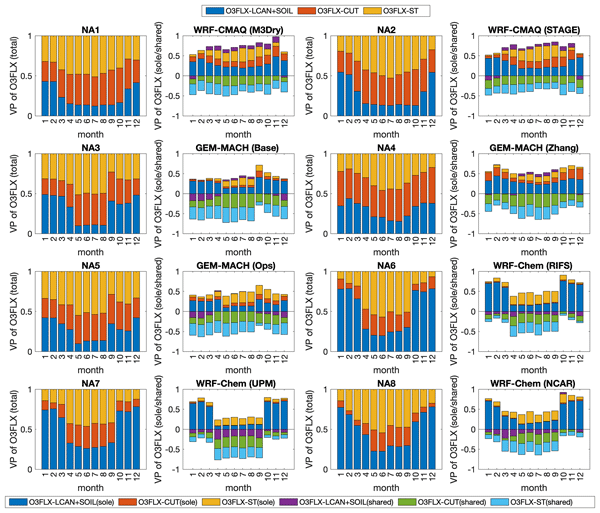
Ioannis Kioutsioukis, Christian Hogrefe, Paul A. Makar, Ummugulsum Alyuz, Jesse O. Bash, Roberto Bellasio, Roberto Bianconi, Tim Butler, Olivia E. Clifton, Philip Cheung, Alma Hodzic, Richard Kranenburg, Aura Lupascu, Kester Momoh, Juan Luis Perez-Camaño, Jonathan Pleim, Young-Hee Ryu, Roberto San Jose, Donna Schwede, Ranjeet Sokhi, and Stefano Galmarini
Atmos. Chem. Phys., 25, 12923–12953, https://doi.org/10.5194/acp-25-12923-2025, https://doi.org/10.5194/acp-25-12923-2025, 2025
Short summary
Short summary
Deposition is key in air quality modeling. An unprecedented evaluation of the Air Quality Model Evaluation International Initiative phase 4 models is performed on different deposition schemes in relation to the land use and land cover (LULC) used. Among the results, LULC masks have to be harmonized and up-to-date information used in place of masks that are outdated and too coarse. Alternatively, LULC masks should be evaluated and intercompared when multiple model results are analyzed.
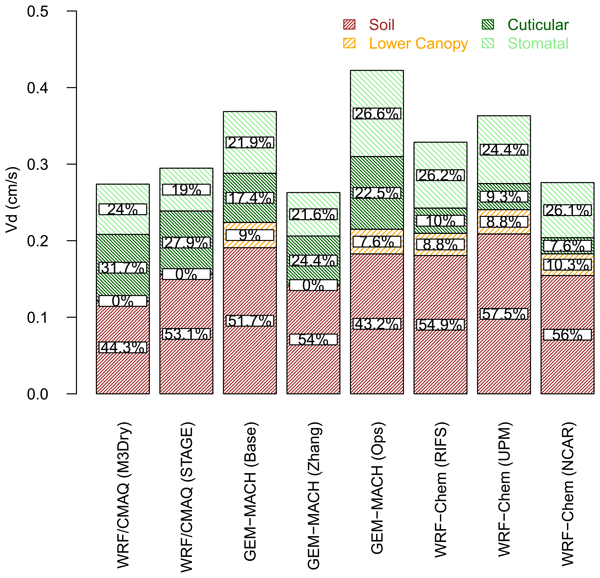
Christian Hogrefe, Stefano Galmarini, Paul A. Makar, Ioannis Kioutsioukis, Olivia E. Clifton, Ummugulsum Alyuz, Jesse O. Bash, Roberto Bellasio, Roberto Bianconi, Tim Butler, Philip Cheung, Alma Hodzic, Richard Kranenburg, Aurelia Lupascu, Kester Momoh, Juan Luis Perez-Camanyo, Jonathan E. Pleim, Young-Hee Ryu, Roberto San Jose, Martijn Schaap, Donna B. Schwede, and Ranjeet Sokhi
Atmos. Chem. Phys., 25, 12629–12656, https://doi.org/10.5194/acp-25-12629-2025, https://doi.org/10.5194/acp-25-12629-2025, 2025
Short summary
Short summary
Performed under the umbrella of Phase 4 of the Air Quality Model Evaluation International Initiative (AQMEII4), this study applies AQMEII4 diagnostic tools to better characterize how dry deposition removes pollutants from the atmosphere in regional-scale models. The results also strongly suggest that improvement and harmonization of the representation of land use in these models would serve the community in their future development efforts.
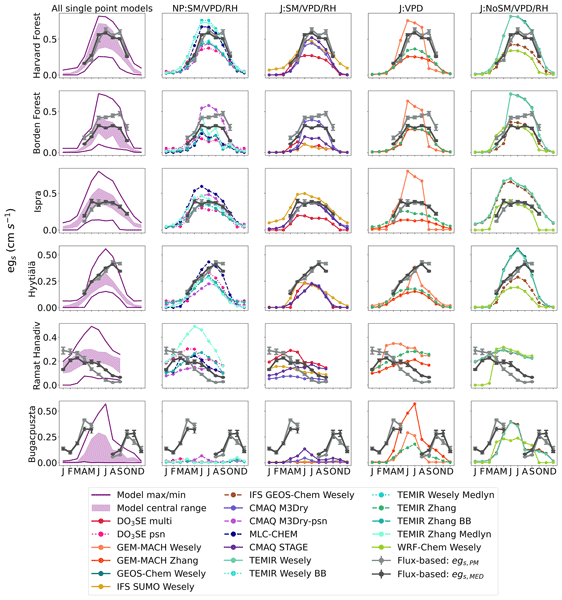
Anam M. Khan, Olivia E. Clifton, Jesse O. Bash, Sam Bland, Nathan Booth, Philip Cheung, Lisa Emberson, Johannes Flemming, Erick Fredj, Stefano Galmarini, Laurens Ganzeveld, Orestis Gazetas, Ignacio Goded, Christian Hogrefe, Christopher D. Holmes, László Horváth, Vincent Huijnen, Qian Li, Paul A. Makar, Ivan Mammarella, Giovanni Manca, J. William Munger, Juan L. Pérez-Camanyo, Jonathan Pleim, Limei Ran, Roberto San Jose, Donna Schwede, Sam J. Silva, Ralf Staebler, Shihan Sun, Amos P. K. Tai, Eran Tas, Timo Vesala, Tamás Weidinger, Zhiyong Wu, Leiming Zhang, and Paul C. Stoy
Atmos. Chem. Phys., 25, 8613–8635, https://doi.org/10.5194/acp-25-8613-2025, https://doi.org/10.5194/acp-25-8613-2025, 2025
Short summary
Short summary
Vegetation removes tropospheric ozone through stomatal uptake, and accurately modeling the stomatal uptake of ozone is important for modeling dry deposition and air quality. We evaluated the stomatal component of ozone dry deposition modeled by atmospheric chemistry models at six sites. We find that models and observation-based estimates agree at times during the growing season at all sites, but some models overestimated the stomatal component during the dry summers at a seasonally dry site.
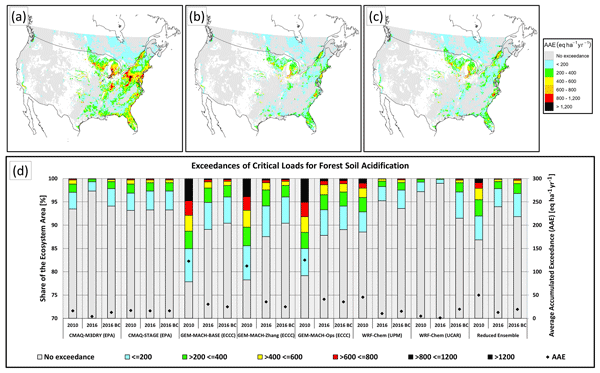
Paul A. Makar, Philip Cheung, Christian Hogrefe, Ayodeji Akingunola, Ummugulsum Alyuz, Jesse O. Bash, Michael D. Bell, Roberto Bellasio, Roberto Bianconi, Tim Butler, Hazel Cathcart, Olivia E. Clifton, Alma Hodzic, Ioannis Kioutsioukis, Richard Kranenburg, Aurelia Lupascu, Jason A. Lynch, Kester Momoh, Juan L. Perez-Camanyo, Jonathan Pleim, Young-Hee Ryu, Roberto San Jose, Donna Schwede, Thomas Scheuschner, Mark W. Shephard, Ranjeet S. Sokhi, and Stefano Galmarini
Atmos. Chem. Phys., 25, 3049–3107, https://doi.org/10.5194/acp-25-3049-2025, https://doi.org/10.5194/acp-25-3049-2025, 2025
Short summary
Short summary
The large range of sulfur and nitrogen deposition estimates from air quality models results in a large range of predicted impacts. We used models and deposition diagnostics to identify the processes controlling atmospheric sulfur and nitrogen deposition variability. Controlling factors included the uptake of gases and aerosols by hydrometeors, aerosol inorganic chemistry, particle dry deposition, ammonia bidirectional fluxes, gas deposition via plant cuticles and soil, and land use data.
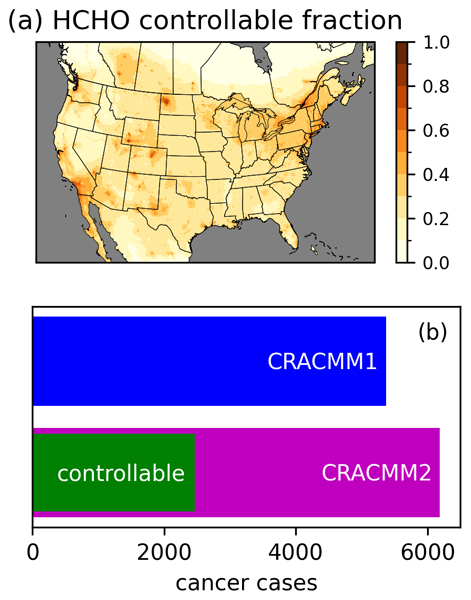
T. Nash Skipper, Emma L. D'Ambro, Forwood C. Wiser, V. Faye McNeill, Rebecca H. Schwantes, Barron H. Henderson, Ivan R. Piletic, Colleen B. Baublitz, Jesse O. Bash, Andrew R. Whitehill, Lukas C. Valin, Asher P. Mouat, Jennifer Kaiser, Glenn M. Wolfe, Jason M. St. Clair, Thomas F. Hanisco, Alan Fried, Bryan K. Place, and Havala O.T. Pye
Atmos. Chem. Phys., 24, 12903–12924, https://doi.org/10.5194/acp-24-12903-2024, https://doi.org/10.5194/acp-24-12903-2024, 2024
Short summary
Short summary
We develop the Community Regional Atmospheric Chemistry Multiphase Mechanism (CRACMM) version 2 to improve predictions of formaldehyde in ambient air compared to satellite-, aircraft-, and ground-based observations. With the updated chemistry, we estimate the cancer risk from inhalation exposure to ambient formaldehyde across the contiguous USA and predict that 40 % of this risk is controllable through reductions in anthropogenic emissions of nitrogen oxides and reactive organic carbon.
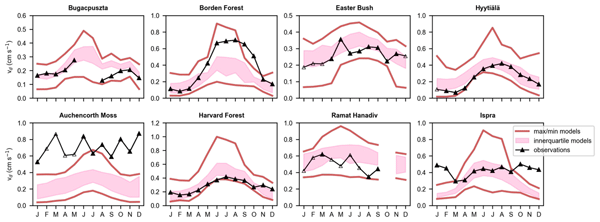
Olivia E. Clifton, Donna Schwede, Christian Hogrefe, Jesse O. Bash, Sam Bland, Philip Cheung, Mhairi Coyle, Lisa Emberson, Johannes Flemming, Erick Fredj, Stefano Galmarini, Laurens Ganzeveld, Orestis Gazetas, Ignacio Goded, Christopher D. Holmes, László Horváth, Vincent Huijnen, Qian Li, Paul A. Makar, Ivan Mammarella, Giovanni Manca, J. William Munger, Juan L. Pérez-Camanyo, Jonathan Pleim, Limei Ran, Roberto San Jose, Sam J. Silva, Ralf Staebler, Shihan Sun, Amos P. K. Tai, Eran Tas, Timo Vesala, Tamás Weidinger, Zhiyong Wu, and Leiming Zhang
Atmos. Chem. Phys., 23, 9911–9961, https://doi.org/10.5194/acp-23-9911-2023, https://doi.org/10.5194/acp-23-9911-2023, 2023
Short summary
Short summary
A primary sink of air pollutants is dry deposition. Dry deposition estimates differ across the models used to simulate atmospheric chemistry. Here, we introduce an effort to examine dry deposition schemes from atmospheric chemistry models. We provide our approach’s rationale, document the schemes, and describe datasets used to drive and evaluate the schemes. We also launch the analysis of results by evaluating against observations and identifying the processes leading to model–model differences.
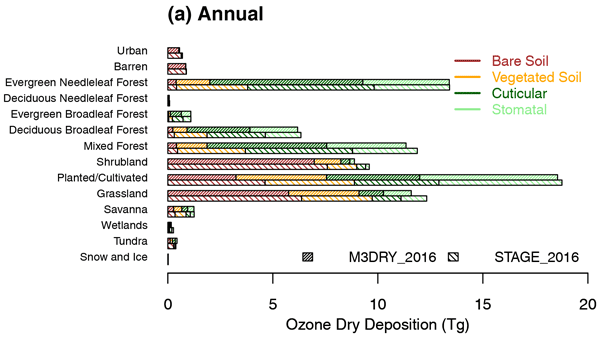
Christian Hogrefe, Jesse O. Bash, Jonathan E. Pleim, Donna B. Schwede, Robert C. Gilliam, Kristen M. Foley, K. Wyat Appel, and Rohit Mathur
Atmos. Chem. Phys., 23, 8119–8147, https://doi.org/10.5194/acp-23-8119-2023, https://doi.org/10.5194/acp-23-8119-2023, 2023
Short summary
Short summary
Under the umbrella of the fourth phase of the Air Quality Model Evaluation International Initiative (AQMEII4), this study applies AQMEII4 diagnostic tools to better characterize how dry deposition removes pollutants from the atmosphere in the widely used CMAQ model. The results illustrate how these tools can provide insights into similarities and differences between the two CMAQ dry deposition options that affect simulated pollutant budgets and ecosystem impacts from atmospheric pollution.

Havala O. T. Pye, Bryan K. Place, Benjamin N. Murphy, Karl M. Seltzer, Emma L. D'Ambro, Christine Allen, Ivan R. Piletic, Sara Farrell, Rebecca H. Schwantes, Matthew M. Coggon, Emily Saunders, Lu Xu, Golam Sarwar, William T. Hutzell, Kristen M. Foley, George Pouliot, Jesse Bash, and William R. Stockwell
Atmos. Chem. Phys., 23, 5043–5099, https://doi.org/10.5194/acp-23-5043-2023, https://doi.org/10.5194/acp-23-5043-2023, 2023
Short summary
Short summary
Chemical mechanisms describe how emissions from vehicles, vegetation, and other sources are chemically transformed in the atmosphere to secondary products including criteria and hazardous air pollutants. The Community Regional Atmospheric Chemistry Multiphase Mechanism integrates gas-phase radical chemistry with pathways to fine-particle mass. New species were implemented, resulting in a bottom-up representation of organic aerosol, which is required for accurate source attribution of pollutants.
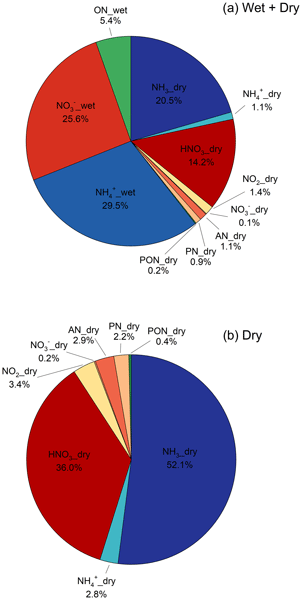
John T. Walker, Xi Chen, Zhiyong Wu, Donna Schwede, Ryan Daly, Aleksandra Djurkovic, A. Christopher Oishi, Eric Edgerton, Jesse Bash, Jennifer Knoepp, Melissa Puchalski, John Iiames, and Chelcy F. Miniat
Biogeosciences, 20, 971–995, https://doi.org/10.5194/bg-20-971-2023, https://doi.org/10.5194/bg-20-971-2023, 2023
Short summary
Short summary
Better estimates of atmospheric nitrogen (N) deposition are needed to accurately assess ecosystem risk and impacts from deposition of nutrients and acidity. Using measurements and modeling, we estimate total N deposition of 6.7 kg N ha−1 yr−1 at a forest site in the southern Appalachian Mountains, a region sensitive to atmospheric deposition. Reductions in deposition of reduced forms of N (ammonia and ammonium) will be needed to meet the lowest estimates of N critical loads for the region.
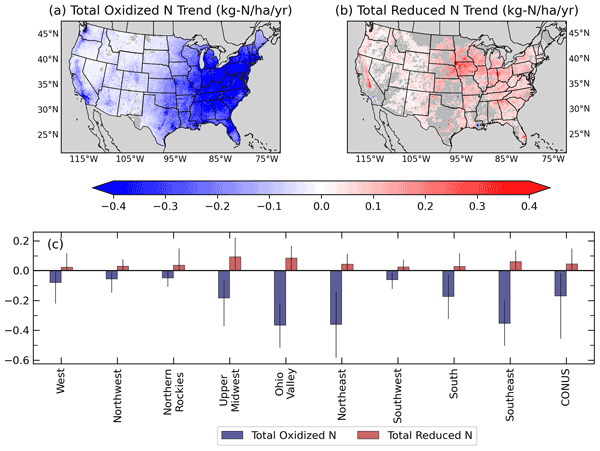
Sarah E. Benish, Jesse O. Bash, Kristen M. Foley, K. Wyat Appel, Christian Hogrefe, Robert Gilliam, and George Pouliot
Atmos. Chem. Phys., 22, 12749–12767, https://doi.org/10.5194/acp-22-12749-2022, https://doi.org/10.5194/acp-22-12749-2022, 2022
Short summary
Short summary
We assess Community Multiscale Air Quality (CMAQ) model simulations of nitrogen and sulfur deposition over US climate regions to evaluate the model ability to reproduce long-term deposition trends and total deposition budgets. A measurement–model fusion technique is found to improve estimates of wet deposition. Emission controls set by the Clean Air Act successfully decreased oxidized nitrogen deposition across the US; we find increasing amounts of reduced nitrogen to the total nitrogen budget.
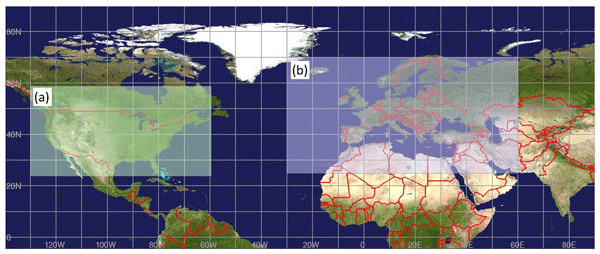
Stefano Galmarini, Paul Makar, Olivia E. Clifton, Christian Hogrefe, Jesse O. Bash, Roberto Bellasio, Roberto Bianconi, Johannes Bieser, Tim Butler, Jason Ducker, Johannes Flemming, Alma Hodzic, Christopher D. Holmes, Ioannis Kioutsioukis, Richard Kranenburg, Aurelia Lupascu, Juan Luis Perez-Camanyo, Jonathan Pleim, Young-Hee Ryu, Roberto San Jose, Donna Schwede, Sam Silva, and Ralf Wolke
Atmos. Chem. Phys., 21, 15663–15697, https://doi.org/10.5194/acp-21-15663-2021, https://doi.org/10.5194/acp-21-15663-2021, 2021
Short summary
Short summary
This technical note presents the research protocols for phase 4 of the Air Quality Model Evaluation International Initiative (AQMEII4). This initiative has three goals: (i) to define the state of wet and dry deposition in regional models, (ii) to evaluate how dry deposition influences air concentration and flux predictions, and (iii) to identify the causes for prediction differences. The evaluation compares LULC-specific dry deposition and effective conductances and fluxes.
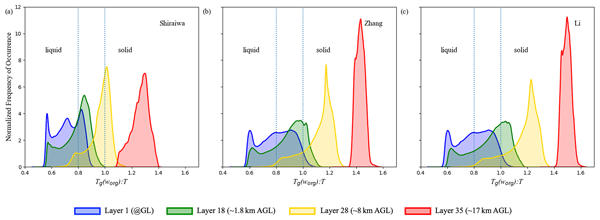
Sara L. Farrell, Quazi Z. Rasool, Havala O. T. Pye, Yue Zhang, Ying Li, Yuzhi Chen, Chi-Tsan Wang, Haofei Zhang, Ryan Schmedding, Manabu Shiraiwa, Jaime Green, Sri H. Budisulistiorini, Jose L. Jimenez, Weiwei Hu, Jason D. Surratt, and William Vizuete
Atmos. Chem. Phys., 26, 13557–13579, https://doi.org/10.5194/acp-26-13557-2026, https://doi.org/10.5194/acp-26-13557-2026, 2026
Short summary
Short summary
Fine particulate matter (PM2.5) has become increasingly important to regulate and model. In this study, we parameterize non-ideal aerosol mixing and phase state into the Community Multiscale Air Quality (CMAQ) model and analyze its impact on the formation of a globally important source of PM2.5, isoprene epoxydiol (IEPOX)-derived PM2.5. Incorporating these features furthers model bias in IEPOX-derived PM2.5, however, this work provides potential phase state bounds for future PM2.5 modeling work.
Simeng Li, Enrico Dammers, Beatriz Herrera, Arjo Segers, Mark W. Shephard, Martin Van Damme, Lieven Clarisse, Shelley van der Graaf, Roy Wichink Kruit, and Jan Willem Erisman
EGUsphere, https://doi.org/10.5194/egusphere-2026-4245, https://doi.org/10.5194/egusphere-2026-4245, 2026
This preprint is open for discussion and under review for Geoscientific Instrumentation, Methods and Data Systems (GI).
Short summary
Short summary
Ammonia from agriculture can harm ecosystems and air quality, but tracking emissions accurately is difficult. We developed a method combining in situ measurements and satellite observations to estimate ammonia emissions across the Netherlands. In situ measurement captures local detail while satellites provide broad coverage; combining both improves estimates. We also identified where new measurement stations would most improve emission monitoring, helping guide future network design.
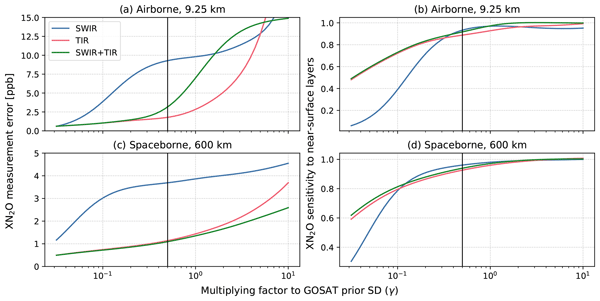
Ayesha Riaz, Kang Sun, Brian D. Baker, Brian Buma, Karen E. Cady-Pereira, Christopher Chan Miller, William C. Eddy III, Betsy M. Farris, Thomas U. Kampe, Eric A. Kort, Nathan P. Leisso, Robert Spurr, Emily R. Stuchiner, and Wendy H. Yang
Atmos. Meas. Tech., 19, 5169–5191, https://doi.org/10.5194/amt-19-5169-2026, https://doi.org/10.5194/amt-19-5169-2026, 2026
Short summary
Short summary
N2O is a powerful greenhouse gas mainly released from agricultural soils, but its emissions are difficult to track as they vary strongly in space and time. We tested whether combining two kind of infrared measurements in one instrument could improve ability of airborne and satellite instruments to observe these emissions. We found that this combined approach improves sensitivity to near-surface emissions with low measurement error and could guide the design of future N2O dedicated missions.
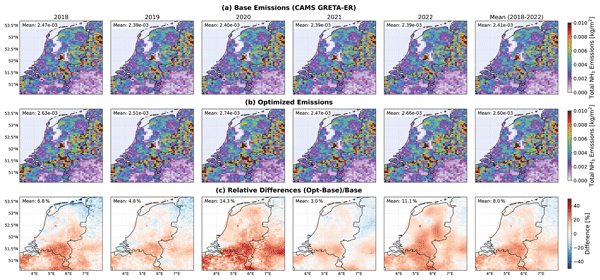
Tyler Wizenberg, Enrico Dammers, Arjo Segers, Mark W. Shephard, Pierre Coheur, Lieven Clarisse, Martin Van Damme, Henk Eskes, Roy Wichink Kruit, Shelley van der Graaf, and Martijn Schaap
Atmos. Chem. Phys., 26, 9589–9623, https://doi.org/10.5194/acp-26-9589-2026, https://doi.org/10.5194/acp-26-9589-2026, 2026
Short summary
Short summary
We combined five years of satellite data on ammonia and nitrogen dioxide concentrations with a regional model to better estimate nitrogen emissions and deposition in the Netherlands. This improved the accuracy of pollution maps and trends, especially in agricultural regions. Our approach helps identify when and where emissions are highest, supporting better air quality management and environmental protection by showing the benefits of using multiple complimentary satellite datasets together.
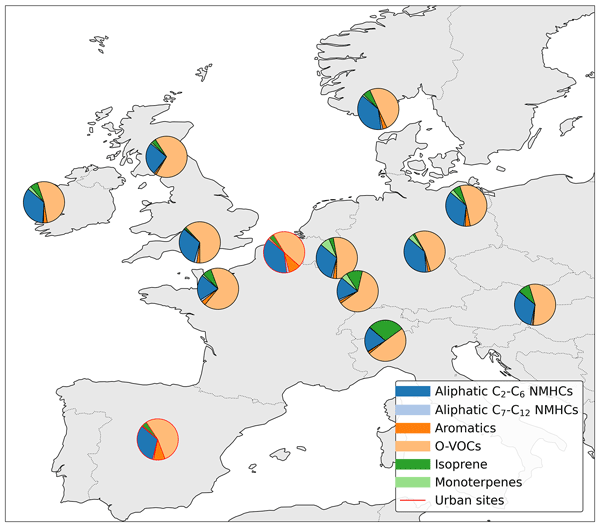
Wenche Aas, Thérèse Salameh, Robert Wegener, Heidi Hellén, Jean-Luc Jaffrezo, Pontus Roldin, Elisabeth Alonso-Blanco, Andres Alastuey, Crist Amelynck, Jgor Arduini, Benjamin Bergmans, Marie Bertrand, Agnes Borbon, Efstratios Bourtsoukidis, Laetitia Bouvier, David Butterfield, Iris Buxbaum, Darius Ceburnis, Anja Claude, Augustin Colette, Aurélie Colomb, Sophie Darfeuil, James Dernie, Maximilien Desservettaz, Elías Díaz-Ramiro, Marvin Dufresne, René Dubus, Mario Duval, Marie Dury, Anna Font, Kirsten N. Fossum, Evelyn Freney, Gotzon Gangoiti, Yao Ge, Maria Carmen Gomez, Francisco J. Gómez-Moreno, Marie Gohy, Valérie Gros, Paul Hamer, Bryan Hellack, Hartmut Herrmann, Robert Holla, Adéla Holubová, Niels R. Jensen, Tuija Jokinen, Matthew Jones, Uwe Käfer, Lukas Kesper, Dieter Klemp, Dagmar Kubistin, Angela Marinoni, Martina Mazzini, Vy Ngoc Thuy Dinh, Jurgita Ovadnevaite, Tuukka Petäjä, Miguel Portillo-Estrada, Jitka Přívozníková, Jean-Philippe Putaud, Stefan Reimann, Laura Renzi, Veronique Riffault, Stuart Ritchie, Chris Robins, Begoña Artíñano Rodríguez de Torres, Laurent Poulain, Julian Rüdiger, Agnieszka Sanocka, Estibaliz Saez de Camara Oleaga, Niels Schoon, Roger Seco, Ivan Simmons, Leïla Simon, David Simpson, Sverre Solberg, Emmanuel Tison, August Thomasson, Svetlana Tsyro, Marsailidh Twigg, Toni Tykkä, Bert Verreyken, Ågot Watne, Katie Williams, Ana Maria Yáñez-Serrano, Karen Yeung, Ilona Ylivinkka, and Karl Espen Yttri
Atmos. Chem. Phys., 26, 8717–8751, https://doi.org/10.5194/acp-26-8717-2026, https://doi.org/10.5194/acp-26-8717-2026, 2026
Short summary
Short summary
A one-week intensive measurement campaign during the 2022 European heatwave included monitoring of ozone, volatile organic compounds, aerosol chemical composition, and organic tracers to investigate air pollution sources. Results showed that emissions from vegetation and human activities contributed to peaks in ozone and secondary organic aerosol particles. Differences between measurements and model simulations underline the need for better characterization of sources and formation pathways.
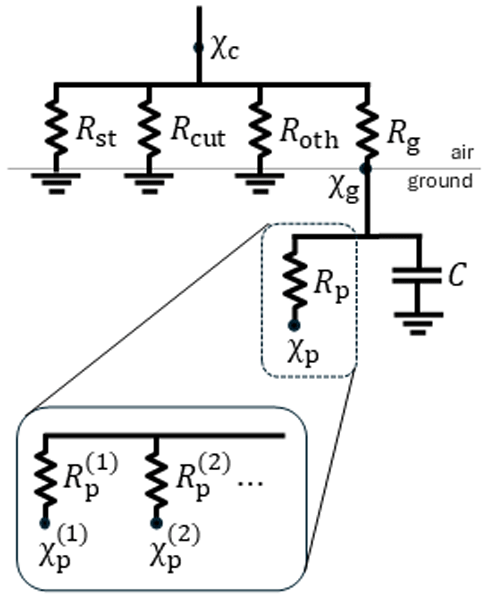
Michael Sitwell, Mark W. Shephard, and Shailesh K. Kharol
Geosci. Model Dev., 19, 4797–4815, https://doi.org/10.5194/gmd-19-4797-2026, https://doi.org/10.5194/gmd-19-4797-2026, 2026
Short summary
Short summary
Bidirectional flux models give a unified model for emission and dry deposition, but few studies have been conducted in which satellite observations are used to refine the parameters in these models. A new bidirectional flux model for ammonia was developed that was designed specifically for use with satellite observations. Ammonia satellite observations were used to refine bidirectional flux model parameters, which improved the agreement of the model with ammonia surface observations.
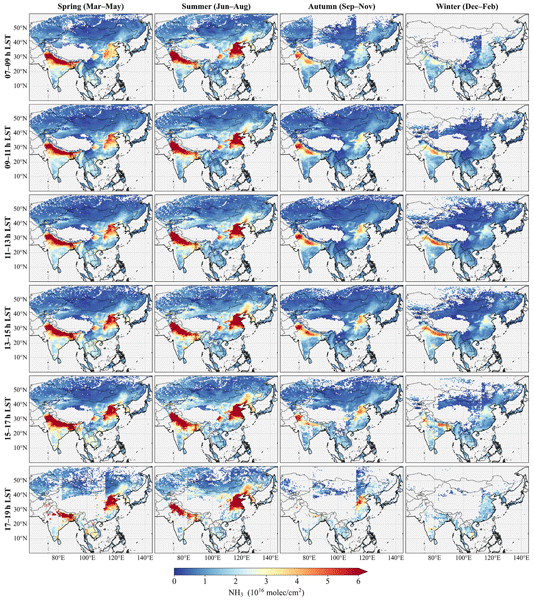
Mengya Sheng, Runyi Zhou, Jiancong Hua, Shan Han, Shangyi Liu, Lin Zhang, Wei Wang, Ruijun Dang, Hansen Cao, Zichong Chen, Yixuan Gu, Mingxu Liu, Lu Lee, Chengli Qi, Feng Lu, Changpei Han, Mark W. Shephard, Nadir Guendouz, Camille Viatte, Lieven Clarisse, Martin Van Damme, Cathy Clerbaux, and Zhao-Cheng Zeng
Atmos. Chem. Phys., 26, 7803–7826, https://doi.org/10.5194/acp-26-7803-2026, https://doi.org/10.5194/acp-26-7803-2026, 2026
Short summary
Short summary
Geostationary observations of NH3 provide an unprecedented opportunity to monitor spatial and temporal variations in emissions and their evolution throughout the day. Using 3 years of observations from FY-4B/GIIRS over East Asia, we demonstrated the enhanced capability of geostationary observations to identify emission sources and capture daytime variations associated with agricultural activities. This shows the potential of future geostationary satellites for monitoring air quality globally.
Qingfang Su, Yifei Chen, Yangjun Wang, David C. Wong, Havala O. T. Pye, Ling Huang, Golam Sarwar, Benjamin Murphy, Bryan Place, and Li Li
Geosci. Model Dev., 19, 2531–2550, https://doi.org/10.5194/gmd-19-2531-2026, https://doi.org/10.5194/gmd-19-2531-2026, 2026
Short summary
Short summary
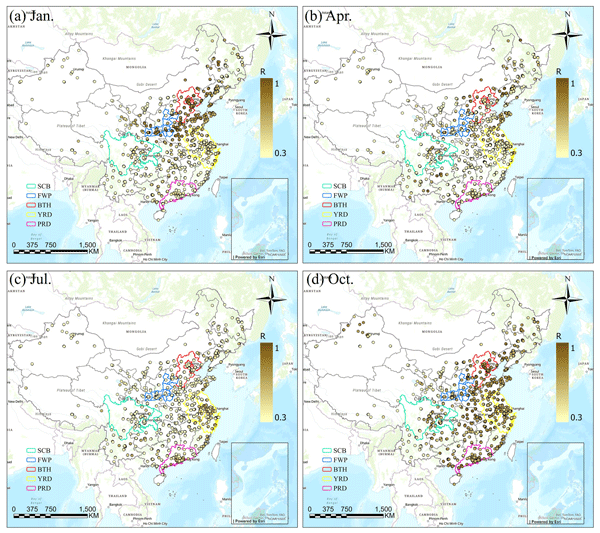
This study evaluated the PM2.5 simulation by the latest Community Regional Atmospheric Chemistry Multiphase Mechanism (CRACMM) mechanism coupled with the Community Multiscale Air Quality (CMAQ) model, covering different seasons and specific regions over China. Modelling results derived by CRACMM are compared with two well-established chemical mechanisms. The research findings provide a solid foundation for the further application of CRACMM in understanding and regulating air pollution globally.
Melissa A. Ehrenfels, Benjamin C. Schulze, Andrew R. Jensen, Afsara Tasnia, Douglas A. Day, Pedro Campuzano-Jost, Anne V. Handschy, Melinda K. Schueneman, Seonsik Yun, Dongwook Kim, Donna Sueper, Havala O. T. Pye, Benjamin N. Murphy, T. Nash Skipper, Kelley C. Barsanti, Joost A. de Gouw, and Jose L. Jimenez
Aerosol Research Discuss., https://doi.org/10.5194/ar-2026-12, https://doi.org/10.5194/ar-2026-12, 2026
Revised manuscript accepted for AR
Short summary
Short summary
Los Angeles, CA suffers from poor air quality, partially due to secondary aerosol formation. The identity and sources of the most important gas phase precursors is a complex and unresolved issue. For the first time, we separated ambient gas-phase species by volatility, then measured their potential to form aerosols. We found that higher-volatility emissions are responsible for 2/3 of the aerosol formation, and lower volatility ones for 1/3. We evaluate two box models against our measurements.
Yu Li, Momei Qin, Weiwei Hu, Bin Zhao, Ying Li, Havala O. T. Pye, Jingyi Li, Linghan Zeng, Song Guo, Min Hu, and Jianlin Hu
Atmos. Chem. Phys., 26, 1001–1020, https://doi.org/10.5194/acp-26-1001-2026, https://doi.org/10.5194/acp-26-1001-2026, 2026
Short summary
Short summary
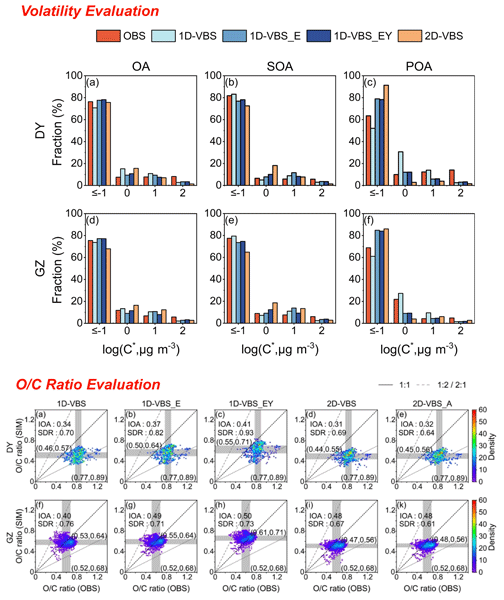
We evaluated how well a widely used air quality model simulates key properties of organic particles in the atmosphere, such as volatility and oxygen content, which influence how particles age, spread, and affect both air quality and climate. Using observations in eastern China, we found the model underestimated particle mass and misrepresented their properties. Our results highlight the need for improved emissions and chemical treatments to better predict air quality and climate impacts.
Zitong Li, Kang Sun, Kaiyu Guan, Sheng Wang, Bin Peng, Lieven Clarisse, Martin Van Damme, Pierre-François Coheur, Karen Cady-Pereira, Mark W. Shephard, Mark Zondlo, and Daniel Moore
Atmos. Chem. Phys., 26, 703–721, https://doi.org/10.5194/acp-26-703-2026, https://doi.org/10.5194/acp-26-703-2026, 2026
Short summary
Short summary
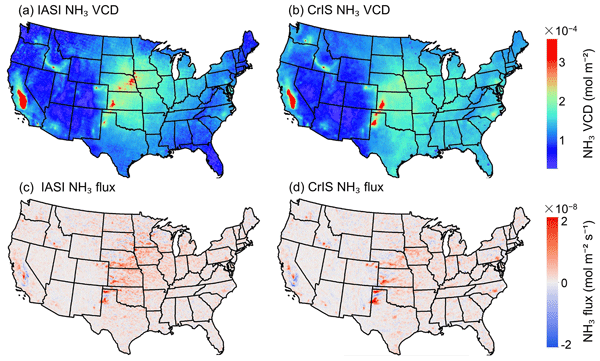
We estimate ammonia fluxes over the contiguous U.S. from 2008 to 2022 using a directional derivative approach applied to satellite observations from the Infrared Atmospheric Sounding Interferometer (IASI) and Cross-track Infrared Sounder (CrIS). The resulting flux estimates reveal pronounced seasonal and spatial patterns driven by agricultural activities and indicate substantial local deposition to surrounding vegetation, underscoring the need for improved monitoring and management strategies.
Debora Griffin, Colin Hempel, Chris McLinden, Shailesh Kumar Kharol, Colin Lee, Andre Fogal, Christopher Sioris, Mark Shephard, and Yuan You
Atmos. Meas. Tech., 18, 7497–7511, https://doi.org/10.5194/amt-18-7497-2025, https://doi.org/10.5194/amt-18-7497-2025, 2025
Short summary
Short summary
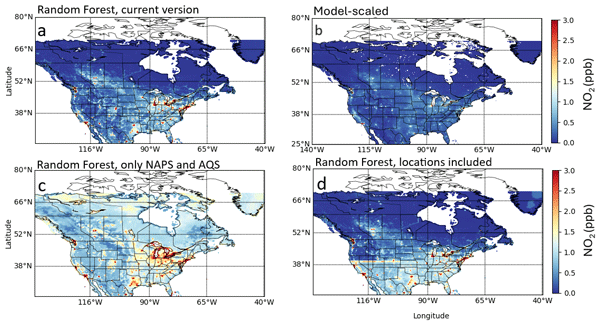
NO2 surface concentrations are obtained across North America using satellite data and machine learning, and compared to traditional approaches to determine surface NO2 from satellite observations.
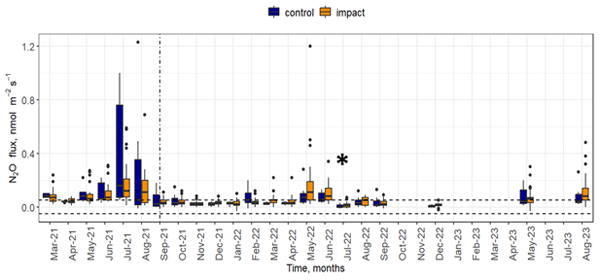
Galina Y. Toteva, David Reay, Matthew Jones, Ajinkya Deshpande, Nicholas Cowan, Peter Levy, Duncan Harvey, Agata Iwanicka, and Julia Drewer
Biogeosciences, 22, 7829–7844, https://doi.org/10.5194/bg-22-7829-2025, https://doi.org/10.5194/bg-22-7829-2025, 2025
Short summary
Short summary
The impacts of increasing nitrogen deposition on the fluxes of nitrous oxide from a temperate birch forest were investigated in-situ and ex-situ. Nitrogen levels had a limited effect on emissions. Instead, emissions of nitrous oxide were modulated by soil carbon availability and meeting a dual temperature-moisture threshold. An implication of these findings is that forests could be used for mitigating nitrogen pollution without incurring a greenhouse gas penalty, at least in the short term.
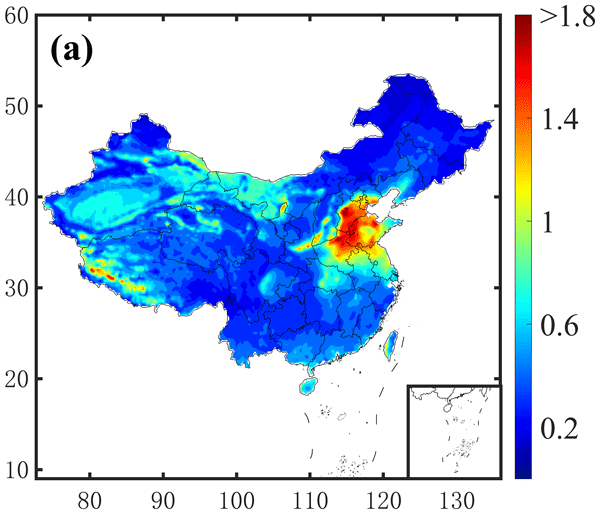
Fan Sun, Yu Cui, Jiayin Su, Mark W. Shephard, Shailesh K. Kharol, Yifan Zhang, Xuejing Shi, Junqing Zhang, Huili Liu, Qitao Xiao, Xiao Lu, Zhao-Cheng Zeng, Timothy J. Griffis, and Cheng Hu
Atmos. Chem. Phys., 25, 17907–17932, https://doi.org/10.5194/acp-25-17907-2025, https://doi.org/10.5194/acp-25-17907-2025, 2025
Short summary
Short summary
This study used satellite data and models to track ammonia concentration and dry deposition across China from 2013 to 2023. Ammonia levels rose sharply, especially in urban and farming regions, with the North China Plain showing the highest values. Human activity was the main driver of change. These findings highlight growing environmental risks and provide key insights for managing air quality and nitrogen pollution in one of the world's major emission hotspots.
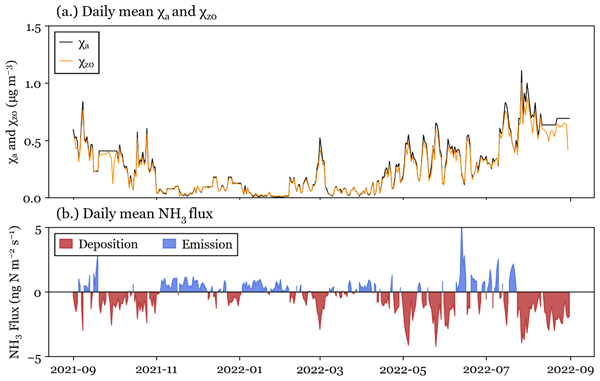
Lillian E. Naimie, Da Pan, Amy P. Sullivan, John T. Walker, Aleksandra Djurkovic, Bret A. Schichtel, and Jeffrey L. Collett Jr.
Atmos. Chem. Phys., 25, 15245–15261, https://doi.org/10.5194/acp-25-15245-2025, https://doi.org/10.5194/acp-25-15245-2025, 2025
Short summary
Short summary
The contribution of ammonia atmosphere-surface exchange to excess deposition of reactive nitrogen is poorly understood. Reactive nitrogen deposition has negative impacts on ecosystem health. Ammonia can be difficult and expensive to measure. We demonstrate that depositions modeled using low-cost measurements underestimate ecosystem inputs but can be corrected using typical daily concentration cycles. We also illustrate the limitations of reanalysis meteorology for ammonia deposition modeling.
Ioannis Kioutsioukis, Christian Hogrefe, Paul A. Makar, Ummugulsum Alyuz, Jesse O. Bash, Roberto Bellasio, Roberto Bianconi, Tim Butler, Olivia E. Clifton, Philip Cheung, Alma Hodzic, Richard Kranenburg, Aura Lupascu, Kester Momoh, Juan Luis Perez-Camaño, Jonathan Pleim, Young-Hee Ryu, Roberto San Jose, Donna Schwede, Ranjeet Sokhi, and Stefano Galmarini
Atmos. Chem. Phys., 25, 12923–12953, https://doi.org/10.5194/acp-25-12923-2025, https://doi.org/10.5194/acp-25-12923-2025, 2025
Short summary
Short summary
Deposition is key in air quality modeling. An unprecedented evaluation of the Air Quality Model Evaluation International Initiative phase 4 models is performed on different deposition schemes in relation to the land use and land cover (LULC) used. Among the results, LULC masks have to be harmonized and up-to-date information used in place of masks that are outdated and too coarse. Alternatively, LULC masks should be evaluated and intercompared when multiple model results are analyzed.
Christian Hogrefe, Stefano Galmarini, Paul A. Makar, Ioannis Kioutsioukis, Olivia E. Clifton, Ummugulsum Alyuz, Jesse O. Bash, Roberto Bellasio, Roberto Bianconi, Tim Butler, Philip Cheung, Alma Hodzic, Richard Kranenburg, Aurelia Lupascu, Kester Momoh, Juan Luis Perez-Camanyo, Jonathan E. Pleim, Young-Hee Ryu, Roberto San Jose, Martijn Schaap, Donna B. Schwede, and Ranjeet Sokhi
Atmos. Chem. Phys., 25, 12629–12656, https://doi.org/10.5194/acp-25-12629-2025, https://doi.org/10.5194/acp-25-12629-2025, 2025
Short summary
Short summary
Performed under the umbrella of Phase 4 of the Air Quality Model Evaluation International Initiative (AQMEII4), this study applies AQMEII4 diagnostic tools to better characterize how dry deposition removes pollutants from the atmosphere in regional-scale models. The results also strongly suggest that improvement and harmonization of the representation of land use in these models would serve the community in their future development efforts.
Anam M. Khan, Olivia E. Clifton, Jesse O. Bash, Sam Bland, Nathan Booth, Philip Cheung, Lisa Emberson, Johannes Flemming, Erick Fredj, Stefano Galmarini, Laurens Ganzeveld, Orestis Gazetas, Ignacio Goded, Christian Hogrefe, Christopher D. Holmes, László Horváth, Vincent Huijnen, Qian Li, Paul A. Makar, Ivan Mammarella, Giovanni Manca, J. William Munger, Juan L. Pérez-Camanyo, Jonathan Pleim, Limei Ran, Roberto San Jose, Donna Schwede, Sam J. Silva, Ralf Staebler, Shihan Sun, Amos P. K. Tai, Eran Tas, Timo Vesala, Tamás Weidinger, Zhiyong Wu, Leiming Zhang, and Paul C. Stoy
Atmos. Chem. Phys., 25, 8613–8635, https://doi.org/10.5194/acp-25-8613-2025, https://doi.org/10.5194/acp-25-8613-2025, 2025
Short summary
Short summary
Vegetation removes tropospheric ozone through stomatal uptake, and accurately modeling the stomatal uptake of ozone is important for modeling dry deposition and air quality. We evaluated the stomatal component of ozone dry deposition modeled by atmospheric chemistry models at six sites. We find that models and observation-based estimates agree at times during the growing season at all sites, but some models overestimated the stomatal component during the dry summers at a seasonally dry site.
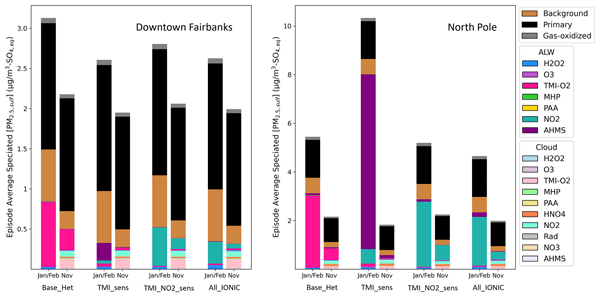
Sara L. Farrell, Havala O. T. Pye, Robert Gilliam, George Pouliot, Deanna Huff, Golam Sarwar, William Vizuete, Nicole Briggs, Fengkui Duan, Tao Ma, Shuping Zhang, and Kathleen Fahey
Atmos. Chem. Phys., 25, 3287–3312, https://doi.org/10.5194/acp-25-3287-2025, https://doi.org/10.5194/acp-25-3287-2025, 2025
Short summary
Short summary
In this work we implement heterogeneous sulfur chemistry into the Community Multiscale Air Quality (CMAQ) model. This new chemistry accounts for the formation of sulfate via aqueous oxidation of SO2 in aerosol liquid water and the formation of hydroxymethanesulfonate (HMS) – often confused by measurement techniques as sulfate. Model performance in predicting sulfur PM2.5 in Fairbanks, Alaska, and other places that experience dark and cold winters is improved.
Paul A. Makar, Philip Cheung, Christian Hogrefe, Ayodeji Akingunola, Ummugulsum Alyuz, Jesse O. Bash, Michael D. Bell, Roberto Bellasio, Roberto Bianconi, Tim Butler, Hazel Cathcart, Olivia E. Clifton, Alma Hodzic, Ioannis Kioutsioukis, Richard Kranenburg, Aurelia Lupascu, Jason A. Lynch, Kester Momoh, Juan L. Perez-Camanyo, Jonathan Pleim, Young-Hee Ryu, Roberto San Jose, Donna Schwede, Thomas Scheuschner, Mark W. Shephard, Ranjeet S. Sokhi, and Stefano Galmarini
Atmos. Chem. Phys., 25, 3049–3107, https://doi.org/10.5194/acp-25-3049-2025, https://doi.org/10.5194/acp-25-3049-2025, 2025
Short summary
Short summary
The large range of sulfur and nitrogen deposition estimates from air quality models results in a large range of predicted impacts. We used models and deposition diagnostics to identify the processes controlling atmospheric sulfur and nitrogen deposition variability. Controlling factors included the uptake of gases and aerosols by hydrometeors, aerosol inorganic chemistry, particle dry deposition, ammonia bidirectional fluxes, gas deposition via plant cuticles and soil, and land use data.
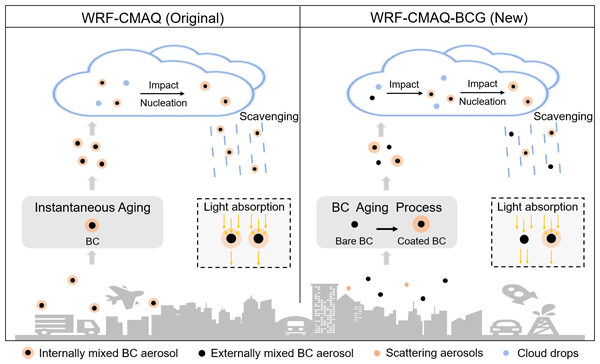
Yuzhi Jin, Jiandong Wang, Chao Liu, David C. Wong, Golam Sarwar, Kathleen M. Fahey, Shang Wu, Jiaping Wang, Jing Cai, Zeyuan Tian, Zhouyang Zhang, Jia Xing, Aijun Ding, and Shuxiao Wang
Atmos. Chem. Phys., 25, 2613–2630, https://doi.org/10.5194/acp-25-2613-2025, https://doi.org/10.5194/acp-25-2613-2025, 2025
Short summary
Short summary
Black carbon (BC) affects climate and the environment, and its aging process alters its properties. Current models, like WRF-CMAQ, lack full accounting for it. We developed the WRF-CMAQ-BCG model to better represent BC aging by introducing bare and coated BC species and their conversion. The WRF-CMAQ-BCG model introduces the capability to simulate BC mixing states and bare and coated BC wet deposition, and it improves the accuracy of BC mass concentration and aerosol optics.
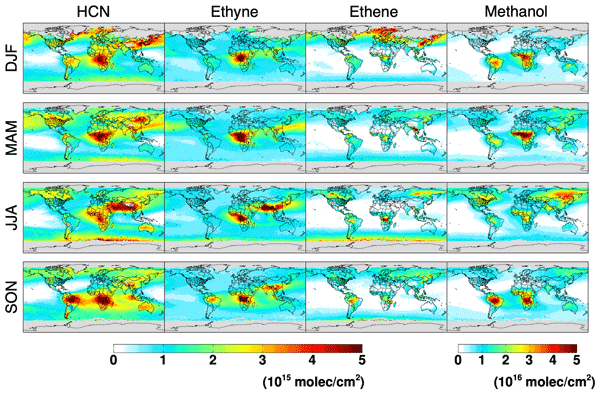
Kelley C. Wells, Dylan B. Millet, Jared F. Brewer, Vivienne H. Payne, Karen E. Cady-Pereira, Rick Pernak, Susan Kulawik, Corinne Vigouroux, Nicholas Jones, Emmanuel Mahieu, Maria Makarova, Tomoo Nagahama, Ivan Ortega, Mathias Palm, Kimberly Strong, Matthias Schneider, Dan Smale, Ralf Sussmann, and Minqiang Zhou
Atmos. Meas. Tech., 18, 695–716, https://doi.org/10.5194/amt-18-695-2025, https://doi.org/10.5194/amt-18-695-2025, 2025
Short summary
Short summary
Atmospheric volatile organic compounds (VOCs) affect both air quality and climate. Satellite measurements can help us to assess and predict their global impacts. We present new decadal (2012–2023) measurements of four key VOCs – methanol, ethene, ethyne, and hydrogen cyanide (HCN) – from the Cross-track Infrared Sounder. The measurements reflect emissions from major forests, wildfires, and industry and provide new information to advance understanding of these sources and their changes over time.
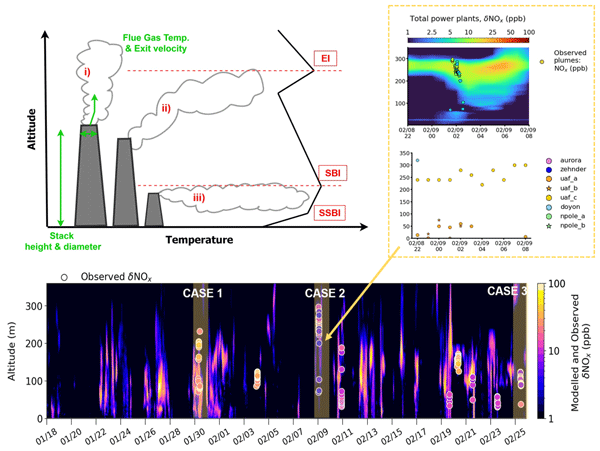
Natalie Brett, Kathy S. Law, Steve R. Arnold, Javier G. Fochesatto, Jean-Christophe Raut, Tatsuo Onishi, Robert Gilliam, Kathleen Fahey, Deanna Huff, George Pouliot, Brice Barret, Elsa Dieudonné, Roman Pohorsky, Julia Schmale, Andrea Baccarini, Slimane Bekki, Gianluca Pappaccogli, Federico Scoto, Stefano Decesari, Antonio Donateo, Meeta Cesler-Maloney, William Simpson, Patrice Medina, Barbara D'Anna, Brice Temime-Roussel, Joel Savarino, Sarah Albertin, Jingqiu Mao, Becky Alexander, Allison Moon, Peter F. DeCarlo, Vanessa Selimovic, Robert Yokelson, and Ellis S. Robinson
Atmos. Chem. Phys., 25, 1063–1104, https://doi.org/10.5194/acp-25-1063-2025, https://doi.org/10.5194/acp-25-1063-2025, 2025
Short summary
Short summary
Processes influencing dispersion of local anthropogenic pollution in Arctic wintertime are investigated with Lagrangian dispersion modelling. Simulated power plant plume rise that considers temperature inversion layers improves results compared to observations (interior Alaska). Modelled surface concentrations are improved by representation of vertical mixing and emission estimates. Large increases in diesel vehicle emissions at temperatures reaching −35°C are required to reproduce observed NOx.
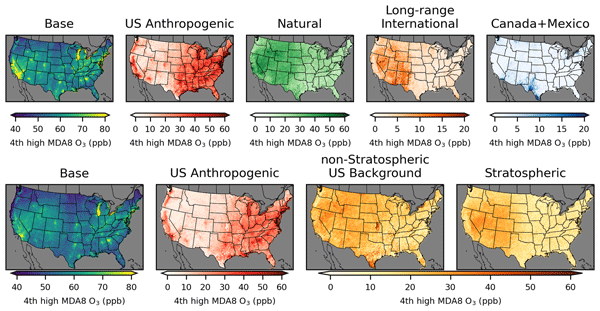
T. Nash Skipper, Christian Hogrefe, Barron H. Henderson, Rohit Mathur, Kristen M. Foley, and Armistead G. Russell
Geosci. Model Dev., 17, 8373–8397, https://doi.org/10.5194/gmd-17-8373-2024, https://doi.org/10.5194/gmd-17-8373-2024, 2024
Short summary
Short summary
Chemical transport model simulations are combined with ozone observations to estimate the bias in ozone attributable to US anthropogenic sources and individual sources of US background ozone: natural sources, non-US anthropogenic sources, and stratospheric ozone. Results indicate a positive bias correlated with US anthropogenic emissions during summer in the eastern US and a negative bias correlated with stratospheric ozone during spring.
T. Nash Skipper, Emma L. D'Ambro, Forwood C. Wiser, V. Faye McNeill, Rebecca H. Schwantes, Barron H. Henderson, Ivan R. Piletic, Colleen B. Baublitz, Jesse O. Bash, Andrew R. Whitehill, Lukas C. Valin, Asher P. Mouat, Jennifer Kaiser, Glenn M. Wolfe, Jason M. St. Clair, Thomas F. Hanisco, Alan Fried, Bryan K. Place, and Havala O.T. Pye
Atmos. Chem. Phys., 24, 12903–12924, https://doi.org/10.5194/acp-24-12903-2024, https://doi.org/10.5194/acp-24-12903-2024, 2024
Short summary
Short summary
We develop the Community Regional Atmospheric Chemistry Multiphase Mechanism (CRACMM) version 2 to improve predictions of formaldehyde in ambient air compared to satellite-, aircraft-, and ground-based observations. With the updated chemistry, we estimate the cancer risk from inhalation exposure to ambient formaldehyde across the contiguous USA and predict that 40 % of this risk is controllable through reductions in anthropogenic emissions of nitrogen oxides and reactive organic carbon.
David C. Wong, Jeff Willison, Jonathan E. Pleim, Golam Sarwar, James Beidler, Russ Bullock, Jerold A. Herwehe, Rob Gilliam, Daiwen Kang, Christian Hogrefe, George Pouliot, and Hosein Foroutan
Geosci. Model Dev., 17, 7855–7866, https://doi.org/10.5194/gmd-17-7855-2024, https://doi.org/10.5194/gmd-17-7855-2024, 2024
Short summary
Short summary
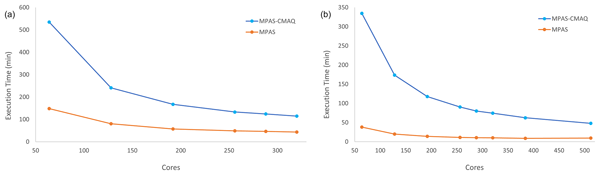
This work describe how we linked the meteorological Model for Prediction Across Scales – Atmosphere (MPAS-A) with the Community Multiscale Air Quality (CMAQ) air quality model to form a coupled modelling system. This could be used to study air quality or climate and air quality interaction at a global scale. This new model scales well in high-performance computing environments and performs well with respect to ground surface networks in terms of ozone and PM2.5.
Jieying Ding, Ronald van der A, Henk Eskes, Enrico Dammers, Mark Shephard, Roy Wichink Kruit, Marc Guevara, and Leonor Tarrason
Atmos. Chem. Phys., 24, 10583–10599, https://doi.org/10.5194/acp-24-10583-2024, https://doi.org/10.5194/acp-24-10583-2024, 2024
Short summary
Short summary
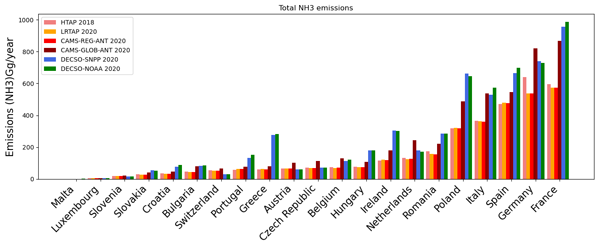
Here we applied the existing Daily Emissions Constrained by Satellite Observations (DECSO) inversion algorithm to NH3 observations from the CrIS satellite instrument to estimate NH3 emissions. As NH3 in the atmosphere is influenced by NOx, we implemented DECSO to estimate NOx and NH3 emissions simultaneously. The emissions are derived over Europe for 2020 at a spatial resolution of 0.2° using daily observations from CrIS and TROPOMI. Results are compared to bottom-up emission inventories.
Cassandra J. Gaston, Joseph M. Prospero, Kristen Foley, Havala O. T. Pye, Lillian Custals, Edmund Blades, Peter Sealy, and James A. Christie
Atmos. Chem. Phys., 24, 8049–8066, https://doi.org/10.5194/acp-24-8049-2024, https://doi.org/10.5194/acp-24-8049-2024, 2024
Short summary
Short summary
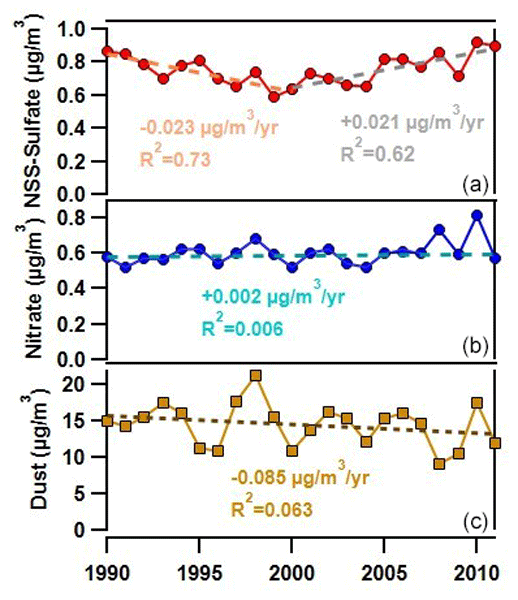
To understand how changing emissions have impacted aerosols in remote regions, we measured nitrate and sulfate in Barbados and compared them to model predictions from EPA’s Air QUAlity TimE Series (EQUATES). Nitrate was stable, except for spikes in 2008 and 2010 due to transported smoke. Sulfate decreased in the 1990s due to reductions in sulfur dioxide (SO2) in the US and Europe; then it increased in the 2000s, likely due to anthropogenic emissions from Africa.
Qindan Zhu, Rebecca H. Schwantes, Matthew Coggon, Colin Harkins, Jordan Schnell, Jian He, Havala O. T. Pye, Meng Li, Barry Baker, Zachary Moon, Ravan Ahmadov, Eva Y. Pfannerstill, Bryan Place, Paul Wooldridge, Benjamin C. Schulze, Caleb Arata, Anthony Bucholtz, John H. Seinfeld, Carsten Warneke, Chelsea E. Stockwell, Lu Xu, Kristen Zuraski, Michael A. Robinson, J. Andrew Neuman, Patrick R. Veres, Jeff Peischl, Steven S. Brown, Allen H. Goldstein, Ronald C. Cohen, and Brian C. McDonald
Atmos. Chem. Phys., 24, 5265–5286, https://doi.org/10.5194/acp-24-5265-2024, https://doi.org/10.5194/acp-24-5265-2024, 2024
Short summary
Short summary
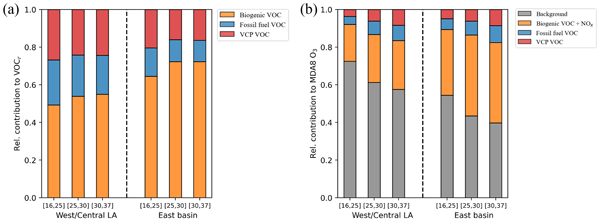
Volatile organic compounds (VOCs) fuel the production of air pollutants like ozone and particulate matter. The representation of VOC chemistry remains challenging due to its complexity in speciation and reactions. Here, we develop a chemical mechanism, RACM2B-VCP, that better represents VOC chemistry in urban areas such as Los Angeles. We also discuss the contribution of VOCs emitted from volatile chemical products and other anthropogenic sources to total VOC reactivity and O3.
Elyse A. Pennington, Yuan Wang, Benjamin C. Schulze, Karl M. Seltzer, Jiani Yang, Bin Zhao, Zhe Jiang, Hongru Shi, Melissa Venecek, Daniel Chau, Benjamin N. Murphy, Christopher M. Kenseth, Ryan X. Ward, Havala O. T. Pye, and John H. Seinfeld
Atmos. Chem. Phys., 24, 2345–2363, https://doi.org/10.5194/acp-24-2345-2024, https://doi.org/10.5194/acp-24-2345-2024, 2024
Short summary
Short summary
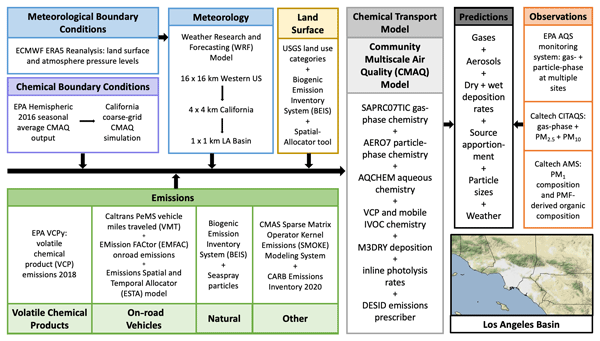
To assess the air quality in Los Angeles (LA), we improved the CMAQ model by using dynamic traffic emissions and new secondary organic aerosol schemes to represent volatile chemical products. Source apportionment demonstrates that the urban areas of the LA Basin and vicinity are NOx-saturated, with the largest sensitivity of O3 to changes in volatile organic compounds in the urban core. The improvement and remaining issues shed light on the future direction of the model development.
Heather Simon, Christian Hogrefe, Andrew Whitehill, Kristen M. Foley, Jennifer Liljegren, Norm Possiel, Benjamin Wells, Barron H. Henderson, Lukas C. Valin, Gail Tonnesen, K. Wyat Appel, and Shannon Koplitz
Atmos. Chem. Phys., 24, 1855–1871, https://doi.org/10.5194/acp-24-1855-2024, https://doi.org/10.5194/acp-24-1855-2024, 2024
Short summary
Short summary
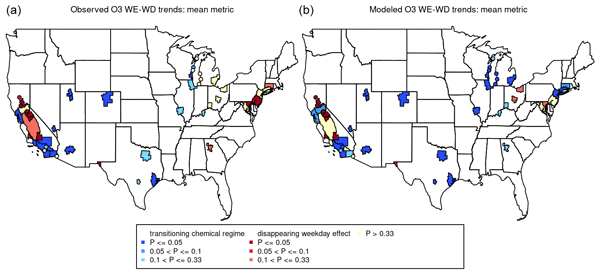
We assess observed and modeled ozone weekend–weekday differences in the USA from 2002–2019. A subset of urban areas that were NOx-saturated at the beginning of the period transitioned to NOx-limited conditions. Multiple rural areas of California were NOx-limited for the entire period but become less influenced by local day-of-week emission patterns in more recent years. The model produces more NOx-saturated conditions than the observations but captures trends in weekend–weekday ozone patterns.
Karen E. Cady-Pereira, Xuehui Guo, Rui Wang, April B. Leytem, Chase Calkins, Elizabeth Berry, Kang Sun, Markus Müller, Armin Wisthaler, Vivienne H. Payne, Mark W. Shephard, Mark A. Zondlo, and Valentin Kantchev
Atmos. Meas. Tech., 17, 15–36, https://doi.org/10.5194/amt-17-15-2024, https://doi.org/10.5194/amt-17-15-2024, 2024
Short summary
Short summary
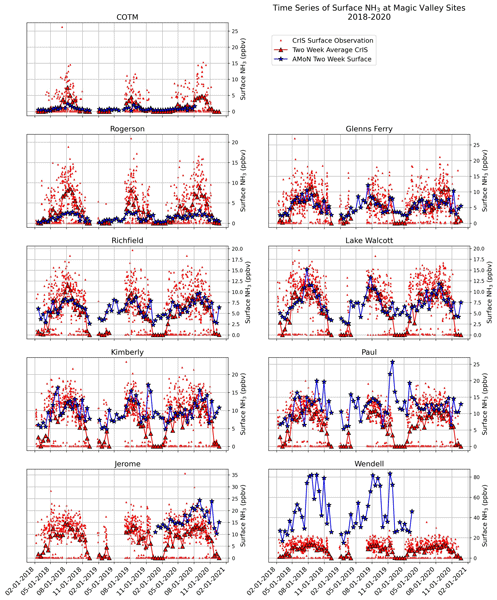
Ammonia is a significant precursor of PM2.5 particles and thus contributes to poor air quality in many regions. Furthermore, ammonia concentrations are rising due to the increase of large-scale, intensive agricultural activities. Here we evaluate satellite measurements of ammonia against aircraft and surface network data, and show that there are differences in magnitude, but the satellite data are spatially and temporally well correlated with the in situ data.
Zhipeng Qu, David P. Donovan, Howard W. Barker, Jason N. S. Cole, Mark W. Shephard, and Vincent Huijnen
Atmos. Meas. Tech., 16, 4927–4946, https://doi.org/10.5194/amt-16-4927-2023, https://doi.org/10.5194/amt-16-4927-2023, 2023
Short summary
Short summary
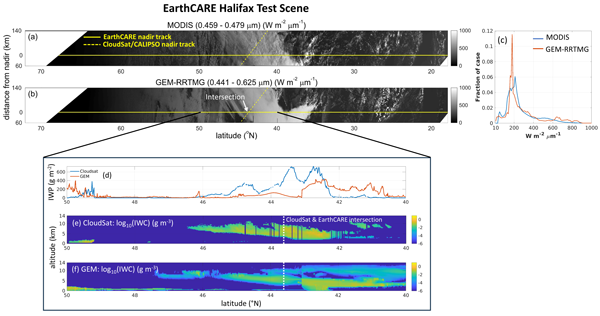
The EarthCARE satellite mission Level 2 algorithm development requires realistic 3D cloud and aerosol scenes along the satellite orbits. One of the best ways to produce these scenes is to use a high-resolution numerical weather prediction model to simulate atmospheric conditions at 250 m horizontal resolution. This paper describes the production and validation of three EarthCARE test scenes.
Benjamin N. Murphy, Darrell Sonntag, Karl M. Seltzer, Havala O. T. Pye, Christine Allen, Evan Murray, Claudia Toro, Drew R. Gentner, Cheng Huang, Shantanu Jathar, Li Li, Andrew A. May, and Allen L. Robinson
Atmos. Chem. Phys., 23, 13469–13483, https://doi.org/10.5194/acp-23-13469-2023, https://doi.org/10.5194/acp-23-13469-2023, 2023
Short summary
Short summary
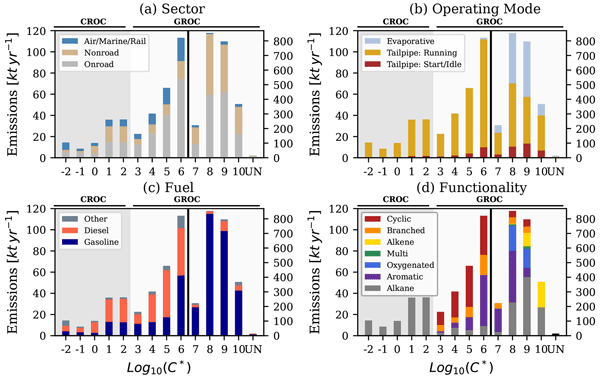
We update methods for calculating organic particle and vapor emissions from mobile sources in the USA. Conventionally, particulate matter (PM) and volatile organic carbon (VOC) are speciated without consideration of primary semivolatile emissions. Our methods integrate state-of-the-science speciation profiles and correct for common artifacts when sampling emissions in a laboratory. We quantify impacts of the emission updates on ambient pollution with the Community Multiscale Air Quality model.
Jason N. S. Cole, Howard W. Barker, Zhipeng Qu, Najda Villefranque, and Mark W. Shephard
Atmos. Meas. Tech., 16, 4271–4288, https://doi.org/10.5194/amt-16-4271-2023, https://doi.org/10.5194/amt-16-4271-2023, 2023
Short summary
Short summary
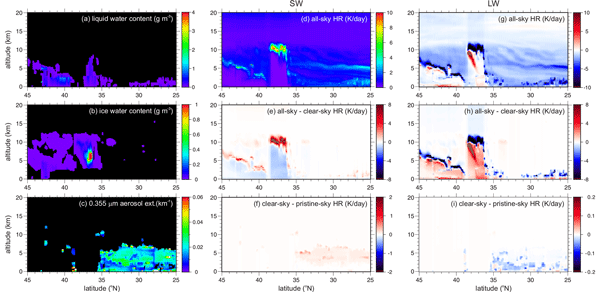
Measurements from the EarthCARE satellite mission will be used to retrieve profiles of cloud and aerosol properties. These retrievals are combined with auxiliary information about surface properties and atmospheric state, e.g., temperature and water vapor. This information allows computation of 1D and 3D solar and thermal radiative transfer for small domains, which are compared with coincident radiometer observations to continually assess EarthCARE retrievals.
Olivia E. Clifton, Donna Schwede, Christian Hogrefe, Jesse O. Bash, Sam Bland, Philip Cheung, Mhairi Coyle, Lisa Emberson, Johannes Flemming, Erick Fredj, Stefano Galmarini, Laurens Ganzeveld, Orestis Gazetas, Ignacio Goded, Christopher D. Holmes, László Horváth, Vincent Huijnen, Qian Li, Paul A. Makar, Ivan Mammarella, Giovanni Manca, J. William Munger, Juan L. Pérez-Camanyo, Jonathan Pleim, Limei Ran, Roberto San Jose, Sam J. Silva, Ralf Staebler, Shihan Sun, Amos P. K. Tai, Eran Tas, Timo Vesala, Tamás Weidinger, Zhiyong Wu, and Leiming Zhang
Atmos. Chem. Phys., 23, 9911–9961, https://doi.org/10.5194/acp-23-9911-2023, https://doi.org/10.5194/acp-23-9911-2023, 2023
Short summary
Short summary
A primary sink of air pollutants is dry deposition. Dry deposition estimates differ across the models used to simulate atmospheric chemistry. Here, we introduce an effort to examine dry deposition schemes from atmospheric chemistry models. We provide our approach’s rationale, document the schemes, and describe datasets used to drive and evaluate the schemes. We also launch the analysis of results by evaluating against observations and identifying the processes leading to model–model differences.
Bryan K. Place, William T. Hutzell, K. Wyat Appel, Sara Farrell, Lukas Valin, Benjamin N. Murphy, Karl M. Seltzer, Golam Sarwar, Christine Allen, Ivan R. Piletic, Emma L. D'Ambro, Emily Saunders, Heather Simon, Ana Torres-Vasquez, Jonathan Pleim, Rebecca H. Schwantes, Matthew M. Coggon, Lu Xu, William R. Stockwell, and Havala O. T. Pye
Atmos. Chem. Phys., 23, 9173–9190, https://doi.org/10.5194/acp-23-9173-2023, https://doi.org/10.5194/acp-23-9173-2023, 2023
Short summary
Short summary
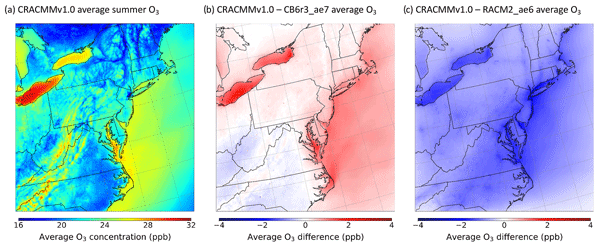
Ground-level ozone is a pollutant with adverse human health and ecosystem effects. Air quality models allow scientists to understand the chemical production of ozone and demonstrate impacts of air quality management plans. In this work, the role of multiple systems in ozone production was investigated for the northeastern US in summer. Model updates to chemical reaction rates and monoterpene chemistry were most influential in decreasing predicted ozone and improving agreement with observations.
Christian Hogrefe, Jesse O. Bash, Jonathan E. Pleim, Donna B. Schwede, Robert C. Gilliam, Kristen M. Foley, K. Wyat Appel, and Rohit Mathur
Atmos. Chem. Phys., 23, 8119–8147, https://doi.org/10.5194/acp-23-8119-2023, https://doi.org/10.5194/acp-23-8119-2023, 2023
Short summary
Short summary
Under the umbrella of the fourth phase of the Air Quality Model Evaluation International Initiative (AQMEII4), this study applies AQMEII4 diagnostic tools to better characterize how dry deposition removes pollutants from the atmosphere in the widely used CMAQ model. The results illustrate how these tools can provide insights into similarities and differences between the two CMAQ dry deposition options that affect simulated pollutant budgets and ecosystem impacts from atmospheric pollution.

Zhipeng Qu, Howard W. Barker, Jason N. S. Cole, and Mark W. Shephard
Atmos. Meas. Tech., 16, 2319–2331, https://doi.org/10.5194/amt-16-2319-2023, https://doi.org/10.5194/amt-16-2319-2023, 2023
Short summary
Short summary
This paper describes EarthCARE’s L2 product ACM-3D. It includes the scene construction algorithm (SCA) used to produce the indexes for reconstructing 3D atmospheric scene based on satellite nadir retrievals. It also provides the information about the buffer zone sizes of 3D assessment domains and the ranking scores for selecting the best 3D assessment domains. These output variables are needed to run 3D radiative transfer models for the radiative closure assessment of EarthCARE’s L2 retrievals.
Havala O. T. Pye, Bryan K. Place, Benjamin N. Murphy, Karl M. Seltzer, Emma L. D'Ambro, Christine Allen, Ivan R. Piletic, Sara Farrell, Rebecca H. Schwantes, Matthew M. Coggon, Emily Saunders, Lu Xu, Golam Sarwar, William T. Hutzell, Kristen M. Foley, George Pouliot, Jesse Bash, and William R. Stockwell
Atmos. Chem. Phys., 23, 5043–5099, https://doi.org/10.5194/acp-23-5043-2023, https://doi.org/10.5194/acp-23-5043-2023, 2023
Short summary
Short summary
Chemical mechanisms describe how emissions from vehicles, vegetation, and other sources are chemically transformed in the atmosphere to secondary products including criteria and hazardous air pollutants. The Community Regional Atmospheric Chemistry Multiphase Mechanism integrates gas-phase radical chemistry with pathways to fine-particle mass. New species were implemented, resulting in a bottom-up representation of organic aerosol, which is required for accurate source attribution of pollutants.
Qian Shu, Sergey L. Napelenok, William T. Hutzell, Kirk R. Baker, Barron H. Henderson, Benjamin N. Murphy, and Christian Hogrefe
Geosci. Model Dev., 16, 2303–2322, https://doi.org/10.5194/gmd-16-2303-2023, https://doi.org/10.5194/gmd-16-2303-2023, 2023
Short summary
Short summary
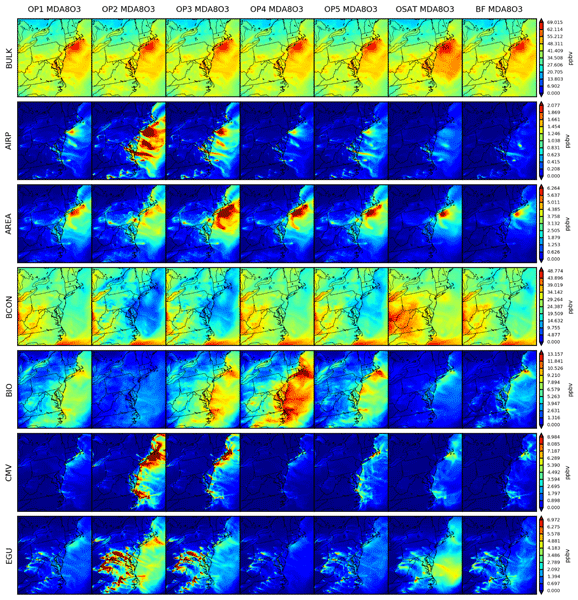
Source attribution methods are generally used to determine culpability of precursor emission sources to ambient pollutant concentrations. However, source attribution of secondarily formed pollutants such as ozone and its precursors cannot be explicitly measured, making evaluation of source apportionment methods challenging. In this study, multiple apportionment approach comparisons show common features but still reveal wide variations in predicted sector contribution and species dependency.
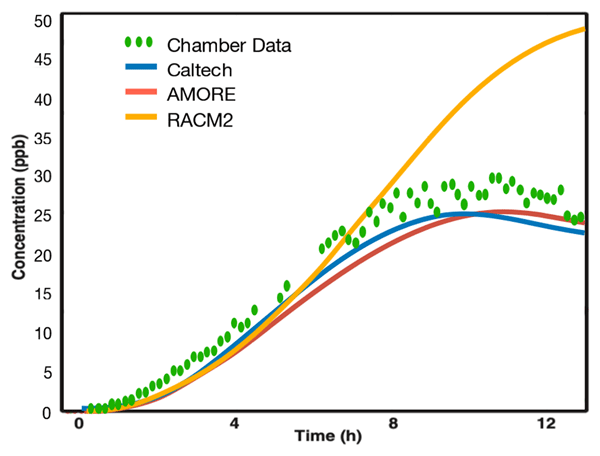
Forwood Wiser, Bryan K. Place, Siddhartha Sen, Havala O. T. Pye, Benjamin Yang, Daniel M. Westervelt, Daven K. Henze, Arlene M. Fiore, and V. Faye McNeill
Geosci. Model Dev., 16, 1801–1821, https://doi.org/10.5194/gmd-16-1801-2023, https://doi.org/10.5194/gmd-16-1801-2023, 2023
Short summary
Short summary
We developed a reduced model of atmospheric isoprene oxidation, AMORE-Isoprene 1.0. It was created using a new Automated Model Reduction (AMORE) method designed to simplify complex chemical mechanisms with minimal manual adjustments to the output. AMORE-Isoprene 1.0 has improved accuracy and similar size to other reduced isoprene mechanisms. When included in the CRACMM mechanism, it improved the accuracy of EPA’s CMAQ model predictions for the northeastern USA compared to observations.
John T. Walker, Xi Chen, Zhiyong Wu, Donna Schwede, Ryan Daly, Aleksandra Djurkovic, A. Christopher Oishi, Eric Edgerton, Jesse Bash, Jennifer Knoepp, Melissa Puchalski, John Iiames, and Chelcy F. Miniat
Biogeosciences, 20, 971–995, https://doi.org/10.5194/bg-20-971-2023, https://doi.org/10.5194/bg-20-971-2023, 2023
Short summary
Short summary
Better estimates of atmospheric nitrogen (N) deposition are needed to accurately assess ecosystem risk and impacts from deposition of nutrients and acidity. Using measurements and modeling, we estimate total N deposition of 6.7 kg N ha−1 yr−1 at a forest site in the southern Appalachian Mountains, a region sensitive to atmospheric deposition. Reductions in deposition of reduced forms of N (ammonia and ammonium) will be needed to meet the lowest estimates of N critical loads for the region.
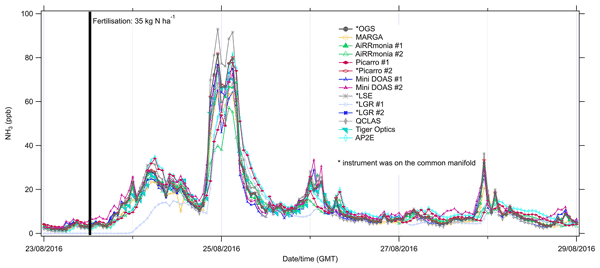
Marsailidh M. Twigg, Augustinus J. C. Berkhout, Nicholas Cowan, Sabine Crunaire, Enrico Dammers, Volker Ebert, Vincent Gaudion, Marty Haaima, Christoph Häni, Lewis John, Matthew R. Jones, Bjorn Kamps, John Kentisbeer, Thomas Kupper, Sarah R. Leeson, Daiana Leuenberger, Nils O. B. Lüttschwager, Ulla Makkonen, Nicholas A. Martin, David Missler, Duncan Mounsor, Albrecht Neftel, Chad Nelson, Eiko Nemitz, Rutger Oudwater, Celine Pascale, Jean-Eudes Petit, Andrea Pogany, Nathalie Redon, Jörg Sintermann, Amy Stephens, Mark A. Sutton, Yuk S. Tang, Rens Zijlmans, Christine F. Braban, and Bernhard Niederhauser
Atmos. Meas. Tech., 15, 6755–6787, https://doi.org/10.5194/amt-15-6755-2022, https://doi.org/10.5194/amt-15-6755-2022, 2022
Short summary
Short summary
Ammonia (NH3) gas in the atmosphere impacts the environment, human health, and, indirectly, climate. Historic NH3 monitoring was labour intensive, and the instruments were complicated. Over the last decade, there has been a rapid technology development, including “plug-and-play” instruments. This study is an extensive field comparison of the currently available technologies and provides evidence that for routine monitoring, standard operating protocols are required for datasets to be comparable.
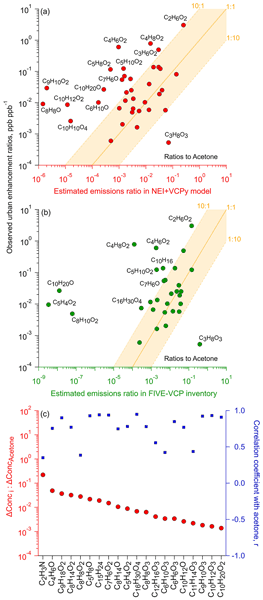
Peeyush Khare, Jordan E. Krechmer, Jo E. Machesky, Tori Hass-Mitchell, Cong Cao, Junqi Wang, Francesca Majluf, Felipe Lopez-Hilfiker, Sonja Malek, Will Wang, Karl Seltzer, Havala O. T. Pye, Roisin Commane, Brian C. McDonald, Ricardo Toledo-Crow, John E. Mak, and Drew R. Gentner
Atmos. Chem. Phys., 22, 14377–14399, https://doi.org/10.5194/acp-22-14377-2022, https://doi.org/10.5194/acp-22-14377-2022, 2022
Short summary
Short summary
Ammonium adduct chemical ionization is used to examine the atmospheric abundances of oxygenated volatile organic compounds associated with emissions from volatile chemical products, which are now key contributors of reactive precursors to ozone and secondary organic aerosols in urban areas. The application of this valuable measurement approach in densely populated New York City enables the evaluation of emissions inventories and thus the role these oxygenated compounds play in urban air quality.
Sarah E. Benish, Jesse O. Bash, Kristen M. Foley, K. Wyat Appel, Christian Hogrefe, Robert Gilliam, and George Pouliot
Atmos. Chem. Phys., 22, 12749–12767, https://doi.org/10.5194/acp-22-12749-2022, https://doi.org/10.5194/acp-22-12749-2022, 2022
Short summary
Short summary
We assess Community Multiscale Air Quality (CMAQ) model simulations of nitrogen and sulfur deposition over US climate regions to evaluate the model ability to reproduce long-term deposition trends and total deposition budgets. A measurement–model fusion technique is found to improve estimates of wet deposition. Emission controls set by the Clean Air Act successfully decreased oxidized nitrogen deposition across the US; we find increasing amounts of reduced nitrogen to the total nitrogen budget.
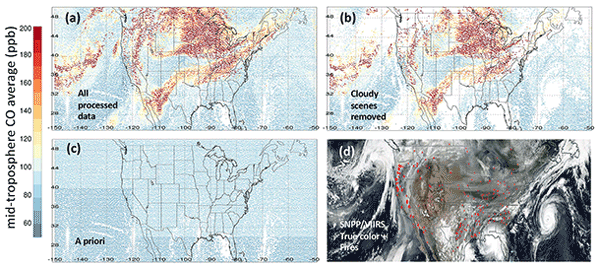
Helen M. Worden, Gene L. Francis, Susan S. Kulawik, Kevin W. Bowman, Karen Cady-Pereira, Dejian Fu, Jennifer D. Hegarty, Valentin Kantchev, Ming Luo, Vivienne H. Payne, John R. Worden, Róisín Commane, and Kathryn McKain
Atmos. Meas. Tech., 15, 5383–5398, https://doi.org/10.5194/amt-15-5383-2022, https://doi.org/10.5194/amt-15-5383-2022, 2022
Short summary
Short summary
Satellite observations of global carbon monoxide (CO) are essential for understanding atmospheric chemistry and pollution sources. This paper describes a new data product using radiance measurements from the Cross-track Infrared Sounder (CrIS) instrument on the Suomi National Polar-orbiting Partnership (SNPP) satellite that provides vertical profiles of CO from single-field-of-view observations. We show how these satellite CO profiles compare to aircraft observations and evaluate their biases.
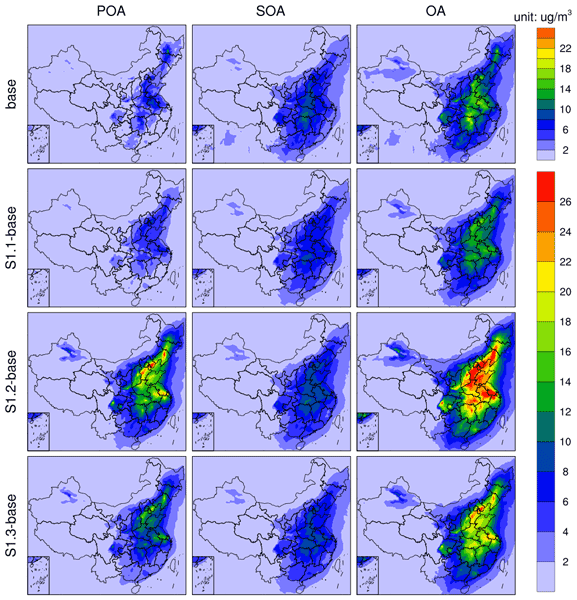
Mengying Li, Shaocai Yu, Xue Chen, Zhen Li, Yibo Zhang, Zhe Song, Weiping Liu, Pengfei Li, Xiaoye Zhang, Meigen Zhang, Yele Sun, Zirui Liu, Caiping Sun, Jingkun Jiang, Shuxiao Wang, Benjamin N. Murphy, Kiran Alapaty, Rohit Mathur, Daniel Rosenfeld, and John H. Seinfeld
Atmos. Chem. Phys., 22, 11845–11866, https://doi.org/10.5194/acp-22-11845-2022, https://doi.org/10.5194/acp-22-11845-2022, 2022
Short summary
Short summary
This study constructed an emission inventory of condensable particulate matter (CPM) in China with a focus on organic aerosols (OAs), based on collected CPM emission information. The results show that OA emissions are enhanced twofold for the years 2014 and 2017 after the inclusion of CPM in the new inventory. Sensitivity cases demonstrated the significant contributions of CPM emissions from stationary combustion and mobile sources to primary, secondary, and total OA concentrations.
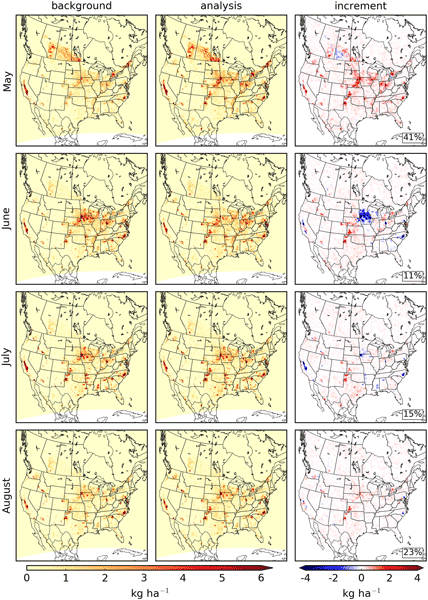
Michael Sitwell, Mark W. Shephard, Yves Rochon, Karen Cady-Pereira, and Enrico Dammers
Atmos. Chem. Phys., 22, 6595–6624, https://doi.org/10.5194/acp-22-6595-2022, https://doi.org/10.5194/acp-22-6595-2022, 2022
Short summary
Short summary
Observations of ammonia made using the satellite-borne CrIS instrument were used to improve the ammonia emissions used in the GEM-MACH model. These observations were used to refine estimates of the monthly mean ammonia emissions over North America for May to August 2016. The updated ammonia emissions reduced biases of GEM-MACH surface ammonia fields with surface observations and showed some improvements in the forecasting of species involved in inorganic particulate matter formation.
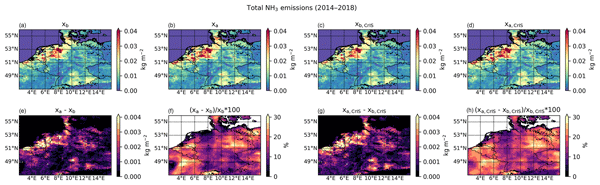
Shelley van der Graaf, Enrico Dammers, Arjo Segers, Richard Kranenburg, Martijn Schaap, Mark W. Shephard, and Jan Willem Erisman
Atmos. Chem. Phys., 22, 951–972, https://doi.org/10.5194/acp-22-951-2022, https://doi.org/10.5194/acp-22-951-2022, 2022
Short summary
Short summary
CrIS NH3 satellite observations are assimilated into the LOTOS-EUROS model using two different methods. In the first method the data are used to fit spatially varying NH3 emission time factors. In the second method a local ensemble transform Kalman filter is used. Compared to in situ observations, combining both methods led to the most significant improvements in the modeled concentrations and deposition, illustrating the usefulness of CrIS NH3 to improve the spatiotemporal distribution of NH3.
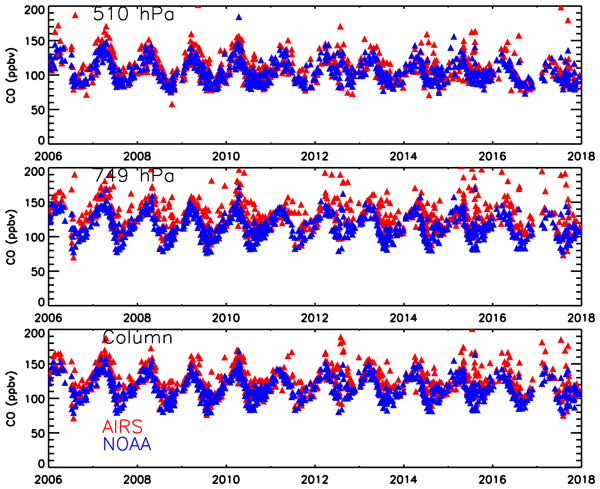
Jennifer D. Hegarty, Karen E. Cady-Pereira, Vivienne H. Payne, Susan S. Kulawik, John R. Worden, Valentin Kantchev, Helen M. Worden, Kathryn McKain, Jasna V. Pittman, Róisín Commane, Bruce C. Daube Jr., and Eric A. Kort
Atmos. Meas. Tech., 15, 205–223, https://doi.org/10.5194/amt-15-205-2022, https://doi.org/10.5194/amt-15-205-2022, 2022
Short summary
Short summary
Carbon monoxide (CO) is produced by combustion of substances such as fossil fuels and plays an important role in atmospheric pollution and climate. We evaluated estimates of atmospheric CO derived from outgoing radiation measurements of the Atmospheric Infrared Sounder (AIRS) on a satellite orbiting the Earth against CO measurements from aircraft to show that these satellite measurements are reliable for continuous global monitoring of atmospheric CO concentrations.
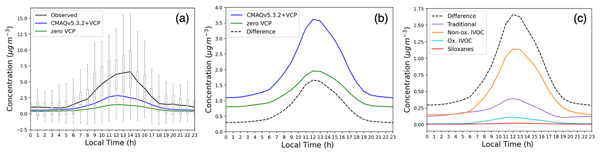
Elyse A. Pennington, Karl M. Seltzer, Benjamin N. Murphy, Momei Qin, John H. Seinfeld, and Havala O. T. Pye
Atmos. Chem. Phys., 21, 18247–18261, https://doi.org/10.5194/acp-21-18247-2021, https://doi.org/10.5194/acp-21-18247-2021, 2021
Short summary
Short summary
Volatile chemical products (VCPs) are commonly used consumer and industrial items that contribute to the formation of atmospheric aerosol. We implemented the emissions and chemistry of VCPs in a regional-scale model and compared predictions with measurements made in Los Angeles. Our results reduced model bias and suggest that VCPs may contribute up to half of anthropogenic secondary organic aerosol in Los Angeles and are an important source of human-influenced particular matter in urban areas.
Stefano Galmarini, Paul Makar, Olivia E. Clifton, Christian Hogrefe, Jesse O. Bash, Roberto Bellasio, Roberto Bianconi, Johannes Bieser, Tim Butler, Jason Ducker, Johannes Flemming, Alma Hodzic, Christopher D. Holmes, Ioannis Kioutsioukis, Richard Kranenburg, Aurelia Lupascu, Juan Luis Perez-Camanyo, Jonathan Pleim, Young-Hee Ryu, Roberto San Jose, Donna Schwede, Sam Silva, and Ralf Wolke
Atmos. Chem. Phys., 21, 15663–15697, https://doi.org/10.5194/acp-21-15663-2021, https://doi.org/10.5194/acp-21-15663-2021, 2021
Short summary
Short summary
This technical note presents the research protocols for phase 4 of the Air Quality Model Evaluation International Initiative (AQMEII4). This initiative has three goals: (i) to define the state of wet and dry deposition in regional models, (ii) to evaluate how dry deposition influences air concentration and flux predictions, and (iii) to identify the causes for prediction differences. The evaluation compares LULC-specific dry deposition and effective conductances and fluxes.
Cited articles
Alnsour, N.: Bi-directional exchange of ammonia from soils in row crop agro-ecosystems, PhD thesis, North Carolina State University, http://www.lib.ncsu.edu/resolver/1840.20/37245 (last access: 15 September 2026), 2020.
Appel, K. W., Bash, J. O., Fahey, K. M., Foley, K. M., Gilliam, R. C., Hogrefe, C., Hutzell, W. T., Kang, D., Mathur, R., Murphy, B. N., Napelenok, S. L., Nolte, C. G., Pleim, J. E., Pouliot, G. A., Pye, H. O. T., Ran, L., Roselle, S. J., Sarwar, G., Schwede, D. B., Sidi, F. I., Spero, T. L., and Wong, D. C.: The Community Multiscale Air Quality (CMAQ) model versions 5.3 and 5.3.1: system updates and evaluation, Geosci. Model Dev., 14, 2867–2897, https://doi.org/10.5194/gmd-14-2867-2021, 2021.
Barthlott, W., Mail, M., and Neinhuis C.: Superhydrophobic hierarchically structured surfaces in biology: evolution, structural principles and biomimetic applications, Philos. T. R. Soc. A., 374, 20160191, https://doi.org/10.1098/rsta.2016.0191, 2016.
Bash, J. O., Cooter, E. J., Dennis, R. L., Walker, J. T., and Pleim, J. E.: Evaluation of a regional air-quality model with bidirectional NH3 exchange coupled to an agroecosystem model, Biogeosciences, 10, 1635–1645, https://doi.org/10.5194/bg-10-1635-2013, 2013.
Bash, J. O., Walker, J. T., Katul, G. G., Jones, M. R., Nemitz, E., and Robarge, W. P.: Estimation of in-canopy ammonia sources and sinks in a fertilized Zea mays field, Environ. Sci. Technol., 44, 1683–1689, 2010.
Brunauer, S., Emmett, P. H., and Teller, E.: Absorption of gases in multimolecular layers, J. Am. Chem. Soc., 60, 309–319, https://doi.org/10.1021/ja01269a023, 1938.
Burkhardt, J., Flechard, C. R., Gresens, F., Mattsson, M., Jongejan, P. A. C., Erisman, J. W., Weidinger, T., Meszaros, R., Nemitz, E., and Sutton, M. A.: Modelling the dynamic chemical interactions of atmospheric ammonia with leaf surface wetness in a managed grassland canopy, Biogeosciences, 6, 67–84, https://doi.org/10.5194/bg-6-67-2009, 2009.
Burnett, R., Chen, H., Szyszkowicz, M., Fann, N. Hubbell, B., Pope, C. A., Apte, J. S., Brauer, M., Cohen, A., Weichenthal, S., Coggins, J., Di, Q., Brunekreef, B., Frostad, J., Lim, S. S., Kan, H., Walker, K. D., Thurston, G. D., Hayes, R. B., Lim., C. C., Turner, M. C., Jerrett, M., Krewski, D., Gapstur, S. M., Diver, W. R., Ostro, B., Goldberg, D., Crouse, D. L., Martin, R. V., Peters, P., Pinault, L., Tjepkema, M., van Donkelaar, A., Villeneuve, P. J., Miller, A. B., Yin, P., Zhou, M., Wang, L., Janssen, N. A. H., Marra, M., Atkinson, R. W., Tsang, H., Thack, T. Q., Cannon, J. B., Allen R. T., Hart, J. E., Laden, F., Cesarone, G., Forastiere, F., Weinmayr, G., Jaensch, A., Nagel, G., Concin, H., and Spadaro, J. V.: Global estimates of mortality associated with long term exposure to outdoor fine particulate matter, P. Natl. Acad. Sci. USA, 115, 9592–9597, https://doi.org/10.1073/pnas.1803222115, 2018.
Byrne, A.: The 1979 convention on long-range transboundary air pollution: assessing its effectiveness as a multilateral environmental regime after 35 years, Transnatl. Environ. La., 4, 37–67, https://doi.org/10.1017/s2047102514000296, 2015.
Clark, C. M., Simkin, S. M., Allen, E. B. Bowman, W. D., Belnap, J., Brooks, M. L., Colllins, S. L., Geiser, L. H., Gilliam, F. S., Jovan, S. E., Pardo, L. H., Schulz, B. K., Stevens, C. J., Suding, K. N., Throop, H. L., and Waller, D. M.: Potential vulnerability of 348 herbaceous species to atmospheric deposition of nitrogen and sulfur in the United States, Nat. Plants, 5, 697–705, https://doi.org/10.1038/s41477-019-0442-8, 2019.
Clifton, O. E., Paulot, F., Fiore, A. M., Horowitz, L. W., Correa, G., Baublitz, C. B., Fares, S., Goded, I., Goldstein, A. H., Gruening, C., Hogg, A. J., Loubet, B., Mammarella, I., Munger, J. W., Neil, L., Stella, P., Uddling, J., Vesla, T., and Weng, E.: Influence of dynamic ozone dry deposition on ozone pollution, J. Geophys. Res.-Atmos. 125, e2020JD032398, https://doi.org/10.1029/2020JD032398, 2020.
Cooter, E. J., Bash, J. O., Walker, J. T., Jones, M. R., and Robarge, W.: Estimation of NH3 bi-directional flux from managed agricultural soils, Atmos. Environ., 44, 2107–2115, https://doi.org/10.1016/j.atmosenv.2010.02.044, 2010.
Cooter, E. J., Bash, J. O., Benson, V., and Ran, L.: Linking agricultural crop management and air quality models for regional to national-scale nitrogen assessments, Biogeosciences, 9, 4023–4035, https://doi.org/10.5194/bg-9-4023-2012, 2012.
Eschleman, K. N. and Sabo, R. D.: Declining nitrate-N yields in the Upper Potomac River Basin, What is realy driving progress under the Chesapeake Bay restoration?, Atmos. Environ. 146, 280–289, https://doi.org/10.1016/j.atmosenv.2016.07.004, 2016.
Fahey, K. M., Carlton, A. G., Pye, H. O. T., Baek, J., Hutzell, W. T., Stanier, C. O., Baker, K. R., Appel, K. W., Jaoui, M., and Offenberg, J. H.: A framework for expanding aqueous chemistry in the Community Multiscale Air Quality (CMAQ) model version 5.1, Geosci. Model Dev., 10, 1587–1605, https://doi.org/10.5194/gmd-10-1587-2017, 2017.
Galloway, J. E., Moreno, A. V. P., Lindstrom, A. B., Strynar, M. J., Newton, S., May, A. A., and Weavers, L. K.: Evidence of Air Dispersion: HFPO−DA and PFOA in Ohio and West Virginia Surface Water and Soil near a Fluoropolymer Production Facility, Environ. Sci. Technol., 54, 7175–7184, 2020.
Galmarini, S., Makar, P., Clifton, O. E., Hogrefe, C., Bash, J. O., Bellasio, R., Bianconi, R., Bieser, J., Butler, T., Ducker, J., Flemming, J., Hodzic, A., Holmes, C. D., Kioutsioukis, I., Kranenburg, R., Lupascu, A., Perez-Camanyo, J. L., Pleim, J., Ryu, Y.-H., San Jose, R., Schwede, D., Silva, S., and Wolke, R.: Technical note: AQMEII4 Activity 1: evaluation of wet and dry deposition schemes as an integral part of regional-scale air quality models, Atmos. Chem. Phys., 21, 15663–15697, https://doi.org/10.5194/acp-21-15663-2021, 2021.
Greaver, T. L., Sullivan, T. J., Herrick, J. D., Barber, M. C., Baron, J. J., Cosby, B. J., Deerhake, M. E., Dennis, R. L., Dubois, J.-J.,B., Goodale, C. L., Herlihy, A. T., Lawrence, G. B., Lio, L., Lynch, J. A., and Novak, K. J.: Ecological effects of nitrogen and sulfur air pollution in the US: what do we know?, Front. Ecol. Environ., 10, 365–372, https://doi.org/10.1890/110049, 2012.
Hansen, K., Personne, E., Skjøth, Loubet, B., Ibron, A., Jensen, R., and Sørensen, L. L.: Investigating sources of measured forest-atmosphere ammonia fluxes using two layer bi-directional modelling, Agr. Forest Meteorol., 237–238, 80–94, https://doi.org/10.1016/j.agrformet.2017.02.008, 2017.
Hood, R. R., Shenk, G. W., Dixon, R. L., Smith, S. M. C., Ball, W. P., Bash, J. O., Batiuk, R., Boomer, K., Brady, D. C., Cerco, C., Claggett, P., de Mutsert, K., Easton, Z. M., Elmore, A. J., Friedrichs, M. A. M., Harris, L. A., Ihde, T. F., Lacher, I., Li, L., Linker, L. C., Miller, A., Moriarty, J., Noe, G. B., Onyullo, G. E., Rose, K., Skalak, K., Tian, R., Veith, T. L., Wainger, L., Weller, D., and Zhang, Y. J.: The Chesapeake Bay program modeling system: Overview and recommendations for future development, Ecol. Model., 456, 109635, https://doi.org/10.1016/j.ecolmodel.2021.109635, 2021.
Jensen, N. O. and Hummelshøj, P.: Derivation of canopy resistance for water vapour fluxes over a spruce forest, using a new technique for the viscous sublayer resistance, Agr. Forest Meteorol., 73, 339–352, https://doi.org/10.1016/0168-1923(94)05083-I, 1995.
Kelly, J. T., Parworth, C. L., Zhang, Q., Miller, D. J., Sun, K., Zondlo, M. A., Baker, K. R., Wisthaler, A., Nowak, J. B., Pusede, S. E., Cohen, R. C., Weinheimer, A. J., Beyersdorf, A. J., Tonnesen, G. S., Bash, J. O., Valen, L.C., Crawford, J. H., Fried, A., and Walega, J. G.: Modeling NH4NO3 over the San Joaquin Valley durning the 2012 DISCOVER-AQ campaign, J. Geophys. Res.-Atmos., 123, 4727–4745, https://doi.org/10.1029/2018JD028290, 2018
Klimont, Z. and Brink, C.: Modeling of Emissions of Air Pollutants and Greenhouse Gases from Agricultural Sources in Europe, IIASA Interim Report, IIASA, Laxenburg, Austria: IR-04-048, https://pure.iiasa.ac.at/7400 (last access: 15 September 2026), 2004.
Kondo, J., Saigusa, N., and Sato, T.: A Parameterization of Evaporation from Bare Soil Surfaces, J. Appl. Meteor. Climatol., 29, 385–389, https://doi.org/10.1175/1520-0450(1990)029<0385:APOEFB>2.0.CO;2, 1990.
Liss, P. S. and Slater, P. G.: Fluxes of gases across the air-sea interface, Nature, 247, 181–184, https://doi.org/10.1038/247181a0, 1974.
Massad, R.-S., Nemitz, E., and Sutton, M. A.: Review and parameterisation of bi-directional ammonia exchange between vegetation and the atmosphere, Atmos. Chem. Phys., 10, 10359–10386, https://doi.org/10.5194/acp-10-10359-2010, 2010.
Mattsson, M., Herrmann, B., David, M., Loubet, B., Riedo, M., Theobald, M. R., Sutton, M. A., Bruhn, D., Neftel, A., and Schjoerring, J. K.: Temporal variability in bioassays of the stomatal ammonia compensation point in relation to plant and soil nitrogen parameters in intensively managed grassland, Biogeosciences, 6, 171–179, https://doi.org/10.5194/bg-6-171-2009, 2009.
Meyers, T. P., Hall, M. E., Lindberg, S. E., and Kim, K.: Use of the modified Bowen-ratio technique to measure fluxes of trace gases, Atmos. Environ., 30, 3321–3329, 1996.
Millet, D. B., Alwe, H. D., Chen, X., Deventer, M. J., Griffis, T. J., Holzinger, R., Bertman, S. B., Rickly, P. S., Stevens, P. S., Léonardis, T., Locoge, N., Dusanter, S., Tyndall, G. S., Alvarez, S. L., Erickson, M. H., and Flynn, J. H.: Bidirecitional ecosystem-atmosphere fluxes of volatile organic compounds across the mass spectrum. How many matter? Envrion. Sci. Technol., 2, 764–777, https://doi.org/10.1021/acsearthspacechem.8b00061, 2018.
Nemitz, E., Sutton, M. A., Schjoerring, J. K., Husted, S., and Wyers, G. P.: Resistance modelling of ammonia exchange over oilseed rape, Agr. Forest Meteorol., 105, 405–425, https://doi.org/10.1016/S0168-1923(00)00206-9, 2000.
Nemitz, E., Milford, C., and Sutton, M. A.: A two-layer canopy compensation point model for describing bi-directional biosphere-atmosphere exchange of ammonia, Q. J. Roy. Meteor. Soc., 127, 815–833, 2001.
Nguyen, T. B., Crounse, J. D., Teng, A. P., St. Clair, J. M., Paulot, F., Wolfe, G. M., and Wennberg, P. O.: Rapid deposition of oxidized biogenic compounds to a temperate forest, P. Natl. Acad. Sci. USA, 112, E392–E401, https://doi.org/10.1073/pnas.1418702112, 2015.
Olaguer, E. P.: Atmospheric Impacts of the Oil and Gas Industry, Elsevier, New York, NY, USA, ISBN 978-0-12-801883-5, 2017.
Personne, E., Loubet, B., Herrmann, B., Mattsson, M., Schjoerring, J. K., Nemitz, E., Sutton, M. A., and Cellier, P.: SURFATM-NH3: a model combining the surface energy balance and bi-directional exchanges of ammonia applied at the field scale, Biogeosciences, 6, 1371–1388, https://doi.org/10.5194/bg-6-1371-2009, 2009.
Pleim, J. E. and Ran, L.-R.: Surface flux modeling for air quality applications, Atmosphere, 2, 271–302, https://doi.org/10.3390/atmos2030271, 2011.
Pleim, J. E. and Xiu, A.: Development and testing of a surface flux and planetary boundary layer model for applications in mesoscale models, J. Appl. Meteorol., 34, 16–32, https://doi.org/10.1175/1520-0450-34.1.16, 1995.
Pleim, J. E., Bash, J. O., Walker, J. T., and Cooter, E. J.: Development and testing of an ammonia bi-directional flux model for air-quality models, J. Geophys. Res.-Atmos., 118, https://doi.org/10.1002/jgrd.50262, 2013.
Pleim, J. E., Ran, L., Appel, W., Shephard, M. W., and Cady-Pereira, K.: New bidirectional ammonia flux model in an air quality model coupled with an agricultural model, J. Adv. Model Earth Sy., 11, 2934–2957, https://doi.org/10.1029/2019MS001728, 2019.
Ran, L., Yuan, Y., Cooter, E., Benson, V., Yang, D., Pleim, J., Wang, R., and Williams, J.: An integrated agriculture, atmosphere, and hydrology modeling system for ecosystem assessments, J. Adv. Model. Earth Sy., 11, 4645–4668, https://doi.org/10.1029/2019MS001708, 2019.
Rannik, Ü., Peltola, O., and Mammarella, I.: Random uncertainties of flux measurements by the eddy covariance technique, Atmos. Meas. Tech., 9, 5163–5181, https://doi.org/10.5194/amt-9-5163-2016, 2016.
Raupach, M. R.: Applying Lagrangian fluid mechanics to infer scalar source distributions from concentration profiles in plant canopies, Agr. Forest Meteorol., 47, 85–108, 1989.
Rumsey, I. C. and Walker, J. T.: Application of an online ion-chromatography-based instrument for gradient flux measurements of speciated nitrogen and sulfur, Atmos. Meas. Tech., 9, 2581–2592, https://doi.org/10.5194/amt-9-2581-2016, 2016.
Rumsey, I. C., Cowen, K. A., Walker, J. T., Kelly, T. J., Hanft, E. A., Mishoe, K., Rogers, C., Proost, R., Beachley, G. M., Lear, G., Frelink, T., and Otjes, R. P.: An assessment of the performance of the Monitor for AeRosols and GAses in ambient air (MARGA): a semi-continuous method for soluble compounds, Atmos. Chem. Phys., 14, 5639–5658, https://doi.org/10.5194/acp-14-5639-2014, 2014.
Saylor, R. D. and Hicks, B. B.: New directions: Time for a new approach to modeling surface-atmosphere exchanges in air quality models?, Atmos. Environ., 129, 229–233, https://doi.org/10.1016/j.atmosenv.2016.01.032, 2016.
Schrader, F. and Brümmer, C.: Land use specific ammonia deposition velocities: a review of recent studies (2004–2013), Water Air Soil Poll., 225, 2114, https://doi.org/10.1007/s11270-014-2114-7, 2014.
Shen, J., Chen, D., Bai, M. Sun, J., Coates, T., Lam, S. K., and Li, Y.: Ammonia deposition in the neighbourhood of an intensive cattle feedlot in Victoria, Australia, Sci. Rep., 6, 32793, https://doi.org/10.1038/srep32793, 2016.
Shephard, M. W. and Cady-Pereira, K. E.: Cross-track Infrared Sounder (CrIS) satellite observations of tropospheric ammonia, Atmos. Meas. Tech., 8, 1323–1336, https://doi.org/10.5194/amt-8-1323-2015, 2015.
Shephard, M. W., Dammers, E., Cady-Pereira, K. E., Kharol, S. K., Thompson, J., Gainariu-Matz, Y., Zhang, J., McLinden, C. A., Kovachik, A., Moran, M., Bittman, S., Sioris, C. E., Griffin, D., Alvarado, M. J., Lonsdale, C., Savic-Jovcic, V., and Zheng, Q.: Ammonia measurements from space with the Cross-track Infrared Sounder: characteristics and applications, Atmos. Chem. Phys., 20, 2277–2302, https://doi.org/10.5194/acp-20-2277-2020, 2020.
Shephard, M. W., Kharol, S. K., Dammers, E., Sioris, C. E., Bell, A., Jansen, R., Caron, J., Snel, R., Palombo, E., Cady-Pereira, K. E., McLinden, C. A., Lutsch, E., and Knuteson, R. O.: Infrared Satellite Detection Limits for Monitoring Atmospheric Ammonia, IEEE J. Sel. Top. Appl., 18, 10272–10291, https://doi.org/10.1109/JSTARS.2025.3557240, 2025.
Seinfeld, J. H. and Pandis, S. N.: Atmospheric chemistry and physics: from air pollution to climate change, John Wiley & Sons Inc. New York, ISBN 0-471-17815-2, 1998.
Skamarock, W. C., Klemp, J. B., Dudhia, J., Gill, D. O., Liu, X., Berner, J., Wang, W., Powers, J. G., Duda, M. G., Barker, D. M., and Huang, X.-Y.: A Description of the advanced research WRF version 4, NCAR Tech. Note NCAR/TN-556+STR, 145 pp., https://opensky.ucar.edu/islandora/object/opensky:2898 (last access: 15 September 2026), 2019.
Skiba, U., Sheppard, L., Pitcairn, C. E. R., Leith, I., Crossley, A., van Dijk, S., Kennedy, V. H., and Fowler, D.: Soil nitrous oxide and nitric oxide emissions as indicators of elevated atmospheric N deposition rates in seminatural ecosystems, Environ. Pollut., 102, 457–461, https://doi.org/10.1016/S0269-7491(98)80069-9, 1999.
Shuttleworth, W. J. and Wallace, J. S.: Evaporation from sparse crops – an energy combination theory, Q. J. Roy. Meteor. Soc., 111, 839–855, 1985.
Stella, P., Personne, E., Loubet, B., Lamaud, E., Ceschia, E., Béziat, P., Bonnefond, J. M., Irvine, M., Keravec, P., Mascher, N., and Cellier, P.: Predicting and partitioning ozone fluxes to maize crops from sowing to harvest: the Surfatm-O3 model, Biogeosciences, 8, 2869–2886, https://doi.org/10.5194/bg-8-2869-2011, 2011.
Swenson, S. C. and Lawrence, D. M.: Assessing a dry surface layer-based soil resistance parameterization for the Community Land Model using GRACE and FLUXNET-MTE data, J. Geophys. Res.-Atmos., 199, https://doi.org/10.1002/2014JD022314, 2014
Thomas, R. M., Trebs, I., Otjes, R., Jongejan, P. A. C., ten Brink, H., Phillips, G., Kortner, M., Meixner, F. X., and Nemitz, E.: An automated analyzer to measure surface-atmosphere exchange fluxes of water soluble inorganic aerosol compounds and reactive trace gases, Environ. Sci. Technol., 43, 1412–1418, https://doi.org/10.1021/es8019403, 2009.
U.S. Congress: United States Congress. Clean Water Act Amendments of 1972, P.L., U.S. Government Printing Office, Washington, DC, 92–500, https://www.govinfo.gov/app/details/STATUTE-86/STATUTE-86-Pg816 (last accessed: 15 September 2026), 1972.
U.S. Congress: United States Congress. Clean Air Act Amendments of 1990, P.L., U.S. Government Printing Office, Washington, DC, 101–549, https://www.congress.gov/bill/101st-congress/senate-bill/1630/text (last access: 15 September 2026), 1990.
U.S. EPA: Integrated Science Assessment (ISA) for Oxides of Nitrogen, Oides of Sulfur and Particulate Matter Ecological Criteria (Final Report), U.S. Environmental Protection Agency, Washington, D.C., EPA/60/R-20/278, https://www.epa.gov/isa/integrated-science-assessment-isa-ecological-criteria-assessment-oxides-nitrogen-oxides-sulfur (last access: 15 September 2026), 2020.
van Hove, L. W. A. and Adema, E. H.: The effective thickness of water films on leaves, Atmos. Environ., 30, 2933–2936, https://doi.org/10.1016/1352-2310(96)00012-X, 1996.
Venterea, R. T., Clough, T. J., Coulter, J. A., Breuillin-Sessoms, F., Wang, P., and Sadowsky, M. J.: Ammonium sorption and ammonia inhabitation of nitrate-oxidizing bacteria explain contrasting soil N2O production, Sci. Rep., 5, 12513, https://doi.org/10.1038/srep12153, 2015.
Walker, J. T., Spence, P., Kimbrough, S., and Robarge, W.: Inferential model estimates of ammonia dry deposition in the vicinity of a swine production facility, Atmos. Environ., 42, 3407–3418, 2008.
Walker, J. T., Jones, M. R., Bash, J. O., Myles, L., Meyers, T., Schwede, D., Herrick, J., Nemitz, E., and Robarge, W.: Processes of ammonia air–surface exchange in a fertilized Zea mays canopy, Biogeosciences, 10, 981–998, https://doi.org/10.5194/bg-10-981-2013, 2013.
Walker, J. T., Austin, R., and Robarge, W. P.: Modeling of ammonia deposition to a Pocosin landscape downwind of a large poultry facility, Agr. Ecosyst. Environ., 185, 161–175, 2014.
Wang, L. and Schjoerring, J. K.: Seasonal variation in nitrogen pools and
Wang, X., Lin, C.-J., and Feng, X.: Sensitivity analysis of an updated bidirectional air–surface exchange model for elemental mercury vapor, Atmos. Chem. Phys., 14, 6273–6287, https://doi.org/10.5194/acp-14-6273-2014, 2014.
Wentworth, G. R., Murphy, J. G., Gregoire, P. K., Cheyne, C. A. L., Tevlin, A. G., and Hems, R.: Soil–atmosphere exchange of ammonia in a non-fertilized grassland: measured emission potentials and inferred fluxes, Biogeosciences, 11, 5675–5686, https://doi.org/10.5194/bg-11-5675-2014, 2014.
Wesely, M. L.: Parameterization of surface resistances to gaseous dry deposition in regional-scale numerical models, Atmos. Environ., 23, 1293–1304, https://doi.org/10.1016/j.atmosenv.2007.10.058, 1989.
Wichink Kruit, R. J., van Pul, W. A. J., Otjes, R. P., Hofschreuder, P., Jacobs, A. F. G., and Holtslag, A. A. M.: Ammonia fluxes and derived canopy compensation points over non-fertilised agricultural grassland in The Netherlands using the new gradient ammonia – high accuracy – monitor (GRAHAM), Atmos. Environ., 41, 1275–1287, 2007.
Wichink Kruit, R. J., Schaap, M., Sauter, F. J., van Zanten, M. C., and van Pul, W. A. J.: Modeling the distribution of ammonia across Europe including bi-directional surface–atmosphere exchange, Biogeosciences, 9, 5261–5277, https://doi.org/10.5194/bg-9-5261-2012, 2012.
Wolfe, G. M. and Thornton, J. A.: The Chemistry of Atmosphere-Forest Exchange (CAFE) Model – Part 1: Model description and characterization, Atmos. Chem. Phys., 11, 77–101, https://doi.org/10.5194/acp-11-77-2011, 2011.
Wu, D., Horn, M. A., Behrendt, T., Müller, S., Li, J., Cole, J. A., Xie, B., Ju, X., Li, G., Ermel, M., Oswald, R., Fröhlich-Nowoisky, J., Hoor, P., Hu, C., Liu, M., Andreae, M. O., Pöschl, U., Cheng, Y., Su, H., Trebs, I., Weber, B., and Sörgel, M.: Soil HONO emissions at high moisture content are driven by microbial nitrate reduction to nitrite: tackling the HONO puzzle, ISME J., 13, 1688–1699, https://doi.org/10.1038/s41396-019-0379-y, 2019.
Wyers, G. P., Otjes, R. P., and Slanina, J.: A continuous-flow denuder for the measurement of ambient concentrations and surface-exchange fluxes of ammonia, Atmos. Environ., 27, 2085–2090, https://doi.org/10.1016/0960-1686(93)90280-C, 1993.
Yi, C.: Momentum transfer within canopies, J. Appl. Meteorol. Clim., 47, 262–275, 2008.
Zhang, L., Brook, J. R., and Vet, R.: On ozone dry deposition – with emphasis on non-stomatal uptake and wet canopies, Atmos. Environ., 36, 4787–4799, https://doi.org/10.1016/S1352-2310(02)00567-8, 2002.
Zhang, L., Wright, L. P., and Asman, W. A. H.: Bi-directional air surface exchange of atmospheric ammonia: a review of measurements and a development of a big-leaf model for applications in regional-scale air-quality models, J. Geophys. Res., 115, D20310, https://doi.org/10.1029/2009JD013589, 2010.
Zhu, L., Henze, D., Bash, J., Jeong, G.-R., Cady-Pereira, K., Shephard, M., Luo, M., Paulot, F., and Capps, S.: Global evaluation of ammonia bidirectional exchange and livestock diurnal variation schemes, Atmos. Chem. Phys., 15, 12823–12843, https://doi.org/10.5194/acp-15-12823-2015, 2015.
Short summary
We applied a consistent modeling approach for both field and regional scales of multi-pollutants to evaluate the air-surface exchange processes contributing to regional air quality modeling biases when evaluated against observed network and satellite ammonia concentrations. This multi-resolution approach will serve the modeling and measurement community in their future development and generalization of air-surface exchange models utilizing flux, routine network and satellite observations.
We applied a consistent modeling approach for both field and regional scales of multi-pollutants...


