
Articles | Volume 19, issue 17
https://doi.org/10.5194/gmd-19-8025-2026
© Author(s) 2026. This work is distributed under
the Creative Commons Attribution 4.0 License.
the Creative Commons Attribution 4.0 License.
https://doi.org/10.5194/gmd-19-8025-2026
© Author(s) 2026. This work is distributed under
the Creative Commons Attribution 4.0 License.
the Creative Commons Attribution 4.0 License.
Model evaluation paper
| 
01 Sep 2026
Model evaluation paper |
| 01 Sep 2026
| 01 Sep 2026
Implementation of predicted rime mass in the bin microphysics scheme DESCAM 3D: evaluation for an idealized squall line system and a heavy snowfall event during ICE-POP 2018
Pierre Grzegorczyk
CORRESPONDING AUTHOR

Université Clermont Auvergne, CNRS INSU, Laboratoire de Météorologie Physique UMR 6016, 63000 Clermont-Ferrand, France
now at: Environmental Remote Sensing Laboratory, École Polytechnique Fédérale de Lausanne, Lausanne, Switzerland
Wolfram Wobrock
Université Clermont Auvergne, CNRS INSU, Laboratoire de Météorologie Physique UMR 6016, 63000 Clermont-Ferrand, France
Antoine Canzi
Université Clermont Auvergne, CNRS INSU, Laboratoire de Météorologie Physique UMR 6016, 63000 Clermont-Ferrand, France
Frédéric Tridon
DIATI, Politecnico di Torino, Turin, Italy
Université Clermont Auvergne, CNRS INSU, Laboratoire de Météorologie Physique UMR 6016, 63000 Clermont-Ferrand, France
Sun-Young Park
Climate Prediction Research Center, Seoul National University, Seoul, South Korea
Gyuwon Lee
BK21 Weather Extremes Education and Research Team, Department of Atmospheric Sciences, Center for Atmospheric REmote Sensing (CARE), Kyungpook National University, Daegu 41566, Republic of Korea
Kwonil Kim
BK21 Weather Extremes Education and Research Team, Department of Atmospheric Sciences, Center for Atmospheric REmote Sensing (CARE), Kyungpook National University, Daegu 41566, Republic of Korea
Kyo-Sun Lim
School of Earth and Environmental Sciences, Seoul National University, Seoul, South Korea
Université Clermont Auvergne, CNRS INSU, Laboratoire de Météorologie Physique UMR 6016, 63000 Clermont-Ferrand, France
Institut Universitaire de France (IUF), Paris, France
Related authors
Pierre Grzegorczyk, Wolfram Wobrock, Aymeric Dziduch, and Céline Planche
Atmos. Chem. Phys., 25, 10403–10420, https://doi.org/10.5194/acp-25-10403-2025, https://doi.org/10.5194/acp-25-10403-2025, 2025
Short summary
Short summary
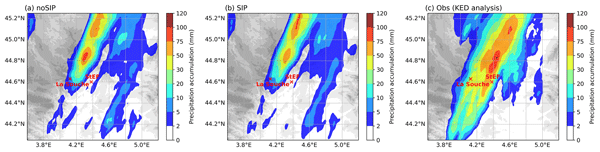
The impact of secondary ice production (SIP) on an intense-precipitation event is investigated using 3D bin microphysics. Including SIP improves agreement with in situ aircraft observations (ice crystal number concentration and supercooled drop number fraction), generates small ice crystals, and redistributes condensed water mass toward smaller particle sizes. As these crystals melt, the liquid precipitation flux decreases, reducing total precipitation by 8 % and heavy rainfall by 20 %.
Ross J. Herbert, Larissa Lacher, Alexander Böhmländer, Mark D. Tarn, Antoine Canzi, Aidan Pantoya, Evelyn Freney, Kristina Höhler, Pia Bogert, Céline Planche, Ping Tian, Michael Adams, Sarah Barr, David Brus, Nicole Büttner, Martin Daily, Konstantinos Doulgeris, Konstantinos Eleftheriadis, Grant Forster, Romy Fösig, Dimitrios G. Georgakopoulos, Maria I. Gini, A. Gannet Hallar, Radovan Krejci, Elke Ludewig, Mauro Mazzola, Ian B. McCubbin, Athanasios Nenes, Tuukka Petäjä, Joseph Robinson, Franziska Vogel, Paul Zieger, Stephen Arnold, Kenneth S. Carslaw, Naruki Hiranuma, Ottmar Möhler, and Benjamin J. Murray
Earth Syst. Sci. Data, 18, 6465–6483, https://doi.org/10.5194/essd-18-6465-2026, https://doi.org/10.5194/essd-18-6465-2026, 2026
Short summary
Short summary
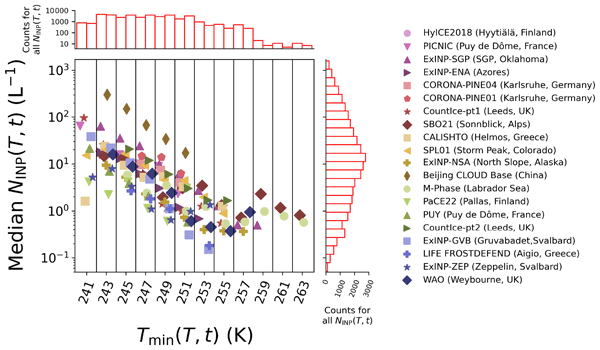
Ice formation in sub-zero clouds is influenced by airborne particles called ice-nucleating particles (INPs), whose concentrations vary substantially over short time and spatial scales. To assess the role of INPs in our climate, a comprehensive and consistent global dataset is essential. Our GloPINE model-ready dataset is a major step in this direction, comprising 36,000 measurements made using a single instrument design (PINE) over 70,000 hours of operation at 20 Northern Hemisphere sites.
Joonghyun Jo, Kyo Sun Lim, Sun-Young Park, Juhee Kwon, Wonbae Bang, HyangSuk Park, Jae-Young Byon, and Gyuwon Lee
Geosci. Model Dev., 19, 8149–8166, https://doi.org/10.5194/gmd-19-8149-2026, https://doi.org/10.5194/gmd-19-8149-2026, 2026
Short summary
Short summary
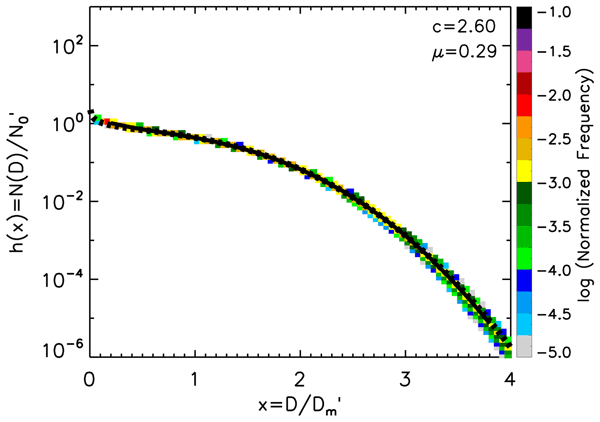
This study improves rainfall simulation by applying the Generalized Double-moment scaling Normalization (GDMN) method to the rain Drop Size Distribution (DSD) in the Weather Research and Forecasting Double-Moment 6-class (WDM6) microphysics scheme. Using observed raindrop data, GDMN better represents variations in raindrop sizes. The modified WDM6 improves precipitation patterns, radar reflectivity, and storm movement, with benefits also demonstrated in a month-long East Asian simulation.
Hyun-Joon Sung, Kyo-Sun Lim, Song-You Hong, JiHoon Shin, Baek-Min Kim, and Ji-Hun Choi
Geosci. Model Dev., 19, 7069–7088, https://doi.org/10.5194/gmd-19-7069-2026, https://doi.org/10.5194/gmd-19-7069-2026, 2026
Short summary
Short summary
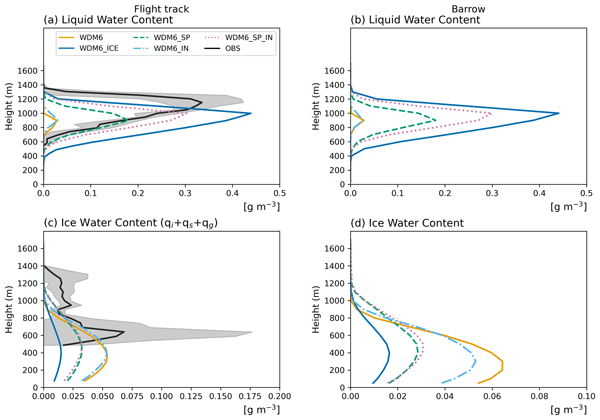
Arctic clouds containing both liquid droplets and ice crystals are difficult to simulate. We tested how ice-related changes in a weather model, designed for temperate regions, perform in the Arctic. Ice crystal shape is the dominant factor: making crystals spherical substantially reduces cloud ice and shifts it to snow. These modifications are moderate in temperate regions but stronger in the Arctic. As this rests on a single case, they should be validated across diverse cases and climates.
Jong-Hoon Jeong, Seung Hee Kim, Su-Bin Oh, Jeong-Eun Lee, Chia-Lun Tasi, and Gyuwon Lee
EGUsphere, https://doi.org/10.5194/egusphere-2026-1878, https://doi.org/10.5194/egusphere-2026-1878, 2026
Short summary
Short summary
This study examines why extreme rainfall can persist near coastal regions by analyzing a severe storm over western South Korea. Using advanced radar observations, we identify how interactions between airflow, precipitation processes, and coastal land–sea contrasts enhance storm organization. Our results show that these coupled processes play a critical role in sustaining heavy rainfall and support efforts to mitigate hazards in densely populated coastal areas.
Aymeric Dziduch, Antoine Baudoux, Guillaume Mioche, Antoine Canzi, Benjamin Doiteau, Manuel Moser, Emma Järvinen, Étienne Vignon, Jean-Christophe Raut, Régis Dupuy, Christophe Gourbeyre, Jean-Luc Baray, Marie Monier, Frédéric Szczap, Guillaume Penide, Julien Delanoë, Odran Sourdeval, Alfons Schwarzenboeck, Stephan Mertes, Franz Martin Schnaiter, Christiane Voigt, Mario Mech, Susanne Crewell, Andreas Herber, Christof Lüpkes, André Ehrlich, Manfred Wendisch, and Olivier Jourdan
EGUsphere, https://doi.org/10.5194/egusphere-2026-3265, https://doi.org/10.5194/egusphere-2026-3265, 2026
This preprint is open for discussion and under review for Atmospheric Chemistry and Physics (ACP).
Short summary
Short summary
This study examines the microphysical properties and ice crystal habits of low-level Arctic mixed-phase clouds around Svalbard. Using airborne in situ observations from four campaigns, we show that cloud microphysical structure and ice crystal habits are influenced by weather conditions and surface type. These results provide quantitative observations to better understand low-level Arctic clouds, their ice formation processes, and their influence on the Arctic atmosphere and climate system.
Soorok Ryu, Joon Jin Song, Kyo Sun Lim, and GyuWon Lee
Earth Syst. Sci. Data Discuss., https://doi.org/10.5194/essd-2026-302, https://doi.org/10.5194/essd-2026-302, 2026
Revised manuscript accepted for ESSD
Short summary
Short summary
We developed a detailed rainfall dataset for South Korea by combining weather radar data with ground rain measurements. This dataset provides rainfall information every ten minutes at a very fine spatial scale from 2016 to 2024. We created it to better understand rainfall patterns and improve applications such as flood forecasting and water management. By combining the strengths of both data sources, the dataset offers more accurate and consistent rainfall information over time and space.
Chia-Lun Tsai, Kwonil Kim, Yu-Chieng Liou, and GyuWon Lee
Atmos. Meas. Tech., 18, 6371–6392, https://doi.org/10.5194/amt-18-6371-2025, https://doi.org/10.5194/amt-18-6371-2025, 2025
Short summary
Short summary
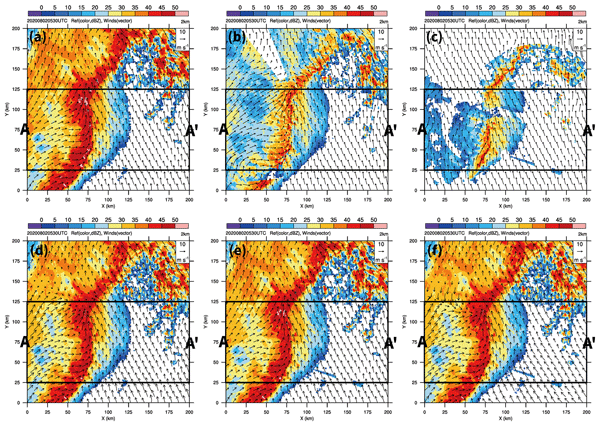
The Wind Synthesis System using Doppler Measurements (WISSDOM) is a practical scheme to derive 3D winds by using 11 radars in this study. The observations of shot-wavelength radars can be attributed to lower level precipitation and wind information in WISSDOM, which allowed for the capture of stronger updrafts in the convection areas of the squall line. Overall, these results highlight the advantages of using radars with multiple wavelengths in WISSDOM, especially shot-wavelength radars.
Pierre Grzegorczyk, Wolfram Wobrock, Aymeric Dziduch, and Céline Planche
Atmos. Chem. Phys., 25, 10403–10420, https://doi.org/10.5194/acp-25-10403-2025, https://doi.org/10.5194/acp-25-10403-2025, 2025
Short summary
Short summary
The impact of secondary ice production (SIP) on an intense-precipitation event is investigated using 3D bin microphysics. Including SIP improves agreement with in situ aircraft observations (ice crystal number concentration and supercooled drop number fraction), generates small ice crystals, and redistributes condensed water mass toward smaller particle sizes. As these crystals melt, the liquid precipitation flux decreases, reducing total precipitation by 8 % and heavy rainfall by 20 %.
Wonbae Bang, Jacob T. Carlin, Kwonil Kim, Alexander V. Ryzhkov, Guosheng Liu, and GyuWon Lee
Geosci. Model Dev., 18, 3559–3581, https://doi.org/10.5194/gmd-18-3559-2025, https://doi.org/10.5194/gmd-18-3559-2025, 2025
Short summary
Short summary
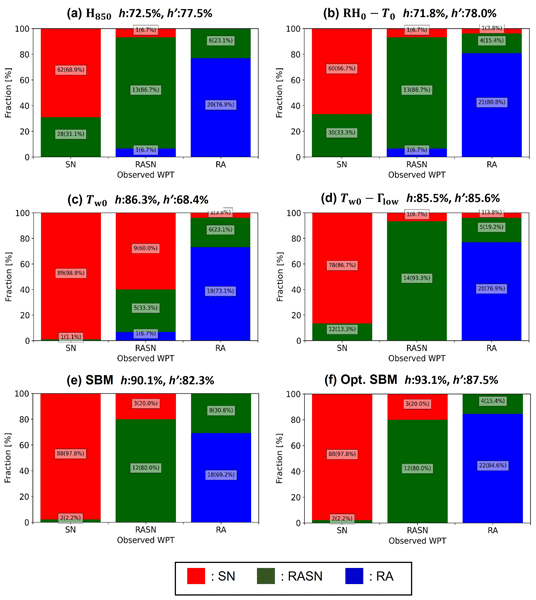
Microphysics model-based diagnosis, such as the spectral bin model (SBM), has recently been attempted to diagnose winter precipitation types. In this study, the accuracy of SBM-based precipitation type diagnosis is compared with other traditional methods. SBM has a relatively higher accuracy for dry-snow and wet-snow events, whereas it has lower accuracy for rain events. When the microphysics scheme in the SBM was optimized for the corresponding region, the accuracy for rain events improved.
Jeonggyu Kim, Sungmin Park, Greg M. McFarquhar, Anthony J. Baran, Joo Wan Cha, Kyoungmi Lee, Seoung Soo Lee, Chang Hoon Jung, Kyo-Sun Sunny Lim, and Junshik Um
Atmos. Chem. Phys., 24, 12707–12726, https://doi.org/10.5194/acp-24-12707-2024, https://doi.org/10.5194/acp-24-12707-2024, 2024
Short summary
Short summary
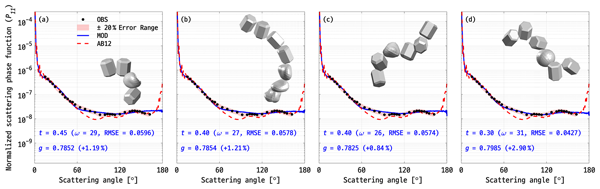
We developed idealized models to represent the shapes of ice particles found in deep convective clouds and calculated their single-scattering properties. By comparing these results with in situ measurements, we discovered that a mixture of shape models matches in situ measurements more closely than single-form models or aggregate models. This finding has important implications for enhancing the simulation of single-scattering properties of ice crystals in deep convective clouds.
Wei-Yu Chang, Yung-Chuan Yang, Chen-Yu Hung, Kwonil Kim, Gyuwon Lee, and Ali Tokay
Atmos. Chem. Phys., 24, 11955–11979, https://doi.org/10.5194/acp-24-11955-2024, https://doi.org/10.5194/acp-24-11955-2024, 2024
Short summary
Short summary
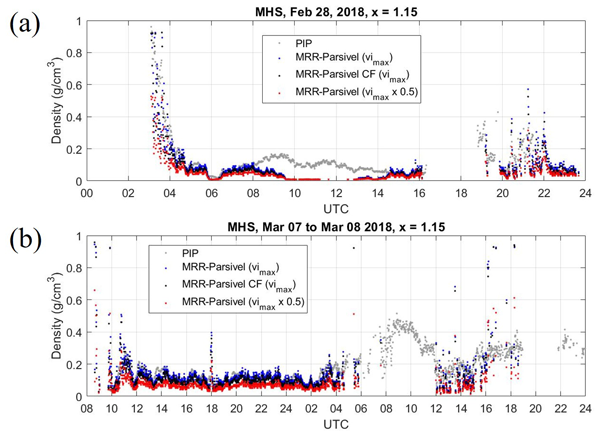
Snow density is derived by collocated Micro-Rain Radar (MRR) and Parsivel (ICE-POP 2017/2018). We apply the particle size distribution from Parsivel to a T-matrix backscattering simulation and compare with ZHH from MRR. Bulk density and bulk water fractions are derived from comparing simulated and calculated ZHH. Retrieved bulk density is validated by comparing snowfall rate measurements from Pluvio and the Precipitation Imaging Package. Snowfall rate consistency confirms the algorithm.
Sun-Young Park, Kyo-Sun Sunny Lim, Kwonil Kim, Gyuwon Lee, and Jason A. Milbrandt
Geosci. Model Dev., 17, 7199–7218, https://doi.org/10.5194/gmd-17-7199-2024, https://doi.org/10.5194/gmd-17-7199-2024, 2024
Short summary
Short summary
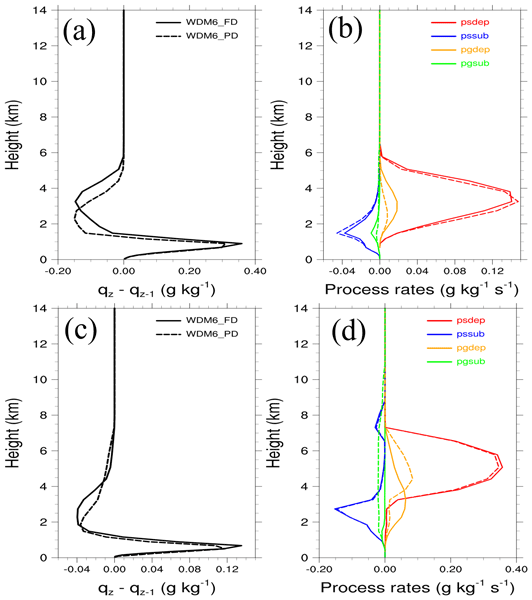
We enhance the WDM6 scheme by incorporating predicted graupel density. The modification affects graupel characteristics, including fall velocity–diameter and mass–diameter relationships. Simulations highlight changes in graupel distribution and precipitation patterns, potentially influencing surface snow amounts. The study underscores the significance of integrating predicted graupel density for a more realistic portrayal of microphysical properties in weather models.
Chia-Lun Tsai, Kwonil Kim, Yu-Chieng Liou, and GyuWon Lee
Atmos. Meas. Tech., 16, 845–869, https://doi.org/10.5194/amt-16-845-2023, https://doi.org/10.5194/amt-16-845-2023, 2023
Short summary
Short summary
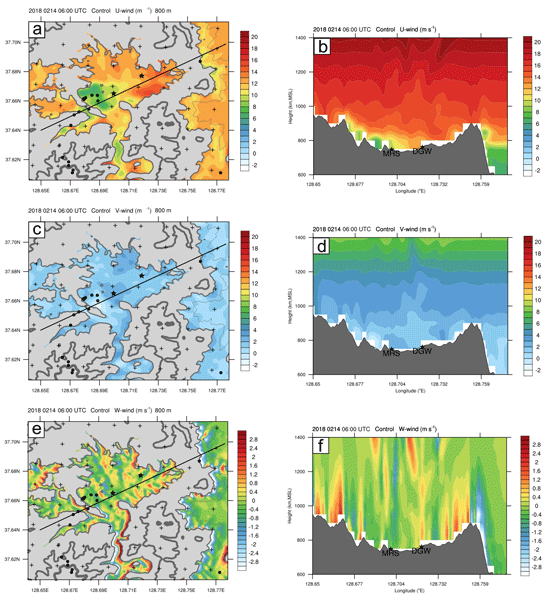
Since the winds in clear-air conditions usually play an important role in the initiation of various weather systems and phenomena, the modified Wind Synthesis System using Doppler Measurements (WISSDOM) synthesis scheme was developed to derive high-quality and high-spatial-resolution 3D winds under clear-air conditions. The performance and accuracy of derived 3D winds from this modified scheme were evaluated with an extreme strong wind event over complex terrain in Pyeongchang, South Korea.
Fanny Noirmain, Jean-Luc Baray, Frédéric Tridon, Philippe Cacault, Hermine Billard, Guillaume Voyard, Joël Van Baelen, and Delphine Latour
Biogeosciences, 19, 5729–5749, https://doi.org/10.5194/bg-19-5729-2022, https://doi.org/10.5194/bg-19-5729-2022, 2022
Short summary
Short summary
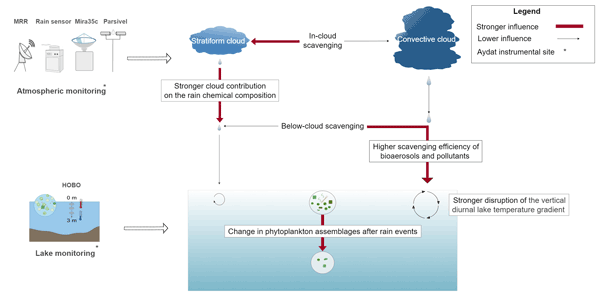
We present a study linking rain, meteorology, and mountain lake phytoplankton dynamics on the basis of a case study at Aydat (France) in September 2020. The air mass origin mainly influences the rain chemical composition, which depends on the type of rain, convective or stratiform. Our results also highlighted a non-negligible presence of photosynthetic cells in rainwater. The impact of the atmospheric forcing on the lake could play a key role in phytoplankton dynamics in the temperate zone.
Xuanli Li, Jason B. Roberts, Jayanthi Srikishen, Jonathan L. Case, Walter A. Petersen, Gyuwon Lee, and Christopher R. Hain
Geosci. Model Dev., 15, 5287–5308, https://doi.org/10.5194/gmd-15-5287-2022, https://doi.org/10.5194/gmd-15-5287-2022, 2022
Short summary
Short summary
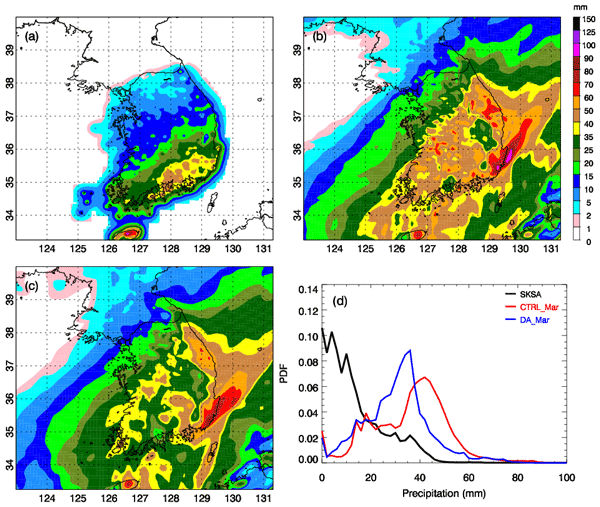
This research assimilated the Global Precipitation Measurement (GPM) satellite-retrieved ocean surface meteorology data into the Weather Research and Forecasting (WRF) model with the Gridpoint Statistical Interpolation (GSI) system. This was for two snowstorms during the International Collaborative Experiments for PyeongChang 2018 Olympic and Paralympic Winter Games' (ICE-POP 2018) field experiments. The results indicated a positive impact of the data for short-term forecasts for heavy snowfall.
Jeong-Su Ko, Kyo-Sun Sunny Lim, Kwonil Kim, Gyuwon Lee, Gregory Thompson, and Alexis Berne
Geosci. Model Dev., 15, 4529–4553, https://doi.org/10.5194/gmd-15-4529-2022, https://doi.org/10.5194/gmd-15-4529-2022, 2022
Short summary
Short summary
This study evaluates the performance of the four microphysics parameterizations, the WDM6, WDM7, Thompson, and Morrison schemes, in simulating snowfall events during the ICE-POP 2018 field campaign. Eight snowfall events are selected and classified into three categories (cold-low, warm-low, and air–sea interaction cases). The evaluation focuses on the simulated hydrometeors, microphysics budgets, wind fields, and precipitation using the measurement data.
Ki-Hong Min, Kao-Shen Chung, Ji-Won Lee, Cheng-Rong You, and Gyuwon Lee
Geosci. Model Dev. Discuss., https://doi.org/10.5194/gmd-2022-18, https://doi.org/10.5194/gmd-2022-18, 2022
Revised manuscript not accepted
Short summary
Short summary
LETKF underestimated the water vapor mixing ratio and temperature compared to 3DVAR due to a lack of a water vapor mixing ratio and temperature observation operator. Snowfall in GWD was less simulated in LETKF. The results signify that water vapor assimilation is important in radar DA and significantly impacts precipitation forecasts, regardless of the DA method used. Therefore, it is necessary to apply observation operators for water vapor mixing ratio and temperature in radar DA.
Cited articles
Abraham, F. F.: Functional Dependence of Drag Coefficient of a Sphere on Reynolds Number, Phys. Fluids, 13, 2194, https://doi.org/10.1063/1.1693218, 1970. a
Arteaga, D., Planche, C., Kagkara, C., Wobrock, W., Banson, S., Tridon, F., and Flossmann, A.: Evaluation of Two Cloud-Resolving Models Using Bin or Bulk Microphysics Representation for the HyMeX-IOP7a Heavy Precipitation Event, Atmosphere, 11, 1177, https://doi.org/10.3390/atmos11111177, 2020. a, b
Beard, K. V.: Terminal Velocity and Shape of Cloud and Precipitation Drops Aloft, J. Atmos. Sci., 33, 851–864, https://doi.org/10.1175/1520-0469(1976)033<0851:tvasoc>2.0.co;2, 1976. a
Blackadar, A. K.: The vertical distribution of wind and turbulent exchange in a neutral atmosphere, J. Geophys. Res., 67, 3095–3102, https://doi.org/10.1029/jz067i008p03095, 1962. a
Böhm, H. P.: A General Equation for the Terminal Fall Speed of Solid Hydrometeors, J. Atmos. Sci., 46, 2419–2427, https://doi.org/10.1175/1520-0469(1989)046<2419:AGEFTT>2.0.CO;2, 1989. a
Böhm, J. P.: A general hydrodynamic theory for mixed-phase microphysics. Part III: Riming and aggregation, Atmos. Res., 28, 103–123, https://doi.org/10.1016/0169-8095(92)90023-4, 1992. a
Bott, A.: A Positive Definite Advection Scheme Obtained by Nonlinear Renormalization of the Advective Fluxes, Mon. Weather Rev., 117, 1006–1016, https://doi.org/10.1175/1520-0493(1989)117<1006:apdaso>2.0.co;2, 1989. a
Bott, A.: A Flux Method for the Numerical Solution of the Stochastic Collection Equation, J. Atmos. Sci., 55, 2284–2293, https://doi.org/10.1175/1520-0469(1998)055<2284:afmftn>2.0.co;2, 1998. a
Brdar, S. and Seifert, A.: McSnow: A Monte-Carlo Particle Model for Riming and Aggregation of Ice Particles in a Multidimensional Microphysical Phase Space, J. Adv. Model. Earth Sy., 10, 187–206, https://doi.org/10.1002/2017ms001167, 2018. a
Clark, T., Hall, W., and Coen, J.: Source Code Documentation for the Clark-Hall Cloud-scale Model Code Version G3CH01, Tech. rep., University Corporation for Atmospheric Research, https://doi.org/10.5065/D67W694V, 1996. a, b
Clark, T. L.: Block-Iterative Method of Solving the Nonhydrostatic Pressure in Terrain-Following Coordinates: Two-Level Pressure and Truncation Error Analysis, J. Appl. Meteorol., 42, 970–983, https://doi.org/10.1175/1520-0450(2003)042<0970:bmostn>2.0.co;2, 2003. a, b
Cober, S. G. and List, R.: Measurements of the Heat and Mass Transfer Parameters Characterizing Conical Graupel Growth, J. Atmos. Sci., 50, 1591–1609, https://doi.org/10.1175/1520-0469(1993)050<1591:motham>2.0.co;2, 1993. a, b
Connolly, P. J., Emersic, C., and Field, P. R.: A laboratory investigation into the aggregation efficiency of small ice crystals, Atmos. Chem. Phys., 12, 2055–2076, https://doi.org/10.5194/acp-12-2055-2012, 2012. a, b, c
Cressman, G. P.: AN OPERATIONAL OBJECTIVE ANALYSIS SYSTEM, Mon. Weather Rev., 87, 367–374, https://doi.org/10.1175/1520-0493(1959)087<0367:aooas>2.0.co;2, 1959. a
Flossmann, A. I.: Interaction of Aerosol Particles and Clouds, J. Atmos. Sci., 55, 879–887, https://doi.org/10.1175/1520-0469(1998)055<0879:ioapac>2.0.co;2, 1998. a
Flossmann, A. I. and Wobrock, W.: A review of our understanding of the aerosol–cloud interaction from the perspective of a bin resolved cloud scale modelling, Atmos. Res., 97, 478–497, https://doi.org/10.1016/j.atmosres.2010.05.008, 2010. a, b, c, d
Flossmann, A. I. and Wobrock, W.: Cloud Processing of Aerosol Particles in Marine Stratocumulus Clouds, Atmosphere, 10, 520, https://doi.org/10.3390/atmos10090520, 2019. a, b
Flossmann, A. I., Hall, W. D., and Pruppacher, H. R.: A Theoretical Study of the Wet Removal of Atmospheric Pollutants. Part I: The Redistribution of Aerosol Particles Captured through Nucleation and Impaction Scavenging by Growing Cloud Drops, J. Atmos. Sci., 42, 583–606, https://doi.org/10.1175/1520-0469(1985)042<0583:atsotw>2.0.co;2, 1985. a
Fontaine, E., Schwarzenboeck, A., Delanoë, J., Wobrock, W., Leroy, D., Dupuy, R., Gourbeyre, C., and Protat, A.: Constraining mass–diameter relations from hydrometeor images and cloud radar reflectivities in tropical continental and oceanic convective anvils, Atmos. Chem. Phys., 14, 11367–11392, https://doi.org/10.5194/acp-14-11367-2014, 2014. a
Garrett, T. J., Fallgatter, C., Shkurko, K., and Howlett, D.: Fall speed measurement and high-resolution multi-angle photography of hydrometeors in free fall, Atmos. Meas. Tech., 5, 2625–2633, https://doi.org/10.5194/amt-5-2625-2012, 2012. a
Gehring, J., Ferrone, A., Billault-Roux, A.-C., Besic, N., and Berne, A.: Radar and ground-level measurements of precipitation during the ICE-POP 2018 campaign in South-Korea, PANGAEA [data set], https://doi.org/10.1594/PANGAEA.918315, 2020a. a
Gehring, J., Oertel, A., Vignon, É., Jullien, N., Besic, N., and Berne, A.: Microphysics and dynamics of snowfall associated with a warm conveyor belt over Korea, Atmos. Chem. Phys., 20, 7373–7392, https://doi.org/10.5194/acp-20-7373-2020, 2020b. a, b, c
Gehring, J., Ferrone, A., Billault-Roux, A.-C., Besic, N., Ahn, K. D., Lee, G., and Berne, A.: Radar and ground-level measurements of precipitation collected by the École Polytechnique Fédérale de Lausanne during the International Collaborative Experiments for PyeongChang 2018 Olympic and Paralympic winter games, Earth Syst. Sci. Data, 13, 417–433, https://doi.org/10.5194/essd-13-417-2021, 2021. a, b
Geresdi, I.: Idealized simulation of the Colorado hailstorm case: comparison of bulk and detailed microphysics, Atmos. Res., 45, 237–252, https://doi.org/10.1016/s0169-8095(97)00079-3, 1998. a
Geresdi, I., Sarkadi, N., and Thompson, G.: Effect of the accretion by water drops on the melting of snowflakes, Atmos. Res., 149, 96–110, https://doi.org/10.1016/j.atmosres.2014.06.001, 2014. a
Grazioli, J., Lloyd, G., Panziera, L., Hoyle, C. R., Connolly, P. J., Henneberger, J., and Berne, A.: Polarimetric radar and in situ observations of riming and snowfall microphysics during CLACE 2014, Atmos. Chem. Phys., 15, 13787–13802, https://doi.org/10.5194/acp-15-13787-2015, 2015. a
Grzegorczyk, P., Yadav, S., Zanger, F., Theis, A., Mitra, S. K., Borrmann, S., and Szakáll, M.: Fragmentation of ice particles: laboratory experiments on graupel–graupel and graupel–snowflake collisions, Atmos. Chem. Phys., 23, 13505–13521, https://doi.org/10.5194/acp-23-13505-2023, 2023. a, b, c
Grzegorczyk, P., Wobrock, W., Canzi, A., Niquet, L., Tridon, F., and Planche, C.: Investigating secondary ice production in a deep convective cloud with a 3D bin microphysics model: Part I – Sensitivity study of microphysical processes representations, Atmos. Res., 313, 107774, https://doi.org/10.1016/j.atmosres.2024.107774, 2025a. a, b, c, d
Grzegorczyk, P., Wobrock, W., Canzi, A., Niquet, L., Tridon, F., and Planche, C.: Investigating secondary ice production in a deep convective cloud with a 3D bin microphysics model: Part II – Effects on the cloud formation and development, Atmos. Res., 314, 107797, https://doi.org/10.1016/j.atmosres.2024.107797, 2025b. a, b
Grzegorczyk, P., Wobrock, W., Canzi, A., Tridon, F., Lee, G., Kwonil, K., Lim, K.-S., and Planche, C.: Ground based observations of ICE-POP 2018 campaign used for DESCAM-3D, Zenodo [data set], https://doi.org/10.5281/zenodo.17278661, 2025c. a
Grzegorczyk, P., Wobrock, W., Canzi, A., Tridon, F., and Planche, C.: DESCAM-3D model for ICE-POP 2018, Zenodo [code], https://doi.org/10.5281/zenodo.17854170, 2025d. a
Grzegorczyk, P., Wobrock, W., Dziduch, A., and Planche, C.: Influence of secondary ice production on cloud and rain properties: analysis of the HYMEX IOP7a heavy-precipitation event, Atmos. Chem. Phys., 25, 10403–10420, https://doi.org/10.5194/acp-25-10403-2025, 2025e. a
Grzegorczyk, P., Wobrock, W., Canzi, A., Tridon, F., and Planche, C.: Idealized squall line simulation with DESCAM-3D, Zenodo [code], https://doi.org/10.5281/zenodo.18526032, 2026. a
Hallett, J. and Mossop, S. C.: Production of secondary ice particles during the riming process, Nature, 249, 26–28, https://doi.org/10.1038/249026a0, 1974. a, b
Hashino, T. and Tripoli, G. J.: The Spectral Ice Habit Prediction System (SHIPS). Part I: Model Description and Simulation of the Vapor Deposition Process, J. Atmos. Sci., 64, 2210–2237, https://doi.org/10.1175/jas3963.1, 2007. a, b
Hersbach, H., Bell, B., Berrisford, P., Hirahara, S., Horányi, A., Muñoz-Sabater, J., Nicolas, J., Peubey, C., Radu, R., Schepers, D., Simmons, A., Soci, C., Abdalla, S., Abellan, X., Balsamo, G., Bechtold, P., Biavati, G., Bidlot, J., Bonavita, M., De Chiara, G., Dahlgren, P., Dee, D., Diamantakis, M., Dragani, R., Flemming, J., Forbes, R., Fuentes, M., Geer, A., Haimberger, L., Healy, S., Hogan, R. J., Hólm, E., Janisková, M., Keeley, S., Laloyaux, P., Lopez, P., Lupu, C., Radnoti, G., de Rosnay, P., Rozum, I., Vamborg, F., Villaume, S., and Thépaut, J.-N.: The ERA5 global reanalysis, Q. J. Roy. Meteor. Soc., 146, 1999–2049, 2020. a
Heymsfield, A. J.: The Characteristics of Graupel Particles in Northeastern Colorado Cumulus Congestus Clouds, J. Atmos. Sci., 35, 284–295, https://doi.org/10.1175/1520-0469(1978)035<0284:TCOGPI>2.0.CO;2, 1978. a
Heymsfield, A. J.: A Comparative Study of the Rates of Development of Potential Graupel and Hail Embryos in High Plains Storms, J. Atmos. Sci., 39, 2867–2897, https://doi.org/10.1175/1520-0469(1982)039<2867:ACSOTR>2.0.CO;2, 1982. a, b, c, d
Heymsfield, A. J. and Westbrook, C. D.: Advances in the Estimation of Ice Particle Fall Speeds Using Laboratory and Field Measurements, J. Atmos. Sci., 67, 2469–2482, https://doi.org/10.1175/2010jas3379.1, 2010. a, b, c
Heymsfield, A. J., Bansemer, A., Field, P. R., Durden, S. L., Stith, J. L., Dye, J. E., Hall, W., and Grainger, C. A.: Observations and Parameterizations of Particle Size Distributions in Deep Tropical Cirrus and Stratiform Precipitating Clouds: Results from In Situ Observations in TRMM Field Campaigns, J. Atmos. Sci., 59, 3457–3491, https://doi.org/10.1175/1520-0469(2002)059<3457:oapops>2.0.co;2, 2002. a
Hiron, T. and Flossmann, A. I.: A Study of the Role of the Parameterization of Heterogeneous Ice Nucleation for the Modeling of Microphysics and Precipitation of a Convective Cloud, J. Atmos. Sci., 72, 3322–3339, https://doi.org/10.1175/jas-d-15-0026.1, 2015. a, b
Hogan, R. J., Honeyager, R., Tyynelä, J., and Kneifel, S.: Calculating the millimetre‐wave scattering phase function of snowflakes using the self‐similar Rayleigh–Gans Approximation, Q. J. Roy. Meteor. Soc., 143, 834–844, https://doi.org/10.1002/qj.2968, 2017. a
Jensen, A. A. and Harrington, J. Y.: Modeling Ice Crystal Aspect Ratio Evolution during Riming: A Single-Particle Growth Model, J. Atmos. Sci., 72, 2569–2590, https://doi.org/10.1175/jas-d-14-0297.1, 2015. a
Jensen, A. A., Harrington, J. Y., Morrison, H., and Milbrandt, J. A.: Predicting Ice Shape Evolution in a Bulk Microphysics Model, J. Atmos. Sci., 74, 2081–2104, https://doi.org/10.1175/jas-d-16-0350.1, 2017. a
Jeoung, H., Liu, G., Kim, K., Lee, G., and Seo, E.-K.: Microphysical properties of three types of snow clouds: implication for satellite snowfall retrievals, Atmos. Chem. Phys., 20, 14491–14507, https://doi.org/10.5194/acp-20-14491-2020, 2020. a, b
Jin, H.-G., Lee, H., and Baik, J.-J.: A New Parameterization of the Accretion of Cloud Water by Graupel and Its Evaluation through Cloud and Precipitation Simulations, J. Atmos. Sci., 76, 381–400, https://doi.org/10.1175/jas-d-18-0245.1, 2019. a
Kagkara, C., Wobrock, W., Planche, C., and Flossmann, A. I.: The sensitivity of intense rainfall to aerosol particle loading – a comparison of bin-resolved microphysics modelling with observations of heavy precipitation from HyMeX IOP7a, Nat. Hazards Earth Syst. Sci., 20, 1469–1483, https://doi.org/10.5194/nhess-20-1469-2020, 2020. a, b
Karrer, M., Seifert, A., Ori, D., and Kneifel, S.: Improving the representation of aggregation in a two-moment microphysical scheme with statistics of multi-frequency Doppler radar observations, Atmos. Chem. Phys., 21, 17133–17166, https://doi.org/10.5194/acp-21-17133-2021, 2021. a, b
Khain, A., Pokrovsky, A., Pinsky, M., Seifert, A., and Phillips, V.: Simulation of Effects of Atmospheric Aerosols on Deep Turbulent Convective Clouds Using a Spectral Microphysics Mixed-Phase Cumulus Cloud Model. Part I: Model Description and Possible Applications, J. Atmos. Sci., 61, 2963–2982, https://doi.org/10.1175/jas-3350.1, 2004. a
Khvorostyanov, V. I. and Curry, J. A.: Terminal Velocities of Droplets and Crystals: Power Laws with Continuous Parameters over the Size Spectrum, J. Atmos. Sci., 59, 1872–1884, https://doi.org/10.1175/1520-0469(2002)059<1872:tvodac>2.0.co;2, 2002. a
Khvorostyanov, V. I. and Curry, J. A.: Fall Velocities of Hydrometeors in the Atmosphere: Refinements to a Continuous Analytical Power Law, J. Atmos. Sci., 62, 4343–4357, https://doi.org/10.1175/jas3622.1, 2005. a
Kikuchi, K., Kameda, T., Higuchi, K., and Yamashita, A.: A global classification of snow crystals, ice crystals, and solid precipitation based on observations from middle latitudes to polar regions, Atmos. Res., 132–133, 460–472, https://doi.org/10.1016/j.atmosres.2013.06.006, 2013. a
Kim, K., Bang, W., Chang, E.-C., Tapiador, F. J., Tsai, C.-L., Jung, E., and Lee, G.: Impact of wind pattern and complex topography on snow microphysics during International Collaborative Experiment for PyeongChang 2018 Olympic and Paralympic winter games (ICE-POP 2018), Atmos. Chem. Phys., 21, 11955–11978, https://doi.org/10.5194/acp-21-11955-2021, 2021. a, b, c, d, e, f, g
King, W. D. and Fletcher, N. H.: Thermal Shock as an Ice Multiplication Mechanism. Part I. Theory, J. Atmos. Sci., 33, 85–96, https://doi.org/10.1175/1520-0469(1976)033<0085:tsaaim>2.0.co;2, 1976. a
Kneifel, S. and Moisseev, D.: Long-Term Statistics of Riming in Nonconvective Clouds Derived from Ground-Based Doppler Cloud Radar Observations, J. Atmos. Sci., 77, 3495–3508, https://doi.org/10.1175/jas-d-20-0007.1, 2020. a
Ko, J.-S., Lim, K.-S. S., Kim, K., Lee, G., Thompson, G., and Berne, A.: Simulated microphysical properties of winter storms from bulk-type microphysics schemes and their evaluation in the Weather Research and Forecasting (v4.1.3) model during the ICE-POP 2018 field campaign, Geosci. Model Dev., 15, 4529–4553, https://doi.org/10.5194/gmd-15-4529-2022, 2022. a
Korolev, A. and Leisner, T.: Review of experimental studies of secondary ice production, Atmos. Chem. Phys., 20, 11767–11797, https://doi.org/10.5194/acp-20-11767-2020, 2020. a
Korolev, A., McFarquhar, G., Field, P. R., Franklin, C., Lawson, P., Wang, Z., Williams, E., Abel, S. J., Axisa, D., Borrmann, S., Crosier, J., Fugal, J., Krämer, M., Lohmann, U., Schlenczek, O., Schnaiter, M., and Wendisch, M.: Mixed-Phase Clouds: Progress and Challenges, Meteorol. Monogr., 58, 5.1–5.50, https://doi.org/10.1175/amsmonographs-d-17-0001.1, 2017. a
Kusunoki, K., Murakami, M., Orikasa, N., Hoshimoto, M., Tanaka, Y., Yamada, Y., Mizuno, H., Hamazu, K., and Watanabe, H.: Observations of Quasi-Stationary and Shallow Orographic Snow Clouds: Spatial Distributions of Supercooled Liquid Water and Snow Particles, Mon. Weather Rev., 133, 743–751, https://doi.org/10.1175/mwr2874.1, 2005. a
Kwon, J., Lim, K.-S. S., Park, S.-Y., Kim, K., and Lee, G.: Effects of Prognostic Number Concentrations of Snow and Graupel on the Simulated Precipitation over the Korean Peninsula, Weather. Forecast., 38, 2591–2612, https://doi.org/10.1175/waf-d-23-0057.1, 2023. a
Lee, J.-E., Jung, S.-H., Park, H.-M., Kwon, S., Lin, P.-L., and Lee, G.: Classification of precipitation types using fall velocity-diameter relationships from 2D-video distrometer measurements, Adv. Atmos. Sci., 32, 1277–1290, https://doi.org/10.1007/s00376-015-4234-4, 2015. a, b, c
Leinonen, J., Kneifel, S., and Hogan, R. J.: Evaluation of the Rayleigh–Gans approximation for microwave scattering by rimed snowflakes, Q. J. Roy. Meteor. Soc., 144, 77–88, https://doi.org/10.1002/qj.3093, 2017. a
Leroy, D., Wobrock, W., and Flossmann, A. I.: On the influence of the treatment of aerosol particles in different bin microphysical models: A comparison between two different schemes, Atmos. Res., 85, 269–287, https://doi.org/10.1016/j.atmosres.2007.01.003, 2007. a, b
Leroy, D., Wobrock, W., and Flossmann, A. I.: The role of boundary layer aerosol particles for the development of deep convective clouds: A high-resolution 3D model with detailed (bin) microphysics applied to CRYSTAL-FACE, Atmos. Res., 91, 62–78, https://doi.org/10.1016/j.atmosres.2008.06.001, 2009. a, b
Lew, J. K., Kingsmill, D. E., and Montague, D. C.: A Theoretical Study of the Collision Efficiency of Small Planar Ice Crystals Colliding with Large Supercooled Water Drops, J. Atmos. Sci., 42, 857–862, https://doi.org/10.1175/1520-0469(1985)042<0857:atsotc>2.0.co;2, 1985. a, b
Li, J., Ye, Q., Li, F., and Chen, Y.: A cloud-resolving simulation study of monthly-scale autumn precipitation on Hainan Island: The effects of three categories of Graupel on rainfall, Atmos. Res., 220, 92–108, https://doi.org/10.1016/j.atmosres.2019.01.008, 2019. a
Lilly, D. K.: On the numerical simulation of buoyant convection, Tellus, 14, 148–172, https://doi.org/10.1111/j.2153-3490.1962.tb00128.x, 1962. a
Lim, K.-S. S. and Hong, S.-Y.: Development of an Effective Double-Moment Cloud Microphysics Scheme with Prognostic Cloud Condensation Nuclei (CCN) for Weather and Climate Models, Mon. Weather Rev., 138, 1587–1612, https://doi.org/10.1175/2009mwr2968.1, 2010. a, b
Maherndl, N., Moser, M., Lucke, J., Mech, M., Risse, N., Schirmacher, I., and Maahn, M.: Quantifying riming from airborne data during the HALO-(AC)3 campaign, Atmos. Meas. Tech., 17, 1475–1495, https://doi.org/10.5194/amt-17-1475-2024, 2024. a
Mason, S. L., Chiu, C. J., Hogan, R. J., Moisseev, D., and Kneifel, S.: Retrievals of Riming and Snow Density From Vertically Pointing Doppler Radars, J. Geophys. Res.-Atmos., 123, https://doi.org/10.1029/2018jd028603, 2018. a
Matus, A. V. and L'Ecuyer, T. S.: The role of cloud phase in Earth's radiation budget, J. Geophys. Res.-Atmos., 122, 2559–2578, https://doi.org/10.1002/2016jd025951, 2017. a
McMillen, J. D. and Steenburgh, W. J.: Impact of Microphysics Parameterizations on Simulations of the 27 October 2010 Great Salt Lake–Effect Snowstorm, Weather Forecast., 30, 136–152, https://doi.org/10.1175/waf-d-14-00060.1, 2015. a
Mitchell, D. L.: Use of Mass- and Area-Dimensional Power Laws for Determining Precipitation Particle Terminal Velocities, J. Atmos. Sci., 53, 1710–1723, https://doi.org/10.1175/1520-0469(1996)053<1710:uomaad>2.0.co;2, 1996. a
Mitchell, D. L. and Heymsfield, A. J.: Refinements in the Treatment of Ice Particle Terminal Velocities, Highlighting Aggregates, J. Atmos. Sci., 62, 1637–1644, https://doi.org/10.1175/jas3413.1, 2005. a
Mitchell, D. L., Zhang, R., and Pitter, R. L.: Mass-Dimensional Relationships for Ice Particles and the Influence of Riming on Snowfall Rates, J. Appl. Meteorol., 29, 153–163, https://doi.org/10.1175/1520-0450(1990)029<0153:mdrfip>2.0.co;2, 1990. a
Moisseev, D., von Lerber, A., and Tiira, J.: Quantifying the effect of riming on snowfall using ground‐based observations, J. Geophys. Res.-Atmos., 122, 4019–4037, https://doi.org/10.1002/2016jd026272, 2017. a
Morrison, H. and Grabowski, W. W.: A Novel Approach for Representing Ice Microphysics in Models: Description and Tests Using a Kinematic Framework, J. Atmos. Sci., 65, 1528–1548, https://doi.org/10.1175/2007jas2491.1, 2008. a, b, c
Morrison, H. and Milbrandt, J.: Comparison of Two-Moment Bulk Microphysics Schemes in Idealized Supercell Thunderstorm Simulations, Mon. Weather Rev., 139, 1103–1130, https://doi.org/10.1175/2010mwr3433.1, 2011. a, b
Morrison, H. and Milbrandt, J. A.: Parameterization of Cloud Microphysics Based on the Prediction of Bulk Ice Particle Properties. Part I: Scheme Description and Idealized Tests, J. Atmos. Sci., 72, 287–311, https://doi.org/10.1175/jas-d-14-0065.1, 2015a. a, b, c, d
Morrison, H. and Milbrandt, J. A.: Parameterization of Cloud Microphysics Based on the Prediction of Bulk Ice Particle Properties. Part I: Scheme Description and Idealized Tests, J. Atmos. Sci., 72, 287–311, https://doi.org/10.1175/JAS-D-14-0065.1, 2015b. a
Morrison, H., Thompson, G., and Tatarskii, V.: Impact of Cloud Microphysics on the Development of Trailing Stratiform Precipitation in a Simulated Squall Line: Comparison of One- and Two-Moment Schemes, Mon. Weather Rev., 137, 991–1007, https://doi.org/10.1175/2008mwr2556.1, 2009. a, b
Morrison, H., Tessendorf, S. A., Ikeda, K., and Thompson, G.: Sensitivity of a Simulated Midlatitude Squall Line to Parameterization of Raindrop Breakup, Mon. Weather Rev., 140, 2437–2460, https://doi.org/10.1175/mwr-d-11-00283.1, 2012. a
Morrison, H., Milbrandt, J. A., Bryan, G. H., Ikeda, K., Tessendorf, S. A., and Thompson, G.: Parameterization of Cloud Microphysics Based on the Prediction of Bulk Ice Particle Properties. Part II: Case Study Comparisons with Observations and Other Schemes, J. Atmos. Sci., 72, 312–339, https://doi.org/10.1175/jas-d-14-0066.1, 2015. a
Morrison, H., van Lier‐Walqui, M., Fridlind, A. M., Grabowski, W. W., Harrington, J. Y., Hoose, C., Korolev, A., Kumjian, M. R., Milbrandt, J. A., Pawlowska, H., Posselt, D. J., Prat, O. P., Reimel, K. J., Shima, S., van Diedenhoven, B., and Xue, L.: Confronting the Challenge of Modeling Cloud and Precipitation Microphysics, J. Adv. Model. Earth Sy., 12, https://doi.org/10.1029/2019ms001689, 2020. a
Muhlbauer, A., Grabowski, W. W., Malinowski, S. P., Ackerman, T. P., Bryan, G. H., Lebo, Z. J., Milbrandt, J. A., Morrison, H., Ovchinnikov, M., Tessendorf, S., Thériault, J. M., and Thompson, G.: Reexamination of the State of the Art of Cloud Modeling Shows Real Improvements, B. Am. Meteorol. Soc., 94, ES45–ES48, https://doi.org/10.1175/bams-d-12-00188.1, 2013. a
Newman, A. J., Kucera, P. A., and Bliven, L. F.: Presenting the Snowflake Video Imager (SVI), J. Atmos. Ocean. Tech., 26, 167–179, https://doi.org/10.1175/2008jtecha1148.1, 2009. a
Park, J.-U., Kim, H.-J., Choi, J., Park, J.-S., Heo, J., and Kim, S.-W.: Observation of aerosol size distribution and new particle formation under different air masses arriving at the northwesternmost South Korean island in the Yellow Sea, Atmos. Res., 255, 105537, https://doi.org/10.1016/j.atmosres.2021.105537, 2021. a
Park, S.-Y., Lim, K.-S. S., Kim, K., Lee, G., and Milbrandt, J. A.: Introducing graupel density prediction in Weather Research and Forecasting (WRF) double-moment 6-class (WDM6) microphysics and evaluation of the modified scheme during the ICE-POP field campaign, Geosci. Model Dev., 17, 7199–7218, https://doi.org/10.5194/gmd-17-7199-2024, 2024. a, b
Pettersen, C., Bliven, L. F., von Lerber, A., Wood, N. B., Kulie, M. S., Mateling, M. E., Moisseev, D. N., Munchak, S. J., Petersen, W. A., and Wolff, D. B.: The Precipitation Imaging Package: Assessment of Microphysical and Bulk Characteristics of Snow, Atmosphere, 11, 785, https://doi.org/10.3390/atmos11080785, 2020. a
Phillips, V. T. J., Patade, S., Gutierrez, J., and Bansemer, A.: Secondary Ice Production by Fragmentation of Freezing Drops: Formulation and Theory, J. Atmos. Sci., 75, 3031–3070, https://doi.org/10.1175/jas-d-17-0190.1, 2018. a
Pinty, J.-P. and Jabouille, P.: A mixed-phase cloud parameterization for use in mesoscale non-hydrostatic model: simulations of a squall line and of orographic precipitations, in: Conf. on cloud physics, 217–220, Amer. Meteor. Soc. Everett, WA, http://mesonh.aero.obs-mip.fr/mesonh/dir_publication/pinty_jabouille_ams_ccp1998.pdf (last access: 28 August 2026), 1998. a
Planche, C., Wobrock, W., Flossmann, A. I., Tridon, F., Van Baelen, J., Pointin, Y., and Hagen, M.: The influence of aerosol particle number and hygroscopicity on the evolution of convective cloud systems and their precipitation: A numerical study based on the COPS observations on 12 August 2007, Atmos. Res., 98, 40–56, https://doi.org/10.1016/j.atmosres.2010.05.003, 2010. a, b, c, d
Planche, C., Wobrock, W., Flossmann, A. I., Tridon, F., Labbouz, L., and Van Baelen, J.: Small scale topography influence on the formation of three convective systems observed during COPS over the Vosges Mountains, Meteorol. Z., 22, 395–411, https://doi.org/10.1127/0941-2948/2013/0402, 2013. a, b
Planche, C., Wobrock, W., and Flossmann, A. I.: The continuous melting process in a cloud-scale model using a bin microphysics scheme: Continuous Melting Process in Bin Microphysics Scheme, Q. J. Roy. Meteor. Soc., 140, 1986–1996, https://doi.org/10.1002/qj.2265, 2014. a, b, c
Poirier, É., Thériault, J. M., and Leriche, M.: Role of sublimation and riming in the precipitation distribution in the Kananaskis Valley, Alberta, Canada, Hydrol. Earth Syst. Sci., 23, 4097–4111, https://doi.org/10.5194/hess-23-4097-2019, 2019. a
Praz, C., Roulet, Y.-A., and Berne, A.: Solid hydrometeor classification and riming degree estimation from pictures collected with a Multi-Angle Snowflake Camera, Atmos. Meas. Tech., 10, 1335–1357, https://doi.org/10.5194/amt-10-1335-2017, 2017. a, b, c, d
Seifert, A. and Beheng, K. D.: A two-moment cloud microphysics parameterization for mixed-phase clouds. Part 1: Model description, Meteorol. Atmos. Phys., 92, 45–66, https://doi.org/10.1007/s00703-005-0112-4, 2006. a
Seifert, A., Leinonen, J., Siewert, C., and Kneifel, S.: The Geometry of Rimed Aggregate Snowflakes: A Modeling Study, J. Adv. Model. Earth Sy., 11, 712–731, https://doi.org/10.1029/2018ms001519, 2019. a
Smagorinsky, J.: GENERAL CIRCULATION EXPERIMENTS WITH THE PRIMITIVE EQUATIONS: I. THE BASIC EXPERIMENT*, Mon. Weather Rev., 91, 99–164, https://doi.org/10.1175/1520-0493(1963)091<0099:gcewtp>2.3.co;2, 1963. a
Sunny Lim, K.-S., Chang, E.-C., Sun, R., Kim, K., Tapiador, F. J., and Lee, G.: Evaluation of Simulated Winter Precipitation Using WRF-ARW during the ICE-POP 2018 Field Campaign, Weather Forecast., 35, 2199–2213, https://doi.org/10.1175/waf-d-19-0236.1, 2020. a
Takahashi, T., Nagao, Y., and Kushiyama, Y.: Possible High Ice Particle Production during Graupel–Graupel Collisions, J. Atmos. Sci., 52, 4523–4527, https://doi.org/10.1175/1520-0469(1995)052<4523:phippd>2.0.co;2, 1995. a
Thompson, G., Field, P. R., Rasmussen, R. M., and Hall, W. D.: Explicit Forecasts of Winter Precipitation Using an Improved Bulk Microphysics Scheme. Part II: Implementation of a New Snow Parameterization, Mon. Weather Rev., 136, 5095–5115, https://doi.org/10.1175/2008mwr2387.1, 2008. a
Tokay, A., Wolff, D. B., and Petersen, W. A.: Evaluation of the New Version of the Laser-Optical Disdrometer, OTT Parsivel2, J. Atmos. Ocean. Tech., 31, 1276–1288, https://doi.org/10.1175/jtech-d-13-00174.1, 2014. a
Tridon, F., Battaglia, A., Chase, R. J., Turk, F. J., Leinonen, J., Kneifel, S., Mroz, K., Finlon, J., Bansemer, A., Tanelli, S., Heymsfield, A. J., and Nesbitt, S. W.: The Microphysics of Stratiform Precipitation During OLYMPEX: Compatibility Between Triple‐Frequency Radar and Airborne In Situ Observations, J. Geophys. Res.-Atmos., 124, 8764–8792, https://doi.org/10.1029/2018jd029858, 2019. a
Tridon, F., Silber, I., Battaglia, A., Kneifel, S., Fridlind, A., Kalogeras, P., and Dhillon, R.: Highly supercooled riming and unusual triple-frequency radar signatures over McMurdo Station, Antarctica, Atmos. Chem. Phys., 22, 12467–12491, https://doi.org/10.5194/acp-22-12467-2022, 2022. a
Tsai, C., Kim, K., Liou, Y., Kim, J., Lee, Y., and Lee, G.: Orographic‐Induced Strong Wind Associated With a Low‐Pressure System Under Clear‐Air Condition During ICE‐POP 2018, J. Geophys. Res.-Atmos., 127, https://doi.org/10.1029/2021jd036418, 2022. a
Van Weverberg, K., Vogelmann, A. M., Morrison, H., and Milbrandt, J. A.: Sensitivity of Idealized Squall-Line Simulations to the Level of Complexity Used in Two-Moment Bulk Microphysics Schemes, Mon. Weather Rev., 140, 1883–1907, https://doi.org/10.1175/mwr-d-11-00120.1, 2012. a
Vié, B., Pinty, J.-P., Berthet, S., and Leriche, M.: LIMA (v1.0): A quasi two-moment microphysical scheme driven by a multimodal population of cloud condensation and ice freezing nuclei, Geosci. Model Dev., 9, 567–586, https://doi.org/10.5194/gmd-9-567-2016, 2016. a
Vázquez-Martín, S., Kuhn, T., and Eliasson, S.: Shape dependence of snow crystal fall speed, Atmos. Chem. Phys., 21, 7545–7565, https://doi.org/10.5194/acp-21-7545-2021, 2021. a
Waitz, F., Schnaiter, M., Leisner, T., and Järvinen, E.: In situ observation of riming in mixed-phase clouds using the PHIPS probe, Atmos. Chem. Phys., 22, 7087–7103, https://doi.org/10.5194/acp-22-7087-2022, 2022. a
Wang, P. K. and Ji, W.: Collision Efficiencies of Ice Crystals at Low–Intermediate Reynolds Numbers Colliding with Supercooled Cloud Droplets: A Numerical Study, J. Atmos. Sci., 57, 1001–1009, https://doi.org/10.1175/1520-0469(2000)057<1001:ceoica>2.0.co;2, 2000. a, b, c
Weisman, M. L. and Klemp, J. B.: The Dependence of Numerically Simulated Convective Storms on Vertical Wind Shear and Buoyancy, Mon. Weather Rev., 110, 504–520, https://doi.org/10.1175/1520-0493(1982)110<0504:tdonsc>2.0.co;2, 1982. a
Weisman, M. L. and Klemp, J. B.: The Structure and Classification of Numerically Simulated Convective Stormsin Directionally Varying Wind Shears, Mon. Weather Rev., 112, 2479–2498, https://doi.org/10.1175/1520-0493(1984)112<2479:tsacon>2.0.co;2, 1984. a
Welss, J., Siewert, C., and Seifert, A.: Explicit Habit‐Prediction in the Lagrangian Super‐Particle Ice Microphysics Model McSnow, J. Adv. Model. Earth Sy., 16, https://doi.org/10.1029/2023ms003805, 2024. a, b
Williams, E. R. and Zhang, R.: Density of rime in laboratory simulations of thunderstorm microphysics and electrification, J. Geophys. Res.-Atmos., 101, 29715–29719, https://doi.org/10.1029/96jd03216, 1996. a
Yadav, S., Metten, L., Grzegorczyk, P., Theis, A., Mitra, S. K., and Szakáll, M.: Measurement report: Influence of particle density on secondary ice production by graupel and frozen drop collisions, Atmos. Chem. Phys., 25, 8671–8682, https://doi.org/10.5194/acp-25-8671-2025, 2025. a, b
Yum, S. S., Roberts, G., Kim, J. H., Song, K., and Kim, D.: Submicron aerosol size distributions and cloud condensation nuclei concentrations measured at Gosan, Korea, during the Atmospheric Brown Clouds–East Asian Regional Experiment 2005, J. Geophys. Res.-Atmos., 112, https://doi.org/10.1029/2006jd008212, 2007. a
Short summary
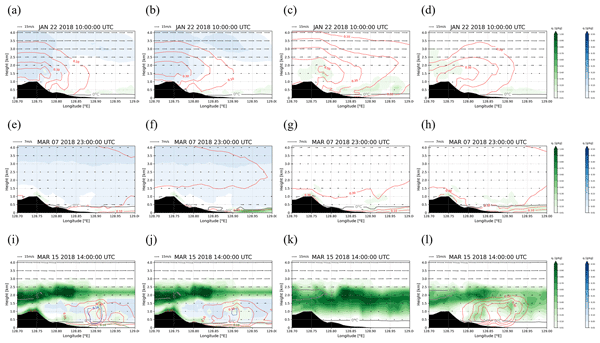
This study evaluates the implementation of predicted rime mass distribution a bin microphysics scheme. Based on the ‘fill-in’ concept, the model allows a smooth transition between unrimed and graupel ice particles. The implementation is tested for an idealized squall-line system and a heavy snowfall event observed by ground-based instruments in the Korean Peninsula. The new model version gives a better agreement with the observations with significant changes for precipitation.
This study evaluates the implementation of predicted rime mass distribution a bin microphysics...


