
Articles | Volume 19, issue 2
https://doi.org/10.5194/gmd-19-795-2026
© Author(s) 2026. This work is distributed under
the Creative Commons Attribution 4.0 License.
the Creative Commons Attribution 4.0 License.
https://doi.org/10.5194/gmd-19-795-2026
© Author(s) 2026. This work is distributed under
the Creative Commons Attribution 4.0 License.
the Creative Commons Attribution 4.0 License.
Model description paper
| 
26 Jan 2026
Model description paper |
| 26 Jan 2026
| 26 Jan 2026
Zooming in: SCREAM at 100 m using regional refinement over the San Francisco Bay Area

Lawrence Livermore National Laboratory, Livermore, CA, USA
Peter Bogenschutz
CORRESPONDING AUTHOR
Lawrence Livermore National Laboratory, Livermore, CA, USA
Mark Taylor
Sandia National Laboratories, Albuquerque, NM, USA
Philip Cameron-Smith
Lawrence Livermore National Laboratory, Livermore, CA, USA
Related authors
Jishi Zhang, Jean-Christophe Golaz, Matthew Vincent Signorotti, Hsiang-He Lee, Peter Bogenschutz, Minda Monteagudo, Paul Aaron Ullrich, Robert S. Arthur, Stephen Po-Chedley, Philip Cameron-Smith, and Jean-Paul Watson
Geosci. Model Dev., 19, 4513–4545, https://doi.org/10.5194/gmd-19-4513-2026, https://doi.org/10.5194/gmd-19-4513-2026, 2026
Short summary
Short summary
We ran a convection-permitting model with regional mesh refinement (3.25 km and 800 m) to simulate present-day wind and solar capacity factors over California, coupling it to an energy generation model. The high-resolution models captured realistic seasonal and diurnal cycles, with wind markedly better than a 25 km model and solar outperforming a 3 km operational forecast. We highlight the critical role of resolution, modeling assumptions, and data reliability in renewable energy assessment.
Peter A. Bogenschutz, Jishi Zhang, Qi Tang, and Philip Cameron-Smith
Geosci. Model Dev., 17, 7029–7050, https://doi.org/10.5194/gmd-17-7029-2024, https://doi.org/10.5194/gmd-17-7029-2024, 2024
Short summary
Short summary
Using high-resolution and state-of-the-art modeling techniques we simulate five atmospheric river events for California to test the capability to represent precipitation for these events. We find that our model is able to capture the distribution of precipitation very well but suffers from overestimating the precipitation amounts over high elevation. Increasing the resolution further has no impact on reducing this bias, while increasing the domain size does have modest impacts.
Jishi Zhang, Peter Bogenschutz, Qi Tang, Philip Cameron-smith, and Chengzhu Zhang
Geosci. Model Dev., 17, 3687–3731, https://doi.org/10.5194/gmd-17-3687-2024, https://doi.org/10.5194/gmd-17-3687-2024, 2024
Short summary
Short summary
We developed a regionally refined climate model that allows resolved convection and performed a 20-year projection to the end of the century. The model has a resolution of 3.25 km in California, which allows us to predict climate with unprecedented accuracy, and a resolution of 100 km for the rest of the globe to achieve efficient, self-consistent simulations. The model produces superior results in reproducing climate patterns over California that typical modern climate models cannot resolve.
Timothy W. Juliano, Florian Tornow, Ann M. Fridlind, Andrew S. Ackerman, Gregory S. Elsaesser, Bart Geerts, Christian P. Lackner, David Painemal, Israel Silber, Mikhail Ovchinnikov, Gunilla Svensson, Michael Tjernström, Peng Wu, Alejandro Baró Pérez, Peter Bogenschutz, Dmitry Chechin, Kamal Kant Chandrakar, Jan Chylik, Andrey Debolskiy, Rostislav Fadeev, Anu Gupta, Luisa Ickes, Michail Karalis, Martin Köhler, Branko Kosović, Peter Kuma, Weiwei Li, Evgeny Mortikov, Hugh Morrison, Roel A. J. Neggers, Anna Possner, Tomi Raatikainen, Lea Raillard, Sami Romakkaniemi, Niklas Schnierstein, Shin-ichiro Shima, Nikita Silin, Mikhail Tolstykh, Étienne Vignon, Lulin Xue, Meng Zhang, and Xue Zheng
Atmos. Chem. Phys., 26, 13267–13302, https://doi.org/10.5194/acp-26-13267-2026, https://doi.org/10.5194/acp-26-13267-2026, 2026
Short summary
Short summary
Models struggle to capture cloud and precipitation processes and their radiative effects in marine cold-air outbreaks. We use a quasi-Lagrangian framework to compare large-eddy simulation (LES) and single-column model (SCM) output with field and satellite observations. With fixed droplet and ice numbers, LES and SCM agree in liquid-only tests. In mixed-phase conditions, LES plausibly capture cloud thinning and breakup, while SCMs largely remain overcast and thereby miss cloud radiative effects.
Pratapaditya Ghosh, Xue Zheng, Hassan Beydoun, Peter Bogenschutz, and Yunyan Zhang
EGUsphere, https://doi.org/10.5194/egusphere-2026-3700, https://doi.org/10.5194/egusphere-2026-3700, 2026
Short summary
Short summary
Marine low clouds play a crucial role in cooling Earth by reflecting sunlight, but storm-resolving models struggle to simulate them accurately. Using ship-based observations and machine learning, we identify which parameter combinations best reduce errors across different cloud types. We find that fixes effective for thick stratocumulus clouds do not work equally well for broken cumulus clouds, suggesting that improving these models requires different strategies for different cloud regimes.
Peter A. Bogenschutz, Yunyan Zhang, Hsi-Yen Ma, Cheng Tao, and Shaocheng Xie
EGUsphere, https://doi.org/10.5194/egusphere-2026-3667, https://doi.org/10.5194/egusphere-2026-3667, 2026
This preprint is open for discussion and under review for Geoscientific Model Development (GMD).
Short summary
Short summary
Weather and climate models are often tested using simplified simulations that prescribe exchanges between the land and atmosphere. We developed a method that allows these interactions to evolve naturally and evaluated it using observations from field sites in the United States and Brazil. We found that realistic land-atmosphere interactions are important for reproducing temperature and cloud biases, while many rainfall errors originate within the atmosphere model itself.
Jishi Zhang, Jean-Christophe Golaz, Matthew Vincent Signorotti, Hsiang-He Lee, Peter Bogenschutz, Minda Monteagudo, Paul Aaron Ullrich, Robert S. Arthur, Stephen Po-Chedley, Philip Cameron-Smith, and Jean-Paul Watson
Geosci. Model Dev., 19, 4513–4545, https://doi.org/10.5194/gmd-19-4513-2026, https://doi.org/10.5194/gmd-19-4513-2026, 2026
Short summary
Short summary
We ran a convection-permitting model with regional mesh refinement (3.25 km and 800 m) to simulate present-day wind and solar capacity factors over California, coupling it to an energy generation model. The high-resolution models captured realistic seasonal and diurnal cycles, with wind markedly better than a 25 km model and solar outperforming a 3 km operational forecast. We highlight the critical role of resolution, modeling assumptions, and data reliability in renewable energy assessment.
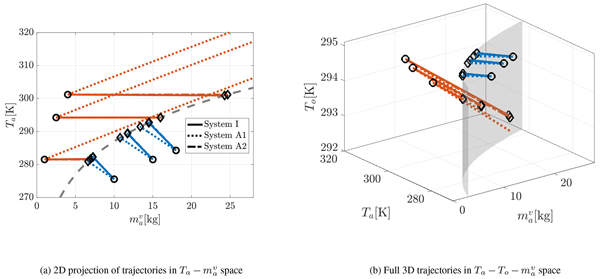
Oksana Guba, Arjun Sharma, Mark A. Taylor, Christopher Eldred, Peter A. Bosler, and Erika L. Roesler
Geosci. Model Dev., 19, 3375–3394, https://doi.org/10.5194/gmd-19-3375-2026, https://doi.org/10.5194/gmd-19-3375-2026, 2026
Short summary
Short summary
It is important for computational Earth system models to capture interactions between the ocean and the atmosphere accurately. Because of incredible complexity of these interactions, computational models contain simplifications, which may hinder the models' capabilities. Here we focus on detailed analysis of thermodynamic interactions between the ocean and the atmosphere in computational Earth system models. We also provide a framework to show how modeling these interactions can be improved.
Timothy W. Juliano, Florian Tornow, Ann M. Fridlind, Andrew S. Ackerman, Gregory S. Elsaesser, Bart Geerts, Christian P. Lackner, David Painemal, Israel Silber, Mikhail Ovchinnikov, Gunilla Svensson, Michael Tjernström, Peng Wu, Alejandro Baró Pérez, Peter Bogenschutz, Dmitry Chechin, Kamal Kant Chandrakar, Jan Chylik, Andrey Debolskiy, Rostislav Fadeev, Anu Gupta, Luisa Ickes, Michail Karalis, Martin Köhler, Branko Kosović, Peter Kuma, Weiwei Li, Evgeny Mortikov, Hugh Morrison, Roel A. J. Neggers, Anna Possner, Tomi Raatikainen, Sami Romakkaniemi, Niklas Schnierstein, Shin-ichiro Shima, Nikita Silin, Mikhail Tolstykh, Lulin Xue, Meng Zhang, and Xue Zheng
EGUsphere, https://doi.org/10.5194/egusphere-2025-6217, https://doi.org/10.5194/egusphere-2025-6217, 2026
Preprint archived
Short summary
Short summary
Models struggle to capture cloud and precipitation processes and their radiative effects in marine cold-air outbreaks. We use a quasi-Lagrangian framework to compare large-eddy simulation (LES) and single-column model (SCM) output with field and satellite observations. With fixed droplet and ice numbers, LES and SCM agree in liquid-only tests. In mixed-phase conditions, LES plausibly capture cloud thinning and breakup, while SCMs largely remain overcast and thereby miss cloud radiative effects.
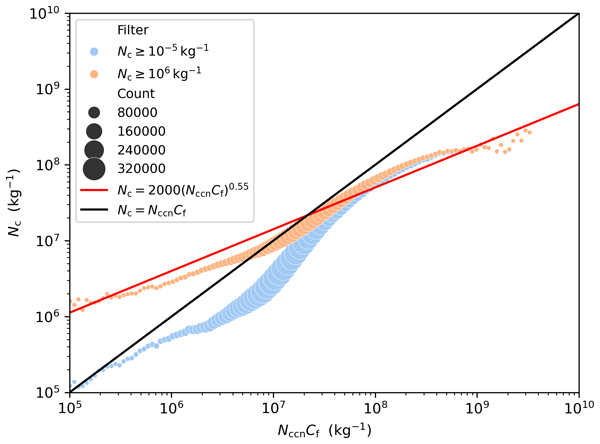
Naser Mahfouz, Hassan Beydoun, Johannes Mülmenstädt, Noel Keen, Adam C. Varble, Luca Bertagna, Peter Bogenschutz, Andrew Bradley, Matthew W. Christensen, T. Conrad Clevenger, Aaron Donahue, Jerome Fast, James Foucar, Jean-Christophe Golaz, Oksana Guba, Walter Hannah, Benjamin Hillman, Robert Jacob, Wuyin Lin, Po-Lun Ma, Yun Qian, Balwinder Singh, Christopher Terai, Hailong Wang, Mingxuan Wu, Kai Zhang, Andrew Gettelman, Mark Taylor, L. Ruby Leung, Peter Caldwell, and Susannah Burrows
Atmos. Chem. Phys., 25, 15105–15120, https://doi.org/10.5194/acp-25-15105-2025, https://doi.org/10.5194/acp-25-15105-2025, 2025
Short summary
Short summary
Our study assesses the aerosol effective radiative forcing in a global cloud-resolving atmosphere model at ultra-high resolution. We demonstrate that global aerosol forcing signal can be robustly reproduced across resolutions when aerosol activation processes are carefully parameterized. Further, we argue that simplified prescribed aerosol schemes will open the door for further process/mechanism studies under controlled conditions.
Peter A. Bogenschutz, Jishi Zhang, Qi Tang, and Philip Cameron-Smith
Geosci. Model Dev., 17, 7029–7050, https://doi.org/10.5194/gmd-17-7029-2024, https://doi.org/10.5194/gmd-17-7029-2024, 2024
Short summary
Short summary
Using high-resolution and state-of-the-art modeling techniques we simulate five atmospheric river events for California to test the capability to represent precipitation for these events. We find that our model is able to capture the distribution of precipitation very well but suffers from overestimating the precipitation amounts over high elevation. Increasing the resolution further has no impact on reducing this bias, while increasing the domain size does have modest impacts.
Jishi Zhang, Peter Bogenschutz, Qi Tang, Philip Cameron-smith, and Chengzhu Zhang
Geosci. Model Dev., 17, 3687–3731, https://doi.org/10.5194/gmd-17-3687-2024, https://doi.org/10.5194/gmd-17-3687-2024, 2024
Short summary
Short summary
We developed a regionally refined climate model that allows resolved convection and performed a 20-year projection to the end of the century. The model has a resolution of 3.25 km in California, which allows us to predict climate with unprecedented accuracy, and a resolution of 100 km for the rest of the globe to achieve efficient, self-consistent simulations. The model produces superior results in reproducing climate patterns over California that typical modern climate models cannot resolve.
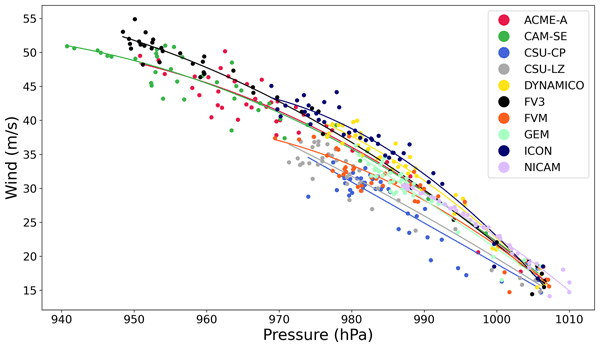
Justin L. Willson, Kevin A. Reed, Christiane Jablonowski, James Kent, Peter H. Lauritzen, Ramachandran Nair, Mark A. Taylor, Paul A. Ullrich, Colin M. Zarzycki, David M. Hall, Don Dazlich, Ross Heikes, Celal Konor, David Randall, Thomas Dubos, Yann Meurdesoif, Xi Chen, Lucas Harris, Christian Kühnlein, Vivian Lee, Abdessamad Qaddouri, Claude Girard, Marco Giorgetta, Daniel Reinert, Hiroaki Miura, Tomoki Ohno, and Ryuji Yoshida
Geosci. Model Dev., 17, 2493–2507, https://doi.org/10.5194/gmd-17-2493-2024, https://doi.org/10.5194/gmd-17-2493-2024, 2024
Short summary
Short summary
Accurate simulation of tropical cyclones (TCs) is essential to understanding their behavior in a changing climate. One way this is accomplished is through model intercomparison projects, where results from multiple climate models are analyzed to provide benchmark solutions for the wider climate modeling community. This study describes and analyzes the previously developed TC test case for nine climate models in an intercomparison project, providing solutions that aid in model development.
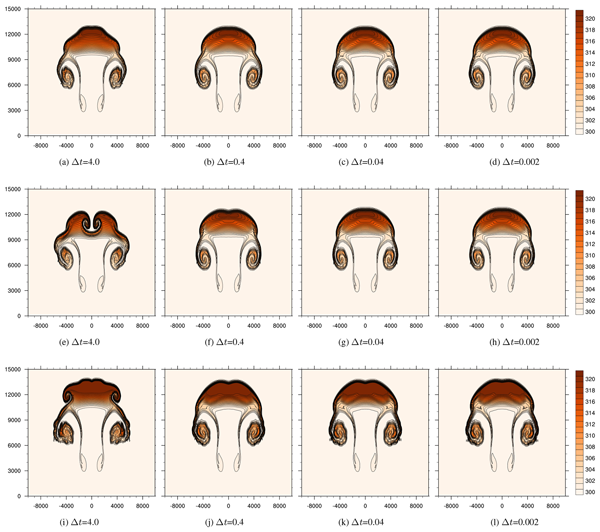
Oksana Guba, Mark A. Taylor, Peter A. Bosler, Christopher Eldred, and Peter H. Lauritzen
Geosci. Model Dev., 17, 1429–1442, https://doi.org/10.5194/gmd-17-1429-2024, https://doi.org/10.5194/gmd-17-1429-2024, 2024
Short summary
Short summary
We want to reduce errors in the moist energy budget in numerical atmospheric models. We study a few common assumptions and mechanisms that are used for the moist physics. Some mechanisms are more consistent with the underlying equations. Separately, we study how assumptions about models' thermodynamics affect the modeled energy of precipitation. We also explain how to conserve energy in the moist physics for nonhydrostatic models.
Qi Tang, Jean-Christophe Golaz, Luke P. Van Roekel, Mark A. Taylor, Wuyin Lin, Benjamin R. Hillman, Paul A. Ullrich, Andrew M. Bradley, Oksana Guba, Jonathan D. Wolfe, Tian Zhou, Kai Zhang, Xue Zheng, Yunyan Zhang, Meng Zhang, Mingxuan Wu, Hailong Wang, Cheng Tao, Balwinder Singh, Alan M. Rhoades, Yi Qin, Hong-Yi Li, Yan Feng, Yuying Zhang, Chengzhu Zhang, Charles S. Zender, Shaocheng Xie, Erika L. Roesler, Andrew F. Roberts, Azamat Mametjanov, Mathew E. Maltrud, Noel D. Keen, Robert L. Jacob, Christiane Jablonowski, Owen K. Hughes, Ryan M. Forsyth, Alan V. Di Vittorio, Peter M. Caldwell, Gautam Bisht, Renata B. McCoy, L. Ruby Leung, and David C. Bader
Geosci. Model Dev., 16, 3953–3995, https://doi.org/10.5194/gmd-16-3953-2023, https://doi.org/10.5194/gmd-16-3953-2023, 2023
Short summary
Short summary
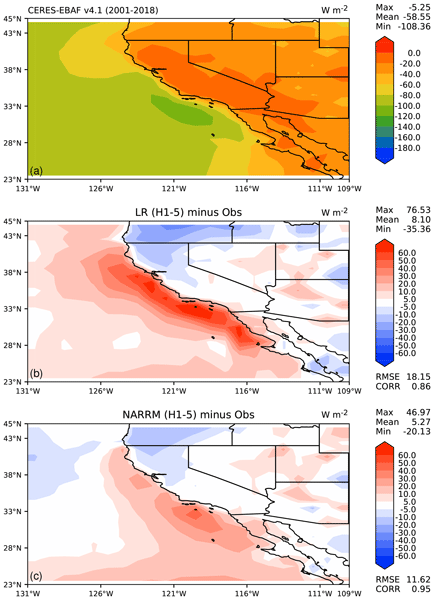
High-resolution simulations are superior to low-resolution ones in capturing regional climate changes and climate extremes. However, uniformly reducing the grid size of a global Earth system model is too computationally expensive. We provide an overview of the fully coupled regionally refined model (RRM) of E3SMv2 and document a first-of-its-kind set of climate production simulations using RRM at an economic cost. The key to this success is our innovative hybrid time step method.
Dana L. McGuffin, Philip J. Cameron-Smith, Matthew A. Horsley, Brian J. Bauman, Wim De Vries, Denis Healy, Alex Pertica, Chris Shaffer, and Lance M. Simms
Atmos. Meas. Tech., 16, 2129–2144, https://doi.org/10.5194/amt-16-2129-2023, https://doi.org/10.5194/amt-16-2129-2023, 2023
Short summary
Short summary
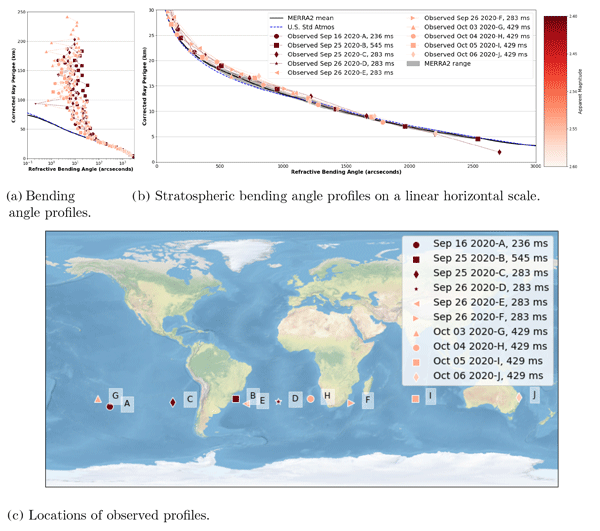
This work demonstrates the viability of a remote sensing technique using nanosatellites to measure stratospheric temperature. This measurement technique can probe the stratosphere and mesosphere at a fine vertical scale around the globe unlike other high-altitude measurement techniques, which would provide an opportunity to observe atmospheric gravity waves and turbulence. We analyze observations from two satellite platforms to provide a proof of concept and characterize measurement uncertainty.
Maria J. Chinita, Mikael Witte, Marcin J. Kurowski, Joao Teixeira, Kay Suselj, Georgios Matheou, and Peter Bogenschutz
Geosci. Model Dev., 16, 1909–1924, https://doi.org/10.5194/gmd-16-1909-2023, https://doi.org/10.5194/gmd-16-1909-2023, 2023
Short summary
Short summary
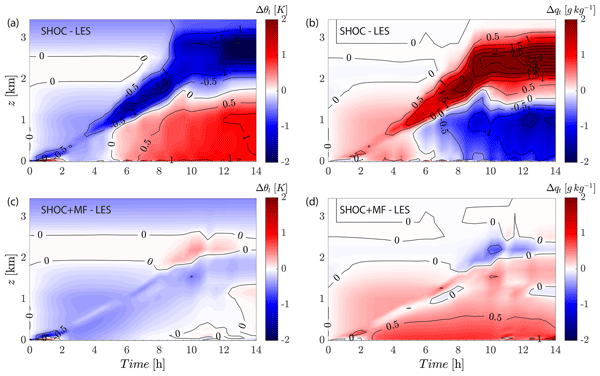
Low clouds are one of the largest sources of uncertainty in climate prediction. In this paper, we introduce the first version of the unified turbulence and shallow convection parameterization named SHOC+MF developed to improve the representation of shallow cumulus clouds in the Simple Cloud-Resolving E3SM Atmosphere Model (SCREAM). Here, we also show promising preliminary results in a single-column model framework for two benchmark cases of shallow cumulus convection.
Peter A. Bogenschutz, Hsiang-He Lee, Qi Tang, and Takanobu Yamaguchi
Geosci. Model Dev., 16, 335–352, https://doi.org/10.5194/gmd-16-335-2023, https://doi.org/10.5194/gmd-16-335-2023, 2023
Short summary
Short summary
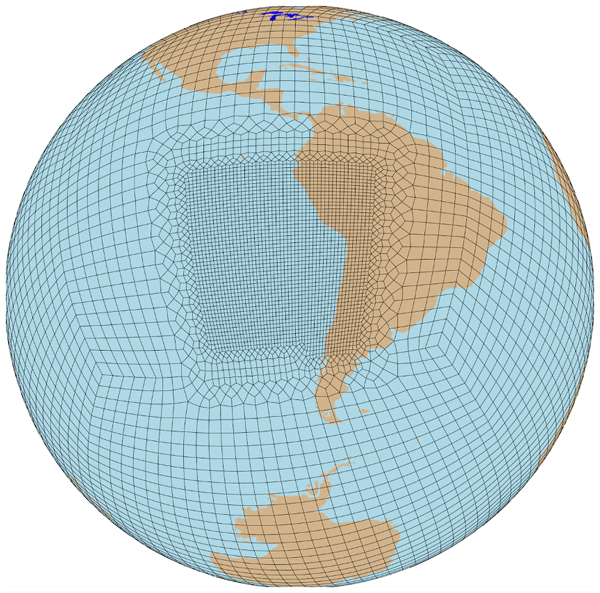
Models that are used to simulate and predict climate often have trouble representing specific cloud types, such as stratocumulus, that are particularly thin in the vertical direction. It has been found that increasing the model resolution can help improve this problem. In this paper, we develop a novel framework that increases the horizontal and vertical resolutions only for areas of the globe that contain stratocumulus, hence reducing the model runtime while providing better results.
Xue Zheng, Qing Li, Tian Zhou, Qi Tang, Luke P. Van Roekel, Jean-Christophe Golaz, Hailong Wang, and Philip Cameron-Smith
Geosci. Model Dev., 15, 3941–3967, https://doi.org/10.5194/gmd-15-3941-2022, https://doi.org/10.5194/gmd-15-3941-2022, 2022
Short summary
Short summary
We document the model experiments for the future climate projection by E3SMv1.0. At the highest future emission scenario, E3SMv1.0 projects a strong surface warming with rapid changes in the atmosphere, ocean, sea ice, and land runoff. Specifically, we detect a significant polar amplification and accelerated warming linked to the unmasking of the aerosol effects. The impact of greenhouse gas forcing is examined in different climate components.
Po-Lun Ma, Bryce E. Harrop, Vincent E. Larson, Richard B. Neale, Andrew Gettelman, Hugh Morrison, Hailong Wang, Kai Zhang, Stephen A. Klein, Mark D. Zelinka, Yuying Zhang, Yun Qian, Jin-Ho Yoon, Christopher R. Jones, Meng Huang, Sheng-Lun Tai, Balwinder Singh, Peter A. Bogenschutz, Xue Zheng, Wuyin Lin, Johannes Quaas, Hélène Chepfer, Michael A. Brunke, Xubin Zeng, Johannes Mülmenstädt, Samson Hagos, Zhibo Zhang, Hua Song, Xiaohong Liu, Michael S. Pritchard, Hui Wan, Jingyu Wang, Qi Tang, Peter M. Caldwell, Jiwen Fan, Larry K. Berg, Jerome D. Fast, Mark A. Taylor, Jean-Christophe Golaz, Shaocheng Xie, Philip J. Rasch, and L. Ruby Leung
Geosci. Model Dev., 15, 2881–2916, https://doi.org/10.5194/gmd-15-2881-2022, https://doi.org/10.5194/gmd-15-2881-2022, 2022
Short summary
Short summary
An alternative set of parameters for E3SM Atmospheric Model version 1 has been developed based on a tuning strategy that focuses on clouds. When clouds in every regime are improved, other aspects of the model are also improved, even though they are not the direct targets for calibration. The recalibrated model shows a lower sensitivity to anthropogenic aerosols and surface warming, suggesting potential improvements to the simulated climate in the past and future.
Cited articles
Arthur, R. S., Lundquist, K. A., Mirocha, J. D., and Chow, F. K.: Topographic effects on radiation in the WRF Model with the immersed boundary method: Implementation, validation, and application to complex terrain, Mon. Weather Rev., 146, 3277–3292, 2018. a
Bierdel, L., Friederichs, P., and Bentzien, S.: Spatial kinetic energy spectra in the convection-permitting limited-area NWP model COSMO-DE, Meteorol. Z., 21, 245–258, https://doi.org/10.1127/0941-2948/2012/0319, 2012. a
Blažica, V., Žagar, N., Strajnar, B., and Cedilnik, J.: Rotational and divergent kinetic energy in the mesoscale model ALADIN, Tellus A, 65, 18918, https://doi.org/10.3402/tellusa.v65i0.18918, 2013. a
Bogenschutz, P. A., Zhang, J., Tang, Q., and Cameron-Smith, P.: Atmospheric-river-induced precipitation in California as simulated by the regionally refined Simple Convective Resolving E3SM Atmosphere Model (SCREAM) Version 0, Geosci. Model Dev., 17, 7029–7050, https://doi.org/10.5194/gmd-17-7029-2024, 2024. a, b, c, d, e
Bogenschutz, P. A. and Krueger, S. K.: A simplified PDF parameterization of subgrid-scale clouds and turbulence for cloud-resolving models, J. Adv. Model. Ea. Sy., 5, 195–211, https://doi.org/10.1002/jame.20018, 2013. a, b
Bretherton, C. S. and Park, S.: A New Moist Turbulence Parameterization in the Community Atmosphere Model, J. Climate, 22, 3422–3448, https://doi.org/10.1175/2008jcli2556.1, 2009. a
Caldwell, P. M., Terai, C. R., Hillman, B., Keen, N. D., Bogenschutz, P., Lin, W., Beydoun, H., Taylor, M., Bertagna, L., Bradley, A. M., Clevenger, T. C., Donahue, A. S., Eldred, C., Foucar, J., Golaz, J. C., Guba, O., Jacob, R., Johnson, J., Krishna, J., Liu, W., Pressel, K., Salinger, A. G., Singh, B., Steyer, A., Ullrich, P., Wu, D., Yuan, X., Shpund, J., Ma, H. Y., and Zender, C. S.: Convection-Permitting Simulations With the E3SM Global Atmosphere Model, J. Adv. Model. Ea. Sy., 13, https://doi.org/10.1029/2021ms002544, 2021. a, b, c, d, e, f
Cheng, A. N., Xu, K. M., and Stevens, B.: Effects of Resolution on the Simulation of Boundary-layer Clouds and the Partition of Kinetic Energy to Subgrid Scales, J. Adv. Model. Ea. Sy., 2, 3, https://doi.org/10.3894/James.2010.2.3, 2010. a
Chow, F., Schär, C., Ban, N., Lundquist, K., Schlemmer, L., and Shi, X.: Crossing Multiple Gray Zones in the Transition from Mesoscale to Microscale Simulation over Complex Terrain, Atmosphere, 10, https://doi.org/10.3390/atmos10050274, 2019. a
Chow, F. K., Weigel, A. P., Street, R. L., Rotach, M. W., and Xue, M.: High-resolution large-eddy simulations of flow in a steep Alpine valley. Part I: Methodology, verification, and sensitivity experiments, J. Appl. Meteorol. Clim., 45, 63–86, https://doi.org/10.1175/Jam2322.1, 2006. a
Connolly, A., Chow, F. K., and Hoch, S. W.: Nested Large-Eddy Simulations of the Displacement of a Cold-Air Pool by Lee Vortices, Bound.-Lay. Meteorol., 178, 91–118, https://doi.org/10.1007/s10546-020-00561-6, 2021. a
Danielson, J. J. and Gesch, D. B.: Global multi-resolution terrain elevation data 2010 (GMTED2010), Report 2331-1258, US Geological Survey, https://doi.org/10.5066/F7J38R2N, 2011. a
De Wekker, S. F. J., Kossmann, M., Knievel, J. C., Giovannini, L., Gutmann, E. D., and Zardi, D.: Meteorological Applications Benefiting from an Improved Understanding of Atmospheric Exchange Processes over Mountains, Atmosphere, 9, 371, https://doi.org/10.3390/atmos9100371, 2018. a
Dipankar, A., Stevens, B., Heinze, R., Moseley, C., Zängl, G., Giorgetta, M., and Brdar, S.: Large eddy simulation using the general circulation model ICON, J. Adv. Model. Ea. Sy., 7, 963–986, https://doi.org/10.1002/2015ms000431, 2015. a
Donahue, A. S., Caldwell, P. M., Bertagna, L., Beydoun, H., Bogenschutz, P. A., Bradley, A., Clevenger, T. C., Foucar, J., Golaz, C., and Guba, O.: To exascale and beyond – The Simple Cloud-Resolving E3SM Atmosphere Model (SCREAM), a performance portable global atmosphere model for cloud-resolving scales, J. Adv. Model. Ea. Sy., 16, e2024MS004314, https://doi.org/10.1029/2024MS004314, 2024. a, b
Dowell, D. C., Alexander, C. R., James, E. P., Weygandt, S. S., Benjamin, S. G., Manikin, G. S., Blake, B. T., Brown, J. M., Olson, J. B., Hu, M., Smirnova, T. G., Ladwig, T., Kenyon, J. S., Ahmadov, R., Turner, D. D., Duda, J. D., and Alcott, T. I.: The High-Resolution Rapid Refresh (HRRR): An Hourly Updating Convection-Allowing Forecast Model. Part I: Motivation and System Description, Weather Forecast., 37, 1371–1395, https://doi.org/10.1175/waf-d-21-0151.1, 2022. a
Durran, D., Weyn, J. A., and Menchaca, M. Q.: Practical Considerations for Computing Dimensional Spectra from Gridded Data, Mon. Weather Rev., 145, 3901–3910, https://doi.org/10.1175/Mwr-D-17-0056.1, 2017. a
Errico, R. M.: Spectra Computed from a Limited Area Grid, Mon. Weather Rev., 113, 1554–1562, https://doi.org/10.1175/1520-0493(1985)113<1554:Scfala>2.0.Co;2, 1985. a
Golaz, J. C., Caldwell, P. M., Van Roekel, L. P., Petersen, M. R., Tang, Q., Wolfe, J. D., Abeshu, G., Anantharaj, V., Asay-Davis, X. S., Bader, D. C., Baldwin, S. A., Bisht, G., Bogenschutz, P. A., Branstetter, M., Brunke, M. A., Brus, S. R., Burrows, S. M., Cameron-Smith, P. J., Donahue, A. S., Deakin, M., Easter, R. C., Evans, K. J., Feng, Y., Flanner, M., Foucar, J. G., Fyke, J. G., Griffin, B. M., Hannay, C., Harrop, B. E., Hoffman, M. J., Hunke, E. C., Jacob, R. L., Jacobsen, D. W., Jeffery, N., Jones, P. W., Keen, N. D., Klein, S. A., Larson, V. E., Leung, L. R., Li, H. Y., Lin, W. Y., Lipscomb, W. H., Ma, P. L., Mahajan, S., Maltrud, M. E., Mametjanov, A., McClean, J. L., McCoy, R. B., Neale, R. B., Price, S. F., Qian, Y., Rasch, P. J., Eyre, J. E. J. R., Riley, W. J., Ringler, T. D., Roberts, A. F., Roesler, E. L., Salinger, A. G., Shaheen, Z., Shi, X. Y., Singh, B., Tang, J. Y., Taylor, M. A., Thornton, P. E., Turner, A. K., Veneziani, M., Wan, H., Wang, H. L., Wang, S. L., Williams, D. N., Wolfram, P. J., Worley, P. H., Xie, S. C., Yang, Y., Yoon, J. H., Zelinka, M. D., Zender, C. S., Zeng, X. B., Zhang, C. Z., Zhang, K., Zhang, Y., Zheng, X., Zhou, T., and Zhu, Q.: The DOE E3SM Coupled Model Version 1: Overview and Evaluation at Standard Resolution, J. Adv. Model. Ea. Sy., 11, 2089–2129, https://doi.org/10.1029/2018ms001603, 2019. a
Guba, O., Taylor, M. A., Bradley, A. M., Bosler, P. A., and Steyer, A.: A framework to evaluate IMEX schemes for atmospheric models, Geosci. Model Dev., 13, 6467–6480, https://doi.org/10.5194/gmd-13-6467-2020, 2020. a
Guerra, J. E. and Ullrich, P. A.: A high-order staggered finite-element vertical discretization for non-hydrostatic atmospheric models, Geosci. Model Dev., 9, 2007–2029, https://doi.org/10.5194/gmd-9-2007-2016, 2016. a
Hamilton, K., Takahashi, Y. O., and Ohfuchi, W.: Mesoscale spectrum of atmospheric motions investigated in a very fine resolution global general circulation model, J. Geophys. Res.-Atmos., 113, D18110, https://doi.org/10.1029/2008jd009785, 2008. a
Hannah, W. M., Bradley, A. M., Guba, O., Tang, Q., Golaz, J. C., and Wolfe, J.: Separating Physics and Dynamics Grids for Improved Computational Efficiency in Spectral Element Earth System Models, J. Adv. Model. Ea. Sy., 13, e2020MS002419, https://doi.org/10.1029/2020MS002419, 2021. a
Harris, L. M. and Lin, S.-J.: A Two-Way Nested Global-Regional Dynamical Core on the Cubed-Sphere Grid, Mon. Weather Rev., 141, 283–306, https://doi.org/10.1175/MWR-D-11-00201.1, 2013. a
Hersbach, H., Bell, B., Berrisford, P., Hirahara, S., Horányi, A., Muñoz-Sabater, J., Nicolas, J., Peubey, C., Radu, R., and Schepers, D.: The ERA5 global reanalysis, Q. J. Roy. Meteor. Soc., 146, 1999–2049, 2020. a
Honnert, R., Efstathiou, G. A., Beare, R. J., Ito, J., Lock, A., Neggers, R., Plant, R. S., Shin, H. H., Tomassini, L., and Zhou, B. W.: The Atmospheric Boundary Layer and the “Gray Zone” of Turbulence: A Critical Review, J. Geophys. Res.-Atmos., 125, https://doi.org/e2019JD030317 10.1029/2019JD030317, 2020. a
Huang, X. and Ullrich, P. A.: The Changing Character of Twenty-First-Century Precipitation over the Western United States in the Variable-Resolution CESM, J. Climate, 30, 7555–7575, https://doi.org/10.1175/JCLI-D-16-0673.1, 2017. a
Hunke, E., Lipscomb, W., Turner, A., Jeffery, N., and Elliott, S.: CICE: The Los Alamos sea ice model, documentation and software, Report, version 4.0, Tech. Rep. LA-CC-06-012, Los Alamos National Laboratory, https://www.osti.gov/biblio/1364126 (last access: 20 January 2026), 2008. a
Jablonowski, C. and Williamson, D. L.: The pros and cons of diffusion, filters and fixers in atmospheric general circulation models, Numerical Techniques for Global Atmospheric Models, 381–493, https://doi.org/10.1007/978-3-642-11640-7_13, 2011. a
Khairoutdinov, M. F., Blossey, P. N., and Bretherton, C. S.: Global System for Atmospheric Modeling: Model Description and Preliminary Results, J. Adv. Model. Ea. Sy., 14, https://doi.org/10.1029/2021ms002968, 2022. a
Langhans, W., Schmidli, J., and Schär, C.: Mesoscale Impacts of Explicit Numerical Diffusion in a Convection-Permitting Model, Mon. Weather Rev., 140, 226–244, https://doi.org/10.1175/2011mwr3650.1, 2012. a
Lauritzen, P. H., Bacmeister, J. T., Callaghan, P. F., and Taylor, M. A.: NCAR_Topo (v1.0): NCAR global model topography generation software for unstructured grids, Geosci. Model Dev., 8, 3975–3986, https://doi.org/10.5194/gmd-8-3975-2015, 2015. a, b
Lee, H., Bogenschutz, P., and Yamaguchi, T.: Resolving Away Stratocumulus Biases in Modern Global Climate Models, Geophys. Res. Lett., 49, https://doi.org/10.1029/2022gl099422, 2022. a
Liu, W., Ullrich, P. A., Li, J., Zarzycki, C., Caldwell, P. M., Leung, L. R., and Qian, Y.: The June 2012 North American Derecho: A Testbed for Evaluating Regional and Global Climate Modeling Systems at Cloud-Resolving Scales, J. Adv. Model. Ea. Sy., 15, https://doi.org/10.1029/2022ms003358, 2023. a
Lundquist, J., Hughes, M., Gutmann, E., and Kapnick, S.: Our Skill in Modeling Mountain Rain and Snow is Bypassing the Skill of Our Observational Networks, B. Am. Meteorol. Soc., 100, 2473–2490, https://doi.org/10.1175/bams-d-19-0001.1, 2019. a
Mirocha, J. D., Lundquist, J. K., and Kosovic, B.: Implementation of a Nonlinear Subfilter Turbulence Stress Model for Large-Eddy Simulation in the Advanced Research WRF Model, Mon. Weather Rev., 138, 4212–4228, https://doi.org/10.1175/2010mwr3286.1, 2010. a
Morrison, H. and Milbrandt, J. A.: Parameterization of Cloud Microphysics Based on the Prediction of Bulk Ice Particle Properties. Part I: Scheme Description and Idealized Tests, J. Atmos. Sci., 72, 287–311, https://doi.org/10.1175/jas-d-14-0065.1, 2015. a
Nastrom, G. D. and Gage, K. S.: A climatology of atmospheric wavenumber spectra of wind and temperature observed by commercial aircraft, J. Atmos. Sci, 42, 950–960, 1985. a
Pincus, R., Mlawer, E. J., and Delamere, J. S.: Balancing Accuracy, Efficiency, and Flexibility in Radiation Calculations for Dynamical Models, J. Adv. Model. Ea. Sy., 11, 3074–3089, https://doi.org/10.1029/2019MS001621, 2019. a
Prein, A. F., Towler, E., Ge, M., Llewellyn, D., Baker, S., Tighi, S., and Barrett, L.: Sub-Seasonal Predictability of North American Monsoon Precipitation, Geophys. Res. Lett., 49, https://doi.org/10.1029/2021gl095602, 2022. a, b
Reynolds, R. W., Smith, T. M., Liu, C., Chelton, D. B., Casey, K. S., and Schlax, M. G.: Daily high-resolution-blended analyses for sea surface temperature, J. Climate, 20, 5473–5496, 2007. a
Rhoades, A. M., Zarzycki, C. M., Inda-Diaz, H. A., Ombadi, M., Pasquier, U., Srivastava, A., Hatchett, B. J., Dennis, E., Heggli, A., McCrary, R., McGinnis, S., Rahimi-Esfarjani, S., Slinskey, E., Ullrich, P. A., Wehner, M., and Jones, A. D.: Recreating the California New Year's Flood Event of 1997 in a Regionally Refined Earth System Model, J. Adv. Model. Ea. Sy., 15, https://doi.org/10.1029/2023ms003793, 2023. a
Ringler, T., Ju, L., and Gunzburger, M.: A multiresolution method for climate system modeling: application of spherical centroidal Voronoi tessellations, Ocean Dynam., 58, 475–498, https://doi.org/10.1007/s10236-008-0157-2, 2008. a
Satoh, M.: Conservative scheme for the compressible nonhydrostatic models with the horizontally explicit and vertically implicit time integration scheme, Mon. Weather Rev., 130, 1227–1245, https://doi.org/10.1175/1520-0493(2002)130<1227:Csftcn>2.0.Co;2, 2002. a
Schumann, U.: The Horizontal Spectrum of Vertical Velocities near the Tropopause from Global to Gravity Wave Scales, J. Atmos. Sci., 76, 3847–3862, https://doi.org/10.1175/Jas-D-19-0160.1, 2019. a, b
Silvestri, L., Saraceni, M., and Cerlini, P. B.: Numerical Diffusion and Turbulent Mixing in Convective Self-Aggregation, J. Adv. Model. Ea. Sy., 16, e2023MS004151, https://doi.org/10.1029/2023MS004151, 2024. a
Skamarock, W. C.: Evaluating mesoscale NWP models using kinetic energy spectra, Mon. Weather Rev., 132, 3019–3032, https://doi.org/10.1175/Mwr2830.1, 2004. a, b
Skamarock, W. C., Park, S. H., Klemp, J. B., and Snyder, C.: Atmospheric Kinetic Energy Spectra from Global High-Resolution Nonhydrostatic Simulations, J. Atmos. Sci., 71, 4369–4381, https://doi.org/10.1175/Jas-D-14-0114.1, 2014. a
Stevens, B., Satoh, M., Auger, L., Biercamp, J., Bretherton, C. S., Chen, X., Düben, P., Judt, F., Khairoutdinov, M., Klocke, D., Kodama, C., Kornblueh, L., Lin, S.-J., Neumann, P., Putman, W. M., Röber, N., Shibuya, R., Vanniere, B., Vidale, P. L., Wedi, N., and Zhou, L.: DYAMOND: the DYnamics of the Atmospheric general circulation Modeled On Non-hydrostatic Domains, Progress in Earth and Planetary Science, 6, https://doi.org/10.1186/s40645-019-0304-z, 2019. a
Steyer, A., Vogl, C. J., Taylor, M., and Guba, O.: Efficient IMEX Runge-Kutta methods for nonhydrostatic dynamics, arXiv [preprint], https://doi.org/10.48550/arXiv.1906.07219, 2019. a
Sun, J. L., Nappo, C. J., Mahrt, L., Belusic, D., Grisogono, B., Stauffer, D. R., Pulido, M., Staquet, C., Jiang, Q. F., Pouquet, A., Yagüe, C., Galperin, B., Smith, R. B., Finnigan, J. J., Mayor, S. D., Svensson, G., Grachev, A. A., and Neff, W. D.: Review of wave-turbulence interactions in the stable atmospheric boundary layer, Rev. Geophys., 53, 956–993, https://doi.org/10.1002/2015rg000487, 2015. a
Tang, Q., Klein, S. A., Xie, S., Lin, W., Golaz, J.-C., Roesler, E. L., Taylor, M. A., Rasch, P. J., Bader, D. C., Berg, L. K., Caldwell, P., Giangrande, S. E., Neale, R. B., Qian, Y., Riihimaki, L. D., Zender, C. S., Zhang, Y., and Zheng, X.: Regionally refined test bed in E3SM atmosphere model version 1 (EAMv1) and applications for high-resolution modeling, Geosci. Model Dev., 12, 2679–2706, https://doi.org/10.5194/gmd-12-2679-2019, 2019. a
Tang, Q., Golaz, J.-C., Van Roekel, L. P., Taylor, M. A., Lin, W., Hillman, B. R., Ullrich, P. A., Bradley, A. M., Guba, O., Wolfe, J. D., Zhou, T., Zhang, K., Zheng, X., Zhang, Y., Zhang, M., Wu, M., Wang, H., Tao, C., Singh, B., Rhoades, A. M., Qin, Y., Li, H.-Y., Feng, Y., Zhang, Y., Zhang, C., Zender, C. S., Xie, S., Roesler, E. L., Roberts, A. F., Mametjanov, A., Maltrud, M. E., Keen, N. D., Jacob, R. L., Jablonowski, C., Hughes, O. K., Forsyth, R. M., Di Vittorio, A. V., Caldwell, P. M., Bisht, G., McCoy, R. B., Leung, L. R., and Bader, D. C.: The fully coupled regionally refined model of E3SM version 2: overview of the atmosphere, land, and river results, Geosci. Model Dev., 16, 3953–3995, https://doi.org/10.5194/gmd-16-3953-2023, 2023. a
Taylor, M. A., Guba, O., Steyer, A., Ullrich, P. A., Hall, D. M., and Eldrid, C.: An Energy Consistent Discretization of the Nonhydrostatic Equations in Primitive Variables, J. Adv. Model. Ea. Sy., 12, e2019MS001783, https://doi.org/10.1029/2019MS001783, 2020. a
Trenberth, K. E., Berry, J. C., and Buja, L. E.: Vertical interpolation and truncation of model-coordinate data, National Center for Atmospheric Research, Climate and Global Dynamics Division, https://doi.org/10.5065/D6HX19NH, 1993. a
Ullrich, P. and Roesler, E.: ClimateGlobalChange/squadgen: v1.2.2 (v1.2.2), Zenodo, https://doi.org/10.5281/zenodo.13241731, 2024. a
Ullrich, P. A. and Taylor, M. A.: Arbitrary-order conservative and consistent remapping and a theory of linear maps: Part I, Mon. Weather Rev., 143, 2419–2440, 2015. a
Wyngaard, J. C.: Toward numerical modeling in the “terra incognita”, J. Atmos. Sci., 61, 1816–1826, https://doi.org/10.1175/1520-0469(2004)061<1816:Tnmitt>2.0.Co;2, 2004. a, b
Zarzycki, C. M. and Jablonowski, C.: A multidecadal simulation of Atlantic tropical cyclones using a variable-resolution global atmospheric general circulation model, J. Adv. Model. Ea. Sy., 6, 805–828, https://doi.org/10.1002/2014MS000352, 2014. a
Zarzycki, C. M., Jablonowski, C., and Taylor, M. A.: Using variable-resolution meshes to model tropical cyclones in the Community Atmosphere Model, Mon. Weather Rev., 142, 1221–1239, 2014. a
Zender, C. S.: Analysis of self-describing gridded geoscience data with netCDF Operators (NCO), Environ. Modell. Softw., 23, 1338–1342, 2008. a
Zhang, J.: Code and Model Data for SCREAM 100 m San Francisco Bay Area Regionally Refined Model 0.0 version (0.0), Zenodo [code, data set], https://doi.org/10.5281/zenodo.15288872, 2025. a
Zhang, J., Bogenschutz, P., Tang, Q., Cameron-smith, P., and Zhang, C.: Leveraging regional mesh refinement to simulate future climate projections for California using the Simplified Convection-Permitting E3SM Atmosphere Model Version 0, Geosci. Model Dev., 17, 3687–3731, https://doi.org/10.5194/gmd-17-3687-2024, 2024a. a, b, c, d
Zhang, J., Caldwell, P. M., Bogenschutz, P. A., Ullrich, P. A., Bader, D. C., Duan, S., and Beydoun, H.: Through the lens of a kilometer-scale climate model: 2023 Jing-Jin-Ji flood under climate change, Authorea Preprints, https://doi.org/10.22541/au.172773252.24608967/v1, 2024b. a
Zhang, Y., Li, X. H., Liu, Z., Rong, X. Y., Li, J., Zhou, Y. H., and Chen, S. Y.: Resolution Sensitivity of the GRIST Nonhydrostatic Model From 120 to 5 km (3.75 km) During the DYAMOND Winter, Earth and Space Science, 9, e2022EA002401, https://doi.org/10.1029/2022EA002401, 2022. a
Zhong, S. and Chow, F. K.: Meso-and fine-scale modeling over complex terrain: Parameterizations and applications, 591–653, Springer, https://doi.org/10.1007/978-94-007-4098-3_10, 2012. a
Short summary
We pushed a global cloud-resolving model to a novel 100 m setup over the San Francisco Bay Area using a regionally refined mesh. The model captured fine-scale air motions over complex terrain and coastal regions at large-eddy scales with comprehensive global modeling configuration, enabled by scale-aware turbulence parameterization. Performance tests demonstrated that graphics processing unit (GPU) acceleration make such high-resolution simulations feasible within practical timeframes.
We pushed a global cloud-resolving model to a novel 100 m setup over the San Francisco Bay Area...


