
Articles | Volume 19, issue 16
https://doi.org/10.5194/gmd-19-7911-2026
© Author(s) 2026. This work is distributed under
the Creative Commons Attribution 4.0 License.
the Creative Commons Attribution 4.0 License.
https://doi.org/10.5194/gmd-19-7911-2026
© Author(s) 2026. This work is distributed under
the Creative Commons Attribution 4.0 License.
the Creative Commons Attribution 4.0 License.
Development and technical paper
| 
25 Aug 2026
Development and technical paper |
| 25 Aug 2026
| 25 Aug 2026
Evaluation of the ALARO1-SFX (CY43T2) regional climate model over Belgium across different resolutions

Department of Physics and Astronomy, Ghent University (UGent), Ghent, Belgium
Hans Van de Vyver
Royal Meteorological Institute of Belgium (RMIB), Brussels, Belgium
Daan Degrauwe
Royal Meteorological Institute of Belgium (RMIB), Brussels, Belgium
Rafiq Hamdi
Royal Meteorological Institute of Belgium (RMIB), Brussels, Belgium
Xinjiang Institute of Ecology and Geography, Chinese Academy of Sciences, Urumqi 830011, China
Michiel Van Ginderachter
Royal Meteorological Institute of Belgium (RMIB), Brussels, Belgium
Bert Van Schaeybroeck
Royal Meteorological Institute of Belgium (RMIB), Brussels, Belgium
Department of Geography, Ghent University (UGent), Ghent, Belgium
Kwinten Van Weverberg
Royal Meteorological Institute of Belgium (RMIB), Brussels, Belgium
Department of Geography, Ghent University (UGent), Ghent, Belgium
Kobe Vandelanotte
Department of Physics and Astronomy, Ghent University (UGent), Ghent, Belgium
Royal Meteorological Institute of Belgium (RMIB), Brussels, Belgium
Steven Caluwaerts
Department of Physics and Astronomy, Ghent University (UGent), Ghent, Belgium
Royal Meteorological Institute of Belgium (RMIB), Brussels, Belgium
Piet Termonia
Department of Physics and Astronomy, Ghent University (UGent), Ghent, Belgium
Royal Meteorological Institute of Belgium (RMIB), Brussels, Belgium
Related authors
Anouk Dierickx, Wout Dewettinck, Bert Van Schaeybroeck, Lesley De Cruz, Steven Caluwaerts, Piet Termonia, and Hans Van de Vyver
Earth Syst. Sci. Data, 17, 6747–6762, https://doi.org/10.5194/essd-17-6747-2025, https://doi.org/10.5194/essd-17-6747-2025, 2025
Short summary
Short summary
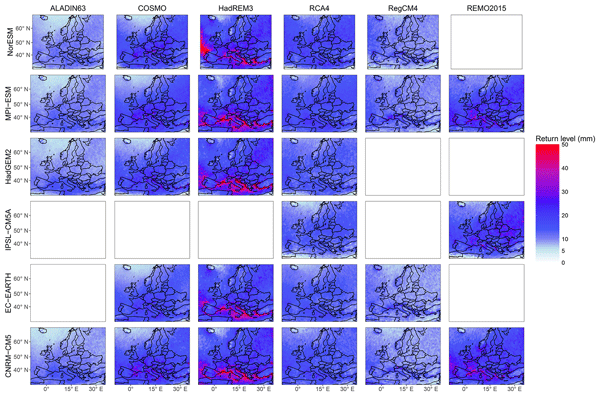
This study introduces the EURO-SUPREME dataset consisting of extreme precipitation events selected from a large ensemble of climate models over Europe. The dataset contains information on extreme precipitation events with a precipitation duration of 1 to 72 h that can lead to flooding, high mortality rates and infrastructure damage. We highlight the usefulness of the dataset as a benchmark for improving high-resolution climate models for risk assessment of future extreme floods.
Ruoke Meng, Joris Van den Bergh, Hossein Tabari, Piet Termonia, and Geert Smet
Wind Energ. Sci. Discuss., https://doi.org/10.5194/wes-2026-125, https://doi.org/10.5194/wes-2026-125, 2026
Preprint under review for WES
Short summary
Short summary
Wind power can change rapidly, making it difficult for power system operators to balance electricity supply and demand. This work applies a Transformer postprocessing approach that produces accurate and reliable probabilistic predictions of wind power and power ramps. This work also proposes a practical method to evaluate forecast quality by allowing acceptable errors in timing and intensity. This method provides references for grid operation.
Martin R. Willett, Melissa E. Brooks, Andrew Bushell, Paul Earnshaw, Charline Marzin, Samantha Smith, Lorenzo Tomassini, Nathan Luke Abraham, Martin Best, John M. Edwards, Kalli Furtado, Catherine Hardacre, Alan J. Hewitt, Ben Johnson, Adrian Lock, Jane P. Mulcahy, James Manners, Alistair Sellar, Peter Sheridan, Warren Tennant, Kwinten Van Weverberg, Vidya Varma, and Michael Whitall
EGUsphere, https://doi.org/10.5194/egusphere-2026-2425, https://doi.org/10.5194/egusphere-2026-2425, 2026
Short summary
Short summary
Global Atmosphere and Land (GAL) configurations of the Unified Model (UM) and JULES are developed for use in any global atmospheric modelling application. We describe the latest version, GAL9. We compare GAL9 with its predecessor and show that it gives improved forecasts of weather and climate. GAL9 has been used for weather forecasts in the UK from early 2026 and it will be used to study the Earth's climate.
Kwinten Van Weverberg, Nina Neutens, Simon De Corte, Armani Passtoors, Stephan Calderan, Nicolas Ghilain, Ricardo Reinoso-Rondinel, Maarten Reyniers, Aart Overeem, Hans Van de Vyver, Bert Van Schaeybroeck, Bart De Wit, and Remko Uijlenhoet
EGUsphere, https://doi.org/10.5194/egusphere-2026-457, https://doi.org/10.5194/egusphere-2026-457, 2026
Short summary
Short summary
Accurate rainfall estimation remains challenging. This study tested whether signals from telecommunications networks could help track rainfall alongside traditional rain gauges and weather radar. Analyzing four intense summer storms in Belgium using over 2800 microwave links, researchers found that with careful processing, these signals match or outperform standard methods, especially in cities. Integrating such data could improve predictions for urban flooding and extreme weather.
Anouk Dierickx, Wout Dewettinck, Bert Van Schaeybroeck, Lesley De Cruz, Steven Caluwaerts, Piet Termonia, and Hans Van de Vyver
Earth Syst. Sci. Data, 17, 6747–6762, https://doi.org/10.5194/essd-17-6747-2025, https://doi.org/10.5194/essd-17-6747-2025, 2025
Short summary
Short summary
This study introduces the EURO-SUPREME dataset consisting of extreme precipitation events selected from a large ensemble of climate models over Europe. The dataset contains information on extreme precipitation events with a precipitation duration of 1 to 72 h that can lead to flooding, high mortality rates and infrastructure damage. We highlight the usefulness of the dataset as a benchmark for improving high-resolution climate models for risk assessment of future extreme floods.
Weiyu Zhang, Paul R. Field, Kwinten Van Weverberg, Piers M. Forster, Cyril J. Morcrette, and Alexandru Rap
Atmos. Chem. Phys., 25, 14153–14166, https://doi.org/10.5194/acp-25-14153-2025, https://doi.org/10.5194/acp-25-14153-2025, 2025
Short summary
Short summary
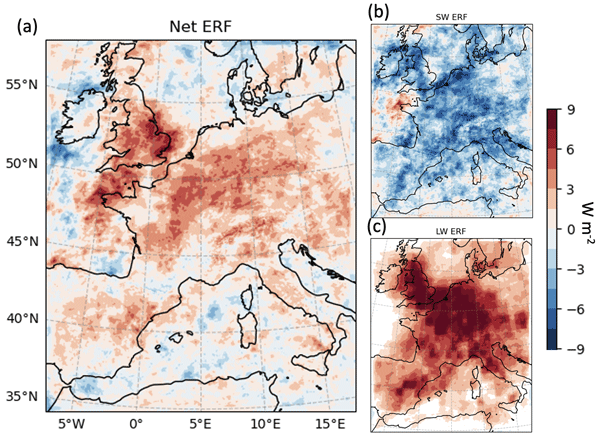
Contrail cirrus is the largest, yet the most uncertain, aviation climate impact term. A newly implemented contrail cirrus scheme in a double-moment cloud microphysics scheme in climate model realistically reproduces the contrail evolution and provides regional forcing estimates within the range reported by other models. The work highlights the importance of initial contrail characteristics and the need for detailed cloud particle representations in climate model contrail simulations.
Dieter Van den Bleeken, Geert Smet, Joris Van den Bergh, Idir Dehmous, Daan Degrauwe, Michiel Van Ginderachter, and Alex Deckmyn
Adv. Sci. Res., 22, 59–67, https://doi.org/10.5194/asr-22-59-2025, https://doi.org/10.5194/asr-22-59-2025, 2025
Short summary
Short summary
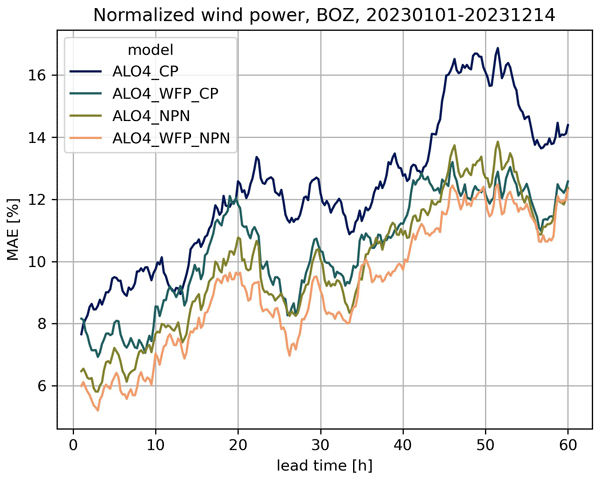
To better predict offshore wind energy in Belgium, we improved the Royal Meteorological Institute (RMI) weather model by directly incorporating the effects of wind turbines. We also used AI to account for wind farm wake effects, where turbines slow down wind for other turbines. By combining physics-based models with a neural network trained on observations from the Belgian Offshore Zone, we achieved more accurate forecasts. This helps ensure a stable power grid and supports the growing role of offshore wind in our energy mix.
Stijn Van Leuven, Pieter De Meutter, Johan Camps, Piet Termonia, and Andy Delcloo
Atmos. Chem. Phys., 25, 9199–9218, https://doi.org/10.5194/acp-25-9199-2025, https://doi.org/10.5194/acp-25-9199-2025, 2025
Short summary
Short summary
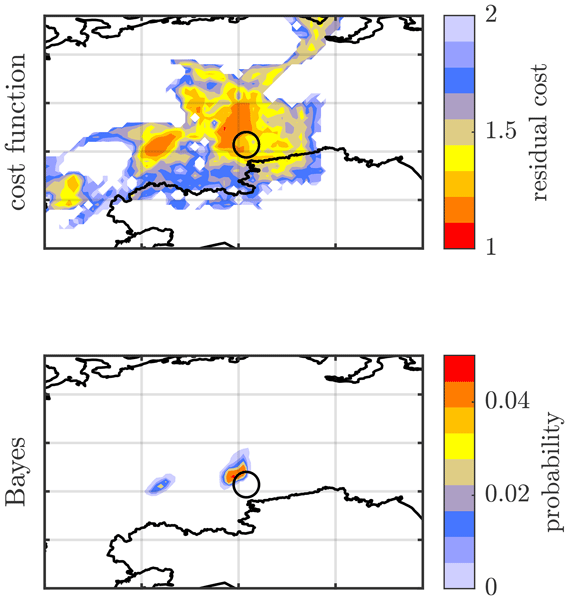
We use deposition measurements to trace the source of the radioactive isotope 106Ru released into the atmosphere in 2017, which led to detections in Europe and other parts of the Northern Hemisphere. Most frequently, measurements of air concentration are used for such purposes. Our research shows that, while air concentration data can provide more precise results, deposition measurements can still effectively pinpoint the release location, offering a less costly and more versatile alternative.
Mike Bush, David L. A. Flack, Huw W. Lewis, Sylvia I. Bohnenstengel, Chris J. Short, Charmaine Franklin, Adrian P. Lock, Martin Best, Paul Field, Anne McCabe, Kwinten Van Weverberg, Segolene Berthou, Ian Boutle, Jennifer K. Brooke, Seb Cole, Shaun Cooper, Gareth Dow, John Edwards, Anke Finnenkoetter, Kalli Furtado, Kate Halladay, Kirsty Hanley, Margaret A. Hendry, Adrian Hill, Aravindakshan Jayakumar, Richard W. Jones, Humphrey Lean, Joshua C. K. Lee, Andy Malcolm, Marion Mittermaier, Saji Mohandas, Stuart Moore, Cyril Morcrette, Rachel North, Aurore Porson, Susan Rennie, Nigel Roberts, Belinda Roux, Claudio Sanchez, Chun-Hsu Su, Simon Tucker, Simon Vosper, David Walters, James Warner, Stuart Webster, Mark Weeks, Jonathan Wilkinson, Michael Whitall, Keith D. Williams, and Hugh Zhang
Geosci. Model Dev., 18, 3819–3855, https://doi.org/10.5194/gmd-18-3819-2025, https://doi.org/10.5194/gmd-18-3819-2025, 2025
Short summary
Short summary
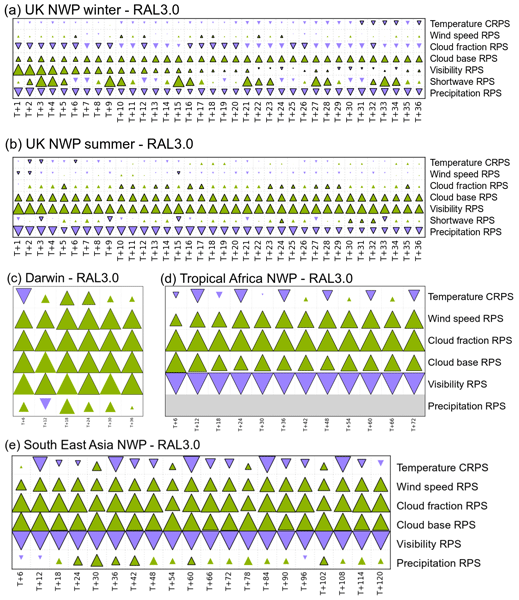
RAL configurations define settings for the Unified Model atmosphere and Joint UK Land Environment Simulator. The third version of the Regional Atmosphere and Land (RAL3) science configuration for kilometre- and sub-kilometre-scale modelling represents a major advance compared to previous versions (RAL2) by delivering a common science definition for applications in tropical and mid-latitude regions. RAL3 has more realistic precipitation distributions and an improved representation of clouds and visibility.
Tao Zhang, Cyril Morcrette, Meng Zhang, Wuyin Lin, Shaocheng Xie, Ye Liu, Kwinten Van Weverberg, and Joana Rodrigues
Geosci. Model Dev., 18, 1917–1928, https://doi.org/10.5194/gmd-18-1917-2025, https://doi.org/10.5194/gmd-18-1917-2025, 2025
Short summary
Short summary
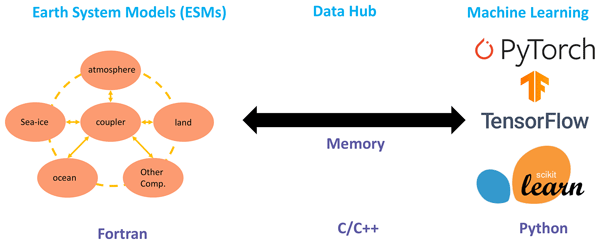
Earth system models (ESMs) struggle with the uncertainties associated with parameterizing subgrid physics. Machine learning (ML) algorithms offer a solution by learning the important relationships and features from high-resolution models. To incorporate ML parameterizations into ESMs, we develop a Fortran–Python interface that allows for calling Python functions within Fortran-based ESMs. Through two case studies, this interface demonstrates its feasibility, modularity, and effectiveness.
Weiyu Zhang, Kwinten Van Weverberg, Cyril J. Morcrette, Wuhu Feng, Kalli Furtado, Paul R. Field, Chih-Chieh Chen, Andrew Gettelman, Piers M. Forster, Daniel R. Marsh, and Alexandru Rap
Atmos. Chem. Phys., 25, 473–489, https://doi.org/10.5194/acp-25-473-2025, https://doi.org/10.5194/acp-25-473-2025, 2025
Short summary
Short summary
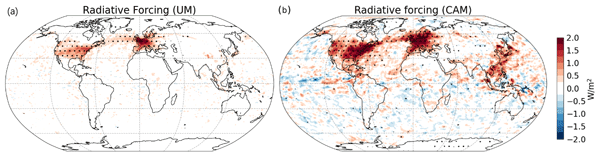
Contrail cirrus is the largest, but also most uncertain, contribution of aviation to global warming. We evaluate, for the first time, the impact of the host climate model on contrail cirrus properties. Substantial differences exist between contrail cirrus formation, persistence, and radiative effects in the host climate models. Reliable contrail cirrus simulations require advanced representation of cloud optical properties and microphysics, which should be better constrained by observations.
Florian Sauerland, Niels Souverijns, Anna Possner, Heike Wex, Preben Van Overmeiren, Alexander Mangold, Kwinten Van Weverberg, and Nicole van Lipzig
Atmos. Chem. Phys., 24, 13751–13768, https://doi.org/10.5194/acp-24-13751-2024, https://doi.org/10.5194/acp-24-13751-2024, 2024
Short summary
Short summary
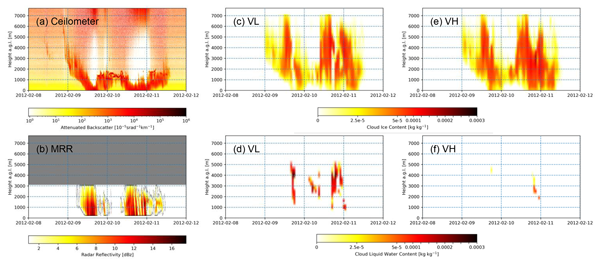
We use a regional climate model, COSMO-CLM², enhanced with a module resolving aerosol processes, to study Antarctic clouds. We prescribe different concentrations of ice-nucleating particles to our model to assess how these clouds respond to concentration changes, validating results with cloud and aerosol observations from the Princess Elisabeth Antarctica station. Our results show that aerosol–cloud interactions vary with temperature, providing valuable insights into Antarctic cloud dynamics.
Jan De Pue, Sebastian Wieneke, Ana Bastos, José Miguel Barrios, Liyang Liu, Philippe Ciais, Alirio Arboleda, Rafiq Hamdi, Maral Maleki, Fabienne Maignan, Françoise Gellens-Meulenberghs, Ivan Janssens, and Manuela Balzarolo
Biogeosciences, 20, 4795–4818, https://doi.org/10.5194/bg-20-4795-2023, https://doi.org/10.5194/bg-20-4795-2023, 2023
Short summary
Short summary
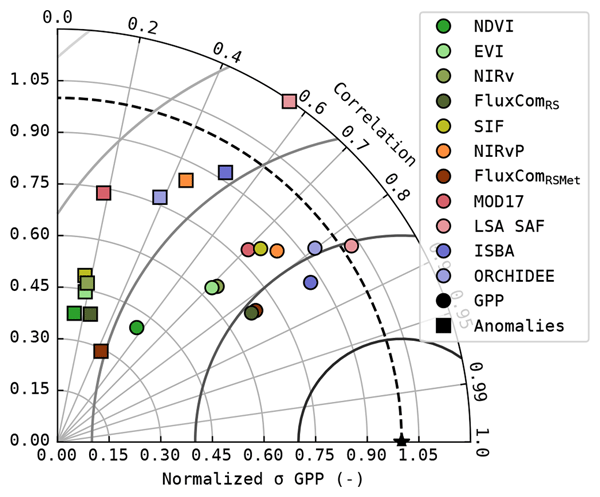
The gross primary production (GPP) of the terrestrial biosphere is a key source of variability in the global carbon cycle. To estimate this flux, models can rely on remote sensing data (RS-driven), meteorological data (meteo-driven) or a combination of both (hybrid). An intercomparison of 11 models demonstrated that RS-driven models lack the sensitivity to short-term anomalies. Conversely, the simulation of soil moisture dynamics and stress response remains a challenge in meteo-driven models.
Stijn Van Leuven, Pieter De Meutter, Johan Camps, Piet Termonia, and Andy Delcloo
Geosci. Model Dev., 16, 5323–5338, https://doi.org/10.5194/gmd-16-5323-2023, https://doi.org/10.5194/gmd-16-5323-2023, 2023
Short summary
Short summary
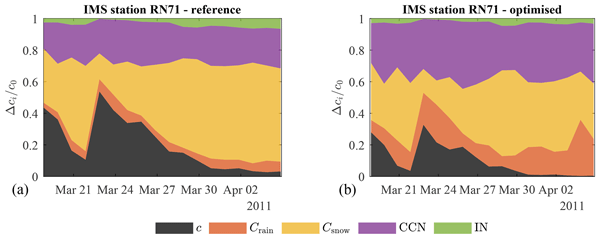
Precipitation collects airborne particles and deposits these on the ground. This process is called wet deposition and greatly determines how airborne radioactive particles (released routinely or accidentally) contaminate the surface. In this work we present a new method to improve the calculation of wet deposition in computer models. We apply this method to the existing model FLEXPART by simulating the Fukushima nuclear accident (2011) and show that it improves the simulation of wet deposition.
Jonathan Demaeyer, Jonas Bhend, Sebastian Lerch, Cristina Primo, Bert Van Schaeybroeck, Aitor Atencia, Zied Ben Bouallègue, Jieyu Chen, Markus Dabernig, Gavin Evans, Jana Faganeli Pucer, Ben Hooper, Nina Horat, David Jobst, Janko Merše, Peter Mlakar, Annette Möller, Olivier Mestre, Maxime Taillardat, and Stéphane Vannitsem
Earth Syst. Sci. Data, 15, 2635–2653, https://doi.org/10.5194/essd-15-2635-2023, https://doi.org/10.5194/essd-15-2635-2023, 2023
Short summary
Short summary
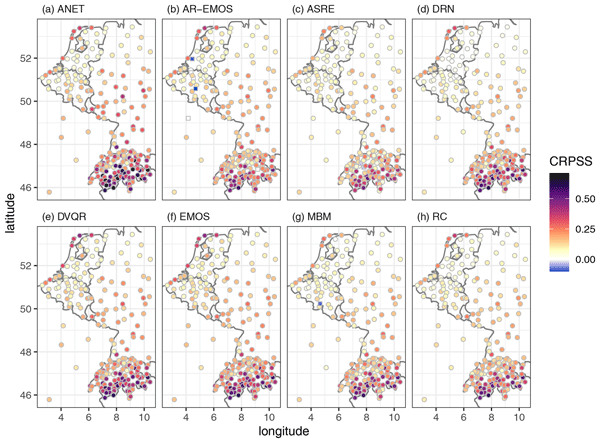
A benchmark dataset is proposed to compare different statistical postprocessing methods used in forecasting centers to properly calibrate ensemble weather forecasts. This dataset is based on ensemble forecasts covering a portion of central Europe and includes the corresponding observations. Examples on how to download and use the data are provided, a set of evaluation methods is proposed, and a first benchmark of several methods for the correction of 2 m temperature forecasts is performed.
Jan De Pue, José Miguel Barrios, Liyang Liu, Philippe Ciais, Alirio Arboleda, Rafiq Hamdi, Manuela Balzarolo, Fabienne Maignan, and Françoise Gellens-Meulenberghs
Biogeosciences, 19, 4361–4386, https://doi.org/10.5194/bg-19-4361-2022, https://doi.org/10.5194/bg-19-4361-2022, 2022
Short summary
Short summary
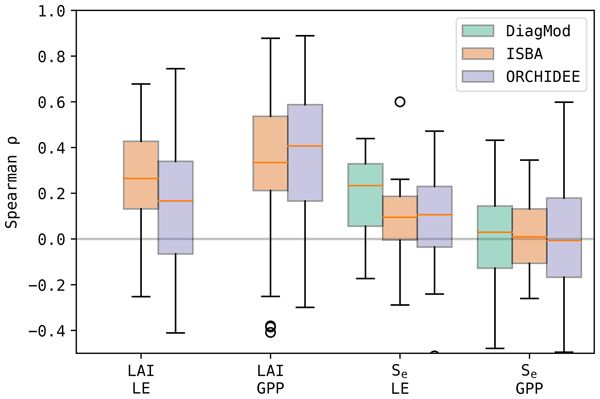
The functioning of ecosystems involves numerous biophysical processes which interact with each other. Land surface models (LSMs) are used to describe these processes and form an essential component of climate models. In this paper, we evaluate the performance of three LSMs and their interactions with soil moisture and vegetation. Though we found room for improvement in the simulation of soil moisture and drought stress, the main cause of errors was related to the simulated growth of vegetation.
Núria Pérez-Zanón, Louis-Philippe Caron, Silvia Terzago, Bert Van Schaeybroeck, Llorenç Lledó, Nicolau Manubens, Emmanuel Roulin, M. Carmen Alvarez-Castro, Lauriane Batté, Pierre-Antoine Bretonnière, Susana Corti, Carlos Delgado-Torres, Marta Domínguez, Federico Fabiano, Ignazio Giuntoli, Jost von Hardenberg, Eroteida Sánchez-García, Verónica Torralba, and Deborah Verfaillie
Geosci. Model Dev., 15, 6115–6142, https://doi.org/10.5194/gmd-15-6115-2022, https://doi.org/10.5194/gmd-15-6115-2022, 2022
Short summary
Short summary
CSTools (short for Climate Service Tools) is an R package that contains process-based methods for climate forecast calibration, bias correction, statistical and stochastic downscaling, optimal forecast combination, and multivariate verification, as well as basic and advanced tools to obtain tailored products. In addition to describing the structure and methods in the package, we also present three use cases to illustrate the seasonal climate forecast post-processing for specific purposes.
Gerard van der Schrier, Richard P. Allan, Albert Ossó, Pedro M. Sousa, Hans Van de Vyver, Bert Van Schaeybroeck, Roberto Coscarelli, Angela A. Pasqua, Olga Petrucci, Mary Curley, Mirosław Mietus, Janusz Filipiak, Petr Štěpánek, Pavel Zahradníček, Rudolf Brázdil, Ladislava Řezníčková, Else J. M. van den Besselaar, Ricardo Trigo, and Enric Aguilar
Clim. Past, 17, 2201–2221, https://doi.org/10.5194/cp-17-2201-2021, https://doi.org/10.5194/cp-17-2201-2021, 2021
Short summary
Short summary
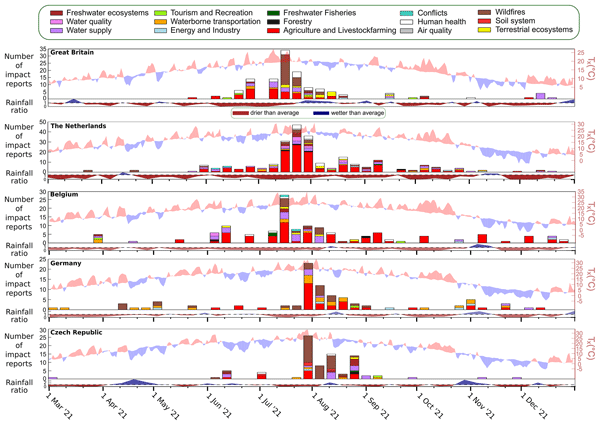
The 1921 drought was the most severe drought to hit Europe since the start of the 20th century. Here the climatological description of the drought is coupled to an overview of its impacts, sourced from newspapers, and an analysis of its drivers. The area from Ireland to the Ukraine was affected but hardest hit was the triangle between Brussels, Paris and Lyon. The drought impacts lingered on until well into autumn and winter, affecting water supply and agriculture and livestock farming.
Cited articles
Ban, N., Schmidli, J., and Schär, C.: Evaluation of the convection-resolving regional climate modeling approach in decade-long simulations, J. Geophys. Res.-Atmos., 119, 7889–7907, https://doi.org/10.1002/2014JD021478, 2014. a, b
Ban, N., Caillaud, C., Coppola, E., Pichelli, E., Sobolowski, S., Adinolfi, M., Ahrens, B., Alias, A., Anders, I., Bastin, S., Belušić, D., Berthou, S., Brisson, E., Cardoso, R., Chan, S., Christensen, O., Fernández, J., Fita, L., Frisius, T., and Zander, M.: The first multi-model ensemble of regional climate simulations at kilometer-scale resolution, part I: evaluation of precipitation, Clim. Dynam., 57, https://doi.org/10.1007/s00382-021-05708-w, 2021. a
Bechtold, P., Chaboureau, J.-P., Beljaars, A., Betts, A. K., Köhler, M., Miller, M., and Redelsperger, J.-L.: The Simulation of the Diurnal Cycle of Convective Precipitation over Land in a Global Model, Q. J. Roy. Meteor. Soc., 130, 3119–3137, https://doi.org/10.1256/qj.03.103, 2004. a
Berg, P., Christensen, O. B., Klehmet, K., Lenderink, G., Olsson, J., Teichmann, C., and Yang, W.: Summertime precipitation extremes in a EURO-CORDEX 0.11° ensemble at an hourly resolution, Nat. Hazards Earth Syst. Sci., 19, 957–971, https://doi.org/10.5194/nhess-19-957-2019, 2019. a
Berthou, S., Kendon, E. J., Chan, S. C., Ban, N., Leutwyler, D., Schär, C., and Fosser, G.: Pan-European climate at convection-permitting scale: a model intercomparison study, Clim. Dynam., 55, 35–59, https://doi.org/10.1007/s00382-018-4114-6, 2020. a, b, c
Brisson, E., Van Weverberg, K., Demuzere, M., Devis, A., Saeed, S., Stengel, M., and van Lipzig, N. P. M.: How well can a convection-permitting climate model reproduce decadal statistics of precipitation, temperature and cloud characteristics?, Clim. Dynam., 47, 3043–3061, https://doi.org/10.1007/s00382-016-3012-z, 2016. a
Bubnová, R., Hello, G., Bénard, P., and Geleyn, J.-F.: Integration of the Fully Elastic Equations Cast in the Hydrostatic Pressure Terrain-Following Coordinate in the Framework of the ARPEGE/Aladin NWP System, Mon. Weather Rev., https://doi.org/10.1175/1520-0493(1995)123<0515:IOTFEE>2.0.CO;2, 1995. a
Carreau, J., Naveau, P., and Neppel, L.: Partitioning into hazard subregions for regional peaks-over-threshold modeling of heavy precipitation, Water Resour. Res., 53, 4407–4426, https://doi.org/10.1002/2017WR020758, 2017. a
Charnock, H.: Wind stress on a water surface, Q. J. Roy. Meteor. Soc., 81, 639–640, https://doi.org/10.1002/qj.49708135027, 1955. a
Clapp, R. B. and Hornberger, G. M.: Empirical Equations for Some Soil Hydraulic Properties, Water Resour. Res., 14, 601–604, https://doi.org/10.1029/WR014i004p00601, 1978. a
Coles, S.: An Introduction to Statistical Modeling of Extreme Values, Springer Series in Statistics, Springer, London, ISBN 978-1-84996-874-4 978-1-4471-3675-0, https://doi.org/10.1007/978-1-4471-3675-0, 2001. a
Coppola, E., Sobolowski, S., Pichelli, E., Raffaele, F., Ahrens, B., Anders, I., Ban, N., Bastin, S., Belda, M., Belusic, D., Caldas-Alvarez, A., Cardoso, R. M., Davolio, S., Dobler, A., Fernandez, J., Fita, L., Fumiere, Q., Giorgi, F., Goergen, K., Güttler, I., Halenka, T., Heinzeller, D., Hodnebrog, o., Jacob, D., Kartsios, S., Katragkou, E., Kendon, E., Khodayar, S., Kunstmann, H., Knist, S., Lavín-Gullón, A., Lind, P., Lorenz, T., Maraun, D., Marelle, L., van Meijgaard, E., Milovac, J., Myhre, G., Panitz, H.-J., Piazza, M., Raffa, M., Raub, T., Rockel, B., Schär, C., Sieck, K., Soares, P. M. M., Somot, S., Srnec, L., Stocchi, P., Tölle, M. H., Truhetz, H., Vautard, R., de Vries, H., and Warrach-Sagi, K.: A first-of-its-kind multi-model convection permitting ensemble for investigating convective phenomena over Europe and the Mediterranean, Clim. Dynam., 55, 3–34, https://doi.org/10.1007/s00382-018-4521-8, 2020. a, b
CORDEX: CMIP6 Downscaling Plans, https://wcrp-cordex.github.io/simulation-status/CMIP6_downscaling_plans.html, last access: 18 February 2025. a
Davies, H. C.: A lateral boundary formulation for multi-level prediction models, Q. J. Roy. Meteor. Soc., 102, 405–418, https://doi.org/10.1002/qj.49710243210, 1976. a
De Troch, R.: The application of the ALARO-0 model for regional climate modeling in Belgium: extreme precipitation and unfavorable conditions for the dispersion of air pollutants under present and future climate conditions, dissertation, Ghent University, http://hdl.handle.net/1854/LU-7247081 (last access: 14 August 2026), 2016. a, b, c, d, e, f, g, h, i, j, k, l, m
De Troch, R., Hamdi, R., Van de Vyver, H., Geleyn, J.-F., and Termonia, P.: Multiscale Performance of the ALARO-0 Model for Simulating Extreme Summer Precipitation Climatology in Belgium, J. Climate, 26, 8895–8915, https://doi.org/10.1175/JCLI-D-12-00844.1, 2013. a, b, c, d
Dehem, D., Tricot, C., Wylleman, P., and Hamdi, R.: Validation des données du réseau pluviométrique géré par l’IBGE, répartition des précipitations, analyse qualitative des sites de mesure et projet de micro-climatologie en Région bruxelloise, Tech. rep., Institut royal météorologique de Belgique, Bruxelles, Belgique, https://document.environnement.brussels/opac_css/doc_num.php?explnum_id=7249 (last access: 14 August 2026), 2010. a
Dewettinck, W., Van de Vyver, H., Degrauwe, D., Hamdi, R., Van Ginderachter, M., Van Schaeybroeck, B., Van Weverberg, K., Vandelanotte, K., Caluwaerts, S., and Termonia, P.: [SOFTWARE] Validation of the ALARO1-SFX (CY43T2) regional climate model over Belgium across different resolutions, Zenodo [code], https://doi.org/10.5281/zenodo.15791681, 2025a. a
Dewettinck, W., Van de Vyver, H., Degrauwe, D., Hamdi, R., Van Ginderachter, M., Van Schaeybroeck, B., Van Weverberg, K., Vandelanotte, K., Caluwaerts, S., and Termonia, P.: [DATASET] Validation of the ALARO1-SFX (CY43T2) regional climate model over Belgium across different resolutions, Zenodo [data set], https://doi.org/10.5281/zenodo.15296030, 2025b. a
Doblas-Reyes, F., Sörensson, A., Almazroui, M., Dosio, A., Gutowski, W., Haarsma, R., Hamdi, R., Hewitson, B., Kwon, W.-T., Lamptey, B., Maraun, D., Stephenson, T., Takayabu, I., Terray, L., Turner, A., and Zuo, Z.: Linking Global to Regional Climate Change, Cambridge University Press, Cambridge, United Kingdom and New York, NY, USA, 1363–1512, https://doi.org/10.1017/9781009157896.012, 2021. a, b
Douville, H., Royer, J. F., and Mahfouf, J. F.: A New Snow Parameterization for the Météo-France Climate Model, Clim. Dynam., 12, 21–35, https://doi.org/10.1007/BF00208760, 1995. a
Ďurán, I. B., Geleyn, J.-F., and Váňa, F.: A Compact Model for the Stability Dependency of TKE Production–Destruction–Conversion Terms Valid for the Whole Range of Richardson Numbers, J. Atmos. Sci., 71, 3004–3026, https://doi.org/10.1175/JAS-D-13-0203.1, 2014. a, b
Eyring, V., Bony, S., Meehl, G. A., Senior, C. A., Stevens, B., Stouffer, R. J., and Taylor, K. E.: Overview of the Coupled Model Intercomparison Project Phase 6 (CMIP6) experimental design and organization, Geosci. Model Dev., 9, 1937–1958, https://doi.org/10.5194/gmd-9-1937-2016, 2016. a
Fosser, G., Khodayar, S., and Berg, P.: Benefit of convection permitting climate model simulations in the representation of convective precipitation, Clim. Dynam., 44, 45–60, https://doi.org/10.1007/s00382-014-2242-1, 2015. a, b
Fosser, G., Gaetani, M., Kendon, E. J., Adinolfi, M., Ban, N., Belušić, D., Caillaud, C., Careto, J. A. M., Coppola, E., Demory, M.-E., de Vries, H., Dobler, A., Feldmann, H., Goergen, K., Lenderink, G., Pichelli, E., Schär, C., Soares, P. M. M., Somot, S., and Tölle, M. H.: Convection-permitting climate models offer more certain extreme rainfall projections, npj Clim. Atmos. Sci., 7, 1–10, https://doi.org/10.1038/s41612-024-00600-w, 2024. a, b
Fuhrer, O., Chadha, T., Hoefler, T., Kwasniewski, G., Lapillonne, X., Leutwyler, D., Lüthi, D., Osuna, C., Schär, C., Schulthess, T. C., and Vogt, H.: Near-global climate simulation at 1 km resolution: establishing a performance baseline on 4888 GPUs with COSMO 5.0, Geosci. Model Dev., 11, 1665–1681, https://doi.org/10.5194/gmd-11-1665-2018, 2018. a
Geleyn, J., Mašek, J., Brožková, R., Kuma, P., Degrauwe, D., Hello, G., and Pristov, N.: Single interval longwave radiation scheme based on the net exchanged rate decomposition with bracketing, Q. J. Roy. Meteor. Soc., 143, 1313–1335, https://doi.org/10.1002/qj.3006, 2017. a, b
Gerard, L.: An integrated package for subgrid convection, clouds and precipitation compatible with meso-gamma scales, Q. J. Roy. Meteor. Soc., 133, 711–730, https://doi.org/10.1002/qj.58, 2007. a
Gerard, L. and Geleyn, J.-F.: Evolution of a subgrid deep convection parametrization in a limited-area model with increasing resolution, Q. J. Roy. Meteor. Soc., 131, 2293–2312, https://doi.org/10.1256/qj.04.72, 2005. a
Gerard, L., Piriou, J.-M., Brožková, R., Geleyn, J.-F., and Banciu, D.: Cloud and Precipitation Parameterization in a Meso-Gamma-Scale Operational Weather Prediction Model, Mon. Weather Rev., https://doi.org/10.1175/2009MWR2750.1, 2009. a, b, c
Giorgi, F.: Thirty Years of Regional Climate Modeling: Where Are We and Where Are We Going next?, J. Geophys. Res.-Atmos., 124, 5696–5723, https://doi.org/10.1029/2018JD030094, 2019. a, b
Giot, O., Termonia, P., Degrauwe, D., De Troch, R., Caluwaerts, S., Smet, G., Berckmans, J., Deckmyn, A., De Cruz, L., De Meutter, P., Duerinckx, A., Gerard, L., Hamdi, R., Van den Bergh, J., Van Ginderachter, M., and Van Schaeybroeck, B.: Validation of the ALARO-0 model within the EURO-CORDEX framework, Geosci. Model Dev., 9, 1143–1152, https://doi.org/10.5194/gmd-9-1143-2016, 2016. a, b, c, d, e, f, g, h, i, j, k, l, m
Grell, G. A. and Freitas, S. R.: A scale and aerosol aware stochastic convective parameterization for weather and air quality modeling, Atmos. Chem. Phys., 14, 5233–5250, https://doi.org/10.5194/acp-14-5233-2014, 2014. a
Gross, M., Wan, H., Rasch, P. J., Caldwell, P. M., Williamson, D. L., Klocke, D., Jablonowski, C., Thatcher, D. R., Wood, N., Cullen, M., Beare, B., Willett, M., Lemarié, F., Blayo, E., Malardel, S., Termonia, P., Gassmann, A., Lauritzen, P. H., Johansen, H., Zarzycki, C. M., Sakaguchi, K., and Leung, R.: Physics–Dynamics Coupling in Weather, Climate, and Earth System Models: Challenges and Recent Progress, Mon. Weather Rev., 146, 3505–3544, https://doi.org/10.1175/MWR-D-17-0345.1, 2018. a, b
Guerreiro, S. B., Blenkinsop, S., Lewis, E., Pritchard, D., Green, A., and Fowler, H. J.: Unravelling the Complex Interplay Between Daily and Sub-Daily Rainfall Extremes in Different Climates, Weather and Climate Extremes, 100735, https://doi.org/10.1016/j.wace.2024.100735, 2024. a
Guichard, F., Petch, J. C., Redelsperger, J.-L., Bechtold, P., Chaboureau, J.-P., Cheinet, S., Grabowski, W., Grenier, H., Jones, C. G., Köhler, M., Piriou, J.-M., Tailleux, R., and Tomasini, M.: Modelling the Diurnal Cycle of Deep Precipitating Convection over Land with Cloud-Resolving Models and Single-Column Models, Q. J. Roy. Meteor. Soc., 130, 3139–3172, https://doi.org/10.1256/qj.03.145, 2004. a
Gupta, V. K. and Waymire, E.: Multiscaling properties of spatial rainfall and river flow distributions, J. Geophys. Res.-Atmos., 95, 1999–2009, https://doi.org/10.1029/JD095iD03p01999, 1990. a
Ha, M. T., Bastin, S., Drobinski, P., Fita, L., Polcher, J., Bock, O., Chiriaco, M., Belušić, D., Caillaud, C., Dobler, A., Fernandez, J., Goergen, K., Hodnebrog, o., Kartsios, S., Katragkou, E., Lavin-Gullon, A., Lorenz, T., Milovac, J., Panitz, H.-J., Sobolowski, S., Truhetz, H., Warrach-Sagi, K., and Wulfmeyer, V.: Precipitation frequency in Med-CORDEX and EURO-CORDEX ensembles from 0.44° to convection-permitting resolution: impact of model resolution and convection representation, Clim. Dynam., 62, 4515–4540, https://doi.org/10.1007/s00382-022-06594-6, 2024. a
Hamdi, R., Degrauwe, D., Duerinckx, A., Cedilnik, J., Costa, V., Dalkilic, T., Essaouini, K., Jerczynki, M., Kocaman, F., Kullmann, L., Mahfouf, J.-F., Meier, F., Sassi, M., Schneider, S., Váňa, F., and Termonia, P.: Evaluating the performance of SURFEXv5 as a new land surface scheme for the ALADINcy36 and ALARO-0 models, Geosci. Model Dev., 7, 23–39, https://doi.org/10.5194/gmd-7-23-2014, 2014. a, b
Han, J., Wang, W., Kwon, Y. C., Hong, S.-Y., Tallapragada, V., and Yang, F.: Updates in the NCEP GFS Cumulus Convection Schemes with Scale and Aerosol Awareness, Weather Forecast., 32, 2005–2017, https://doi.org/10.1175/WAF-D-17-0046.1, 2017. a
Hersbach, H., Bell, B., Berrisford, P., Hirahara, S., Horányi, A., Muñoz-Sabater, J., Nicolas, J., Peubey, C., Radu, R., Schepers, D., Simmons, A., Soci, C., Abdalla, S., Abellan, X., Balsamo, G., Bechtold, P., Biavati, G., Bidlot, J., Bonavita, M., De Chiara, G., Dahlgren, P., Dee, D., Diamantakis, M., Dragani, R., Flemming, J., Forbes, R., Fuentes, M., Geer, A., Haimberger, L., Healy, S., Hogan, R. J., Hólm, E., Janisková, M., Keeley, S., Laloyaux, P., Lopez, P., Lupu, C., Radnoti, G., de Rosnay, P., Rozum, I., Vamborg, F., Villaume, S., and Thépaut, J.-N.: The ERA5 global reanalysis, Q. J. Roy. Meteor. Soc., 146, 1999–2049, https://doi.org/10.1002/qj.3803, 2020. a, b
Hohenegger, C., Brockhaus, P., and Schär, C.: Towards climate simulations at cloud-resolving scales, Meteorol. Z., 17, 383–394, https://doi.org/10.1127/0941-2948/2008/0303, 2008. a
Hosking, J. R. M.: L-Moments: Analysis and Estimation of Distributions Using Linear Combinations of Order Statistics, J. Roy. Stat. Soc. Ser. B, 52, 105–124, https://www.jstor.org/stable/2345653 (last access: 14 August 2026), 1990. a
Hosking, J. R. M. and Wallis, J. R.: Some statistics useful in regional frequency analysis, Water Resour. Res., 29, 271–281, https://doi.org/10.1029/92WR01980, 1993. a
Innocenti, S., Mailhot, A., Frigon, A., Cannon, A. J., and Leduc, M.: Observed and Simulated Precipitation over Northeastern North America: How Do Daily and Subdaily Extremes Scale in Space and Time?, J. Climate, 32, 8563–8582, https://doi.org/10.1175/JCLI-D-19-0021.1, 2019. a, b
IPCC: Annex II: Models, edited by: Gutiérrez, J. M. and Tréguier, A.-M., Cambridge University Press, Cambridge, United Kingdom and New York, NY, USA, 2087–2138, https://doi.org/10.1017/9781009157896.016, 2021. a
Jacob, D., Teichmann, C., Sobolowski, S., Katragkou, E., Anders, I., Belda, M., Benestad, R., Boberg, F., Buonomo, E., Cardoso, R. M., Casanueva, A., Christensen, O. B., Christensen, J. H., Coppola, E., De Cruz, L., Davin, E. L., Dobler, A., Domínguez, M., Fealy, R., Fernandez, J., Gaertner, M. A., García-Díez, M., Giorgi, F., Gobiet, A., Goergen, K., Gómez-Navarro, J. J., Alemán, J. J. G., Gutiérrez, C., Gutiérrez, J. M., Güttler, I., Haensler, A., Halenka, T., Jerez, S., Jiménez-Guerrero, P., Jones, R. G., Keuler, K., Kjellström, E., Knist, S., Kotlarski, S., Maraun, D., van Meijgaard, E., Mercogliano, P., Montávez, J. P., Navarra, A., Nikulin, G., de Noblet-Ducoudré, N., Panitz, H.-J., Pfeifer, S., Piazza, M., Pichelli, E., Pietikäinen, J.-P., Prein, A. F., Preuschmann, S., Rechid, D., Rockel, B., Romera, R., Sánchez, E., Sieck, K., Soares, P. M. M., Somot, S., Srnec, L., Sørland, S. L., Termonia, P., Truhetz, H., Vautard, R., Warrach-Sagi, K., and Wulfmeyer, V.: Regional climate downscaling over Europe: perspectives from the EURO-CORDEX community, Reg. Environ. Change, 20, 51, https://doi.org/10.1007/s10113-020-01606-9, 2020. a, b
Jones, P. W.: First- and Second-Order Conservative Remapping Schemes for Grids in Spherical Coordinates, Mon. Weather Rev., 127, 2204–2210, https://doi.org/10.1175/1520-0493(1999)127<2204:FASOCR>2.0.CO;2, 1999. a
Journée, M., Ingels, R., and Bertrand, C.: Overview and validation of observational gridded data products for Belgium, in: EMS Annual Meeting Abstracts, vol. 16, EMS2019–99, Copernicus, 2019. a
Journée, M., Tricot, C., Verhumst, K., Hamdi, R., and Dehem, D.: Réseau de pluviomètres : validation des données, répartition des précipitations et projet d'étude « changement climatique et ressources en eau » en Région bruxelloise, Tech. rep., Institut royal météorologique de Belgique, Bruxelles, Belgique, https://document.environnement.brussels/opac_css/elecfile/RAP_ValidationDonneesReseauPluvio2014 (last access: 14 August 2026), 2014. a
Kendon, E. J., Roberts, N. M., Senior, C. A., and Roberts, M. J.: Realism of Rainfall in a Very High-Resolution Regional Climate Model, J. Climate, https://doi.org/10.1175/JCLI-D-11-00562.1, 2012. a
Laprise, R.: The Euler Equations of Motion with Hydrostatic Pressure as an Independent Variable, Mon. Weather Rev., https://journals.ametsoc.org/view/journals/mwre/120/1/1520-0493_1992_120_0197_teeomw_2_0_co_2.xml, 1992. a
Lehner, F., Deser, C., Maher, N., Marotzke, J., Fischer, E. M., Brunner, L., Knutti, R., and Hawkins, E.: Partitioning climate projection uncertainty with multiple large ensembles and CMIP5/6, Earth Syst. Dynam., 11, 491–508, https://doi.org/10.5194/esd-11-491-2020, 2020. a
Leutwyler, D., Lüthi, D., Ban, N., Fuhrer, O., and Schär, C.: Evaluation of the convection-resolving climate modeling approach on continental scales, J. Geophys. Res.-Atmos., 122, 5237–5258, https://doi.org/10.1002/2016JD026013, 2017. a
Marquet, P. and Geleyn, J.: On a general definition of the squared Brunt–Väisälä frequency associated with the specific moist entropy potential temperature, Q. J. Roy. Meteor. Soc., 139, 85–100, https://doi.org/10.1002/qj.1957, 2013. a, b
Masson, V., Champeaux, J.-L., Chauvin, F., Meriguet, C., and Lacaze, R.: A Global Database of Land Surface Parameters at 1-Km Resolution in Meteorological and Climate Models, J. Climate, 16, 1261–1282, https://doi.org/10.1175/1520-0442(2003)16<1261:AGDOLS>2.0.CO;2, 2003. a
Masson, V., Le Moigne, P., Martin, E., Faroux, S., Alias, A., Alkama, R., Belamari, S., Barbu, A., Boone, A., Bouyssel, F., Brousseau, P., Brun, E., Calvet, J.-C., Carrer, D., Decharme, B., Delire, C., Donier, S., Essaouini, K., Gibelin, A.-L., Giordani, H., Habets, F., Jidane, M., Kerdraon, G., Kourzeneva, E., Lafaysse, M., Lafont, S., Lebeaupin Brossier, C., Lemonsu, A., Mahfouf, J.-F., Marguinaud, P., Mokhtari, M., Morin, S., Pigeon, G., Salgado, R., Seity, Y., Taillefer, F., Tanguy, G., Tulet, P., Vincendon, B., Vionnet, V., and Voldoire, A.: The SURFEXv7.2 land and ocean surface platform for coupled or offline simulation of earth surface variables and fluxes, Geosci. Model Dev., 6, 929–960, https://doi.org/10.5194/gmd-6-929-2013, 2013. a
Masson-Delmotte, V., Zhai, P., Pirani, A., Connors, S., Péan, C., Berger, S., Caud, N., Chen, Y., Goldfarb, L., Gomis, M., Huang, M., Leitzell, K., Lonnoy, E., Matthews, J., Maycock, T., Waterfield, T., Yelekçi, O., Yu, R., and Zhou, B. (Eds.): Framing, Context, and Methods, Cambridge University Press, Cambridge, United Kingdom and New York, NY, USA, 147–286, https://doi.org/10.1017/9781009157896.003, 2021. a
Mašek, J., Geleyn, J., Brožková, R., Giot, O., Achom, H. O., and Kuma, P.: Single interval shortwave radiation scheme with parameterized optical saturation and spectral overlaps, Q. J. Roy. Meteor. Soc., 142, 304–326, https://doi.org/10.1002/qj.2653, 2016. a, b
Meredith, E. P., Ulbrich, U., Rust, H. W., and Truhetz, H.: Present and future diurnal hourly precipitation in 0.11° EURO-CORDEX models and at convection-permitting resolution, Environ. Res. Commun., 3, 055002, https://doi.org/10.1088/2515-7620/abf15e, 2021. a, b
Müller, S. K., Caillaud, C., Chan, S., de Vries, H., Bastin, S., Berthou, S., Brisson, E., Demory, M.-E., Feldmann, H., Goergen, K., Kartsios, S., Lind, P., Keuler, K., Pichelli, E., Raffa, M., Tölle, M. H., and Warrach-Sagi, K.: Evaluation of Alpine-Mediterranean precipitation events in convection-permitting regional climate models using a set of tracking algorithms, Clim. Dynam., 61, 939–957, https://doi.org/10.1007/s00382-022-06555-z, 2023. a
Müller, S. K., Pichelli, E., Coppola, E., Berthou, S., Brienen, S., Caillaud, C., Demory, M.-E., Dobler, A., Feldmann, H., Mercogliano, P., Tölle, M., and de Vries, H.: The climate change response of alpine-mediterranean heavy precipitation events, Clim. Dynam., 62, 165–186, https://doi.org/10.1007/s00382-023-06901-9, 2024. a
Nguyen, P. L., Alexander, L. V., Thatcher, M. J., Truong, S. C. H., Isphording, R. N., and McGregor, J. L.: Selecting CMIP6 global climate models (GCMs) for Coordinated Regional Climate Downscaling Experiment (CORDEX) dynamical downscaling over Southeast Asia using a standardised benchmarking framework, Geosci. Model Dev., 17, 7285–7315, https://doi.org/10.5194/gmd-17-7285-2024, 2024. a
Noilhan, J. and Mahfouf, J. F.: The ISBA land surface parameterisation scheme, Global Planet. Change, 13, 145–159, https://doi.org/10.1016/0921-8181(95)00043-7, 1996. a
Noilhan, J. and Planton, S.: A Simple Parameterization of Land Surface Processes for Meteorological Models, Mon. Weather Rev., https://doi.org/10.1175/1520-0493(1989)117<0536:ASPOLS>2.0.CO;2, 1989. a
Pichelli, E., Coppola, E., Sobolowski, S., Ban, N., Giorgi, F., Stocchi, P., Alias, A., Belušić, D., Berthou, S., Caillaud, C., Cardoso, R. M., Chan, S., Christensen, O. B., Dobler, A., de Vries, H., Goergen, K., Kendon, E. J., Keuler, K., Lenderink, G., Lorenz, T., Mishra, A. N., Panitz, H.-J., Schär, C., Soares, P. M. M., Truhetz, H., and Vergara-Temprado, J.: The first multi-model ensemble of regional climate simulations at kilometer-scale resolution part 2: historical and future simulations of precipitation, Clim. Dynam., 56, 3581–3602, https://doi.org/10.1007/s00382-021-05657-4, 2021. a
Prein, A. F., Langhans, W., Fosser, G., Ferrone, A., Ban, N., Goergen, K., Keller, M., Tölle, M., Gutjahr, O., Feser, F., Brisson, E., Kollet, S., Schmidli, J., van Lipzig, N. P. M., and Leung, R.: A review on regional convection-permitting climate modeling: Demonstrations, prospects, and challenges, Rev. Geophys., 53, 323–361, https://doi.org/10.1002/2014RG000475, 2015. a, b, c, d
Ranasinghe, R., Ruane, A., Vautard, R., Arnell, N., Coppola, E., Cruz, F., Dessai, S., Islam, A., Rahimi, M., Ruiz Carrascal, D., Sillmann, J., Sylla, M., Tebaldi, C., Wang, W., and Zaaboul, R.: Climate Change Information for Regional Impact and for Risk Assessment, Cambridge University Press, Cambridge, United Kingdom and New York, NY, USA, 1767–1926, https://doi.org/10.1017/9781009157896.014, 2021. a
Rummukainen, M.: Added value in regional climate modeling, WIREs Clim. Change, 7, 145–159, https://doi.org/10.1002/wcc.378, 2016. a, b
Simmons, A. J. and Burridge, D. M.: An Energy and Angular-Momentum Conserving Vertical Finite-Difference Scheme and Hybrid Vertical Coordinates, Mon. Weather Rev., https://doi.org/10.1175/1520-0493(1981)109<0758:AEAAMC>2.0.CO;2, 1981. a
Soares, P., Careto, J., Cardoso, R., Goergen, K., Katragkou, E., Sobolowski, S., Coppola, E., Ban, N., Belušić, D., Berthou, S., Caillaud, C., Dobler, A., Hodnebrog, o., Kartsios, S., Lenderink, G., Lorenz, T., Milovac, J., Feldmann, H., Pichelli, E., and Bastin, S.: The added value of km-scale simulations to describe temperature over complex orography: the CORDEX FPS-Convection multi-model ensemble runs over the Alps, Clim. Dynam., 62, https://doi.org/10.1007/s00382-022-06593-7, 2022. a
Tabari, H., De Troch, R., Giot, O., Hamdi, R., Termonia, P., Saeed, S., Brisson, E., Van Lipzig, N., and Willems, P.: Local impact analysis of climate change on precipitation extremes: are high-resolution climate models needed for realistic simulations?, Hydrol. Earth Syst. Sci., 20, 3843–3857, https://doi.org/10.5194/hess-20-3843-2016, 2016. a, b, c, d, e
Termonia, P., Fischer, C., Bazile, E., Bouyssel, F., Brožková, R., Bénard, P., Bochenek, B., Degrauwe, D., Derková, M., El Khatib, R., Hamdi, R., Mašek, J., Pottier, P., Pristov, N., Seity, Y., Smolíková, P., Španiel, O., Tudor, M., Wang, Y., Wittmann, C., and Joly, A.: The ALADIN System and its canonical model configurations AROME CY41T1 and ALARO CY40T1, Geosci. Model Dev., 11, 257–281, https://doi.org/10.5194/gmd-11-257-2018, 2018a. a, b, c, d, e, f
Termonia, P., Van Schaeybroeck, B., De Cruz, L., De Troch, R., Caluwaerts, S., Giot, O., Hamdi, R., Vannitsem, S., Duchêne, F., Willems, P., Tabari, H., Van Uytven, E., Hosseinzadehtalaei, P., Van Lipzig, N., Wouters, H., Vanden Broucke, S., van Ypersele, J.-P., Marbaix, P., Villanueva-Birriel, C., Fettweis, X., Wyard, C., Scholzen, C., Doutreloup, S., De Ridder, K., Gobin, A., Lauwaet, D., Stavrakou, T., Bauwens, M., Müller, J.-F., Luyten, P., Ponsar, S., Van den Eynde, D., and Pottiaux, E.: The CORDEX.be initiative as a foundation for climate services in Belgium, Climate Services, 11, 49–61, https://doi.org/10.1016/j.cliser.2018.05.001, 2018b. a
Termonia, P., Van Schaeybroeck, B., De Cruz, L., De Troch, R., Hamdi, R., Vannitsem, S., Duchêne, F., Willems, P., Tabari, H., Van Uytven, E., Hosseinzadehtalaei, P., Van Lipzig, N., Wouters, H., Vanden Broucke, S., van Ypersele, J.-P., Marbaix, P., Villanueva-Birriel, C., Fettweis, X., Wyard, C., Scholzen, C., Doutreloup, S., De Ridder, K., Gobin, A., Lauwaet, D., Stavrakou, T., Bauwens, M., Müller, J.-F., Luyten, P., Ponsar, S., and Pottiaux, E.: Combining Regional Downscaling Expertise in Belgium: CORDEX and Beyond, Tech. Rep. CORDEX.be Final Report, Belgian Science Policy Office (BELSPO), Brussels, Belgium, https://www.belspo.be/belspo/brain-be/projects/FinalReports/CORDEXbe_FinRep_AD.pdf (last access: 14 August 2026), 2018c. a, b
Thomassen, E. D., Arnbjerg-Nielsen, K., Sørup, H. J. D., Langen, P. L., Olsson, J., Pedersen, R. A., and Christensen, O. B.: Spatial and temporal characteristics of extreme rainfall: Added benefits with sub-kilometre-resolution climate model simulations?, Q. J. Roy. Meteor. Soc., 149, 1913–1931, https://doi.org/10.1002/qj.4488, 2023. a
Top, S., Kotova, L., De Cruz, L., Aniskevich, S., Bobylev, L., De Troch, R., Gnatiuk, N., Gobin, A., Hamdi, R., Kriegsmann, A., Remedio, A. R., Sakalli, A., Van De Vyver, H., Van Schaeybroeck, B., Zandersons, V., De Maeyer, P., Termonia, P., and Caluwaerts, S.: Evaluation of regional climate models ALARO-0 and REMO2015 at 0.22° resolution over the CORDEX Central Asia domain, Geosci. Model Dev., 14, 1267–1293, https://doi.org/10.5194/gmd-14-1267-2021, 2021. a, b
Van de Vyver, H.: Spatial regression models for extreme precipitation in Belgium, Water Resour. Res., 48, 2011WR011707, https://doi.org/10.1029/2011WR011707, 2012. a, b
Van de Vyver, H.: Practical Return Level Mapping for Extreme Precipitation in Belgium, Scientific and Technical Publication 062, Royal Meteorological Institute of Belgium, https://orfeo.belnet.be/handle/internal/8489 (last access: 14 August 2026), 2013. a
Van de Vyver, H.: A multiscaling‐based intensity–duration–frequency model for extreme precipitation, Hydrol. Process., 32, 1635–1647, https://doi.org/10.1002/hyp.11516, 2018. a
Van de Vyver, H.: Observed Annual Maximum Sub-Daily Precipitation from the Belgian Hydro-Meteorological Network (1967–2004) and Uccle (1898–2007), Zenodo [data set], https://doi.org/10.5281/zenodo.4741177, 2021. a, b
Van de Vyver, H., Van Schaeybroeck, B., De Troch, R., De Cruz, L., Hamdi, R., Villanueva-Birriel, C., Marbaix, P., Van Ypersele, J.-P., Wouters, H., Vanden Broucke, S., Van Lipzig, N. P., Doutreloup, S., Wyard, C., Scholzen, C., Fettweis, X., Caluwaerts, S., and Termonia, P.: Evaluation framework for sub-daily rainfall extremes simulated by regional climate models, J. Appl. Meteorol. Clim., https://doi.org/10.1175/JAMC-D-21-0004.1, 2021. a, b, c
Van Ginderachter, M., Degrauwe, D., Vannitsem, S., and Termonia, P.: Simulating model uncertainty of subgrid-scale processes by sampling model errors at convective scales, Nonlin. Processes Geophys., 27, 187–207, https://doi.org/10.5194/npg-27-187-2020, 2020. a
Veneziano, D. and Furcolo, P.: Multifractality of rainfall and scaling of intensity-duration-frequency curves, Water Resour. Res., 38, 42–1–42–12, https://doi.org/10.1029/2001WR000372, 2002. a
Vergara-Temprado, J., Ban, N., Panosetti, D., Schlemmer, L., and Schär, C.: Climate Models Permit Convection at Much Coarser Resolutions Than Previously Considered, J. Climate, https://doi.org/10.1175/JCLI-D-19-0286.1, 2020. a, b, c
Zheng, Y., Alapaty, K., Herwehe, J. A., Del Genio, A. D., and Niyogi, D.: Improving High-Resolution Weather Forecasts Using the Weather Research and Forecasting (WRF) Model with an Updated Kain–Fritsch Scheme, Mon. Weather Rev., 144, 833–860, https://doi.org/10.1175/MWR-D-15-0005.1, 2016. a
Short summary
This study evaluates an updated version of the ALARO (ALADIN–AROME) regional climate model over Belgium at multiple resolutions, using long-term climate simulations. Coupling the model to the externalised surface scheme SURFEX (Surface Externalisée) and running at higher resolutions improved simulated temperature, precipitation, and precipitation extremes, supporting the value of high-resolution modelling for representing local climate extremes and informing adaptation.
This study evaluates an updated version of the ALARO (ALADIN–AROME) regional climate model...


