
Articles | Volume 19, issue 2
https://doi.org/10.5194/gmd-19-731-2026
© Author(s) 2026. This work is distributed under
the Creative Commons Attribution 4.0 License.
the Creative Commons Attribution 4.0 License.
https://doi.org/10.5194/gmd-19-731-2026
© Author(s) 2026. This work is distributed under
the Creative Commons Attribution 4.0 License.
the Creative Commons Attribution 4.0 License.
Development and technical paper
| 
23 Jan 2026
Development and technical paper |
| 23 Jan 2026
| 23 Jan 2026
Direct assimilation of ground-based microwave radiometer observations with machine learning bias correction based on developments of RTTOV-gb v1.0 and WRFDA v4.5
Qing Zheng
Heavy Rain and Drought-Flood Disasters in Plateau and Basin Key Laboratory of Sichuan Province, Institute of Tibetan Plateau Meteorology, China Meteorological Administration, Chengdu, 610213, China
Institute of Tibetan Plateau Meteorology, Chinese Academy of Meteorological Sciences, Beijing, 100081, China
Wei Sun
CORRESPONDING AUTHOR

State Key Laboratory of Severe Weather Meteorological Science and Technology (LaSW), Chinese Academy of Meteorological Sciences (CAMS), Beijing, 100081, China
Institute of Tibetan Plateau Meteorology, Chinese Academy of Meteorological Sciences, Beijing, 100081, China
Zhiquan Liu
National Center for Atmospheric Research, Boulder, 80307-3000, USA
Jiajia Mao
Meteorological Observation Center, China Meteorological Administration, Beijing, 100081, China
Jieying He
National Space Science Center, Chinese Academy of Sciences, Beijing, 100190, China
Jian Li
State Key Laboratory of Severe Weather Meteorological Science and Technology (LaSW), Chinese Academy of Meteorological Sciences (CAMS), Beijing, 100081, China
Institute of Tibetan Plateau Meteorology, Chinese Academy of Meteorological Sciences, Beijing, 100081, China
Xingwen Jiang
Heavy Rain and Drought-Flood Disasters in Plateau and Basin Key Laboratory of Sichuan Province, Institute of Tibetan Plateau Meteorology, China Meteorological Administration, Chengdu, 610213, China
Institute of Tibetan Plateau Meteorology, Chinese Academy of Meteorological Sciences, Beijing, 100081, China
Related authors
No articles found.
Tzu-Chin Tsai, Jen-Ping Chen, Zhiquan Liu, Siou-Ying Jiang, Rong Kong, Ying-Jhang Wu, Junmei Ban, Ling-Feng Hsiao, Yu-Shuang Tang, Pao-Liang Chang, and Jing-Shan Hong
Geosci. Model Dev., 19, 6231–6257, https://doi.org/10.5194/gmd-19-6231-2026, https://doi.org/10.5194/gmd-19-6231-2026, 2026
Short summary
Short summary
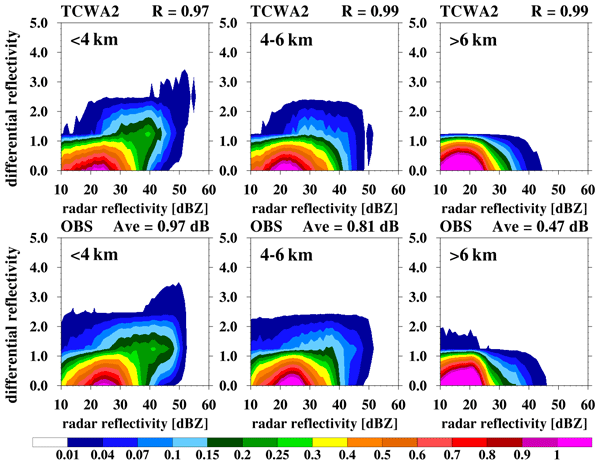
We developed a new cloud microphysics scheme that links simulated cloud and precipitation particles with radar signals. Idealized squall line and a real thunderstorm case in Taiwan show that the scheme produces physically meaningful storm structures and encouraging radar comparisons, while further refinement is still needed for ice particles, hydrometeor orientation, and radar-viewing assumptions.
Xuewei Zhang, Zhiquan Liu, Lipeng Jiang, Tao Sun, I-Han Chen, Dale M. Barker, and Jinzhong Min
EGUsphere, https://doi.org/10.5194/egusphere-2026-2982, https://doi.org/10.5194/egusphere-2026-2982, 2026
Short summary
Short summary
This study explores how high-resolution infrared observations from the Himawari-9 weather satellite can improve forecasts of rapidly evolving hazardous weather systems in tropical regions. By incorporating these observations, including information from cloudy areas, into a regional forecast system, we found improvements in short-range forecasts of clouds and rainfall. These results suggest the potential of such geostationary satellite data for improving tropical weather prediction.
Xuewei Zhang, Lipeng Jiang, Zhiquan Liu, Tao Sun, Wei Wang, and I-Han Chen
EGUsphere, https://doi.org/10.5194/egusphere-2026-1476, https://doi.org/10.5194/egusphere-2026-1476, 2026
Short summary
Short summary
Rapidly evolving clouds over the tropical area, where complex terrain and tropical weather conditions interact, are difficult to predict. This study uses frequent, high-resolution Himawari-9 satellite observations to evaluate how well a weather model predicts cloud amount, cloud type, cloud height, and daily cloud changes over this region. The aim is to support future model development, improve cloud forecasts, and make better use of satellite observations in cloudy areas.
Tao Sun, I-Han Chen, Craig S. Schwartz, Zhiquan Liu, Hugh Zhang, and Dale Barker
EGUsphere, https://doi.org/10.5194/egusphere-2026-2476, https://doi.org/10.5194/egusphere-2026-2476, 2026
Short summary
Short summary
We implemented an effective way to use weather radar observations in a modern weather analysis and forecasting system. By linking radar information with temperature, moisture, and rainfall processes, the method enables the model to adjust these conditions more consistently. Case studies show clear improvements in the location and intensity of rainfall forecasts over the deep tropics.
Junmei Ban, Zhiquan Liu, Byoung-Joo Jung, Ivette Hernandez Banos, Benjamin Ruston, and Andrew Collard
EGUsphere, https://doi.org/10.5194/egusphere-2026-1047, https://doi.org/10.5194/egusphere-2026-1047, 2026
Short summary
Short summary
The assimilation of all-sky radiances in MPAS–JEDI, the data assimilation system for the Model for Prediction Across Scales–Atmosphere (MPAS-A) based on the Joint Effort for Data Assimilation Integration (JEDI), has been extended in this study to incorporate ATMS observations. Month-long cycling experiments demonstrate consistent and encouraging improvements in dynamical, thermodynamic, and moisture-related fields resulting from the assimilation of all-sky ATMS radiances.
Pingyi Dong, Xingwen Jiang, Xingbing Zhao, Yuanchang Dong, Jiafeng Zheng, Chun Hu, Guolu Gao, Lei Liu, Shulei Li, and Lingbing Bu
Atmos. Meas. Tech., 19, 1407–1419, https://doi.org/10.5194/amt-19-1407-2026, https://doi.org/10.5194/amt-19-1407-2026, 2026
Short summary
Short summary
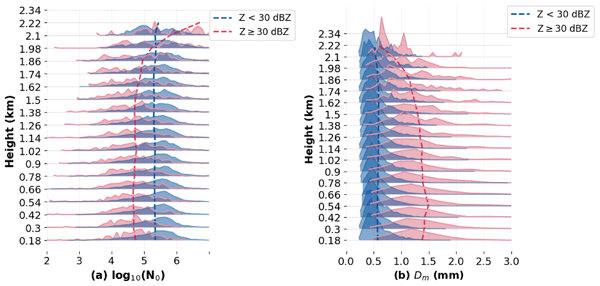
A method is developed and validated for retrieving vertical profiles of the raindrop size distributions (DSD) parameters from a single-frequency Ka-band radar in this study. Some unique characteristics of the vertical profiles of DSD parameters in the eastern Tibetan Plateau are found. The empirical relationships for quantitative precipitation estimates and attenuation correction in the eastern Tibetan Plateau with Ka-band radar are derived.
Tao Sun, Jonathan J. Guerrette, Zhiquan Liu, Junmei Ban, Byoung-Joo Jung, Ivette Hernandez Banos, and Chris Snyder
Geosci. Model Dev., 18, 8569–8587, https://doi.org/10.5194/gmd-18-8569-2025, https://doi.org/10.5194/gmd-18-8569-2025, 2025
Short summary
Short summary
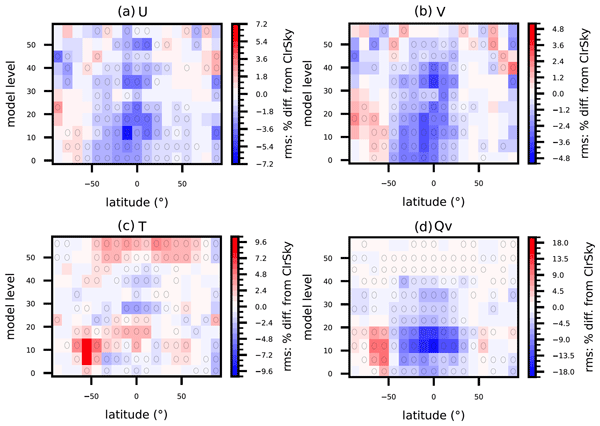
We evaluated a new ensemble data assimilation system that uses satellite observations in all weather conditions for global weather forecasts. The results show that including cloud- and precipitation-affected satellite data improves forecasts of moisture, wind, and clouds, especially in the tropics. This work highlights the potential of this new ensemble data assimilation system to enhance global weather forecasts.
Chengli Ji, Qiankai Jin, Feilong Li, Yuyang Liu, Zhicheng Wang, Jiajia Mao, Xiaoyu Ren, Yan Xiang, Wanlin Jian, Zhenyi Chen, and Peitao Zhao
Atmos. Meas. Tech., 18, 3179–3191, https://doi.org/10.5194/amt-18-3179-2025, https://doi.org/10.5194/amt-18-3179-2025, 2025
Short summary
Short summary
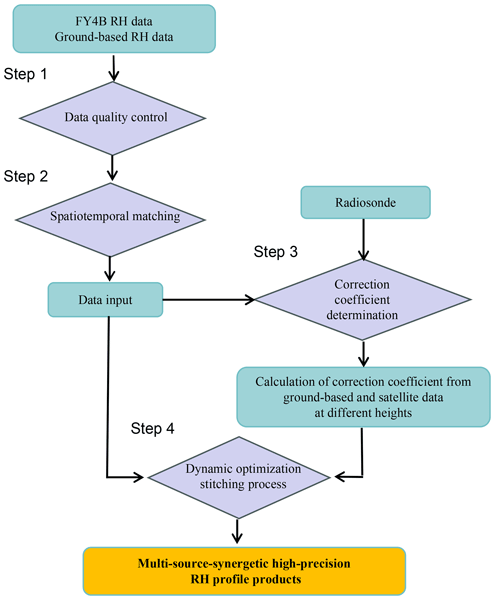
This study presents the humidity measurements with a synergistic algorithm combining Raman lidar, microwave radiometer, and satellite. The results from 47 sites in China show the best correlation over 0.9 concerning the radiosonde measurements. This validates the relative humidity (RH) accuracy with various data integrations. Three representative sites present the different seasonal characteristics, indicating the geographic and height influences on the RH vertical distribution.
Yi-Ning Shi, Jun Yang, Wei Han, Lujie Han, Jiajia Mao, Wanlin Kan, and Fuzhong Weng
Geosci. Model Dev., 18, 1947–1964, https://doi.org/10.5194/gmd-18-1947-2025, https://doi.org/10.5194/gmd-18-1947-2025, 2025
Short summary
Short summary
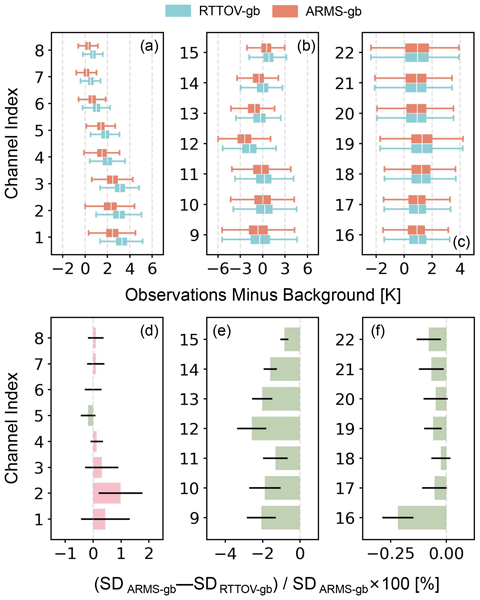
Direct assimilation of observations from ground-based microwave radiometers (GMRs) holds significant potential for improving forecast accuracy. Radiative transfer models (RTMs) play a crucial role in direct data assimilation. In this study, we introduce a new RTM, the Advanced Radiative Transfer Modeling System – Ground-Based (ARMS-gb), designed to simulate brightness temperatures observed by GMRs along with their Jacobians. Several enhancements have been incorporated to achieve higher accuracy.
Byoung-Joo Jung, Benjamin Ménétrier, Chris Snyder, Zhiquan Liu, Jonathan J. Guerrette, Junmei Ban, Ivette Hernández Baños, Yonggang G. Yu, and William C. Skamarock
Geosci. Model Dev., 17, 3879–3895, https://doi.org/10.5194/gmd-17-3879-2024, https://doi.org/10.5194/gmd-17-3879-2024, 2024
Short summary
Short summary
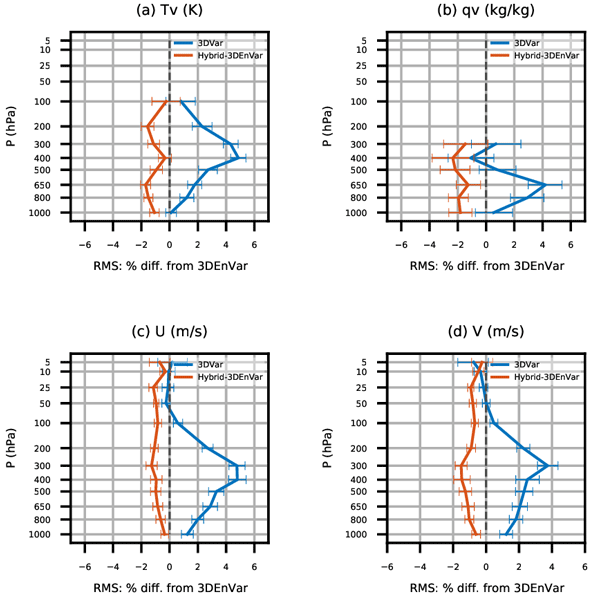
We describe the multivariate static background error covariance (B) for the JEDI-MPAS 3D-Var data assimilation system. With tuned B parameters, the multivariate B gives physically balanced analysis increment fields in the single-observation test framework. In the month-long cycling experiment with a global 60 km mesh, 3D-Var with static B performs stably. Due to its simple workflow and minimal computational requirements, JEDI-MPAS 3D-Var can be useful for the research community.
Jonathan J. Guerrette, Zhiquan Liu, Chris Snyder, Byoung-Joo Jung, Craig S. Schwartz, Junmei Ban, Steven Vahl, Yali Wu, Ivette Hernández Baños, Yonggang G. Yu, Soyoung Ha, Yannick Trémolet, Thomas Auligné, Clementine Gas, Benjamin Ménétrier, Anna Shlyaeva, Mark Miesch, Stephen Herbener, Emily Liu, Daniel Holdaway, and Benjamin T. Johnson
Geosci. Model Dev., 16, 7123–7142, https://doi.org/10.5194/gmd-16-7123-2023, https://doi.org/10.5194/gmd-16-7123-2023, 2023
Short summary
Short summary
We demonstrate an ensemble of variational data assimilations (EDA) with the Model for Prediction Across Scales and the Joint Effort for Data assimilation Integration (JEDI) software framework. When compared to 20-member ensemble forecasts from operational initial conditions, those from 80-member EDA-generated initial conditions improve flow-dependent error covariances and subsequent 10 d forecasts. These experiments are repeatable for any atmospheric model with a JEDI interface.

Xiaohan Li, Yi Zhang, Xindong Peng, Baiquan Zhou, Jian Li, and Yiming Wang
Geosci. Model Dev., 16, 2975–2993, https://doi.org/10.5194/gmd-16-2975-2023, https://doi.org/10.5194/gmd-16-2975-2023, 2023
Short summary
Short summary
The weather and climate physics suites used in GRIST-A22.7.28 are compared using single-column modeling. The source of their discrepancies in terms of modeling cloud and precipitation is explored. Convective parameterization is found to be a key factor responsible for the differences. The two suites also have intrinsic differences in the interaction between microphysics and other processes, resulting in different cloud features and time step sensitivities.

Huibin Dai, Hong Liao, Ke Li, Xu Yue, Yang Yang, Jia Zhu, Jianbing Jin, Baojie Li, and Xingwen Jiang
Atmos. Chem. Phys., 23, 23–39, https://doi.org/10.5194/acp-23-23-2023, https://doi.org/10.5194/acp-23-23-2023, 2023
Short summary
Short summary
We apply the 3-D global chemical transport model (GEOS-Chem) to simulate co-polluted days by O3 and PM2.5 (O3–PM2.5PDs) in Beijing–Tianjin–Hebei in 2013–2020 and investigate the chemical and physical characteristics of O3–PM2.5PDs by composited analyses of such days that are captured by both the observations and the model. We report for the first time the unique features in vertical distributions of aerosols during O3–PM2.5PDs and the physical and chemical characteristics of O3–PM2.5PDs.

Zhiquan Liu, Chris Snyder, Jonathan J. Guerrette, Byoung-Joo Jung, Junmei Ban, Steven Vahl, Yali Wu, Yannick Trémolet, Thomas Auligné, Benjamin Ménétrier, Anna Shlyaeva, Stephen Herbener, Emily Liu, Daniel Holdaway, and Benjamin T. Johnson
Geosci. Model Dev., 15, 7859–7878, https://doi.org/10.5194/gmd-15-7859-2022, https://doi.org/10.5194/gmd-15-7859-2022, 2022
Short summary
Short summary
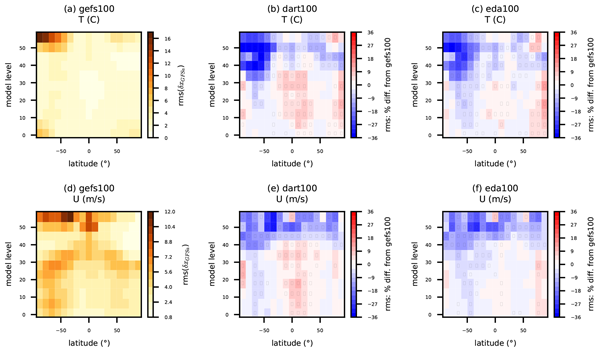
JEDI-MPAS 1.0.0, a new data assimilation (DA) system for the MPAS model, was publicly released for community use. This article describes JEDI-MPAS's implementation of the ensemble–variational DA technique and demonstrates its robustness and credible performance by incrementally adding three types of microwave radiances (clear-sky AMSU-A, all-sky AMSU-A, clear-sky MHS) to a non-radiance DA experiment. We intend to periodically release new and improved versions of JEDI-MPAS in upcoming years.
Cited articles
Auligné, T., McNally, A. P., and Dee, D. P.: Adaptive bias correction for satellite data in a numerical weather prediction system, Quarterly Journal of the Royal Meteorological Society, 133, 631–642, https://doi.org/10.1002/qj.56, 2007.
Barker, D., Huang, X.-Y., Liu, Z., Auligné, T., Zhang, X., Rugg, S., Ajjaji, R., Bourgeois, A., Bray, J., Chen, Y., Demirtas, M., Guo, Y.-R., Henderson, T., Huang, W., Lin, H.-C., Michalakes, J., Rizvi, S., and Zhang, X.: The Weather Research and Forecasting Model's Community Variational/Ensemble Data Assimilation System: WRFDA, Bulletin of the American Meteorological Society, 93, 831–843, https://doi.org/10.1175/BAMS-D-11-00167.1, 2012.
Bauer, P., Thorpe, A., and Brunet, G.: The quiet revolution of numerical weather prediction, Nature, 525, 47–55, https://doi.org/10.1038/nature14956, 2015.
Bauer, P., Geer, A. J., Lopez, P., and Salmond, D.: Direct 4D-Var assimilation of all-sky radiances. Part I: Implementation, Quarterly Journal of the Royal Meteorological Society, 136, 1868–1885, https://doi.org/10.1002/qj.659, 2010.
Breiman, L.: Random Forests, Machine Learning, 45, 5–32, https://doi.org/10.1023/A:1010933404324, 2001.
Candy, B. and Migliorini, S.: The assimilation of microwave humidity sounder observations in all-sky conditions, Quarterly Journal of the Royal Meteorological Society, 147, 3049–3066, https://doi.org/10.1002/qj.4115, 2021.
Cao, Y., Shi, B., Zhao, X., Yang, T., and Min, J.: Direct Assimilation of Ground-Based Microwave Radiometer Clear-Sky Radiance Data and Its Impact on the Forecast of Heavy Rainfall, Remote Sensing, 15, 4314, https://doi.org/10.3390/rs15174314, 2023.
Carrier, M. J., Zou, X., and Lapenta, W. M.: Comparing the Vertical Structures of Weighting Functions and Adjoint Sensitivity of Radiance and Verifying Mesoscale Forecasts Using AIRS Radiance Observations, Monthly Weather Review, 136, 1327–1348, https://doi.org/10.1175/2007MWR2057.1, 2008.
Caumont, O., Cimini, D., Löhnert, U., Alados-Arboledas, L., Bleisch, R., Buffa, F., Ferrario, M. E., Haefele, A., Huet, T., Madonna, F., and Pace, G.: Assimilation of humidity and temperature observations retrieved from ground-based microwave radiometers into a convective-scale NWP model, Quarterly Journal of the Royal Meteorological Society, 142, 2692–2704, https://doi.org/10.1002/qj.2860, 2016.
Chen, F. and Dudhia, J.: Coupling an Advanced Land Surface–Hydrology Model with the Penn State–NCAR MM5 Modeling System. Part I: Model Implementation and Sensitivity, Monthly Weather Review, 129, 569–585, https://doi.org/10.1175/1520-0493(2001)129<0569:CAALSH>2.0.CO;2, 2001.
Cimini, D., Hocking, J., De Angelis, F., Cersosimo, A., Di Paola, F., Gallucci, D., Gentile, S., Geraldi, E., Larosa, S., Nilo, S., Romano, F., Ricciardelli, E., Ripepi, E., Viggiano, M., Luini, L., Riva, C., Marzano, F. S., Martinet, P., Song, Y. Y., Ahn, M. H., and Rosenkranz, P. W.: RTTOV-gb v1.0 – updates on sensors, absorption models, uncertainty, and availability, Geoscientific Model Development, 12, 1833–1845, https://doi.org/10.5194/gmd-12-1833-2019, 2019.
Cui, X., Yao, Z., Zhao, Z., Zhai, Y., Sun, Z., Cheng, W., and Gu, C.: Use of Double Channel Differences for Reducing the Surface Emissivity Dependence of Microwave Atmospheric Temperature and Humidity Retrievals. Earth and Space Science, 7, e2019EA000854, https://doi.org/10.1029/2019EA000854, 2020.
De Angelis, F., Cimini, D., Hocking, J., Martinet, P., and Kneifel, S.: RTTOV-gb – adapting the fast radiative transfer model RTTOV for the assimilation of ground-based microwave radiometer observations, Geoscientific Model Development, 9, 2721–2739, https://doi.org/10.5194/gmd-9-2721-2016, 2016.
De Angelis, F., Cimini, D., Löhnert, U., Caumont, O., Haefele, A., Pospichal, B., Martinet, P., Navas-Guzmán, F., Klein-Baltink, H., Dupont, J.-C., and Hocking, J.: Long-term observations minus background monitoring of ground-based brightness temperatures from a microwave radiometer network, Atmospheric Measurement Techniques, 10, 3947–3961, https://doi.org/10.5194/amt-10-3947-2017, 2017.
Dee, D. P.: Bias and data assimilation, Quarterly Journal of the Royal Meteorological Society, 131, 3323–3343, https://doi.org/10.1256/qj.05.137, 2005.
Descombes, G., Auligné, T., Vandenberghe, F., Barker, D. M., and Barré, J.: Generalized background error covariance matrix model (GEN_BE v2.0), Geoscientific Model Development, 8, 669–696, https://doi.org/10.5194/gmd-8-669-2015, 2015.
DOC/NOAA/NWS/NCEP: NCEP ADP Global Upper Air and Surface Weather Observations (PREPBUFR format), NSF National Center for Atmospheric Research [data set], https://doi.org/10.5065/Z83F-N512, 2008.
DOC/NOAA/NWS/NCEP: NCEP GDAS/FNL 0.25 Degree Global Tropospheric Analyses and Forecast Grids. NSF National Center for Atmospheric Research [data set], https://doi.org/10.5065/D65Q4T4Z, 2015.
Eyre, J. R.: Observation bias correction schemes in data assimilation systems: a theoretical study of some of their properties, Quarterly Journal of the Royal Meteorological Society, 142, 2284–2291, https://doi.org/10.1002/qj.2819, 2016.
Eyre, J. R., English, S. J., and Forsythe, M.: Assimilation of satellite data in numerical weather prediction. Part I: The early years, Quarterly Journal of the Royal Meteorological Society, 146, 49–68, https://doi.org/10.1002/qj.3654, 2020.
Eyre, J. R., Bell, W., Cotton, J., English, S. J., Forsythe, M., Healy, S. B., and Pavelin, E. G.: Assimilation of satellite data in numerical weather prediction. Part II: Recent years, Quarterly Journal of the Royal Meteorological Society, 148, 521–556, https://doi.org/10.1002/qj.4228, 2022.
Geer, A. J., Bauer, P., and Lopez, P.: Lessons learnt from the operational 1D + 4D-Var assimilation of rain- and cloud-affected SSM/I observations at ECMWF, Quarterly Journal of the Royal Meteorological Society, 134, 1513–1525, https://doi.org/10.1002/qj.304, 2008.
Geer, A. J., Baordo, F., Bormann, N., Chambon, P., English, S. J., Kazumori, M., Lawrence, H., Lean, P., Lonitz, K., and Lupu, C.: The growing impact of satellite observations sensitive to humidity, cloud and precipitation, Quarterly Journal of the Royal Meteorological Society, 143, 3189–3206, https://doi.org/10.1002/qj.3172, 2017.
Geer, A. J., Bauer, P., and Lopez, P.: Direct 4D-Var assimilation of all-sky radiances. Part II: Assessment, Quarterly Journal of the Royal Meteorological Society, 136, 1886–1905, https://doi.org/10.1002/qj.681, 2010.
Gustafsson, N., Janjić, T., Schraff, C., Leuenberger, D., Weissmann, M., Reich, H., Brousseau, P., Montmerle, T., Wattrelot, E., Bučánek, A., Mile, M., Hamdi, R., Lindskog, M., Barkmeijer, J., Dahlbom, M., Macpherson, B., Ballard, S., Inverarity, G., Carley, J., Alexander, C., Dowell, D., Liu, S., Ikuta, Y., and Fujita, T.: Survey of data assimilation methods for convective-scale numerical weather prediction at operational centres, Quarterly Journal of the Royal Meteorological Society, 144, 1218–1256, https://doi.org/10.1002/qj.3179, 2018.
Ha, S.-Y. and Snyder, C.: Influence of Surface Observations in Mesoscale Data Assimilation Using an Ensemble Kalman Filter, Monthly Weather Review, 142, 1489–1508, https://doi.org/10.1175/MWR-D-13-00108.1, 2014.
Harris, B. A. and Kelly, G.: A satellite radiance-bias correction scheme for data assimilation, Quarterly Journal of the Royal Meteorological Society, 127, 1453–1468, https://doi.org/10.1002/qj.49712757418, 2001.
Hartung, D. C., Otkin, J. A., Petersen, R. A., Turner, D. D., and Feltz, W. F.: Assimilation of Surface-Based Boundary Layer Profiler Observations during a Cool-Season Weather Event Using an Observing System Simulation Experiment. Part II: Forecast Assessment, Monthly Weather Review, 139, 2327–2346, https://doi.org/10.1175/2011MWR3623.1, 2011.
Han, W. and Bormann, N.: Constrained adaptive bias correction for satellite radiance assimilation in the ECMWF 4D-Var system, ECMWF Technical Memoranda, 783, https://doi.org/10.21957/rex0omex, 2016.
He, W., Chen, H., and Li, J.: Influence of assimilating ground-based microwave radiometer data into the WRF model on precipitation, Atmospheric and Oceanic Science Letters, 13, 107–112, https://doi.org/10.1080/16742834.2019.1709299, 2020.
Hong, S.-Y., Noh, Y., and Dudhia, J.: A New Vertical Diffusion Package with an Explicit Treatment of Entrainment Processes, Monthly Weather Review, 134, 2318–2341, https://doi.org/10.1175/MWR3199.1, 2006.
Iacono, M. J., Delamere, J. S., Mlawer, E. J., Shephard, M. W., Clough, S. A., and Collins, W. D.: Radiative forcing by long-lived greenhouse gases: Calculations with the AER radiative transfer models, Journal of Geophysical Research Atmospheres, 113, https://doi.org/10.1029/2008JD009944, 2008.
Jiang, X., Shu, J., Wang, X., Huang, X., and Wu, Q.: The Roles of Convection over the Western Maritime Continent and the Philippine Sea in Interannual Variability of Summer Rainfall over Southwest China, Journal of Hydrometeorology, 18, 2043–2056, https://doi.org/10.1175/JHM-D-16-0292.1, 2017.
Kim, M.-J., Jin, J., Akkraoui, A. E., McCarty, W., Todling, R., Gu, W., and Gelaro, R.: The Framework for Assimilating All-Sky GPM Microwave Imager Brightness Temperature Data in the NASA GEOS Data Assimilation System, Monthly Weather Review, 148, 2433–2455, https://doi.org/10.1175/MWR-D-19-0100.1, 2020.
Li, J., Jiang, X., Schiemann, R., Chen, H., Li, Y., and Heng, Z.: Prediction of the Diurnal Variation of Summertime Precipitation Over the Sichuan Basin by a Regional Model, Journal of Geophysical Research: Atmospheres, 128, e2021JD036247, https://doi.org/10.1029/2021JD036247, 2023.
Liu, J. J., Xu, L., Cheng, W., Wang, B., Gong, X. Y., Deng, Z. R., Li, Y. Y., and Di, D.: Bias Characteristics and Bias Correction of GIIRS Sounder onboard FY-4A Satellite for Data Assimilation, Chinese Journal of Atmospheric Sciences, 46, 275–292, https://doi.org/10.3878/j.issn.1006-9895.2111.21034, 2022 (in Chinese).
Lin, H.-C., Sun, J., Weckwerth, T. M., Joseph, E., and Kay, J.: Assimilation of New York State Mesonet Surface and Profiler Data for the 21 June 2021 Convective Event, Monthly Weather Review, 151, 485–507, https://doi.org/10.1175/MWR-D-22-0136.1, 2023.
Ma, S., Zhang, W., Cao, X., Zhao, Y., and Liu, B.: Assimilation of All-Sky Radiance from the FY-3 MWHS-2 with the Yinhe 4D-Var System, Journal of Meteorological Research, 36, 750–766, https://doi.org/10.1007/s13351-022-1208-1, 2022.
Martinet, P., Cimini, D., De Angelis, F., Canut, G., Unger, V., Guillot, R., Tzanos, D., and Paci, A.: Combining ground-based microwave radiometer and the AROME convective scale model through 1DVAR retrievals in complex terrain: an Alpine valley case study, Atmospheric Measurement Techniques, 10, 3385–3402, https://doi.org/10.5194/amt-10-3385-2017, 2017.
Min, M., Wu, C., Li, C., Liu, H., Xu, N., Wu, X., Chen, L., Wang, F., Sun, F., Qin, D., Wang, X., Li, B., Zheng, Z., Cao, G., and Dong, L.: Developing the science product algorithm testbed for Chinese next-generation geostationary meteorological satellites: Fengyun-4 series, Journal of Meteorological Research, 31, 708–719, https://doi.org/10.1007/s13351-017-6161-z, 2017.
Moker, J. M., Castro, C. L., Arellano, A. F., Serra, Y. L., and Adams, D. K.: Convective-Permitting Hindcast Simulations during the North American Monsoon GPS Transect Experiment 2013: Establishing Baseline Model Performance without Data Assimilation, Journal of Applied Meteorology and Climatology, 57, 1683–1710, https://doi.org/10.1175/JAMC-D-17-0136.1, 2018.
Morrison, H., Thompson, G., and Tatarskii, V.: Impact of Cloud Microphysics on the Development of Trailing Stratiform Precipitation in a Simulated Squall Line: Comparison of One- and Two-Moment Schemes, Monthly Weather Review, 137, 991–1007, https://doi.org/10.1175/2008MWR2556.1, 2009.
Nie, Y. and Sun, J.: Regional Persistent Extreme Precipitation Events over Southwest China under Different Low-Latitude Intraseasonal Oscillations during the Rainy Season, Journal of Climate, 36, 2873–2894, https://doi.org/10.1175/JCLI-D-22-0310.1, 2023.
Otkin, J. A.: Clear and cloudy sky infrared brightness temperature assimilation using an ensemble Kalman filter, Journal of Geophysical Research: Atmospheres, 115, https://doi.org/10.1029/2009JD013759, 2010.
Otkin, J. A., Hartung, D. C., Turner, D. D., Petersen, R. A., Feltz, W. F., and Janzon, E.: Assimilation of Surface-Based Boundary Layer Profiler Observations during a Cool-Season Weather Event Using an Observing System Simulation Experiment. Part I: Analysis Impact, Monthly Weather Review, 139, 2309–2326, https://doi.org/10.1175/2011MWR3622.1, 2011.
Parrish, D. F. and Derber, J. C.: The National Meteorological Center's Spectral Statistical-Interpolation Analysis System. Mon. Wea. Rev., 120, 1747–1763, https://doi.org/10.1175/1520-0493(1992)120<1747:TNMCSS>2.0.CO;2.
Pedregosa, F., Varoquaux, G., Gramfort, A., Michel, V., Thirion, B., Grisel, O., Blondel, M., Prettenhofer, P., Weiss, R., Dubourg, V., Vanderplas, J., Passos, A., Cournapeau, D., Brucher, M., Perrot, M., and Duchesnay, É.: Scikit-learn: Machine Learning in Python, Journal of Machine Learning Research, 12, 2825–2830, https://doi.org/10.5555/1953048.2078195, 2011.
Qi, Y., Fan, S., Mao, J., Li, B., Guo, C., and Zhang, S.: Impact of Assimilating Ground-Based Microwave Radiometer Data on the Precipitation Bifurcation Forecast: A Case Study in Beijing, Atmosphere, 12, 551, https://doi.org/10.3390/atmos12050551, 2021.
Qi, Y., Fan, S., Li, B., Mao, J., and Lin, D.: Assimilation of Ground-Based Microwave Radiometer on Heavy Rainfall Forecast in Beijing, Atmosphere, 13, 74, https://doi.org/10.3390/atmos13010074, 2022.
Saunders, R., Hocking, J., Turner, E., Rayer, P., Rundle, D., Brunel, P., Vidot, J., Roquet, P., Matricardi, M., Geer, A., Bormann, N., and Lupu, C.: An update on the RTTOV fast radiative transfer model (currently at version 12), Geoscientific Model Development, 11, 2717–2737, https://doi.org/10.5194/gmd-11-2717-2018, 2018.
Shen, F., Shu, A., Liu, Z., Li, H., Jiang, L., Zhang, T., and Xu, D.: Assimilating FY-4A AGRI Radiances with a Channel-Sensitive Cloud Detection Scheme for the Analysis and Forecasting of Multiple Typhoons, Advances in Atmospheric Sciences, 41, 937–958, https://doi.org/10.1007/s00376-023-3072-z, 2024.
Shen, Y., Zhao, P., Pan, Y., and Yu, J.: A high spatiotemporal gauge-satellite merged precipitation analysis over China, Journal of Geophysical Research: Atmospheres, 119, 3063–3075, https://doi.org/10.1002/2013JD020686, 2014.
Shi, Y., Luo, Z., Chen, X., Zhang, Q., Liu, Y., and Liu, C.: Effects of joint assimilation of FY-4A AGRI and ground-based microwave radiometer on heavy rainfall prediction, Frontiers in Environmental Science, 11, https://doi.org/10.3389/fenvs.2023.1083517, 2023.
Shi, Y.-N., Yang, J., Han, W., Han, L., Mao, J., Kan, W., and Weng, F.: Development of a fast radiative transfer model for ground-based microwave radiometers (ARMS-gb v1.0): validation and comparison to RTTOV-gb, Geoscientific Model Development, 18, 1947–1964, https://doi.org/10.5194/gmd-18-1947-2025, 2025.
Shu, T.-T., Han, H.-M., Guo, L.-X., Lin, L.-K., Zhao, Z.-W., and Li, J.-M.: Profiling atmospheric temperature using temperature weighting functions, in: ISAPE2012, ISAPE2012, 1184–1187, https://doi.org/10.1109/ISAPE.2012.6408989, 2012.
Skamarock, C., Klemp, B., Dudhia, J., Gill, O., Liu, Z., Berner, J., Wang, W., Powers, G., Duda, G., Barker, D., and Huang, X.: A Description of the Advanced Research WRF Model Version 4.3, https://doi.org/10.5065/1dfh-6p97, 2021.
Su, J., Lü, H., Crow, W. T., Zhu, Y., and Cui, Y.: The Effect of Spatiotemporal Resolution Degradation on the Accuracy of IMERG Products over the Huai River Basin, Journal of Hydrometeorology, https://doi.org/10.1175/JHM-D-19-0158.1, 2020.
Sun, W. and Xu, Y.: Assimilation of FY-3D MWHS-2 Radiances with WRF Hybrid-3DVAR System for the Forecast of Heavy Rainfall Evolution Associated with Typhoon Ampil, Monthly Weather Review, https://doi.org/10.1175/MWR-D-20-0127.1, 2021.
Vandenberghe, F. and Ware, R.: 4-dimensional variational assimilation of ground-based microwave observations during a winter fog event, International Symposium on Atmospheric Sensing with GPS, Tsukuba, Japan, https://radiometrics.com/wp-content/uploads/2021/10/Vandenberghe_ASGPS-02.pdf (last access: 21 January 2026), 2002.
Vural, J., Merker, C., Löffler, M., Leuenberger, D., Schraff, C., Stiller, O., Schomburg, A., Knist, C., Haefele, A., and Hervo, M.: Improving the representation of the atmospheric boundary layer by direct assimilation of ground-based microwave radiometer observations, Quarterly Journal of the Royal Meteorological Society, 150, 1012–1028, https://doi.org/10.1002/qj.4634, 2024.
Wang, D., Wang, X., Liu, L., Wang, D., and Zeng, Z.: Urban Signatures in the Spatial Clustering of Precipitation Extremes over Mainland China, Journal of Hydrometeorology, https://doi.org/10.1175/JHM-D-20-0063.1, 2021.
Wei, J., Shi, Y., Ren, Y., Li, Q., Qiao, Z., Cao, J., Ayantobo, O. O., Yin, J., and Wang, G.: Application of Ground-Based Microwave Radiometer in Retrieving Meteorological Characteristics of Tibet Plateau, Remote Sensing, 13, 2527, https://doi.org/10.3390/rs13132527, 2021.
Xia, Y., Chen, J., Du, J., Zhi, X., Wang, J., and Li, X.: A Unified Scheme of Stochastic Physics and Bias Correction in an Ensemble Model to Reduce Both Random and Systematic Errors, Weather and Forecasting, https://doi.org/10.1175/WAF-D-19-0032.1, 2019.
Xian, Z., Chen, K., and Zhu, J.: All-Sky Assimilation of the MWHS-2 Observations and Evaluation the Impacts on the Analyses and Forecasts of Binary Typhoons, Journal of Geophysical Research: Atmospheres, 124, 6359–6378, https://doi.org/10.1029/2018JD029658, 2019.
Xu, L., Cheng, W., Deng, Z., Liu, J., Wang, B., Lu, B., Wang, S., and Dong, L.: Assimilation of the FY-4A AGRI Clear-Sky Radiance Data in a Regional Numerical Model and Its Impact on the Forecast of the “21 ⋅ 7” Henan Extremely Persistent Heavy Rainfall, Advances in Atmospheric Sciences, 40, 920–936, https://doi.org/10.1007/s00376-022-1380-3, 2023.
Yang, L. and Shami, A.: On hyperparameter optimization of machine learning algorithms: Theory and practice, Neurocomputing, 415, 295–316, https://doi.org/10.1016/j.neucom.2020.07.061, 2020.
Yang, Z.-L., Zhao, L., He, Y., and Wang, B.: Perspectives for Tibetan Plateau data assimilation, National Science Review, 7, 495–499, https://doi.org/10.1093/nsr/nwaa014, 2020.
Yin, R., Han, W., Gao, Z., and Di, D.: The evaluation of FY4A's Geostationary Interferometric Infrared Sounder (GIIRS) long-wave temperature sounding channels using the GRAPES global 4D-Var, Quarterly Journal of the Royal Meteorological Society, 146, 1459–1476, https://doi.org/10.1002/qj.3746, 2020.
Yin, R., Han, W., Gao, Z., and Li, J.: Impact of High Temporal Resolution FY-4A Geostationary Interferometric Infrared Sounder (GIIRS) Radiance Measurements on Typhoon Forecasts: Maria (2018) Case With GRAPES Global 4D-Var Assimilation System, Geophysical Research Letters, 48, e2021GL093672, https://doi.org/10.1029/2021GL093672, 2021.
Zhang, X., Xu, D., Li, X., and Shen, F.: Nonlinear Bias Correction of the FY-4A AGRI Infrared Radiance Data Based on the Random Forest, Remote Sensing, 15, 1809, https://doi.org/10.3390/rs15071809, 2023.
Zhang, X., Xu, D., Shen, F., and Min, J.: Impacts of Offline Nonlinear Bias Correction Schemes Using the Machine Learning Technology on the All-Sky Assimilation of Cloud-Affected Infrared Radiances. Journal of Advances in Modeling Earth Systems, 16, e2024MS004281, https://doi.org/10.1029/2024MS004281, 2024.
Zheng, Q., Sun, W., Li, J., Feng, Y., Heng, Z., and Jiang, X.: Impacts of Moisture Advection Scheme on Precipitation in the Steep Topography Region between the Tibetan Plateau and the Sichuan Basin, Journal of Applied Meteorology and Climatology, 63, 781–801, https://doi.org/10.1175/JAMC-D-23-0111.1, 2024.
Zheng, Q., Sun, W., Liu, Z., Mao, J., He, J., Li, J., and Jiang, X.: Codes related to the manuscript “Direct assimilation of ground-based microwave radiometer observations with machine learning bias correction based on developments of RTTOV-gb v1.0 and WRFDA v4.5”, Zenodo [code], https://doi.org/10.5281/zenodo.16731169, 2025a.
Zheng, Q., Sun, W., Liu, Z., Mao, J., He, J., Li, J., and Jiang, X.: Data for manuscript “Direct assimilation of ground-based microwave radiometer observations with machine learning bias correction based on developments of RTTOV-gb v1.0 and WRFDA v4.5”, Zenodo [data set], https://doi.org/10.5281/zenodo.14586346, 2025b.
Short summary
Ground-based microwave radiometers (GMWRs) offer high temporal resolution observations with strong sensitivity to the lower atmosphere, making them valuable for data assimilation. However, their assimilation has traditionally focused on retrieved profiles. This study implemented the direct assimilation of brightness temperatures from GMWRs with a machine learning-based bias correction scheme. The results show improvements in the low-level atmospheric structure and precipitation predictions.
Ground-based microwave radiometers (GMWRs) offer high temporal resolution observations with...


