
Articles | Volume 19, issue 15
https://doi.org/10.5194/gmd-19-7239-2026
© Author(s) 2026. This work is distributed under
the Creative Commons Attribution 4.0 License.
the Creative Commons Attribution 4.0 License.
Special issue:
https://doi.org/10.5194/gmd-19-7239-2026
© Author(s) 2026. This work is distributed under
the Creative Commons Attribution 4.0 License.
the Creative Commons Attribution 4.0 License.
Development and technical paper
| 
06 Aug 2026
Development and technical paper |
| 06 Aug 2026
| 06 Aug 2026
A process-based modeling of soil organic matter physical properties for land surface models – Part 2: Global land surface simulations and mineral soil compactness adjustment
Bertrand Decharme
CORRESPONDING AUTHOR

Météo-France, CNRS, Univ. Toulouse, CNRM, Toulouse, France
Diane Tzanos
Météo-France, CNRS, Univ. Toulouse, CNRM, Toulouse, France
Lucas Hardouin
Météo-France, CNRS, Univ. Toulouse, CNRM, Toulouse, France
Aaron Boone
Météo-France, CNRS, Univ. Toulouse, CNRM, Toulouse, France
Marie Minvielle
Météo-France, CNRS, Univ. Toulouse, CNRM, Toulouse, France
Patrick Le Moigne
Météo-France, CNRS, Univ. Toulouse, CNRM, Toulouse, France
Rémi Gaillard
Faculty of Environment, Science and Economy, University of Exeter, Exeter, UK
Related authors
Jeanne Decayeux, Bertrand Decharme, Romain Darnajoux, and Christine Delire
Geosci. Model Dev., 19, 7787–7815, https://doi.org/10.5194/gmd-19-7787-2026, https://doi.org/10.5194/gmd-19-7787-2026, 2026
Short summary
Short summary
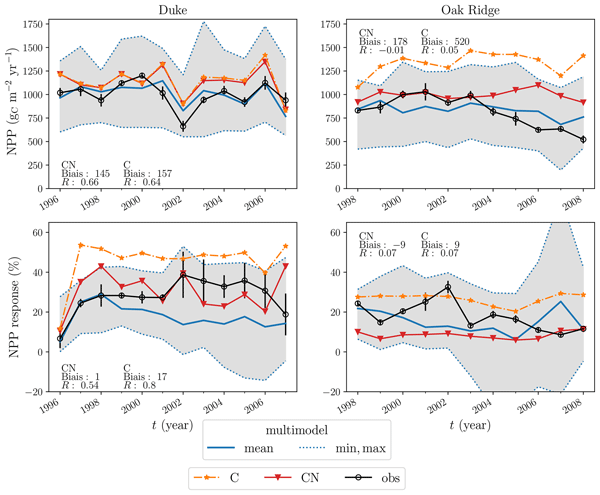
The article describes the implementation of the nitrogen cycle in the land surface model ISBA (Interaction-Soil-Biosphere-Atmosphere). The model is evaluated using Free Air CO2 Enrichment experiments. A comparison with a multi-model analysis shows that the nitrogen model version performs better than the carbon-only version, notably a reduced sensitivity to elevated CO2, and smaller C stocks. We also present a detailed analysis of the simulated N dynamics in the soil.
Raphael Garisoain, Christine Delire, Bertrand Decharme, and Laure Gandois
Biogeosciences, 23, 3407–3431, https://doi.org/10.5194/bg-23-3407-2026, https://doi.org/10.5194/bg-23-3407-2026, 2026
Short summary
Short summary
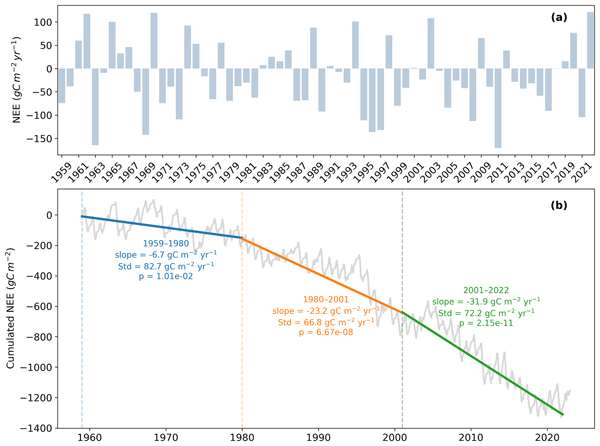
Peatlands store vast amounts of carbon, helping to slow climate change. We studied a mountain peatland in the Pyrenees to understand how warming and drought affect its ability to retain carbon. Using land surface modeling and field data from the past 64 years, we found that higher temperatures increase plant growth, but frequent and intense droughts cause large carbon losses, threatening peatlands' role as long-term carbon sinks.
Silvana Ramos Buarque, Bertrand Decharme, Alina L. Barbu, and Laurent Franchisteguy
Earth Syst. Sci. Data, 17, 7227–7249, https://doi.org/10.5194/essd-17-7227-2025, https://doi.org/10.5194/essd-17-7227-2025, 2025
Short summary
Short summary
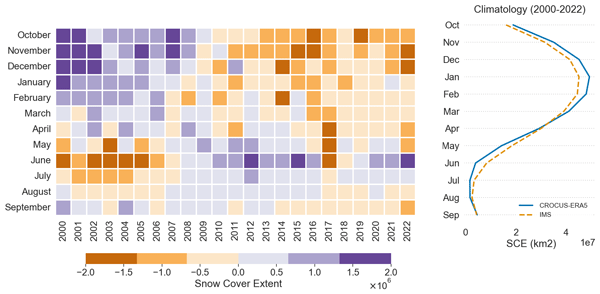
The Crocus-ERA5 snow dataset supports Arctic snow monitoring and contributes to the Arctic Report Card. It improves on its predecessor with higher spatial resolution (0.25° vs. 0.75°), enhancing topographic and land cover detail. The product’s performance is assessed in terms of snow depth and cover compared to in situ observations and satellite data. The findings show a notable improvement, though remaining biases appear in boreal forests, where snow–forest interactions are not captured.
Bertrand Decharme
Geosci. Model Dev., 18, 9349–9384, https://doi.org/10.5194/gmd-18-9349-2025, https://doi.org/10.5194/gmd-18-9349-2025, 2025
Short summary
Short summary
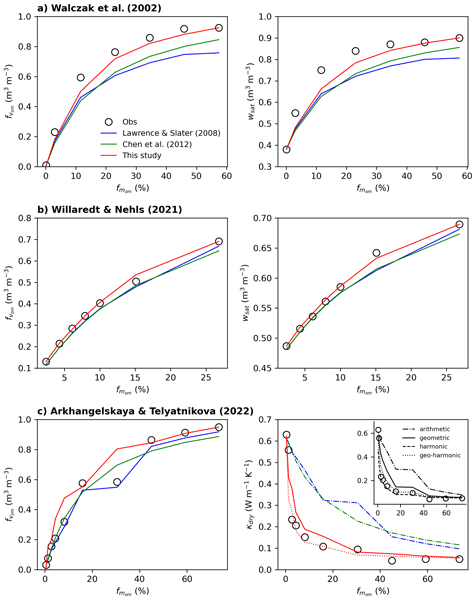
This study resolves a key inconsistency in how Earth system models represent the physical properties of soil organic matter in land surface models. It introduces a new method to compute its volumetric fraction and physical effects using standard input data and soil mixture theory. Validated with experimental mixtures and field observations, the proposed framework improves the physical realism of soil property estimates.
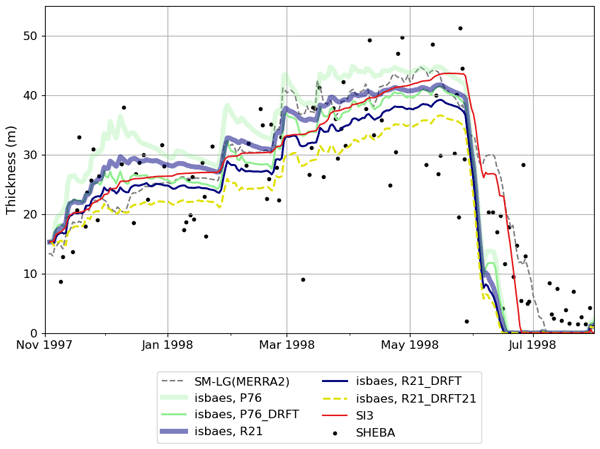
Théo Brivoal, Virginie Guemas, Martin Vancoppenolle, Clément Rousset, and Bertrand Decharme
Geosci. Model Dev., 18, 6885–6902, https://doi.org/10.5194/gmd-18-6885-2025, https://doi.org/10.5194/gmd-18-6885-2025, 2025
Short summary
Short summary
Snow in polar regions is key to sea ice formation and the Earth's climate, but current climate models simplify snow cover on sea ice. This study integrates an intermediate-complexity snow-physics scheme into a sea ice model designed for climate applications. We show that modeling the temporal changes in properties such as the density and thermal conductivity of the snow layers leads to a more accurate representation of heat transfer between the underlying sea ice and the atmosphere.
Rubaya Pervin, Scott Robeson, Mallory Barnes, Stephen Sitch, Anthony Walker, Ben Poulter, Fabienne Maignan, Qing Sun, Thomas Colligan, Sönke Zaehle, Kashif Mahmud, Peter Anthoni, Almut Arneth, Vivek Arora, Vladislav Bastrikov, Liam Bogucki, Bertrand Decharme, Christine Delire, Stefanie Falk, Akihiko Ito, Etsushi Kato, Daniel Kennedy, Jürgen Knauer, Michael O’Sullivan, Wenping Yuan, and Natasha MacBean
EGUsphere, https://doi.org/10.5194/egusphere-2025-2841, https://doi.org/10.5194/egusphere-2025-2841, 2025
Short summary
Short summary
Drylands contribute more than a third of the global vegetation productivity. Yet, these regions are not well represented in global vegetation models. Here, we tested how well 15 global models capture annual changes in dryland vegetation productivity. Models that didn’t have vegetation change over time or fire have lower variability in vegetation productivity. Models need better representation of grass cover types and their coverage. Our work highlights where and how these models need to improve.
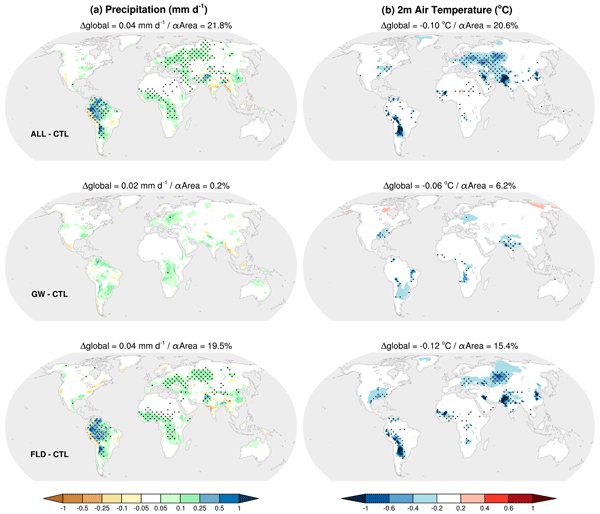
Bertrand Decharme and Jeanne Colin
Earth Syst. Dynam., 16, 729–752, https://doi.org/10.5194/esd-16-729-2025, https://doi.org/10.5194/esd-16-729-2025, 2025
Short summary
Short summary
Our study uses a global climate model to investigate how groundwater and floodplains influence today's climate. We found that these continental water sources, often overlooked in climate models, can influence precipitation, temperature, and land surface hydrology. This research contributes to a better understanding of the dynamics of the Earth system and highlights the importance of considering interactions between hydrology and the atmosphere.
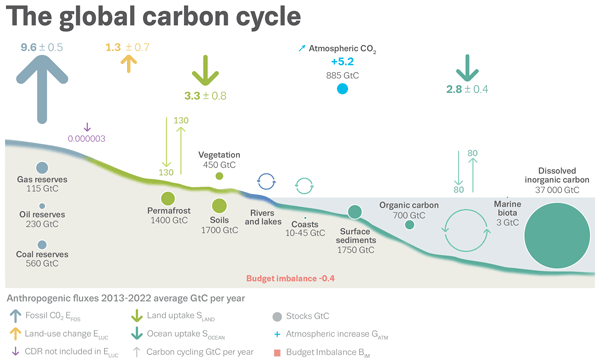
Pierre Friedlingstein, Michael O'Sullivan, Matthew W. Jones, Robbie M. Andrew, Dorothee C. E. Bakker, Judith Hauck, Peter Landschützer, Corinne Le Quéré, Ingrid T. Luijkx, Glen P. Peters, Wouter Peters, Julia Pongratz, Clemens Schwingshackl, Stephen Sitch, Josep G. Canadell, Philippe Ciais, Robert B. Jackson, Simone R. Alin, Peter Anthoni, Leticia Barbero, Nicholas R. Bates, Meike Becker, Nicolas Bellouin, Bertrand Decharme, Laurent Bopp, Ida Bagus Mandhara Brasika, Patricia Cadule, Matthew A. Chamberlain, Naveen Chandra, Thi-Tuyet-Trang Chau, Frédéric Chevallier, Louise P. Chini, Margot Cronin, Xinyu Dou, Kazutaka Enyo, Wiley Evans, Stefanie Falk, Richard A. Feely, Liang Feng, Daniel J. Ford, Thomas Gasser, Josefine Ghattas, Thanos Gkritzalis, Giacomo Grassi, Luke Gregor, Nicolas Gruber, Özgür Gürses, Ian Harris, Matthew Hefner, Jens Heinke, Richard A. Houghton, George C. Hurtt, Yosuke Iida, Tatiana Ilyina, Andrew R. Jacobson, Atul Jain, Tereza Jarníková, Annika Jersild, Fei Jiang, Zhe Jin, Fortunat Joos, Etsushi Kato, Ralph F. Keeling, Daniel Kennedy, Kees Klein Goldewijk, Jürgen Knauer, Jan Ivar Korsbakken, Arne Körtzinger, Xin Lan, Nathalie Lefèvre, Hongmei Li, Junjie Liu, Zhiqiang Liu, Lei Ma, Greg Marland, Nicolas Mayot, Patrick C. McGuire, Galen A. McKinley, Gesa Meyer, Eric J. Morgan, David R. Munro, Shin-Ichiro Nakaoka, Yosuke Niwa, Kevin M. O'Brien, Are Olsen, Abdirahman M. Omar, Tsuneo Ono, Melf Paulsen, Denis Pierrot, Katie Pocock, Benjamin Poulter, Carter M. Powis, Gregor Rehder, Laure Resplandy, Eddy Robertson, Christian Rödenbeck, Thais M. Rosan, Jörg Schwinger, Roland Séférian, T. Luke Smallman, Stephen M. Smith, Reinel Sospedra-Alfonso, Qing Sun, Adrienne J. Sutton, Colm Sweeney, Shintaro Takao, Pieter P. Tans, Hanqin Tian, Bronte Tilbrook, Hiroyuki Tsujino, Francesco Tubiello, Guido R. van der Werf, Erik van Ooijen, Rik Wanninkhof, Michio Watanabe, Cathy Wimart-Rousseau, Dongxu Yang, Xiaojuan Yang, Wenping Yuan, Xu Yue, Sönke Zaehle, Jiye Zeng, and Bo Zheng
Earth Syst. Sci. Data, 15, 5301–5369, https://doi.org/10.5194/essd-15-5301-2023, https://doi.org/10.5194/essd-15-5301-2023, 2023
Short summary
Short summary
The Global Carbon Budget 2023 describes the methodology, main results, and data sets used to quantify the anthropogenic emissions of carbon dioxide (CO2) and their partitioning among the atmosphere, land ecosystems, and the ocean over the historical period (1750–2023). These living datasets are updated every year to provide the highest transparency and traceability in the reporting of CO2, the key driver of climate change.
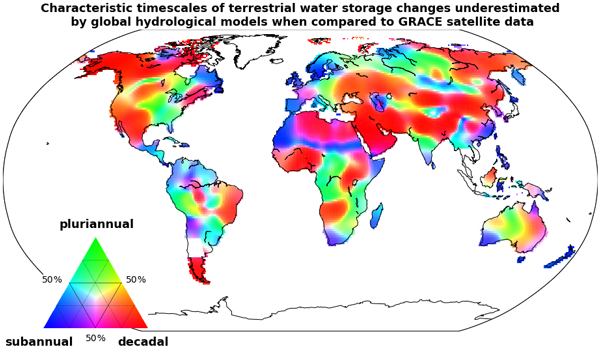
Julia Pfeffer, Anny Cazenave, Alejandro Blazquez, Bertrand Decharme, Simon Munier, and Anne Barnoud
Hydrol. Earth Syst. Sci., 27, 3743–3768, https://doi.org/10.5194/hess-27-3743-2023, https://doi.org/10.5194/hess-27-3743-2023, 2023
Short summary
Short summary
The GRACE (Gravity Recovery And Climate Experiment) satellite mission enabled the quantification of water mass redistributions from 2002 to 2017. The analysis of GRACE satellite data shows here that slow changes in terrestrial water storage occurring over a few years to a decade are severely underestimated by global hydrological models. Several sources of errors may explain such biases, likely including the inaccurate representation of groundwater storage changes.
Antoine Sobaga, Bertrand Decharme, Florence Habets, Christine Delire, Noële Enjelvin, Paul-Olivier Redon, Pierre Faure-Catteloin, and Patrick Le Moigne
Hydrol. Earth Syst. Sci., 27, 2437–2461, https://doi.org/10.5194/hess-27-2437-2023, https://doi.org/10.5194/hess-27-2437-2023, 2023
Short summary
Short summary
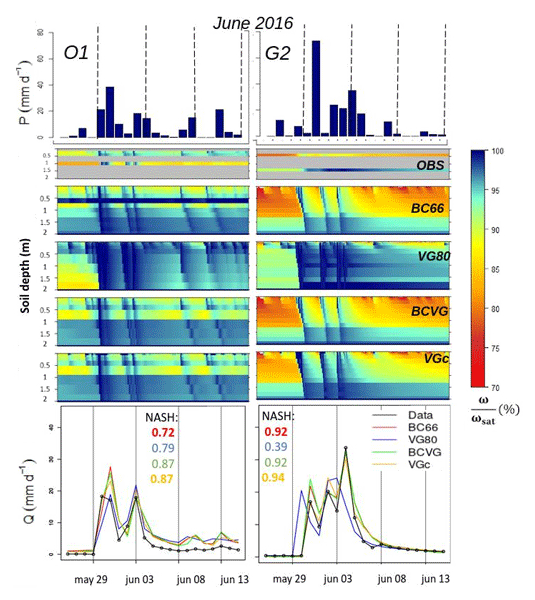
Seven instrumented lysimeters are used to assess the simulation of the soil water dynamic in one land surface model. Four water potential and hydraulic conductivity closed-form equations, including one mixed form, are evaluated. One form is more relevant for simulating drainage, especially during intense drainage events. The soil profile heterogeneity of one parameter of the closed-form equations is shown to be important.
Antoine Sobaga, Bertrand Decharme, Florence Habets, Christine Delire, Noële Enjelvin, Paul-Olivier Redon, Pierre Faure-Catteloin, and Patrick Le Moigne
EGUsphere, https://doi.org/10.5194/egusphere-2022-274, https://doi.org/10.5194/egusphere-2022-274, 2022
Preprint archived
Short summary
Short summary
Seven instrumented lysimeters are used to assess the simulation of the soil water dynamic in one land surface model. Three water potential and hydraulic conductivity closed-form equations including one mixed form are evaluated. The mixed form is more relevant to simulate drainage especially during intense drainage events. Soil profile heterogeneity of one parameter of the closed-form equations is shown to be important.

Simon Munier and Bertrand Decharme
Earth Syst. Sci. Data, 14, 2239–2258, https://doi.org/10.5194/essd-14-2239-2022, https://doi.org/10.5194/essd-14-2239-2022, 2022
Short summary
Short summary
This paper presents a new global-scale river network at 1/12°, generated automatically and assessed over the 69 largest basins of the world. A set of hydro-geomorphological parameters are derived at the same spatial resolution, including a description of river stretches (length, slope, width, roughness, bankfull depth), floodplains (roughness, sub-grid topography) and aquifers (transmissivity, porosity, sub-grid topography). The dataset may be useful for hydrology modelling or climate studies.
Pierre Friedlingstein, Matthew W. Jones, Michael O'Sullivan, Robbie M. Andrew, Dorothee C. E. Bakker, Judith Hauck, Corinne Le Quéré, Glen P. Peters, Wouter Peters, Julia Pongratz, Stephen Sitch, Josep G. Canadell, Philippe Ciais, Rob B. Jackson, Simone R. Alin, Peter Anthoni, Nicholas R. Bates, Meike Becker, Nicolas Bellouin, Laurent Bopp, Thi Tuyet Trang Chau, Frédéric Chevallier, Louise P. Chini, Margot Cronin, Kim I. Currie, Bertrand Decharme, Laique M. Djeutchouang, Xinyu Dou, Wiley Evans, Richard A. Feely, Liang Feng, Thomas Gasser, Dennis Gilfillan, Thanos Gkritzalis, Giacomo Grassi, Luke Gregor, Nicolas Gruber, Özgür Gürses, Ian Harris, Richard A. Houghton, George C. Hurtt, Yosuke Iida, Tatiana Ilyina, Ingrid T. Luijkx, Atul Jain, Steve D. Jones, Etsushi Kato, Daniel Kennedy, Kees Klein Goldewijk, Jürgen Knauer, Jan Ivar Korsbakken, Arne Körtzinger, Peter Landschützer, Siv K. Lauvset, Nathalie Lefèvre, Sebastian Lienert, Junjie Liu, Gregg Marland, Patrick C. McGuire, Joe R. Melton, David R. Munro, Julia E. M. S. Nabel, Shin-Ichiro Nakaoka, Yosuke Niwa, Tsuneo Ono, Denis Pierrot, Benjamin Poulter, Gregor Rehder, Laure Resplandy, Eddy Robertson, Christian Rödenbeck, Thais M. Rosan, Jörg Schwinger, Clemens Schwingshackl, Roland Séférian, Adrienne J. Sutton, Colm Sweeney, Toste Tanhua, Pieter P. Tans, Hanqin Tian, Bronte Tilbrook, Francesco Tubiello, Guido R. van der Werf, Nicolas Vuichard, Chisato Wada, Rik Wanninkhof, Andrew J. Watson, David Willis, Andrew J. Wiltshire, Wenping Yuan, Chao Yue, Xu Yue, Sönke Zaehle, and Jiye Zeng
Earth Syst. Sci. Data, 14, 1917–2005, https://doi.org/10.5194/essd-14-1917-2022, https://doi.org/10.5194/essd-14-1917-2022, 2022
Short summary
Short summary
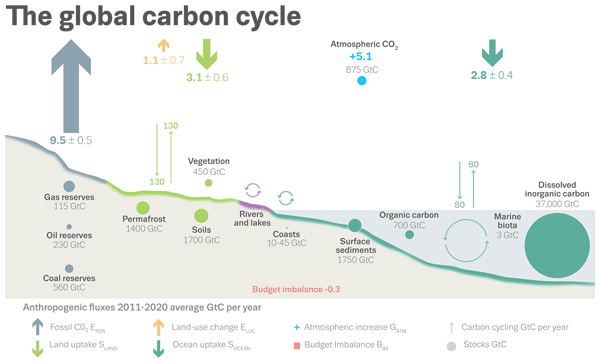
The Global Carbon Budget 2021 describes the data sets and methodology used to quantify the emissions of carbon dioxide and their partitioning among the atmosphere, land, and ocean. These living data are updated every year to provide the highest transparency and traceability in the reporting of CO2, the key driver of climate change.
Thomas Pauze, Axel Bouchet, Isabelle Gouttevin, Aaron Boone, Mathieu Fructus, Matthieu Lafaysse, Erwan Le Gac, Agnès Rivière, and Yves Lejeune
EGUsphere, https://doi.org/10.5194/egusphere-2026-4137, https://doi.org/10.5194/egusphere-2026-4137, 2026
This preprint is open for discussion and under review for Geoscientific Model Development (GMD).
Short summary
Short summary
In mid-altitude mountainous areas, snow acts as a water reservoir and is impacted by forest: to represent it we use a model called MEB/Crocus. It has been developed in boreal forests. Its results at a mid-altitude alpine site (the Col de Porte) were not convincing. We modify parametrizations that govern the behavior of intercepted snow to have a more realistic representation. We improve results of simulated snowpack under forest at Col de Porte and do not change performance in boreal sites.
Jeanne Decayeux, Bertrand Decharme, Romain Darnajoux, and Christine Delire
Geosci. Model Dev., 19, 7787–7815, https://doi.org/10.5194/gmd-19-7787-2026, https://doi.org/10.5194/gmd-19-7787-2026, 2026
Short summary
Short summary
The article describes the implementation of the nitrogen cycle in the land surface model ISBA (Interaction-Soil-Biosphere-Atmosphere). The model is evaluated using Free Air CO2 Enrichment experiments. A comparison with a multi-model analysis shows that the nitrogen model version performs better than the carbon-only version, notably a reduced sensitivity to elevated CO2, and smaller C stocks. We also present a detailed analysis of the simulated N dynamics in the soil.
Tanguy Lunel, Belén Martí, Aaron Boone, and Patrick Le Moigne
Hydrol. Earth Syst. Sci., 30, 5117–5143, https://doi.org/10.5194/hess-30-5117-2026, https://doi.org/10.5194/hess-30-5117-2026, 2026
Short summary
Short summary
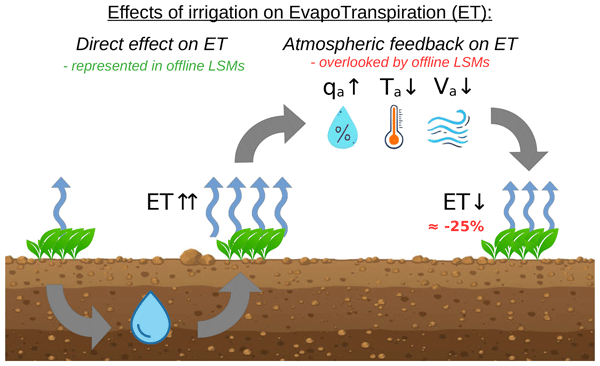
Modelling evapotranspiration is essential for understanding the water cycle. While irrigation is known to increase evapotranspiration, it is less known that it also modifies local weather, which can in turn partially reduce evapotranspiration. This latter phenomenon is overlooked in some land surface model configurations. This study investigates and quantifies the impact of this oversight, showing that land surface models overestimate evapotranspiration by about 25% for crops in irrigated areas.
Matthias Cuntz, Stephan Thober, Anne Verhoef, Yijian Zeng, Aaron Boone, Agnès Ducharne, Sujan Koirala, David M. Lawrence, Philipp de Vrese, Carsten Montzka, Sonia I. Seneviratne, Harry Vereecken, Dani Or, Salma Tafasca, Naoki Mizukami, Rich Ellis, Patrick C. McGuire, and Lukas Gudmundsson
EGUsphere, https://doi.org/10.5194/egusphere-2026-4223, https://doi.org/10.5194/egusphere-2026-4223, 2026
Preprint archived
Short summary
Short summary
Land surface models (LSMs) are essential tools to analyze future climate change. Here we pushed state-of-the-art LSMs out of their comfort zone revealing hidden connections between processes encoded into the models. The LSMs reacted differently due to complex, sometimes counter-intuitive interactions of different water fluxes. We identified surface runoff and soil evaporation as the two main reasons behind model differences, which should be improved by using more mechanistic descriptions.
Oscar Rojas-Munoz, Constantin Ardilouze, Bertrand Bonan, Diane Tzanos, Darren Ghent, Céline Lamarche, Thomas Nagler, and Jean-Christophe Calvet
The Cryosphere, 20, 4099–4115, https://doi.org/10.5194/tc-20-4099-2026, https://doi.org/10.5194/tc-20-4099-2026, 2026
Short summary
Short summary
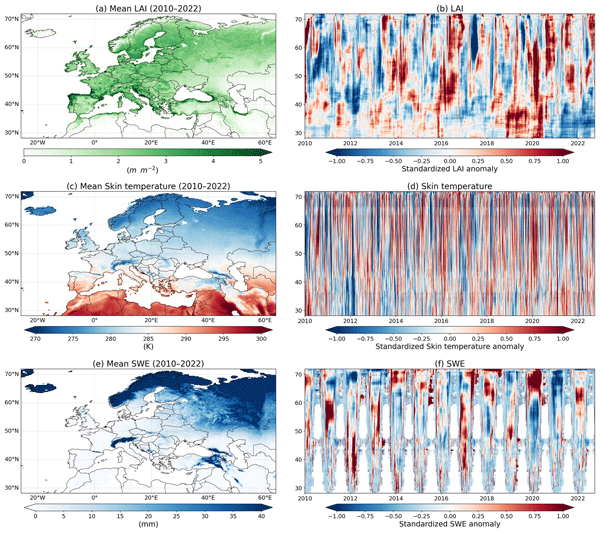
This study evaluated how updating land cover maps, such as forests, grasslands, and croplands, affects simulations of snow and land surface temperatures across Europe from 2010 to 2022. Results using older, less detailed maps were compared with those from newer, high-resolution data. The updated maps improved the accuracy of snow predictions, particularly in areas where grasslands transitioned to forests. However, the improvements were less noticeable for temperature simulations.
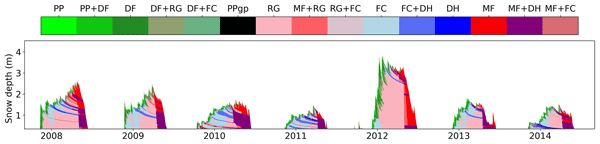
Matthieu Lafaysse, Marie Dumont, Basile De Fleurian, Mathieu Fructus, Rafife Nheili, Léo Viallon-Galinier, Matthieu Baron, Aaron Boone, Axel Bouchet, Julien Brondex, Carlo Carmagnola, Bertrand Cluzet, Kévin Fourteau, Ange Haddjeri, Pascal Hagenmuller, Giulia Mazzotti, Marie Minvielle, Samuel Morin, Louis Quéno, Léon Roussel, Pierre Spandre, François Tuzet, and Vincent Vionnet
Geosci. Model Dev., 19, 6273–6334, https://doi.org/10.5194/gmd-19-6273-2026, https://doi.org/10.5194/gmd-19-6273-2026, 2026
Short summary
Short summary
This article is a comprehensive description of the 3.0.2 stable release of the Crocus snowpack model. It describes various new implementations since the last reference article in 2012 and a review of the available scientific evaluations and applications of the model. This provides guidance for the future of numerical snow modelling.
Syam Chintala, Lionel Jarlan, Vincent Rivalland, Aaron Boone, Oluwakemi Dare-Idowu, Valerie Le Dantec, Gilles Boulet, BVN P. Kambhammettu, and Aurore Brut
EGUsphere, https://doi.org/10.5194/egusphere-2026-3119, https://doi.org/10.5194/egusphere-2026-3119, 2026
Short summary
Short summary
We studied how maize crops use water and absorb carbon under contrasting climates using a land surface model coupled with a photosynthesis scheme. The model successfully reproduced ecosystem-scale crop productivity, water loss, and water use efficiency, a key indicator linking carbon uptake and water use. Our results show that the model can reliably capture crop responses to climate and irrigation practices, helping improve predictions of agricultural water use and crop productivity.
Raphael Garisoain, Christine Delire, Bertrand Decharme, and Laure Gandois
Biogeosciences, 23, 3407–3431, https://doi.org/10.5194/bg-23-3407-2026, https://doi.org/10.5194/bg-23-3407-2026, 2026
Short summary
Short summary
Peatlands store vast amounts of carbon, helping to slow climate change. We studied a mountain peatland in the Pyrenees to understand how warming and drought affect its ability to retain carbon. Using land surface modeling and field data from the past 64 years, we found that higher temperatures increase plant growth, but frequent and intense droughts cause large carbon losses, threatening peatlands' role as long-term carbon sinks.
Oscar M. Baez-Villanueva, Alfredo Crespo-Otero, Sara Modanesi, Pierre Laluet, Sergio Vicente-Serrano, Jaap Schellekens, Jacopo Dari, Hylke E. Beck, Wouter Dorigo, Christian Massari, Chiara Corbari, Joppe Massant, Kwint Delbare, Olivier Bonte, Aaron Boone, Diego Fernández-Prieto, and Diego G. Miralles
EGUsphere, https://doi.org/10.5194/egusphere-2026-1856, https://doi.org/10.5194/egusphere-2026-1856, 2026
Short summary
Short summary
We developed a new method to estimate daily land evaporation at high resolution across the Iberian Peninsula, explicitly accounting for irrigation. By combining satellite and meteorological data, we show that irrigation can strongly increase evaporation in agricultural areas. The results better match ground observations and improve understanding of water use. This approach can support farming decisions and water management at the regional scale, and will be extended to global applications.
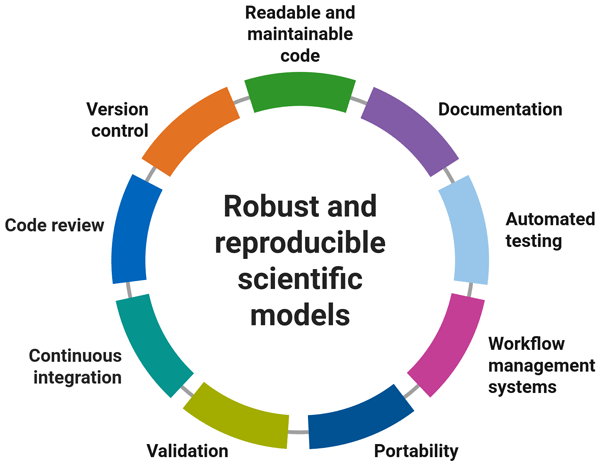
Konstantin Gregor, Benjamin F. Meyer, Tillmann Gaida, Victor Justo Vasquez, Karina Bett-Williams, Matthew Forrest, João P. Darela-Filho, Sam Rabin, Marcos Longo, Joe R. Melton, Johan Nord, Peter Anthoni, Vladislav Bastrikov, Thomas Colligan, Christine Delire, Michael C. Dietze, George Hurtt, Akihiko Ito, Lasse T. Keetz, Jürgen Knauer, Johannes Köster, Tzu-Shun Lin, Lei Ma, Marie Minvielle, Stefan Olin, Sebastian Ostberg, Hao Shi, Reiner Schnur, Qing Sun, Peter E. Thornton, and Anja Rammig
Geosci. Model Dev., 19, 2407–2436, https://doi.org/10.5194/gmd-19-2407-2026, https://doi.org/10.5194/gmd-19-2407-2026, 2026
Short summary
Short summary
Geoscientific models are crucial for understanding Earth’s processes. However, they sometimes do not adhere to highest software quality standards, and scientific results are often hard to reproduce due to the complexity of the workflows. Here we gather the expertise of 20 modeling groups and software engineers to define best practices for making geoscientific models maintainable, usable, and reproducible. We conclude with an open-source example serving as a reference for modeling communities.

Belén Martí, Jannis Groh, Guylaine Canut, and Aaron Boone
Geosci. Model Dev., 19, 1991–2021, https://doi.org/10.5194/gmd-19-1991-2026, https://doi.org/10.5194/gmd-19-1991-2026, 2026
Short summary
Short summary
The characterization of vegetation at two sites proved insufficient to adequately simulate the evapotranspiration. A dry surface layer was implemented in the land surface model SURFEX-ISBA (Externalized Surface-Interactions Soil-Biosphere-Atmosphere) v9.0. It is compared to simulations without a soil resistance. The application to an alfalfa site and a natural grass site in semiarid conditions results in an improvement in the estimation of the latent heat flux. The surface energy budget and the soil and vegetation characteristics are explored in detail.
Silvana Ramos Buarque, Bertrand Decharme, Alina L. Barbu, and Laurent Franchisteguy
Earth Syst. Sci. Data, 17, 7227–7249, https://doi.org/10.5194/essd-17-7227-2025, https://doi.org/10.5194/essd-17-7227-2025, 2025
Short summary
Short summary
The Crocus-ERA5 snow dataset supports Arctic snow monitoring and contributes to the Arctic Report Card. It improves on its predecessor with higher spatial resolution (0.25° vs. 0.75°), enhancing topographic and land cover detail. The product’s performance is assessed in terms of snow depth and cover compared to in situ observations and satellite data. The findings show a notable improvement, though remaining biases appear in boreal forests, where snow–forest interactions are not captured.
Bertrand Decharme
Geosci. Model Dev., 18, 9349–9384, https://doi.org/10.5194/gmd-18-9349-2025, https://doi.org/10.5194/gmd-18-9349-2025, 2025
Short summary
Short summary
This study resolves a key inconsistency in how Earth system models represent the physical properties of soil organic matter in land surface models. It introduces a new method to compute its volumetric fraction and physical effects using standard input data and soil mixture theory. Validated with experimental mixtures and field observations, the proposed framework improves the physical realism of soil property estimates.
Théo Brivoal, Virginie Guemas, Martin Vancoppenolle, Clément Rousset, and Bertrand Decharme
Geosci. Model Dev., 18, 6885–6902, https://doi.org/10.5194/gmd-18-6885-2025, https://doi.org/10.5194/gmd-18-6885-2025, 2025
Short summary
Short summary
Snow in polar regions is key to sea ice formation and the Earth's climate, but current climate models simplify snow cover on sea ice. This study integrates an intermediate-complexity snow-physics scheme into a sea ice model designed for climate applications. We show that modeling the temporal changes in properties such as the density and thermal conductivity of the snow layers leads to a more accurate representation of heat transfer between the underlying sea ice and the atmosphere.
Rubaya Pervin, Scott Robeson, Mallory Barnes, Stephen Sitch, Anthony Walker, Ben Poulter, Fabienne Maignan, Qing Sun, Thomas Colligan, Sönke Zaehle, Kashif Mahmud, Peter Anthoni, Almut Arneth, Vivek Arora, Vladislav Bastrikov, Liam Bogucki, Bertrand Decharme, Christine Delire, Stefanie Falk, Akihiko Ito, Etsushi Kato, Daniel Kennedy, Jürgen Knauer, Michael O’Sullivan, Wenping Yuan, and Natasha MacBean
EGUsphere, https://doi.org/10.5194/egusphere-2025-2841, https://doi.org/10.5194/egusphere-2025-2841, 2025
Short summary
Short summary
Drylands contribute more than a third of the global vegetation productivity. Yet, these regions are not well represented in global vegetation models. Here, we tested how well 15 global models capture annual changes in dryland vegetation productivity. Models that didn’t have vegetation change over time or fire have lower variability in vegetation productivity. Models need better representation of grass cover types and their coverage. Our work highlights where and how these models need to improve.
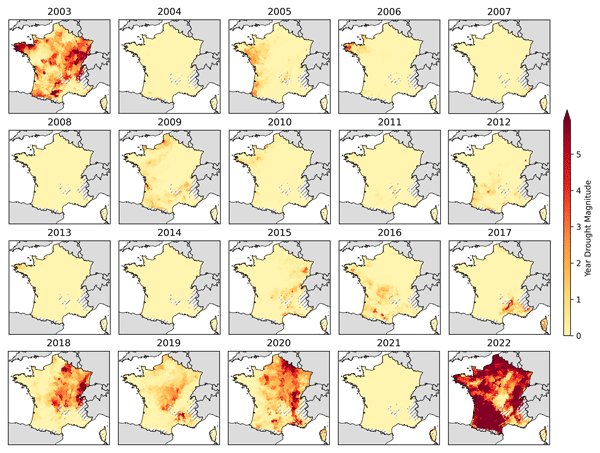
Sophie Barthelemy, Bertrand Bonan, Miquel Tomas-Burguera, Gilles Grandjean, Séverine Bernardie, Jean-Philippe Naulin, Patrick Le Moigne, Aaron Boone, and Jean-Christophe Calvet
Hydrol. Earth Syst. Sci., 29, 2321–2337, https://doi.org/10.5194/hess-29-2321-2025, https://doi.org/10.5194/hess-29-2321-2025, 2025
Short summary
Short summary
A drought index is developed that quantifies drought on an annual scale, making it applicable to monitoring clay shrinkage damage to buildings. A comparison with the number of insurance claims for subsidence shows that the presence of trees near individual houses must be taken into account. Significant soil moisture droughts occurred in France in 2003, 2018, 2019, 2020, and 2022. Particularly high index values are observed in 2022. It is found that droughts will become more severe in the future.
Bertrand Decharme and Jeanne Colin
Earth Syst. Dynam., 16, 729–752, https://doi.org/10.5194/esd-16-729-2025, https://doi.org/10.5194/esd-16-729-2025, 2025
Short summary
Short summary
Our study uses a global climate model to investigate how groundwater and floodplains influence today's climate. We found that these continental water sources, often overlooked in climate models, can influence precipitation, temperature, and land surface hydrology. This research contributes to a better understanding of the dynamics of the Earth system and highlights the importance of considering interactions between hydrology and the atmosphere.
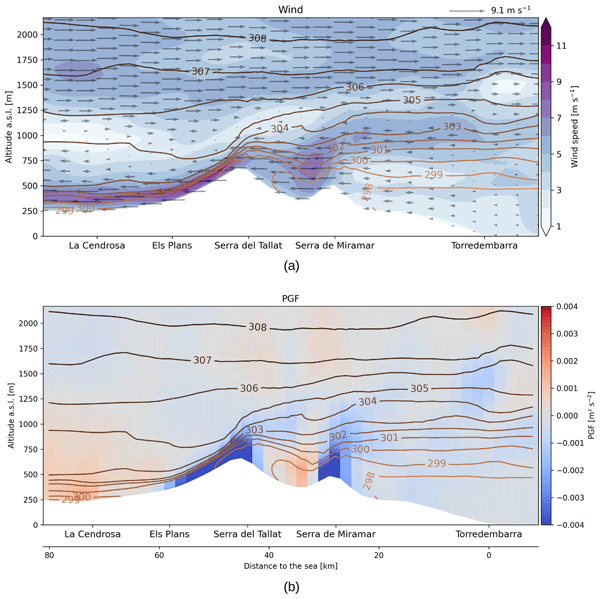
Tanguy Lunel, Maria Antonia Jimenez, Joan Cuxart, Daniel Martinez-Villagrasa, Aaron Boone, and Patrick Le Moigne
Atmos. Chem. Phys., 24, 7637–7666, https://doi.org/10.5194/acp-24-7637-2024, https://doi.org/10.5194/acp-24-7637-2024, 2024
Short summary
Short summary
During the summer in Catalonia, a cool wind, the marinada, blows into the eastern Ebro basin in the afternoon. This study investigates its previously unclear dynamics using observations and a meteorological model. It is found to be driven by a cool marine air mass that flows over the mountains into the basin. The study shows how the sea breeze, upslope winds, larger weather patterns and irrigation play a prominent role in the formation and characteristics of the marinada.
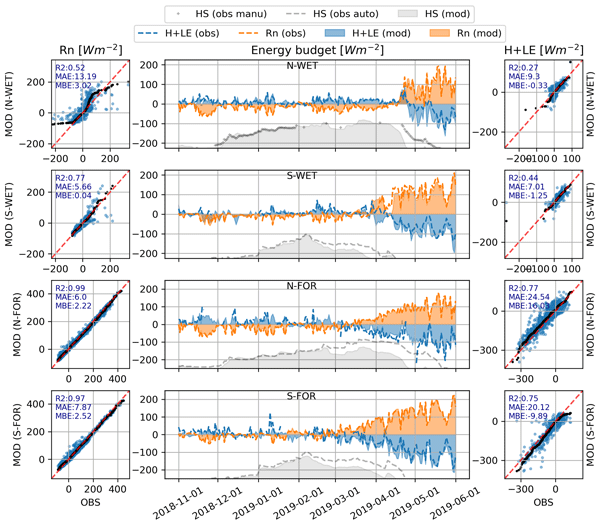
Jari-Pekka Nousu, Matthieu Lafaysse, Giulia Mazzotti, Pertti Ala-aho, Hannu Marttila, Bertrand Cluzet, Mika Aurela, Annalea Lohila, Pasi Kolari, Aaron Boone, Mathieu Fructus, and Samuli Launiainen
The Cryosphere, 18, 231–263, https://doi.org/10.5194/tc-18-231-2024, https://doi.org/10.5194/tc-18-231-2024, 2024
Short summary
Short summary
The snowpack has a major impact on the land surface energy budget. Accurate simulation of the snowpack energy budget is difficult, and studies that evaluate models against energy budget observations are rare. We compared predictions from well-known models with observations of energy budgets, snow depths and soil temperatures in Finland. Our study identified contrasting strengths and limitations for the models. These results can be used for choosing the right models depending on the use cases.
Pierre Friedlingstein, Michael O'Sullivan, Matthew W. Jones, Robbie M. Andrew, Dorothee C. E. Bakker, Judith Hauck, Peter Landschützer, Corinne Le Quéré, Ingrid T. Luijkx, Glen P. Peters, Wouter Peters, Julia Pongratz, Clemens Schwingshackl, Stephen Sitch, Josep G. Canadell, Philippe Ciais, Robert B. Jackson, Simone R. Alin, Peter Anthoni, Leticia Barbero, Nicholas R. Bates, Meike Becker, Nicolas Bellouin, Bertrand Decharme, Laurent Bopp, Ida Bagus Mandhara Brasika, Patricia Cadule, Matthew A. Chamberlain, Naveen Chandra, Thi-Tuyet-Trang Chau, Frédéric Chevallier, Louise P. Chini, Margot Cronin, Xinyu Dou, Kazutaka Enyo, Wiley Evans, Stefanie Falk, Richard A. Feely, Liang Feng, Daniel J. Ford, Thomas Gasser, Josefine Ghattas, Thanos Gkritzalis, Giacomo Grassi, Luke Gregor, Nicolas Gruber, Özgür Gürses, Ian Harris, Matthew Hefner, Jens Heinke, Richard A. Houghton, George C. Hurtt, Yosuke Iida, Tatiana Ilyina, Andrew R. Jacobson, Atul Jain, Tereza Jarníková, Annika Jersild, Fei Jiang, Zhe Jin, Fortunat Joos, Etsushi Kato, Ralph F. Keeling, Daniel Kennedy, Kees Klein Goldewijk, Jürgen Knauer, Jan Ivar Korsbakken, Arne Körtzinger, Xin Lan, Nathalie Lefèvre, Hongmei Li, Junjie Liu, Zhiqiang Liu, Lei Ma, Greg Marland, Nicolas Mayot, Patrick C. McGuire, Galen A. McKinley, Gesa Meyer, Eric J. Morgan, David R. Munro, Shin-Ichiro Nakaoka, Yosuke Niwa, Kevin M. O'Brien, Are Olsen, Abdirahman M. Omar, Tsuneo Ono, Melf Paulsen, Denis Pierrot, Katie Pocock, Benjamin Poulter, Carter M. Powis, Gregor Rehder, Laure Resplandy, Eddy Robertson, Christian Rödenbeck, Thais M. Rosan, Jörg Schwinger, Roland Séférian, T. Luke Smallman, Stephen M. Smith, Reinel Sospedra-Alfonso, Qing Sun, Adrienne J. Sutton, Colm Sweeney, Shintaro Takao, Pieter P. Tans, Hanqin Tian, Bronte Tilbrook, Hiroyuki Tsujino, Francesco Tubiello, Guido R. van der Werf, Erik van Ooijen, Rik Wanninkhof, Michio Watanabe, Cathy Wimart-Rousseau, Dongxu Yang, Xiaojuan Yang, Wenping Yuan, Xu Yue, Sönke Zaehle, Jiye Zeng, and Bo Zheng
Earth Syst. Sci. Data, 15, 5301–5369, https://doi.org/10.5194/essd-15-5301-2023, https://doi.org/10.5194/essd-15-5301-2023, 2023
Short summary
Short summary
The Global Carbon Budget 2023 describes the methodology, main results, and data sets used to quantify the anthropogenic emissions of carbon dioxide (CO2) and their partitioning among the atmosphere, land ecosystems, and the ocean over the historical period (1750–2023). These living datasets are updated every year to provide the highest transparency and traceability in the reporting of CO2, the key driver of climate change.
Julia Pfeffer, Anny Cazenave, Alejandro Blazquez, Bertrand Decharme, Simon Munier, and Anne Barnoud
Hydrol. Earth Syst. Sci., 27, 3743–3768, https://doi.org/10.5194/hess-27-3743-2023, https://doi.org/10.5194/hess-27-3743-2023, 2023
Short summary
Short summary
The GRACE (Gravity Recovery And Climate Experiment) satellite mission enabled the quantification of water mass redistributions from 2002 to 2017. The analysis of GRACE satellite data shows here that slow changes in terrestrial water storage occurring over a few years to a decade are severely underestimated by global hydrological models. Several sources of errors may explain such biases, likely including the inaccurate representation of groundwater storage changes.
Antoine Sobaga, Bertrand Decharme, Florence Habets, Christine Delire, Noële Enjelvin, Paul-Olivier Redon, Pierre Faure-Catteloin, and Patrick Le Moigne
Hydrol. Earth Syst. Sci., 27, 2437–2461, https://doi.org/10.5194/hess-27-2437-2023, https://doi.org/10.5194/hess-27-2437-2023, 2023
Short summary
Short summary
Seven instrumented lysimeters are used to assess the simulation of the soil water dynamic in one land surface model. Four water potential and hydraulic conductivity closed-form equations, including one mixed form, are evaluated. One form is more relevant for simulating drainage, especially during intense drainage events. The soil profile heterogeneity of one parameter of the closed-form equations is shown to be important.

Malak Sadki, Simon Munier, Aaron Boone, and Sophie Ricci
Geosci. Model Dev., 16, 427–448, https://doi.org/10.5194/gmd-16-427-2023, https://doi.org/10.5194/gmd-16-427-2023, 2023
Short summary
Short summary
Predicting water resource evolution is a key challenge for the coming century.
Anthropogenic impacts on water resources, and particularly the effects of dams and reservoirs on river flows, are still poorly known and generally neglected in global hydrological studies. A parameterized reservoir model is reproduced to compute monthly releases in Spanish anthropized river basins. For global application, an exhaustive sensitivity analysis of the model parameters is performed on flows and volumes.
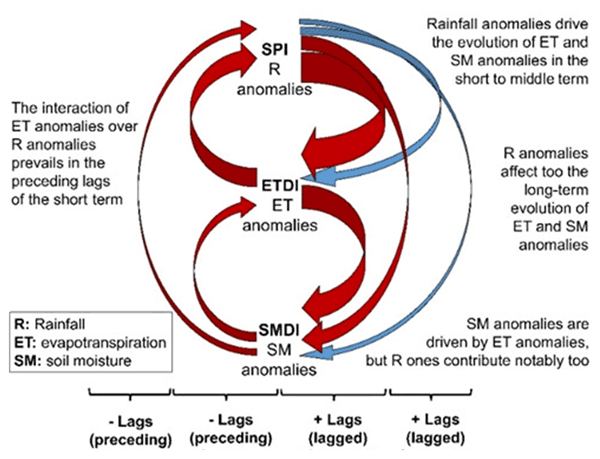
Jaime Gaona, Pere Quintana-Seguí, María José Escorihuela, Aaron Boone, and María Carmen Llasat
Nat. Hazards Earth Syst. Sci., 22, 3461–3485, https://doi.org/10.5194/nhess-22-3461-2022, https://doi.org/10.5194/nhess-22-3461-2022, 2022
Short summary
Short summary
Droughts represent a particularly complex natural hazard and require explorations of their multiple causes. Part of the complexity has roots in the interaction between the continuous changes in and deviation from normal conditions of the atmosphere and the land surface. The exchange between the atmospheric and surface conditions defines feedback towards dry or wet conditions. In semi-arid environments, energy seems to exceed water in its impact over the evolution of conditions, favoring drought.
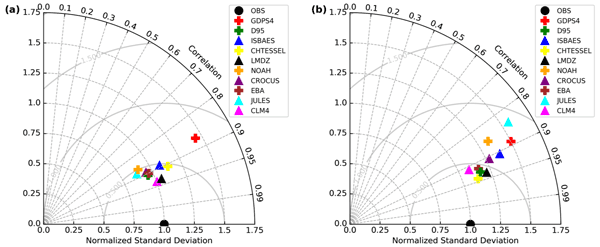
Patrick Le Moigne, Eric Bazile, Anning Cheng, Emanuel Dutra, John M. Edwards, William Maurel, Irina Sandu, Olivier Traullé, Etienne Vignon, Ayrton Zadra, and Weizhong Zheng
The Cryosphere, 16, 2183–2202, https://doi.org/10.5194/tc-16-2183-2022, https://doi.org/10.5194/tc-16-2183-2022, 2022
Short summary
Short summary
This paper describes an intercomparison of snow models, of varying complexity, used for numerical weather prediction or academic research. The results show that the simplest models are, under certain conditions, able to reproduce the surface temperature just as well as the most complex models. Moreover, the diversity of surface parameters of the models has a strong impact on the temporal variability of the components of the simulated surface energy balance.
Antoine Sobaga, Bertrand Decharme, Florence Habets, Christine Delire, Noële Enjelvin, Paul-Olivier Redon, Pierre Faure-Catteloin, and Patrick Le Moigne
EGUsphere, https://doi.org/10.5194/egusphere-2022-274, https://doi.org/10.5194/egusphere-2022-274, 2022
Preprint archived
Short summary
Short summary
Seven instrumented lysimeters are used to assess the simulation of the soil water dynamic in one land surface model. Three water potential and hydraulic conductivity closed-form equations including one mixed form are evaluated. The mixed form is more relevant to simulate drainage especially during intense drainage events. Soil profile heterogeneity of one parameter of the closed-form equations is shown to be important.
Simon Munier and Bertrand Decharme
Earth Syst. Sci. Data, 14, 2239–2258, https://doi.org/10.5194/essd-14-2239-2022, https://doi.org/10.5194/essd-14-2239-2022, 2022
Short summary
Short summary
This paper presents a new global-scale river network at 1/12°, generated automatically and assessed over the 69 largest basins of the world. A set of hydro-geomorphological parameters are derived at the same spatial resolution, including a description of river stretches (length, slope, width, roughness, bankfull depth), floodplains (roughness, sub-grid topography) and aquifers (transmissivity, porosity, sub-grid topography). The dataset may be useful for hydrology modelling or climate studies.
Pierre Friedlingstein, Matthew W. Jones, Michael O'Sullivan, Robbie M. Andrew, Dorothee C. E. Bakker, Judith Hauck, Corinne Le Quéré, Glen P. Peters, Wouter Peters, Julia Pongratz, Stephen Sitch, Josep G. Canadell, Philippe Ciais, Rob B. Jackson, Simone R. Alin, Peter Anthoni, Nicholas R. Bates, Meike Becker, Nicolas Bellouin, Laurent Bopp, Thi Tuyet Trang Chau, Frédéric Chevallier, Louise P. Chini, Margot Cronin, Kim I. Currie, Bertrand Decharme, Laique M. Djeutchouang, Xinyu Dou, Wiley Evans, Richard A. Feely, Liang Feng, Thomas Gasser, Dennis Gilfillan, Thanos Gkritzalis, Giacomo Grassi, Luke Gregor, Nicolas Gruber, Özgür Gürses, Ian Harris, Richard A. Houghton, George C. Hurtt, Yosuke Iida, Tatiana Ilyina, Ingrid T. Luijkx, Atul Jain, Steve D. Jones, Etsushi Kato, Daniel Kennedy, Kees Klein Goldewijk, Jürgen Knauer, Jan Ivar Korsbakken, Arne Körtzinger, Peter Landschützer, Siv K. Lauvset, Nathalie Lefèvre, Sebastian Lienert, Junjie Liu, Gregg Marland, Patrick C. McGuire, Joe R. Melton, David R. Munro, Julia E. M. S. Nabel, Shin-Ichiro Nakaoka, Yosuke Niwa, Tsuneo Ono, Denis Pierrot, Benjamin Poulter, Gregor Rehder, Laure Resplandy, Eddy Robertson, Christian Rödenbeck, Thais M. Rosan, Jörg Schwinger, Clemens Schwingshackl, Roland Séférian, Adrienne J. Sutton, Colm Sweeney, Toste Tanhua, Pieter P. Tans, Hanqin Tian, Bronte Tilbrook, Francesco Tubiello, Guido R. van der Werf, Nicolas Vuichard, Chisato Wada, Rik Wanninkhof, Andrew J. Watson, David Willis, Andrew J. Wiltshire, Wenping Yuan, Chao Yue, Xu Yue, Sönke Zaehle, and Jiye Zeng
Earth Syst. Sci. Data, 14, 1917–2005, https://doi.org/10.5194/essd-14-1917-2022, https://doi.org/10.5194/essd-14-1917-2022, 2022
Short summary
Short summary
The Global Carbon Budget 2021 describes the data sets and methodology used to quantify the emissions of carbon dioxide and their partitioning among the atmosphere, land, and ocean. These living data are updated every year to provide the highest transparency and traceability in the reporting of CO2, the key driver of climate change.
Cited articles
Abatzoglou, J. T., Dobrowski, S. Z., Parks, S. A., and Hegewisch, K. C.: TerraClimate, a high-resolution global dataset of monthly climate and climatic water balance from 1958–2015, Scientific Data, 5, 170191, https://doi.org/10.1038/sdata.2017.191, 2018. a
Adams, W. A.: The effect of organic matter on the bulk and true densities of some uncultivated podzolic soils, J. Soil Sci., 24, 10–17, https://doi.org/10.1111/j.1365-2389.1973.tb00737.x, 1973. a
Antico, A., Aguiar, R. O., and Amsler, M. L.: Hydrometric Data Rescue in the Paraná River Basin, Water Resour. Res., 54, 1368–1381, https://doi.org/10.1002/2017WR020897, 2018. a
Ardilouze, C. and Boone, A. A.: Impact of initializing the soil with a thermally and hydrologically balanced state on subseasonal predictability, Clim. Dynam., 62, 2629–2644, https://doi.org/10.1007/s00382-023-07024-x, 2024. a
Arkhangel'skaya, T. A.: Parameterization and mathematical modeling of the dependence of soil thermal diffusivity on the water content, Eurasian Soil Sci.+, 42, https://doi.org/10.1134/S1064229309020070, 2009. a, b, c
Assouline, S.: Modeling the Relationship between Soil Bulk Density and the Water Retention Curve, Vadose Zone J., 5, 554–563, https://doi.org/10.2136/vzj2005.0083, 2006a. a, b
Assouline, S.: Modeling the Relationship between Soil Bulk Density and the Hydraulic Conductivity Function, Vadose Zone J., 5, https://doi.org/10.2136/vzj2005.0084, 2006b. a, b
Assouline, S., Tessier, D., and Tavares-Filho, J.: Effect of Compaction on Soil Physical and Hydraulic Properties: Experimental Results and Modeling, Soil Sci. Soc. Am. J., 61, 390–398, https://doi.org/10.2136/sssaj1997.03615995006100020005x, 1997. a, b
Balland, V. and Arp, P. A.: Modeling soil thermal conductivities over a wide range of conditions, J. Environ. Eng. Sci., 4, https://doi.org/10.1139/s05-007, 2005. a, b, c
Batey, T.: Soil compaction and soil management – a review, Soil Use Manage., 25, 335–345, https://doi.org/10.1111/j.1475-2743.2009.00236.x, 2009. a
Batjes, N. H., Ribeiro, E., van Oostrum, A., Leenaars, J., Hengl, T., and Mendes de Jesus, J.: WoSIS: providing standardised soil profile data for the world, Earth Syst. Sci. Data, 9, 1–14, https://doi.org/10.5194/essd-9-1-2017, 2017. a, b
Batjes, N. H., Calisto, L., and de Sousa, L. M.: Providing quality-assessed and standardised soil data to support global mapping and modelling (WoSIS snapshot 2023), Earth Syst. Sci. Data, 16, 4735–4765, https://doi.org/10.5194/essd-16-4735-2024, 2024. a, b
Blyth, E. M., Arora, V. K., Clark, D. B., Dadson, S. J., De Kauwe, M. G., Lawrence, D. M., Melton, J. R., Pongratz, J., Turton, R. H., Yoshimura, K., and Yuan, H.: Advances in Land Surface Modelling, Current Climate Change Reports, 7, 45–71, https://doi.org/10.1007/s40641-021-00171-5, 2021. a
Boelter, D.: Important physical properties of peat materials, in: Proceedings of the Third International Peat Congress, 18–23 August 1968, Quebec, Canada, Department of Energy, Mines and Resources and National Research Council of Canada, 150–154, https://research.fs.usda.gov/treesearch/12921 (last access: 3 August 2026), 1968. a, b, c, d, e
Bonan, G. B. and Doney, S. C.: Climate, ecosystems, and planetary futures: The challenge to predict life in Earth system models, Science, 359, https://doi.org/10.1126/science.aam8328, 2018. a
Boone, A.: Modélisation des processus hydrologiques dans le schéma de surface ISBA: Inclusion d'un réservoir hydrologique, du gel et modélisation de la neige., PhD thesis, Météo-France, Toulouse, http://bibliotheque.meteo.fr/exl-php/cadcgp.php?
CMD=CHERCHE&MODELE=vues/mf_-_internet_recherche_
avancee_anonyme/tpl-r.html&WHERE_IS_DOC_REF_LIT=
ISO00020893&&TABLE=ILS_DOC (last access: 3 August 2026), 2002. a
CMD=CHERCHE&MODELE=vues/mf_-_internet_recherche_
avancee_anonyme/tpl-r.html&WHERE_IS_DOC_REF_LIT=
ISO00020893&&TABLE=ILS_DOC (last access: 3 August 2026), 2002. a
Boone, A. and Etchevers, P.: An Intercomparison of Three Snow Schemes of Varying Complexity Coupled to the Same Land Surface Model: Local-Scale Evaluation at an Alpine Site, J. Hydrometeorol., https://doi.org/10.1175/1525-7541(2001)002<0374:AIOTSS>2.0.CO;2, 2001. a
Boone, A., Masson, V., Meyers, T., and Noilhan, J.: The influence of the inclusion of soil freezing on simulations by a soil-vegetation-atmosphere transfer scheme, J. Appl. Meteorol., 39, https://doi.org/10.1175/1520-0450(2000)039<1544:TIOTIO>2.0.CO;2, 2000. a, b
Boone, A., Samuelsson, P., Gollvik, S., Napoly, A., Jarlan, L., Brun, E., and Decharme, B.: The interactions between soil–biosphere–atmosphere land surface model with a multi-energy balance (ISBA-MEB) option in SURFEXv8 – Part 1: Model description, Geosci. Model Dev., 10, 843–872, https://doi.org/10.5194/gmd-10-843-2017, 2017. a
Brown, J., Ferrians, O., Heginbottom, J., and Melnikov, E. S.: Circum-Arctic Map of Permafrost and Ground-Ice Conditions, (GGD318, Version 2), [Data Set], National Snow and Ice Data Center, Boulder, Colorado USA, https://doi.org/10.7265/SKBG-KF16 (last access: 20 January 2026), 2002. a
Burke, E. J., Zhang, Y., and Krinner, G.: Evaluating permafrost physics in the Coupled Model Intercomparison Project 6 (CMIP6) models and their sensitivity to climate change, The Cryosphere, 14, 3155–3174, https://doi.org/10.5194/tc-14-3155-2020, 2020. a
Campbell, G. S.: A simple method for determining unsaturated conductivity from moisture retention data, Soil Sci., 117, https://doi.org/10.1097/00010694-197406000-00001, 1974. a
Canadell, J., Jackson, R. B., Ehleringer, J. R., Mooney, H. A., Sala, O. E., and Schulze, E. D.: Maximum rooting depth of vegetation types at the global scale, Oecologia, 108, https://doi.org/10.1007/BF00329030, 1996. a
Carrer, D., Meurey, C., Ceamanos, X., Roujean, J. L., Calvet, J.-C., and Liu, S.: Dynamic mapping of snow-free vegetation and bare soil albedos at global 1km scale from 10-year analysis of MODIS satellite products, Remote Sens. Environ., https://doi.org/10.1016/j.rse.2013.08.041, 2014. a
Chadburn, S. E., Burke, E. J., Gallego-Sala, A. V., Smith, N. D., Bret-Harte, M. S., Charman, D. J., Drewer, J., Edgar, C. W., Euskirchen, E. S., Fortuniak, K., Gao, Y., Nakhavali, M., Pawlak, W., Schuur, E. A. G., and Westermann, S.: A new approach to simulate peat accumulation, degradation and stability in a global land surface scheme (JULES vn5.8_accumulate_soil) for northern and temperate peatlands, Geosci. Model Dev., 15, 1633–1657, https://doi.org/10.5194/gmd-15-1633-2022, 2022. a, b, c, d
Chen, L., Li, Y., Chen, F., Barr, A., Barlage, M., and Wan, B.: The incorporation of an organic soil layer in the Noah-MP land surface model and its evaluation over a boreal aspen forest, Atmos. Chem. Phys., 16, 8375–8387, https://doi.org/10.5194/acp-16-8375-2016, 2016. a, b, c, d
Chen, Y. Y., Yang, K., Tang, W. J., Qin, J., and Zhao, L.: Parameterizing soil organic carbon's impacts on soil porosity and thermal parameters for Eastern Tibet grasslands, Sci. China Earth Sci., 55, https://doi.org/10.1007/s11430-012-4433-0, 2012. a, b, c
Coucheney, E., Herrmann, A. M., and Jarvis, N.: A simple model of the turnover of organic carbon in a soil profile: model test, parameter identification and sensitivity, SOIL, 11, 715–733, https://doi.org/10.5194/soil-11-715-2025, 2025. a
Cuynet, A., Salmon, E., López-Blanco, E., Goeckede, M., Ikawa, H., Kobayashi, H., Lohila, A., and Ottlé, C.: Enhanced Prescription of Soil Organic and Mineral Content in the ORCHIDEE LSM to Better Simulate Soil Temperatures: Application at Nine High-Latitude GEM and FLUXNET Sites, J. Geophys. Res.-Biogeo., 130, e2025JG008776, https://doi.org/10.1029/2025JG008776, 2025. a, b, c, d, e, f, g
Dai, Y., Shangguan, W., Wei, N., Xin, Q., Yuan, H., Zhang, S., Liu, S., Lu, X., Wang, D., and Yan, F.: A review of the global soil property maps for Earth system models, SOIL, 5, 137–158, https://doi.org/10.5194/soil-5-137-2019, 2019. a
Danielson, J. J. and Gesch, D. B.: Global multi-resolution terrain elevation data 2010 (GMTED2010), Tech. rep., https://doi.org/10.3133/ofr20111073, 2011. a
De Vos, B., Van Meirvenne, M., Quataert, P., Deckers, J., and Muys, B.: Predictive Quality of Pedotransfer Functions for Estimating Bulk Density of Forest Soils, Soil Sci. Soc. Am. J., 69, 500–510, https://doi.org/10.2136/sssaj2005.0500, 2005. a
Decharme, B.: A process-based modeling of soil organic matter physical properties for land surface models – Part 1: Soil mixture theory, Geosci. Model Dev., 18, 9349–9384, https://doi.org/10.5194/gmd-18-9349-2025, 2025. a, b, c, d, e, f, g, h, i, j, k, l, m, n, o, p, q, r, s, t, u, v, w, x, y, z, aa, ab, ac, ad, ae, af, ag, ah, ai, aj, ak, al, am, an, ao, ap, aq
Decharme, B.: Supporting information for the study “A process-based modeling of soil organic matter physical properties for land surface models – Part 2: Global land surface simulations and mineral soil compaction adjustment”, Zenodo [data set], https://doi.org/10.5281/zenodo.18619418, 2026. a
Decharme, B. and Colin, J.: Influence of floodplains and groundwater dynamics on the present-day climate simulated by the CNRM climate model, Earth Syst. Dynam., 16, 729–752, https://doi.org/10.5194/esd-16-729-2025, 2025. a, b, c, d
Decharme, B. and Douville, H.: Introduction of a sub-grid hydrology in the ISBA land surface model, Clim. Dynam., 26, https://doi.org/10.1007/s00382-005-0059-7, 2006. a, b
Decharme, B., Douville, H., Boone, A., Habets, F., and Noilhan, J.: Impact of an Exponential Profile of Saturated Hydraulic Conductivity within the ISBA LSM: Simulations over the Rhône Basin, J. Hydrometeorol., 7, 61–80, https://doi.org/10.1175/JHM469.1, 2006. a, b
Decharme, B., Boone, A., Delire, C., and Noilhan, J.: Local evaluation of the Interaction between Soil Biosphere Atmosphere soil multilayer diffusion scheme using four pedotransfer functions, J. Geophys. Res.-Atmos., 116, https://doi.org/10.1029/2011JD016002, 2011. a
Decharme, B., Alkama, R., Papa, F., Faroux, S., Douville, H., and Prigent, C.: Global off-line evaluation of the ISBA-TRIP flood model, Clim. Dynam., 38, 1389–1412, https://doi.org/10.1007/s00382-011-1054-9, 2012. a, b
Decharme, B., Martin, E., and Faroux, S.: Reconciling soil thermal and hydrological lower boundary conditions in land surface models, J. Geophys. Res.-Atmos., 118, https://doi.org/10.1002/jgrd.50631, 2013. a, b
Decharme, B., Brun, E., Boone, A., Delire, C., Le Moigne, P., and Morin, S.: Impacts of snow and organic soils parameterization on northern Eurasian soil temperature profiles simulated by the ISBA land surface model, The Cryosphere, 10, 853–877, https://doi.org/10.5194/tc-10-853-2016, 2016. a, b, c, d, e, f, g, h, i, j, k, l, m, n, o, p
Decharme, B., Delire, C., Minvielle, M., Colin, J., Vergnes, J., Alias, A., Saint-Martin, D., Séférian, R., Sénési, S., and Voldoire, A.: Recent Changes in the ISBA-CTRIP Land Surface System for Use in the CNRM-CM6 Climate Model and in Global Off-Line Hydrological Applications, J. Adv. Model. Earth Sy., 11, 1207–1252, https://doi.org/10.1029/2018MS001545, 2019. a, b, c, d, e, f, g, h, i
Decharme, B., Costantini, M., and Colin, J.: A Simple Approach to Represent Irrigation Water Withdrawals in Earth System Models, J. Adv. Model. Earth Sy., 17, e2024MS004508, https://doi.org/10.1029/2024MS004508, 2025. a, b, c, d
Delire, C., Séférian, R., Decharme, B., Alkama, R., Calvet, J., Carrer, D., Gibelin, A., Joetzjer, E., Morel, X., Rocher, M., and Tzanos, D.: The Global Land Carbon Cycle Simulated With ISBA-CTRIP: Improvements Over the Last Decade, J. Adv. Model. Earth Sy., 12, e2019MS001886, https://doi.org/10.1029/2019MS001886, 2020. a, b, c
Dias, A. S., Hughes, P. N., and Toll, D. G.: Soil–Water Retention Curve Prediction for Compacted London Clay Subjected to Moisture Cycles, Geotechnical and Geological Engineering, 42, https://doi.org/10.1007/s10706-023-02706-z, 2024. a
Dirmeyer, P. A., Gao, X., Zhao, M., Guo, Z., Oki, T., and Hanasaki, N.: GSWP-2: Multimodel Analysis and Implications for Our Perception of the Land Surface, B. Am. Meteorol. Soc., 87, 1381–1398, https://doi.org/10.1175/BAMS-87-10-1381, 2006. a
Fan, N., Koirala, S., Reichstein, M., Thurner, M., Avitabile, V., Santoro, M., Ahrens, B., Weber, U., and Carvalhais, N.: Apparent ecosystem carbon turnover time: uncertainties and robust features, Earth Syst. Sci. Data, 12, 2517–2536, https://doi.org/10.5194/essd-12-2517-2020, 2020. a, b
FAO and IIASA: Harmonized World Soil Database version 2.0, FAO, International Institute for Applied Systems Analysis (IIASA), https://doi.org/10.4060/cc3823en, 2023. a
Farouki, O. T.: Thermal Properties of Soils – CRREL Monograph, US Army Cold Regions Research and Engineering Laboratory, 11, https://usace.contentdm.oclc.org/digital/collection/p266001coll1/id/6302 (last access: 3 August 2026), 1981. a
Faroux, S., Kaptué Tchuenté, A. T., Roujean, J.-L., Masson, V., Martin, E., and Le Moigne, P.: ECOCLIMAP-II/Europe: a twofold database of ecosystems and surface parameters at 1 km resolution based on satellite information for use in land surface, meteorological and climate models, Geosci. Model Dev., 6, 563–582, https://doi.org/10.5194/gmd-6-563-2013, 2013. a
Gaillard, R., Peylin, P., Cadule, P., Bastrikov, V., Chéruy, F., Cuynet, A., Ghattas, J., Zhu, D., and Guenet, B.: Arctic soil carbon insulation averts large spring cooling from surface–atmosphere feedbacks, P. Natl. Acad. Sci. USA, 122, e2410226122, https://doi.org/10.1073/pnas.2410226122, 2025. a, b, c, d, e
GRDC: The Global Runoff Data Centre Data Portal, GRDC [data set], https://grdc.bafg.de/data/data_portal/ (last access: 3 August 2026), 2025. a
Guimberteau, M., Zhu, D., Maignan, F., Huang, Y., Yue, C., Dantec-Nédélec, S., Ottlé, C., Jornet-Puig, A., Bastos, A., Laurent, P., Goll, D., Bowring, S., Chang, J., Guenet, B., Tifafi, M., Peng, S., Krinner, G., Ducharne, A., Wang, F., Wang, T., Wang, X., Wang, Y., Yin, Z., Lauerwald, R., Joetzjer, E., Qiu, C., Kim, H., and Ciais, P.: ORCHIDEE-MICT (v8.4.1), a land surface model for the high latitudes: model description and validation, Geosci. Model Dev., 11, 121–163, https://doi.org/10.5194/gmd-11-121-2018, 2018. a, b, c, d, e
Gupta, S., Hengl, T., Lehmann, P., Bonetti, S., and Or, D.: SoilKsatDB: global database of soil saturated hydraulic conductivity measurements for geoscience applications, Earth Syst. Sci. Data, 13, 1593–1612, https://doi.org/10.5194/essd-13-1593-2021, 2021. a
Håkansson, I.: A method for characterizing the state of compactness of the plough layer, Soil Till. Res., 16, 105–120, https://doi.org/10.1016/0167-1987(90)90024-8, 1990. a
Håkansson, I. and Lipiec, J.: A review of the usefulness of relative bulk density values in studies of soil structure and compaction, Soil Till. Res., 53, 71–85, https://doi.org/10.1016/S0167-1987(99)00095-1, 2000. a, b
Harbo, L. S., Lacoste, M., Boulonne, L., Wengler, J., Fenton, O., Bondi, G., Tuohy, P., Beucher, A. M., Lamandé, M., D'Hose, T., and Schneider, F.: Towards a Quantitative Estimate of Anthropogenic Subsoil Compaction in European Croplands Based on National Soil Surveys, European J. Soil Sci., 76, https://doi.org/10.1111/ejss.70150, 2025. a
Hardouin, L., Delire, C., Decharme, B., Lawrence, D. M., Nabel, J. E. M. S., Brovkin, V., Collier, N., Fisher, R., Hoffman, F. M., Koven, C. D., Séférian, R., and Stacke, T.: Uncertainty in land carbon budget simulated by terrestrial biosphere models: the role of atmospheric forcing, Environ. Res. Lett., 17, 094033, https://doi.org/10.1088/1748-9326/ac888d, 2022. a
Hardouin, L., Decharme, B., Colin, J., and Delire, C.: Climate-Driven Projections of Future Global Wetlands Extent, Earths Future, 12, https://doi.org/10.1029/2024EF004553, 2024. a
Hollis, J. M., Lilly, A., Higgins, A., Jones, R. J. A., Keay, C. A., and Bellamy, P.: Predicting the water retention characteristics of UK mineral soils, Eur. J. Soil Sci., 66, 239–252, https://doi.org/10.1111/ejss.12186, 2015. a
Hudson, B. D.: Soil organic matter and available water capacity, J. Soil Water Conserv., 49, 189–194, https://doi.org/10.1080/00224561.1994.12456850, 1994. a
Huntington, T. G.: Soil: Organic Matter and Available Water Capacity, in: Landscape and Land Capacity, vol. 49, pp. 273–281, CRC Press, Second edition | Boca Raton: CRC Press, [2020] | Revised edition of: Encyclopedia of natural resources, [2014], https://doi.org/10.1201/9780429445552-36, 2003. a
Hybam: Hybam – Amazon basin water resources observation service, https://hybam.obs-mip.fr/en/homepage/ (last access: 3 August 2026), 2025. a
Johansen, O.: Thermal Conductivity of Soils, CRREL Draft Translation 637, U.S. Army Cold Regions Research and Engineering Laboratory, Hanover, New Hampshire, USA, 291 pp., English translation of the PhD thesis Termisk ledningsevne av jordarter, Norwegian Institute of Technology, Trondheim, Norway, 1975, https://www.researchgate.net/publication/235140845_Thermal_Conductivity_of_Soils (last access: 3 August 2026), 1977. a, b
Jones, R., Spoor, G., and Thomasson, A.: Vulnerability of subsoils in Europe to compaction: a preliminary analysis, Soil Till. Res., 73, 131–143, https://doi.org/10.1016/S0167-1987(03)00106-5, 2003. a, b
Koster, R. D. and Mahanama, S. P. P.: Land Surface Controls on Hydroclimatic Means and Variability, J. Hydrometeorol., 13, 1604–1620, https://doi.org/10.1175/JHM-D-12-050.1, 2012. a
Kristensen, J. A., Balstrøm, T., Jones, R. J. A., Jones, A., Montanarella, L., Panagos, P., and Breuning-Madsen, H.: Development of a harmonised soil profile analytical database for Europe: a resource for supporting regional soil management, SOIL, 5, 289–301, https://doi.org/10.5194/soil-5-289-2019, 2019. a, b, c
Landerer, F.: CSR TELLUS GRACE-FO Level-3 Monthly Ocean Bottom Pressure Anomaly Release 6.0 version 04 in netCDF/ASCII/GeoTIFF Formats, Ver. RL06v04. PO.DAAC, CA, USA [data set], https://doi.org/10.5067/GFOCN-3AC64, 2021. a
Lawrence, D. M., Slater, A. G., and Swenson, S. C.: Simulation of Present-Day and Future Permafrost and Seasonally Frozen Ground Conditions in CCSM4, J. Climate, 25, 2207–2225, https://doi.org/10.1175/JCLI-D-11-00334.1, 2012. a
Lawrence, D. M., Fisher, R. A., Koven, C. D., Oleson, K. W., Swenson, S. C., Bonan, G., Collier, N., Ghimire, B., van Kampenhout, L., Kennedy, D., Kluzek, E., Lawrence, P. J., Li, F., Li, H., Lombardozzi, D., Riley, W. J., Sacks, W. J., Shi, M., Vertenstein, M., Wieder, W. R., Xu, C., Ali, A. A., Badger, A. M., Bisht, G., van den Broeke, M., Brunke, M. A., Burns, S. P., Buzan, J., Clark, M., Craig, A., Dahlin, K., Drewniak, B., Fisher, J. B., Flanner, M., Fox, A. M., Gentine, P., Hoffman, F., Keppel-Aleks, G., Knox, R., Kumar, S., Lenaerts, J., Leung, L. R., Lipscomb, W. H., Lu, Y., Pandey, A., Pelletier, J. D., Perket, J., Randerson, J. T., Ricciuto, D. M., Sanderson, B. M., Slater, A., Subin, Z. M., Tang, J., Thomas, R. Q., Val Martin, M., and Zeng, X.: The Community Land Model Version 5: Description of New Features, Benchmarking, and Impact of Forcing Uncertainty, J. Adv. Model. Earth Sy., 11, https://doi.org/10.1029/2018MS001583, 2019. a
Lembrechts, J. J., van den Hoogen, J., Aalto, J., Ashcroft, M. B., De Frenne, P., Kemppinen, J., Kopecký, M., Luoto, M., Maclean, I. M. D., Crowther, T. W., Bailey, J. J., Haesen, S., Klinges, D. H., Niittynen, P., Scheffers, B. R., Van Meerbeek, K., Aartsma, P., Abdalaze, O., Abedi, M., Aerts, R., Ahmadian, N., Ahrends, A., Alatalo, J. M., Alexander, J. M., Allonsius, C. N., Altman, J., Ammann, C., Andres, C., Andrews, C., Ardö, J., Arriga, N., Arzac, A., Aschero, V., Assis, R. L., Assmann, J. J., Bader, M. Y., Bahalkeh, K., Barančok, P., Barrio, I. C., Barros, A., Barthel, M., Basham, E. W., Bauters, M., Bazzichetto, M., Marchesini, L. B., Bell, M. C., Benavides, J. C., Benito Alonso, J. L., Berauer, B. J., Bjerke, J. W., Björk, R. G., Björkman, M. P., Björnsdóttir, K., Blonder, B., Boeckx, P., Boike, J., Bokhorst, S., Brum, B. N. S., Brůna, J., Buchmann, N., Buysse, P., Camargo, J. L., Campoe, O. C., Candan, O., Canessa, R., Cannone, N., Carbognani, M., Carnicer, J., Casanova-Katny, A., Cesarz, S., Chojnicki, B., Choler, P., Chown, S. L., Cifuentes, E. F., Čiliak, M., Contador, T., Convey, P., Cooper, E. J., Cremonese, E., Curasi, S. R., Curtis, R., Cutini, M., Dahlberg, C. J., Daskalova, G. N., de Pablo, M. A., Della Chiesa, S., Dengler, J., Deronde, B., Descombes, P., Di Cecco, V., Di Musciano, M., Dick, J., Dimarco, R. D., Dolezal, J., Dorrepaal, E., Dušek, J., Eisenhauer, N., Eklundh, L., Erickson, T. E., Erschbamer, B., Eugster, W., Ewers, R. M., Exton, D. A., Fanin, N., Fazlioglu, F., Feigenwinter, I., Fenu, G., Ferlian, O., Fernández Calzado, M. R., Fernández-Pascual, E., Finckh, M., Higgens, R. F., Forte, T. G. W., Freeman, E. C., Frei, E. R., Fuentes-Lillo, E., García, R. A., García, M. B., Géron, C., Gharun, M., Ghosn, D., Gigauri, K., Gobin, A., Goded, I., Goeckede, M., Gottschall, F., Goulding, K., Govaert, S., Graae, B. J., Greenwood, S., Greiser, C., Grelle, A., Guénard, B., Guglielmin, M., Guillemot, J., Haase, P., Haider, S., Halbritter, A. H., Hamid, M., Hammerle, A., Hampe, A., Haugum, S. V., Hederová, L., Heinesch, B., Helfter, C., Hepenstrick, D., Herberich, M., Herbst, M., Hermanutz, L., Hik, D. S., Hoffrén, R., Homeier, J., Hörtnagl, L., Høye, T. T., Hrbacek, F., Hylander, K., Iwata, H., Jackowicz-Korczynski, M. A., Jactel, H., Järveoja, J., Jastrzȩbowski, S., Jentsch, A., Jiménez, J. J., Jónsdóttir, I. S., Jucker, T., Jump, A. S., Juszczak, R., Kanka, R., Kašpar, V., Kazakis, G., Kelly, J., Khuroo, A. A., Klemedtsson, L., Klisz, M., Kljun, N., Knohl, A., Kobler, J., Kollár, J., Kotowska, M. M., Kovács, B., Kreyling, J., Lamprecht, A., Lang, S. I., Larson, C., Larson, K., Laska, K., le Maire, G., Leihy, R. I., Lens, L., Liljebladh, B., Lohila, A., Lorite, J., Loubet, B., Lynn, J., Macek, M., Mackenzie, R., Magliulo, E., Maier, R., Malfasi, F., Máliš, F., Man, M., Manca, G., Manco, A., Manise, T., Manolaki, P., Marciniak, F., Matula, R., Mazzolari, A. C., Medinets, S., Medinets, V., Meeussen, C., Merinero, S., Mesquita, R. d. C. G., Meusburger, K., Meysman, F. J. R., Michaletz, S. T., Milbau, A., Moiseev, D., Moiseev, P., Mondoni, A., Monfries, R., Montagnani, L., Moriana-Armendariz, M., Morra di Cella, U., Mörsdorf, M., Mosedale, J. R., Muffler, L., Muñoz-Rojas, M., Myers, J. A., Myers-Smith, I. H., Nagy, L., Nardino, M., Naujokaitis-Lewis, I., Newling, E., Nicklas, L., Niedrist, G., Niessner, A., Nilsson, M. B., Normand, S., Nosetto, M. D., Nouvellon, Y., Nuñez, M. A., Ogaya, R., Ogée, J., Okello, J., Olejnik, J., Olesen, J. E., Opedal, Ø. H., Orsenigo, S., Palaj, A., Pampuch, T., Panov, A. V., Pärtel, M., Pastor, A., Pauchard, A., Pauli, H., Pavelka, M., Pearse, W. D., Peichl, M., Pellissier, L., Penczykowski, R. M., Penuelas, J., Petit Bon, M., Petraglia, A., Phartyal, S. S., Phoenix, G. K., Pio, C., Pitacco, A., Pitteloud, C., Plichta, R., Porro, F., Portillo-Estrada, M., Poulenard, J., Poyatos, R., Prokushkin, A. S., Puchalka, R., Puşcaş, M., Radujković, D., Randall, K., Ratier Backes, A., Remmele, S., Remmers, W., Renault, D., Risch, A. C., Rixen, C., Robinson, S. A., Robroek, B. J. M., Rocha, A. V., Rossi, C., Rossi, G., Roupsard, O., Rubtsov, A. V., Saccone, P., Sagot, C., Sallo Bravo, J., Santos, C. C., Sarneel, J. M., Scharnweber, T., Schmeddes, J., Schmidt, M., Scholten, T., Schuchardt, M., Schwartz, N., Scott, T., Seeber, J., Segalin de Andrade, A. C., Seipel, T., Semenchuk, P., Senior, R. A., Serra-Diaz, J. M., Sewerniak, P., Shekhar, A., Sidenko, N. V., Siebicke, L., Siegwart Collier, L., Simpson, E., Siqueira, D. P., Sitková, Z., Six, J., Smiljanic, M., Smith, S. W., Smith-Tripp, S., Somers, B., Sørensen, M. V., Souza, J. J. L. L., Souza, B. I., Souza Dias, A., Spasojevic, M. J., Speed, J. D. M., Spicher, F., Stanisci, A., Steinbauer, K., Steinbrecher, R., Steinwandter, M., Stemkovski, M., Stephan, J. G., Stiegler, C., Stoll, S., Svátek, M., Svoboda, M., Tagesson, T., Tanentzap, A. J., Tanneberger, F., Theurillat, J., Thomas, H. J. D., Thomas, A. D., Tielbörger, K., Tomaselli, M., Treier, U. A., Trouillier, M., Turtureanu, P. D., Tutton, R., Tyystjärvi, V. A., Ueyama, M., Ujházy, K., Ujházyová, M., Uogintas, D., Urban, A. V., Urban, J., Urbaniak, M., Ursu, T., Vaccari, F. P., Van de Vondel, S., van den Brink, L., Van Geel, M., Vandvik, V., Vangansbeke, P., Varlagin, A., Veen, G. F., Veenendaal, E., Venn, S. E., Verbeeck, H., Verbrugggen, E., Verheijen, F. G. A., Villar, L., Vitale, L., Vittoz, P., Vives-Ingla, M., von Oppen, J., Walz, J., Wang, R., Wang, Y., Way, R. G., Wedegärtner, R. E. M., Weigel, R., Wild, J., Wilkinson, M., Wilmking, M., Wingate, L., Winkler, M., Wipf, S., Wohlfahrt, G., Xenakis, G., Yang, Y., Yu, Z., Yu, K., Zellweger, F., Zhang, J., Zhang, Z., Zhao, P., Ziemblińska, K., Zimmermann, R., Zong, S., Zyryanov, V. I., Nijs, I., and Lenoir, J.: Global maps of soil temperature, Glob. Change Biol., 28, 3110–3144, https://doi.org/10.1111/gcb.16060, 2022. a, b, c
Lennartz, B. and Liu, H.: Hydraulic Functions of Peat Soils and Ecosystem Service, Frontiers in Environmental Science, 7, https://doi.org/10.3389/fenvs.2019.00092, 2019. a
Li, B., Ryu, Y., Jiang, C., Dechant, B., Liu, J., Yan, Y., and Li, X.: BESSv2.0: A satellite-based and coupled-process model for quantifying long-term global land–atmosphere fluxes, Remote Sens. Environ., 295, 113696, https://doi.org/10.1016/j.rse.2023.113696, 2023. a
Li, C., Liu, Z., Yang, W., Tu, Z., Han, J., Li, S., and Yang, H.: CAMELE: Collocation-Analyzed Multi-source Ensembled Land Evapotranspiration Data, Earth Syst. Sci. Data, 16, 1811–1846, https://doi.org/10.5194/essd-16-1811-2024, 2024. a
Liu, H., Rezanezhad, F., and Lennartz, B.: Impact of land management on available water capacity and water storage of peatlands, Geoderma, 406, https://doi.org/10.1016/j.geoderma.2021.115521, 2022. a, b, c
Lohmann, D., Mitchell, K. E., Houser, P. R., Wood, E. F., Schaake, J. C., Robock, A., Cosgrove, B. A., Sheffield, J., Duan, Q., Luo, L., Higgins, R. W., Pinker, R. T., and Tarpley, J. D.: Streamflow and water balance intercomparisons of four land surface models in the North American Land Data Assimilation System project, J. Geophys. Res.-Atmos., 109, https://doi.org/10.1029/2003JD003517, 2004. a
Marthews, T. R., Dadson, S. J., Lehner, B., Abele, S., and Gedney, N.: High-resolution global topographic index values for use in large-scale hydrological modelling, Hydrol. Earth Syst. Sci., 19, 91–104, https://doi.org/10.5194/hess-19-91-2015, 2015. a
Masson, V., Champeaux, J. L., Chauvin, F., Meriguet, C., and Lacaze, R.: A global database of land surface parameters at 1-km resolution in meteorological and climate models, J. Climate, https://doi.org/10.1175/1520-0442(2003)16<1261:AGDOLS>2.0.CO;2, 2003. a
Masson, V., Le Moigne, P., Martin, E., Faroux, S., Alias, A., Alkama, R., Belamari, S., Barbu, A., Boone, A., Bouyssel, F., Brousseau, P., Brun, E., Calvet, J.-C., Carrer, D., Decharme, B., Delire, C., Donier, S., Essaouini, K., Gibelin, A.-L., Giordani, H., Habets, F., Jidane, M., Kerdraon, G., Kourzeneva, E., Lafaysse, M., Lafont, S., Lebeaupin Brossier, C., Lemonsu, A., Mahfouf, J.-F., Marguinaud, P., Mokhtari, M., Morin, S., Pigeon, G., Salgado, R., Seity, Y., Taillefer, F., Tanguy, G., Tulet, P., Vincendon, B., Vionnet, V., and Voldoire, A.: The SURFEXv7.2 land and ocean surface platform for coupled or offline simulation of earth surface variables and fluxes, Geosci. Model Dev., 6, 929–960, https://doi.org/10.5194/gmd-6-929-2013, 2013. a
Matthes, H., Damseaux, A., Westermann, S., Beer, C., Boone, A., Burke, E., Decharme, B., Genet, H., Jafarov, E., Langer, M., Parmentier, F., Porada, P., Gagne-Landmann, A., Huntzinger, D., Rogers, B., Schädel, C., Stacke, T., Wells, J., and Wieder, W.: Advances in Permafrost Representation: Biophysical Processes in Earth System Models and the Role of Offline Models, Permafrost Periglac., 36, 302–318, https://doi.org/10.1002/ppp.2269, 2025. a
Meurer, K. H. E., Chenu, C., Coucheney, E., Herrmann, A. M., Keller, T., Kätterer, T., Nimblad Svensson, D., and Jarvis, N.: Modelling dynamic interactions between soil structure and the storage and turnover of soil organic matter, Biogeosciences, 17, 5025–5042, https://doi.org/10.5194/bg-17-5025-2020, 2020. a
Morris, P. J., Davies, M. L., Baird, A. J., Balliston, N., Bourgault, M. A., Clymo, R. S., Fewster, R. E., Furukawa, A. K., Holden, J., Kessel, E., Ketcheson, S. J., Kløve, B., Larocque, M., Marttila, H., Menberu, M. W., Moore, P. A., Price, J. S., Ronkanen, A. K., Rosa, E., Strack, M., Surridge, B. W., Waddington, J. M., Whittington, P., and Wilkinson, S. L.: Saturated Hydraulic Conductivity in Northern Peats Inferred From Other Measurements, Water Resour. Res., 58, https://doi.org/10.1029/2022WR033181, 2022. a
Napoly, A., Boone, A., Samuelsson, P., Gollvik, S., Martin, E., Seferian, R., Carrer, D., Decharme, B., and Jarlan, L.: The interactions between soil–biosphere–atmosphere (ISBA) land surface model multi-energy balance (MEB) option in SURFEXv8 – Part 2: Introduction of a litter formulation and model evaluation for local-scale forest sites, Geosci. Model Dev., 10, 1621–1644, https://doi.org/10.5194/gmd-10-1621-2017, 2017. a, b, c, d, e, f
Nawaz, M. F., Bourrié, G., and Trolard, F.: Soil compaction impact and modelling. A review, Agron. Sustain. Dev., 33, 291–309, https://doi.org/10.1007/s13593-011-0071-8, 2013. a, b
Nelson, F. E., Shiklomanov, N. I., and Nyland, K. E.: Cool, CALM, collected: the Circumpolar Active Layer Monitoring program and network, Polar Geography, 44, 155–166, https://doi.org/10.1080/1088937X.2021.1988001, 2021. a
Nielson, K. and Rogers, V.: Mathematical model for radon diffusion in earthen materials, Tech. rep., Pacific Northwest National Laboratory (PNNL), Richland, WA (United States), https://doi.org/10.2172/6678584, 1982. a
Núñez-González, F., Martín-Vide, J. P., and Kleinhans, M. G.: Porosity and size gradation of saturated gravel with percolated fines, Sedimentology, 63, 1209–1232, https://doi.org/10.1111/sed.12257, 2016. a
OFB: Naïades – Données sur la qualité des eaux de surface en France, Office Français de la Biodiversité, https://naiades.eaufrance.fr/ (last access: 3 August 2026), 2025. a
Or, D., Leij, F. J., Snyder, V., and Ghezzehei, T. A.: Stochastic model for posttillage soil pore space evolution, Water Resour. Res., 36, 1641–1652, https://doi.org/10.1029/2000WR900092, 2000. a, b
Pachepsky, Y. and Rawls, W.: Soil structure and pedotransfer functions, Eur. J. Soil Sci., 54, 443–452, https://doi.org/10.1046/j.1365-2389.2003.00485.x, 2003. a
Paleologos, E. K., Neuman, S. P., and Tartakovsky, D.: Effective Hydraulic Conductivity of Bounded, Strongly Heterogeneous Porous Media, Water Resour. Res., 32, 1333–1341, https://doi.org/10.1029/95WR02712, 1996. a
Pan, Y., Lyu, S., Li, S., Gao, Y., Meng, X., Ao, Y., and Wang, S.: Simulating the role of gravel in freeze–thaw process on the Qinghai–Tibet Plateau, Theor. Appl. Climatol., 127, 1011–1022, https://doi.org/10.1007/s00704-015-1684-7, 2017. a
Panagos, P., De Rosa, D., Liakos, L., Labouyrie, M., Borrelli, P., and Ballabio, C.: Soil bulk density assessment in Europe, Agr. Ecosyst. Environ., 364, 108907, https://doi.org/10.1016/j.agee.2024.108907, 2024. a, b
Peters, A., Germer, K., Naseri, M., Rolfes, L., and Lorenz, M.: Modeling compaction effects on hydraulic properties of soils using limited information, Soil Till. Res., 246, 106349, https://doi.org/10.1016/j.still.2024.106349, 2025. a, b
Poggio, L., de Sousa, L. M., Batjes, N. H., Heuvelink, G. B. M., Kempen, B., Ribeiro, E., and Rossiter, D.: SoilGrids 2.0: producing soil information for the globe with quantified spatial uncertainty, SOIL, 7, 217–240, https://doi.org/10.5194/soil-7-217-2021, 2021. a, b
Prudic, D.: Estimates of hydraulic conductivity from aquifer-test analyses and specific-capacity data, Gulf Coast Regional Aquifer Systems, south-central United States, Tech. rep., U. S. Geological Survey, https://doi.org/10.3133/wri904121, 1991. a
Raats, P. A.: Applications of the theory of mixtures in soil science, Math. Modelling, 9, https://doi.org/10.1016/0270-0255(87)90003-0, 1987. a
Rahmati Ziveh, A., Vargas Godoy, M. R., Thakur, V., and Markonis, Y.: evapoRe, Zenodo [data set], https://doi.org/10.5281/zenodo.14622177, 2025. a, b
Rawls, W., Pachepsky, Y., Ritchie, J., Sobecki, T., and Bloodworth, H.: Effect of soil organic carbon on soil water retention, Geoderma, 116, 61–76, https://doi.org/10.1016/S0016-7061(03)00094-6, 2003. a, b, c
Reeve, M. J., Smith, P. D., and Thomasson, J.: THE EFFECT OF DENSITY ON WATER RETENTION PROPERTIES OF FIELD SOILS, J. Soil Sci., 24, 355–367, https://doi.org/10.1111/j.1365-2389.1973.tb00771.x, 1973. a
Renger, M., Bohne, K., and Wessolek, G.: Bodenphysikalische Kennwerte für die Praxis, Teil II Soil hydraulic parameter for pratical purposes, https://www.researchgate.net/publication/288667932_Bodenphysikalische_Kennwerte_fur_die_Praxis_Teil_II_Soil_hydraulic_parameter_for_pratical_purposes (last access: 3 August 2026), 2014. a, b, c
Reynolds, W. D., Nurse, R. E., Phillips, L. A., Drury, C. F., Yang, X. M., and Page, E. R.: Characterizing mass–volume–density–porosity relationships in a sandy loam soil amended with compost, Can. J. Soil Sci., 100, https://doi.org/10.1139/cjss-2019-0149, 2020. a
Richard, G., Cousin, I., Sillon, J. F., Bruand, A., and Guérif, J.: Effect of compaction on the porosity of a silty soil: influence on unsaturated hydraulic properties, Eur. J. Soil Sci., 52, 49–58, https://doi.org/10.1046/j.1365-2389.2001.00357.x, 2001. a
Roehrig, R., Beau, I., Saint-Martin, D., Alias, A., Decharme, B., Guérémy, J., Voldoire, A., Abdel-Lathif, A. Y., Bazile, E., Belamari, S., Blein, S., Bouniol, D., Bouteloup, Y., Cattiaux, J., Chauvin, F., Chevallier, M., Colin, J., Douville, H., Marquet, P., Michou, M., Nabat, P., Oudar, T., Peyrillé, P., Piriou, J., Salas y Mélia, D., Séférian, R., and Sénési, S.: The CNRM Global Atmosphere Model ARPEGE-Climat 6.3: Description and Evaluation, J. Adv. Model. Earth Sy., 12, e2020MS002075, https://doi.org/10.1029/2020MS002075, 2020. a
Rojas, J. P., Ruge, J. C., and Carrillo, G. A.: Unsaturated Hydraulic Conductivity in Composite Porous Media, Appl. Sci.-Basel, 12, https://doi.org/10.3390/app12189058, 2022. a
Rühlmann, J., Körschens, M., and Graefe, J.: A new approach to calculate the particle density of soils considering properties of the soil organic matter and the mineral matrix, Geoderma, 130, https://doi.org/10.1016/j.geoderma.2005.01.024, 2006. a
Sakaki, T. and Smits, K. M.: Water Retention Characteristics and Pore Structure of Binary Mixtures, Vadose Zone J., 14, https://doi.org/10.2136/vzj2014.06.0065, 2015. a
Schjønning, P., Akker, J., Keller, T., Greve, M., Lamandé, M., Simojoki, A., Stettler, M., Arvidsson, J., and Breuning-Madsen, H.: Soil compaction, 69–78, https://doi.org/10.2788/828742, 2016. a
Schneider, F. and Don, A.: Root-restricting layers in German agricultural soils. Part I: extent and cause, Plant Soil, 442, https://doi.org/10.1007/s11104-019-04185-9, 2019. a
Schneider, U., Becker, A., Finger, P., Meyer-Christoffer, A., Rudolf, B., and Ziese, M.: GPCC Full Data Reanalysis Version 6.0 at 1.0°: Monthly Land-Surface Precipitation from Rain-Gauges built on GTS-based and Historic Data, Global Precipitation Climatology Centre [data set], https://doi.org/10.5676/DWD_GPCC/FD_M_V6_100, 2011. a
Schneider, U., Becker, A., Finger, P., Meyer-Christoffer, A., Ziese, M., and Rudolf, B.: GPCC's new land surface precipitation climatology based on quality-controlled in situ data and its role in quantifying the global water cycle, Theor. Appl. Climatol., 115, 15–40, https://doi.org/10.1007/s00704-013-0860-x, 2014. a
Séférian, R., Nabat, P., Michou, M., Saint-Martin, D., Voldoire, A., Colin, J., Decharme, B., Delire, C., Berthet, S., Chevallier, M., Sénési, S., Franchisteguy, L., Vial, J., Mallet, M., Joetzjer, E., Geoffroy, O., Guérémy, J., Moine, M., Msadek, R., Ribes, A., Rocher, M., Roehrig, R., Salas-y-Mélia, D., Sanchez, E., Terray, L., Valcke, S., Waldman, R., Aumont, O., Bopp, L., Deshayes, J., Éthé, C., and Madec, G.: Evaluation of CNRM Earth-System model, CNRM-ESM 2-1: role of Earth system processes in present-day and future climate, J. Adv. Model. Earth Sy., 11, 2019MS001791, https://doi.org/10.1029/2019MS001791, 2019. a, b, c
Seneviratne, S. I., Corti, T., Davin, E. L., Hirschi, M., Jaeger, E. B., Lehner, I., Orlowsky, B., and Teuling, A. J.: Investigating soil moisture–climate interactions in a changing climate: A review, Earth-Sci. Rev., 99, 125–161, https://doi.org/10.1016/j.earscirev.2010.02.004, 2010. a
Sheffield, J., Goteti, G., and Wood, E. F.: Development of a 50-year high-resolution global dataset of meteorological forcings for land surface modeling, J. Climate, https://doi.org/10.1175/JCLI3790.1, 2006. a, b
Smith, C. W., Johnston, M. A., and Lorentz, S. A.: The effect of soil compaction on the water retention characteristics of soils in forest plantations, South African Journal of Plant and Soil, 18, 87–97, https://doi.org/10.1080/02571862.2001.10634410, 2001. a
Stepanyants, Y. A. and Teodorovich, E. V.: Effective hydraulic conductivity of a randomly heterogeneous porous medium, Water Resour. Res., 39, https://doi.org/10.1029/2001WR000366, 2003. a
Stewart, V. I., Adams, W. A., and Abdulla, H. H.: Quantitative pedological studies on soils derived from Silurian mudstones. 2. The relationship between stone content and apparent density of the fine earth., J. Soil Sci., 21, 248–255, https://doi.org/10.1111/j.1365-2389.1970.tb01174.x, 1970. a
Stolte, J., Tesfai, M., Keizer, J., Øygarden, L., Kværnø, S., Verheijen, F., Panagos, P., Ballabio, C., and Hessel, R.: Soil threats in Europe, EUR 27607, https://doi.org/10.2788/828742, 2016. a
Sun, J., Chen, Y., Yang, K., Lu, H., Zhao, L., and Zheng, D.: Influence of Organic Matter on Soil Hydrothermal Processes in the Tibetan Plateau: Observation and Parameterization, J. Hydrometeorol., 22, https://doi.org/10.1175/JHM-D-21-0059.1, 2021. a, b, c, d
Swenson, S. C.: GRACE monthly land water mass grids NETCDF RELEASE 5.0. Ver. 5.0., https://doi.org/10.5067/TELND-NC005, 2012. a
Tian, Z., Gao, W., Kool, D., Ren, T., Horton, R., and Heitman, J. L.: Approaches for Estimating Soil Water Retention Curves at Various Bulk Densities With the Extended Van Genuchten Model, Water Resour. Res., 54, 5584–5601, https://doi.org/10.1029/2018WR022871, 2018. a, b
Tian, Z., Kool, D., Ren, T., Horton, R., and Heitman, J. L.: Approaches for estimating unsaturated soil hydraulic conductivities at various bulk densities with the extended Mualem-van Genuchten model, J. Hydrol., 572, 719–731, https://doi.org/10.1016/j.jhydrol.2019.03.027, 2019. a
Tifafi, M., Guenet, B., and Hatté, C.: Large Differences in Global and Regional Total Soil Carbon Stock Estimates Based on SoilGrids, HWSD, and NCSCD: Intercomparison and Evaluation Based on Field Data From USA, England, Wales, and France, Global Biogeochem. Cy., 32, 42–56, https://doi.org/10.1002/2017GB005678, 2018. a
Tokunaga, T. K., Wan, J., and Olson, K. R.: Saturation-matric potential relations in gravel, Water Resour. Res., 38, https://doi.org/10.1029/2001WR001242, 2002. a
USGS: Surface-Water Data for the Nation, United States Geological Survey, https://waterdata.usgs.gov/nwis/sw (last access: 3 August 2026), 2019. a
van Genuchten, M. T.: A Closed-form Equation for Predicting the Hydraulic Conductivity of Unsaturated Soils, Soil Sci. Soc. Am. J., 44, 892, https://doi.org/10.2136/sssaj1980.03615995004400050002x, 1980. a
Van Looy, K., Bouma, J., Herbst, M., Koestel, J., Minasny, B., Mishra, U., Montzka, C., Nemes, A., Pachepsky, Y. A., Padarian, J., Schaap, M. G., Tóth, B., Verhoef, A., Vanderborght, J., van der Ploeg, M. J., Weihermüller, L., Zacharias, S., Zhang, Y., and Vereecken, H.: Pedotransfer Functions in Earth System Science: Challenges and Perspectives, Rev. Geophys., 55, 1199–1256, https://doi.org/10.1002/2017RG000581, 2017. a
Vereecken, H., Weihermüller, L., Assouline, S., Šimůnek, J., Verhoef, A., Herbst, M., Archer, N., Mohanty, B., Montzka, C., Vanderborght, J., Balsamo, G., Bechtold, M., Boone, A., Chadburn, S., Cuntz, M., Decharme, B., Ducharne, A., Ek, M., Garrigues, S., Goergen, K., Ingwersen, J., Kollet, S., Lawrence, D. M., Li, Q., Or, D., Swenson, S., de Vrese, P., Walko, R., Wu, Y., and Xue, Y.: Infiltration from the Pedon to Global Grid Scales: An Overview and Outlook for Land Surface Modeling, Vadose Zone J., 18, https://doi.org/10.2136/vzj2018.10.0191, 2019. a
Voldoire, A., Decharme, B., Pianezze, J., Lebeaupin Brossier, C., Sevault, F., Seyfried, L., Garnier, V., Bielli, S., Valcke, S., Alias, A., Accensi, M., Ardhuin, F., Bouin, M.-N., Ducrocq, V., Faroux, S., Giordani, H., Léger, F., Marsaleix, P., Rainaud, R., Redelsperger, J.-L., Richard, E., and Riette, S.: SURFEX v8.0 interface with OASIS3-MCT to couple atmosphere with hydrology, ocean, waves and sea-ice models, from coastal to global scales, Geosci. Model Dev., 10, 4207–4227, https://doi.org/10.5194/gmd-10-4207-2017, 2017. a
Voldoire, A., Saint-Martin, D., Sénési, S., Decharme, B., Alias, A., Chevallier, M., Colin, J., Guérémy, J., Michou, M., Moine, M., Nabat, P., Roehrig, R., y Mélia, D., Séférian, R., Valcke, S., Beau, I., Belamari, S., Berthet, S., Cassou, C., Cattiaux, J., Deshayes, J., Douville, H., Ethé, C., Franchistguy, L., Geoffroy, O., Lévy, C., Madec, G., Meurdesoif, Y., Msadek, R., Ribes, A., Sanchez-Gomez, E., Terray, L., and Waldman, R.: Evaluation of CMIP6 DECK Experiments With CNRM-CM6-1, J. Adv. Model. Earth Sy., 11, 2019MS001683, https://doi.org/10.1029/2019MS001683, 2019. a, b
Wang, W., Rinke, A., Moore, J. C., Ji, D., Cui, X., Peng, S., Lawrence, D. M., McGuire, A. D., Burke, E. J., Chen, X., Decharme, B., Koven, C., MacDougall, A., Saito, K., Zhang, W., Alkama, R., Bohn, T. J., Ciais, P., Delire, C., Gouttevin, I., Hajima, T., Krinner, G., Lettenmaier, D. P., Miller, P. A., Smith, B., Sueyoshi, T., and Sherstiukov, A. B.: Evaluation of air–soil temperature relationships simulated by land surface models during winter across the permafrost region, The Cryosphere, 10, 1721–1737, https://doi.org/10.5194/tc-10-1721-2016, 2016. a
Weber, T. K. D., Weihermüller, L., Nemes, A., Bechtold, M., Degré, A., Diamantopoulos, E., Fatichi, S., Filipović, V., Gupta, S., Hohenbrink, T. L., Hirmas, D. R., Jackisch, C., de Jong van Lier, Q., Koestel, J., Lehmann, P., Marthews, T. R., Minasny, B., Pagel, H., van der Ploeg, M., Shojaeezadeh, S. A., Svane, S. F., Szabó, B., Vereecken, H., Verhoef, A., Young, M., Zeng, Y., Zhang, Y., and Bonetti, S.: Hydro-pedotransfer functions: a roadmap for future development, Hydrol. Earth Syst. Sci., 28, 3391–3433, https://doi.org/10.5194/hess-28-3391-2024, 2024. a
Weihermüller, L., Lehmann, P., Herbst, M., Rahmati, M., Verhoef, A., Or, D., Jacques, D., and Vereecken, H.: Choice of Pedotransfer Functions Matters when Simulating Soil Water Balance Fluxes, J. Adv. Model. Earth Sy., 13, 1–30, https://doi.org/10.1029/2020MS002404, 2021. a
Wösten, J. H. M., Lilly, A., Nemes, A., and Le Bas, C.: Development and use of a database of hydraulic properties of European soils, Geoderma, https://doi.org/10.1016/S0016-7061(98)00132-3, 1999. a
Xiao, T., Li, P., Pan, Z., and Wang, J.: Effect of compaction condition on the water retention capacity, microstructure and its evolution during drying of compacted loess, Geoenvironmental Disasters, 9, 27, https://doi.org/10.1186/s40677-022-00229-y, 2022. a
Zhang, G., Chen, Y., and Li, J.: Effects of organic soil in the Noah-MP land-surface model on simulated skin and soil temperature profiles and surface energy exchanges for China, Atmos. Res., 249, https://doi.org/10.1016/j.atmosres.2020.105284, 2021. a
Zhang, S., Grip, H., and Lövdahl, L.: Effect of soil compaction on hydraulic properties of two loess soils in China, Soil Till. Res., 90, 117–125, https://doi.org/10.1016/j.still.2005.08.012, 2006. a
Short summary
We developed a new method to represent how organic matter in soils, together with a mineral soil compactness adjustment, influences the movement of water and heat in land models. We implemented this approach in a global model and performed long-term simulations driven by weather data and global soil maps. Compared with an older empirical method, it produces more consistent soil moisture, runoff, evaporation, and ground temperature and shows closer agreement with observations.
We developed a new method to represent how organic matter in soils, together with a mineral soil...


Special issue