
Articles | Volume 19, issue 14
https://doi.org/10.5194/gmd-19-6663-2026
© Author(s) 2026. This work is distributed under
the Creative Commons Attribution 4.0 License.
the Creative Commons Attribution 4.0 License.
https://doi.org/10.5194/gmd-19-6663-2026
© Author(s) 2026. This work is distributed under
the Creative Commons Attribution 4.0 License.
the Creative Commons Attribution 4.0 License.
Model evaluation paper
| 
23 Jul 2026
Model evaluation paper |
| 23 Jul 2026
| 23 Jul 2026
Ensemble forecasts of isolated and compound wind and precipitation extremes in Europe using HC-SWG (v3.1) and MA-SWG (v1.1) Stochastic Weather Generators

Department of Earth Sciences, Uppsala University, Uppsala, Sweden
Gabriele Messori
Department of Earth Sciences, Uppsala University, Uppsala, Sweden
Swedish Centre for Impacts of Climate Extremes (climes), Uppsala University, Uppsala, Sweden
Department of Meteorology, Stockholm University, Stockholm, Sweden
Related authors
Meriem Krouma, Riccardo Silini, and Pascal Yiou
Earth Syst. Dynam., 14, 273–290, https://doi.org/10.5194/esd-14-273-2023, https://doi.org/10.5194/esd-14-273-2023, 2023
Short summary
Short summary
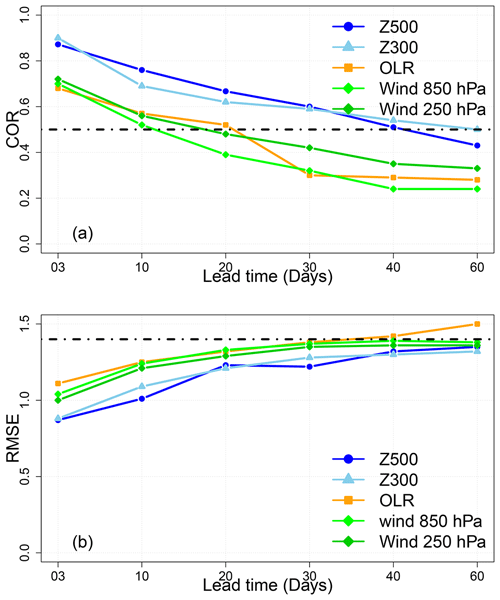
We present a simple system to forecast the Madden–Julian Oscillation (MJO). We use atmospheric circulation as input to our system. We found a good-skill forecast of the MJO amplitude within 40 d using this methodology. Comparing our results with ECMWF and machine learning forecasts confirmed the good skill of our system.
Davide Faranda, Stella Bourdin, Mireia Ginesta, Meriem Krouma, Robin Noyelle, Flavio Pons, Pascal Yiou, and Gabriele Messori
Weather Clim. Dynam., 3, 1311–1340, https://doi.org/10.5194/wcd-3-1311-2022, https://doi.org/10.5194/wcd-3-1311-2022, 2022
Short summary
Short summary
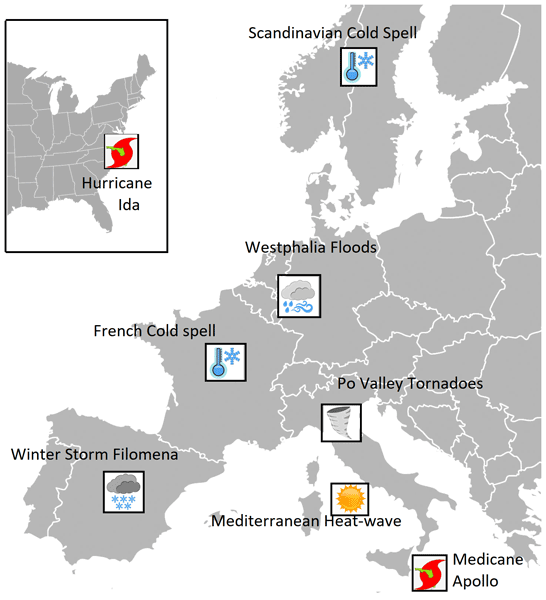
We analyze the atmospheric circulation leading to impactful extreme events for the calendar year 2021 such as the Storm Filomena, Westphalia floods, Hurricane Ida and Medicane Apollo. For some of the events, we find that climate change has contributed to their occurrence or enhanced their intensity; for other events, we find that they are unprecedented. Our approach underscores the importance of considering changes in the atmospheric circulation when performing attribution studies.
Meriem Krouma, Pascal Yiou, Céline Déandreis, and Soulivanh Thao
Geosci. Model Dev., 15, 4941–4958, https://doi.org/10.5194/gmd-15-4941-2022, https://doi.org/10.5194/gmd-15-4941-2022, 2022
Short summary
Short summary
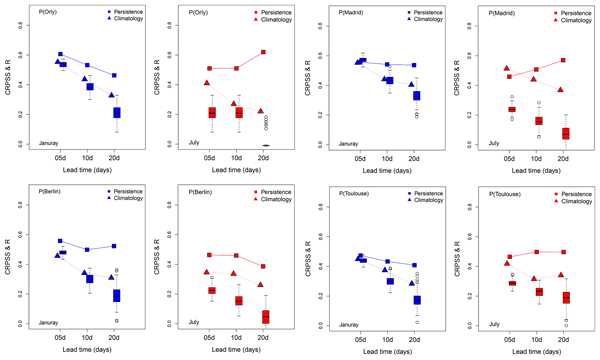
We evaluated the skill of a stochastic weather generator (SWG) to forecast precipitation at different time scales and in different areas of western Europe from analogs of Z500 hPa. The SWG has the skill to simulate precipitation for 5 and 10 d. We found that forecast weaknesses can be associated with specific weather patterns. The comparison with ECMWF forecasts confirms the skill of our model. This work is important because it provides information about weather forecasts over specific areas.
Kai Kornhuber, Emanuele Bevacqua, Mariana Madruga de Brito, Wiebke S. Jäger, Pauline Rivoire, Cassandra D. W. Rogers, Fabiola Banfi, Fulden Batibeniz, James Carruthers, Carlo De Michele, Silvia De Angeli, Cristina Deidda, Marleen C. de Ruiter, Andreas H. Fink, Henrique M. D. Goulart, Katharina Küpfer, Patrick Ludwig, Douglas Maraun, Gabriele Messori, Shruti Nath, Fiachra O'Loughlin, Joaquim G. Pinto, Benjamin Poschlod, Alexandre M. Ramos, Colin Raymond, Andreia F. S. Ribeiro, Deepti Singh, Laura Suarez Gutierrez, Philip J. Ward, and Christopher J. White
Nat. Hazards Earth Syst. Sci., 26, 4309–4334, https://doi.org/10.5194/nhess-26-4309-2026, https://doi.org/10.5194/nhess-26-4309-2026, 2026
Short summary
Short summary
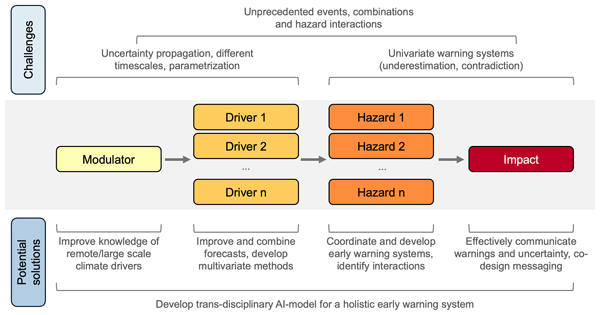
Impacts from extreme weather events may become more severe due to increased likelihood of compounding events under global warming, which challenge present day climate modelling and forecasting capacities. In this perspective we reflect on the usability of compound event research to bridge the gap between academic research and real-world applications.
Aleksa Stanković, Rodrigo Caballero, and Gabriele Messori
Weather Clim. Dynam., 7, 1507–1523, https://doi.org/10.5194/wcd-7-1507-2026, https://doi.org/10.5194/wcd-7-1507-2026, 2026
Short summary
Short summary
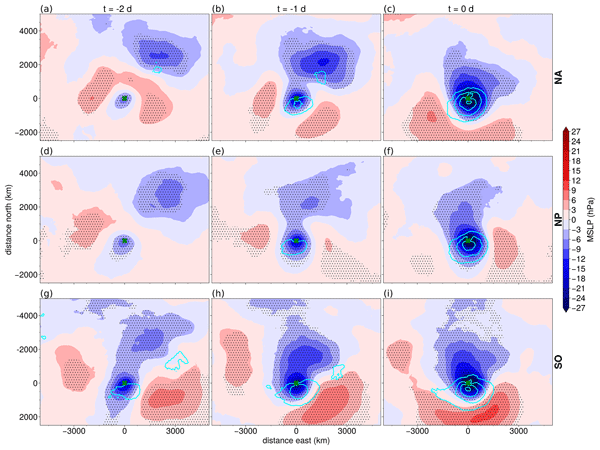
Most storms occur over ocean where they cause strong surface winds. The storms are strongest over the North Atlantic, North Pacific and Southern Ocean. In each of these basins, the storms that cause the strongest surface winds develop similarly. These storms typically develop together with another, previously existing storm. At the same time, extreme winds are stronger in some basins than in others. Our analysis points that if the storms develop faster, they, on average, cause stronger winds.
William J. M. Seviour, Justin Finkel, Philip Rupp, Regan Mudhar, Amy H. Butler, Chaim I. Garfinkel, Peter Hitchcock, Blanca Ayarzagüena, Dong-Chan Hong, Yu-Kyung Hyun, Hera Kim, Eun-Pa Lim, Daniel De Maeseneire, Gabriele Messori, Gerbrand Koren, Michael Sigmond, Isla R. Simpson, and Seok-Woo Son
Weather Clim. Dynam., 7, 1405–1423, https://doi.org/10.5194/wcd-7-1405-2026, https://doi.org/10.5194/wcd-7-1405-2026, 2026
Short summary
Short summary
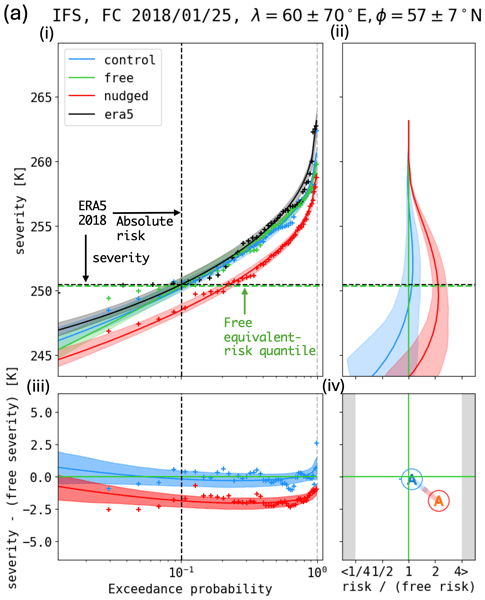
Variability of the stratospheric polar vortex is thought to play a role in driving weather extremes, but quantifying this role for a given event has proved challenging. Using a new set of perturbed subseasonal forecast experiments from 7 modelling centres, we determine the stratospheric contribution to the risk and severity of three recent extreme weather events. The forecast-based methodology that we develop is applicable to understanding a range of other drivers of weather extremes.
Aditya N. Mishra, Gabriele Messori, Lukas Riedel, Athul Rasheeda Satheesh, and Joaquim Pinto
EGUsphere, https://doi.org/10.5194/egusphere-2026-3099, https://doi.org/10.5194/egusphere-2026-3099, 2026
Short summary
Short summary
Windstorms cause billions in damage across Europe every year. In this work, we tune an existing windstorm damage model against new reliable insurance data from Europe. We found that the mathematical method used in the process strongly shapes which storms the model handles best. Our results give scientists and insurers clearer guidance on choosing the right approach when building windstorm risk models, ultimately helping society better prepare for costly extreme weather.
Ines Dillerup, Gabriele Messori, Alexander Lemburg, Sebastian Buschow, and Joaquim G. Pinto
EGUsphere, https://doi.org/10.5194/egusphere-2026-2453, https://doi.org/10.5194/egusphere-2026-2453, 2026
Short summary
Short summary
We study recurrent heatwaves in Europe from 1950–2023 at complementary spatial scales: single locations, larger connected heatwave regions (objects), and continent-wide. Recurrent heatwaves are hotter and linked to drier soils at object and continental scales, but not locally. Objects with strong local heatwave recurrence last longer and are linked to the European blocking weather pattern in June-August. Continental recurrence is distinct from both hot summers and strong local recurrence.

Ni Li, Wim Thiery, Shorouq Zahra, Mariana Madruga de Brito, Koffi Worou, Murathan Kurfalı, Seppe Lampe, Paul Muñoz, Clare Flynn, Camila Trigoso, Joakim Nivre, Jakob Zscheischler, and Gabriele Messori
Nat. Hazards Earth Syst. Sci., 26, 2609–2636, https://doi.org/10.5194/nhess-26-2609-2026, https://doi.org/10.5194/nhess-26-2609-2026, 2026
Short summary
Short summary
Climate extremes threaten society and ecosystems, making impact understanding critical. Wikimpacts 1.0 provides an automated pipeline processing Wikipedia texts with underexploited information on climate impacts, yielding comprehensive socio-economic impact data for 2726 climate events from 1034–2024. It offers broader storm-related impacts and finer spatial resolution than established databases, showcasing natural language processing's potential to advance climate impact data.
Michael Konrad Schutte, Leonardo Olivetti, Flavio Maria Emanuele Pons, and Gabriele Messori
EGUsphere, https://doi.org/10.5194/egusphere-2026-2203, https://doi.org/10.5194/egusphere-2026-2203, 2026
Short summary
Short summary
When testing whether signals on maps are statistically meaningful, scientists must account for multiple testing. Otherwise, some results may appear significant purely by chance. We show that the widely used false discovery rate correction can be misleading: simply changing the geographic region analyzed can make the same data appear far more statistically significant, even though nothing has changed. We recommend transparent reporting and using region-wide averages instead of point-wise testing.
Florian Börgel, Itzel Ruvalcaba Baroni, Leonie Barghorn, Leonard Borchert, Bronwyn Cahill, Cyril Dutheil, Leonie Esters, Małgorzata Falarz, Helena L. Filipsson, Matthias Gröger, Jari Hänninen, Magnus Hieronymus, Erko Jakobson, Mehdi Pasha Karami, Karol Kuliński, Taavi Liblik, H. E. Markus Meier, Gabriele Messori, Lev Naumov, Thomas Neumann, Piia Post, Gregor Rehder, Anna Rutgersson, and Georg Sebastian Voelker
Earth Syst. Dynam., 17, 415–450, https://doi.org/10.5194/esd-17-415-2026, https://doi.org/10.5194/esd-17-415-2026, 2026
Short summary
Short summary
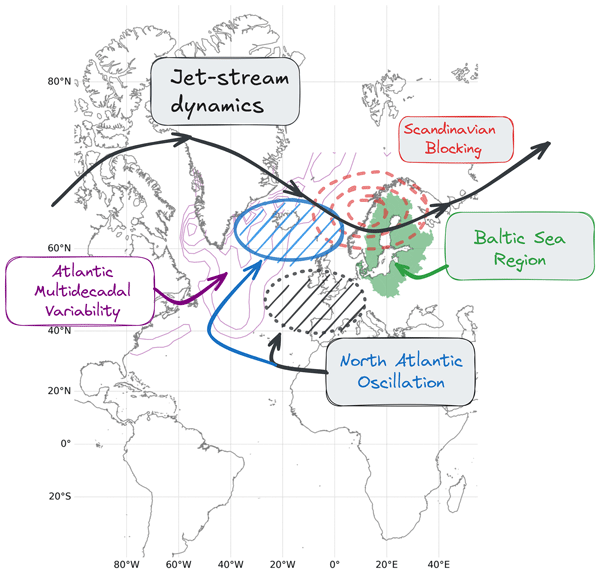
This review explains how weather patterns, guided by the polar jet stream, influence the Baltic Sea’s climate and ecosystem. It covers the North Atlantic Oscillation, blocking events and other processes and discusses how they affect temperature, rainfall, and storms from days to decades. These shifts then impact oxygen levels, productivity, and acidification in the Baltic Sea. Physical links are fairly well known, but biogeochemical pathways remain uncertain.
Valerio Lembo, Gabriele Messori, Davide Faranda, Vera Melinda Galfi, Rune Grand Graversen, and Flavio Emanuele Pons
Weather Clim. Dynam., 7, 453–473, https://doi.org/10.5194/wcd-7-453-2026, https://doi.org/10.5194/wcd-7-453-2026, 2026
Short summary
Short summary
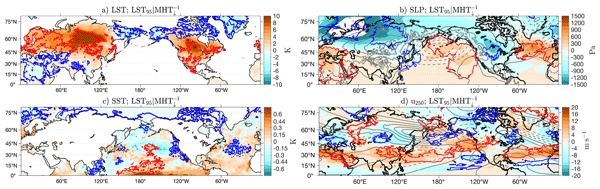
Hemispheric heatwaves have fundamental implications for ecosystems and societies. They are studied together with large-scale atmospheric dynamics, through the lens of poleward heat transports by planetary-scale waves. Extremely weak transports of heat towards the North Pole are found to be associated with hemispheric heatwaves in the Northern Hemisphere mid-latitudes. Therefore, we conclude that heat transports are a possible indicator and a precursor of concurrent hemispheric heatwaves.
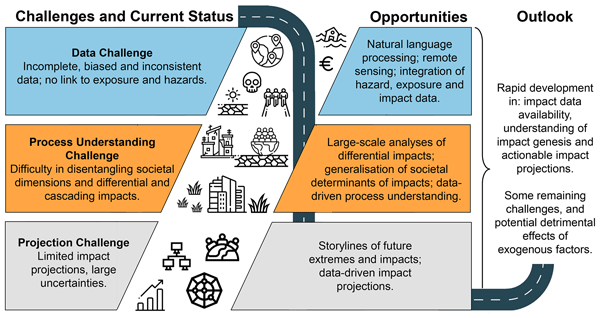
Gabriele Messori, Emily Boyd, Joakim Nivre, and Elena Raffetti
Earth Syst. Dynam., 17, 199–208, https://doi.org/10.5194/esd-17-199-2026, https://doi.org/10.5194/esd-17-199-2026, 2026
Short summary
Short summary
Understanding impacts of climate extremes is very important for society and the economy. We identify three challenges restricting this understanding: limited availability and quality of impact data, difficulties in understanding why given impacts occur and lack of reliable projections of future impacts. We also identify key opportunities, including newly released datasets, recent methodological and technical advances and interdisciplinary collaborations between the social and natural sciences.
Alok Kumar Samantaray and Gabriele Messori
Earth Syst. Sci. Data Discuss., https://doi.org/10.5194/essd-2025-646, https://doi.org/10.5194/essd-2025-646, 2026
Preprint under review for ESSD
Short summary
Short summary
We present a global dataset that links drought events to human and economic exposure and impacts. Using a two-step approach, we first cluster drought events from precipitation and temperature records to track their severity and extent, and then connect them to population and Gross Domestic Product exposure and to impacts reported in disaster databases. The dataset supports risk planning and mitigation efforts.
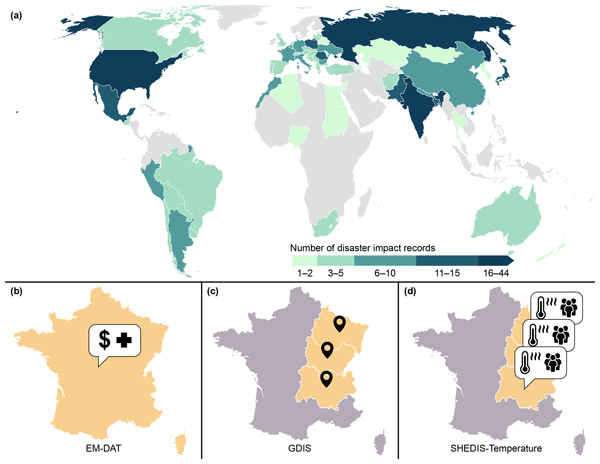
Sara Lindersson and Gabriele Messori
Earth Syst. Sci. Data, 17, 6379–6403, https://doi.org/10.5194/essd-17-6379-2025, https://doi.org/10.5194/essd-17-6379-2025, 2025
Short summary
Short summary
The study of past temperature-related disasters requires information on socioeconomic impacts, hazard intensity and human exposure. This is often lacking in current disaster databases. Our dataset fills this gap by integrating impact records with information on disaster locations, high-resolution meteorological data, and population estimates. Covering 382 disasters in 71 countries (1979–2018), this dataset enables deeper analyses of heat-related risk and vulnerabilities.
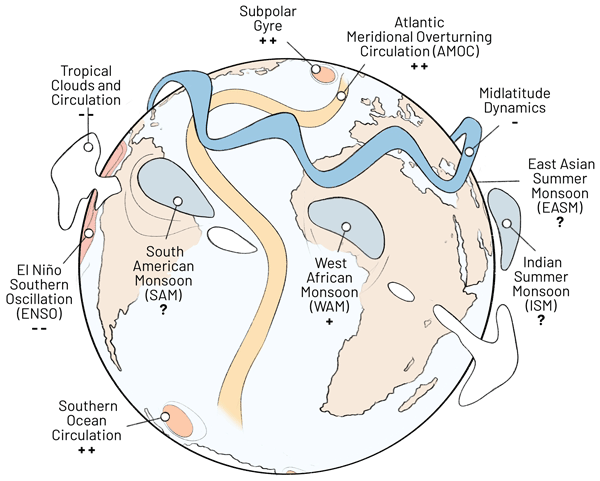
Sina Loriani, Yevgeny Aksenov, David I. Armstrong McKay, Govindasamy Bala, Andreas Born, Cristiano Mazur Chiessi, Henk A. Dijkstra, Jonathan F. Donges, Sybren Drijfhout, Matthew H. England, Alexey V. Fedorov, Laura C. Jackson, Kai Kornhuber, Gabriele Messori, Francesco S. R. Pausata, Stefanie Rynders, Jean-Baptiste Sallée, Bablu Sinha, Steven C. Sherwood, Didier Swingedouw, and Thejna Tharammal
Earth Syst. Dynam., 16, 1611–1653, https://doi.org/10.5194/esd-16-1611-2025, https://doi.org/10.5194/esd-16-1611-2025, 2025
Short summary
Short summary
In this work, we draw on palaeo-records, observations, and modelling studies to review tipping points in the ocean overturning circulations, monsoon systems, and global atmospheric circulations. We find indications for tipping in the ocean overturning circulations and the West African monsoon, with potentially severe impacts on the Earth system and humans. Tipping in the other considered systems is regarded as conceivable but is currently not sufficiently supported by evidence.
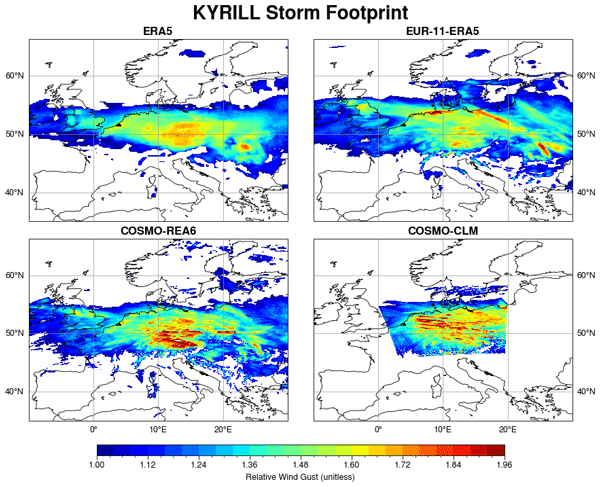
Clare M. Flynn, Julia Moemken, Joaquim G. Pinto, Michael K. Schutte, and Gabriele Messori
Earth Syst. Sci. Data, 17, 4431–4453, https://doi.org/10.5194/essd-17-4431-2025, https://doi.org/10.5194/essd-17-4431-2025, 2025
Short summary
Short summary
We created a new, publicly available, database of the top 50 most extreme European winter windstorms from each of four different meteorological input data sets covering the years 1995–2015. We found variability in all aspects of our database, from which storms were included in the top 50 storms for each input to the storms' spatial variability. We urge users of our database to consider the storms as identified from two or more input sources within our database where possible.
Michael K. Schutte, Alice Portal, Simon H. Lee, and Gabriele Messori
Weather Clim. Dynam., 6, 521–548, https://doi.org/10.5194/wcd-6-521-2025, https://doi.org/10.5194/wcd-6-521-2025, 2025
Short summary
Short summary
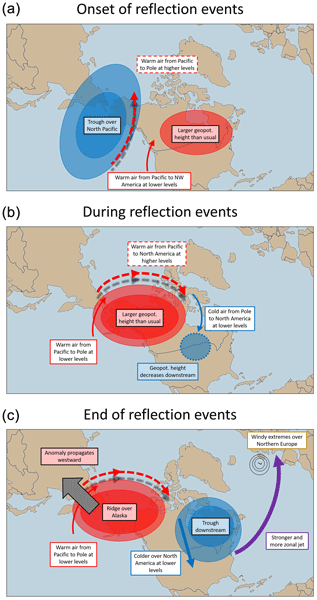
Large-scale motions in the atmosphere, namely atmospheric waves, greatly impact the weather that we experience at the Earth's surface. Here we investigate how waves in the troposphere (the lower 10 km of the atmosphere) and the stratosphere (above the troposphere) interact to affect surface weather. We find that tropospheric waves that are reflected back down by the stratosphere change weather patterns and temperatures in North America. These changes can indirectly affect the weather in Europe.
Ferran Lopez-Marti, Mireia Ginesta, Davide Faranda, Anna Rutgersson, Pascal Yiou, Lichuan Wu, and Gabriele Messori
Earth Syst. Dynam., 16, 169–187, https://doi.org/10.5194/esd-16-169-2025, https://doi.org/10.5194/esd-16-169-2025, 2025
Short summary
Short summary
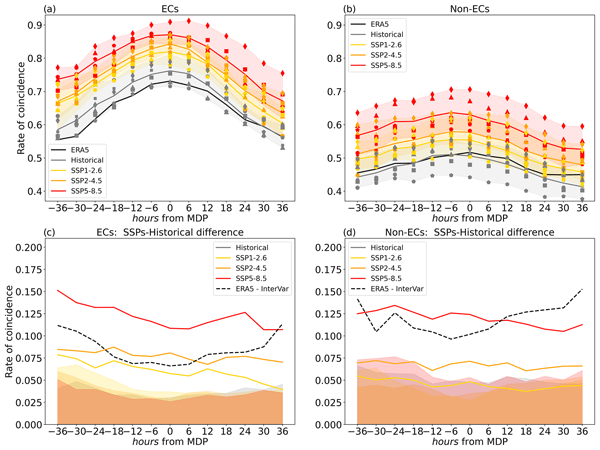
Explosive cyclones and atmospheric rivers are two main drivers of extreme weather in Europe. In this study, we investigate their joint changes in future climates over the North Atlantic. Our results show that both the concurrence of these events and the intensity of atmospheric rivers increase by the end of the century across different future scenarios. Furthermore, explosive cyclones associated with atmospheric rivers last longer and are deeper than those without atmospheric rivers.
Leonardo Olivetti and Gabriele Messori
Geosci. Model Dev., 17, 7915–7962, https://doi.org/10.5194/gmd-17-7915-2024, https://doi.org/10.5194/gmd-17-7915-2024, 2024
Short summary
Short summary
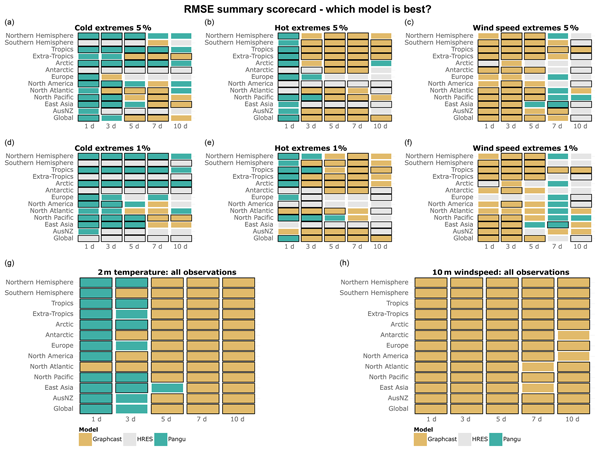
Data-driven models are becoming a viable alternative to physics-based models for weather forecasting up to 15 d into the future. However, it is unclear whether they are as reliable as physics-based models when forecasting weather extremes. We evaluate their performance in forecasting near-surface cold, hot, and windy extremes globally. We find that data-driven models can compete with physics-based models and that the choice of the best model mainly depends on the region and type of extreme.
Gabriele Messori, Antonio Segalini, and Alexandre M. Ramos
Earth Syst. Dynam., 15, 1207–1225, https://doi.org/10.5194/esd-15-1207-2024, https://doi.org/10.5194/esd-15-1207-2024, 2024
Short summary
Short summary
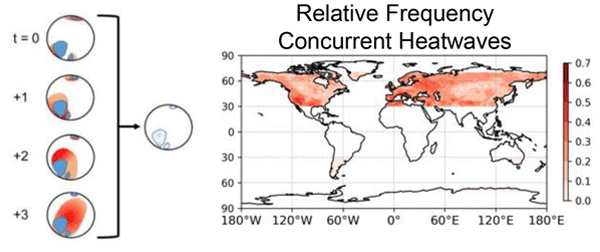
Simultaneous heatwaves or cold spells in remote geographical regions have potentially far-reaching impacts on society and the environment. Despite this, we have little knowledge of when and where these extreme events have occurred in the past decades. In this paper, we present a summary of past simultaneous heatwaves or cold spells and provide a computer program to enable other researchers to study them.
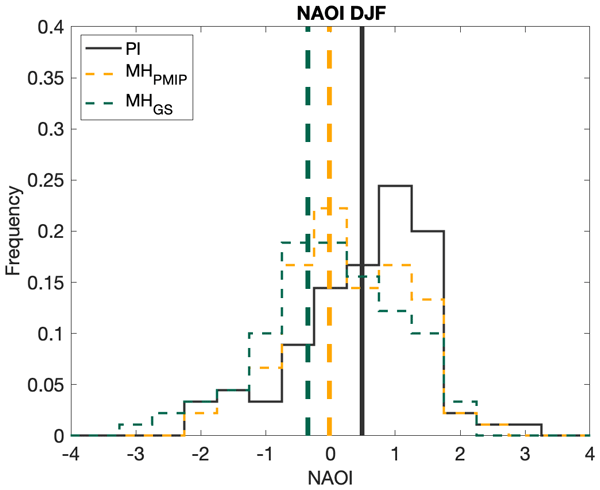
Marco Gaetani, Gabriele Messori, Francesco S. R. Pausata, Shivangi Tiwari, M. Carmen Alvarez Castro, and Qiong Zhang
Clim. Past, 20, 1735–1759, https://doi.org/10.5194/cp-20-1735-2024, https://doi.org/10.5194/cp-20-1735-2024, 2024
Short summary
Short summary
Palaeoclimate reconstructions suggest that, around 6000 years ago, a greening of the Sahara took place, accompanied by climate changes in the Northern Hemisphere at middle to high latitudes. In this study, a climate model is used to investigate how this drastic environmental change in the Sahara impacted remote regions. Specifically, climate simulations reveal significant modifications in atmospheric circulation over the North Atlantic, affecting North American and European climates.
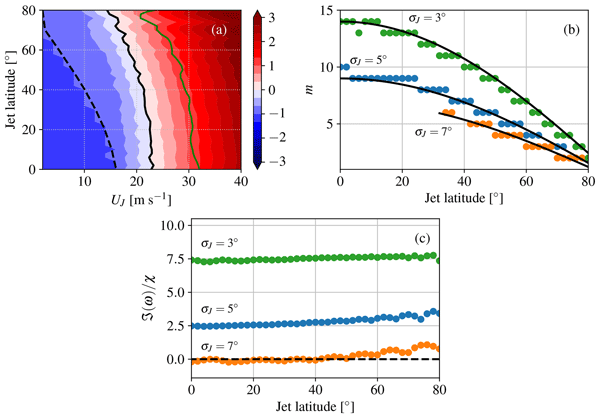
Antonio Segalini, Jacopo Riboldi, Volkmar Wirth, and Gabriele Messori
Weather Clim. Dynam., 5, 997–1012, https://doi.org/10.5194/wcd-5-997-2024, https://doi.org/10.5194/wcd-5-997-2024, 2024
Short summary
Short summary
Planetary Rossby waves are created by topography and evolve in time. In this work, an analytical solution of this classical problem is proposed under the approximation of linear wave dynamics. The theory is able to describe reasonably well the evolution of the perturbation and compares well with full nonlinear simulations. Several relevant cases with single and double zonal jets are assessed with the theoretical framework
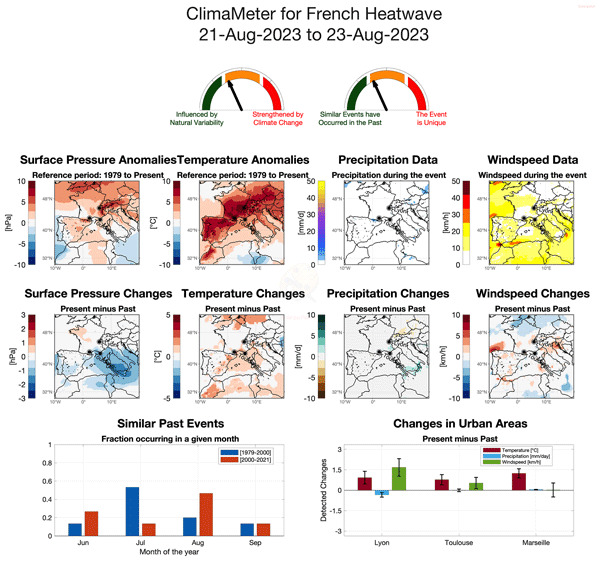
Davide Faranda, Gabriele Messori, Erika Coppola, Tommaso Alberti, Mathieu Vrac, Flavio Pons, Pascal Yiou, Marion Saint Lu, Andreia N. S. Hisi, Patrick Brockmann, Stavros Dafis, Gianmarco Mengaldo, and Robert Vautard
Weather Clim. Dynam., 5, 959–983, https://doi.org/10.5194/wcd-5-959-2024, https://doi.org/10.5194/wcd-5-959-2024, 2024
Short summary
Short summary
We introduce ClimaMeter, a tool offering real-time insights into extreme-weather events. Our tool unveils how climate change and natural variability affect these events, affecting communities worldwide. Our research equips policymakers and the public with essential knowledge, fostering informed decisions and enhancing climate resilience. We analysed two distinct events, showcasing ClimaMeter's global relevance.
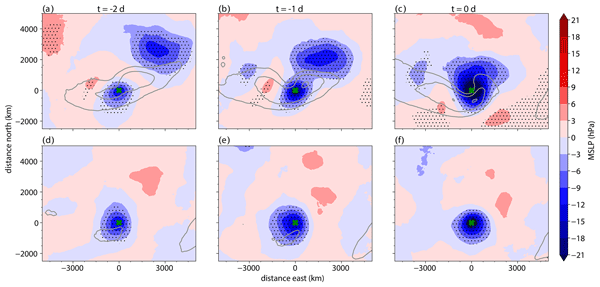
Aleksa Stanković, Gabriele Messori, Joaquim G. Pinto, and Rodrigo Caballero
Weather Clim. Dynam., 5, 821–837, https://doi.org/10.5194/wcd-5-821-2024, https://doi.org/10.5194/wcd-5-821-2024, 2024
Short summary
Short summary
The article studies extreme winds near the surface over the North Atlantic Ocean. These winds are caused by storms that pass through this region. The strongest storms that have occurred in the winters from 1950–2020 are studied in detail and compared to weaker but still strong storms. The analysis shows that the storms associated with the strongest winds are preceded by another older storm that travelled through the same region and made the conditions suitable for development of extreme winds.
Derrick Muheki, Axel A. J. Deijns, Emanuele Bevacqua, Gabriele Messori, Jakob Zscheischler, and Wim Thiery
Earth Syst. Dynam., 15, 429–466, https://doi.org/10.5194/esd-15-429-2024, https://doi.org/10.5194/esd-15-429-2024, 2024
Short summary
Short summary
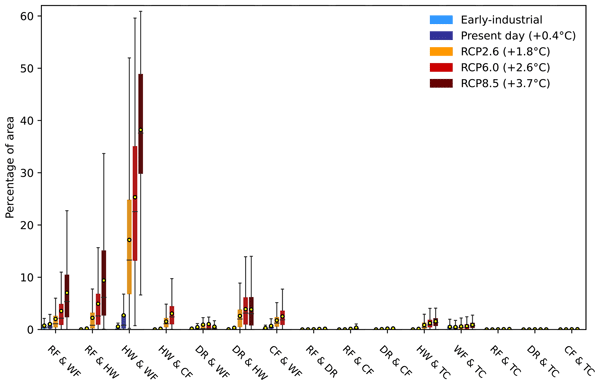
Climate change affects the interaction, dependence, and joint occurrence of climate extremes. Here we investigate the joint occurrence of pairs of river floods, droughts, heatwaves, crop failures, wildfires, and tropical cyclones in East Africa under past and future climate conditions. Our results show that, across all future warming scenarios, the frequency and spatial extent of these co-occurring extremes will increase in this region, particularly in areas close to the Nile and Congo rivers.
Leonardo Olivetti and Gabriele Messori
Geosci. Model Dev., 17, 2347–2358, https://doi.org/10.5194/gmd-17-2347-2024, https://doi.org/10.5194/gmd-17-2347-2024, 2024
Short summary
Short summary
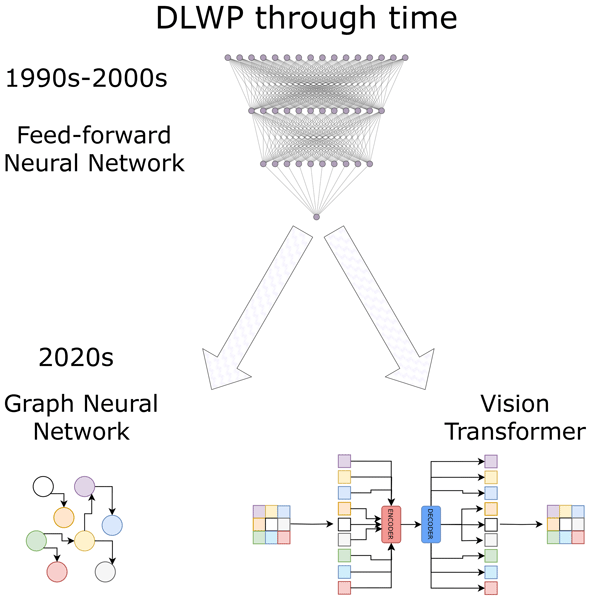
In the last decades, weather forecasting up to 15 d into the future has been dominated by physics-based numerical models. Recently, deep learning models have challenged this paradigm. However, the latter models may struggle when forecasting weather extremes. In this article, we argue for deep learning models specifically designed to handle extreme events, and we propose a foundational framework to develop such models.
Emma Holmberg, Gabriele Messori, Rodrigo Caballero, and Davide Faranda
Earth Syst. Dynam., 14, 737–765, https://doi.org/10.5194/esd-14-737-2023, https://doi.org/10.5194/esd-14-737-2023, 2023
Short summary
Short summary
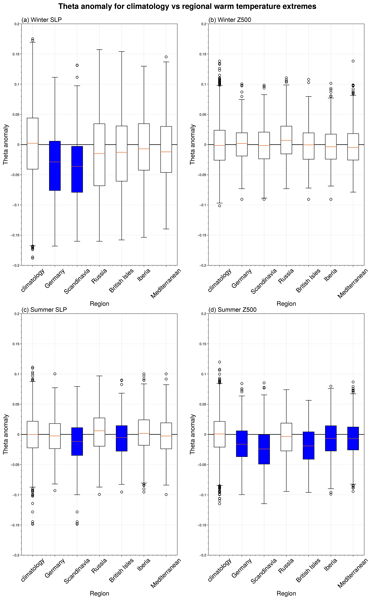
We analyse the duration of large-scale patterns of air movement in the atmosphere, referred to as persistence, and whether unusually persistent patterns favour warm-temperature extremes in Europe. We see no clear relationship between summertime heatwaves and unusually persistent patterns. This suggests that heatwaves do not necessarily require the continued flow of warm air over a region and that local effects could be important for their occurrence.
Meriem Krouma, Riccardo Silini, and Pascal Yiou
Earth Syst. Dynam., 14, 273–290, https://doi.org/10.5194/esd-14-273-2023, https://doi.org/10.5194/esd-14-273-2023, 2023
Short summary
Short summary
We present a simple system to forecast the Madden–Julian Oscillation (MJO). We use atmospheric circulation as input to our system. We found a good-skill forecast of the MJO amplitude within 40 d using this methodology. Comparing our results with ECMWF and machine learning forecasts confirmed the good skill of our system.
Axel Kleidon, Gabriele Messori, Somnath Baidya Roy, Ira Didenkulova, and Ning Zeng
Earth Syst. Dynam., 14, 241–242, https://doi.org/10.5194/esd-14-241-2023, https://doi.org/10.5194/esd-14-241-2023, 2023

Patrick Johannes Stoll, Rune Grand Graversen, and Gabriele Messori
Weather Clim. Dynam., 4, 1–17, https://doi.org/10.5194/wcd-4-1-2023, https://doi.org/10.5194/wcd-4-1-2023, 2023
Short summary
Short summary
The atmosphere is in motion and hereby transporting warm, cold, moist, and dry air to different climate zones. In this study, we investigate how this transport of energy organises in different manners. Outside the tropics, atmospheric waves of sizes between 2000 and 8000 km, which we perceive as cyclones from the surface, transport most of the energy and moisture poleward. In the winter, large-scale weather situations become very important for transporting energy into the polar regions.
Davide Faranda, Stella Bourdin, Mireia Ginesta, Meriem Krouma, Robin Noyelle, Flavio Pons, Pascal Yiou, and Gabriele Messori
Weather Clim. Dynam., 3, 1311–1340, https://doi.org/10.5194/wcd-3-1311-2022, https://doi.org/10.5194/wcd-3-1311-2022, 2022
Short summary
Short summary
We analyze the atmospheric circulation leading to impactful extreme events for the calendar year 2021 such as the Storm Filomena, Westphalia floods, Hurricane Ida and Medicane Apollo. For some of the events, we find that climate change has contributed to their occurrence or enhanced their intensity; for other events, we find that they are unprecedented. Our approach underscores the importance of considering changes in the atmospheric circulation when performing attribution studies.
Gabriele Messori, Marlene Kretschmer, Simon H. Lee, and Vivien Wendt
Weather Clim. Dynam., 3, 1215–1236, https://doi.org/10.5194/wcd-3-1215-2022, https://doi.org/10.5194/wcd-3-1215-2022, 2022
Short summary
Short summary
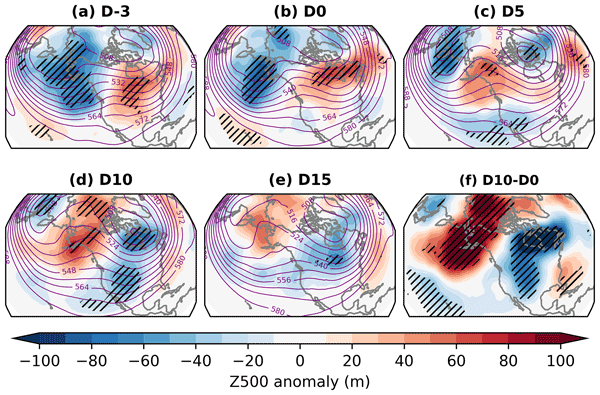
Over 10 km above the ground, there is a region of the atmosphere called the stratosphere. While there is very little air in the stratosphere itself, its interactions with the lower parts of the atmosphere – where we live – can affect the weather. Here we study a specific example of such an interaction, whereby processes occurring at the boundary of the stratosphere can lead to a continent-wide drop in temperatures in North America during winter.
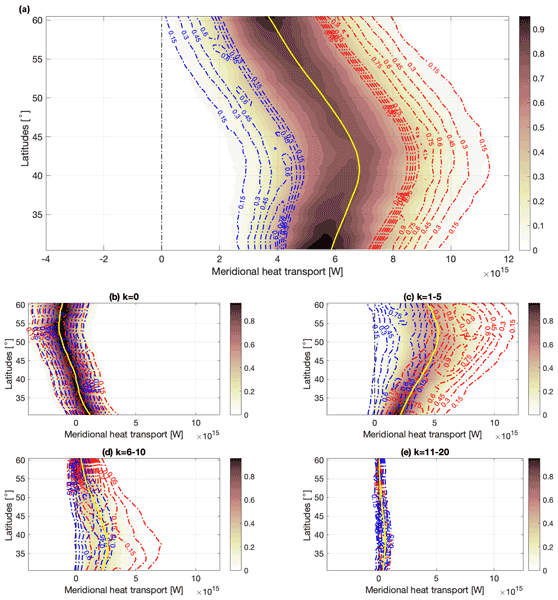
Valerio Lembo, Federico Fabiano, Vera Melinda Galfi, Rune Grand Graversen, Valerio Lucarini, and Gabriele Messori
Weather Clim. Dynam., 3, 1037–1062, https://doi.org/10.5194/wcd-3-1037-2022, https://doi.org/10.5194/wcd-3-1037-2022, 2022
Short summary
Short summary
Eddies in mid-latitudes characterize the exchange of heat between the tropics and the poles. This exchange is largely uneven, with a few extreme events bearing most of the heat transported across latitudes in a season. It is thus important to understand what the dynamical mechanisms are behind these events. Here, we identify recurrent weather regime patterns associated with extreme transports, and we identify scales of mid-latitudinal eddies that are mostly responsible for the transport.
Meriem Krouma, Pascal Yiou, Céline Déandreis, and Soulivanh Thao
Geosci. Model Dev., 15, 4941–4958, https://doi.org/10.5194/gmd-15-4941-2022, https://doi.org/10.5194/gmd-15-4941-2022, 2022
Short summary
Short summary
We evaluated the skill of a stochastic weather generator (SWG) to forecast precipitation at different time scales and in different areas of western Europe from analogs of Z500 hPa. The SWG has the skill to simulate precipitation for 5 and 10 d. We found that forecast weaknesses can be associated with specific weather patterns. The comparison with ECMWF forecasts confirms the skill of our model. This work is important because it provides information about weather forecasts over specific areas.
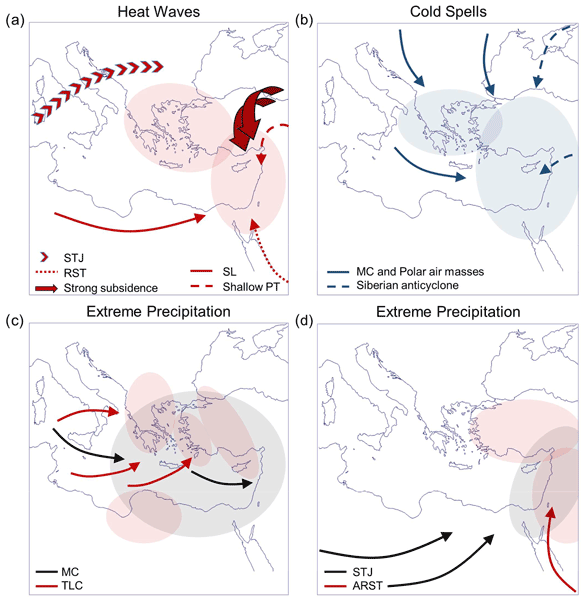
Assaf Hochman, Francesco Marra, Gabriele Messori, Joaquim G. Pinto, Shira Raveh-Rubin, Yizhak Yosef, and Georgios Zittis
Earth Syst. Dynam., 13, 749–777, https://doi.org/10.5194/esd-13-749-2022, https://doi.org/10.5194/esd-13-749-2022, 2022
Short summary
Short summary
Gaining a complete understanding of extreme weather, from its physical drivers to its impacts on society, is important in supporting future risk reduction and adaptation measures. Here, we provide a review of the available scientific literature, knowledge gaps and key open questions in the study of extreme weather events over the vulnerable eastern Mediterranean region.
Cited articles
Ailliot, P., Allard, D., Monbet, V., and Naveau, P.: Stochastic weather generators: an overview of weather type models, Journal de la Société Française de Statistique, 156, 101–113, 2015. a
Alessi, M. J. and DeGaetano, A. T.: A comparison of statistical and dynamical downscaling methods for short-term weather forecasts in the US Northeast, Meteorol. Appl., 28, e1976, https://doi.org/10.1002/met.1976, 2021. a
Atencia, A. and Zawadzki, I.: Analogs on the Lorenz attractor and ensemble spread, Mon. Weather Rev., 145, 1381–1400, 2017. a
Ben-Bouallegue, Z.: Seamless prediction of high-impact weather events: a comparison of actionable forecasts, arXiv [preprint], https://doi.org/10.48550/arXiv.2312.01673, 2023. a
Ben Bouallègue, Z., Magnusson, L., Haiden, T., and Richardson, D. S.: Monitoring trends in ensemble forecast performance focusing on surface variables and high-impact events, Q. J. Roy. Meteor. Soc., 145, 1741–1755, https://doi.org/10.1002/qj.3523, 2019. a
Ben Bouallègue, Z., Cooper, F., Chantry, M., Düben, P., Bechtold, P., and Sandu, I.: Statistical Modeling of 2-m Temperature and 10-m Wind Speed Forecast Errors, Mon. Weather Rev., 151, 897–911, https://doi.org/10.1175/MWR-D-22-0107.1, 2023. a, b
Bevacqua, E., Maraun, D., Vousdoukas, M. I., Voukouvalas, E., Vrac, M., Mentaschi, L., and Widmann, M.: Higher probability of compound flooding from precipitation and storm surge in Europe under anthropogenic climate change, Sci. Adv., 5, eaaw5531, https://doi.org/10.1126/sciadv.aaw5531, 2019. a
Blanchet, J., Stalla, S., and Creutin, J.-D.: Analogy of multiday sequences of atmospheric circulation favoring large rainfall accumulation over the French Alps, Atmos. Sci. Lett., 19, e809, https://doi.org/10.1002/asl.809, 2018. a
Bouallègue, Z. B., Clare, M. C., Magnusson, L., Gascon, E., Maier-Gerber, M., Janoušek, M., Rodwell, M., Pinault, F., Dramsch, J. S., Lang, S. T., Raoult, B., Rabier, F., Chevallier, M., Sandu, I., Dueben, P., Chantry, M., and Pappenberger, F.: The rise of data-driven weather forecasting: A first statistical assessment of machine learning–based weather forecasts in an operational-like context, B. Am. Meteorol. Soc., 105, E864–E883, https://doi.org/10.1175/BAMS-D-23-0162.1, 2024. a
Bougeault, P., Toth, Z., Bishop, C., Brown, B., Burridge, D., Chen, D., Ebert, B., Fuentes, M., Hamill, T., Mylne, K., Nicolau, J., Paccagnella, T., Park, Y., Parsons, D., Raoult, B., Schuster, D., Dias, P., Swinbank, R., Takeuchi, Y., Tennant, W., Wilson, L., and Worley, S.: The THORPEX interactive grand global ensemble, B. Am. Meteorol. Soc., 91, 1059–1072, 2010. a, b
Brunner, M. I., Gilleland, E., and Wood, A. W.: Space–time dependence of compound hot–dry events in the United States: assessment using a multi-site multi-variable weather generator, Earth Syst. Dynam., 12, 621–634, https://doi.org/10.5194/esd-12-621-2021, 2021. a
Buizza, R. and Leutbecher, M.: The forecast skill horizon, Q. J. Roy. Meteor. Soc., 141, 3366–3382, https://doi.org/10.1002/qj.2619, 2015. a
Domeisen, D., White, C., Afargan-Gerstman, H., Muñoz, Á., Janiga, M., Vitart, F., Wulff, C., Antoine, S., Ardilouze, C., Batté, L., Bloomfield, H., Brayshaw, D., Camargo, S., Charlton-Pérez, A., Collins, D., Cowan, T., del Mar Chaves, M., Ferranti, L., Gómez, R., González, P., González Romero, C., Infanti, J., Karozis, S., Kim, H., Kolstad, E., LaJoie, E., Lledó, L., Magnusson, L., Malguzzi, P., Manrique-Suñén, A., Mastrangelo, D., Materia, S., Medina, H., Palma, L., Pineda, L., Sfetsos, A., Son, S., Soret, A., Strazzo, S., and Tian, D.: Advances in the subseasonal prediction of extreme events: relevant case studies across the globe, B. Am. Meteorol. Soc., 103, E1473–E1501, https://doi.org/10.1175/BAMS-D-20-0221.1, 2022. a
Fang, Z., Wang, Y., Peng, L., and Hong, H.: Predicting flood susceptibility using LSTM neural networks, J. Hydrol., 594, 125734, https://doi.org/10.1016/j.jhydrol.2020.125734, 2021. a
Fawcett, T.: An introduction to ROC analysis, Pattern Recogn. Lett., 27, 861–874, https://doi.org/10.1016/j.patrec.2005.10.010, 2006. a
Ferro, C. A. T. and Stephenson, D. B.: Extremal Dependence Indices: Improved Verification Measures for Deterministic Forecasts of Rare Binary Events, Weather Forecast., 26, 699–713, https://doi.org/10.1175/WAF-D-10-05030.1, 2011. a
Haiden, T., Janousek, M., Vitart, F., Ben-Bouallegue, Z., and Prates, F.: Evaluation of ECMWF forecasts, including the 2023 upgrade, ECMWF Technical Memorandum, https://doi.org/10.21957/d47ba5263c, 2023. a, b, c
Hao, Z., Hao, F., Xia, Y., Feng, S., Sun, C., Zhang, X., Fu, Y., Hao, Y., Zhang, Y., and Meng, Y.: Compound droughts and hot extremes: Characteristics, drivers, changes, and impacts, Earth-Sci. Rev., 235, 104241, https://doi.org/10.1016/j.earscirev.2022.104241, 2022. a
Harris, L., McRae, A. T., Chantry, M., Dueben, P. D., and Palmer, T. N.: A generative deep learning approach to stochastic downscaling of precipitation forecasts, J. Adv. Model. Earth Sy., 14, e2022MS003120, https://doi.org/10.1029/2022MS003120, 2022. a
Hersbach, H.: Decomposition of the Continuous Ranked Probability Score for Ensemble Prediction Systems, Weather Forecast., 15, 559–570, https://doi.org/10.1175/1520-0434(2000)015<0559:DOTCRP>2.0.CO;2, 2000. a, b
Hersbach, H., Bell, B., Berrisford, P., Hirahara, S., Horányi, A., Muñoz‐Sabater, J., Nicolas, J., Peubey, C., Radu, R., and Schepers, D.: The ERA5 global reanalysis, Q. J. Roy. Meteor. Soc., 146, 1999–2049, https://doi.org/10.1002/qj.3803, 2020. a, b
Klein Tank, A. M. G., Wijngaard, J. B., Können, G. P., Böhm, R., Demarée, G., Gocheva, A., Mileta, M., Pashiardis, S., Hejkrlik, L., Kern-Hansen, C., Heino, R., Bessemoulin, P., Müller-Westermeier, G., Tzanakou, M., Szalai, S., Pálsdóttir, T., Fitzgerald, D., Rubin, S., Capaldo, M., Maugeri, M., Leitass, A., Bukantis, A., Aberfeld, R., van Engelen, A. F. V., Forland, E., Mietus, M., Coelho, F., Mares, C., Razuvaev, V., Nieplova, E., Cegnar, T., Antonio López, J., Dahlström, B., Moberg, A., Kirchhofer, W., Ceylan, A., Pachaliuk, O., Alexander, L. V., and Petrovic, P.: Daily dataset of 20th-century surface air temperature and precipitation series for the European Climate Assessment, Int. J. Climatol., 22, 1441–1453, https://doi.org/10.1002/joc.773, 2002. a, b
Krouma, M.: Ensemble forecasts of isolated and compound wind and precipitation extremes in Europe using a stochastic weather generator, Zenodo [code, data set], https://doi.org/10.5281/zenodo.16531845, 2025. a
Krouma, M., Yiou, P., Déandreis, C., and Thao, S.: Assessment of stochastic weather forecast of precipitation near European cities, based on analogs of circulation, Geosci. Model Dev., 15, 4941–4958, https://doi.org/10.5194/gmd-15-4941-2022, 2022. a
Krouma, M., Silini, R., and Yiou, P.: Ensemble forecast of an index of the Madden–Julian Oscillation using a stochastic weather generator based on circulation analogs, Earth Syst. Dynam., 14, 273–290, https://doi.org/10.5194/esd-14-273-2023, 2023. a
Laurila, T. K., Sinclair, V. A., and Gregow, H.: Climatology, variability, and trends in near-surface wind speeds over the North Atlantic and Europe during 1979–2018 based on ERA5, Int. J. Climatol, 41, 2253–2278, 2021. a
Magnusson, L., Richardson, D., and Haiden, T.: Verification of Extreme Weather Events: Discrete Predictands, Tech. Rep. 731, ECMWF Technical Memoranda, https://doi.org/10.21957/1iql31n2c, 2014. a
Magnusson, L., Prudhomme, C., Di Giuseppe, F., Di Napoli, C., and Pappenberger, F.: Operational multiscale predictions of hazardous events, in: Extreme Weather Forecasting, 87–129, Elsevier, https://doi.org/10.1016/B978-0-12-820124-4.00008-6, 2023. a
Manzato, A.: A note on the maximum Peirce skill score, Weather Forecast., 22, 1148–1154, https://doi.org/10.1175/WAF1041.1, 2007. a
Olivetti, L. and Messori, G.: Advances and prospects of deep learning for medium-range extreme weather forecasting, Geosci. Model Dev., 17, 2347–2358, https://doi.org/10.5194/gmd-17-2347-2024, 2024. a
Rasp, S., Hoyer, S., Merose, A., Langmore, I., Battaglia, P., Russell, T., Sanchez-Gonzalez, A., Yang, V., Carver, R., Agrawal, S., Chantry, M., Ben Bouallegue, Z., Dueben, P., Bromberg, C., Sisk, J., Barrington, L., Bell, A., and Sha, F.: Weatherbench 2: A benchmark for the next generation of data-driven global weather models, J. Adv. Model. Earth Sy., 16, e2023MS004019, https://doi.org/10.1029/2023MS004019, 2024. a
Specq, D. and Batté, L.: Improving subseasonal precipitation forecasts through a statistical–dynamical approach: application to the southwest tropical Pacific, Clim, Dynam., 15, https://doi.org/10.1007/s00382-020-05355-7, 2020. a, b
Stephenson, D. B.: Use of the “odds ratio” for diagnosing forecast skill, Weather Forecast., 15, 221–232, https://doi.org/10.1175/1520-0434(2000)015<0221:UOTORF>2.0.CO;2, 2000. a
Stephenson, D. B., Casati, B., Ferro, C. A. T., and Wilson, C. A.: The Extreme Dependency Score: A Non-Vanishing Measure for Forecasts of Rare Events, Meteorol. Appl., 15, 41–50, https://doi.org/10.1002/met.125, 2008a. a, b
Stephenson, D. B., Coelho, C. A., and Jolliffe, I. T.: Two extra components in the Brier score decomposition, Weather Forecast., 23, 752–757, https://doi.org/10.1175/2007WAF2006116.1, 2008b. a
Stevens, B., Satoh, M., Auger, L., Biercamp, J., Bretherton, C. S., Chen, X., Düben, P., Judt, F., Khairoutdinov, M., Klocke, D., Kodama, C., Kornblueh, L., Lin, S.-J., Neumann, P., Putman, W. M., Röber, N., Shibuya, R., Vanniere, B., Vidale, P. L., Wedi, N., and Zhou, L.: DYAMOND: the DYnamics of the Atmospheric general circulation Modeled On Non-hydrostatic Domains, Prog. Earth Planet. Sc., 6, 1–17, https://doi.org/10.1186/s40645-019-0304-z, 2019. a
Sutanto, S. J., Vitolo, C., Di Napoli, C., D'Andrea, M., and Van Lanen, H. A.: Heatwaves, droughts, and fires: Exploring compound and cascading dry hazards at the pan-European scale, Environ. Int., 134, 105276, https://doi.org/10.1016/j.envint.2019.105276, 2020. a
Toth, Z., Talagrand, O., Candille, G., and Zhu, Y.: Probability and ensemble forecasts, Forecast verification: A practitioner's guide in atmospheric science, John Wiley & Sons, 137–163, 2003. a
Vitart, F., Ardilouze, C., Bonet, A., Brookshaw, A., Chen, M., Codorean, C., Déqué, M., Ferranti, L., Fucile, E., Fuentes, M., Hendon, H., Hodgson, J., Kang, H.-S., Kumar, A., Lin, H., Liu, G., Liu, X., Malguzzi, P., Mallas, I., Manoussakis, M., Mastrangelo, D., MacLachlan, C., McLean, P., Minami, A., Mladek, R., Nakazawa, T., Najm, S., Nie, Y., Rixen, M., Robertson, A. W., Ruti, P., Sun, C., Takaya, Y., Tolstykh, M., Venuti, F., Waliser, D., Woolnough, S., Wu, T., Won, D.-J., Xiao, H., Zaripov, R., and Zhang, L.: The Subseasonal to Seasonal (S2S) Prediction Project Database, B. Am. Meteorol. Soc., 98, 163–173, https://doi.org/10.1175/BAMS-D-16-0017.1, 2017. a
Vitart, F., Balsamo, G., Bidlot, J.-R., Lang, S., Tsonevsky, I., Richardson, D., and Alonso-Balmaseda, M.: Use of ERA5 to Initialize Ensemble Re-forecasts, 841, ECMWF Technical Memoranda, https://doi.org/10.21957/w8i57wuz6, 2019. a, b, c, d
Weinkle, J., Landsea, C., Collins, D., Musulin, R., Crompton, R. P., Klotzbach, P. J., and Pielke Jr., R.: Normalized hurricane damage in the continental United States 1900–2017, Nat. Sustain., 1, 808–813, https://doi.org/10.1038/s41893-018-0165-2, 2018. a
White, C., Domeisen, D., Acharya, N., Adefisan, E., Anderson, M., Aura, S., Balogun, A., Bertram, D., Bluhm, S., Brayshaw, D., Browell, J., Büeler, D., Charlton-Perez, A., Chourio, X., Christel, I., Coelho, C., DeFlorio, M., Delle Monache, L., Di Giuseppe, F., García-Solórzano, A., Gibson, P., Goddard, L., González Romero, C., Graham, R., Graham, R., Grams, C., Halford, A., Huang, W., Jensen, K., Kilavi, M., Lawal, K., Lee, R., MacLeod, D., Manrique-Suñén, A., Martins, E., Maxwell, C., Merryfield, W., Muñoz, Á., Olaniyan, E., Otieno, G., Oyedepo, J., Palma, L., Pechlivanidis, I., Pons, D., Ralph, F., Reis, D., Remenyi, T., Risbey, J., Robertson, D., Robertson, A., Smith, S., Soret, A., Sun, T., Todd, M., Tozer, C., Vasconcelos, F., Vigo, I., Waliser, D., Wetterhall, F., and Wilson, R.: Advances in the application and utility of subseasonal-to-seasonal predictions, B. Am. Meteorol. Soc., 1–57, https://doi.org/10.1175/BAMS-D-20-0224.1, 2022. a
Wilks, D. S.: Statistical methods in the atmospheric sciences, vol. 100, Academic Press, https://doi.org/10.1016/B978-0-12-385022-5.00001-4, 2011. a, b, c
Yiou, P.: AnaWEGE: a weather generator based on analogues of atmospheric circulation, Geosci. Model Dev., 7, 531–543, https://doi.org/10.5194/gmd-7-531-2014, 2014. a, b
Yiou, P. and Déandréis, C.: Stochastic ensemble climate forecast with an analogue model, Geosci. Model Dev., 12, 723–734, https://doi.org/10.5194/gmd-12-723-2019, 2019. a, b
Zamo, M. and Naveau, P.: Estimation of the Continuous Ranked Probability Score with Limited Information and Applications to Ensemble Weather Forecasts, Math. Geosci., 50, 209–234, https://doi.org/10.1007/s11004-017-9709-7, 2018. a
Zscheischler, J., Martius, O., Westra, S., Bevacqua, E., Raymond, C., Horton, R. M., van den Hurk, B., AghaKouchak, A., Jézéquel, A., Mahecha, M. D., Maraun, D., Ramos, A. M., Ridder, N. N., Thiery, W., and Vignotto, E.: A typology of compound weather and climate events, Nat. Rev. Earth Environ., 1, 333–347, https://doi.org/10.1038/s43017-020-0060-z, 2020. a
Short summary
We present two forecasting methods for extreme precipitation and extreme wind in Europe, using stochastic weather generators and past atmospheric patterns. One targets precipitation via weather model reforecasts; the other predicts wind from large-scale patterns. Both outperform standard weather models up to 10 d ahead, offering improved accuracy for both individual and compound extreme events.
We present two forecasting methods for extreme precipitation and extreme wind in Europe, using...


