Articles | Volume 19, issue 13
https://doi.org/10.5194/gmd-19-6143-2026
© Author(s) 2026. This work is distributed under
the Creative Commons Attribution 4.0 License.

Special issue:
https://doi.org/10.5194/gmd-19-6143-2026
© Author(s) 2026. This work is distributed under
the Creative Commons Attribution 4.0 License.
DeepMIP-Eocene-p2: Experimental design for Phase 2 of the early Eocene component of the CMIP7/PMIP7 Deep-time Model Intercomparison Project (DeepMIP-Eocene)

School of Geographical Sciences, University of Bristol, Bristol, UK
Nicky M. Wright
EarthByte Group, School of Geosciences, The University of Sydney, Sydney, Australia
Bram Vaes
Department of Earth and Environmental Sciences, University of Milano-Bicocca, Milan, Italy
Ulrich Salzmann
School of Geography and Natural Sciences, Northumbria University, Newcastle upon Tyne, UK
James W. B. Rae
School of Earth and Environmental Sciences, University of St Andrews, St Andrews, UK
Thomas Hickler
Senckenberg Biodiversity and Climate Research Centre, Germany, Department of Physical Geography, Geosciences, Goethe University, Frankfurt am Main, Germany
David K. Hutchinson
Climate Change Research Centre, University of New South Wales, Sydney, NSW, Australia
Julia Brugger
Geo- and Environmental Research Center, University of Tübingen, Tübingen, Germany
Jiang Zhu
Climate and Global Dynamics Laboratory, NSF National Center for Atmospheric Research, Boulder, 80305, USA
Sebastian Steinig
School of Geographical Sciences, University of Bristol, Bristol, UK
A. Nele Meckler
Department of Earth Science, Bjerknes Centre for Climate Research, Bergen, Norway
Gordon N. Inglis
School of Ocean and Earth Science, University of Southampton, Southampton, UK
David Evans
School of Ocean and Earth Science, University of Southampton, Southampton, UK
Agatha M. de Boer
Department of Geological Sciences, Stockholm University, Stockholm, Sweden
Bette L. Otto-Bliesner
Climate and Global Dynamics Laboratory, NSF National Center for Atmospheric Research, Boulder, 80305, USA
Natalie Burls
Atmospheric, Oceanic and Earth Sciences Department, George Mason University, Fairfax, USA
Yurui Zhang
Department of Geological Oceanography, Xiamen University, Xiamen, China
Appy Sluijs
Department of Earth Sciences, Utrecht University, Utrecht, the Netherlands
Tammo Reichgelt
Department of Earth Sciences, University of Conneticut, Conneticut, USA
Igor Niezgodzki
Institute of Geological Sciences, Polish Academy of Sciences, Kraków, Poland
Katrin Meissner
Climate Change Research Centre, University of New South Wales, Sydney, NSW, Australia
Jean-Baptiste Ladant
Laboratoire des Sciences du Climat et de l'Environnement, LSCE/IPSL, CEA-CNRS-UVSQ, Université Paris-Saclay, Gif-sur-Yvette, France
Fanni D. Kelemen
Institute for Atmospheric and Environmental Sciences, Goethe University Frankfurt, Frankfurt am Main, Germany
Matthew Huber
Department of Earth, Atmospheric, and Planetary Sciences, Purdue University, Purdue, USA
David R. Greenwood
Department of Biology, Brandon University, Brandon, Canada
Mattias Green
School of Ocean Sciences, Bangor University, Bangor, UK
Flavia Boscolo-Galazzo
MARUM, University of Bremen, Bremen, Germany
Manuel Tobias Blau
School of Earth and Environmental Sciences, Seoul National University, Seoul 08826, South Korea
Michiel Baatsen
IMAU, Utrecht University, Department of Physics, Utrecht, the Netherlands
Related authors
Amar Mistry, Dan Lunt, and Xin Ren
The Cryosphere, 19, 6989–7012, https://doi.org/10.5194/tc-19-6989-2025, https://doi.org/10.5194/tc-19-6989-2025, 2025
Short summary
Short summary
The Antarctic Ice Sheet is melting and adding fresh water into the Southern Ocean, affecting the global climate system. Here, we conduct model experiments in which water is input into the Southern Ocean. We find a significant response of the climate system to this meltwater; however, the manner in which the Antarctic Ice Sheet loses mass does not strongly control this response. The implications are that Antarctic meltwater should be included in future climate model projections.
Nick R. Hayes, Daniel J. Lunt, Yves Goddéris, Richard D. Pancost, and Heather Buss
Clim. Past, 21, 2601–2618, https://doi.org/10.5194/cp-21-2601-2025, https://doi.org/10.5194/cp-21-2601-2025, 2025
Short summary
Short summary
The breakdown of volcanic rocks by water helps balance the climate of the Earth by sequestering atmospheric CO2. The rate of CO2 sequestration is referred to as "weatherability". Our modelling study finds that continental position strongly impacts CO2 concentrations, that runoff strongly controls weatherability, that changes in weatherability may explain long-term trends in atmospheric CO2 concentrations, and that even relatively localised changes in weatherability may have global impacts.
Johan Liakka, Natalie S. Lord, Alan Kennedy-Asser, Daniel J. Lunt, Charles J. R. Williams, and Jens-Ove Näslund
Adv. Geosci., 65, 71–81, https://doi.org/10.5194/adgeo-65-71-2024, https://doi.org/10.5194/adgeo-65-71-2024, 2024
Short summary
Short summary
Future glaciations can affect the long-term safety of deep geological repositories for nuclear waste. This study introduces a simple method to assess frequency and duration of ice sheets over the next one million years at locations with past glaciations. The method considers uncertainties in human-caused CO2 emissions and climate change. It is easy to implement for any nuclear waste management organization that need to consider impacts of future ice sheets on long-term safety.
Yixuan Xie, Daniel J. Lunt, and Paul J. Valdes
Clim. Past, 20, 2561–2585, https://doi.org/10.5194/cp-20-2561-2024, https://doi.org/10.5194/cp-20-2561-2024, 2024
Short summary
Short summary
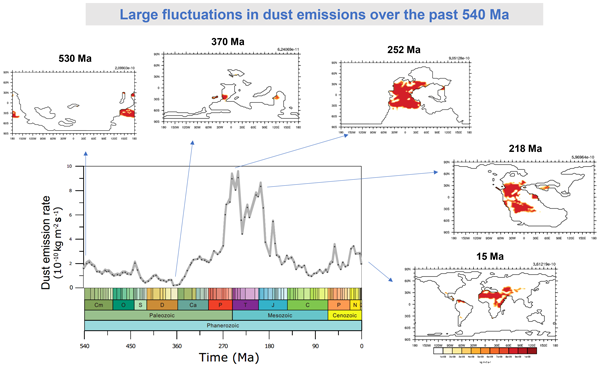
Desert dust plays a crucial role in the climate system; while it is relatively well studied for the present day, we still lack knowledge on how it was in the past and on its underlying mechanism in the multi-million-year timescale of Earth’s history. For the first time, we simulate dust emissions using the newly developed DUSTY1.0 model over the past 540 million years with a temporal resolution of ~5 million years. We find that palaeogeography is the primary control of these variations.
Xin Ren, Daniel J. Lunt, Erica Hendy, Anna von der Heydt, Ayako Abe-Ouchi, Bette Otto-Bliesner, Charles J. R. Williams, Christian Stepanek, Chuncheng Guo, Deepak Chandan, Gerrit Lohmann, Julia C. Tindall, Linda E. Sohl, Mark A. Chandler, Masa Kageyama, Michiel L. J. Baatsen, Ning Tan, Qiong Zhang, Ran Feng, Stephen Hunter, Wing-Le Chan, W. Richard Peltier, Xiangyu Li, Youichi Kamae, Zhongshi Zhang, and Alan M. Haywood
Clim. Past, 19, 2053–2077, https://doi.org/10.5194/cp-19-2053-2023, https://doi.org/10.5194/cp-19-2053-2023, 2023
Short summary
Short summary
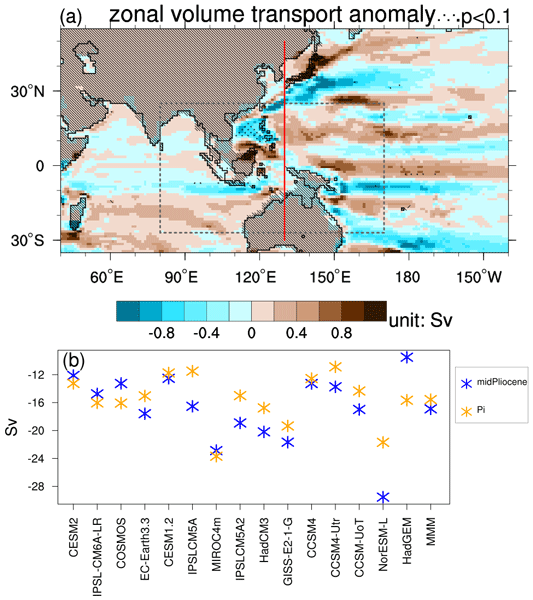
We investigate the Maritime Continent climate in the mid-Piacenzian warm period and find it is warmer and wetter and the sea surface salinity is lower compared with preindustrial period. Besides, the fresh and warm water transfer through the Maritime Continent was stronger. In order to avoid undue influence from closely related models in the multimodel results, we introduce a new metric, the multi-cluster mean, which could reveal spatial signals that are not captured by the multimodel mean.
Julia E. Weiffenbach, Michiel L. J. Baatsen, Henk A. Dijkstra, Anna S. von der Heydt, Ayako Abe-Ouchi, Esther C. Brady, Wing-Le Chan, Deepak Chandan, Mark A. Chandler, Camille Contoux, Ran Feng, Chuncheng Guo, Zixuan Han, Alan M. Haywood, Qiang Li, Xiangyu Li, Gerrit Lohmann, Daniel J. Lunt, Kerim H. Nisancioglu, Bette L. Otto-Bliesner, W. Richard Peltier, Gilles Ramstein, Linda E. Sohl, Christian Stepanek, Ning Tan, Julia C. Tindall, Charles J. R. Williams, Qiong Zhang, and Zhongshi Zhang
Clim. Past, 19, 61–85, https://doi.org/10.5194/cp-19-61-2023, https://doi.org/10.5194/cp-19-61-2023, 2023
Short summary
Short summary
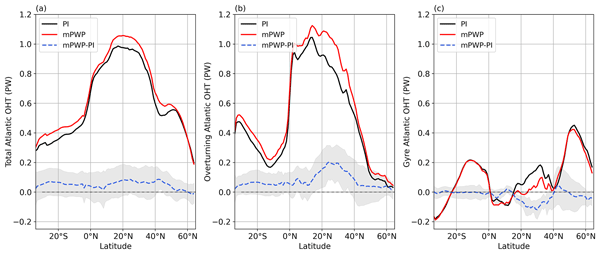
We study the behavior of the Atlantic Meridional Overturning Circulation (AMOC) in the mid-Pliocene. The mid-Pliocene was about 3 million years ago and had a similar CO2 concentration to today. We show that the stronger AMOC during this period relates to changes in geography and that this has a significant influence on ocean temperatures and heat transported northwards by the Atlantic Ocean. Understanding the behavior of the mid-Pliocene AMOC can help us to learn more about our future climate.
Zixuan Han, Qiong Zhang, Qiang Li, Ran Feng, Alan M. Haywood, Julia C. Tindall, Stephen J. Hunter, Bette L. Otto-Bliesner, Esther C. Brady, Nan Rosenbloom, Zhongshi Zhang, Xiangyu Li, Chuncheng Guo, Kerim H. Nisancioglu, Christian Stepanek, Gerrit Lohmann, Linda E. Sohl, Mark A. Chandler, Ning Tan, Gilles Ramstein, Michiel L. J. Baatsen, Anna S. von der Heydt, Deepak Chandan, W. Richard Peltier, Charles J. R. Williams, Daniel J. Lunt, Jianbo Cheng, Qin Wen, and Natalie J. Burls
Clim. Past, 17, 2537–2558, https://doi.org/10.5194/cp-17-2537-2021, https://doi.org/10.5194/cp-17-2537-2021, 2021
Short summary
Short summary
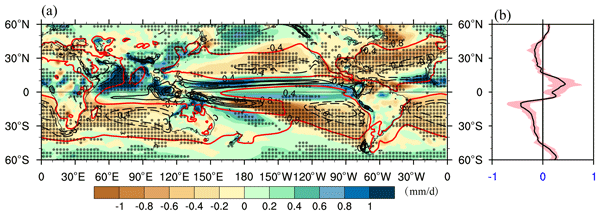
Understanding the potential processes responsible for large-scale hydrological cycle changes in a warmer climate is of great importance. Our study implies that an imbalance in interhemispheric atmospheric energy during the mid-Pliocene could have led to changes in the dynamic effect, offsetting the thermodynamic effect and, hence, altering mid-Pliocene hydroclimate cycling. Moreover, a robust westward shift in the Pacific Walker circulation can moisten the northern Indian Ocean.
Arthur M. Oldeman, Michiel L. J. Baatsen, Anna S. von der Heydt, Henk A. Dijkstra, Julia C. Tindall, Ayako Abe-Ouchi, Alice R. Booth, Esther C. Brady, Wing-Le Chan, Deepak Chandan, Mark A. Chandler, Camille Contoux, Ran Feng, Chuncheng Guo, Alan M. Haywood, Stephen J. Hunter, Youichi Kamae, Qiang Li, Xiangyu Li, Gerrit Lohmann, Daniel J. Lunt, Kerim H. Nisancioglu, Bette L. Otto-Bliesner, W. Richard Peltier, Gabriel M. Pontes, Gilles Ramstein, Linda E. Sohl, Christian Stepanek, Ning Tan, Qiong Zhang, Zhongshi Zhang, Ilana Wainer, and Charles J. R. Williams
Clim. Past, 17, 2427–2450, https://doi.org/10.5194/cp-17-2427-2021, https://doi.org/10.5194/cp-17-2427-2021, 2021
Short summary
Short summary
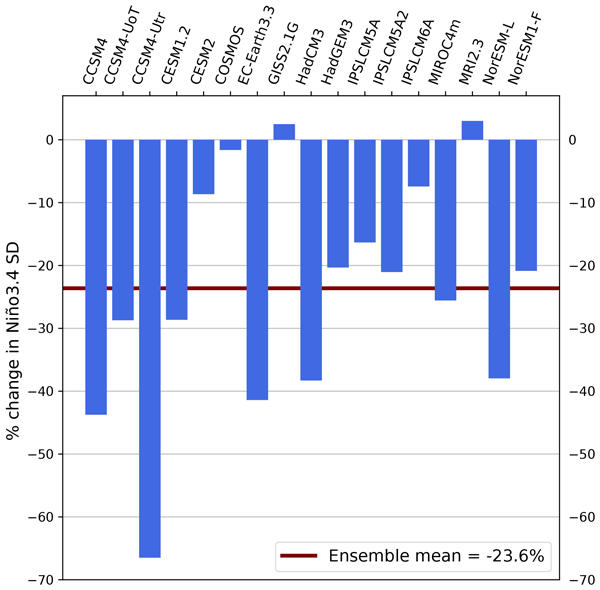
In this work, we have studied the behaviour of El Niño events in the mid-Pliocene, a period of around 3 million years ago, using a collection of 17 climate models. It is an interesting period to study, as it saw similar atmospheric carbon dioxide levels to the present day. We find that the El Niño events were less strong in the mid-Pliocene simulations, when compared to pre-industrial climate. Our results could help to interpret El Niño behaviour in future climate projections.
Katherine A. Crichton, Andy Ridgwell, Daniel J. Lunt, Alex Farnsworth, and Paul N. Pearson
Clim. Past, 17, 2223–2254, https://doi.org/10.5194/cp-17-2223-2021, https://doi.org/10.5194/cp-17-2223-2021, 2021
Short summary
Short summary
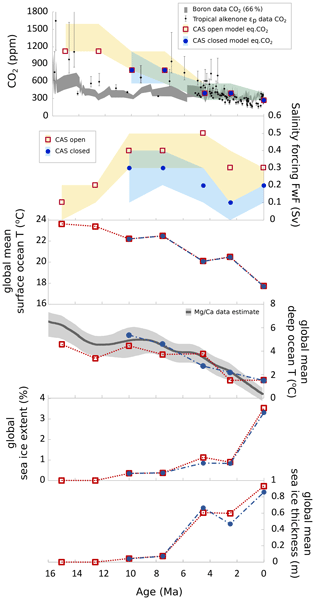
The middle Miocene (15 Ma) was a period of global warmth up to 8 °C warmer than present. We investigate changes in ocean circulation and heat distribution since the middle Miocene and the cooling to the present using the cGENIE Earth system model. We create seven time slices at ~2.5 Myr intervals, constrained with paleo-proxy data, showing a progressive reduction in atmospheric CO2 and a strengthening of the Atlantic Meridional Overturning Circulation.
Charles J. R. Williams, Alistair A. Sellar, Xin Ren, Alan M. Haywood, Peter Hopcroft, Stephen J. Hunter, William H. G. Roberts, Robin S. Smith, Emma J. Stone, Julia C. Tindall, and Daniel J. Lunt
Clim. Past, 17, 2139–2163, https://doi.org/10.5194/cp-17-2139-2021, https://doi.org/10.5194/cp-17-2139-2021, 2021
Short summary
Short summary
Computer simulations of the geological past are an important tool to improve our understanding of climate change. We present results from a simulation of the mid-Pliocene (approximately 3 million years ago) using the latest version of the UK’s climate model. The simulation reproduces temperatures as expected and shows some improvement relative to previous versions of the same model. The simulation is, however, arguably too warm when compared to other models and available observations.
Ellen Berntell, Qiong Zhang, Qiang Li, Alan M. Haywood, Julia C. Tindall, Stephen J. Hunter, Zhongshi Zhang, Xiangyu Li, Chuncheng Guo, Kerim H. Nisancioglu, Christian Stepanek, Gerrit Lohmann, Linda E. Sohl, Mark A. Chandler, Ning Tan, Camille Contoux, Gilles Ramstein, Michiel L. J. Baatsen, Anna S. von der Heydt, Deepak Chandan, William Richard Peltier, Ayako Abe-Ouchi, Wing-Le Chan, Youichi Kamae, Charles J. R. Williams, Daniel J. Lunt, Ran Feng, Bette L. Otto-Bliesner, and Esther C. Brady
Clim. Past, 17, 1777–1794, https://doi.org/10.5194/cp-17-1777-2021, https://doi.org/10.5194/cp-17-1777-2021, 2021
Short summary
Short summary
The mid-Pliocene Warm Period (~ 3.2 Ma) is often considered an analogue for near-future climate projections, and model results from the PlioMIP2 ensemble show an increase of rainfall over West Africa and the Sahara region compared to pre-industrial conditions. Though previous studies of future projections show a west–east drying–wetting contrast over the Sahel, these results indicate a uniform rainfall increase over the Sahel in warm climates characterized by increased greenhouse gas forcing.
Paul J. Valdes, Christopher R. Scotese, and Daniel J. Lunt
Clim. Past, 17, 1483–1506, https://doi.org/10.5194/cp-17-1483-2021, https://doi.org/10.5194/cp-17-1483-2021, 2021
Short summary
Short summary
Deep ocean temperatures are widely used as a proxy for global mean surface temperature in the past, but the underlying assumptions have not been tested. We use two unique sets of 109 climate model simulations for the last 545 million years to show that the relationship is valid for approximately the last 100 million years but breaks down for older time periods when the continents (and hence ocean circulation) are in very different positions.
Louise C. Sime, Rachel Diamond, Christian Stepanek, Chris Brierley, David Schroeder, Masa Kageyama, Matthew Pollock, Irene Malmierca-Vallet, Ed Blockley, Alex West, Danny Feltham, Jeff Ridley, Pascale Braconnot, Charles J. R. Williams, Xiaoxu Shi, Bette L. Otto-Bliesner, Sophia I. Macarewich, Silvana Ramos Buarque, Qiong Zhang, Allegra LeGrande, Weipeng Zheng, Dabang Jiang, Polina Morozova, Chuncheng Guo, Zhongshi Zhang, Nicholas Yeung, Laurie Menviel, Sandeep Narayanasetti, Masakazu Yoshimori, Olivia Reeves, and Anni Zhao
Geosci. Model Dev., 19, 5881–5905, https://doi.org/10.5194/gmd-19-5881-2026, https://doi.org/10.5194/gmd-19-5881-2026, 2026
Short summary
Short summary
The Arctic may have lost its summer sea ice 127,000 years ago during a naturally warm period in Earth’s past. Climate models can be tested by recreating those conditions, with similar sunlight and greenhouse gas levels. Analysing the large sea ice changes in these simulations helps us understand how the Arctic might respond in the near future and improves how we test and trust our climate models.
Benjamin W. Anthonisz, David K. Hutchinson, Katrin J. Meissner, Samar Khatiwala, and Benoît Pasquier
EGUsphere, https://doi.org/10.5194/egusphere-2026-3378, https://doi.org/10.5194/egusphere-2026-3378, 2026
This preprint is open for discussion and under review for Climate of the Past (CP).
Short summary
Short summary
This paper uses a state-of-the-art climate model to investigate the role of elevated CO2 on rapid changes to ocean biogeochemistry in much hotter world. We find that circulation has to potential to dramatically change as a result of rapid warming, resulting in poor ocean ventilation but surprisingly limited oxygen loss in the deep ocean.
Matthew Forrest, Mateus Dantas de Paula, Filipe Gomes de Almeida, Sandy P. Harrison, I. Colin Prentice, and Thomas Hickler
EGUsphere, https://doi.org/10.5194/egusphere-2026-3273, https://doi.org/10.5194/egusphere-2026-3273, 2026
This preprint is open for discussion and under review for Geoscientific Model Development (GMD).
Short summary
Short summary
Global photosynthesis on land is a large flow of carbon in the Earth system which underpins food production and ecosystems. It is particularly important to know how it responds to climate change, but current vegetation models do not agree on this. We implemented a new photosynthesis model based on recent theoretical advances into a vegetation model. We found that it improved the representation of photosynthesis when compared both to global data from satellites and detailed site measurements.
Martin Renoult, Agatha de Boer, Ellen Berntell, and Trusha Jagdish Naik
Clim. Past, 22, 1203–1222, https://doi.org/10.5194/cp-22-1203-2026, https://doi.org/10.5194/cp-22-1203-2026, 2026
Short summary
Short summary
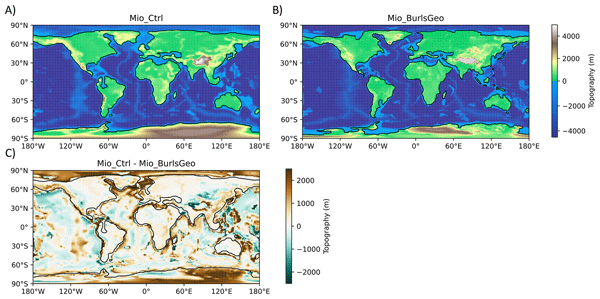
During the mid-Miocene (~16 to 14 million years ago), Earth was much warmer with CO2 levels similar to what is expected for our future. Here, we perform simulations with a new geography of the mid-Miocene, which include changes in ice coverage, land and sea distribution, solar energy and CO2 concentrations. Despite high CO2 concentrations, our mid-Miocene is too cold compared to geological reconstructions, but shows great potential to understand future climate change and its sensitivity to CO2.
Yanxuan Du, Josephine R. Brown, Laurie Menviel, Himadri Saini, Russell N. Drysdale, David K. Hutchinson, and Calla N. Gould-Whaley
Clim. Past, 22, 1105–1124, https://doi.org/10.5194/cp-22-1105-2026, https://doi.org/10.5194/cp-22-1105-2026, 2026
Short summary
Short summary
This study examines the climate response to different magnitudes of Atlantic Meridional Overturning Circulation (AMOC) weakening under glacial conditions using the Australian Earth System Model. A potential threshold is identified between linear AMOC slowdown and nonlinear shutdown, driven by a critical change in ocean heat loss that induces a nonlinear atmospheric response governed by energetic constraints.
Katja Frieler, Stefan Lange, Jacob Schewe, Matthias Mengel, Simon Treu, Christian Otto, Jan Volkholz, Christopher P. O. Reyer, Stefanie Heinicke, Colin Jones, Julia L. Blanchard, Cheryl S. Harrison, Colleen M. Petrik, Tyler D. Eddy, Kelly Ortega-Cisneros, Camilla Novaglio, Ryan Heneghan, Derek P. Tittensor, Olivier Maury, Matthias Büchner, Thomas Vogt, Dánnell Quesada-Chacón, Kerry Emanuel, Chia-Ying Lee, Suzana J. Camargo, Linn Hamester, Jonas Jägermeyr, Sam Rabin, Jochen Klar, Iliusi D. Vega del Valle, Lisa Novak, Inga J. Sauer, Gitta Lasslop, Sarah Chadburn, Eleanor Burke, Angela Gallego-Sala, Noah Smith, Jinfeng Chang, Stijn Hantson, Chantelle Burton, Anne Gädeke, Fang Li, Simon N. Gosling, Hannes Müller Schmied, Fred Hattermann, Thomas Hickler, Rafael Marcé, Don Pierson, Wim Thiery, Daniel Mercado-Bettín, Robert Ladwig, Ana Isabel Ayala, Matthew Forrest, Michel Bechtold, Robert Reinecke, Inge de Graaf, Jed O. Kaplan, Alexander Koch, Matthieu Lengaigne, Rohini Kumar, and Maryna Strokal
Geosci. Model Dev., 19, 4095–4135, https://doi.org/10.5194/gmd-19-4095-2026, https://doi.org/10.5194/gmd-19-4095-2026, 2026
Short summary
Short summary
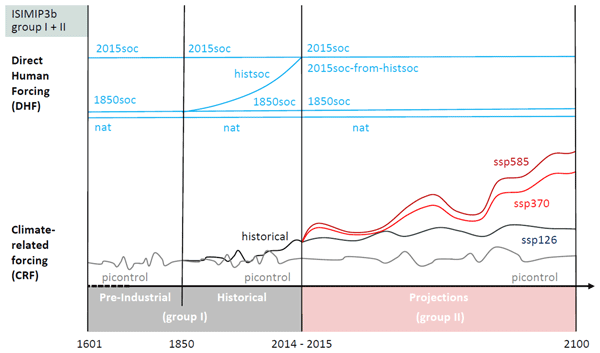
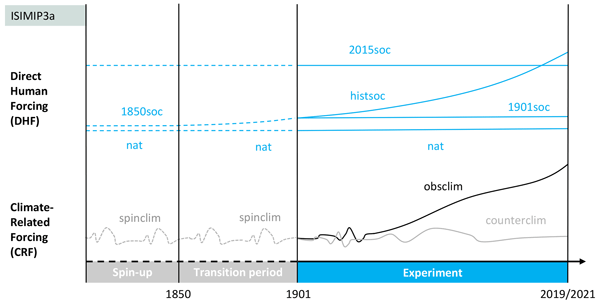
This paper describes the experiments and data sets necessary to run historic and future impact projections, and the underlying assumptions of future climate change as defined by the 3rd round of the ISIMIP Project (Inter-sectoral Impactmodel Intercomparison Project, isimip.org). ISIMIP provides a framework for cross-sectorally consistent climate impact simulations to contribute to a comprehensive and consistent picture of the world under different climate-change scenarios.
Yurui Zhang, Jilin Wei, Zhen Li, Nan Dai, Weipeng Zheng, Qiuzhen Yin, Agatha M. de Boer, Zhengguo Shi, and Lixia Zhang
Clim. Past, 22, 879–889, https://doi.org/10.5194/cp-22-879-2026, https://doi.org/10.5194/cp-22-879-2026, 2026
Short summary
Short summary
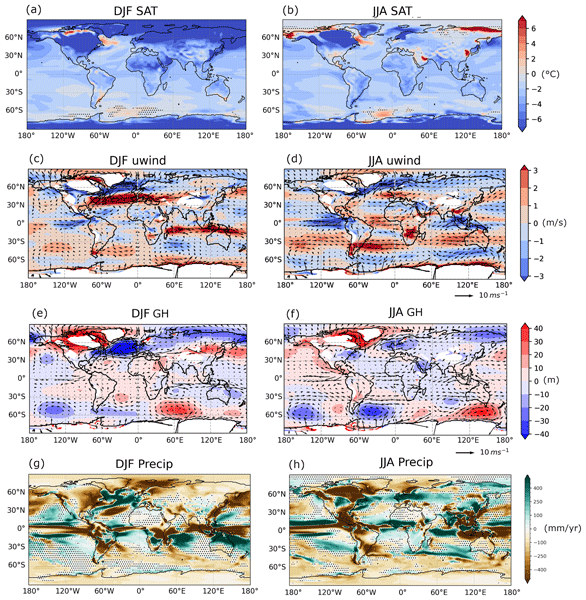
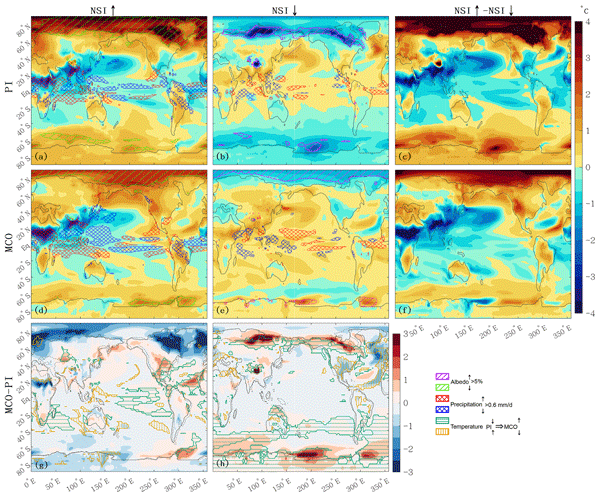
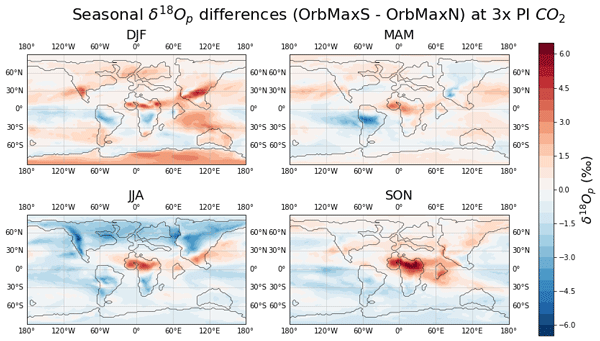
This study examines how the warm Miocene (~23–5 Ma) climate responded to orbital changes compared with modern day. Simulations show weaker Miocene temperature responses with distinct spatial patterns. High latitudes were less sensitive due to weaker albedo feedback, while tropical Africa cooled more strongly from an enhanced water cycle. The Southern Ocean warmed under low insolation as winter sea ice shrank. These findings highlight how background climate states shape orbital climate responses.
Aniket Mitra, Steven Goderis, Niels J. de Winter, Michiel Baatsen, Béatrice A. Ledésert, Guillaume Dupont-Nivet, Philippe Claeys, and Inigo A. Müller
EGUsphere, https://doi.org/10.5194/egusphere-2026-1393, https://doi.org/10.5194/egusphere-2026-1393, 2026
This preprint is open for discussion and under review for Climate of the Past (CP).
Short summary
Short summary
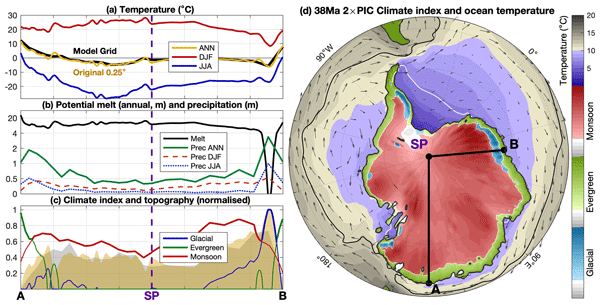
South Asian Monsoon affects more than 2 billion people and regional biodiversity but may be vulnerable to rising CO2. This study reconstructs seasonally resolved climate at ~38 Ma, linked to early monsoon development, using oyster shells from western India and climate modelling. Results show year-round high temperature with weak seasonality and rainfall extending beyond summer into post-monsoon and winter months. Regional seasonality of tropical climate was likely influenced by palaeogeography.
Didier Swingedouw, Laura Jackson, Aixue Hu, Anastasia Romanou, Nicole C. Laureanti, Wilbert Weijer, Sina Loriani, Bette Otto-Bliesner, Ayako Abe-Ouchi, Lucas Almeida, Alessio Bellucci, Reyk Börner, Gokhan Danabasoglu, Donovan P. Dennis, Marion Devilliers, Sybren Drijfhout, Jonathan Donges, Friederike Fröb, Thomas L. Frölicher, Guillaume Gastineau, Heiko Goelzer, Chuncheng Guo, Urs Hofmann, Anna Höse, Colin Jones, Torben Koenigk, Ann Kristin Klose, Valerio Lembo, Jose Licon-Salaiz, Ken Mankoff, Virna Meccia, Irina Melnikova, Oliver Mehling, Laurie Menviel, Juliette Mignot, Jon I. Robson, Gavin A. Schmidt, Robin Smith, Yuchen Sun, Irene Trombini, Matteo Willeit, Richard Wood, Fanghua Wu, Lin Zhaohui, and Ricarda Winkelmann
EGUsphere, https://doi.org/10.5194/egusphere-2026-1698, https://doi.org/10.5194/egusphere-2026-1698, 2026
Short summary
Short summary
This study presents a plan for climate model experiments to better understand how changes in freshwater in the North Atlantic affect major ocean currents. We designed coordinated simulations to test their response to warming, added freshwater, and possible recovery after weakening. Comparing results across models and past climate evidence helps improve confidence in projections and assess risks of large ocean circulation changes.
Ashley M. Abrook, Gordon N. Inglis, Peter G. Langdon, McKenzie R. Bentley, Achim Brauer, Ian Bull, Daisy Fallows, Paul Lincoln, Antti E. K. Ojala, Helen L. Whelton, and Celia Martin-Puertas
Biogeosciences, 23, 1809–1832, https://doi.org/10.5194/bg-23-1809-2026, https://doi.org/10.5194/bg-23-1809-2026, 2026
Short summary
Short summary
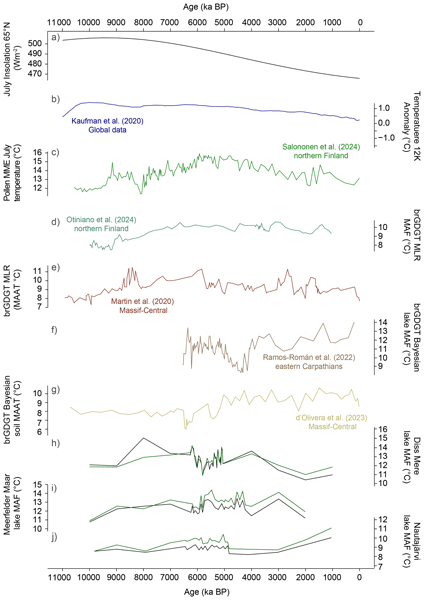
We present lipid-based environmental and temperature reconstructions spanning the Holocene from three European varved lakes. At each site archaea are impacted by methane which influence lake water temperature reconstructions, and bacteria appear to respond to oxygen conditions and specific lake and environmental processes. Nonetheless, bacterial temperature reconstructions are comparable to regional climate data, showing the potential of varve archives for high resolution reconstructions.
Fanni Dóra Kelemen, Richard Lohmann, Jiang Zhu, and Bodo Ahrens
Clim. Past, 22, 505–516, https://doi.org/10.5194/cp-22-505-2026, https://doi.org/10.5194/cp-22-505-2026, 2026
Short summary
Short summary
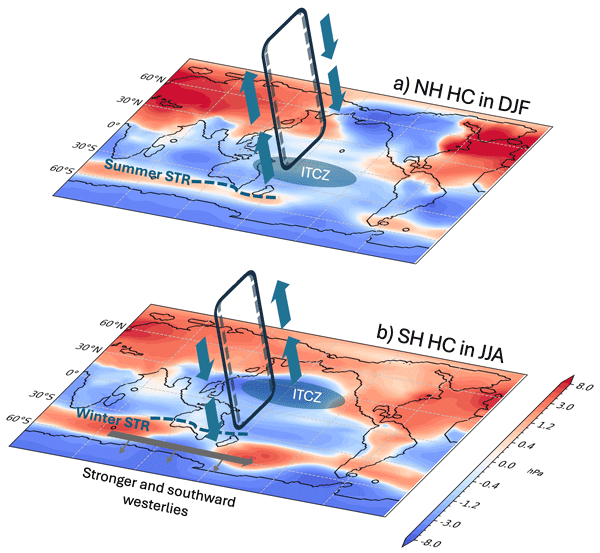
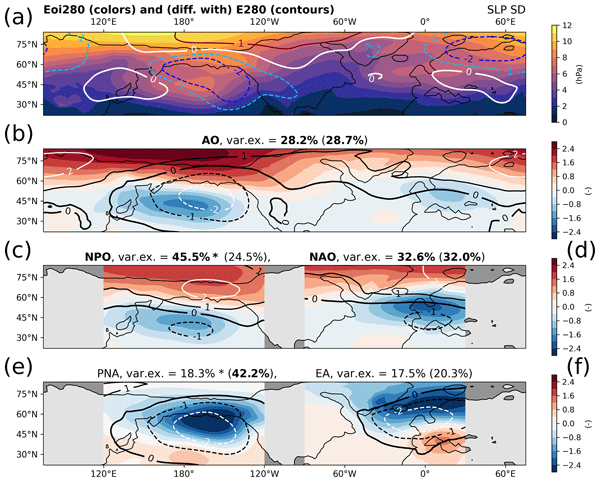
The arrangement of continents and oceans strongly affects climate by shaping large-scale circulation patterns. We study, how early Eocene geography (53.5 Ma) influenced mid-latitude storms and persistent high-pressure systems, focusing on the West Siberian Sea and absent Antarctic Circumpolar Current. The climate model simulation of the early Eocene, shows a more balanced hemispheric distribution, through increased northern and decreased southern mid-latitude storm activity compared to today.
Hamida Ngoma Nadoya, Clay R. Tabor, Ran Feng, Xiaoqing Liu, Daniel E. Ibarra, Tammo Reichgelt, and Amber Laskos
EGUsphere, https://doi.org/10.5194/egusphere-2026-899, https://doi.org/10.5194/egusphere-2026-899, 2026
Short summary
Short summary
The Miocene Climatic Optimum (MCO; ~17–14 Ma) may provide a window into the future of Earth’s climate. Our study employs the water isotope tracer version of CESM1 to simulate and evaluate climate during the MCO under three different CO2 concentrations. Our findings show warmer conditions during the MCO with increase in precipitation in the mid and high latitudes, southward shift of the intertropical convergence zone and enriched isotopes.
Elizabeth K. Brabson, Loren F. Doyle, R. Paul Acosta, Alexey V. Fedorov, Pincelli M. Hull, and Natalie J. Burls
Geosci. Model Dev., 19, 1143–1156, https://doi.org/10.5194/gmd-19-1143-2026, https://doi.org/10.5194/gmd-19-1143-2026, 2026
Short summary
Short summary
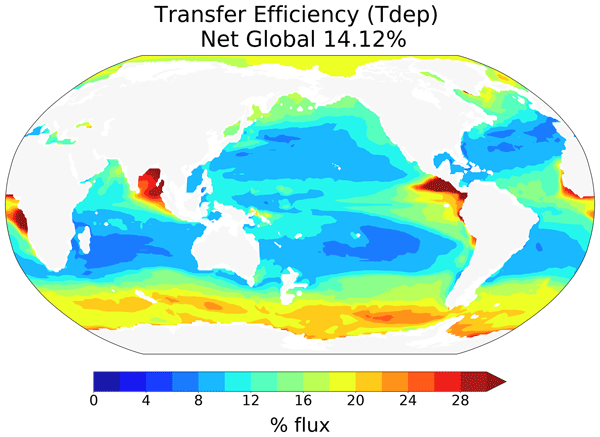
Earth System Models are an essential tool for climate studies, yet temperature-sensitive parameters are often absent, resulting in a gap in model predictive capabilities. Organic carbon breakdown, also known as remineralization, is one such process. Here, we add this parameter to the Community Earth System Model and find improved regional patterns of carbon export. The new code will serve as a useful tool to improve the examination of marine carbon cycle feedbacks to changing climate conditions.
Simon Scheiter, Jinfeng Chang, Philippe Ciais, Marie Dury, Louis Francois, Matthew Forrest, Alexandra Henrot, Christopher P. O. Reyer, Sonia Seneviratne, Jörg Steinkamp, Wim Thiery, Wenfang Xu, and Thomas Hickler
EGUsphere, https://doi.org/10.5194/egusphere-2026-221, https://doi.org/10.5194/egusphere-2026-221, 2026
Short summary
Short summary
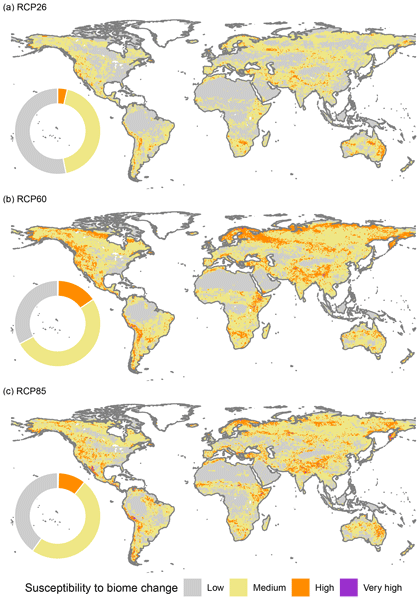
Our study shows how climate change may reshape the world's major biomes, such as forests, grasslands, and tundra. Using dynamic vegetation models, machine learning and real-world observations, we found that many biomes are likely to shift toward the poles as temperatures rise. Even under low-emission scenarios, large areas could change. These results help identify regions most susceptible to climate change and support global efforts to protect and manage natural ecosystems in the future.
Iris Arndt, Jonathan Erez, David Evans, Tobias Erhardt, Adam Levi, and Wolfgang Müller
Biogeosciences, 23, 585–603, https://doi.org/10.5194/bg-23-585-2026, https://doi.org/10.5194/bg-23-585-2026, 2026
Short summary
Short summary
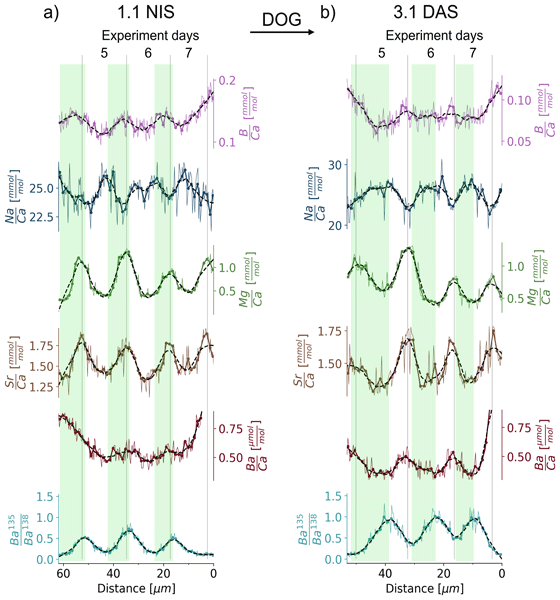
This study explores daily geochemical variations in giant clam (Tridacna) shells from controlled, isotopically-labelled day-night growth experiments. Results show five times higher daytime calcification rates. Light availability and metabolic activity significantly influence elemental incorporation mechanisms. The findings enhance our understanding of clam geochemistry and growth dynamics, offering valuable insights for studies on past environmental changes.
Anne L. Kruijt, Robin van Dijk, Olivier Sulpis, Luc Beaufort, Guillaume Lassus, Geert-Jan Brummer, A. Daniëlle van der Burg, Ben A. Cala, Yasmina Ourradi, Katja T. C. A. Peijnenburg, Matthew P. Humphreys, Sonia Chaabane, Appy Sluijs, and Jack J. Middelburg
Biogeosciences, 23, 531–563, https://doi.org/10.5194/bg-23-531-2026, https://doi.org/10.5194/bg-23-531-2026, 2026
Short summary
Short summary
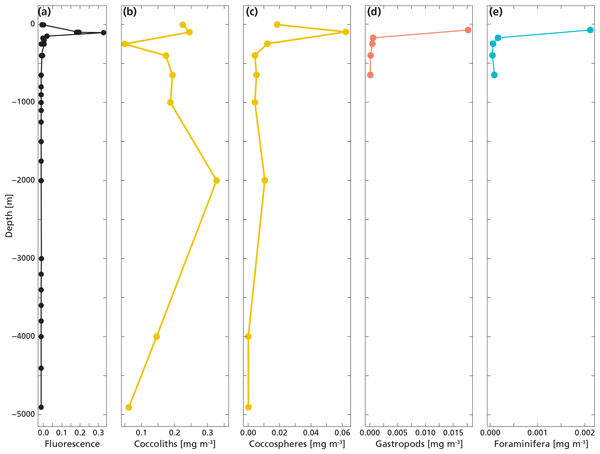
We measured the three main types of plankton that produce calcium carbonate in the ocean, at the same time and location. While coccolithophores were the biggest contributors, we found that planktonic gastropods, not foraminifera, were the second largest contributor. This challenges the current view and improves our understanding of how these organisms influence oceans’ carbon cycling.
Marjolein Ribberink, Hylke de Vries, Nadia Bloemendaal, Michiel Baatsen, and Erik van Meijgaard
Weather Clim. Dynam., 7, 37–64, https://doi.org/10.5194/wcd-7-37-2026, https://doi.org/10.5194/wcd-7-37-2026, 2026
Short summary
Short summary
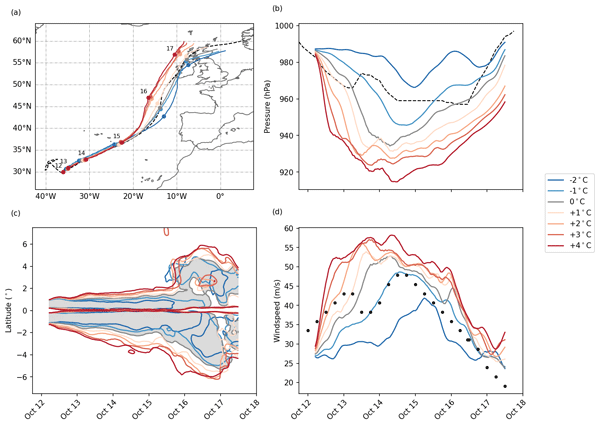
Hurricane Ophelia of October 2017 is a rare example of a strong post-tropical cyclone impacting Europe, an event that is expected to occur more frequently as our climate warms. This study examines the changes in structure, behaviour, and extratropical transition of Hurricane Ophelia under alternate climate forcing using a regional model. We find that in warmer climates the storm becomes stronger, larger, and maintains the characteristics of a tropical cyclone for longer than in cooler climates.
Amar Mistry, Dan Lunt, and Xin Ren
The Cryosphere, 19, 6989–7012, https://doi.org/10.5194/tc-19-6989-2025, https://doi.org/10.5194/tc-19-6989-2025, 2025
Short summary
Short summary
The Antarctic Ice Sheet is melting and adding fresh water into the Southern Ocean, affecting the global climate system. Here, we conduct model experiments in which water is input into the Southern Ocean. We find a significant response of the climate system to this meltwater; however, the manner in which the Antarctic Ice Sheet loses mass does not strongly control this response. The implications are that Antarctic meltwater should be included in future climate model projections.
Nick R. Hayes, Daniel J. Lunt, Yves Goddéris, Richard D. Pancost, and Heather Buss
Clim. Past, 21, 2601–2618, https://doi.org/10.5194/cp-21-2601-2025, https://doi.org/10.5194/cp-21-2601-2025, 2025
Short summary
Short summary
The breakdown of volcanic rocks by water helps balance the climate of the Earth by sequestering atmospheric CO2. The rate of CO2 sequestration is referred to as "weatherability". Our modelling study finds that continental position strongly impacts CO2 concentrations, that runoff strongly controls weatherability, that changes in weatherability may explain long-term trends in atmospheric CO2 concentrations, and that even relatively localised changes in weatherability may have global impacts.
Blessing Kavhu, Matthew Forrest, and Thomas Hickler
Biogeosciences, 22, 7001–7030, https://doi.org/10.5194/bg-22-7001-2025, https://doi.org/10.5194/bg-22-7001-2025, 2025
Short summary
Short summary
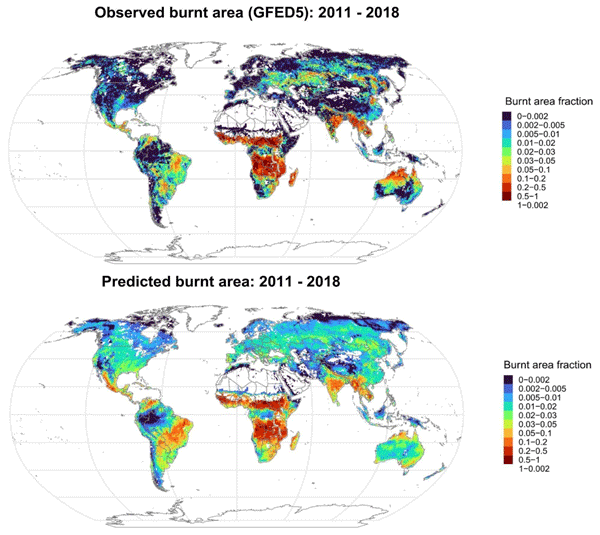
We developed a statistical model to predict global wildfire patterns based on a parsimonious set of weather, vegetation, and anthropogenic variables. This model is designed within a DGVM (Dynamic Global Vegetation Model)-compatible framework and helps to forecast seasonal fire patterns across diverse regions. It's simplicity makes it valuable for climate and fire management planning, helping communities better prepare for and adapt to rising wildfire threats.
Jasper de Jong, Daniel Pflüger, Simone Lingbeek, Claudia E. Wieners, Michiel L. J. Baatsen, and René R. Wijngaard
Geosci. Model Dev., 18, 8679–8702, https://doi.org/10.5194/gmd-18-8679-2025, https://doi.org/10.5194/gmd-18-8679-2025, 2025
Short summary
Short summary
Injection of reflective sulfate aerosols high in the atmosphere is a proposed method to mitigate global warming. Climate simulations with injection are more expensive than standard future projections. We propose a method that dynamically scales the forcing fields based on pre-existing full-complexity data. This opens up possibilities for ensemble generation, new scenarios and higher resolution runs. We show that our method works for multiple model versions, injection scenarios and resolutions.
Tancrède P. M. Leger, Jeremy C. Ely, Christopher D. Clark, Sarah L. Bradley, Rosie E. Archer, and Jiang Zhu
The Cryosphere, 19, 5719–5761, https://doi.org/10.5194/tc-19-5719-2025, https://doi.org/10.5194/tc-19-5719-2025, 2025
Short summary
Short summary
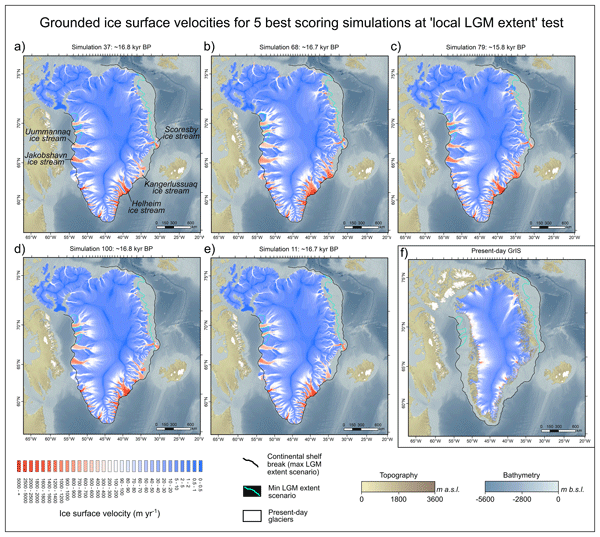
This study uses state-of-the-art computer simulations to better constrain the Greenland-Ice-Sheet's evolution over the past 24,000 years. By comparing model results with geological data, it reveals when and why the ice sheet grew and shrank, helping to improve future predictions of sea level rise and climate change.
Peter K. Bijl, Kasia K. Śliwińska, Bella Duncan, Arnaud Huguet, Sebastian Naeher, Ronnakrit Rattanasriampaipong, Claudia Sosa-Montes de Oca, Alexandra Auderset, Melissa A. Berke, Bum Soo Kim, Nina Davtian, Tom Dunkley Jones, Desmond D. Eefting, Felix J. Elling, Pierrick Fenies, Gordon N. Inglis, Lauren O'Connor, Richard D. Pancost, Francien Peterse, Addison Rice, Appy Sluijs, Devika Varma, Wenjie Xiao, and Yi Ge Zhang
Biogeosciences, 22, 6465–6508, https://doi.org/10.5194/bg-22-6465-2025, https://doi.org/10.5194/bg-22-6465-2025, 2025
Short summary
Short summary
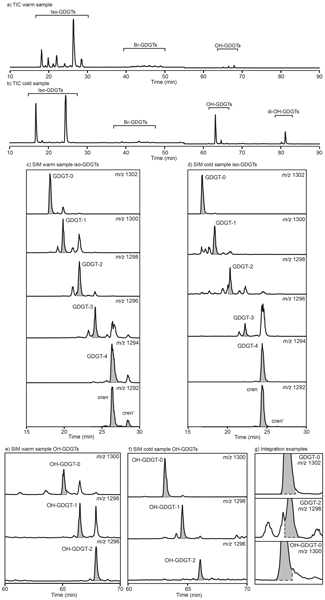
Many academic laboratories worldwide process environmental samples for analysis of membrane lipid molecules of archaea, for the reconstruction of past environmental conditions. However, the sample workup scheme involves many steps, each of which has a risk of contamination or bias, affecting the results. This paper reviews steps involved in sampling, extraction and analysis of lipids, interpretation and archiving of the data. This ensures reproducible, reusable, comparable and consistent data.
Mei Nelissen, Appy Sluijs, Debra A. Willard, and Henk Brinkhuis
J. Micropalaeontol., 44, 431–467, https://doi.org/10.5194/jm-44-431-2025, https://doi.org/10.5194/jm-44-431-2025, 2025
Short summary
Short summary
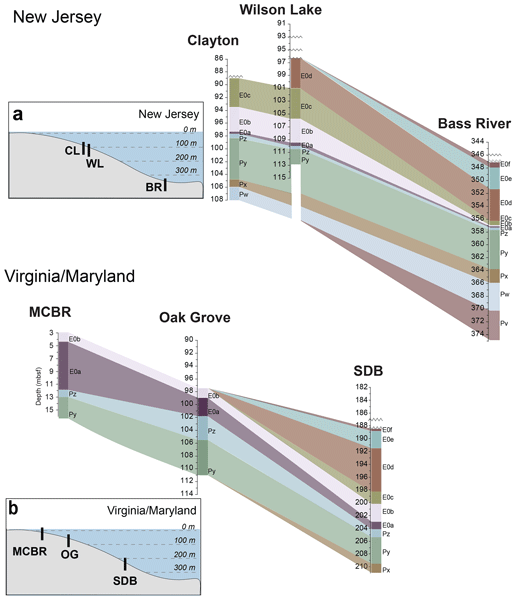
We studied a short-lived episode of major warming ~56 million years ago, often seen as a past analogue for modern climate change. We developed a scheme to correlate biological signals from this warming period across six sediment cores from the US East Coast. Based on the occurrences and distribution of organic remains of planktonic microfossils, we can correlate events in time, allowing detailed reconstructions of how climate and environments changed regionally during this extreme warming.
Louise C. Sime, Rahul Sivankutty, Irene Malmierca-Vallet, Sentia Goursaud Oger, Allegra N. LeGrande, Erin L. McClymont, Agatha de Boer, Alexandre Cauquoin, and Martin Werner
Clim. Past, 21, 1725–1753, https://doi.org/10.5194/cp-21-1725-2025, https://doi.org/10.5194/cp-21-1725-2025, 2025
Short summary
Short summary
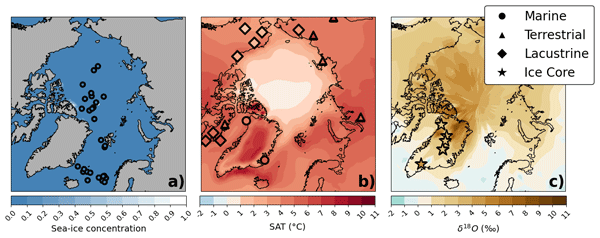
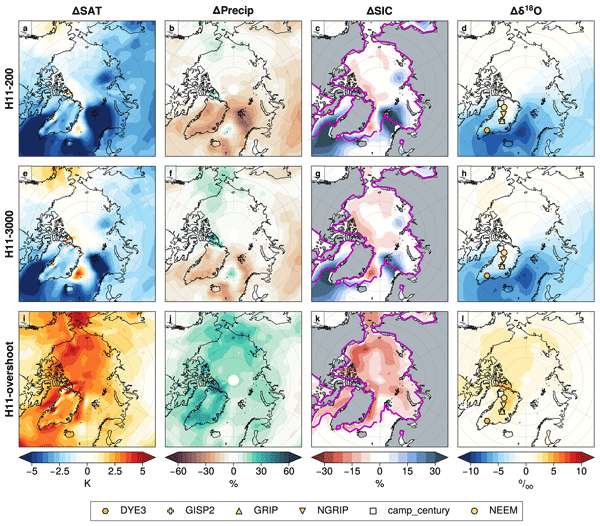
We used climate models to study how stable water isotopes in ice cores changed in the Arctic and Antarctica during the warm Last Interglacial (LIG) period. Whilst standard simulations underestimate polar warming, when the effects of ice sheet meltwater from the preceding deglaciation are included, there is a much better match with observations. Findings suggest that previous estimates of LIG Arctic warming were too high. Understanding these past polar changes can help improve future predictions.
Colin Jones, Isaline Bossert, Donovan P. Dennis, Hazel Jeffery, Chris D. Jones, Torben Koenigk, Sina Loriani, Benjamin Sanderson, Roland Séférian, Klaus Wyser, Shuting Yang, Manabu Abe, Sebastian Bathiany, Pascale Braconnot, Victor Brovkin, Friedrich A. Burger, Patrica Cadule, Frederic S. Castruccio, Gokhan Danabasoglu, Andrea Dittus, Jonathan F. Donges, Friederike Fröb, Thomas Frölicher, Goran Georgievski, Chuncheng Guo, Aixue Hu, Peter Lawrence, Paul Lerner, José Licón-Saláiz, Bette Otto-Bliesner, Anastasia Romanou, Elena Shevliakova, Yona Silvy, Didier Swingedouw, Jerry Tjiputra, Jeremy Walton, Andy Wiltshire, Ricarda Winkelmann, Richard Wood, Tokuta Yokohata, and Tilo Ziehn
EGUsphere, https://doi.org/10.5194/egusphere-2025-3604, https://doi.org/10.5194/egusphere-2025-3604, 2025
Short summary
Short summary
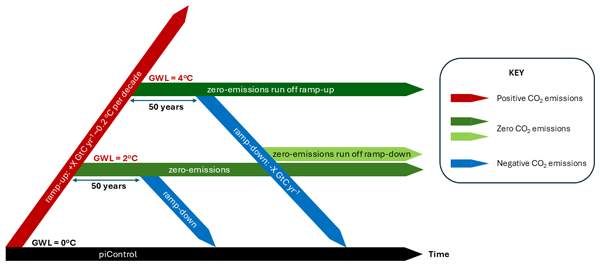
We introduce a new Earth system model experiment protocol to help researchers understand how Earth might respond to positive, zero, and negative carbon emissions. This protocol enables different models to be compared following similar warming and cooling rates. Researchers use the models to explore how the Earth reacts to different climate futures, including the risk of tipping points being exceeded and whether changes can be reversed. The results will support improved long-term climate policy.
Yannick F. Bats, Klaas G. J. Nierop, Alice Stuart-Lee, Joost Frieling, Linda van Roij, Gert-Jan Reichart, and Appy Sluijs
Biogeosciences, 22, 4689–4704, https://doi.org/10.5194/bg-22-4689-2025, https://doi.org/10.5194/bg-22-4689-2025, 2025
Short summary
Short summary
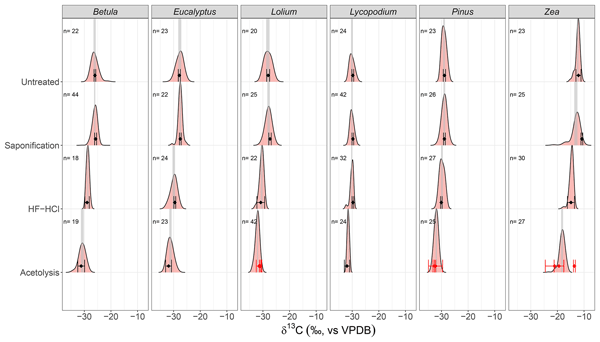
In this study, we analyzed the molecular and stable carbon isotopic composition (δ13C) of pollen and spores (sporomorphs) that underwent chemical treatments that simulate diagenesis during fossilization. We show that the successive removal of sugars and lipids results in the depletion of 13C in the residual sporomorph, leaving rich aromatic compounds. This residual aromatic-rich structure likely represents diagenetically resistant sporopollenin, implying that diagenesis results in the depletion of 13C in pollen.
Yves Krüger, Leonardo Pasqualetto, Alvaro Fernandez, Kim M. Cobb, and A. Nele Meckler
Clim. Past, 21, 1553–1584, https://doi.org/10.5194/cp-21-1553-2025, https://doi.org/10.5194/cp-21-1553-2025, 2025
Short summary
Short summary
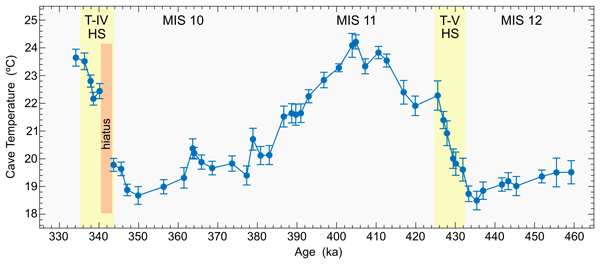
Using a stalagmite from Whiterock Cave (Gunung Mulu National Park, Northern Borneo), covering the time interval from 460000 to 333000 years B.P., including two glacial terminations, we employed nucleation-assisted fluid inclusion microthermometry to reconstruct a tropical cave temperature record. The record reveals an amplitude of glacial-interglacial temperature changes of 4.2 °C and a strong linear correlation with Antarctic temperature anomalies, yielding a polar amplification factor of 2.3.
Nina M. Papadomanolaki, Anta-Clarisse Sarr, Anthony Gramoullé, Marie Laugié, Jean-Baptiste Ladant, and Yannick Donnadieu
EGUsphere, https://doi.org/10.5194/egusphere-2025-3458, https://doi.org/10.5194/egusphere-2025-3458, 2025
Preprint archived
Short summary
Short summary
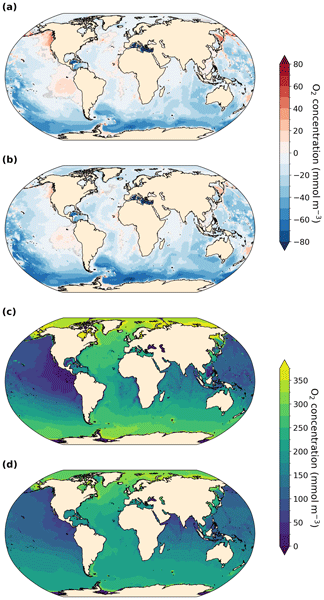
We model how geography and atmospheric CO2 changed circulation and oxygen concentrations prior to two deoxygenation events of the Cretaceous (severe) and Paleocene. Deep Cretaceous oxygen concentration are lower, but at shallower depths, the two simulations produce similar oxygen concentrations. At these depths, the Cretaceous seafloor likely fortified deoxygenation via sedimentary feedbacks. We show that geographical changes after the Paleocene further enhanced ocean oxygenation in our runs.
Takashi Obase, Laurie Menviel, Ayako Abe-Ouchi, Tristan Vadsaria, Ruza Ivanovic, Brooke Snoll, Sam Sherriff-Tadano, Paul J. Valdes, Lauren Gregoire, Marie-Luise Kapsch, Uwe Mikolajewicz, Nathaelle Bouttes, Didier Roche, Fanny Lhardy, Chengfei He, Bette Otto-Bliesner, Zhengyu Liu, and Wing-Le Chan
Clim. Past, 21, 1443–1463, https://doi.org/10.5194/cp-21-1443-2025, https://doi.org/10.5194/cp-21-1443-2025, 2025
Short summary
Short summary
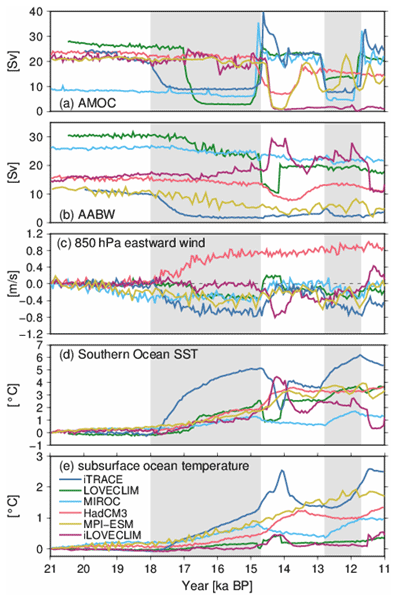
This study analyses transient simulations of the last deglaciation performed by six climate models to understand the processes driving high-southern-latitude temperature changes. We find that atmospheric CO2 and AMOC (Atlantic Meridional Overturning Circulation) changes are the primary drivers of the warming and cooling during the middle stage of the deglaciation. The analysis highlights the model's sensitivity of CO2 and AMOC to meltwater and the meltwater history of temperature changes at high southern latitudes.
Zanna Chase, Karen E. Kohfeld, Amy Leventer, David Lund, Xavier Crosta, Laurie Menviel, Helen C. Bostock, Matthew Chadwick, Samuel L. Jaccard, Jacob Jones, Alice Marzocchi, Katrin J. Meissner, Elisabeth Sikes, Louise C. Sime, and Luke Skinner
EGUsphere, https://doi.org/10.5194/egusphere-2025-3504, https://doi.org/10.5194/egusphere-2025-3504, 2025
Short summary
Short summary
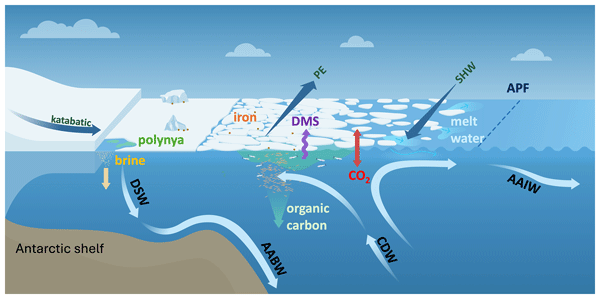
The impact of recent dramatic declines in Antarctic sea ice on the Earth system are uncertain. We reviewed how sea ice affects ocean circulation, ice sheets, winds, and the carbon cycle by considering theory and modern observations alongside paleo-proxy reconstructions. We found evidence for connections between sea ice and these systems but also conflicting results, which point to missing knowledge. Our work highlights the complex role of sea ice in the Earth system.
Bartholomé Duboc, Katrin J. Meissner, Laurie Menviel, Nicholas K. H. Yeung, Babette Hoogakker, Tilo Ziehn, and Matthew Chamberlain
Clim. Past, 21, 1093–1122, https://doi.org/10.5194/cp-21-1093-2025, https://doi.org/10.5194/cp-21-1093-2025, 2025
Short summary
Short summary
We use an earth system model to simulate ocean oxygen during two past warm periods, the Last Interglacial (∼ 129–115 ka) and Marine Isotope Stage (MIS) 9e (∼ 336–321 ka). The global ocean is overall less oxygenated compared to the preindustrial simulation. Large regions in the Mediterranean Sea are oxygen deprived in the Last Interglacial simulation, and to a lesser extent in the MIS 9e simulation, due to an intensification and expansion of the African monsoon and enhanced river runoff.
Mehdi Pasha Karami, Torben Koenigk, Shiyu Wang, René Navarro Labastida, Tim Kruschke, Aude Carreric, Pablo Ortega, Klaus Wyser, Ramon Fuentes Franco, Agatha M. de Boer, Marie Sicard, and Aitor Aldama Campino
EGUsphere, https://doi.org/10.5194/egusphere-2025-2653, https://doi.org/10.5194/egusphere-2025-2653, 2025
Short summary
Short summary
This study uses a high-resolution global climate model to simulate future climate, focusing on the Arctic and North Atlantic. The model captures observed sea ice loss and Atlantic circulation trends, projecting a nearly ice-free Arctic by 2040. It introduces a new method to quantify deep water formation, revealing how different ocean regions contribute to the weakening of overturning circulation in a warming climate.
Ricarda Winkelmann, Donovan P. Dennis, Jonathan F. Donges, Sina Loriani, Ann Kristin Klose, Jesse F. Abrams, Jorge Alvarez-Solas, Torsten Albrecht, David Armstrong McKay, Sebastian Bathiany, Javier Blasco Navarro, Victor Brovkin, Eleanor Burke, Gokhan Danabasoglu, Reik V. Donner, Markus Drüke, Goran Georgievski, Heiko Goelzer, Anna B. Harper, Gabriele Hegerl, Marina Hirota, Aixue Hu, Laura C. Jackson, Colin Jones, Hyungjun Kim, Torben Koenigk, Peter Lawrence, Timothy M. Lenton, Hannah Liddy, José Licón-Saláiz, Maxence Menthon, Marisa Montoya, Jan Nitzbon, Sophie Nowicki, Bette Otto-Bliesner, Francesco Pausata, Stefan Rahmstorf, Karoline Ramin, Alexander Robinson, Johan Rockström, Anastasia Romanou, Boris Sakschewski, Christina Schädel, Steven Sherwood, Robin S. Smith, Norman J. Steinert, Didier Swingedouw, Matteo Willeit, Wilbert Weijer, Richard Wood, Klaus Wyser, and Shuting Yang
EGUsphere, https://doi.org/10.5194/egusphere-2025-1899, https://doi.org/10.5194/egusphere-2025-1899, 2025
Short summary
Short summary
The Tipping Points Modelling Intercomparison Project (TIPMIP) is an international collaborative effort to systematically assess tipping point risks in the Earth system using state-of-the-art coupled and stand-alone domain models. TIPMIP will provide a first global atlas of potential tipping dynamics, respective critical thresholds and key uncertainties, generating an important building block towards a comprehensive scientific basis for policy- and decision-making.
Mateus Dantas de Paula, Tatiana Reichert, Laynara F. Lugli, Erica McGale, Kerstin Pierick, João Paulo Darela-Filho, Liam Langan, Jürgen Homeier, Anja Rammig, and Thomas Hickler
Biogeosciences, 22, 2707–2732, https://doi.org/10.5194/bg-22-2707-2025, https://doi.org/10.5194/bg-22-2707-2025, 2025
Short summary
Short summary
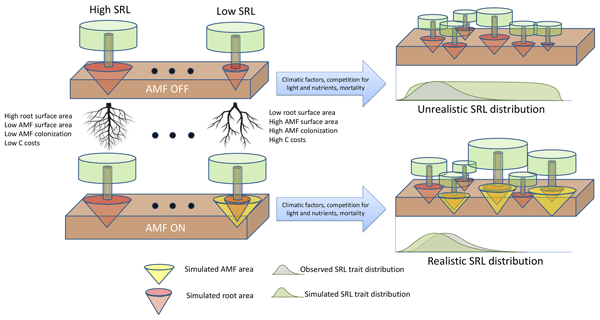
This study explores how plant roots with different forms and functions rely on fungal partnerships for nutrient uptake. This relationship was integrated into a vegetation model and was tested in a tropical forest in Ecuador. The model accurately predicted root traits and showed that without fungi, biomass decreased by up to 80 %. The findings highlight the critical role of fungi in ecosystem processes and suggest that root–fungal interactions should be considered in vegetation models.
Friedrich J. Bohn, Ana Bastos, Romina Martin, Anja Rammig, Niak Sian Koh, Giles B. Sioen, Bram Buscher, Louise Carver, Fabrice DeClerck, Moritz Drupp, Robert Fletcher, Matthew Forrest, Alexandros Gasparatos, Alex Godoy-Faúndez, Gregor Hagedorn, Martin C. Hänsel, Jessica Hetzer, Thomas Hickler, Cornelia B. Krug, Stasja Koot, Xiuzhen Li, Amy Luers, Shelby Matevich, H. Damon Matthews, Ina C. Meier, Mirco Migliavacca, Awaz Mohamed, Sungmin O, David Obura, Ben Orlove, Rene Orth, Laura Pereira, Markus Reichstein, Lerato Thakholi, Peter H. Verburg, and Yuki Yoshida
Biogeosciences, 22, 2425–2460, https://doi.org/10.5194/bg-22-2425-2025, https://doi.org/10.5194/bg-22-2425-2025, 2025
Short summary
Short summary
An interdisciplinary collaboration of 36 international researchers from 35 institutions highlights recent findings in biosphere research. Within eight themes, they discuss issues arising from climate change and other anthropogenic stressors and highlight the co-benefits of nature-based solutions and ecosystem services. Based on an analysis of these eight topics, we have synthesized four overarching insights.
Lukas Jonkers, Tonke Strack, Montserrat Alonso-Garcia, Simon D'haenens, Robert Huber, Michal Kucera, Iván Hernández-Almeida, Chloe L. C. Jones, Brett Metcalfe, Rajeev Saraswat, Lóránd Silye, Sanjay K. Verma, Muhamad Naim Abd Malek, Gerald Auer, Cátia F. Barbosa, Maria A. Barcena, Karl-Heinz Baumann, Flavia Boscolo-Galazzo, Joeven Austine S. Calvelo, Lucilla Capotondi, Martina Caratelli, Jorge Cardich, Humberto Carvajal-Chitty, Markéta Chroustová, Helen K. Coxall, Renata M. de Mello, Anne de Vernal, Paula Diz, Kirsty M. Edgar, Helena L. Filipsson, Ángela Fraguas, Heather L. Furlong, Giacomo Galli, Natalia L. García Chapori, Robyn Granger, Jeroen Groeneveld, Adil Imam, Rebecca Jackson, David Lazarus, Julie Meilland, Marína Molčan Matejová, Raphael Morard, Caterina Morigi, Sven N. Nielsen, Diana Ochoa, Maria Rose Petrizzo, Andrés S. Rigual-Hernández, Marina C. Rillo, Matthew L. Staitis, Gamze Tanık, Raúl Tapia, Nishant Vats, Bridget S. Wade, and Anna E. Weinmann
J. Micropalaeontol., 44, 145–168, https://doi.org/10.5194/jm-44-145-2025, https://doi.org/10.5194/jm-44-145-2025, 2025
Short summary
Short summary
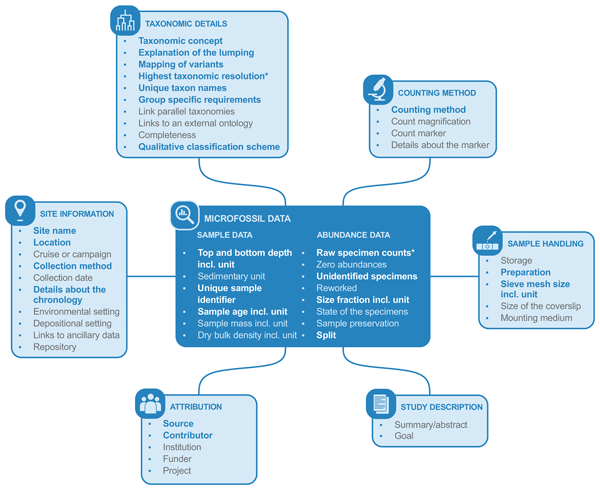
Our study provides guidelines improving the reuse of marine microfossil assemblage data, which are valuable for understanding past ecosystems and environmental change. Based on a survey of 113 researchers, we identified key data attributes required for effective reuse. Analysis of a selection of datasets available online reveals a gap between the attributes scientists consider essential and the data currently available, highlighting the need for clearer data documentation and sharing practices.
Himadri Saini, David K. Hutchinson, Josephine R. Brown, Russell N. Drysdale, Yanxuan Du, and Laurie Menviel
EGUsphere, https://doi.org/10.5194/egusphere-2025-1990, https://doi.org/10.5194/egusphere-2025-1990, 2025
Short summary
Short summary
This study examines how large ice sheets during the last Ice Age influenced global weather patterns. We found that the presence of these ice sheets affected rainfall patterns in regions like Eurasia and Australia. By altering wind and weather systems, they shifted the position of the tropical rainbelt and impacted the circulation of air in both the Northern and Southern Hemispheres. Our research helps us understand past climate changes and their potential effects on future climate patterns.
Jonna van Mourik, Hylke de Vries, and Michiel Baatsen
Weather Clim. Dynam., 6, 413–429, https://doi.org/10.5194/wcd-6-413-2025, https://doi.org/10.5194/wcd-6-413-2025, 2025
Short summary
Short summary
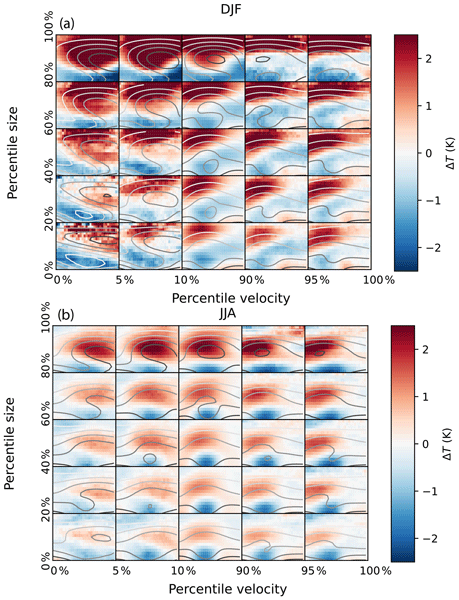
Atmospheric blocking events are quasi-stationary high-pressure areas with large influences on our weather. In this study, we show the wide variety of zonal velocities possible for atmospheric blocking under the most used blocking indices. These include not only stationary blocks, but also eastward- and westward-moving blocks. These respective moving blocks are found to have different characteristics in size and location and have different impacts on our surface temperatures.
Mateus Dantas de Paula, Matthew Forrest, David Warlind, João Paulo Darela Filho, Katrin Fleischer, Anja Rammig, and Thomas Hickler
Geosci. Model Dev., 18, 2249–2274, https://doi.org/10.5194/gmd-18-2249-2025, https://doi.org/10.5194/gmd-18-2249-2025, 2025
Short summary
Short summary
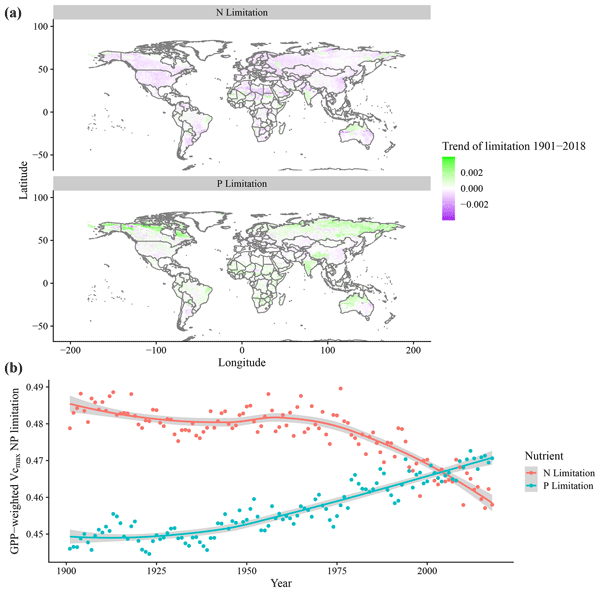
Our study maps global nitrogen (N) and phosphorus (P) availability and how they changed from 1901 to 2018. We find that tropical regions are mostly P-limited, while temperate and boreal areas face N limitations. Over time, P limitation increased, especially in the tropics, while N limitation decreased. These shifts are key to understanding global plant growth and carbon storage, highlighting the importance of including P dynamics in ecosystem models.
Martin Thurner, Kailiang Yu, Stefano Manzoni, Anatoly Prokushkin, Melanie A. Thurner, Zhiqiang Wang, and Thomas Hickler
Biogeosciences, 22, 1475–1493, https://doi.org/10.5194/bg-22-1475-2025, https://doi.org/10.5194/bg-22-1475-2025, 2025
Short summary
Short summary
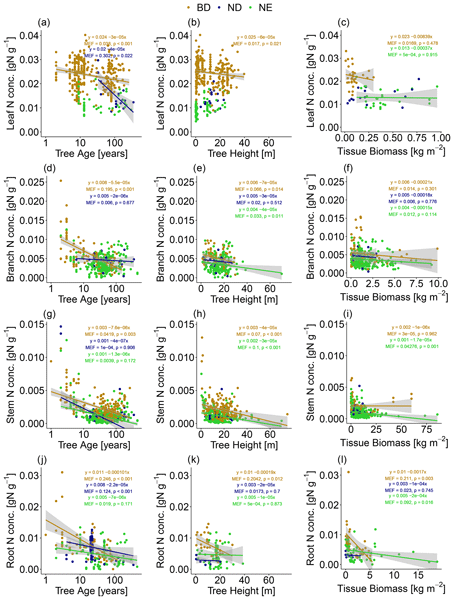
Nitrogen concentrations in tree tissues (leaves, branches, stems, and roots) are related to photosynthesis, growth, and respiration and thus to vegetation carbon uptake. Our novel database allows us to identify the controls of tree tissue nitrogen concentrations in boreal and temperate forests, such as tree age/size, species, and climate. Changes therein will affect tissue nitrogen concentrations and thus also vegetation carbon uptake.
Flavia Boscolo-Galazzo, David Evans, Elaine M. Mawbey, William R. Gray, Paul N. Pearson, and Bridget S. Wade
Biogeosciences, 22, 1095–1113, https://doi.org/10.5194/bg-22-1095-2025, https://doi.org/10.5194/bg-22-1095-2025, 2025
Short summary
Short summary
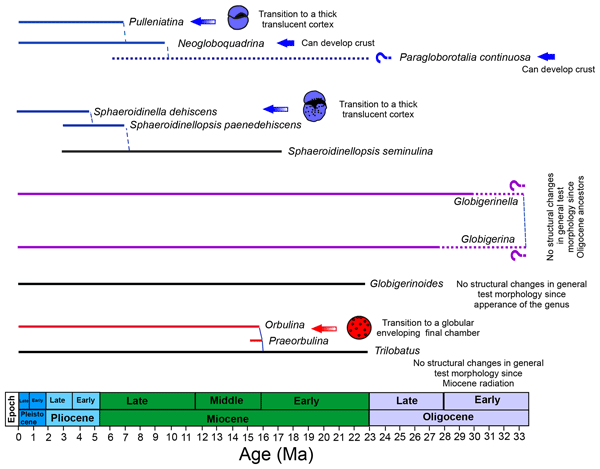
Here we compare the Mg / Ca and oxygen isotope signatures for 57 recent to fossil species of planktonic foraminifera for the last 15 Myr. We find the occurrence of lineage-specific offsets in Mg / Ca conservative between ancestor-descendent species. Taking into account species kinship significantly improves temperature reconstructions, and we suggest that the occurrence of Mg / Ca offsets in modern species results from their evolution when ocean properties were different from today's.
Babette A.A. Hoogakker, Catherine Davis, Yi Wang, Stephanie Kusch, Katrina Nilsson-Kerr, Dalton S. Hardisty, Allison Jacobel, Dharma Reyes Macaya, Nicolaas Glock, Sha Ni, Julio Sepúlveda, Abby Ren, Alexandra Auderset, Anya V. Hess, Katrin J. Meissner, Jorge Cardich, Robert Anderson, Christine Barras, Chandranath Basak, Harold J. Bradbury, Inda Brinkmann, Alexis Castillo, Madelyn Cook, Kassandra Costa, Constance Choquel, Paula Diz, Jonas Donnenfield, Felix J. Elling, Zeynep Erdem, Helena L. Filipsson, Sebastián Garrido, Julia Gottschalk, Anjaly Govindankutty Menon, Jeroen Groeneveld, Christian Hallmann, Ingrid Hendy, Rick Hennekam, Wanyi Lu, Jean Lynch-Stieglitz, Lélia Matos, Alfredo Martínez-García, Giulia Molina, Práxedes Muñoz, Simone Moretti, Jennifer Morford, Sophie Nuber, Svetlana Radionovskaya, Morgan Reed Raven, Christopher J. Somes, Anja S. Studer, Kazuyo Tachikawa, Raúl Tapia, Martin Tetard, Tyler Vollmer, Xingchen Wang, Shuzhuang Wu, Yan Zhang, Xin-Yuan Zheng, and Yuxin Zhou
Biogeosciences, 22, 863–957, https://doi.org/10.5194/bg-22-863-2025, https://doi.org/10.5194/bg-22-863-2025, 2025
Short summary
Short summary
Paleo-oxygen proxies can extend current records, constrain pre-anthropogenic baselines, provide datasets necessary to test climate models under different boundary conditions, and ultimately understand how ocean oxygenation responds on longer timescales. Here we summarize current proxies used for the reconstruction of Cenozoic seawater oxygen levels. This includes an overview of the proxy's history, how it works, resources required, limitations, and future recommendations.
Qinggang Gao, Emilie Capron, Louise C. Sime, Rachael H. Rhodes, Rahul Sivankutty, Xu Zhang, Bette L. Otto-Bliesner, and Martin Werner
Clim. Past, 21, 419–440, https://doi.org/10.5194/cp-21-419-2025, https://doi.org/10.5194/cp-21-419-2025, 2025
Short summary
Short summary
Marine sediment and ice core records suggest a warmer Southern Ocean and Antarctica at the early last interglacial, ~127 000 years ago. However, when only forced by orbital parameters and greenhouse gas concentrations during that period, state-of-the-art climate models do not reproduce the magnitude of warming. Here we show that much of the warming at southern middle to high latitudes can be reproduced by a UK climate model, HadCM3, with a 3000-year freshwater forcing over the North Atlantic.
Lauren R. Marshall, Anja Schmidt, Andrew P. Schurer, Nathan Luke Abraham, Lucie J. Lücke, Rob Wilson, Kevin J. Anchukaitis, Gabriele C. Hegerl, Ben Johnson, Bette L. Otto-Bliesner, Esther C. Brady, Myriam Khodri, and Kohei Yoshida
Clim. Past, 21, 161–184, https://doi.org/10.5194/cp-21-161-2025, https://doi.org/10.5194/cp-21-161-2025, 2025
Short summary
Short summary
Large volcanic eruptions have caused temperature deviations over the past 1000 years; however, climate model results and reconstructions of surface cooling using tree rings do not match. We explore this mismatch using the latest models and find a better match to tree-ring reconstructions for some eruptions. Our results show that the way in which eruptions are simulated in models matters for the comparison to tree-rings, particularly regarding the spatial spread of volcanic aerosol.
Dennis H. A. Vermeulen, Michiel L. J. Baatsen, and Anna S. von der Heydt
Clim. Past, 21, 95–114, https://doi.org/10.5194/cp-21-95-2025, https://doi.org/10.5194/cp-21-95-2025, 2025
Short summary
Short summary
Late Eocene summers, 34 million years ago, were hot on Antarctica, with temperatures up to 30 °C. We also know that during this period the first Antarctic ice sheet formed. Since climate models do not show the transition from this warm climate to ice sheet formation accurately, we imposed regional ice sheets onto the continent in a realistic climate and show that these ice sheets do not melt away. This suggests that the initiation of ice sheet growth might have happened during warmer periods.
Yurui Zhang, Hans Renssen, Heikki Seppä, Zhen Li, and Xingrui Li
Clim. Past, 21, 67–77, https://doi.org/10.5194/cp-21-67-2025, https://doi.org/10.5194/cp-21-67-2025, 2025
Short summary
Short summary
The upper and lower atmospheres interact. The polar regions, with high-speed, cyclonically rotating winds, provide a window through which upper winds affect surface weather and climate variability. By analysing climate model results, we found that ice sheets induced anomalous upward wave propagation and stretched the rotating winds towards North America, increasing the likelihood of cold-air outbreaks at the mid-latitudes. This accounts for the enhanced winter cooling at these latitudes.
Ryan Vella, Matthew Forrest, Andrea Pozzer, Alexandra P. Tsimpidi, Thomas Hickler, Jos Lelieveld, and Holger Tost
Atmos. Chem. Phys., 25, 243–262, https://doi.org/10.5194/acp-25-243-2025, https://doi.org/10.5194/acp-25-243-2025, 2025
Short summary
Short summary
This study examines how land cover changes influence biogenic volatile organic compound (BVOC) emissions and atmospheric states. Using a coupled chemistry–climate–vegetation model, we compare present-day land cover (deforested for crops and grazing) with natural vegetation and an extreme reforestation scenario. We find that vegetation changes significantly impact global BVOC emissions and organic aerosols but have a relatively small effect on total aerosols, clouds, and radiative effects.
Matthew Forrest, Jessica Hetzer, Maik Billing, Simon P. K. Bowring, Eric Kosczor, Luke Oberhagemann, Oliver Perkins, Dan Warren, Fátima Arrogante-Funes, Kirsten Thonicke, and Thomas Hickler
Biogeosciences, 21, 5539–5560, https://doi.org/10.5194/bg-21-5539-2024, https://doi.org/10.5194/bg-21-5539-2024, 2024
Short summary
Short summary
Climate change is causing an increase in extreme wildfires in Europe, but drivers of fire are not well understood, especially across different land cover types. We used statistical models with satellite data, climate data, and socioeconomic data to determine what affects burning in cropland and non-cropland areas of Europe. We found different drivers of burning in cropland burning vs. non-cropland to the point that some variables, e.g. population density, had the complete opposite effects.
Johan Liakka, Natalie S. Lord, Alan Kennedy-Asser, Daniel J. Lunt, Charles J. R. Williams, and Jens-Ove Näslund
Adv. Geosci., 65, 71–81, https://doi.org/10.5194/adgeo-65-71-2024, https://doi.org/10.5194/adgeo-65-71-2024, 2024
Short summary
Short summary
Future glaciations can affect the long-term safety of deep geological repositories for nuclear waste. This study introduces a simple method to assess frequency and duration of ice sheets over the next one million years at locations with past glaciations. The method considers uncertainties in human-caused CO2 emissions and climate change. It is easy to implement for any nuclear waste management organization that need to consider impacts of future ice sheets on long-term safety.
Yixuan Xie, Daniel J. Lunt, and Paul J. Valdes
Clim. Past, 20, 2561–2585, https://doi.org/10.5194/cp-20-2561-2024, https://doi.org/10.5194/cp-20-2561-2024, 2024
Short summary
Short summary
Desert dust plays a crucial role in the climate system; while it is relatively well studied for the present day, we still lack knowledge on how it was in the past and on its underlying mechanism in the multi-million-year timescale of Earth’s history. For the first time, we simulate dust emissions using the newly developed DUSTY1.0 model over the past 540 million years with a temporal resolution of ~5 million years. We find that palaeogeography is the primary control of these variations.
Appy Sluijs and Henk Brinkhuis
J. Micropalaeontol., 43, 441–474, https://doi.org/10.5194/jm-43-441-2024, https://doi.org/10.5194/jm-43-441-2024, 2024
Short summary
Short summary
We present intrinsic details of dinocyst taxa and assemblages from the sole available central Arctic late Paleocene–early Eocene sedimentary succession recovered at the central Lomonosov Ridge by the Integrated Ocean Drilling Program (IODP) Expedition 302. We develop a pragmatic taxonomic framework, document critical biostratigraphic events, and propose two new genera and seven new species.
Mira Berdahl, Gunter R. Leguy, William H. Lipscomb, Bette L. Otto-Bliesner, Esther C. Brady, Robert A. Tomas, Nathan M. Urban, Ian Miller, Harriet Morgan, and Eric J. Steig
Clim. Past, 20, 2349–2371, https://doi.org/10.5194/cp-20-2349-2024, https://doi.org/10.5194/cp-20-2349-2024, 2024
Short summary
Short summary
Studying climate conditions near the Antarctic ice sheet (AIS) during Earth’s past warm periods informs us about how global warming may influence AIS ice loss. Using a global climate model, we investigate climate conditions near the AIS during the Last Interglacial (129 to 116 kyr ago), a period with warmer global temperatures and higher sea level than today. We identify the orbital and freshwater forcings that could cause ice loss and probe the mechanisms that lead to warmer climate conditions.
Brad Reed, J. A. Mattias Green, Adrian Jenkins, and G. Hilmar Gudmundsson
The Cryosphere, 18, 4567–4587, https://doi.org/10.5194/tc-18-4567-2024, https://doi.org/10.5194/tc-18-4567-2024, 2024
Short summary
Short summary
We use a numerical ice-flow model to simulate the response of a 1940s Pine Island Glacier to changes in melting beneath its ice shelf. A decadal period of warm forcing is sufficient to push the glacier into an unstable, irreversible retreat from its long-term position on a subglacial ridge to an upstream ice plain. This retreat can only be stopped when unrealistic cold forcing is applied. These results show that short warm anomalies can lead to quick and substantial increases in ice flux.
Arthur Merlijn Oldeman, Michiel L. J. Baatsen, Anna S. von der Heydt, Frank M. Selten, and Henk A. Dijkstra
Earth Syst. Dynam., 15, 1037–1054, https://doi.org/10.5194/esd-15-1037-2024, https://doi.org/10.5194/esd-15-1037-2024, 2024
Short summary
Short summary
We might be able to constrain uncertainty in future climate projections by investigating variations in the climate of the past. In this study, we investigate the interactions of climate variability between the tropical Pacific (El Niño) and the North Pacific in a warm past climate – the mid-Pliocene, a period roughly 3 million years ago. Using model simulations, we find that, although the variability in El Niño was reduced, the variability in the North Pacific atmosphere was not.
Dominique K. L. L. Jenny, Tammo Reichgelt, Charlotte L. O'Brien, Xiaoqing Liu, Peter K. Bijl, Matthew Huber, and Appy Sluijs
Clim. Past, 20, 1627–1657, https://doi.org/10.5194/cp-20-1627-2024, https://doi.org/10.5194/cp-20-1627-2024, 2024
Short summary
Short summary
This study reviews the current state of knowledge regarding the Oligocene
icehouseclimate. We extend an existing marine climate proxy data compilation and present a new compilation and analysis of terrestrial plant assemblages to assess long-term climate trends and variability. Our data–climate model comparison reinforces the notion that models underestimate polar amplification of Oligocene climates, and we identify potential future research directions.
Xiaodong Zhang, Brett J. Tipple, Jiang Zhu, William D. Rush, Christian A. Shields, Joseph B. Novak, and James C. Zachos
Clim. Past, 20, 1615–1626, https://doi.org/10.5194/cp-20-1615-2024, https://doi.org/10.5194/cp-20-1615-2024, 2024
Short summary
Short summary
This study is motivated by the current anthropogenic-warming-forced transition in regional hydroclimate. We use observations and model simulations during the Paleocene–Eocene Thermal Maximum (PETM) to constrain the regional/local hydroclimate response. Our findings, based on multiple observational evidence within the context of model output, suggest a transition toward greater aridity and precipitation extremes in central California during the PETM.
Chris D. Fokkema, Tobias Agterhuis, Danielle Gerritsma, Myrthe de Goeij, Xiaoqing Liu, Pauline de Regt, Addison Rice, Laurens Vennema, Claudia Agnini, Peter K. Bijl, Joost Frieling, Matthew Huber, Francien Peterse, and Appy Sluijs
Clim. Past, 20, 1303–1325, https://doi.org/10.5194/cp-20-1303-2024, https://doi.org/10.5194/cp-20-1303-2024, 2024
Short summary
Short summary
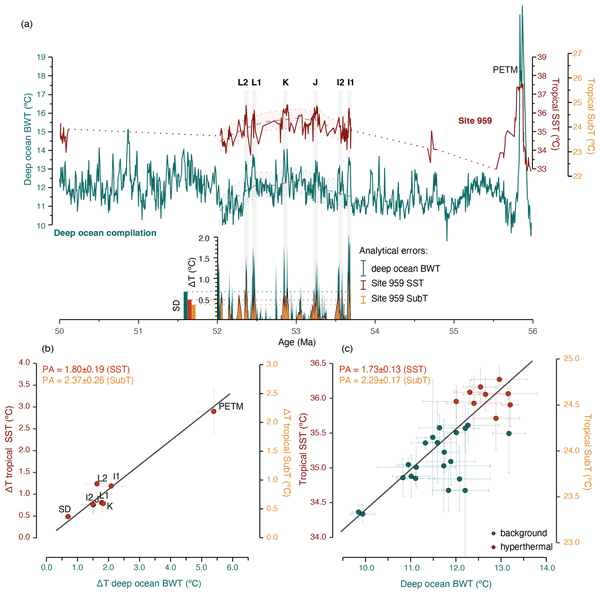
Polar amplification (PA) is a key uncertainty in climate projections. The factors that dominantly control PA are difficult to separate. Here we provide an estimate for the non-ice-related PA by reconstructing tropical ocean temperature variability from the ice-free early Eocene, which we compare to deep-ocean-derived high-latitude temperature variability across short-lived warming periods. We find a PA factor of 1.7–2.3 on 20 kyr timescales, which is somewhat larger than model estimates.
Julia E. Weiffenbach, Henk A. Dijkstra, Anna S. von der Heydt, Ayako Abe-Ouchi, Wing-Le Chan, Deepak Chandan, Ran Feng, Alan M. Haywood, Stephen J. Hunter, Xiangyu Li, Bette L. Otto-Bliesner, W. Richard Peltier, Christian Stepanek, Ning Tan, Julia C. Tindall, and Zhongshi Zhang
Clim. Past, 20, 1067–1086, https://doi.org/10.5194/cp-20-1067-2024, https://doi.org/10.5194/cp-20-1067-2024, 2024
Short summary
Short summary
Elevated atmospheric CO2 concentrations and a smaller Antarctic Ice Sheet during the mid-Pliocene (~ 3 million years ago) cause the Southern Ocean surface to become fresher and warmer, which affects the global ocean circulation. The CO2 concentration and the smaller Antarctic Ice Sheet both have a similar and approximately equal impact on the Southern Ocean. The conditions of the Southern Ocean in the mid-Pliocene could therefore be analogous to those in a future climate with smaller ice sheets.
Dana A. Lapides, W. Jesse Hahm, Matthew Forrest, Daniella M. Rempe, Thomas Hickler, and David N. Dralle
Biogeosciences, 21, 1801–1826, https://doi.org/10.5194/bg-21-1801-2024, https://doi.org/10.5194/bg-21-1801-2024, 2024
Short summary
Short summary
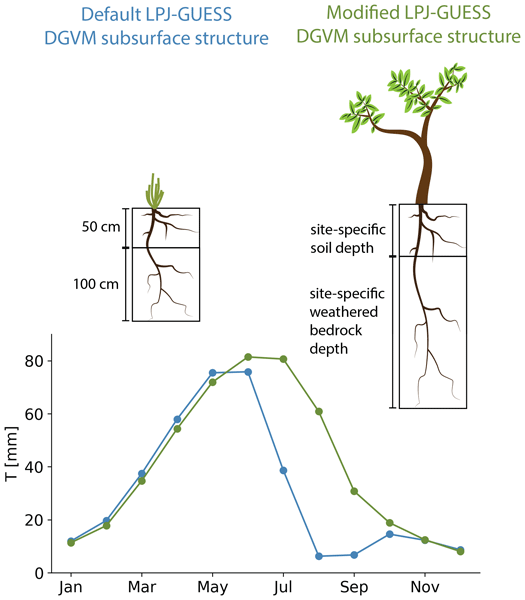
Water stored in weathered bedrock is rarely incorporated into vegetation and Earth system models despite increasing recognition of its importance. Here, we add a weathered bedrock component to a widely used vegetation model. Using a case study of two sites in California and model runs across the United States, we show that more accurately representing subsurface water storage and hydrology increases summer plant water use so that it better matches patterns in distributed data products.
Marci M. Robinson, Kenneth G. Miller, Tali L. Babila, Timothy J. Bralower, James V. Browning, Marlow J. Cramwinckel, Monika Doubrawa, Gavin L. Foster, Megan K. Fung, Sean Kinney, Maria Makarova, Peter P. McLaughlin, Paul N. Pearson, Ursula Röhl, Morgan F. Schaller, Jean M. Self-Trail, Appy Sluijs, Thomas Westerhold, James D. Wright, and James C. Zachos
Sci. Dril., 33, 47–65, https://doi.org/10.5194/sd-33-47-2024, https://doi.org/10.5194/sd-33-47-2024, 2024
Short summary
Short summary
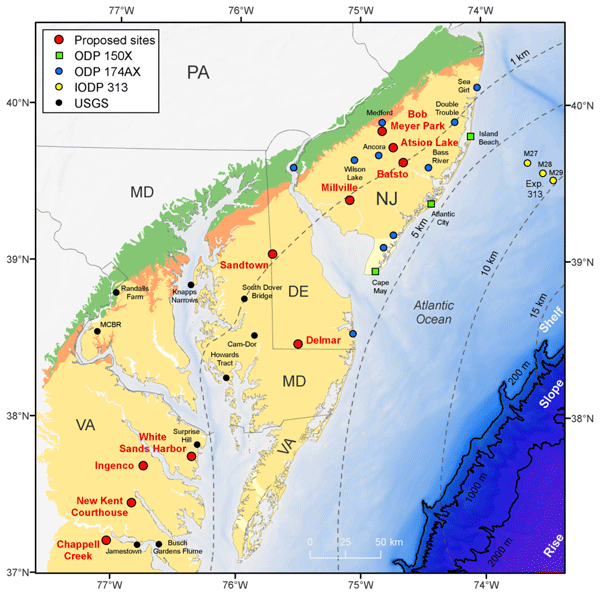
The Paleocene–Eocene Thermal Maximum (PETM) is the closest geological analog to modern anthropogenic CO2 emissions, but its causes and the responses remain enigmatic. Coastal plain sediments can resolve this uncertainty, but their discontinuous nature requires numerous sites to constrain events. Workshop participants identified 10 drill sites that target the PETM and other interesting intervals. Our post-drilling research will provide valuable insights into Earth system responses.
Georgina M. Falster, Nicky M. Wright, Nerilie J. Abram, Anna M. Ukkola, and Benjamin J. Henley
Hydrol. Earth Syst. Sci., 28, 1383–1401, https://doi.org/10.5194/hess-28-1383-2024, https://doi.org/10.5194/hess-28-1383-2024, 2024
Short summary
Short summary
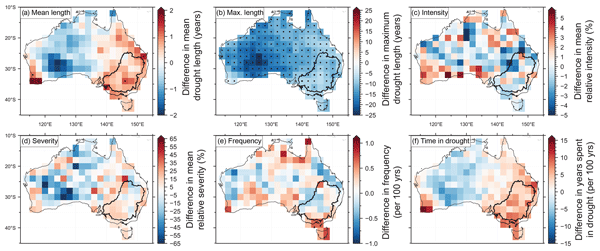
Multi-year droughts have severe environmental and economic impacts, but the instrumental record is too short to characterise multi-year drought variability. We assessed the nature of Australian multi-year droughts using simulations of the past millennium from 11 climate models. We show that multi-decadal
megadroughtsare a natural feature of the Australian hydroclimate. Human-caused climate change is also driving a tendency towards longer droughts in eastern and southwestern Australia.
Arthur Merlijn Oldeman, Michiel L. J. Baatsen, Anna S. von der Heydt, Aarnout J. van Delden, and Henk A. Dijkstra
Weather Clim. Dynam., 5, 395–417, https://doi.org/10.5194/wcd-5-395-2024, https://doi.org/10.5194/wcd-5-395-2024, 2024
Short summary
Short summary
The mid-Pliocene, a geological period around 3 million years ago, is sometimes considered the best analogue for near-future climate. It saw similar CO2 concentrations to the present-day but also a slightly different geography. In this study, we use climate model simulations and find that the Northern Hemisphere winter responds very differently to increased CO2 or to the mid-Pliocene geography. Our results weaken the potential of the mid-Pliocene as a future climate analogue.
Julia Campbell, Christopher J. Poulsen, Jiang Zhu, Jessica E. Tierney, and Jeremy Keeler
Clim. Past, 20, 495–522, https://doi.org/10.5194/cp-20-495-2024, https://doi.org/10.5194/cp-20-495-2024, 2024
Short summary
Short summary
In this study, we use climate modeling to investigate the relative impact of CO2 and orbit on Early Eocene (~ 55 million years ago) climate and compare our modeled results to fossil records to determine the context for the Paleocene–Eocene Thermal Maximum, the most extreme hyperthermal in the Cenozoic. Our conclusions consider limitations and illustrate the importance of climate models when interpreting paleoclimate records in times of extreme warmth.
Sarah L. Bradley, Raymond Sellevold, Michele Petrini, Miren Vizcaino, Sotiria Georgiou, Jiang Zhu, Bette L. Otto-Bliesner, and Marcus Lofverstrom
Clim. Past, 20, 211–235, https://doi.org/10.5194/cp-20-211-2024, https://doi.org/10.5194/cp-20-211-2024, 2024
Short summary
Short summary
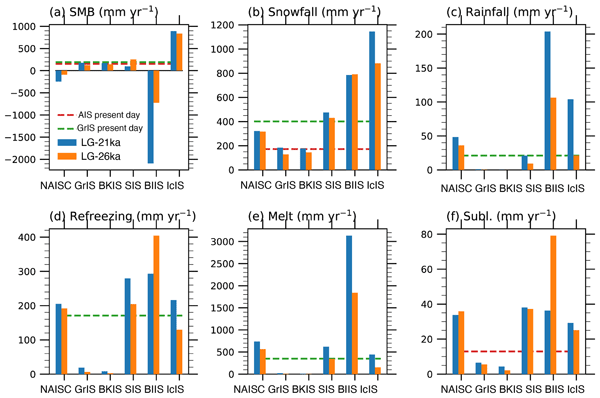
The Last Glacial Maximum (LGM) was the most recent period with large ice sheets in Europe and North America. We provide a detailed analysis of surface mass and energy components for two time periods that bracket the LGM: 26 and 21 ka BP. We use an earth system model which has been adopted for modern ice sheets. We find that all Northern Hemisphere ice sheets have a positive surface mass balance apart from the British and Irish ice sheets and the North American ice sheet complex.
Michiel Baatsen, Peter Bijl, Anna von der Heydt, Appy Sluijs, and Henk Dijkstra
Clim. Past, 20, 77–90, https://doi.org/10.5194/cp-20-77-2024, https://doi.org/10.5194/cp-20-77-2024, 2024
Short summary
Short summary
This work introduces the possibility and consequences of monsoons on Antarctica in the warm Eocene climate. We suggest that such a monsoonal climate can be important to understand conditions in Antarctica prior to large-scale glaciation. We can explain seemingly contradictory indications of ice and vegetation on the continent through regional variability. In addition, we provide a new mechanism through which most of Antarctica remained ice-free through a wide range of global climatic changes.
Katja Frieler, Jan Volkholz, Stefan Lange, Jacob Schewe, Matthias Mengel, María del Rocío Rivas López, Christian Otto, Christopher P. O. Reyer, Dirk Nikolaus Karger, Johanna T. Malle, Simon Treu, Christoph Menz, Julia L. Blanchard, Cheryl S. Harrison, Colleen M. Petrik, Tyler D. Eddy, Kelly Ortega-Cisneros, Camilla Novaglio, Yannick Rousseau, Reg A. Watson, Charles Stock, Xiao Liu, Ryan Heneghan, Derek Tittensor, Olivier Maury, Matthias Büchner, Thomas Vogt, Tingting Wang, Fubao Sun, Inga J. Sauer, Johannes Koch, Inne Vanderkelen, Jonas Jägermeyr, Christoph Müller, Sam Rabin, Jochen Klar, Iliusi D. Vega del Valle, Gitta Lasslop, Sarah Chadburn, Eleanor Burke, Angela Gallego-Sala, Noah Smith, Jinfeng Chang, Stijn Hantson, Chantelle Burton, Anne Gädeke, Fang Li, Simon N. Gosling, Hannes Müller Schmied, Fred Hattermann, Jida Wang, Fangfang Yao, Thomas Hickler, Rafael Marcé, Don Pierson, Wim Thiery, Daniel Mercado-Bettín, Robert Ladwig, Ana Isabel Ayala-Zamora, Matthew Forrest, and Michel Bechtold
Geosci. Model Dev., 17, 1–51, https://doi.org/10.5194/gmd-17-1-2024, https://doi.org/10.5194/gmd-17-1-2024, 2024
Short summary
Short summary
Our paper provides an overview of all observational climate-related and socioeconomic forcing data used as input for the impact model evaluation and impact attribution experiments within the third round of the Inter-Sectoral Impact Model Intercomparison Project. The experiments are designed to test our understanding of observed changes in natural and human systems and to quantify to what degree these changes have already been induced by climate change.
Madeleine L. Vickers, Morgan T. Jones, Jack Longman, David Evans, Clemens V. Ullmann, Ella Wulfsberg Stokke, Martin Vickers, Joost Frieling, Dustin T. Harper, Vincent J. Clementi, and IODP Expedition 396 Scientists
Clim. Past, 20, 1–23, https://doi.org/10.5194/cp-20-1-2024, https://doi.org/10.5194/cp-20-1-2024, 2024
Short summary
Short summary
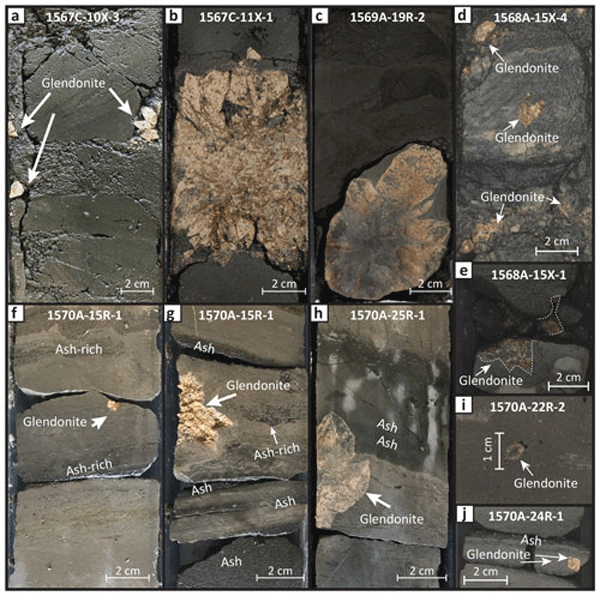
The discovery of cold-water glendonite pseudomorphs in sediments deposited during the hottest part of the Cenozoic poses an apparent climate paradox. This study examines their occurrence, association with volcanic sediments, and speculates on the timing and extent of cooling, fitting this with current understanding of global climate during this period. We propose that volcanic activity was key to both physical and chemical conditions that enabled the formation of glendonites in these sediments.
Joost Frieling, Linda van Roij, Iris Kleij, Gert-Jan Reichart, and Appy Sluijs
Biogeosciences, 20, 4651–4668, https://doi.org/10.5194/bg-20-4651-2023, https://doi.org/10.5194/bg-20-4651-2023, 2023
Short summary
Short summary
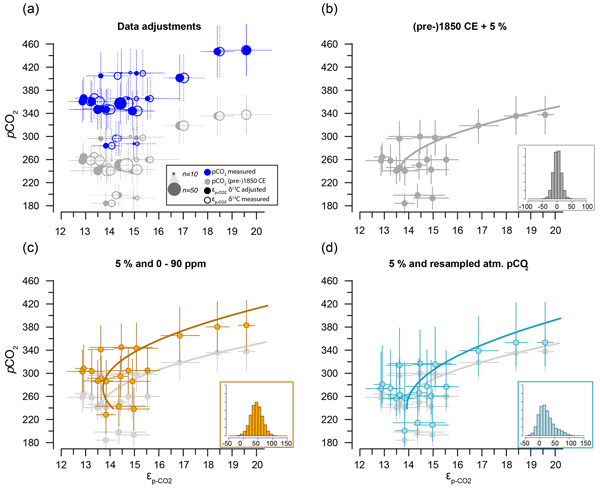
We present a first species-specific evaluation of marine core-top dinoflagellate cyst carbon isotope fractionation (εp) to assess natural pCO2 dependency on εp and explore its geological deep-time paleo-pCO2 proxy potential. We find that εp differs between genera and species and that in Operculodinium centrocarpum, εp is controlled by pCO2 and nutrients. Our results highlight the added value of δ13C analyses of individual micrometer-scale sedimentary organic carbon particles.
Esmeralda Cruz-Silva, Sandy P. Harrison, I. Colin Prentice, Elena Marinova, Patrick J. Bartlein, Hans Renssen, and Yurui Zhang
Clim. Past, 19, 2093–2108, https://doi.org/10.5194/cp-19-2093-2023, https://doi.org/10.5194/cp-19-2093-2023, 2023
Short summary
Short summary
We examined 71 pollen records (12.3 ka to present) in the eastern Mediterranean, reconstructing climate changes. Over 9000 years, winters gradually warmed due to orbital factors. Summer temperatures peaked at 4.5–5 ka, likely declining because of ice sheets. Moisture increased post-11 kyr, remaining high from 10–6 kyr before a slow decrease. Climate models face challenges in replicating moisture transport.
Anna Hauge Braaten, Kim A. Jakob, Sze Ling Ho, Oliver Friedrich, Eirik Vinje Galaasen, Stijn De Schepper, Paul A. Wilson, and Anna Nele Meckler
Clim. Past, 19, 2109–2125, https://doi.org/10.5194/cp-19-2109-2023, https://doi.org/10.5194/cp-19-2109-2023, 2023
Short summary
Short summary
In the context of understanding current global warming, the middle Pliocene (3.3–3.0 million years ago) is an important interval in Earth's history because atmospheric carbon dioxide concentrations were similar to levels today. We have reconstructed deep-sea temperatures at two different locations for this period, and find that a very different mode of ocean circulation or mixing existed, with important implications for how heat was transported in the deep ocean.
Ryan Vella, Andrea Pozzer, Matthew Forrest, Jos Lelieveld, Thomas Hickler, and Holger Tost
Biogeosciences, 20, 4391–4412, https://doi.org/10.5194/bg-20-4391-2023, https://doi.org/10.5194/bg-20-4391-2023, 2023
Short summary
Short summary
We investigated the effect of the El Niño–Southern Oscillation (ENSO) on biogenic volatile organic compound (BVOC) emissions from plants. ENSO events can cause a significant increase in these emissions, which have a long-term impact on the Earth's atmosphere. Persistent ENSO conditions can cause long-term changes in vegetation, resulting in even higher BVOC emissions. We link ENSO-induced emission anomalies with driving atmospheric and vegetational variables.
Xin Ren, Daniel J. Lunt, Erica Hendy, Anna von der Heydt, Ayako Abe-Ouchi, Bette Otto-Bliesner, Charles J. R. Williams, Christian Stepanek, Chuncheng Guo, Deepak Chandan, Gerrit Lohmann, Julia C. Tindall, Linda E. Sohl, Mark A. Chandler, Masa Kageyama, Michiel L. J. Baatsen, Ning Tan, Qiong Zhang, Ran Feng, Stephen Hunter, Wing-Le Chan, W. Richard Peltier, Xiangyu Li, Youichi Kamae, Zhongshi Zhang, and Alan M. Haywood
Clim. Past, 19, 2053–2077, https://doi.org/10.5194/cp-19-2053-2023, https://doi.org/10.5194/cp-19-2053-2023, 2023
Short summary
Short summary
We investigate the Maritime Continent climate in the mid-Piacenzian warm period and find it is warmer and wetter and the sea surface salinity is lower compared with preindustrial period. Besides, the fresh and warm water transfer through the Maritime Continent was stronger. In order to avoid undue influence from closely related models in the multimodel results, we introduce a new metric, the multi-cluster mean, which could reveal spatial signals that are not captured by the multimodel mean.
Alison J. Smith, Emi Ito, Natalie Burls, Leon Clarke, Timme Donders, Robert Hatfield, Stephen Kuehn, Andreas Koutsodendris, Tim Lowenstein, David McGee, Peter Molnar, Alexander Prokopenko, Katie Snell, Blas Valero Garcés, Josef Werne, Christian Zeeden, and the PlioWest Working Consortium
Sci. Dril., 32, 61–72, https://doi.org/10.5194/sd-32-61-2023, https://doi.org/10.5194/sd-32-61-2023, 2023
Short summary
Short summary
Western North American contains accessible and under-recognized paleolake records that hold the keys to understanding the drivers of wetter conditions in Pliocene Epoch subtropical drylands worldwide. In a 2021 ICDP workshop, we chose five paleolake basins to study that span 7° of latitude in a unique array able to capture a detailed record of hydroclimate during the Early Pliocene warm period and subsequent Pleistocene cooling. We propose new drill cores for three of these basins.
Jenny Maccali, Anna Nele Meckler, Stein-Erik Lauritzen, Torill Brekken, Helen Aase Rokkan, Alvaro Fernandez, Yves Krüger, Jane Adigun, Stéphane Affolter, and Markus Leuenberger
Clim. Past, 19, 1847–1862, https://doi.org/10.5194/cp-19-1847-2023, https://doi.org/10.5194/cp-19-1847-2023, 2023
Short summary
Short summary
The southern coast of South Africa hosts some key archeological sites for the study of early human evolution. Here we present a short but high-resolution record of past changes in the hydroclimate and temperature on the southern coast of South Africa based on the study of a speleothem collected from Bloukrantz Cave. Overall, the paleoclimate indicators suggest stable temperature from 48.3 to 45.2 ka, whereas precipitation was variable, with marked short drier episodes.
William Rush, Jean Self-Trail, Yang Zhang, Appy Sluijs, Henk Brinkhuis, James Zachos, James G. Ogg, and Marci Robinson
Clim. Past, 19, 1677–1698, https://doi.org/10.5194/cp-19-1677-2023, https://doi.org/10.5194/cp-19-1677-2023, 2023
Short summary
Short summary
The Eocene contains several brief warming periods referred to as hyperthermals. Studying these events and how they varied between locations can help provide insight into our future warmer world. This study provides a characterization of two of these events in the mid-Atlantic region of the USA. The records of climate that we measured demonstrate significant changes during this time period, but the type and timing of these changes highlight the complexity of climatic changes.
Himadri Saini, Katrin J. Meissner, Laurie Menviel, and Karin Kvale
Clim. Past, 19, 1559–1584, https://doi.org/10.5194/cp-19-1559-2023, https://doi.org/10.5194/cp-19-1559-2023, 2023
Short summary
Short summary
Understanding the changes in atmospheric CO2 during the last glacial cycle is crucial to comprehend the impact of climate change in the future. Previous research has hypothesised a key role of greater aeolian iron input into the Southern Ocean in influencing the global atmospheric CO2 levels by impacting the changes in the marine phytoplankton response. In our study, we test this iron hypothesis using climate modelling and constrain the impact of ocean iron supply on global CO2 decrease.
Jasper de Jong, Michiel L. J. Baatsen, and Aarnout J. van Delden
EGUsphere, https://doi.org/10.5194/egusphere-2023-1259, https://doi.org/10.5194/egusphere-2023-1259, 2023
Preprint archived
Short summary
Short summary
Tropical cyclones often embed a ring-shaped vorticity tower, instead of a centre maximum. Inspired to identify mechanisms in the conservation of such a vorticity structure, we examined the vorticity budget in a simulation of hurricane Irma (2017) near lifetime-peak intensity. Hurricane Irma persisted as a category five hurricane for three consecutive days. We find that vertical exchange of momentum by diabatic heating compensates the advective vorticity loss and eddy activity plays a minor role.
Bjørg Risebrobakken, Mari F. Jensen, Helene R. Langehaug, Tor Eldevik, Anne Britt Sandø, Camille Li, Andreas Born, Erin Louise McClymont, Ulrich Salzmann, and Stijn De Schepper
Clim. Past, 19, 1101–1123, https://doi.org/10.5194/cp-19-1101-2023, https://doi.org/10.5194/cp-19-1101-2023, 2023
Short summary
Short summary
In the observational period, spatially coherent sea surface temperatures characterize the northern North Atlantic at multidecadal timescales. We show that spatially non-coherent temperature patterns are seen both in further projections and a past warm climate period with a CO2 level comparable to the future low-emission scenario. Buoyancy forcing is shown to be important for northern North Atlantic temperature patterns.
Louise C. Sime, Rahul Sivankutty, Irene Vallet-Malmierca, Agatha M. de Boer, and Marie Sicard
Clim. Past, 19, 883–900, https://doi.org/10.5194/cp-19-883-2023, https://doi.org/10.5194/cp-19-883-2023, 2023
Short summary
Short summary
It is not known if the Last Interglacial (LIG) experienced Arctic summers that were sea ice free: models show a wide spread in LIG Arctic temperature and sea ice results. Evaluation against sea ice markers is hampered by few observations. Here, an assessment of 11 climate model simulations against summer temperatures shows that the most skilful models have a 74 %–79 % reduction in LIG sea ice. The measurements of LIG areas indicate a likely mix of ice-free and near-ice-free LIG summers.
Andrew Gettelman, Hugh Morrison, Trude Eidhammer, Katherine Thayer-Calder, Jian Sun, Richard Forbes, Zachary McGraw, Jiang Zhu, Trude Storelvmo, and John Dennis
Geosci. Model Dev., 16, 1735–1754, https://doi.org/10.5194/gmd-16-1735-2023, https://doi.org/10.5194/gmd-16-1735-2023, 2023
Short summary
Short summary
Clouds are a critical part of weather and climate prediction. In this work, we document updates and corrections to the description of clouds used in several Earth system models. These updates include the ability to run the scheme on graphics processing units (GPUs), changes to the numerical description of precipitation, and a correction to the ice number. There are big improvements in the computational performance that can be achieved with GPU acceleration.
Yord W. Yedema, Francesca Sangiorgi, Appy Sluijs, Jaap S. Sinninghe Damsté, and Francien Peterse
Biogeosciences, 20, 663–686, https://doi.org/10.5194/bg-20-663-2023, https://doi.org/10.5194/bg-20-663-2023, 2023
Short summary
Short summary
Terrestrial organic matter (TerrOM) is transported to the ocean by rivers, where its burial can potentially form a long-term carbon sink. This burial is dependent on the type and characteristics of the TerrOM. We used bulk sediment properties, biomarkers, and palynology to identify the dispersal patterns of plant-derived, soil–microbial, and marine OM in the northern Gulf of Mexico and show that plant-derived OM is transported further into the coastal zone than soil and marine-produced TerrOM.
Martin Renoult, Navjit Sagoo, Jiang Zhu, and Thorsten Mauritsen
Clim. Past, 19, 323–356, https://doi.org/10.5194/cp-19-323-2023, https://doi.org/10.5194/cp-19-323-2023, 2023
Short summary
Short summary
The relationship between the Last Glacial Maximum and the sensitivity of climate models to a doubling of CO2 can be used to estimate the true sensitivity of the Earth. However, this relationship has varied in successive model generations. In this study, we assess multiple processes at the Last Glacial Maximum which weaken this relationship. For example, how models respond to the presence of ice sheets is a large contributor of uncertainty.
Kasia K. Śliwińska, Helen K. Coxall, David K. Hutchinson, Diederik Liebrand, Stefan Schouten, and Agatha M. de Boer
Clim. Past, 19, 123–140, https://doi.org/10.5194/cp-19-123-2023, https://doi.org/10.5194/cp-19-123-2023, 2023
Short summary
Short summary
We provide a sea surface temperature record from the Labrador Sea (ODP Site 647) based on organic geochemical proxies across the late Eocene and early Oligocene. Our study reveals heterogenic cooling of the Atlantic. The cooling of the North Atlantic is difficult to reconcile with the active Atlantic Meridional Overturning Circulation (AMOC). We discuss possible explanations like uncertainty in the data, paleogeography and atmospheric CO2 boundary conditions, model weaknesses, and AMOC activity.
Julia E. Weiffenbach, Michiel L. J. Baatsen, Henk A. Dijkstra, Anna S. von der Heydt, Ayako Abe-Ouchi, Esther C. Brady, Wing-Le Chan, Deepak Chandan, Mark A. Chandler, Camille Contoux, Ran Feng, Chuncheng Guo, Zixuan Han, Alan M. Haywood, Qiang Li, Xiangyu Li, Gerrit Lohmann, Daniel J. Lunt, Kerim H. Nisancioglu, Bette L. Otto-Bliesner, W. Richard Peltier, Gilles Ramstein, Linda E. Sohl, Christian Stepanek, Ning Tan, Julia C. Tindall, Charles J. R. Williams, Qiong Zhang, and Zhongshi Zhang
Clim. Past, 19, 61–85, https://doi.org/10.5194/cp-19-61-2023, https://doi.org/10.5194/cp-19-61-2023, 2023
Short summary
Short summary
We study the behavior of the Atlantic Meridional Overturning Circulation (AMOC) in the mid-Pliocene. The mid-Pliocene was about 3 million years ago and had a similar CO2 concentration to today. We show that the stronger AMOC during this period relates to changes in geography and that this has a significant influence on ocean temperatures and heat transported northwards by the Atlantic Ocean. Understanding the behavior of the mid-Pliocene AMOC can help us to learn more about our future climate.
Eric W. Wolff, Andrea Burke, Laura Crick, Emily A. Doyle, Helen M. Innes, Sue H. Mahony, James W. B. Rae, Mirko Severi, and R. Stephen J. Sparks
Clim. Past, 19, 23–33, https://doi.org/10.5194/cp-19-23-2023, https://doi.org/10.5194/cp-19-23-2023, 2023
Short summary
Short summary
Large volcanic eruptions leave an imprint of a spike of sulfate deposition that can be measured in ice cores. Here we use a method that logs the number and size of large eruptions recorded in an Antarctic core in a consistent way through the last 200 000 years. The rate of recorded eruptions is variable but shows no trends. In particular, there is no increase in recorded eruptions during deglaciation periods. This is consistent with most recorded eruptions being from lower latitudes.
Jessica G. M. Crumpton-Banks, Thomas Tanner, Ivan Hernández Almeida, James W. B. Rae, and Heather Stoll
Biogeosciences, 19, 5633–5644, https://doi.org/10.5194/bg-19-5633-2022, https://doi.org/10.5194/bg-19-5633-2022, 2022
Short summary
Short summary
Past ocean carbon is reconstructed using proxies, but it is unknown whether preparing ocean sediment for one proxy might damage the data given by another. We have tested whether the extraction of an organic proxy archive from sediment samples impacts the geochemistry of tiny shells also within the sediment. We find no difference in shell geochemistry between samples which come from treated and untreated sediment. This will help us to maximize scientific return from valuable sediment samples.
Carolien M. H. van der Weijst, Koen J. van der Laan, Francien Peterse, Gert-Jan Reichart, Francesca Sangiorgi, Stefan Schouten, Tjerk J. T. Veenstra, and Appy Sluijs
Clim. Past, 18, 1947–1962, https://doi.org/10.5194/cp-18-1947-2022, https://doi.org/10.5194/cp-18-1947-2022, 2022
Short summary
Short summary
The TEX86 proxy is often used by paleoceanographers to reconstruct past sea-surface temperatures. However, the origin of the TEX86 signal in marine sediments has been debated since the proxy was first proposed. In our paper, we show that TEX86 carries a mixed sea-surface and subsurface temperature signal and should be calibrated accordingly. Using our 15-million-year record, we subsequently show how a TEX86 subsurface temperature record can be used to inform us on past sea-surface temperatures.
Xavier Crosta, Karen E. Kohfeld, Helen C. Bostock, Matthew Chadwick, Alice Du Vivier, Oliver Esper, Johan Etourneau, Jacob Jones, Amy Leventer, Juliane Müller, Rachael H. Rhodes, Claire S. Allen, Pooja Ghadi, Nele Lamping, Carina B. Lange, Kelly-Anne Lawler, David Lund, Alice Marzocchi, Katrin J. Meissner, Laurie Menviel, Abhilash Nair, Molly Patterson, Jennifer Pike, Joseph G. Prebble, Christina Riesselman, Henrik Sadatzki, Louise C. Sime, Sunil K. Shukla, Lena Thöle, Maria-Elena Vorrath, Wenshen Xiao, and Jiao Yang
Clim. Past, 18, 1729–1756, https://doi.org/10.5194/cp-18-1729-2022, https://doi.org/10.5194/cp-18-1729-2022, 2022
Short summary
Short summary
Despite its importance in the global climate, our knowledge of Antarctic sea-ice changes throughout the last glacial–interglacial cycle is extremely limited. As part of the Cycles of Sea Ice Dynamics in the Earth system (C-SIDE) Working Group, we review marine- and ice-core-based sea-ice proxies to provide insights into their applicability and limitations. By compiling published records, we provide information on Antarctic sea-ice dynamics over the past 130 000 years.
Karen M. Brandenburg, Björn Rost, Dedmer B. Van de Waal, Mirja Hoins, and Appy Sluijs
Biogeosciences, 19, 3305–3315, https://doi.org/10.5194/bg-19-3305-2022, https://doi.org/10.5194/bg-19-3305-2022, 2022
Short summary
Short summary
Reconstructions of past CO2 concentrations rely on proxy estimates, with one line of proxies relying on the CO2-dependence of stable carbon isotope fractionation in marine phytoplankton. Culturing experiments provide insights into which processes may impact this. We found, however, that the methods with which these culturing experiments are performed also influence 13C fractionation. Caution should therefore be taken when extrapolating results from these experiments to proxy applications.
Nicky M. Wright, Claire E. Krause, Steven J. Phipps, Ghyslaine Boschat, and Nerilie J. Abram
Clim. Past, 18, 1509–1528, https://doi.org/10.5194/cp-18-1509-2022, https://doi.org/10.5194/cp-18-1509-2022, 2022
Short summary
Short summary
The Southern Annular Mode (SAM) is a major mode of climate variability. Proxy-based SAM reconstructions show changes that last millennium climate simulations do not reproduce. We test the SAM's sensitivity to solar forcing using simulations with a range of solar values and transient last millennium simulations with large-amplitude solar variations. We find that solar forcing can alter the SAM and that strong solar forcing transient simulations better match proxy-based reconstructions.
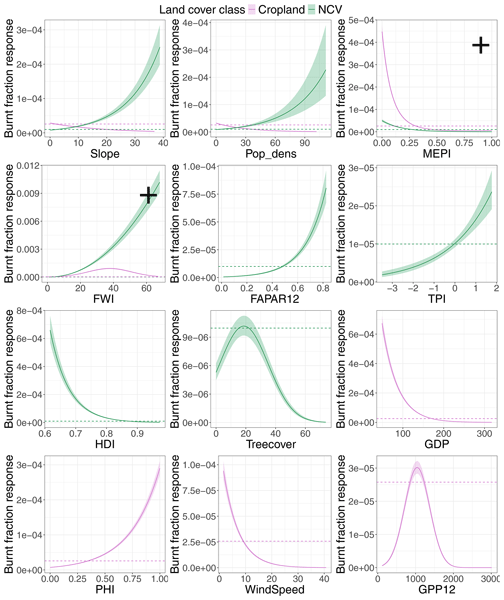
Julia C. Tindall, Alan M. Haywood, Ulrich Salzmann, Aisling M. Dolan, and Tamara Fletcher
Clim. Past, 18, 1385–1405, https://doi.org/10.5194/cp-18-1385-2022, https://doi.org/10.5194/cp-18-1385-2022, 2022
Short summary
Short summary
The mid-Pliocene (MP; ∼3.0 Ma) had CO2 levels similar to today and average temperatures ∼3°C warmer. At terrestrial high latitudes, MP temperatures from climate models are much lower than those reconstructed from data. This mismatch occurs in the winter but not the summer. The winter model–data mismatch likely has multiple causes. One novel cause is that the MP climate may be outside the modern sample, and errors could occur when using information from the modern era to reconstruct climate.
Xiaoxu Shi, Martin Werner, Carolin Krug, Chris M. Brierley, Anni Zhao, Endurance Igbinosa, Pascale Braconnot, Esther Brady, Jian Cao, Roberta D'Agostino, Johann Jungclaus, Xingxing Liu, Bette Otto-Bliesner, Dmitry Sidorenko, Robert Tomas, Evgeny M. Volodin, Hu Yang, Qiong Zhang, Weipeng Zheng, and Gerrit Lohmann
Clim. Past, 18, 1047–1070, https://doi.org/10.5194/cp-18-1047-2022, https://doi.org/10.5194/cp-18-1047-2022, 2022
Short summary
Short summary
Since the orbital parameters of the past are different from today, applying the modern calendar to the past climate can lead to an artificial bias in seasonal cycles. With the use of multiple model outputs, we found that such a bias is non-ignorable and should be corrected to ensure an accurate comparison between modeled results and observational records, as well as between simulated past and modern climates, especially for the Last Interglacial.
Carolien M. H. van der Weijst, Josse Winkelhorst, Wesley de Nooijer, Anna von der Heydt, Gert-Jan Reichart, Francesca Sangiorgi, and Appy Sluijs
Clim. Past, 18, 961–973, https://doi.org/10.5194/cp-18-961-2022, https://doi.org/10.5194/cp-18-961-2022, 2022
Short summary
Short summary
A hypothesized link between Pliocene (5.3–2.5 million years ago) global climate and tropical thermocline depth is currently only backed up by data from the Pacific Ocean. In our paper, we present temperature, salinity, and thermocline records from the tropical Atlantic Ocean. Surprisingly, the Pliocene thermocline evolution was remarkably different in the Atlantic and Pacific. We need to reevaluate the mechanisms that drive thermocline depth, and how these are tied to global climate change.
Ryan A. Green, Laurie Menviel, Katrin J. Meissner, Xavier Crosta, Deepak Chandan, Gerrit Lohmann, W. Richard Peltier, Xiaoxu Shi, and Jiang Zhu
Clim. Past, 18, 845–862, https://doi.org/10.5194/cp-18-845-2022, https://doi.org/10.5194/cp-18-845-2022, 2022
Short summary
Short summary
Climate models are used to predict future climate changes and as such, it is important to assess their performance in simulating past climate changes. We analyze seasonal sea-ice cover over the Southern Ocean simulated from numerical PMIP3, PMIP4 and LOVECLIM simulations during the Last Glacial Maximum (LGM). Comparing these simulations to proxy data, we provide improved estimates of LGM seasonal sea-ice cover. Our estimate of summer sea-ice extent is 20 %–30 % larger than previous estimates.
Michiel L. J. Baatsen, Anna S. von der Heydt, Michael A. Kliphuis, Arthur M. Oldeman, and Julia E. Weiffenbach
Clim. Past, 18, 657–679, https://doi.org/10.5194/cp-18-657-2022, https://doi.org/10.5194/cp-18-657-2022, 2022
Short summary
Short summary
The Pliocene was a period during which atmospheric CO2 was similar to today (i.e. ~ 400 ppm). We present the results of model simulations carried out within the Pliocene Model Intercomparison Project Phase 2 (PlioMIP2) using the CESM 1.0.5. We find a climate that is much warmer than today, with augmented polar warming, increased precipitation, and strongly reduced sea ice cover. In addition, several leading modes of variability in temperature show an altered behaviour.
Michael Amoo, Ulrich Salzmann, Matthew J. Pound, Nick Thompson, and Peter K. Bijl
Clim. Past, 18, 525–546, https://doi.org/10.5194/cp-18-525-2022, https://doi.org/10.5194/cp-18-525-2022, 2022
Short summary
Short summary
Late Eocene to earliest Oligocene (37.97–33.06 Ma) climate and vegetation dynamics around the Tasmanian Gateway region reveal that changes in ocean circulation due to accelerated deepening of the Tasmanian Gateway may not have been solely responsible for the changes in terrestrial climate and vegetation; a series of regional and global events, including a change in stratification of water masses and changes in pCO2, may have played significant roles.
Dipayan Choudhury, Laurie Menviel, Katrin J. Meissner, Nicholas K. H. Yeung, Matthew Chamberlain, and Tilo Ziehn
Clim. Past, 18, 507–523, https://doi.org/10.5194/cp-18-507-2022, https://doi.org/10.5194/cp-18-507-2022, 2022
Short summary
Short summary
We investigate the effects of a warmer climate from the Earth's paleoclimate (last interglacial) on the marine carbon cycle of the Southern Ocean using a carbon-cycle-enabled state-of-the-art climate model. We find a 150 % increase in CO2 outgassing during this period, which results from competition between higher sea surface temperatures and weaker oceanic circulation. From this we unequivocally infer that the carbon uptake by the Southern Ocean will reduce under a future warming scenario.
Florian Ehmele, Lisa-Ann Kautz, Hendrik Feldmann, Yi He, Martin Kadlec, Fanni D. Kelemen, Hilke S. Lentink, Patrick Ludwig, Desmond Manful, and Joaquim G. Pinto
Nat. Hazards Earth Syst. Sci., 22, 677–692, https://doi.org/10.5194/nhess-22-677-2022, https://doi.org/10.5194/nhess-22-677-2022, 2022
Short summary
Short summary
For various applications, it is crucial to have profound knowledge of the frequency, severity, and risk of extreme flood events. Such events are characterized by very long return periods which observations can not cover. We use a large ensemble of regional climate model simulations as input for a hydrological model. Precipitation data were post-processed to reduce systematic errors. The representation of precipitation and discharge is improved, and estimates of long return periods become robust.
Agathe Toumoulin, Delphine Tardif, Yannick Donnadieu, Alexis Licht, Jean-Baptiste Ladant, Lutz Kunzmann, and Guillaume Dupont-Nivet
Clim. Past, 18, 341–362, https://doi.org/10.5194/cp-18-341-2022, https://doi.org/10.5194/cp-18-341-2022, 2022
Short summary
Short summary
Temperature seasonality is an important climate parameter for biodiversity. Fossil plants describe its middle Eocene to early Oligocene increase in the Northern Hemisphere, but underlying mechanisms have not been studied in detail yet. Using climate simulations, we map global seasonality changes and show that major contemporary forcing – atmospheric CO2 lowering, Antarctic ice-sheet expansion and particularly related sea level drop – participated in this phenomenon and its spatial distribution.
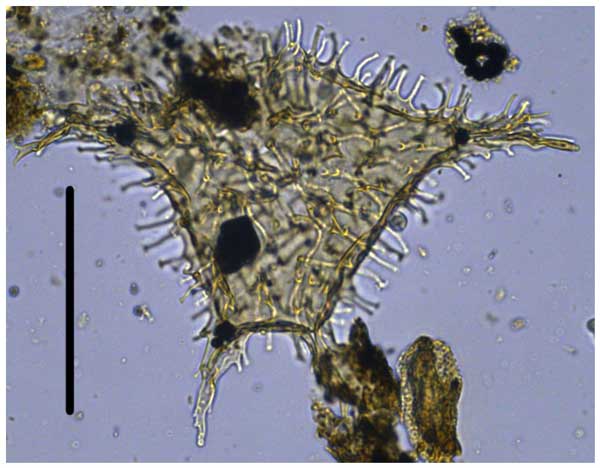
Flavia Boscolo-Galazzo, Amy Jones, Tom Dunkley Jones, Katherine A. Crichton, Bridget S. Wade, and Paul N. Pearson
Biogeosciences, 19, 743–762, https://doi.org/10.5194/bg-19-743-2022, https://doi.org/10.5194/bg-19-743-2022, 2022
Short summary
Short summary
Deep-living organisms are a major yet poorly known component of ocean biomass. Here we reconstruct the evolution of deep-living zooplankton and phytoplankton. Deep-dwelling zooplankton and phytoplankton did not occur 15 Myr ago, when the ocean was several degrees warmer than today. Deep-dwelling species first evolve around 7.5 Myr ago, following global climate cooling. Their evolution was driven by colder ocean temperatures allowing more food, oxygen, and light at depth.
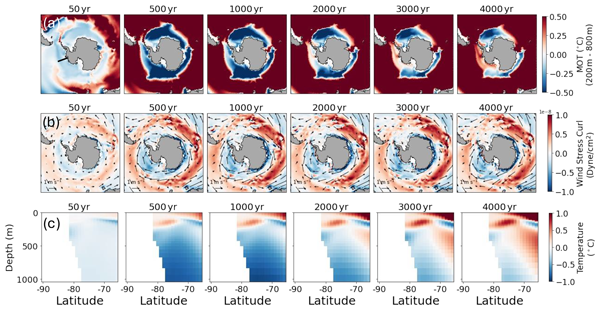
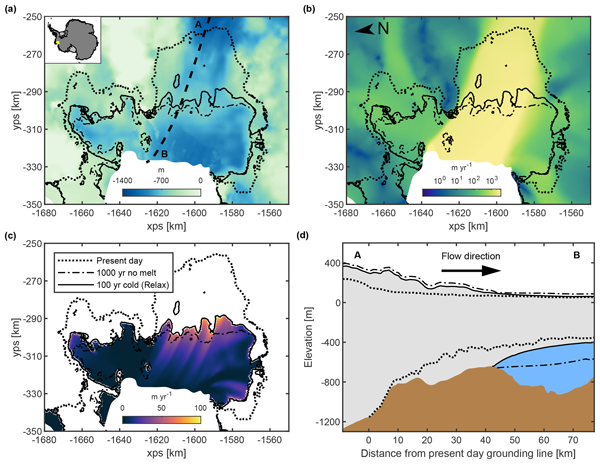
Nick Thompson, Ulrich Salzmann, Adrián López-Quirós, Peter K. Bijl, Frida S. Hoem, Johan Etourneau, Marie-Alexandrine Sicre, Sabine Roignant, Emma Hocking, Michael Amoo, and Carlota Escutia
Clim. Past, 18, 209–232, https://doi.org/10.5194/cp-18-209-2022, https://doi.org/10.5194/cp-18-209-2022, 2022
Short summary
Short summary
New pollen and spore data from the Antarctic Peninsula region reveal temperate rainforests that changed and adapted in response to Eocene climatic cooling, roughly 35.5 Myr ago, and glacially related disturbance in the early Oligocene, approximately 33.5 Myr ago. The timing of these events indicates that the opening of ocean gateways alone did not trigger Antarctic glaciation, although ocean gateways may have played a role in climate cooling.
Zixuan Han, Qiong Zhang, Qiang Li, Ran Feng, Alan M. Haywood, Julia C. Tindall, Stephen J. Hunter, Bette L. Otto-Bliesner, Esther C. Brady, Nan Rosenbloom, Zhongshi Zhang, Xiangyu Li, Chuncheng Guo, Kerim H. Nisancioglu, Christian Stepanek, Gerrit Lohmann, Linda E. Sohl, Mark A. Chandler, Ning Tan, Gilles Ramstein, Michiel L. J. Baatsen, Anna S. von der Heydt, Deepak Chandan, W. Richard Peltier, Charles J. R. Williams, Daniel J. Lunt, Jianbo Cheng, Qin Wen, and Natalie J. Burls
Clim. Past, 17, 2537–2558, https://doi.org/10.5194/cp-17-2537-2021, https://doi.org/10.5194/cp-17-2537-2021, 2021
Short summary
Short summary
Understanding the potential processes responsible for large-scale hydrological cycle changes in a warmer climate is of great importance. Our study implies that an imbalance in interhemispheric atmospheric energy during the mid-Pliocene could have led to changes in the dynamic effect, offsetting the thermodynamic effect and, hence, altering mid-Pliocene hydroclimate cycling. Moreover, a robust westward shift in the Pacific Walker circulation can moisten the northern Indian Ocean.
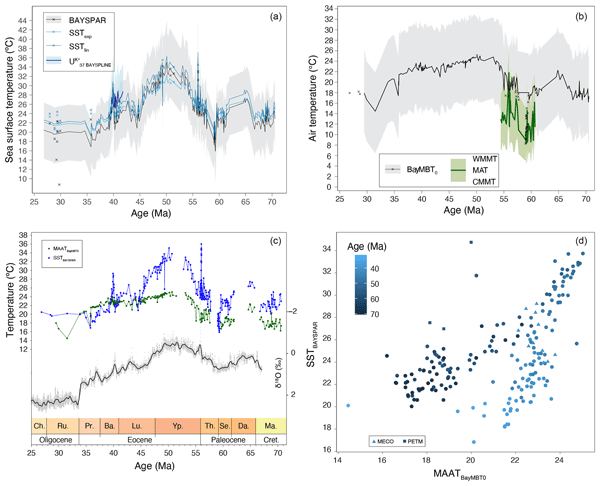
Arthur M. Oldeman, Michiel L. J. Baatsen, Anna S. von der Heydt, Henk A. Dijkstra, Julia C. Tindall, Ayako Abe-Ouchi, Alice R. Booth, Esther C. Brady, Wing-Le Chan, Deepak Chandan, Mark A. Chandler, Camille Contoux, Ran Feng, Chuncheng Guo, Alan M. Haywood, Stephen J. Hunter, Youichi Kamae, Qiang Li, Xiangyu Li, Gerrit Lohmann, Daniel J. Lunt, Kerim H. Nisancioglu, Bette L. Otto-Bliesner, W. Richard Peltier, Gabriel M. Pontes, Gilles Ramstein, Linda E. Sohl, Christian Stepanek, Ning Tan, Qiong Zhang, Zhongshi Zhang, Ilana Wainer, and Charles J. R. Williams
Clim. Past, 17, 2427–2450, https://doi.org/10.5194/cp-17-2427-2021, https://doi.org/10.5194/cp-17-2427-2021, 2021
Short summary
Short summary
In this work, we have studied the behaviour of El Niño events in the mid-Pliocene, a period of around 3 million years ago, using a collection of 17 climate models. It is an interesting period to study, as it saw similar atmospheric carbon dioxide levels to the present day. We find that the El Niño events were less strong in the mid-Pliocene simulations, when compared to pre-industrial climate. Our results could help to interpret El Niño behaviour in future climate projections.
Karin Kvale, David P. Keller, Wolfgang Koeve, Katrin J. Meissner, Christopher J. Somes, Wanxuan Yao, and Andreas Oschlies
Geosci. Model Dev., 14, 7255–7285, https://doi.org/10.5194/gmd-14-7255-2021, https://doi.org/10.5194/gmd-14-7255-2021, 2021
Short summary
Short summary
We present a new model of biological marine silicate cycling for the University of Victoria Earth System Climate Model (UVic ESCM). This new model adds diatoms, which are a key aspect of the biological carbon pump, to an existing ecosystem model. Our modifications change how the model responds to warming, with net primary production declining more strongly than in previous versions. Diatoms in particular are simulated to decline with climate warming due to their high nutrient requirements.
Peter K. Bijl, Joost Frieling, Marlow Julius Cramwinckel, Christine Boschman, Appy Sluijs, and Francien Peterse
Clim. Past, 17, 2393–2425, https://doi.org/10.5194/cp-17-2393-2021, https://doi.org/10.5194/cp-17-2393-2021, 2021
Short summary
Short summary
Here, we use the latest insights for GDGT and dinocyst-based paleotemperature and paleoenvironmental reconstructions in late Cretaceous–early Oligocene sediments from ODP Site 1172 (East Tasman Plateau, Australia). We reconstruct strong river runoff during the Paleocene–early Eocene, a progressive decline thereafter with increased wet/dry seasonality in the northward-drifting hinterland. Our critical review leaves the anomalous warmth of the Eocene SW Pacific Ocean unexplained.
Julia Rulent, Lucy M. Bricheno, J. A. Mattias Green, Ivan D. Haigh, and Huw Lewis
Nat. Hazards Earth Syst. Sci., 21, 3339–3351, https://doi.org/10.5194/nhess-21-3339-2021, https://doi.org/10.5194/nhess-21-3339-2021, 2021
Short summary
Short summary
High coastal total water levels (TWLs) can lead to flooding and hazardous conditions for coastal communities and environment. In this research we are using numerical models to study the interactions between the three main components of the TWL (waves, tides, and surges) on UK and Irish coasts during winter 2013/14. The main finding of this research is that extreme waves and surges can indeed happen together, even at high tide, but they often occurred simultaneously 2–3 h before high tide.
Thomas J. Leutert, Sevasti Modestou, Stefano M. Bernasconi, and A. Nele Meckler
Clim. Past, 17, 2255–2271, https://doi.org/10.5194/cp-17-2255-2021, https://doi.org/10.5194/cp-17-2255-2021, 2021
Short summary
Short summary
The Miocene climatic optimum associated with high atmospheric CO2 levels (~17–14 Ma) was followed by a period of dramatic climate change. We present a clumped isotope-based bottom-water temperature record from the Southern Ocean covering this key climate transition. Our record reveals warm conditions and a substantial cooling preceding the main ice volume increase, possibly caused by thresholds involved in ice growth and/or regional effects at our study site.
Katherine A. Crichton, Andy Ridgwell, Daniel J. Lunt, Alex Farnsworth, and Paul N. Pearson
Clim. Past, 17, 2223–2254, https://doi.org/10.5194/cp-17-2223-2021, https://doi.org/10.5194/cp-17-2223-2021, 2021
Short summary
Short summary
The middle Miocene (15 Ma) was a period of global warmth up to 8 °C warmer than present. We investigate changes in ocean circulation and heat distribution since the middle Miocene and the cooling to the present using the cGENIE Earth system model. We create seven time slices at ~2.5 Myr intervals, constrained with paleo-proxy data, showing a progressive reduction in atmospheric CO2 and a strengthening of the Atlantic Meridional Overturning Circulation.
Laura Crick, Andrea Burke, William Hutchison, Mika Kohno, Kathryn A. Moore, Joel Savarino, Emily A. Doyle, Sue Mahony, Sepp Kipfstuhl, James W. B. Rae, Robert C. J. Steele, R. Stephen J. Sparks, and Eric W. Wolff
Clim. Past, 17, 2119–2137, https://doi.org/10.5194/cp-17-2119-2021, https://doi.org/10.5194/cp-17-2119-2021, 2021
Short summary
Short summary
The ~ 74 ka eruption of Toba was one of the largest eruptions of the last 100 ka. We have measured the sulfur isotopic composition for 11 Toba eruption candidates in two Antarctic ice cores. Sulfur isotopes allow us to distinguish between large eruptions that have erupted material into the stratosphere and smaller ones that reach lower altitudes. Using this we have identified the events most likely to be Toba and place the eruption on the transition into a cold period in the Northern Hemisphere.
Charles J. R. Williams, Alistair A. Sellar, Xin Ren, Alan M. Haywood, Peter Hopcroft, Stephen J. Hunter, William H. G. Roberts, Robin S. Smith, Emma J. Stone, Julia C. Tindall, and Daniel J. Lunt
Clim. Past, 17, 2139–2163, https://doi.org/10.5194/cp-17-2139-2021, https://doi.org/10.5194/cp-17-2139-2021, 2021
Short summary
Short summary
Computer simulations of the geological past are an important tool to improve our understanding of climate change. We present results from a simulation of the mid-Pliocene (approximately 3 million years ago) using the latest version of the UK’s climate model. The simulation reproduces temperatures as expected and shows some improvement relative to previous versions of the same model. The simulation is, however, arguably too warm when compared to other models and available observations.
Ellen Berntell, Qiong Zhang, Qiang Li, Alan M. Haywood, Julia C. Tindall, Stephen J. Hunter, Zhongshi Zhang, Xiangyu Li, Chuncheng Guo, Kerim H. Nisancioglu, Christian Stepanek, Gerrit Lohmann, Linda E. Sohl, Mark A. Chandler, Ning Tan, Camille Contoux, Gilles Ramstein, Michiel L. J. Baatsen, Anna S. von der Heydt, Deepak Chandan, William Richard Peltier, Ayako Abe-Ouchi, Wing-Le Chan, Youichi Kamae, Charles J. R. Williams, Daniel J. Lunt, Ran Feng, Bette L. Otto-Bliesner, and Esther C. Brady
Clim. Past, 17, 1777–1794, https://doi.org/10.5194/cp-17-1777-2021, https://doi.org/10.5194/cp-17-1777-2021, 2021
Short summary
Short summary
The mid-Pliocene Warm Period (~ 3.2 Ma) is often considered an analogue for near-future climate projections, and model results from the PlioMIP2 ensemble show an increase of rainfall over West Africa and the Sahara region compared to pre-industrial conditions. Though previous studies of future projections show a west–east drying–wetting contrast over the Sahel, these results indicate a uniform rainfall increase over the Sahel in warm climates characterized by increased greenhouse gas forcing.
Jenny V. Turton, Philipp Hochreuther, Nathalie Reimann, and Manuel T. Blau
The Cryosphere, 15, 3877–3896, https://doi.org/10.5194/tc-15-3877-2021, https://doi.org/10.5194/tc-15-3877-2021, 2021
Short summary
Short summary
We assess the climatic controls of melt lake development, melt duration, melt extent, and the spatial distribution of lakes of 79°N Glacier. There is a large interannual variability in the areal extent of the lakes and the maximum elevation of lake development, which is largely controlled by the summertime air temperatures and the snowpack thickness. Late-summer lake development can be prompted by spikes in surface mass balance. There is some evidence of inland expansion of lakes over time.
Nicolai Schleinkofer, David Evans, Max Wisshak, Janina Vanessa Büscher, Jens Fiebig, André Freiwald, Sven Härter, Horst R. Marschall, Silke Voigt, and Jacek Raddatz
Biogeosciences, 18, 4733–4753, https://doi.org/10.5194/bg-18-4733-2021, https://doi.org/10.5194/bg-18-4733-2021, 2021
Short summary
Short summary
We have measured the chemical composition of the carbonate shells of the parasitic foraminifera Hyrrokkin sarcophaga in order to test if it is influenced by the host organism (bivalve or coral). We find that both the chemical and isotopic composition is influenced by the host organism. For example strontium is enriched in foraminifera that grew on corals, whose skeleton is built from aragonite, which is naturally enriched in strontium compared to the bivalves' calcite shell.
Gerrit Müller, Jack J. Middelburg, and Appy Sluijs
Earth Syst. Sci. Data, 13, 3565–3575, https://doi.org/10.5194/essd-13-3565-2021, https://doi.org/10.5194/essd-13-3565-2021, 2021
Short summary
Short summary
Rivers are major freshwater resources, connectors and transporters on Earth. As the composition of river waters and particles results from processes in their catchment, such as erosion, weathering, environmental pollution, nutrient and carbon cycling, Earth-spanning databases of river composition are needed for studies of these processes on a global scale. While extensive resources on water and nutrient composition exist, we provide a database of river particle composition.
Paul J. Valdes, Christopher R. Scotese, and Daniel J. Lunt
Clim. Past, 17, 1483–1506, https://doi.org/10.5194/cp-17-1483-2021, https://doi.org/10.5194/cp-17-1483-2021, 2021
Short summary
Short summary
Deep ocean temperatures are widely used as a proxy for global mean surface temperature in the past, but the underlying assumptions have not been tested. We use two unique sets of 109 climate model simulations for the last 545 million years to show that the relationship is valid for approximately the last 100 million years but breaks down for older time periods when the continents (and hence ocean circulation) are in very different positions.
Cited articles
Abhik, S., Capitanio, F., Dommenget, D., Goswami, B., Farnsworth, A., Hutchinson, D., Arblaster, J., Lunt, D., and Steinig, S.: Unraveling weak and short South Asian wet season in the Early Eocene warmth, Commun. Earth Environ., 5, https://doi.org/10.1038/s43247-024-01289-8, 2024. a
Allen, J. R. M., Forrest, M., Hickler, T., Singarayer, J. S., Valdes, P. J., and Huntley, B.: Global vegetation patterns of the past 140,000 years, J. Biogeogr., 47, 2073–2090, https://doi.org/10.1111/jbi.13930, 2020. a
Aminov, J., Dupont-Nivet, G., Ruiz, D., and Gailleton, B.: Paleogeographic reconstructions using QGIS: Introducing Terra Antiqua plugin and its application to 30 and 50 Ma maps, Earth-Sci. Rev., 240, 104401, https://doi.org/10.1016/j.earscirev.2023.104401, 2023. a, b, c, d
Anagnostou, E., John, E. H., Edgar, K. M., Foster, G. L., Ridgwell, A., Inglis, G. N., Pancost, R. D., Lunt, D. J., and Pearson, P. N.: Changing atmospheric CO2 concentration was the primary driver of early cenozoic climate, Nature, 533, 380–384, https://doi.org/10.1038/nature17423, 2016. a
Anagnostou, E., John, E., Babila, T., Sexton, P., Ridgwell, A., Lunt, D., Pearson, P., Chalk, T., Pancost, R., and Foster, G.: Proxy evidence for state-dependence of climate sensitivity in the Eocene greenhouse, Nat. Commun., 11, https://doi.org/10.1038/s41467-020-17887-x, 2020. a
Arias, P. A., Bellouin, N., Coppola, E., Jones, R. G., Krinner, G., Marotzke, J., Naik, V., Palmer, M. D., Plattner, G.-K., Rogelj, J., Rojas, M., Sillmann, J., Storelvmo, T., Thorne, P. W., Trewin, B., Achuta Rao, K., Adhikary, B., Allan, R. P., Armour, K., Bala, G., Barimalala, R., Berger, S., Canadell, J. G., Cassou, C., Cherchi, A., Collins, W., Collins, W. D., Connors, S. L., Corti, S., Cruz, F., Dentener, F. J., Dereczynski, C., Di Luca, A., Diongue Niang, A., Doblas-Reyes, F. J., Dosio, A., Douville, H., Engelbrecht, F., Eyring, V., Fischer, E., Forster, P., Fox-Kemper, B., Fuglestvedt, J. S., Fyfe, J. C., Gillett, N. P., Goldfarb, L., Gorodetskaya, I., Gutierrez, J. M., Hamdi, R., Hawkins, E., Hewitt, H. T., Hope, P., Islam, A. S., Jones, C., Kaufman, D. S., Kopp, R. E., Kosaka, Y., Kossin, J., Krakovska, S., Lee, J.-Y., Li, J., Mauritsen, T., Maycock, T. K., Meinshausen, M., Min, S.-K., Monteiro, P. M. S., Ngo-Duc, T., Otto, F., Pinto, I., Pirani, A., Raghavan, K., Ranasinghe, R., Ruane, A. C., Ruiz, L., Sallée, J.-B., Samset, B. H., Sathyendranath, S., Seneviratne, S. I., Sörensson, A. A., Szopa, S., Takayabu, I., Treguier, A.-M., van den Hurk, B., Vautard, R., von Schuckmann, K., Zaehle, S., Zhang, X., and Zickfeld, K.: Technical Summary, in: Climate Change 2021: The Physical Science Basis, Contribution of Working Group I to the Sixth Assessment Report of the Intergovernmental Panel on Climate Change, edited by: Masson-Delmotte, V., Zhai, P., Pirani, A., Connors, S. L., Péan, C., Berger, S., Caud, N., Chen, Y., Goldfarb, L., Gomis, M. I., Huang, M., Leitzell, K., Lonnoy, E., Matthews, J. B. R., Maycock, T. K., Waterfield, T., Yelekçi, O., Yu, R., and Zhou, B., Cambridge University Press, Cambridge, UK and New York, NY, USA, https://doi.org/10.1017/9781009157896.002, 2021. a
Baatsen, M., von der Heydt, A., Kliphuis, M., Viebahn, J., and Dijkstra, H.: Multiple states in the late Eocene ocean circulation, Global Planet. Change, 163, 18–28, https://doi.org/10.1016/j.gloplacha.2018.02.009, 2018. a
Beerling, D., Fox, A., Stevenson, D., and Valdes, P.: Enhanced chemistry-climate feedbacks in past greenhouse worlds, P. Natl. Acad. Sci. USA, 108, 9770–9775, https://doi.org/10.1073/pnas.1102409108, 2011. a, b, c
Boschman, L. M.: Andean mountain building since the Late Cretaceous: A paleoelevation reconstruction, Earth-Sci. Rev., 220, 103640, https://doi.org/10.1016/j.earscirev.2021.103640, 2021. a, b
Braaten, A. H., Jakob, K. A., Ho, S. L., Friedrich, O., Galaasen, E. V., De Schepper, S., Wilson, P. A., and Meckler, A. N.: Limited exchange between the deep Pacific and Atlantic oceans during the warm mid-Pliocene and Marine Isotope Stage M2 “glaciation”, Clim. Past, 19, 2109–2125, https://doi.org/10.5194/cp-19-2109-2023, 2023. a
Bradshaw, C., Fletcher, T., Reichgelt, T., Akgün, F., Cantrill, D. J., Casas‐Gallego, M., Doláková, N., Erdei, B., Kayseri‐Özer, M. S., Kováčová, M., Ochoa, D., Pound, M., Utescher, T., Zhao, J., Sepulchre, P., Feakins, S. J., Ivanov, D., Li, S., Miao, Y., Worobiec, E., Strömberg, C. A., Novak, J., Herold, N., Huber, M., Frigola, A., Prange, M., Knorr, G., Lohmann, G., Farnsworth, A., Li, Y., Lunt, D. J., Pillot, Q., Donnadieu, Y., Acosta, R. P., and Burls, N.: MioVeg1: A Global Middle Miocene Vegetation Reconstruction for Climate Modeling, Paleoceanogr. Paleoclimatol., 40, https://doi.org/10.1029/2025PA005213, 2025. a
Brinkhuis, H., Schouten, S., Collinson, M. E., Sluijs, A., Damsté, J. S. S., Dickens, G. R., Huber, M., Cronin, T. M., Onodera, J., Takahashi, K., Bujak, J. P., Stein, R., van der Burgh, J., Eldrett, J. S., Harding, I. C., Lotter, A. F., Sangiorgi, F., van Konijnenburg-van Cittert, H., de Leeuw, J. W., Matthiessen, J., Backman, J., Moran, K., Clemens, S., Eynaud, F., Gattacceca, J., Jakobsson, M., Jordan, R., Kaminski, M., King, J., Koc, N., Martinez, N. C., McInroy, D., Moore, T. C. J., O'Regan, M., Pälike, H., Rea, B., Rio, D., Sakamoto, T., Smith, D. C., StJohn, K. E. K., Suto, I., Suzuki, N., Watanabe, M., and Yamamoto, M.: Letter. Episodic fresh surface waters in the Eocene Arctic Ocean, Nature, 441, 606–609, 2006. a
Burke, K., Williams, J., Chandler, M., Haywood, A., Lunt, D., and Otto-Bliesner, B.: Pliocene and Eocene provide best analogs for near-future climates, P. Natl. Acad. Sci. USA, 115, 13288–13293, https://doi.org/10.1073/pnas.1809600115, 2018. a
Burls, N. J., Bradshaw, C. D., De Boer, A. M., Herold, N., Huber, M., Pound, M., Donnadieu, Y., Farnsworth, A., Frigola, A., Gasson, E., von der Heydt, A. S., Hutchinson, D. K., Knorr, G., Lawrence, K. T., Lear, C. H., Li, X., Lohmann, G., Lunt, D. J., Marzocchi, A., Prange, M., Riihimaki, C. A., Sarr, A.-C., Siler, N., and Zhang, Z.: Simulating Miocene Warmth: Insights From an Opportunistic Multi-Model Ensemble (MioMIP1), Paleoceanogr. Paleoclimatol., 36, e2020PA004054, https://doi.org/10.1029/2020PA004054, 2021. a
Burls, N. J., Wright, N. M., Acosta, R. P., Bradshaw, C. D., Gasson, E., Stap, L. B., Ramstein, G., Halberstadt, A. R. W., De Boer, A. M., Akgün, F., Cantrill, D. J., Casas-Gallego, M., Doláková, N., Erdei, B., Farnsworth, A., Feakins, S., Feng, R., Fletcher, T., Fluteau, F., Green, J. A. M., von der Heydt, A. S., Huber, M., Hutchinson, D. K., Ivanov, D., Kayseri-Özer, M. S., Knorr, G., Kováčová, M., Lear, C. H., LeGrande, A. N., Li, S., Liu, X., Lunt, D. J., Meissner, K., Miao, Y., Naik, T. J., Navarro, J. B., Novak, J. B., Ochoa, D., Paxman, G. J. G., Pound, M. J., Rae, J. W. B., Reichgelt, T., Renoult, M., Sangiorgi, F., Sarr, A.-C., Segalla, D., Sepulchre, P., Shevenell, A., Steinig, S., Straume, E., Strömberg, C. A. E., Tabor, C., Utescher, T., Weiffenbach, J. E., Worobiec, E., Zhang, Y., Zhu, F., Zhu, J., Auderset, A., Colleoni, F., Dolan, A., Havranek, R., Holbourn, A., Herold, N., Lee, D., Marschalek, J. W., Mitsunaga, B., Modestou, S., Perez-Angel, L., Saslaw, M., Sosdian, S., Stiles, E., Sun, Y., Tan, N., Zhang, Z., and Zhao, Y.: MioMIP2: Experimental design for Phase 1 & 2 of the Miocene component of the CMIP7/PMIP7 Deep-time Model Intercomparison Project (DeepMIP-Miocene), Geosci. Model Dev., submitted, 2026. a
Caballero, R. and Huber, M.: State-dependent climate sensitivity in past warm climates and its implications for future climate projections, P. Natl. Acad. Sci. USA, 110, 14162–14167, 2013. a
Couvreur, T. L., Dauby, G., Blach-Overgaard, A., Deblauwe, V., Dessein, S., Droissart, V., Hardy, O. J., Harris, D. J., Janssens, S. B., Ley, A. C., Mackinder, B. A., Sonké, B., Sosef, M. S., Stévart, T., Svenning, J.-C., Wieringa, J. J., Faye, A., Missoup, A. D., Tolley, K. A., Nicolas, V., Ntie, S., Fluteau, F., Robin, C., Guillocheau, F., Barboni, D., and Sepulchre, P.: Tectonics, climate and the diversification of the tropical African terrestrial flora and fauna, Biol. Rev., 96, 16–51, https://doi.org/10.1111/brv.12644, 2021. a
Cramwinckel, M., Burls, N., Fahad, A., Knapp, S., West, C., Reichgelt, T., Greenwood, D., Chan, W., Donnadieu, Y., Hutchinson, D., de Boer, A., Ladant, J., Morozova, P., Niezgodzki, I., Knorr, G., Steinig, S., Zhang, Z., Zhu, J., Feng, R., Lunt, D., Abe-Ouchi, A., and Inglis, G.: Global and Zonal-Mean Hydrological Response to Early Eocene Warmth, Paleoceanogr. Paleoclimatol., 38, https://doi.org/10.1029/2022PA004542, 2023. a, b
de Boer, A. M., Krishnan, S., Burls, N. J., Hutchinson, D. K., and Renoult, M.: Evaluation of Quasi-Equilibrium Criteria for Coupled Climate Model Simulations, Geophys. Res. Lett., 52, e2025GL117040, https://doi.org/10.1029/2025GL117040, 2025. a, b, c
Delworth, T. L., Broccoli, A. J., Rosati, A., Stouffer, R. J., Balaji, V., Beesley, J. A., Cooke, W. F., Dixon, K. W., Dunne, J., Dunne, K. A., Durachta, J. W., Findell, K. L., Ginoux, P., Gnanadesikan, A., Gordon, C. T., Griffies, S. M., Gudgel, R., Harrison, M. J., Held, I. M., Hemler, R. S., Horowitz, L. W., Klein, S. A., Knutson, T. R., Kushner, P. J., Langenhorst, A. R., Lee, H.-C., Lin, S.-J., Lu, J., Malyshev, S. L., Milly, P. C. D., Ramaswamy, V., Russell, J., Schwarzkopf, M. D., Shevliakova, E., Sirutis, J. J., Spelman, M. J., Stern, W. F., Winton, M., Wittenberg, A. T., Wyman, B., Zeng, F., and Zhang, R.: GFDL's CM2 Global Coupled Climate Models. Part I: Formulation and Simulation Characteristics, J. Climate, 19, 643–674, https://doi.org/10.1175/JCLI3629.1, 2006. a
Dunne, J. P., Hewitt, H. T., Arblaster, J. M., Bonou, F., Boucher, O., Cavazos, T., Dingley, B., Durack, P. J., Hassler, B., Juckes, M., Miyakawa, T., Mizielinski, M., Naik, V., Nicholls, Z., O'Rourke, E., Pincus, R., Sanderson, B. M., Simpson, I. R., and Taylor, K. E.: An evolving Coupled Model Intercomparison Project phase 7 (CMIP7) and Fast Track in support of future climate assessment, Geosci. Model Dev., 18, 6671–6700, https://doi.org/10.5194/gmd-18-6671-2025, 2025. a, b
Eaton, B., Gregory, J., Drach, B., Taylor, K., Hankin, S., Caron, J., Signell, R., Bentley, P., Rappa, G., Höck, H., Pamment, A., Juckes, M., Raspaud, M., Blower, J., Horne, R., Whiteaker, T., Blodgett, D., Zender, C., Lee, D., Hassell, D., Snow, A. D., Kölling, T., Allured, D., Jelenak, A., Soerensen, A. M., Gaultier, L., Herlédan, S., Manzano, F., Bärring, L., Barker, C., and Bartholomew, S. L.: NetCDF Climate and Forecast (CF) Metadata Conventions, Zenodo, https://doi.org/10.5281/zenodo.14275572, 2023. a
Evans, D., Brugger, J., Inglis, G. N., and Valdes, P.: The Temperature of the Deep Ocean Is a Robust Proxy for Global Mean Surface Temperature During the Cenozoic, Paleoceanogr. Paleoclimatol., 39, e2023PA004788, https://doi.org/10.1029/2023PA004788, 2024. a, b, c, d
Forster, P., Storelvmo, T., Armour, K., Collins, W., Dufresne, J.-L., Frame, D., Lunt, D., Mauritsen, T., Palmer, M., Watanabe, M., Wild, M., and Zhang, H.: The Earth's Energy Budget, Climate Feedbacks, and Climate Sensitivity, in: Climate Change 2021: The Physical Science Basis, Contribution of Working Group I to the Sixth Assessment Report of the Intergovernmental Panel on Climate Change, edited by: Masson-Delmotte, V., Zhai, P., Pirani, A., Connors, S., Péan, C., Berger, S., Caud, N., Chen, Y., Goldfarb, L., Gomis, M., Huang, M., Leitzell, K., Lonnoy, E., Matthews, J., Maycock, T., Waterfield, T., Yelekçi, O., Yu, R., and Zhou, B., Cambridge University Press, Cambridge, UK and New York, NY, USA, 923–1054, https://doi.org/10.1017/9781009157896.009, 2021. a
Gent, P. R. and Mcwilliams, J. C.: Isopycnal Mixing in Ocean Circulation Models, J. Phys. Oceanogr., 20, 150–155, https://doi.org/10.1175/1520-0485(1990)020<0150:IMIOCM>2.0.CO;2, 1990. a
Goudsmit-Harzevoort, B., Lansu, A., Baatsen, M. L. J., von der Heydt, A. S., de Winter, N. J., Zhang, Y., Abe-Ouchi, A., de Boer, A., Chan, W.-L., Donnadieu, Y., Hutchinson, D. K., Knorr, G., Ladant, J.-B., Morozova, P., Niezgodzki, I., Steinig, S., Tripati, A., Zhang, Z., Zhu, J., and Ziegler, M.: The Relationship Between the Global Mean Deep-Sea and Surface Temperature During the Early Eocene, Paleoceanogr. Paleoclimatol., 38, e2022PA004532, https://doi.org/10.1029/2022PA004532, 2023. a, b
Gough, D.: Solar interior structure and luminosity variations, Sol, Phys., 74, 21–34, 1981. a
Green, J. A. M. and Huber, M.: Tidal dissipation in the early Eocene and implications for ocean mixing, Geophys. Res. Lett., 40, 2707–2713, https://doi.org/10.1002/grl.50510, 2013. a, b
Gregory, J. M., Ingram, W. J., Palmer, M. A., Jones, G. S., Stott, P. A., Thorpe, R. B., Lowe, J. A., Johns, T. C., and Williams, K. D.: A new method for diagnosing radiative forcing and climate sensitivity, Geophys. Res. Lett., 31, https://doi.org/10.1029/2003GL018747, 2004. a
Harrison, S. P. and Prentice, C. I.: Climate and CO2 controls on global vegetation distribution at the last glacial maximum: analysis based on palaeovegetation data, biome modelling and palaeoclimate simulations, Global Change Biol., 9, 983–1004, https://doi.org/10.1046/j.1365-2486.2003.00640.x, 2003. a
Haywood, A., Tindall, J., Burton, L., Chandler, M., Dolan, A., Dowsett, H., Feng, R., Fletcher, T., Foley, K., Hill, D., Hunter, S., Otto-Bliesner, B., Lunt, D., Robinson, M., and Salzmann, U.: Pliocene Model Intercomparison Project Phase 3 (PlioMIP3) – Science plan and experimental design, Global Planet. Change, 232, 104316, https://doi.org/10.1016/j.gloplacha.2023.104316, 2024. a
He, Z., Zhang, Z., and Guo, Z.: Reconstructing early Eocene (∼55 Ma) paleogeographic boundary conditions for use in paleoclimate modelling, Sci. China Earth Sci., 62, 1416–1427, https://doi.org/10.1007/s11430-019-9366-2, 2019. a
Henry, M. and Vallis, G. K.: Variations on a Pathway to an Early Eocene Climate, Paleoceanogr. Paleoclimatol., 37, e2021PA004375, https://doi.org/10.1029/2021PA004375, 2022. a
Herold, N., Buzan, J., Seton, M., Goldner, A., Green, J. A. M., Müller, R. D., Markwick, P., and Huber, M.: A suite of early Eocene (∼55 Ma) climate model boundary conditions, Geosci. Model Dev., 7, 2077–2090, https://doi.org/10.5194/gmd-7-2077-2014, 2014. a, b, c, d, e, f, g, h, i, j, k, l, m, n, o, p, q, r, s, t, u
Hollis, C. J., Dunkley Jones, T., Anagnostou, E., Bijl, P. K., Cramwinckel, M. J., Cui, Y., Dickens, G. R., Edgar, K. M., Eley, Y., Evans, D., Foster, G. L., Frieling, J., Inglis, G. N., Kennedy, E. M., Kozdon, R., Lauretano, V., Lear, C. H., Littler, K., Lourens, L., Meckler, A. N., Naafs, B. D. A., Pälike, H., Pancost, R. D., Pearson, P. N., Röhl, U., Royer, D. L., Salzmann, U., Schubert, B. A., Seebeck, H., Sluijs, A., Speijer, R. P., Stassen, P., Tierney, J., Tripati, A., Wade, B., Westerhold, T., Witkowski, C., Zachos, J. C., Zhang, Y. G., Huber, M., and Lunt, D. J.: The DeepMIP contribution to PMIP4: methodologies for selection, compilation and analysis of latest Paleocene and early Eocene climate proxy data, incorporating version 0.1 of the DeepMIP database, Geosci. Model Dev., 12, 3149–3206, https://doi.org/10.5194/gmd-12-3149-2019, 2019. a, b, c, d
Hönisch, B., Royer, D. L., Breecker, D. O., Polissar, P. J., Bowen, G. J., Henehan, M. J., Cui, Y., Steinthorsdottir, M., McElwain, J. C., Kohn, M. J., Pearson, A., Phelps, S. R., Uno, K. T., Ridgwell, A., Anagnostou, E., Austermann, J., Badger, M. P. S., Barclay, R. S., Bijl, P. K., Chalk, T. B., Scotese, C. R., de la Vega, E., DeConto, R. M., Dyez, K. A., Ferrini, V., Franks, P. J., Giulivi, C. F., Gutjahr, M., Harper, D. T., Haynes, L. L., Huber, M., Snell, K. E., Keisling, B. A., Konrad, W., Lowenstein, T. K., Malinverno, A., Guillermic, M., Mejía, L. M., Milligan, J. N., Morton, J. J., Nordt, L., Whiteford, R., Roth-Nebelsick, A., Rugenstein, J. K. C., Schaller, M. F., Sheldon, N. D., Sosdian, S., Wilkes, E. B., Witkowski, C. R., Zhang, Y. G., Anderson, L., Beerling, D. J., Bolton, C., Cerling, T. E., Cotton, J. M., Da, J., Ekart, D. D., Foster, G. L., Greenwood, D. R., Hyland, E. G., Jagniecki, E. A., Jasper, J. P., Kowalczyk, J. B., Kunzmann, L., Kürschner, W. M., Lawrence, C. E., Lear, C. H., Martínez-Botí, M. A., Maxbauer, D. P., Montagna, P., Naafs, B. D. A., Rae, J. W. B., Raitzsch, M., Retallack, G. J., Ring, S. J., Seki, O., Sepúlveda, J., Sinha, A., Tesfamichael, T. F., Tripati, A., van der Burgh, J., Yu, J., Zachos, J. C., and Zhang, L.: Toward a Cenozoic history of atmospheric CO2, Science, 382, eadi5177, https://doi.org/10.1126/science.adi5177, 2023. a, b, c, d, e
Hurrell, J. W., Holland, M. M., Gent, P. R., Ghan, S., Kay, J. E., Kushner, P. J., Lamarque, J. F., Large, W. G., Lawrence, D., Lindsay, K., Lipscomb, W. H., Long, M. C., Mahowald, N., Marsh, D. R., Neale, R. B., Rasch, P., Vavrus, S., Vertenstein, M., Bader, D., Collins, W. D., Hack, J. J., Kiehl, J. T., and Marshall, S.: The community earth system model: A framework for collaborative research, B. Am. Meteorol. Soc., 94, 1339–1360, https://doi.org/10.1175/BAMS-D-12-00121.1, 2013. a
Inglis, G. N., Bragg, F., Burls, N. J., Cramwinckel, M. J., Evans, D., Foster, G. L., Huber, M., Lunt, D. J., Siler, N., Steinig, S., Tierney, J. E., Wilkinson, R., Anagnostou, E., de Boer, A. M., Dunkley Jones, T., Edgar, K. M., Hollis, C. J., Hutchinson, D. K., and Pancost, R. D.: Global mean surface temperature and climate sensitivity of the early Eocene Climatic Optimum (EECO), Paleocene–Eocene Thermal Maximum (PETM), and latest Paleocene, Clim. Past, 16, 1953–1968, https://doi.org/10.5194/cp-16-1953-2020, 2020a. a, b, c, d
Inglis, G. N., Rohrssen, M., Kennedy, E. M., Crouch, E. M., Raine, J. I., Strogen, D. P., Naafs, B. D. A., Collinson, M. E., and Pancost, R. D.: Terrestrial methane cycle perturbations during the onset of the Paleocene-Eocene Thermal Maximum, Geology, 49, 520–524, https://doi.org/10.1130/G48110.1, 2020b. a
Kaplan, J. O., Bigelow, N. H., Prentice, I. C., Harrison, S. P., Bartlein, P. J., Christensen, T. R., Cramer, W., Matveyeva, N. V., McGuire, A. D., Murray, D. F., Razzhivin, V. Y., Smith, B., Walker, D. A., Anderson, P. M., Andreev, A. A., Brubaker, L. B., Edwards, M. E., and Lozhkin, A. V.: Climate change and Arctic ecosystems: 2. Modeling, paleodata-model comparisons, and future projections, J. Geophys. Res.-Atmos., 108, https://doi.org/10.1029/2002JD002559, 2003. a, b
Kelemen, F. D., Steinig, S., de Boer, A., Zhu, J., Chan, W.-L., Niezgodzki, I., Hutchinson, D. K., Knorr, G., Abe-Ouchi, A., and Ahrens, B.: Meridional Heat Transport in the DeepMIP Eocene Ensemble: Non-CO2 and CO2 Effects, Paleoceanogr. Paleoclimatol., 38, e2022PA004607, https://doi.org/10.1029/2022PA004607, 2023. a
Kiehl, J. T. and Shields, C. A.: Sensitivity of the Palaeocene-Eocene Thermal Maximum climate to cloud properties, Philos. T. Roy. Soc. A, 371, 20130093, https://doi.org/10.1098/rsta.2013.0093, 2013. a
Ladant, J.-B., Millot-Weil, J., de Lavergne, C., Green, J. A. M., Nguyen, S., and Donnadieu, Y.: The Role of Tidal Mixing in Shaping Early Eocene Deep Ocean Circulation and Oxygenation, Paleoceanogr. Paleoclimatol., 39, e2023PA004822, https://doi.org/10.1029/2023PA004822, 2024. a, b
Loptson, C. A., Lunt, D. J., and Francis, J. E.: Investigating vegetation-climate feedbacks during the early Eocene, Clim. Past, 10, 419–436, https://doi.org/10.5194/cp-10-419-2014, 2014. a
Lunt, D.: Code for DeepMIP-Eocene Phase2 Exp Design GMD paper, Zenodo [code], https://doi.org/10.5281/zenodo.21065940, 2025a (code also available at: https://github.com/danlunt1976/DeepMIP-Eocene-p2, last access: 3 July 2026). a
Lunt, D. J., Ridgwell, A., Valdes, P. J., and Seale, A.: “Sunshade World”: A fully coupled GCM evaluation of the climatic impacts of geoengineering, Geophys. Res. Lett., 35, https://doi.org/10.1029/2008GL033674, 2008. a
Lunt, D. J., Huber, M., Anagnostou, E., Baatsen, M. L. J., Caballero, R., DeConto, R., Dijkstra, H. A., Donnadieu, Y., Evans, D., Feng, R., Foster, G. L., Gasson, E., von der Heydt, A. S., Hollis, C. J., Inglis, G. N., Jones, S. M., Kiehl, J., Kirtland Turner, S., Korty, R. L., Kozdon, R., Krishnan, S., Ladant, J. B., Langebroek, P., Lear, C. H., LeGrande, A. N., Littler, K., Markwick, P., Otto-Bliesner, B., Pearson, P., Poulsen, C. J., Salzmann, U., Shields, C., Snell, K., Stärz, M., Super, J., Tabor, C., Tierney, J. E., Tourte, G. J. L., Tripati, A., Upchurch, G. R., Wade, B. S., Wing, S. L., Winguth, A. M. E., Wright, N. M., Zachos, J. C., and Zeebe, R. E.: The DeepMIP contribution to PMIP4: experimental design for model simulations of the EECO, PETM, and pre-PETM (version 1.0), Geosci. Model Dev., 10, 889–901, https://doi.org/10.5194/gmd-10-889-2017, 2017. a, b, c, d, e, f, g, h, i, j, k, l
Lunt, D. J., Bragg, F., Chan, W.-L., Hutchinson, D. K., Ladant, J.-B., Morozova, P., Niezgodzki, I., Steinig, S., Zhang, Z., Zhu, J., Abe-Ouchi, A., Anagnostou, E., de Boer, A. M., Coxall, H. K., Donnadieu, Y., Foster, G., Inglis, G. N., Knorr, G., Langebroek, P. M., Lear, C. H., Lohmann, G., Poulsen, C. J., Sepulchre, P., Tierney, J. E., Valdes, P. J., Volodin, E. M., Dunkley Jones, T., Hollis, C. J., Huber, M., and Otto-Bliesner, B. L.: DeepMIP: model intercomparison of early Eocene climatic optimum (EECO) large-scale climate features and comparison with proxy data, Clim. Past, 17, 203–227, https://doi.org/10.5194/cp-17-203-2021, 2021. a, b, c, d, e
Markwick, P. J.: The palaeogeographic and palaeoclimatic significance of climate proxies for data-model comparisons, in: Deep time perspectives on climate change: marrying the signal from computer models and biological proxies, edited by: Williams, M., Haywood, A. M., Gregory, J. F., and Schmidt, D. N., The Micropalaeontological Society Special Publications, Geological Society of London, ISBN 9781862392403, 2007. a, b
Meckler, A. N., Sexton, P. F., Piasecki, A. M., Leutert, T. J., Marquardt, J., Ziegler, M., Agterhuis, T., Lourens, L. J., Rae, J. W. B., Barnet, J., Tripati, A., and Bernasconi, S. M.: Cenozoic evolution of deep ocean temperature from clumped isotope thermometry, Science, 377, 86–90, https://doi.org/10.1126/science.abk0604, 2022. a, b
Meijer, N., Licht, A., Woutersen, A., Hoorn, C., Robin-Champigneul, F., Rohrmann, A., Tagliavento, M., Brugger, J., Kelemen, F. D., Schauer, A. J., Hren, M. T., Sun, A., Fiebig, J., Mulch, A., and Dupont-Nivet, G.: Proto-monsoon rainfall and greening in Central Asia due to extreme early Eocene warmth, Nat. Geosci., 17, 158–164, 2024. a
Meinicke, N., Ho, S., Hannisdal, B., Nürnberg, D., Tripati, A., Schiebel, R., and Meckler, A.: A robust calibration of the clumped isotopes to temperature relationship for foraminifers, Geochim. Cosmochim. Ac., 270, 160–183, https://doi.org/10.1016/j.gca.2019.11.022, 2020. a, b
Meinicke, N., Reimi, M. A., Ravelo, A. C., and Meckler, A. N.: Coupled Mg/Ca and Clumped Isotope Measurements Indicate Lack of Substantial Mixed Layer Cooling in the Western Pacific Warm Pool During the Last ∼5 Million Years, Paleoceanogr. Paleoclimatol., 36, e2020PA004115, https://doi.org/10.1029/2020PA004115, 2021. a
Meinshausen, M., Vogel, E., Nauels, A., Lorbacher, K., Meinshausen, N., Etheridge, D. M., Fraser, P. J., Montzka, S. A., Rayner, P. J., Trudinger, C. M., Krummel, P. B., Beyerle, U., Canadell, J. G., Daniel, J. S., Enting, I. G., Law, R. M., Lunder, C. R., O'Doherty, S., Prinn, R. G., Reimann, S., Rubino, M., Velders, G. J. M., Vollmer, M. K., Wang, R. H. J., and Weiss, R.: Historical greenhouse gas concentrations for climate modelling (CMIP6), Geosci. Model Dev., 10, 2057–2116, https://doi.org/10.5194/gmd-10-2057-2017, 2017. a, b
Meinshausen, M., Nicholls, Z. R. J., Lewis, J., Gidden, M. J., Vogel, E., Freund, M., Beyerle, U., Gessner, C., Nauels, A., Bauer, N., Canadell, J. G., Daniel, J. S., John, A., Krummel, P. B., Luderer, G., Meinshausen, N., Montzka, S. A., Rayner, P. J., Reimann, S., Smith, S. J., van den Berg, M., Velders, G. J. M., Vollmer, M. K., and Wang, R. H. J.: The shared socio-economic pathway (SSP) greenhouse gas concentrations and their extensions to 2500, Geosci. Model Dev., 13, 3571–3605, https://doi.org/10.5194/gmd-13-3571-2020, 2020. a
Merdith, A. S., Williams, S. E., Collins, A. S., Tetley, M. G., Mulder, J. A., Blades, M. L., Young, A., Armistead, S. E., Cannon, J., Zahirovic, S., and Müller, R. D.: Extending full-plate tectonic models into deep time: Linking the Neoproterozoic and the Phanerozoic, Earth-Sci. Rev., 214, 103477, https://doi.org/10.1016/j.earscirev.2020.103477, 2021. a
Montheil, L., Licht, A., Beard, K. C., Métais, G., Coster, P., Vaes, B., Donnadieu, Y., Pineau, E., Husson, L., and Dupont-Nivet, G.: Across ancient oceans: Eocene dispersal routes of Asian terrestrial mammals to Europe, Afro-Arabia and South America, Earth-Sci. Rev., 273, 105352, https://doi.org/10.1016/j.earscirev.2025.105352, 2026. a, b
Müller, R. D., Sdrolias, M., Gaina, C., and Roest, W. R.: Age, spreading rates, and spreading asymmetry of the world's ocean crust, Geochem. Geophy. Geosy., 9, https://doi.org/10.1029/2007GC001743, 2008. a
Müller, R. D., Cannon, J., Qin, X., Watson, R. J., Gurnis, M., Williams, S., Pfaffelmoser, T., Seton, M., Russell, S. H. J., and Zahirovic, S.: GPlates: Building a Virtual Earth Through Deep Time, Geochem. Geophy. Geosy., 19, 2243–2261, https://doi.org/10.1029/2018GC007584, 2018. a
National Geophysical Data Center: 5-minute Gridded Global Relief Data (ETOPO5), National Geophysical Data Center [data set], https://doi.org/10.7289/V5D798BF, 1993. a, b
Niezgodzki, I., Knorr, G., Lohmann, G., Lunt, D. J., Poulsen, C. J., Steinig, S., Zhu, J., de Boer, A., Chan, W.-L., Donnadieu, Y., Hutchinson, D. K., Ladant, J.-B., and Morozova, P.: Simulation of Arctic sea ice within the DeepMIP Eocene ensemble: Thresholds, seasonality and factors controlling sea ice development, Global Planet. Change, 214, 103848, https://doi.org/10.1016/j.gloplacha.2022.103848, 2022. a
Nooteboom, P. D., Baatsen, M., Bijl, P. K., Kliphuis, M. A., van Sebille, E., Sluijs, A., Dijkstra, H. A., and von der Heydt, A. S.: Improved Model-Data Agreement With Strongly Eddying Ocean Simulations in the Middle-Late Eocene, Paleoceanogr. Paleoclimatol., 37, e2021PA004405, https://doi.org/10.1029/2021PA004405, 2022. a
O'Neill, C., Müller, D., and Steinberger, B.: On the uncertainties in hot spot reconstructions and the significance of moving hot spot reference frames, Geochem. Geophy. Geosy., 6, Q04003, https://doi.org/10.1029/2004GC000784, 2005. a
Paxman, G. J., Jamieson, S. S., Hochmuth, K., Gohl, K., Bentley, M. J., Leitchenkov, G., and Ferraccioli, F.: Reconstructions of Antarctic topography since the Eocene–Oligocene boundary, Palaeogeogr. Palaeocl. Palaeoecol., 535, 109346, https://doi.org/10.1016/j.palaeo.2019.109346, 2019. a, b
Poblete, F., Dupont-Nivet, G., Licht, A., van Hinsbergen, D., Roperch, P., Mihalynuk, M., Johnston, S., Guillocheau, F., Baby, G., Fluteau, F., Robin, C., van der Linden, T., Ruiz, D., and Baatsen, M.: Towards interactive global paleogeographic maps, new reconstructions at 60, 40 and 20 Ma, Earth-Sci. Rev., 214, 103508, https://doi.org/10.1016/j.earscirev.2021.103508, 2021. a
Pound, M. J., Tindall, J., Pickering, S. J., Haywood, A. M., Dowsett, H. J., and Salzmann, U.: Late Pliocene lakes and soils: a global data set for the analysis of climate feedbacks in a warmer world, Clim. Past, 10, 167–180, https://doi.org/10.5194/cp-10-167-2014, 2014. a, b
Rak, J.: Because It Is There? Mount Everest, Masculinity, and the Body of George Mallory, Int. J. Hist. Sport, 38, 157–183, https://doi.org/10.1080/09523367.2020.1854738, 2021. a
Reichgelt, T., Greenwood, D. R., Steinig, S., Conran, J. G., Hutchinson, D. K., Lunt, D. J., Scriven, L. J., and Zhu, J.: Plant Proxy Evidence for High Rainfall and Productivity in the Eocene of Australia, Paleoceanogr. Paleoclimatol., 37, e2022PA00418, https://doi.org/10.1029/2022PA004418, 2022. a, b
Ross, P.: Deep ocean circulation during the early Eocene: a model-data comparison, PhD thesis, Imperial College, University of London, https://doi.org/10.25560/115506, 2023. a
Sagoo, N., Valdes, P., Flecker, R., and Gregoire, L.: The Early Eocene equable climate problem: can perturbations of climate model parameters identify possible solutions?, Philos. T. Roy. Soc. A, 317, https://doi.org/10.1098/rsta.2013.0123, 2013. a
Salzmann, U., Haywood, A. M., Lunt, D. J., Valdes, P. J., and Hill, D. J.: A new global biome reconstruction and data-model comparison for the Middle Pliocene, Global Ecol. Biogeogr., 17, 432–447, https://doi.org/10.1111/j.1466-8238.2008.00381.x, 2008. a
Scotese, C. R. and Wright, N.: PALEOMAP Paleodigital Elevation MOdels (PaleoDEMS) for the Phanerozoic PALEOMAP Project, Earthbyte, https://www.earthbyte.org/paleodem-resource-scotese-and-wright-2018 (last access: 30 June 2018), 2018. a
Shields, C. A., Kiehl, J. T., Rush, W., Rothstein, M., and Snyder, M. A.: Atmospheric rivers in high-resolution simulations of the Paleocene Eocene Thermal Maximum (PETM), Palaeogeogr. Palaeocl. Palaeoecol. 567, 110293, https://doi.org/10.1016/j.palaeo.2021.110293, 2021. a
Smith, B., Wårlind, D., Arneth, A., Hickler, T., Leadley, P., Siltberg, J., and Zaehle, S.: Implications of incorporating N cycling and N limitations on primary production in an individual-based dynamic vegetation model, Biogeosciences, 11, 2027–2054, https://doi.org/10.5194/bg-11-2027-2014, 2014. a, b, c
Spicer, R. A., Farnsworth, A., Su, T., Ding, L., Witkowski, C. R., Li, S.-F., Xiong, Z., Zhou, Z., Li, S., Hughes, A. C., Valdes, P. J., Widdowson, M., Zhang, X., He, S., Liu, J., Huang, J., Herman, A. B., Xu, Q., Liu, X., Jin, J., Pancost, R. D., Lunt, D. J., and Zhang, S.: The progressive co-evolutionary development of the Pan-Tibetan Highlands, the Asian monsoon system and Asian biodiversity, Geol. Soc. Lond. Spec. Publ., 549, 55–112, https://doi.org/10.1144/SP549-2023-180, 2025. a
Steinig, S., Abe-Ouchi, A., de Boer, A., Chan, W.-L., Donnadieu, Y., Hutchinson, D., Knorr, G., Ladant, J.-B., Morozova, P., Niezgodzki, I., Poulsen, C., Volodin, E., Zhang, Z., Zhu, J., Evans, D., Inglis, G., Meckler, A. N., and Lunt, D.: DeepMIP-Eocene-p1: multi-model dataset and interactive web application for Eocene climate research, Sci. Data, 11, https://doi.org/10.1038/s41597-024-03773-4, 2024. a, b, c, d, e, f
Steinig, S., Williams, C., Burls, N. J., Cramwinckel, M. J., Farnsworth, A., Foster, G., Hopcroft, P., Inglis, G., Lear, C., Osprey, A., Pancost, R., Roberts, W., Selar, A., Stone, E., Wood, R., Zhi, J., and Lunt, D.: Super warm early Eocene simulations with HadGEM3-GC31-LL, J. Geophys. Res.-Atmos., in preprration, 2026. a, b
Straume, E., Gaina, C., Medvedev, S., and Nisancioglu, K.: Global Cenozoic Paleobathymetry with a focus on the Northern Hemisphere Oceanic Gateways, Gondwana Res., 86, 126–143, https://doi.org/10.1016/j.gr.2020.05.011, 2020. a, b
Tetley, M. G., Williams, S. E., Gurnis, M., Flament, N., and Müller, R. D.: Constraining Absolute Plate Motions Since the Triassic, J. Geophys. Res.-Solid, 124, 7231–7258, https://doi.org/10.1029/2019JB017442, 2019. a
Thompson, N., Salzmann, U., Hutchinson, D. K., Strother, S. L., Pound, M. J., Utescher, T., Brugger, J., Hickler, T., Hocking, E. P., and Lunt, D. J.: Global vegetation zonation and terrestrial climate of the warm Early Eocene, Earth-Sci. Rev., 261, 105036, https://doi.org/10.1016/j.earscirev.2024.105036, 2025. a, b, c, d, e, f, g, h, i, j, k
Torsvik, T. H., Van der Voo, R., Preeden, U., Mac Niocaill, C., Steinberger, B., Doubrovine, P. V., Van Hinsbergen, D. J., Domeier, M., Gaina, C., Tohver, E., Meert, J. G., McCausland, P. J. A., and Cocks, L. R. M.: Phanerozoic polar wander, palaeogeography and dynamics, Earth-Sci. Rev., 114, 325–368, 2012. a
West, C. K., Greenwood, D. R., Reichgelt, T., Lowe, A. J., Vachon, J. M., and Basinger, J. F.: Paleobotanical proxies for early Eocene climates and ecosystems in northern North America from middle to high latitudes, Clim. Past, 16, 1387–1410, https://doi.org/10.5194/cp-16-1387-2020, 2020. a, b
Westerhold, T., Marwan, N., Drury, A. J., Liebrand, D., Agnini, C., Anagnostou, E., Barnet, J. S. K., Bohaty, S. M., Vleeschouwer, D. D., Florindo, F., Frederichs, T., Hodell, D. A., Holbourn, A. E., Kroon, D., Lauretano, V., Littler, K., Lourens, L. J., Lyle, M., Pälike, H., Röhl, U., Tian, J., Wilkens, R. H., Wilson, P. A., and Zachos, J. C.: An astronomically dated record of Earth's climate and its predictability over the last 66 million years, Science, 369, 1383–1387, https://doi.org/10.1126/science.aba6853, 2020. a, b
Westerweel, J., Roperch, P., Win, Z., and Dupont-Nivet, G.: Northward drift of the Burma Terrane with India during the Cenozoic and implications for the India–Asia collision, Geol. Soc. Lond. Spec. Publ., 549, 11–54, https://doi.org/10.1144/SP549-2024-18, 2025. a
Willard, D. A., Donders, T. H., Reichgelt, T., Greenwood, D. R., Sangiorgi, F., Peterse, F., Nierop, K. G., Frieling, J., Schouten, S., and Sluijs, A.: Arctic vegetation, temperature, and hydrology during Early Eocene transient global warming events, Global Planet. Change, 178, 139–152, https://doi.org/10.1016/j.gloplacha.2019.04.012, 2019. a
Williams, C. J. R., Lunt, D. J., Salzmann, U., Reichgelt, T., Inglis, G. N., Greenwood, D. R., Chan, W.-L., Abe-Ouchi, A., Donnadieu, Y., Hutchinson, D. K., de Boer, A. M., Ladant, J.-B., Morozova, P. A., Niezgodzki, I., Knorr, G., Steinig, S., Zhang, Z., Zhu, J., Huber, M., and Otto-Bliesner, B. L.: African Hydroclimate During the Early Eocene From the DeepMIP Simulations, Paleoceanogr. Paleoclimatol., 37, e2022PA004419, https://doi.org/10.1029/2022PA004419, 2022. a, b
Wilson, D. S., Jamieson, S. S., Barrett, P. J., Leitchenkov, G., Gohl, K., and Larter, R. D.: Antarctic topography at the Eocene–Oligocene boundary, Palaeogeogr. Palaeocl. Palaeoecol., 335==336, 24–34, https://doi.org/10.1016/j.palaeo.2011.05.028, 2012. a
Wilton, D. J., Badger, M. P. S., Kantzas, E. P., Pancost, R. D., Valdes, P. J., and Beerling, D. J.: A predictive algorithm for wetlands in deep time paleoclimate models, Geosci. Model Dev., 12, 1351–1364, https://doi.org/10.5194/gmd-12-1351-2019, 2019. a
Wright, N.: nickywright/deepmip-eocene-p2-paleogeography: v1.0.0, Zenodo [code], https://doi.org/10.5281/zenodo.20769472, 2026 (code also available at: https://github.com/nickywright/deepmip-eocene-p2-paleogeography, last access: 3 July 2026). a
Wright, N. M., Seton, M., Williams, S. E., Whittaker, J. M., and Müller, R. D.: Sea-level fluctuations driven by changes in global ocean basin volume following supercontinent break-up, Earth-Sci. Rev., 208, 103293, https://doi.org/10.1016/j.earscirev.2020.103293, 2020. a, b
Zahirovic, S., Eleish, A., Doss, S., Pall, J., Cannon, J., Pistone, M., Tetley, M. G., Young, A., and Fox, P.: Subduction and carbonate platform interactions, Geosci. Data J., 9, 371–383, https://doi.org/10.1002/gdj3.146, 2022. a, b, c
Zhang, Y., de Boer, A. M., Lunt, D. J., Hutchinson, D. K., Ross, P., van de Flierdt, T., Sexton, P., Coxall, H. K., Steinig, S., Ladant, J.-B., Zhu, J., Donnadieu, Y., Zhang, Z., Chan, W.-L., Abe-Ouchi, A., Niezgodzki, I., Lohmann, G., Knorr, G., Poulsen, C. J., and Huber, M.: Early Eocene Ocean Meridional Overturning Circulation: The Roles of Atmospheric Forcing and Strait Geometry, Paleoceanogr. Paleoclimatol., 37, e2021PA004329, https://doi.org/10.1029/2021PA004329, 2022a. a
Zhang, Y., de Boer, A. M., Qin, G., Lunt, D. J., Hutchinson, D. K., Steinig, S., Niezgodzki, I., Wade, B. S., Liu, X., Poulsen, C. J., and Lohmann, G.: Poleward expansion of North Pacific gyre circulation during the warm early Eocene inferred from inter-model comparisons, Palaeogeogr. Palaeocl. Palaeoecol., 661, 112712, https://doi.org/10.1016/j.palaeo.2024.112712, 2025. a
Zhang, Z., Zhang, Z., He, Z., Tan, N., Guo, Z., Zhu, J., Steinig, S., Donnadieu, Y., Ladant, J.-B., Chan, W.-L., Abe-Ouchi, A., Niezgodzki, I., Knorr, G., Hutchinson, D. K., and de Boer, A. M.: Impact of Mountains in Southern China on the Eocene Climates of East Asia, J. Geophys. Res.-Atmos., 127, e2022JD036510, https://doi.org/10.1029/2022JD036510, 2022b. a
Zhang, Z., Zhang, Z., Nummelin, A., Straume, E. O., Meckler, A. N., Langebroek, P. M., He, Z., Tan, N., and Guo, Z.: Influence of plate reference frames on deep-time climate simulations, Global Planet. Change, 233, 104352, https://doi.org/10.1016/j.gloplacha.2023.104352, 2024. a
Zhu, J., Poulsen, C. J., and Tierney, J. E.: Simulation of Eocene extreme warmth and high climate sensitivity through cloud feedbacks, Sci. Adv., 5, eaax1874, https://doi.org/10.1126/sciadv.aax1874, 2019. a
Zhu, J., Poulsen, C. J., Otto-Bliesner, B. L., Liu, Z., Brady, E. C., and Noone, D. C.: Simulation of early Eocene water isotopes using an Earth system model and its implication for past climate reconstruction, Earth Planet. Sc. Lett., 537, 116164, https://doi.org/10.1016/j.epsl.2020.116164, 2020. a
Zhu, J., Poulsen, C. J., and Otto-Bliesner, B. L.: Modeling Past Hothouse Climates as a Means for Assessing Earth System Models and Improving the Understanding of Warm Climates, Annu. Rev. Earth Planet. Sci., 52, 351–378, 2024. a
Short summary
The early Eocene, about 50 million years ago, was a super-warm period of Earth's history, with high concentrations of carbon dioxide in the atmosphere. Here, we provide a framework and experimental design for climate modellers to carry out a coordinated project, simulating this period. This is the second phase of this project, and here we provide updated maps of the Earth's mountains and ocean floor, and vegetation, to enable more accurate modelling.
The early Eocene, about 50 million years ago, was a super-warm period of Earth's history, with...
Special issue