
Articles | Volume 19, issue 11
https://doi.org/10.5194/gmd-19-4931-2026
© Author(s) 2026. This work is distributed under
the Creative Commons Attribution 4.0 License.
the Creative Commons Attribution 4.0 License.
https://doi.org/10.5194/gmd-19-4931-2026
© Author(s) 2026. This work is distributed under
the Creative Commons Attribution 4.0 License.
the Creative Commons Attribution 4.0 License.
Model description paper
| 
12 Jun 2026
Model description paper |
| 12 Jun 2026
| 12 Jun 2026
TREED (v1.0): a trait- and optimality-based eco-evolutionary vegetation model for the deep past and the present
Julian Rogger
CORRESPONDING AUTHOR

Department of Environmental Systems Science, ETH Zurich, Zurich, Switzerland
Department of Earth and Planetary Sciences, ETH Zurich, Zurich, Switzerland
Swiss Federal Institute for Forest, Snow and Landscape Research, Birmensdorf, Switzerland
School of Geographical Sciences, University of Bristol, Bristol, United Kingdom
Khushboo Gurung
School of Earth and Environment, University of Leeds, Leeds, United Kingdom
Emanuel B. Kopp
Department of Evolutionary Biology and Environmental Studies, University of Zurich, Zurich, Switzerland
William J. Matthaeus
School of Natural Sciences, Trinity College, Dublin, Ireland
Benjamin J. W. Mills
School of Earth and Environment, University of Leeds, Leeds, United Kingdom
Benjamin D. Stocker
Institute of Geography, University of Bern, Bern, Switzerland
Oeschger Centre for Climate Change Research, University of Bern, Bern, Switzerland
Taras V. Gerya
Department of Earth and Planetary Sciences, ETH Zurich, Zurich, Switzerland
Loïc Pellissier
Department of Environmental Systems Science, ETH Zurich, Zurich, Switzerland
Swiss Federal Institute for Forest, Snow and Landscape Research, Birmensdorf, Switzerland
Related authors
No articles found.
Myriam Terristi, Sebastian Sippel, Benjamin D. Stocker, and Ana Bastos
EGUsphere, https://doi.org/10.5194/egusphere-2026-5509, https://doi.org/10.5194/egusphere-2026-5509, 2026
This preprint is open for discussion and under review for Earth System Dynamics (ESD).
Short summary
Short summary
Satellite records reveal a paradox: vegetation is greening across much of the world even as water scarcity intensifies. Using 24 years of global observations, we followed vegetation throughout dry periods rather than treating droughts as isolated events. Greenness often rose at first, then declined as water shortages deepened. Extreme droughts also shifted many ecosystems towards water limitation, revealing a growing vulnerability beneath the global greening trend.
Timothy S. Gray, Paul J. Tackley, and Taras V. Gerya
Geosci. Model Dev., 19, 8877–8894, https://doi.org/10.5194/gmd-19-8877-2026, https://doi.org/10.5194/gmd-19-8877-2026, 2026
Short summary
Short summary
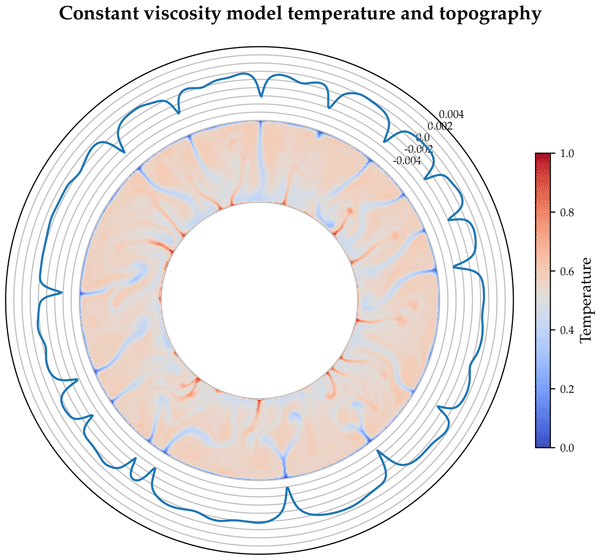
This study presents a new way to model how Earth’s surface changes over time as the deep interior moves. The method tracks the surface directly, allowing clearer and more detailed results worldwide while using less computing power. It improves accuracy compared to existing approaches and makes it easier to connect deep Earth processes with oceans, climate, landscapes, and life through time.
Timothy S. Gray, Paul J. Tackley, and Taras V. Gerya
Geosci. Model Dev., 19, 8839–8854, https://doi.org/10.5194/gmd-19-8839-2026, https://doi.org/10.5194/gmd-19-8839-2026, 2026
Short summary
Short summary
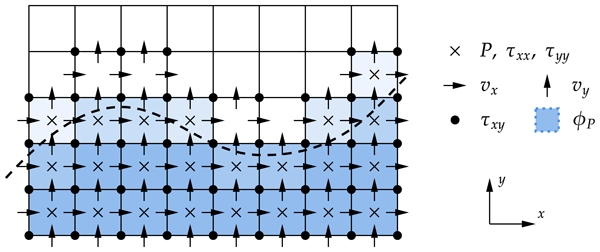
We developed a new way to model how planetary surfaces rise and sink as the deep interior slowly flows. Existing approaches are either costly or unstable. Our method represents the surface smoothly within a fixed grid, which avoids artificial air layers and numerical problems. Tests show it matches established results while running faster and working in more realistic settings, such as loaded surfaces and global models. This makes simulations of surface evolution more reliable and accessible.
Yousra El-Mejjaouy, Koen Hufkens, and Benjamin D. Stocker
EGUsphere, https://doi.org/10.5194/egusphere-2026-5000, https://doi.org/10.5194/egusphere-2026-5000, 2026
This preprint is open for discussion and under review for Earth Observation (EO).
Short summary
Short summary
Drought can reduce plant photosynthesis before visible changes in vegetation appear. We combined satellite observations, land surface temperature, climate data, and field measurements to detect these early physiological effects. We trained a model and applied it across Central Europe. The model explained 64 % of the observed variation and detected stress earlier than standard greenness measures, especially in evergreen forests, improving large-scale drought monitoring.
Samantha Biegel, David Brüggemann, Francesco Grossi, Michele Volpi, Konrad Schindler, and Benjamin D. Stocker
ISPRS Ann. Photogramm. Remote Sens. Spatial Inf. Sci., XI-3-2026, 713–721, https://doi.org/10.5194/isprs-annals-XI-3-2026-713-2026, https://doi.org/10.5194/isprs-annals-XI-3-2026-713-2026, 2026
Christoph Nathanael von Matt, Benjamin David Stocker, and Olivia Martius
Earth Syst. Sci. Data, 18, 4113–4154, https://doi.org/10.5194/essd-18-4113-2026, https://doi.org/10.5194/essd-18-4113-2026, 2026
Short summary
Short summary
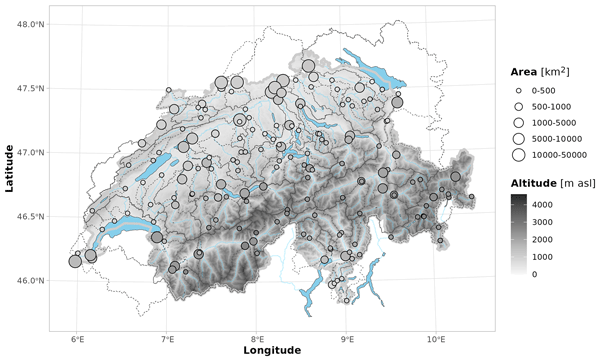
Low flow conditions (hydrological droughts) in Switzerland pose challenges to agriculture and energy production. Improved understanding of droughts supports warning applications and infrastructure planning. The HYD-responses data set provides data to study the the evolution of drought conditions. The data set combines weather data, snow cover data, soil moisture data, and numerous drought indicators. The data set supports process studies, statistical analyses, and the training of AI models.
Inne Vanderkelen, Marie-Estelle Demory, Sean Swenson, David M. Lawrence, Benjamin D. Stocker, Myke Koopmans, and Édouard L. Davin
Biogeosciences, 23, 3829–3854, https://doi.org/10.5194/bg-23-3829-2026, https://doi.org/10.5194/bg-23-3829-2026, 2026
Short summary
Short summary
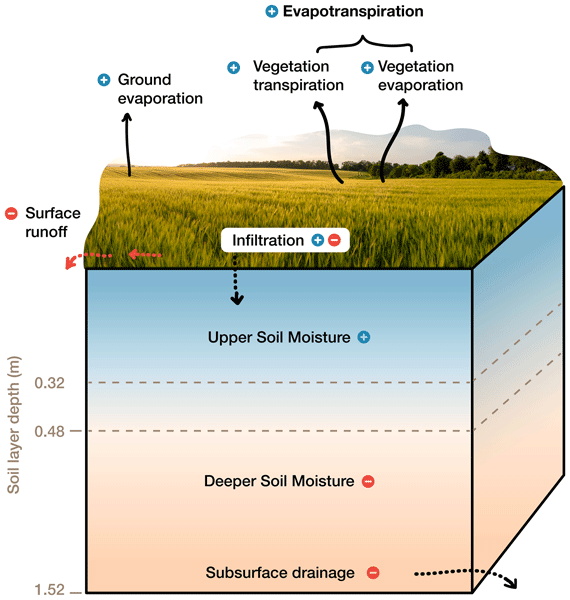
Soil carbon sequestration supports climate mitigation and may enhance water availability. Using a global land model, we show that increased soil organic carbon improves water retention in the root zone and reduces runoff, particularly in dry, sandy regions. Although hydrological changes are modest, they are systematic and suggest co-benefits for vegetation productivity and ecosystem resilience in water-limited areas.
Timothy Stephen Gray, Paul James Tackley, and Taras Gerya
EGUsphere, https://doi.org/10.5194/egusphere-2025-6547, https://doi.org/10.5194/egusphere-2025-6547, 2026
This preprint is open for discussion and under review for Geoscientific Model Development (GMD).
Short summary
Short summary
This study introduces a new way to track Earth’s surface and other boundaries in computer models of the planet’s interior. It replaces noisy, tracer-based methods with a technique that cleanly follows surfaces while conserving volume. The approach produces smoother, more accurate results in both 2D and 3D, reduces dependence on large numbers of tracers, and supports future links between deep Earth processes, oceans, and surface environments.
Josefa Arán Paredes, Fabian Bernhard, Koen Hufkens, Mayeul Marcadella, and Benjamin D. Stocker
Geosci. Model Dev., 18, 9855–9878, https://doi.org/10.5194/gmd-18-9855-2025, https://doi.org/10.5194/gmd-18-9855-2025, 2025
Short summary
Short summary
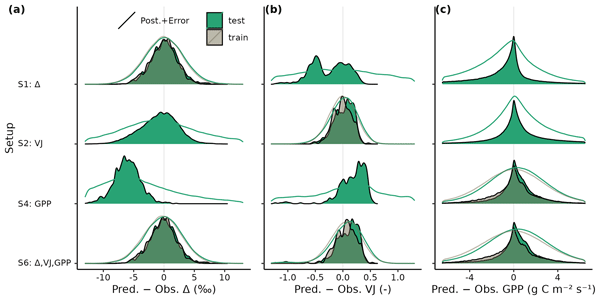
Mechanistic vegetation models serve to estimate terrestrial carbon fluxes and climate impacts on ecosystems across diverse conditions. Here, we demonstrate and evaluate the rsofun R package, which provides a computationally efficient implementation of the P-model for site-scale simulations of ecosystem photosynthesis. Bayesian model fitting to observed fluxes and traits and evaluation on an independent test data set indicated robust calibration and unbiased prediction capabilities.
Samantha Biegel, Konrad Schindler, and Benjamin D. Stocker
Biogeosciences, 22, 7455–7481, https://doi.org/10.5194/bg-22-7455-2025, https://doi.org/10.5194/bg-22-7455-2025, 2025
Short summary
Short summary
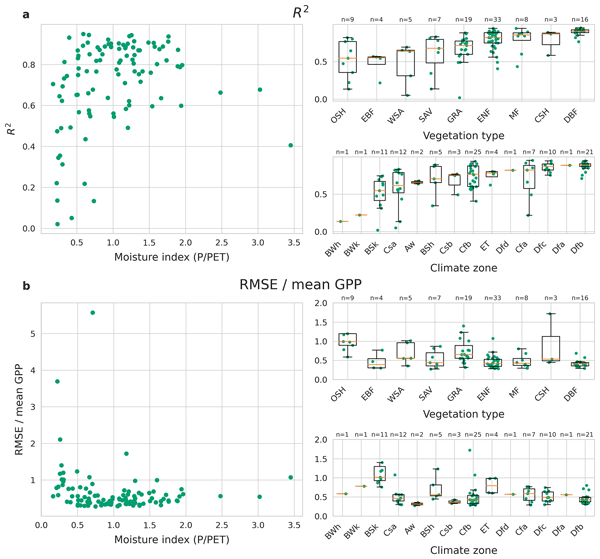
Our work addresses the predictability of carbon absorption by ecosystems across the globe, particularly in dry regions. We compare 3 different models, including a deep learning model that can learn from past environmental conditions, and show that this helps improve predictions. Still, challenges remain in dry areas due to varying vulnerabilities to drought. As drought conditions intensify globally, it's crucial to understand the varying impacts on ecosystem function.
Gabriela Sophia, Silvia Caldararu, Benjamin David Stocker, and Sönke Zaehle
Biogeosciences, 21, 4169–4193, https://doi.org/10.5194/bg-21-4169-2024, https://doi.org/10.5194/bg-21-4169-2024, 2024
Short summary
Short summary
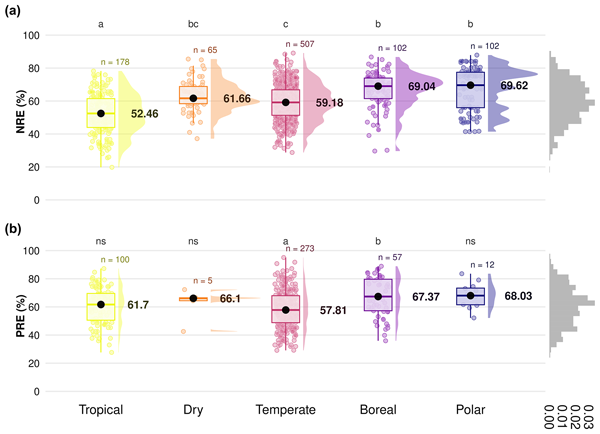
Through an extensive global dataset of leaf nutrient resorption and a multifactorial analysis, we show that the majority of spatial variation in nutrient resorption may be driven by leaf habit and type, with thicker, longer-lived leaves having lower resorption efficiencies. Climate, soil fertility and soil-related factors emerge as strong drivers with an additional effect on its role. These results are essential for comprehending plant nutrient status, plant productivity and nutrient cycling.
Dongyu Zheng, Andrew S. Merdith, Yves Goddéris, Yannick Donnadieu, Khushboo Gurung, and Benjamin J. W. Mills
Geosci. Model Dev., 17, 5413–5429, https://doi.org/10.5194/gmd-17-5413-2024, https://doi.org/10.5194/gmd-17-5413-2024, 2024
Short summary
Short summary
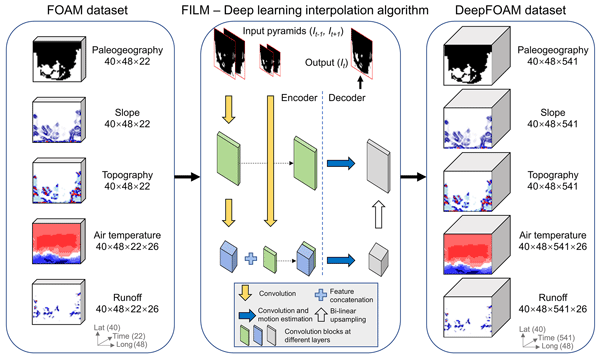
This study uses a deep learning method to upscale the time resolution of paleoclimate simulations to 1 million years. This improved resolution allows a climate-biogeochemical model to more accurately predict climate shifts. The method may be critical in developing new fully continuous methods that are able to be applied over a moving continental surface in deep time with high resolution at reasonable computational expense.
Silvia Caldararu, Victor Rolo, Benjamin D. Stocker, Teresa E. Gimeno, and Richard Nair
Biogeosciences, 20, 3637–3649, https://doi.org/10.5194/bg-20-3637-2023, https://doi.org/10.5194/bg-20-3637-2023, 2023
Short summary
Short summary
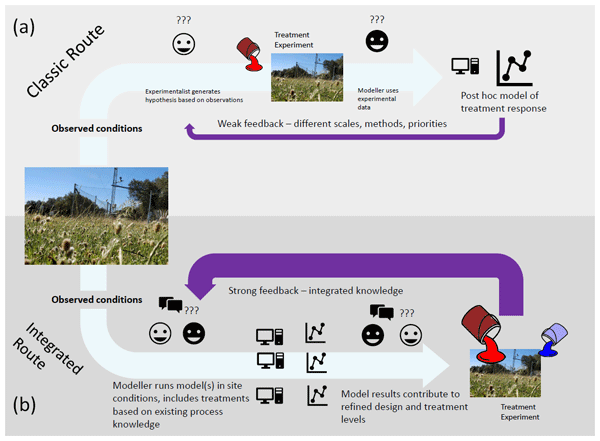
Ecosystem manipulative experiments are large experiments in real ecosystems. They include processes such as species interactions and weather that would be omitted in more controlled settings. They offer a high level of realism but are underused in combination with vegetation models used to predict the response of ecosystems to global change. We propose a workflow using models and ecosystem experiments together, taking advantage of the benefits of both tools for Earth system understanding.
Piersilvio De Bartolomeis, Alexandru Meterez, Zixin Shu, and Benjamin David Stocker
EGUsphere, https://doi.org/10.5194/egusphere-2023-1826, https://doi.org/10.5194/egusphere-2023-1826, 2023
Preprint withdrawn
Short summary
Short summary
Our research highlights the effectiveness of a recurrent neural network, LSTM, in predicting plant carbon absorption using weather and satellite data. LSTM outperforms other models, even for new locations, suggesting its broad application. Yet, challenges remain in predicting diverse ecosystems globally due to varying plant and climate factors. Our work enhances understanding of Earth's complex ecosystems using advanced models.
Philipp Brun, Niklaus E. Zimmermann, Chantal Hari, Loïc Pellissier, and Dirk Nikolaus Karger
Earth Syst. Sci. Data, 14, 5573–5603, https://doi.org/10.5194/essd-14-5573-2022, https://doi.org/10.5194/essd-14-5573-2022, 2022
Short summary
Short summary
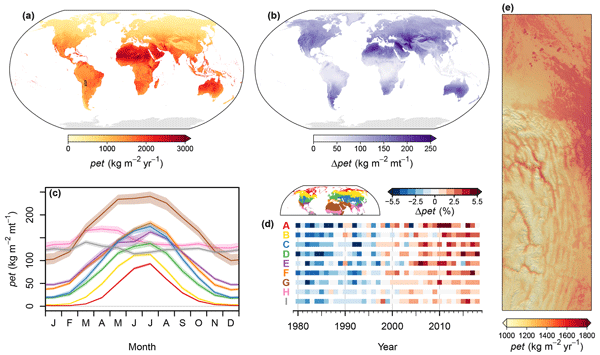
Using mechanistic downscaling, we developed CHELSA-BIOCLIM+, a set of 15 biologically relevant, climate-related variables at unprecedented resolution, as a basis for environmental analyses. It includes monthly time series for 38+ years and 30-year averages for three future periods and three emission scenarios. Estimates matched well with station measurements, but few biases existed. The data allow for detailed assessments of climate-change impact on ecosystems and their services to societies.
Xin Yu, René Orth, Markus Reichstein, Michael Bahn, Anne Klosterhalfen, Alexander Knohl, Franziska Koebsch, Mirco Migliavacca, Martina Mund, Jacob A. Nelson, Benjamin D. Stocker, Sophia Walther, and Ana Bastos
Biogeosciences, 19, 4315–4329, https://doi.org/10.5194/bg-19-4315-2022, https://doi.org/10.5194/bg-19-4315-2022, 2022
Short summary
Short summary
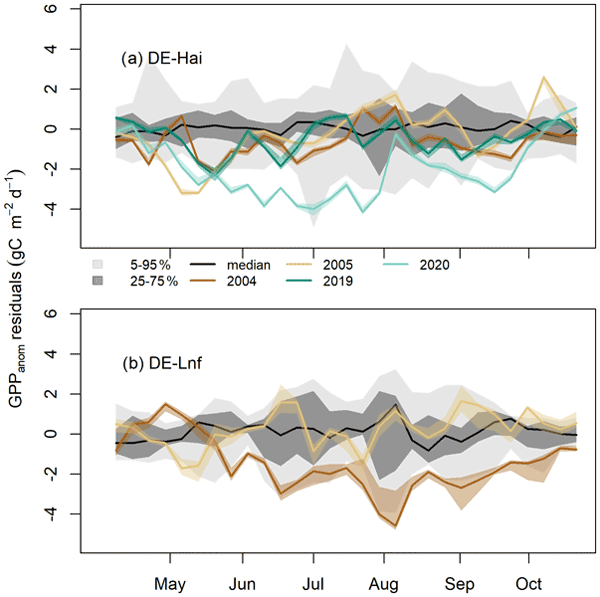
Identifying drought legacy effects is challenging because they are superimposed on variability driven by climate conditions in the recovery period. We develop a residual-based approach to quantify legacies on gross primary productivity (GPP) from eddy covariance data. The GPP reduction due to legacy effects is comparable to the concurrent effects at two sites in Germany, which reveals the importance of legacy effects. Our novel methodology can be used to quantify drought legacies elsewhere.
Ionuț Iosifescu Enescu, David Hanimann, Dominik Haas-Artho, Marius Rüetschi, Dirk Nikolaus Karger, Gian-Kasper Plattner, Martin Hägeli, Rebecca Kurup Buchholz, Lucia de Espona, Niklaus E. Zimmermann, and Loïc Pellissier
Abstr. Int. Cartogr. Assoc., 3, 119, https://doi.org/10.5194/ica-abs-3-119-2021, https://doi.org/10.5194/ica-abs-3-119-2021, 2021
Ionuț Iosifescu Enescu, David Hanimann, Dominik Haas-Artho, Marius Rüetschi, Dirk Nikolaus Karger, Gian-Kasper Plattner, Martin Hägeli, Rebecca Kurup Buchholz, Lucia de Espona, Niklaus E. Zimmermann, and Loïc Pellissier
Abstr. Int. Cartogr. Assoc., 3, 120, https://doi.org/10.5194/ica-abs-3-120-2021, https://doi.org/10.5194/ica-abs-3-120-2021, 2021
Cited articles
Antonelli, A., Kissling, W. D., Flantua, S. G. A., Bermúdez, M. A., Mulch, A., Muellner-Riehl, A. N., Kreft, H., Linder, H. P., Badgley, C., Fjeldså, J., Fritz, S. A., Rahbek, C., Herman, F., Hooghiemstra, H., and Hoorn, C.: Geological and climatic influences on mountain biodiversity, Nat. Geosci., 11, 718–725, https://doi.org/10.1038/s41561-018-0236-z, 2018.
Beck, H. E., Zimmermann, N. E., McVicar, T. R., Vergopolan, N., Berg, A., and Wood, E. F.: Present and future Köppen-Geiger climate classification maps at 1-km resolution, Sci. Data, 5, 180214, https://doi.org/10.1038/sdata.2018.214, 2018.
Beerling, D. J. and Berner, R. A.: Feedbacks and the coevolution of plants and atmospheric CO2, P. Natl. Acad. Sci. USA, 102, 1302–1305, https://doi.org/10.1073/pnas.0408724102, 2005.
Bennett, J. M., Sunday, J., Calosi, P., Villalobos, F., Martínez, B., Molina-Venegas, R., Araújo, M. B., Algar, A. C., Clusella-Trullas, S., Hawkins, B. A., Keith, S. A., Kühn, I., Rahbek, C., Rodríguez, L., Singer, A., Morales-Castilla, I., and Olalla-Tárraga, M. Á.: The evolution of critical thermal limits of life on Earth, Nat. Commun., 12, 1198, https://doi.org/10.1038/s41467-021-21263-8, 2021.
Berner, R. A.: The phanerozoic carbon cycle: CO2 and O2, Oxford University Press, Oxford, New York, 150 pp., ISBN 978-0-19-517333-8, 2004.
Berzaghi, F., Wright, I. J., Kramer, K., Oddou-Muratorio, S., Bohn, F. J., Reyer, C. P. O., Sabaté, S., Sanders, T. G. M., and Hartig, F.: Towards a New Generation of Trait-Flexible Vegetation Models, Trend. Ecol. Evol., 35, 191–205, https://doi.org/10.1016/j.tree.2019.11.006, 2020.
Bezanson, J., Edelman, A., Karpinski, S., and Shah, V. B.: Julia: A Fresh Approach to Numerical Computing, SIAM Rev., 59, 65–98, https://doi.org/10.1137/141000671, 2017.
Bowen, G. J.: Up in smoke: A role for organic carbon feedbacks in Paleogene hyperthermals, Global Planet. Change, 109, 18–29, https://doi.org/10.1016/j.gloplacha.2013.07.001, 2013.
Bowen, G. J. and Zachos, J. C.: Rapid carbon sequestration at the termination of the Palaeocene–Eocene Thermal Maximum, Nat. Geosci., 3, 866–869, https://doi.org/10.1038/ngeo1014, 2010.
Boyce, C. K. and Lee, J.-E.: Plant Evolution and Climate Over Geological Timescales, Annu. Rev. Earth Pl. Sci., 45, 61–87, https://doi.org/10.1146/annurev-earth-063016-015629, 2017.
Brunner, I. and Godbold, D. L.: Tree roots in a changing world, J. Forest Res., 12, 78–82, https://doi.org/10.1007/s10310-006-0261-4, 2007.
Butrim, M. J., Lowe, A. J., and Currano, E. D.: Leaf mass per area: An investigation into the application of the ubiquitous functional trait from a paleobotanical perspective, Am. J. Botany, 111, https://doi.org/10.1002/ajb2.16419, 2024.
Cabal, C., Martínez-García, R., De Castro Aguilar, A., Valladares, F., and Pacala, S. W.: The exploitative segregation of plant roots, Science, 370, 1197–1199, https://doi.org/10.1126/science.aba9877, 2020.
Cai, L., Kreft, H., Taylor, A., Denelle, P., Schrader, J., Essl, F., Van Kleunen, M., Pergl, J., Pyšek, P., Stein, A., Winter, M., Barcelona, J. F., Fuentes, N., Inderjit, Karger, D. N., Kartesz, J., Kuprijanov, A., Nishino, M., Nickrent, D., Nowak, A., Patzelt, A., Pelser, P. B., Singh, P., Wieringa, J. J., and Weigelt, P.: Global models and predictions of plant diversity based on advanced machine learning techniques, New Phytol., 237, 1432–1445, https://doi.org/10.1111/nph.18533, 2023.
Collatz, G. J., Ball, J. T., Grivet, C., and Berry, J. A.: Physiological and environmental regulation of stomatal conductance, photosynthesis and transpiration: a model that includes a laminar boundary layer, Agr. Forest Meteorol., 54, 107–136, https://doi.org/10.1016/0168-1923(91)90002-8, 1991.
Currano, E. D., Wilf, P., Wing, S. L., Labandeira, C. C., Lovelock, E. C., and Royer, D. L.: Sharply increased insect herbivory during the Paleocene–Eocene Thermal Maximum, P. Natl. Acad. Sci. USA, 105, 1960–1964, https://doi.org/10.1073/pnas.0708646105, 2008.
Currano, E. D., Labandeira, C. C., and Wilf, P.: Fossil insect folivory tracks paleotemperature for six million years, Ecol. Monogr., 80, 547–567, https://doi.org/10.1890/09-2138.1, 2010.
Dahl, T. W. and Arens, S. K. M.: The impacts of land plant evolution on Earth's climate and oxygenation state – An interdisciplinary review, Chem. Geol., 547, 119665, https://doi.org/10.1016/j.chemgeo.2020.119665, 2020.
Denis, E. H., Maibauer, B. J., Bowen, G. J., Jardine, P. E., Harrington, G. J., Baczynski, A. A., McInerney, F. A., Collinson, M. E., Belcher, C. M., Wing, S. L., and Freeman, K. H.: Decreased soil carbon in a warming world: Degraded pyrogenic carbon during the Paleocene-Eocene Thermal Maximum, Bighorn Basin, Wyoming, Earth Planet. Sc. Lett., 566, 116970, https://doi.org/10.1016/j.epsl.2021.116970, 2021.
Díaz, S., Kattge, J., Cornelissen, J. H. C., Wright, I. J., Lavorel, S., Dray, S., Reu, B., Kleyer, M., Wirth, C., Colin Prentice, I., Garnier, E., Bönisch, G., Westoby, M., Poorter, H., Reich, P. B., Moles, A. T., Dickie, J., Gillison, A. N., Zanne, A. E., Chave, J., Joseph Wright, S., Sheremet'ev, S. N., Jactel, H., Baraloto, C., Cerabolini, B., Pierce, S., Shipley, B., Kirkup, D., Casanoves, F., Joswig, J. S., Günther, A., Falczuk, V., Rüger, N., Mahecha, M. D., and Gorné, L. D.: The global spectrum of plant form and function, Nature, 529, 167–171, https://doi.org/10.1038/nature16489, 2016.
Etterson, J. R. and Shaw, R. G.: Constraint to Adaptive Evolution in Response to Global Warming, Science, 294, 151–154, https://doi.org/10.1126/science.1063656, 2001.
Falster, D. S. and Westoby, M.: Plant height and evolutionary games, Trend. Ecol. Evol., 18, 337–343, https://doi.org/10.1016/S0169-5347(03)00061-2, 2003.
Farquhar, G. D. and Caemmerer, S.: Modelling of Photosynthetic Response to Environmental Conditions, in: Physiological Plant Ecology II: Water Relations and Carbon Assimilation, edited by: Lange, O. L., Nobel, P. S., Osmond, C. B., and Ziegler, H., Springer, Berlin, 549–587, https://doi.org/10.1007/978-3-642-68150-9_17, 1982.
Farquhar, G. D., Von Caemmerer, S., and Berry, J. A.: A biochemical model of photosynthetic CO2 assimilation in leaves of C3 species, Planta, 149, 78–90, https://doi.org/10.1007/BF00386231, 1980.
Fisher, J. B., Huntzinger, D. N., Schwalm, C. R., and Sitch, S.: Modeling the Terrestrial Biosphere, Annu. Rev. Environ. Resour., 39, 91–123, https://doi.org/10.1146/annurev-environ-012913-093456, 2014.
Foster, G. L., Royer, D. L., and Lunt, D. J.: Future climate forcing potentially without precedent in the last 420 million years, Nat. Commun., 8, 14845, https://doi.org/10.1038/ncomms14845, 2017.
Franklin, J. F., Shugart, H. H., and Harmon, M. E.: Tree Death as an Ecological Process, BioScience, 37, 550–556, https://doi.org/10.2307/1310665, 1987.
Franklin, O., Palmroth, S., and Näsholm, T.: How eco-evolutionary principles can guide tree breeding and tree biotechnology for enhanced productivity, Tree Physiol., 34, 1149–1166, https://doi.org/10.1093/treephys/tpu111, 2014.
Franklin, O., Harrison, S. P., Dewar, R., Farrior, C. E., Brännström, Å., Dieckmann, U., Pietsch, S., Falster, D., Cramer, W., Loreau, M., Wang, H., Mäkelä, A., Rebel, K. T., Meron, E., Schymanski, S. J., Rovenskaya, E., Stocker, B. D., Zaehle, S., Manzoni, S., van Oijen, M., Wright, I. J., Ciais, P., van Bodegom, P. M., Peñuelas, J., Hofhansl, F., Terrer, C., Soudzilovskaia, N. A., Midgley, G., and Prentice, I. C.: Organizing principles for vegetation dynamics, Nat. Plants, 6, 444–453, https://doi.org/10.1038/s41477-020-0655-x, 2020.
Gonzalez, P., Neilson, R. P., Lenihan, J. M., and Drapek, R. J.: Global patterns in the vulnerability of ecosystems to vegetation shifts due to climate change, Global Ecol. Biogeogr., 19, 755–768, https://doi.org/10.1111/j.1466-8238.2010.00558.x, 2010.
Gurung, K., Field, K. J., Batterman, S. A., Poulton, S. W., and Mills, B. J. W.: Geographic range of plants drives long-term climate change, Nat. Commun., 15, 1805, https://doi.org/10.1038/s41467-024-46105-1, 2024.
Harper, D. T., Hönisch, B., Bowen, G. J., Zeebe, R. E., Haynes, L. L., Penman, D. E., and Zachos, J. C.: Long- and short-term coupling of sea surface temperature and atmospheric CO2 during the late Paleocene and early Eocene, P. Natl. Acad. Sci. USA, 121, e2318779121, https://doi.org/10.1073/pnas.2318779121, 2024.
Harrison, S. P., Cramer, W., Franklin, O., Prentice, I. C., Wang, H., Brännström, Å., Boer, H., Dieckmann, U., Joshi, J., Keenan, T. F., Lavergne, A., Manzoni, S., Mengoli, G., Morfopoulos, C., Peñuelas, J., Pietsch, S., Rebel, K. T., Ryu, Y., Smith, N. G., Stocker, B. D., and Wright, I. J.: Eco-evolutionary optimality as a means to improve vegetation and land-surface models, New Phytol., 231, 2125–2141, https://doi.org/10.1111/nph.17558, 2021.
Haxeltine, A. and Prentice, I. C.: A General Model for the Light-Use Efficiency of Primary Production, Funct. Ecol., 10, 551, https://doi.org/10.2307/2390165, 1996a.
Haxeltine, A. and Prentice, I. C.: BIOME3: An equilibrium terrestrial biosphere model based on ecophysiological constraints, resource availability, and competition among plant functional types, Global Biogeochem. Cy., 10, 693–709, https://doi.org/10.1029/96GB02344, 1996b.
Hilton, R. G. and West, A. J.: Mountains, erosion and the carbon cycle, Nat. Rev. Earth Environ., 1, 284–299, https://doi.org/10.1038/s43017-020-0058-6, 2020.
Huang, S., Titus, S. J., and Wiens, D. P.: Comparison of nonlinear height-diamter functions for major Alberta tree species, Can. J. Forest Res., 22, 1297–1304, https://doi.org/10.1139/x92-172, 1992.
Huang, Y., Ciais, P., Santoro, M., Makowski, D., Chave, J., Schepaschenko, D., Abramoff, R. Z., Goll, D. S., Yang, H., Chen, Y., Wei, W., and Piao, S.: A global map of root biomass across the world's forests, Earth Syst. Sci. Data, 13, 4263–4274, https://doi.org/10.5194/essd-13-4263-2021, 2021.
Hull, P.: Life in the Aftermath of Mass Extinctions, Curr. Biol., 25, R941–R952, https://doi.org/10.1016/j.cub.2015.08.053, 2015.
Ito, A.: A historical meta-analysis of global terrestrial net primary productivity: are estimates converging?, Glob. Change Biol., 17, 3161–3175, https://doi.org/10.1111/j.1365-2486.2011.02450.x, 2011.
Jezkova, T. and Wiens, J. J.: Rates of change in climatic niches in plant and animal populations are much slower than projected climate change, Proc. R. Soc. B., 283, 20162104, https://doi.org/10.1098/rspb.2016.2104, 2016.
Judd, E. J., Tierney, J. E., Lunt, D. J., Montañez, I. P., Huber, B. T., Wing, S. L., and Valdes, P. J.: A 485-million-year history of Earth's surface temperature, Science, 385, eadk3705, https://doi.org/10.1126/science.adk3705, 2024.
Karger, D. N., Conrad, O., Böhner, J., Kawohl, T., Kreft, H., Soria-Auza, R. W., Zimmermann, N. E., Linder, H. P., and Kessler, M.: Climatologies at high resolution for the earth's land surface areas, Sci. Data, 4, 170122, https://doi.org/10.1038/sdata.2017.122, 2017.
Kattge, J., Bönisch, G., Díaz, S., et al.: TRY plant trait database – enhanced coverage and open access, Glob. Change Biol., 26, 119–188, https://doi.org/10.1111/gcb.14904, 2020.
Kern, S.: MODIS Collection 6.1 Sinusoidal Tiles Yearly gap-filled Gross and Net Primary Production (Version 2024_fv0.01), University of Hamburg [data set], https://doi.org/10.25592/uhhfdm.14633, 2024.
Kiehl, J. T. and Shields, C. A.: Sensitivity of the Palaeocene–Eocene Thermal Maximum climate to cloud properties, Philos. T. R. Soc. A., 371, 20130093, https://doi.org/10.1098/rsta.2013.0093, 2013.
Kikuzawa, K., Onoda, Y., Wright, I. J., and Reich, P. B.: Mechanisms underlying global temperature-related patterns in leaf longevity: Mechanism of leaf longevity patterns, Glob. Ecol. Biogeogr., 22, 982–993, https://doi.org/10.1111/geb.12042, 2013.
King, D. A.: The Adaptive Significance of Tree Height, Am. Nat., 135, 809–828, https://doi.org/10.1086/285075, 1990.
Korasidis, V. A., Wing, S. L., Shields, C. A., and Kiehl, J. T.: Global Changes in Terrestrial Vegetation and Continental Climate During the Paleocene-Eocene Thermal Maximum, Paleoceanog. Paleoclimatol., 37, e2021PA004325, https://doi.org/10.1029/2021PA004325, 2022.
Kreft, H. and Jetz, W.: Global patterns and determinants of vascular plant diversity, P. Natl. Acad. Sci. USA, 104, 5925–5930, https://doi.org/10.1073/pnas.0608361104, 2007.
Kristensen, T. N., Ketola, T., and Kronholm, I.: Adaptation to environmental stress at different timescales, Ann. NY Acad. Sci., 1476, 5–22, https://doi.org/10.1111/nyas.13974, 2020.
Lang, N., Jetz, W., Schindler, K., and Wegner, J. D.: A high-resolution canopy height model of the Earth, Nat. Ecol. Evol., 7, 1778–1789, https://doi.org/10.1038/s41559-023-02206-6, 2023.
Liu, H., Ye, Q., and Wiens, J. J.: Climatic-niche evolution follows similar rules in plants and animals, Nat. Ecol. Evol., 4, 753–763, https://doi.org/10.1038/s41559-020-1158-x, 2020.
Liu, J., Ryu, Y., Luo, X., Dechant, B., Stocker, B. D., Keenan, T. F., Gentine, P., Li, X., Li, B., Harrison, S. P., and Prentice, I. C.: Evidence for widespread thermal acclimation of canopy photosynthesis, Nat. Plants, 10, 1919–1927, https://doi.org/10.1038/s41477-024-01846-1, 2024.
Lloyd, J. and Taylor, J. A.: On the temperature dependence of soil respiration, Funct. Ecol., 8, 315–323, https://doi.org/10.2307/2389824, 1994.
Martínez-Meyer, E. and Peterson, A. T.: Conservatism of ecological niche characteristics in North American plant species over the Pleistocene-to-Recent transition, J. Biogeogr., 33, 1779–1789, https://doi.org/10.1111/j.1365-2699.2006.01482_33_10.x, 2006.
Matthaeus, W. J., Macarewich, S. I., Richey, J., Montañez, I. P., McElwain, J. C., White, J. D., Wilson, J. P., and Poulsen, C. J.: A Systems Approach to Understanding How Plants Transformed Earth's Environment in Deep Time, Annu. Rev. Earth Pl. Sci., 51, 551–580, https://doi.org/10.1146/annurev-earth-080222-082017, 2023.
McElwain, J. C. and Punyasena, S. W.: Mass extinction events and the plant fossil record, Trend. Ecol. Evol., 22, 548–557, https://doi.org/10.1016/j.tree.2007.09.003, 2007.
McElwain, J. C., Popa, M. E., Hesselbo, S. P., Haworth, M., and Surlyk, F.: Macroecological responses of terrestrial vegetation to climatic and atmospheric change across the Triassic/Jurassic boundary in East Greenland, Paleobiology, 33, 547–573, https://doi.org/10.1666/06026.1, 2007.
McElwain, J. C., Matthaeus, W. J., Barbosa, C., Chondrogiannis, C., O' Dea, K., Jackson, B., Knetge, A. B., Kwasniewska, K., Nair, R., White, J. D., Wilson, J. P., Montañez, I. P., Buckley, Y. M., Belcher, C. M., and Nogué, S.: Functional traits of fossil plants, New Phytol., 242, 392–423, https://doi.org/10.1111/nph.19622, 2024.
Mejía-de-Dios, J.-A. and Mezura-Montes, E.: Metaheuristics: A Julia Package for Single- andMulti-Objective Optimization, JOSS, 7, 4723, https://doi.org/10.21105/joss.04723, 2022.
Miralles, D. G., Holmes, T. R. H., De Jeu, R. A. M., Gash, J. H., Meesters, A. G. C. A., and Dolman, A. J.: Global land-surface evaporation estimated from satellite-based observations, Hydrol. Earth Syst. Sci., 15, 453–469, https://doi.org/10.5194/hess-15-453-2011, 2011.
Monteith, J. L.: Accommodation between transpiring vegetation and the convective boundary layer, J. Hydrol., 166, 251–263, https://doi.org/10.1016/0022-1694(94)05086-D, 1995.
Oberpriller, J., Herschlein, C., Anthoni, P., Arneth, A., Krause, A., Rammig, A., Lindeskog, M., Olin, S., and Hartig, F.: Climate and parameter sensitivity and induced uncertainties in carbon stock projections for European forests (using LPJ-GUESS 4.0), Geosci. Model Dev., 15, 6495–6519, https://doi.org/10.5194/gmd-15-6495-2022, 2022.
Pappas, C., Fatichi, S., Leuzinger, S., Wolf, A., and Burlando, P.: Sensitivity analysis of a process-based ecosystem model: Pinpointing parameterization and structural issues, J. Geopys. Res.-Biogeo., 118, 505–528, https://doi.org/10.1002/jgrg.20035, 2013.
Payne, J. L., Lehrmann, D. J., Wei, J., Orchard, M. J., Schrag, D. P., and Knoll, A. H.: Large Perturbations of the Carbon Cycle During Recovery from the End-Permian Extinction, Science, 305, 506–509, https://doi.org/10.1126/science.1097023, 2004.
Pugh, T. A. M., Rademacher, T., Shafer, S. L., Steinkamp, J., Barichivich, J., Beckage, B., Haverd, V., Harper, A., Heinke, J., Nishina, K., Rammig, A., Sato, H., Arneth, A., Hantson, S., Hickler, T., Kautz, M., Quesada, B., Smith, B., and Thonicke, K.: Understanding the uncertainty in global forest carbon turnover, Biogeosciences, 17, 3961–3989, https://doi.org/10.5194/bg-17-3961-2020, 2020.
Reich, P. B., Rich, R. L., Lu, X., Wang, Y.-P., and Oleksyn, J.: Biogeographic variation in evergreen conifer needle longevity and impacts on boreal forest carbon cycle projections, P. Natl. Acad. Sci. USA, 111, 13703–13708, 2014.
Reich, P. B., Sendall, K. M., Stefanski, A., Wei, X., Rich, R. L., and Montgomery, R. A.: Boreal and temperate trees show strong acclimation of respiration to warming, Nature, 531, 633–636, https://doi.org/10.1038/nature17142, 2016.
Retallack, G. J., Veevers, J. J., and Morante, R.: Global coal gap between Permian–Triassic extinction and Middle Triassic recovery of peat-forming plants, Geol. Soc. Am. Bull., 108, 195–207, https://doi.org/10.1130/0016-7606(1996)108<0195:GCGBPT>2.3.CO;2, 1999.
Rogger, J.: TREED (v1.0) vegetation model code and input, Zenodo [code], https://doi.org/10.5281/zenodo.18926572, 2026.
Rogger, J., Judd, E. J., Mills, B. J. W., Goddéris, Y., Gerya, T. V., and Pellissier, L.: Biogeographic climate sensitivity controls Earth system response to large igneous province carbon degassing, Science, 385, 661–666, https://doi.org/10.1126/science.adn3450, 2024.
Rogger, J., Korasidis, V. A., Bowen, G. J., Shields, C. A., Gerya, T. V., and Pellissier, L.: Loss of vegetation functions during the Paleocene–Eocene Thermal Maximum, Nat. Commun., https://doi.org/10.1038/s41467-025-66390-8, 2025.
Rüger, N., Condit, R., Dent, D. H., DeWalt, S. J., Hubbell, S. P., Lichstein, J. W., Lopez, O. R., Wirth, C., and Farrior, C. E.: Demographic trade-offs predict tropical forest dynamics, Science, 368, 165–168, https://doi.org/10.1126/science.aaz4797, 2020.
Santoro, M., Cartus, O., Carvalhais, N., Rozendaal, D. M. A., Avitabile, V., Araza, A., de Bruin, S., Herold, M., Quegan, S., Rodríguez-Veiga, P., Balzter, H., Carreiras, J., Schepaschenko, D., Korets, M., Shimada, M., Itoh, T., Moreno Martínez, Á., Cavlovic, J., Cazzolla Gatti, R., da Conceição Bispo, P., Dewnath, N., Labrière, N., Liang, J., Lindsell, J., Mitchard, E. T. A., Morel, A., Pacheco Pascagaza, A. M., Ryan, C. M., Slik, F., Vaglio Laurin, G., Verbeeck, H., Wijaya, A., and Willcock, S.: The global forest above-ground biomass pool for 2010 estimated from high-resolution satellite observations, Earth Syst. Sci. Data, 13, 3927–3950, https://doi.org/10.5194/essd-13-3927-2021, 2021.
Schaphoff, S., von Bloh, W., Rammig, A., Thonicke, K., Biemans, H., Forkel, M., Gerten, D., Heinke, J., Jägermeyr, J., Knauer, J., Langerwisch, F., Lucht, W., Müller, C., Rolinski, S., and Waha, K.: LPJmL4 – a dynamic global vegetation model with managed land – Part 1: Model description, Geosci. Model Dev., 11, 1343–1375, https://doi.org/10.5194/gmd-11-1343-2018, 2018.
Schneider, P. D., Gessler, A., and Stocker, B. D.: Global Photosynthesis Acclimates to Rising Temperatures Through Predictable Changes in Photosynthetic Capacities, Enzyme Kinetics, and Stomatal Sensitivity, J. Adv. Model Earth. Sy., 17, e2024MS004789, https://doi.org/10.1029/2024MS004789, 2025.
Schymanski, S. J., Sivapalan, M., Roderick, M. L., Hutley, L. B., and Beringer, J.: An optimality-based model of the dynamic feedbacks between natural vegetation and the water balance, Water Resour. Res., 45, 2008WR006841, https://doi.org/10.1029/2008WR006841, 2009.
Shinozaki, K., Yoda, K., Hozumi, K., and Kira, T.: A quantitative analysis of plant form - the pipe model theory: I. Basic analyses, Jpn. J. Ecol., 14, 97–105, https://doi.org/10.18960/seitai.14.3_97, 1964.
Sitch, S., Smith, B., Prentice, I. C., Arneth, A., Bondeau, A., Cramer, W., Kaplan, J. O., Levis, S., Lucht, W., Sykes, M. T., Thonicke, K., and Venevsky, S.: Evaluation of ecosystem dynamics, plant geography and terrestrial carbon cycling in the LPJ dynamic global vegetation model, Glob. Change Biol., 9, 161–185, https://doi.org/10.1046/j.1365-2486.2003.00569.x, 2003.
Sitch, S., Huntingford, C., Gedney, N., Levy, P. E., Lomas, M., Piao, S. L., Betts, R., Ciais, P., Cox, P., Friedlingstein, P., Jones, C. D., Prentice, I. C., and Woodward, F. I.: Evaluation of the terrestrial carbon cycle, future plant geography and climate-carbon cycle feedbacks using five Dynamic Global Vegetation Models (DGVMs), Glob. Change Biol., 14, 2015–2039, https://doi.org/10.1111/j.1365-2486.2008.01626.x, 2008.
Soh, W. K., Wright, I. J., Bacon, K. L., Lenz, T. I., Steinthorsdottir, M., Parnell, A. C., and McElwain, J. C.: Palaeo leaf economics reveal a shift in ecosystem function associated with the end-Triassic mass extinction event, Nat. Plants, 3, 17104, https://doi.org/10.1038/nplants.2017.104, 2017.
Stein, A., Gerstner, K., and Kreft, H.: Environmental heterogeneity as a universal driver of species richness across taxa, biomes and spatial scales, Ecol. Lett., 17, 866–880, https://doi.org/10.1111/ele.12277, 2014.
Stemkovski, M., Bernhardt, J. R., Blonder, B. W., Bradford, J. B., Clark-Wolf, K., Dee, L. E., Evans, M. E. K., Iglesias, V., Johnson, L. C., Lynch, A. J., Malone, S. L., Osborne, B. B., Pastore, M. A., Paterson, M., Pinsky, M. L., Rollinson, C. R., Selmoni, O., Venkiteswaran, J. J., Walker, A. P., Ward, N. K., Williams, J. W., Zarakas, C. M., and Adler, P. B.: Ecological acclimation: A framework to integrate fast and slow responses to climate change, Funct. Ecol., 39, 1923–1939, https://doi.org/10.1111/1365-2435.70079, 2025.
Stocker, B. D., Zscheischler, J., Keenan, T. F., Prentice, I. C., Seneviratne, S. I., and Peñuelas, J.: Drought impacts on terrestrial primary production underestimated by satellite monitoring, Nat. Geosci., 12, 264–270, https://doi.org/10.1038/s41561-019-0318-6, 2019.
Stocker, B. D., Wang, H., Smith, N. G., Harrison, S. P., Keenan, T. F., Sandoval, D., Davis, T., and Prentice, I. C.: P-model v1.0: an optimality-based light use efficiency model for simulating ecosystem gross primary production, Geosci. Model Dev., 13, 1545–1581, https://doi.org/10.5194/gmd-13-1545-2020, 2020.
Valentine, H. T. and Mäkelä, A.: Modeling forest stand dynamics from optimal balances of carbon and nitrogen, New Phytol., 194, 961–971, https://doi.org/10.1111/j.1469-8137.2012.04123.x, 2012.
Wang, H., Atkin, O. K., Keenan, T. F., Smith, N. G., Wright, I. J., Bloomfield, K. J., Kattge, J., Reich, P. B., and Prentice, I. C.: Acclimation of leaf respiration consistent with optimal photosynthetic capacity, Glob. Change Biol., 26, 2573–2583, https://doi.org/10.1111/gcb.14980, 2020.
Wang, H., Prentice, I. C., Wright, I. J., Warton, D. I., Qiao, S., Xu, X., Zhou, J., Kikuzawa, K., and Stenseth, N. Chr.: Leaf economics fundamentals explained by optimality principles, Sci. Adv., 9, eadd5667, https://doi.org/10.1126/sciadv.add5667, 2023.
Waring, R., Schroeder, P., and Oren, R.: Application of pipe model theory to predict canopy leaf area, Can. J. Forest Res., 12, 556–560, https://doi.org/10.1139/x82-086, 1982.
White, J. D., Montañez, I. P., Wilson, J. P., Poulsen, C. J., McElwain, J. C., DiMichele, W. A., Hren, M. T., Macarewich, S., Richey, J. D., and Matthaeus, W. J.: A process-based ecosystem model (Paleo-BGC) to simulate the dynamic response of Late Carboniferous plants to elevated O2 and aridification, Am. J. Sci., 320, 547–598, https://doi.org/10.2475/09.2020.01, 2020.
Wilson, J. P., Montañez, I. P., White, J. D., DiMichele, W. A., McElwain, J. C., Poulsen, C. J., and Hren, M. T.: Dynamic Carboniferous tropical forests: new views of plant function and potential for physiological forcing of climate, New Phytol., 215, 1333–1353, https://doi.org/10.1111/nph.14700, 2017.
Wing, S. L. and Currano, E. D.: Plant response to a global greenhouse event 56 million years ago, Am. J. Botany, 100, 1234–1254, https://doi.org/10.3732/ajb.1200554, 2013.
Wing, S. L., Harrington, G. J., Smith, F. A., Bloch, J. I., Boyer, D. M., and Freeman, K. H.: Transient Floral Change and Rapid Global Warming at the Paleocene-Eocene Boundary, Science, 310, 993–996, https://doi.org/10.1126/science.1116913, 2005.
Wright, I. J., Reich, P. B., Westoby, M., Ackerly, D. D., Baruch, Z., Bongers, F., Cavender-Bares, J., Chapin, T., Cornelissen, J. H. C., Diemer, M., Flexas, J., Garnier, E., Groom, P. K., Gulias, J., Hikosaka, K., Lamont, B. B., Lee, T., Lee, W., Lusk, C., Midgley, J. J., Navas, M.-L., Niinemets, Ü., Oleksyn, J., Osada, N., Poorter, H., Poot, P., Prior, L., Pyankov, V. I., Roumet, C., Thomas, S. C., Tjoelker, M. G., Veneklaas, E. J., and Villar, R.: The worldwide leaf economics spectrum, Nature, 428, 821–827, https://doi.org/10.1038/nature02403, 2004.
Xu, Z., Hilton, J., Yu, J., Wignall, P. B., Yin, H., Xue, Q., Ran, W., Li, H., Shen, J., and Meng, F.: End Permian to Middle Triassic plant species richness and abundance patterns in South China: Coevolution of plants and the environment through the Permian–Triassic transition, Earth-Sci. Rev., 232, 104136, https://doi.org/10.1016/j.earscirev.2022.104136, 2022.
Xu, Z., Yu, J., Yin, H., Merdith, A. S., Hilton, J., Allen, B. J., Gurung, K., Wignall, P. B., Dunhill, A. M., Shen, J., Schwartzman, D., Goddéris, Y., Donnadieu, Y., Wang, Y., Zhang, Y., Poulton, S. W., and Mills, B. J. W.: Early Triassic super-greenhouse climate driven by vegetation collapse, Nat. Commun., 16, 5400, https://doi.org/10.1038/s41467-025-60396-y, 2025.
Zhang, L., Hu, Z., Fan, J., Zhou, D., and Tang, F.: A meta-analysis of the canopy light extinction coefficient in terrestrial ecosystems, Front. Earth Sci., 8, 599–609, https://doi.org/10.1007/s11707-014-0446-7, 2014.
Zhu, L., Bloomfield, K. J., Asao, S., Tjoelker, M. G., Egerton, J. J. G., Hayes, L., Weerasinghe, L. K., Creek, D., Griffin, K. L., Hurry, V., Liddell, M., Meir, P., Turnbull, M. H., and Atkin, O. K.: Acclimation of leaf respiration temperature responses across thermally contrasting biomes, New Phytol., 229, 1312–1325, https://doi.org/10.1111/nph.16929, 2021.
Short summary
Vegetation plays a fundamental role in regulating Earth’s climate on time scales ranging from seconds to millions of years. Here, we develop and test a new vegetation model that uses evolutionary principles to predict vegetation structure, functioning, and diversity under environmental conditions fundamentally different from the present. Using the model in combination with fossil data from Earth's past may help to better understand the response of vegetation systems to environmental change.
Vegetation plays a fundamental role in regulating Earth’s climate on time scales ranging from...


