
Articles | Volume 19, issue 11
https://doi.org/10.5194/gmd-19-4907-2026
© Author(s) 2026. This work is distributed under
the Creative Commons Attribution 4.0 License.
the Creative Commons Attribution 4.0 License.
https://doi.org/10.5194/gmd-19-4907-2026
© Author(s) 2026. This work is distributed under
the Creative Commons Attribution 4.0 License.
the Creative Commons Attribution 4.0 License.
Model description paper
| 
12 Jun 2026
Model description paper |
| 12 Jun 2026
| 12 Jun 2026
BORIS-2 – a benthic ecosystem model based on allometry
Adrian P. Martin
CORRESPONDING AUTHOR

National Oceanography Centre, Southampton, SO14 3ZH, UK
Anieke Brombacher
National Oceanography Centre, Southampton, SO14 3ZH, UK
Noëlie Benoist
National Oceanography Centre, Southampton, SO14 3ZH, UK
Brian J. Bett
National Oceanography Centre, Southampton, SO14 3ZH, UK
Jennifer M. Durden
National Oceanography Centre, Southampton, SO14 3ZH, UK
Sophy Oliver
National Oceanography Centre, Southampton, SO14 3ZH, UK
Andrew Yool
National Oceanography Centre, Southampton, SO14 3ZH, UK
Related authors
Charles Thorpe-Morgan, Emily Rowlands, Petra ten Hoopen, Rachael Sanders, Michael P. Meredith, Katharine R. Hendry, Yevgeny Aksenov, Ben Evans, Helen J. Peat, Bryan M. Spears, Adrian P. Martin, and Geraint A. Tarling
Earth Syst. Sci. Data Discuss., https://doi.org/10.5194/essd-2026-624, https://doi.org/10.5194/essd-2026-624, 2026
Preprint under review for ESSD
Short summary
Short summary
The Artificial Intelligence for Stable Isotope Tracers (AISIT) project unified disparate pan-arctic δ18O and ancillary data into one AI-ready database, harmonised under unified quality control and adhering to Findable, Accessible, Interoperable and Reusable principles. Drawn from repositories, cruises, campaigns and private communications, it holds 45,714 δ18O and 5531 barium measurements from 99 datasets spanning 1967–2025, giving oceanographers and modellers a rich, harmonised resource.
Charles Thorpe-Morgan, Emily Rowlands, Petra ten Hoopen, Rachael Sanders, Michael P. Meredith, Katharine R. Hendry, Yevgeny Aksenov, Ben Evans, Helen J. Peat, Bryan M. Spears, Adrian P. Martin, and Geraint A. Tarling
Earth Syst. Sci. Data Discuss., https://doi.org/10.5194/essd-2026-624, https://doi.org/10.5194/essd-2026-624, 2026
Preprint under review for ESSD
Short summary
Short summary
The Artificial Intelligence for Stable Isotope Tracers (AISIT) project unified disparate pan-arctic δ18O and ancillary data into one AI-ready database, harmonised under unified quality control and adhering to Findable, Accessible, Interoperable and Reusable principles. Drawn from repositories, cruises, campaigns and private communications, it holds 45,714 δ18O and 5531 barium measurements from 99 datasets spanning 1967–2025, giving oceanographers and modellers a rich, harmonised resource.
Prima Anugerahanti, Julien Palmiéri, Chelsey A. Baker, Ekaterina Popova, and Andrew Yool
Biogeosciences, 23, 3735–3754, https://doi.org/10.5194/bg-23-3735-2026, https://doi.org/10.5194/bg-23-3735-2026, 2026
Short summary
Short summary
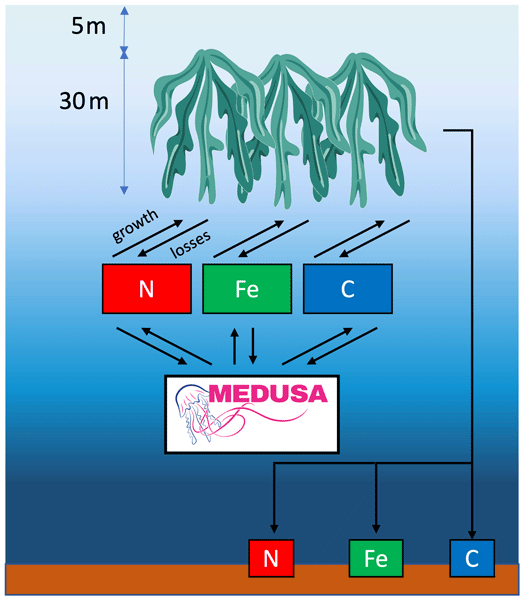
We used an ocean biogeochemistry model to investigate carbon removal potential of large-scale seaweed cultivation with multiple operational strategies and how it impacts the natural ocean biogeochemistry. Our results show that cultivation can increase atmospheric CO2 uptake, but at the expense of decreasing nutrients, phytoplankton production, and deoxygenation. These trade-offs need to be assessed before considering large-scale seaweed cultivation for carbon dioxide removal.
David A. Stappard, Jamie D. Wilson, Andrew Yool, and Toby Tyrrell
Geosci. Model Dev., 18, 6805–6834, https://doi.org/10.5194/gmd-18-6805-2025, https://doi.org/10.5194/gmd-18-6805-2025, 2025
Short summary
Short summary
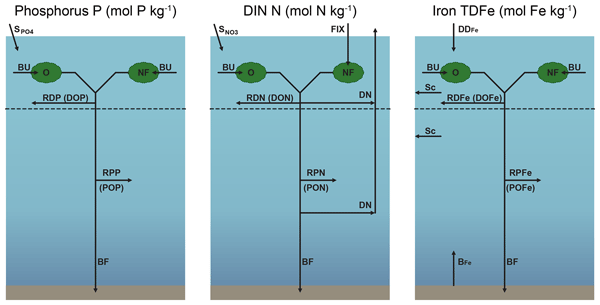
This research explores nutrient limitations in oceanic primary production. While traditional experiments identify the immediate limiting nutrient at specific locations, this study aims to identify the ultimate limiting nutrient (ULN), which governs long-term productivity. A mathematical model incorporating nitrogen, phosphorus, and iron nutrient cycles is used. The model's results are compared with ocean observational data to assess its effectiveness in investigating the ULN.
Alex Searle-Barnes, Anieke Brombacher, Orestis Katsamenis, Kathryn Rankin, Mark Mavrogordato, and Thomas Ezard
J. Micropalaeontol., 44, 107–117, https://doi.org/10.5194/jm-44-107-2025, https://doi.org/10.5194/jm-44-107-2025, 2025
Short summary
Short summary
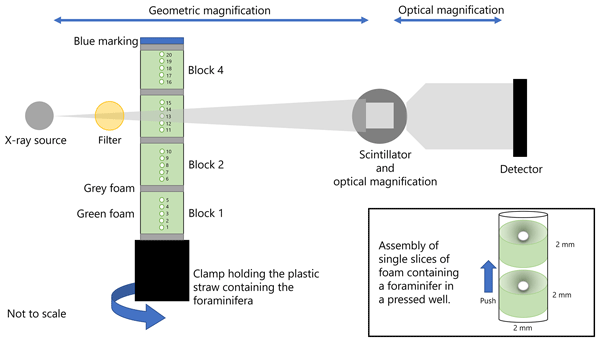
We present an operating procedure that is advantageous for the high-throughput analysis of specimens, yielding consistency between scan data, and a method of sample preparation that does not include glue, gel, or solvents, all of which cause artefacts within the radiographs. We demonstrate how to balance beam power, exposure time, and detector settings with obtainable resolution to ensure the analytical protocols deliver optimal data and scan speed.
Lee de Mora, Ranjini Swaminathan, Richard P. Allan, Jerry C. Blackford, Douglas I. Kelley, Phil Harris, Chris D. Jones, Colin G. Jones, Spencer Liddicoat, Robert J. Parker, Tristan Quaife, Jeremy Walton, and Andrew Yool
Earth Syst. Dynam., 14, 1295–1315, https://doi.org/10.5194/esd-14-1295-2023, https://doi.org/10.5194/esd-14-1295-2023, 2023
Short summary
Short summary
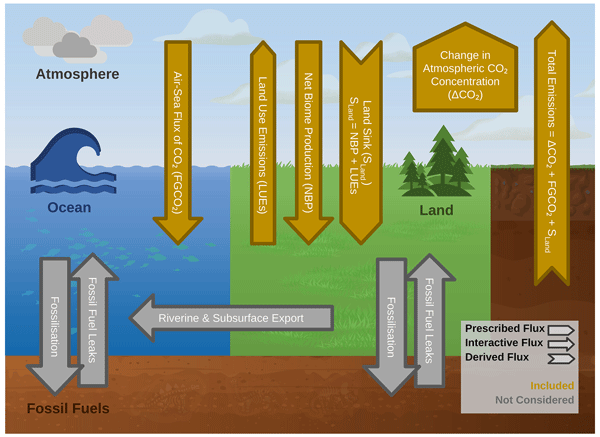
We investigate the flux of carbon from the atmosphere into the land surface and ocean for multiple models and over a range of future scenarios. We did this by comparing simulations after the same change in the global-mean near-surface temperature. Using this method, we show that the choice of scenario can impact the carbon allocation to the land, ocean, and atmosphere. Scenarios with higher emissions reach the same warming levels sooner, but also with relatively more carbon in the atmosphere.
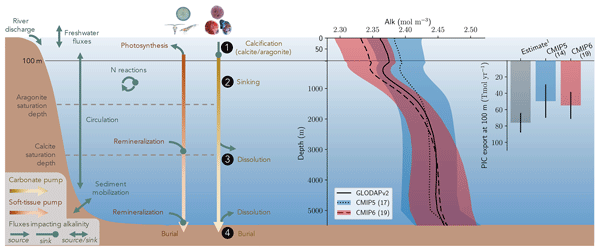
Alban Planchat, Lester Kwiatkowski, Laurent Bopp, Olivier Torres, James R. Christian, Momme Butenschön, Tomas Lovato, Roland Séférian, Matthew A. Chamberlain, Olivier Aumont, Michio Watanabe, Akitomo Yamamoto, Andrew Yool, Tatiana Ilyina, Hiroyuki Tsujino, Kristen M. Krumhardt, Jörg Schwinger, Jerry Tjiputra, John P. Dunne, and Charles Stock
Biogeosciences, 20, 1195–1257, https://doi.org/10.5194/bg-20-1195-2023, https://doi.org/10.5194/bg-20-1195-2023, 2023
Short summary
Short summary
Ocean alkalinity is critical to the uptake of atmospheric carbon and acidification in surface waters. We review the representation of alkalinity and the associated calcium carbonate cycle in Earth system models. While many parameterizations remain present in the latest generation of models, there is a general improvement in the simulated alkalinity distribution. This improvement is related to an increase in the export of biotic calcium carbonate, which closer resembles observations.
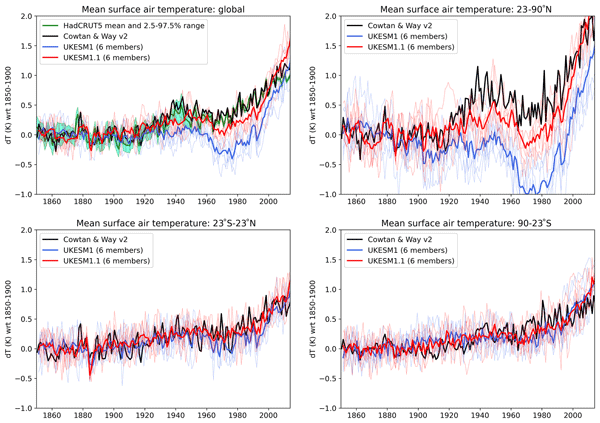
Jane P. Mulcahy, Colin G. Jones, Steven T. Rumbold, Till Kuhlbrodt, Andrea J. Dittus, Edward W. Blockley, Andrew Yool, Jeremy Walton, Catherine Hardacre, Timothy Andrews, Alejandro Bodas-Salcedo, Marc Stringer, Lee de Mora, Phil Harris, Richard Hill, Doug Kelley, Eddy Robertson, and Yongming Tang
Geosci. Model Dev., 16, 1569–1600, https://doi.org/10.5194/gmd-16-1569-2023, https://doi.org/10.5194/gmd-16-1569-2023, 2023
Short summary
Short summary
Recent global climate models simulate historical global mean surface temperatures which are too cold, possibly to due to excessive aerosol cooling. This raises questions about the models' ability to simulate important climate processes and reduces confidence in future climate predictions. We present a new version of the UK Earth System Model, which has an improved aerosols simulation and a historical temperature record. Interestingly, the long-term response to CO2 remains largely unchanged.
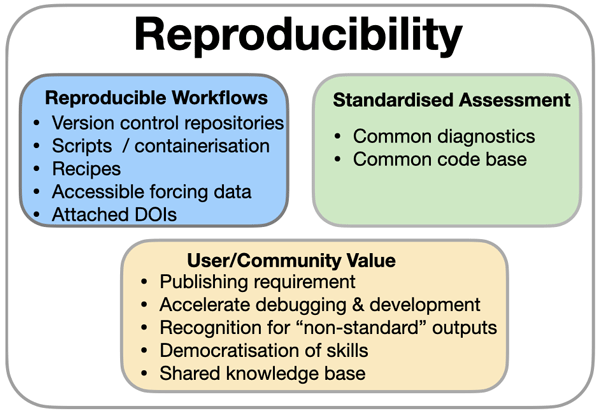
Jeff Polton, James Harle, Jason Holt, Anna Katavouta, Dale Partridge, Jenny Jardine, Sarah Wakelin, Julia Rulent, Anthony Wise, Katherine Hutchinson, David Byrne, Diego Bruciaferri, Enda O'Dea, Michela De Dominicis, Pierre Mathiot, Andrew Coward, Andrew Yool, Julien Palmiéri, Gennadi Lessin, Claudia Gabriela Mayorga-Adame, Valérie Le Guennec, Alex Arnold, and Clément Rousset
Geosci. Model Dev., 16, 1481–1510, https://doi.org/10.5194/gmd-16-1481-2023, https://doi.org/10.5194/gmd-16-1481-2023, 2023
Short summary
Short summary
The aim is to increase the capacity of the modelling community to respond to societally important questions that require ocean modelling. The concept of reproducibility for regional ocean modelling is developed: advocating methods for reproducible workflows and standardised methods of assessment. Then, targeting the NEMO framework, we give practical advice and worked examples, highlighting key considerations that will the expedite development cycle and upskill the user community.

Stephanie Woodward, Alistair A. Sellar, Yongming Tang, Marc Stringer, Andrew Yool, Eddy Robertson, and Andy Wiltshire
Atmos. Chem. Phys., 22, 14503–14528, https://doi.org/10.5194/acp-22-14503-2022, https://doi.org/10.5194/acp-22-14503-2022, 2022
Short summary
Short summary
We describe the dust scheme in the UKESM1 Earth system model and show generally good agreement with observations. Comparing with the closely related HadGEM3-GC3.1 model, we show that dust differences are not only due to inter-model differences but also to the dust size distribution. Under climate change, HadGEM3-GC3.1 dust hardly changes, but UKESM1 dust decreases because that model includes the vegetation response which, in our models, has a bigger impact on dust than climate change itself.
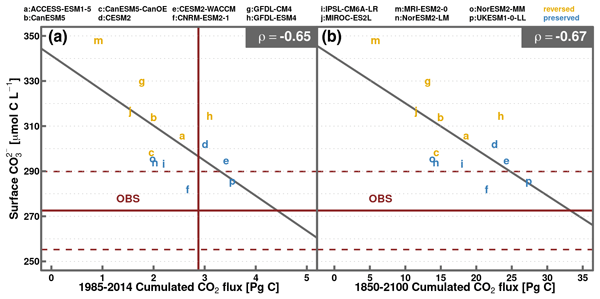
Pradeebane Vaittinada Ayar, Laurent Bopp, Jim R. Christian, Tatiana Ilyina, John P. Krasting, Roland Séférian, Hiroyuki Tsujino, Michio Watanabe, Andrew Yool, and Jerry Tjiputra
Earth Syst. Dynam., 13, 1097–1118, https://doi.org/10.5194/esd-13-1097-2022, https://doi.org/10.5194/esd-13-1097-2022, 2022
Short summary
Short summary
The El Niño–Southern Oscillation is the main driver for the natural variability of global atmospheric CO2. It modulates the CO2 fluxes in the tropical Pacific with anomalous CO2 influx during El Niño and outflux during La Niña. This relationship is projected to reverse by half of Earth system models studied here under the business-as-usual scenario. This study shows models that simulate a positive bias in surface carbonate concentrations simulate a shift in the ENSO–CO2 flux relationship.

Reint Fischer, Delphine Lobelle, Merel Kooi, Albert Koelmans, Victor Onink, Charlotte Laufkötter, Linda Amaral-Zettler, Andrew Yool, and Erik van Sebille
Biogeosciences, 19, 2211–2234, https://doi.org/10.5194/bg-19-2211-2022, https://doi.org/10.5194/bg-19-2211-2022, 2022
Short summary
Short summary
Since current estimates show that only about 1 % of the all plastic that enters the ocean is floating at the surface, we look at subsurface processes that can cause vertical movement of (micro)plastic. We investigate how modelled algal attachment and the ocean's vertical movement can cause particles to sink and oscillate in the open ocean. Particles can sink to depths of > 5000 m in regions with high wind intensity and mainly remain close to the surface with low winds and biological activity.
Cited articles
Atwood, T. B., Witt, A., Mayorga, J., Hammill, E., and Sala, E.: Global patterns in marine sediment carbon stocks, Front. Mar. Sci. ,7, 165, https://doi.org/10.3389/fmars.2020.00165, 2020.
Benoist, N.: Advances in the state-of-the-art in the quantitative ecology of the marine megabenthos, PhD thesis, University of Southampton, 289 pp., https://eprints.soton.ac.uk/444730/1/Benoist_Noelie_PhD_thesis_Oct_2020.pdf (last access: 8 June 2026), 2020.
Benoist, N. M. A., Bett, B. J., Morris, K. J., and Ruhl, H. A.: A generalised volumetric method to estimate the biomass of photographically surveyed benthic megafauna, Progress in Oceanography, 178, 102188, https://doi.org/10.1016/j.pocean.2019.102188, 2019.
Best, M. A., Wither, A. W., and Coates, S.: Dissolved oxygen as a physico-chemical supporting element in the Water Framework Directive, Mar. Pollut. Bull., 55, 1–6, https://doi.org/10.1016/j.marpolbul.2006.08.037, 2007.
Bett, B. J.: UK Atlantic Margin Environmental Survey: Introduction and overview of bathyal benthic ecology, Cont. Shelf Res., 21, 917–956, https://doi.org/10.1016/S0278-4343(00)00119-9, 2001.
Blanchard, J. L., Jennings, S., Law, R., Castle, M. D., McCloghrie, P., Rochet, M.-J., and Benoît, E.: How does abundance scale with body size in coupled size-structured food webs?, J. Anim. Ecol., 78, 270–280, 2009.
Blanchard, J. L., Law, R., Castle, M. D., and Jennings, S.: Coupled energy pathways and the resilience of size-structured food webs, Theor. Ecol., 4, 289–300, https://doi.org/10.1007/s12080-010-0078-9, 2011.
Brey, T.: An empirical model for estimating aquatic invertebrate respiration, Meth. Ecol. Evol., 1, 92–101, https://doi.org/10.1111/j.2041-210X.2009.00008.x, 2010.
Brown, J. H., Gillooly, J. F., Allen, A. P., Savage, V. M., and West, G. B.: Toward a metabolic theory of ecology, Ecology, 85, 1771–1789, https://doi.org/10.1890/03-9000, 2004.
Burd, A. B.: Modeling the vertical flux of organic carbon in the global ocean, Annu. Rev. Mar. Sci., 16, 135–161, https://doi.org/10.1146/annurev-marine-022123-102516, 2024.
Busecke, J. J. M., Resplandy, L., Ditkovsky, S. J., and John, J. G.: Diverging fates of the Pacific Ocean Oxygen Minimum Zone and its core in a warming world, AGU Adv., 3, e2021AV000470, https://doi.org/10.1029/2021AV000470, 2022.
Butenschön, M., Clark, J., Aldridge, J. N., Allen, J. I., Artioli, Y., Blackford, J., Bruggeman, J., Cazenave, P., Ciavatta, S., Kay, S., Lessin, G., van Leeuwen, S., van der Molen, J., de Mora, L., Polimene, L., Sailley, S., Stephens, N., and Torres, R.: ERSEM 15.06: a generic model for marine biogeochemistry and the ecosystem dynamics of the lower trophic levels, Geosci. Model Dev., 9, 1293–1339, https://doi.org/10.5194/gmd-9-1293-2016, 2016.
Childress, J. J. and Seibel, B. A.: Life at stable low oxygen levels: adaptations of animals to oceanic oxygen minimum layers, J. Exp. Biol., 201, 1223–1232, 1998.
Cooley, S., Schoeman, D., Bopp, L., Boyd, P., Donner, S., Ghebrehiwet, D. Y., Ito, S.-I., Kiessling, W., Martinetto, P., Ojea, E., Racault, M.-F., Rost, B., and Skern-Mauritzen, M.: Ocean and Coastal Ecosystems and their Services, in: Climate Change 2022: Impacts, Adaptation, and Vulnerability, Contribution of Working Group II to the Sixth Assessment Report of the Intergovernmental Panel on Climate Change, edited by: Pörtner, H.-O., Roberts, D. C., Tignor, M., Poloczanska, E. S., Mintenbeck, K., Alegría, A., Craig, M., Langsdorf, S., Löschke, S., Möller, V., Okem, A., amd Rama, B., Cambridge University Press, Cambridge, UK and New York, NY, USA, 379–550, https://doi.org/10.1017/9781009325844.005, 2022.
Cusson, M. and Bourget, E.: Global patterns of macroinvertebrate production in marine benthic habitats [Review], Mar. Ecol. Prog.-Ser., 297, 1–14, https://doi.org/10.3354/meps297001, 2005.
Damuth, J.: A macroevolutionary explanation for energy equivalence in the scaling of body size and population density, Am. Nat., 169, 621–631, https://doi.org/10.1086/513495, 2007.
DeAngelis, D. L., Goldstein, R. A., and O'Neill, R. V.: A Model for trophic interaction, Ecology, 56, 881–892, https://doi.org/10.2307/1936298, 1975.
de Jonge, D. S. W., Stratmann, T., Lins, L., Vanreusel, A., Purser, A., Marcon, Y., Rodrigues, C. F., Ravara, A., Esquete, P., Cunha, M. R., Simon-Lledó, E., van Breugel, P., Sweetman, A. K., Soetaert, K., and van Oevelen, D.: Abyssal food-web model indicates faunal carbon flow recovery and impaired microbial loop 26 years after a sediment disturbance experiment, Prog. Oceanogr., 189, 102446, https://doi.org/10.1016/j.pocean.2020.102446, 2020.
Demopoulos, A. W. J., Smith, C. R., and Tyler, P. A.: The deep Indian Ocean floor, in: Ecosystems of the world 28. Ecosystems of the deep oceans, edited by: Tyler, P. A., Elsevier, 219–237, 2003.
Dixon, J. L. and Turley, C. M.: Measuring bacterial production in deep-sea sediments using 3 H-Thymidine incorporation: ecological significance, Microb. Ecol., 42, 549–561, 2001
Dunne, J. P., Sarmiento, J. L. and Gnanadesikan, A.: A synthesis of global particle export from the surface ocean and cycling through the ocean interior and on the seafloor, Global Biogeochem. Cy., 21, https://doi.org/10.1029/2006GB002907, 2007.
Durden, J. M., Bett, B. J., and Ruhl, H. A.: The hemisessile lifestyle and feeding strategies of Iosactis vagabunda (Actiniaria, Iosactiidae), a dominant megafaunal species of the Porcupine Abyssal Plain, Deep-Sea Res. Pt. I, 102, 72–77, https://doi.org/10.1016/j.dsr.2015.04.010, 2015.
Durden, J. M., Ruhl, H. A., Pebody, C., Blackbird, S. J., and van Oevelen, D.: Differences in the carbon flows in the benthic food webs of abyssal hill and plain habitats, Limnol. Oceanogr., 62, 1771–1782, https://doi.org/10.1002/lno.10532, 2017.
Durden, J. M., Bett, B. J., Huffard, C., Ruhl, H. A., and Smith Jr., K. L.: Abyssal deposit-feeding rates consistent with the Metabolic Theory of Ecology, Ecology, 100, e02564, https://doi.org/10.1002/ecy.2564, 2019.
Durden, J. M., Bett, B. J., Huffard, C. L., Pebody, C., Ruhl, H. A., and Smith, K. L..: Response of deep-sea deposit-feeders to detrital inputs: A comparison of two abyssal time-series sites, Deep-Sea Res. Pt. II, 173, 104677, https://doi.org/10.1016/j.dsr2.2019.104677, 2020a.
Durden, J. M., Bett, B. J., and Ruhl, H. A.: Subtle variation in abyssal terrain induces significant change in benthic megafaunal abundance, diversity, and community structure, Prog. Oceanogr., 186, 102395, https://doi.org/10.1016/j.pocean.2020.102395, 2020b.
Edwards, A. M., Robinson, J. P. W., Plank, M. J., Baum, J. K., and Blanchard, J. L.: Testing and recommending methods for fitting size spectra to data, Meth. Ecol. Evol., 8, 57–67, https://doi.org/10.1111/2041-210X.12641, 2017.
Edwards, A. M., Robinson, J. P. W., Blanchard, J. L., Baum, J. K., and Plank M. J.: Accounting for the bin structure of data removes bias when fitting size spectra, Mar. Ecol. Prog.-Ser., 636, 19–33, https://doi.org/10.3354/meps13230, 2020.
Ehrnsten, E., Norkko, A., Timmermann, K. and Gustafsson, B. G.: Benthic-pelagic coupling in coastal seas – Modelling macrofaunal biomass and carbon processing in response to organic matter supply, J. Mar. Syst., 196, 36–47, 2018.
Ernest, S. K. M., Enquist, B. J., Brown, J. H., Charnov, E. L., Gillooly, J. F., Savage, V. M., White, E. P., Smith, F. A., Hadly, E. A., Haskell, J. P., Lyons, S. K., Maurer, B. A., Niklas, K. J., and Tiffney, B.: Thermodynamic and metabolic effects on the scaling of production and population energy use, Ecol. Lett., 6, 990–995, https://doi.org/10.1046/j.1461-0248.2003.00526.x, 2003
Garry, F. K., McDonagh, E. L., Blaker, A. T., Roberts, C. D., Desbruyères, D. G., Frajka-Williams, E., and King, B. A.,: Model-derived uncertainties in deep ocean temperature trends between 1990 and 2010, J. Geophys. Res.-Oceans, 124, 1155–1169, https://doi.org/10.1029/2018JC014225, 2019.
Gillooly, J. F., Brown, J. H., West, G. B., Savage, V. M., and Charno, E. L.: Effects of Size and Temperature on Metabolic Rate, Science, 293, 2248–2251, https://doi.org/10.1126/science.1061967, 2001
Giovannelli, D., Molari, M., d'Errico, G., Baldrighi, E., Pala, C., and Manini, E.: Large-Scale Distribution and Activity of Prokaryotes in Deep-Sea Surface Sediments of the Mediterranean Sea and the Adjacent Atlantic Ocean, PLoS ONE, 8, https://doi.org/10.1371/journal.pone.0072996, 2013
Glazier, D. S.: Variable metabolic scaling breaks the law: from `Newtonian' to `Darwinian' approaches, P. Roy. Soc. B., 28920221605, https://doi.org/10.1098/rspb.2022.1605, 2022.
Harris, P. T., Macmillan-Lawler, M., Rupp, J., and Baker, E. K.: Geomorphology of the oceans, Mar. Geol., 352, 4–24, https://doi.org/10.1016/j.margeo.2014.01.011, 2014.
Hartman, S. E., Bett, B. J., Durden, J. M., Henson, S. A., Iversen, M., Jeffreys, R. M., Horton, T., Lampitt, R., and Gates, A. R.: Enduring science: Three decades of observing the Northeast Atlantic from the Porcupine Abyssal Plain Sustained Observatory (PAP-SO), Prog. Oceanogr., 191, 102508, https://doi.org/10.1016/j.pocean.2020.102508, 2021.
Hatton, I. A., Heneghan, R. F., Bar-On, Y. M., amd Galbraith, E. D.: The global ocean size spectrum from bacteria to whales, Sci. Adv., 7, https://doi.org/10.1126/sciadv.abh3732, 2021.
Henson, S. A., Laufkötter, C., Leung, S., Giering, S. L. C., Palevsky, H. I., and Cavan, E. L.: Uncertain response of ocean biological carbon export in a changing world, Nat. Geosci. 15, 248–254, https://doi.org/10.1038/s41561-022-00927-0, 2022.
Iken, K., Brey, T., Wand, U., Voigt, J., and Junghans, P.: Food web structure of the benthic community at the Porcupine Abyssal Plain (NE Atlantic): a stable isotope analysis, Prog. Oceanog., 50, 383–405, https://doi.org/10.1016/S0079-6611(01)00062-3, 2001.
Isaac, N. J. B. and Carbone, C.: Why are metabolic scaling exponents so controversial? Quantifying variance and testing hypotheses, Ecol. Lett., 13, 728–735, https://doi.org/10.1111/j.1461-0248.2010.01461.x, 2010.
Jones, D. O. B., Yool, A., Wei, C.-L., Henson, S. A., Ruhl, H. A., Watson, R. A., and Gehlen, M.: Global reductions in seafloor biomass in response to climate change, Global Change Biol., 20, 1861–1872, https://doi.org/10.1111/gcb.12480, 2014.
Jørgensen, B. B. and Marshall, I. P. G.: Slow Microbial Life in the Seabed, Annu. Rev. Mar. Sci., 8, 311–332, https://doi.org/10.1146/annurev-marine-010814-015535, 2016.
Kaariainen, J. I. and Bett, B. J.: Evidence for benthic body size miniaturization in the deep sea, J. Mar. Biol. Assoc. UK, 86, 1339–1345, https://doi.org/10.1017/S0025315406014366, 2006.
Karp M. A., Link, J. S., Grezlik, M., Cadrin, S., Fay, G., Lynch, P., Townsend, H., Methot, R. D., Adams, G. D., Blackhart, K., Barceló, C., Buchheister, A., Cieri, M., Chagaris, D., Christensen, V., Craig, J. K., Cummings, J., Damiano, M. D., Dickey-Collas , M., Elvarsson, B. Þ., Gaichas, S., Haltuch, M. A., Haugen, J. B., Howell, D., Kaplan, I. C., Klajbor, W., Large, S. I., Masi, M., McNamee, J., Muffley, B., Murray, S., Plagányi, E., Reid, D., Rindorf, A., Sagarese, S. R., Schueller, A. M., Thorpe, R., Thorson, J. T., Tomczak, M. T., Trijoulet, V., and Voss, R.: Increasing the uptake of multispecies models in fisheries management, ICES J. Mar. Sci., 80, 243–257, https://doi.org/10.1093/icesjms/fsad001, 2023.
Kelly-Gerreyn, B. A., Martin, A. P., Bett, B. J., Anderson, T. R., Kaariainen, J. I., Main, C. E., Marcinko, C. J. and Yool, A.: Benthic biomass size spectra in shelf and deep-sea sediments, Biogeosciences, 11, 6401–6416, https://doi.org/10.5194/bg-11-6401-2014, 2014.
Kwiatkowski, L., Torres, O., Bopp, L., Aumont, O., Chamberlain, M., Christian, J. R., Dunne, J. P., Gehlen, M., Ilyina, T., John, J. G., Lenton, A., Li, H., Lovenduski, N. S., Orr, J. C., Palmieri, J., Santana-Falcón, Y., Schwinger, J., Séférian, R., Stock, C. A., Tagliabue, A., Takano, Y., Tjiputra, J., Toyama, K., Tsujino, H., Watanabe, M., Yamamoto, A., Yool, A., and Ziehn, T.: Twenty-first century ocean warming, acidification, deoxygenation, and upper-ocean nutrient and primary production decline from CMIP6 model projections, Biogeosciences, 17, 3439–3470, https://doi.org/10.5194/bg-17-3439-2020, 2020.
Laguionie Marchais, C., Bett, B. J., Paterson, G. L. J., Smith, K. L., and Ruhl, H. A.: Using metabolic theory to assess structure and function in the deep-sea benthos, including microbial and metazoan dominance, Deep-Sea Res. Pt. II, 173, 104762, https://doi.org/10.1016/j.dsr2.2020.104762, 2020.
Lampitt, R. S. and Pebody, C. A.: Sediment Trap data from the Porcupine Abyssal Plain Sustained Observatory (PAP-SO) site on PAP3 mooring at 3000 metres April 1989–June 2019 Version 2, NERC EDS British Oceanographic Data Centre NOC, https://doi.org/10.5285/06bd25d5-fcd3-0f63-e063-6c86abc0481e, 2023.
Lampitt, R. S., Newton, P. P., Jickells, T. D., Thomson, J., and King, P.: Near-bottom particle flux in the abyssal northeast Atlantic, Deep-Sea Res. Pt. II, 47, 9–11, https://doi.org/10.1016/S0967-0645(00)00016-3, 2000.
Lampitt, R. S., Bett, B. J., Kiriakoulakis, K., Popova, E. E., Ragueneau, O., Vangriesheim, A., and Wolff, G. A.: Material supply to the abyssal seafloor in the Northeast Atlantic, Prog. Oceanogr., 50, https://doi.org/10.1016/S0079-6611(01)00047-7, 2001.
Levin, L. A.: Oxygen minimum zone Benthos: Adaptation and community response to hypoxia, Oceanogr. Mar. Biol., 41, 1–45, 2003.
Luef, B., Frischkorn, K. R., Wrighton, K. C., Holman, H.-Y. N., Birarda, G., Thomas, B. C., Singh, A., Williams, K. H., Siegerist, C. E., Tringe, S. G., Downing, K. H., Comolli, L. R., and Banfield, J. F.: Diverse uncultivated ultra-small bacterial cells in groundwater, Nat. Commun., 6, 6372, https://doi.org/10.1038/ncomms7372, 2015.
Lutz, M. J., Caldeira, K., Dunbar, R. B., and Behrenfeld, M. J.: Seasonal rhythms of net primary production and particulate organic carbon flux to depth describe the efficiency of biological pump in the global ocean, J. Geophys. Res., 112, C10011, https://doi.org/10.1029/2006JC003706, 2007
Mahaut, M. L., Sibuet, M., and Shirayama, Y.: Weight-dependent respiration rates in deep-sea organisms, Deep-Sea Res. Pt. I, 42, 1575–1582, 1995.
Martin, A. P., Benoist, N., Bett, B. J., Brombacher, A., Durden, J., Oliver, S., and Yool, A.: Matlab code associated with the BORIS-2 benthic ecosystem model, Zenodo [code], https://doi.org/10.5281/zenodo.19235638, 2026.
Martin, J. H., Knauer, G. A., Karl, D. M., and Broenkow, W. W.: VERTEX: carbon cycling in the northeast Pacific, Deep-Sea Res. Pt. A, 34, 267–285, https://doi.org/10.1016/0198-0149(87)90086-0, 1987.
McCarthy, J. K., Dwyer, J. M., and Mokany, K.: A regional-scale assessment of using metabolic scaling theory to predict ecosystem properties, P. Roy. Soc. B, 28620192221, https://doi.org/10.1098/rspb.2019.2221, 2019.
McClain, C. R., Allen, A. P., Tittensor, D. P., and Rex, M. A.: Energetics of life on the deep seafloor, P. Natl. Acad. Sci. USA, 109, 15366–15371, https://doi.org/10.1073/pnas.1208976109, 2012.
McCoy, M. W. and Gillooly, J. F.: Predicting natural mortality rates of plants and animals, Ecol. Lett., 11, 710–716, https://doi.org/10.1111/j.1461-0248.2008.01190.x, 2008.
McCoy, M. W. and Gillooly, J. F.: Predicting natural mortality rates of plants and animals, Corrigendum, Ecol. Lett., 12, 731–733, https://doi.org/10.1111/j.1461-0248.2009.01338.x, 2009
Molony, C. L. and Field, J. G.: General allometric equations for rates of nutrient uptake, ingestion, and respiration in plankton organisms, Limnol. Oceanogr., 34, 1290–1299, 1989.
Moore, C. G. and Bett, B. J.: The use of meiofauna in marine pollution impact assessment, Zool. J. Linnean Soc., 96, 263–280, https://doi.org/10.1111/j.1096-3642.1989.tb02260.x, 1989.
Morris, K. J., Bett, B. J., Durden, J. M., Benoist, N. M. A., Huvenne, V. A. I., Jones, D. O. B., Robert, K., Ichino, M. C., Wolff, G. A., and Ruhl, H. A.: Landscape-scale spatial heterogeneity in phytodetrital cover and megafauna biomass in the abyss links to modest topographic variation, Sci. Rep., 6, 34080, https://doi.org/10.1038/srep34080, 2016.
Nagy, K. A.: Field Metabolic Rate and Food Requirement Scaling in Mammals and Birds, Ecol. Monogr., 57, 112–128, https://doi.org/10.2307/1942620, 1987.
Niven, J. E. and Scharlemann, J. P. W.: Do insect metabolic rates at rest and during flight scale with body mass?, Biol. Lett., 1346–1349, https://doi.org/10.1098/rsbl.2005.0311, 2005.
Nowicki, M., DeVries, T., and Siegel, D. A.: Quantifying the Carbon Export and Sequestration Pathways of the Ocean's Biological Carbon Pump, Global Biogeochem. Cy., 36, e2021GB007083, https://doi.org/10.1029/2021GB007083, 2022.
Parameswaran, N., González, E., Burwicz-Galerne, E., Braack, M., and Wallmann, K.: NN-TOC v1: global prediction of total organic carbon in marine sediments using deep neural networks, Geosci. Model Dev., 18, 2521–2544, https://doi.org/10.5194/gmd-18-2521-2025, 2025.
Pearson, T. H. and Rosenberg, R.: Macrobenthic Succession in Relation to Organic Enrichment and Pollution of the Marine Environment, Oceanogr. Mar. Biol., 16, 229–311, 1978.
O'Dor, R. K., Fennel, K., and Berghe, E. V.:, A one ocean model of biodiversity, Deep-Sea Res. Pt. II, 56, 1816–1823, https://doi.org/10.1016/j.dsr2.2009.05.023, 2009.
Quiroga, E., Quiñones, R., Palma, M., Sellanes, J., Gallardo, V.A., Gerdes, D., and Rowe, G.: Biomass size-spectra of macrobenthic communities in the oxygen minimum zone off Chile, Estuar. Coast. Shelf Sci., 62, 217–231, 2005
Ramirez-Llodra, E., Brandt, A., Danovaro, R., De Mol, B., Escobar, E., German, C. R., Levin, L. A., Arbizu, P. M., Menot, L., Buhl-Mortensen, P., Narayanaswamy, B. E., Smith, C. R., Tittensor, D. P., Tyler, P. A., Vanreusel, A., and Vecchione, M.: Deep, diverse and definitely different: unique attributes of the world's largest ecosystem, Biogeosciences, 7, 2851–2899, https://doi.org/10.5194/bg-7-2851-2010, 2010.
Reagan, J. R., Boyer, T. P., García, H. E., Locarnini, R. A., Baranova, O. K., Bouchard, C., Cross, S. L., Mishonov, A. V., Paver, C. R., Seidov, D., Wang, Z., and Dukhovskoy, D.: World Ocean Atlas 2023, NOAA National Centers for Environmental Information, Dataset, NCEI Accession 0270533, NCEI, https://www.ncei.noaa.gov/access/world-ocean-atlas-2023/ (last access: 8 June 2026), 2024.
Reiss, H., Birchenough, S., Borja, A., Buhl-Mortensen, L., Craeymeersch, J., Dannheim, J., Darr, A., Galparsoro, I., Gogina. M., Neumann. H., Populus, J., Rengstorf, A. M., Valle, M., van Hoey, G., Zettler, M. L., and Degraer, S.: Benthos distribution modelling and its relevance for marine ecosystem management, Ices J. Mar. Sci., 72, 297–315, 2014.
Ruhl, H. A., Ellena, J. A., and Smith Jr., K. J.: Connections between climate, food limitation, and carbon cycling in abyssal sediment communities, P. Natl. Acad. Sci. USA, 105, 17006–17011, 2008.
Ruhl, H. A., Bett, B. J., Ingels, J., Martin, A., Gates, A. R., Yool, A., Benoist, N. M. A., Appeltans, W., Howell, K. L., and Danovaro, R.: Integrating ocean observations across body-size classes to deliver benthic invertebrate abundance and distribution information, Limnol. Oceanogr. Lett., 8, 692–706, https://doi.org/10.1002/lol2.10332, 2023.
Savage, V. M., Gillooly, J. F., Brown, J., H., West, G. B., and Charnov, E. L.: Effects of Body Size and Temperature on Population Growth, Am. Nat., 163, 429–441, https://doi.org/10.1086/381872, 2004.
Seibel, B. A. and Drazen, J. C.: The rate of metabolism in marine animals: environmental constraints, ecological demands and energetic opportunities, Philos. T. Roy. Soc. B, 362, 2061–2078, https://doi.org/10.1098/rstb.2007.2101, 2007.
Simon-Lledó, E., Bett, B. J., Huvenne, V. A. I., Schoening, T., Benoist, N. M. A., Jeffreys, R. M., Durden, J. M., and Jones, D. O. B.: Megafaunal variation in the abyssal landscape of the Clarion Clipperton Zone, Prog. Oceanogr., 170, 119–133, https://doi.org/10.1016/j.pocean.2018.11.003, 2019.
Smith, C. R., De Leo, F. C., Bernardino, A. F., Sweetman, A. K., and Arbizu, P. M.: Abyssal food limitation, ecosystem structure and climate change, Trends Ecol. Evol., 23, 518–528, https://doi.org/10.1016/j.tree.2008.05.002, 2008.
Smith, K. L., Ruhl, H. A., Kahru, M., Huffard, C. L., and Sherman, A. D.: Deep ocean communities impacted by changing climate over 24 y in the abyssal northeast Pacific Ocean, P. Natl. Acad. Sci. USA, 110, https://doi.org/10.1073/pnas.1315447110, 2013.
Soetaert, K. and van Oevelen, D.: Modeling food web interactions in benthic deep-sea ecosystems: A practical guide, Oceanography, 22, 128–143, https://doi.org/10.5670/oceanog.2009.13, 2009.
Stratmann, T., Soetaert, K., Wei, C.-L., Lin, Y.-S., and van Oevelen, D.: The SCOC database, a large, open, and global database with sediment community oxygen consumption rates, Sci. Data, 6, 242, https://doi.org/10.1038/s41597-019-0259-3, 2019.
Sweetman, A. K., Smith, C. R., Shulse, C. N., Maillot, B., Lindh, M., Church, M. J., Meyer, K. S., van Oevelen, D., Stratmann, T., and Gooday, A. J.: Key role of bacteria in the short-term cycling of carbon at the abyssal seafloor in a low particulate organic carbon flux region of the eastern Pacific Ocean, Limnol. Oceanogr., 64, https://doi.org/10.1002/lno.11069, 2019.
Turrell, W. R., Slesser, G., Adams, R. D., Payne, R., and Gillibrand, P. A.: Decadal variability in the composition of Faroe Shetland Channel bottom water, Deep-Sea Res. Pt. I, 46, 1–25, https://doi.org/10.1016/S0967-0637(98)00067-3, 1999.
van Oevelen, D., Soetaert, K., Garcia, R., de Stigter, H. C., Cunha, M. R., Pusceddu, A., and Danovaro, R.: Canyon conditions impact carbon flows in food webs of three sections of the Nazaré canyon, Deep-Sea Res. Pt. II, 58, 2461–2476, https://doi.org/10.1016/j.dsr2.2011.04.009, 2011a.
van Oevelen, D., Bergmann, M., Soetaert, K., Bauerfeind, E., Hasemann, C., Klages, M., Schewe, I., Soltwedel, T., and Budaeva, N. E.: Carbon flows in the benthic food web at the deep-sea observatory HAUSGARTEN (Fram Strait), Deep-Sea Res. Pt. I, 58, 1069–1083, https://doi.org/10.1016/j.dsr.2011.08.002, 2011b.
Vaquer-Sunyer, R. and Duarte, C. M.: Thresholds of hypoxia for marine biodiversity, P. Natl. Acad. Sci. USA, 105, 15452–15457, https://doi.org/10.1073/pnas.0803833105, 2008.
Wei, C.-L., Rowe, G. T., Escobar-Briones, E., Boetius, A., Soltwedel, T., Caley, M. J., Soliman, Y., Huettmann, F., Qu, F., Yu, Z., Pitcher, C. R., Haedrich, R. L., Wicksten, M. K., Rex, M. A., Baguley, J. G., Sharma, J., Danovaro, R., MacDonald, I. R., Nunnally, C. C., Deming, J. W., Montagna, P., Lévesque, M., Weslawski, J. M., Wlodarska-Kowalczuk, M., Ingole, B. S., Bett, B. J., Billett, D. S. M., Yool, A., Bluhm, B. A., Iken, K., and Narayanaswamy, B. E.: Global patterns and predictions of seafloor biomass using random forests, PLoS ONE, 5, e15323, https://doi.org/10.1371/journal.pone.0015323, 2010.
West, G. B., Brown, J. H., and Enquist, B. J.: A General Model for the Origin of Allometric Scaling Laws in Biology, Science, 276, 122–126, 1997.
White, E. P., Ernest, S. K. M., Kerkhoff, A. J., and Enquist, B. J.: Relationships between body size and abundance in ecology, Trends Ecol. Evol., 22, 323–330, https://doi.org/10.1016/j.tree.2007.03.007, 2007.
Witte, U., Wenzhöfer, F., Sommer, S., Boetius, A., Heinz, P., Aberle, N., Sand, M., Cremer, A., Abraham, W. R., Jørgensen, B. B., and Pfannkuche, O.: In situ experimental evidence of the fate of a phytodetritus pulse at the abyssal sea floor, Nature, 424, https://doi.org/10.1038/nature01799, 2003.
Woodson, C., Schramski, J. R., and Joye, S. B.: A unifying theory for top-heavy ecosystem structure in the ocean, Nat. Commun., 9, 23, https://doi.org/10.1038/s41467-017-02450-y, 2018.
Yool, A, Martin, A. P., Anderson, T. R., Bett, B. J., Jones, D. O. B., and Ruhl, H. A.: Big in the benthos: Future change of seafloor community biomass in a global, body size-resolved model, Global Change Biol., 23, 3554–3566, https://doi.org/10.1111/gcb.13680, 2017.
Short summary
Although under huge pressure and with permanent darkness, the seafloor has a diversity of organisms. They are almost entirely dependent on food sinking from the ocean surface onto the seafloor. This model allows us to study how these organisms survive in this hostile environment. Making use of evidence that biological characteristics, like lifetime, vary with size of organism and temperature, this model can simulate the fate of seafloor creatures from bacteria to large sea cucumbers.
Although under huge pressure and with permanent darkness, the seafloor has a diversity of...


