
Articles | Volume 19, issue 11
https://doi.org/10.5194/gmd-19-4775-2026
© Author(s) 2026. This work is distributed under
the Creative Commons Attribution 4.0 License.
the Creative Commons Attribution 4.0 License.
https://doi.org/10.5194/gmd-19-4775-2026
© Author(s) 2026. This work is distributed under
the Creative Commons Attribution 4.0 License.
the Creative Commons Attribution 4.0 License.
Model description paper
| 
03 Jun 2026
Model description paper |
| 03 Jun 2026
| 03 Jun 2026
A unified Hapke-HSR + MARMIT-2 soil radiative transfer model for reflectance simulation under varying moisture conditions
Anxin Ding
Key Laboratory of Humid Subtropical Eco-Geographical Process (Ministry of Education), Fujian Normal University, Fuzhou 350000, China
School of Geographical Sciences, School of Carbon Neutrality Future Technology, Fujian Normal University, Fuzhou 350000, China
Jockey Club STEM Laboratory of Quantitative Remote Sensing, Department of Geography, University of Hong Kong, Hong Kong 999077, China

Jockey Club STEM Laboratory of Quantitative Remote Sensing, Department of Geography, University of Hong Kong, Hong Kong 999077, China
Ziti Jiao
State Key Laboratory of Remote Sensing and Digital Earth, Faculty of Geographical Science, Beijing Normal University, Beijing 100875, China
Faculty of Geographical Science, Institute of Remote Sensing Science and Engineering, Beijing Normal University, Beijing 100875, China
Alexander A. Kokhanovsky
Philipps-Universität Marburg Department of Geography Laboratory for Climatology and Remote Sensing F|14, Deutschhausstr. 12, 35032 Marburg, Germany
Hanyu Shi
School of Geospatial Artificial Intelligence, East China Normal University, Shanghai 200241, China
Rui Xie
International Institute for Earth System Sciences, and School of Geography and Ocean Science, Nanjing University, Nanjing 210023, China
Related authors
Rong Shang, Shengwei Xu, Ziyi Yang, Xudong Lin, Lingyun Fan, Keyan Fang, Mingzhu Xu, Anxin Ding, Yulin Yan, Yunjian Liang, Chenningya Song, Wenjie Chen, Jiaorong Qian, Annan Zhang, Jing Heng, Siyu Chen, Xiao Zhang, Liangyun Liu, Wang Li, Licong Dai, Zhongmin Hu, and Jing M. Chen
Earth Syst. Sci. Data Discuss., https://doi.org/10.5194/essd-2026-705, https://doi.org/10.5194/essd-2026-705, 2026
Preprint under review for ESSD
Short summary
Short summary
This study created a Reference sample dataset of Stable, Disturbed and Forestated forests (RSDF) in China from1986 to 2025 with 12,991 samples. All samples were visually annotated using satellite imagery and forest records with strict quality checks. Nearly 80 % remained stable, and forest disturbance was most frequent in eastern and southern China. Over 95 % of samples received high confidence. This public dataset supports tracking forest change and assessing its effects on carbon storage.
Chengcheng Huang, Wei He, Brendan Byrne, Ngoc Tu Nguyen, Jingfeng Xiao, Hua Yang, Philippe Ciais, Songhan Wang, Xing Li, Han Ma, Peipei Xu, Mengyao Zhao, Hui Chen, and Weimin Ju
Earth Syst. Sci. Data, 18, 7367–7390, https://doi.org/10.5194/essd-18-7367-2026, https://doi.org/10.5194/essd-18-7367-2026, 2026
Short summary
Short summary
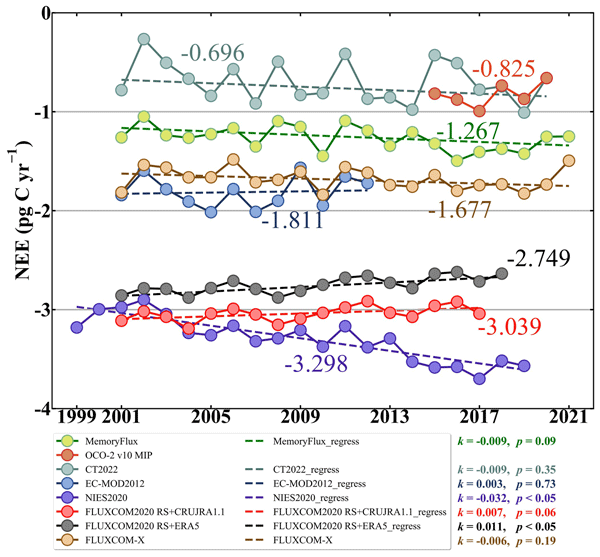
We created MemoryFlux, a new dataset that showed how ecosystems across North America absorbed and released carbon from 2001 to 2021. Using a deep-learning approach trained on historical climate and environmental conditions, we improved estimates of land carbon exchange and captured carbon anomalies associated with major droughts and floods. MemoryFlux provides a more reliable view of carbon cycling and improves our understanding of how ecosystems respond to a changing climate.
Rong Shang, Shengwei Xu, Ziyi Yang, Xudong Lin, Lingyun Fan, Keyan Fang, Mingzhu Xu, Anxin Ding, Yulin Yan, Yunjian Liang, Chenningya Song, Wenjie Chen, Jiaorong Qian, Annan Zhang, Jing Heng, Siyu Chen, Xiao Zhang, Liangyun Liu, Wang Li, Licong Dai, Zhongmin Hu, and Jing M. Chen
Earth Syst. Sci. Data Discuss., https://doi.org/10.5194/essd-2026-705, https://doi.org/10.5194/essd-2026-705, 2026
Preprint under review for ESSD
Short summary
Short summary
This study created a Reference sample dataset of Stable, Disturbed and Forestated forests (RSDF) in China from1986 to 2025 with 12,991 samples. All samples were visually annotated using satellite imagery and forest records with strict quality checks. Nearly 80 % remained stable, and forest disturbance was most frequent in eastern and southern China. Over 95 % of samples received high confidence. This public dataset supports tracking forest change and assessing its effects on carbon storage.
Yanan Wen, Tuo Chen, Xuecao Li, Tiecheng Bai, Ke Yao, Liheng Zhong, Han Chen, Meiling Liu, Xieqin Huang, Shunlin Liang, Shuangxi Miao, and Jianxi Huang
Earth Syst. Sci. Data Discuss., https://doi.org/10.5194/essd-2026-347, https://doi.org/10.5194/essd-2026-347, 2026
Revised manuscript accepted for ESSD
Short summary
Short summary
We developed a new method to track winter wheat growth across the world from 2001 to 2020. Using satellite data, we produced high-resolution maps (1 km) that show exactly where and how much winter wheat was planted over the last two decades. The results proved to be highly accurate when compared against international agricultural records. As the first long-term, global view of its kind, this map series is a vital tool for scientists and policymakers working to eliminate hunger.
Hui Liang, Shunlin Liang, Bo Jiang, Tao He, Feng Tian, Han Ma, Jianglei Xu, Wenyuan Li, Yichuan Ma, Fengjiao Zhang, and Husheng Fang
Earth Syst. Sci. Data, 17, 5571–5600, https://doi.org/10.5194/essd-17-5571-2025, https://doi.org/10.5194/essd-17-5571-2025, 2025
Short summary
Short summary
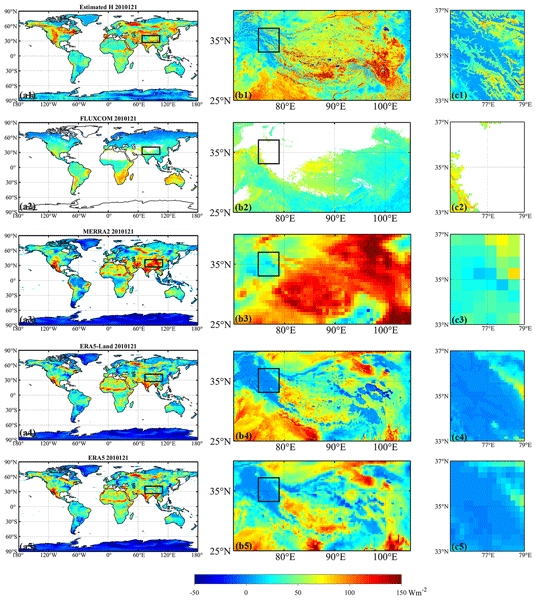
This paper describes 1 km daily mean land surface sensible heat flux (H) and land surface–air temperature difference (Ts-a) datasets on the global scale during 2000–2020. The datasets were developed using a data-driven approach and rigorously validated against in-situ observations and existing H and Ts-a datasets, demonstrating both high accuracy and exceptional spatial resolution.
Yufang Zhang, Shunlin Liang, Han Ma, Tao He, Feng Tian, Guodong Zhang, and Jianglei Xu
Earth Syst. Sci. Data, 17, 5181–5207, https://doi.org/10.5194/essd-17-5181-2025, https://doi.org/10.5194/essd-17-5181-2025, 2025
Short summary
Short summary
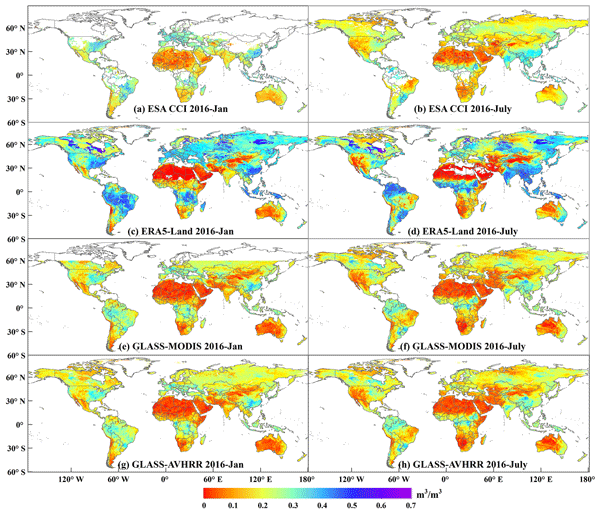
Soil moisture (SM) plays a vital role in climate, agriculture, and hydrology, yet reliable long-term, seamless global datasets remain scarce. To fill this gap, we developed a four-decade seamless global daily 5 km SM product using multi-source datasets and deep learning models. This product has long-term coverage, spatial and temporal integrity, and high accuracy, making it a valuable resource for applications like SM trend analysis, drought monitoring, and assessment of vegetation responses.
Bing Li, Shunlin Liang, Han Ma, Guanpeng Dong, Xiaobang Liu, Tao He, and Yufang Zhang
Earth Syst. Sci. Data, 16, 3795–3819, https://doi.org/10.5194/essd-16-3795-2024, https://doi.org/10.5194/essd-16-3795-2024, 2024
Short summary
Short summary
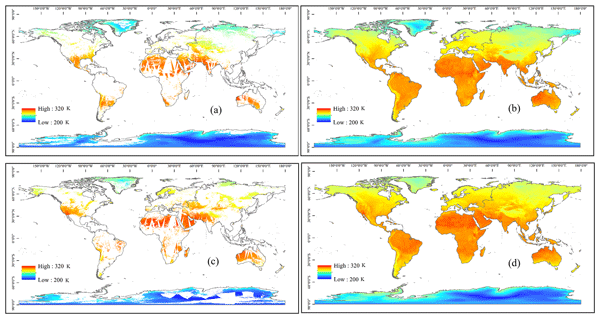
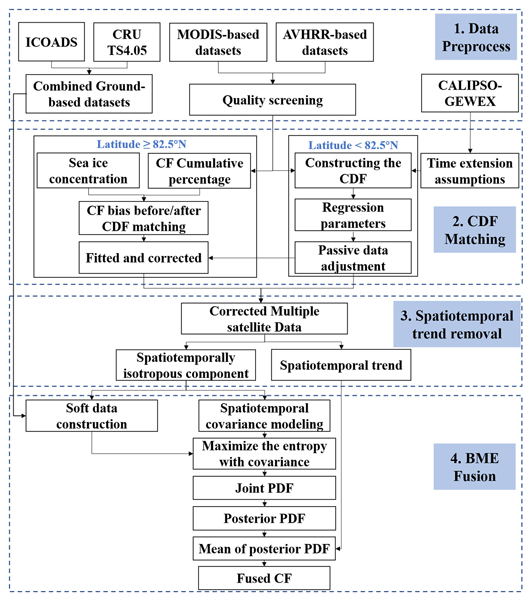
This study describes 1 km all-weather instantaneous and daily mean land surface temperature (LST) datasets on the global scale during 2000–2020. It is the first attempt to synergistically estimate all-weather instantaneous and daily mean LST data on a long global-scale time series. The generated datasets were evaluated by the observations from in situ stations and other LST datasets, and the evaluation indicated that the dataset is sufficiently reliable.
Xinyan Liu, Tao He, Shunlin Liang, Ruibo Li, Xiongxin Xiao, Rui Ma, and Yichuan Ma
Earth Syst. Sci. Data, 15, 3641–3671, https://doi.org/10.5194/essd-15-3641-2023, https://doi.org/10.5194/essd-15-3641-2023, 2023
Short summary
Short summary
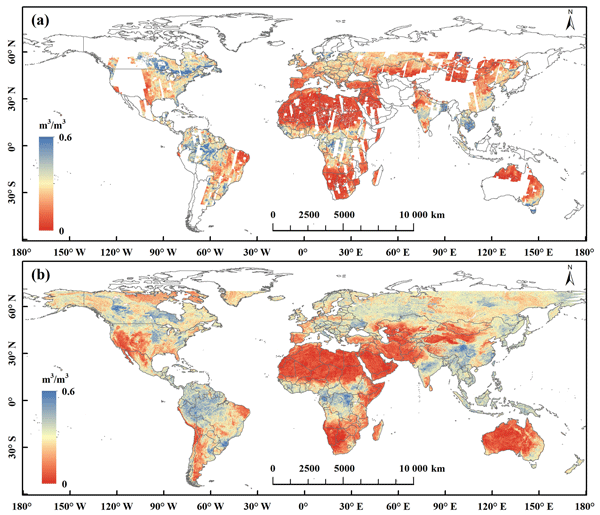
We proposed a data fusion strategy that combines the complementary features of multiple-satellite cloud fraction (CF) datasets and generated a continuous monthly 1° daytime cloud fraction product covering the entire Arctic during the sunlit months in 2000–2020. This study has positive significance for reducing the uncertainties for the assessment of surface radiation fluxes and improving the accuracy of research related to climate change and energy budgets, both regionally and globally.
Yufang Zhang, Shunlin Liang, Han Ma, Tao He, Qian Wang, Bing Li, Jianglei Xu, Guodong Zhang, Xiaobang Liu, and Changhao Xiong
Earth Syst. Sci. Data, 15, 2055–2079, https://doi.org/10.5194/essd-15-2055-2023, https://doi.org/10.5194/essd-15-2055-2023, 2023
Short summary
Short summary
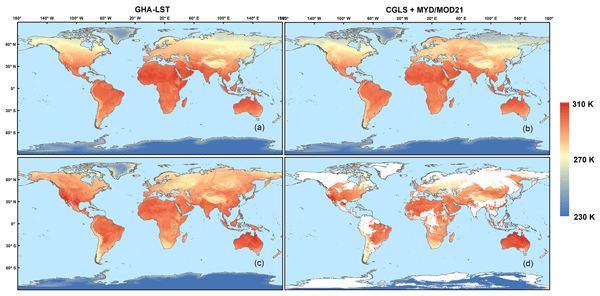
Soil moisture observations are important for a range of earth system applications. This study generated a long-term (2000–2020) global seamless soil moisture product with both high spatial and temporal resolutions (1 km, daily) using an XGBoost model and multisource datasets. Evaluation of this product against dense in situ soil moisture datasets and microwave soil moisture products showed that this product has reliable accuracy and more complete spatial coverage.
Aolin Jia, Shunlin Liang, Dongdong Wang, Lei Ma, Zhihao Wang, and Shuo Xu
Earth Syst. Sci. Data, 15, 869–895, https://doi.org/10.5194/essd-15-869-2023, https://doi.org/10.5194/essd-15-869-2023, 2023
Short summary
Short summary
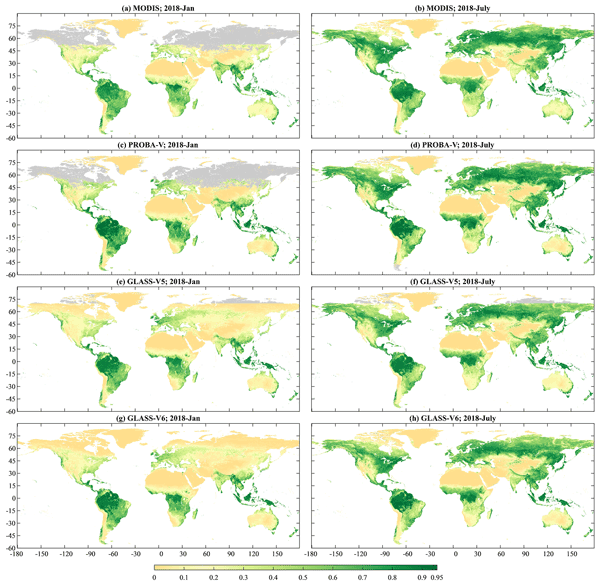
Satellites are now producing multiple global land surface temperature (LST) products; however, they suffer from data gaps caused by cloud cover, seriously restricting the applications, and few products provide gap-free global hourly LST. We produced global hourly, 5 km, all-sky LST data from 2011 to 2021 using geostationary and polar-orbiting satellite data. Based on the assessment, it has high accuracy and can be used to estimate evapotranspiration, drought, etc.
Han Ma, Shunlin Liang, Changhao Xiong, Qian Wang, Aolin Jia, and Bing Li
Earth Syst. Sci. Data, 14, 5333–5347, https://doi.org/10.5194/essd-14-5333-2022, https://doi.org/10.5194/essd-14-5333-2022, 2022
Short summary
Short summary
The fraction of absorbed photosynthetically active radiation (FAPAR) is one of the essential climate variables. This study generated a global land surface FAPAR product with a 250 m resolution based on a deep learning model that takes advantage of the existing FAPAR products and MODIS time series of observation information. Direct validation and intercomparison revealed that our product better meets user requirements and has a greater spatiotemporal continuity than other existing products.
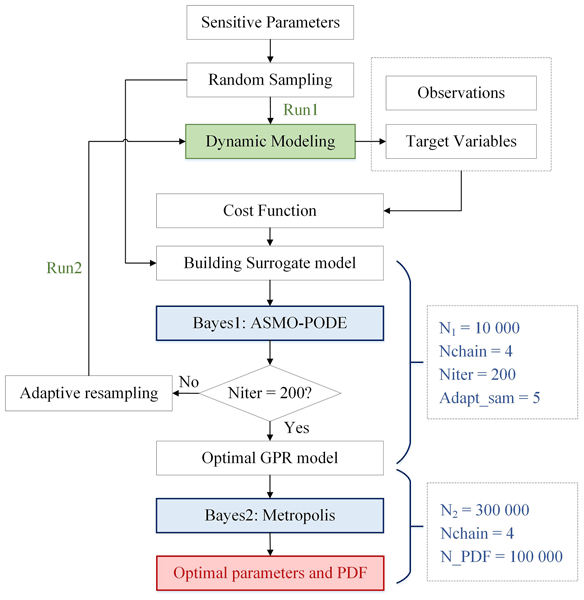
Rui Ma, Jingfeng Xiao, Shunlin Liang, Han Ma, Tao He, Da Guo, Xiaobang Liu, and Haibo Lu
Geosci. Model Dev., 15, 6637–6657, https://doi.org/10.5194/gmd-15-6637-2022, https://doi.org/10.5194/gmd-15-6637-2022, 2022
Short summary
Short summary
Parameter optimization can improve the accuracy of modeled carbon fluxes. Few studies conducted pixel-level parameterization because it requires a high computational cost. Our paper used high-quality spatial products to optimize parameters at the pixel level, and also used the machine learning method to improve the speed of optimization. The results showed that there was significant spatial variability of parameters and we also improved the spatial pattern of carbon fluxes.
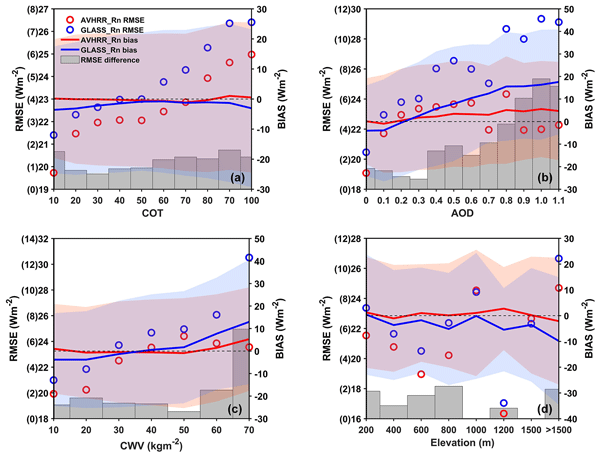
Jianglei Xu, Shunlin Liang, and Bo Jiang
Earth Syst. Sci. Data, 14, 2315–2341, https://doi.org/10.5194/essd-14-2315-2022, https://doi.org/10.5194/essd-14-2315-2022, 2022
Short summary
Short summary
Land surface all-wave net radiation (Rn) is a key parameter in many land processes. Current products have drawbacks of coarse resolutions, large uncertainty, and short time spans. A deep learning method was used to obtain global surface Rn. A long-term Rn product was generated from 1981 to 2019 using AVHRR data. The product has the highest accuracy and a reasonable spatiotemporal variation compared to three other products. Our product will play an important role in long-term climate change.
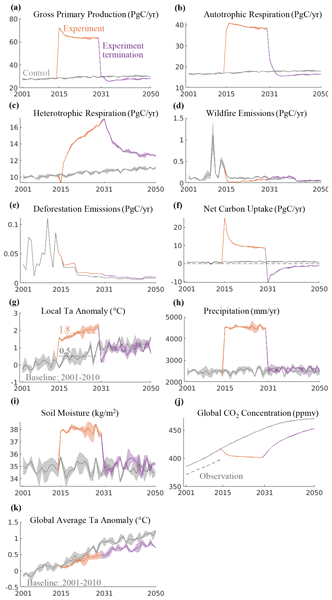
Xueyuan Gao, Shunlin Liang, Dongdong Wang, Yan Li, Bin He, and Aolin Jia
Earth Syst. Dynam., 13, 219–230, https://doi.org/10.5194/esd-13-219-2022, https://doi.org/10.5194/esd-13-219-2022, 2022
Short summary
Short summary
Numerical experiments with a coupled Earth system model show that large-scale nighttime artificial lighting in tropical forests will significantly increase carbon sink, local temperature, and precipitation, and it requires less energy than direct air carbon capture for capturing 1 t of carbon, suggesting that it could be a powerful climate mitigation option. Side effects include CO2 outgassing after the termination of the nighttime lighting and impacts on local wildlife.
Xiaona Chen, Shunlin Liang, Lian He, Yaping Yang, and Cong Yin
Earth Syst. Sci. Data Discuss., https://doi.org/10.5194/essd-2021-279, https://doi.org/10.5194/essd-2021-279, 2021
Preprint withdrawn
Short summary
Short summary
The present study developed a 39 year consistent 8-day 0.05 degree gap-free SCE dataset over the NH for the period 1981–2019 as part of the Global LAnd Surface Satellite dataset (GLASS) product suite based on the NOAA AVHRR-SR CDR and several contributory datasets. Compared with published SCE datasets, GLASS SCE has several advantages in snow cover studies, including long time series, finer spatial resolution (especially for years before 2000), and complete spatial coverage.
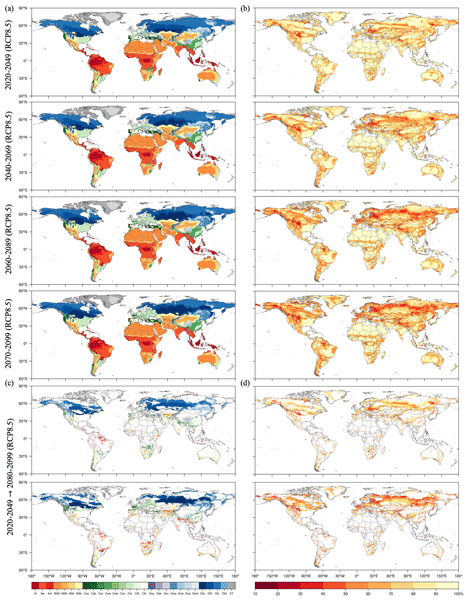
Diyang Cui, Shunlin Liang, Dongdong Wang, and Zheng Liu
Earth Syst. Sci. Data, 13, 5087–5114, https://doi.org/10.5194/essd-13-5087-2021, https://doi.org/10.5194/essd-13-5087-2021, 2021
Short summary
Short summary
Large portions of the Earth's surface are expected to experience changes in climatic conditions. The rearrangement of climate distributions can lead to serious impacts on ecological and social systems. Major climate zones are distributed in a predictable pattern and are largely defined following the Köppen climate classification. This creates an urgent need to compile a series of Köppen climate classification maps with finer spatial and temporal resolutions and improved accuracy.
Cited articles
Ångström, A.: The albedo of various surfaces of ground, Geogr. Ann. A, 7, 323–342, 1925.
Bablet, A., Vu, P. V. H., Jacquemoud, S., Viallefont-Robinet, F., Fabre, S., Briottet, X., Sadeghi, M., Whiting, M. L., Baret, F., and Tian, J.: MARMIT: a multilayer radiative transfer model of soil reflectance to estimate surface SMC in the solar domain 400–2500 nm, Remote Sens. Environ., 217, 1–17, https://doi.org/10.1016/j.rse.2018.07.031, 2018.
Bach, H. and Mauser, W.: Modeling and model verification of the spectral reflectance of soils under varying moisture conditions, IGARSS, 4, 2354–2356, https://doi.org/10.1109/IGARSS.1994.399735, 1994.
Cheng, J., Wen, J., Xiao, Q., Wu, S., Hao, D., and Liu, Q.: Extending the GOSAILT model to simulate sparse woodland bidirectional reflectance with soil reflectance anisotropy consideration, Remote Sens., 14, 1001, https://doi.org/10.3390/rs14041001, 2022.
Ding, A.: Hapke-HSR + MARMIT-2 soil reflectance model (v1.0), Zenodo [code], https://doi.org/10.5281/zenodo.18366791, 2026.
Ding, A., Yao, Y., Song, H., Geng, J., Zhao, P., Peng, P., and Jiao, Z.: The coupling GSV and MARMIT-2 models to characterize reflectance properties of dry and wet soils, IEEE Geosci. Remote S., 22, 1–5, https://ieeexplore.ieee.org/document/10938195 (last access: 12 March 2026), 2025.
Ding, A., Ma, H., Liang, S., and He, T.: Extension of the Hapke model to the spectral domain to characterize soil physical properties, Remote Sens. Environ., 269, 112843, https://doi.org/10.1016/j.rse.2021.112843, 2022.
Ding, A., Jiao, Z., Zhang, X., Dong, Y., Kokhanovsky, A. A., Guo, J., and Jiang, H.: A practical approach to improve the MODIS MCD43A products in snow-covered areas, J. Remote Sens., 3, 0057, https://doi.org/10.34133/remotesensing.0057, 2023.
Dupiau, A., Jacquemoud, S., Briottet, X., Fabre, S., Viallefont-Robinet, F., Philpot, W., Di Biagio, C., Hébert, M., and Formenti, P.: MARMIT-2: an improved version of the MARMIT model to predict soil reflectance as a function of surface water content in the solar domain, Remote Sens. Environ., 272, 112951, https://doi.org/10.1016/j.rse.2022.112951, 2022.
Fan, D., Zhao, T., Jiang, X., García-García, A., Schmidt, T., Samaniego, L., Attinger, S., Wu, H., Jiang, Y., Shi, J., Fan, L., Tang, B. H., Wagner, W., Dorigo, W., Gruber, A., Mattia, F., Balenzano, A., Brocca, L., Jagdhuber, T., Wigneron, J. P., Montzka, C., and Peng, J.: A Sentinel-1 SAR-based global 1 km resolution soil moisture data product: algorithm and preliminary assessment, Remote Sens. Environ., 318, 114579, https://doi.org/10.1016/j.rse.2024.114579, 2025.
Gao, S., Yan, K., Liu, J., Pu, J., Zou, D., Qi, J., and Yan, G.: Assessment of remote-sensed vegetation indices for estimating forest chlorophyll concentration, Ecol. Indic., 162, 112001, https://doi.org/10.1016/j.ecolind.2024.112001, 2024.
Gholami, B. N. and Mobasheri, M. R.: Influence of soil texture on the estimation of bare soil moisture content using MODIS images, Eur. J. Remote Sens., 51, 911–920, 2018.
Hapke, B.: Bidirectional reflectance spectroscopy 7: the single particle phase function hockey stick relation, Icarus, 221, 1079–1083, https://doi.org/10.1016/j.icarus.2012.10.022, 2012.
Jacquemoud, S.: Modeling spectral and bidirectional soil reflectance, Remote Sens. Environ., 41, 123–132, https://doi.org/10.1016/0034-4257(92)90072-R, 1992.
Jiang, C. and Fang, H.: GSV: a general model for hyperspectral soil reflectance simulation, Int. J. Appl. Earth Obs., 83, 101932, https://doi.org/10.1016/j.jag.2019.101932, 2019.
Jiang, H., Wei, X., Chen, Z., Zhu, M., Yao, Y., Zhang, X., and Jia, K.: Influence of different soil reflectance schemes on the retrieval of vegetation LAI and FVC from PROSAIL in agricultural regions, Comput. Electron. Agric., 12, 108165, https://doi.org/10.1016/j.compag.2023.108165, 2023.
Kimmel, B. W. and Baranoski, G. V. G.: A novel approach for simulating light interaction with particulate materials: application to the modeling of sand spectral properties, Opt. Express, 15, 9755–9777, 2007.
Labarre, S., Jacquemoud, S., Ferrari, C., Delorme, A., Derrien, A., Grandin, R., Jalludin, M., Lemaître, F., Métois, M., Pierrot-Deseilligny, M., Rupnik, E., and Tanguy, B.: Retrieving soil surface roughness with the Hapke photometric model: confrontation with the ground truth, Remote Sens. Environ., 225, 1–15, 2019.
Lekner, J. and Dorf, M. C.: Why some things are darker when wet, Appl. Optics, 27, 1278–1280, 1988.
Lei, T. and Bailey, B. N.: A text-based, generative deep learning model for soil reflectance spectrum simulation in the solar range (400–2499 nm), Remote Sens. Environ., 318, 114527, https://doi.org/10.1016/j.rse.2024.114527, 2025.
Li, L., Mu, X., Qi, J., Pisek, J., Roosjen, P., Yan, G., Huang, H., Liu, S., and Baret, F.: Characterizing reflectance anisotropy of background soil in open-canopy plantations using UAV-based multiangular images, ISPRS J. Photogramm. Remote Sens., 177, 263–278, 2021.
Liang, S. and Townshend, J. R. G.: A parametric soil BRDF model: a four-stream approximation for multiple scattering, Int. J. Remote Sens., 17, 1303–1315, 1996a.
Liang, S. and Townshend, J. R. G.: A modified Hapke model for soil bidirectional reflectance, Remote Sens. Environ., 55, 1–10, 1996b.
Ma, H., Liang, S., Xiao, Z., and Shi, H.: Simultaneous inversion of multiple land surface parameters from MODIS optical-thermal observations, ISPRS J. Photogramm. Remote Sens., 128, 240–254, https://doi.org/10.1016/j.isprsjprs.2017.04.007, 2017a.
Ma, H., Liu, Q., Liang, S., and Xiao, Z.: Simultaneous estimation of leaf area index, fraction of absorbed photosynthetically active radiation, and surface albedo from multiple-satellite data, IEEE T. Geosci. Remote Sens., 55, 4334–4354, 2017b.
Ni, W. and Li, X.: A coupled vegetation–soil bidirectional reflectance model for a semiarid landscape, Remote Sens. Environ., 74, 113–124, 2000.
Nolin, A. W. and Liang, S.: Progress in bidirectional reflectance modeling and applications for surface particulate media: snow and soils, Remote Sens. Rev., 18, 307–342, 2000.
Rizzo, R., Wadoux, A. M. J.-C., Demattê, J. A. M., Minasny, B., Barrón, V., Ben-Dor, E., Francos, N., Savin, I., Poppiel, R., Silvero, N. E. Q., Terra, F. S., Rosin, N. A., Rosas, J. T. F., Greschuk, L. T., Ballester, M. R. V., Gómez, A. M. R., Belllinaso, H., Safanelli, J. L., Chabrillat, S., Fiorio, P. R., Das, B. S., Malone, B. P., Zalidis, G., Tziolas, N., Tsakiridis, N., Karyotis, K., Samarinas, N., Kalopesa, E., Gholizadeh, A., Shepherd, K. D., Milewski, R., Vaudour, E., Wang, C., and Salama, E. S. M.: Remote sensing of the Earth's soil color in space and time, Remote Sens. Environ., 299, 113845, https://doi.org/10.1016/j.rse.2023.113845, 2023.
Sadeghi, M., Babaeian, E., Tuller, M., and Jones, S. B.: The optical trapezoid model: a novel approach to remote sensing of soil moisture applied to Sentinel-2 and Landsat-8 observations, Remote Sens. Environ., 198, 52–68, https://doi.org/10.1016/j.rse.2017.05.041, 2017.
Sheng, Y., Sun, Z., Lu, S., and Omasa, K.: Ratio of physical model parameters can retrieve aggregate size from different types of soil in cultivated regions, Soil Tillage Res., 244, 106262, https://doi.org/10.1016/j.still.2024.106262, 2024.
Shoshany, M., Roitberg, E., Goldshleger, N., and Kizel, F.: Universal quadratic soil spectral reflectance line and its deviation patterns' relationships with chemical and textural properties: a global database analysis, Remote Sens. Environ., 155, 198–230, https://doi.org/10.1016/j.rse.2022.113182, 2022.
Sun, Z., Lu, S., and Omasa, K.: MART-soil: A modified analytical radiative transfer model for simulating multi-angular reflection of soils with different particle size, Geoderma, 431, 116366, https://doi.org/10.1016/j.geoderma.2023.116366, 2023.
Verhoef, W. and Bach, H.: Coupled soil–leaf–canopy and atmosphere radiative transfer modeling to simulate hyperspectral multi-angular surface reflectance and TOA radiance data, Remote Sens. Environ., 109, 166–182, https://doi.org/10.1016/j.rse.2006.12.013, 2007.
Verhoef, W., Van der Tol, C., and Middleton, E. M.: Hyperspectral radiative transfer modeling to explore the combined retrieval of biophysical parameters and canopy fluorescence from FLEX–Sentinel-3 tandem mission multi-sensor data, Remote Sens. Environ., 204, 942–963, https://doi.org/10.1016/j.rse.2017.08.006, 2018.
Xu, H., Sun, H., Xu, Z., Wang, Y., Zhang, T., Wu, D., and Gao, J.: kNDMI: a kernel normalized difference moisture index for remote sensing of soil and vegetation moisture, Remote Sens. Environ., 319, 114621, https://doi.org/10.1016/j.rse.2025.114621, 2025.
Yang, G.-J., Zhao, C.-J., Huang, W.-J., and Wang, J.-H.: Extension of the Hapke bidirectional reflectance model to retrieve soil water content, Hydrol. Earth Syst. Sci., 15, 2317–2326, https://doi.org/10.5194/hess-15-2317-2011, 2011.
Yang, P.: Exploring the interrelated effects of soil background, canopy structure, and sun–observer geometry on canopy photochemical reflectance index, Remote Sens. Environ., 279, 113133, https://doi.org/10.1016/j.rse.2022.113133, 2022.
Yang, P., van der Tol, C., Liu, J., and Liu, Z.: Separation of the direct reflection of soil from canopy spectral reflectance, Remote Sens. Environ., 316, 114500, https://doi.org/10.1016/j.rse.2024.114500, 2025.
Zeng, Y., Hao, D., Badgley, G., Damm, A., Rascher, U., Ryu, Y., Johnson, J., Krieger, V., Wu, S., Qiu, H., Liu, Y., Berry, J. A., and Chen, M.: Estimating near-infrared reflectance of vegetation from hyperspectral data, Remote Sens. Environ., 267, 112723, https://doi.org/10.1016/j.rse.2021.112723, 2021.
Zhao, X., Qi, J., Xu, H., Yu, Z., Yuan, L., Chen, Y., and Huang, H.: Evaluating the potential of airborne hyperspectral LiDAR for assessing forest insects and diseases with 3D radiative transfer modeling, Remote Sens. Environ., 297, 113759, https://doi.org/10.1016/j.rse.2023.113759, 2023.
Short summary
Wet soil are difficult to model because water changes how sunlight interacts with soil surfaces and alters reflectance in different viewing directions. We developed a unified physical model to simulate soil reflectance under varying moisture conditions. The results show that soil moisture not only darkens soil but also changes their directional reflectance, especially in the near-infrared region. This work can improve soil moisture retrieval and future remote sensing applications.
Wet soil are difficult to model because water changes how sunlight interacts with soil surfaces...


