
Articles | Volume 19, issue 10
https://doi.org/10.5194/gmd-19-4661-2026
© Author(s) 2026. This work is distributed under
the Creative Commons Attribution 4.0 License.
the Creative Commons Attribution 4.0 License.
https://doi.org/10.5194/gmd-19-4661-2026
© Author(s) 2026. This work is distributed under
the Creative Commons Attribution 4.0 License.
the Creative Commons Attribution 4.0 License.
Model description paper
| 
01 Jun 2026
Model description paper |
| 01 Jun 2026
| 01 Jun 2026
ForEdgeClim v1.0: a 3D process-based microclimate model incorporating vertical and lateral radiative and thermal fluxes to simulate forest edge-to-core transitions
Emma Van de Walle
CORRESPONDING AUTHOR

Q-ForestLab, Laboratory of Quantitative Forest Ecosystem Science, Department of Environment, Faculty of Bioscience Engineering, Ghent University, Ghent, Belgium
Kermit, Department of Data Analysis and Mathematical Modelling, Faculty of Bioscience Engineering, Ghent University, Ghent, Belgium
Félicien Meunier
Q-ForestLab, Laboratory of Quantitative Forest Ecosystem Science, Department of Environment, Faculty of Bioscience Engineering, Ghent University, Ghent, Belgium
Department of Water and Climate, Vrije Universiteit Brussel, Brussels, Belgium
Steven J. De Hertog
Q-ForestLab, Laboratory of Quantitative Forest Ecosystem Science, Department of Environment, Faculty of Bioscience Engineering, Ghent University, Ghent, Belgium
Louise Terryn
Q-ForestLab, Laboratory of Quantitative Forest Ecosystem Science, Department of Environment, Faculty of Bioscience Engineering, Ghent University, Ghent, Belgium
Pieter Sanczuk
Forest & Nature Lab, Department of Environment, Faculty of Bioscience Engineering, Ghent University, Gontrode, Belgium
Kim Calders
Q-ForestLab, Laboratory of Quantitative Forest Ecosystem Science, Department of Environment, Faculty of Bioscience Engineering, Ghent University, Ghent, Belgium
Francis wyffels
IDLab, Internet technology and Data science Lab, Ghent University-imec, Ghent, Belgium
Pieter De Frenne
Forest & Nature Lab, Department of Environment, Faculty of Bioscience Engineering, Ghent University, Gontrode, Belgium
Michiel Stock
Kermit, Department of Data Analysis and Mathematical Modelling, Faculty of Bioscience Engineering, Ghent University, Ghent, Belgium
Hans Verbeeck
Q-ForestLab, Laboratory of Quantitative Forest Ecosystem Science, Department of Environment, Faculty of Bioscience Engineering, Ghent University, Ghent, Belgium
Related authors
No articles found.
Derrick Muheki, Koen Hufkens, Kim Jacobsen, Hans Verbeeck, Pascal Boeckx, Dominique Kankonde Ntumba, Olivier Kapalay Moulasa, Bas Vercruysse, Julie M. Birkholz, Christophe Verbruggen, Ed Hawkins, Seppe Lampe, Emmanuel Kasongo Yakusu, Fils Makanzu Imwangana, José Mbifo, Théophile Besango Likwela, Félicien Meunier, Olivier Dewitte, Peter Thorne, and Wim Thiery
Earth Syst. Dynam., 17, 1455–1511, https://doi.org/10.5194/esd-17-1455-2026, https://doi.org/10.5194/esd-17-1455-2026, 2026
Short summary
Short summary
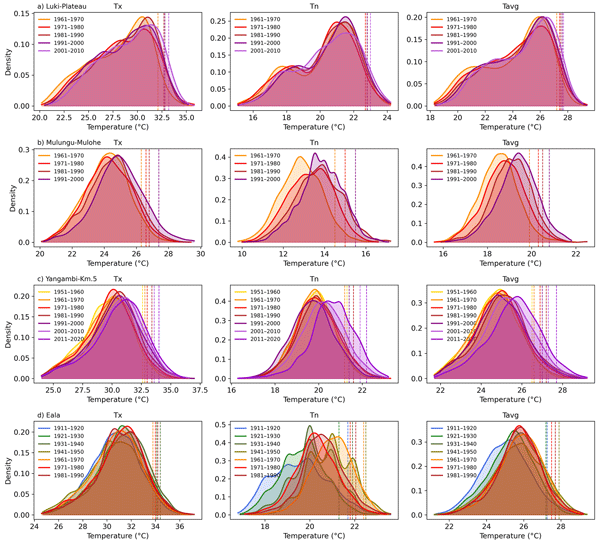
The Congo Basin is one of the least studied regions for climate change due to limited accessible data, despite large volumes of historical records stored on paper in archives. In this study, we digitised over 9000 sheets from 37 stations in the Democratic Republic of the Congo, producing more than one million daily weather observations. The results show clear warming since the 1960s, with more hot days and fewer cold days, highlighting the importance of data rescue in data-sparse regions.
Ankita Mitra, Nancy Harris, Javier G. P. Gamarra, Meredith L. Bastian, Thomas W. Crowther, Nicolas Picard, Martin Herold, Cang Hui, Sergio de-Miguel, W. Gabe Powell, Nathan R. Beane, John R. Shallock, Fons van der Plas, Michael J. Lawes, Mo Zhou, Mohammad Jahanshahi, Nadezhda M. Tchebakova, Elena I. Parfenova, Peter Reich, Cesar Ivan Alvarez, Daniel M. Griffith, Oliver L. Phillips, Ariane Mirabel, Marieke Sandker, WookJin Choi, Akane O. Abbasi, Giorgio Alberti, Jan Altman, Luciana F. Alves, Bienvenu H. K. Amani, Christian Amani, Christian Ammer, Valerio Avitabile, Gerardo A. Aymard C., Akomian F. Azihou, Timothy R. Baker, Radomir Balazy, Jorcely G. Barroso, Jean-François Bastin, Marijn Bauters, Mahmoud Bayat, Hans Beeckman, Eduardo van den Berg, Jahangeer A. Bhat, Anupam Bhatt, Angoboy Ilondea Bhely, Luca Birigazzi, Philippe Birnbaum, Robert Bitariho, Pascal Boeckx, Jan Bogaert, Alexander Bondarev, Frans Bongers, Elise Bouchard, Nils Bourland, Pedro H. S. Brancalion, Francis Q. Brearley, Jennifer L. Bufford, José Javier Corral-Rivas, Jaime Briseno-Reyes, Eben North Broadbent, David F. R. P. Burslem, Plinio Barbosa de Camargo, Goran D. Češljar, Ravi K. Chaturvedi, Han Y. H. Chen, Jiaxin Chen, Francesco Chianucci, George Chuyong, Emil Cienciala, Zorayda Restrepo Correa, Antonio Lola da Costa, Anibal Cuchietti, Javid Ahmad Dar, Selvadurai Dayanandan, Mathieu Decuyper, Tran Van Do, Jiri Dolezal, Ilija Đorđević, Donald R. Drake, Giselda Durigan, Guy-Michel A. Elogne, Tsutomu Enoki, Javier Silva Espejo, Tom Maurice Fayle, Rinaldo Luiz Caraciolo Ferreira, Paul F. Foster, Lorenzo Frizzera, Orou G. Gaoue, Roberto Cazzolla Gatti, Damiano Gianelle, Mario Guevara, Jesús Aguirre Gutiérrez, Richard Habonayo, David J. Harris, Billy C. H. Hau, Bruno Hérault, Wannes Hubau, Nobuo Imai, Andrzej M. Jagodzinski, Štěpán Janeček, Patrick A. Jansen, Bogdan Jaroszewicz, Vivian Kvist Johannsen, Carlos A. Joly, Daniel J. Johnson, Tommaso Jucker, Ben Hur Marimon Junior, Raimundo Cosme de Oliveira Junior, Goytom A. Kahsay, Victor Karminov, Elizabeth Kearsley, Deborah K. Kennard, Sebastian Kepfer-Rojas, Gunnar Keppel, Mohammed Latif Khan, John N. Kigomo, Hyun Seok Kim, Sukyung Kim, Carine Klauberg, Henn Korjus, Subashree Kothandaraman, Florian Kraxner, Leonid Krivobokov, Amit Kumar, Gajendra Kumar, Anna E. Kvashnina, Diana Laarmann, Felix Laurent, Gaia Vaglio Laurin, Rodrigo Vieira Leite, Bas Lerink, Simon L. Lewis, Moses B. Libalah, Weiguo Liu, Jon Lovett, Huicui Lu, Maria de los Angeles Soriano-Luna, Anne Mette Lykke, Emma Jane Mackintosh, Jean-Remy Makana, Andrew R. Marshall, Emanuel H. Martin, Radim Matula, Musingo Mbuvi, Sandra Liliana Medina, Vincent P. Medjibe, Desmond Mensah, Sylvanus Mensah, Thiago Metzker, Stanisław Miścicki, Liudmila Mukhortova, Sharif A. Mukul, Agustinus Murdjoko, Gert-Jan Nabuurs, Anny Estelle N'Guessan, Michael R. Ngugi, Alain Senghor K. Ngute, Thomas Nord-Larsen, Thomas O. Ochuodho, Friday N. Ogana, Luzmila Arroyo Padilla, Nazir A. Pala, Alain Paquette, Pablo L. Peri, Sebastian Pfautsch, Maria Teresa F. Piedade, Daniel Piotto, John James Pipoly III, Nigel C. A. Pitman, John R. Poulsen, Akhilesh Raghubanshi, Dipika Rana, Mirco Rodeghiero, Samir Rolim, Purabi Saikia, Peter Schall, Dmitry Schepaschenko, Jochen Schöngart, Vladimír Šebeň, Giacomo Sellan, Carlos Alberto Silva, Marcos Silveira, Jamuna Singh, Ferry Slik, Jarosław Socha, José Daniel Soto, Alexandre F. Souza, Prashant K. Srivastava, Hans ter Steege, Krzysztof Stereńczak, Somaiah Sundarapandian, Martin Svátek, Jens-Christian Svenning, Xiaolu Tang, Raquel S. Thomas, Antonio Tomao, Liam A. Trethowan, Robert Tropek, Kalidas Upadhyaya, Renato Valencia, Rodolfo Vásquez, Daniel Jose Vega-Nieva, Hans Verbeeck, Helder F. Viana, Alexander Christian Vibrans, Simone A. Vieira, Barbara Vinceti, Jason Vleminckx, Vincent Antoine Vos, Anna S. Vozmishcheva, Foma Vozmitel, Hayden Wagia, Hua-Feng Wang, Eric K. Wasingya, Edward L. Webb, Chemuku Wekesa, Verginia Wortel, Emmanuel Kasongo Yakusu, Zhen Yu, Angelica M. Almeyda Zambrano, Irié Casimir Zo-Bi, and Jingjing Liang
Earth Syst. Sci. Data Discuss., https://doi.org/10.5194/essd-2026-226, https://doi.org/10.5194/essd-2026-226, 2026
Revised manuscript under review for ESSD
Short summary
Short summary
This study introduces the first global, spatially explicit dataset of tree diameter structure, capturing key aspects of forest organization, including average tree size, large-tree dominance, and within-stand variability. Built from over one million ground-based field plots combined with more than 50 satellite and environmental layers using machine learning, it provides a consistent representation of forest structure and supports ecosystem research, climate modeling, and forest management.
Derrick Muheki, Bas Vercruysse, Krishna Kumar Thirukokaranam Chandrasekar, Christophe Verbruggen, Julie M. Birkholz, Koen Hufkens, Hans Verbeeck, Pascal Boeckx, Seppe Lampe, Ed Hawkins, Peter Thorne, Dominique Kankonde Ntumba, Olivier Kapalay Moulasa, and Wim Thiery
Geosci. Model Dev., 19, 3213–3255, https://doi.org/10.5194/gmd-19-3213-2026, https://doi.org/10.5194/gmd-19-3213-2026, 2026
Short summary
Short summary
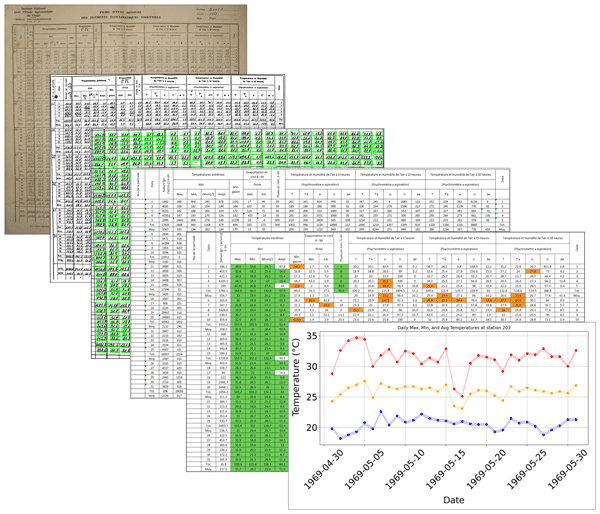
Archives worldwide host vast records of observed weather data crucial for understanding climate variability. However, most of these records are still in paper form, limiting their use. To address this, we developed MeteoSaver, an open-source tool, to transcribe these records to machine-readable format. Applied to ten handwritten temperature sheets, it achieved a median accuracy of 74 %. This tool offers a promising solution to preserve records from archives and unlock historical weather insights.
Nora L. S. Fahrenbach, Robert C. J. Wills, and Steven J. De Hertog
Weather Clim. Dynam., 6, 1461–1477, https://doi.org/10.5194/wcd-6-1461-2025, https://doi.org/10.5194/wcd-6-1461-2025, 2025
Short summary
Short summary
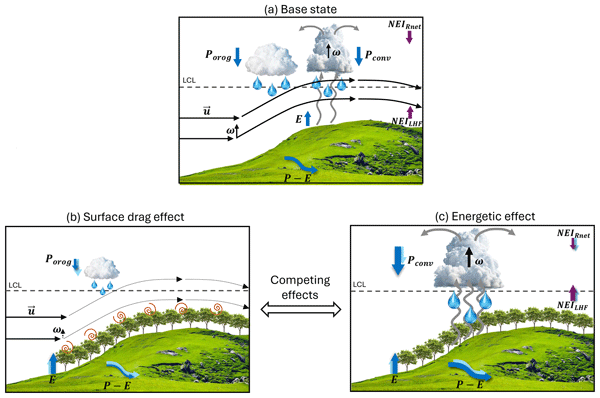
Afforestation is a key strategy for climate change mitigation, yet the impacts on tropical hydroclimate remain uncertain. We find that potential future afforestation would increase evaporation and precipitation in the tropics, especially over Africa. However, it would reduce net precipitation (precipitation minus evaporation), which determines water availability. This happens because trees slow near-surface winds, while their influence on the energy budget would otherwise strengthen convection.
Inês Vieira, Félicien Meunier, Maria Carolina Duran Rojas, Stephen Sitch, Flossie Brown, Giacomo Gerosa, Silvano Fares, Pascal Boeckx, Marijn Bauters, and Hans Verbeeck
Biogeosciences, 22, 6205–6223, https://doi.org/10.5194/bg-22-6205-2025, https://doi.org/10.5194/bg-22-6205-2025, 2025
Short summary
Short summary
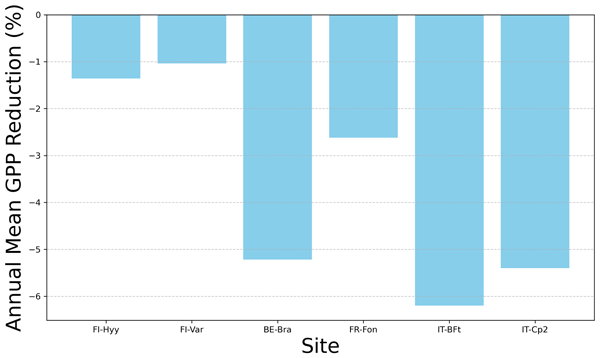
We used a computer model to study how ozone pollution reduces plant growth in six European forests, from Finland to Italy. Combining field data and simulations, we found that ozone can lower carbon uptake by up to 6 % each year, especially in Mediterranean areas. Our study shows that local climate and forest type influence ozone damage and highlights the need to include ozone effects in forest and climate models.
Wim Verbruggen, David Wårlind, Stéphanie Horion, Félicien Meunier, Hans Verbeeck, Aleksander Wieckowski, Torbern Tagesson, and Guy Schurgers
Geosci. Model Dev., 18, 6623–6645, https://doi.org/10.5194/gmd-18-6623-2025, https://doi.org/10.5194/gmd-18-6623-2025, 2025
Short summary
Short summary
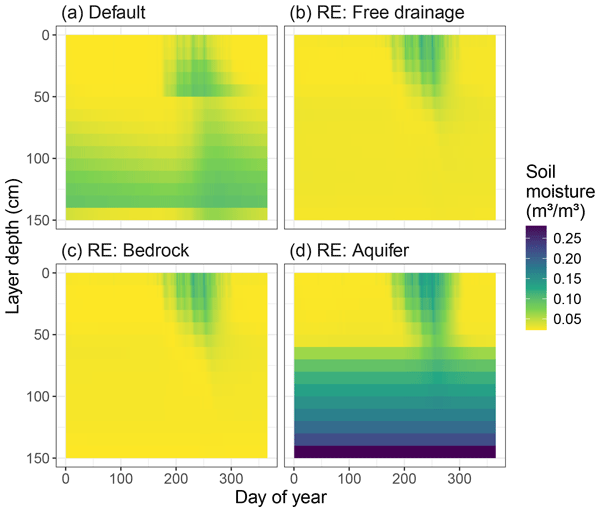
We improved the representation of soil water movement in a state-of-the-art dynamic vegetation model. This is important for dry ecosystems, as they are often driven by changes in soil water availability. We showed that this update resulted in a better match with observations and that the updated model is more sensitive to soil texture. The new model can also simulate a groundwater table. This updated model can help us to better understand the future of dry ecosystems under climate change.
Flossie Brown, Gerd Folberth, Stephen Sitch, Paulo Artaxo, Marijn Bauters, Pascal Boeckx, Alexander W. Cheesman, Matteo Detto, Ninong Komala, Luciana Rizzo, Nestor Rojas, Ines dos Santos Vieira, Steven Turnock, Hans Verbeeck, and Alfonso Zambrano
Atmos. Chem. Phys., 24, 12537–12555, https://doi.org/10.5194/acp-24-12537-2024, https://doi.org/10.5194/acp-24-12537-2024, 2024
Short summary
Short summary
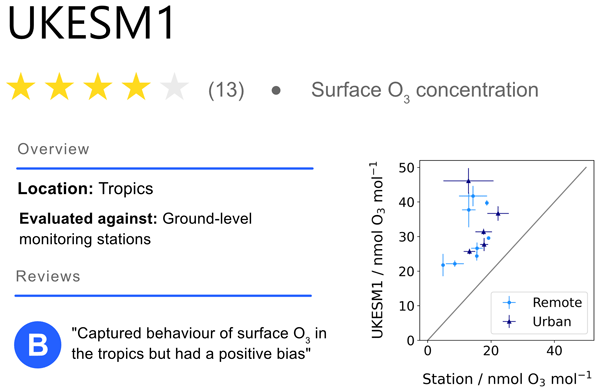
Ozone is a pollutant that is detrimental to human and plant health. Ozone monitoring sites in the tropics are limited, so models are often used to understand ozone exposure. We use measurements from the tropics to evaluate ozone from the UK Earth system model, UKESM1. UKESM1 is able to capture the pattern of ozone in the tropics, except in southeast Asia, although it systematically overestimates it at all sites. This work highlights that UKESM1 can capture seasonal and hourly variability.
Tao Chen, Félicien Meunier, Marc Peaucelle, Guoping Tang, Ye Yuan, and Hans Verbeeck
Biogeosciences, 21, 2253–2272, https://doi.org/10.5194/bg-21-2253-2024, https://doi.org/10.5194/bg-21-2253-2024, 2024
Short summary
Short summary
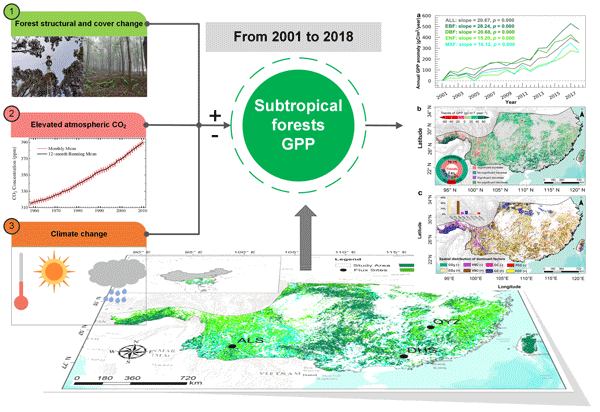
Chinese subtropical forest ecosystems are an extremely important component of global forest ecosystems and hence crucial for the global carbon cycle and regional climate change. However, there is still great uncertainty in the relationship between subtropical forest carbon sequestration and its drivers. We provide first quantitative estimates of the individual and interactive effects of different drivers on the gross primary productivity changes of various subtropical forest types in China.
Florian Zellweger, Eric Sulmoni, Johanna T. Malle, Andri Baltensweiler, Tobias Jonas, Niklaus E. Zimmermann, Christian Ginzler, Dirk Nikolaus Karger, Pieter De Frenne, David Frey, and Clare Webster
Biogeosciences, 21, 605–623, https://doi.org/10.5194/bg-21-605-2024, https://doi.org/10.5194/bg-21-605-2024, 2024
Short summary
Short summary
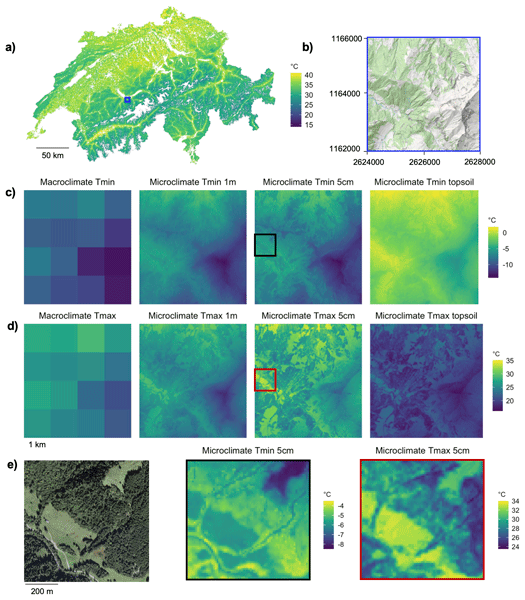
The microclimatic conditions experienced by organisms living close to the ground are not well represented in currently used climate datasets derived from weather stations. Therefore, we measured and mapped ground microclimate temperatures at 10 m spatial resolution across Switzerland using a novel radiation model. Our results reveal a high variability in microclimates across different habitats and will help to better understand climate and land use impacts on biodiversity and ecosystems.
W. A. J. Van den Broeck, L. Terryn, W. Cherlet, Z. T. Cooper, and K. Calders
Int. Arch. Photogramm. Remote Sens. Spatial Inf. Sci., XLVIII-1-W2-2023, 765–770, https://doi.org/10.5194/isprs-archives-XLVIII-1-W2-2023-765-2023, https://doi.org/10.5194/isprs-archives-XLVIII-1-W2-2023-765-2023, 2023

Joseph Okello, Marijn Bauters, Hans Verbeeck, Samuel Bodé, John Kasenene, Astrid Françoys, Till Engelhardt, Klaus Butterbach-Bahl, Ralf Kiese, and Pascal Boeckx
Biogeosciences, 20, 719–735, https://doi.org/10.5194/bg-20-719-2023, https://doi.org/10.5194/bg-20-719-2023, 2023
Short summary
Short summary
The increase in global and regional temperatures has the potential to drive accelerated soil organic carbon losses in tropical forests. We simulated climate warming by translocating intact soil cores from higher to lower elevations. The results revealed increasing temperature sensitivity and decreasing losses of soil organic carbon with increasing elevation. Our results suggest that climate warming may trigger enhanced losses of soil organic carbon from tropical montane forests.

Félicien Meunier, Wim Verbruggen, Hans Verbeeck, and Marc Peaucelle
Geosci. Model Dev., 15, 7573–7591, https://doi.org/10.5194/gmd-15-7573-2022, https://doi.org/10.5194/gmd-15-7573-2022, 2022
Short summary
Short summary
Drought stress occurs in plants when water supply (i.e. root water uptake) is lower than the water demand (i.e. atmospheric demand). It is strongly related to soil properties and expected to increase in intensity and frequency in the tropics due to climate change. In this study, we show that contrary to the expectations, state-of-the-art terrestrial biosphere models are mostly insensitive to soil texture and hence probably inadequate to reproduce in silico the plant water status in drying soils.
Flossie Brown, Gerd A. Folberth, Stephen Sitch, Susanne Bauer, Marijn Bauters, Pascal Boeckx, Alexander W. Cheesman, Makoto Deushi, Inês Dos Santos Vieira, Corinne Galy-Lacaux, James Haywood, James Keeble, Lina M. Mercado, Fiona M. O'Connor, Naga Oshima, Kostas Tsigaridis, and Hans Verbeeck
Atmos. Chem. Phys., 22, 12331–12352, https://doi.org/10.5194/acp-22-12331-2022, https://doi.org/10.5194/acp-22-12331-2022, 2022
Short summary
Short summary
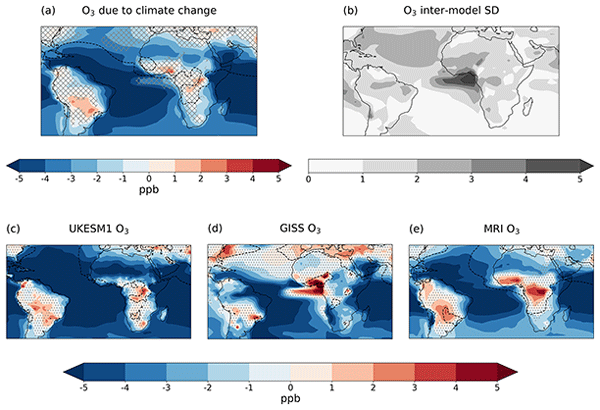
Surface ozone can decrease plant productivity and impair human health. In this study, we evaluate the change in surface ozone due to climate change over South America and Africa using Earth system models. We find that if the climate were to change according to the worst-case scenario used here, models predict that forested areas in biomass burning locations and urban populations will be at increasing risk of ozone exposure, but other areas will experience a climate benefit.
Félicien Meunier, Sruthi M. Krishna Moorthy, Marc Peaucelle, Kim Calders, Louise Terryn, Wim Verbruggen, Chang Liu, Ninni Saarinen, Niall Origo, Joanne Nightingale, Mathias Disney, Yadvinder Malhi, and Hans Verbeeck
Geosci. Model Dev., 15, 4783–4803, https://doi.org/10.5194/gmd-15-4783-2022, https://doi.org/10.5194/gmd-15-4783-2022, 2022
Short summary
Short summary
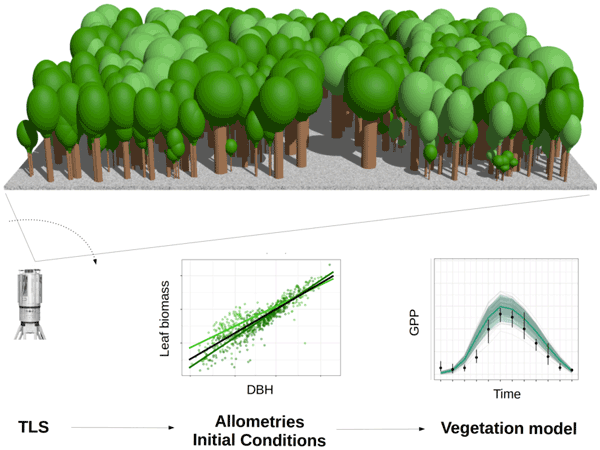
We integrated state-of-the-art observations of the structure of the vegetation in a temperate forest to constrain a vegetation model that aims to reproduce such an ecosystem in silico. We showed that the use of this information helps to constrain the model structure, its critical parameters, as well as its initial state. This research confirms the critical importance of the representation of the vegetation structure in vegetation models and proposes a method to overcome this challenge.
Cited articles
Anyadike, R. N. C.: Assessment of various formulae for the computation of saturation vapour pressures over liquid water, Arch. Meteor. Geophy. A, 33, 239–243, https://doi.org/10.1007/BF02257728, 1984. a
Armstron, J., Bunting, P., Flood, N., and Gillingham, S.: PyLidar documentation, https://www.pylidar.org/ (last access: 4 December 2025), 2015. a
Asner, G. P.: Biophysical and Biochemical Sources of Variability in Canopy Reflectance, Remote Sens. Environ., 64, 234–253, https://doi.org/10.1016/S0034-4257(98)00014-5, 1998. a
Auger, A. and Hansen, N.: Performance evaluation of an advanced local search evolutionary algorithm, in: Proceedings of the 2005 IEEE Congress on Evolutionary Computations, 1777–1784, Edinburgh, Scotland, 2–5 September 2005, https://doi.org/10.1109/CEC.2005.1554903, 2005. a
Badouard, V., Verley, P., Bai, Y., Sellan, G., Françoise, L., Marcon, E., Derroire, G., and Vincent, G.: Using High Penetration Airborne Lidar and Dense Uav Scanning to Produce Accurate 3d Maps of Light Availability in Dense Tropical Forest, SSRN, https://doi.org/10.2139/ssrn.5009772, 2024. a
Beven, K.: A manifesto for the equifinality thesis, J. Hydrol., 320, 18–36, https://doi.org/10.1016/j.jhydrol.2005.07.007, 2006. a
Bonan, G.: Climate change and terrestrial ecosystem modeling, 1 edn., Cambridge University Press, Cambridge, https://doi.org/10.1017/9781107339217, 2019. a, b, c
Bramer, I., Anderson, B. J., Bennie, J., Bladon, A. J., De Frenne, P., Hemming, D., Hill, R. A., Kearney, M. R., Körner, C., Korstjens, A. H., Lenoir, J., Maclean, I. M., Marsh, C. D., Morecroft, M. D., Ohlemüller, R., Slater, H. D., Suggitt, A. J., Zellweger, F., and Gillingham, P. K.: Advances in monitoring and modelling climate at ecologically relevant scales, Chapt. 3, in: Next generation biomonitoring: Part 1, edited by: Bohan, D. A., Dumbrell, A. J., Woodward, G., and Jackson, M., Academic Press, 101–161, https://doi.org/10.1016/bs.aecr.2017.12.005, 2018. a
Brede, B., Calders, K., Lau, A., Raumonen, P., Bartholomeus, H. M., Herold, M., and Kooistra, L.: Non-destructive tree volume estimation through quantitative structure modelling: Comparing UAV laser scanning with terrestrial LIDAR, Remote Sens. Environ., 233, 111355, https://doi.org/10.1016/j.rse.2019.111355, 2019. a
Calders, K., Adams, J., Armston, J., Bartholomeus, H., Bauwens, S., Bentley, L. P., Chave, J., Danson, F. M., Demol, M., Disney, M., Gaulton, R., Krishna Moorthy, S. M., Levick, S. R., Saarinen, N., Schaaf, C., Stovall, A., Terryn, L., Wilkes, P., and Verbeeck, H.: Terrestrial laser scanning in forest ecology: Expanding the horizon, Remote Sens. Environ., 251, 112102, https://doi.org/10.1016/j.rse.2020.112102, 2020. a, b
Cao, Y., Ball, J. G., Coomes, D. A., Steinmeier, L., Knapp, N., Wilkes, P., Disney, M., Calders, K., Burt, A., Lin, Y., and Jackson, T. D.: Benchmarking airborne laser scanning tree segmentation algorithms in broadleaf forests shows high accuracy only for canopy trees, Int. J. Appl. Earth Obs., 123, 103490, https://doi.org/10.1016/j.jag.2023.103490, 2023. a
Chen, J., Franklin, J. F., and Spies, T. A.: Contrasting microclimates among clearcut, edge, and interior of old-growth Douglas-fir forest, Agr. Forest Meteorol., 63, 219–237, https://doi.org/10.1016/0168-1923(93)90061-L, 1993. a
Chen, J., Franklin, J. F., and Spies, T. A.: Growing-season microclimatic gradients from clearcut edges into old-growth douglas-fir forests, Ecol. Appl., 5, 74–86, https://doi.org/10.2307/1942053, 1995. a, b, c, d
De Frenne, P., Zellweger, F., Rodríguez-Sánchez, F., Scheffers, B. R., Hylander, K., Luoto, M., Vellend, M., Verheyen, K., and Lenoir, J.: Global buffering of temperatures under forest canopies, Nat. Ecol. Evol., 3, 744–749, https://doi.org/10.1038/s41559-019-0842-1, 2019. a, b
De Frenne, P., Lenoir, J., Luoto, M., Scheffers, B. R., Zellweger, F., Aalto, J., Ashcroft, M. B., Christiansen, D. M., Decocq, G., De Pauw, K., Govaert, S., Greiser, C., Gril, E., Hampe, A., Jucker, T., Klinges, D. H., Koelemeijer, I. A., Lembrechts, J. J., Marrec, R., Meeussen, C., Ogée, J., Tyystjärvi, V., Vangansbeke, P., and Hylander, K.: Forest microclimates and climate change: Importance, drivers and future research agenda, Glob. Change Biol., 27, 2279–2297, https://doi.org/10.1111/gcb.15569, 2021. a, b, c, d, e, f, g
De Pauw, K., Sanczuk, P., Meeussen, C., Depauw, L., De Lombaerde, E., Govaert, S., Vanneste, T., Brunet, J., Cousins, S. A. O., Gasperini, C., Hedwall, P.-O., Iacopetti, G., Lenoir, J., Plue, J., Selvi, F., Spicher, F., Uria-Diez, J., Verheyen, K., Vangansbeke, P., and De Frenne, P.: Forest understorey communities respond strongly to light in interaction with forest structure, but not to microclimate warming, New Phytol., 233, 219–235, https://doi.org/10.1111/nph.17803, 2022. a
De Pauw, K., Depauw, L., Calders, K., Cousins, S. A. O., Decocq, G., De Lombaerde, E., Diekmann, M., Frey, D., Lenoir, J., Meeussen, C., Orczewska, A., Plue, J., Spicher, F., Zellweger, F., Vangansbeke, P., Verheyen, K., and De Frenne, P.: Nutrient-demanding and thermophilous plants dominate urban forest-edge vegetation across temperate Europe, J. Veg. Sci., 35, e13236, https://doi.org/10.1111/jvs.13236, 2024. a, b
Dignan, P. and Bren, L.: Modelling light penetration edge effects for stream buffer design in mountain ash forest in southeastern Australia, Forest. Ecol. Manage., 179, 95–106, https://doi.org/10.1016/S0378-1127(02)00491-7, 2003. a
Disney, M., Lewis, P., and North, P.: Monte Carlo ray tracing in optical canopy reflectance modelling, Remote Sensing Reviews, 18, 163–196, https://doi.org/10.1080/02757250009532389, 2000. a
Estreguil, C., Caudullo, G., de Rigo, D., and San Miguel, J.: Forest landscape in Europe: pattern, fragmentation and connectivity, JRC scientific and policy reports, Joint Research Centre of the European Commission, Luxembourg, https://doi.org/10.2788/77842, 2013. a
Flayyih Al-Rikabi, S. H., Santolini, E., Pulvirenti, B., Barbaresi, A., Torreggiani, D., Tassinari, P., and Bovo, M.: Assessment of the Influence of Canopy Morphology on Leaf Area Density and Drag Coefficient by Means of Wind Tunnel Tests, Sustainability, 16, 2010, https://doi.org/10.3390/su16052010, 2024. a
Ford, K. R., Ettinger, A. K., Lundquist, J. D., Raleigh, M. S., and Hille Ris Lambers, J.: Spatial Heterogeneity in Ecologically Important Climate Variables at Coarse and Fine Scales in a High-Snow Mountain Landscape, PLoS ONE, 8, e65008, https://doi.org/10.1371/journal.pone.0065008, 2013. a
Frey, S. J. K., Hadley, A. S., Johnson, S. L., Schulze, M., Jones, J. A., and Betts, M. G.: Spatial models reveal the microclimatic buffering capacity of old-growth forests, Sci. Adv., 2, e1501392, https://doi.org/10.1126/sciadv.1501392, 2016. a
Gao, X., Li, C., Cai, Y., Ye, L., Xiao, L., Zhou, G., and Zhou, Y.: Influence of Scale Effect of Canopy Projection on Understory Microclimate in Three Subtropical Urban Broad-Leaved Forests, Remote Sens., 13, 3786, https://doi.org/10.3390/rs13183786, 2021. a, b
Gastellu-Etchegorry, J. P., Martin, E., and Gascon, F.: DART: a 3D model for simulating satellite images and studying surface radiation budget, Int. J. Remote Sens., 25, 73–96, https://doi.org/10.1080/0143116031000115166, 2004. a
Geiger, R., Aron, R. H., and Todhunter, P.: The influence of topography on the microclimate, in: The climate near the ground, Vieweg+Teubner Verlag, Wiesbaden, 327–406, https://doi.org/10.1007/978-3-322-86582-3_8, 1995. a
Glocke, P., Holst, C. C., Khan, B., and Benz, S. A.: Assessing coupling between soil temperature and potential air temperature using PALM-4U: implications for idealized scenarios, Earth Syst. Dynam., 16, 55–74, https://doi.org/10.5194/esd-16-55-2025, 2025. a
Haddad, N. M., Brudvig, L. A., Clobert, J., Davies, K. F., Gonzalez, A., Holt, R. D., Lovejoy, T. E., Sexton, J. O., Austin, M. P., Collins, C. D., Cook, W. M., Damschen, E. I., Ewers, R. M., Foster, B. L., Jenkins, C. N., King, A. J., Laurance, W. F., Levey, D. J., Margules, C. R., Melbourne, B. A., Nicholls, A. O., Orrock, J. L., Song, D.-X., and Townshend, J. R.: Habitat fragmentation and its lasting impact on Earth's ecosystems, Sci. Adv., 1, e1500052, https://doi.org/10.1126/sciadv.1500052, 2015. a
Haesen, S., Lembrechts, J. J., De Frenne, P., Lenoir, J., Aalto, J., Ashcroft, M. B., Kopecký, M., Luoto, M., Maclean, I., Nijs, I., Niittynen, P., Van Den Hoogen, J., Arriga, N., Brůna, J., Buchmann, N., Čiliak, M., Collalti, A., De Lombaerde, E., Descombes, P., Gharun, M., Goded, I., Govaert, S., Greiser, C., Grelle, A., Gruening, C., Hederová, L., Hylander, K., Kreyling, J., Kruijt, B., Macek, M., Máliš, F., Man, M., Manca, G., Matula, R., Meeussen, C., Merinero, S., Minerbi, S., Montagnani, L., Muffler, L., Ogaya, R., Penuelas, J., Plichta, R., Portillo-Estrada, M., Schmeddes, J., Shekhar, A., Spicher, F., Ujházyová, M., Vangansbeke, P., Weigel, R., Wild, J., Zellweger, F., and Van Meerbeek, K.: ForestTemp – Sub-canopy microclimate temperatures of European forests, Glob. Change Biol., 27, 6307–6319, https://doi.org/10.1111/gcb.15892, 2021. a
Haesen, S., Lembrechts, J. J., De Frenne, P., Lenoir, J., Aalto, J., Ashcroft, M. B., Kopecký, M., Luoto, M., Maclean, I., Nijs, I., Niittynen, P., Van Den Hoogen, J., Arriga, N., Brůna, J., Buchmann, N., Čiliak, M., Collalti, A., De Lombaerde, E., Descombes, P., Gharun, M., Goded, I., Govaert, S., Greiser, C., Grelle, A., Gruening, C., Hederová, L., Hylander, K., Kreyling, J., Kruijt, B., Macek, M., Máliš, F., Man, M., Manca, G., Matula, R., Meeussen, C., Merinero, S., Minerbi, S., Montagnani, L., Muffler, L., Ogaya, R., Penuelas, J., Plichta, R., Portillo-Estrada, M., Schmeddes, J., Shekhar, A., Spicher, F., Ujházyová, M., Vangansbeke, P., Weigel, R., Wild, J., Zellweger, F., and Van Meerbeek, K.: ForestClim – Bioclimatic variables for microclimate temperatures of European forests, Glob. Change Biol., 29, 2886–2892, https://doi.org/10.1111/gcb.16678, 2023. a
Hansen, N.: The CMA Evolution Strategy: A Comparing Review, in: Towards a New Evolutionary Computation: Advances in the Estimation of Distribution Algorithms, edited by: Lozano, J. A., Larrañaga, P., Inza, I., and Bengoetxea, E., Springer, Berlin Heidelberg, 75–102, https://doi.org/10.1007/3-540-32494-1_4, 2006. a
Hansen, N. and Ostermeier, A.: Completely Derandomized Self-Adaptation in Evolution Strategies, Evol. Comput., 9, 159–195, https://doi.org/10.1162/106365601750190398, 2001. a
Hansen, N., Müller, S. D., and Koumoutsakos, P.: Reducing the time complexity of the derandomized evolution strategy with covariance matrix adaptation (CMA-ES), Evol. Comput., 11, 1–18, https://doi.org/10.1162/106365603321828970, 2003. a
Hardwick, S. R., Toumi, R., Pfeifer, M., Turner, E. C., Nilus, R., and Ewers, R. M.: The relationship between leaf area index and microclimate in tropical forest and oil palm plantation: Forest disturbance drives changes in microclimate, Agr. Forest Meteorol., 201, 187–195, https://doi.org/10.1016/j.agrformet.2014.11.010, 2015. a
Hosoi, F., Nakai, Y., and Omasa, K.: 3-D voxel-based solid modeling of a broad-leaved tree for accurate volume estimation using portable scanning lidar, ISPRS J. Photogramm., 82, 41–48, https://doi.org/10.1016/j.isprsjprs.2013.04.011, 2013. a
Inman-Narahari, F., Ostertag, R., Asner, G. P., Cordell, S., Hubbell, S. P., and Sack, L.: Trade-offs in seedling growth and survival within and across tropical forest microhabitats, Ecol. Evol., 4, 3755–3767, https://doi.org/10.1002/ece3.1196, 2014. a
Jucker, T., Hardwick, S. R., Both, S., Elias, D. M., Ewers, R. M., Milodowski, D. T., Swinfield, T., and Coomes, D. A.: Canopy structure and topography jointly constrain the microclimate of human-modified tropical landscapes, Glob. Change Biol., 24, 5243–5258, https://doi.org/10.1111/gcb.14415, 2018. a, b
Kearney, M. R. and Porter, W. P.: NicheMapR – an R package for biophysical modelling: the microclimate model, Ecography, 40, 664–674, https://doi.org/10.1111/ecog.02360, 2017. a
Kearney, M. R., Jusup, M., McGeoch, M. A., Kooijman, S. A. L. M., and Chown, S. L.: Where do functional traits come from? The role of theory and models, Funct. Ecol., 35, 1385–1396, https://doi.org/10.1111/1365-2435.13829, 2021. a
Keating, E. H., Doherty, J., Vrugt, J. A., and Kang, Q.: Optimization and uncertainty assessment of strongly nonlinear groundwater models with high parameter dimensionality, Water Resour. Res., 46, 2009WR008584, https://doi.org/10.1029/2009WR008584, 2010. a
Kemppinen, J., Lembrechts, J. J., Van Meerbeek, K., Carnicer, J., Chardon, N. I., Kardol, P., Lenoir, J., Liu, D., Maclean, I., Pergl, J., Saccone, P., Senior, R. A., Shen, T., Słowińska, S., Vandvik, V., Von Oppen, J., Aalto, J., Ayalew, B., Bates, O., Bertelsmeier, C., Bertrand, R., Beugnon, R., Borderieux, J., Brůna, J., Buckley, L., Bujan, J., Casanova-Katny, A., Christiansen, D. M., Collart, F., De Lombaerde, E., De Pauw, K., Depauw, L., Di Musciano, M., Díaz Borrego, R., Díaz-Calafat, J., Ellis-Soto, D., Esteban, R., De Jong, G. F., Gallois, E., Garcia, M. B., Gillerot, L., Greiser, C., Gril, E., Haesen, S., Hampe, A., Hedwall, P.-O., Hes, G., Hespanhol, H., Hoffrén, R., Hylander, K., Jiménez-Alfaro, B., Jucker, T., Klinges, D., Kolstela, J., Kopecký, M., Kovács, B., Maeda, E. E., Máliš, F., Man, M., Mathiak, C., Meineri, E., Naujokaitis-Lewis, I., Nijs, I., Normand, S., Nuñez, M., Orczewska, A., Peña-Aguilera, P., Pincebourde, S., Plichta, R., Quick, S., Renault, D., Ricci, L., Rissanen, T., Segura-Hernández, L., Selvi, F., Serra-Diaz, J. M., Soifer, L., Spicher, F., Svenning, J.-C., Tamian, A., Thomaes, A., Thoonen, M., Trew, B., Van de Vondel, S., Van Den Brink, L., Vangansbeke, P., Verdonck, S., Vitkova, M., Vives-Ingla, M., Von Schmalensee, L., Wang, R., Wild, J., Williamson, J., Zellweger, F., Zhou, X., Zuza, E. J., and De Frenne, P.: Microclimate, an important part of ecology and biogeography, Global Ecol. Biogeogr., 33, e13834, https://doi.org/10.1111/geb.13834, 2024. a
Kimura, K., Yasutake, D., Yamanami, A., and Kitano, M.: Spatial examination of leaf-boundary-layer conductance using artificial leaves for assessment of light airflow within a plant canopy under different controlled greenhouse conditions, Agr. Forest Meteorol., 280, 107773, https://doi.org/10.1016/j.agrformet.2019.107773, 2020. a
Lhomme, J.-P.: A theoretical basis for the Priestley-Taylor coefficient, Bound.-Lay. Meteorol., 82, 179–191, https://doi.org/10.1023/A:1000281114105, 1997. a
Liu, J., Skidmore, A. K., Wang, T., Zhu, X., Premier, J., Heurich, M., Beudert, B., and Jones, S.: Variation of leaf angle distribution quantified by terrestrial LiDAR in natural European beech forest, ISPRS J. Photogramm., 148, 208–220, https://doi.org/10.1016/j.isprsjprs.2019.01.005, 2019. a
Longo, M., Knox, R. G., Medvigy, D. M., Levine, N. M., Dietze, M. C., Kim, Y., Swann, A. L. S., Zhang, K., Rollinson, C. R., Bras, R. L., Wofsy, S. C., and Moorcroft, P. R.: The biophysics, ecology, and biogeochemistry of functionally diverse, vertically and horizontally heterogeneous ecosystems: the Ecosystem Demography model, version 2.2 – Part 1: Model description, Geosci. Model Dev., 12, 4309–4346, https://doi.org/10.5194/gmd-12-4309-2019, 2019. a, b, c, d
Luo, Y., Weng, E., Wu, X., Gao, C., Zhou, X., and Zhang, L.: Parameter identifiability, constraint, and equifinality in data assimilation with ecosystem models, Ecol. Appl., 19, 571–574, https://doi.org/10.1890/08-0561.1, 2009. a
Ma, Z., Gris, D., Do Nascimento, P. D. J. F. P., De Castilho, C. V., Ribeiro, S. C., Tapajós, R., Machado, W., Júnior, M. A., Camargo, J. L., Chaves E Carvalho, S. D. P., Kalliovirta, L., Maclean, I. M., and Maeda, E. E.: The variability of microclimate in the Amazon Rainforest, Agr. Forest Meteorol., 375, 110866, https://doi.org/10.1016/j.agrformet.2025.110866, 2025. a
Maclean, I. M.: Predicting future climate at high spatial and temporal resolution, Glob. Change Biol., 26, 1003–1011, https://doi.org/10.1111/gcb.14876, 2020. a
Maclean, I. M.: Microclimf: fast modelling of microclimate across real landscapes in R, ecoevorxiv [preprint], https://doi.org/10.32942/X2BD17, 2025. a, b, c, d
Maclean, I. M. and Klinges, D. H.: Microclimc: A mechanistic model of above, below and within-canopy microclimate, Ecol. Model., 451, 109567, https://doi.org/10.1016/j.ecolmodel.2021.109567, 2021. a, b
Malcolm, J. R.: A Model of Conductive Heat Flow in Forest Edges and Fragmented Landscapes, in: Potential Impacts of Climate Change on Tropical Forest Ecosystems, edited by: Markham, A., Springer Netherlands, Dordrecht, 347–362, https://doi.org/10.1007/978-94-017-2730-3_17, 1998. a
Maurer, K. D., Hardiman, B. S., Vogel, C. S., and Bohrer, G.: Canopy-structure effects on surface roughness parameters: Observations in a Great Lakes mixed-deciduous forest, Agr. Forest Meteorol., 177, 24–34, https://doi.org/10.1016/j.agrformet.2013.04.002, 2013. a
Meeussen, C., Govaert, S., Vanneste, T., Haesen, S., Van Meerbeek, K., Bollmann, K., Brunet, J., Calders, K., Cousins, S. A., Diekmann, M., Graae, B. J., Iacopetti, G., Lenoir, J., Orczewska, A., Ponette, Q., Plue, J., Selvi, F., Spicher, F., Sørensen, M. V., Verbeeck, H., Vermeir, P., Verheyen, K., Vangansbeke, P., and De Frenne, P.: Drivers of carbon stocks in forest edges across Europe, Sci. Total Environ., 759, 143497, https://doi.org/10.1016/j.scitotenv.2020.143497, 2021. a
Modest, M. F. and Lei, S.: The simplified spherical harmonics method for radiative heat transfer, J. Phys. Conf. Ser., 369, 012019, https://doi.org/10.1088/1742-6596/369/1/012019, 2012. a
Monteith, J. L.: Evaporation and environment, Sym. Soc. Exp. Biol., 19, 205–234, 1965. a
Monteith, J. L. and Unsworth, M. H.: Principles of environmental physics: plants, animals, and the atmosphere, 4th edn., Elsevier/Academic Press, Amsterdam, Boston, Heidelberg, London, New York, Oxford, Paris, San Diego, San Francisco, Singapore, Sydney, Tokyo, ISBN 978-0-12-386910-4, 2013. a, b, c, d, e, f
Nunes, M. H., Vaz, M. C., Camargo, J. L. C., Laurance, W. F., De Andrade, A., Vicentini, A., Laurance, S., Raumonen, P., Jackson, T., Zuquim, G., Wu, J., Peñuelas, J., Chave, J., and Maeda, E. E.: Edge effects on tree architecture exacerbate biomass loss of fragmented Amazonian forests, Nat. Commun., 14, 8129, https://doi.org/10.1038/s41467-023-44004-5, 2023. a
Oleson, K., David, L., Drewniak, B. A., Huang, M., Bonan, G. B., Koven, C. D., Levis, S., Li, F., Riley, W. J., Subin, Z. M., Swenson, S. C., Thornton, P. E., Bozbiyik, A., Fisher, R., Heald, C. L., Kluzek, E., Lamarque, J.-F., Lawrence, P. J., Leung, L. R., Lipscomb, W., Muszala, S., Ricciuto, D. M., Sacks, W., Sun, Y., Tang, J., and Yang, Z.-L.: Technical Description of Version 4.5 of the Community Land Model (CLM), NCAR Technical Note, NCAR Earth System Laboratory Climate and Global Dynamics Division, Boulder, Colorado, https://doi.org/10.5065/D6RR1W7M, 2013. a, b
Riitters, K., Wickham, J., Costanza, J. K., and Vogt, P.: A global evaluation of forest interior area dynamics using tree cover data from 2000 to 2012, Landscape Ecol., 31, 137–148, https://doi.org/10.1007/s10980-015-0270-9, 2016. a
Rotenberg, E., Mamane, Y., and Joseph, J.: Long wave radiation regime in vegetation-parameterisations for climate research, Environ. Modell. Softw., 13, 361–371, https://doi.org/10.1016/S1364-8152(98)00041-3, 1998. a, b
Royal Meteorological Institute of Belgium: Open data portal RMI, https://opendata.meteo.be/ (last access: 5 December 2025), 2024. a
Sanczuk, P., De Pauw, K., De Lombaerde, E., Luoto, M., Meeussen, C., Govaert, S., Vanneste, T., Depauw, L., Brunet, J., Cousins, S. A. O., Gasperini, C., Hedwall, P.-O., Iacopetti, G., Lenoir, J., Plue, J., Selvi, F., Spicher, F., Uria-Diez, J., Verheyen, K., Vangansbeke, P., and De Frenne, P.: Microclimate and forest density drive plant population dynamics under climate change, Nat. Clim. Change, 13, 840–847, https://doi.org/10.1038/s41558-023-01744-y, 2023. a
Sanczuk, P., Yang, Z., Terryn, L., Calders, K., Kuyken, B., Li, Y., Maclean, I., Meunier, F., Stock, M., Van De Walle, E., Verhelst, T. E., Warfield, R., Verbeeck, H., and De Frenne, P.: Continuous quantification of forest microclimate temperatures in space and time using fibre-optic technology, Methods Ecol. Evol., 16, 2784–2796, https://doi.org/10.1111/2041-210X.70151, 2025. a
Scheffers, B. R., Edwards, D. P., Diesmos, A., Williams, S. E., and Evans, T. A.: Microhabitats reduce animal's exposure to climate extremes, Glob. Change Biol., 20, 495–503, https://doi.org/10.1111/gcb.12439, 2014. a
Sellers, P. J.: Canopy reflectance, photosynthesis and transpiration, Int. J. Remote Sens., 6, 1335–1372, https://doi.org/10.1080/01431168508948283, 1985. a, b
Shiklomanov, A. N., Dietze, M. C., Fer, I., Viskari, T., and Serbin, S. P.: Cutting out the middleman: calibrating and validating a dynamic vegetation model (ED2-PROSPECT5) using remotely sensed surface reflectance, Geosci. Model Dev., 14, 2603–2633, https://doi.org/10.5194/gmd-14-2603-2021, 2021. a, b, c, d, e, f
Sobol', I.: Global sensitivity indices for nonlinear mathematical models and their Monte Carlo estimates, Math. Comput. Simulat., 55, 271–280, https://doi.org/10.1016/S0378-4754(00)00270-6, 2001. a
Soifer, L. G., Ball, J., Asmath, H., Maclean, I. M. D., and Coomes, D.: Microclimates slow and alter the direction of climate velocities in tropical forests, Nat. Clim. Change, https://doi.org/10.1038/s41558-025-02496-7, 2025. a
Stamnes, K., Tsay, S.-C., Wiscombe, W., and Jayaweera, K.: Numerically stable algorithm for discrete-ordinate-method radiative transfer in multiple scattering and emitting layered media, Appl. Optics, 27, 2502–2509, https://doi.org/10.1364/AO.27.002502, 1988. a
Tang, H. and Dubayah, R.: Light-driven growth in Amazon evergreen forests explained by seasonal variations of vertical canopy structure, P. Natl. Acad. Sci. USA, 114, 2640–2644, https://doi.org/10.1073/pnas.1616943114, 2017. a
The Eradiate team: Eradiate: An open-source 3D radiative transfer model for Earth observation applications, https://www.eradiate.eu/site/ (last access: 28 May 2026), 2025. a
Van de Walle, E.: EmmaVdW27/ForEdgeClim: ForEdgeClim v1.0.1, Zenodo [code and data set], https://doi.org/10.5281/zenodo.19630260, 2026 (data also available at: https://github.com/qforestlab/ForEdgeClim, last access: 17 April 2026). a
Vives-Ingla, M., Sala-Garcia, J., Stefanescu, C., Casadó-Tortosa, A., Garcia, M., Peñuelas, J., and Carnicer, J.: Interspecific differences in microhabitat use expose insects to contrasting thermal mortality, Ecol. Monogr., 93, e1561, https://doi.org/10.1002/ecm.1561, 2023. a
Wild, J., Kopecký, M., Macek, M., Šanda, M., Jankovec, J., and Haase, T.: Climate at ecologically relevant scales: A new temperature and soil moisture logger for long-term microclimate measurement, Agr. Forest Meteorol., 268, 40–47, https://doi.org/10.1016/j.agrformet.2018.12.018, 2019. a
Wiscombe, W. J. and Grams, G. W.: The backscattered fraction in two-stream approximations, J. Atmos. Sci., 33, 2440–2451, https://doi.org/10.1175/1520-0469(1976)033<2440:TBFITS>2.0.CO;2, 1976. a, b, c
WMO: Guide to Meteorological Instruments and Methods of Observation, 8 edn., World Meteorological Organization, Geneva, ISBN 978-92-63-10008-5, 2021. a
Yang, P., Prikaziuk, E., Verhoef, W., and van der Tol, C.: SCOPE 2.0: a model to simulate vegetated land surface fluxes and satellite signals, Geosci. Model Dev., 14, 4697–4712, https://doi.org/10.5194/gmd-14-4697-2021, 2021. a, b, c, d
Zellweger, F., Coomes, D., Lenoir, J., Depauw, L., Maes, S. L., Wulf, M., Kirby, K. J., Brunet, J., Kopecký, M., Máliš, F., Schmidt, W., Heinrichs, S., Den Ouden, J., Jaroszewicz, B., Buyse, G., Spicher, F., Verheyen, K., and De Frenne, P.: Seasonal drivers of understorey temperature buffering in temperate deciduous forests across Europe, Global Ecol. Biogeogr., 28, 1774–1786, https://doi.org/10.1111/geb.12991, 2019. a, b, c
Zhou, J., Van Der Molen, M., and Teuling, A.: Contrasting below- and above-canopy climate regulation services of a temperate forest during heatwaves, Agr. Forest Meteorol., 366, 110485, https://doi.org/10.1016/j.agrformet.2025.110485, 2025. a
Zou, Y., Crowther, T. W., Smith, G. R., Ma, H., Mo, L., Bialic-Murphy, L., Potapov, P., Gawecka, K. A., Xu, C., Negret, P. J., Lauber, T., Wu, Z., Rebindaine, D., and Zohner, C. M.: Fragmentation increased in over half of global forests from 2000 to 2020, Science, 389, 1151–1156, https://doi.org/10.1126/science.adr6450, 2025. a
Short summary
We present ForEdgeClim, a process-based model that simulates forest microclimate temperatures from edges to forest interiors. The model combines high-resolution forest structure, meteorological data, and a physically based energy balance that includes vertical and lateral radiation and heat exchange. Validation with field measurements shows that ForEdgeClim captures observed edge-to-core temperature gradients, supporting its use for studying forest fragmentation and climate impacts.
We present ForEdgeClim, a process-based model that simulates forest microclimate temperatures...


