
Articles | Volume 19, issue 10
https://doi.org/10.5194/gmd-19-4447-2026
© Author(s) 2026. This work is distributed under
the Creative Commons Attribution 4.0 License.
the Creative Commons Attribution 4.0 License.
Special issue:
https://doi.org/10.5194/gmd-19-4447-2026
© Author(s) 2026. This work is distributed under
the Creative Commons Attribution 4.0 License.
the Creative Commons Attribution 4.0 License.
Model experiment description paper
| 
26 May 2026
Model experiment description paper |
| 26 May 2026
| 26 May 2026
The Radiative Forcing Model Intercomparison Project (RFMIP2.0) for CMIP7

Geophysical Fluid Dynamics Laboratory, NOAA, Princeton, NJ, USA
Chris Smith
International Institute for Applied Systems Analysis (IIASA), Laxenburg, Austria
Timothy Andrews
Met Office Hadley Centre, Exeter, UK
School of Earth and Environment, University of Leeds, Leeds, UK
Related authors
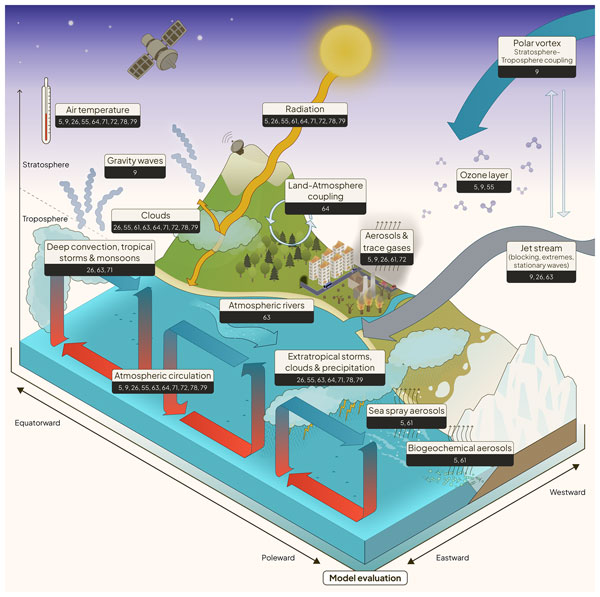
Beth Dingley, James A. Anstey, Marta Abalos, Carsten Abraham, Tommi Bergman, Lisa Bock, Sonya Fiddes, Birgit Hassler, Ryan J. Kramer, Fei Luo, Fiona M. O'Connor, Petr Šácha, Isla R. Simpson, Laura J. Wilcox, and Mark D. Zelinka
Geosci. Model Dev., 19, 2945–2984, https://doi.org/10.5194/gmd-19-2945-2026, https://doi.org/10.5194/gmd-19-2945-2026, 2026
Short summary
Short summary
This manuscript defines as a list of variables and scientific opportunities which are requested from the Coupled Model Intercomparison Project Phase 7 (CMIP7) Assessment Fast Track to address open atmospheric science questions. The list reflects the output of a large public community engagement effort, coordinated across autumn 2025 through to summer 2025.
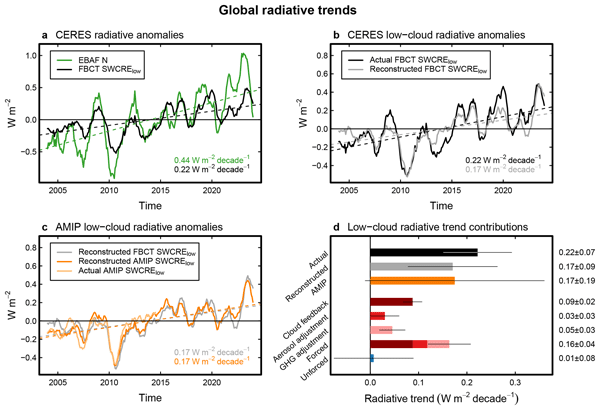
Paulo Ceppi, Sarah Wilson Kemsley, Hendrik Andersen, Timothy Andrews, Ryan J. Kramer, Peer Nowack, Casey J. Wall, and Mark D. Zelinka
Atmos. Chem. Phys., 26, 4153–4171, https://doi.org/10.5194/acp-26-4153-2026, https://doi.org/10.5194/acp-26-4153-2026, 2026
Short summary
Short summary
Recent decades have seen a marked decrease in global low-level cloud cover, leading to more sunlight heating the Earth. This trend is poorly understood, raising the concern that clouds may amplify global warming more than previously thought. We show that the cloud decrease is mostly caused by human forcing on climate, and that it agrees with previous estimates of how clouds respond to decreasing aerosol pollution, increasing greenhouse gas concentration, and their effects on global temperature.
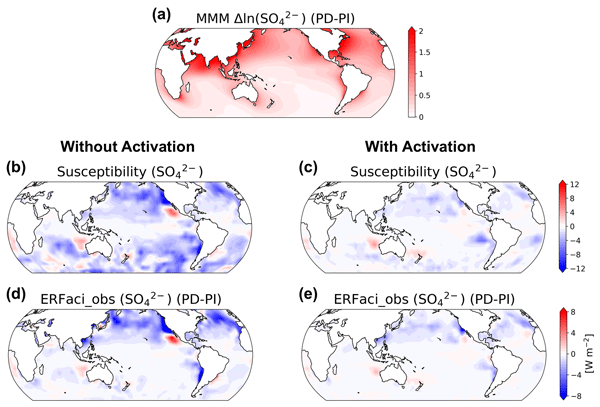
Chanyoung Park, Brian J. Soden, Ryan J. Kramer, Tristan S. L'Ecuyer, and Haozhe He
Atmos. Chem. Phys., 25, 7299–7313, https://doi.org/10.5194/acp-25-7299-2025, https://doi.org/10.5194/acp-25-7299-2025, 2025
Short summary
Short summary
This study addresses the long-standing challenge of quantifying the impact of aerosol–cloud interactions. Using satellite observations, reanalysis data, and a "perfect-model" cross-validation, we show that explicitly accounting for aerosol–cloud droplet activation rates is key to accurately estimating ERFaci (effective radiative forcing due to aerosol–cloud interactions). Our results indicate a smaller and less uncertain ERFaci than previously assessed, implying the reduced role of aerosol–cloud interactions in shaping climate sensitivity.
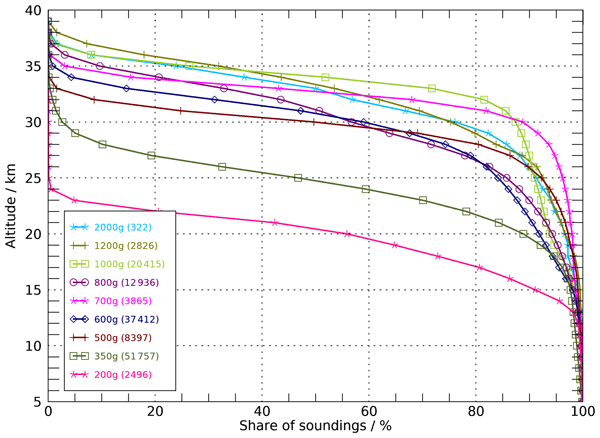
Masatomo Fujiwara, Bomin Sun, Anthony Reale, Domenico Cimini, Salvatore Larosa, Lori Borg, Christoph von Rohden, Michael Sommer, Ruud Dirksen, Marion Maturilli, Holger Vömel, Rigel Kivi, Bruce Ingleby, Ryan J. Kramer, Belay Demoz, Fabio Madonna, Fabien Carminati, Owen Lewis, Brett Candy, Christopher Thomas, David Edwards, Noersomadi, Kensaku Shimizu, and Peter Thorne
Atmos. Meas. Tech., 18, 2919–2955, https://doi.org/10.5194/amt-18-2919-2025, https://doi.org/10.5194/amt-18-2919-2025, 2025
Short summary
Short summary
We assess and illustrate the benefits of high-altitude attainment of balloon-borne radiosonde soundings up to and beyond 10 hPa level from various aspects. We show that the extra costs and technical challenges involved in consistent attainment of high ascents are more than outweighed by the benefits for a broad variety of real-time and delayed-mode applications. Consistent attainment of high ascents should therefore be pursued across the balloon observational network.
Tyler P. Janoski, Ivan Mitevski, Ryan J. Kramer, Michael Previdi, and Lorenzo M. Polvani
Geosci. Model Dev., 18, 3065–3079, https://doi.org/10.5194/gmd-18-3065-2025, https://doi.org/10.5194/gmd-18-3065-2025, 2025
Short summary
Short summary
We developed ClimKern, a Python package and radiative kernel repository, to simplify calculating radiative feedbacks and make climate sensitivity studies more reproducible. Testing of ClimKern with sample climate model data reveals that radiative kernel choice may be more important than previously thought, especially in polar regions. Our work highlights the need for kernel sensitivity analyses to be included in future studies.
Robert J. Allen, Xueying Zhao, Cynthia A. Randles, Ryan J. Kramer, Bjørn H. Samset, and Christopher J. Smith
Atmos. Chem. Phys., 24, 11207–11226, https://doi.org/10.5194/acp-24-11207-2024, https://doi.org/10.5194/acp-24-11207-2024, 2024
Short summary
Short summary
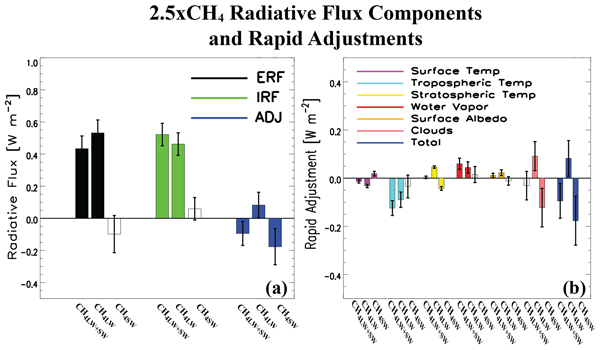
Present-day methane shortwave absorption mutes 28% (7–55%) of the surface warming associated with its longwave absorption. The precipitation increase associated with the longwave radiative effects of the present-day methane perturbation is also muted by shortwave absorption but not significantly so. Methane shortwave absorption also impacts the magnitude of its climate feedback parameter, largely through the cloud feedback.
Stephanie Fiedler, Vaishali Naik, Fiona M. O'Connor, Christopher J. Smith, Paul Griffiths, Ryan J. Kramer, Toshihiko Takemura, Robert J. Allen, Ulas Im, Matthew Kasoar, Angshuman Modak, Steven Turnock, Apostolos Voulgarakis, Duncan Watson-Parris, Daniel M. Westervelt, Laura J. Wilcox, Alcide Zhao, William J. Collins, Michael Schulz, Gunnar Myhre, and Piers M. Forster
Geosci. Model Dev., 17, 2387–2417, https://doi.org/10.5194/gmd-17-2387-2024, https://doi.org/10.5194/gmd-17-2387-2024, 2024
Short summary
Short summary
Climate scientists want to better understand modern climate change. Thus, climate model experiments are performed and compared. The results of climate model experiments differ, as assessed in the latest Intergovernmental Panel on Climate Change (IPCC) assessment report. This article gives insights into the challenges and outlines opportunities for further improving the understanding of climate change. It is based on views of a group of experts in atmospheric composition–climate interactions.
William Schoenberg, Benjamin Blanz, Jefferson K. Rajah, Beniamino Callegari, Christopher Wells, Theresia B. Putranti, Francisco Mahu, Maria Molina, Alexandre C. Köberle, Catherine Li, Wanderson Costa, David Collste, Karel Zwetsloot, Jannes Breier, Lennart Ramme, Chris Smith, and Cecilie Mauritzen
EGUsphere, https://doi.org/10.5194/egusphere-2026-5980, https://doi.org/10.5194/egusphere-2026-5980, 2026
This preprint is open for discussion and under review for Geoscientific Model Development (GMD).
Short summary
Short summary
We document an updated global simulation model, FRIDA v3.1, used to explore how climate, society, technology, land and the economy interact over time. The model reproduces historical trends and explores a myriad of possible futures while capturing new links among human decisions, climate impacts and economic change. Results show how changes can create wider effects than anticipated, providing a broader tool for exploring risk, uncertainty and the consequences of policy choices.
Paulo Ceppi, Alejandro Bodas-Salcedo, Mark D. Zelinka, Timothy Andrews, Florent Brient, Robin Chadwick, An-Zhuo Dai, Jonathan M. Gregory, Yen-Ting Hwang, Sarah M. Kang, Jennifer E. Kay, Thorsten Mauritsen, Tomoo Ogura, George Tselioudis, Masahiro Watanabe, Mark J. Webb, and Allison A. Wing
Geosci. Model Dev., 19, 8693–8708, https://doi.org/10.5194/gmd-19-8693-2026, https://doi.org/10.5194/gmd-19-8693-2026, 2026
Short summary
Short summary
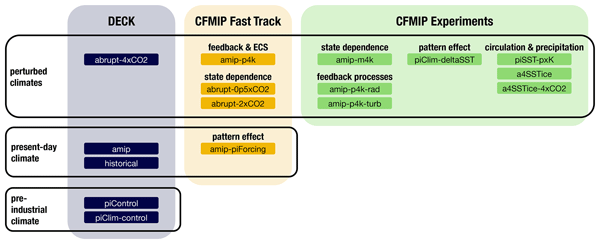
Clouds constitute a key uncertainty for climate change projections. The Cloud Feedback Model Intercomparison Project (CFMIP) aims to address this challenge by evaluating and understanding clouds and their impacts on atmospheric circulation, precipitation, and climate sensitivity. The present paper describes the CFMIP experiment protocol for the Coupled Model Intercomparison Project phase 7 (CMIP7), and discusses the accompanying science questions and opportunities for progress.
Alexander Nauels, Tessa Möller, Victor Couplet, Robert E. Kopp, Praveen Kumar, Matthias Mengel, Gregory Munday, Zebedee R. J. Nicholls, Lennart Ramme, Aimée B. A. Slangen, Chris Smith, Jennifer H. Weeks, and Tony E. Wong
EGUsphere, https://doi.org/10.5194/egusphere-2026-3874, https://doi.org/10.5194/egusphere-2026-3874, 2026
This preprint is open for discussion and under review for Geoscientific Model Development (GMD).
Short summary
Short summary
Sea levels will keep rising for centuries, so coastal planning needs long-term outlooks. For the first time, we brought together seven simplified models, called emulators, and combined their estimates of future sea level rise to year 2300, including a scenario with strong temperature overshoot before returning to 1.5 °C of warming. The emulators differ most over how much ice Antarctica will lose. Even if global temperatures fall again, extra sea level rise stays locked in for centuries.
Alejandro Romero-Prieto, Marit Sandstad, Benjamin M. Sanderson, Zebedee R. J. Nicholls, Norman J. Steinert, Thomas Gasser, Camilla Mathison, Jarmo Kikstra, Thomas J. Aubry, Katsumasa Tanaka, Konstantin Weber, and Chris Smith
Geosci. Model Dev., 19, 7111–7133, https://doi.org/10.5194/gmd-19-7111-2026, https://doi.org/10.5194/gmd-19-7111-2026, 2026
Short summary
Short summary
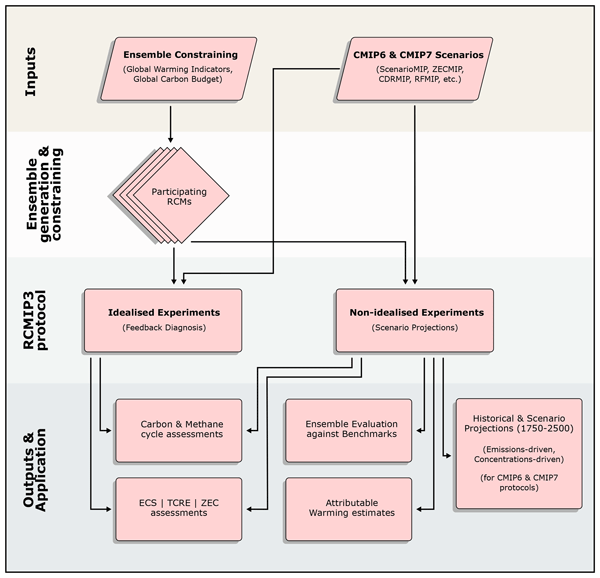
Reduced-complexity models are an important tool in climate science, helping us understand and estimate future climate change. We present the experimental protocol for the next phase of the reduced-complexity model intercomparison project, which aims to compare results from many such models to better understand their behaviour. This knowledge will guide how these models are developed and used in the future, including in the upcoming Intergovernmental Panel on Climate Change (IPCC) assessment report (AR7).
Amen Al-Yaari, Chris Smith, Yi Yao, Kjetil S. Aas, L. Ruby Leung, Min-Hui Lo, Sonali McDermid, Larissa Nazarenko, Yadu Pokhrel, Yusuke Satoh, Tokuta Yokohata, and Wim Thiery
EGUsphere, https://doi.org/10.5194/egusphere-2026-4199, https://doi.org/10.5194/egusphere-2026-4199, 2026
Short summary
Short summary
In this study, we use the Irrigation Model Intercomparison Project (IRRMIP) to provide the first multi-model quantification of irrigation-induced effective radiative forcing (ERF) across seven Earth system models over 1902–2014. We find that the global multi-model mean ERF is positive but small (~0.023 W m⁻²). This small global signal masks regional heterogeneity: South Asia and West Central Asia show higher positive ERF (~0.25 W m⁻²), while East Asia shows a negative signal (−0.03 W m⁻²).

Cristina Deidda, Arpita Asha Khanna, Wolfgang Schade, Chris Smith, and Wim Thiery
Nat. Hazards Earth Syst. Sci., 26, 3345–3394, https://doi.org/10.5194/nhess-26-3345-2026, https://doi.org/10.5194/nhess-26-3345-2026, 2026
Short summary
Short summary
Climate extremes like floods, heatwaves, droughts, and wildfires are disrupting Europe’s transport. This study combines a review of past events and future projections to assess current losses and the future exposure of transport infrastructure. Exposure to extremes is projected to rise, but lower emissions can reduce it. Urgent action is needed to reduce emissions and adapt the Trans-European Transport Network to a changing climate.
Adakudlu Muralidhar, Cecilie Mauritzen, Christopher D. Wells, Benjamin Blanz, William Schoenberg, Beniamino Callegari, Jannes Breier, Jefferson K. Rajah, Lennart Ramme, Andreas Nicolaidis Lindqvist, Alexandre C. Köberle, Axel E. Eriksson, and Chris Smith
EGUsphere, https://doi.org/10.5194/egusphere-2026-3072, https://doi.org/10.5194/egusphere-2026-3072, 2026
This preprint is open for discussion and under review for Earth System Dynamics (ESD).
Short summary
Short summary
Using the integrated assessment model FRIDA v2.1, we examine how climate impacts spread through interconnected human and Earth systems, including the economy, energy, food, water, finance, and behaviour. We find that interacting climate impacts can reduce economic growth strongly than models assuming isolated effects. Financial feedbacks are especially important, and nonlinear climate–society interactions can amplify risks across sectors even without explicit climate tipping points.
Chris Smith, Lennart Ramme, Christopher D. Wells, Ada Gjermundsen, Hongmei Li, Tatiana Ilyina, Adakudlu Muralidhar, Timothée Bourgeois, Jörg Schwinger, Alejandro Romero-Prieto, Chao Li, and Cecilie Mauritzen
Earth Syst. Dynam., 17, 893–911, https://doi.org/10.5194/esd-17-893-2026, https://doi.org/10.5194/esd-17-893-2026, 2026
Short summary
Short summary
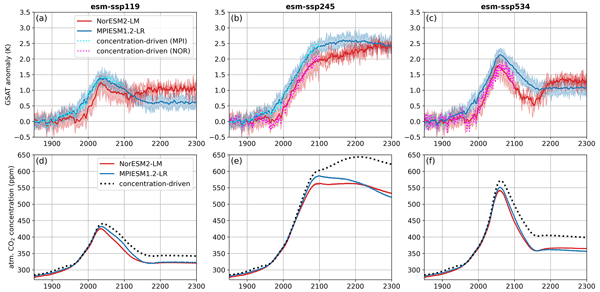
We run two Earth System Models models in CO2 emissions-driven mode to 2300 for three climate scenarios. For climate overshoot scenarios, there is a large residual warming in the 22nd century in one model, despite negative CO2 emissions, related to Southern Ocean heat release. In both models, while global mean surface temperature is largely reversible, other global and regional climate models exhibit hysteresis and irreversibility.
Piers M. Forster, Tristram Walsh, Chris Smith, William F. Lamb, Robin Lamboll, Christophe Cassou, Mathias Hauser, Zeke Hausfather, June-Yi Lee, Matthew D. Palmer, Karina von Schuckmann, Aimée B. A. Slangen, Sophie Szopa, Blair Trewin, Jeongeun Yun, Nathan P. Gillett, Stuart Jenkins, H. Damon Matthews, Krishnan Raghavan, Aurélien Ribes, Joeri Rogelj, Debbie Rosen, Xuebin Zhang, Myles Allen, Robbie M. Andrew, Chris Atkinson, Richard A. Betts, Antonio Bombelli, Samantha N. Burgess, Lijing Cheng, Helen E. Claxton, Pierre Friedlingstein, Thomas L. Frölicher, Catia M. Domingues, Thomas Gasser, Catherine H. Gregory, Rachel M. Hoesly, Daniel Huppmann, Masayoshi Ishii, Christopher Kadow, Alexia Karwat, John Kennedy, Rachel E. Killick, Mahesh V. M. Kovilakam, Paul B. Krummel, Xin Lan, Jean-François Lamarque, Aurélien Liné, Belén Martín-Míguez, Didier P. Monselesan, Colin Morice, Jens Mühle, Pino Mussak, Glen P. Peters, Anna Pirani, Julia Pongratz, Matthew Rigby, Robert Rohde, Abhishek Savita, Sonia I. Seneviratne, Steven J. Smith, Ghassan Taha, Caterina Tassone, Peter Thorne, Christopher Wells, Luke M. Western, Guido R. van der Werf, Susan E. Wijffels, Marco Zecchetto, Junting Zhong, Xiao-Ye Zhang, Valérie Masson-Delmotte, and Panmao Zhai
Earth Syst. Sci. Data, 18, 3889–3933, https://doi.org/10.5194/essd-18-3889-2026, https://doi.org/10.5194/essd-18-3889-2026, 2026
Short summary
Short summary
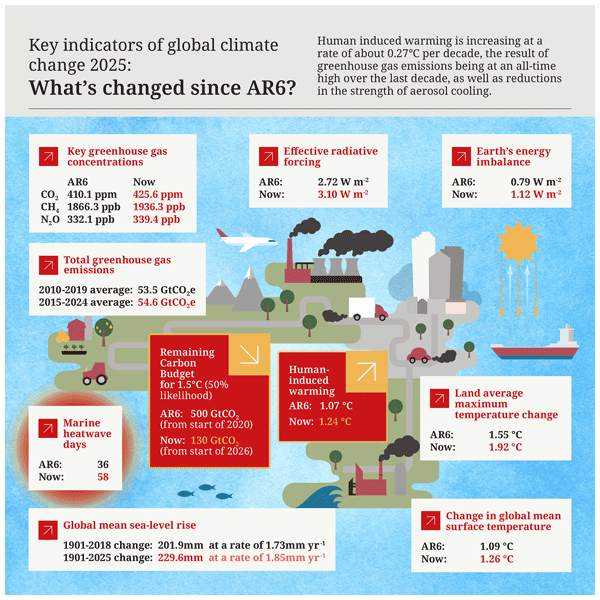
We give our annual update of key climate indicators. Our work quantifies the human contribution to global warming and the pace of climate change. This represents a large effort by the international community akin to an Intergovernmental Panel on Climate Change (IPCC) report.
Michael Gregory Windisch, Yann Quilcaille, Camilla Mathison, Claudia Tebaldi, Eleanor Burke, Laila Gohar, Chris Smith, Sarah Schöngart, Abigail Snyder, Siddarth Durga, Kalyn Dorheim, and Sonia Seneviratne
EGUsphere, https://doi.org/10.5194/egusphere-2026-2253, https://doi.org/10.5194/egusphere-2026-2253, 2026
Short summary
Short summary
Creating consistent climate scenarios remains challenging. The computational cost of comprehensive climate models leaves most scenarios without spatial climate outcomes, limiting feedback between climate consequences and scenario assumptions. We apply three spatial emulators to test their potential and current limitations in rapidly translating scenarios into spatial outcomes to identify regional risks, fill gaps in scenario coverage, and feed climate consequences back into scenario assumptions.
Benjamin M. Sanderson, Marit Sandstad, Alejandro Romero-Prieto, Stuart Jenkins, Charles Koven, Glen Peters, Roland Séfèrian, Andrew H. MacDougall, Ashwin Seshadri, Victor Brovkin, John Dunne, Abigail L. S. Swann, Torben Koenigk, Rosie A. Fisher, David Hohn, Tatiana Ilyina, Chris D. Jones, Hongmei Li, Peter Lawrence, Spencer Liddicoat, Nadine Mengis, Anastasia Romanou, Lori T. Sentman, Chris Smith, Norman J. Steinert, Jerry Tjiputra, and Tilo Ziehn
EGUsphere, https://doi.org/10.5194/egusphere-2026-1875, https://doi.org/10.5194/egusphere-2026-1875, 2026
Short summary
Short summary
When humanity stops emitting carbon dioxide, will temperatures keep rising, stabilize, or fall? Our study reveals in most models, temperatures remain nearly stable, but this hides a balance between the warming in response to radiation imbalance, and the cooling due to uptake of carbon in the land and ocean. Understanding this balance helps refine how much more CO2 we can safely emit.
Beth Dingley, James A. Anstey, Marta Abalos, Carsten Abraham, Tommi Bergman, Lisa Bock, Sonya Fiddes, Birgit Hassler, Ryan J. Kramer, Fei Luo, Fiona M. O'Connor, Petr Šácha, Isla R. Simpson, Laura J. Wilcox, and Mark D. Zelinka
Geosci. Model Dev., 19, 2945–2984, https://doi.org/10.5194/gmd-19-2945-2026, https://doi.org/10.5194/gmd-19-2945-2026, 2026
Short summary
Short summary
This manuscript defines as a list of variables and scientific opportunities which are requested from the Coupled Model Intercomparison Project Phase 7 (CMIP7) Assessment Fast Track to address open atmospheric science questions. The list reflects the output of a large public community engagement effort, coordinated across autumn 2025 through to summer 2025.
William F. Lamb, Robbie M. Andrew, Matthew Jones, Zebedee Nicholls, Glen P. Peters, Chris Smith, Marielle Saunois, Giacomo Grassi, Julia Pongratz, Steven J. Smith, Francesco N. Tubiello, Monica Crippa, Matthew Gidden, Pierre Friedlingstein, Jan Minx, and Piers M. Forster
Earth Syst. Sci. Data, 18, 2549–2572, https://doi.org/10.5194/essd-18-2549-2026, https://doi.org/10.5194/essd-18-2549-2026, 2026
Short summary
Short summary
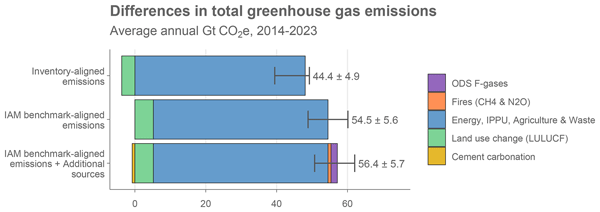
This study explores why global greenhouse gas (GHG) emissions estimates vary. Key reasons include different coverage of gases and sectors, varying definitions of anthropogenic land use change emissions, and the Paris Agreement not covering all emission sources. The study highlights three main ways emissions data is reported, each with different objectives and resulting in varying global emission totals. It emphasizes the need for transparency in choosing datasets and setting assessment scopes.
Detlef P. Van Vuuren, Brian C. O'Neill, Claudia Tebaldi, Benjamin M. Sanderson, Louise P. Chini, Pierre Friedlingstein, Tomoko Hasegawa, Keywan Riahi, Bala Govindasamy, Nico Bauer, Veronika Eyring, Cheikh M. N. Fall, Katja Frieler, Matthew J. Gidden, Laila K. Gohar, Annika Högner, Andrew D. Jones, Jarmo Kikstra, Andrew King, Reto Knutti, Elmar Kriegler, Peter Lawrence, Chris Lennard, Jason Lowe, Camilla Mathison, Shahbaz Mehmood, Zebedee Nicholls, Luciana F. Prado, Qiang Zhang, Steven K. Rose, Alex C. Ruane, Marit Sandstad, Carl-Friedrich Schleussner, Roland Seferian, Jana Sillmann, Chris Smith, Anna A. Sörensson, Swapna Panickal, Kaoru Tachiiri, Naomi Vaughan, Saritha S. Vishwanathan, Tokuta Yokohata, Marco Zecchetto, and Tilo Ziehn
Geosci. Model Dev., 19, 2627–2656, https://doi.org/10.5194/gmd-19-2627-2026, https://doi.org/10.5194/gmd-19-2627-2026, 2026
Short summary
Short summary
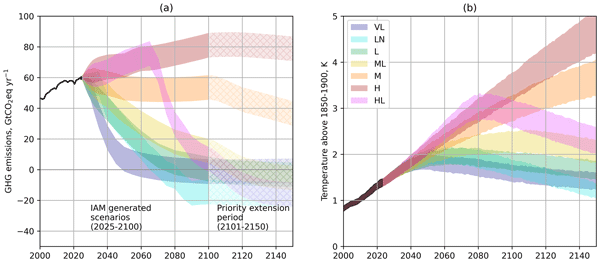
We propose a set of seven plausible 21st century emission scenarios, and their multi-century extensions, that will be used by the international community of climate modeling centers to produce the next generation of climate projections. These projections will support climate, impact and mitigation researchers, provide information to practitioners to address future risks from climate change, and contribute to policymakers’ considerations of the trade-offs among various levels of mitigation.
Paulo Ceppi, Sarah Wilson Kemsley, Hendrik Andersen, Timothy Andrews, Ryan J. Kramer, Peer Nowack, Casey J. Wall, and Mark D. Zelinka
Atmos. Chem. Phys., 26, 4153–4171, https://doi.org/10.5194/acp-26-4153-2026, https://doi.org/10.5194/acp-26-4153-2026, 2026
Short summary
Short summary
Recent decades have seen a marked decrease in global low-level cloud cover, leading to more sunlight heating the Earth. This trend is poorly understood, raising the concern that clouds may amplify global warming more than previously thought. We show that the cloud decrease is mostly caused by human forcing on climate, and that it agrees with previous estimates of how clouds respond to decreasing aerosol pollution, increasing greenhouse gas concentration, and their effects on global temperature.
Christopher D. Wells, Lennart Ramme, Chris Smith, Jannes Breier, Adakudlu Muralidhar, Chao Li, Ada Gjermundsen, William Alexander Schoenberg, Benjamin Blanz, and Cecilie Mauritzen
Geosci. Model Dev., 19, 1429–1453, https://doi.org/10.5194/gmd-19-1429-2026, https://doi.org/10.5194/gmd-19-1429-2026, 2026
Short summary
Short summary
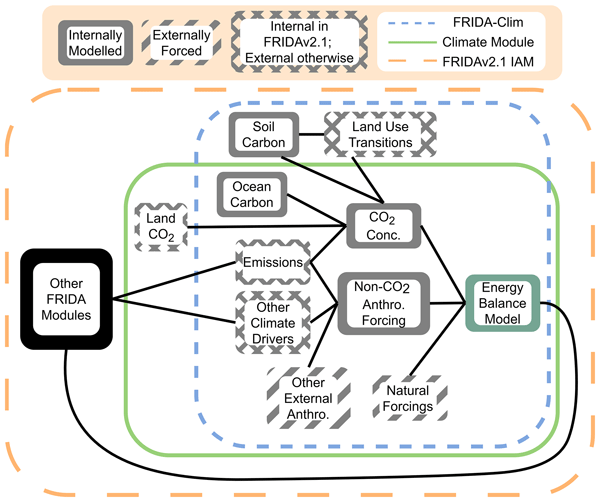
Understanding the change in climate that would occur under different future pathways of greenhouse gas emissions and changes in land use is crucial. Here, we develop a new simple climate model to help study this. We reduce the number of inputs so that our model can be connected to a model of the human causes of climate change. This way, we can study the interaction between climate change and society, including climate impacts. Our model broadly agrees with historical observations.
Christopher D. Wells, Benjamin Blanz, Lennart Ramme, Jannes Breier, Beniamino Callegari, Adakudlu Muralidhar, Jefferson K. Rajah, Andreas Nicolaidis Lindqvist, Axel E. Eriksson, William Alexander Schoenberg, Alexandre C. Köberle, Lan Wang-Erlandsson, Cecilie Mauritzen, Martin B. Grimeland, and Chris Smith
Geosci. Model Dev., 19, 1229–1260, https://doi.org/10.5194/gmd-19-1229-2026, https://doi.org/10.5194/gmd-19-1229-2026, 2026
Short summary
Short summary
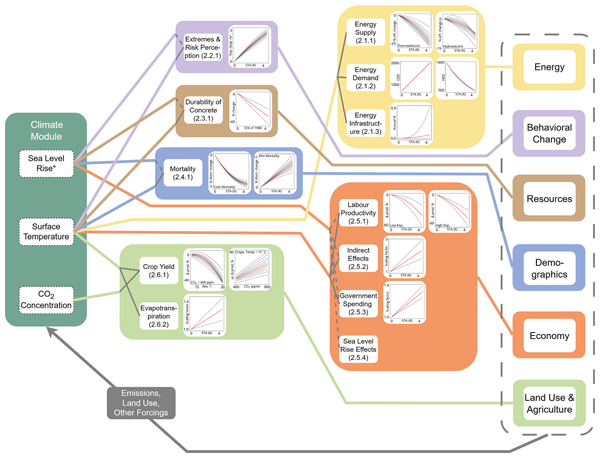
Computer models built to study future developments of human activity and climate change often exclude the impacts of climate change. Here, we include these effects in a new model. We create functions connecting changes in global temperature, carbon dioxide, and sea level to energy supply and demand, food systems, mortality, economic damages, and other important quantities. Including these effects will allow us to explore their impact on future changes in the human and climate realms.
Peter W. Thorne, John M. Nicklas, John J. Kennedy, Bruce Calvert, Baylor Fox-Kemper, Mark T. Richardson, Adrian Simmons, Ed Hawkins, Robert Rhode, Kathryn Cowtan, Nerilie J. Abram, Axel Andersson, Simon Noone, Phillipe Marbaix, Nathan Lenssen, Dirk Olonscheck, Tristram Walsh, Stephen Outten, Ingo Bethke, Bjorn H. Samset, Chris Smith, Anna Pirani, Jan Fuglestvedt, Lavanya Rajamani, Richard A. Betts, Elizabeth C. Kent, Blair Trewin, Colin Morice, Tim Osborn, Samantha N. Burgess, Oliver Geden, Andrew Parnell, Piers M. Forster, Chris Hewitt, Zeke Hausfather, Valerie Masson-Delmotte, Jochem Marotzke, Nathan Gillett, Sonia I. Seneviratne, Gavin A. Schmidt, Duo Chan, Stefan Brönnimann, Andy Reisinger, Matthew Menne, Maisa Rojas Corradi, Christopher Kadow, Peter Huybers, David B. Stephenson, Emily Wallis, Joeri Rogelj, Andrew Schurer, Karen McKinnon, Panmao Zhai, Fatima Driouech, Wilfran Moufouma Okia, Saeed Vazifehkhah, Sophie Szopa, Christopher J. Merchant, Shoji Hirahara, Masayoshi Ishii, Francois A. Engelbrecht, Qingxiang Li, June-Yi Lee, Alex J. Cannon, Christophe Cassou, Karina von Schuckmann, Amir H. Delju, and Ellie Murtagh
Earth Syst. Sci. Data Discuss., https://doi.org/10.5194/essd-2025-825, https://doi.org/10.5194/essd-2025-825, 2026
Revised manuscript has not been submitted
Short summary
Short summary
We reassess the basis for determining the present level of long-term global warming. Unbiased estimates of both realised warming and anthropogenic warming are possible that approximate a 20-year retrospective mean. Our resulting estimates of 1.40 [1.23–1.58] °C (realised) and 1.34 [1.18–1.50] °C (anthropogenic) as at end of 2024 highlight the urgency of immediate, far-reaching and sustained climate mitigation actions if we are to meet the long term temperature goal of the Paris Agreement.
Benjamin M. Sanderson, Susanne Baur, Carl-Freidrich Schleussner, Glen P. Peters, Shivika Mittal, Marit Sandstad, Steffen Kallbekken, Chris Smith, Sabine Fuss, Bas van Ruijven, Rosie A. Fisher, Joeri Rogelj, Roland Séférian, Bjørn Samset, Norman J. Steinert, Laurent Terray, and Jan Fuglestvedt
EGUsphere, https://doi.org/10.5194/egusphere-2026-28, https://doi.org/10.5194/egusphere-2026-28, 2026
Preprint archived
Short summary
Short summary
Solar Radiation Modification by adding aerosols to the stratosphere could rapidly and temporarily cool the Earth, but this speed creates unprecedented risks. Fast climate responses coupled with political instability create risks of failure to decarbonise, super-rapid climate change, and conflict. Idealized scenarios or conventional modeling tools could lead to systematic ignorance of these risks. We thus introduce a framework outlining what must be represented in future modeling and assessment.
Alejandro Romero-Prieto, Camilla Mathison, and Chris Smith
Geosci. Model Dev., 19, 115–165, https://doi.org/10.5194/gmd-19-115-2026, https://doi.org/10.5194/gmd-19-115-2026, 2026
Short summary
Short summary
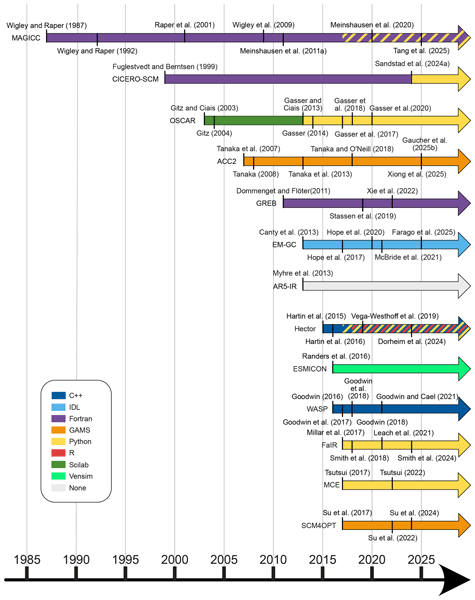
Simple Climate Models (SCMs) are widely used tools to explore how Earth's climate may change in the future. In recent decades, the number and types of SCMs have increased significantly, hindering efforts to understand cross-model differences. In this study, we provide an overview of the main principles guiding climate simulation by SCMs, as well as a description of most high-profile SCMs. This work offers a clear reference to support the informed use of these important tools.
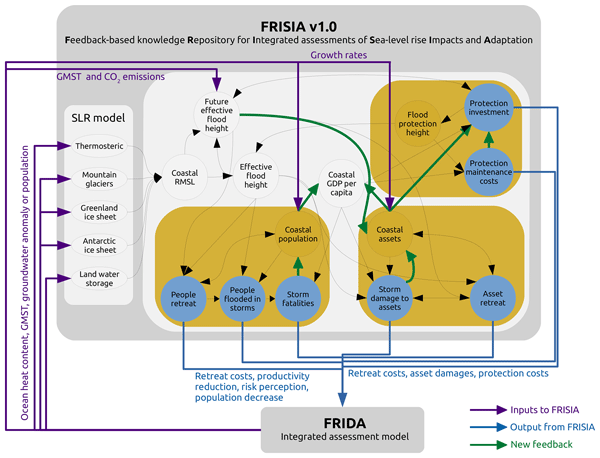
Lennart Ramme, Benjamin Blanz, Christopher Wells, Tony E. Wong, William Schoenberg, Chris Smith, and Chao Li
Geosci. Model Dev., 18, 10017–10052, https://doi.org/10.5194/gmd-18-10017-2025, https://doi.org/10.5194/gmd-18-10017-2025, 2025
Short summary
Short summary
We present FRISIA version 1.0, a model for emulating sea level rise (SLR) and representing SLR impacts and adaptation in integrated assessment models (IAMs). FRISIA includes previously uncaptured coastal socio-economic feedback and a diverse set of impact strains, thereby improving the represenation of SLR impacts in IAMs. Here we describe the baseline behaviour of FRISIA, explore the effects of the additional feedback and showcase the coupling of FRISIA to an IAM.
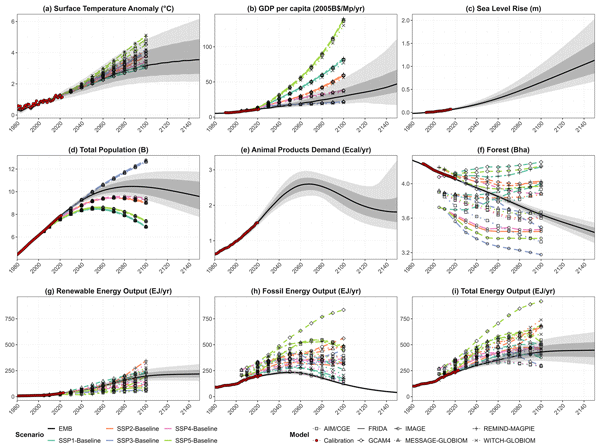
William Schoenberg, Benjamin Blanz, Jefferson K. Rajah, Beniamino Callegari, Christopher Wells, Jannes Breier, Martin B. Grimeland, Andreas Nicolaidis Lindqvist, Lennart Ramme, Chris Smith, Chao Li, Sarah Mashhadi, Adakudlu Muralidhar, and Cecilie Mauritzen
Geosci. Model Dev., 18, 8047–8069, https://doi.org/10.5194/gmd-18-8047-2025, https://doi.org/10.5194/gmd-18-8047-2025, 2025
Short summary
Short summary
The current crop of models assessed by the Intergovernmental Panel on Climate Change to produce their assessment reports lack endogenous process-based representations of climate-driven changes to human activities, limiting understanding of the feedback between climate and humans. FRIDA (Feedback-based knowledge Repository for IntegrateD Assessments) v2.1 integrates these systems and generate results that suggest standard scenarios the shared socioeconomic pathways baseline scenarios may overestimate economic growth, highlighting the importance of feedbacks for realistic projections and informed policymaking.
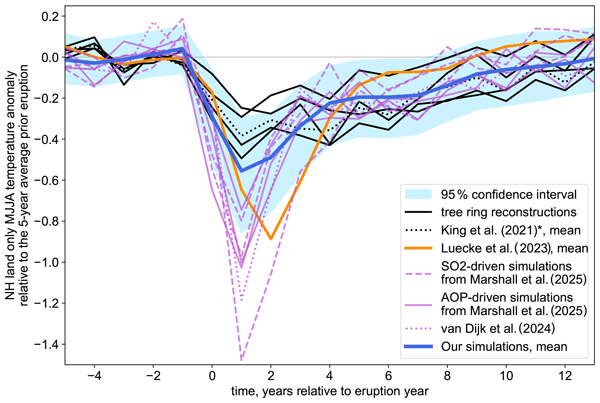
Magali Verkerk, Thomas J. Aubry, Chris Smith, Peter O. Hopcroft, Michael Sigl, Jessica E. Tierney, Kevin Anchukaitis, Matthew Osman, Anja Schmidt, and Matthew Toohey
Clim. Past, 21, 1755–1778, https://doi.org/10.5194/cp-21-1755-2025, https://doi.org/10.5194/cp-21-1755-2025, 2025
Short summary
Short summary
Large volcanic eruptions can trigger global cooling, affecting human societies. Using ice-core records and simple climate model to simulate volcanic effect over the last 8500 years, we show that volcanic eruptions cool the climate by 0.12 °C on average. By comparing model results with temperature recorded by tree rings over the last 1000 years, we demonstrate that our models can predict the large-scale cooling caused by volcanic eruptions and can be used in cases of large eruptions in the future.
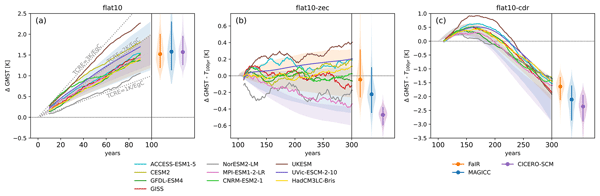
Benjamin M. Sanderson, Victor Brovkin, Rosie A. Fisher, David Hohn, Tatiana Ilyina, Chris D. Jones, Torben Koenigk, Charles Koven, Hongmei Li, David M. Lawrence, Peter Lawrence, Spencer Liddicoat, Andrew H. MacDougall, Nadine Mengis, Zebedee Nicholls, Eleanor O'Rourke, Anastasia Romanou, Marit Sandstad, Jörg Schwinger, Roland Séférian, Lori T. Sentman, Isla R. Simpson, Chris Smith, Norman J. Steinert, Abigail L. S. Swann, Jerry Tjiputra, and Tilo Ziehn
Geosci. Model Dev., 18, 5699–5724, https://doi.org/10.5194/gmd-18-5699-2025, https://doi.org/10.5194/gmd-18-5699-2025, 2025
Short summary
Short summary
This study investigates how climate models warm in response to simplified carbon emissions trajectories, refining the understanding of climate reversibility and commitment. Metrics are defined for warming response to cumulative emissions and for the cessation of emissions or ramp-down to net-zero and net-negative levels. Results indicate that previous concentration-driven experiments may have overstated the Zero Emissions Commitment due to emissions rates exceeding historical levels.
Paul T. Griffiths, Laura J. Wilcox, Robert J. Allen, Vaishali Naik, Fiona M. O'Connor, Michael Prather, Alex Archibald, Florence Brown, Makoto Deushi, William Collins, Stephanie Fiedler, Naga Oshima, Lee T. Murray, Bjørn H. Samset, Chris Smith, Steven Turnock, Duncan Watson-Parris, and Paul J. Young
Atmos. Chem. Phys., 25, 8289–8328, https://doi.org/10.5194/acp-25-8289-2025, https://doi.org/10.5194/acp-25-8289-2025, 2025
Short summary
Short summary
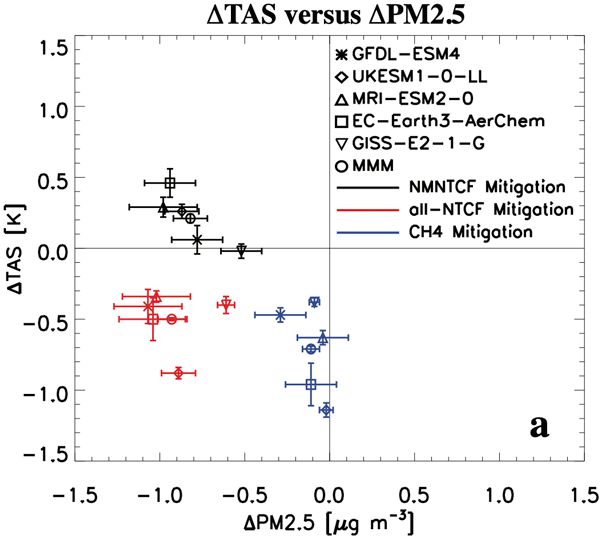
The Aerosol Chemistry Model Intercomparison Project (AerChemMIP) aimed to quantify the climate and air quality impacts of aerosols and chemically reactive gases. We review its contribution to AR6 (Sixth Assessment Report of the Intergovernmental Panel on Climate Change) and the wider understanding of the role of these species in climate and climate change. We identify challenges and provide recommendations to improve the utility and uptake of climate model data, detailed summary tables of CMIP6 models, experiments, and emergent diagnostics.
Chanyoung Park, Brian J. Soden, Ryan J. Kramer, Tristan S. L'Ecuyer, and Haozhe He
Atmos. Chem. Phys., 25, 7299–7313, https://doi.org/10.5194/acp-25-7299-2025, https://doi.org/10.5194/acp-25-7299-2025, 2025
Short summary
Short summary
This study addresses the long-standing challenge of quantifying the impact of aerosol–cloud interactions. Using satellite observations, reanalysis data, and a "perfect-model" cross-validation, we show that explicitly accounting for aerosol–cloud droplet activation rates is key to accurately estimating ERFaci (effective radiative forcing due to aerosol–cloud interactions). Our results indicate a smaller and less uncertain ERFaci than previously assessed, implying the reduced role of aerosol–cloud interactions in shaping climate sensitivity.
Masatomo Fujiwara, Bomin Sun, Anthony Reale, Domenico Cimini, Salvatore Larosa, Lori Borg, Christoph von Rohden, Michael Sommer, Ruud Dirksen, Marion Maturilli, Holger Vömel, Rigel Kivi, Bruce Ingleby, Ryan J. Kramer, Belay Demoz, Fabio Madonna, Fabien Carminati, Owen Lewis, Brett Candy, Christopher Thomas, David Edwards, Noersomadi, Kensaku Shimizu, and Peter Thorne
Atmos. Meas. Tech., 18, 2919–2955, https://doi.org/10.5194/amt-18-2919-2025, https://doi.org/10.5194/amt-18-2919-2025, 2025
Short summary
Short summary
We assess and illustrate the benefits of high-altitude attainment of balloon-borne radiosonde soundings up to and beyond 10 hPa level from various aspects. We show that the extra costs and technical challenges involved in consistent attainment of high ascents are more than outweighed by the benefits for a broad variety of real-time and delayed-mode applications. Consistent attainment of high ascents should therefore be pursued across the balloon observational network.
Piers M. Forster, Chris Smith, Tristram Walsh, William F. Lamb, Robin Lamboll, Christophe Cassou, Mathias Hauser, Zeke Hausfather, June-Yi Lee, Matthew D. Palmer, Karina von Schuckmann, Aimée B. A. Slangen, Sophie Szopa, Blair Trewin, Jeongeun Yun, Nathan P. Gillett, Stuart Jenkins, H. Damon Matthews, Krishnan Raghavan, Aurélien Ribes, Joeri Rogelj, Debbie Rosen, Xuebin Zhang, Myles Allen, Lara Aleluia Reis, Robbie M. Andrew, Richard A. Betts, Alex Borger, Jiddu A. Broersma, Samantha N. Burgess, Lijing Cheng, Pierre Friedlingstein, Catia M. Domingues, Marco Gambarini, Thomas Gasser, Johannes Gütschow, Masayoshi Ishii, Christopher Kadow, John Kennedy, Rachel E. Killick, Paul B. Krummel, Aurélien Liné, Didier P. Monselesan, Colin Morice, Jens Mühle, Vaishali Naik, Glen P. Peters, Anna Pirani, Julia Pongratz, Jan C. Minx, Matthew Rigby, Robert Rohde, Abhishek Savita, Sonia I. Seneviratne, Peter Thorne, Christopher Wells, Luke M. Western, Guido R. van der Werf, Susan E. Wijffels, Valérie Masson-Delmotte, and Panmao Zhai
Earth Syst. Sci. Data, 17, 2641–2680, https://doi.org/10.5194/essd-17-2641-2025, https://doi.org/10.5194/essd-17-2641-2025, 2025
Short summary
Short summary
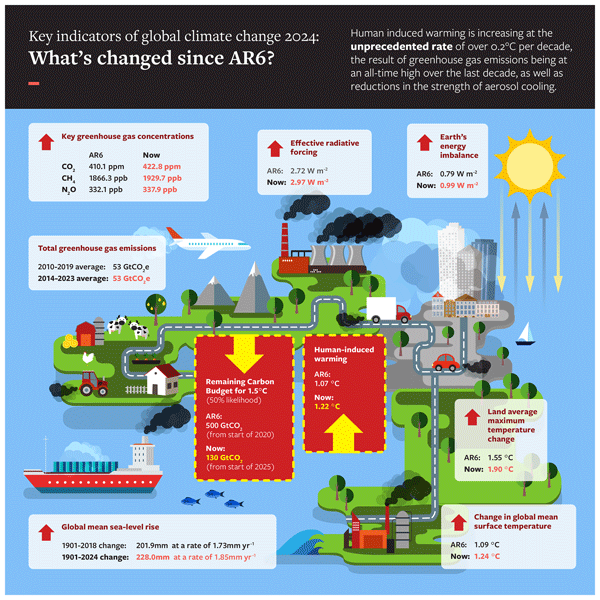
In a rapidly changing climate, evidence-based decision-making benefits from up-to-date and timely information. Here we compile monitoring datasets to track real-world changes over time. To make our work relevant to policymakers, we follow methods from the Intergovernmental Panel on Climate Change (IPCC). Human activities are increasing the Earth's energy imbalance and driving faster sea-level rise compared to the IPCC assessment.
Tyler P. Janoski, Ivan Mitevski, Ryan J. Kramer, Michael Previdi, and Lorenzo M. Polvani
Geosci. Model Dev., 18, 3065–3079, https://doi.org/10.5194/gmd-18-3065-2025, https://doi.org/10.5194/gmd-18-3065-2025, 2025
Short summary
Short summary
We developed ClimKern, a Python package and radiative kernel repository, to simplify calculating radiative feedbacks and make climate sensitivity studies more reproducible. Testing of ClimKern with sample climate model data reveals that radiative kernel choice may be more important than previously thought, especially in polar regions. Our work highlights the need for kernel sensitivity analyses to be included in future studies.
Camilla Mathison, Eleanor J. Burke, Gregory Munday, Chris D. Jones, Chris J. Smith, Norman J. Steinert, Andy J. Wiltshire, Chris Huntingford, Eszter Kovacs, Laila K. Gohar, Rebecca M. Varney, and Douglas McNeall
Geosci. Model Dev., 18, 1785–1808, https://doi.org/10.5194/gmd-18-1785-2025, https://doi.org/10.5194/gmd-18-1785-2025, 2025
Short summary
Short summary
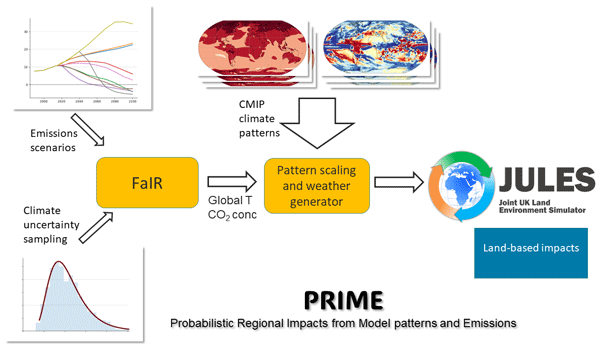
We present PRIME (Probabilistic Regional Impacts from Model patterns and Emissions), which is designed to take new emissions scenarios and rapidly provide regional impact information. PRIME allows large ensembles to be run on multi-centennial timescales, including the analysis of many important variables for impact assessments. Our evaluation shows that PRIME reproduces the climate response for known scenarios, providing confidence in using PRIME for novel scenarios.
Chris Smith, Donald P. Cummins, Hege-Beate Fredriksen, Zebedee Nicholls, Malte Meinshausen, Myles Allen, Stuart Jenkins, Nicholas Leach, Camilla Mathison, and Antti-Ilari Partanen
Geosci. Model Dev., 17, 8569–8592, https://doi.org/10.5194/gmd-17-8569-2024, https://doi.org/10.5194/gmd-17-8569-2024, 2024
Short summary
Short summary
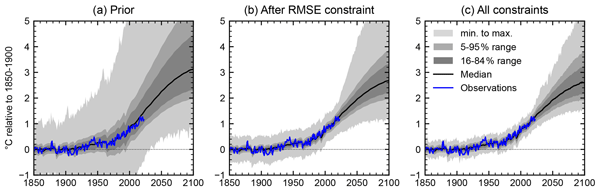
Climate projections are only useful if the underlying models that produce them are well calibrated and can reproduce observed climate change. We formalise a software package that calibrates the open-source FaIR simple climate model to full-complexity Earth system models. Observations, including historical warming, and assessments of key climate variables such as that of climate sensitivity are used to constrain the model output.
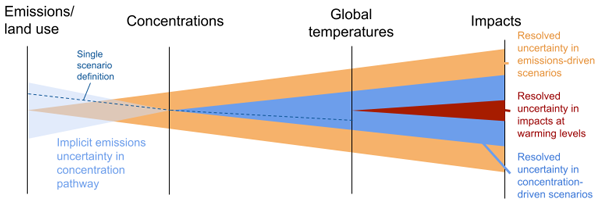
Benjamin M. Sanderson, Ben B. B. Booth, John Dunne, Veronika Eyring, Rosie A. Fisher, Pierre Friedlingstein, Matthew J. Gidden, Tomohiro Hajima, Chris D. Jones, Colin G. Jones, Andrew King, Charles D. Koven, David M. Lawrence, Jason Lowe, Nadine Mengis, Glen P. Peters, Joeri Rogelj, Chris Smith, Abigail C. Snyder, Isla R. Simpson, Abigail L. S. Swann, Claudia Tebaldi, Tatiana Ilyina, Carl-Friedrich Schleussner, Roland Séférian, Bjørn H. Samset, Detlef van Vuuren, and Sönke Zaehle
Geosci. Model Dev., 17, 8141–8172, https://doi.org/10.5194/gmd-17-8141-2024, https://doi.org/10.5194/gmd-17-8141-2024, 2024
Short summary
Short summary
We discuss how, in order to provide more relevant guidance for climate policy, coordinated climate experiments should adopt a greater focus on simulations where Earth system models are provided with carbon emissions from fossil fuels together with land use change instructions, rather than past approaches that have largely focused on experiments with prescribed atmospheric carbon dioxide concentrations. We discuss how these goals might be achieved in coordinated climate modeling experiments.
Robert J. Allen, Xueying Zhao, Cynthia A. Randles, Ryan J. Kramer, Bjørn H. Samset, and Christopher J. Smith
Atmos. Chem. Phys., 24, 11207–11226, https://doi.org/10.5194/acp-24-11207-2024, https://doi.org/10.5194/acp-24-11207-2024, 2024
Short summary
Short summary
Present-day methane shortwave absorption mutes 28% (7–55%) of the surface warming associated with its longwave absorption. The precipitation increase associated with the longwave radiative effects of the present-day methane perturbation is also muted by shortwave absorption but not significantly so. Methane shortwave absorption also impacts the magnitude of its climate feedback parameter, largely through the cloud feedback.
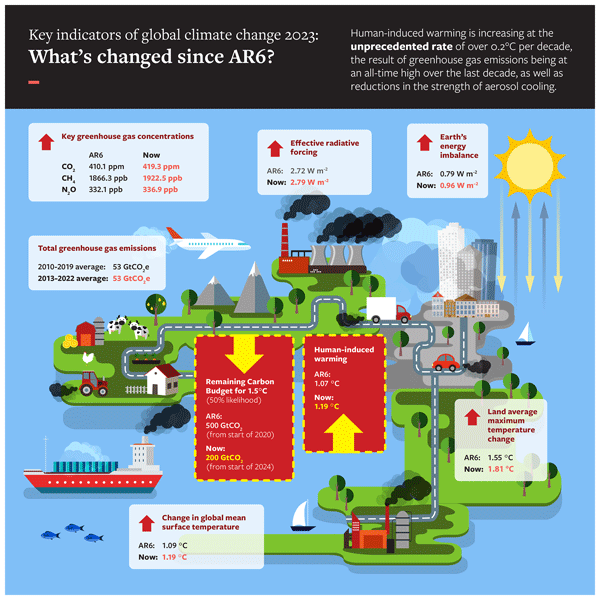
Piers M. Forster, Chris Smith, Tristram Walsh, William F. Lamb, Robin Lamboll, Bradley Hall, Mathias Hauser, Aurélien Ribes, Debbie Rosen, Nathan P. Gillett, Matthew D. Palmer, Joeri Rogelj, Karina von Schuckmann, Blair Trewin, Myles Allen, Robbie Andrew, Richard A. Betts, Alex Borger, Tim Boyer, Jiddu A. Broersma, Carlo Buontempo, Samantha Burgess, Chiara Cagnazzo, Lijing Cheng, Pierre Friedlingstein, Andrew Gettelman, Johannes Gütschow, Masayoshi Ishii, Stuart Jenkins, Xin Lan, Colin Morice, Jens Mühle, Christopher Kadow, John Kennedy, Rachel E. Killick, Paul B. Krummel, Jan C. Minx, Gunnar Myhre, Vaishali Naik, Glen P. Peters, Anna Pirani, Julia Pongratz, Carl-Friedrich Schleussner, Sonia I. Seneviratne, Sophie Szopa, Peter Thorne, Mahesh V. M. Kovilakam, Elisa Majamäki, Jukka-Pekka Jalkanen, Margreet van Marle, Rachel M. Hoesly, Robert Rohde, Dominik Schumacher, Guido van der Werf, Russell Vose, Kirsten Zickfeld, Xuebin Zhang, Valérie Masson-Delmotte, and Panmao Zhai
Earth Syst. Sci. Data, 16, 2625–2658, https://doi.org/10.5194/essd-16-2625-2024, https://doi.org/10.5194/essd-16-2625-2024, 2024
Short summary
Short summary
This paper tracks some key indicators of global warming through time, from 1850 through to the end of 2023. It is designed to give an authoritative estimate of global warming to date and its causes. We find that in 2023, global warming reached 1.3 °C and is increasing at over 0.2 °C per decade. This is caused by all-time-high greenhouse gas emissions.
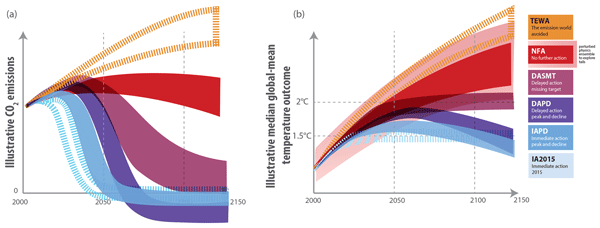
Malte Meinshausen, Carl-Friedrich Schleussner, Kathleen Beyer, Greg Bodeker, Olivier Boucher, Josep G. Canadell, John S. Daniel, Aïda Diongue-Niang, Fatima Driouech, Erich Fischer, Piers Forster, Michael Grose, Gerrit Hansen, Zeke Hausfather, Tatiana Ilyina, Jarmo S. Kikstra, Joyce Kimutai, Andrew D. King, June-Yi Lee, Chris Lennard, Tabea Lissner, Alexander Nauels, Glen P. Peters, Anna Pirani, Gian-Kasper Plattner, Hans Pörtner, Joeri Rogelj, Maisa Rojas, Joyashree Roy, Bjørn H. Samset, Benjamin M. Sanderson, Roland Séférian, Sonia Seneviratne, Christopher J. Smith, Sophie Szopa, Adelle Thomas, Diana Urge-Vorsatz, Guus J. M. Velders, Tokuta Yokohata, Tilo Ziehn, and Zebedee Nicholls
Geosci. Model Dev., 17, 4533–4559, https://doi.org/10.5194/gmd-17-4533-2024, https://doi.org/10.5194/gmd-17-4533-2024, 2024
Short summary
Short summary
The scientific community is considering new scenarios to succeed RCPs and SSPs for the next generation of Earth system model runs to project future climate change. To contribute to that effort, we reflect on relevant policy and scientific research questions and suggest categories for representative emission pathways. These categories are tailored to the Paris Agreement long-term temperature goal, high-risk outcomes in the absence of further climate policy and worlds “that could have been”.
Stephanie Fiedler, Vaishali Naik, Fiona M. O'Connor, Christopher J. Smith, Paul Griffiths, Ryan J. Kramer, Toshihiko Takemura, Robert J. Allen, Ulas Im, Matthew Kasoar, Angshuman Modak, Steven Turnock, Apostolos Voulgarakis, Duncan Watson-Parris, Daniel M. Westervelt, Laura J. Wilcox, Alcide Zhao, William J. Collins, Michael Schulz, Gunnar Myhre, and Piers M. Forster
Geosci. Model Dev., 17, 2387–2417, https://doi.org/10.5194/gmd-17-2387-2024, https://doi.org/10.5194/gmd-17-2387-2024, 2024
Short summary
Short summary
Climate scientists want to better understand modern climate change. Thus, climate model experiments are performed and compared. The results of climate model experiments differ, as assessed in the latest Intergovernmental Panel on Climate Change (IPCC) assessment report. This article gives insights into the challenges and outlines opportunities for further improving the understanding of climate change. It is based on views of a group of experts in atmospheric composition–climate interactions.
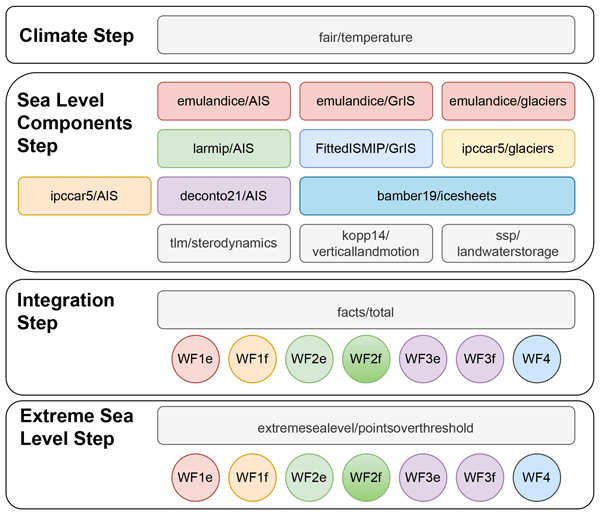
Robert E. Kopp, Gregory G. Garner, Tim H. J. Hermans, Shantenu Jha, Praveen Kumar, Alexander Reedy, Aimée B. A. Slangen, Matteo Turilli, Tamsin L. Edwards, Jonathan M. Gregory, George Koubbe, Anders Levermann, Andre Merzky, Sophie Nowicki, Matthew D. Palmer, and Chris Smith
Geosci. Model Dev., 16, 7461–7489, https://doi.org/10.5194/gmd-16-7461-2023, https://doi.org/10.5194/gmd-16-7461-2023, 2023
Short summary
Short summary
Future sea-level rise projections exhibit multiple forms of uncertainty, all of which must be considered by scientific assessments intended to inform decision-making. The Framework for Assessing Changes To Sea-level (FACTS) is a new software package intended to support assessments of global mean, regional, and extreme sea-level rise. An early version of FACTS supported the development of the IPCC Sixth Assessment Report sea-level projections.
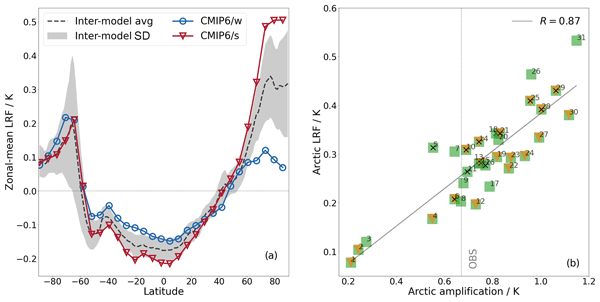
Olivia Linke, Johannes Quaas, Finja Baumer, Sebastian Becker, Jan Chylik, Sandro Dahlke, André Ehrlich, Dörthe Handorf, Christoph Jacobi, Heike Kalesse-Los, Luca Lelli, Sina Mehrdad, Roel A. J. Neggers, Johannes Riebold, Pablo Saavedra Garfias, Niklas Schnierstein, Matthew D. Shupe, Chris Smith, Gunnar Spreen, Baptiste Verneuil, Kameswara S. Vinjamuri, Marco Vountas, and Manfred Wendisch
Atmos. Chem. Phys., 23, 9963–9992, https://doi.org/10.5194/acp-23-9963-2023, https://doi.org/10.5194/acp-23-9963-2023, 2023
Short summary
Short summary
Lapse rate feedback (LRF) is a major driver of the Arctic amplification (AA) of climate change. It arises because the warming is stronger at the surface than aloft. Several processes can affect the LRF in the Arctic, such as the omnipresent temperature inversion. Here, we compare multimodel climate simulations to Arctic-based observations from a large research consortium to broaden our understanding of these processes, find synergy among them, and constrain the Arctic LRF and AA.
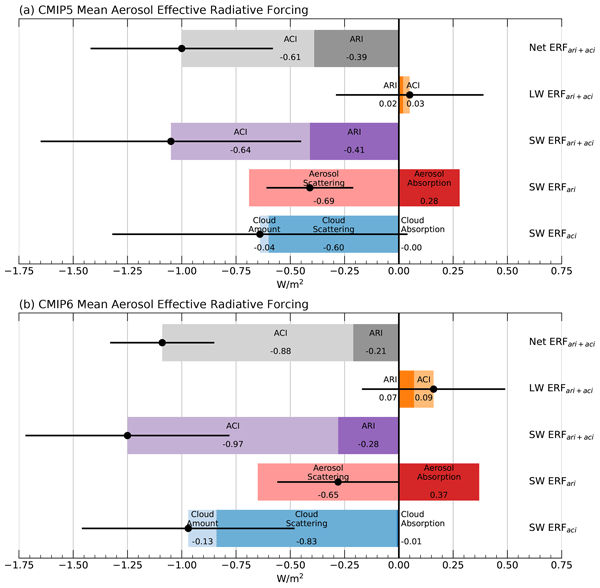
Mark D. Zelinka, Christopher J. Smith, Yi Qin, and Karl E. Taylor
Atmos. Chem. Phys., 23, 8879–8898, https://doi.org/10.5194/acp-23-8879-2023, https://doi.org/10.5194/acp-23-8879-2023, 2023
Short summary
Short summary
The primary uncertainty in how strongly Earth's climate has been perturbed by human activities comes from the unknown radiative impact of aerosol changes. Accurately quantifying these forcings – and their sub-components – in climate models is crucial for understanding the past and future simulated climate. In this study we describe biases in previously published estimates of aerosol radiative forcing in climate models and provide corrected estimates along with code for users to compute them.
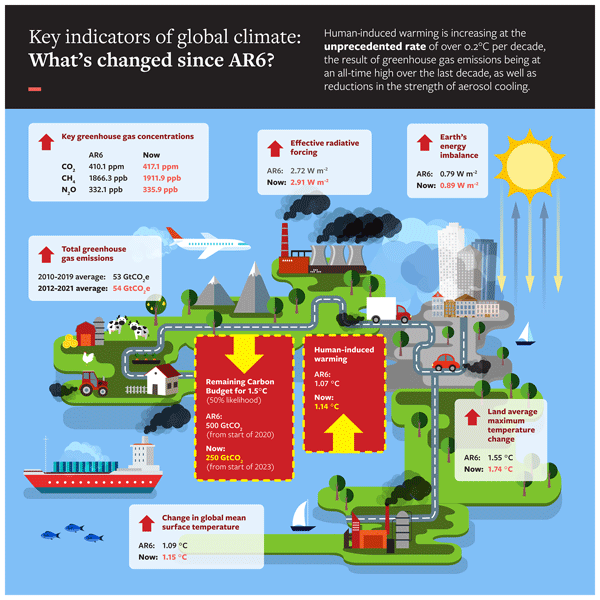
Piers M. Forster, Christopher J. Smith, Tristram Walsh, William F. Lamb, Robin Lamboll, Mathias Hauser, Aurélien Ribes, Debbie Rosen, Nathan Gillett, Matthew D. Palmer, Joeri Rogelj, Karina von Schuckmann, Sonia I. Seneviratne, Blair Trewin, Xuebin Zhang, Myles Allen, Robbie Andrew, Arlene Birt, Alex Borger, Tim Boyer, Jiddu A. Broersma, Lijing Cheng, Frank Dentener, Pierre Friedlingstein, José M. Gutiérrez, Johannes Gütschow, Bradley Hall, Masayoshi Ishii, Stuart Jenkins, Xin Lan, June-Yi Lee, Colin Morice, Christopher Kadow, John Kennedy, Rachel Killick, Jan C. Minx, Vaishali Naik, Glen P. Peters, Anna Pirani, Julia Pongratz, Carl-Friedrich Schleussner, Sophie Szopa, Peter Thorne, Robert Rohde, Maisa Rojas Corradi, Dominik Schumacher, Russell Vose, Kirsten Zickfeld, Valérie Masson-Delmotte, and Panmao Zhai
Earth Syst. Sci. Data, 15, 2295–2327, https://doi.org/10.5194/essd-15-2295-2023, https://doi.org/10.5194/essd-15-2295-2023, 2023
Short summary
Short summary
This is a critical decade for climate action, but there is no annual tracking of the level of human-induced warming. We build on the Intergovernmental Panel on Climate Change assessment reports that are authoritative but published infrequently to create a set of key global climate indicators that can be tracked through time. Our hope is that this becomes an important annual publication that policymakers, media, scientists and the public can refer to.
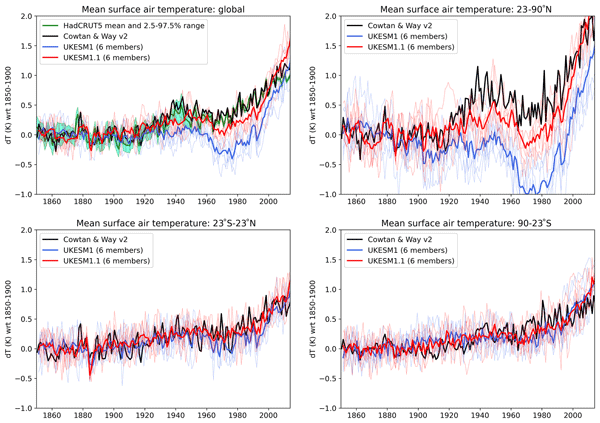
Jane P. Mulcahy, Colin G. Jones, Steven T. Rumbold, Till Kuhlbrodt, Andrea J. Dittus, Edward W. Blockley, Andrew Yool, Jeremy Walton, Catherine Hardacre, Timothy Andrews, Alejandro Bodas-Salcedo, Marc Stringer, Lee de Mora, Phil Harris, Richard Hill, Doug Kelley, Eddy Robertson, and Yongming Tang
Geosci. Model Dev., 16, 1569–1600, https://doi.org/10.5194/gmd-16-1569-2023, https://doi.org/10.5194/gmd-16-1569-2023, 2023
Short summary
Short summary
Recent global climate models simulate historical global mean surface temperatures which are too cold, possibly to due to excessive aerosol cooling. This raises questions about the models' ability to simulate important climate processes and reduces confidence in future climate predictions. We present a new version of the UK Earth System Model, which has an improved aerosols simulation and a historical temperature record. Interestingly, the long-term response to CO2 remains largely unchanged.
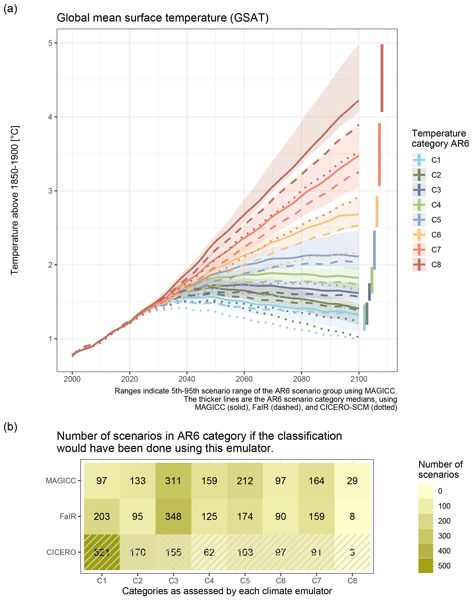
Jarmo S. Kikstra, Zebedee R. J. Nicholls, Christopher J. Smith, Jared Lewis, Robin D. Lamboll, Edward Byers, Marit Sandstad, Malte Meinshausen, Matthew J. Gidden, Joeri Rogelj, Elmar Kriegler, Glen P. Peters, Jan S. Fuglestvedt, Ragnhild B. Skeie, Bjørn H. Samset, Laura Wienpahl, Detlef P. van Vuuren, Kaj-Ivar van der Wijst, Alaa Al Khourdajie, Piers M. Forster, Andy Reisinger, Roberto Schaeffer, and Keywan Riahi
Geosci. Model Dev., 15, 9075–9109, https://doi.org/10.5194/gmd-15-9075-2022, https://doi.org/10.5194/gmd-15-9075-2022, 2022
Short summary
Short summary
Assessing hundreds or thousands of emission scenarios in terms of their global mean temperature implications requires standardised procedures of infilling, harmonisation, and probabilistic temperature assessments. We here present the open-source
climate-assessmentworkflow that was used in the IPCC AR6 Working Group III report. The paper provides key insight for anyone wishing to understand the assessment of climate outcomes of mitigation pathways in the context of the Paris Agreement.
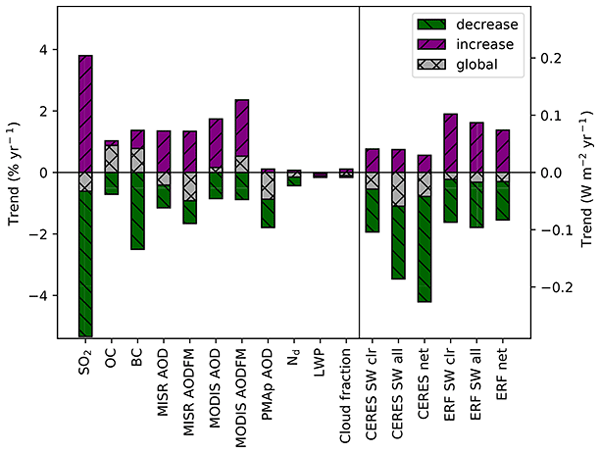
Johannes Quaas, Hailing Jia, Chris Smith, Anna Lea Albright, Wenche Aas, Nicolas Bellouin, Olivier Boucher, Marie Doutriaux-Boucher, Piers M. Forster, Daniel Grosvenor, Stuart Jenkins, Zbigniew Klimont, Norman G. Loeb, Xiaoyan Ma, Vaishali Naik, Fabien Paulot, Philip Stier, Martin Wild, Gunnar Myhre, and Michael Schulz
Atmos. Chem. Phys., 22, 12221–12239, https://doi.org/10.5194/acp-22-12221-2022, https://doi.org/10.5194/acp-22-12221-2022, 2022
Short summary
Short summary
Pollution particles cool climate and offset part of the global warming. However, they are washed out by rain and thus their effect responds quickly to changes in emissions. We show multiple datasets to demonstrate that aerosol emissions and their concentrations declined in many regions influenced by human emissions, as did the effects on clouds. Consequently, the cooling impact on the Earth energy budget became smaller. This change in trend implies a relative warming.
Cited articles
Ackerley, D. and Dommenget, D.: Atmosphere-only GCM (ACCESS1.0) simulations with prescribed land surface temperatures, Geosci. Model Dev., 9, 2077–2098, https://doi.org/10.5194/gmd-9-2077-2016, 2016.
Ackerley, D., Chadwick, R., Dommenget, D., and Petrelli, P.: An ensemble of AMIP simulations with prescribed land surface temperatures, Geosci. Model Dev., 11, 3865–3881, https://doi.org/10.5194/gmd-11-3865-2018, 2018.
Allen, R. J., Zhao, X., Randles, C. A., Kramer, R. J., Samset, B. H., and Smith, C. J.: Surface warming and wetting due to methane's long-wave radiative effects muted by short-wave absorption, Nat. Geosci., 16, 314–320, https://doi.org/10.1038/s41561-023-01144-z, 2023.
Andrews, T., Smith, C. J., Myhre, G., Forster, P. M., Chadwick, R., and Ackerley, D.: Effective radiative forcing in a GCM with fixed surface temperatures, J. Geophys. Res.-Atmos., 126, https://doi.org/10.1029/2020jd033880, 2021.
Andrews, T., Bodas-Salcedo, A., Gregory, J. M., Dong, Y., Armour, K. C., Paynter, D., Lin, P., Modak, A., Mauritsen, T., Cole, J. N. S., Medeiros, B., Benedict, J. J., Douville, H., Roehrig, R., Koshiro, T., Kawai, H., Ogura, T., Dufresne, J., Allan, R. P., and Liu, C.: On the Effect of Historical SST Patterns on Radiative Feedback, J. Geophys. Res.-Atmos., 127, https://doi.org/10.1029/2022jd036675, 2022.
Armour, K. C., Proistosescu, C., Dong, Y., Hahn, L. C., Blanchard-Wrigglesworth, E., Pauling, A. G., Wills, R. C. J., Andrews, T., Stuecker, M. F., Po-Chedley, S., Mitevski, I., Forster, P. M., and Gregory, J. M.: Sea-surface temperature pattern effects have slowed global warming and biased warming-based constraints on climate sensitivity, P. Natl. Acad. Sci. USA, 121, https://doi.org/10.1073/pnas.2312093121, 2024.
Bellouin, N., Quaas, J., Gryspeerdt, E., Kinne, S., Stier, P., Watson-Parris, D., Boucher, O., Carslaw, K. S., Christensen, M., Daniau, A.-L., Dufresne, J.-L., Feingold, G., Fiedler, S., Forster, P., Gettelman, A., Haywood, J. M., Lohmann, U., Malavelle, F., Mauritsen, T., McCoy, D. T., Myhre, G., Mülmenstädt, J., Neubauer, D., Possner, A., Rugenstein, M., Sato, Y., Schulz, M., Schwartz, S. E., Sourdeval, O., Storelvmo, T., Toll, V., Winker, D., and Stevens, B.: Bounding global aerosol radiative forcing of climate change, Rev. Geophys., 58, E2019RG000660, https://doi.org/10.1029/2019RG000660, 2020.
Bjordal, J., Storelvmo, T., Alterskjær, K., and Carlsen, T.: Equilibrium climate sensitivity above 5 °C plausible due to state-dependent cloud feedback, Nat. Geosci., 13, 718–721, https://doi.org/10.1038/s41561-020-00649-1, 2020.
Bloch-Johnson, J., Pierrehumbert, R. T., and Abbot, D. S.: Feedback temperature dependence determines the risk of high warming, Geophys. Res. Lett., 42, 4973–4980, https://doi.org/10.1002/2015gl064240, 2015.
Bloch-Johnson, J., Rugenstein, M., Stolpe, M. B., Rohrschneider, T., Zheng, Y., and Gregory, J. M.: Climate sensitivity increases under higher CO2 levels due to feedback temperature dependence, Geophys. Res. Lett., 48, https://doi.org/10.1029/2020gl089074, 2020.
Bodas-Salcedo, A., Webb, M. J., Bony, S., Chepfer, H., Dufrense, J. L., Klein, S. A., Zhang, Y., Marchand, R., Haynes, J. M., Pincus, R., and John, V.: COSP: satellite simulation software for model assessment, B. Am. Meteorol. Soc., 92, 1023–1043, https://doi.org/10.1175/2011BAMS2856.1, 2011.
Byrom, R. E., Myhre, G., Hodnebrog, Ø., Olivié, D., and Schulz, M.: Investigating the role of stratospheric ozone as a driver of inter-model spread in CO2 effective radiative forcing, Atmos. Chem. Phys., 25, 5683–5693, https://doi.org/10.5194/acp-25-5683-2025, 2025.
CFMIP: COSPv2.0 MODIS Simulator, GitHub [code], https://github.com/CFMIP/COSPv2.0/tree/master/src/simulator/MODIS_simulator (last access: 27 June 2025), 2025.
Chalmers, J., Kay, J. E., Middlemas, E. A., Maroon, E. A., and DiNezio, P.: Does disabling cloud radiative feedbacks change spatial patterns of surface greenhouse warming and cooling?, J. Climate, 35, 1787–1807, https://doi.org/10.1175/jcli-d-21-0391.1, 2022.
Chen, Y.-T., Huang, Y., and Merlis, T. M.: The global patterns of instantaneous CO2 forcing at the top of the atmosphere and the surface, J. Climate, 36, 6331–6347, https://doi.org/10.1175/jcli-d-22-0708.1, 2023.
Chung, E.-S. and Soden, B. J.: An assessment of methods for computing radiative forcing in climate models, Environ. Res. Lett., 10, 074004, https://doi.org/10.1088/1748-9326/10/7/074004, 2015a.
Chung, E.-S. and Soden, B. J.: An Assessment of Direct Radiative Forcing, Radiative Adjustments, and Radiative Feedbacks in Coupled Ocean–Atmosphere Models, J. Climate, 28, 4152–4170, https://doi.org/10.1175/JCLI-D-14-00436.1, 2015b.
Collins, W. D., Ramaswamy, V., Schwarzkopf, M. D., Sun, Y., Portmann, R. W., Fu, Q., Casanova, S. E. B., Dufresne, J. -l., Fillmore, D. W., Forster, P. M. D., Galin, V. Y., Gohar, L. K., Ingram, W. J., Kratz, D. P., Lefebvre, M.-P., Li, J., Marquet, P., Oinas, V., Tsushima, Y., Uchiyama, T., and Zhong, W. Y.: Radiative forcing by well-mixed greenhouse gases: Estimates from climate models in the Intergovernmental Panel on Climate Change (IPCC) Fourth Assessment Report (AR4), J. Geophys. Res.-Atmos., 111, https://doi.org/10.1029/2005jd006713, 2006.
Dingley, B., Anstey, J. A., Abalos, M., Abraham, C., Bergman, T., Bock, L., Fiddes, S., Hassler, B., Kramer, R. J., Luo, F., O'Connor, F. M., Šácha, P., Simpson, I. R., Wilcox, L. J., and Zelinka, M. D.: CMIP7 Data Request: Atmosphere Priorities and Opportunities, EGUsphere [preprint], https://doi.org/10.5194/egusphere-2025-3189, 2025.
Dong, Y., Armour, K. C., Proistosescu, C., Andrews, T., Battisti, D. S., Forster, P. M., Paynter, D., Smith, C. J., and Shiogama, H.: Biased estimates of equilibrium climate sensitivity and transient climate response derived from historical CMIP6 simulations, Geophys. Res. Lett., 48, https://doi.org/10.1029/2021gl095778, 2021.
Doutriaux-Boucher, M., Webb, M. J., Gregory, J. M., and Boucher, O.: Carbon dioxide induced stomatal closure increases radiative forcing via a rapid reduction in low cloud, Geophys. Res. Lett., 36, https://doi.org/10.1029/2008gl036273, 2009.
Dunne, J. P., Hewitt, H. T., Arblaster, J. M., Bonou, F., Boucher, O., Cavazos, T., Dingley, B., Durack, P. J., Hassler, B., Juckes, M., Miyakawa, T., Mizielinski, M., Naik, V., Nicholls, Z., O'Rourke, E., Pincus, R., Sanderson, B. M., Simpson, I. R., and Taylor, K. E.: An evolving Coupled Model Intercomparison Project phase 7 (CMIP7) and Fast Track in support of future climate assessment, Geosci. Model Dev., 18, 6671–6700, https://doi.org/10.5194/gmd-18-6671-2025, 2025.
Durack, P. J., Naik, V., Nicholls, Z., O'Rourke, E., Turner, B., Buontempo, C., Brookshaw, A., Goddard, C., MacIntosh, C., Hewitt, H., and Dunne, J.: Earth system forcing for CMIP7 and beyond, B. Am. Meteorol. Soc., 106, E1580–E1588, https://doi.org/10.1175/bams-d-25-0119.1, 2025.
Duran, B. M., Wall, C. J., Lutsko, N. J., Michibata, T., Ma, P.-L., Qin, Y., Duffy, M. L., Medeiros, B., and Debolskiy, M.: A new method for diagnosing effective radiative forcing from aerosol–cloud interactions in climate models, Atmos. Chem. Phys., 25, 2123–2146, https://doi.org/10.5194/acp-25-2123-2025, 2025.
Etminan, M., Myhre, G., Highwood, E. J., and Shine, K. P.: Radiative forcing of carbon dioxide, methane, and nitrous oxide: A significant revision of the methane radiative forcing, Geophys. Res. Lett., 43, https://doi.org/10.1002/2016gl071930, 2016.
Eyring, V., Bony, S., Meehl, G. A., Senior, C. A., Stevens, B., Stouffer, R. J., and Taylor, K. E.: Overview of the Coupled Model Intercomparison Project Phase 6 (CMIP6) experimental design and organization, Geosci. Model Dev., 9, 1937–1958, https://doi.org/10.5194/gmd-9-1937-2016, 2016.
Fiedler, S., Naik, V., O'Connor, F. M., Smith, C. J., Griffiths, P., Kramer, R. J., Takemura, T., Allen, R. J., Im, U., Kasoar, M., Modak, A., Turnock, S., Voulgarakis, A., Watson-Parris, D., Westervelt, D. M., Wilcox, L. J., Zhao, A., Collins, W. J., Schulz, M., Myhre, G., and Forster, P. M.: Interactions between atmospheric composition and climate change – progress in understanding and future opportunities from AerChemMIP, PDRMIP, and RFMIP, Geosci. Model Dev., 17, 2387–2417, https://doi.org/10.5194/gmd-17-2387-2024, 2024.
Fiedler, S., O'Connor, F. M., Watson-Parris, D., Allen, R. J., Collins, W. J., Griffiths, P. T., Kasoar, M., Kikstra, J., Kok, J. F., Murray, L. T., Paulot, F., Sand, M., Turnock, S., Weber, J., Wilcox, L. J., and Naik, V.: AerChemMIP2 – Unraveling the role of reactive gases, aerosol particles, and land use for air quality and climate change in CMIP7, EGUsphere [preprint], https://doi.org/10.5194/egusphere-2025-5669, 2025.
Field, C. B., Jackson, R. B., and Mooney, H. A.: Stomatal responses to increased CO2: implications from the plant to the global scale, Plant Cell Environ., 18, 1214–1225, https://doi.org/10.1111/j.1365-3040.1995.tb00630.x, 1995.
Forster, P. M., Richardson, T., Maycock, A. C., Smith, C. J., Samset, B. H., Myhre, G., Andrews, T., Pincus, R., and Schulz, M.: Recommendations for diagnosing effective radiative forcing from climate models for CMIP6, J. Geophys. Res.-Atmos., 121, https://doi.org/10.1002/2016jd025320, 2016.
Forster, P., Storelvmo, T., Armour, K., Collins, W., Dufresne, J.-L., Frame, D., Lunt, D. J., Mauritsen, T., Palmer, M. D., Watanabe, M., Wild, M., and Zhang, H. The Earth's energy budget, climate feedbacks and climate sensitivity, Cambridge University Press, 923–1054, https://doi.org/10.1017/9781009157896.009, 2021.
Ghan, S. J.: Technical Note: Estimating aerosol effects on cloud radiative forcing, Atmos. Chem. Phys., 13, 9971–9974, https://doi.org/10.5194/acp-13-9971-2013, 2013.
Gillett, N. P., Simpson, I. R., Hegerl, G., Knutti, R., Mitchell, D., Ribes, A., Shiogama, H., Stone, D., Tebaldi, C., Wolski, P., Zhang, W., and Arora, V. K.: The Detection and Attribution Model Intercomparison Project (DAMIP v2.0) contribution to CMIP7, Geosci. Model Dev., 18, 4399–4416, https://doi.org/10.5194/gmd-18-4399-2025, 2025.
Golaz, J., Van Roekel, L. P., Zheng, X., Roberts, A. F., Wolfe, J. D., Lin, W., Bradley, A. M., Tang, Q., Maltrud, M. E., Forsyth, R. M., Zhang, C., Zhou, T., Zhang, K., Zender, C. S., Wu, M., Wang, H., Turner, A. K., Singh, B., Richter, J. H., Qin, Y., Petersen, M. R., Mametjanov, A., Ma, P., Larson, V. E., Krishna, J., Keen, N. D., Jeffery, N., Hunke, E. C., Hannah, W. M., Guba, O., Griffin, B. M., Feng, Y., Engwirda, D., Di Vittorio, A. V., Dang, C., Conlon, L. M., Chen, C., Brunke, M. A., Bisht, G., Benedict, J. J., Asay-Davis, X. S., Zhang, Y., Zhang, M., Zeng, X., Xie, S., Wolfram, P. J., Vo, T., Veneziani, M., Tesfa, T. K., Sreepathi, S., Salinger, A. G., Eyre, J. E. J. R., Prather, M. J., Mahajan, S., Li, Q., Jones, P. W., Jacob, R. L., Huebler, G. W., Huang, X., Hillman, B. R., Harrop, B. E., Foucar, J. G., Fang, Y., Comeau, D. S., Caldwell, P. M., Bartoletti, T., Balaguru, K., Taylor, M. A., McCoy, R. B., Leung, L. R., and Bader, D. C.: The DOE E3SM Model Version 2: Overview of the physical model and initial model evaluation, J. Adv. Model. Earth Syst., 14, https://doi.org/10.1029/2022ms003156, 2022.
Govardhan, G., Paynter, D., and Ramaswamy, V.: Effective radiative forcing of the internally mixed sulfate and black carbon aerosol in the GFDL AM4 model: the role played by other aerosol species, J. Geophys. Res.-Atmos., 128, https://doi.org/10.1029/2023jd038481, 2023.
Hansen, J., Sato, M., and Ruedy, R.: Radiative forcing and climate response, J. Geophys. Res.-Atmos., 102, 6831–6864, https://doi.org/10.1029/96jd03436, 1997.
Hansen, J., Sato, M., Ruedy, R., Nazarenko, L., Lacis, A., Schmidt, G. A., Russell, G., Aleinov, I., Bauer, M., Bauer, S., Bell, N., Cairns, B., Canuto, V., Chandler, M., Cheng, Y., Del Genio, A., Faluvegi, G., Fleming, E., Friend, A., Hall, T., Jackman, C., Kelley, M., Kiang, N., Koch, D., Lean, J., Lerner, J., Lo, K., Menon, S., Miller, R., Minnis, P., Novakov, T., Oinas, V., Perlwitz, Ja., Perlwitz, Ju., Rind, D., Romanou, A., Shindell, D., Stone, P., Sun, S., Tausnev, N., Thresher, D., Wielicki, B., Wong, T., Yao, M., and Zhang, S.: Efficacy of climate forcings, J. Geophys. Res.-Atmos., 110, https://doi.org/10.1029/2005jd005776, 2005.
He, H., Kramer, R. J., Soden, B. J., and Jeevanjee, N.: State dependence of CO2 forcing and its implications for climate sensitivity, Science, 382, 1051–1056, https://doi.org/10.1126/science.abq6872, 2023.
Hodnebrog, Ø., Myhre, G., Jouan, C., Andrews, T., Forster, P. M., Jia, H., Loeb, N. G., Olivié, D. J. L., Paynter, D., Quaas, J., Raghuraman, S. P., and Schulz, M.: Recent reductions in aerosol emissions have increased Earth's energy imbalance, Commun. Earth Environ., 5, https://doi.org/10.1038/s43247-024-01324-8, 2024.
Huang, Y., Tan, X., and Xia, Y.: Inhomogeneous radiative forcing of homogeneous greenhouse gases, J. Geophys. Res.-Atmos., 121, 2780–2789, https://doi.org/10.1002/2015jd024569, 2016.
Jeevanjee, N., Seeley, J. T., Paynter, D., and Fueglistaler, S.: An analytical model for spatially varying Clear-Sky CO2 forcing, J. Climate, 34, 9463–9480, https://doi.org/10.1175/jcli-d-19-0756.1, 2021.
Jones, C., Bossert, I., Dennis, D. P., Jeffery, H., Jones, C. D., Koenigk, T., Loriani, S., Sanderson, B., Séférian, R., Wyser, K., Yang, S., Abe, M., Bathiany, S., Braconnot, P., Brovkin, V., Burger, F. A., Cadule, P., Castruccio, F. S., Danabasoglu, G., Dittus, A., Donges, J. F., Fröb, F., Frölicher, T., Georgievski, G., Guo, C., Hu, A., Lawrence, P., Lerner, P., Licón-Saláiz, J., Otto-Bliesner, B., Romanou, A., Shevliakova, E., Silvy, Y., Swingedouw, D., Tjiputra, J., Walton, J., Wiltshire, A., Winkelmann, R., Wood, R., Yokohata, T., and Ziehn, T.: The TIPMIP Earth system model experiment protocol: phase 1, EGUsphere [preprint], https://doi.org/10.5194/egusphere-2025-3604, 2025.
Jones, C. D., Arora, V., Friedlingstein, P., Bopp, L., Brovkin, V., Dunne, J., Graven, H., Hoffman, F., Ilyina, T., John, J. G., Jung, M., Kawamiya, M., Koven, C., Pongratz, J., Raddatz, T., Randerson, J. T., and Zaehle, S.: C4MIP – The Coupled Climate–Carbon Cycle Model Intercomparison Project: experimental protocol for CMIP6, Geosci. Model Dev., 9, 2853–2880, https://doi.org/10.5194/gmd-9-2853-2016, 2016.
Juckes, M., Taylor, K. E., Antonio, F., Brayshaw, D., Buontempo, C., Cao, J., Durack, P. J., Kawamiya, M., Kim, H., Lovato, T., Mackallah, C., Mizielinski, M., Nuzzo, A., Stockhause, M., Visioni, D., Walton, J., Turner, B., O'Rourke, E., and Dingley, B.: Baseline climate variables for earth system modelling, Geosci. Model Dev., 18, 2639–2663, https://doi.org/10.5194/gmd-18-2639-2025, 2025.
Kay, J. E., Liang, Y.-C., Zhou, S.-N., and Maher, N.: Sea ice feedbacks cause more greenhouse cooling than greenhouse warming at high northern latitudes on multi-century timescales, Environ. Res. Clim., 3, 041003, https://doi.org/10.1088/2752-5295/ad8026, 2024.
Keller, D. P., Lenton, A., Scott, V., Vaughan, N. E., Bauer, N., Ji, D., Jones, C. D., Kravitz, B., Muri, H., and Zickfeld, K.: The Carbon Dioxide Removal Model Intercomparison Project (CDRMIP): rationale and experimental protocol for CMIP6, Geosci. Model Dev., 11, 1133–1160, https://doi.org/10.5194/gmd-11-1133-2018, 2018.
Klein, S. A. and Jakob, C.: Validation and sensitivities of frontal clouds simulated by the ECMWF model, Mon. Weather Rev., 127, 2514–2531, https://doi.org/10.1175/1520-0493(1999)127<2514:VASOFC>2.0.CO;2, 1999.
Kramer, R. J., Soden, B. J., and Pendergrass, A. G.: Evaluating climate model simulations of the radiative forcing and radiative response at Earth's surface, J. Climate, 32, 4089–4102, https://doi.org/10.1175/jcli-d-18-0137.1, 2019.
Leach, N. J., Jenkins, S., Nicholls, Z., Smith, C. J., Lynch, J., Cain, M., Walsh, T., Wu, B., Tsutsui, J., and Allen, M. R.: FaIRv2.0.0: a generalized impulse response model for climate uncertainty and future scenario exploration, Geosci. Model Dev., 14, 3007–3036, https://doi.org/10.5194/gmd-14-3007-2021, 2021.
Lee, D. and Oreopoulos, L.: Multiple cloud feedbacks in a global model from a single perturbation experiment, Geophys. Res. Lett., 52, https://doi.org/10.1029/2025gl116120, 2025.
Lorian, S. and Dagan, G.: On the sensitivity of aerosol–cloud interactions to changes in sea surface temperature in radiative–convective equilibrium, Atmos. Chem. Phys., 24, 9323–9338, https://doi.org/10.5194/acp-24-9323-2024, 2024.
Mackallah, C., Chamberlain, M. A., Law, R. M., Dix, M., Ziehn, T., Bi, D., Bodman, R., Brown, J. R., Dobrohotoff, P., Druken, K., Evans, B., Harman, I. N., Hayashida, H., Holmes, R., Kiss, A. E., Lenton, A., Liu, Y., Marsland, S., Meissner, K., Menviel, L., O'Farrell, S., Rashid, H. A., Ridzwan, S., Savita, A., Srbinovsky, J., Sullivan, A., Trenham, C., Vohralik, P. F., Wang, Y. -p., Williams, G., Woodhouse, M. T., and Yeung, N.: ACCESS datasets for CMIP6: methodology and idealised experiments, J. South. Hemisph. Earth Syst. Sci., 72, 93–116, https://doi.org/10.1071/es21031, 2022.
Mitevski, I., Polvani, L. M., and Orbe, C.: Asymmetric Warming/Cooling response to CO2 Increase/Decrease mainly due to Non-Logarithmic forcing, not feedbacks, Geophys. Res. Lett., 49, https://doi.org/10.1029/2021gl097133, 2022.
Mitevski, I., Polvani, L. M., He, H., Vecchi, G. A., Orbe, C., Soden, B. J., and Miller, R. L.: State dependence of CO2 effective radiative forcing from 1/16× to 16 × CO2, J. Climate, 38, 5323–5333, https://doi.org/10.1175/JCLI-D-24-0387.1, 2025.
Myhre, G., Shindell, D., Bréon, F.-M., Collins, W., Fuglestvedt, J., Huang, J., Koch, D., Lamarque, J.-F., Lee, D., Mendoza, B., Nakajima, T., Robock, A., Stephens, G., Takemura, T., and Zhang, H.: Anthropogenic and Natural Radiative Forcing, in: Climate Change 2013: The Physical Science Basis, Contribution of Working Group I to the Fifth Assessment Report of the Intergovernmental Panel on Climate Change, edited by: Stocker, T. F., Qin, D., Plattner, G.-K., Tignor, M., Allen, S. K., Boschung, J., Nauels, A., Xia, Y., Bex, V., and Midgley, P. M., Cambridge University Press, Cambridge, UK and New York, NY, USA, https://doi.org/10.1017/cbo9781107415324.018 2013.
Myhre, G., Kramer, R. J., Smith, C. J., Hodnebrog, Ø., Forster, P., Soden, B. J., Samset, B. H., Stjern, C. W., Andrews, T., Boucher, O., Faluvegi, G., Fläschner, D., Kasoar, M., Kirkevåg, A., Lamarque, J.-F., Olivié, D., Richardson, T., Shindell, D., Stier, P., Takemura, T., Voulgarakis, A., and Watson-Parris, D.: Quantifying the importance of rapid adjustments for global precipitation changes, Geophys. Res. Lett., 45, https://doi.org/10.1029/2018gl079474, 2018.
Myhre, G., Byrom, R. E., Andrews, T., Forster, P. M., and Smith, C. J.: Efficacy of climate forcings in transient CMIP6 simulations, Front. Clim., 6, https://doi.org/10.3389/fclim.2024.1397358, 2024.
Myhre, G., Hodnebrog, Ø., Loeb, N., and Forster, P. M.: Observed trend in Earth energy imbalance may provide a constraint for low climate sensitivity models, Science, 388, 1210–1213, https://doi.org/10.1126/science.adt0647, 2025.
Pincus, R., Platnick, S., Ackerman, S. A., Hemler, R. S., and Hofmann, R. J. P.: Reconciling simulated and observed views of clouds: MODIS, ISCCP, and the limits of instrument simulators, J. Climate, 25, 4699–4720, https://doi.org/10.1175/JCLI-D-11-00267.1, 2012.
Pincus, R., Forster, P. M., and Stevens, B.: The Radiative Forcing Model Intercomparison Project (RFMIP): experimental protocol for CMIP6, Geosci. Model Dev., 9, 3447–3460, https://doi.org/10.5194/gmd-9-3447-2016, 2016.
Pincus, R., Buehler, S. A., Brath, M., Crevoisier, C., Jamil, O., Evans, K. F., Manners, J., Menzel, R. L., Mlawer, E. J., Paynter, D., Pernak, R. L., and Tellier, Y.: Benchmark calculations of radiative forcing by greenhouse gases, J. Geophys. Res.-Atmos., 125, https://doi.org/10.1029/2020jd033483, 2020.
Pincus, R., Hubanks, P. A., Platnick, S., Meyer, K., Holz, R. E., Botambekov, D., and Wall, C. J.: Updated observations of clouds by MODIS for global model assessment, Earth Syst. Sci. Data, 15, 2483–2497, https://doi.org/10.5194/essd-15-2483-2023, 2023.
Quaas, J., Andrews, T., Bellouin, N., Block, K., Boucher, O., Ceppi, P., Dagan, G., Doktorowski, S., Eichholz, H. M., Forster, P., Goren, T., Gryspeerdt, E., Hodnebrog, Ø., Jia, H., Kramer, R., Lange, C., Maycock, A. C., Mülmenstädt, J., Myhre, G., O'Connor, F. M., Pincus, R., Samset, B. H., Senf, F., Shine, K. P., Smith, C., Stjern, C. W., Takemura, T., Toll, V., and Wall, C. J.: Adjustments to Climate Perturbations—Mechanisms, Implications, Observational constraints, AGU Adv., 5, https://doi.org/10.1029/2023av001144, 2024.
Raghuraman, S. P., Paynter, D., and Ramaswamy, V.: Anthropogenic forcing and response yield observed positive trend in Earth's energy imbalance, Nat. Commun., 12, https://doi.org/10.1038/s41467-021-24544-4, 2021.
Raghuraman, S. P., Paynter, D., Menzel, R., and Ramaswamy, V.: Forcing, cloud feedbacks, cloud masking, and internal variability in the cloud Radiative Effect satellite record, J. Climate, 36, 4151–4167, https://doi.org/10.1175/jcli-d-22-0555.1, 2023.
Ramanathan, V.: Greenhouse effect due to chlorofluorocarbons: Climatic implications, Science, 190, 50–52, https://doi.org/10.1126/science.190.4209.50, 1975.
Richardson, T. B., Forster, P. M., Smith, C. J., Maycock, A. C., Wood, T., Andrews, T., Boucher, O., Faluvegi, G., Fläschner, D., Hodnebrog, Ø., Kasoar, M., Kirkevåg, A., Lamarque, J. -f., Mülmenstädt, J., Myhre, G., Olivié, D., Portmann, R. W., Samset, B. H., Shawki, D., Shindell, D., Stier, P., Takemura, T., Voulgarakis, A., and Watson-Parris, D.: Efficacy of climate forcings in PDRMIP models, J. Geophys. Res.-Atmos., 124, 12824–12844, https://doi.org/10.1029/2019jd030581, 2019.
Romps, D. M., Seeley, J. T., and Edman, J. P.: Why the Forcing from Carbon Dioxide Scales as the Logarithm of Its Concentration, J. Climate, 35, 4027–4047, https://doi.org/10.1175/jcli-d-21-0275.1, 2022.
Salvi, P., Ceppi, P., and Gregory, J. M.: Interpreting the dependence of Cloud-Radiative adjustment on forcing agent, Geophys. Res. Lett., 48, https://doi.org/10.1029/2021gl093616, 2021.
Sanderson, B. M., Booth, B. B. B., Dunne, J., Eyring, V., Fisher, R. A., Friedlingstein, P., Gidden, M. J., Hajima, T., Jones, C. D., Jones, C. G., King, A., Koven, C. D., Lawrence, D. M., Lowe, J., Mengis, N., Peters, G. P., Rogelj, J., Smith, C., Snyder, A. C., Simpson, I. R., Swann, A. L. S., Tebaldi, C., Ilyina, T., Schleussner, C.-F., Séférian, R., Samset, B. H., Van Vuuren, D., and Zaehle, S.: The need for carbon-emissions-driven climate projections in CMIP7, Geosci. Model Dev., 17, 8141–8172, https://doi.org/10.5194/gmd-17-8141-2024, 2024.
Schmidt, G. A., Andrews, T., Bauer, S. E., Durack, P. J., Loeb, N. G., Ramaswamy, V., Arnold, N. P., Bosilovich, M. G., Cole, J., Horowitz, L. W., Johnson, G. C., Lyman, J. M., Medeiros, B., Michibata, T., Olonscheck, D., Paynter, D., Raghuraman, S. P., Schulz, M., Takasuka, D., Tallapragada, V., Taylor, P. C., and Ziehn, T.: CERESMIP: a climate modeling protocol to investigate recent trends in the Earth's Energy Imbalance, Front. Clim., 5, https://doi.org/10.3389/fclim.2023.1202161, 2023.
Sherwood, S. C., Bony, S., Boucher, O., Bretherton, C., Forster, P. M., Gregory, J. M., and Stevens, B.: Adjustments in the Forcing-Feedback Framework for understanding climate change, B. Am. Meteorol. Soc., 96, 217–228, https://doi.org/10.1175/bams-d-13-00167.1, 2015.
Simpson, I. R., Rosenbloom, N., Danabasoglu, G., Deser, C., Yeager, S. G., McCluskey, C. S., Yamaguchi, R., Lamarque, J.-F., Tilmes, S., Mills, M. J., and Rodgers, K. B.: The CESM2 Single-Forcing Large Ensemble and Comparison to CESM1: Implications for Experimental design, J. Climate, 36, 5687–5711, https://doi.org/10.1175/jcli-d-22-0666.1, 2023.
Smith, C.: Code for figures: RFMIP2.0 for CMIP7 submitted paper (v1.0), Zenodo [code], https://doi.org/10.5281/zenodo.17087560, 2025.
Smith, C. J., Kramer, R. J., Myhre, G., Forster, P. M., Soden, B. J., Andrews, T., Boucher, O., Faluvegi, G., Fläschner, D., Hodnebrog, Ø., Kasoar, M., Kharin, V., Kirkevåg, A., Lamarque, J. -f., Mülmenstädt, J., Olivié, D., Richardson, T., Samset, B. H., Shindell, D., Stier, P., Takemura, T., Voulgarakis, A., and Watson-Parris, D.: Understanding rapid adjustments to diverse forcing agents, Geophys. Res. Lett., 45, https://doi.org/10.1029/2018gl079826, 2018.
Smith, C. J., Kramer, R. J., Myhre, G., Alterskjær, K., Collins, W., Sima, A., Boucher, O., Dufresne, J.-L., Nabat, P., Michou, M., Yukimoto, S., Cole, J., Paynter, D., Shiogama, H., O'Connor, F. M., Robertson, E., Wiltshire, A., Andrews, T., Hannay, C., Miller, R., Nazarenko, L., Kirkevåg, A., Olivié, D., Fiedler, S., Lewinschal, A., Mackallah, C., Dix, M., Pincus, R., and Forster, P. M.: Effective radiative forcing and adjustments in CMIP6 models, Atmos. Chem. Phys., 20, 9591–9618, https://doi.org/10.5194/acp-20-9591-2020, 2020a.
Smith, C. J., Kramer, R. J., and Sima, A.: The HadGEM3-GA7.1 radiative kernel: the importance of a well-resolved stratosphere, Earth Syst. Sci. Data, 12, 2157–2168, https://doi.org/10.5194/essd-12-2157-2020, 2020b.
Smith, C. J., Harris, G. R., Palmer, M. D., Bellouin, N., Collins, W., Myhre, G., Schulz, M., Golaz, J.-C., Ringer, M., Storelvmo, T., and Forster, P. M.: Energy budget constraints on the time history of aerosol forcing and climate sensitivity, J. Geophys. Res.-Atmos., 126, https://doi.org/10.1029/2020jd033622, 2021a.
Smith, C., Nicholls, Z. R. J., Armour, K., Collins, W., Forster, P., Meinshausen, M., Palmer, M. D., and Watanabe, M.: The Earth's Energy Budget, Climate Feedbacks, and Climate Sensitivity Supplementary Material, in: Climate Change 2021: The Physical Science Basis, Contribution of Working Group I to the Sixth Assessment Report of the Intergovernmental Panel on Climate Change, edited by: Masson-Delmotte, V., Zhai, P., Pirani, A., Connors, S. L., Péan, C., Berger, S., Caud, N., Chen, Y., Goldfarb, L., Gomis, M. I., Huang, M., Leitzell, K., Lonnoy, E., Matthews, J. B. R., Maycock, T. K., Waterfield, T., Yelekçi, O., Yu, R., and Zhou, B., https://www.ipcc.ch/report/ar6/wg1/downloads/ (last access: 24 April 2026), 2021b.
Smith, D. M., Gillett, N. P., Simpson, I. R., Athanasiadis, P. J., Baehr, J., Bethke, I., Bilge, T. A., Bonnet, R., Boucher, O., Findell, K. L., Gastineau, G., Gualdi, S., Hermanson, L., Leung, L. R., Mignot, J., Müller, W. A., Osprey, S., Otterå, O. H., Persad, G. G., Scaife, A. A., Schmidt, G. A., Shiogama, H., Sutton, R. T., Swingedouw, D., Yang, S., Zhou, T., and Ziehn, T.: Attribution of multi-annual to decadal changes in the climate system: The Large Ensemble Single Forcing Model Intercomparison Project (LESFMIP), Front. Clim., 4, https://doi.org/10.3389/fclim.2022.955414, 2022.
Soden, B. J., Broccoli, A. J., and Hemler, R. S.: On the use of cloud forcing to estimate cloud feedback, J. Climate, 17, 3661–3665, 2004.
Soden, B. J., Held, I. M., Colman, R., Shell, K. M., Kiehl, J. T., and Shields, C. A.: Quantifying climate feedbacks using radiative kernels, J. Climate, 21, 3504–3520, https://doi.org/10.1175/2007jcli2110.1, 2008.
Soden, B. J., Collins, W. D., and Feldman, D. R.: Reducing uncertainties in climate models, Science, 361, 326–327, https://doi.org/10.1126/science.aau1864, 2018.
Stevens, B., Sherwood, S. C., Bony, S., and Webb, M. J.: Prospects for narrowing bounds on Earth's equilibrium climate sensitivity, Earth's Future, 4, 512–522, https://doi.org/10.1002/2016ef000376, 2016.
Stier, P., Schutgens, N. a. J., Bellouin, N., Bian, H., Boucher, O., Chin, M., Ghan, S., Huneeus, N., Kinne, S., Lin, G., Ma, X., Myhre, G., Penner, J. E., Randles, C. A., Samset, B., Schulz, M., Takemura, T., Yu, F., Yu, H., and Zhou, C.: Host model uncertainties in aerosol radiative forcing estimates: results from the AeroCom Prescribed intercomparison study, Atmos. Chem. Phys., 13, 3245–3270, https://doi.org/10.5194/acp-13-3245-2013, 2013.
Swales, D. J., Pincus, R., and Bodas-Salcedo, A.: The Cloud Feedback Model Intercomparison Project Observational Simulator Package: Version 2, Geosci. Model Dev., 11, 77–81, https://doi.org/10.5194/gmd-11-77-2018, 2018.
Tang, T., Shindell, D., Faluvegi, G., Myhre, G., Olivié, D., Voulgarakis, A., Kasoar, M., Andrews, T., Boucher, O., Forster, P. M., Hodnebrog, Ø., Iversen, T., Kirkevåg, A., Lamarque, J.-F., Richardson, T., Samset, B. H., Stjern, C. W., Takemura, T., and Smith, C.: Comparison of effective radiative forcing calculations using multiple methods, drivers, and models, J. Geophys. Res.-Atmos., 124, 4382–4394, https://doi.org/10.1029/2018jd030188, 2019.
Taylor, K. E., Crucifix, M., Braconnot, P., Hewitt, C. D., Doutriaux, C., Broccoli, A. J., Mitchell, J. F. B., and Webb, M. J.: Estimating shortwave radiative forcing and response in climate models, J. Climate, 20, 2530–2543, https://doi.org/10.1175/jcli4143.1, 2007.
van Vuuren, D., O'Neill, B., Tebaldi, C., Chini, L., Friedlingstein, P., Hasegawa, T., Riahi, K., Sanderson, B., Govindasamy, B., Bauer, N., Eyring, V., Fall, C., Frieler, K., Gidden, M., Gohar, L., Jones, A., King, A., Knutti, R., Kriegler, E., Lawrence, P., Lennard, C., Lowe, J., Mathison, C., Mehmood, S., Prado, L., Zhang, Q., Rose, S., Ruane, A., Schleussner, C.-F., Seferian, R., Sillmann, J., Smith, C., Sörensson, A., Panickal, S., Tachiiri, K., Vaughan, N., Vishwanathan, S., Yokohata, T., and Ziehn, T.: The Scenario Model Intercomparison Project for CMIP7 (ScenarioMIP-CMIP7) , EGUsphere [preprint], https://doi.org/10.5194/egusphere-2024-3765, 2025.
Visioni, D., Robock, A., Haywood, J., Henry, M., and Wells, A.: A new era for the Geoengineering Model Intercomparison Project (GeOMIP), B. Am. Meteorol. Soc., 104, E1950–E1955, https://doi.org/10.1175/bams-d-23-0232.1, 2023.
Webb, M. J., Senior, C., Bony, S., and Morcrette, J.-J.: Combining ERBE and ISCCP data to assess clouds in the Hadley Centre, ECMWF and LMD atmospheric climate models, Clim. Dynam., 17, 905–922, https://doi.org/10.1007/s003820100157, 2001.
Winkelmann, R., Dennis, D. P., Donges, J. F., Loriani, S., Klose, A. K., Abrams, J. F., Alvarez-Solas, J., Albrecht, T., Armstrong McKay, D., Bathiany, S., Blasco Navarro, J., Brovkin, V., Burke, E., Danabasoglu, G., Donner, R. V., Drüke, M., Georgievski, G., Goelzer, H., Harper, A. B., Hegerl, G., Hirota, M., Hu, A., Jackson, L. C., Jones, C., Kim, H., Koenigk, T., Lawrence, P., Lenton, T. M., Liddy, H., Licón-Saláiz, J., Menthon, M., Montoya, M., Nitzbon, J., Nowicki, S., Otto-Bliesner, B., Pausata, F., Rahmstorf, S., Ramin, K., Robinson, A., Rockström, J., Romanou, A., Sakschewski, B., Schädel, C., Sherwood, S., Smith, R. S., Steinert, N. J., Swingedouw, D., Willeit, M., Weijer, W., Wood, R., Wyser, K., and Yang, S.: The Tipping Points Modelling Intercomparison Project (TIPMIP): Assessing tipping point risks in the Earth system, EGUsphere [preprint], https://doi.org/10.5194/egusphere-2025-1899, 2025.
Zelinka, M. D., Klein, S. A., and Hartmann, D. L.: Computing and partitioning cloud feedbacks using cloud property histograms. Part I: Cloud radiative kernels, J. Climate, 25, 3715–3735, https://doi.org/10.1175/JCLI-D-11-00248.1, 2012.
Zelinka, M. D., Myers, T. A., McCoy, D. T., Po-Chedley, S., Caldwell, P. M., Ceppi, P., Klein, S. A., and Taylor, K. E.: Causes of higher climate sensitivity in CMIP6 models, Geophys. Res. Lett., 47, https://doi.org/10.1029/2019gl085782, 2020.
Zelinka, M. D., Smith, C. J., Qin, Y., and Taylor, K. E.: Comparison of methods to estimate aerosol effective radiative forcings in climate models, Atmos. Chem. Phys., 23, 8879–8898, https://doi.org/10.5194/acp-23-8879-2023, 2023.
Zhang, B., Soden, B. J., He, H., and Kramer, R. J.: Decoupling Land Surface Effects from CO2 Effective Radiative Forcing in a Climate Model, J. Climate, 39, 65–76, https://doi.org/10.1175/jcli-d-25-0231.1, 2025.
Zhang, S., Naik, V., Horowitz, L., and Paynter, D.: The Dependence of Emissions-based Anthropogenic Aerosol ERFs on Background Composition and Meteorological States in the GFDL-ESM4.1 Model, ESS Open Archive, https://doi.org/10.22541/essoar.15003396/v1, 2026.
Zhao, M., Golaz, J. -c., Held, I. M., Guo, H., Balaji, V., Benson, R., Chen, J. -h., Chen, X., Donner, L. J., Dunne, J. P., Dunne, K., Durachta, J., Fan, S. -m., Freidenreich, S. M., Garner, S. T., Ginoux, P., Harris, L. M., Horowitz, L. W., Krasting, J. P., Langenhorst, A. R., Liang, Z., Lin, P., Lin, S.-J., Malyshev, S. L., Mason, E., Milly, P. C. D., Ming, Y., Naik, V., Paulot, F., Paynter, D., Phillipps, P., Radhakrishnan, A., Ramaswamy, V., Robinson, T., Schwarzkopf, D., Seman, C. J., Shevliakova, E., Shen, Z., Shin, H., Silvers, L. G., Wilson, J. R., Winton, M., Wittenberg, A. T., Wyman, B., and Xiang, B.: The GFDL Global Atmosphere and Land Model AM4.0/LM4.0: 1. Simulation characteristics with prescribed SSTS, J. Adv. Model. Earth Syst., 10, 691–734, https://doi.org/10.1002/2017ms001208, 2018.
Zhou, C., Wang, M., Zelinka, M. D., Liu, Y., Dong, Y., and Armour, K. C.: Explaining Forcing Efficacy With Pattern Effect and State Dependence, Geophys. Res. Lett., 50, https://doi.org/10.1029/2022gl101700, 2023.
Short summary
Natural or anthropogenic activities can cause a perturbation in Earth's radiative energy budget known as a radiative forcing, which induces a climate response. Diagnosing radiative forcing and its uncertainty is foundational to understanding past and future climate change. Here we outline the protocol for the second iteration of the Radiative Forcing Model Intercomparison Project (RFMIP2.0), which provides a standardized method for diagnosing radiative forcing across Global Climate Models.
Natural or anthropogenic activities can cause a perturbation in Earth's radiative energy budget...


Special issue