
Articles | Volume 19, issue 7
https://doi.org/10.5194/gmd-19-2881-2026
© Author(s) 2026. This work is distributed under
the Creative Commons Attribution 4.0 License.
the Creative Commons Attribution 4.0 License.
https://doi.org/10.5194/gmd-19-2881-2026
© Author(s) 2026. This work is distributed under
the Creative Commons Attribution 4.0 License.
the Creative Commons Attribution 4.0 License.
Model evaluation paper
| 
16 Apr 2026
Model evaluation paper |
| 16 Apr 2026
| 16 Apr 2026
Towards improved Euro-Mediterranean discharge simulations in regional coupled climate models: a comparative assessment of hydrologic performance
Mohamed Hamitouche
CORRESPONDING AUTHOR

University School for Advanced Studies IUSS, Pavia, Italy
Climate Modeling Laboratory, ENEA – Italian National Agency for New Technologies, Energy and Sustainable Economic Development, CR Casaccia, Viale Anguillarese 301, 00123 Santa Maria di Galeria, Rome, Italy
ICSC Italian Research Center on High-Performance Computing, Big Data and Quantum Computing, Bologna, Italy
Giorgia Fosser
University School for Advanced Studies IUSS, Pavia, Italy
Arezoo RafieeiNasab
Research Applications Laboratory, NSF National Center for Atmospheric Research, Boulder, Colorado, USA
Alessandro Anav
Climate Modeling Laboratory, ENEA – Italian National Agency for New Technologies, Energy and Sustainable Economic Development, CR Casaccia, Viale Anguillarese 301, 00123 Santa Maria di Galeria, Rome, Italy
ICSC Italian Research Center on High-Performance Computing, Big Data and Quantum Computing, Bologna, Italy
Related authors
Mohamed Hamitouche, Giorgia Fosser, Alessandro Anav, Cenlin He, and Tzu-Shun Lin
Hydrol. Earth Syst. Sci., 29, 1221–1240, https://doi.org/10.5194/hess-29-1221-2025, https://doi.org/10.5194/hess-29-1221-2025, 2025
Short summary
Short summary
This study evaluates how different methods of simulating runoff impact river flow predictions globally. By comparing seven approaches within the Noah-Multi-parameterisation (Noah-MP) land surface model, we found significant differences in accuracy, with some methods underestimating or overestimating runoff. The results are crucial for improving water resource management and flood prediction. Our work highlights the need for precise modelling to better prepare for climate-related challenges.
Nathalia Correa-Sánchez, Xiaoli Guo Larsén, Giorgia Fosser, Eleonora Dallan, Marco Borga, and Francesco Marra
Wind Energ. Sci., 10, 2551–2561, https://doi.org/10.5194/wes-10-2551-2025, https://doi.org/10.5194/wes-10-2551-2025, 2025
Short summary
Short summary
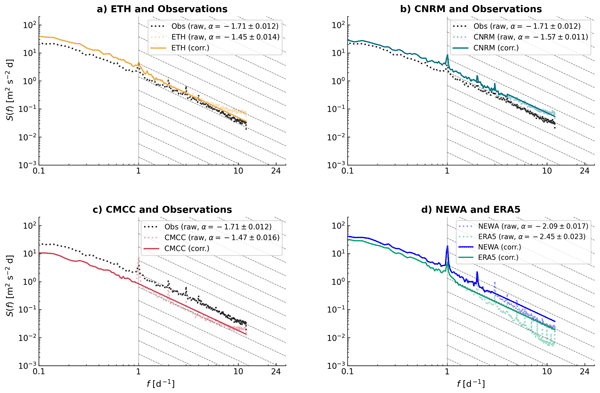
We examined the power spectra of wind speed in three convection-permitting models in central Europe and found that these models have a better representation of wind variability characteristics than standard wind datasets like the New European Wind Atlas, due to different simulation approaches, providing more reliable extreme wind predictions.
Maria Vittoria Struglia, Alessandro Anav, Marta Antonelli, Sandro Calmanti, Franco Catalano, Alessandro Dell'Aquila, Emanuela Pichelli, and Giovanna Pisacane
Geosci. Model Dev., 18, 6095–6116, https://doi.org/10.5194/gmd-18-6095-2025, https://doi.org/10.5194/gmd-18-6095-2025, 2025
Short summary
Short summary
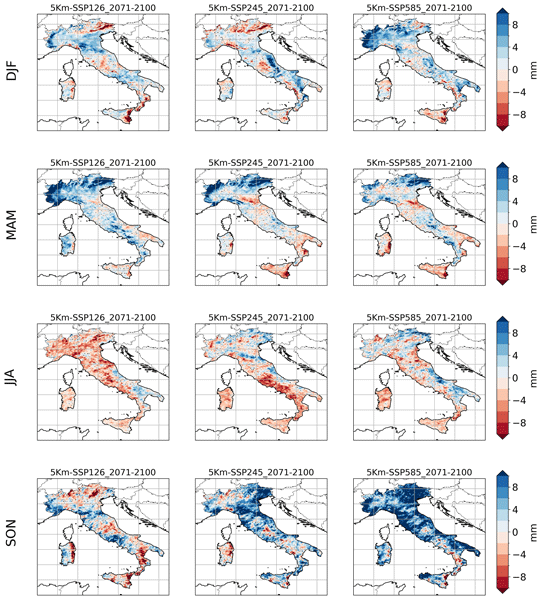
We present the results of downscaling global climate projections for the Mediterranean and Italian regions aiming to produce high-resolution climate information for the assessment of climate change signals, focusing on extreme events. A general warming is foreseen by the end of century, with a mean precipitation reduction accompanied, over the Italian Peninsula, by a strong increase in the intensity of extreme precipitation events, particularly relevant for the high emissions scenario during autumn.
Marco Chericoni, Giorgia Fosser, Emmanouil Flaounas, Gianmaria Sannino, and Alessandro Anav
Weather Clim. Dynam., 6, 627–643, https://doi.org/10.5194/wcd-6-627-2025, https://doi.org/10.5194/wcd-6-627-2025, 2025
Short summary
Short summary
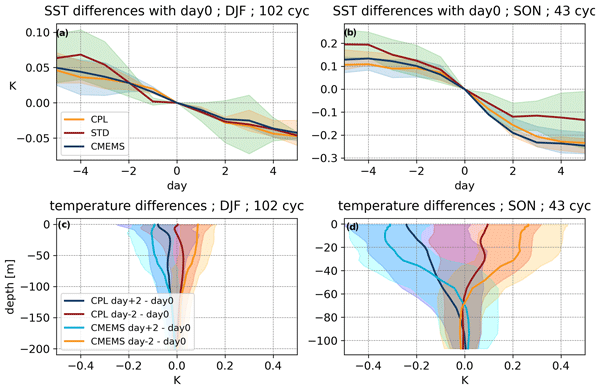
This study explores how sea surface energy influences both the atmosphere and ocean at various vertical levels during extreme Mediterranean cyclones. It focuses on cyclones' precipitation and wind speed response, as well as on ocean temperature variation. The findings highlight the regional coupled model's ability to coherently represent the thermodynamic and dynamic processes of the cyclones across both the atmosphere and the ocean.
Mohamed Hamitouche, Giorgia Fosser, Alessandro Anav, Cenlin He, and Tzu-Shun Lin
Hydrol. Earth Syst. Sci., 29, 1221–1240, https://doi.org/10.5194/hess-29-1221-2025, https://doi.org/10.5194/hess-29-1221-2025, 2025
Short summary
Short summary
This study evaluates how different methods of simulating runoff impact river flow predictions globally. By comparing seven approaches within the Noah-Multi-parameterisation (Noah-MP) land surface model, we found significant differences in accuracy, with some methods underestimating or overestimating runoff. The results are crucial for improving water resource management and flood prediction. Our work highlights the need for precise modelling to better prepare for climate-related challenges.
Laura T. Massano, Giorgia Fosser, Marco Gaetani, and Cécile Caillaud
Nat. Hazards Earth Syst. Sci., 24, 4293–4315, https://doi.org/10.5194/nhess-24-4293-2024, https://doi.org/10.5194/nhess-24-4293-2024, 2024
Short summary
Short summary
Traditional wine-growing regions are threatened by expected climate change. Climate models and observations are used to calculate bioclimatic indices based on both temperature and precipitation. These indices are correlated with grape productivity in two wine-growing regions in Italy. This analysis paves the way for using climate models to study how climate change will affect wine production in the future.
Arezoo Rafieeinasab, Amir Mazrooei, Thomas Enzminger, Ishita Srivastava, Aubrey Dugger, David Gochis, Nina Omani, Joe Grim, Kevin Sampson, Yongxin Zhang, Jacob LaFontaine, Roland Viger, Yuqiong Liu, and Tim Schneider
Hydrol. Earth Syst. Sci. Discuss., https://doi.org/10.5194/hess-2024-262, https://doi.org/10.5194/hess-2024-262, 2024
Manuscript not accepted for further review
Short summary
Short summary
Integrated Water Availability Assessments is a national initiative to characterize water availability in the U.S. The WRF-Hydro model is used to generate an estimate of hydrological fluxes and storage across the conterminous United States. The streamflow performance is reasonable especially in the eastern and western U.S. Model performance in estimating snow, evapotranspiration and soil moisture is also reasonable with some differences against the verification datasets in certain areas.
Mohamad El Gharamti, Arezoo Rafieeinasab, and James L. McCreight
Hydrol. Earth Syst. Sci., 28, 3133–3159, https://doi.org/10.5194/hess-28-3133-2024, https://doi.org/10.5194/hess-28-3133-2024, 2024
Short summary
Short summary
This study introduces a hybrid data assimilation scheme for precise streamflow predictions during intense rainfall and hurricanes. Tested in real events, it outperforms traditional methods by up to 50 %, utilizing ensemble and climatological background covariances. The adaptive algorithm ensures reliability with a small ensemble, offering improved forecasts up to 18 h in advance, marking a significant advancement in flood prediction capabilities.
Luiz Bacelar, Arezoo ReifeeiNasab, Nathaniel Chaney, and Ana Barros
EGUsphere, https://doi.org/10.5194/egusphere-2023-2088, https://doi.org/10.5194/egusphere-2023-2088, 2023
Preprint archived
Short summary
Short summary
The study explores a computationally efficient probabilistic precipitation forecast approach to generate multiple flood scenarios. It reveals the limitations in predicting flash floods accurately and the need for advanced ensemble methodologies to combine different sources of precipitation forecasts. It highlights the scale-dependency of flood predictions at higher spatial resolutions, shedding light on the relationship between river hydraulics and flood propagation in the river network.
Andrea Storto, Yassmin Hesham Essa, Vincenzo de Toma, Alessandro Anav, Gianmaria Sannino, Rosalia Santoleri, and Chunxue Yang
Geosci. Model Dev., 16, 4811–4833, https://doi.org/10.5194/gmd-16-4811-2023, https://doi.org/10.5194/gmd-16-4811-2023, 2023
Short summary
Short summary
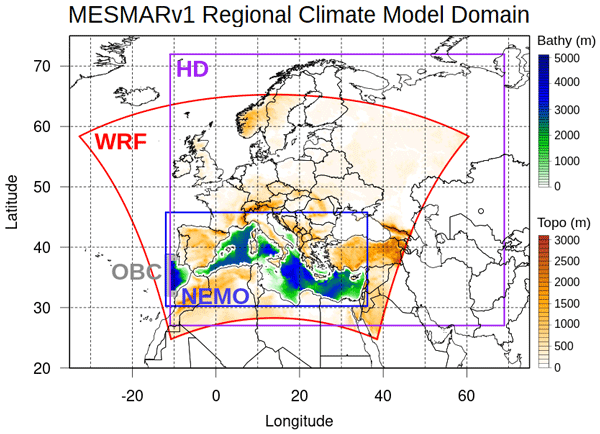
Regional climate models are a fundamental tool for a very large number of applications and are being increasingly used within climate services, together with other complementary approaches. Here, we introduce a new regional coupled model, intended to be later extended to a full Earth system model, for climate investigations within the Mediterranean region, coupled data assimilation experiments, and several downscaling exercises (reanalyses and long-range predictions).
Eleonora Dallan, Francesco Marra, Giorgia Fosser, Marco Marani, Giuseppe Formetta, Christoph Schär, and Marco Borga
Hydrol. Earth Syst. Sci., 27, 1133–1149, https://doi.org/10.5194/hess-27-1133-2023, https://doi.org/10.5194/hess-27-1133-2023, 2023
Short summary
Short summary
Convection-permitting climate models could represent future changes in extreme short-duration precipitation, which is critical for risk management. We use a non-asymptotic statistical method to estimate extremes from 10 years of simulations in an orographically complex area. Despite overall good agreement with rain gauges, the observed decrease of hourly extremes with elevation is not fully represented by the model. Climate model adjustment methods should consider the role of orography.
Mohamad El Gharamti, James L. McCreight, Seong Jin Noh, Timothy J. Hoar, Arezoo RafieeiNasab, and Benjamin K. Johnson
Hydrol. Earth Syst. Sci., 25, 5315–5336, https://doi.org/10.5194/hess-25-5315-2021, https://doi.org/10.5194/hess-25-5315-2021, 2021
Short summary
Short summary
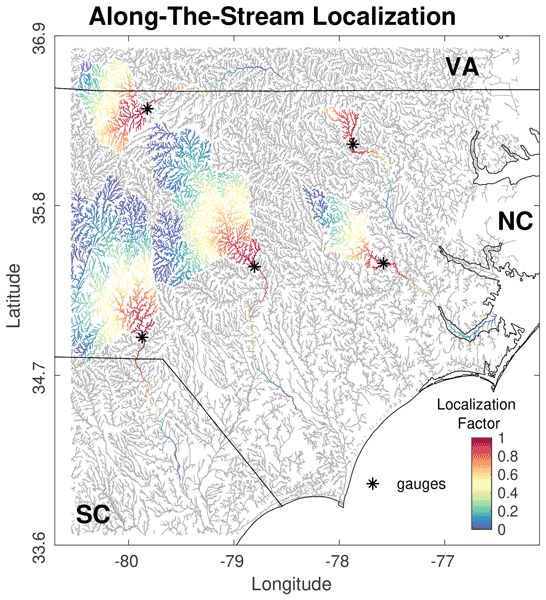
The article introduces novel ensemble data assimilation (DA) techniques for streamflow forecasting using WRF-Hydro and DART. Model-related biases are tackled through spatially and temporally varying adaptive prior and posterior inflation. Spurious and physically incorrect correlations, on the other hand, are mitigated using a topologically based along-the-stream localization. Hurricane Florence (2018) in the Carolinas, USA, is used as a test case to investigate the performance of DA techniques.
Cited articles
Amelia, J.: Development of Two-Way Coupled Atmospheric Hydrological models, J. Climatol. Weather Forecast., 11, 001–002, 2022.
Anav, A., Carillo, A., Palma, M., Struglia, M. V, Turuncoglu, U. U., and Sannino, G.: The ENEA-REG system (v1.0), a multi-component regional Earth system model: sensitivity to different atmospheric components over the Med-CORDEX (Coordinated Regional Climate Downscaling Experiment) region, Geosci. Model Dev., 14, 4159–4185, https://doi.org/10.5194/gmd-14-4159-2021, 2021.
Bates, P. D., Horritt, M. S., and Fewtrell, T. J.: A simple inertial formulation of the shallow water equations for efficient two-dimensional flood inundation modelling, J. Hydrol., 387, 33–45, https://doi.org/10.1016/j.jhydrol.2010.03.027, 2010.
Beck, H. E., Vergopolan, N., Pan, M., Levizzani, V., van Dijk, A. I. J. M., Weedon, G. P., Brocca, L., Pappenberger, F., Huffman, G. J., and Wood, E. F.: Global-scale evaluation of 22 precipitation datasets using gauge observations and hydrological modeling, Hydrol. Earth Syst. Sci., 21, 6201–6217, https://doi.org/10.5194/hess-21-6201-2017, 2017.
Beck, H. E., Pan, M., Roy, T., Weedon, G. P., Pappenberger, F., van Dijk, A. I. J. M., Huffman, G. J., Adler, R. F., and Wood, E. F.: Daily evaluation of 26 precipitation datasets using Stage-IV gauge-radar data for the CONUS, Hydrol. Earth Syst. Sci., 23, 207–224, https://doi.org/10.5194/hess-23-207-2019, 2019.
Beck, H. E., Pan, M., Lin, P., Seibert, J., van Dijk, A. I. J. M., and Wood, E. F.: Global Fully Distributed Parameter Regionalization Based on Observed Streamflow From 4,229 Headwater Catchments, J. Geophys. Res.-Atmos., 125, e2019JD031485, https://doi.org/10.1029/2019JD031485, 2020.
Casper, M. C., Grigoryan, G., Gronz, O., Gutjahr, O., Heinemann, G., Ley, R., and Rock, A.: Analysis of projected hydrological behavior of catchments based on signature indices, Hydrol. Earth Syst. Sci., 16, 409–421, https://doi.org/10.5194/hess-16-409-2012, 2012.
CEH-CEDEX: Centro de Estudios Hidrográficos del Centro de estudios y experimentación de obras públicas, Spain, https://ceh.cedex.es (last access: 28 April 2024), 2024.
Cerbelaud, A., Lefèvre, J., Genthon, P., and Menkes, C.: Assessment of the WRF-Hydro uncoupled hydro-meteorological model on flashy watersheds of the Grande Terre tropical island of New Caledonia (South-West Pacific), J. Hydrol.: Reg. Stud., 40, 101003, https://doi.org/10.1016/j.ejrh.2022.101003, 2022.
Cisterna-García, A., González-Vidal, A., Martínez-Ibarra, A., Ye, Y., Guillén-Teruel, A., Bernal-Escobedo, L., and Skarmeta, A. F.: Artificial intelligence for streamflow prediction in river basins: a use case in Mar Menor, Sci. Rep., 15, 19481, https://doi.org/10.1038/s41598-025-04524-0, 2025.
Cosgrove, B., Gochis, D., Flowers, T., Dugger, A., Ogden, F., Graziano, T., Clark, E., Cabell, R., Casiday, N., Cui, Z., Eicher, K., Fall, G., Feng, X., Fitzgerald, K., Frazier, N., George, C., Gibbs, R., Hernandez, L., Johnson, D., Jones, R., Karsten, L., Kefelegn, H., Kitzmiller, D., Lee, H., Liu, Y., Mashriqui, H., Mattern, D., McCluskey, A., McCreight, J. L., McDaniel, R., Midekisa, A., Newman, A., Pan, L., Pham, C., RafieeiNasab, A., Rasmussen, R., Read, L., Rezaeianzadeh, M., Salas, F., Sang, D., Sampson, K., Schneider, T., Shi, Q., Sood, G., Wood, A., Wu, W., Yates, D., Yu, W., and Zhang, Y.: NOAA's National Water Model: Advancing operational hydrology through continental-scale modeling, J. Am. Water Resour. Assoc., 60, 247–272, https://doi.org/10.1111/1752-1688.13184, 2024.
Djurdjevic, V. and Rajkovic, B.: Development of the EBU-POM coupled regional climate model and results from climate change experiments, in: Advances in Environmental Modeling and Measurements, edited by: Mihajlović, T. D. and Lalić, B., Nova Science Publisher Inc., New York, USA, 29–32, ISBN 9781608765997, 2010.
Drobinski, P., Anav, A., Lebeaupin Brossier, C., Samson, G., Stéfanon, M., Bastin, S., Baklouti, M., Béranger, K., Beuvier, J., Bourdallé-Badie, R., Coquart, L., D'Andrea, F., de Noblet-Ducoudré, N., Diaz, F., Dutay, J.-C., Ethe, C., Foujols, M.-A., Khvorostyanov, D., Madec, G., Mancip, M., Masson, S., Menut, L., Palmieri, J., Polcher, J., Turquety, S., Valcke, S., and Viovy, N.: Model of the Regional Coupled Earth system (MORCE): Application to process and climate studies in vulnerable regions, Environ. Model. Softw., 35, 1–18, https://doi.org/10.1016/j.envsoft.2012.01.017, 2012.
Fosser, G., Gaetani, M., Kendon, E. J., Adinolfi, M., Ban, N., Belušić, D., Caillaud, C., Careto, J. A. M., Coppola, E., Demory, M.-E., de Vries, H., Dobler, A., Feldmann, H., Goergen, K., Lenderink, G., Pichelli, E., Schär, C., Soares, P. M. M., Somot, S., and Tölle, M. H.: Convection-permitting climate models offer more certain extreme rainfall projections, npj Clim. Atmos. Sci., 7, 51, https://doi.org/10.1038/s41612-024-00600-w, 2024.
Galanaki, E., Lagouvardos, K., Kotroni, V., Giannaros, T., and Giannaros, C.: Implementation of WRF-Hydro at two drainage basins in the region of Attica, Greece, for operational flood forecasting, Nat. Hazards Earth Syst. Sci., 21, 1983–2000, https://doi.org/10.5194/nhess-21-1983-2021, 2021.
Gochis, D. J., Barlage, M., Cabell, R., Casali, M., Dugger, A., Fitzgerald, K., Mcallister, M., McCreight, J., RafieeiNasab, A., Read, L., Sampson, K., Yates, D., and Zhang, Y.: The WRF-Hydro Modeling System Technical Description. (Version 5.2), NCAR Technical Note, NCAR, 108 pp., https://ral.ucar.edu/sites/default/files/docs/water/wrf-hydro-v511-technical-description.pdf (last access: 27 February 2025), 2021.
GRDC: Data Portal, https://grdc.bafg.de/data/data_portal/ (last access: 28 April 2024), 2024.
Grill, G., Lehner, B., Thieme, M., Geenen, B., Tickner, D., Antonelli, F., Babu, S., Borrelli, P., Cheng, L., Crochetiere, H., Ehalt Macedo, H., Filgueiras, R., Goichot, M., Higgins, J., Hogan, Z., Lip, B., McClain, M. E., Meng, J., Mulligan, M., Nilsson, C., Olden, J. D., Opperman, J. J., Petry, P., Reidy Liermann, C., Sáenz, L., Salinas-Rodríguez, S., Schelle, P., Schmitt, R. J. P., Snider, J., Tan, F., Tockner, K., Valdujo, P. H., van Soesbergen, A., and Zarfl, C.: Mapping the world's free-flowing rivers, Nature, 569, 215–221, https://doi.org/10.1038/s41586-019-1111-9, 2019.
Gupta, H. V, Kling, H., Yilmaz, K. K., and Martinez, G. F.: Decomposition of the mean squared error and NSE performance criteria: Implications for improving hydrological modelling, J. Hydrol., 377, 80–91, https://doi.org/10.1016/j.jhydrol.2009.08.003, 2009.
Hagemann, S. and Dümenil, L.: A parametrization of the lateral waterflow for the global scale, Clim. Dynam., 14, 17–31, https://doi.org/10.1007/s003820050205, 1997.
Hagemann, S., Stacke, T., and Ho-Hagemann, H. T. M.: High Resolution Discharge Simulations Over Europe and the Baltic Sea Catchment, Front. Earth Sci., 8, https://doi.org/10.3389/feart.2020.00012, 2020.
Hamitouche, M., Fosser, G., Anav, A., He, C., and Lin, T.-S.: Impact of runoff schemes on global flow discharge: a comprehensive analysis using the Noah-MP and CaMa-Flood models, Hydrol. Earth Syst. Sci., 29, 1221–1240, https://doi.org/10.5194/hess-29-1221-2025, 2025a.
Hamitouche, M., Fosser, G., RafieeiNasab, A., and Anav, A.: Model codes and observation data for “Regional-scale Hydrologic Model Comparison Including Calibration for Improved River Discharge Simulations into the Mediterranean Sea”, Zenodo [code and data set], https://doi.org/10.5281/zenodo.16333943, 2025b.
Hamitouche, M., Fosser, G., RafieeiNasab, A., and Anav, A.: Step-by-step instructions to reproduce the results of “Regional-scale Hydrologic Model Comparison Including Calibration for Improved River Discharge Simulations into the Mediterranean Sea”, Zenodo [workflow], https://doi.org/10.5281/zenodo.16333943, 2025c.
Hersbach, H., Bell, B., Berrisford, P., Hirahara, S., Horányi, A., Muñoz-Sabater, J., Nicolas, J., Peubey, C., Radu, R., Schepers, D., Simmons, A., Soci, C., Abdalla, S., Abellan, X., Balsamo, G., Bechtold, P., Biavati, G., Bidlot, J., Bonavita, M., De Chiara, G., Dahlgren, P., Dee, D., Diamantakis, M., Dragani, R., Flemming, J., Forbes, R., Fuentes, M., Geer, A., Haimberger, L., Healy, S., Hogan, R. J., Hólm, E., Janisková, M., Keeley, S., Laloyaux, P., Lopez, P., Lupu, C., Radnoti, G., de Rosnay, P., Rozum, I., Vamborg, F., Villaume, S., and Thépaut, J.-N.: The ERA5 global reanalysis, Q. J. Roy. Meteorol. Soc., 146, 1999–2049, https://doi.org/10.1002/qj.3803, 2020.
Hersbach, H., Bell, B., Berrisford, P., Biavati, G., Horányi, A., Muñoz Sabater, J., Nicolas, J., Peubey, C., Radu, R., Rozum, I., Schepers, D., Simmons, A., Soci, C., Dee, D., and Thépaut, J.-N.: ERA5 hourly data on single levels from 1940 to present, Copernicus Climate Change Service (C3S) Climate Data Store (CDS) [data set], https://doi.org/10.24381/cds.adbb2d47, 2023.
Kauffeldt, A., Halldin, S., Rodhe, A., Xu, C.-Y., and Westerberg, I. K.: Disinformative data in large-scale hydrological modelling, Hydrol. Earth Syst. Sci., 17, 2845–2857, https://doi.org/10.5194/hess-17-2845-2013, 2013.
Kiliçarslan, B. M.: Calibration and Evaluation of WRF-Hydro Modeling System for Extreme Runoff Simulations: Use of High-Resolution Sea Surface Temperature (SST) Data, Middle East Technical University, Turkey, https://hdl.handle.net/11511/96689 (last access: 13 June 2025), 2022.
Knoben, W. J. M., Freer, J. E., and Woods, R. A.: Technical note: Inherent benchmark or not? Comparing Nash–Sutcliffe and Kling–Gupta efficiency scores, Hydrol. Earth Syst. Sci., 23, 4323–4331, https://doi.org/10.5194/hess-23-4323-2019, 2019.
Lahmers, T. M., Gupta, H., Castro, C. L., Gochis, D. J., Yates, D., Dugger, A., Goodrich, D., and Hazenberg, P.: Enhancing the Structure of the WRF-Hydro Hydrologic Model for Semiarid Environments, J. Hydrometeorol., 20, 691–714, https://doi.org/10.1175/JHM-D-18-0064.1, 2019.
Lehner, B.: Derivation of Watershed Boundaries for GRDC Gauging Stations Based on the HydroSHEDS Drainage Network; Technical Report Prepared for the GRDC, Bundesanstalt für Gewässerkunde, https://doi.org/10.5675/GRDC_Report_41, 2012.
Lin, P., Pan, M., Beck, H. E., Yang, Y., Yamazaki, D., Frasson, R., David, C. H., Durand, M., Pavelsky, T. M., Allen, G. H., Gleason, C. J., and Wood, E. F.: Global Reconstruction of Naturalized River Flows at 2.94 Million Reaches, Water Resour. Res., 55, 6499–6516, https://doi.org/10.1029/2019WR025287, 2019.
Lionello, P., Abrantes, F., Congedi, L., Dulac, F., Gacic, M., Gomis, D., Goodess, C., Hoff, H., Kutiel, H., Luterbacher, J., Planton, S., Reale, M., Schröder, K., Vittoria Struglia, M., Toreti, A., Tsimplis, M., Ulbrich, U., and Xoplaki, E.: Introduction: Mediterranean Climate – Background Information, in: The Climate of the Mediterranean Region, xxxv–xc, edited by: Lionello, P., Elsevier, Oxford, https://doi.org/10.1016/B978-0-12-416042-2.00012-4, 2012.
Ludwig, W., Dumont, E., Meybeck, M., and Heussner, S.: River discharges of water and nutrients to the Mediterranean and Black Sea: Major drivers for ecosystem changes during past and future decades?, Prog. Oceanogr., 80, 199–217, https://doi.org/10.1016/j.pocean.2009.02.001, 2009.
Momblanch, A., Andreu, J., Paredes-Arquiola, J., Solera, A., and Pedro-Monzonís, M.: Adapting water accounting for integrated water resource management. The Júcar Water Resource System (Spain), J. Hydrol., 519, 3369–3385, https://doi.org/10.1016/j.jhydrol.2014.10.002, 2014.
Naabil, E., Lamptey, B. L., Arnault, J., Olufayo, A., and Kunstmann, H.: Water resources management using the WRF-Hydro modelling system: Case-study of the Tono dam in West Africa, J. Hydrol.: Reg. Stud., 12, 196–209, https://doi.org/10.1016/j.ejrh.2017.05.010, 2017.
Ndiaye, A., Arnault, J., Mbaye, M. L., Camara, M., Kunstmann, H., and Lawin, A. E.: Evaluation of the WRF-Hydro model output based on different rainfall input data over the upper basin of the Senegal River, Hydrol. Res., 57, 1–12, https://doi.org/10.2166/nh.2026.044, 2026.
Oda, T., Iwasaki, K., Egusa, T., Kubota, T., Iwagami, S., Iida, S., Momiyama, H., and Shimizu, T.: Scale-Dependent Inter-Catchment Groundwater Flow in Forested Catchments: Analysis of Multi-Catchment Water Balance Observations in Japan, Water Resour. Res., 60, e2024WR037161, https://doi.org/10.1029/2024WR037161, 2024.
Pinardi, N. and Masetti, E.: Variability of the large scale general circulation of the Mediterranean Sea from observations and modelling: a review, Palaeogeogr. Palaeocl. Palaeoecol., 158, 153–173, https://doi.org/10.1016/S0031-0182(00)00048-1, 2000.
Pinardi, N., Zavatarelli, M., Adani, M., Coppini, G., Fratianni, C., Oddo, P., Simoncelli, S., Tonani, M., Lyubartsev, V., Dobricic, S., and Bonaduce, A.: Mediterranean Sea large-scale low-frequency ocean variability and water mass formation rates from 1987 to 2007: A retrospective analysis, Prog. Oceanogr., 132, 318–332, https://doi.org/10.1016/j.pocean.2013.11.003, 2015.
Rafieeinasab, A., Mazrooei, A., Enzminger, T., Srivastava, I., Dugger, A., Gochis, D., Omani, N., Grim, J., Sampson, K., Zhang, Y., LaFontaine, J., Viger, R., Liu, Y., and Schneider, T.: A WRF-Hydro-based retrospective simulation of water resources for US integrated water availability assessment, Hydrol. Earth Syst. Sci. Discuss. [preprint], https://doi.org/10.5194/hess-2024-262, 2024.
RafieeiNasab, A., Fienen, M. N., Omani, N., Srivastava, I., and Dugger, A. L.: Ensemble Methods for Parameter Estimation of WRF-Hydro, Water Resour. Res., 61, e2024WR038048, https://doi.org/10.1029/2024WR038048, 2025.
Reale, M., Giorgi, F., Solidoro, C., Di Biagio, V., Di Sante, F., Mariotti, L., Farneti, R., and Sannino, G.: The Regional Earth System Model RegCM-ES: Evaluation of the Mediterranean Climate and Marine Biogeochemistry, J. Adv. Model. Earth Syst., 12, e2019MS001812, https://doi.org/10.1029/2019MS001812, 2020.
Ruti, P. M., Somot, S., Giorgi, F., Dubois, C., Flaounas, E., Obermann, A., Dell'Aquila, A., Pisacane, G., Harzallah, A., Lombardi, E., Ahrens, B., Akhtar, N., Alias, A., Arsouze, T., Aznar, R., Bastin, S., Bartholy, J., Béranger, K., Beuvier, J., Bouffies-Cloché, S., Brauch, J., Cabos, W., Calmanti, S., Calvet, J.-C., Carillo, A., Conte, D., Coppola, E., Djurdjevic, V., Drobinski, P., Elizalde-Arellano, A., Gaertner, M., Galàn, P., Gallardo, C., Gualdi, S., Goncalves, M., Jorba, O., Jordà, G., L'Heveder, B., Lebeaupin-Brossier, C., Li, L., Liguori, G., Lionello, P., Maciàs, D., Nabat, P., Önol, B., Raikovic, B., Ramage, K., Sevault, F., Sannino, G., Struglia, M. V, Sanna, A., Torma, C., and Vervatis, V.: Med-CORDEX Initiative for Mediterranean Climate Studies, B. Am. Meteorol. Soc., 97, 1187–1208, https://doi.org/10.1175/BAMS-D-14-00176.1, 2016.
Sanchez Lozano, J. L., Rojas Lesmes, D. J., Romero Bustamante, E. G., Hales, R. C., Nelson, E. J., Williams, G. P., Ames, D. P., Jones, N. L., Gutierrez, A. L., and Cardona Almeida, C.: Historical simulation performance evaluation and monthly flow duration curve quantile-mapping (MFDC-QM) of the GEOGLOWS ECMWF streamflow hydrologic model, Environ. Model. Softw., 183, 106235, https://doi.org/10.1016/j.envsoft.2024.106235, 2025.
Senatore, A., Mendicino, G., Gochis, D. J., Yu, W., Yates, D. N., and Kunstmann, H.: Fully coupled atmosphere-hydrology simulations for the central Mediterranean: Impact of enhanced hydrological parameterization for short and long time scales, J. Adv. Model. Earth Syst., 7, 1693–1715, https://doi.org/10.1002/2015MS000510, 2015.
Shahi, N. K., Polcher?, J., Bastin, S., Pennel, R., and Fita, L.: Assessment of the spatio-temporal variability of the added value on precipitation of convection-permitting simulation over the Iberian Peninsula using the RegIPSL regional earth system model, Clim. Dynam., 59, 471–498, https://doi.org/10.1007/s00382-022-06138-y, 2022.
Smakhtin, V. U.: Low flow hydrology: a review, J. Hydrol., 240, 147–186, https://doi.org/10.1016/S0022-1694(00)00340-1, 2001.
Sofokleous, I., Bruggeman, A., Camera, C., and Eliades, M.: Grid-based calibration of the WRF-Hydro with Noah-MP model with improved groundwater and transpiration process equations, J. Hydrol., 617, 128991, https://doi.org/10.1016/j.jhydrol.2022.128991, 2023.
Sofokleous, I., Bruggeman, A., and Camera, C.: The Role of Parameterizations and Model Coupling on Simulations of Energy and Water Balances – Investigations With the Atmospheric Model WRF and the Hydrologic Model WRF-Hydro, J. Geophys. Res.-Atmos., 129, e2023JD040335, https://doi.org/10.1029/2023JD040335, 2024.
Somot, S., Coppola, E., Solmon, F., Jordà, G., Sannino, G., Ahrens, B., Sevault, F., and Reale, M.: Med-CORDEX phase 3: Common protocol for the Baseline runs for the CORDEX-CMIP6 framework, https://doi.org/10.5281/zenodo.11659642, 2024.
Spearman, C.: The Proof and Measurement of Association between Two Things, Am. J. Psychol., 15, 72–101, https://doi.org/10.2307/1412159, 1904.
Stacke, T. and Hagemann, S.: HydroPy (v1.0): a new global hydrology model written in Python, Geosci. Model Dev., 14, 7795–7816, https://doi.org/10.5194/gmd-14-7795-2021, 2021.
Storto, A., Hesham Essa, Y., de Toma, V., Anav, A., Sannino, G., Santoleri, R., and Yang, C.: MESMAR v1: a new regional coupled climate model for downscaling, predictability, and data assimilation studies in the Mediterranean region, Geosci. Model Dev., 16, 4811–4833, https://doi.org/10.5194/gmd-16-4811-2023, 2023.
Struglia, M. V., Mariotti, A., and Filograsso, A.: River Discharge into the Mediterranean Sea: Climatology and Aspects of the Observed Variability, J. Climate, 17, 4740–4751, https://doi.org/10.1175/JCLI-3225.1, 2004.
Struglia, M. V, Anav, A., Antonelli, M., Calmanti, S., Catalano, F., Dell'Aquila, A., Pichelli, E., and Pisacane, G.: Impact of spatial resolution on multi-scenario WRF-ARW simulations driven by the CMIP6 MPI-ESM1-2-HR global model: a focus on precipitation distribution over Italy, Geosci. Model Dev., 18, 6095–6116, https://doi.org/10.5194/gmd-18-6095-2025, 2025.
Suárez-Almiñana, S., Pedro-Monzonís, M., Paredes-Arquiola, J., Andreu, J., and Solera, A.: Linking Pan-European data to the local scale for decision making for global change and water scarcity within water resources planning and management, Sci. Total Environ., 603–604, 126–139, https://doi.org/10.1016/j.scitotenv.2017.05.259, 2017.
Tolson, B. A. and Shoemaker, C. A.: Dynamically dimensioned search algorithm for computationally efficient watershed model calibration, Water Resour. Res., 43, https://doi.org/10.1029/2005WR004723, 2007.
Verma, K. and J., I.: Applicability of SWOT data in calibrating WRF-Hydro hydrological model over the Tawa River basin, Geocarto Int., 38, 2185292, https://doi.org/10.1080/10106049.2023.2185292, 2023.
Vogel, R. M. and Fennessey, N. M.: Flow-Duration Curves. I: New Interpretation and Confidence Intervals, J. Water Resour. Plan. Manage., 120, 485–504, https://doi.org/10.1061/(ASCE)0733-9496(1994)120:4(485), 1994.
Wang, W., Liu, J., Li, C., Liu, Y., Yu, F., and Yu, E.: An Evaluation Study of the Fully Coupled WRF/WRF-Hydro Modeling System for Simulation of Storm Events with Different Rainfall Evenness in Space and Time, Water, 12, https://doi.org/10.3390/w12041209, 2020.
Wu, H., Kimball, J. S., Li, H., Huang, M., Leung, L. R., and Adler, R. F.: A new global river network database for macroscale hydrologic modeling, Water Resour. Res., 48, https://doi.org/10.1029/2012WR012313, 2012.
Yamazaki, D., Oki, T., and Kanae, S.: Deriving a global river network map and its sub-grid topographic characteristics from a fine-resolution flow direction map, Hydrol. Earth Syst. Sci., 13, 2241–2251, https://doi.org/10.5194/hess-13-2241-2009, 2009.
Yamazaki, D., Kanae, S., Kim, H., and Oki, T.: A physically based description of floodplain inundation dynamics in a global river routing model, Water Resour. Res., 47, https://doi.org/10.1029/2010WR009726, 2011.
Yamazaki, D., Baugh, C. A., Bates, P. D., Kanae, S., Alsdorf, D. E., and Oki, T.: Adjustment of a spaceborne DEM for use in floodplain hydrodynamic modeling, J. Hydrol., 436–437, 81–91, https://doi.org/10.1016/j.jhydrol.2012.02.045, 2012.
Yamazaki, D., de Almeida, G. A. M., and Bates, P. D.: Improving computational efficiency in global river models by implementing the local inertial flow equation and a vector-based river network map, Water Resour. Res., 49, 7221–7235, https://doi.org/10.1002/wrcr.20552, 2013.
Yamazaki, D., Ikeshima, D., Sosa, J., Bates, P. D., Allen, G. H., and Pavelsky, T. M.: MERIT Hydro: A High-Resolution Global Hydrography Map Based on Latest Topography Dataset, Water Resour. Res., 55, 5053–5073, https://doi.org/10.1029/2019WR024873, 2019.
Yilmaz, K. K., Gupta, H. V., and Wagener, T.: A process-based diagnostic approach to model evaluation: Application to the NWS distributed hydrologic model, Water Resour. Res., 44, https://doi.org/10.1029/2007WR006716, 2008.
Yu, E., Liu, X., Li, J., and Tao, H.: Calibration and Evaluation of the WRF-Hydro Model in Simulating the Streamflow over the Arid Regions of Northwest China: A Case Study in Kaidu River Basin, Sustainability, 15, https://doi.org/10.3390/su15076175, 2023.
Yue, S., Pilon, P., and Cavadias, G.: Power of the Mann–Kendall and Spearman's rho tests for detecting monotonic trends in hydrological series, J. Hydrol., 259, 254–271, https://doi.org/10.1016/S0022-1694(01)00594-7, 2002.
Zavatarelli, M., Raicich, F., Bregant, D., Russo, A., and Artegiani, A.: Climatological biogeochemical characteristics of the Adriatic Sea, J. Mar. Syst., 18, 227–263, https://doi.org/10.1016/S0924-7963(98)00014-1, 1998.
Short summary
Predicting how much water flows from rivers into the Mediterranean is challenging due to climate change and human impacts. We compared two hydrological models – a global river routing model and a fully coupled land surface–hydrology model – to assess their performance. The coupled model, especially after calibration, better reproduces river discharge and seasonal flow, helping improve flood and drought planning.
Predicting how much water flows from rivers into the Mediterranean is challenging due to climate...


