
the Creative Commons Attribution 4.0 License.
the Creative Commons Attribution 4.0 License.
 | 01 Apr 2026
Introducing Volatile Organic Compound Model Intercomparison Project (VOCMIP)

Øivind Hodnebrog
Srinath Krishnan
Maria Sand
Marit Sandstad
Ragnhild B. Skeie
Lieven Clarisse
Bruno Franco
Dylan B. Millet
Kelley C. Wells
Alexander Archibald
Hannah N. Bryant
Alex T. Chaudhri
David S. Stevenson
Didier Hauglustaine
Michael Prather
J. Christopher Kaiser
Dirk J. L. Olivie
Michael Schulz
Oliver Wild
Thérèse Salameh
Jason E. Williams
Philippe Le Sager
Fabien Paulot
Kostas Tsigaridis
Haley E. Plaas
Volatile organic compounds (VOCs) play an important role in atmospheric chemistry, influencing the cycling of peroxy and hydroxyl radicals, the formation of tropospheric ozone, hydrogen, secondary organic aerosol, and the lifetime of methane and other greenhouse gases. Their interactions shape overall atmospheric composition and air quality, with implications for both climate and human health. Given their significance, it is crucial for global atmospheric chemistry models to represent VOCs adequately for any given scientific question. In this context, we introduce the Volatile Organic Compound Model Intercomparison Project (VOCMIP) and invite atmospheric chemistry modelling groups to participate in this collaborative effort. VOCMIP aims to identify model consistencies and discrepancies, enhance the formulation of chemical mechanisms, and advance our understanding of VOC-related processes in the atmosphere. Global atmospheric chemistry model output will be compared to in situ measurements from surface stations and aircraft campaigns, plus satellite data for key VOCs. Special emphasis will be placed on formaldehyde (HCHO), examining its chemical sources and sinks given its central role as a radical source and as an intermediate in the photochemical destruction of VOCs.
- Article
(2371 KB) - Full-text XML
- BibTeX
- EndNote


Volatile Organic Compounds (VOCs) are organic molecules (i.e., carbon-containing compounds) that readily evaporate and enter the gas phase under ambient environmental conditions. VOCs consist of diverse range of chemical species including alkanes, alkenes, alkynes, alcohols, acids, oxygenated species, aromatics, organonitrates, halogenated VOCs, organosulfur compounds, and multifunctional compounds (Goldstein and Galbally, 2007; Glasius and Goldstein, 2016; McDonald et al., 2018; Atkinson and Arey, 2003). VOCs play a crucial role in atmospheric chemistry, acting as precursors to ozone (O3) and influencing the lifetime of methane through competing reactions with hydroxyl radicals (OH). The direct greenhouse effect of VOCs is generally minor due to either low abundance or weak absorption of infrared radiation, but they can exert larger indirect climate effects through their influence on key atmospheric processes. Many VOCs are emitted into the atmosphere from primary natural and anthropogenic sources, some are formed in the atmosphere through secondary chemical reactions, and some have both primary and secondary sources. Key natural sources include biogenic emissions from vegetation (Guenther et al., 1995), marine emission (Yu and Li, 2021), while anthropogenic sources include industrial activities and transportation (Hoesly et al., 2018). Biomass burning emissions of VOCs (van Marle et al., 2017) have both natural and anthropogenic sources. Additionally, volatile chemical products (VCPs), such as cosmetics, cleaners, and paints have gained increasing attention as a significant source of urban VOC emissions (Seltzer et al., 2021). The influence of VOCs on ozone formation is complex (Archibald et al., 2020b; Sillman, 1999; Thornhill et al., 2021). In the presence of nitrogen oxides (NOx), the photochemical oxidation of VOCs leads to the formation of ozone, impacting both air quality and climate. In the absence of NOx, VOC oxidation leads to the destruction of O3 through promotion of chain-terminating HOx chemistry. Additionally, oxidation of VOCs generates low-volatility products that contribute to secondary organic aerosol (SOA) formation (Hallquist et al., 2009; Jimenez et al., 2009). These oxidation products can condense onto existing aerosol particles or nucleate new particles, impacting air quality, visibility, and climate by altering the Earth's radiative balance.
Given the significant diversity in how models represent VOCs, ranging from chemical scheme complexity, uncertainties in natural emissions, and scaling or grouping of VOC emissions based on similarities in chemical reactivity or functional groups, there is clear need for a coordinated intercomparison exercise. To address this, we introduce the Volatile Organic Compound Model Intercomparison Project (VOCMIP) and invite atmospheric chemistry modelling groups to participate in this collaborative effort. VOCMIP seeks to identify commonalities and discrepancies between models, detect weaknesses and opportunities for improvements in parameterizations, and enhance our understanding of VOC-related processes in the atmosphere.
Recent advances in satellite products provide further motivation towards investigating the regional and seasonal differences in VOC distribution at global scale. Retrieval developments for InfraRed (IR) satellite instruments like the Infrared Atmospheric Sounding Interferometer (IASI) (Franco et al., 2018) and the Cross-track Infrared Sounder (CrIS) (Wells et al., 2020) now provide valuable datasets for a wide range of VOCs, including methanol, acetone, and other key species. These datasets, which offer near-global, daily distributions of total VOC column abundances in the atmosphere, present unprecedented opportunities to constrain the global budgets of VOCs. This adds to existing satellite retrievals of formaldehyde which have been available for several decades from various Ultraviolet-Visible (UV-Vis) satellite instruments (Burrows et al., 1999; De Smedt et al., 2021; Nowlan et al., 2023). Another, complementary valuable resource of VOC observations is from intensive aircraft campaigns in which multiple VOCs plus other reactive chemicals are measured over relatively small scales (e.g., 80 m × 2 km for 10 s measurements) to map the spatial variability in VOCs (e.g. KORUS-AQ and ATom).
VOCMIP will initially focus on the abundant VOC species listed in Fig. 1. This will then be extended to include additional species where satellite and in situ observations are available (as discussed in Sect. 3). Analyses will aim to attribute model differences to the individual components of the atmospheric budget terms, namely: emission, chemical production and loss, and deposition processes. In particular, we will examine whether certain VOCs exhibit notably smaller or larger inter-model diversity as compared to others. VOCMIP will also integrate multiple observational datasets to assess whether these can constrain model estimates. To structure this effort, VOCMIP is organized around four scientific questions, which are introduced below.
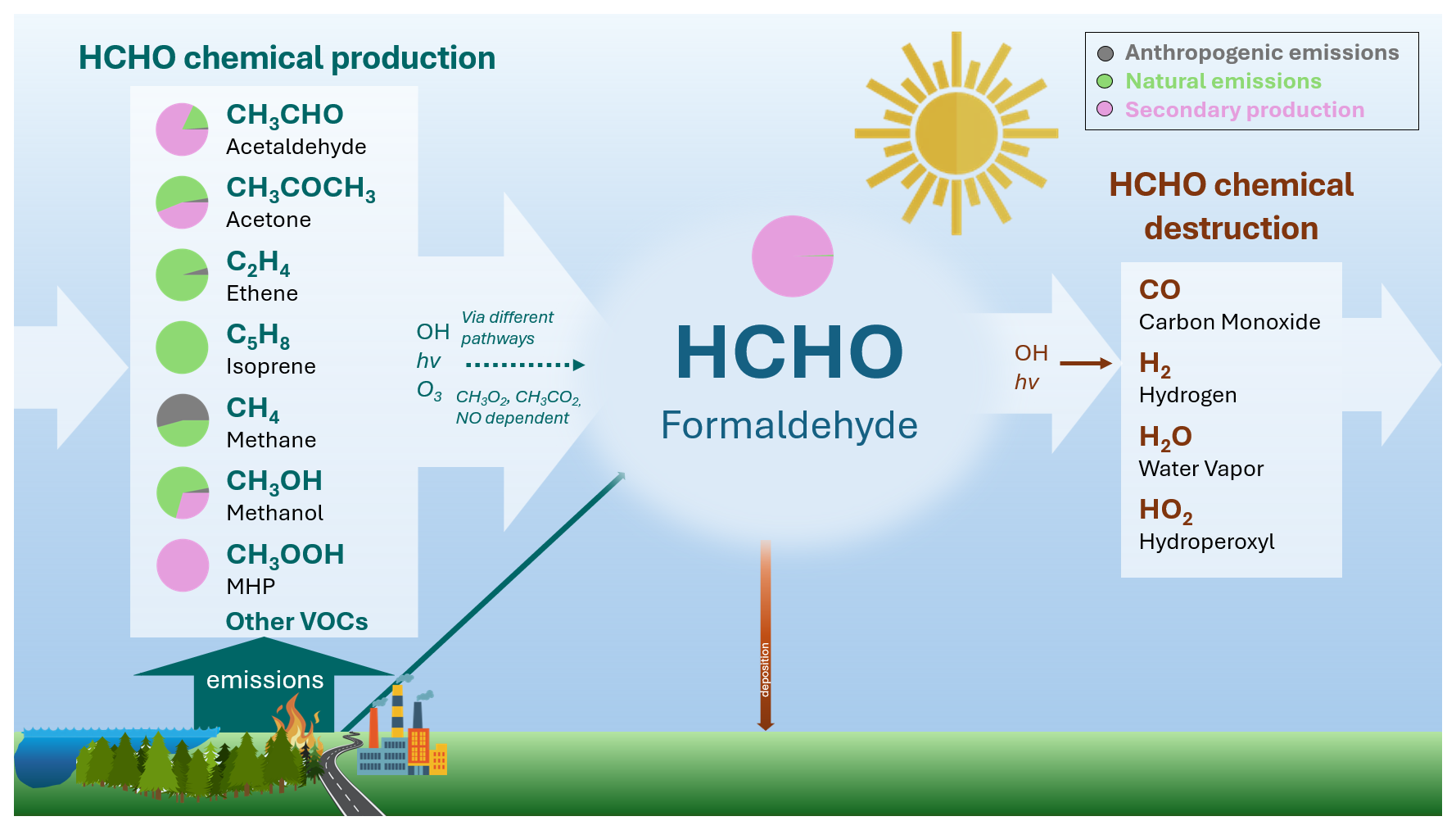
Figure 1Sources and sinks of formaldehyde with the main production and loss reaction pathways highlighted. For the VOCs, the relative contributions from direct anthropogenic (grey), natural (green) emissions and secondary production in the atmosphere (pink) are presented as a pie-chart. These fractions are taken from various sources: acetaldehyde (CH3CHO) from Millet et al. (2010), acetone (CH3COCH3) from Wang et al. (2020), ethene (C2H4) from CEDS (Hoesly et al., 2018) and MEGAN (Sindelarova et al., 2014) emissions, isoprene (C5H8) only includes natural emissions, methane (CH4) from Jackson et al. (2024), methanol (CH3OH) from Bates et al. (2021), MHP has only secondary production, formaldehyde (HCHO) stems from a OsloCTM3 simulation with CEDS, GFED4 (van der Werf et al., 2017) and MEGAN emissions, but direct BB emissions are <1 % of the budget.
(A) What is the magnitude of model diversity for major VOCs?
Observations and model simulations over North America suggest that a relatively small set of VOCs – including acetone, methanol, ethane, acetaldehyde, formaldehyde, isoprene, and methyl hydroperoxide – account for the majority of total atmospheric VOC abundance (Chen et al., 2019). Several studies have provided critical insights into the atmospheric budget of these individual VOCs, including methanol (Bates et al., 2021; Jacob et al., 2005; Wells et al., 2014), acetone (Wang et al., 2020; Khan et al., 2015b; Rivera et al., 2024), formaldehyde (Hoque et al., 2024; Luecken et al., 2018; Anderson et al., 2017), and methyl hydroperoxide (MHP) (Zhang et al., 2012). MHP plays a crucial role in regulating the tropospheric oxidizing capacity because it serves as a reservoir for HOx (the sum of OH and hydroperoxy, HO2, radicals), a key driver of atmospheric chemistry (Allen et al., 2022; Khan et al., 2015a; Zhang et al., 2012). Isoprene, which is the most emitted biogenic VOC, has significant uncertainties from both its emissions (DiMaria et al., 2023; Messina et al., 2016; Guenther et al., 1995) and its oxidation chemistry (e.g. Bates and Jacob, 2019). The alkanes, ethane and propane, also come from direct sources, such as fossil fuel extraction, biomass burning, and natural gas usage (Blake and Rowland, 1995; Rosado-Reyes and Francisco, 2007; Rudolph, 1995). Atmospheric modelling studies often indicate that alkane emissions are underestimated (Dalsøren et al., 2018; Rowlinson et al., 2024), but model-measurement comparisons across Europe showed a good match for the spatial and temporal variations of major alkanes, including ethane (Ge et al., 2024). Broader assessments of multiple VOCs, such as the study by Safieddine et al. (2017), have advanced understanding of VOC interactions in the atmosphere. Nonetheless, inconsistencies in model representations of VOC sources, sinks, and chemical processes persist, underscoring the need for a coordinated effort to address these gaps (Ervens et al., 2024; Pozzer et al., 2007).
(B) To what extent can differences in emissions and lifetimes explain VOC diversity among models?
A second key question involves increasing the understanding of the main sources of any potential inter-model spread. VOC oxidation chemistry is a central component of any chemical mechanism applied in a global atmospheric model. VOC oxidation is complex and explicit treatment of the oxidation steps from emitted VOC to final oxidation products (H2O plus CO2) can lead to 100 000 s of reactions for even moderate size VOCs (Aumont et al., 2005). To reduce the complexity of the problem modellers employ two strategies: (1) select a subset of the dominant VOCs being emitted; and/or (2) reduce the complexity of the VOC oxidation mechanism by skipping intermediate steps. A common strategy is to lump a set of VOCs with similar reactivity against OH or O3, and then select a surrogate VOC or reactivity type among that group for the chemical mechanism e.g. benzenes including phenol and tri-methylbenzenes, alkalinic and olefins bonds. This is necessary in the interests of computational efficiency and that the coarseness in the horizontal resolution applied means that large-scale models are rarely used for regional air-quality studies which consider the largest diversity of VOC emissions. All VOC emissions within the lumped group are then emitted as the surrogate. As a variant, the OH reactivities (the rate constants for the reaction of OH with a VOC) of the individual VOCs in the group are used to scale their emissions to the surrogate species, thus conserving reactivity in the near field. When lumping VOC emissions, there is the option of conserving mass, carbon, or moles. For example, in the UKCA model's “CheST” chemical scheme (Archibald et al., 2020a), ethane represents the total emitted mass of ethane, ethene and ethyne. Several studies have focused on understanding the impacts of these approaches in the past using box models (Derwent, 2020) or global atmospheric chemistry models (Archer-Nicholls et al., 2021; Utembe et al., 2010). All of the approximations were found to produce biases in the near or far field chemistry, reinforcing the need for coordinated and systematic testing through VOCMIP.
(C) Can observational data constrain model-simulated VOCs?
The third scientific question examines whether available observations can constrain model behaviour. Satellite retrievals from IASI, CrIS, and UV–Vis instruments provide unprecedented opportunities to evaluate simulated VOC distributions (Franco et al., 2018, Wells et al., 2020; Burrows et al., 1999; De Smedt et al., 2021; Nowlan et al., 2023). Likewise, long term surface observations and aircraft campaigns offer both significant global coverage and high-resolution in situ observations across diverse chemical environments. An aim is to determine the regions and conditions under which global models most closely agree or disagree with observational constraints. Through VOCMIP, we aim to assess how effectively these independent datasets can constrain emissions, chemical lifetimes, and the underlying sources of model diversity.
(D) How accurately can HCHO be simulated, and how well can the hydrogen source from HCHO be quantified?
The fourth question focuses on formaldehyde (HCHO). The atmospheric oxidation of almost all VOCs results in the production of formaldehyde (HCHO) as a short-lived intermediate species. HCHO is destroyed through reaction with OH and photolysis (roughly 25 % and 75 %, respectively), with about 60 % of the photolysis pathway leading to molecular hydrogen (H2) and providing the principal atmospheric source of that molecule (Ehhalt and Rohrer, 2009). Accurately modeling formaldehyde's atmospheric budget is necessary for calculating hydrogen's indirect climate effects (Sand et al., 2023). Figure 1 highlights the primary species that contribute to formaldehyde formation (Nussbaumer et al., 2021), emphasizing the critical roles of natural emissions, anthropogenic emissions, and in situ chemical production, in the production of atmospheric formaldehyde. As such, to understand model differences in formaldehyde, we clearly need to examine a broad set of VOCs.
For the first phase of VOCMIP we propose a set of model simulations designed as Tier 1 and Tier 2 simulations, as described in Table 1. The Tier 1 simulation is required from all models, whereas the Tier 2 simulations can be performed for a smaller set of models. The Tier 1 simulations are for the selected years 2015 and 2019 with a necessary spinup period beginning 1 July 2014. The models will be run with the meteorology specific to those years to allow for better comparison across models and with observations where the long-range transport away from source regions determines the state of the chemical background. Simulations should utilize meteorological fields from reanalysis, either nudged or directly prescribed as input to ensure consistency across models and to be representative of observed conditions. Anthropogenic emissions will be based on Community Emissions Data System (CEDS, version 2021) and biomass burning from GFEDv4 (Version 4.1), supplemented with natural emissions (e.g., MEGAN) as implemented for each participating model. The Tier 2 simulations are a combination of additional years of output (years 2016–2018) and sensitivity simulations to better understand model differences in non-methane VOCs (NMVOCs) caused by methane, biogenic emissions and removal through dry deposition. In addition, simulations with alternative chemical schemes are encouraged for models where this is possible, to be able to assess the influence of chemical mechanisms on VOCs. The model output should include a comprehensive range of chemical compounds and physical quantities as outlined in Table 2. This output should be generated as single variable instantaneous 3-hourly 3D fields to capture satellite overpasses and temporal variations required for comparison to in situ measurements.
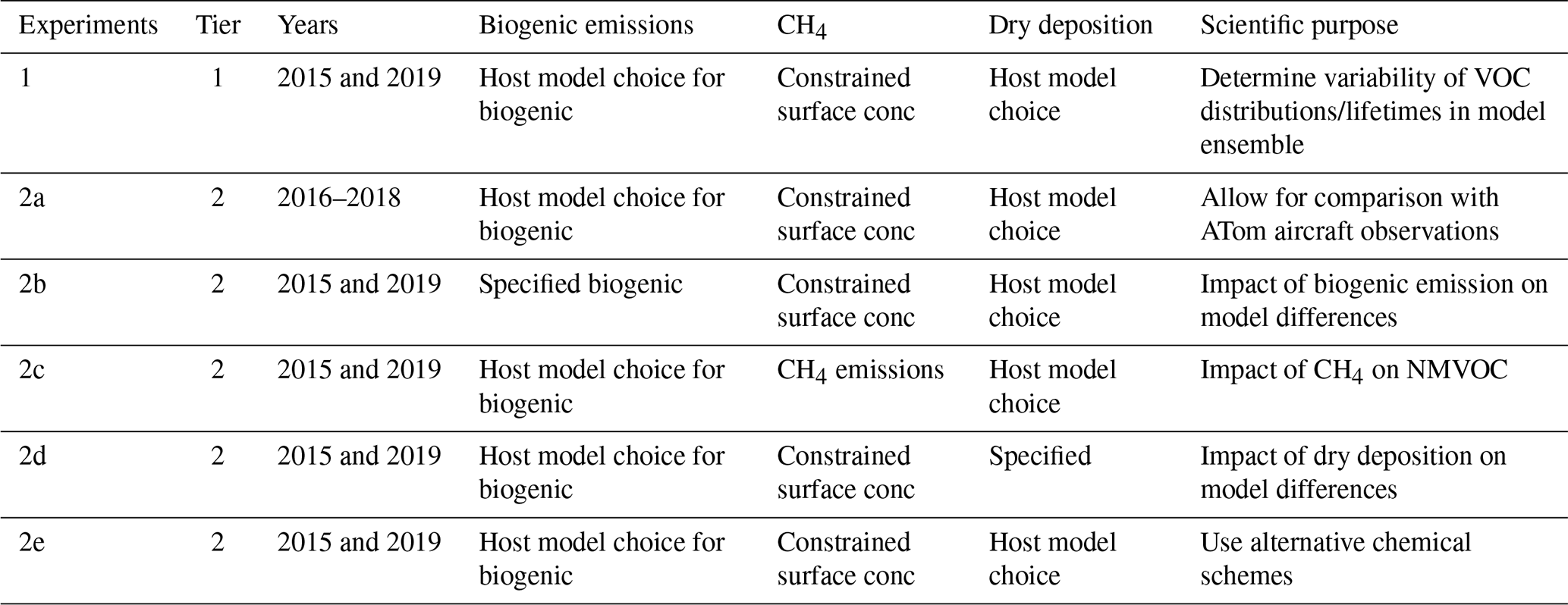
Table 23-hourly instantaneous 3D variables. Unit for airmass is kg m−2 and unit for all chemical compounds is mole mole−1 of the compound relative to dry air. NMVOC denotes the total of all non-methane VOCs included in the models including VOCs listed in the table. In addition, we request a more typical 3D monthly mean of these quantities and some standard model output*. Further details and potential updates are available at the VOCMIP webpage: https://cicero.oslo.no/en/projects/vocmip (last access: 11 March 2026).
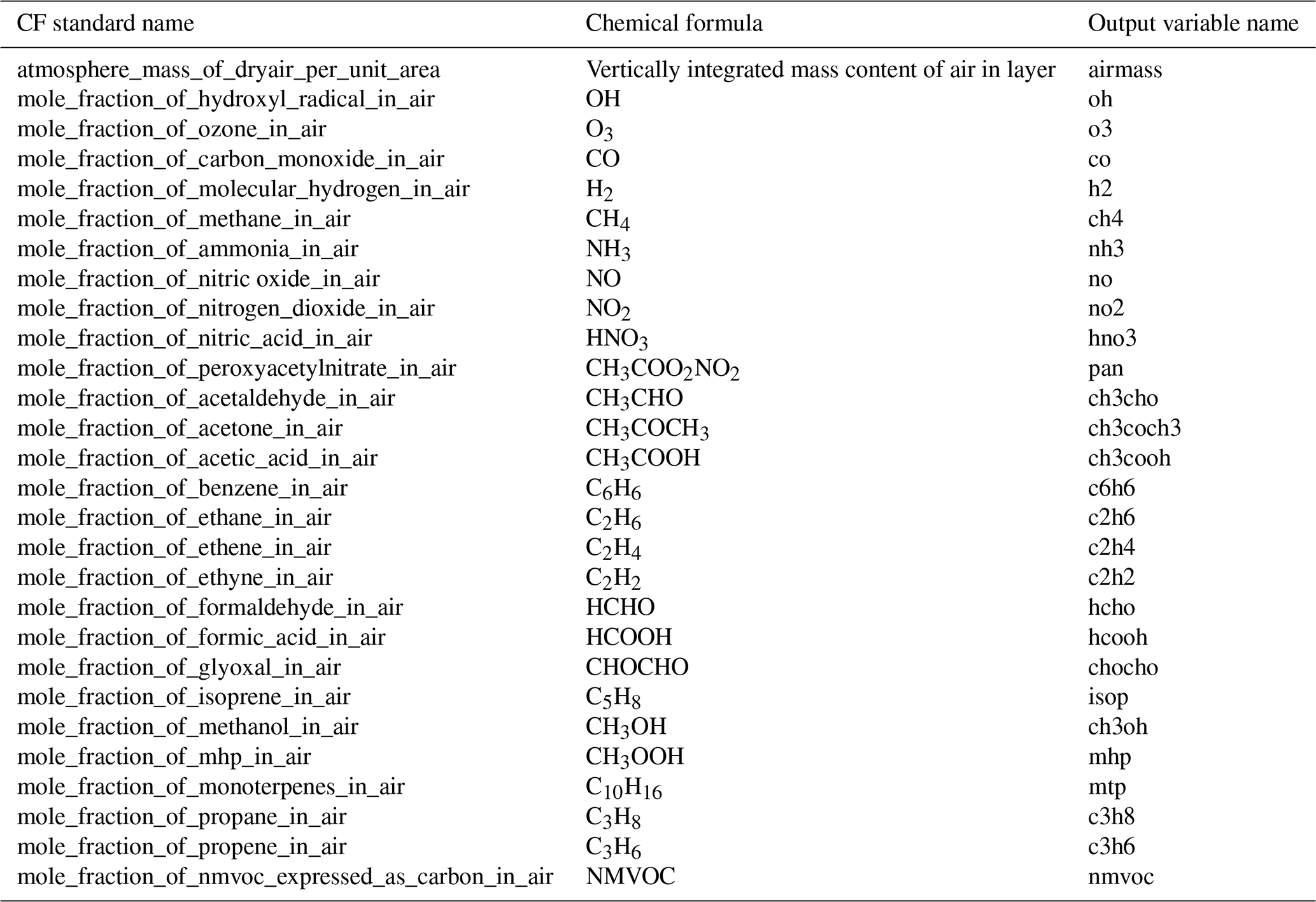
* Standard model output of area of each grid cell and vertical layers is also required.
Table 3 provides a list of monthly mean budget terms required, using formaldehyde as an illustrative example. Emissions are requested for all emitted species listed in Table 2, while the additional budget terms are required for the VOCs (except propane and propene) listed in Table 2 in addition to hydrogen. The budget terms are important for understanding model differences, including difference in VOC lifetimes. Additional details and potential updates for model output can be found at the VOCMIP website: https://cicero.oslo.no/en/projects/vocmip/ (last access: 11 March 2026).
Table 3Monthly 2D and 3D budget terms with formaldehyde as an example. Budget terms are required for every VOC (except propane and propene) listed in Table 2 in addition to hydrogen using the following approach: column integrated emissions to provide a 2D emissions field (emi〈x〉), dry and wet deposition as two separate outputs (dry〈x〉 and wet〈x〉), 3D total production rates and total loss rates due to chemical reactions (prod〈x〉 and loss〈x〉), total production rates and total loss rates due to photolysis reactions (prodphoto〈x〉 and lossphoto〈x〉). Units are kg m−2 s−1 and kg m−3 s−1, respectively for 2D and 3D variables. Further details and potential updates are available at the VOCMIP webpage: https://cicero.oslo.no/en/projects/vocmip (last access: 11 March 2026).
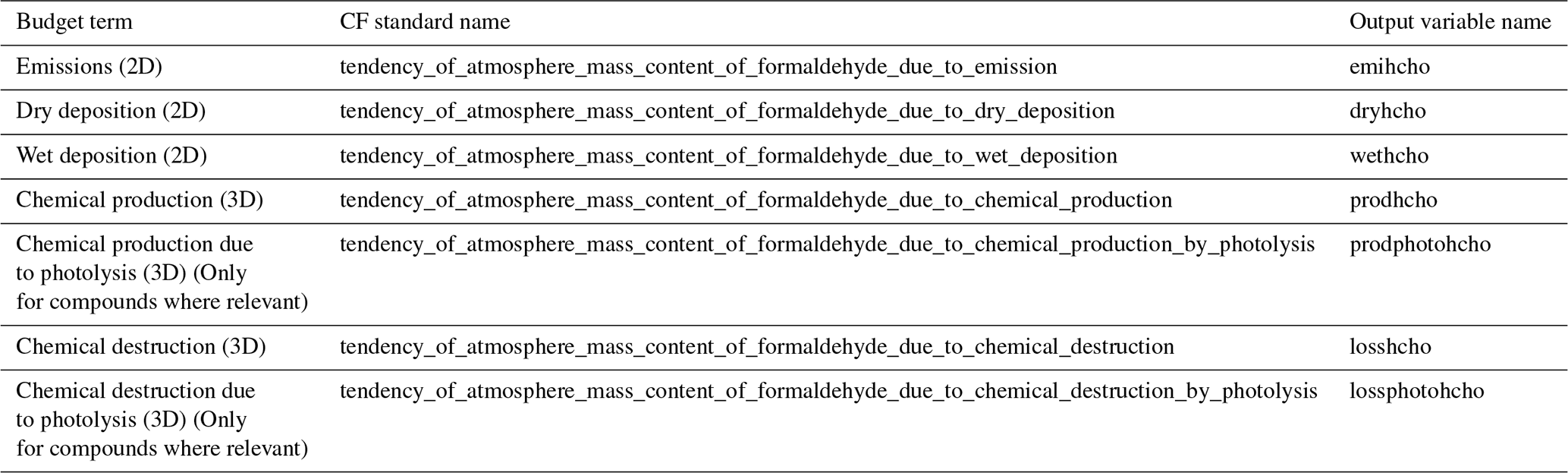
Table 4 lists the global atmospheric chemistry models confirmed for participation in VOCMIP. This selection of models will enable a robust intercomparison and provide valuable insights into the variability and uncertainties in VOC processes across different models. However, additional models are highly welcome and strongly encouraged to join VOCMIP.
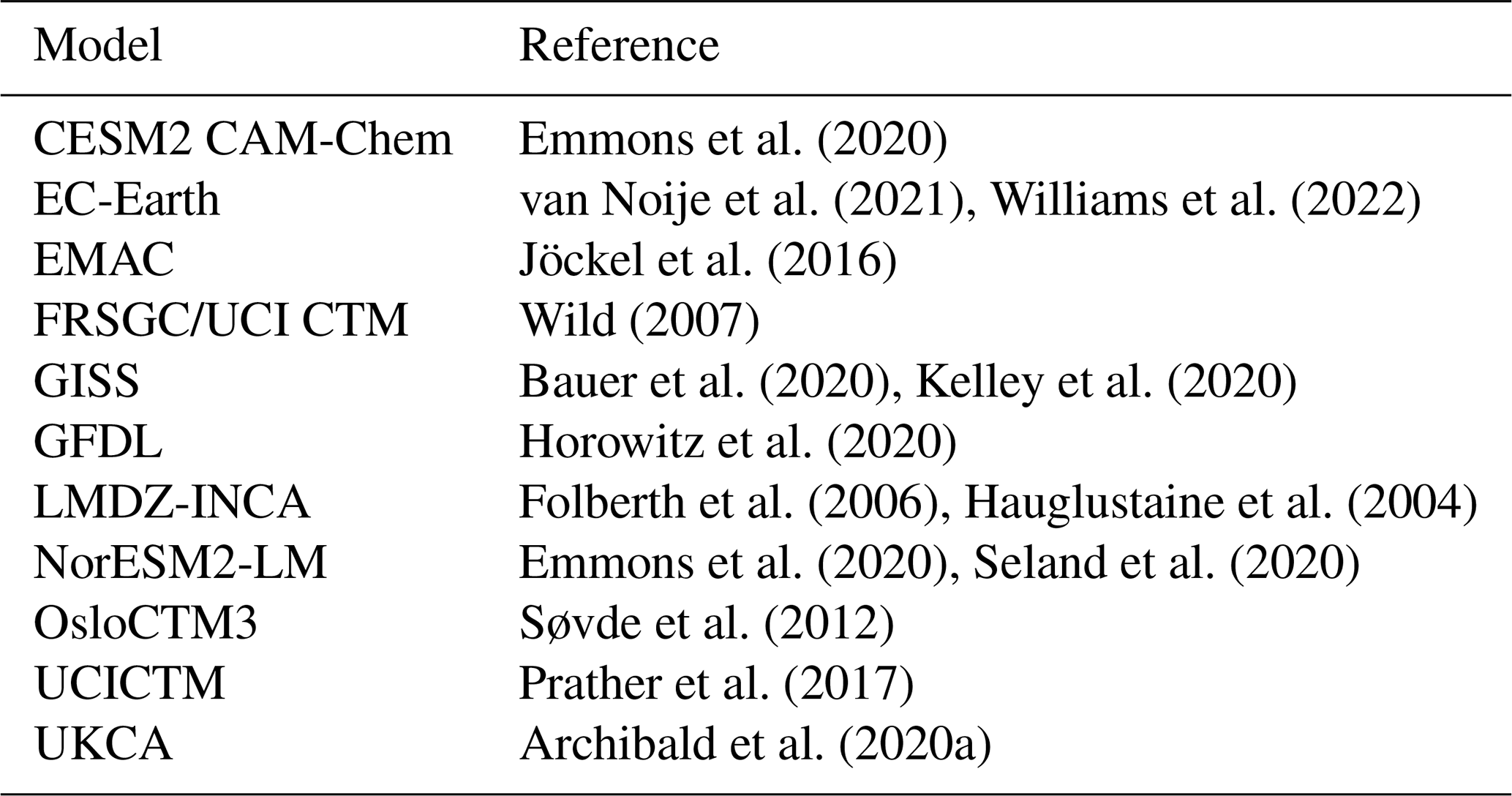
Figure 2 shows the atmospheric burden of twenty major VOCs as simulated by two global atmospheric models (CESM2 WACCM and OsloCTM3). It also shows the VOC species which can be observed directly from space by different satellite platforms, namely TropOMI, CrIs and IASI. The results demonstrate a general consistency for several compounds, highlighting agreement between the models for some compounds. However, notable discrepancies are observed for certain VOCs, particularly acetone, where the models diverge significantly. Additionally, the figure reveals that some VOCs are entirely absent in one of the models, emphasizing the need for improved representation and standardization in VOC simulations. Moreover, the comparison of the burdens of the VOCs shows that there is need for the diagnostics we outline in Table 3 to understand the differences in processes that control the species burdens.
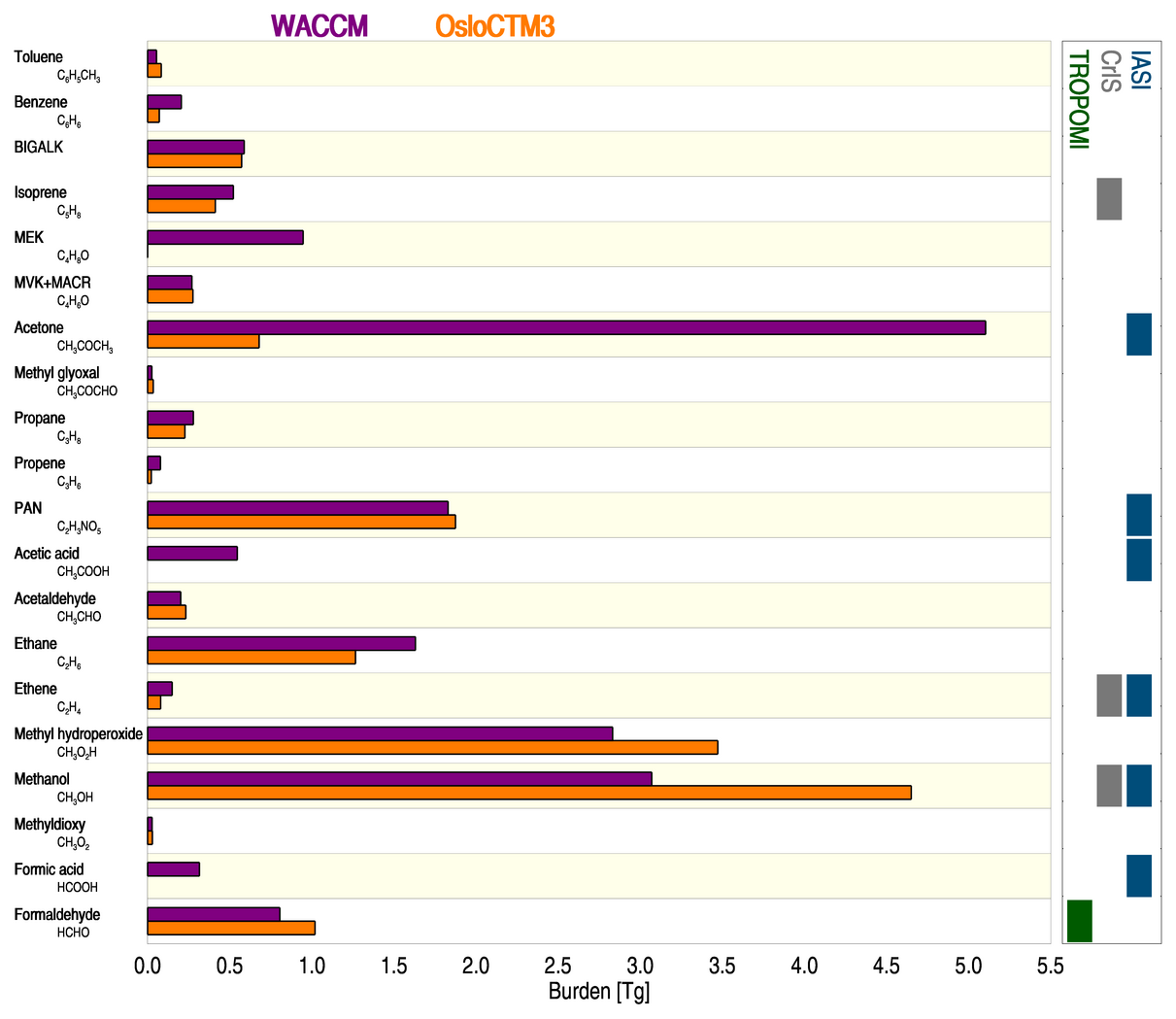
Figure 2Global mean burden of twenty major VOCs from two global atmospheric chemistry models (OsloCTM3 and CESM2 WACCM). BIGALK includes all larger alkanes than ethane and propane. MVK is methyl vinyl ketone, MACR is methacrolein, PAN is peroxyacetyl nitrate and MEK is methyl ethyl ketone. Colours on the right-hand side indicate which satellite retrievals for IASI, CrIS and TROPOMI are available for VOCs. The simulation with WACCM6 (Gettelman et al., 2019) is set up as the CTRL simulation in Sand et al. (2023) except that slightly fewer vertical levels are used here (70 instead of 88). OsloCTM3 results are for year 2010 and taken from Skeie et al. (2025).
To better constrain the budget for VOCs, and in particular HCHO, comparison between models and observations will be performed. Satellite retrievals of VOCs will be combined with in situ surface and aircraft measurements.
3.1 Satellite data
Satellite retrievals for ten main VOCs are available (see Table 5 and Fig. 2). Except for methyl hydroperoxide (MHP) and partly ethane (where only limited retrievals are available) several of the most important VOCs are covered by satellite retrievals (Fig. 2). Figure 3 shows seasonal and geographical distributions of methanol column retrieved from the two satellites IASI and CrIS. The satellite data show a pronounced seasonal variation and a significant land-to-ocean gradient. Methanol concentrations are highest over forested regions, primarily due to natural emissions from vegetation, with additional contributions from biomass burning. The broad agreement between IASI and CrIS satellite data of methanol is clearly evident. Averaging kernels will be applied for the comparison between models and satellite data.
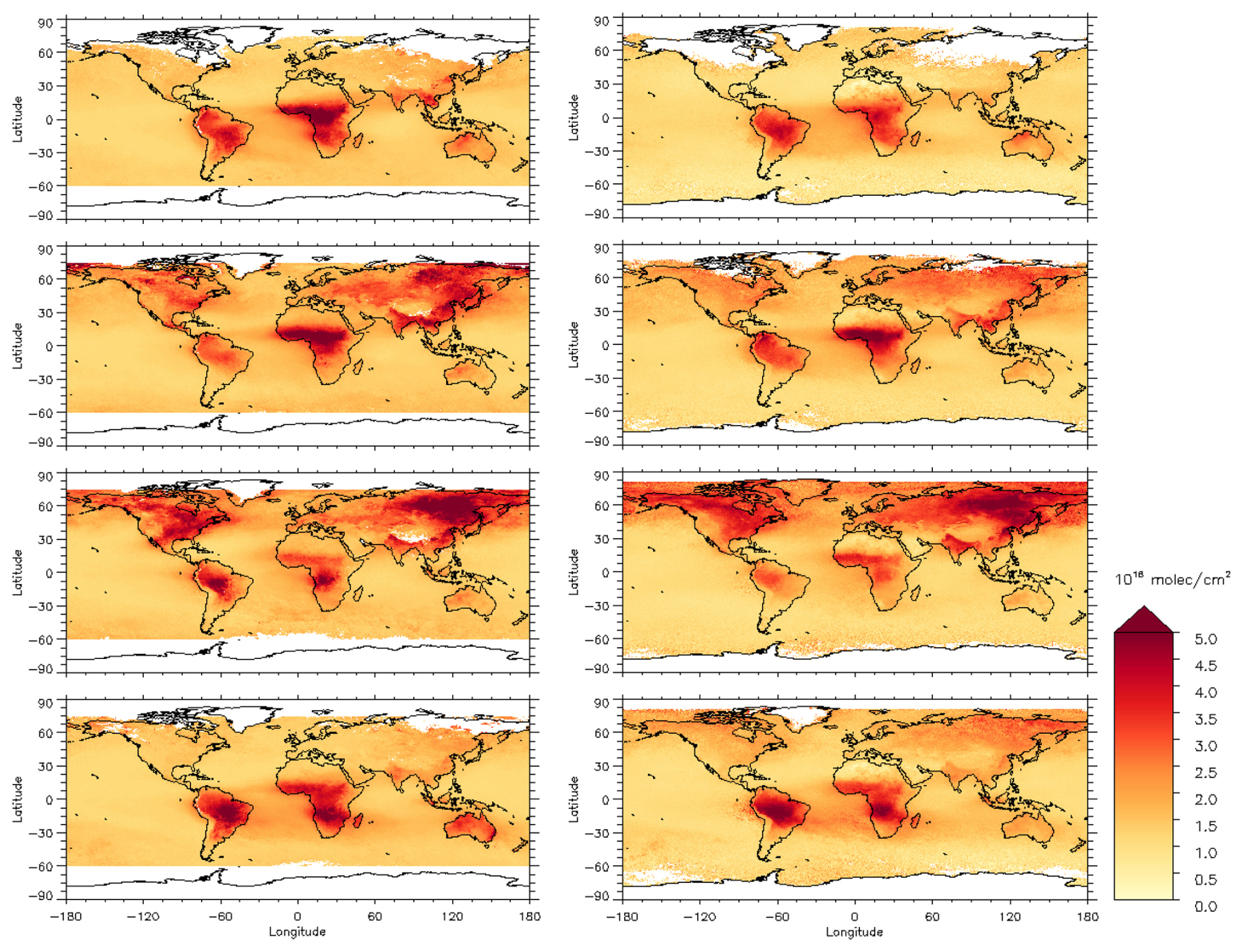
Figure 3Satellite retrievals by CrIS (left panels) (Wells et al., 2025b) and IASI (right panels) (Franco et al., 2018) of methanol column for January, February and March (top row panels), April, May and June (second row panels), July, August and September (third row panels), October, November and December (fourth row panels) for the year 2019.
Table 5Satellite retrievals available.
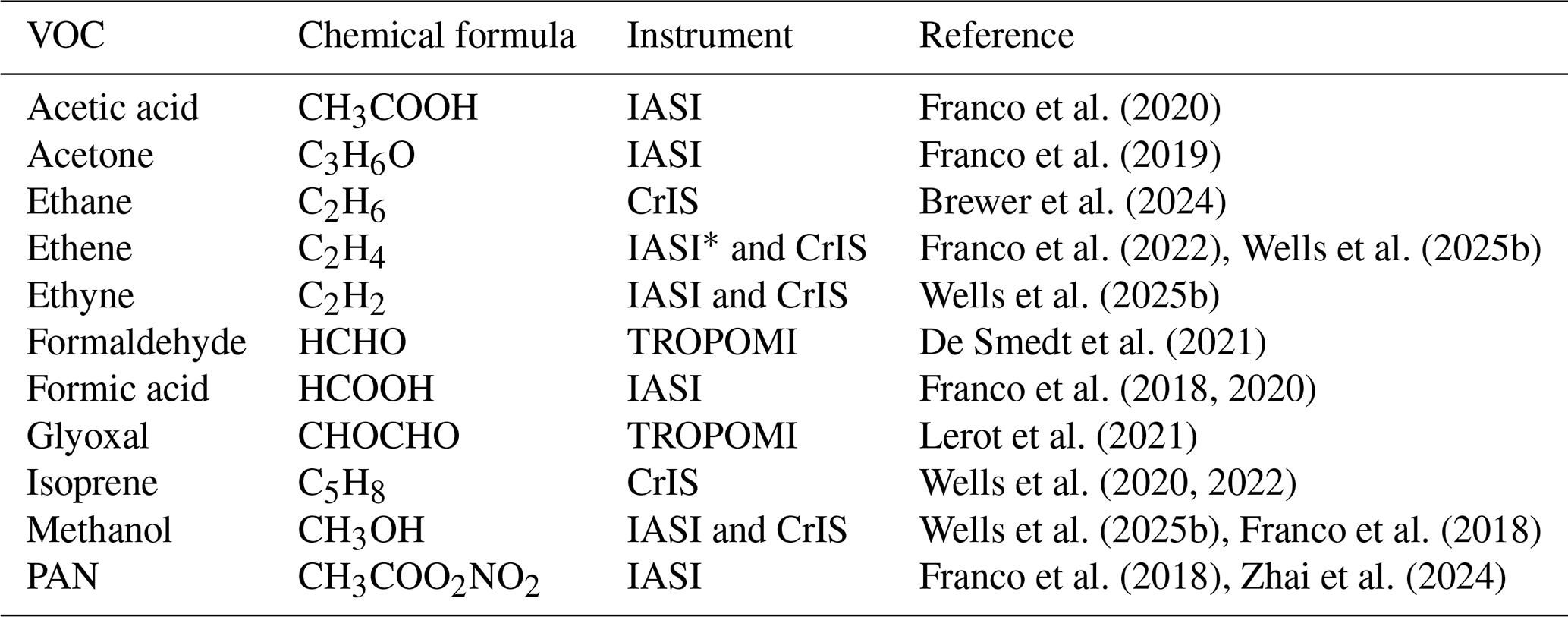
* Limited to retrievals in biomass burning plumes and over major anthropogenic point sources.
3.2 In situ surface and aircraft data
The EBAS database (https://ebas-data.nilu.no/Default.aspx, last access: 12 March 2026) provides access to in situ data from stations world-wide for a large number of VOCs including all but a few (MHP, CH3O2, PAN, MVK and BIGALK, though some of these, particularly BIGALK, may be covered or partially covered by or within categories of observations) of the compounds shown in Fig. 2. The database includes contributions from networks like EMEP and ACTRIS (Laj et al., 2024) as well as data from intensive campaigns conducted within various projects. Some of these measurements are performed offline with DNPH (2,4-dinitrophenylhydrazine) sampling and HPLC (High-performance liquid chromatography) analysis covering aldehydes and ketones. In general, NMHC are measured with gas chromatography techniques.
Table 6Example aircraft campaigns which provide in-situ measurements of VOC species between 2015–2019. These campaigns are selected to provide seasonal coverage over regional locations.
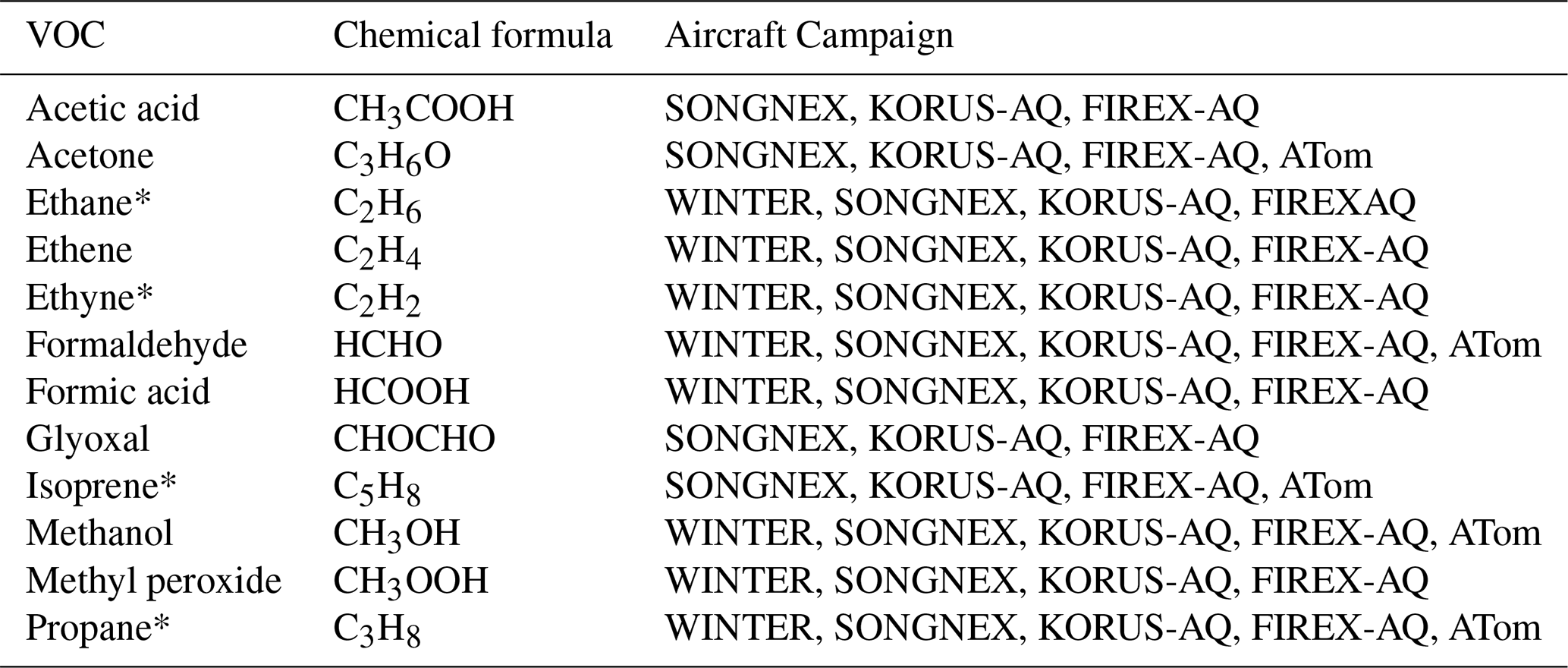
* Discrete air samples from background measurements sites are available for these species from the Global Monitoring Laboratory (https://gml.noaa.gov/data/data.php; last access: 24 December 2025).
In addition to surface data from ground-based measuring stations and satellite data for total column information, flight campaign data can provide time-limited granular information with respect to regional vertical profiles for a range of VOC species. Table 6 provides an overview of the availability of measurements in the boundary layer and the Free Troposphere which we propose to use in VOCMIP. For this purpose, measurement data from instruments such as the Trace Organic Gas Analyser (TOGA) (https://doi.org/10.3334/ORNLDAAC/1936, Apel et al., 2021) instruments used as part of the Atmospheric Tomography Mission (ATom) flight measurement campaign (Thompson et al., 2022) include measurements of several of the VOCs in Fig. 2. Additional information is provided by analysing air captured in integrated whole air samplers (iWAS) with concentrations being derived using Gas Chromatography in tandem with Mass Spectroscopy for species such as the alkanes, alkenes and aromatics. For species such as acetone and acetaldehyde, Time-Of-Flight Chemical Ionization Mass Spectroscopy (TOF-CIMS) provides data every few seconds along each flight path. For our chosen analysis years in the Tier 1 simulations we aim to utilize such data taken from the WINTER campaign (https://www.eol.ucar.edu/field_projects/winter, last access: 12 March 2026) allowing evaluation during cold short winter days with high heating related emissions and slower chemical oxidation (February–March 2015) (McDuffie et al., 2018), and the SONGNEX campaign (https://csl.noaa.gov/projects/songnex/, last access: 12 March 2026) which allows an evaluation of differences during springtime focusing on VOC emissions from fossil fuel production (March–April 2015). Moreover, ATom conducted four seasonal campaigns in summer of 2016, winter (January) and fall of 2017, and spring of 2018. For 2019, we will use similar data from FIREX-AQ campaign (June–August 2019) to focus on the differences in VOCs introduced by large fires (https://csl.noaa.gov/projects/firex-aq/, last access: 12 March 2026), complementing the evaluation of the anthropogenic component. Additional measurement campaigns for Tier 2 include the measurement campaigns for the Korea–United States Air Quality (KORUS-AQ) field study (May–June 2016) (Crawford et al., 2021). These measurements can be combined with simultaneous measurements of other reactive species of importance for VOC chemistry taken on the same flight campaigns to provide comparisons for understanding the underlaying chemistry building on work such as Brewer et al. (2020), Read et al. (2012), Travis et al. (2020) and Wolfe et al. (2019).
Given the significant role of VOCs in ozone formation (Stevenson et al., 2013; Monks et al., 2015), methane lifetime (Thornhill et al., 2021), atmospheric hydrogen formation (Ehhalt and Rohrer, 2009), and secondary organic aerosol formation (Kroll and Seinfeld, 2008), their accurate representation in global atmospheric chemistry models is crucial. As part of VOCMIP, satellite retrievals and in situ measurements of key VOCs will be employed to evaluate the performance of a variety of global atmospheric chemistry models. Eleven modelling groups have committed to VOCMIP, and additional modelling groups are encouraged to participate.
VOCMIP is a coordinated, multi-model initiative designed to intercompare global chemistry models focusing on VOCs, including the use of observational constraints. The activity aims to identify and quantify key similarities and differences between models and how they compare with observations. Tier 2 simulations are intended to shed light on the underlying causes of these inter-model differences. The budget terms presented in the output protocol help us understand differences in emissions, chemical production and loss, dry and wet deposition, and consequently the variations in lifetimes. Additional phases of VOCMIP will likely be required to fully capture the complexity of atmospheric VOCs and their influence on atmospheric chemistry, including ozone formation and SOA production. This could include perturbations to several VOCs, chemistry box-model intercomparisons to enable detailed evaluations of chemical schemes (Sander et al., 2019), and inversion studies to improve the VOC emissions.
OsloCTM3 and WACCM6 data for Fig. 2 are available at https://doi.org/10.5281/zenodo.15827664 (Myhre, 2025). The CrIS ROCRv2 VOC retrievals used in this work are available at https://doi.org/10.13020/9r8x-pp66 (Wells et al., 2025a). The OsloCTM3 version used here is available at https://doi.org/10.5281/zenodo.15309428 (Sandstad and Falk, 2025). WACCM6 code is available as part of the CESM2 release via github. Instructions are at this site (http://www.cesm.ucar.edu/models/cesm2/release_download.html, last access: 23 March 2026).
GM initiated the study. RBS and MS made Fig. 1. LC, BF, DBM, and KCW provided methanol satellite data for Fig. 3. All authors made input to the MIP design and writing of the manuscript.
At least one of the (co-)authors is a member of the editorial board of Geoscientific Model Development. The peer-review process was guided by an independent editor, and the authors also have no other competing interests to declare.
Publisher's note: Copernicus Publications remains neutral with regard to jurisdictional claims made in the text, published maps, institutional affiliations, or any other geographical representation in this paper. The authors bear the ultimate responsibility for providing appropriate place names. Views expressed in the text are those of the authors and do not necessarily reflect the views of the publisher.
We appreciate the comments and suggestions by the two reviewers.
The OsloCTM3 and WACCM simulations were performed on resources provided by Sigma2 – the National Infrastructure for High Performance Computing and Data Storage in Norway (project account NN9188K) and data uploaded and shared through their services (project nos. NS11106K and NS9188K).
This work has received funding from the European Union's Horizon Europe research and innovation programme under grant agreement nos. 101137582 (HYway) and 101137758 (HYDRA) and from the Research Council of Norway project number 322247 (ACTRIS-Norway).
This paper was edited by Holger Tost and reviewed by two anonymous referees.
Allen, H. M., Crounse, J. D., Kim, M. J., Teng, A. P., Ray, E. A., McKain, K., Sweeney, C., and Wennberg, P. O.: H2O2 and CH3OOH (MHP) in the Remote Atmosphere: 1. Global Distribution and Regional Influences, J. Geophys. Res.-Atmos., 127, e2021JD035701, https://doi.org/10.1029/2021JD035701, 2022.
Anderson, D. C., Nicely, J. M., Wolfe, G. M., Hanisco, T. F., Salawitch, R. J., Canty, T. P., Dickerson, R. R., Apel, E. C., Baidar, S., Bannan, T. J., Blake, N. J., Chen, D., Dix, B., Fernandez, R. P., Hall, S. R., Hornbrook, R. S., Gregory Huey, L., Josse, B., Jöckel, P., Kinnison, D. E., Koenig, T. K., Le Breton, M., Marécal, V., Morgenstern, O., Oman, L. D., Pan, L. L., Percival, C., Plummer, D., Revell, L. E., Rozanov, E., Saiz-Lopez, A., Stenke, A., Sudo, K., Tilmes, S., Ullmann, K., Volkamer, R., Weinheimer, A. J., and Zeng, G.: Formaldehyde in the Tropical Western Pacific: Chemical Sources and Sinks, Convective Transport, and Representation in CAM-Chem and the CCMI Models, J. Geophys. Res.-Atmos., 122, 11201–11226, https://doi.org/10.1002/2016JD026121, 2017.
Apel, E. C., Asher, E. C., Hills, A. J., and Hornbrook, R. S.: ATom: Volatile Organic Compounds (VOCs) from the TOGA instrument, Version 2 (Version 2), ORNL Distributed Active Archive Center [data set], https://doi.org/10.3334/ORNLDAAC/1936, 2021.
Archer-Nicholls, S., Abraham, N. L., Shin, Y. M., Weber, J., Russo, M. R., Lowe, D., Utembe, S. R., O'Connor, F. M., Kerridge, B., Latter, B., Siddans, R., Jenkin, M., Wild, O., and Archibald, A. T.: The Common Representative Intermediates Mechanism Version 2 in the United Kingdom Chemistry and Aerosols Model, J. Adv. Model. Earth Syst., 13, e2020MS002420, https://doi.org/10.1029/2020MS002420, 2021.
Archibald, A. T., O'Connor, F. M., Abraham, N. L., Archer-Nicholls, S., Chipperfield, M. P., Dalvi, M., Folberth, G. A., Dennison, F., Dhomse, S. S., Griffiths, P. T., Hardacre, C., Hewitt, A. J., Hill, R. S., Johnson, C. E., Keeble, J., Köhler, M. O., Morgenstern, O., Mulcahy, J. P., Ordóñez, C., Pope, R. J., Rumbold, S. T., Russo, M. R., Savage, N. H., Sellar, A., Stringer, M., Turnock, S. T., Wild, O., and Zeng, G.: Description and evaluation of the UKCA stratosphere–troposphere chemistry scheme (StratTrop vn 1.0) implemented in UKESM1, Geosci. Model Dev., 13, 1223–1266, https://doi.org/10.5194/gmd-13-1223-2020, 2020a.
Archibald, A. T., Neu, J. L., Elshorbany, Y. F., Cooper, O. R., Young, P. J., Akiyoshi, H., Cox, R. A., Coyle, M., Derwent, R. G., Deushi, M., Finco, A., Frost, G. J., Galbally, I. E., Gerosa, G., Granier, C., Griffiths, P. T., Hossaini, R., Hu, L., Jöckel, P., Josse, B., Lin, M. Y., Mertens, M., Morgenstern, O., Naja, M., Naik, V., Oltmans, S., Plummer, D. A., Revell, L. E., Saiz-Lopez, A., Saxena, P., Shin, Y. M., Shahid, I., Shallcross, D., Tilmes, S., Trickl, T., Wallington, T. J., Wang, T., Worden, H. M., and Zeng, G.: Tropospheric Ozone Assessment Report: A critical review of changes in the tropospheric ozone burden and budget from 1850 to 2100, Elementa, 8, https://doi.org/10.1525/elementa.2020.034, 2020b.
Atkinson, R. and Arey, J.: Atmospheric Degradation of Volatile Organic Compounds, Chem. Rev., 103, 4605–4638, https://doi.org/10.1021/cr0206420, 2003.
Aumont, B., Szopa, S., and Madronich, S.: Modelling the evolution of organic carbon during its gas-phase tropospheric oxidation: development of an explicit model based on a self generating approach, Atmos. Chem. Phys., 5, 2497–2517, https://doi.org/10.5194/acp-5-2497-2005, 2005.
Bates, K. H. and Jacob, D. J.: A new model mechanism for atmospheric oxidation of isoprene: global effects on oxidants, nitrogen oxides, organic products, and secondary organic aerosol, Atmos. Chem. Phys., 19, 9613–9640, https://doi.org/10.5194/acp-19-9613-2019, 2019.
Bates, K. H., Jacob, D. J., Wang, S., Hornbrook, R. S., Apel, E. C., Kim, M. J., Millet, D. B., Wells, K. C., Chen, X., Brewer, J. F., Ray, E. A., Commane, R., Diskin, G. S., and Wofsy, S. C.: The Global Budget of Atmospheric Methanol: New Constraints on Secondary, Oceanic, and Terrestrial Sources, J. Geophys. Res.-Atmos., 126, e2020JD033439, https://doi.org/10.1029/2020JD033439, 2021.
Bauer, S. E., Tsigaridis, K., Faluvegi, G., Kelley, M., Lo, K. K., Miller, R. L., Nazarenko, L., Schmidt, G. A., and Wu, J.: Historical (1850–2014) Aerosol Evolution and Role on Climate Forcing Using the GISS ModelE2.1 Contribution to CMIP6, J. Adv. Model. Earth Syst., 12, e2019MS001978, https://doi.org/10.1029/2019MS001978, 2020.
Blake, D. R. and Rowland, F. S.: Urban Leakage of Liquefied Petroleum Gas and Its Impact on Mexico City Air Quality, Science, 269, 953–956, https://doi.org/10.1126/science.269.5226.953, 1995.
Brewer, J. F., Fischer, E. V., Commane, R., Wofsy, S. C., Daube, B. C., Apel, E. C., Hills, A. J., Hornbrook, R. S., Barletta, B., Meinardi, S., Blake, D. R., Ray, E. A., and Ravishankara, A. R.: Evidence for an Oceanic Source of Methyl Ethyl Ketone to the Atmosphere, Geophys. Res. Lett., 47, e2019GL086045, https://doi.org/10.1029/2019GL086045, 2020.
Brewer, J. F., Millet, D. B., Wells, K. C., Payne, V. H., Kulawik, S., Vigouroux, C., Cady-Pereira, K. E., Pernak, R., and Zhou, M.: Space-based observations of tropospheric ethane map emissions from fossil fuel extraction, Nat. Commun., 15, 7829, https://doi.org/10.1038/s41467-024-52247-z, 2024.
Burrows, J. P., Weber, M., Buchwitz, M., Rozanov, V., Ladstätter-Weißenmayer, A., Richter, A., DeBeek, R., Hoogen, R., Bramstedt, K., Eichmann, K.-U., Eisinger, M., and Perner, D.: The Global Ozone Monitoring Experiment (GOME): Mission Concept and First Scientific Results, J. Atmos. Sci., 56, 151–175, https://doi.org/10.1175/1520-0469(1999)056<0151:TGOMEG>2.0.CO;2, 1999.
Chen, X., Millet, D. B., Singh, H. B., Wisthaler, A., Apel, E. C., Atlas, E. L., Blake, D. R., Bourgeois, I., Brown, S. S., Crounse, J. D., de Gouw, J. A., Flocke, F. M., Fried, A., Heikes, B. G., Hornbrook, R. S., Mikoviny, T., Min, K.-E., Müller, M., Neuman, J. A., O'Sullivan, D. W., Peischl, J., Pfister, G. G., Richter, D., Roberts, J. M., Ryerson, T. B., Shertz, S. R., Thompson, C. R., Treadaway, V., Veres, P. R., Walega, J., Warneke, C., Washenfelder, R. A., Weibring, P., and Yuan, B.: On the sources and sinks of atmospheric VOCs: an integrated analysis of recent aircraft campaigns over North America, Atmos. Chem. Phys., 19, 9097–9123, https://doi.org/10.5194/acp-19-9097-2019, 2019.
Crawford, J. H., Ahn, J.-Y., Al-Saadi, J., Chang, L., Emmons, L. K., Kim, J., Lee, G., Park, J.-H., Park, R. J., Woo, J. H., Song, C.-K., Hong, J.-H., Hong, Y.-D., Lefer, B. L., Lee, M., Lee, T., Kim, S., Min, K.-E., Yum, S. S., Shin, H. J., Kim, Y.-W., Choi, J.-S., Park, J.-S., Szykman, J. J., Long, R. W., Jordan, C. E., Simpson, I. J., Fried, A., Dibb, J. E., Cho, S., and Kim, Y. P.: The Korea–United States Air Quality (KORUS-AQ) field study, Elementa, 9, https://doi.org/10.1525/elementa.2020.00163, 2021.
Dalsøren, S. B., Myhre, G., Hodnebrog, Ø., Myhre, C. L., Stohl, A., Pisso, I., Schwietzke, S., Höglund-Isaksson, L., Helmig, D., Reimann, S., Sauvage, S., Schmidbauer, N., Read, K. A., Carpenter, L. J., Lewis, A. C., Punjabi, S., and Wallasch, M.: Discrepancy between simulated and observed ethane and propane levels explained by underestimated fossil emissions, Nat. Geosci., 11, 178–184, https://doi.org/10.1038/s41561-018-0073-0, 2018.
Derwent, R. G.: Representing Organic Compound Oxidation in Chemical Mechanisms for Policy-Relevant Air Quality Models under Background Troposphere Conditions, Atmosphere, 11, 171, https://doi.org/10.3390/atmos11020171, 2020.
De Smedt, I., Pinardi, G., Vigouroux, C., Compernolle, S., Bais, A., Benavent, N., Boersma, F., Chan, K.-L., Donner, S., Eichmann, K.-U., Hedelt, P., Hendrick, F., Irie, H., Kumar, V., Lambert, J.-C., Langerock, B., Lerot, C., Liu, C., Loyola, D., Piters, A., Richter, A., Rivera Cárdenas, C., Romahn, F., Ryan, R. G., Sinha, V., Theys, N., Vlietinck, J., Wagner, T., Wang, T., Yu, H., and Van Roozendael, M.: Comparative assessment of TROPOMI and OMI formaldehyde observations and validation against MAX-DOAS network column measurements, Atmos. Chem. Phys., 21, 12561–12593, https://doi.org/10.5194/acp-21-12561-2021, 2021.
DiMaria, C. A., Jones, D. B. A., Worden, H., Bloom, A. A., Bowman, K., Stavrakou, T., Miyazaki, K., Worden, J., Guenther, A., Sarkar, C., Seco, R., Park, J.-H., Tota, J., Alves, E. G., and Ferracci, V.: Optimizing the Isoprene Emission Model MEGAN With Satellite and Ground-Based Observational Constraints, J. Geophys. Res.-Atmos., 128, e2022JD037822, https://doi.org/10.1029/2022JD037822, 2023.
Ehhalt, D. H. and Rohrer, F.: The tropospheric cycle of H2: a critical review, Tellus B, 61, 500–535, https://doi.org/10.1111/j.1600-0889.2009.00416.x, 2009.
Emmons, L. K., Schwantes, R. H., Orlando, J. J., Tyndall, G., Kinnison, D., Lamarque, J.-F., Marsh, D., Mills, M. J., Tilmes, S., Bardeen, C., Buchholz, R. R., Conley, A., Gettelman, A., Garcia, R., Simpson, I., Blake, D. R., Meinardi, S., and Pétron, G.: The Chemistry Mechanism in the Community Earth System Model Version 2 (CESM2), J. Adv. Model. Earth Syst., 12, e2019MS001882, https://doi.org/10.1029/2019MS001882, 2020.
Ervens, B., Rickard, A., Aumont, B., Carter, W. P. L., McGillen, M., Mellouki, A., Orlando, J., Picquet-Varrault, B., Seakins, P., Stockwell, W. R., Vereecken, L., and Wallington, T. J.: Opinion: Challenges and needs of tropospheric chemical mechanism development, Atmos. Chem. Phys., 24, 13317–13339, https://doi.org/10.5194/acp-24-13317-2024, 2024.
Folberth, G. A., Hauglustaine, D. A., Lathière, J., and Brocheton, F.: Interactive chemistry in the Laboratoire de Météorologie Dynamique general circulation model: model description and impact analysis of biogenic hydrocarbons on tropospheric chemistry, Atmos. Chem. Phys., 6, 2273–2319, https://doi.org/10.5194/acp-6-2273-2006, 2006.
Franco, B., Clarisse, L., Stavrakou, T., Müller, J.-F., Van Damme, M., Whitburn, S., Hadji-Lazaro, J., Hurtmans, D., Taraborrelli, D., Clerbaux, C., and Coheur, P.-F.: A General Framework for Global Retrievals of Trace Gases From IASI: Application to Methanol, Formic Acid, and PAN, J. Geophys. Res.-Atmos., 123, 13963–13984, https://doi.org/10.1029/2018JD029633, 2018.
Franco, B., Clarisse, L., Stavrakou, T., Müller, J.-F., Pozzer, A., Hadji-Lazaro, J., Hurtmans, D., Clerbaux, C., and Coheur, P.-F.: Acetone Atmospheric Distribution Retrieved From Space, Geophys. Res. Lett., 46, 2884–2893, https://doi.org/10.1029/2019GL082052, 2019.
Franco, B., Clarisse, L., Stavrakou, T., Müller, J.-F., Taraborrelli, D., Hadji-Lazaro, J., Hannigan, J. W., Hase, F., Hurtmans, D., Jones, N., Lutsch, E., Mahieu, E., Ortega, I., Schneider, M., Strong, K., Vigouroux, C., Clerbaux, C., and Coheur, P.-F.: Spaceborne Measurements of Formic and Acetic Acids: A Global View of the Regional Sources, Geophys. Res. Lett., 47, e2019GL086239, https://doi.org/10.1029/2019GL086239, 2020.
Franco, B., Clarisse, L., Van Damme, M., Hadji-Lazaro, J., Clerbaux, C., and Coheur, P.-F.: Ethylene industrial emitters seen from space, Nat. Commun., 13, 6452, https://doi.org/10.1038/s41467-022-34098-8, 2022.
Ge, Y., Solberg, S., Heal, M. R., Reimann, S., van Caspel, W., Hellack, B., Salameh, T., and Simpson, D.: Evaluation of modelled versus observed non-methane volatile organic compounds at European Monitoring and Evaluation Programme sites in Europe, Atmos. Chem. Phys., 24, 7699–7729, https://doi.org/10.5194/acp-24-7699-2024, 2024.
Gettelman, A., Mills, M. J., Kinnison, D. E., Garcia, R. R., Smith, A. K., Marsh, D. R., Tilmes, S., Vitt, F., Bardeen, C. G., McInerny, J., Liu, H.-L., Solomon, S. C., Polvani, L. M., Emmons, L. K., Lamarque, J.-F., Richter, J. H., Glanville, A. S., Bacmeister, J. T., Phillips, A. S., Neale, R. B., Simpson, I. R., DuVivier, A. K., Hodzic, A., and Randel, W. J.: The Whole Atmosphere Community Climate Model Version 6 (WACCM6), J. Geophys. Res.-Atmos., 124, 12380–12403, https://doi.org/10.1029/2019JD030943, 2019.
Glasius, M. and Goldstein, A. H.: Recent Discoveries and Future Challenges in Atmospheric Organic Chemistry, Environ. Sci. Technol., 50, 2754–2764, https://doi.org/10.1021/acs.est.5b05105, 2016.
Goldstein, A. H. and Galbally, I. E.: Known and Unexplored Organic Constituents in the Earth's Atmosphere, Environ. Sci. Technol., 41, 1514–1521, https://doi.org/10.1021/es072476p, 2007.
Guenther, A., Hewitt, C. N., Erickson, D., Fall, R., Geron, C., Graedel, T., Harley, P., Klinger, L., Lerdau, M., Mckay, W. A., Pierce, T., Scholes, B., Steinbrecher, R., Tallamraju, R., Taylor, J., and Zimmerman, P.: A global model of natural volatile organic compound emissions, J. Geophys. Res.-Atmos., 100, 8873–8892, https://doi.org/10.1029/94JD02950, 1995.
Hallquist, M., Wenger, J. C., Baltensperger, U., Rudich, Y., Simpson, D., Claeys, M., Dommen, J., Donahue, N. M., George, C., Goldstein, A. H., Hamilton, J. F., Herrmann, H., Hoffmann, T., Iinuma, Y., Jang, M., Jenkin, M. E., Jimenez, J. L., Kiendler-Scharr, A., Maenhaut, W., McFiggans, G., Mentel, Th. F., Monod, A., Prévôt, A. S. H., Seinfeld, J. H., Surratt, J. D., Szmigielski, R., and Wildt, J.: The formation, properties and impact of secondary organic aerosol: current and emerging issues, Atmos. Chem. Phys., 9, 5155–5236, https://doi.org/10.5194/acp-9-5155-2009, 2009.
Hauglustaine, D. A., Hourdin, F., Jourdain, L., Filiberti, M. A., Walters, S., Lamarque, J. F., and Holland, E. A.: Interactive chemistry in the Laboratoire de Meteorologie Dynamique general circulation model: Description and background tropospheric chemistry evaluation, J. Geophys. Res.-Atmos., 109, D04314, https://doi.org/10.1029/2003jd003957, 2004.
Hoesly, R. M., Smith, S. J., Feng, L., Klimont, Z., Janssens-Maenhout, G., Pitkanen, T., Seibert, J. J., Vu, L., Andres, R. J., Bolt, R. M., Bond, T. C., Dawidowski, L., Kholod, N., Kurokawa, J. I., Li, M., Liu, L., Lu, Z., Moura, M. C. P., O'Rourke, P. R., and Zhang, Q.: Historical (1750–2014) anthropogenic emissions of reactive gases and aerosols from the Community Emissions Data System (CEDS), Geosci. Model Dev., 11, 369–408, https://doi.org/10.5194/gmd-11-369-2018, 2018.
Hoque, H. M. S., Sudo, K., Irie, H., He, Y., and Khan, M. F.: Evaluating CHASER V4.0 global formaldehyde (HCHO) simulations using satellite, aircraft, and ground-based remote-sensing observations, Geosci. Model Dev., 17, 5545–5571, https://doi.org/10.5194/gmd-17-5545-2024, 2024.
Horowitz, L. W., Naik, V., Paulot, F., Ginoux, P. A., Dunne, J. P., Mao, J., Schnell, J., Chen, X., He, J., John, J. G., Lin, M., Lin, P., Malyshev, S., Paynter, D., Shevliakova, E., and Zhao, M.: The GFDL Global Atmospheric Chemistry-Climate Model AM4.1: Model Description and Simulation Characteristics, J. Adv. Model. Earth Syst., 12, e2019MS002032, https://doi.org/10.1029/2019MS002032, 2020.
Jackson, R. B., Saunois, M., Martinez, A., Canadell, J. G., Yu, X., Li, M., Poulter, B., Raymond, P. A., Regnier, P., Ciais, P., Davis, S. J., and Patra, P. K.: Human activities now fuel two-thirds of global methane emissions, Environ. Res. Lett., 19, 101002, https://doi.org/10.1088/1748-9326/ad6463, 2024.
Jacob, D. J., Field, B. D., Li, Q., Blake, D. R., de Gouw, J., Warneke, C., Hansel, A., Wisthaler, A., Singh, H. B., and Guenther, A.: Global budget of methanol: Constraints from atmospheric observations, J. Geophys. Res.-Atmos., 110, https://doi.org/10.1029/2004JD005172, 2005.
Jimenez, J. L., Canagaratna, M. R., Donahue, N. M., Prevot, A. S. H., Zhang, Q., Kroll, J. H., DeCarlo, P. F., Allan, J. D., Coe, H., Ng, N. L., Aiken, A. C., Docherty, K. S., Ulbrich, I. M., Grieshop, A. P., Robinson, A. L., Duplissy, J., Smith, J. D., Wilson, K. R., Lanz, V. A., Hueglin, C., Sun, Y. L., Tian, J., Laaksonen, A., Raatikainen, T., Rautiainen, J., Vaattovaara, P., Ehn, M., Kulmala, M., Tomlinson, J. M., Collins, D. R., Cubison, M. J., Dunlea, E. J., Huffman, J. A., Onasch, T. B., Alfarra, M. R., Williams, P. I., Bower, K., Kondo, Y., Schneider, J., Drewnick, F., Borrmann, S., Weimer, S., Demerjian, K., Salcedo, D., Cottrell, L., Griffin, R., Takami, A., Miyoshi, T., Hatakeyama, S., Shimono, A., Sun, J. Y., Zhang, Y. M., Dzepina, K., Kimmel, J. R., Sueper, D., Jayne, J. T., Herndon, S. C., Trimborn, A. M., Williams, L. R., Wood, E. C., Middlebrook, A. M., Kolb, C. E., Baltensperger, U., and Worsnop, D. R.: Evolution of Organic Aerosols in the Atmosphere, Science, 326, 1525–1529, https://doi.org/10.1126/science.1180353, 2009.
Jöckel, P., Tost, H., Pozzer, A., Kunze, M., Kirner, O., Brenninkmeijer, C. A. M., Brinkop, S., Cai, D. S., Dyroff, C., Eckstein, J., Frank, F., Garny, H., Gottschaldt, K.-D., Graf, P., Grewe, V., Kerkweg, A., Kern, B., Matthes, S., Mertens, M., Meul, S., Neumaier, M., Nützel, M., Oberländer-Hayn, S., Ruhnke, R., Runde, T., Sander, R., Scharffe, D., and Zahn, A.: Earth System Chemistry integrated Modelling (ESCiMo) with the Modular Earth Submodel System (MESSy) version 2.51, Geosci. Model Dev., 9, 1153–1200, https://doi.org/10.5194/gmd-9-1153-2016, 2016.
Kelley, M., Schmidt, G. A., Nazarenko, L. S., Bauer, S. E., Ruedy, R., Russell, G. L., Ackerman, A. S., Aleinov, I., Bauer, M., Bleck, R., Canuto, V., Cesana, G., Cheng, Y., Clune, T. L., Cook, B. I., Cruz, C. A., Del Genio, A. D., Elsaesser, G. S., Faluvegi, G., Kiang, N. Y., Kim, D., Lacis, A. A., Leboissetier, A., LeGrande, A. N., Lo, K. K., Marshall, J., Matthews, E. E., McDermid, S., Mezuman, K., Miller, R. L., Murray, L. T., Oinas, V., Orbe, C., García-Pando, C. P., Perlwitz, J. P., Puma, M. J., Rind, D., Romanou, A., Shindell, D. T., Sun, S., Tausnev, N., Tsigaridis, K., Tselioudis, G., Weng, E., Wu, J., and Yao, M.-S.: GISS-E2.1: Configurations and Climatology, J. Adv. Model. Earth Syst., 12, e2019MS002025, https://doi.org/10.1029/2019MS002025, 2020.
Khan, M. A. H., Cooke, M. C., Utembe, S. R., Xiao, P., Morris, W. C., Derwent, R. G., Archibald, A. T., Jenkin, M. E., Percival, C. J., and Shallcross, D. E.: The global budgets of organic hydroperoxides for present and pre-industrial scenarios, Atmos. Environ., 110, 65–74, https://doi.org/10.1016/j.atmosenv.2015.03.045, 2015a.
Khan, M. A. H., Cooke, M. C., Utembe, S. R., Archibald, A. T., Maxwell, P., Morris, W. C., Xiao, P., Derwent, R. G., Jenkin, M. E., Percival, C. J., Walsh, R. C., Young, T. D. S., Simmonds, P. G., Nickless, G., O'Doherty, S., and Shallcross, D. E.: A study of global atmospheric budget and distribution of acetone using global atmospheric model STOCHEM-CRI, Atmos. Environ., 112, 269–277, https://doi.org/10.1016/j.atmosenv.2015.04.056, 2015b.
Kroll, J. H. and Seinfeld, J. H.: Chemistry of secondary organic aerosol: Formation and evolution of low-volatility organics in the atmosphere, Atmos. Environ., 42, 3593–3624, https://doi.org/10.1016/j.atmosenv.2008.01.003, 2008.
Laj, P., Lund Myhre, C., Riffault, V., Amiridis, V., Fuchs, H., Eleftheriadis, K., Petäjä, T., Salameh, T., Kivekäs, N., Juurola, E., Saponaro, G., Philippin, S., Cornacchia, C., Alados Arboledas, L., Baars, H., Claude, A., De Mazière, M., Dils, B., Dufresne, M., Evangeliou, N., Favez, O., Fiebig, M., Haeffelin, M., Herrmann, H., Höhler, K., Illmann, N., Kreuter, A., Ludewig, E., Marinou, E., Möhler, O., Mona, L., Eder Murberg, L., Nicolae, D., Novelli, A., O'Connor, E., Ohneiser, K., Petracca Altieri, R. M., Picquet-Varrault, B., van Pinxteren, D., Pospichal, B., Putaud, J.-P., Reimann, S., Siomos, N., Stachlewska, I., Tillmann, R., Voudouri, K. A., Wandinger, U., Wiedensohler, A., Apituley, A., Comerón, A., Gysel-Beer, M., Mihalopoulos, N., Nikolova, N., Pietruczuk, A., Sauvage, S., Sciare, J., Skov, H., Svendby, T., Swietlicki, E., Tonev, D., Vaughan, G., Zdimal, V., Baltensperger, U., Doussin, J.-F., Kulmala, M., Pappalardo, G., Sorvari Sundet, S., and Vana, M.: Aerosol, Clouds and Trace Gases Research Infrastructure (ACTRIS): The European Research Infrastructure Supporting Atmospheric Science, B. Am. Meteorol. Soc., 105, E1098–E1136, https://doi.org/10.1175/BAMS-D-23-0064.1, 2024.
Lerot, C., Hendrick, F., Van Roozendael, M., Alvarado, L. M. A., Richter, A., De Smedt, I., Theys, N., Vlietinck, J., Yu, H., Van Gent, J., Stavrakou, T., Müller, J.-F., Valks, P., Loyola, D., Irie, H., Kumar, V., Wagner, T., Schreier, S. F., Sinha, V., Wang, T., Wang, P., and Retscher, C.: Glyoxal tropospheric column retrievals from TROPOMI – multi-satellite intercomparison and ground-based validation, Atmos. Meas. Tech., 14, 7775–7807, https://doi.org/10.5194/amt-14-7775-2021, 2021.
Luecken, D. J., Napelenok, S. L., Strum, M., Scheffe, R., and Phillips, S.: Sensitivity of Ambient Atmospheric Formaldehyde and Ozone to Precursor Species and Source Types Across the United States, Environ. Sci. Technol., 52, 4668–4675, https://doi.org/10.1021/acs.est.7b05509, 2018.
McDonald, B. C., de Gouw, J. A., Gilman, J. B., Jathar, S. H., Akherati, A., Cappa, C. D., Jimenez, J. L., Lee-Taylor, J., Hayes, P. L., McKeen, S. A., Cui, Y. Y., Kim, S.-W., Gentner, D. R., Isaacman-VanWertz, G., Goldstein, A. H., Harley, R. A., Frost, G. J., Roberts, J. M., Ryerson, T. B., and Trainer, M.: Volatile chemical products emerging as largest petrochemical source of urban organic emissions, Science, 359, 760–764, https://doi.org/10.1126/science.aaq0524, 2018.
McDuffie, E. E., Fibiger, D. L., Dubé, W. P., Lopez-Hilfiker, F., Lee, B. H., Thornton, J. A., Shah, V., Jaeglé, L., Guo, H., Weber, R. J., Michael Reeves, J., Weinheimer, A. J., Schroder, J. C., Campuzano-Jost, P., Jimenez, J. L., Dibb, J. E., Veres, P., Ebben, C., Sparks, T. L., Wooldridge, P. J., Cohen, R. C., Hornbrook, R. S., Apel, E. C., Campos, T., Hall, S. R., Ullmann, K., and Brown, S. S.: Heterogeneous N2O5 Uptake During Winter: Aircraft Measurements During the 2015 WINTER Campaign and Critical Evaluation of Current Parameterizations, J. Geophys. Res.-Atmos., 123, 4345–4372, https://doi.org/10.1002/2018JD028336, 2018.
Messina, P., Lathière, J., Sindelarova, K., Vuichard, N., Granier, C., Ghattas, J., Cozic, A., and Hauglustaine, D. A.: Global biogenic volatile organic compound emissions in the ORCHIDEE and MEGAN models and sensitivity to key parameters, Atmos. Chem. Phys., 16, 14169–14202, https://doi.org/10.5194/acp-16-14169-2016, 2016.
Millet, D. B., Guenther, A., Siegel, D. A., Nelson, N. B., Singh, H. B., de Gouw, J. A., Warneke, C., Williams, J., Eerdekens, G., Sinha, V., Karl, T., Flocke, F., Apel, E., Riemer, D. D., Palmer, P. I., and Barkley, M.: Global atmospheric budget of acetaldehyde: 3-D model analysis and constraints from in-situ and satellite observations, Atmos. Chem. Phys., 10, 3405–3425, https://doi.org/10.5194/acp-10-3405-2010, 2010.
Monks, P. S., Archibald, A. T., Colette, A., Cooper, O., Coyle, M., Derwent, R., Fowler, D., Granier, C., Law, K. S., Mills, G. E., Stevenson, D. S., Tarasova, O., Thouret, V., von Schneidemesser, E., Sommariva, R., Wild, O., and Williams, M. L.: Tropospheric ozone and its precursors from the urban to the global scale from air quality to short-lived climate forcer, Atmos. Chem. Phys., 15, 8889–8973, https://doi.org/10.5194/acp-15-8889-2015, 2015.
Myhre, G.: VOCs_OsloCTM3_WACCM [Data set], Zenodo [data set], https://doi.org/10.5281/zenodo.15827664, 2025.
Nowlan, C. R., González Abad, G., Kwon, H.-A., Ayazpour, Z., Chan Miller, C., Chance, K., Chong, H., Liu, X., O'Sullivan, E., Wang, H., Zhu, L., De Smedt, I., Jaross, G., Seftor, C., and Sun, K.: Global Formaldehyde Products From the Ozone Mapping and Profiler Suite (OMPS) Nadir Mappers on Suomi NPP and NOAA-20, Earth Space Sci., 10, e2022EA002643, https://doi.org/10.1029/2022EA002643, 2023.
Nussbaumer, C. M., Crowley, J. N., Schuladen, J., Williams, J., Hafermann, S., Reiffs, A., Axinte, R., Harder, H., Ernest, C., Novelli, A., Sala, K., Martinez, M., Mallik, C., Tomsche, L., Plass-Dülmer, C., Bohn, B., Lelieveld, J., and Fischer, H.: Measurement report: Photochemical production and loss rates of formaldehyde and ozone across Europe, Atmos. Chem. Phys., 21, 18413–18432, https://doi.org/10.5194/acp-21-18413-2021, 2021.
Pozzer, A., Jöckel, P., Tost, H., Sander, R., Ganzeveld, L., Kerkweg, A., and Lelieveld, J.: Simulating organic species with the global atmospheric chemistry general circulation model ECHAM5/MESSy1: a comparison of model results with observations, Atmos. Chem. Phys., 7, 2527–2550, https://doi.org/10.5194/acp-7-2527-2007, 2007.
Prather, M. J., Zhu, X., Flynn, C. M., Strode, S. A., Rodriguez, J. M., Steenrod, S. D., Liu, J., Lamarque, J.-F., Fiore, A. M., Horowitz, L. W., Mao, J., Murray, L. T., Shindell, D. T., and Wofsy, S. C.: Global atmospheric chemistry – which air matters, Atmos. Chem. Phys., 17, 9081–9102, https://doi.org/10.5194/acp-17-9081-2017, 2017.
Read, K. A., Carpenter, L. J., Arnold, S. R., Beale, R., Nightingale, P. D., Hopkins, J. R., Lewis, A. C., Lee, J. D., Mendes, L., and Pickering, S. J.: Multiannual Observations of Acetone, Methanol, and Acetaldehyde in Remote Tropical Atlantic Air: Implications for Atmospheric OVOC Budgets and Oxidative Capacity, Environ. Sci. Technol., 46, 11028–11039, https://doi.org/10.1021/es302082p, 2012.
Rivera, A., Tsigaridis, K., Faluvegi, G., and Shindell, D.: Assessing acetone for the GISS ModelE2.1 Earth system model, Geosci. Model Dev., 17, 3487–3505, https://doi.org/10.5194/gmd-17-3487-2024, 2024.
Rosado-Reyes, C. M. and Francisco, J. S.: Atmospheric oxidation pathways of propane and its by-products: Acetone, acetaldehyde, and propionaldehyde, J. Geophys. Res.-Atmos., 112, https://doi.org/10.1029/2006JD007566, 2007.
Rowlinson, M. J., Evans, M. J., Carpenter, L. J., Read, K. A., Punjabi, S., Adedeji, A., Fakes, L., Lewis, A., Richmond, B., Passant, N., Murrells, T., Henderson, B., Bates, K. H., and Helmig, D.: Revising VOC emissions speciation improves the simulation of global background ethane and propane, Atmos. Chem. Phys., 24, 8317–8342, https://doi.org/10.5194/acp-24-8317-2024, 2024.
Rudolph, J.: The tropospheric distribution and budget of ethane, J. Geophys. Res.-Atmos., 100, 11369–11381, https://doi.org/10.1029/95JD00693, 1995.
Safieddine, S. A., Heald, C. L., and Henderson, B. H.: The global nonmethane reactive organic carbon budget: A modeling perspective, Geophys. Res. Lett., 44, 3897–3906, https://doi.org/10.1002/2017GL072602, 2017.
Sand, M., Skeie, R. B., Sandstad, M., Krishnan, S., Myhre, G., Bryant, H., Derwent, R., Hauglustaine, D., Paulot, F., Prather, M., and Stevenson, D.: A multi-model assessment of the Global Warming Potential of hydrogen, Commun. Earth Environ., 4, 203, https://doi.org/10.1038/s43247-023-00857-8, 2023.
Sander, R., Baumgaertner, A., Cabrera-Perez, D., Frank, F., Gromov, S., Grooß, J.-U., Harder, H., Huijnen, V., Jöckel, P., Karydis, V. A., Niemeyer, K. E., Pozzer, A., Riede, H., Schultz, M. G., Taraborrelli, D., and Tauer, S.: The community atmospheric chemistry box model CAABA/MECCA-4.0, Geosci. Model Dev., 12, 1365–1385, https://doi.org/10.5194/gmd-12-1365-2019, 2019.
Sandstad, M. and Falk, S.: ciceroOslo/OsloCTM3: v1.0.1-hydrogen-sensitivity, Zenodo [code], https://doi.org/10.5281/zenodo.15309428, 2025.
Seland, Ø., Bentsen, M., Olivié, D., Toniazzo, T., Gjermundsen, A., Graff, L. S., Debernard, J. B., Gupta, A. K., He, Y.-C., Kirkevåg, A., Schwinger, J., Tjiputra, J., Aas, K. S., Bethke, I., Fan, Y., Griesfeller, J., Grini, A., Guo, C., Ilicak, M., Karset, I. H. H., Landgren, O., Liakka, J., Moseid, K. O., Nummelin, A., Spensberger, C., Tang, H., Zhang, Z., Heinze, C., Iversen, T., and Schulz, M.: Overview of the Norwegian Earth System Model (NorESM2) and key climate response of CMIP6 DECK, historical, and scenario simulations, Geosci. Model Dev., 13, 6165–6200, https://doi.org/10.5194/gmd-13-6165-2020, 2020.
Seltzer, K. M., Pennington, E., Rao, V., Murphy, B. N., Strum, M., Isaacs, K. K., and Pye, H. O. T.: Reactive organic carbon emissions from volatile chemical products, Atmos. Chem. Phys., 21, 5079–5100, https://doi.org/10.5194/acp-21-5079-2021, 2021.
Sillman, S.: The relation between ozone, NOx and hydrocarbons in urban and polluted rural environments, Atmos. Environ., 33, 1821–1845, https://doi.org/10.1016/S1352-2310(98)00345-8, 1999.
Sindelarova, K., Granier, C., Bouarar, I., Guenther, A., Tilmes, S., Stavrakou, T., Müller, J.-F., Kuhn, U., Stefani, P., and Knorr, W.: Global data set of biogenic VOC emissions calculated by the MEGAN model over the last 30 years, Atmos. Chem. Phys., 14, 9317–9341, https://doi.org/10.5194/acp-14-9317-2014, 2014.
Skeie, R. B., Sandstad, M., Krishnan, S., Myhre, G., and Sand, M.: Sensitivity of climate effects of hydrogen to leakage size, location, and chemical background, Atmos. Chem. Phys., 25, 4929–4942, https://doi.org/10.5194/acp-25-4929-2025, 2025.
Søvde, O. A., Prather, M. J., Isaksen, I. S. A., Berntsen, T. K., Stordal, F., Zhu, X., Holmes, C. D., and Hsu, J.: The chemical transport model Oslo CTM3, Geosci. Model Dev., 5, 1441–1469, https://doi.org/10.5194/gmd-5-1441-2012, 2012.
Stevenson, D. S., Young, P. J., Naik, V., Lamarque, J.-F., Shindell, D. T., Voulgarakis, A., Skeie, R. B., Dalsoren, S. B., Myhre, G., Berntsen, T. K., Folberth, G. A., Rumbold, S. T., Collins, W. J., MacKenzie, I. A., Doherty, R. M., Zeng, G., van Noije, T. P. C., Strunk, A., Bergmann, D., Cameron-Smith, P., Plummer, D. A., Strode, S. A., Horowitz, L., Lee, Y. H., Szopa, S., Sudo, K., Nagashima, T., Josse, B., Cionni, I., Righi, M., Eyring, V., Conley, A., Bowman, K. W., Wild, O., and Archibald, A.: Tropospheric ozone changes, radiative forcing and attribution to emissions in the Atmospheric Chemistry and Climate Model Intercomparison Project (ACCMIP), Atmos. Chem. Phys., 13, 3063–3085, https://doi.org/10.5194/acp-13-3063-2013, 2013.
Thompson, C. R., Wofsy, S. C., Prather, M. J., Newman, P. A., Hanisco, T. F., Ryerson, T. B., Fahey, D. W., Apel, E. C., Brock, C. A., Brune, W. H., Froyd, K., Katich, J. M., Nicely, J. M., Peischl, J., Ray, E., Veres, P. R., Wang, S., Allen, H. M., Asher, E., Bian, H., Blake, D., Bourgeois, I., Budney, J., Bui, T. P., Butler, A., Campuzano-Jost, P., Chang, C., Chin, M., Commane, R., Correa, G., Crounse, J. D., Daube, B., Dibb, J. E., DiGangi, J. P., Diskin, G. S., Dollner, M., Elkins, J. W., Fiore, A. M., Flynn, C. M., Guo, H., Hall, S. R., Hannun, R. A., Hills, A., Hintsa, E. J., Hodzic, A., Hornbrook, R. S., Huey, L. G., Jimenez, J. L., Keeling, R. F., Kim, M. J., Kupc, A., Lacey, F., Lait, L. R., Lamarque, J.-F., Liu, J., McKain, K., Meinardi, S., Miller, D. O., Montzka, S. A., Moore, F. L., Morgan, E. J., Murphy, D. M., Murray, L. T., Nault, B. A., Neuman, J. A., Nguyen, L., Gonzalez, Y., Rollins, A., Rosenlof, K., Sargent, M., Schill, G., Schwarz, J. P., Clair, J. M. S., Steenrod, S. D., Stephens, B. B., Strahan, S. E., Strode, S. A., Sweeney, C., Thames, A. B., Ullmann, K., Wagner, N., Weber, R., Weinzierl, B., Wennberg, P. O., Williamson, C. J., Wolfe, G. M., and Zeng, L.: The NASA Atmospheric Tomography (ATom) Mission: Imaging the Chemistry of the Global Atmosphere, B. Am. Meteorol. Soc., 103, E761–E790, https://doi.org/10.1175/BAMS-D-20-0315.1, 2022.
Thornhill, G. D., Collins, W. J., Kramer, R. J., Olivié, D., Skeie, R. B., O'Connor, F. M., Abraham, N. L., Checa-Garcia, R., Bauer, S. E., Deushi, M., Emmons, L. K., Forster, P. M., Horowitz, L. W., Johnson, B., Keeble, J., Lamarque, J.-F., Michou, M., Mills, M. J., Mulcahy, J. P., Myhre, G., Nabat, P., Naik, V., Oshima, N., Schulz, M., Smith, C. J., Takemura, T., Tilmes, S., Wu, T., Zeng, G., and Zhang, J.: Effective radiative forcing from emissions of reactive gases and aerosols – a multi-model comparison, Atmos. Chem. Phys., 21, 853–874, https://doi.org/10.5194/acp-21-853-2021, 2021.
Travis, K. R., Heald, C. L., Allen, H. M., Apel, E. C., Arnold, S. R., Blake, D. R., Brune, W. H., Chen, X., Commane, R., Crounse, J. D., Daube, B. C., Diskin, G. S., Elkins, J. W., Evans, M. J., Hall, S. R., Hintsa, E. J., Hornbrook, R. S., Kasibhatla, P. S., Kim, M. J., Luo, G., McKain, K., Millet, D. B., Moore, F. L., Peischl, J., Ryerson, T. B., Sherwen, T., Thames, A. B., Ullmann, K., Wang, X., Wennberg, P. O., Wolfe, G. M., and Yu, F.: Constraining remote oxidation capacity with ATom observations, Atmos. Chem. Phys., 20, 7753–7781, https://doi.org/10.5194/acp-20-7753-2020, 2020.
Utembe, S. R., Cooke, M. C., Archibald, A. T., Jenkin, M. E., Derwent, R. G., and Shallcross, D. E.: Using a reduced Common Representative Intermediates (CRIv2-R5) mechanism to simulate tropospheric ozone in a 3-D Lagrangian chemistry transport model, Atmos. Environ., 44, 1609–1622, https://doi.org/10.1016/j.atmosenv.2010.01.044, 2010.
van der Werf, G. R., Randerson, J. T., Giglio, L., van Leeuwen, T. T., Chen, Y., Rogers, B. M., Mu, M., van Marle, M. J. E., Morton, D. C., Collatz, G. J., Yokelson, R. J., and Kasibhatla, P. S.: Global fire emissions estimates during 1997–2016, Earth Syst. Sci. Data, 9, 697–720, https://doi.org/10.5194/essd-9-697-2017, 2017.
van Marle, M. J. E., Kloster, S., Magi, B. I., Marlon, J. R., Daniau, A.-L., Field, R. D., Arneth, A., Forrest, M., Hantson, S., Kehrwald, N. M., Knorr, W., Lasslop, G., Li, F., Mangeon, S., Yue, C., Kaiser, J. W., and van der Werf, G. R.: Historic global biomass burning emissions for CMIP6 (BB4CMIP) based on merging satellite observations with proxies and fire models (1750–2015), Geosci. Model Dev., 10, 3329–3357, https://doi.org/10.5194/gmd-10-3329-2017, 2017.
van Noije, T., Bergman, T., Le Sager, P., O'Donnell, D., Makkonen, R., Gonçalves-Ageitos, M., Döscher, R., Fladrich, U., von Hardenberg, J., Keskinen, J.-P., Korhonen, H., Laakso, A., Myriokefalitakis, S., Ollinaho, P., Pérez García-Pando, C., Reerink, T., Schrödner, R., Wyser, K., and Yang, S.: EC-Earth3-AerChem: a global climate model with interactive aerosols and atmospheric chemistry participating in CMIP6, Geosci. Model Dev., 14, 5637–5668, https://doi.org/10.5194/gmd-14-5637-2021, 2021.
Wang, S., Apel, E. C., Schwantes, R. H., Bates, K. H., Jacob, D. J., Fischer, E. V., Hornbrook, R. S., Hills, A. J., Emmons, L. K., Pan, L. L., Honomichl, S., Tilmes, S., Lamarque, J.-F., Yang, M., Marandino, C. A., Saltzman, E. S., de Bruyn, W., Kameyama, S., Tanimoto, H., Omori, Y., Hall, S. R., Ullmann, K., Ryerson, T. B., Thompson, C. R., Peischl, J., Daube, B. C., Commane, R., McKain, K., Sweeney, C., Thames, A. B., Miller, D. O., Brune, W. H., Diskin, G. S., DiGangi, J. P., and Wofsy, S. C.: Global Atmospheric Budget of Acetone: Air-Sea Exchange and the Contribution to Hydroxyl Radicals, J. Geophys. Res.-Atmos., 125, e2020JD032553, https://doi.org/10.1029/2020JD032553, 2020.
Wells, K., Millet, D., and Brewer, J.: ROCRv2 methanol, ethene, ethyne, and HCN retrievals from the CrIS satellite sensor, University of Minnesota [data set], https://doi.org/10.13020/9r8x-pp66, 2025a.
Wells, K. C., Millet, D. B., Cady-Pereira, K. E., Shephard, M. W., Henze, D. K., Bousserez, N., Apel, E. C., de Gouw, J., Warneke, C., and Singh, H. B.: Quantifying global terrestrial methanol emissions using observations from the TES satellite sensor, Atmos. Chem. Phys., 14, 2555–2570, https://doi.org/10.5194/acp-14-2555-2014, 2014.
Wells, K. C., Millet, D. B., Payne, V. H., Deventer, M. J., Bates, K. H., de Gouw, J. A., Graus, M., Warneke, C., Wisthaler, A., and Fuentes, J. D.: Satellite isoprene retrievals constrain emissions and atmospheric oxidation, Nature, 585, 225–233, https://doi.org/10.1038/s41586-020-2664-3, 2020.
Wells, K. C., Millet, D. B., Payne, V. H., Vigouroux, C., Aquino, C. A. B., De Mazière, M., de Gouw, J. A., Graus, M., Kurosu, T., Warneke, C., and Wisthaler, A.: Next-Generation Isoprene Measurements From Space: Detecting Daily Variability at High Resolution, J. Geophys. Res.-Atmos., 127, e2021JD036181, https://doi.org/10.1029/2021JD036181, 2022.
Wells, K. C., Millet, D. B., Brewer, J. F., Payne, V. H., Cady-Pereira, K. E., Pernak, R., Kulawik, S., Vigouroux, C., Jones, N., Mahieu, E., Makarova, M., Nagahama, T., Ortega, I., Palm, M., Strong, K., Schneider, M., Smale, D., Sussmann, R., and Zhou, M.: Global decadal measurements of methanol, ethene, ethyne, and HCN from the Cross-track Infrared Sounder, Atmos. Meas. Tech., 18, 695–716, https://doi.org/10.5194/amt-18-695-2025, 2025b.
Wild, O.: Modelling the global tropospheric ozone budget: exploring the variability in current models, Atmos. Chem. Phys., 7, 2643–2660, https://doi.org/10.5194/acp-7-2643-2007, 2007.
Williams, J. E. ., Huijnen, V., Bouarar, I., Meziane, M., Schreurs, T., Pelletier, S., Marécal, V., Josse, B., and Flemming, J.: Regional evaluation of the performance of the global CAMS chemical modeling system over the United States (IFS cycle 47r1), Geosci. Model Dev., 15, 4657–4687, https://doi.org/10.5194/gmd-15-4657-2022, 2022.
Wolfe, G. M., Nicely, J. M., St. Clair, J. M., Hanisco, T. F., Liao, J., Oman, L. D., Brune, W. B., Miller, D., Thames, A., González Abad, G., Ryerson, T. B., Thompson, C. R., Peischl, J., McKain, K., Sweeney, C., Wennberg, P. O., Kim, M., Crounse, J. D., Hall, S. R., Ullmann, K., Diskin, G., Bui, P., Chang, C., and Dean-Day, J.: Mapping hydroxyl variability throughout the global remote troposphere via synthesis of airborne and satellite formaldehyde observations, P. Natl. Acad. Sci. USA, 116, 11171–11180, https://doi.org/10.1073/pnas.1821661116, 2019.
Yu, Z. and Li, Y.: Marine volatile organic compounds and their impacts on marine aerosol – A review, Sci. Total. Environ., 768, 145054, https://doi.org/10.1016/j.scitotenv.2021.145054, 2021.
Zhai, S., Jacob, D. J., Franco, B., Clarisse, L., Coheur, P., Shah, V., Bates, K. H., Lin, H., Dang, R., Sulprizio, M. P., Huey, L. G., Moore, F. L., Jaffe, D. A., and Liao, H.: Transpacific Transport of Asian Peroxyacetyl Nitrate (PAN) Observed from Satellite: Implications for Ozone, Environ. Sci. Technol., 58, 9760–9769, https://doi.org/10.1021/acs.est.4c01980, 2024.
Zhang, X., He, S. Z., Chen, Z. M., Zhao, Y., and Hua, W.: Methyl hydroperoxide (CH3OOH) in urban, suburban and rural atmosphere: ambient concentration, budget, and contribution to the atmospheric oxidizing capacity, Atmos. Chem. Phys., 12, 8951–8962, https://doi.org/10.5194/acp-12-8951-2012, 2012.