
Articles | Volume 19, issue 6
https://doi.org/10.5194/gmd-19-2531-2026
© Author(s) 2026. This work is distributed under
the Creative Commons Attribution 4.0 License.
the Creative Commons Attribution 4.0 License.
https://doi.org/10.5194/gmd-19-2531-2026
© Author(s) 2026. This work is distributed under
the Creative Commons Attribution 4.0 License.
the Creative Commons Attribution 4.0 License.
Model evaluation paper
| 
31 Mar 2026
Model evaluation paper |
| 31 Mar 2026
| 31 Mar 2026
Application and evaluation of CRACMM v1.0 mechanism in PM2.5 simulation over China
Qingfang Su
Key Laboratory of Organic Compound Pollution Control Engineering (MOE), School of Environmental and Chemical Engineering, Shanghai University, Shanghai, 200444, China
Yifei Chen
Key Laboratory of Organic Compound Pollution Control Engineering (MOE), School of Environmental and Chemical Engineering, Shanghai University, Shanghai, 200444, China
Yangjun Wang
CORRESPONDING AUTHOR

Key Laboratory of Organic Compound Pollution Control Engineering (MOE), School of Environmental and Chemical Engineering, Shanghai University, Shanghai, 200444, China
David C. Wong
Office of Research and Development, U.S. Environmental Protection Agency, Research Triangle Park, North Carolina, USA
Department of Earth and Atmospheric Sciences, University of Houston, Houston, USA
Havala O. T. Pye
Office of Research and Development, U.S. Environmental Protection Agency, Research Triangle Park, North Carolina, USA
Ling Huang
Key Laboratory of Organic Compound Pollution Control Engineering (MOE), School of Environmental and Chemical Engineering, Shanghai University, Shanghai, 200444, China
Golam Sarwar
Office of Research and Development, U.S. Environmental Protection Agency, Research Triangle Park, North Carolina, USA
Benjamin Murphy
Office of Research and Development, U.S. Environmental Protection Agency, Research Triangle Park, North Carolina, USA
Bryan Place
Oak Ridge Institute for Science and Engineering (ORISE), Office of Research and Development, U.S. Environmental Protection Agency, Research Triangle Park, North Carolina, USA
now at: SciGlob Instruments and Services, LLC, 881 Broken Land Pkwy, Columbia, MD 21046, USA
Key Laboratory of Organic Compound Pollution Control Engineering (MOE), School of Environmental and Chemical Engineering, Shanghai University, Shanghai, 200444, China
Related authors
No articles found.
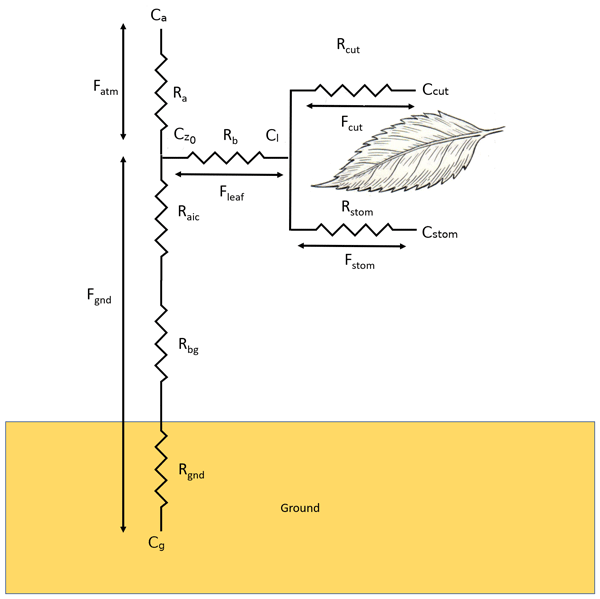
Jesse O. Bash, John T. Walker, Zhiyong Wu, Ian C. Rumsey, Ben Murphy, Christian Hogrefe, Kathleen M. Fahey, Havala O. T. Pye, Matthew R. Jones, K. Wyat Appel, Mark W. Shephard, Najwa I. Alnsour, and Karen E. Cady-Periera
Geosci. Model Dev., 19, 9377–9393, https://doi.org/10.5194/gmd-19-9377-2026, https://doi.org/10.5194/gmd-19-9377-2026, 2026
Short summary
Short summary
We applied a consistent modeling approach for both field and regional scales of multi-pollutants to evaluate the air-surface exchange processes contributing to regional air quality modeling biases when evaluated against observed network and satellite ammonia concentrations. This multi-resolution approach will serve the modeling and measurement community in their future development and generalization of air-surface exchange models utilizing flux, routine network and satellite observations.
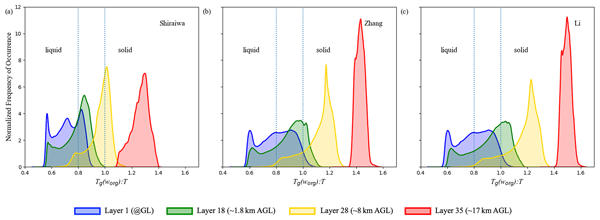
Sara L. Farrell, Quazi Z. Rasool, Havala O. T. Pye, Yue Zhang, Ying Li, Yuzhi Chen, Chi-Tsan Wang, Haofei Zhang, Ryan Schmedding, Manabu Shiraiwa, Jaime Green, Sri H. Budisulistiorini, Jose L. Jimenez, Weiwei Hu, Jason D. Surratt, and William Vizuete
Atmos. Chem. Phys., 26, 13557–13579, https://doi.org/10.5194/acp-26-13557-2026, https://doi.org/10.5194/acp-26-13557-2026, 2026
Short summary
Short summary
Fine particulate matter (PM2.5) has become increasingly important to regulate and model. In this study, we parameterize non-ideal aerosol mixing and phase state into the Community Multiscale Air Quality (CMAQ) model and analyze its impact on the formation of a globally important source of PM2.5, isoprene epoxydiol (IEPOX)-derived PM2.5. Incorporating these features furthers model bias in IEPOX-derived PM2.5, however, this work provides potential phase state bounds for future PM2.5 modeling work.
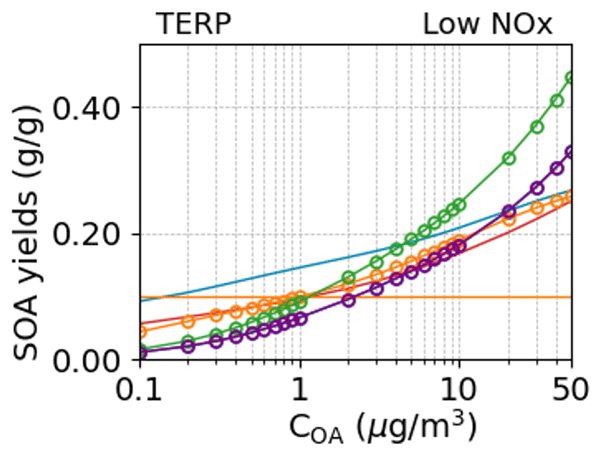
Ling Huang, Benjie Chen, Zi'ang Wu, Katie Tuite, Pradeepa Vennam, Greg Yarwood, and Li Li
Atmos. Chem. Phys., 26, 7895–7915, https://doi.org/10.5194/acp-26-7895-2026, https://doi.org/10.5194/acp-26-7895-2026, 2026
Short summary
Short summary
Secondary organic aerosol (SOA) constitutes a major component of atmospheric aerosol that models must account for to assess how human activities influence air quality, climate, and public health. We find substantial differences in how current air quality models represent SOA highlighting a lack of consensus within the modelling community. Our findings emphasize the need to recognize the limitations of current SOA schemes in the context of air quality management and policy development.
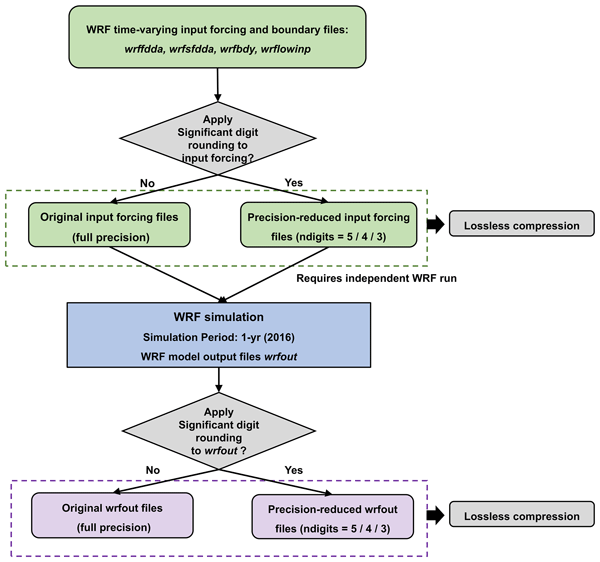
Shang Wu, David C. Wong, Jiandong Wang, Yuzhi Jin, Junjun Li, and Chunsong Lu
Atmos. Chem. Phys., 26, 7261–7285, https://doi.org/10.5194/acp-26-7261-2026, https://doi.org/10.5194/acp-26-7261-2026, 2026
Short summary
Short summary
High-resolution weather and climate simulations produce massive amounts of data, creating major storage challenges. This study explores a method that reduces unnecessary numerical detail by keeping only a limited number of significant digits. The results show that substantial data reduction can be achieved while preserving key physical features.
Jie Hu, David C. Wong, Jiaying Li, Tingting Fang, and Steve H. L. Yim
EGUsphere, https://doi.org/10.5194/egusphere-2026-2148, https://doi.org/10.5194/egusphere-2026-2148, 2026
Short summary
Short summary
We investigated how ground-level ozone, a harmful pollutant and greenhouse gas, forms across Southeast Asia. By using advanced atmospheric model, we found that most of the region's ozone is driven by nitrogen oxides from human activity reacting with natural gases from vegetation. Crucially, up to 98 % of ozone pollution travels across national borders. These results show that cities cannot fix air quality alone; countries must work together to protect public health and the climate.
Melissa A. Ehrenfels, Benjamin C. Schulze, Andrew R. Jensen, Afsara Tasnia, Douglas A. Day, Pedro Campuzano-Jost, Anne V. Handschy, Melinda K. Schueneman, Seonsik Yun, Dongwook Kim, Donna Sueper, Havala O. T. Pye, Benjamin N. Murphy, T. Nash Skipper, Kelley C. Barsanti, Joost A. de Gouw, and Jose L. Jimenez
Aerosol Research Discuss., https://doi.org/10.5194/ar-2026-12, https://doi.org/10.5194/ar-2026-12, 2026
Revised manuscript under review for AR
Short summary
Short summary
Los Angeles, CA suffers from poor air quality, partially due to secondary aerosol formation. The identity and sources of the most important gas phase precursors is a complex and unresolved issue. For the first time, we separated ambient gas-phase species by volatility, then measured their potential to form aerosols. We found that higher-volatility emissions are responsible for 2/3 of the aerosol formation, and lower volatility ones for 1/3. We evaluate two box models against our measurements.
Chao Gao, Xuelei Zhang, Hu Yang, Ling Huang, Hongmei Zhao, Shichun Zhang, and Aijun Xiu
Atmos. Chem. Phys., 26, 3765–3781, https://doi.org/10.5194/acp-26-3765-2026, https://doi.org/10.5194/acp-26-3765-2026, 2026
Short summary
Short summary
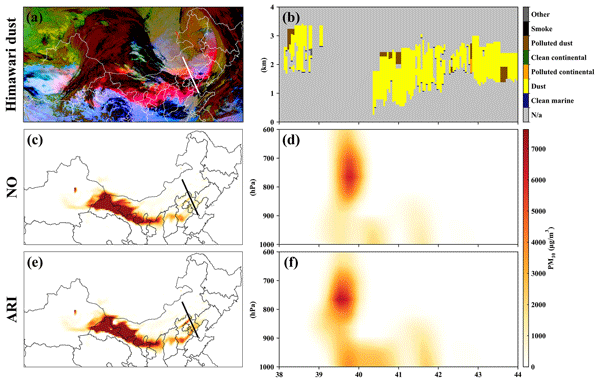
Mineral dust impacts climate and air quality, varying by composition. This study examined its effects on radiation and pollution during a North China dust storm using WRF-CHIMERE and three dust atlases. Bulk dust had a shortwave radiative forcing of -5.72 W/m², while mineral-specific effects increased it by +0.10 W/m². Aerosol-radiation interactions raised PM₁₀ to 1189.48 μg/m³. Accurate mineral data is essential for improving dust-related climate and air quality simulations.
Biao Zhou, Kun Zhang, Qiongqiong Wang, Jiqi Zhu, Li Li, and Jian Zhen Yu
Atmos. Chem. Phys., 26, 3589–3606, https://doi.org/10.5194/acp-26-3589-2026, https://doi.org/10.5194/acp-26-3589-2026, 2026
Short summary
Short summary
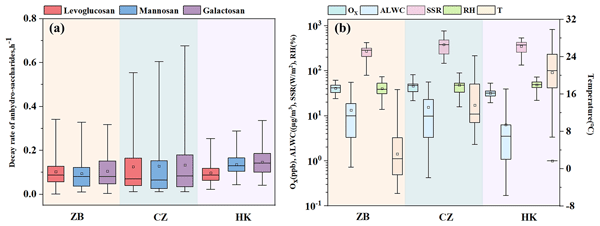
Anhydro-saccharides are key organic markers for biomass burning, but their decay rates and driving factors in real ambient environments remain unclear. This study conducted an online field measurement of PM₂.₅-bound saccharides in three eastern Chinese cities. Daytime levoglucosan decay rates were calculated, and the driving factors were investigated using a machine learning model. Findings of this study offers a strong scientific basis to support air pollution management.
Yan Zhang, Jiani Tan, Qing Mu, Joshua S. Fu, and Li Li
EGUsphere, https://doi.org/10.5194/egusphere-2025-6160, https://doi.org/10.5194/egusphere-2025-6160, 2026
Short summary
Short summary
Despite growing use of machine learning in environmental research, few have studied how input data affects findings. We examined the impact of input data characteristics on nitrogen deposition estimates in East and Southeast Asia. Insufficient sample size cuts accuracy by up to 12 %, while data-scarce and remote areas show up to 50 % bias due to poor training data representation. We created a transferable framework for uncertainty quantification, applicable to other data-scarce geospatial tasks.
Yu Li, Momei Qin, Weiwei Hu, Bin Zhao, Ying Li, Havala O. T. Pye, Jingyi Li, Linghan Zeng, Song Guo, Min Hu, and Jianlin Hu
Atmos. Chem. Phys., 26, 1001–1020, https://doi.org/10.5194/acp-26-1001-2026, https://doi.org/10.5194/acp-26-1001-2026, 2026
Short summary
Short summary
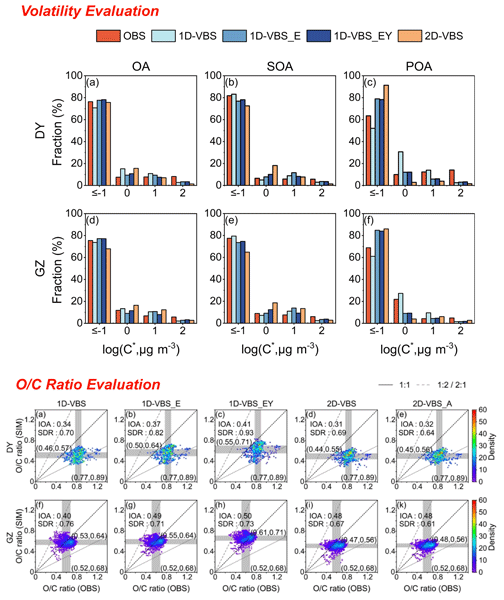
We evaluated how well a widely used air quality model simulates key properties of organic particles in the atmosphere, such as volatility and oxygen content, which influence how particles age, spread, and affect both air quality and climate. Using observations in eastern China, we found the model underestimated particle mass and misrepresented their properties. Our results highlight the need for improved emissions and chemical treatments to better predict air quality and climate impacts.
Jingwen Dai, Kun Zhang, Yanli Feng, Xin Yi, Rui Li, Jin Xue, Qing Li, Lishu Shi, Jiaqiang Liao, Yanan Yi, Fangting Wang, Liumei Yang, Hui Chen, Ling Huang, Jiani Tan, Yangjun Wang, and Li Li
Atmos. Chem. Phys., 25, 7467–7484, https://doi.org/10.5194/acp-25-7467-2025, https://doi.org/10.5194/acp-25-7467-2025, 2025
Short summary
Short summary
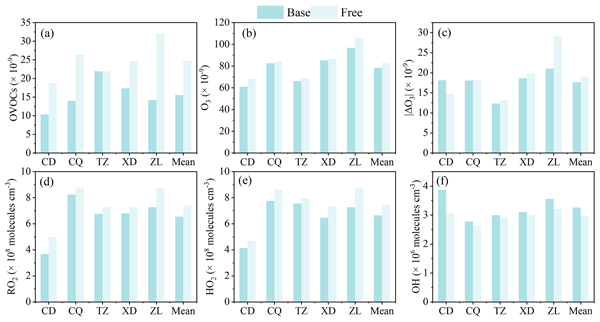
Oxygenated volatile organic compounds (OVOCs) are important ozone (O3) precursors. However, most O3 formation analysis based on the box model (OBM) does not include any OVOC constraint. To access the interference of OVOCs with O3 simulation, this study presents results from a field campaign and OBM analysis. Our results indicate that no OVOC constraint in the OBM can lead to overestimation of OVOCs, free radicals, and O3.
Ling Huang, Xinxin Zhang, Chris Emery, Qing Mu, Greg Yarwood, Hehe Zhai, Zhixu Sun, Shuhui Xue, Yangjun Wang, Joshua S. Fu, and Li Li
Atmos. Chem. Phys., 25, 4233–4249, https://doi.org/10.5194/acp-25-4233-2025, https://doi.org/10.5194/acp-25-4233-2025, 2025
Short summary
Short summary
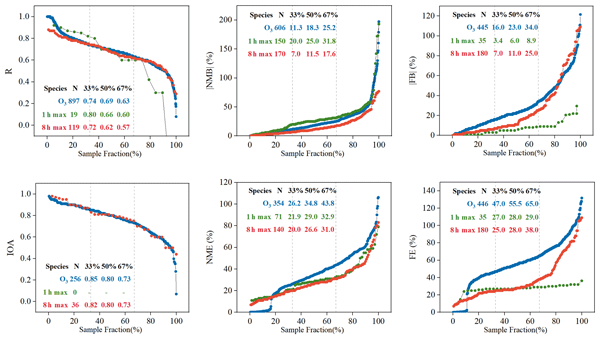
Ground-level ozone pollution has emerged as a significant air pollutant in China. Chemical transport models (CTMs) serve as crucial tools in addressing ozone pollution. This study reviews CTM applications for simulating ozone in China and proposes goal and criteria benchmark values for evaluating ozone. Along with prior work on PM₂₅ and other pollutants, this effort establishes a comprehensive framework for evaluating CTM performance in China.
Sara L. Farrell, Havala O. T. Pye, Robert Gilliam, George Pouliot, Deanna Huff, Golam Sarwar, William Vizuete, Nicole Briggs, Fengkui Duan, Tao Ma, Shuping Zhang, and Kathleen Fahey
Atmos. Chem. Phys., 25, 3287–3312, https://doi.org/10.5194/acp-25-3287-2025, https://doi.org/10.5194/acp-25-3287-2025, 2025
Short summary
Short summary
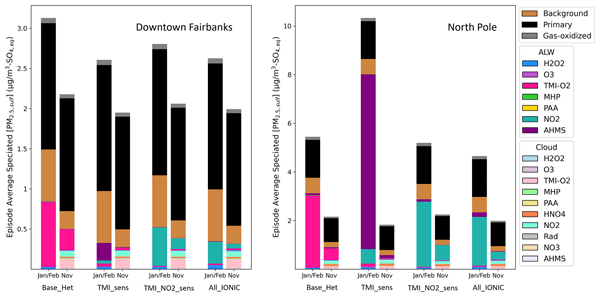
In this work we implement heterogeneous sulfur chemistry into the Community Multiscale Air Quality (CMAQ) model. This new chemistry accounts for the formation of sulfate via aqueous oxidation of SO2 in aerosol liquid water and the formation of hydroxymethanesulfonate (HMS) – often confused by measurement techniques as sulfate. Model performance in predicting sulfur PM2.5 in Fairbanks, Alaska, and other places that experience dark and cold winters is improved.
Yuzhi Jin, Jiandong Wang, Chao Liu, David C. Wong, Golam Sarwar, Kathleen M. Fahey, Shang Wu, Jiaping Wang, Jing Cai, Zeyuan Tian, Zhouyang Zhang, Jia Xing, Aijun Ding, and Shuxiao Wang
Atmos. Chem. Phys., 25, 2613–2630, https://doi.org/10.5194/acp-25-2613-2025, https://doi.org/10.5194/acp-25-2613-2025, 2025
Short summary
Short summary
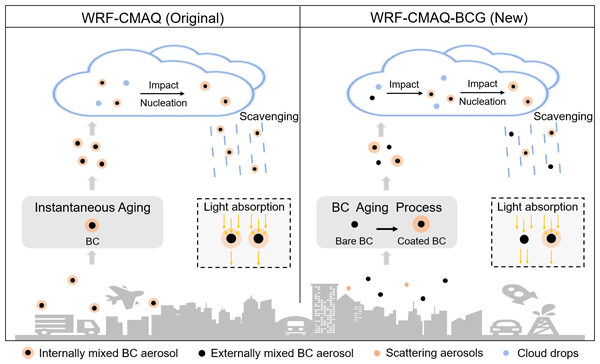
Black carbon (BC) affects climate and the environment, and its aging process alters its properties. Current models, like WRF-CMAQ, lack full accounting for it. We developed the WRF-CMAQ-BCG model to better represent BC aging by introducing bare and coated BC species and their conversion. The WRF-CMAQ-BCG model introduces the capability to simulate BC mixing states and bare and coated BC wet deposition, and it improves the accuracy of BC mass concentration and aerosol optics.
T. Nash Skipper, Emma L. D'Ambro, Forwood C. Wiser, V. Faye McNeill, Rebecca H. Schwantes, Barron H. Henderson, Ivan R. Piletic, Colleen B. Baublitz, Jesse O. Bash, Andrew R. Whitehill, Lukas C. Valin, Asher P. Mouat, Jennifer Kaiser, Glenn M. Wolfe, Jason M. St. Clair, Thomas F. Hanisco, Alan Fried, Bryan K. Place, and Havala O.T. Pye
Atmos. Chem. Phys., 24, 12903–12924, https://doi.org/10.5194/acp-24-12903-2024, https://doi.org/10.5194/acp-24-12903-2024, 2024
Short summary
Short summary
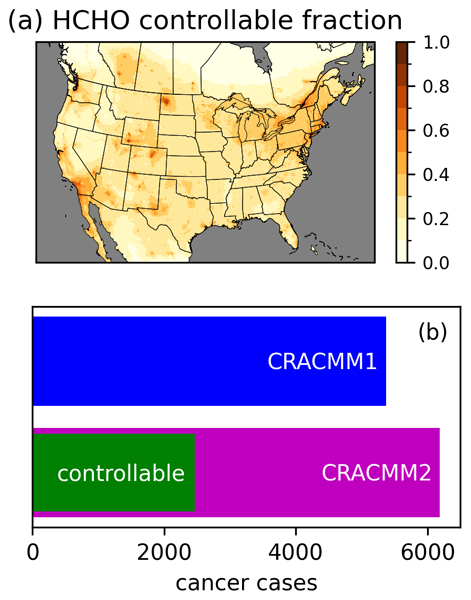
We develop the Community Regional Atmospheric Chemistry Multiphase Mechanism (CRACMM) version 2 to improve predictions of formaldehyde in ambient air compared to satellite-, aircraft-, and ground-based observations. With the updated chemistry, we estimate the cancer risk from inhalation exposure to ambient formaldehyde across the contiguous USA and predict that 40 % of this risk is controllable through reductions in anthropogenic emissions of nitrogen oxides and reactive organic carbon.
David C. Wong, Jeff Willison, Jonathan E. Pleim, Golam Sarwar, James Beidler, Russ Bullock, Jerold A. Herwehe, Rob Gilliam, Daiwen Kang, Christian Hogrefe, George Pouliot, and Hosein Foroutan
Geosci. Model Dev., 17, 7855–7866, https://doi.org/10.5194/gmd-17-7855-2024, https://doi.org/10.5194/gmd-17-7855-2024, 2024
Short summary
Short summary
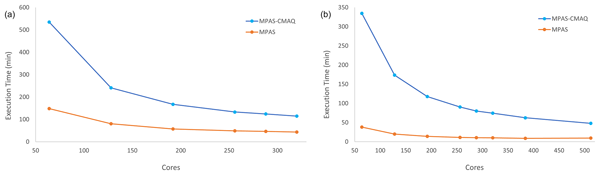
This work describe how we linked the meteorological Model for Prediction Across Scales – Atmosphere (MPAS-A) with the Community Multiscale Air Quality (CMAQ) air quality model to form a coupled modelling system. This could be used to study air quality or climate and air quality interaction at a global scale. This new model scales well in high-performance computing environments and performs well with respect to ground surface networks in terms of ozone and PM2.5.
Christos I. Efstathiou, Elizabeth Adams, Carlie J. Coats, Robert Zelt, Mark Reed, John McGee, Kristen M. Foley, Fahim I. Sidi, David C. Wong, Steven Fine, and Saravanan Arunachalam
Geosci. Model Dev., 17, 7001–7027, https://doi.org/10.5194/gmd-17-7001-2024, https://doi.org/10.5194/gmd-17-7001-2024, 2024
Short summary
Short summary
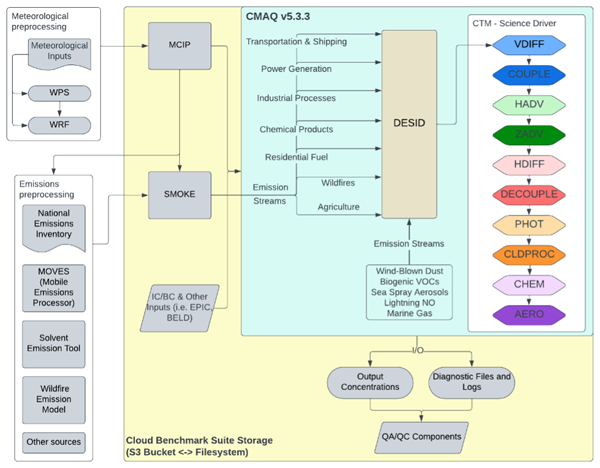
We present a summary of enabling high-performance computing of the Community Multiscale Air Quality Model (CMAQ) – a state-of-the-science community multiscale air quality model – on two cloud computing platforms through documenting the technologies, model performance, scaling and relative merits. This may be a new paradigm for computationally intense future model applications. We initiated this work due to a need to leverage cloud computing advances and to ease the learning curve for new users.
Cassandra J. Gaston, Joseph M. Prospero, Kristen Foley, Havala O. T. Pye, Lillian Custals, Edmund Blades, Peter Sealy, and James A. Christie
Atmos. Chem. Phys., 24, 8049–8066, https://doi.org/10.5194/acp-24-8049-2024, https://doi.org/10.5194/acp-24-8049-2024, 2024
Short summary
Short summary
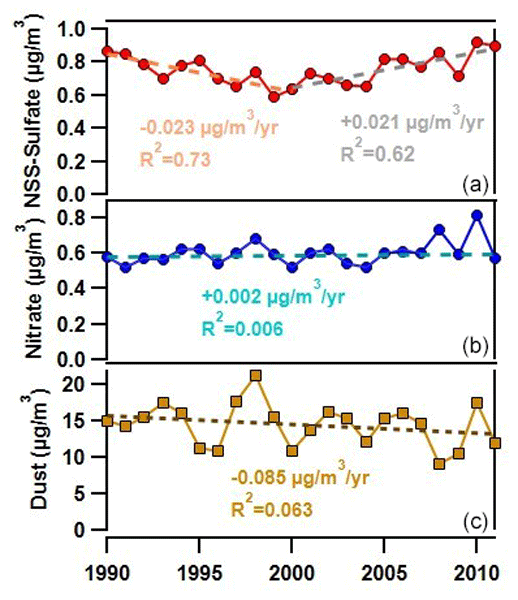
To understand how changing emissions have impacted aerosols in remote regions, we measured nitrate and sulfate in Barbados and compared them to model predictions from EPA’s Air QUAlity TimE Series (EQUATES). Nitrate was stable, except for spikes in 2008 and 2010 due to transported smoke. Sulfate decreased in the 1990s due to reductions in sulfur dioxide (SO2) in the US and Europe; then it increased in the 2000s, likely due to anthropogenic emissions from Africa.
Qindan Zhu, Rebecca H. Schwantes, Matthew Coggon, Colin Harkins, Jordan Schnell, Jian He, Havala O. T. Pye, Meng Li, Barry Baker, Zachary Moon, Ravan Ahmadov, Eva Y. Pfannerstill, Bryan Place, Paul Wooldridge, Benjamin C. Schulze, Caleb Arata, Anthony Bucholtz, John H. Seinfeld, Carsten Warneke, Chelsea E. Stockwell, Lu Xu, Kristen Zuraski, Michael A. Robinson, J. Andrew Neuman, Patrick R. Veres, Jeff Peischl, Steven S. Brown, Allen H. Goldstein, Ronald C. Cohen, and Brian C. McDonald
Atmos. Chem. Phys., 24, 5265–5286, https://doi.org/10.5194/acp-24-5265-2024, https://doi.org/10.5194/acp-24-5265-2024, 2024
Short summary
Short summary
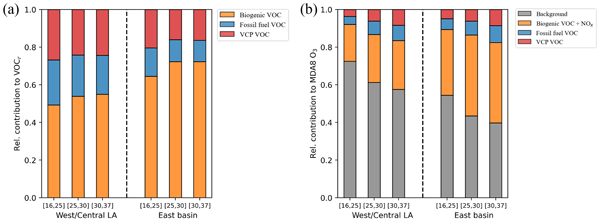
Volatile organic compounds (VOCs) fuel the production of air pollutants like ozone and particulate matter. The representation of VOC chemistry remains challenging due to its complexity in speciation and reactions. Here, we develop a chemical mechanism, RACM2B-VCP, that better represents VOC chemistry in urban areas such as Los Angeles. We also discuss the contribution of VOCs emitted from volatile chemical products and other anthropogenic sources to total VOC reactivity and O3.
David de la Paz, Rafael Borge, Juan Manuel de Andrés, Luis Tovar, Golam Sarwar, and Sergey L. Napelenok
Atmos. Chem. Phys., 24, 4949–4972, https://doi.org/10.5194/acp-24-4949-2024, https://doi.org/10.5194/acp-24-4949-2024, 2024
Short summary
Short summary
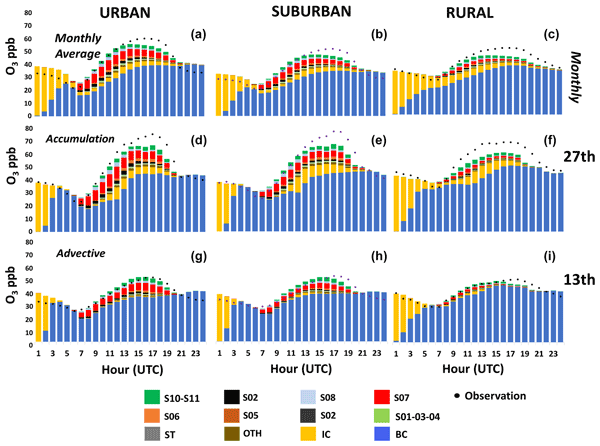
This source apportionment modeling study shows that around 70 % of ground-level O3 in Madrid (Spain) is transported from other regions. Nonetheless, emissions from local sources, mainly road traffic, play a significant role, especially under atmospheric stagnation. Local measures during those conditions may be able to reduce O3 peaks by up to 30 % and, thus, lessen impacts from high-O3 episodes in the Madrid metropolitan area.
Elyse A. Pennington, Yuan Wang, Benjamin C. Schulze, Karl M. Seltzer, Jiani Yang, Bin Zhao, Zhe Jiang, Hongru Shi, Melissa Venecek, Daniel Chau, Benjamin N. Murphy, Christopher M. Kenseth, Ryan X. Ward, Havala O. T. Pye, and John H. Seinfeld
Atmos. Chem. Phys., 24, 2345–2363, https://doi.org/10.5194/acp-24-2345-2024, https://doi.org/10.5194/acp-24-2345-2024, 2024
Short summary
Short summary
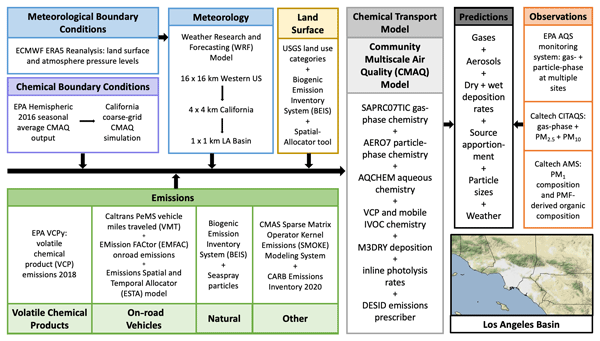
To assess the air quality in Los Angeles (LA), we improved the CMAQ model by using dynamic traffic emissions and new secondary organic aerosol schemes to represent volatile chemical products. Source apportionment demonstrates that the urban areas of the LA Basin and vicinity are NOx-saturated, with the largest sensitivity of O3 to changes in volatile organic compounds in the urban core. The improvement and remaining issues shed light on the future direction of the model development.
Ling Huang, Jiong Fang, Jiaqiang Liao, Greg Yarwood, Hui Chen, Yangjun Wang, and Li Li
Atmos. Chem. Phys., 23, 14919–14932, https://doi.org/10.5194/acp-23-14919-2023, https://doi.org/10.5194/acp-23-14919-2023, 2023
Short summary
Short summary
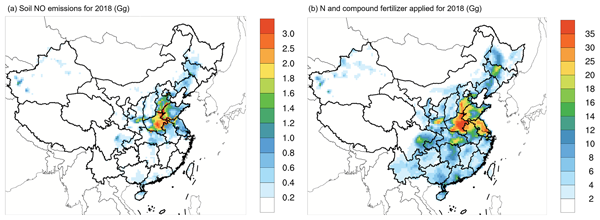
Surface ozone concentrations have emerged as a major environmental issue in China. Although control strategies aimed at reducing NOx emissions from conventional combustion sources are widely recognized, soil NOx emissions have received little attention. The impact of soil NO emissions on ground-level ozone concentration is yet to be evaluated. In this study, we estimated the soil NO emissions and evaluated its impact on ozone formation in China.
Benjamin N. Murphy, Darrell Sonntag, Karl M. Seltzer, Havala O. T. Pye, Christine Allen, Evan Murray, Claudia Toro, Drew R. Gentner, Cheng Huang, Shantanu Jathar, Li Li, Andrew A. May, and Allen L. Robinson
Atmos. Chem. Phys., 23, 13469–13483, https://doi.org/10.5194/acp-23-13469-2023, https://doi.org/10.5194/acp-23-13469-2023, 2023
Short summary
Short summary
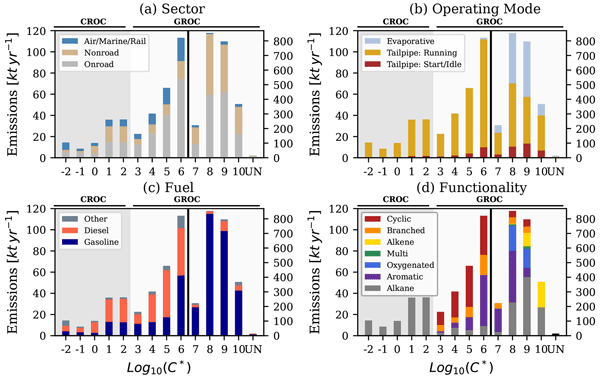
We update methods for calculating organic particle and vapor emissions from mobile sources in the USA. Conventionally, particulate matter (PM) and volatile organic carbon (VOC) are speciated without consideration of primary semivolatile emissions. Our methods integrate state-of-the-science speciation profiles and correct for common artifacts when sampling emissions in a laboratory. We quantify impacts of the emission updates on ambient pollution with the Community Multiscale Air Quality model.
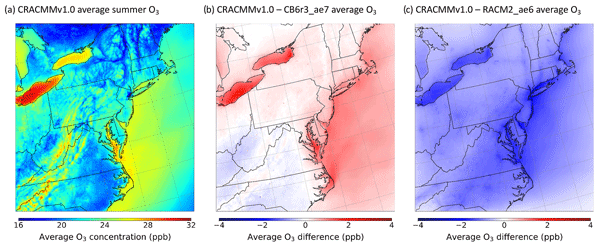
Bryan K. Place, William T. Hutzell, K. Wyat Appel, Sara Farrell, Lukas Valin, Benjamin N. Murphy, Karl M. Seltzer, Golam Sarwar, Christine Allen, Ivan R. Piletic, Emma L. D'Ambro, Emily Saunders, Heather Simon, Ana Torres-Vasquez, Jonathan Pleim, Rebecca H. Schwantes, Matthew M. Coggon, Lu Xu, William R. Stockwell, and Havala O. T. Pye
Atmos. Chem. Phys., 23, 9173–9190, https://doi.org/10.5194/acp-23-9173-2023, https://doi.org/10.5194/acp-23-9173-2023, 2023
Short summary
Short summary
Ground-level ozone is a pollutant with adverse human health and ecosystem effects. Air quality models allow scientists to understand the chemical production of ozone and demonstrate impacts of air quality management plans. In this work, the role of multiple systems in ozone production was investigated for the northeastern US in summer. Model updates to chemical reaction rates and monoterpene chemistry were most influential in decreasing predicted ozone and improving agreement with observations.

Havala O. T. Pye, Bryan K. Place, Benjamin N. Murphy, Karl M. Seltzer, Emma L. D'Ambro, Christine Allen, Ivan R. Piletic, Sara Farrell, Rebecca H. Schwantes, Matthew M. Coggon, Emily Saunders, Lu Xu, Golam Sarwar, William T. Hutzell, Kristen M. Foley, George Pouliot, Jesse Bash, and William R. Stockwell
Atmos. Chem. Phys., 23, 5043–5099, https://doi.org/10.5194/acp-23-5043-2023, https://doi.org/10.5194/acp-23-5043-2023, 2023
Short summary
Short summary
Chemical mechanisms describe how emissions from vehicles, vegetation, and other sources are chemically transformed in the atmosphere to secondary products including criteria and hazardous air pollutants. The Community Regional Atmospheric Chemistry Multiphase Mechanism integrates gas-phase radical chemistry with pathways to fine-particle mass. New species were implemented, resulting in a bottom-up representation of organic aerosol, which is required for accurate source attribution of pollutants.
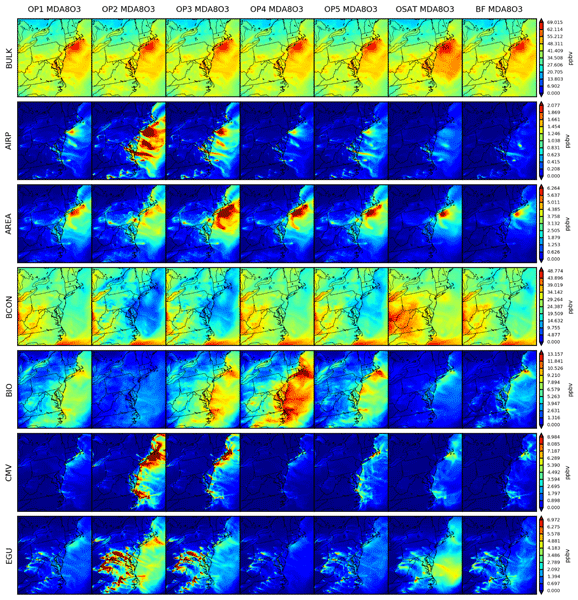
Qian Shu, Sergey L. Napelenok, William T. Hutzell, Kirk R. Baker, Barron H. Henderson, Benjamin N. Murphy, and Christian Hogrefe
Geosci. Model Dev., 16, 2303–2322, https://doi.org/10.5194/gmd-16-2303-2023, https://doi.org/10.5194/gmd-16-2303-2023, 2023
Short summary
Short summary
Source attribution methods are generally used to determine culpability of precursor emission sources to ambient pollutant concentrations. However, source attribution of secondarily formed pollutants such as ozone and its precursors cannot be explicitly measured, making evaluation of source apportionment methods challenging. In this study, multiple apportionment approach comparisons show common features but still reveal wide variations in predicted sector contribution and species dependency.
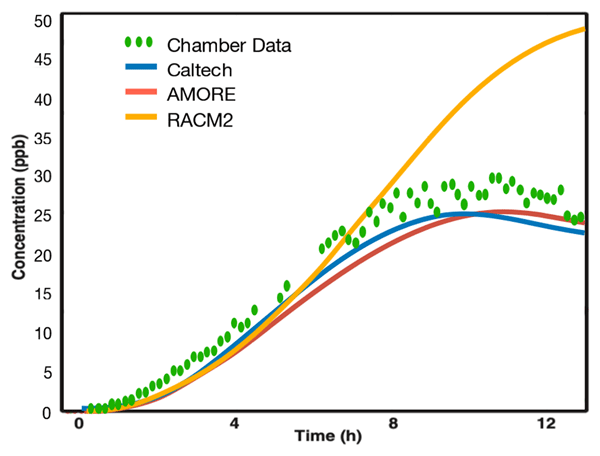
Forwood Wiser, Bryan K. Place, Siddhartha Sen, Havala O. T. Pye, Benjamin Yang, Daniel M. Westervelt, Daven K. Henze, Arlene M. Fiore, and V. Faye McNeill
Geosci. Model Dev., 16, 1801–1821, https://doi.org/10.5194/gmd-16-1801-2023, https://doi.org/10.5194/gmd-16-1801-2023, 2023
Short summary
Short summary
We developed a reduced model of atmospheric isoprene oxidation, AMORE-Isoprene 1.0. It was created using a new Automated Model Reduction (AMORE) method designed to simplify complex chemical mechanisms with minimal manual adjustments to the output. AMORE-Isoprene 1.0 has improved accuracy and similar size to other reduced isoprene mechanisms. When included in the CRACMM mechanism, it improved the accuracy of EPA’s CMAQ model predictions for the northeastern USA compared to observations.
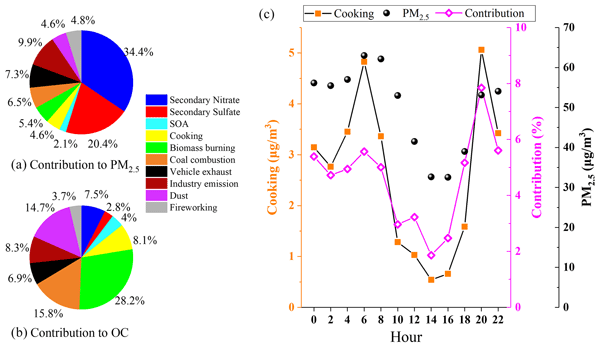
Rui Li, Kun Zhang, Qing Li, Liumei Yang, Shunyao Wang, Zhiqiang Liu, Xiaojuan Zhang, Hui Chen, Yanan Yi, Jialiang Feng, Qiongqiong Wang, Ling Huang, Wu Wang, Yangjun Wang, Jian Zhen Yu, and Li Li
Atmos. Chem. Phys., 23, 3065–3081, https://doi.org/10.5194/acp-23-3065-2023, https://doi.org/10.5194/acp-23-3065-2023, 2023
Short summary
Short summary
Molecular markers in organic aerosol (OA) provide specific source information on PM2.5, and the contribution of cooking emissions to OA is significant, especially in urban environments. This study investigates the variation in concentrations and oxidative degradation of fatty acids and corresponding oxidation products in ambient air, which can be a guide for the refinement of aerosol source apportionment and provide scientific support for the development of emission source control policies.
Michael S. Walters and David C. Wong
Geosci. Model Dev., 16, 1179–1190, https://doi.org/10.5194/gmd-16-1179-2023, https://doi.org/10.5194/gmd-16-1179-2023, 2023
Short summary
Short summary
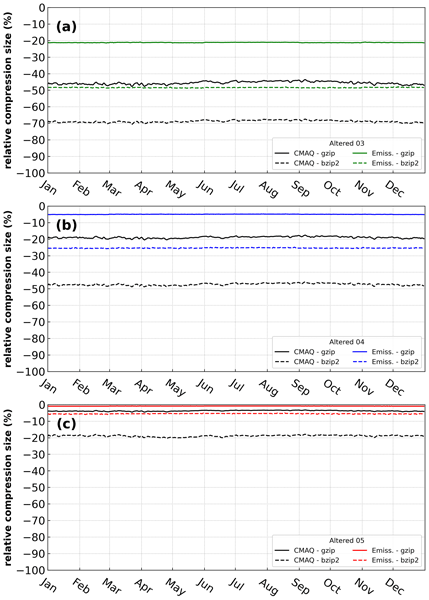
A typical numerical simulation that associates with a large amount of input and output data, applying popular compression software, gzip or bzip2, on data is one good way to mitigate data storage burden. This article proposes a simple technique to alter input, output, or input and output by keeping a specific number of significant digits in data and demonstrates an enhancement in compression efficiency on the altered data but maintains similar statistical performance of the numerical simulation.
Ling Huang, Hanqing Liu, Greg Yarwood, Gary Wilson, Jun Tao, Zhiwei Han, Dongsheng Ji, Yangjun Wang, and Li Li
EGUsphere, https://doi.org/10.5194/egusphere-2022-1502, https://doi.org/10.5194/egusphere-2022-1502, 2023
Preprint archived
Short summary
Short summary
Secondary organic aerosols are an important component of PM2.5, with contributions from anthropogenic, biogenic volatile organic compounds, semi- and intermediate volatility organic compounds. Policy makers need to know which SOA precursors are important. We investigated the role of different SOA precursors and SOA algorithms by applying two commonly used models, CAMx and CMAQ. Suggestions for SOA modelling and control are provided.
James D. East, Barron H. Henderson, Sergey L. Napelenok, Shannon N. Koplitz, Golam Sarwar, Robert Gilliam, Allen Lenzen, Daniel Q. Tong, R. Bradley Pierce, and Fernando Garcia-Menendez
Atmos. Chem. Phys., 22, 15981–16001, https://doi.org/10.5194/acp-22-15981-2022, https://doi.org/10.5194/acp-22-15981-2022, 2022
Short summary
Short summary
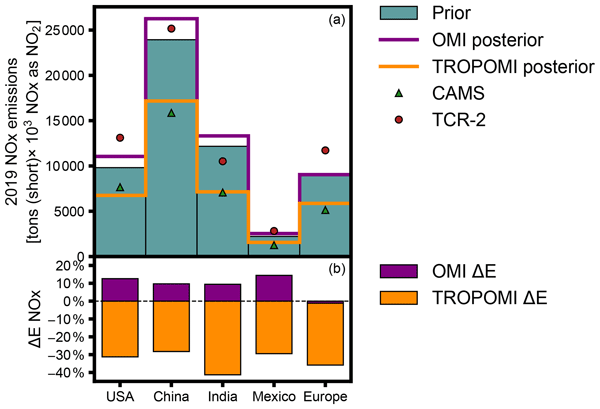
We present a framework that uses a computer model of air quality, along with air pollution data from satellite instruments, to estimate emissions of nitrogen oxides (NOx) across the Northern Hemisphere. The framework, which advances current methods to infer emissions from satellite observations, provides observationally constrained NOx estimates, including in regions of the world where emissions are highly uncertain, and can improve simulations of air pollutants relevant for health and policy.
Peeyush Khare, Jordan E. Krechmer, Jo E. Machesky, Tori Hass-Mitchell, Cong Cao, Junqi Wang, Francesca Majluf, Felipe Lopez-Hilfiker, Sonja Malek, Will Wang, Karl Seltzer, Havala O. T. Pye, Roisin Commane, Brian C. McDonald, Ricardo Toledo-Crow, John E. Mak, and Drew R. Gentner
Atmos. Chem. Phys., 22, 14377–14399, https://doi.org/10.5194/acp-22-14377-2022, https://doi.org/10.5194/acp-22-14377-2022, 2022
Short summary
Short summary
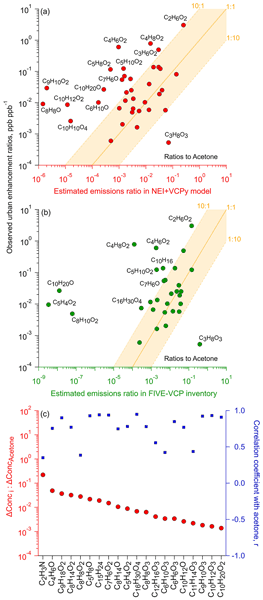
Ammonium adduct chemical ionization is used to examine the atmospheric abundances of oxygenated volatile organic compounds associated with emissions from volatile chemical products, which are now key contributors of reactive precursors to ozone and secondary organic aerosols in urban areas. The application of this valuable measurement approach in densely populated New York City enables the evaluation of emissions inventories and thus the role these oxygenated compounds play in urban air quality.
Mengying Li, Shaocai Yu, Xue Chen, Zhen Li, Yibo Zhang, Zhe Song, Weiping Liu, Pengfei Li, Xiaoye Zhang, Meigen Zhang, Yele Sun, Zirui Liu, Caiping Sun, Jingkun Jiang, Shuxiao Wang, Benjamin N. Murphy, Kiran Alapaty, Rohit Mathur, Daniel Rosenfeld, and John H. Seinfeld
Atmos. Chem. Phys., 22, 11845–11866, https://doi.org/10.5194/acp-22-11845-2022, https://doi.org/10.5194/acp-22-11845-2022, 2022
Short summary
Short summary
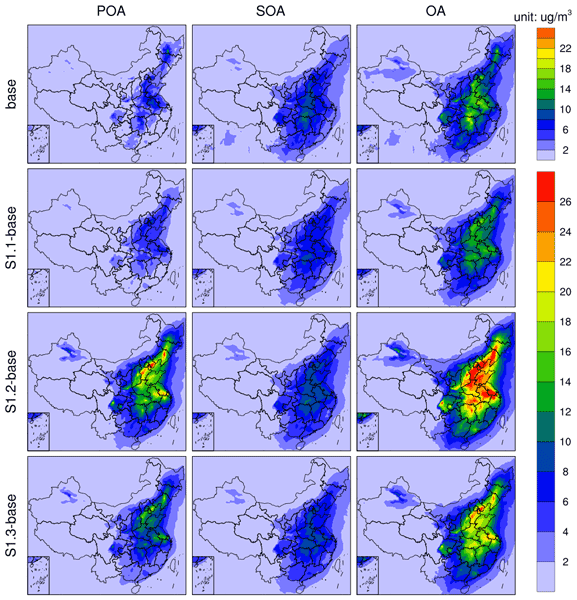
This study constructed an emission inventory of condensable particulate matter (CPM) in China with a focus on organic aerosols (OAs), based on collected CPM emission information. The results show that OA emissions are enhanced twofold for the years 2014 and 2017 after the inclusion of CPM in the new inventory. Sensitivity cases demonstrated the significant contributions of CPM emissions from stationary combustion and mobile sources to primary, secondary, and total OA concentrations.
Jiandong Wang, Jia Xing, Shuxiao Wang, Rohit Mathur, Jiaping Wang, Yuqiang Zhang, Chao Liu, Jonathan Pleim, Dian Ding, Xing Chang, Jingkun Jiang, Peng Zhao, Shovan Kumar Sahu, Yuzhi Jin, David C. Wong, and Jiming Hao
Atmos. Chem. Phys., 22, 5147–5156, https://doi.org/10.5194/acp-22-5147-2022, https://doi.org/10.5194/acp-22-5147-2022, 2022
Short summary
Short summary
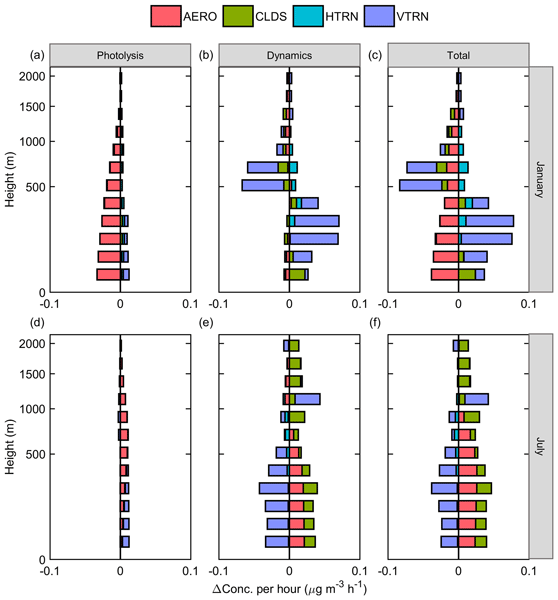
Aerosols reduce surface solar radiation and change the photolysis rate and planetary boundary layer stability. In this study, the online coupled meteorological and chemistry model was used to explore the detailed pathway of how aerosol direct effects affect secondary inorganic aerosol. The effects through the dynamics pathway act as an equally or even more important route compared with the photolysis pathway in affecting secondary aerosol concentration in both summer and winter.
Kun Zhang, Zhiqiang Liu, Xiaojuan Zhang, Qing Li, Andrew Jensen, Wen Tan, Ling Huang, Yangjun Wang, Joost de Gouw, and Li Li
Atmos. Chem. Phys., 22, 4853–4866, https://doi.org/10.5194/acp-22-4853-2022, https://doi.org/10.5194/acp-22-4853-2022, 2022
Short summary
Short summary
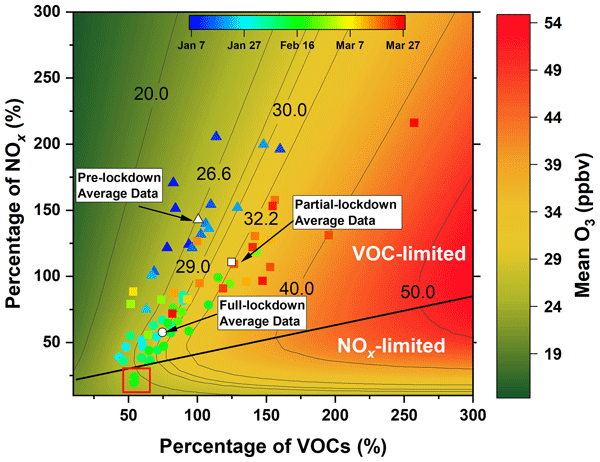
A significant increase in O3 concentrations was found during the lockdown period of COVID-19 in most areas of China. By field measurements coupled with machine learning, an observation-based model (OBM) and sensitivity analysis, we found the changes in the NOx / VOC ratio were a key reason for the significant rise in O3. To restrain O3 pollution, more efforts should be devoted to the control of anthropogenic OVOCs, alkenes and aromatics.
Elyse A. Pennington, Karl M. Seltzer, Benjamin N. Murphy, Momei Qin, John H. Seinfeld, and Havala O. T. Pye
Atmos. Chem. Phys., 21, 18247–18261, https://doi.org/10.5194/acp-21-18247-2021, https://doi.org/10.5194/acp-21-18247-2021, 2021
Short summary
Short summary
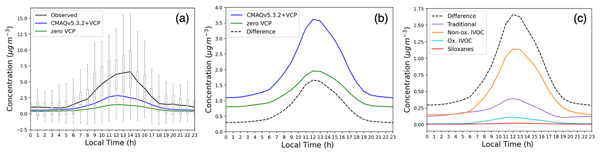
Volatile chemical products (VCPs) are commonly used consumer and industrial items that contribute to the formation of atmospheric aerosol. We implemented the emissions and chemistry of VCPs in a regional-scale model and compared predictions with measurements made in Los Angeles. Our results reduced model bias and suggest that VCPs may contribute up to half of anthropogenic secondary organic aerosol in Los Angeles and are an important source of human-influenced particular matter in urban areas.
Amir H. Souri, Kelly Chance, Juseon Bak, Caroline R. Nowlan, Gonzalo González Abad, Yeonjin Jung, David C. Wong, Jingqiu Mao, and Xiong Liu
Atmos. Chem. Phys., 21, 18227–18245, https://doi.org/10.5194/acp-21-18227-2021, https://doi.org/10.5194/acp-21-18227-2021, 2021
Short summary
Short summary
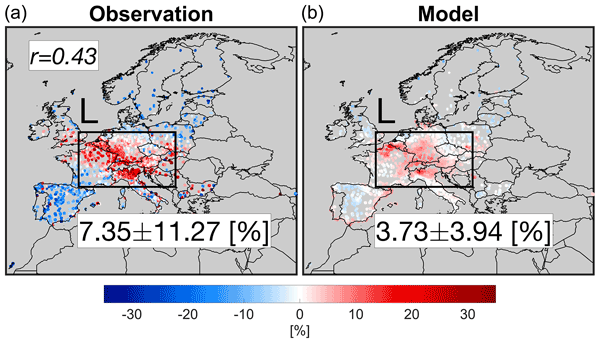
The global pandemic is believed to have an impact on emissions of air pollutants such as nitrogen dioxide (NO2) and formaldehyde (HCHO). This study quantifies the changes in the amount of NOx and VOC emissions via state-of-the-art inverse modeling technique using satellite observations during the lockdown 2020 with respect to a baseline over Europe, which in turn, it permits unraveling atmospheric processes being responsible for ozone formation in a less cloudy month.
Kai Wang, Yang Zhang, Shaocai Yu, David C. Wong, Jonathan Pleim, Rohit Mathur, James T. Kelly, and Michelle Bell
Geosci. Model Dev., 14, 7189–7221, https://doi.org/10.5194/gmd-14-7189-2021, https://doi.org/10.5194/gmd-14-7189-2021, 2021
Short summary
Short summary
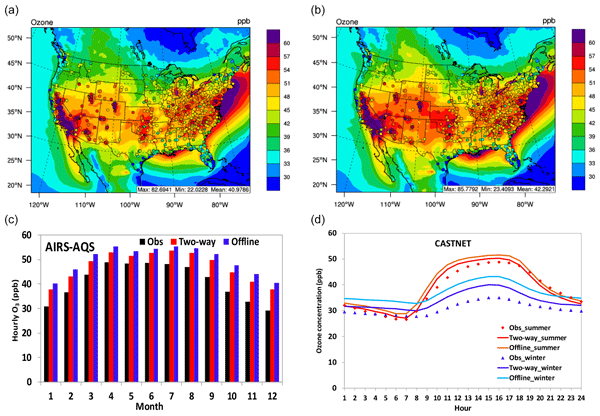
The two-way coupled WRF-CMAQ model accounting for complex chemistry–meteorology feedbacks has been applied to the long-term predictions of regional meteorology and air quality over the US. The model results show superior performance and importance of chemistry–meteorology feedbacks when compared to the offline coupled WRF and CMAQ simulations, which suggests that feedbacks should be considered along with other factors in developing future model applications to inform policy making.
Shuping Zhang, Golam Sarwar, Jia Xing, Biwu Chu, Chaoyang Xue, Arunachalam Sarav, Dian Ding, Haotian Zheng, Yujing Mu, Fengkui Duan, Tao Ma, and Hong He
Atmos. Chem. Phys., 21, 15809–15826, https://doi.org/10.5194/acp-21-15809-2021, https://doi.org/10.5194/acp-21-15809-2021, 2021
Short summary
Short summary
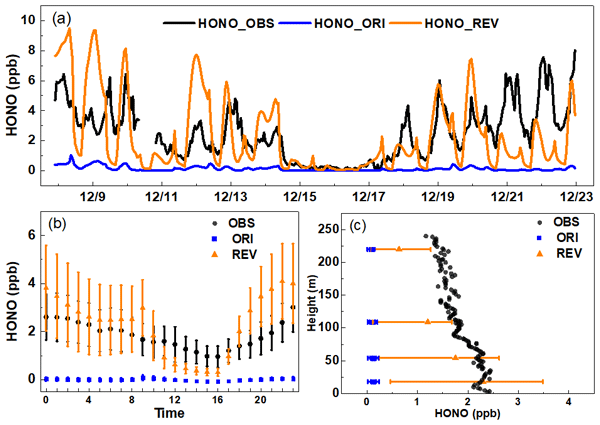
Six heterogeneous HONO chemistry updates in CMAQ significantly improve HONO concentration. HONO production is primarily controlled by the heterogeneous reactions on ground and aerosol surfaces during haze. Additional HONO chemistry updates increase OH and production of secondary aerosols: sulfate, nitrate, and SOA.
Cited articles
Boylan, J. W. and Russell, A. G.: PM and light extinction model performance metrics, goals, and criteria for three-dimensional air quality models, Atmos. Environ., 40, 4946–4959, https://doi.org/10.1016/j.atmosenv.2005.09.087, 2006.
Byun, D. and Schere, K. L.: Review of the Governing Equations, Computational Algorithms, and Other Components of the Models-3 Community Multiscale Air Quality (CMAQ) Modeling System, Appl. Mech. Rev., 59, 51–77, https://doi.org/10.1115/1.2128636, 2006.
Cao, L., Li, S., and Sun, L.: Study of different Carbon Bond 6 (CB6) mechanisms by using a concentration sensitivity analysis, Atmos. Chem. Phys., 21, 12687–12714, https://doi.org/10.5194/acp-21-12687-2021, 2021.
Carlton, A. G., Bhave, P. V., Napelenok, S. L., Edney, E. O., Sarwar, G., Pinder, R. W., Pouliot, G. A., and Houyoux, M.: Model Representation of Secondary Organic Aerosol in CMAQv4.7, Environ. Sci. Technol., 44, 8553–8560, https://doi.org/10.1021/es100636q, 2010.
Chang, X., Zhao, B., Zheng, H., Wang, S., Cai, S., Guo, F., Gui, P., Huang, G., Wu, D., Han, L., Xing, J., Man, H., Hu, R., Liang, C., Xu, Q., Qiu, X., Ding, D., Liu, K., Han, R., Robinson, A. L., and Donahue, N. M.: Full-volatility emission framework corrects missing and underestimated secondary organic aerosol sources, One Earth, 5, 403–412, https://doi.org/10.1016/j.oneear.2022.03.015, 2022.
Deng, C., Tian, S., Li, Z., and Li, K.: Spatiotemporal characteristics of PM(2.5) and ozone concentrations in Chinese urban clusters, Chemosphere, 295, 133813, https://doi.org/10.1016/j.chemosphere.2022.133813, 2022.
Emery, C., Liu, Z., Russell, A. G., Odman, M. T., Yarwood, G., and Kumar, N.: Recommendations on statistics and benchmarks to assess photochemical model performance, JAPCA J. Air Waste Ma., 67, 582–598, https://doi.org/10.1080/10962247.2016.1265027, 2017.
Goliff, W. S., Stockwell, W. R., and Lawson, C. V.: The regional atmospheric chemistry mechanism, version 2, Atmos. Environ., 68, 174–185, https://doi.org/10.1016/j.atmosenv.2012.11.038, 2013.
Gu, J., Chen, Z., Zhang, N., Peng, S., Cui, W., Huo, G., and Chen, F.: Characterization of Atmospheric Fine Particles and Secondary Aerosol Estimated under the Different Photochemical Activities in Summertime Tianjin, China, Int. J. Env. Res. Pub. He., 19, https://doi.org/10.3390/ijerph19137956, 2022.
Guenther, A.: MEGAN 3.2 input files [Data set], Zenodo [data set], https://doi.org/10.5281/zenodo.10939297, 2024.
Guenther, A. B., Jiang, X., Heald, C. L., Sakulyanontvittaya, T., Duhl, T., Emmons, L. K., and Wang, X.: The Model of Emissions of Gases and Aerosols from Nature version 2.1 (MEGAN2.1): an extended and updated framework for modeling biogenic emissions, Geosci. Model Dev., 5, 1471–1492, https://doi.org/10.5194/gmd-5-1471-2012, 2012.
Harrison, R. M., Beddows, D. C. S., Tong, C., and Damayanti, S.: Non-linearity of secondary pollutant formation estimated from emissions data and measured precursor-secondary pollutant relationships, NPJ Clim. Atmos. Sci., 5, 71, https://doi.org/10.1038/s41612-022-00297-9, 2022.
Huang, L., Wang, Q., Wang, Y., Emery, C., Zhu, A., Zhu, Y., Yin, S., Yarwood, G., Zhang, K., and Li, L.: Simulation of secondary organic aerosol over the Yangtze River Delta region: The impacts from the emissions of intermediate volatility organic compounds and the SOA modeling framework, Atmos. Environ., 246, 118079, https://doi.org/10.1016/j.atmosenv.2020.118079, 2021a.
Huang, L., Zhu, Y., Zhai, H., Xue, S., Zhu, T., Shao, Y., Liu, Z., Emery, C., Yarwood, G., Wang, Y., Fu, J., Zhang, K., and Li, L.: Recommendations on benchmarks for numerical air quality model applications in China – Part 1: PM2.5 and chemical species, Atmos. Chem. Phys., 21, 2725–2743, https://doi.org/10.5194/acp-21-2725-2021, 2021b.
Huang, L., Wu, Z. a., Liu, H., Yarwood, G., Huang, D., Wilson, G., Chen, H., Ji, D., Tao, J., Han, Z., Wang, Y., Wang, H., Huang, C., and Li, L.: An improved framework for efficiently modeling organic aerosol (OA) considering primary OA evaporation and secondary OA formation from VOCs, IVOCs, and SVOCs, Environ. Sci.: Atmos., https://doi.org/10.1039/d4ea00060a, 2024.
Huo, Q., Yin, Z., Ma, X., and Wang, H.: Distinctive dust weather intensities in North China resulted from two types of atmospheric circulation anomalies, Atmos. Chem. Phys., 25, 1711–1724, https://doi.org/10.5194/acp-25-1711-2025, 2025.
Kang, M., Zhang, H., and Ying, Q.: Effectiveness of emission controls on atmospheric oxidation capacity and air pollutant concentrations: uncertainties due to chemical mechanisms and inventories, Atmos. Chem. Phys., 25, 11453–11467, https://doi.org/10.5194/acp-25-11453-2025, 2025.
Kang, Y.-H., Oh, I., Jeong, J.-H., Bang, J.-H., Kim, Y.-K., Kim, S., Kim, E., Hong, J.-H., and Lee, D.-G.: Comparison of CMAQ ozone simulations with two chemical mechanisms (SAPRC99 and CB05) in the Seoul metropolitan region, J. Environ. Sci., 25, 85–97, 2016.
Kim, K.-H., Kabir, E., and Kabir, S.: A review on the human health impact of airborne particulate matter, Environ. Int., 74, 136–143, https://doi.org/10.1016/j.envint.2014.10.005, 2015.
Koo, B., Knipping, E., and Yarwood, G.: 1.5-Dimensional volatility basis set approach for modeling organic aerosol in CAMx and CMAQ, Atmos. Environ., 95, 158–164, https://doi.org/10.1016/j.atmosenv.2014.06.031, 2014.
Liu, J., Niu, X., Zhang, L., Yang, X., Zhao, P., and He, C.: Exposure risk assessment and synergistic control pathway construction for O3–PM2.5 compound pollution in China, Atmos. Environ. X, 21, 100240, https://doi.org/10.1016/j.aeaoa.2024.100240, 2024.
Mao, J., Li, L., Li, J., Sulaymon, I. D., Xiong, K., Wang, K., Zhu, J., Chen, G., Ye, F., Zhang, N., Qin, Y., Qin, M., and Hu, J.: Evaluation of Long-Term Modeling Fine Particulate Matter and Ozone in China During 2013–2019, Front. Environ. Sci., 10, 872249, https://doi.org/10.3389/fenvs.2022.872249, 2022.
Meng, F., Du, X., Tang, W., He, J., Li, Y., Wang, X., Yu, S., Tang, X., Xing, J., Xie, M., Zeng, L., and Dong, H.: Evaluation of Regional Atmospheric Models for Air Quality Simulations in the Winter Season in China, Atmosphere, 17, https://doi.org/10.3390/atmos17010001, 2026.
Murphy, B. N., Woody, M. C., Jimenez, J. L., Carlton, A. M. G., Hayes, P. L., Liu, S., Ng, N. L., Russell, L. M., Setyan, A., Xu, L., Young, J., Zaveri, R. A., Zhang, Q., and Pye, H. O. T.: Semivolatile POA and parameterized total combustion SOA in CMAQv5.2: impacts on source strength and partitioning, Atmos. Chem. Phys., 17, 11107–11133, https://doi.org/10.5194/acp-17-11107-2017, 2017.
Murray, C. J. L., Aravkin, A. Y., Zheng, P., and GBD 2019 Risk Factors Collaborators: Global burden of 87 risk factors in 204 countries and territories, 1990–2019: a systematic analysis for the Global Burden of Disease Study 2019, The Lancet, 396, 1223–1249, https://doi.org/10.1016/S0140-6736(20)30752-2, 2020.
Ng, N. L., Kwan, A. J., Surratt, J. D., Chan, A. W. H., Chhabra, P. S., Sorooshian, A., Pye, H. O. T., Crounse, J. D., Wennberg, P. O., Flagan, R. C., and Seinfeld, J. H.: Secondary organic aerosol (SOA) formation from reaction of isoprene with nitrate radicals (NO3), Atmos. Chem. Phys., 8, 4117–4140, https://doi.org/10.5194/acp-8-4117-2008, 2008.
Otte, T. L. and Pleim, J. E.: The Meteorology-Chemistry Interface Processor (MCIP) for the CMAQ modeling system: updates through MCIPv3.4.1, Geosci. Model Dev., 3, 243–256, https://doi.org/10.5194/gmd-3-243-2010, 2010.
Place, B. K., Hutzell, W. T., Appel, K. W., Farrell, S., Valin, L., Murphy, B. N., Seltzer, K. M., Sarwar, G., Allen, C., Piletic, I. R., D'Ambro, E. L., Saunders, E., Simon, H., Torres-Vasquez, A., Pleim, J., Schwantes, R. H., Coggon, M. M., Xu, L., Stockwell, W. R., and Pye, H. O. T.: Sensitivity of northeastern US surface ozone predictions to the representation of atmospheric chemistry in the Community Regional Atmospheric Chemistry Multiphase Mechanism (CRACMMv1.0), Atmos. Chem. Phys., 23, 9173–9190, https://doi.org/10.5194/acp-23-9173-2023, 2023.
Pye, H. O. T. and Pouliot, G. A.: Modeling the Role of Alkanes, Polycyclic Aromatic Hydrocarbons, and Their Oligomers in Secondary Organic Aerosol Formation, Environ. Sci. Technol., 46, 6041–6047, https://doi.org/10.1021/es300409w, 2012.
Pye, H. O. T., Pinder, R. W., Piletic, I. R., Xie, Y., Capps, S. L., Lin, Y.-H., Surratt, J. D., Zhang, Z., Gold, A., Luecken, D. J., Hutzell, W. T., Jaoui, M., Offenberg, J. H., Kleindienst, T. E., Lewandowski, M., and Edney, E. O.: Epoxide Pathways Improve Model Predictions of Isoprene Markers and Reveal Key Role of Acidity in Aerosol Formation, Environ. Sci. Technol., 47, 11056–11064, https://doi.org/10.1021/es402106h, 2013.
Pye, H. O. T., Luecken, D. J., Xu, L., Boyd, C. M., Ng, N. L., Baker, K. R., Ayres, B. R., Bash, J. O., Baumann, K., Carter, W. P. L., Edgerton, E., Fry, J. L., Hutzell, W. T., Schwede, D. B., and Shepson, P. B.: Modeling the Current and Future Roles of Particulate Organic Nitrates in the Southeastern United States, Environ. Sci. Technol., 49, 14195–14203, https://doi.org/10.1021/acs.est.5b03738, 2015.
Pye, H. O. T., Place, B. K., Murphy, B. N., Seltzer, K. M., D'Ambro, E. L., Allen, C., Piletic, I. R., Farrell, S., Schwantes, R. H., Coggon, M. M., Saunders, E., Xu, L., Sarwar, G., Hutzell, W. T., Foley, K. M., Pouliot, G., Bash, J., and Stockwell, W. R.: Linking gas, particulate, and toxic endpoints to air emissions in the Community Regional Atmospheric Chemistry Multiphase Mechanism (CRACMM), Atmos. Chem. Phys., 23, 5043–5099, https://doi.org/10.5194/acp-23-5043-2023, 2023.
Robinson, A. L., Donahue, N. M., Shrivastava, M. K., Weitkamp, E. A., Sage, A. M., Grieshop, A. P., Lane, T. E., Pierce, J. R., and Pandis, S. N.: Rethinking Organic Aerosols: Semivolatile Emissions and Photochemical Aging, Science, 315, 1259–1262, https://doi.org/10.1126/science.1133061, 2007.
Sarwar, G., Luecken, D., Yarwood, G., Whitten, G. Z., and Carter, W. P. L.: Impact of an updated carbon bond mechanism on predictions from the CMAQ modeling system: preliminary assessment, J. Appl. Meteorol. Clim., 47, 3–14, 2008.
Seinfeld, J. H. and Pandis, S. N.: Atmospheric Chemistry and Physics: From Air Pollution to Climate Change, John Wiley & Sons, New York, ISBN 978-0471178160, 1998.
Skamarock, W. C., Klemp, J. B., Dudhia, J., Gill, D. O., Liu, Z., and Berner, J.: A description of the Advanced Research WRF model version 4, NCAR Technical Note, NCAR/TN-556+STR, https://doi.org/10.5065/1dfh-6p97, 2019.
Skipper, T. N., D'Ambro, E. L., Wiser, F. C., McNeill, V. F., Schwantes, R. H., Henderson, B. H., Piletic, I. R., Baublitz, C. B., Bash, J. O., Whitehill, A. R., Valin, L. C., Mouat, A. P., Kaiser, J., Wolfe, G. M., St. Clair, J. M., Hanisco, T. F., Fried, A., Place, B. K., and Pye, H. O. T.: Role of chemical production and depositional losses on formaldehyde in the Community Regional Atmospheric Chemistry Multiphase Mechanism (CRACMM), Atmos. Chem. Phys., 24, 12903–12924, https://doi.org/10.5194/acp-24-12903-2024, 2024.
Stockwell, W. R., Lawson, C. V., Saunders, E., and Goliff, W. S.: A Review of Tropospheric Atmospheric Chemistry and Gas-Phase Chemical Mechanisms for Air Quality Modeling, Atmosphere, 3, 1–32, https://doi.org/10.3390/atmos3010001, 2012.
Su, Q. and Chen, Y.: Dataset2 for “Application and Evaluation of CRACMM Mechanism in PM2.5 Simulation Over China”, Zenodo [data set], https://doi.org/10.5281/zenodo.18222704, 2025.
Tsai, Y. G., Wang, J. Y., Yang, K. D., Yang, H. Y., Yeh, Y. P., Chang, Y. J., Lee, J. H., Wang, S. L., Huang, S. K., and Chan, C. C.: Long-term PM2.5 exposure impairs lung growth and increases airway inflammation in Taiwanese school children, ERJ Open Res., 11, https://doi.org/10.1183/23120541.00972-2024, 2025.
US EPA Office of Research and Development: CMAQ, Zenodo [code], https://doi.org/10.5281/zenodo.7218076, 2022.
Wang, Y., Pavuluri, C. M., Fu, P., Li, P., Dong, Z., Xu, Z., Ren, H., Fan, Y., Li, L., Zhang, Y.-L., and Liu, C.-Q.: Characterization of Secondary Organic Aerosol Tracers over Tianjin, North China during Summer to Autumn, ACS Earth Space Chem., 3, 2339–2352, https://doi.org/10.1021/acsearthspacechem.9b00170, 2019.
Wang, Y., Ning, M., Su, Q., Wang, L., Jiang, S., Feng, Y., Wu, W., Tang, Q., Hou, S., Bian, J., Huang, L., Lu, G., Manomaiphiboon, K., Kaynak, B., Zhang, K., Chen, H., and Li, L.: Designing regional joint prevention and control schemes of PM2.5 based on source apportionment of chemical transport model: A case study of a heavy pollution episode, J. Clean. Prod., 455, 142313, https://doi.org/10.1016/j.jclepro.2024.142313, 2024.
Wong, D. C., Willison, J., Pleim, J. E., Sarwar, G., Beidler, J., Bullock, R., Herwehe, J. A., Gilliam, R., Kang, D., Hogrefe, C., Pouliot, G., and Foroutan, H.: Development of the MPAS-CMAQ coupled system (V1.0) for multiscale global air quality modeling, Geosci. Model Dev., 17, 7855–7866, https://doi.org/10.5194/gmd-17-7855-2024, 2024.
Woody, M. C., Baker, K. R., Hayes, P. L., Jimenez, J. L., Koo, B., and Pye, H. O. T.: Understanding sources of organic aerosol during CalNex-2010 using the CMAQ-VBS, Atmos. Chem. Phys., 16, 4081–4100, https://doi.org/10.5194/acp-16-4081-2016, 2016.
Yarwood, G., Rao, S., Yocke, M., and Whitten, G.: Updates to the carbon bond chemical mechanism: CB05 final report to the US EPA, RT-0400675, US EPA, http://www.camx.com/Files/CB05_Final_Report_120805.pdf (last access: 26 March 2026), 2005.
Yarwood, G., Morris, R. E., and Wilson, G. M.: Particulate Matter Source Apportionment Technology (PSAT) in the CAMx Photochemical Grid Model, in: Air Pollution Modeling and Its Application XVII, Springer, Boston, MA, 478–492, ISBN 978-0-387-68854-1, https://doi.org/10.1007/978-0-387-68854-1, 2007.
Zhang, J., He, X., Gao, Y., Zhu, S., Jing, S., Wang, H., Yu, J. Z., and Ying, Q.: Estimation of Aromatic Secondary Organic Aerosol Using a Molecular Tracer – A Chemical Transport Model Assessment, Environ. Sci. Technol., https://doi.org/10.1021/acs.est.1c03670, 2021a.
Zhang, J., He, X., Gao, Y., Zhu, S., Jing, S., Wang, H., Yu, J. Z., and Ying, Q.: Assessing Regional Model Predictions of Wintertime SOA from Aromatic Compounds and Monoterpenes with Precursor-specific Tracers, Aerosol Air Qual. Res., 21, https://doi.org/10.4209/aaqr.210233, 2021b.
Zhang, J., He, X., Ding, X., Yu, J. Z., and Ying, Q.: Modeling Secondary Organic Aerosol Tracers and Tracer-to-SOA Ratios for Monoterpenes and Sesquiterpenes Using a Chemical Transport Model, Environ. Sci. Technol., 56, 804–813, https://doi.org/10.1021/acs.est.1c06373, 2022.
Zhang, J., Liu, J., Ding, X., He, X., Zhang, T., Zheng, M., Choi, M., Isaacman-VanWertz, G., Yee, L., Zhang, H., Misztal, P., Goldstein, A. H., Guenther, A. B., Budisulistiorini, S. H., Surratt, J. D., Stone, E. A., Shrivastava, M., Wu, D., Yu, J. Z., and Ying, Q.: New formation and fate of Isoprene SOA markers revealed by field data-constrained modeling, NPJ Clim. Atmos. Sci., 6, 69, https://doi.org/10.1038/s41612-023-00394-3, 2023.
Zhu, S., Wang, Z., Qu, K., Xu, J., Zhang, J., Yang, H., Wang, W., Sui, X., Wei, M., and Liu, H.: Spatial Characteristics and Influence of Topography and Synoptic Systems on PM2.5 in the Eastern Monsoon Region of China, Aerosol Air Qual. Res., 23, 220393, https://doi.org/10.4209/aaqr.220393, 2023.
Short summary
This study evaluated the PM2.5 simulation by the latest Community Regional Atmospheric Chemistry Multiphase Mechanism (CRACMM) mechanism coupled with the Community Multiscale Air Quality (CMAQ) model, covering different seasons and specific regions over China. Modelling results derived by CRACMM are compared with two well-established chemical mechanisms. The research findings provide a solid foundation for the further application of CRACMM in understanding and regulating air pollution globally.
This study evaluated the PM2.5 simulation by the latest Community Regional Atmospheric Chemistry...


