
Articles | Volume 19, issue 5
https://doi.org/10.5194/gmd-19-1991-2026
© Author(s) 2026. This work is distributed under
the Creative Commons Attribution 4.0 License.
the Creative Commons Attribution 4.0 License.
Special issue:
https://doi.org/10.5194/gmd-19-1991-2026
© Author(s) 2026. This work is distributed under
the Creative Commons Attribution 4.0 License.
the Creative Commons Attribution 4.0 License.
Model description paper
| 
09 Mar 2026
Model description paper |
| 09 Mar 2026
| 09 Mar 2026
Implementation of a dry surface layer soil resistance in two contrasting semi-arid sites with SURFEX-ISBA V9.0

Météo-France, CNRS, Université de Toulouse, CNRM, Toulouse, France
Jannis Groh
Institute of Crop Science and Resource Conservations (INRES), Soil Science and Soil Ecology, University of Bonn, Bonn, Germany
Institute of Bio- and Geosciences – Agrosphere (IBG-3), Forschungszentrum Jülich GmbH, Jülich, Germany
Research Area 1 Landscape Functioning, Isotope Biogeochemistry and Gas Fluxes, Leibniz Centre for Agricultural Landscape Research (ZALF), Müncheberg, Germany
Guylaine Canut
Météo-France, CNRS, Université de Toulouse, CNRM, Toulouse, France
Aaron Boone
Météo-France, CNRS, Université de Toulouse, CNRM, Toulouse, France
Related authors
Tanguy Lunel, Belén Martí, Aaron Boone, and Patrick Le Moigne
Hydrol. Earth Syst. Sci., 30, 5117–5143, https://doi.org/10.5194/hess-30-5117-2026, https://doi.org/10.5194/hess-30-5117-2026, 2026
Short summary
Short summary
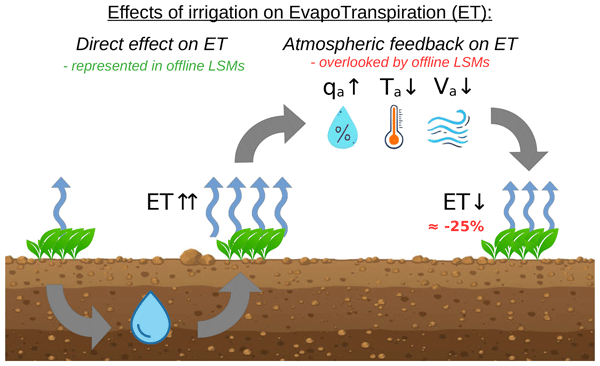
Modelling evapotranspiration is essential for understanding the water cycle. While irrigation is known to increase evapotranspiration, it is less known that it also modifies local weather, which can in turn partially reduce evapotranspiration. This latter phenomenon is overlooked in some land surface model configurations. This study investigates and quantifies the impact of this oversight, showing that land surface models overestimate evapotranspiration by about 25% for crops in irrigated areas.
Thomas Pauze, Axel Bouchet, Isabelle Gouttevin, Aaron Boone, Mathieu Fructus, Matthieu Lafaysse, Erwan Le Gac, Agnès Rivière, and Yves Lejeune
EGUsphere, https://doi.org/10.5194/egusphere-2026-4137, https://doi.org/10.5194/egusphere-2026-4137, 2026
This preprint is open for discussion and under review for Geoscientific Model Development (GMD).
Short summary
Short summary
In mid-altitude mountainous areas, snow acts as a water reservoir and is impacted by forest: to represent it we use a model called MEB/Crocus. It has been developed in boreal forests. Its results at a mid-altitude alpine site (the Col de Porte) were not convincing. We modify parametrizations that govern the behavior of intercepted snow to have a more realistic representation. We improve results of simulated snowpack under forest at Col de Porte and do not change performance in boreal sites.
Tanguy Lunel, Belén Martí, Aaron Boone, and Patrick Le Moigne
Hydrol. Earth Syst. Sci., 30, 5117–5143, https://doi.org/10.5194/hess-30-5117-2026, https://doi.org/10.5194/hess-30-5117-2026, 2026
Short summary
Short summary
Modelling evapotranspiration is essential for understanding the water cycle. While irrigation is known to increase evapotranspiration, it is less known that it also modifies local weather, which can in turn partially reduce evapotranspiration. This latter phenomenon is overlooked in some land surface model configurations. This study investigates and quantifies the impact of this oversight, showing that land surface models overestimate evapotranspiration by about 25% for crops in irrigated areas.
Bertrand Decharme, Diane Tzanos, Lucas Hardouin, Aaron Boone, Marie Minvielle, Patrick Le Moigne, and Rémi Gaillard
Geosci. Model Dev., 19, 7239–7277, https://doi.org/10.5194/gmd-19-7239-2026, https://doi.org/10.5194/gmd-19-7239-2026, 2026
Short summary
Short summary
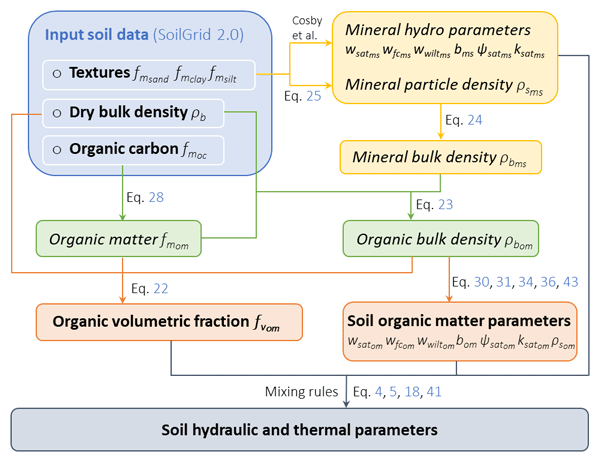
We developed a new method to represent how organic matter in soils, together with a mineral soil compactness adjustment, influences the movement of water and heat in land models. We implemented this approach in a global model and performed long-term simulations driven by weather data and global soil maps. Compared with an older empirical method, it produces more consistent soil moisture, runoff, evaporation, and ground temperature and shows closer agreement with observations.
Matthias Cuntz, Stephan Thober, Anne Verhoef, Yijian Zeng, Aaron Boone, Agnès Ducharne, Sujan Koirala, David M. Lawrence, Philipp de Vrese, Carsten Montzka, Sonia I. Seneviratne, Harry Vereecken, Dani Or, Salma Tafasca, Naoki Mizukami, Rich Ellis, Patrick C. McGuire, and Lukas Gudmundsson
EGUsphere, https://doi.org/10.5194/egusphere-2026-4223, https://doi.org/10.5194/egusphere-2026-4223, 2026
Preprint archived
Short summary
Short summary
Land surface models (LSMs) are essential tools to analyze future climate change. Here we pushed state-of-the-art LSMs out of their comfort zone revealing hidden connections between processes encoded into the models. The LSMs reacted differently due to complex, sometimes counter-intuitive interactions of different water fluxes. We identified surface runoff and soil evaporation as the two main reasons behind model differences, which should be improved by using more mechanistic descriptions.
Matthieu Lafaysse, Marie Dumont, Basile De Fleurian, Mathieu Fructus, Rafife Nheili, Léo Viallon-Galinier, Matthieu Baron, Aaron Boone, Axel Bouchet, Julien Brondex, Carlo Carmagnola, Bertrand Cluzet, Kévin Fourteau, Ange Haddjeri, Pascal Hagenmuller, Giulia Mazzotti, Marie Minvielle, Samuel Morin, Louis Quéno, Léon Roussel, Pierre Spandre, François Tuzet, and Vincent Vionnet
Geosci. Model Dev., 19, 6273–6334, https://doi.org/10.5194/gmd-19-6273-2026, https://doi.org/10.5194/gmd-19-6273-2026, 2026
Short summary
Short summary
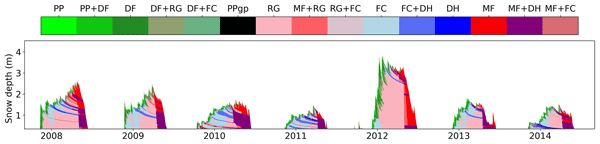
This article is a comprehensive description of the 3.0.2 stable release of the Crocus snowpack model. It describes various new implementations since the last reference article in 2012 and a review of the available scientific evaluations and applications of the model. This provides guidance for the future of numerical snow modelling.
Syam Chintala, Lionel Jarlan, Vincent Rivalland, Aaron Boone, Oluwakemi Dare-Idowu, Valerie Le Dantec, Gilles Boulet, BVN P. Kambhammettu, and Aurore Brut
EGUsphere, https://doi.org/10.5194/egusphere-2026-3119, https://doi.org/10.5194/egusphere-2026-3119, 2026
Short summary
Short summary
We studied how maize crops use water and absorb carbon under contrasting climates using a land surface model coupled with a photosynthesis scheme. The model successfully reproduced ecosystem-scale crop productivity, water loss, and water use efficiency, a key indicator linking carbon uptake and water use. Our results show that the model can reliably capture crop responses to climate and irrigation practices, helping improve predictions of agricultural water use and crop productivity.
Nedal Aqel, Jannis Groh, Lutz Weihermüller, Ralf Gründling, Andrea Carminati, and Peter Lehmann
Hydrol. Earth Syst. Sci., 30, 2523–2542, https://doi.org/10.5194/hess-30-2523-2026, https://doi.org/10.5194/hess-30-2523-2026, 2026
Short summary
Short summary
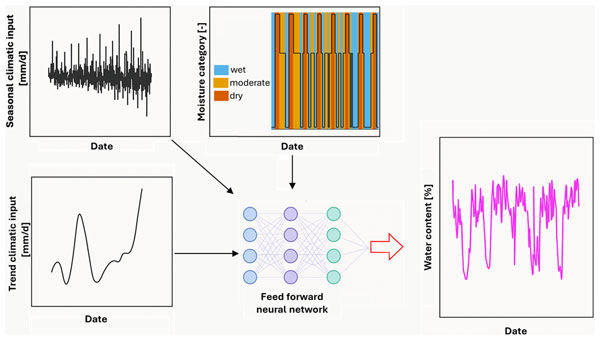
This study investigates how soils respond to major climatic disturbances, such as the extreme drought in Germany in 2018. Using long-term lysimeter observations and an artificial intelligence model, we show that persistent shifts in soil water dynamics indicate changes in hydraulic properties that may affect soil health, emphasizing the need for continuous monitoring under a changing climate.
Oscar M. Baez-Villanueva, Alfredo Crespo-Otero, Sara Modanesi, Pierre Laluet, Sergio Vicente-Serrano, Jaap Schellekens, Jacopo Dari, Hylke E. Beck, Wouter Dorigo, Christian Massari, Chiara Corbari, Joppe Massant, Kwint Delbare, Olivier Bonte, Aaron Boone, Diego Fernández-Prieto, and Diego G. Miralles
EGUsphere, https://doi.org/10.5194/egusphere-2026-1856, https://doi.org/10.5194/egusphere-2026-1856, 2026
Short summary
Short summary
We developed a new method to estimate daily land evaporation at high resolution across the Iberian Peninsula, explicitly accounting for irrigation. By combining satellite and meteorological data, we show that irrigation can strongly increase evaporation in agricultural areas. The results better match ground observations and improve understanding of water use. This approach can support farming decisions and water management at the regional scale, and will be extended to global applications.
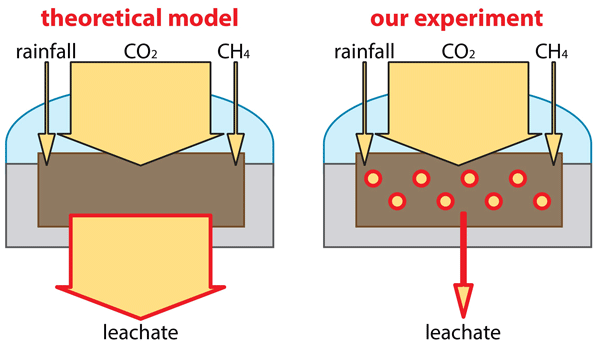
Francois Rineau, Alexander H. Frank, Jannis Groh, Kristof Grosjean, Arnaud Legout, Daniil I. Kolokolov, Michel Mench, Maria Moreno-Druet, Benoît Pollier, Virmantas Povilaitis, Johanna Pausch, Thomas Puetz, Tjalling Rooks, Peter Schröder, Wieslaw Szulc, Beata Rutkowska, Xander Swinnen, Sofie Thijs, Harry Vereecken, Janna V. Veselovskaya, Mwahija Zubery, Renaldas Žydelis, and Evelin Loit
Biogeosciences, 23, 2261–2276, https://doi.org/10.5194/bg-23-2261-2026, https://doi.org/10.5194/bg-23-2261-2026, 2026
Short summary
Short summary
Enhanced weathering can significantly slow climate change by capturing CO2 and converting it into stable bicarbonate. In study, this method removed up to 1.5 tons of carbon per hectare in a single growing season. We had however very little evidence of bicarbonate formation. Our findings show that enhanced weathering facilitated instead carbon accrual via not only carbonate precipitation but also enhanced biogeochemical activities promoting additional carbon storage.
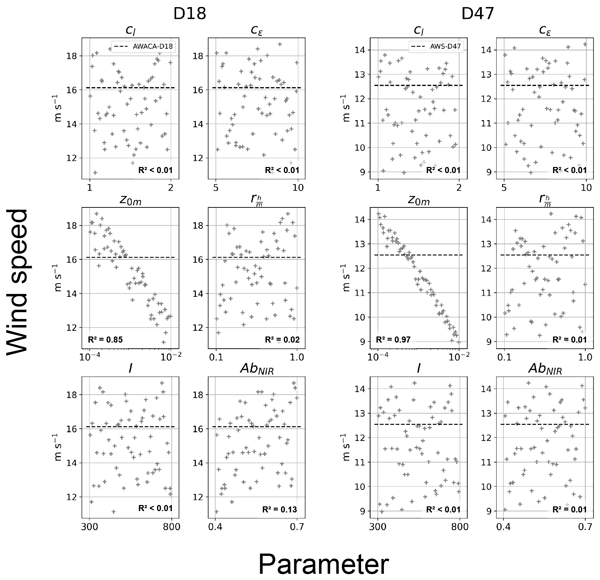
Valentin Wiener, Étienne Vignon, Thomas Caton Harrison, Christophe Genthon, Felipe Toledo, Guylaine Canut-Rocafort, Yann Meurdesoif, and Alexis Berne
Weather Clim. Dynam., 6, 1605–1627, https://doi.org/10.5194/wcd-6-1605-2025, https://doi.org/10.5194/wcd-6-1605-2025, 2025
Short summary
Short summary
Katabatic winds are a key feature of the climate of Antarctica, but substantial biases remain in their representation in atmospheric models. This study investigates a katabatic wind event in an atmospheric circulation model using in-situ observations. The framework allows to disentangle which part of the bias is due to horizontal resolution, to parameter calibration and to structural deficiencies in the model. We underline in particular the need to refine the physics of the model snow cover.
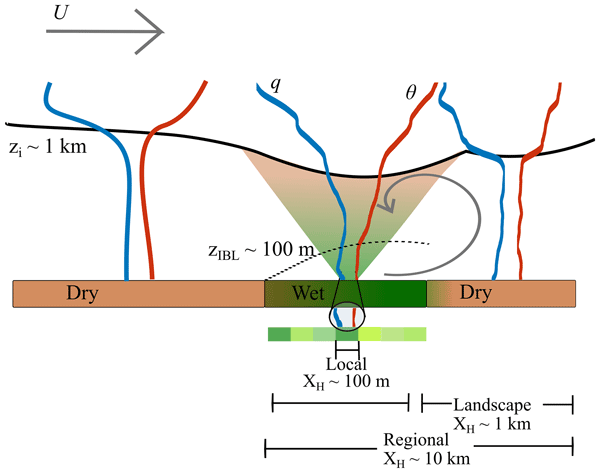
Mary Rose Mangan, Jordi Vilà-Guerau de Arellano, Bart J. H. van Stratum, Marie Lothon, Guylaine Canut-Rocafort, and Oscar K. Hartogensis
Atmos. Chem. Phys., 25, 8959–8981, https://doi.org/10.5194/acp-25-8959-2025, https://doi.org/10.5194/acp-25-8959-2025, 2025
Short summary
Short summary
Using observations and high-resolution turbulence modeling, we examine the influence of irrigation-driven surface heterogeneity on the atmospheric boundary layer (ABL). We use a multi-scale approach for characterizing surface heterogeneity to explore how its influence on the ABL within a grid cell would change with higher-resolution models. We find that the height of the ABL is variable across short distances and that the surface heterogeneity is felt least strongly in the middle of the ABL.
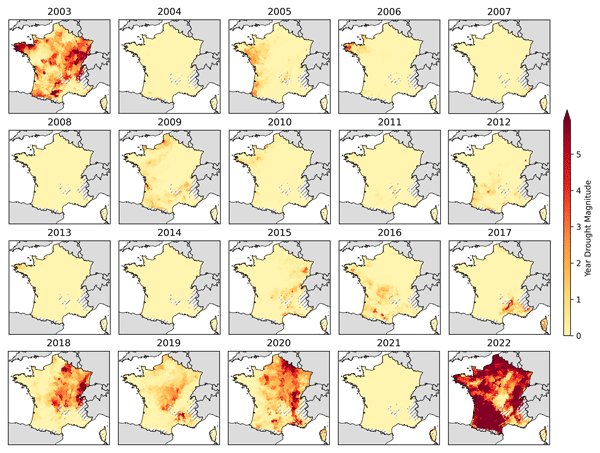
Sophie Barthelemy, Bertrand Bonan, Miquel Tomas-Burguera, Gilles Grandjean, Séverine Bernardie, Jean-Philippe Naulin, Patrick Le Moigne, Aaron Boone, and Jean-Christophe Calvet
Hydrol. Earth Syst. Sci., 29, 2321–2337, https://doi.org/10.5194/hess-29-2321-2025, https://doi.org/10.5194/hess-29-2321-2025, 2025
Short summary
Short summary
A drought index is developed that quantifies drought on an annual scale, making it applicable to monitoring clay shrinkage damage to buildings. A comparison with the number of insurance claims for subsidence shows that the presence of trees near individual houses must be taken into account. Significant soil moisture droughts occurred in France in 2003, 2018, 2019, 2020, and 2022. Particularly high index values are observed in 2022. It is found that droughts will become more severe in the future.
Maurin Zouzoua, Sophie Bastin, Fabienne Lohou, Marie Lothon, Marjolaine Chiriaco, Mathilde Jome, Cécile Mallet, Laurent Barthes, and Guylaine Canut
Geosci. Model Dev., 18, 3211–3239, https://doi.org/10.5194/gmd-18-3211-2025, https://doi.org/10.5194/gmd-18-3211-2025, 2025
Short summary
Short summary
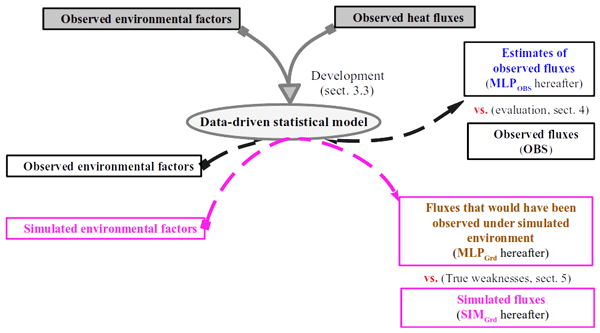
This study proposes using a statistical model to freeze errors due to differences in environmental forcing when evaluating the surface turbulent heat fluxes from numerical simulations with observations. The statistical model is first built with observations and then applied to the simulated environment to generate possibly observed fluxes. This novel method provides insight into differently evaluating the numerical formulation of turbulent heat fluxes with a long period of observational data.
Annelie Ehrhardt, Jannis Groh, and Horst H. Gerke
Hydrol. Earth Syst. Sci., 29, 313–334, https://doi.org/10.5194/hess-29-313-2025, https://doi.org/10.5194/hess-29-313-2025, 2025
Short summary
Short summary
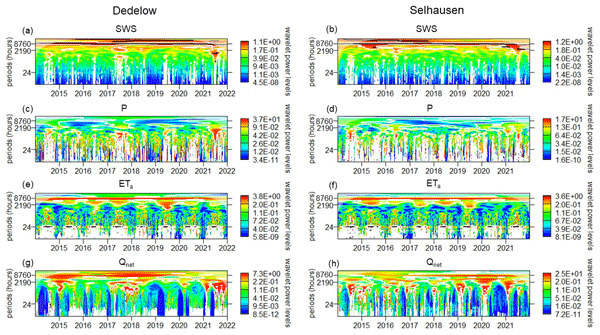
Soil water storage (SWS) describes the amount of water in the root zone of plants accessible for crop growth. SWS underlies annual cycles with maximum values in winter and minimum values in summer. For a soil that was transferred from a drier to a more humid climate we found that the maximum peak of SWS occurs earlier every year. This can be explained by an earlier start of the vegetation period. It is a first indication that the ability of soils to store water is affected by different climate.
Marie Lothon, François Gheusi, Fabienne Lohou, Véronique Pont, Serge Soula, Corinne Jambert, Solène Derrien, Yannick Bezombes, Emmanuel Leclerc, Gilles Athier, Antoine Vial, Alban Philibert, Bernard Campistron, Frédérique Saïd, Jeroen Sonke, Julien Amestoy, Erwan Bargain, Pierre Bosser, Damien Boulanger, Guillaume Bret, Renaud Bodichon, Laurent Cabanas, Guylaine Canut, Jean-Bernard Estrampes, Eric Gardrat, Zaida Gomez Kuri, Jérémy Gueffier, Fabienne Guesdon, Morgan Lopez, Olivier Masson, Pierre-Yves Meslin, Yves Meyerfeld, Nicolas Pascal, Eric Pique, Michel Ramonet, Felix Starck, and Romain Vidal
Atmos. Meas. Tech., 17, 6265–6300, https://doi.org/10.5194/amt-17-6265-2024, https://doi.org/10.5194/amt-17-6265-2024, 2024
Short summary
Short summary
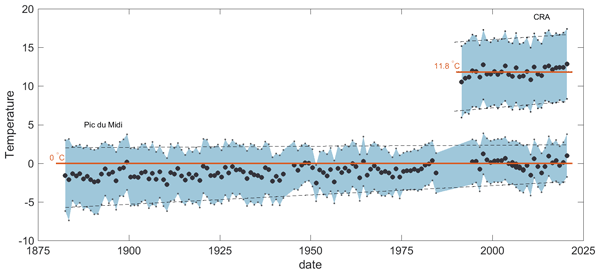
The Pyrenean Platform for Observation of the Atmosphere (P2OA) is a coupled plain–mountain instrumented platform in southwestern France for the monitoring of climate variables and the study of meteorological processes in a mountainous region. A comprehensive description of this platform is presented for the first time: its instrumentation, the associated dataset, and a meteorological characterization the site. The potential of the P2OA is illustrated through several examples of process studies.
Tanguy Lunel, Maria Antonia Jimenez, Joan Cuxart, Daniel Martinez-Villagrasa, Aaron Boone, and Patrick Le Moigne
Atmos. Chem. Phys., 24, 7637–7666, https://doi.org/10.5194/acp-24-7637-2024, https://doi.org/10.5194/acp-24-7637-2024, 2024
Short summary
Short summary
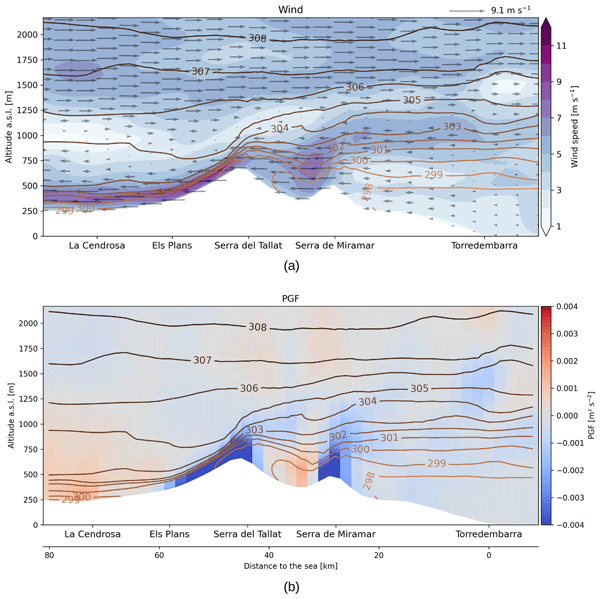
During the summer in Catalonia, a cool wind, the marinada, blows into the eastern Ebro basin in the afternoon. This study investigates its previously unclear dynamics using observations and a meteorological model. It is found to be driven by a cool marine air mass that flows over the mountains into the basin. The study shows how the sea breeze, upslope winds, larger weather patterns and irrigation play a prominent role in the formation and characteristics of the marinada.
Sinikka J. Paulus, Rene Orth, Sung-Ching Lee, Anke Hildebrandt, Martin Jung, Jacob A. Nelson, Tarek Sebastian El-Madany, Arnaud Carrara, Gerardo Moreno, Matthias Mauder, Jannis Groh, Alexander Graf, Markus Reichstein, and Mirco Migliavacca
Biogeosciences, 21, 2051–2085, https://doi.org/10.5194/bg-21-2051-2024, https://doi.org/10.5194/bg-21-2051-2024, 2024
Short summary
Short summary
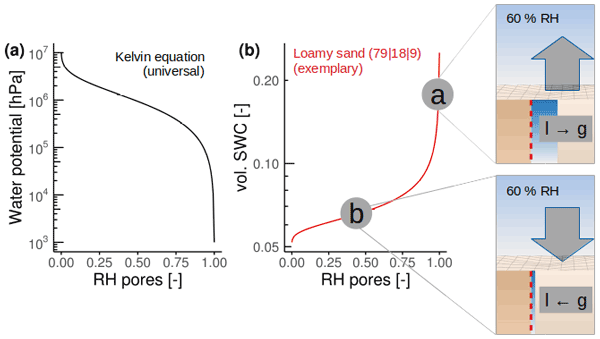
Porous materials are known to reversibly trap water from the air, even at low humidity. However, this behavior is poorly understood for soils. In this analysis, we test whether eddy covariance is able to measure the so-called adsorption of atmospheric water vapor by soils. We find that this flux occurs frequently during dry nights in a Mediterranean ecosystem, while EC detects downwardly directed vapor fluxes. These results can help to map moisture uptake globally.
Alban Philibert, Marie Lothon, Julien Amestoy, Pierre-Yves Meslin, Solène Derrien, Yannick Bezombes, Bernard Campistron, Fabienne Lohou, Antoine Vial, Guylaine Canut-Rocafort, Joachim Reuder, and Jennifer K. Brooke
Atmos. Meas. Tech., 17, 1679–1701, https://doi.org/10.5194/amt-17-1679-2024, https://doi.org/10.5194/amt-17-1679-2024, 2024
Short summary
Short summary
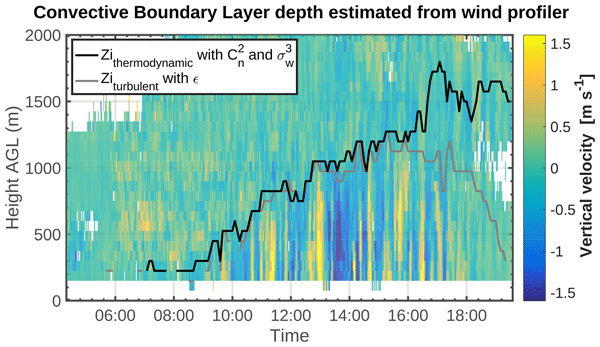
We present a new algorithm, CALOTRITON, for the retrieval of the convective boundary layer depth with ultra-high-frequency radar measurements. CALOTRITON is partly based on the principle that the top of the convective boundary layer is associated with an inversion and a decrease in turbulence. It is evaluated using ceilometer and radiosonde data. It is able to qualify the complexity of the vertical structure of the low troposphere and detect internal or residual layers.
Jari-Pekka Nousu, Matthieu Lafaysse, Giulia Mazzotti, Pertti Ala-aho, Hannu Marttila, Bertrand Cluzet, Mika Aurela, Annalea Lohila, Pasi Kolari, Aaron Boone, Mathieu Fructus, and Samuli Launiainen
The Cryosphere, 18, 231–263, https://doi.org/10.5194/tc-18-231-2024, https://doi.org/10.5194/tc-18-231-2024, 2024
Short summary
Short summary
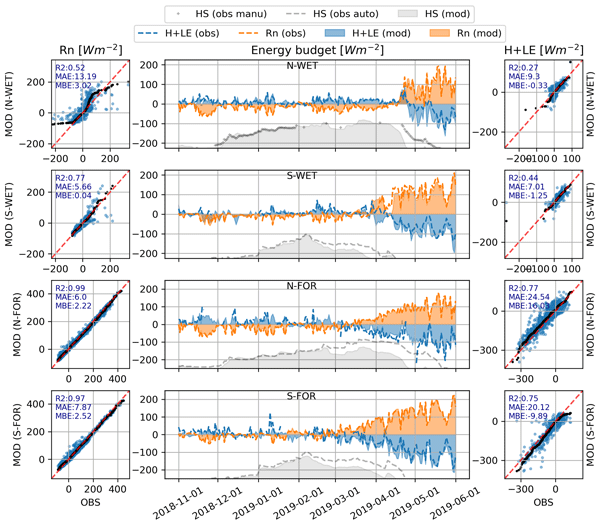
The snowpack has a major impact on the land surface energy budget. Accurate simulation of the snowpack energy budget is difficult, and studies that evaluate models against energy budget observations are rare. We compared predictions from well-known models with observations of energy budgets, snow depths and soil temperatures in Finland. Our study identified contrasting strengths and limitations for the models. These results can be used for choosing the right models depending on the use cases.
Cheikh Dione, Martial Haeffelin, Frédéric Burnet, Christine Lac, Guylaine Canut, Julien Delanoë, Jean-Charles Dupont, Susana Jorquera, Pauline Martinet, Jean-François Ribaud, and Felipe Toledo
Atmos. Chem. Phys., 23, 15711–15731, https://doi.org/10.5194/acp-23-15711-2023, https://doi.org/10.5194/acp-23-15711-2023, 2023
Short summary
Short summary
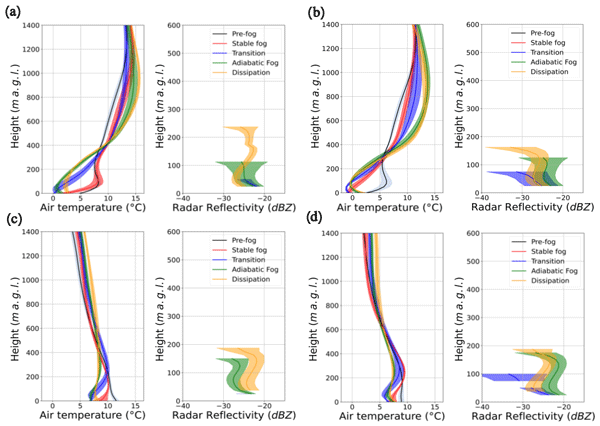
This paper documents the role of thermodynamics and turbulence in the fog life cycle over southwestern France. It is based on a unique dataset collected during the SOFOG3D field campaign in autumn and winter 2019–2020. The paper gives a threshold for turbulence driving the different phases of the fog life cycle and the role of advection in the night-time dissipation of fog. The results can be operationalised to nowcast fog and improve short-range forecasts in numerical weather prediction models.
Tobias Schnepper, Jannis Groh, Horst H. Gerke, Barbara Reichert, and Thomas Pütz
Hydrol. Earth Syst. Sci., 27, 3265–3292, https://doi.org/10.5194/hess-27-3265-2023, https://doi.org/10.5194/hess-27-3265-2023, 2023
Short summary
Short summary
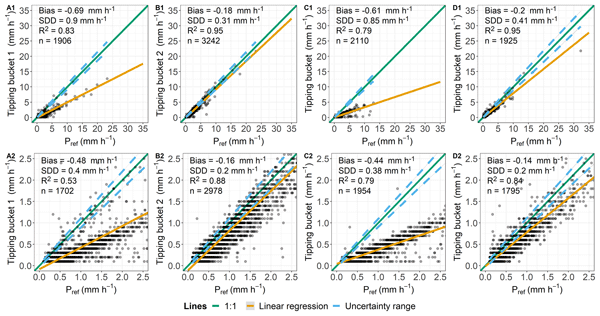
We compared hourly data from precipitation gauges with lysimeter reference data at three sites under different climatic conditions. Our results show that precipitation gauges recorded 33–96 % of the reference precipitation data for the period under consideration (2015–2018). Correction algorithms increased the registered precipitation by 9–14 %. It follows that when using point precipitation data, regardless of the precipitation measurement method used, relevant uncertainties must be considered.

Malak Sadki, Simon Munier, Aaron Boone, and Sophie Ricci
Geosci. Model Dev., 16, 427–448, https://doi.org/10.5194/gmd-16-427-2023, https://doi.org/10.5194/gmd-16-427-2023, 2023
Short summary
Short summary
Predicting water resource evolution is a key challenge for the coming century.
Anthropogenic impacts on water resources, and particularly the effects of dams and reservoirs on river flows, are still poorly known and generally neglected in global hydrological studies. A parameterized reservoir model is reproduced to compute monthly releases in Spanish anthropized river basins. For global application, an exhaustive sensitivity analysis of the model parameters is performed on flows and volumes.
Jaime Gaona, Pere Quintana-Seguí, María José Escorihuela, Aaron Boone, and María Carmen Llasat
Nat. Hazards Earth Syst. Sci., 22, 3461–3485, https://doi.org/10.5194/nhess-22-3461-2022, https://doi.org/10.5194/nhess-22-3461-2022, 2022
Short summary
Short summary
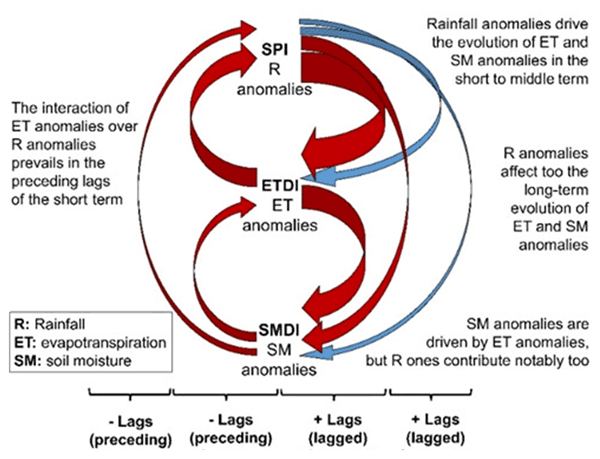
Droughts represent a particularly complex natural hazard and require explorations of their multiple causes. Part of the complexity has roots in the interaction between the continuous changes in and deviation from normal conditions of the atmosphere and the land surface. The exchange between the atmospheric and surface conditions defines feedback towards dry or wet conditions. In semi-arid environments, energy seems to exceed water in its impact over the evolution of conditions, favoring drought.
Maik Heistermann, Heye Bogena, Till Francke, Andreas Güntner, Jannis Jakobi, Daniel Rasche, Martin Schrön, Veronika Döpper, Benjamin Fersch, Jannis Groh, Amol Patil, Thomas Pütz, Marvin Reich, Steffen Zacharias, Carmen Zengerle, and Sascha Oswald
Earth Syst. Sci. Data, 14, 2501–2519, https://doi.org/10.5194/essd-14-2501-2022, https://doi.org/10.5194/essd-14-2501-2022, 2022
Short summary
Short summary
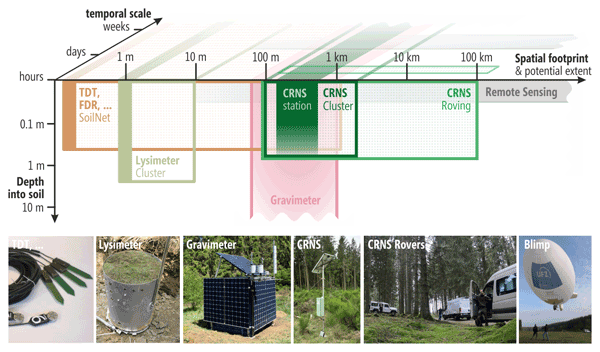
This paper presents a dense network of cosmic-ray neutron sensing (CRNS) to measure spatio-temporal soil moisture patterns during a 2-month campaign in the Wüstebach headwater catchment in Germany. Stationary, mobile, and airborne CRNS technology monitored the root-zone water dynamics as well as spatial heterogeneity in the 0.4 km2 area. The 15 CRNS stations were supported by a hydrogravimeter, biomass sampling, and a wireless soil sensor network to facilitate holistic hydrological analysis.
Nicholas Jarvis, Jannis Groh, Elisabet Lewan, Katharina H. E. Meurer, Walter Durka, Cornelia Baessler, Thomas Pütz, Elvin Rufullayev, and Harry Vereecken
Hydrol. Earth Syst. Sci., 26, 2277–2299, https://doi.org/10.5194/hess-26-2277-2022, https://doi.org/10.5194/hess-26-2277-2022, 2022
Short summary
Short summary
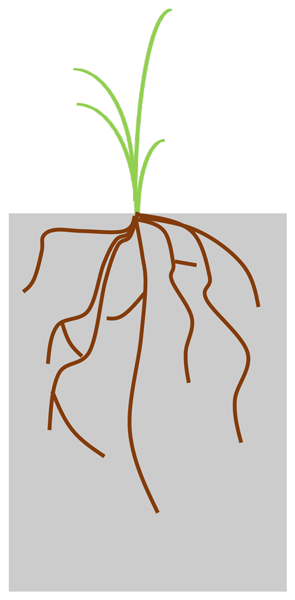
We apply an eco-hydrological model to data on soil water balance and grassland growth obtained at two sites with contrasting climates. Our results show that the grassland in the drier climate had adapted by developing deeper roots, which maintained water supply to the plants in the face of severe drought. Our study emphasizes the importance of considering such plastic responses of plant traits to environmental stress in the modelling of soil water balance and plant growth under climate change.
Veronika Forstner, Jannis Groh, Matevz Vremec, Markus Herndl, Harry Vereecken, Horst H. Gerke, Steffen Birk, and Thomas Pütz
Hydrol. Earth Syst. Sci., 25, 6087–6106, https://doi.org/10.5194/hess-25-6087-2021, https://doi.org/10.5194/hess-25-6087-2021, 2021
Short summary
Short summary
Lysimeter-based manipulative and observational experiments were used to identify responses of water fluxes and aboveground biomass (AGB) to climatic change in permanent grassland. Under energy-limited conditions, elevated temperature actual evapotranspiration (ETa) increased, while seepage, dew, and AGB decreased. Elevated CO2 mitigated the effect on ETa. Under water limitation, elevated temperature resulted in reduced ETa, and AGB was negatively correlated with an increasing aridity.
Cited articles
Al-Yemeni, M. N. and Grace, J.: Radiation balance of an alfalfa crop in Saudi Arabia, Journal of Arid Environments, 29, 447–454, 1995. a
Alton, P., Fisher, R., Los, S., and Williams, M.: Simulations of global evapotranspiration using semiempirical and mechanistic schemes of plant hydrology, Global Biogeochemical Cycles, 23, https://doi.org/10.1029/2009GB003540, 2009. a
Aouade, G., Jarlan, L., Ezzahar, J., Er-Raki, S., Napoly, A., Benkaddour, A., Khabba, S., Boulet, G., Garrigues, S., Chehbouni, A., and Boone, A.: Evapotranspiration partition using the multiple energy balance version of the ISBA-A-gs land surface model over two irrigated crops in a semi-arid Mediterranean region (Marrakech, Morocco), Hydrol. Earth Syst. Sci., 24, 3789–3814, https://doi.org/10.5194/hess-24-3789-2020, 2020. a, b
Aranjuelo, I., Tcherkez, G., Molero, G., Gilard, F., Avice, J.-C., and Nogués, S.: Concerted changes in N and C primary metabolism in alfalfa (Medicago sativa) under water restriction, Journal of Experimental Botany, 64, 1–17, 2013. a
Aubinet, M., Grelle, A., Ibrom, A., Rannik, Ü., Moncrieff, J., Foken, T., Kowalski, A. S., Martin, P. H., Berbigier, P., Bernhofer, C., Clement, R., Elbers, J., Granier, A., GrÜnwald, T., Morgensten, K., Pilegaard, K., Rebmann, C., Snijders, W., Valentini, R., and Vesala, T.: Estimates of the annual net carbon and water exchange of forests: the EUROFLUX methodology, in: Advances in ecological research, vol. 30, Elsevier, 113–175, https://doi.org/10.1016/S0065-2504(08)60018-5, 2000. a
Balugani, E., Lubczynski, M., Van Der Tol, C., and Metselaar, K.: Testing three approaches to estimate soil evaporation through a dry soil layer in a semi-arid area, Journal of Hydrology, 567, 405–419, 2018. a
Balugani, E., Lubczynski, M., and Metselaar, K.: Evaporation through a dry soil layer: Column experiments, Water Resources Research, 57, e2020WR028286, https://doi.org/10.1029/2020WR028286, 2021. a
Balugani, E., Lubczynski, M., and Metselaar, K.: Lysimeter and in situ field experiments to study soil evaporation through a dry soil layer under semi-arid climate, Water Resources Research, 59, e2022WR033878, https://doi.org/10.1029/2022WR033878, 2023. a, b
Barr, A. G., King, K., Gillespie, T., Den Hartog, G., and Neumann, H.: A comparison of Bowen ratio and eddy correlation sensible and latent heat flux measurements above deciduous forest, Boundary-Layer Meteorology, 71, 21–41, 1994. a
Barton, I.: A parameterization of the evaporation from nonsaturated surfaces, Journal of Applied Meteorology, 18, 43–47, 1979. a
Bell, L. W., Williams, A. H., Ryan, M. H., and Ewing, M. A.: Water relations and adaptations to increasing water deficit in three perennial legumes, Medicago sativa, Dorycnium hirsutum and Dorycnium rectum, Plant and Soil, 290, 231–243, 2007. a
Best, M. J., Pryor, M., Clark, D. B., Rooney, G. G., Essery, R. L. H., Ménard, C. B., Edwards, J. M., Hendry, M. A., Porson, A., Gedney, N., Mercado, L. M., Sitch, S., Blyth, E., Boucher, O., Cox, P. M., Grimmond, C. S. B., and Harding, R. J.: The Joint UK Land Environment Simulator (JULES), model description – Part 1: Energy and water fluxes, Geosci. Model Dev., 4, 677–699, https://doi.org/10.5194/gmd-4-677-2011, 2011. a
Boone, A., Samuelsson, P., Gollvik, S., Napoly, A., Jarlan, L., Brun, E., and Decharme, B.: The interactions between soil–biosphere–atmosphere land surface model with a multi-energy balance (ISBA-MEB) option in SURFEXv8 – Part 1: Model description, Geosci. Model Dev., 10, 843–872, https://doi.org/10.5194/gmd-10-843-2017, 2017. a, b, c
Boone, A., Bellvert, J., Best, M., Brooke, J. K., Canut-Rocafort, G., Cuxart, J., Hartogensis, O., Le Moigne, P., Miró, J. R., Polcher, J., Price, J., Quintana Seguí, P., Bech, J., Bezombes, Y., Branch, O., Cristóbal, J., Dassas, K., Fanise, P., Gibert, F., Goulas, Y., Groh, J., Hanus, J., Hmimina, G., Jarlan, L., Kim, E., Le Dantec, V., Le Page, M., Lohou, F., Lothon, M., Mangan, M. R., Martí, B., Martínez-Villagrasa, D., McGregor, J., Kerr-Munslow, A., Ouaadi, N., Philibert, A., Quiros-Vargas, J., Rascher, U., Siegmann, B., Udina, M., Vial, A., Wrenger, B., Wulfmeyer, V., and Zribi, M.: The Land Surface Interactions with the Atmosphere over the Iberian Semi-Arid Environment (LIAISE) Field Campaign, Journal of the European Meteorological Society, 2, 100007, https://doi.org/10.1016/j.jemets.2025.100007, 2025. a, b, c, d
Brooke, J.: LIAISE_ELS-PLANS_UKMO_LAI_01DAY_L1, Aeris [data set], https://doi.org/10.25326/522, 2023. a, b
Brooke, J., Best, M., Lock, A., Osborne, S., Price, J., Cuxart, J., Boone, A., Canut-Rocafort, G., Hartogensis, O., and Roy, A.: Irrigation contrasts through the morning transition, Quarterly Journal of the Royal Meteorological Society, https://doi.org/10.1002/qj.4590, 2023. a, b
Brut, A., Rüdiger, C., Lafont, S., Roujean, J.-L., Calvet, J.-C., Jarlan, L., Gibelin, A.-L., Albergel, C., Le Moigne, P., Soussana, J.-F., Klumpp, K., Guyon, D., Wigneron, J.-P., and Ceschia, E.: Modelling LAI at a regional scale with ISBA-A-gs: comparison with satellite-derived LAI over southwestern France, Biogeosciences, 6, 1389–1404, https://doi.org/10.5194/bg-6-1389-2009, 2009. a
Brutsaert, W.: On a derivable formula for long-wave radiation from clear skies, Water Resources Research, 11, 742–744, 1975. a
Bunce, J.: Thermal acclimation of the temperature dependence of the VCmax of Rubisco in quinoa, Photosynthetica, 56, 1171–1176, 2018. a
Cai, T. and Dang, Q.-L.: Effects of soil temperature on parameters of a coupled photosynthesis–stomatal conductance model, Tree Physiology, 22, 819–828, 2002. a
Calvet, J.-C., Noilhan, J., Roujean, J.-L., Bessemoulin, P., Cabelguenne, M., Olioso, A., and Wigneron, J.-P.: An interactive vegetation SVAT model tested against data from six contrasting sites, Agricultural and Forest Meteorology, 92, 73–95, 1998. a
Camillo, P. J. and Gurney, R. J.: A resistance parameter for bare-soil evaporation models, Soil Science, 141, 95–105, 1986. a
Canut, G.: LIAISE_LA-CENDROSA_CNRM_MTO-FLUX-30MIN_L2 Aeris [data set], https://doi.org/10.25326/320, 2022a. a, b, c
Canut, G.: LIAISE_PREIXANA_CNRM_MTO-FLUX-30MIN_L2, Aeris [data set], https://doi.org/10.25326/361, 2022b. a
Chang, L.-L., Dwivedi, R., Knowles, J. F., Fang, Y.-H., Niu, G.-Y., Pelletier, J. D., Rasmussen, C., Durcik, M., Barron-Gafford, G. A., and Meixner, T.: Why do large-scale land surface models produce a low ratio of transpiration to evapotranspiration?, Journal of Geophysical Research: Atmospheres, 123, 9109–9130, 2018. a, b
Chanzy, A., Mumen, M., and Richard, G.: Accuracy of top soil moisture simulation using a mechanistic model with limited soil characterization, Water Resources Research, 44, https://doi.org/10.1029/2006WR005765, 2008. a
Choudhury, B. J. and Monteith, J.: A four-layer model for the heat budget of homogeneous land surfaces, Quarterly Journal of the Royal Meteorological Society, 114, 373–398, 1988. a
Clapp, R. B. and Hornberger, G. M.: Empirical equations for some soil hydraulic properties, Water Resources Research, 14, 601–604, 1978. a
Coenders-Gerrits, A., Van der Ent, R., Bogaard, T., Wang-Erlandsson, L., Hrachowitz, M., and Savenije, H.: Uncertainties in transpiration estimates, Nature, 506, https://doi.org/10.1038/nature12925, 2014. a
Collatz, G. J., Ball, J. T., Grivet, C., and Berry, J. A.: Physiological and environmental regulation of stomatal conductance, photosynthesis and transpiration: a model that includes a laminar boundary layer, Agricultural and Forest Meteorology, 54, 107–136, 1991. a
Collatz, G. J., Ribas-Carbo, M., and Berry, J. A.: Coupled photosynthesis-stomatal conductance model for leaves of C4 plants, Functional Plant Biology, 19, 519–538, 1992. a
Coudert, B., Ottlé, C., Boudevillain, B., Demarty, J., and Guillevic, P.: Contribution of thermal infrared remote sensing data in multiobjective calibration of a dual-source SVAT model, Journal of Hydrometeorology, 7, 404–420, 2006. a
Cuntz, M., Mai, J., Samaniego, L., Clark, M., Wulfmeyer, V., Branch, O., Attinger, S., and Thober, S.: The impact of standard and hard-coded parameters on the hydrologic fluxes in the Noah-MP land surface model, Journal of Geophysical Research: Atmospheres, 121, 10–676, 2016. a
Cuxart, J., Conangla, L., and Jiménez, M.: Evaluation of the surface energy budget equation with experimental data and the ECMWF model in the Ebro Valley, Journal of Geophysical Research: Atmospheres, 120, 1008–1022, 2015. a
Dare-Idowu, O., Jarlan, L., Le-Dantec, V., Rivalland, V., Ceschia, E., Boone, A., and Brut, A.: Hydrological Functioning of maize crops in Southwest France using eddy covariance measurements and a land surface model, Water, 13, 1481, https://doi.org/10.3390/w13111481, 2021. a
De Arellano, J. V.-G., van Heerwaarden, C. C., van Stratum, B. J., and van den Dries, K.: Atmospheric boundary layer: Integrating air chemistry and land interactions, Cambridge University Press, ISBN 978-1-107-09094-1, 2015. a
De Silans, A. P., Monteny, B. A., and Lhomme, J. P.: The correction of soil heat flux measurements to derive an accurate surface energy balance by the Bowen ratio method, Journal of Hydrology, 188, 453–465, 1997. a
Decharme, B., Boone, A., Delire, C., and Noilhan, J.: Local evaluation of the Interaction between Soil Biosphere Atmosphere soil multilayer diffusion scheme using four pedotransfer functions, Journal of Geophysical Research: Atmospheres, 116, https://doi.org/10.1029/2011JD016002, 2011. a, b
Delire, C., Séférian, R., Decharme, B., Alkama, R., Calvet, J.-C., Carrer, D., Gibelin, A.-L., Joetzjer, E., Morel, X., Rocher, M., and Tzanos, D.: The global land carbon cycle simulated with ISBA-CTRIP: Improvements over the last decade, Journal of Advances in Modeling Earth Systems, 12, e2019MS001886, https://doi.org/10.1029/2019MS001886, 2020. a
Ding, R., Kang, S., Du, T., Hao, X., and Tong, L.: Modeling crop water use in an irrigated maize cropland using a biophysical process-based model, Journal of Hydrology, 529, 276–286, 2015. a
Dong, J., Dirmeyer, P. A., Lei, F., Anderson, M. C., Holmes, T. R., Hain, C., and Crow, W. T.: Soil evaporation stress determines soil moisture-evapotranspiration coupling strength in land surface modeling, Geophysical Research Letters, 47, e2020GL090391, https://doi.org/10.1029/2020GL090391, 2020. a
Duursma, R. A., Blackman, C. J., Lopéz, R., Martin-StPaul, N. K., Cochard, H., and Medlyn, B. E.: On the minimum leaf conductance: its role in models of plant water use, and ecological and environmental controls, New Phytologist, 221, 693–705, 2019. a
Feng, H., Wu, Z., Dong, J., Zhou, J., Brocca, L., and He, H.: Transpiration–Soil evaporation partitioning determines inter-model differences in soil moisture and evapotranspiration coupling, Remote Sensing of Environment, 298, 113841, https://doi.org/10.1016/j.rse.2023.113841, 2023. a
Gerke, H. H. and Van Genuchten, M. T.: A dual-porosity model for simulating the preferential movement of water and solutes in structured porous media, Water Resources Research, 29, 305–319, 1993. a
González-Armas, R., Vilà-Guerau de Arellano, J., Mangan, M. R., Hartogensis, O., and de Boer, H.: Impact of canopy environmental variables on the diurnal dynamics of water and carbon dioxide exchange at leaf and canopy level, Biogeosciences, 21, 2425–2445, https://doi.org/10.5194/bg-21-2425-2024, 2024. a, b, c, d, e, f, g
Goudriaan, J., Van Laar, H., Van Keulen, H., and Louwerse, W.: Photosynthesis, CO2 and plant production, in: Wheat growth and modelling, Springer, 107–122, https://doi.org/10.1007/978-1-4899-3665-3, 1985. a, b
Groh, J., Slawitsch, V., Herndl, M., Graf, A., Vereecken, H., and Pütz, T.: Determining dew and hoar frost formation for a low mountain range and alpine grassland site by weighable lysimeter, Journal of Hydrology, 563, 372–381, 2018a. a
Groh, J., Stumpp, C., Lücke, A., Pütz, T., Vanderborght, J., and Vereecken, H.: Inverse estimation of soil hydraulic and transport parameters of layered soils from water stable isotope and lysimeter data, Vadose Zone Journal, 17, 1–19, 2018b. a
Guo, L. and Lin, H.: Addressing two bottlenecks to advance the understanding of preferential flow in soils, Advances in Agronomy, 147, 61–117, 2018. a
Harris, P. P., Folwell, S. S., Gallego-Elvira, B., Rodríguez, J., Milton, S., and Taylor, C. M.: An evaluation of modeled evaporation regimes in Europe using observed dry spell land surface temperature, Journal of Hydrometeorology, 18, 1453–1470, 2017. a
He, C., Valayamkunnath, P., Barlage, M., Chen, F., Gochis, D., Cabell, R., Schneider, T., Rasmussen, R., Niu, G., Yang, Z., Niyogi, D., and Ek, M.: The community Noah-MP land surface modeling system technical description version 5.0, Tech. rep., NCAR Technical Note NCAR/TN-575+ STR, https://doi.org/10.5065/ew8g-yr95, 2023. a
Hengl, T., Mendes de Jesus, J., Heuvelink, G. B., Ruiperez Gonzalez, M., Kilibarda, M., Blagotić, A., Shangguan, W., Wright, M. N., Geng, X., Bauer-Marschallinger, B., Guevara, M. A., Vargas, R., MacMillan, R. A., Batjes, N. H., Leenars, J. G. B., Ribeiro, E., Wheeler, I., Mantel, S., and Kempen, B.: SoilGrids250m: Global gridded soil information based on machine learning, PLoS one, 12, e0169748, https://doi.org/10.1371/journal.pone.0169748, 2017. a
Iden, S. C., Blöcher, J. R., Diamantopoulos, E., and Durner, W.: Capillary, film, and vapor flow in transient bare soil evaporation (1): Identifiability analysis of hydraulic conductivity in the medium to dry moisture range, Water Resources Research, 57, e2020WR028513, https://doi.org/10.1029/2020WR028513, 2021. a
Ivanov, V. Y., Bras, R. L., and Vivoni, E. R.: Vegetation-hydrology dynamics in complex terrain of semiarid areas: 1. A mechanistic approach to modeling dynamic feedbacks, Water Resources Research, 44, https://doi.org/10.1029/2006WR005588, 2008. a
Jackisch, C., Germer, K., Graeff, T., Andrä, I., Schulz, K., Schiedung, M., Haller-Jans, J., Schneider, J., Jaquemotte, J., Helmer, P., Lotz, L., Bauer, A., Hahn, I., Šanda, M., Kumpan, M., Dorner, J., de Rooij, G., Wessel-Bothe, S., Kottmann, L., Schittenhelm, S., and Durner, W.: Soil moisture and matric potential – an open field comparison of sensor systems, Earth Syst. Sci. Data, 12, 683–697, https://doi.org/10.5194/essd-12-683-2020, 2020. a
Jacobs, C., Van den Hurk, B., and De Bruin, H.: Stomatal behaviour and photosynthetic rate of unstressed grapevines in semi-arid conditions, Agricultural and Forest Meteorology, 80, 111–134, 1996. a
Jasinski, M. F., Borak, J., and Crago, R.: Bulk surface momentum parameters for satellite-derived vegetation fields, Agricultural and Forest Meteorology, 133, 55–68, 2005. a
Jiang, Q., Zhang, J.-Y., Guo, X., Monteros, M. J., and Wang, Z.-Y.: Physiological characterization of transgenic alfalfa (Medicago sativa) plants for improved drought tolerance, International Journal of Plant Sciences, 170, 969–978, 2009. a
Jiménez, C., Prigent, C., Mueller, B., Seneviratne, S. I., McCabe, M., Wood, E. F., Rossow, W. B., Balsamo, G., Betts, A., Dirmeyer, P., Fisher, J. B., Jung, M., Kanamitsu, M., Reichle, R. H., Rodell, M., Sheffield, J., Tu, J., and Wang, K. : Global intercomparison of 12 land surface heat flux estimates, Journal of Geophysical Research: Atmospheres, 116, https://doi.org/10.1029/2010JD014545, 2011. a
Jiménez, M. A., Grau, A., Martínez-Villagrasa, D., and Cuxart, J.: Characterization of the marine-air intrusion Marinada in the eastern Ebro sub-basin, International Journal of Climatology, 43, 7682–7699, 2023. a
Jung, M., Reichstein, M., and Bondeau, A.: Towards global empirical upscaling of FLUXNET eddy covariance observations: validation of a model tree ensemble approach using a biosphere model, Biogeosciences, 6, 2001–2013, https://doi.org/10.5194/bg-6-2001-2009, 2009. a
Kohfahl, C., Saaltink, M. W., and Bermudo, F. R.: Vapor flow control in dune sediments under dry bare soil conditions, Science of The Total Environment, 786, 147404, https://doi.org/10.1016/j.scitotenv.2021.147404, 2021. a
Krevh, V., Groh, J., Weihermüller, L., Filipović, L., Defterdarović, J., Kovač, Z., Magdić, I., Lazarević, B., Baumgartl, T., and Filipović, V.: Investigation of hillslope vineyard soil water dynamics using field measurements and numerical modeling, Water, 15, 820, https://doi.org/10.3390/w15040820, 2023. a
Lohou, F., Kergoat, L., Guichard, F., Boone, A., Cappelaere, B., Cohard, J.-M., Demarty, J., Galle, S., Grippa, M., Peugeot, C., Ramier, D., Taylor, C. M., and Timouk, F.: Surface response to rain events throughout the West African monsoon, Atmos. Chem. Phys., 14, 3883–3898, https://doi.org/10.5194/acp-14-3883-2014, 2014. a, b, c
Lunel, T., Jimenez, M. A., Cuxart, J., Martinez-Villagrasa, D., Boone, A., and Le Moigne, P.: The marinada fall wind in the eastern Ebro sub-basin: physical mechanisms and role of the sea, orography and irrigation, Atmos. Chem. Phys., 24, 7637–7666, https://doi.org/10.5194/acp-24-7637-2024, 2024. a
Ma, S., Eichelmann, E., Wolf, S., Rey-Sanchez, C., and Baldocchi, D. D.: Transpiration and evaporation in a Californian oak-grass savanna: Field measurements and partitioning model results, Agricultural and Forest Meteorology, 295, 108204, https://doi.org/10.1016/j.agrformet.2020.108204, 2020. a
MacBean, N., Scott, R. L., Biederman, J. A., Ottlé, C., Vuichard, N., Ducharne, A., Kolb, T., Dore, S., Litvak, M., and Moore, D. J. P.: Testing water fluxes and storage from two hydrology configurations within the ORCHIDEE land surface model across US semi-arid sites, Hydrol. Earth Syst. Sci., 24, 5203–5230, https://doi.org/10.5194/hess-24-5203-2020, 2020. a
Mangan, M., Hartogensis, O., Branch, O., Martinez Villagrasa, D., Boone, A., Canut, G., Cuxart, J., de Boar, H., Le Page, M., Miro, J., Price, J., and Vila Guerau de Arellano, J.: LIAISE_UNIFIEDEC_WUR_10MIN_L1, Aeris [data set], https://doi.org/10.25326/389, 2022. a
Martí, B. and Boone, A.: Dry Surface Layer SURFEX simulations and necessary code (Versión 1), Zenodo [data set], https://doi.org/10.5281/zenodo.15205476, 2025. a
Martínez-Villagrasa, D., M., B., Cuxart, J., and Wrenger, B.: LIAISE_IRTA-CORN_UIB_SEB-10MIN_L2, Aeris [data set], https://doi.org/10.25326/344, 2022. a
Mauder, M., Foken, T., and Cuxart, J.: Surface-energy-balance closure over land: a review, Boundary-Layer Meteorology, 177, 395–426, 2020. a
Merlin, O., Stefan, V. G., Amazirh, A., Chanzy, A., Ceschia, E., Er-Raki, S., Gentine, P., Tallec, T., Ezzahar, J., Bircher, S., Beringer, J., and Khabba, S.: Modeling soil evaporation efficiency in a range of soil and atmospheric conditions using a meta-analysis approach, Water Resources Research, 52, 3663–3684, 2016. a, b, c
Merz, S., Pohlmeier, A., Balcom, B. J., Enjilela, R., and Vereecken, H.: Drying of a natural soil under evaporative conditions: A comparison of different magnetic resonance methods, Applied Magnetic Resonance, 47, 121–138, 2016. a
Milly, P.: A simulation analysis of thermal effects on evaporation from soil, Water Resources Research, 20, 1087–1098, 1984. a
Miralles, D. G., De Jeu, R. A. M., Gash, J. H., Holmes, T. R. H., and Dolman, A. J.: Magnitude and variability of land evaporation and its components at the global scale, Hydrol. Earth Syst. Sci., 15, 967–981, https://doi.org/10.5194/hess-15-967-2011, 2011. a
Miró, J. R.: LIAISE_IRTA-ET0_SMC_SEB-10MN_L1, Aeris [data set], https://liaise.aeris-data.fr/page-catalogue/?uuid=7f83e709-4ed4-49f1-b26f-c45d0519e4cf (last access: 3 March 2026), 2021. a
Mohamed, A. A.-R., Watanabe, K., and Kurokaw, U.: Simple method for determining the bare soil resistance to evaporation, Journal of Groundwater Hydrology, 39, 97–113, 1997. a
Mouradi, M., Farissi, M., Lahrizi, Y., Oukaltouma, K., Saaidi, A., Khadraji, A., Bouizgaren, A., and Ghoulam, C.: Water deficit effects on canopy light interception, chlorophyll fluorescence, and stomatal conductance in Moroccan alfalfa genotypes, Plant Physiology Reports, 27, 469–480, 2022. a, b, c
Napoly, A., Boone, A., Samuelsson, P., Gollvik, S., Martin, E., Seferian, R., Carrer, D., Decharme, B., and Jarlan, L.: The interactions between soil–biosphere–atmosphere (ISBA) land surface model multi-energy balance (MEB) option in SURFEXv8 – Part 2: Introduction of a litter formulation and model evaluation for local-scale forest sites, Geosci. Model Dev., 10, 1621–1644, https://doi.org/10.5194/gmd-10-1621-2017, 2017. a, b
Nimmo, J. R., Wiekenkamp, I., Araki, R., Groh, J., Singh, N. K., Crompton, O., Wyatt, B. M., Ajami, H., Giménez, D., Hirmas, D. R., Sullivan, P. L., and Sprenger, M.: Identifying preferential flow from soil moisture time series: Review of methodologies, Vadose Zone Journal, 24, e70017, https://doi.org/10.1002/vzj2.70017, 2025. a
Niu, G.-Y., Yang, Z.-L., Mitchell, K. E., Chen, F., Ek, M. B., Barlage, M., Kumar, A., Manning, K., Niyogi, D., Rosero, E., Tewari, M., and Xia, Y.: The community Noah land surface model with multiparameterization options (Noah-MP): 1. Model description and evaluation with local-scale measurements, Journal of Geophysical Research: Atmospheres, 116, https://doi.org/10.1029/2010JD015139, 2011. a
Noilhan, J. and Mahfouf, J.-F.: The ISBA land surface parameterisation scheme, Global and Planetary Change, 13, 145–159, 1996. a
Noilhan, J. and Planton, S.: A simple parameterization of land surface processes for meteorological models, Monthly Weather Review, 117, 536–549, 1989. a
Oke, T. R.: Boundary layer climates, Routledge, ISBN 0-415-04319-0, 2002. a
Paulus, S. J., Orth, R., Lee, S.-C., Hildebrandt, A., Jung, M., Nelson, J. A., El-Madany, T. S., Carrara, A., Moreno, G., Mauder, M., Groh, J., Graf, A., Reichstein, M., and Migliavacca, M.: Interpretability of negative latent heat fluxes from eddy covariance measurements in dry conditions, Biogeosciences, 21, 2051–2085, https://doi.org/10.5194/bg-21-2051-2024, 2024. a
Pérez-Anta, I., Rubio, E., López-Serrano, F. R., Garcés, D., Andrés-Abellán, M., Picazo, M., Chebbi, W., Arquero, R., and García-Morote, F. A.: Transpiration Dynamics of Esparto Grass (Macrochloa tenacissima (L.) Kunth) in a Semi-Arid Mediterranean Climate: Unraveling the Impacts of Pine Competition, Plants, 13, 661, https://doi.org/10.3390/plants13050661, 2024. a
Philip, J. and De Vries, D. D.: Moisture movement in porous materials under temperature gradients, Eos, Transactions American Geophysical Union, 38, 222–232, 1957. a
Price, J.: LIAISE_ELS-PLANS_UKMO_MTO-30MIN_L2, Aeris [data set], https://doi.org/10.25326/430, 2023. a, b
Ran, L., Pleim, J., Gilliam, R., Binkowski, F. S., Hogrefe, C., and Band, L.: Improved meteorology from an updated WRF/CMAQ modeling system with MODIS vegetation and albedo, Journal of Geophysical Research: Atmospheres, 121, 2393–2415, 2016. a
Raoult, N., Delorme, B., Ottlé, C., Peylin, P., Bastrikov, V., Maugis, P., and Polcher, J.: Confronting soil moisture dynamics from the ORCHIDEE land surface model with the ESA-CCI product: Perspectives for data assimilation, Remote Sensing, 10, 1786, https://doi.org/10.3390/rs10111786, 2018. a
Sakaguchi, K. and Zeng, X.: Effects of soil wetness, plant litter, and under-canopy atmospheric stability on ground evaporation in the Community Land Model (CLM3. 5), Journal of Geophysical Research: Atmospheres, 114, https://doi.org/10.1029/2008JD010834, 2009. a
Schlesinger, W. H. and Jasechko, S.: Transpiration in the global water cycle, Agricultural and Forest Meteorology, 189, 115–117, 2014. a
Schneider, J., Groh, J., Pütz, T., Helmig, R., Rothfuss, Y., Vereecken, H., and Vanderborght, J.: Prediction of soil evaporation measured with weighable lysimeters using the FAO Penman–Monteith method in combination with Richards’ equation, Vadose Zone Journal, 20, e20102, https://doi.org/10.1002/vzj2.20102, 2021. a
Schübl, M., Brunetti, G., Fuchs, G., and Stumpp, C.: Estimating vadose zone water fluxes from soil water monitoring data: a comprehensive field study in Austria, Hydrol. Earth Syst. Sci., 27, 1431–1455, https://doi.org/10.5194/hess-27-1431-2023, 2023. a
Sellers, P., Mintz, Y., Sud, Y. E. A., and Dalcher, A.: A simple biosphere model (SiB) for use within general circulation models, Journal of the Atmospheric Sciences, 43, 505–531, 1986. a
Shokrana, M. S. B. and Ghane, E.: Measurement of soil water characteristic curve using HYPROP2, MethodsX, 7, 100840, https://doi.org/10.1016/j.mex.2020.100840, 2020. a
Simó, G., Martínez-Villagrasa, D., Jiménez, M. A., Caselles, V., and Cuxart, J.: Impact of the surface–atmosphere variables on the relation between air and land surface temperatures, Meteorology and Climatology of the Mediterranean and Black Seas, 219–233, ISBN 978-3-030-11957-7 https://doi.org/10.1007/978-3-030-11958-4_13, 2019. a
Snyder, W. C., Wan, Z., Zhang, Y., and Feng, Y.-Z.: Classification-based emissivity for land surface temperature measurement from space, International Journal of Remote Sensing, 19, 2753–2774, 1998. a
Sobaga, A., Decharme, B., Habets, F., Delire, C., Enjelvin, N., Redon, P.-O., Faure-Catteloin, P., and Le Moigne, P.: Assessment of the interactions between soil–biosphere–atmosphere (ISBA) land surface model soil hydrology, using four closed-form soil water relationships and several lysimeters, Hydrol. Earth Syst. Sci., 27, 2437–2461, https://doi.org/10.5194/hess-27-2437-2023, 2023. a, b
Travis, R. and Reed, R.: The Solar Tracking Pattern in a Closed Alfalfa Canopy 1, Crop Science, 23, 664–668, 1983. a
Van Diepen, K., Goudriaan, J., Vilà-Guerau de Arellano, J., and De Boer, H.: Comparison of C3 photosynthetic responses to light and CO2 predicted by the leaf photosynthesis models of Farquhar et al. (1980) and Goudriaan et al. (1985), Journal of Advances in Modeling Earth Systems, 14, e2021MS002976, https://doi.org/10.1029/2021MS002976, 2022. a, b
Von Caemmerer, S. and Farquhar, G. D.: Some relationships between the biochemistry of photosynthesis and the gas exchange of leaves, Planta, 153, 376–387, 1981. a
Wang, L., Good, S. P., and Caylor, K. K.: Global synthesis of vegetation control on evapotranspiration partitioning, Geophysical Research Letters, 41, 6753–6757, 2014. a
Wang, X.: Vapor flow resistance of dry soil layer to soil water evaporation in arid environment: An overview, Water, 7, 4552–4574, 2015. a
Wang, Z., Zhan, C., Ning, L., and Guo, H.: Evaluation of global terrestrial evapotranspiration in CMIP6 models, Theoretical and Applied Climatology, 143, 521–531, 2021. a
Weihermüller, L., Lehmann, P., Herbst, M., Rahmati, M., Verhoef, A., Or, D., Jacques, D., and Vereecken, H.: Choice of pedotransfer functions matters when simulating soil water balance fluxes, Journal of Advances in Modeling Earth Systems, 13, e2020MS002404, https://doi.org/10.1029/2020MS002404, 2021. a
Yoo, C. Y., Pence, H. E., Hasegawa, P. M., and Mickelbart, M. V.: Regulation of transpiration to improve crop water use, Critical Reviews in Plant Science, 28, 410–431, 2009. a
Yuan, Y., Wang, X., Yin, F., and Zhan, J.: Examination of the quantitative relationship between vegetation canopy height and LAI, Advances in Meteorology, 2013, 964323, https://doi.org/10.1155/2013/964323, 2013. a
Zhang, C., Shi, S., Liu, Z., Yang, F., and Yin, G.: Drought tolerance in alfalfa (Medicago sativa L.) varieties is associated with enhanced antioxidative protection and declined lipid peroxidation, Journal of Plant Physiology, 232, 226–240, 2019. a
Short summary
The characterization of vegetation at two sites proved insufficient to adequately simulate the evapotranspiration. A dry surface layer was implemented in the land surface model SURFEX-ISBA (Externalized Surface-Interactions Soil-Biosphere-Atmosphere) v9.0. It is compared to simulations without a soil resistance. The application to an alfalfa site and a natural grass site in semiarid conditions results in an improvement in the estimation of the latent heat flux. The surface energy budget and the soil and vegetation characteristics are explored in detail.
The characterization of vegetation at two sites proved insufficient to adequately simulate the...


Special issue