
Articles | Volume 19, issue 5
https://doi.org/10.5194/gmd-19-1849-2026
© Author(s) 2026. This work is distributed under
the Creative Commons Attribution 4.0 License.
the Creative Commons Attribution 4.0 License.
https://doi.org/10.5194/gmd-19-1849-2026
© Author(s) 2026. This work is distributed under
the Creative Commons Attribution 4.0 License.
the Creative Commons Attribution 4.0 License.
Development and technical paper
| 
04 Mar 2026
Development and technical paper |
| 04 Mar 2026
| 04 Mar 2026
20 years of trials and insights: bridging legacy and next generation in ParFlow and Land Surface Model Coupling
Chen Yang
CORRESPONDING AUTHOR

School of Atmospheric Sciences, Sun Yat-sen University, Zhuhai, China
Aoqi Sun
School of Atmospheric Sciences, Sun Yat-sen University, Zhuhai, China
Shupeng Zhang
School of Atmospheric Sciences, Sun Yat-sen University, Zhuhai, China
Yongjiu Dai
School of Atmospheric Sciences, Sun Yat-sen University, Zhuhai, China
Stefan Kollet
Institute of Bio- and Geosciences (IBG-3, Agrosphere), Forschungszentrum Jülich (FZJ), Jülich, Germany
Center for High-Performance Scientific Computing in Terrestrial Systems (HPSC TerrSys), Geoverbund ABC/J, Jülich, Germany
Reed Maxwell
Department of Civil and Environmental Engineering, The High Meadows Environmental Institute and the Integrated GroundWater Modeling Center, Princeton University, Princeton, USA
Related authors
Aoqi Sun, Zeyu Tang, Chunmiao Zheng, Wei Shangguan, and Chen Yang
EGUsphere, https://doi.org/10.31223/X5HZ2G, https://doi.org/10.31223/X5HZ2G, 2026
This preprint is open for discussion and under review for Hydrology and Earth System Sciences (HESS).
Short summary
Short summary
Groundwater can shape exchanges between land and the atmosphere, but representing it in large-scale models is costly. We tested whether a simple indicator could identify where groundwater matters by comparing it with detailed computer simulations. The indicator gave stable results across the whole region but often changed at individual locations and depended strongly on how easily water moves underground. It is useful for broad screening, but local results should be interpreted cautiously.
Aoqi Sun, Wenjie Xu, Enze Ma, Hua Yuan, and Chen Yang
Hydrol. Earth Syst. Sci., 30, 5215–5227, https://doi.org/10.5194/hess-30-5215-2026, https://doi.org/10.5194/hess-30-5215-2026, 2026
Short summary
Short summary
Groundwater is often viewed as a hidden reserve that supports evapotranspiration and streamflow during dry periods. We show that sustained warming and greening can weaken this buffering role. As groundwater levels decline, links between shallow and deeper stores reorganize, reducing older groundwater inputs to streams and evapotranspiration. Over time, water cycling shifts toward shallower, faster pathways, potentially lowering system resilience and predictability under long-term climate stress.
Chen Yang, Hui Huang, Zeyu Tang, Yongjiu Dai, and Xiaobin Chang
EGUsphere, https://doi.org/10.31223/X5PR3B, https://doi.org/10.31223/X5PR3B, 2026
Short summary
Short summary
Groundwater plays an important role in how water and energy move between land and atmosphere, but simulating it in detail is very slow. We developed a faster method that keeps the key processes while reducing computing cost. Tested in a large river basin in China, it ran about twenty times faster and still closely matched detailed simulations. This approach makes it easier to include groundwater in large-scale and long-term environmental modeling.
Peyman Abbaszadeh, Fadji Zaouna Maina, Chen Yang, Dan Rosen, Sujay Kumar, Matthew Rodell, and Reed Maxwell
Hydrol. Earth Syst. Sci., 29, 5429–5452, https://doi.org/10.5194/hess-29-5429-2025, https://doi.org/10.5194/hess-29-5429-2025, 2025
Short summary
Short summary
To manage Earth's water resources effectively amid climate change, it is crucial to understand both surface and groundwater processes. We developed a new modeling system that combines two advanced tools, ParFlow and LIS (Land Information System)/Noah-MP, to better simulate both land surface and groundwater interactions. By testing this integrated model in the Upper Colorado River Basin, we found it improves predictions of hydrologic processes, especially in complex terrains.
Chen Yang, Zitong Jia, Wenjie Xu, Zhongwang Wei, Xiaolang Zhang, Yiguang Zou, Jeffrey McDonnell, Laura Condon, Yongjiu Dai, and Reed Maxwell
Hydrol. Earth Syst. Sci., 29, 2201–2218, https://doi.org/10.5194/hess-29-2201-2025, https://doi.org/10.5194/hess-29-2201-2025, 2025
Short summary
Short summary
We developed the first high-resolution, integrated surface water–groundwater hydrologic model of the entirety of continental China using ParFlow. The model shows good performance in terms of streamflow and water table depth when compared to global data products and observations. It is essential for water resources management and decision-making in China within a consistent framework in the changing world. It also has significant implications for similar modeling in other places in the world.
Hongbin Liang, Shulei Zhang, Omarjan Obulkasim, Qiancheng Ye, Linyi Song, Zhongwang Wei, and Yongjiu Dai
Earth Syst. Sci. Data Discuss., https://doi.org/10.5194/essd-2026-694, https://doi.org/10.5194/essd-2026-694, 2026
Preprint under review for ESSD
Short summary
Short summary
China has built the world’s largest reservoir system, yet modeling of its climate and environmental impacts lacks attribute values. We developed a database of 5,142 reservoirs across China with over 20 key attributes, covering 87.5 % of total storage and 62 % of hydropower capacity. It enables more realistic identification of reservoir-served irrigation areas and improves streamflow simulations, offering a valuable resource for hydrology, agriculture, energy, climate, and environmental research.
Zhilong Fan, Lu Li, Zhongwang Wei, Shupeng Zhang, Sisi Chen, Xingjie Lu, Wei Shangguan, Nan Wei, Hua Yuan, Pan Zhang, Jiaxin Tian, Jianhong Zhou, Baoxiang Pan, Wei Han, and Yongjiu Dai
EGUsphere, https://doi.org/10.5194/egusphere-2026-5358, https://doi.org/10.5194/egusphere-2026-5358, 2026
This preprint is open for discussion and under review for Geoscientific Model Development (GMD).
Short summary
Short summary
We developed a new land data assimilation framework based on deep generative models. Compared with existing methods, it better handles non-Gaussian model errors and noisy observations. Tests in both an idealized system and a realistic land data assimilation experiment showed more accurate and consistent estimates, demonstrating its potential for improving land-state estimation with complex land surface models.
Xiaoying Shi, Daniel M. Ricciuto, Yaoping Wang, Joe R. Melton, Fortunat Joos, Yiqi Luo, Xiaofeng Xu, Dafeng Hui, Qianlai Zhuang, Chunjing Qiu, Hongxing He, Siya Shao, Xingjie Lu, Yongjiu Dai, Akihiko Ito, Qing Sun, Nitin Chaudhary, Ayesha Hussain, Mousong Wu, Jian Zhou, Jingwei Zhang, Ye Yuan, Rachael H. Turton, Eleanor J. Burke, Jiafu Mao, Yuefeng Hao, Natalie A. Griffiths, Verity Salmon, Paul J. Hanson, Melanie A. Mayes, and Peter E. Thornton
EGUsphere, https://doi.org/10.5194/egusphere-2026-5193, https://doi.org/10.5194/egusphere-2026-5193, 2026
This preprint is open for discussion and under review for Biogeosciences (BG).
Short summary
Short summary
Northern peatlands store vast amounts of carbon, but their response to climate change remains uncertain. We compared 15 ecosystem models with observations from a long-term warming and elevated carbon dioxide experiment in Minnesota. Models differed widely in their carbon responses, reflecting differences in ecosystem processes and model parameters. The results identify priorities for improving peatland models and projections of future carbon–climate feedbacks.
Aoqi Sun, Zeyu Tang, Chunmiao Zheng, Wei Shangguan, and Chen Yang
EGUsphere, https://doi.org/10.31223/X5HZ2G, https://doi.org/10.31223/X5HZ2G, 2026
This preprint is open for discussion and under review for Hydrology and Earth System Sciences (HESS).
Short summary
Short summary
Groundwater can shape exchanges between land and the atmosphere, but representing it in large-scale models is costly. We tested whether a simple indicator could identify where groundwater matters by comparing it with detailed computer simulations. The indicator gave stable results across the whole region but often changed at individual locations and depended strongly on how easily water moves underground. It is useful for broad screening, but local results should be interpreted cautiously.
Aoqi Sun, Wenjie Xu, Enze Ma, Hua Yuan, and Chen Yang
Hydrol. Earth Syst. Sci., 30, 5215–5227, https://doi.org/10.5194/hess-30-5215-2026, https://doi.org/10.5194/hess-30-5215-2026, 2026
Short summary
Short summary
Groundwater is often viewed as a hidden reserve that supports evapotranspiration and streamflow during dry periods. We show that sustained warming and greening can weaken this buffering role. As groundwater levels decline, links between shallow and deeper stores reorganize, reducing older groundwater inputs to streams and evapotranspiration. Over time, water cycling shifts toward shallower, faster pathways, potentially lowering system resilience and predictability under long-term climate stress.
Xueqi Cao, Nan Wei, Hua Yuan, Shupeng Zhang, Zhongwang Wei, Xingjie Lu, Lu Li, and Yongjiu Dai
EGUsphere, https://doi.org/10.5194/egusphere-2026-4210, https://doi.org/10.5194/egusphere-2026-4210, 2026
Short summary
Short summary
Lakes influence weather by storing and releasing heat, but models often oversimplify how sunlight travels through water, snow, and ice. We improved how a model handles light entering a lake. Tests across nine diverse lakes show surface waters warm more, deep waters warm less, and under-ice heating is better captured. Benefits vary among lakes, so better light treatment must pair with better mixing and heat storage.
Elena Leonarduzzi, Alexander Gruber, and Reed M. Maxwell
EGUsphere, https://doi.org/10.5194/egusphere-2026-2956, https://doi.org/10.5194/egusphere-2026-2956, 2026
This preprint is open for discussion and under review for Hydrology and Earth System Sciences (HESS).
Short summary
Short summary
Soil moisture is essential for natural hazards prediction, agriculture, and weather and climate forecasting, but current measurements cannot provide the needed detail across large areas. Our approach combines machine learning, physics-based hydrological modeling, and observations to produce high-resolution soil moisture maps, overcoming key limitations of existing approaches. This provides a promising path toward high-resolution soil moisture products, beneficial for many applications.
Chen Yang, Hui Huang, Zeyu Tang, Yongjiu Dai, and Xiaobin Chang
EGUsphere, https://doi.org/10.31223/X5PR3B, https://doi.org/10.31223/X5PR3B, 2026
Short summary
Short summary
Groundwater plays an important role in how water and energy move between land and atmosphere, but simulating it in detail is very slow. We developed a faster method that keeps the key processes while reducing computing cost. Tested in a large river basin in China, it ran about twenty times faster and still closely matched detailed simulations. This approach makes it easier to include groundwater in large-scale and long-term environmental modeling.
Zezhen Wu, Zhongwang Wei, Xingjie Lu, Nan Wei, Lu Li, Shupeng Zhang, Hua Yuan, Shaofeng Liu, and Yongjiu Dai
Hydrol. Earth Syst. Sci., 30, 2651–2666, https://doi.org/10.5194/hess-30-2651-2026, https://doi.org/10.5194/hess-30-2651-2026, 2026
Short summary
Short summary
Land surface models simulate exchanges at the Earth's surface. Traditional evaluation methods can be misleading because they may hide errors or be overly sensitive to outliers. We introduce the Model Fidelity Metric, which measures model performance in terms of accuracy, variability and distribution similarity. Tests with synthetic data and real streamflow observations show that this metric provides more stable and informative assessments of model performance.
Tingting Wu, Shupeng Zhang, Xiaofan Yang, and Yongjiu Dai
EGUsphere, https://doi.org/10.5194/egusphere-2026-2275, https://doi.org/10.5194/egusphere-2026-2275, 2026
Short summary
Short summary
We coupled a land surface model (CoLM) with an analysis tool (PSUADE) to evaluate processes controlling water table depth (WTD) through sensitivity analysis and parameter optimization. A small set of sensitive parameters governing WTD was identified, showing subsurface runoff controls average groundwater levels, while soil properties govern variability. A stepwise calibration was then suggested to improve accuracy. This framework offers a transferable pathway to enhance groundwater simulation.
Ehsan Modiri, Oldrich Rakovec, Pallav Kumar Shrestha, Almudena García-García, Leandro Avila, Katie Blackford, Elizabeth Cooper, Bram Droppers, Paolo Filippucci, Milan Fischer, Matěj Orság, Pietro Stradiotti, Luca Brocca, Douglas B. Clark, Wouter Dorigo, Stefan Kollet, Jian Peng, Niko Wanders, and Luis Samaniego
EGUsphere, https://doi.org/10.5194/egusphere-2026-1012, https://doi.org/10.5194/egusphere-2026-1012, 2026
Short summary
Short summary
Drought impacts water supply, agriculture, and ecosystems, yet hydrological models often disagree on when and where drought occurs. This study tested whether satellite observations can improve how models represent soil moisture drought in the Rhine River basin. Using several models and major drought events, we show that satellite data improve spatial realism and reveal important differences among models, helping to better understand uncertainty in drought monitoring and early warning.
Wanyi Lin, Hua Yuan, Wenzong Dong, Zhuo Liu, Jiayi Xiang, Xinran Yu, Shupeng Zhang, Zhongwang Wei, and Yongjiu Dai
Earth Syst. Sci. Data Discuss., https://doi.org/10.5194/essd-2026-21, https://doi.org/10.5194/essd-2026-21, 2026
Manuscript not accepted for further review
Short summary
Short summary
Land surface models require information on vegetation composition and seasonal leaf area dynamics, yet long-term high-resolution datasets remain limited. We present a global dataset of plant functional types and corresponding leaf area index for 1985–2020, derived from multiple satellite observations. The dataset reduces uncertainties in vegetation representation and improves the description of phenological dynamics, supporting more realistic land surface and climate modeling.
Robert Reinecke, Tanjila Akhter, Annemarie Bäthge, Ricarda Dietrich, Sebastian Gnann, Simon N. Gosling, Danielle Grogan, Andreas Hartmann, Stefan Kollet, Rohini Kumar, Richard Lammers, Sida Liu, Yan Liu, Nils Moosdorf, Bibi Naz, Sara Nazari, Chibuike Orazulike, Yadu Pokhrel, Jacob Schewe, Mikhail Smilovic, Maryna Strokal, Wim Thiery, Yoshihide Wada, Shan Zuidema, and Inge de Graaf
Geosci. Model Dev., 19, 523–542, https://doi.org/10.5194/gmd-19-523-2026, https://doi.org/10.5194/gmd-19-523-2026, 2026
Short summary
Short summary
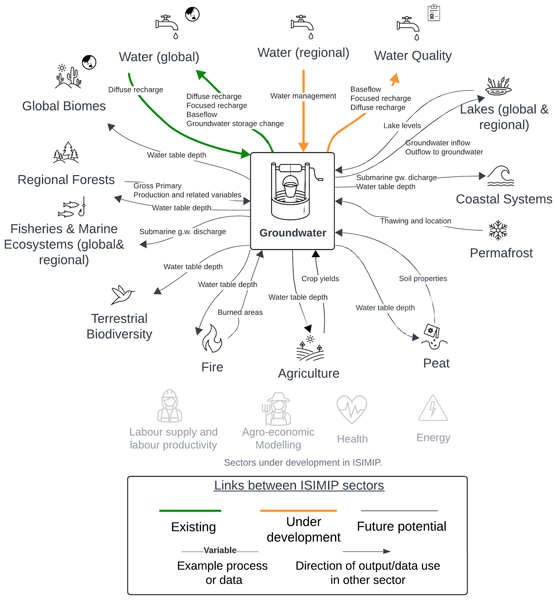
Here we describe a collaborative effort to improve predictions of how climate change will affect groundwater. The ISIMIP (The Inter-Sectoral Impact Model Intercomparison Project) groundwater sector combines multiple global groundwater models to capture a range of possible outcomes and reduce uncertainty. Initial comparisons reveal significant differences between models in key metrics like water table depth and recharge rates, highlighting the need for structured model intercomparisons.
Stefan Poll, Paul Rigor, Slavko Brdar, Ha Thi Minh Ho-Hagemann, Carl Hartick, Marco van Hulten, Ana Gonzalez-Nicolas, Johannes Keller, Daniel Caviedes-Voullieme, Harrie-Jan Hendricks-Franssen, Klaus Goergen, and Stefan Kollet
EGUsphere, https://doi.org/10.5194/egusphere-2025-5468, https://doi.org/10.5194/egusphere-2025-5468, 2025
This preprint is open for discussion and under review for Hydrology and Earth System Sciences (HESS).
Short summary
Short summary
This paper presents TSMP2, a new version of an regional Earth system model that allows to simulate and analyze the complex interactions within terrestrial ecosystems from groundwater to atmosphere. TSMP2 links an atmospheric, a land surface model and an hydrological model through an external coupler and is fully open-source. We describe the TSMP2 model system, present the impact of coupling approaches, and outline our development strategy along with technical and performance aspects.
Peyman Abbaszadeh, Fadji Zaouna Maina, Chen Yang, Dan Rosen, Sujay Kumar, Matthew Rodell, and Reed Maxwell
Hydrol. Earth Syst. Sci., 29, 5429–5452, https://doi.org/10.5194/hess-29-5429-2025, https://doi.org/10.5194/hess-29-5429-2025, 2025
Short summary
Short summary
To manage Earth's water resources effectively amid climate change, it is crucial to understand both surface and groundwater processes. We developed a new modeling system that combines two advanced tools, ParFlow and LIS (Land Information System)/Noah-MP, to better simulate both land surface and groundwater interactions. By testing this integrated model in the Upper Colorado River Basin, we found it improves predictions of hydrologic processes, especially in complex terrains.
Zhongwang Wei, Qingchen Xu, Fan Bai, Xionghui Xu, Zixin Wei, Wenzong Dong, Hongbin Liang, Nan Wei, Xingjie Lu, Lu Li, Shupeng Zhang, Hua Yuan, Laibao Liu, and Yongjiu Dai
Geosci. Model Dev., 18, 6517–6540, https://doi.org/10.5194/gmd-18-6517-2025, https://doi.org/10.5194/gmd-18-6517-2025, 2025
Short summary
Short summary
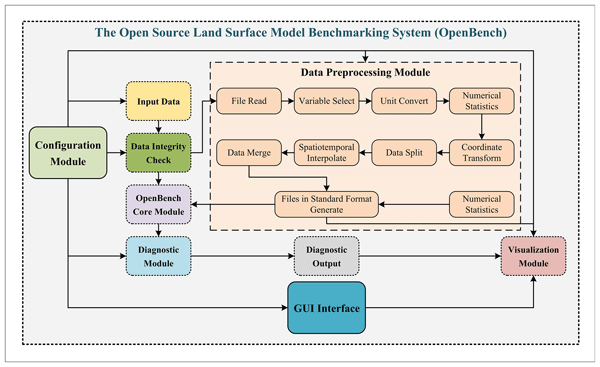
Land surface models are used for simulating how Earth's surface interacts with the atmosphere. As models grow more complex and detailed, researchers need better tools to evaluate their performance. OpenBench, a new software system that makes the evaluation process more comprehensive and efficient, stands out by incorporating various factors and working with data at any scale, enabling scientists to incorporate new types of models and measurements as our understanding of Earth's systems evolves.
Shuyang Guo, Yongjiu Dai, Hua Yuan, and Hongbin Liang
The Cryosphere, 19, 3553–3570, https://doi.org/10.5194/tc-19-3553-2025, https://doi.org/10.5194/tc-19-3553-2025, 2025
Short summary
Short summary
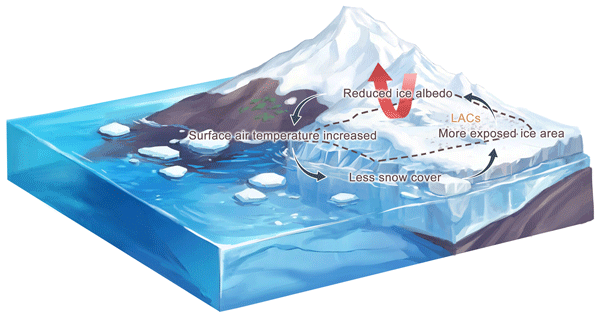
The Snow, Ice, and Aerosol Radiation Model version 4 has only been used to evaluate bare-ice albedo in land surface models, with necessary ice property data lacking quality control. We integrated this model into our land surface model and improved bare-ice properties using quality-controlled satellite data. Our findings show regional warming and reduced snow cover in Greenland’s bare-ice region, driven by changes in bare-ice properties through bare-ice–snow albedo feedback.
Shulei Zhang, Hongbin Liang, Fang Li, Xingjie Lu, and Yongjiu Dai
Hydrol. Earth Syst. Sci., 29, 3119–3143, https://doi.org/10.5194/hess-29-3119-2025, https://doi.org/10.5194/hess-29-3119-2025, 2025
Short summary
Short summary
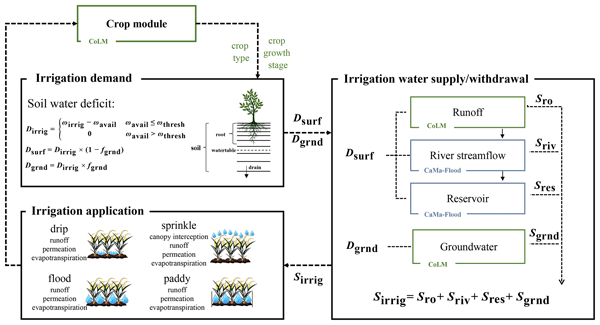
This study enhances irrigation modeling in the Common Land Model by capturing the full irrigation process, detailing water supplies from various sources, and enabling bidirectional coupling between water demand and supply. The proposed model accurately simulates irrigation water withdrawals, energy fluxes, river flow, and crop yields. It offers insights into irrigation-related climate impacts and water scarcity, contributing to sustainable water management and improved Earth system modeling.
Chen Yang, Zitong Jia, Wenjie Xu, Zhongwang Wei, Xiaolang Zhang, Yiguang Zou, Jeffrey McDonnell, Laura Condon, Yongjiu Dai, and Reed Maxwell
Hydrol. Earth Syst. Sci., 29, 2201–2218, https://doi.org/10.5194/hess-29-2201-2025, https://doi.org/10.5194/hess-29-2201-2025, 2025
Short summary
Short summary
We developed the first high-resolution, integrated surface water–groundwater hydrologic model of the entirety of continental China using ParFlow. The model shows good performance in terms of streamflow and water table depth when compared to global data products and observations. It is essential for water resources management and decision-making in China within a consistent framework in the changing world. It also has significant implications for similar modeling in other places in the world.
Bamidele Oloruntoba, Stefan Kollet, Carsten Montzka, Harry Vereecken, and Harrie-Jan Hendricks Franssen
Hydrol. Earth Syst. Sci., 29, 1659–1683, https://doi.org/10.5194/hess-29-1659-2025, https://doi.org/10.5194/hess-29-1659-2025, 2025
Short summary
Short summary
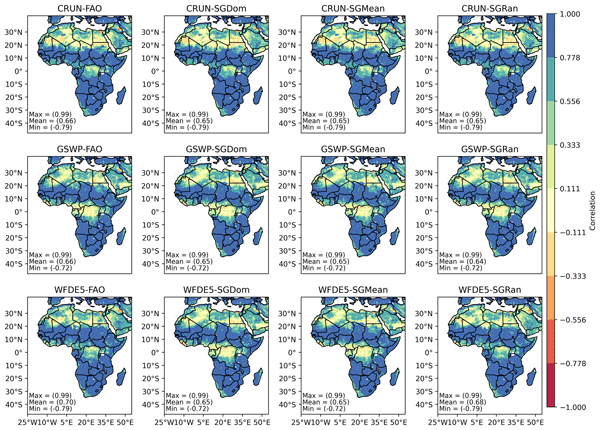
We studied how soil and weather data affect land model simulations over Africa. By combining soil data processed in different ways with weather data of varying time intervals, we found that weather inputs had a greater impact on water processes than soil data type. However, the way soil data were processed became crucial when paired with high-frequency weather inputs, showing that detailed weather data can improve local and regional predictions of how water moves and interacts with the land.
Gaosong Shi, Wenye Sun, Wei Shangguan, Zhongwang Wei, Hua Yuan, Lu Li, Xiaolin Sun, Ye Zhang, Hongbin Liang, Danxi Li, Feini Huang, Qingliang Li, and Yongjiu Dai
Earth Syst. Sci. Data, 17, 517–543, https://doi.org/10.5194/essd-17-517-2025, https://doi.org/10.5194/essd-17-517-2025, 2025
Short summary
Short summary
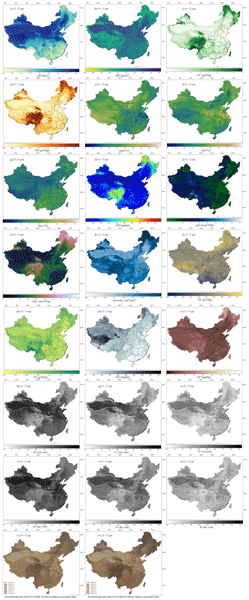
In this study, we developed the second version of China's high-resolution soil information grid using legacy soil samples and advanced machine learning. This version predicts over 20 soil properties at six depths, providing accurate soil variation maps across China. It outperforms previous versions and global products, offering valuable data for hydrological and ecological analyses and Earth system modelling, enhancing our understanding of soil roles in environmental processes.
Elena Xoplaki, Florian Ellsäßer, Jens Grieger, Katrin M. Nissen, Joaquim G. Pinto, Markus Augenstein, Ting-Chen Chen, Hendrik Feldmann, Petra Friederichs, Daniel Gliksman, Laura Goulier, Karsten Haustein, Jens Heinke, Lisa Jach, Florian Knutzen, Stefan Kollet, Jürg Luterbacher, Niklas Luther, Susanna Mohr, Christoph Mudersbach, Christoph Müller, Efi Rousi, Felix Simon, Laura Suarez-Gutierrez, Svenja Szemkus, Sara M. Vallejo-Bernal, Odysseas Vlachopoulos, and Frederik Wolf
Nat. Hazards Earth Syst. Sci., 25, 541–564, https://doi.org/10.5194/nhess-25-541-2025, https://doi.org/10.5194/nhess-25-541-2025, 2025
Short summary
Short summary
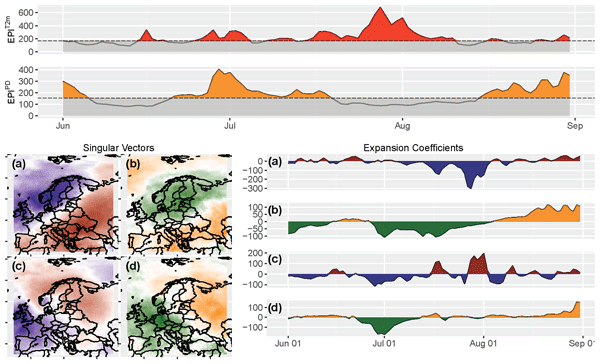
Europe frequently experiences compound events, with major impacts. We investigate these events’ interactions, characteristics, and changes over time, focusing on socio-economic impacts in Germany and central Europe. Highlighting 2018’s extreme events, this study reveals impacts on water, agriculture, and forests and stresses the need for impact-focused definitions and better future risk quantification to support adaptation planning.
Max Berkelhammer, Gerald F. M. Page, Frank Zurek, Christopher Still, Mariah S. Carbone, William Talavera, Laura Hildebrand, James Byron, Kyle Inthabandith, Angellica Kucinski, Melissa Carlson, Kelsey Foss, Wendy Brown, Rosemary W. H. Carroll, Austin Simonpietri, Marshall Worsham, Ian Breckheimer, Anna Ryken, Reed Maxwell, David Gochis, Mark S. Raleigh, Eric Small, and Kenneth H. Williams
Hydrol. Earth Syst. Sci., 29, 701–718, https://doi.org/10.5194/hess-29-701-2025, https://doi.org/10.5194/hess-29-701-2025, 2025
Short summary
Short summary
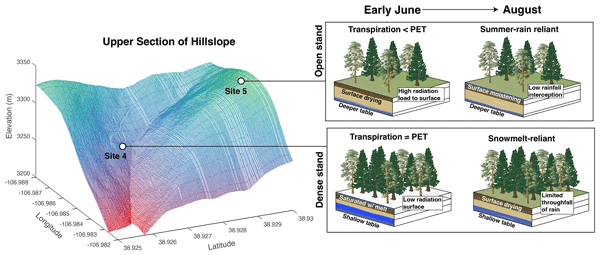
Warming in montane systems is affecting the snowmelt input amount. At the global scale, this will impact subalpine forests that rely on spring snowmelt to support their water demands. We use a network of sensors across a hillslope in the Upper Colorado Basin to show that the changing spring snowpack has a more pronounced impact on dense forest stands, while open stands show a higher reliance on summer rain and are less sensitive to significant changes in snow.
Jiahao Shi, Hua Yuan, Wanyi Lin, Wenzong Dong, Hongbin Liang, Zhuo Liu, Jianxin Zeng, Haolin Zhang, Nan Wei, Zhongwang Wei, Shupeng Zhang, Shaofeng Liu, Xingjie Lu, and Yongjiu Dai
Earth Syst. Sci. Data, 17, 117–134, https://doi.org/10.5194/essd-17-117-2025, https://doi.org/10.5194/essd-17-117-2025, 2025
Short summary
Short summary
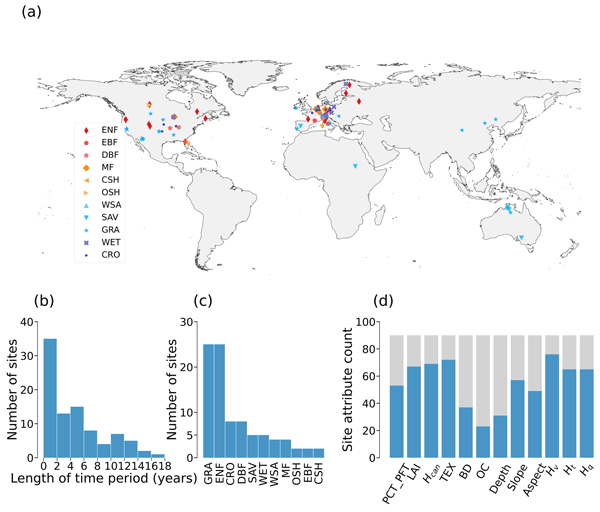
Flux tower data are widely recognized as benchmarking data for land surface models, but insufficient emphasis on and deficiency in site attribute data limits their true value. We collect site-observed vegetation, soil, and topography data from various sources. The final dataset encompasses 90 sites globally, with relatively complete site attribute data and high-quality flux validation data. This work has provided more reliable site attribute data, benefiting land surface model development.
Benjamin D. West, Reed M. Maxwell, and Laura E. Condon
Hydrol. Earth Syst. Sci., 29, 245–259, https://doi.org/10.5194/hess-29-245-2025, https://doi.org/10.5194/hess-29-245-2025, 2025
Short summary
Short summary
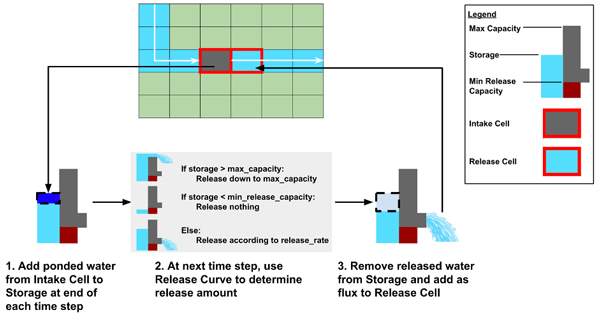
This article describes the addition of reservoirs to the hydrologic model ParFlow. ParFlow is particularly good at helping us understand some of the broader drivers behind different parts of the water cycle. By having reservoirs in such a model, we hope to be able to better understand both our impacts on the environment and how to adjust our management of reservoirs to changing conditions.
Florian Knutzen, Paul Averbeck, Caterina Barrasso, Laurens M. Bouwer, Barry Gardiner, José M. Grünzweig, Sabine Hänel, Karsten Haustein, Marius Rohde Johannessen, Stefan Kollet, Mortimer M. Müller, Joni-Pekka Pietikäinen, Karolina Pietras-Couffignal, Joaquim G. Pinto, Diana Rechid, Efi Rousi, Ana Russo, Laura Suarez-Gutierrez, Sarah Veit, Julian Wendler, Elena Xoplaki, and Daniel Gliksman
Nat. Hazards Earth Syst. Sci., 25, 77–117, https://doi.org/10.5194/nhess-25-77-2025, https://doi.org/10.5194/nhess-25-77-2025, 2025
Short summary
Short summary
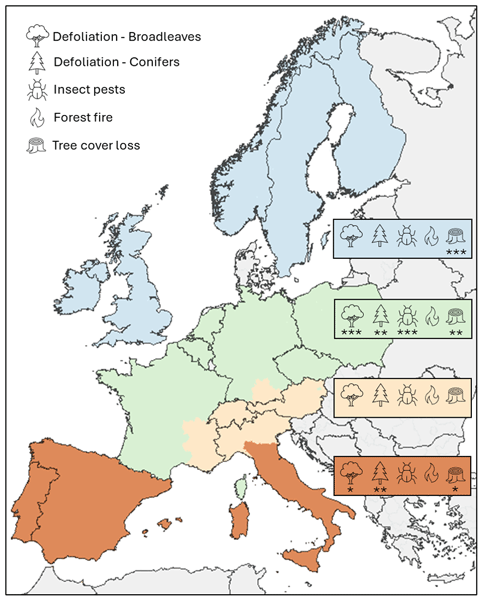
Our research, involving 22 European scientists, investigated drought and heat impacts on forests in 2018–2022. Findings reveal that climate extremes are intensifying, with central Europe being most severely impacted. The southern region showed resilience due to historical drought exposure, while northern and Alpine areas experienced emerging or minimal impacts. The study highlights the need for region-specific strategies, improved data collection, and sustainable practices to safeguard forests.
Yangzi Che, Xuecao Li, Xiaoping Liu, Yuhao Wang, Weilin Liao, Xianwei Zheng, Xucai Zhang, Xiaocong Xu, Qian Shi, Jiajun Zhu, Honghui Zhang, Hua Yuan, and Yongjiu Dai
Earth Syst. Sci. Data, 16, 5357–5374, https://doi.org/10.5194/essd-16-5357-2024, https://doi.org/10.5194/essd-16-5357-2024, 2024
Short summary
Short summary
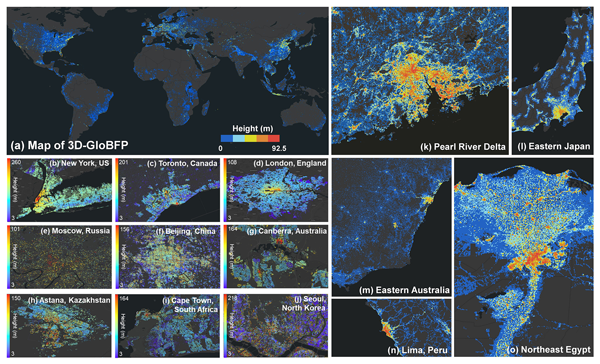
Most existing building height products are limited with respect to either spatial resolution or coverage, not to mention the spatial heterogeneity introduced by global building forms. Using Earth Observation (EO) datasets for 2020, we developed a global height dataset at the individual building scale. The dataset provides spatially explicit information on 3D building morphology, supporting both macro- and microanalysis of urban areas.

Robert Hull, Elena Leonarduzzi, Luis De La Fuente, Hoang Viet Tran, Andrew Bennett, Peter Melchior, Reed M. Maxwell, and Laura E. Condon
Hydrol. Earth Syst. Sci., 28, 4685–4713, https://doi.org/10.5194/hess-28-4685-2024, https://doi.org/10.5194/hess-28-4685-2024, 2024
Short summary
Short summary
Large-scale hydrologic simulators are a needed tool to explore complex watershed processes and how they may evolve with a changing climate. However, calibrating them can be difficult because they are costly to run and have many unknown parameters. We implement a state-of-the-art approach to model calibration using neural networks with a set of experiments based on streamflow in the upper Colorado River basin.
Bjorn Stevens, Stefan Adami, Tariq Ali, Hartwig Anzt, Zafer Aslan, Sabine Attinger, Jaana Bäck, Johanna Baehr, Peter Bauer, Natacha Bernier, Bob Bishop, Hendryk Bockelmann, Sandrine Bony, Guy Brasseur, David N. Bresch, Sean Breyer, Gilbert Brunet, Pier Luigi Buttigieg, Junji Cao, Christelle Castet, Yafang Cheng, Ayantika Dey Choudhury, Deborah Coen, Susanne Crewell, Atish Dabholkar, Qing Dai, Francisco Doblas-Reyes, Dale Durran, Ayoub El Gaidi, Charlie Ewen, Eleftheria Exarchou, Veronika Eyring, Florencia Falkinhoff, David Farrell, Piers M. Forster, Ariane Frassoni, Claudia Frauen, Oliver Fuhrer, Shahzad Gani, Edwin Gerber, Debra Goldfarb, Jens Grieger, Nicolas Gruber, Wilco Hazeleger, Rolf Herken, Chris Hewitt, Torsten Hoefler, Huang-Hsiung Hsu, Daniela Jacob, Alexandra Jahn, Christian Jakob, Thomas Jung, Christopher Kadow, In-Sik Kang, Sarah Kang, Karthik Kashinath, Katharina Kleinen-von Königslöw, Daniel Klocke, Uta Kloenne, Milan Klöwer, Chihiro Kodama, Stefan Kollet, Tobias Kölling, Jenni Kontkanen, Steve Kopp, Michal Koran, Markku Kulmala, Hanna Lappalainen, Fakhria Latifi, Bryan Lawrence, June Yi Lee, Quentin Lejeun, Christian Lessig, Chao Li, Thomas Lippert, Jürg Luterbacher, Pekka Manninen, Jochem Marotzke, Satoshi Matsouoka, Charlotte Merchant, Peter Messmer, Gero Michel, Kristel Michielsen, Tomoki Miyakawa, Jens Müller, Ramsha Munir, Sandeep Narayanasetti, Ousmane Ndiaye, Carlos Nobre, Achim Oberg, Riko Oki, Tuba Özkan-Haller, Tim Palmer, Stan Posey, Andreas Prein, Odessa Primus, Mike Pritchard, Julie Pullen, Dian Putrasahan, Johannes Quaas, Krishnan Raghavan, Venkatachalam Ramaswamy, Markus Rapp, Florian Rauser, Markus Reichstein, Aromar Revi, Sonakshi Saluja, Masaki Satoh, Vera Schemann, Sebastian Schemm, Christina Schnadt Poberaj, Thomas Schulthess, Cath Senior, Jagadish Shukla, Manmeet Singh, Julia Slingo, Adam Sobel, Silvina Solman, Jenna Spitzer, Philip Stier, Thomas Stocker, Sarah Strock, Hang Su, Petteri Taalas, John Taylor, Susann Tegtmeier, Georg Teutsch, Adrian Tompkins, Uwe Ulbrich, Pier-Luigi Vidale, Chien-Ming Wu, Hao Xu, Najibullah Zaki, Laure Zanna, Tianjun Zhou, and Florian Ziemen
Earth Syst. Sci. Data, 16, 2113–2122, https://doi.org/10.5194/essd-16-2113-2024, https://doi.org/10.5194/essd-16-2113-2024, 2024
Short summary
Short summary
To manage Earth in the Anthropocene, new tools, new institutions, and new forms of international cooperation will be required. Earth Virtualization Engines is proposed as an international federation of centers of excellence to empower all people to respond to the immense and urgent challenges posed by climate change.
Liubov Poshyvailo-Strube, Niklas Wagner, Klaus Goergen, Carina Furusho-Percot, Carl Hartick, and Stefan Kollet
Earth Syst. Dynam., 15, 167–189, https://doi.org/10.5194/esd-15-167-2024, https://doi.org/10.5194/esd-15-167-2024, 2024
Short summary
Short summary
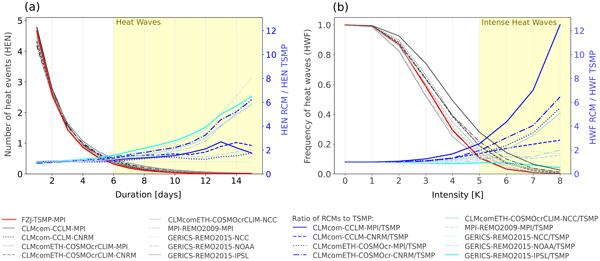
Groundwater (GW) representation is simplified in most regional climate models. Here, we introduce a unique Terrestrial Systems Modeling Platform (TSMP) dataset with an explicit representation of GW, in the context of dynamical downscaling of GCMs for climate change studies. We compare the heat events statistics of TSMP and the CORDEX ensemble. Our results show that TSMP systematically simulates fewer heat waves, and they are shorter and less intense.
Zbigniew P. Piotrowski, Jaro Hokkanen, Daniel Caviedes-Voullieme, Olaf Stein, and Stefan Kollet
EGUsphere, https://doi.org/10.5194/egusphere-2023-1079, https://doi.org/10.5194/egusphere-2023-1079, 2023
Preprint withdrawn
Short summary
Short summary
The computer programs capable of simulation of Earth system components evolve, adapting new fundamental science concepts and more observational data on more and more powerful computer hardware. Adaptation of a large scientific program to a new type of hardware is costly. In this work we propose cheap and simple but effective strategy that enable computation using graphic processing units, based on automated program code modification. This results in better resolution and/or longer predictions.

Tobias Tesch, Stefan Kollet, and Jochen Garcke
Geosci. Model Dev., 16, 2149–2166, https://doi.org/10.5194/gmd-16-2149-2023, https://doi.org/10.5194/gmd-16-2149-2023, 2023
Short summary
Short summary
A recent statistical approach for studying relations in the Earth system is to train deep learning (DL) models to predict Earth system variables given one or several others and use interpretable DL to analyze the relations learned by the models. Here, we propose to combine the approach with a theorem from causality research to ensure that the deep learning model learns causal rather than spurious relations. As an example, we apply the method to study soil-moisture–precipitation coupling.

Bibi S. Naz, Wendy Sharples, Yueling Ma, Klaus Goergen, and Stefan Kollet
Geosci. Model Dev., 16, 1617–1639, https://doi.org/10.5194/gmd-16-1617-2023, https://doi.org/10.5194/gmd-16-1617-2023, 2023
Short summary
Short summary
It is challenging to apply a high-resolution integrated land surface and groundwater model over large spatial scales. In this paper, we demonstrate the application of such a model over a pan-European domain at 3 km resolution and perform an extensive evaluation of simulated water states and fluxes by comparing with in situ and satellite data. This study can serve as a benchmark and baseline for future studies of climate change impact projections and for hydrological forecasting.
Mohamed Saadi, Carina Furusho-Percot, Alexandre Belleflamme, Ju-Yu Chen, Silke Trömel, and Stefan Kollet
Nat. Hazards Earth Syst. Sci., 23, 159–177, https://doi.org/10.5194/nhess-23-159-2023, https://doi.org/10.5194/nhess-23-159-2023, 2023
Short summary
Short summary
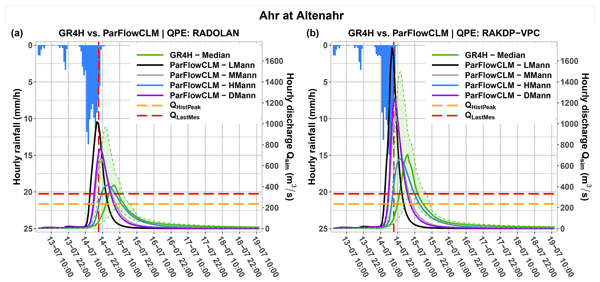
On 14 July 2021, heavy rainfall fell over central Europe, causing considerable damage and human fatalities. We analyzed how accurate our estimates of rainfall and peak flow were for these flooding events in western Germany. We found that the rainfall estimates from radar measurements were improved by including polarimetric variables and their vertical gradients. Peak flow estimates were highly uncertain due to uncertainties in hydrological model parameters and rainfall measurements.
Aniket Gupta, Alix Reverdy, Jean-Martial Cohard, Basile Hector, Marc Descloitres, Jean-Pierre Vandervaere, Catherine Coulaud, Romain Biron, Lucie Liger, Reed Maxwell, Jean-Gabriel Valay, and Didier Voisin
Hydrol. Earth Syst. Sci., 27, 191–212, https://doi.org/10.5194/hess-27-191-2023, https://doi.org/10.5194/hess-27-191-2023, 2023
Short summary
Short summary
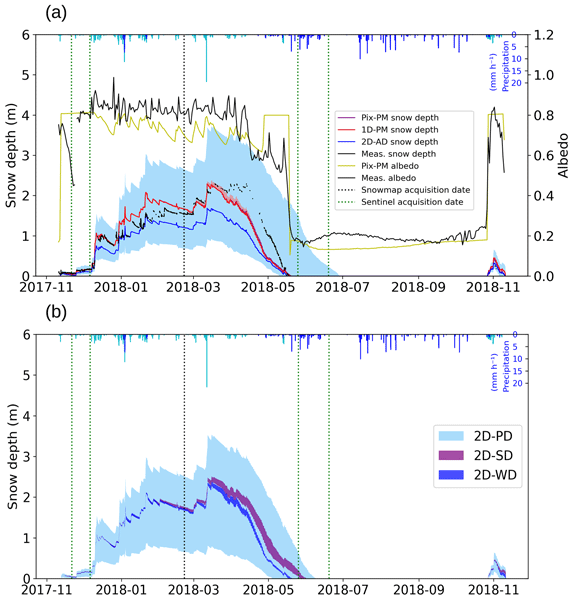
Patchy snow cover during spring impacts mountainous ecosystems on a large range of spatio-temporal scales. A hydrological model simulated such snow patchiness at 10 m resolution. Slope and orientation controls precipitation, radiation, and wind generate differences in snowmelt, subsurface storage, streamflow, and evapotranspiration. The snow patchiness increases the duration of the snowmelt to stream and subsurface storage, which sustains the plants and streamflow later in the summer.
Qingliang Li, Gaosong Shi, Wei Shangguan, Vahid Nourani, Jianduo Li, Lu Li, Feini Huang, Ye Zhang, Chunyan Wang, Dagang Wang, Jianxiu Qiu, Xingjie Lu, and Yongjiu Dai
Earth Syst. Sci. Data, 14, 5267–5286, https://doi.org/10.5194/essd-14-5267-2022, https://doi.org/10.5194/essd-14-5267-2022, 2022
Short summary
Short summary
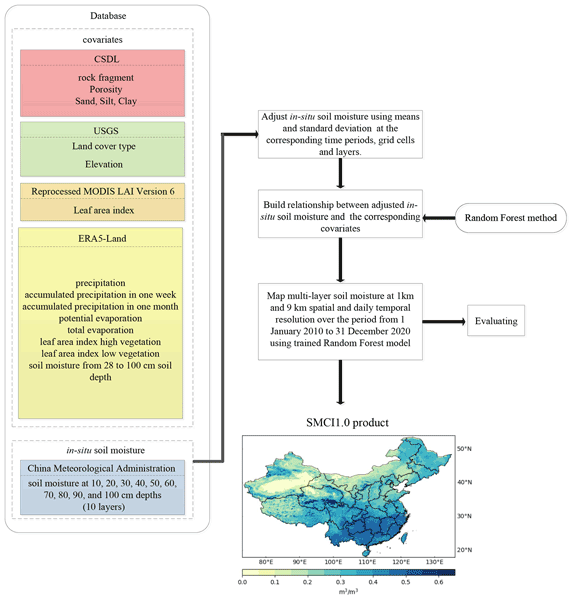
SMCI1.0 is a 1 km resolution dataset of daily soil moisture over China for 2000–2020 derived through machine learning trained with in situ measurements of 1789 stations, meteorological forcings, and land surface variables. It contains 10 soil layers with 10 cm intervals up to 100 cm deep. Evaluated by in situ data, the error (ubRMSE) ranges from 0.045 to 0.051, and the correlation (R) range is 0.866-0.893. Compared with ERA5-Land, SMAP-L4, and SoMo.ml, SIMI1.0 has higher accuracy and resolution.
Robert Hull, Elena Leonarduzzi, Luis De La Fuente, Hoang Viet Tran, Andrew Bennett, Peter Melchior, Reed M. Maxwell, and Laura E. Condon
Hydrol. Earth Syst. Sci. Discuss., https://doi.org/10.5194/hess-2022-345, https://doi.org/10.5194/hess-2022-345, 2022
Publication in HESS not foreseen
Short summary
Short summary
As the stress on water resources from climate change grows, we need models that represent water processes at the scale of counties, states, and even countries in order to make viable predictions about things will change. While such models are powerful, they can be cumbersome to deal with because they are so large. This research explores a novel way of increasing the efficiency of large-scale hydrologic models using an approach called Simulation-Based Inference.
Ziqi Lin, Yongjiu Dai, Umakant Mishra, Guocheng Wang, Wei Shangguan, Wen Zhang, and Zhangcai Qin
Earth Syst. Sci. Data Discuss., https://doi.org/10.5194/essd-2022-232, https://doi.org/10.5194/essd-2022-232, 2022
Manuscript not accepted for further review
Short summary
Short summary
Spatial soil organic carbon (SOC) data is critical for predictions in carbon climate feedbacks and future climate trends, but no conclusion has yet been reached on which dataset to be used for specific purposes. We evaluated the SOC estimates from five widely used global soil datasets and a regional permafrost dataset, and identify uncertainties of SOC estimates by region, biome, and data sources, hoping to help improve SOC/soil data in the future.
Tom Gleeson, Thorsten Wagener, Petra Döll, Samuel C. Zipper, Charles West, Yoshihide Wada, Richard Taylor, Bridget Scanlon, Rafael Rosolem, Shams Rahman, Nurudeen Oshinlaja, Reed Maxwell, Min-Hui Lo, Hyungjun Kim, Mary Hill, Andreas Hartmann, Graham Fogg, James S. Famiglietti, Agnès Ducharne, Inge de Graaf, Mark Cuthbert, Laura Condon, Etienne Bresciani, and Marc F. P. Bierkens
Geosci. Model Dev., 14, 7545–7571, https://doi.org/10.5194/gmd-14-7545-2021, https://doi.org/10.5194/gmd-14-7545-2021, 2021
Short summary
Short summary
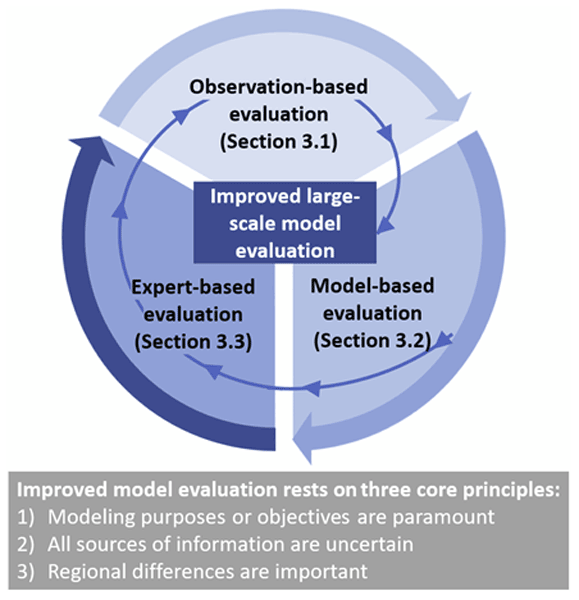
Groundwater is increasingly being included in large-scale (continental to global) land surface and hydrologic simulations. However, it is challenging to evaluate these simulations because groundwater is
hiddenunderground and thus hard to measure. We suggest using multiple complementary strategies to assess the performance of a model (
model evaluation).
Mary M. F. O'Neill, Danielle T. Tijerina, Laura E. Condon, and Reed M. Maxwell
Geosci. Model Dev., 14, 7223–7254, https://doi.org/10.5194/gmd-14-7223-2021, https://doi.org/10.5194/gmd-14-7223-2021, 2021
Short summary
Short summary
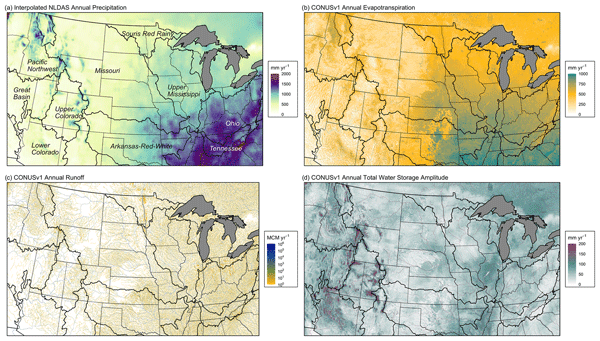
Modeling the hydrologic cycle at high resolution and at large spatial scales is an incredible opportunity and challenge for hydrologists. In this paper, we present the results of a high-resolution hydrologic simulation configured over the contiguous United States. We discuss simulated water fluxes through groundwater, soil, plants, and over land, and we compare model results to in situ observations and satellite products in order to build confidence and guide future model development.
Cited articles
Abbaszadeh, P., Zaouna Maina, F., Yang, C., Rosen, D., Kumar, S., Rodell, M., and Maxwell, R.: Coupling the ParFlow Integrated Hydrology Model within the NASA Land Information System: a case study over the Upper Colorado River Basin, Hydrol. Earth Syst. Sci., 29, 5429–5452, https://doi.org/10.5194/hess-29-5429-2025, 2025.
Akhter, T., Pokhrel, Y., Felfelani, F., Ducharne, A., Lo, M.-H., and Reinecke, R.: Implications of Lateral Groundwater Flow Across Varying Spatial Resolutions in Global Land Surface Modeling, Water Resour. Res., 61, e2024WR038523, https://doi.org/10.1029/2024WR038523, 2025.
Armstrong, W., Booth, T. C., Priestley, P., and Read, D. J.: The Relationship Between Soil Aeration, Stability and Growth of Sitka Spruce (Picea sitchensis (Bong.) Carr.) on Upland Peaty Gleys, J. Appl. Ecol., 13, 585–591, https://doi.org/10.2307/2401805, 1976.
Ashby, S. F. and Falgout, R. D.: A parallel multigrid preconditioned conjugate gradient algorithm for groundwater flow simulations, Nucl. Sci. Eng., 124, 145–159, 1996.
Bearup, L. A., Maxwell, R. M., Clow, D. W., and McCray, J. E.: Hydrological effects of forest transpiration loss in bark beetle-impacted watersheds, Nat. Clim. Change, 4, 481, https://doi.org/10.1038/nclimate2198, 2014.
Bearup, L. A., Maxwell, R. M., and McCray, J. E.: Hillslope response to insect-induced land-cover change: an integrated model of end-member mixing, Ecohydrology, 9, 195–203, 2016.
Bennett, A., Tran, H., De la Fuente, L., Triplett, A., Ma, Y., Melchior, P., Maxwell, R. M., and Condon, L. E.: Spatio-Temporal Machine Learning for Regional to Continental Scale Terrestrial Hydrology, J. Adv. Model. Earth Sy., 16, e2023MS004095, https://doi.org/10.1029/2023MS004095, 2024.
Caldwell, P. M., Mametjanov, A., Tang, Q., Van Roekel, L. P., Golaz, J.-C., Lin, W., Bader, D. C., Keen, N. D., Feng, Y., Jacob, R., Maltrud, M. E., Roberts, A. F., Taylor, M. A., Veneziani, M., Wang, H., Wolfe, J. D., Balaguru, K., Cameron-Smith, P., Dong, L., Klein, S. A., Leung, L. R., Li, H.-Y., Li, Q., Liu, X., Neale, R. B., Pinheiro, M., Qian, Y., Ullrich, P. A., Xie, S., Yang, Y., Zhang, Y., Zhang, K., and Zhou, T.: The DOE E3SM Coupled Model Version 1: Description and Results at High Resolution, J. Adv. Model. Earth Sy., 11, 4095–4146, https://doi.org/10.1029/2019MS001870, 2019.
Cannon, W. A.: Some Relations Between Root Characters, Ground Water and Species Distribution, Science, 37, 420–423, https://doi.org/10.1126/science.37.950.420, 1913.
Condon, L. E., Atchley, A. L., and Maxwell, R. M.: Evapotranspiration depletes groundwater under warming over the contiguous United States, Nat. Commun., 11, 873, https://doi.org/10.1038/s41467-020-14688-0, 2020.
Dai, Y., Zhang, S., Yuan, H., and Wei, N.: Modeling Variably Saturated Flow in Stratified Soils With Explicit Tracking of Wetting Front and Water Table Locations, Water Resour. Res., 55, 7939–7963, https://doi.org/10.1029/2019WR025368, 2019a.
Dai, Y., Yuan, H., Xin, Q., Wang, D., Shangguan, W., Zhang, S., Liu, S., and Wei, N.: Different representations of canopy structure – A large source of uncertainty in global land surface modeling, Agr. Forest Meteorol., 269–270, 119–135, https://doi.org/10.1016/j.agrformet.2019.02.006, 2019b.
Dai, Y. J., Zeng, X. B., Dickinson, R. E., Baker, I., Bonan, G. B., Bosilovich, M. G., Denning, A. S., Dirmeyer, P. A., Houser, P. R., Niu, G. Y., Oleson, K. W., Schlosser, C. A., and Yang, Z. L.: The Common Land Model, B. Am. Meteorol. Soc., 84, 1013–1023, https://doi.org/10.1175/Bams-84-8-1013, 2003.
de Graaf, I. E. M. and Stahl, K.: A model comparison assessing the importance of lateral groundwater flows at the global scale, Environ. Res. Lett., 17, https://doi.org/10.1088/1748-9326/ac50d2, 2022.
de Graaf, I. E. M., van Beek, R. L. P. H., Gleeson, T., Moosdorf, N., Schmitz, O., Sutanudjaja, E. H., and Bierkens, M. F. P.: A global-scale two-layer transient groundwater model: Development and application to groundwater depletion, Adv. Water Resour., 102, 53–67, https://doi.org/10.1016/j.advwatres.2017.01.011, 2017.
Defnet, A., Hasling, W., Condon, L., Johnson, A., Artavanis, G., Triplett, A., Lytle, W., and Maxwell, R.: hf_hydrodata: A Python package for accessing hydrologic simulations and observations across the United States, J. Open Source Softw., 9, 6623, https://doi.org/10.21105/joss.06623, 2024.
Eyring, V., Bony, S., Meehl, G. A., Senior, C. A., Stevens, B., Stouffer, R. J., and Taylor, K. E.: Overview of the Coupled Model Intercomparison Project Phase 6 (CMIP6) experimental design and organization, Geosci. Model Dev., 9, 1937–1958, https://doi.org/10.5194/gmd-9-1937-2016, 2016.
Fan, Y., Miguez-Macho, G., Weaver, C. P., Walko, R., and Robock, A.: Incorporating water table dynamics in climate modeling: 1. Water table observations and equilibrium water table simulations, J. Geophys. Res.-Atmos., 112, https://doi.org/10.1029/2006JD008111, 2007.
Fan, Y., Miguez-Macho, G., Jobbágy, E. G., Jackson, R. B., and Otero-Casal, C.: Hydrologic regulation of plant rooting depth, P. Natl. Acad. Sci. USA, 114, 10572–10577, https://doi.org/10.1073/pnas.1712381114, 2017.
Fan, Y., Clark, M., Lawrence, D. M., Swenson, S., Band, L. E., Brantley, S. L., Brooks, P. D., Dietrich, W. E., Flores, A., Grant, G., Kirchner, J. W., Mackay, D. S., McDonnell, J. J., Milly, P. C. D., Sullivan, P. L., Tague, C., Ajami, H., Chaney, N., Hartmann, A., Hazenberg, P., McNamara, J., Pelletier, J., Perket, J., Rouholahnejad-Freund, E., Wagener, T., Zeng, X., Beighley, E., Buzan, J., Huang, M., Livneh, B., Mohanty, B. P., Nijssen, B., Safeeq, M., Shen, C., van Verseveld, W., Volk, J., and Yamazaki, D.: Hillslope Hydrology in Global Change Research and Earth System Modeling, Water Resour. Res., 55, 1737–1772, https://doi.org/10.1029/2018wr023903, 2019.
Fang, Y., Leung, L. R., Koven, C. D., Bisht, G., Detto, M., Cheng, Y., McDowell, N., Muller-Landau, H., Wright, S. J., and Chambers, J. Q.: Modeling the topographic influence on aboveground biomass using a coupled model of hillslope hydrology and ecosystem dynamics, Geosci. Model Dev., 15, 7879–7901, https://doi.org/10.5194/gmd-15-7879-2022, 2022.
Ferguson, I. M. and Maxwell, R. M.: Role of groundwater in watershed response and land surface feedbacks under climate change, Water Resour. Res., 46, https://doi.org/10.1029/2009WR008616, 2010.
Ferguson, I. M. and Maxwell, R. M.: Hydrologic and land-energy feedbacks of agricultural water management practices, Environ. Res. Lett., 6, 014006, https://doi.org/10.1088/1748-9326/6/1/014006, 2011.
Ferguson, I. M. and Maxwell, R. M.: Human impacts on terrestrial hydrology: climate change versus pumping and irrigation, Environ. Res. Lett., 7, 044022, https://doi.org/10.1088/1748-9326/7/4/044022, 2012.
Ferguson, I. M., Jefferson, J. L., Maxwell, R. M., and Kollet, S. J.: Effects of root water uptake formulation on simulated water and energy budgets at local and basin scales, Environ. Earth Sci., 75, 316, https://doi.org/10.1007/s12665-015-5041-z, 2016.
Fisher, R. A., Muszala, S., Verteinstein, M., Lawrence, P., Xu, C., McDowell, N. G., Knox, R. G., Koven, C., Holm, J., Rogers, B. M., Spessa, A., Lawrence, D., and Bonan, G.: Taking off the training wheels: the properties of a dynamic vegetation model without climate envelopes, CLM4.5(ED), Geosci. Model Dev., 8, 3593–3619, https://doi.org/10.5194/gmd-8-3593-2015, 2015.
Follett, R. F., Allmaras, R. R., and Reichman, G. A.: Distribution of Corn Roots in Sandy Soil with a Declining Water Table, Agron. J., 66, 288–292, https://doi.org/10.2134/agronj1974.00021962006600020030x, 1974.
Forrester, M. M. and Maxwell, R. M.: Impact of Lateral Groundwater Flow and Subsurface Lower Boundary Conditions on Atmospheric Boundary Layer Development over Complex Terrain, J. Hydrometeorol., 21, 1133–1160, https://doi.org/10.1175/JHM-D-19-0029.1, 2020.
Gleeson, T., Marklund, L., Smith, L., and Manning, A. H.: Classifying the water table at regional to continental scales, Geophys. Res. Lett., 38, L05401, https://doi.org/10.1029/2010gl046427, 2011.
Gleeson, T., Moosdorf, N., Hartmann, J., and van Beek, L. P. H.: A glimpse beneath earth's surface: GLobal HYdrogeology MaPS (GLHYMPS) of permeability and porosity, Geophys. Res. Lett., 41, 3891–3898, https://doi.org/10.1002/2014gl059856, 2014.
Hokkanen, J., Kollet, S., Kraus, J., Herten, A., Hrywniak, M., and Pleiter, D.: Leveraging HPC accelerator architectures with modern techniques – hydrologic modeling on GPUs with ParFlow, Computat. Geosci., 25, 1579–1590, https://doi.org/10.1007/s10596-021-10051-4, 2021.
Hut, R., Drost, N., van de Giesen, N., van Werkhoven, B., Abdollahi, B., Aerts, J., Albers, T., Alidoost, F., Andela, B., Camphuijsen, J., Dzigan, Y., van Haren, R., Hutton, E., Kalverla, P., van Meersbergen, M., van den Oord, G., Pelupessy, I., Smeets, S., Verhoeven, S., de Vos, M., and Weel, B.: The eWaterCycle platform for open and FAIR hydrological collaboration, Geosci. Model Dev., 15, 5371–5390, https://doi.org/10.5194/gmd-15-5371-2022, 2022.
Ivanov, V. Y., Vivoni, E. R., Bras, R. L., and Entekhabi, D.: Catchment hydrologic response with a fully distributed triangulated irregular network model, Water Resour. Res., 40, https://doi.org/10.1029/2004WR003218, 2004.
Jia, Z., Chen, S., Fu, Y. H., Martín Belda, D., Wårlind, D., Olin, S., Xu, C., and Tang, J.: Advancing Ecohydrological Modelling: Coupling LPJ-GUESS with ParFlow for Integrated Vegetation and Surface-Subsurface Hydrology Simulations, EGUsphere [preprint], https://doi.org/10.5194/egusphere-2025-4064, 2025.
Jones, J. E. and Woodward, C. S.: Newton-Krylov-multigrid solvers for large-scale, highly heterogeneous, variably saturated flow problems, Adv. Water Resour., 24, 763–774, https://doi.org/10.1016/S0309-1708(00)00075-0, 2001.
Keune, J., Gasper, F., Goergen, K., Hense, A., Shrestha, P., Sulis, M., and Kollet, S.: Studying the influence of groundwater representations on land surface-atmosphere feedbacks during the European heat wave in 2003, J. Geophys. Res.-Atmos., 121, 13301–13325, https://doi.org/10.1002/2016jd025426, 2016.
Koirala, S., Yeh, P. J.-F., Hirabayashi, Y., Kanae, S., and Oki, T.: Global-scale land surface hydrologic modeling with the representation of water table dynamics, J. Geophys. Res.-Atmos., 119, 75–89, https://doi.org/10.1002/2013JD020398, 2014.
Kollet, S., Sulis, M., Maxwell, R. M., Paniconi, C., Putti, M., Bertoldi, G., Coon, E. T., Cordano, E., Endrizzi, S., Kikinzon, E., Mouche, E., Mügler, C., Park, Y.-J., Refsgaard, J. C., Stisen, S., and Sudicky, E.: The integrated hydrologic model intercomparison project, IH-MIP2: A second set of benchmark results to diagnose integrated hydrology and feedbacks, Water Resour. Res., 53, 867–890, https://doi.org/10.1002/2016WR019191, 2017.
Kollet, S. J. and Maxwell, R. M.: Integrated surface-groundwater flow modeling: A free-surface overland flow boundary condition in a parallel groundwater flow model, Adv. Water Resour., 29, 945–958, 2006.
Kollet, S. J. and Maxwell, R. M.: Capturing the influence of groundwater dynamics on land surface processes using an integrated, distributed watershed model, Water Resour. Res., 44, W02402, https://doi.org/10.1029/2007wr006004, 2008.
Kuffour, B. N. O., Engdahl, N. B., Woodward, C. S., Condon, L. E., Kollet, S., and Maxwell, R. M.: Simulating coupled surface–subsurface flows with ParFlow v3.5.0: capabilities, applications, and ongoing development of an open-source, massively parallel, integrated hydrologic model, Geosci. Model Dev., 13, 1373–1397, https://doi.org/10.5194/gmd-13-1373-2020, 2020.
Kumar, S. V., Reichle, R. H., Peters-Lidard, C. D., Koster, R. D., Zhan, X., Crow, W. T., Eylander, J. B., and Houser, P. R.: A land surface data assimilation framework using the land information system: Description and applications, Adv. Water Resour., 31, 1419–1432, https://doi.org/10.1016/j.advwatres.2008.01.013, 2008.
Kurtz, W., He, G., Kollet, S. J., Maxwell, R. M., Vereecken, H., and Hendricks Franssen, H.-J.: TerrSysMP–PDAF (version 1.0): a modular high-performance data assimilation framework for an integrated land surface–subsurface model, Geosci. Model Dev., 9, 1341–1360, https://doi.org/10.5194/gmd-9-1341-2016, 2016.
Lawrence, D. M., Fisher, R. A., Koven, C. D., Oleson, K. W., Swenson, S. C., Bonan, G., Collier, N., Ghimire, B., van Kampenhout, L., Kennedy, D., Kluzek, E., Lawrence, P. J., Li, F., Li, H., Lombardozzi, D., Riley, W. J., Sacks, W. J., Shi, M., Vertenstein, M., Wieder, W. R., Xu, C., Ali, A. A., Badger, A. M., Bisht, G., van den Broeke, M., Brunke, M. A., Burns, S. P., Buzan, J., Clark, M., Craig, A., Dahlin, K., Drewniak, B., Fisher, J. B., Flanner, M., Fox, A. M., Gentine, P., Hoffman, F., Keppel-Aleks, G., Knox, R., Kumar, S., Lenaerts, J., Leung, L. R., Lipscomb, W. H., Lu, Y., Pandey, A., Pelletier, J. D., Perket, J., Randerson, J. T., Ricciuto, D. M., Sanderson, B. M., Slater, A., Subin, Z. M., Tang, J., Thomas, R. Q., Val Martin, M., and Zeng, X.: The Community Land Model Version 5: Description of New Features, Benchmarking, and Impact of Forcing Uncertainty, J. Adv. Model. Earth Sy., 11, 4245–4287, https://doi.org/10.1029/2018MS001583, 2019.
Leung, L. R., Bader, D. C., Taylor, M. A., and McCoy, R. B.: An Introduction to the E3SM Special Collection: Goals, Science Drivers, Development, and Analysis, J. Adv. Model. Earth Sy., 12, e2019MS001821, https://doi.org/10.1029/2019MS001821, 2020.
Liao, C., Leung, L. R., Fang, Y., Tesfa, T., and Negron-Juarez, R.: Representing lateral groundwater flow from land to river in Earth system models, Geosci. Model Dev., 18, 4601–4624, https://doi.org/10.5194/gmd-18-4601-2025, 2025.
Liu, J., Yang, Z.-L., Jia, B., Wang, L., Wang, P., Xie, Z., and Shi, C.: Elucidating Dominant Factors Affecting Land Surface Hydrological Simulations of the Community Land Model over China, Adv. Atmos. Sci., 40, 235–250, https://doi.org/10.1007/s00376-022-2091-5, 2023.
Mackay, D. S., Roberts, D. E., Ewers, B. E., Sperry, J. S., McDowell, N. G., and Pockman, W. T.: Interdependence of chronic hydraulic dysfunction and canopy processes can improve integrated models of tree response to drought, Water Resour. Res., 51, 6156–6176, https://doi.org/10.1002/2015WR017244, 2015.
Maina, F. Z., Rosen, D., Abbaszadeh, P., Yang, C., Kumar, S. V., Rodell, M., and Maxwell, R.: Integrating the Interconnections Between Groundwater and Land Surface Processes Through the Coupled NASA Land Information System and ParFlow Environment, J. Adv. Model. Earth Sy., 17, e2024MS004415, https://doi.org/10.1029/2024MS004415, 2025.
Martin, M. H.: Conditions Affecting the Distribution of Mercurialis Perennis L. in Certain Cambridgeshire Woodlands, J. Ecol., 56, 777–793, https://doi.org/10.2307/2258106, 1968.
Maxwell, R. M.: A terrain-following grid transform and preconditioner for parallel, large-scale, integrated hydrologic modeling, Adv. Water Resour., 53, 109–117, https://doi.org/10.1016/j.advwatres.2012.10.001, 2013.
Maxwell, R. M. and Condon, L. E.: Connections between groundwater flow and transpiration partitioning, Science, 353, 377–380, 2016.
Maxwell, R. M. and Miller, N. L.: Development of a coupled land surface and groundwater model, J. Hydrometeorol., 6, 233–247, 2005.
Maxwell, R. M., Chow, F. K., and Kollet, S. J.: The groundwater–land-surface–atmosphere connection: Soil moisture effects on the atmospheric boundary layer in fully-coupled simulations, Adv. Water Resour., 30, 2447–2466, https://doi.org/10.1016/j.advwatres.2007.05.018, 2007.
Maxwell, R. M., Condon, L. E., and Kollet, S. J.: A high-resolution simulation of groundwater and surface water over most of the continental US with the integrated hydrologic model ParFlow v3, Geosci. Model Dev., 8, 923–937, https://doi.org/10.5194/gmd-8-923-2015, 2015.
Maxwell, R. M., Lundquist, J. K., Mirocha, J. D., Smith, S. G., Woodward, C. S., and Tompson, A. F. B.: Development of a Coupled Groundwater-Atmosphere Model, Mon. Weather Rev., 139, 96–116, https://doi.org/10.1175/2010mwr3392.1, 2011.
Maxwell, R. M., Putti, M., Meyerhoff, S., Delfs, J.-O., Ferguson, I. M., Ivanov, V., Kim, J., Kolditz, O., Kollet, S. J., Kumar, M., Lopez, S., Niu, J., Paniconi, C., Park, Y.-J., Phanikumar, M. S., Shen, C., Sudicky, E. A., and Sulis, M.: Surface-subsurface model intercomparison: A first set of benchmark results to diagnose integrated hydrology and feedbacks, Water Resour. Res., 50, 1531–1549, https://doi.org/10.1002/2013WR013725, 2014.
Miguez-Macho, G. and Fan, Y.: A global humidity index with lateral hydrologic flows, Nature, 644, 413–419, https://doi.org/10.1038/s41586-025-09359-3, 2025.
Mikkelson, K. M., Maxwell, R. M., Ferguson, I., Stednick, J. D., McCray, J. E., and Sharp, J. O.: Mountain pine beetle infestation impacts: modeling water and energy budgets at the hill-slope scale, Ecohydrology, 6, 64–72, https://doi.org/10.1002/eco.278, 2013.
Muñoz-Sabater, J., Dutra, E., Agustí-Panareda, A., Albergel, C., Arduini, G., Balsamo, G., Boussetta, S., Choulga, M., Harrigan, S., Hersbach, H., Martens, B., Miralles, D. G., Piles, M., Rodríguez-Fernández, N. J., Zsoter, E., Buontempo, C., and Thépaut, J.-N.: ERA5-Land: a state-of-the-art global reanalysis dataset for land applications, Earth Syst. Sci. Data, 13, 4349–4383, https://doi.org/10.5194/essd-13-4349-2021, 2021.
Niu, G.-Y., Paniconi, C., Troch, P. A., Scott, R. L., Durcik, M., Zeng, X., Huxman, T., and Goodrich, D. C.: An integrated modelling framework of catchment-scale ecohydrological processes: 1. Model description and tests over an energy-limited watershed, Ecohydrology, 7, 427–439, https://doi.org/10.1002/eco.1362, 2014.
Niu, G.-Y., Yang, Z.-L., Mitchell, K. E., Chen, F., Ek, M. B., Barlage, M., Kumar, A., Manning, K., Niyogi, D., Rosero, E., Tewari, M., and Xia, Y.: The community Noah land surface model with multiparameterization options (Noah-MP): 1. Model description and evaluation with local-scale measurements, J. Geophys. Res.-Atmos., 116, https://doi.org/10.1029/2010JD015139, 2011.
O'Neill, M. M. F., Tijerina, D. T., Condon, L. E., and Maxwell, R. M.: Assessment of the ParFlow–CLM CONUS 1.0 integrated hydrologic model: evaluation of hyper-resolution water balance components across the contiguous United States, Geosci. Model Dev., 14, 7223–7254, https://doi.org/10.5194/gmd-14-7223-2021, 2021.
Oleson, K. W., Niu, G. Y., Yang, Z. L., Lawrence, D. M., Thornton, P. E., Lawrence, P. J., Stöckli, R., Dickinson, R. E., Bonan, G. B., Levis, S., Dai, A., and Qian, T.: Improvements to the Community Land Model and their impact on the hydrological cycle, J. Geophys. Res.-Biogeo., 113, https://doi.org/10.1029/2007JG000563, 2008.
Osei-Kuffuor, D., Maxwell, R. M., and Woodward, C. S.: Improved numerical solvers for implicit coupling of subsurface and overland flow, Adv. Water Resour., 74, 185–195, https://doi.org/10.1016/j.advwatres.2014.09.006, 2014.
Poll, S., Rigor, P., van Hulten, M., Patakchi Yousefi, K., Caviedes Voullieme, D., Goergen, K., and Kollet, S. J.: The new version of the Terrestrial Systems Modeling Platform (TSMP2) based on ICON, eCLM, and ParFlow, AGU Fall Meeting Abstracts, A32F-01, 2024AGUFMA32F...01P, 2024.
Rahman, M., Sulis, M., and Kollet, S. J.: The subsurface-land surface-atmosphere connection under convective conditions, Adv. Water Resour., 83, 240–249, https://doi.org/10.1016/j.advwatres.2015.06.003, 2015.
Raupach, M. R.: Drag and drag partition on rough surfaces, Bound.-Lay. Meteorol., 60, 375–395, https://doi.org/10.1007/BF00155203, 1992.
Raupach, M. R.: Simplified expressions for vegetation roughness length and zero-plane displacement as functions of canopy height and area index, Bound.-Lay. Meteorol., 71, 211–216, https://doi.org/10.1007/BF00709229, 1994.
Reinecke, R., Foglia, L., Mehl, S., Trautmann, T., Cáceres, D., and Döll, P.: Challenges in developing a global gradient-based groundwater model (G3M v1.0) for the integration into a global hydrological model, Geosci. Model Dev., 12, 2401–2418, https://doi.org/10.5194/gmd-12-2401-2019, 2019.
Rihani, J. F., Chow, F. K., and Maxwell, R. M.: Isolating effects of terrain and soil moisture heterogeneity on the atmospheric boundary layer: Idealized simulations to diagnose land-atmosphere feedbacks, J. Adv. Model. Earth Sy., 7, 915–937, https://doi.org/10.1002/2014MS000371, 2015.
Rihani, J. F., Maxwell, R. M., and Chow, F. K.: Coupling groundwater and land surface processes: Idealized simulations to identify effects of terrain and subsurface heterogeneity on land surface energy fluxes, Water Resour. Res., 46, https://doi.org/10.1029/2010WR009111, 2010.
Scanlon, B. R., Zhang, Z., Save, H., Sun, A. Y., Müller Schmied, H., van Beek, L. P. H., Wiese, D. N., Wada, Y., Long, D., Reedy, R. C., Longuevergne, L., Döll, P., and Bierkens, M. F. P.: Global models underestimate large decadal declining and rising water storage trends relative to GRACE satellite data, P. Natl. Acad. Sci. USA, 115, E1080–E1089, https://doi.org/10.1073/pnas.1704665115, 2018.
Schenk, H. J. and Jackson, R. B.: Mapping the global distribution of deep roots in relation to climate and soil characteristics, Geoderma, 126, 129–140, https://doi.org/10.1016/j.geoderma.2004.11.018, 2005.
Seuffert, G., Gross, P., Simmer, C., and Wood, E. F.: The Influence of Hydrologic Modeling on the Predicted Local Weather: Two-Way Coupling of a Mesoscale Weather Prediction Model and a Land Surface Hydrologic Model, J. Hydrometeorol., 3, 505–523, https://doi.org/10.1175/1525-7541(2002)003<0505:TIOHMO>2.0.CO;2, 2002.
Shangguan, W., Dai, Y., Duan, Q., Liu, B., and Yuan, H.: A global soil data set for earth system modeling, J. Adv. Model. Earth Sy., 6, 249–263, https://doi.org/10.1002/2013ms000293, 2014.
Shen, C., Riley, W. J., Smithgall, K. R., Melack, J. M., and Fang, K.: The fan of influence of streams and channel feedbacks to simulated land surface water and carbon dynamics, Water Resour. Res., 52, 880–902, https://doi.org/10.1002/2015WR018086, 2016.
Shrestha, P., Sulis, M., Masbou, M., Kollet, S., and Simmer, C.: A Scale-Consistent Terrestrial Systems Modeling Platform Based on COSMO, CLM, and ParFlow, Mon. Weather Rev., 142, 3466–3483, https://doi.org/10.1175/MWR-D-14-00029.1, 2014.
Skamarock, W. C. and Klemp, J. B.: A time-split nonhydrostatic atmospheric model for weather research and forecasting applications, J. Comput. Phys., 227, 3465–3485, https://doi.org/10.1016/j.jcp.2007.01.037, 2008.
Smith, S., Ferguson, I., Engdahl, N., Gasper, F., Chennault, C., Triana, J. S. A., Avery, P., Rigor, P., Condon, L., Jourdain, S., Bennett, A., Artavanis, G., Maxwell, R., Kulkarni, K., Bansal, V., Beisman, J., de Rooij, R., Swilley, J., Lazzeri, D., Thompson, D., Coon, E., Bertolacci, I., Azeemi, M. F., and Wagner, N.: parflow/parflow: ParFlow Version 3.13.0 (v3.13.0), Zenodo [code], https://doi.org/10.5281/zenodo.10989198, 2024.
Sperry, J. S. and Hacke, U. G.: Desert shrub water relations with respect to soil characteristics and plant functional type, Funct. Ecol., 16, 367–378, https://doi.org/10.1046/j.1365-2435.2002.00628.x, 2002.
Sulis, M., Meyerhoff, S. B., Paniconi, C., Maxwell, R. M., Putti, M., and Kollet, S. J.: A comparison of two physics-based numerical models for simulating surface water–groundwater interactions, Adv. Water Resour., 33, 456–467, https://doi.org/10.1016/j.advwatres.2010.01.010, 2010.
Sulis, M., Williams, J. L., Shrestha, P., Diederich, M., Simmer, C., Kollet, S. J., and Maxwell, R. M.: Coupling Groundwater, Vegetation, and Atmospheric Processes: A Comparison of Two Integrated Models, J. Hydrometeorol., 18, 1489–1511, https://doi.org/10.1175/JHM-D-16-0159.1, 2017.
Sutanudjaja, E. H., van Beek, L. P. H., de Jong, S. M., van Geer, F. C., and Bierkens, M. F. P.: Calibrating a large-extent high-resolution coupled groundwater-land surface model using soil moisture and discharge data, Water Resour. Res., 50, 687–705, https://doi.org/10.1002/2013WR013807, 2014.
Tai, X., Mackay, D. S., Sperry, J. S., Brooks, P., Anderegg, W. R. L., Flanagan, L. B., Rood, S. B., and Hopkinson, C.: Distributed Plant Hydraulic and Hydrological Modeling to Understand the Susceptibility of Riparian Woodland Trees to Drought-Induced Mortality, Water Resour. Res., 54, 4901–4915, https://doi.org/10.1029/2018WR022801, 2018.
Tian, W., Li, X., Cheng, G.-D., Wang, X.-S., and Hu, B. X.: Coupling a groundwater model with a land surface model to improve water and energy cycle simulation, Hydrol. Earth Syst. Sci., 16, 4707–4723, https://doi.org/10.5194/hess-16-4707-2012, 2012.
Tran, H., Leonarduzzi, E., De la Fuente, L., Hull, R. B., Bansal, V., Chennault, C., Gentine, P., Melchior, P., Condon, L. E., and Maxwell, R. M.: Development of a Deep Learning Emulator for a Distributed Groundwater–Surface Water Model: ParFlow-ML, Water, 13, 3393, https://doi.org/10.3390/w13233393, 2021.
Valcke, S.: Highlights from a Workshop on the Latest Updates on Coupling Technologies and Coupled Applications in Earth System Modeling, B. Am. Meteorol. Soc., 103, E657–E664, https://doi.org/10.1175/BAMS-D-21-0045.1, 2022.
van den Hurk, B., Kim, H., Krinner, G., Seneviratne, S. I., Derksen, C., Oki, T., Douville, H., Colin, J., Ducharne, A., Cheruy, F., Viovy, N., Puma, M. J., Wada, Y., Li, W., Jia, B., Alessandri, A., Lawrence, D. M., Weedon, G. P., Ellis, R., Hagemann, S., Mao, J., Flanner, M. G., Zampieri, M., Materia, S., Law, R. M., and Sheffield, J.: LS3MIP (v1.0) contribution to CMIP6: the Land Surface, Snow and Soil moisture Model Intercomparison Project – aims, setup and expected outcome, Geosci. Model Dev., 9, 2809–2832, https://doi.org/10.5194/gmd-9-2809-2016, 2016.
Verkaik, J., Sutanudjaja, E. H., Oude Essink, G. H. P., Lin, H. X., and Bierkens, M. F. P.: GLOBGM v1.0: a parallel implementation of a 30 arcsec PCR-GLOBWB-MODFLOW global-scale groundwater model, Geosci. Model Dev., 17, 275–300, https://doi.org/10.5194/gmd-17-275-2024, 2024.
Vogelbacher, A., Afshar, M. H., Aminzadeh, M., Madani, K., AghaKouchak, A., and Shokri, N.: A global analysis of the influence of shallow and deep groundwater tables on relationships between environmental parameters and heatwaves inferred from machine learning models, Environ. Res., 123354, https://doi.org/10.1016/j.envres.2025.123354, 2025.
Wagg, J. B.: Origin and development of White Spruce root-forms, https://search.library.uvic.ca/permalink/01VIC_INST/qemhdp/alma991179863807291 (last access: 26 February 2026), 1967.
West, B. D., Maxwell, R. M., and Condon, L. E.: A scalable and modular reservoir implementation for large-scale integrated hydrologic simulations, Hydrol. Earth Syst. Sci., 29, 245–259, https://doi.org/10.5194/hess-29-245-2025, 2025.
Williams, J. L. and Maxwell, R. M.: Propagating Subsurface Uncertainty to the Atmosphere Using Fully Coupled Stochastic Simulations, J. Hydrometeorol., 12, 690–701, https://doi.org/10.1175/2011JHM1363.1, 2011.
Xu, G.-Q. and Li, Y.: Rooting depth and leaf hydraulic conductance in the xeric tree Haloxyolon ammodendron growing at sites of contrasting soil texture, Funct. Plant Biol., 35, 1234–1242, https://doi.org/10.1071/fp08175, 2008.
Xue, M., Droegemeier, K. K., and Wong, V.: The Advanced Regional Prediction System (ARPS) – A multi-scale nonhydrostatic atmospheric simulation and prediction model. Part I: Model dynamics and verification, Meteorol. Atmos. Phys., 75, 161–193, https://doi.org/10.1007/s007030070003, 2000.
Xue, M., Droegemeier, K. K., Wong, V., Shapiro, A., Brewster, K., Carr, F., Weber, D., Liu, Y., and Wang, D.: The Advanced Regional Prediction System (ARPS) – A multi-scale nonhydrostatic atmospheric simulation and prediction tool. Part II: Model physics and applications, Meteorol. Atmos. Phys., 76, 143–165, https://doi.org/10.1007/s007030170027, 2001.
Yang, C.: ParFlow-CoLM, Zenodo [code], https://doi.org/10.5281/zenodo.16879407, 2025.
Yang, C., Li, H.-Y., Fang, Y., Cui, C., Wang, T., Zheng, C., Leung, L. R., Maxwell, R. M., Zhang, Y.-K., and Yang, X.: Effects of Groundwater Pumping on Ground Surface Temperature: A Regional Modeling Study in the North China Plain, J. Geophys. Res.-Atmos., 125, e2019JD031764, https://doi.org/10.1029/2019jd031764, 2020.
Yang, C., Maxwell, R., McDonnell, J., Yang, X., and Tijerina-Kreuzer, D.: The Role of Topography in Controlling Evapotranspiration Age, J. Geophys. Res.-Atmos., 128, e2023JD039228, https://doi.org/10.1029/2023JD039228, 2023.
Yang, C., Jia, Z., Xu, W., Wei, Z., Zhang, X., Zou, Y., McDonnell, J., Condon, L., Dai, Y., and Maxwell, R.: CONCN: a high-resolution, integrated surface water–groundwater ParFlow modeling platform of continental China, Hydrol. Earth Syst. Sci., 29, 2201–2218, https://doi.org/10.5194/hess-29-2201-2025, 2025.
Yeh, P. J. F. and Eltahir, E. A. B.: Representation of Water Table Dynamics in a Land Surface Scheme. Part I: Model Development, J. Climate, 18, 1861–1880, https://doi.org/10.1175/JCLI3330.1, 2005.
York, J. P., Person, M., Gutowski, W. J., and Winter, T. C.: Putting aquifers into atmospheric simulation models: an example from the Mill Creek Watershed, northeastern Kansas, Adv. Water Resour., 25, 221–238, https://doi.org/10.1016/S0309-1708(01)00021-5, 2002.
Yuan, H. and Dai, Y.: Description of the Common Land Model (CoLM 2024), Sun Yat-sen University Press, Guangzhou, China, ISBN 978-7-306-08654-9, 2025.
Yuan, H., Dickinson, R. E., Dai, Y., Shaikh, M. J., Zhou, L., Shangguan, W., and Ji, D.: A 3D Canopy Radiative Transfer Model for Global Climate Modeling: Description, Validation, and Application, J. Climate, 27, 1168–1192, https://doi.org/10.1175/JCLI-D-13-00155.1, 2014.
Yuan, H., Dai, Y., Dickinson, R. E., Pinty, B., Shangguan, W., Zhang, S., Wang, L., and Zhu, S.: Reexamination and further development of two-stream canopy radiative transfer models for global land modeling, J. Adv. Model. Earth Sy., 9, 113–129, https://doi.org/10.1002/2016MS000773, 2017.
Zeng, Y. J., Xie, Z. H., Liu, S., Xie, J. B., Jia, B. H., Qin, P. H., and Gao, J. Q.: Global Land Surface Modeling Including Lateral Groundwater Flow, J. Adv. Model. Earth Sy., 10, 1882–1900, https://doi.org/10.1029/2018ms001304, 2018.
Short summary
Groundwater plays a key role in land–atmosphere water and energy exchange, yet it is often simplified in large-scale Earth system models. We review 20 years of efforts to couple the groundwater model ParFlow with land surface and atmospheric models, showing how groundwater dynamics shape terrestrial fluxes. We also present an updated coupling framework that enhances model performance and flexibility, and outline a modular strategy to guide future development.
Groundwater plays a key role in land–atmosphere water and energy exchange, yet it is often...


