
Articles | Volume 19, issue 3
https://doi.org/10.5194/gmd-19-1261-2026
© Author(s) 2026. This work is distributed under
the Creative Commons Attribution 4.0 License.
the Creative Commons Attribution 4.0 License.
https://doi.org/10.5194/gmd-19-1261-2026
© Author(s) 2026. This work is distributed under
the Creative Commons Attribution 4.0 License.
the Creative Commons Attribution 4.0 License.
Model evaluation paper
| 
11 Feb 2026
Model evaluation paper |
| 11 Feb 2026
| 11 Feb 2026
Implementation of a multi-layer snow scheme in the GloSea6 seasonal forecast system: impacts on land–atmosphere interactions and climatological biases

Department of Environmental Atmospheric Sciences, Pukyong National University, Busan, 48513, Republic of Korea
Center for Ocean-Land-Atmosphere Studies, George Mason University, Fairfax, Virginia, 22030, USA
Paul A. Dirmeyer
Center for Ocean-Land-Atmosphere Studies, George Mason University, Fairfax, Virginia, 22030, USA
Sunlae Tak
Department of Civil, Urban, Earth, and Environmental Engineering, Ulsan National Institute of Science and Technology, Ulsan, 44919, Republic of Korea
Related authors
Sunlae Tak, Eunkyo Seo, Myong-In Lee, and Rolf H. Reichle
EGUsphere, https://doi.org/10.5194/egusphere-2026-4240, https://doi.org/10.5194/egusphere-2026-4240, 2026
This preprint is open for discussion and under review for Hydrology and Earth System Sciences (HESS).
Short summary
Short summary
This study developed a system that assimilates multi-sensor into a land surface model to obtain accurate soil moisture globally. Combining multiple satellites provides wider spatial coverage than a single satellite, which directly improves accuracy across sub-daily and daily time scales. Our system performs better by using individual satellites rather than pre-mixed data. Expanding our view with multiple satellites leads to much more accurate and reliable soil moisture.
Eunkyo Seo, Seongjun Bae, Junnyeong Han, Cheolhee Yoo, and Paul A. Dirmeyer
EGUsphere, https://doi.org/10.5194/egusphere-2026-3001, https://doi.org/10.5194/egusphere-2026-3001, 2026
This preprint is open for discussion and under review for Hydrology and Earth System Sciences (HESS).
Short summary
Short summary
Soil moisture sensors can be distorted by daytime heating, creating false diurnal rises when soils are actually drying. We developed a Long Short-Term Memory network that learns realistic diurnal cycles from observations and land surface models and uses them to correct these false signals. The corrected records more clearly show daytime soil drying and improve our understanding of how water in the soil influences heat and moisture exchange between the land and atmosphere.
Gyuyeon Choi, Eunkyo Seo, and Paul A. Dirmeyer
EGUsphere, https://doi.org/10.5194/egusphere-2026-2867, https://doi.org/10.5194/egusphere-2026-2867, 2026
Short summary
Short summary
This study evaluates five satellite and four reanalysis products against 6,824 ground-based observations for diurnal cycle fidelity. Satellites show a 1 to 2 hour phase delay from upper-level ice detection, while reanalyses peak 3 to 6 hours early from premature convective onset. Contrasting performances are linked to specific design choices in retrieval algorithms and convective parameterization, offering physically grounded guidance for dataset selection in hydrological and climate studies.
Junnyeong Han, Eunkyo Seo, and Paul A. Dirmeyer
Hydrol. Earth Syst. Sci., 30, 2207–2223, https://doi.org/10.5194/hess-30-2207-2026, https://doi.org/10.5194/hess-30-2207-2026, 2026
Short summary
Short summary
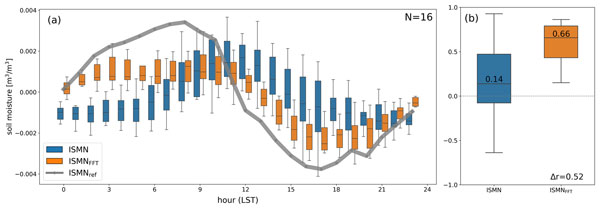
Soil moisture sensors often exhibit misleading daytime peaks because they are sensitive to temperature. This study proposes a method to correct the spurious diurnal cycle of surface soil moisture, using Fourier analysis with land reanalyses. The diurnally adjusted time series better captures realistic soil moisture behavior and provides more reliable insight into land–atmosphere interactions on a diurnal timescale.
Joonlee Lee, Myong-In Lee, Sunlae Tak, Eunkyo Seo, and Yong-Keun Lee
Geosci. Model Dev., 17, 8799–8816, https://doi.org/10.5194/gmd-17-8799-2024, https://doi.org/10.5194/gmd-17-8799-2024, 2024
Short summary
Short summary
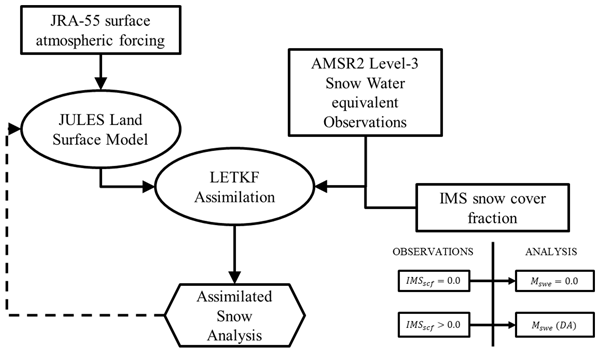
We developed an advanced snow water equivalent (SWE) data assimilation framework using satellite data based on a land surface model. The results of this study highlight the beneficial impact of data assimilation by effectively combining land surface model and satellite-derived data according to their relative uncertainty, thereby controlling not only transitional regions but also the regions with heavy snow accumulation that are difficult to detect by satellite.
Kirsten L. Findell, Zun Yin, Eunkyo Seo, Paul A. Dirmeyer, Nathan P. Arnold, Nathaniel Chaney, Megan D. Fowler, Meng Huang, David M. Lawrence, Po-Lun Ma, and Joseph A. Santanello Jr.
Geosci. Model Dev., 17, 1869–1883, https://doi.org/10.5194/gmd-17-1869-2024, https://doi.org/10.5194/gmd-17-1869-2024, 2024
Short summary
Short summary
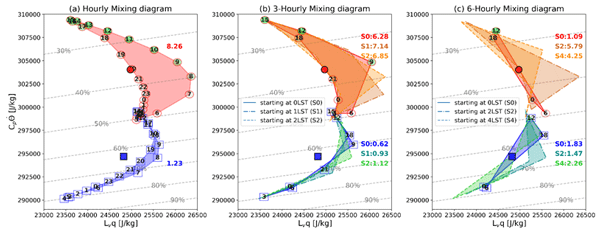
We outline a request for sub-daily data to accurately capture the process-level connections between land states, surface fluxes, and the boundary layer response. This high-frequency model output will allow for more direct comparison with observational field campaigns on process-relevant timescales, enable demonstration of inter-model spread in land–atmosphere coupling processes, and aid in targeted identification of sources of deficiencies and opportunities for improvement of the models.
Eunkyo Seo and Paul A. Dirmeyer
Hydrol. Earth Syst. Sci., 26, 5411–5429, https://doi.org/10.5194/hess-26-5411-2022, https://doi.org/10.5194/hess-26-5411-2022, 2022
Short summary
Short summary
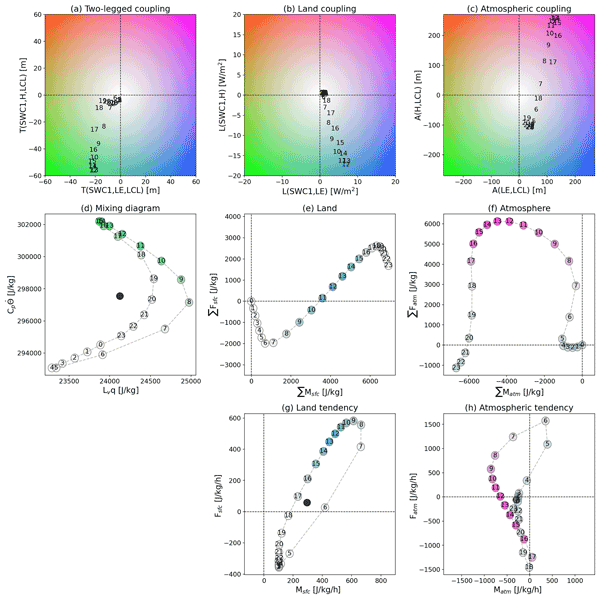
This study presents the climatology of the observed land–atmosphere interactions on a subdaily timescale during the warm season from flux site observations. Multivariate metrics are employed to examine the land, atmosphere, and combined couplings, and a mixing diagram is adopted to understand the coevolution of the moist and thermal energy budget within the atmospheric mixed layer. The diurnal cycles of both mixing diagrams and hourly land–atmosphere couplings exhibit hysteresis.
Sunlae Tak, Eunkyo Seo, Myong-In Lee, and Rolf H. Reichle
EGUsphere, https://doi.org/10.5194/egusphere-2026-4240, https://doi.org/10.5194/egusphere-2026-4240, 2026
This preprint is open for discussion and under review for Hydrology and Earth System Sciences (HESS).
Short summary
Short summary
This study developed a system that assimilates multi-sensor into a land surface model to obtain accurate soil moisture globally. Combining multiple satellites provides wider spatial coverage than a single satellite, which directly improves accuracy across sub-daily and daily time scales. Our system performs better by using individual satellites rather than pre-mixed data. Expanding our view with multiple satellites leads to much more accurate and reliable soil moisture.
Eunkyo Seo, Seongjun Bae, Junnyeong Han, Cheolhee Yoo, and Paul A. Dirmeyer
EGUsphere, https://doi.org/10.5194/egusphere-2026-3001, https://doi.org/10.5194/egusphere-2026-3001, 2026
This preprint is open for discussion and under review for Hydrology and Earth System Sciences (HESS).
Short summary
Short summary
Soil moisture sensors can be distorted by daytime heating, creating false diurnal rises when soils are actually drying. We developed a Long Short-Term Memory network that learns realistic diurnal cycles from observations and land surface models and uses them to correct these false signals. The corrected records more clearly show daytime soil drying and improve our understanding of how water in the soil influences heat and moisture exchange between the land and atmosphere.
Gyuyeon Choi, Eunkyo Seo, and Paul A. Dirmeyer
EGUsphere, https://doi.org/10.5194/egusphere-2026-2867, https://doi.org/10.5194/egusphere-2026-2867, 2026
Short summary
Short summary
This study evaluates five satellite and four reanalysis products against 6,824 ground-based observations for diurnal cycle fidelity. Satellites show a 1 to 2 hour phase delay from upper-level ice detection, while reanalyses peak 3 to 6 hours early from premature convective onset. Contrasting performances are linked to specific design choices in retrieval algorithms and convective parameterization, offering physically grounded guidance for dataset selection in hydrological and climate studies.
Junnyeong Han, Eunkyo Seo, and Paul A. Dirmeyer
Hydrol. Earth Syst. Sci., 30, 2207–2223, https://doi.org/10.5194/hess-30-2207-2026, https://doi.org/10.5194/hess-30-2207-2026, 2026
Short summary
Short summary
Soil moisture sensors often exhibit misleading daytime peaks because they are sensitive to temperature. This study proposes a method to correct the spurious diurnal cycle of surface soil moisture, using Fourier analysis with land reanalyses. The diurnally adjusted time series better captures realistic soil moisture behavior and provides more reliable insight into land–atmosphere interactions on a diurnal timescale.
Iris Mužić, Øivind Hodnebrog, Yeliz A. Yilmaz, Terje K. Berntsen, Jana Sillmann, David M. Lawrence, and Paul A. Dirmeyer
Adv. Stat. Clim. Meteorol. Oceanogr., 11, 273–292, https://doi.org/10.5194/ascmo-11-273-2025, https://doi.org/10.5194/ascmo-11-273-2025, 2025
Short summary
Short summary
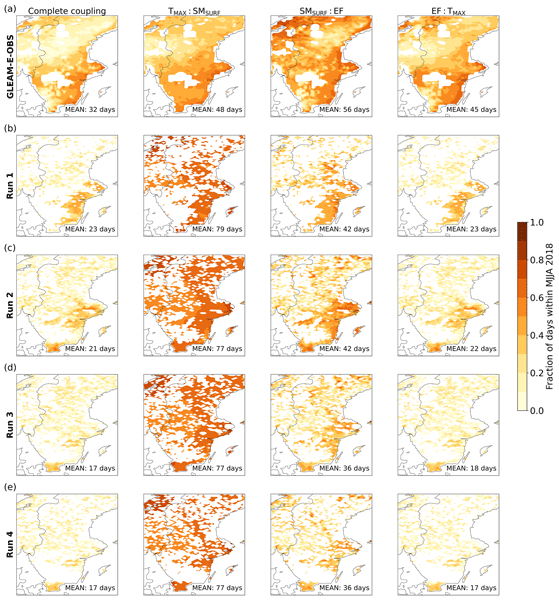
This study investigates soil moisture–temperature coupling during the extreme warm conditions in May–August 2018 in southern and central Sweden using the merged GLEAM-E-OBS dataset and four simulations from the Weather Research and Forecasting model coupled with the Community Terrestrial Systems Model (WRF-CTSM). Based on changes in surface soil moisture, evaporative fraction, and daily maximum 2 m temperature, on average across the region and five datasets, the coupling lasted for 22 d.
Joonlee Lee, Myong-In Lee, Sunlae Tak, Eunkyo Seo, and Yong-Keun Lee
Geosci. Model Dev., 17, 8799–8816, https://doi.org/10.5194/gmd-17-8799-2024, https://doi.org/10.5194/gmd-17-8799-2024, 2024
Short summary
Short summary
We developed an advanced snow water equivalent (SWE) data assimilation framework using satellite data based on a land surface model. The results of this study highlight the beneficial impact of data assimilation by effectively combining land surface model and satellite-derived data according to their relative uncertainty, thereby controlling not only transitional regions but also the regions with heavy snow accumulation that are difficult to detect by satellite.
Gaoyun Wang, Rong Fu, Yizhou Zhuang, Paul A. Dirmeyer, Joseph A. Santanello, Guiling Wang, Kun Yang, and Kaighin McColl
Atmos. Chem. Phys., 24, 3857–3868, https://doi.org/10.5194/acp-24-3857-2024, https://doi.org/10.5194/acp-24-3857-2024, 2024
Short summary
Short summary
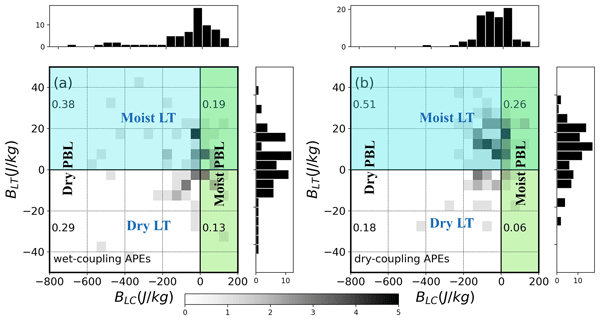
This study investigates the influence of lower-tropospheric humidity on land–atmosphere coupling (LAC) during warm seasons in the US Southern Great Plains. Using radiosonde data and a buoyancy model, we find that elevated LT humidity is crucial for generating afternoon precipitation events under dry soil conditions not accounted for by conventional LAC indices. This underscores the importance of considering LT humidity in understanding LAC over dry soil during droughts in the SGP.
Kirsten L. Findell, Zun Yin, Eunkyo Seo, Paul A. Dirmeyer, Nathan P. Arnold, Nathaniel Chaney, Megan D. Fowler, Meng Huang, David M. Lawrence, Po-Lun Ma, and Joseph A. Santanello Jr.
Geosci. Model Dev., 17, 1869–1883, https://doi.org/10.5194/gmd-17-1869-2024, https://doi.org/10.5194/gmd-17-1869-2024, 2024
Short summary
Short summary
We outline a request for sub-daily data to accurately capture the process-level connections between land states, surface fluxes, and the boundary layer response. This high-frequency model output will allow for more direct comparison with observational field campaigns on process-relevant timescales, enable demonstration of inter-model spread in land–atmosphere coupling processes, and aid in targeted identification of sources of deficiencies and opportunities for improvement of the models.
Zun Yin, Kirsten L. Findell, Paul Dirmeyer, Elena Shevliakova, Sergey Malyshev, Khaled Ghannam, Nina Raoult, and Zhihong Tan
Hydrol. Earth Syst. Sci., 27, 861–872, https://doi.org/10.5194/hess-27-861-2023, https://doi.org/10.5194/hess-27-861-2023, 2023
Short summary
Short summary
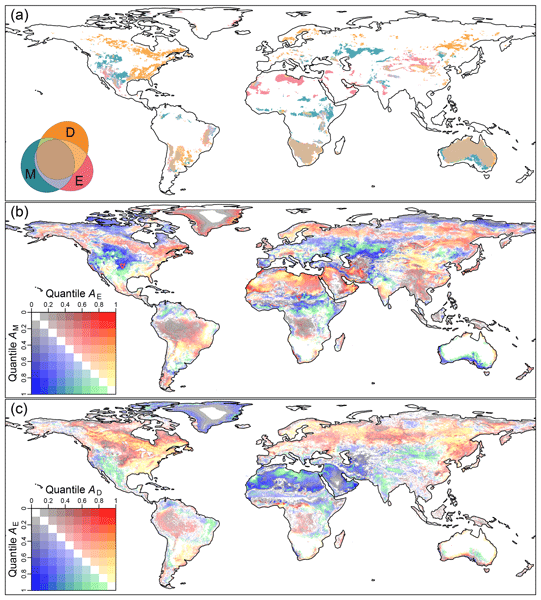
Land–atmosphere (L–A) interactions typically focus on daytime processes connecting the land state with the overlying atmospheric boundary layer. However, much prior L–A work used monthly or daily means due to the lack of daytime-only data products. Here we show that monthly smoothing can significantly obscure the L–A coupling signal, and including nighttime information can mute or mask the daytime processes of interest. We propose diagnosing L–A coupling within models or archiving subdaily data.
Eunkyo Seo and Paul A. Dirmeyer
Hydrol. Earth Syst. Sci., 26, 5411–5429, https://doi.org/10.5194/hess-26-5411-2022, https://doi.org/10.5194/hess-26-5411-2022, 2022
Short summary
Short summary
This study presents the climatology of the observed land–atmosphere interactions on a subdaily timescale during the warm season from flux site observations. Multivariate metrics are employed to examine the land, atmosphere, and combined couplings, and a mixing diagram is adopted to understand the coevolution of the moist and thermal energy budget within the atmospheric mixed layer. The diurnal cycles of both mixing diagrams and hourly land–atmosphere couplings exhibit hysteresis.
Cited articles
Arduini, G., Balsamo, G., Dutra, E., Day, J. J., Sandu, I., Boussetta, S., and Haiden, T.: Impact of a multi-layer snow scheme on near-surface weather forecasts, Journal of Advances in Modeling Earth Systems, 11, 4687–4710, https://doi.org/10.1029/2019MS001725, 2019.
Beck, H. E., Wood, E. F., Pan, M., Fisher, C. K., Miralles, D. G., Van Dijk, A. I., McVicar, T. R., and Adler, R. F.: MSWEP V2 global 3-hourly 0.1 precipitation: methodology and quantitative assessment, Bulletin of the American Meteorological Society, 100, 473–500, https://doi.org/10.1175/BAMS-D-17-0138.1, 2019a.
Beck, H. E., Pan, M., Roy, T., Weedon, G. P., Pappenberger, F., van Dijk, A. I. J. M., Huffman, G. J., Adler, R. F., and Wood, E. F.: Daily evaluation of 26 precipitation datasets using Stage-IV gauge-radar data for the CONUS, Hydrology and Earth System Sciences, 23, 207–224, https://doi.org/10.5194/hess-23-207-2019, 2019b.
Best, M. J., Pryor, M., Clark, D. B., Rooney, G. G., Essery, R. L. H., Ménard, C. B., Edwards, J. M., Hendry, M. A., Porson, A., Gedney, N., Mercado, L. M., Sitch, S., Blyth, E., Boucher, O., Cox, P. M., Grimmond, C. S. B., and Harding, R. J.: The Joint UK Land Environment Simulator (JULES), model description – Part 1: Energy and water fluxes, Geoscientific Model Development, 4, 677–699, https://doi.org/10.5194/gmd-4-677-2011, 2011.
Betts, A. K., Desjardins, R., Worth, D., Wang, S., and Li, J.: Coupling of winter climate transitions to snow and clouds over the Prairies, Journal of Geophysical Research: Atmospheres, 119, 1118–1139, https://doi.org/10.1002/2013JD021168, 2014.
Burke, E. J., Dankers, R., Jones, C. D., and Wiltshire, A. J.: A retrospective analysis of pan Arctic permafrost using the JULES land surface model, Climate Dynamics, 41, 1025–1038, https://doi.org/10.1007/s00382-012-1648-x, 2013.
Craig, A., Valcke, S., and Coquart, L.: Development and performance of a new version of the OASIS coupler, OASIS3-MCT_3.0, Geoscientific Model Development, 10, 3297–3308, https://doi.org/10.5194/gmd-10-3297-2017, 2017.
Cristea, N. C., Bennett, A., Nijssen, B., and Lundquist, J. D.: When and where are multiple snow layers important for simulations of snow accumulation and melt?, Water Resources Research, 58, e2020WR028993, https://doi.org/10.1029/2020WR028993, 2022.
Denissen, J. M., Teuling, A. J., Reichstein, M., and Orth, R.: Critical soil moisture derived from satellite observations over Europe, Journal of Geophysical Research: Atmospheres, 125, e2019JD031672, https://doi.org/10.1029/2019JD031672, 2020.
Dirmeyer, P. A., Wu, J., Norton, H. E., Dorigo, W. A., Quiring, S. M., Ford, T. W., Santanello Jr, J. A., Bosilovich, M. G., Ek, M. B., and Koster, R. D.: Confronting weather and climate models with observational data from soil moisture networks over the United States, Journal of Hydrometeorology, 17, 1049–1067, https://doi.org/10.1175/JHM-D-15-0196.1, 2016.
Dirmeyer, P. A., Halder, S., and Bombardi, R.: On the harvest of predictability from land states in a global forecast model, Journal of Geophysical Research: Atmospheres, 123, 13111–113127, https://doi.org/10.1029/2018JD029103, 2018.
Dirmeyer, P. A., Balsamo, G., Blyth, E. M., Morrison, R., and Cooper, H. M.: Land-atmosphere interactions exacerbated the drought and heatwave over northern Europe during summer 2018, AGU Advances, 2, e2020AV000283, https://doi.org/10.1029/2020AV000283, 2021.
Dorigo, W., Wagner, W., Albergel, C., Albrecht, F., Balsamo, G., Brocca, L., Chung, D., Ertl, M., Forkel, M., and Gruber, A.: ESA CCI Soil Moisture for improved Earth system understanding: State-of-the art and future directions, Remote Sensing of Environment, 203, 185–215, https://doi.org/10.1016/j.rse.2017.07.001, 2017.
Granger, C. W.: Investigating causal relations by econometric models and cross-spectral methods, Econometrica: journal of the Econometric Society, 424–438, https://doi.org/10.2307/1912791, 1969.
Guo, Z., Dirmeyer, P. A., and DelSole, T.: Land surface impacts on subseasonal and seasonal predictability, Geophysical Research Letters, 38, https://doi.org/10.1029/2011GL049945, 2011.
Hersbach, H., Bell, B., Berrisford, P., Hirahara, S., Horányi, A., Muñoz-Sabater, J., Nicolas, J., Peubey, C., Radu, R., and Schepers, D.: The ERA5 global reanalysis, Quarterly Journal of the Royal Meteorological Society, 146, 1999–2049, https://doi.org/10.1002/qj.3803, 2020.
Houldcroft, C. J., Grey, W. M., Barnsley, M., Taylor, C. M., Los, S. O., and North, P. R.: New vegetation albedo parameters and global fields of soil background albedo derived from MODIS for use in a climate model, Journal of Hydrometeorology, 10, 183–198, https://doi.org/10.1175/2008JHM1021.1, 2009.
Huffman, G. J., Bolvin, D. T., Joyce, R., Kelley, O. A., Nelkin, E. J., Portier, A., Stocker, E. F., Tan, J., Watters, D. C., and West, B. J.: IMERG V07 release notes, Goddard Space Flight Center: Greenbelt, MD, USA, 1140, https://gpm.nasa.gov/sites/default/files/2024-12/IMERG_V07_ReleaseNotes_241126.pdf (last access: 3 February 2026), 2023.
Kobayashi, S., Ota, Y., Harada, Y., Ebita, A., Moriya, M., Onoda, H., Onogi, K., Kamahori, H., Kobayashi, C., and Endo, H.: The JRA-55 reanalysis: General specifications and basic characteristics, Journal of the Meteorological Society of Japan Ser. II, 93, 5–48, https://doi.org/10.2151/jmsj.2015-001, 2015.
Kosaka, Y., Kobayashi, S., Harada, Y., Kobayashi, C., Naoe, H., Yoshimoto, K., Harada, M., Goto, N., Chiba, J., and Miyaoka, K.: The JRA-3Q reanalysis, Journal of the Meteorological Society of Japan Ser. II, 102, 49–109, https://doi.org/10.2151/jmsj.2024-004, 2024.
Koster, R., Mahanama, S., Yamada, T., Balsamo, G., Berg, A., Boisserie, M., Dirmeyer, P., Doblas-Reyes, F., Drewitt, G., and Gordon, C.: The second phase of the global land–atmosphere coupling experiment: soil moisture contributions to subseasonal forecast skill, Journal of Hydrometeorology, 12, 805–822, https://doi.org/10.1175/2011JHM1365.1, 2011.
Koster, R. D., Sud, Y., Guo, Z., Dirmeyer, P. A., Bonan, G., Oleson, K. W., Chan, E., Verseghy, D., Cox, P., and Davies, H.: GLACE: the global land–atmosphere coupling experiment. Part I: overview, Journal of Hydrometeorology, 7, 590–610, https://doi.org/10.1175/JHM510.1, 2006.
Koster, R. D., Guo, Z., Yang, R., Dirmeyer, P. A., Mitchell, K., and Puma, M. J.: On the nature of soil moisture in land surface models, Journal of Climate, 22, 4322-4335, https://doi.org/10.1175/2009JCLI2832.1, 2009.
Kumar, S., Kolassa, J., Reichle, R., Crow, W., de Lannoy, G., de Rosnay, P., MacBean, N., Girotto, M., Fox, A., and Quaife, T.: An agenda for land data assimilation priorities: Realizing the promise of terrestrial water, energy, and vegetation observations from space, Journal of Advances in Modeling Earth Systems, 14, e2022MS003259, https://doi.org/10.1029/2022MS003259, 2022.
Loveland, T. R., Reed, B. C., Brown, J. F., Ohlen, D. O., Zhu, Z., Yang, L., and Merchant, J. W.: Development of a global land cover characteristics database and IGBP DISCover from 1 km AVHRR data, International Journal of Remote Sensing, 21, 1303–1330, https://doi.org/10.1080/014311600210191, 2000.
MacLachlan, C., Arribas, A., Peterson, K., Maidens, A., Fereday, D., Scaife, A., Gordon, M., Vellinga, M., Williams, A., and Comer, R.: Global Seasonal forecast system version 5 (GloSea5): a high-resolution seasonal forecast system, Quarterly Journal of the Royal Meteorological Society, 141, 1072–1084, https://doi.org/10.1002/qj.2396, 2015.
Mann, G. W., Carslaw, K. S., Spracklen, D. V., Ridley, D. A., Manktelow, P. T., Chipperfield, M. P., Pickering, S. J., and Johnson, C. E.: Description and evaluation of GLOMAP-mode: a modal global aerosol microphysics model for the UKCA composition-climate model, Geoscientific Model Development, 3, 519–551, https://doi.org/10.5194/gmd-3-519-2010, 2010.
Megann, A., Storkey, D., Aksenov, Y., Alderson, S., Calvert, D., Graham, T., Hyder, P., Siddorn, J., and Sinha, B.: GO5.0: the joint NERC–Met Office NEMO global ocean model for use in coupled and forced applications, Geoscientific Model Development, 7, 1069–1092, https://doi.org/10.5194/gmd-7-1069-2014, 2014.
Miralles, D. G., Bonte, O., Koppa, A., Baez-Villanueva, O. M., Tronquo, E., Zhong, F., Beck, H. E., Hulsman, P., Dorigo, W., and Verhoest, N. E.: GLEAM4: global land evaporation and soil moisture dataset at 0.1 resolution from 1980 to near present, Scientific Data, 12, 416, https://doi.org/10.1038/s41597-025-04610-y, 2025.
Mogensen, K., Balmaseda, M. A., and Weaver, A.: The NEMOVAR ocean data assimilation system as implemented in the ECMWF ocean analysis for System 4, ECMWF, https://doi.org/10.21957/x5y9yrtm, 2012.
Muller, J.-P., López, G., Watson, G., Shane, N., Kennedy, T., Yuen, P., Lewis, P., Fischer, J., Guanter, L., and Domench, C.: The ESA GlobAlbedo Project for mapping the Earth's land surface albedo for 15 years from European sensors, Geophysical Research Abstracts, 10969, http://globalbedo.org/docs/Muller-GlobAlbedo-abstractV4.pdf, last access: 3 February 2026, 2012.
Muñoz-Sabater, J., Dutra, E., Agustí-Panareda, A., Albergel, C., Arduini, G., Balsamo, G., Boussetta, S., Choulga, M., Harrigan, S., Hersbach, H., Martens, B., Miralles, D. G., Piles, M., Rodríguez-Fernández, N. J., Zsoter, E., Buontempo, C., and Thépaut, J.-N.: ERA5-Land: a state-of-the-art global reanalysis dataset for land applications, Earth System Science Data, 13, 4349–4383, https://doi.org/10.5194/essd-13-4349-2021, 2021 (data available at: https://doi.org/10.24381/cds.e2161bac).
Niu, G. Y., Yang, Z. L., Mitchell, K. E., Chen, F., Ek, M. B., Barlage, M., Kumar, A., Manning, K., Niyogi, D., and Rosero, E.: The community Noah land surface model with multiparameterization options (Noah-MP): 1. Model description and evaluation with local-scale measurements, Journal of Geophysical Research: Atmospheres, 116, https://doi.org/10.1029/2010JD015139, 2011.
Orsolini, Y., Wegmann, M., Dutra, E., Liu, B., Balsamo, G., Yang, K., de Rosnay, P., Zhu, C., Wang, W., Senan, R., and Arduini, G.: Evaluation of snow depth and snow cover over the Tibetan Plateau in global reanalyses using in situ and satellite remote sensing observations, The Cryosphere, 13, 2221–2239, https://doi.org/10.5194/tc-13-2221-2019, 2019.
Rae, J. G. L., Hewitt, H. T., Keen, A. B., Ridley, J. K., West, A. E., Harris, C. M., Hunke, E. C., and Walters, D. N.: Development of the Global Sea Ice 6.0 CICE configuration for the Met Office Global Coupled model, Geoscientific Model Development, 8, 2221–2230, https://doi.org/10.5194/gmd-8-2221-2015, 2015.
Richter, J. H., Glanville, A. A., King, T., Kumar, S., Yeager, S. G., Davis, N. A., Duan, Y., Fowler, M. D., Jaye, A., and Edwards, J.: Quantifying sources of subseasonal prediction skill in CESM2, npj Climate and Atmospheric Science, 7, 59, https://doi.org/10.1038/s41612-024-00595-4, 2024.
Ridley, J. K., Blockley, E. W., Keen, A. B., Rae, J. G. L., West, A. E., and Schroeder, D.: The sea ice model component of HadGEM3-GC3.1, Geoscientific Model Development, 11, 713–723, https://doi.org/10.5194/gmd-11-713-2018, 2018.
Robock, A., Vinnikov, K. Y., Schlosser, C. A., Speranskaya, N. A., and Xue, Y.: Use of midlatitude soil moisture and meteorological observations to validate soil moisture simulations with biosphere and bucket models, Journal of Climate, 8, 15–35, https://doi.org/10.1175/1520-0442(1995)008<0015:UOMSMA>2.0.CO;2, 1995.
Salvucci, G. D., Saleem, J. A., and Kaufmann, R.: Investigating soil moisture feedbacks on precipitation with tests of Granger causality, Advances in Water Resources, 25, 1305–1312, https://doi.org/10.1016/S0309-1708(02)00057-X, 2002.
Sanchez, C., Williams, K. D., and Collins, M.: Improved stochastic physics schemes for global weather and climate models, Quarterly Journal of the Royal Meteorological Society, 142, 147–159, https://doi.org/10.1002/qj.2640, 2016.
Santanello, J. A., Dirmeyer, P. A., Ferguson, C. R., Findell, K. L., Tawfik, A. B., Berg, A., Ek, M., Gentine, P., Guillod, B. P., and Van Heerwaarden, C.: Land–atmosphere interactions: The LoCo perspective, Bulletin of the American Meteorological Society, 99, 1253–1272, https://doi.org/10.1175/BAMS-D-17-0001.1, 2018.
Sellers, P., Mintz, Y., Sud, Y. C., and Dalcher, A.: A simple biosphere model (SiB) for use within general circulation models, Journal of Atmospheric Sciences, 43, 505–531, https://doi.org/10.1175/1520-0469(1986)043<0505:ASBMFU>2.0.CO;2, 1986.
Sellers, P. J.: Canopy reflectance, photosynthesis and transpiration, International Journal of Remote Sensing, 6, 1335–1372, https://doi.org/10.1080/01431168508948283, 1985.
Seneviratne, S. I., Corti, T., Davin, E. L., Hirschi, M., Jaeger, E. B., Lehner, I., Orlowsky, B., and Teuling, A. J.: Investigating soil moisture–climate interactions in a changing climate: A review, Earth-Science Reviews, 99, 125–161, https://doi.org/10.1016/j.earscirev.2010.02.004, 2010.
Seo, E. and Dirmeyer, P. A.: Improving the ESA CCI Daily Soil Moisture Time Series with Physically Based Land Surface Model Datasets Using a Fourier Time-Filtering Method, Journal of Hydrometeorology, 23, 473–489, https://doi.org/10.1175/JHM-D-21-0120.1, 2022a.
Seo, E. and Dirmeyer, P. A.: Understanding the diurnal cycle of land–atmosphere interactions from flux site observations, Hydrology and Earth System Sciences, 26, 5411–5429, https://doi.org/10.5194/hess-26-5411-2022, 2022b.
Seo, E. and Dirmeyer, P. A.: Time-filtered ESA CCI SM data for publication “Implementation of a multi-layer snow scheme in the GloSea6 seasonal forecast system: Impacts on land–atmosphere interactions and climatological biases”, Zenodo [data set], https://doi.org/10.5281/zenodo.18307464, 2026.
Seo, E. and Tak, S.: GloSea5 and G6single retrospective forecast datasets for publication “Implementation of a multi-layer snow scheme in the GloSea6 seasonal forecast system: Impacts on land–atmosphere interactions and climatological biases”, Zenodo [data set], https://doi.org/10.5281/zenodo.18417662, 2026.
Seo, E., Lee, M.-I., Jeong, J.-H., Koster, R. D., Schubert, S. D., Kim, H.-M., Kim, D., Kang, H.-S., Kim, H.-K., and MacLachlan, C.: Impact of soil moisture initialization on boreal summer subseasonal forecasts: mid-latitude surface air temperature and heat wave events, Climate Dynamics, 52, 1695–1709, https://doi.org/10.1007/s00382-018-4221-4, 2019.
Seo, E., Lee, M.-I., Schubert, S. D., Koster, R. D., and Kang, H.-S.: Investigation of the 2016 Eurasia heat wave as an event of the recent warming, Environmental Research Letters, 15, 114018, https://doi.org/10.1088/1748-9326/abbbae, 2020.
Seo, E., Lee, M.-I., and Reichle, R. H.: Assimilation of SMAP and ASCAT soil moisture retrievals into the JULES land surface model using the Local Ensemble Transform Kalman Filter, Remote Sensing of Environment, 253, 112222, https://doi.org/10.1016/j.rse.2020.112222, 2021.
Seo, E., Dirmeyer, P. A., Barlage, M., Wei, H., and Ek, M.: Evaluation of Land–Atmosphere Coupling Processes and Climatological Bias in the UFS Global Coupled Model, Journal of Hydrometeorology, 25, 161–175, https://doi.org/10.1175/JHM-D-23-0097.1, 2024.
Seo, E., Dirmeyer, P. A., and Tak, S.: Scripts for publication “Implementation of a multi-layer snow scheme in the GloSea6 seasonal forecast system: Impacts on land–atmosphere interactions and climatological biases”, Zenodo [code], https://doi.org/10.5281/zenodo.11243938, 2026.
Storkey, D., Blaker, A. T., Mathiot, P., Megann, A., Aksenov, Y., Blockley, E. W., Calvert, D., Graham, T., Hewitt, H. T., Hyder, P., Kuhlbrodt, T., Rae, J. G. L., and Sinha, B.: UK Global Ocean GO6 and GO7: a traceable hierarchy of model resolutions, Geoscientific Model Development, 11, 3187–3213, https://doi.org/10.5194/gmd-11-3187-2018, 2018.
Tak, S., Seo, E., Dirmeyer, P. A., and Lee, M.-I.: The role of soil moisture-temperature coupling for the 2018 Northern European heatwave in a subseasonal forecast, Weather and Climate Extremes, 44, 100670, https://doi.org/10.1016/j.wace.2024.100670, 2024.
Taylor, C. M., de Jeu, R. A., Guichard, F., Harris, P. P., and Dorigo, W. A.: Afternoon rain more likely over drier soils, Nature, 489, 423–426, https://doi.org/10.1038/nature11377, 2012.
Tennant, W. J., Shutts, G. J., Arribas, A., and Thompson, S. A.: Using a stochastic kinetic energy backscatter scheme to improve MOGREPS probabilistic forecast skill, Monthly Weather Review, 139, 1190–1206, https://doi.org/10.1175/2010MWR3430.1, 2011.
Valcke, S.: The OASIS3 coupler: a European climate modelling community software, Geoscientific Model Development, 6, 373–388, https://doi.org/10.5194/gmd-6-373-2013, 2013.
Vinnikov, K. Y. and Yeserkepova, I.: Soil moisture: Empirical data and model results, Journal of Climate, 4, 66–79, https://www.jstor.org/stable/26196341 (last access: 3 February 2026), 1991.
Vitart, F., Ardilouze, C., Bonet, A., Brookshaw, A., Chen, M., Codorean, C., Déqué, M., Ferranti, L., Fucile, E., and Fuentes, M.: The subseasonal to seasonal (S2S) prediction project database, Bulletin of the American Meteorological Society, 98, 163–173, https://doi.org/10.1175/BAMS-D-16-0017.1, 2017.
Vitart, F., Robertson, A., Brookshaw, A., Caltabiano, N., Coelho, C., de Coning, E., Dirmeyer, P., Domeisen, D., Hirons, L., and Kim, H.: The WWRP/WCRP S2S project and its achievements, Bulletin of the American Meteorological Society, https://doi.org/10.1175/BAMS-D-24-0047.1, 2025.
Walters, D., Boutle, I., Brooks, M., Melvin, T., Stratton, R., Vosper, S., Wells, H., Williams, K., Wood, N., Allen, T., Bushell, A., Copsey, D., Earnshaw, P., Edwards, J., Gross, M., Hardiman, S., Harris, C., Heming, J., Klingaman, N., Levine, R., Manners, J., Martin, G., Milton, S., Mittermaier, M., Morcrette, C., Riddick, T., Roberts, M., Sanchez, C., Selwood, P., Stirling, A., Smith, C., Suri, D., Tennant, W., Vidale, P. L., Wilkinson, J., Willett, M., Woolnough, S., and Xavier, P.: The Met Office Unified Model Global Atmosphere 6.0/6.1 and JULES Global Land 6.0/6.1 configurations, Geoscientific Model Development, 10, 1487–1520, https://doi.org/10.5194/gmd-10-1487-2017, 2017.
Walters, D., Baran, A. J., Boutle, I., Brooks, M., Earnshaw, P., Edwards, J., Furtado, K., Hill, P., Lock, A., Manners, J., Morcrette, C., Mulcahy, J., Sanchez, C., Smith, C., Stratton, R., Tennant, W., Tomassini, L., Van Weverberg, K., Vosper, S., Willett, M., Browse, J., Bushell, A., Carslaw, K., Dalvi, M., Essery, R., Gedney, N., Hardiman, S., Johnson, B., Johnson, C., Jones, A., Jones, C., Mann, G., Milton, S., Rumbold, H., Sellar, A., Ujiie, M., Whitall, M., Williams, K., and Zerroukat, M.: The Met Office Unified Model Global Atmosphere 7.0/7.1 and JULES Global Land 7.0 configurations, Geoscientific Model Development, 12, 1909–1963, https://doi.org/10.5194/gmd-12-1909-2019, 2019.
Williams, K., Copsey, D., Blockley, E., Bodas-Salcedo, A., Calvert, D., Comer, R., Davis, P., Graham, T., Hewitt, H., and Hill, R.: The Met Office global coupled model 3.0 and 3.1 (GC3. 0 and GC3. 1) configurations, Journal of Advances in Modeling Earth Systems, 10, 357–380, https://doi.org/10.1002/2017MS001115, 2018.
Williams, K. D., Harris, C. M., Bodas-Salcedo, A., Camp, J., Comer, R. E., Copsey, D., Fereday, D., Graham, T., Hill, R., Hinton, T., Hyder, P., Ineson, S., Masato, G., Milton, S. F., Roberts, M. J., Rowell, D. P., Sanchez, C., Shelly, A., Sinha, B., Walters, D. N., West, A., Woollings, T., and Xavier, P. K.: The Met Office Global Coupled model 2.0 (GC2) configuration, Geoscientific Model Development, 8, 1509–1524, https://doi.org/10.5194/gmd-8-1509-2015, 2015.
Wiltshire, A. J., Duran Rojas, M. C., Edwards, J. M., Gedney, N., Harper, A. B., Hartley, A. J., Hendry, M. A., Robertson, E., and Smout-Day, K.: JULES-GL7: the Global Land configuration of the Joint UK Land Environment Simulator version 7.0 and 7.2, Geoscientific Model Development, 13, 483–505, https://doi.org/10.5194/gmd-13-483-2020, 2020.
Xu, L. and Dirmeyer, P.: Snow-atmosphere coupling strength in a global atmospheric model, Geophysical Research Letters, 38, https://doi.org/10.1029/2011GL048049, 2011.
Xue, Y., Sun, S., Kahan, D. S., and Jiao, Y.: Impact of parameterizations in snow physics and interface processes on the simulation of snow cover and runoff at several cold region sites, Journal of Geophysical Research: Atmospheres, 108, https://doi.org/10.1029/2002JD003174, 2003.
Yang, W., Tan, B., Huang, D., Rautiainen, M., Shabanov, N. V., Wang, Y., Privette, J. L., Huemmrich, K. F., Fensholt, R., and Sandholt, I.: MODIS leaf area index products: From validation to algorithm improvement, IEEE Transactions on Geoscience and Remote Sensing, 44, 1885–1898, https://doi.org/10.1109/TGRS.2006.871215, 2006.
Yin, Z., Findell, K. L., Dirmeyer, P., Shevliakova, E., Malyshev, S., Ghannam, K., Raoult, N., and Tan, Z.: Daytime-only mean data enhance understanding of land–atmosphere coupling, Hydrology and Earth System Sciences, 27, 861–872, https://doi.org/10.5194/hess-27-861-2023, 2023.
Short summary
This study examines a multi-layer snow scheme in seasonal forecasts. Compared to a single-layer scheme, it better captures snow insulation, delaying spring snowmelt by 1–2 weeks. This postpones evaporation and slows soil moisture depletion, which promotes evaporative cooling due to increasing energy partitioning into latent heat flux and enhances precipitation occurrence. This leads to realistic land-atmosphere interactions and reduced biases across Northern Hemisphere mid- and high-latitudes.
This study examines a multi-layer snow scheme in seasonal forecasts. Compared to a single-layer...


