
Articles | Volume 19, issue 3
https://doi.org/10.5194/gmd-19-1121-2026
© Author(s) 2026. This work is distributed under
the Creative Commons Attribution 4.0 License.
the Creative Commons Attribution 4.0 License.
https://doi.org/10.5194/gmd-19-1121-2026
© Author(s) 2026. This work is distributed under
the Creative Commons Attribution 4.0 License.
the Creative Commons Attribution 4.0 License.
Methods for assessment of models
| 
03 Feb 2026
Methods for assessment of models |
| 03 Feb 2026
| 03 Feb 2026
Simulating the recent drought-induced mortality of European beech (Fagus sylvatica L.) and Norway spruce (Picea abies L.) in German forests

Forest Ecology, Institute of Terrestrial Ecosystems, Department of Environmental Systems Science, ETH Zurich, 8092 Zurich, Switzerland
Forest Resources and Management, Swiss Federal Research Institute for Forest, Snow and Landscape Research WSL, 8903 Birmensdorf, Switzerland
Ulrike Hiltner
Forest Ecology, Institute of Terrestrial Ecosystems, Department of Environmental Systems Science, ETH Zurich, 8092 Zurich, Switzerland
Nikolai Knapp
Thünen Institute of Forest Ecosystems, 16225 Eberswalde, Germany
Harald Bugmann
Forest Ecology, Institute of Terrestrial Ecosystems, Department of Environmental Systems Science, ETH Zurich, 8092 Zurich, Switzerland
Related authors
No articles found.
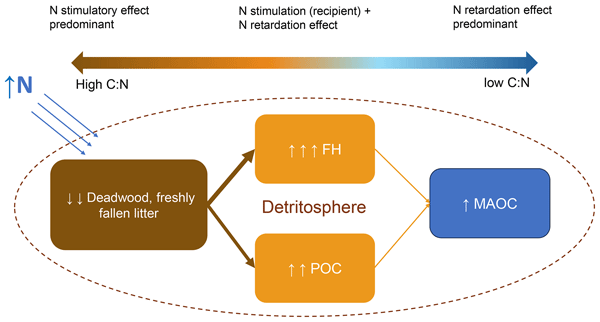
Chun Chung Yeung, Harald Bugmann, Frank Hagedorn, Margaux Moreno Duborgel, and Olalla Díaz-Yáñez
Biogeosciences, 22, 7535–7562, https://doi.org/10.5194/bg-22-7535-2025, https://doi.org/10.5194/bg-22-7535-2025, 2025
Short summary
Short summary
To shed light on the interactions between soil nitrogen (N) and carbon (C), we set up a model “experiment” in silico to test several hypothesized responses of decomposers to N. We found that decomposers were stimulated by N when decomposing high C:N detritus, but inhibited when decomposing low C:N, processed organic C. The consequence is that under exogenous N addition (e.g., contemporary N deposition), forests may accumulate light fraction C predominantly, at the expense of coarse detritus.
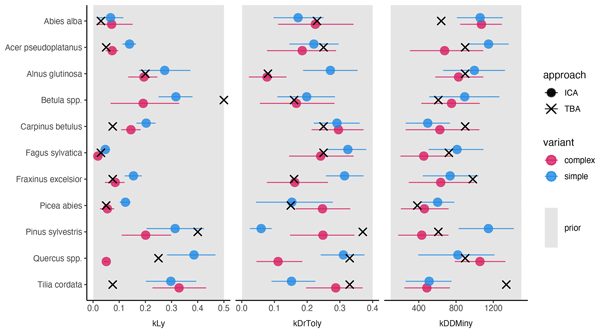
Yannek Käber, Florian Hartig, and Harald Bugmann
Geosci. Model Dev., 17, 2727–2753, https://doi.org/10.5194/gmd-17-2727-2024, https://doi.org/10.5194/gmd-17-2727-2024, 2024
Short summary
Short summary
Many forest models include detailed mechanisms of forest growth and mortality, but regeneration is often simplified. Testing and improving forest regeneration models is challenging. We address this issue by exploring how forest inventories from unmanaged European forests can be used to improve such models. We find that competition for light among trees is captured by the model, unknown model components can be informed by forest inventory data, and climatic effects are challenging to capture.
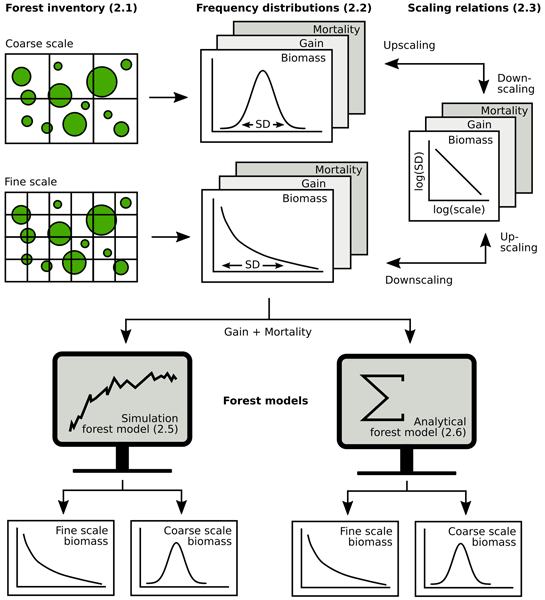
Nikolai Knapp, Sabine Attinger, and Andreas Huth
Biogeosciences, 19, 4929–4944, https://doi.org/10.5194/bg-19-4929-2022, https://doi.org/10.5194/bg-19-4929-2022, 2022
Short summary
Short summary
The biomass of forests is determined by forest growth and mortality. These quantities can be estimated with different methods such as inventories, remote sensing and modeling. These methods are usually being applied at different spatial scales. The scales influence the obtained frequency distributions of biomass, growth and mortality. This study suggests how to transfer between scales, when using forest models of different complexity for a tropical forest.
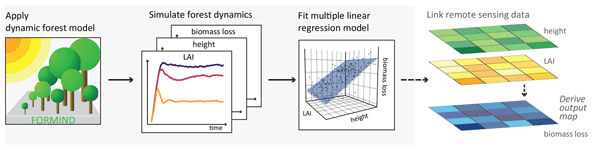
Ulrike Hiltner, Andreas Huth, and Rico Fischer
Biogeosciences, 19, 1891–1911, https://doi.org/10.5194/bg-19-1891-2022, https://doi.org/10.5194/bg-19-1891-2022, 2022
Short summary
Short summary
Quantifying biomass loss rates due to stem mortality is important for estimating the role of tropical forests in the global carbon cycle. We analyse the consequences of long-term elevated stem mortality for tropical forest dynamics and biomass loss. Based on simulations, we developed a statistical model to estimate biomass loss rates of forests in different successional states from forest attributes. Assuming a doubling of tree mortality, biomass loss increased from 3.2 % yr-1 to 4.5 % yr-1.
Cited articles
Anders, T., Hetzer, J., Knapp, N., Forrest, M., Langan, L., Tölle, M. H., Wellbrock, N., and Hickler, T.: Modelling past and future impacts of droughts on tree mortality and carbon storage in Norway spruce stands in Germany, Ecol. Model., 501, 110987, https://doi.org/10.1016/j.ecolmodel.2024.110987, 2025.
Barrett, T., Dowle, M., Srinivasan, A., Gorecki, J., Chirico, M., Hocking, T., Schwendinger, B., and Krylov, I.: data.table: Extension of “data.frame”, R package, CRAN – Comprehensive R Archive Network, https://doi.org/10.32614/CRAN.package.data.table, 2026.
Bigler, C., Bräker, O. U., Bugmann, H., Dobbertin, M., and Rigling, A.: Drought as an Inciting Mortality Factor in Scots Pine Stands of the Valais, Switzerland, Ecosystems, 9, 330–343, https://doi.org/10.1007/s10021-005-0126-2, 2006.
Bonannella, C., Parente, L., De Bruin, S., and Herold, M.: Multi-decadal trend analysis and forest disturbance assessment of European tree species: concerning signs of a subtle shift, Forest Ecol. Manag., 554, 121652, https://doi.org/10.1016/j.foreco.2023.121652, 2024.
Botkin, D. B., Janak, J. F., and Wallis, J. R.: Some Ecological Consequences of a Computer Model of Forest Growth, J. Ecol., 60, 849, https://doi.org/10.2307/2258570, 1972.
Bottero, A., Forrester, D. I., Cailleret, M., Kohnle, U., Gessler, A., Michel, D., Bose, A. K., Bauhus, J., Bugmann, H., Cuntz, M., Gillerot, L., Hanewinkel, M., Lévesque, M., Ryder, J., Sainte-Marie, J., Schwarz, J., Yousefpour, R., Zamora-Pereira, J. C., and Rigling, A.: Growth resistance and resilience of mixed silver fir and Norway spruce forests in central Europe: Contrasting responses to mild and severe droughts, Glob. Change Biol., 27, 4403–4419, https://doi.org/10.1111/gcb.15737, 2021.
Brunner, M. I., Slater, L., Tallaksen, L. M., and Clark, M.: Challenges in modeling and predicting floods and droughts: A review, WIREs Water, 8, e1520, https://doi.org/10.1002/wat2.1520, 2021.
Bugmann, H. and Cramer, W.: Improving the behaviour of forest gap models along drought gradients, Forest Ecol. Manag., 103, 247–263, https://doi.org/10.1016/S0378-1127(97)00217-X, 1998.
Bugmann, H., Seidl, R., Hartig, F., Bohn, F., Brùna, J., Cailleret, M., François, L., Heinke, J., Henrot, A. J., Hickler, T., Hülsmann, L., Huth, A., Jacquemin, I., Kollas, C., Lasch-Born, P., Lexer, M. J., Merganiè, J., Merganièová, K., Mette, T., Miranda, B. R., Nadal-Sala, D., Rammer, W., Rammig, A., Reineking, B., Roedig, E., Sabaté, S., Steinkamp, J., Suckow, F., Vacchiano, G., Wild, J., Xu, C., and Reyer, C. P. O.: Tree mortality submodels drive simulated long-term forest dynamics: assessing 15 models from the stand to global scale, Ecosphere, 10, https://doi.org/10.1002/ecs2.2616, 2019.
Bugmann, H. K.: On the Ecology of Mountainous Forests in a Changing Climate: A Simulation Study, Dissertation, ETH Zurich, 252 pp., https://doi.org/10.3929/ethz-a-000946508, 1994.
Bugmann, H. K. M.: A Simplified Forest Model to Study Species Composition Along Climate Gradients, Ecology, 77, 2055–2074, https://doi.org/10.2307/2265700, 1996.
Bugmann, H. K. M. and Solomon, A. M.: Explaining forest composition and biomass across multiple biogeographical regions, Ecol. Appl., 10, 95–114, https://doi.org/10.1890/1051-0761(2000)010[0095:EFCABA]2.0.CO;2, 2000.
Camarero, J. J.: The drought-dieback-death conundrum in trees and forests, Plant Ecology and Diversity, 14, 1–12, https://doi.org/10.1080/17550874.2021.1961172, 2021.
Caretta, M. A., Mukherji, A., Arfanuzzaman, M., Betts, R. A., Gelfan, A., Hirabayashi, Y., Lissner, T. K., Liu, J., Lopez Gunn, E., Morgan, R., Mwanga, S., and Supratid, S.: Water, in: Climate Change 2022: Impacts, Adaptation and Vulnerability, Contribution of Working Group II to the Sixth Assessment Report of the Intergovernmental Panel on Climate Change, edited by: Pörtner, H.-O., Roberts, D. C., Tignor, M., Poloczanska, E. S., Mintenbeck, K., Alegría, A., Craig, M., Langsdorf, S., Löschke, S., Möller, V., Okem, A., and Rama, B., Cambridge University Press, Cambridge, UK and New York, NY, USA, 551–712, https://doi.org/10.1017/9781009325844.006, 2022.
Cavin, L., Mountford, E. P., Peterken, G. F., and Jump, A. S.: Extreme drought alters competitive dominance within and between tree species in a mixed forest stand, Funct. Ecol., 27, 1424–1435, https://doi.org/10.1111/1365-2435.12126, 2013.
Choat, B., Brodribb, T. J., Brodersen, C. R., Duursma, R. A., López, R., and Medlyn, B. E.: Triggers of tree mortality under drought, Nature, 558, 531–539, https://doi.org/10.1038/s41586-018-0240-x, 2018.
Davi, H. and Cailleret, M.: Assessing drought-driven mortality trees with physiological process-based models, Agr. Forest Meteorol., 232, 279–290, https://doi.org/10.1016/j.agrformet.2016.08.019, 2017.
Dobbertin, M., Mayer, P., Wohlgemuth, T., Feldmeyer-Christe, E., Graf, U., Zimmermann, N. E., and Rigling, A.: The decline of Pinus sylvestris L. forests in the Swiss Rhone valley – a result of drought stress?, Phyton. Annales Rei Botanicae, 45, 153–156, 2005.
Fensham, R. J., Fraser, J., MacDermott, H. J., and Firn, J.: Dominant tree species are at risk from exaggerated drought under climate change, Glob. Change Biol., 21, 3777–3785, https://doi.org/10.1111/gcb.12981, 2015.
Fischer, R., Anders, T., Bugmann, H., Djahangard, M., Dreßler, G., Hetzer, J., Hickler, T., Hiltner, U., Marano, G., and Sperlich, D.: Perspectives for forest modeling to improve the representation of drought-related tree mortality, J. Cult. Plants/J. Kulturpflanz., 77, https://doi.org/10.5073/JfK.2025.02.05, 2025.
Forest Ecology, ETH Zürich: ForClim documentation, version 4.0, Institute of Terrestrial Ecosystems, ETH Zürich, https://ites-fe.ethz.ch/openaccess/products/forclim (last access: 30 January 2026), 2019.
FOREST EUROPE and FAO: State of Europe's forests 2020, FOREST EUROPE Liaison Unit Bratislava and Food and Agriculture Organization of the United Nations, Bratislava, https://foresteurope.org/wp-content/uploads/2016/08/SoEF_2020.pdf (last access: 30 January 2026), 2020.
Gazol, A. and Camarero, J. J.: Compound climate events increase tree drought mortality across European forests, Sci. Total Environ., 816, 151604, https://doi.org/10.1016/j.scitotenv.2021.151604, 2022.
Gazol, A., Camarero, J. J., Jiménez, J. J., Moret-Fernández, D., López, M. V., Sangüesa-Barreda, G., and Igual, J. M.: Beneath the canopy: Linking drought-induced forest die off and changes in soil properties, Forest Ecol. Manag., 422, 294–302, https://doi.org/10.1016/j.foreco.2018.04.028, 2018.
George, J. P., Bürkner, P. C., Sanders, T. G. M., Neumann, M., Cammalleri, C., Vogt, J. V., and Lang, M.: Long-term forest monitoring reveals constant mortality rise in European forests, Plant Biology, 24, 1108–1119, https://doi.org/10.1111/plb.13469, 2022.
Gessler, A., Bächli, L., Rouholahnejad Freund, E., Treydte, K., Schaub, M., Haeni, M., Weiler, M., Seeger, S., Marshall, J., Hug, C., Zweifel, R., Hagedorn, F., Rigling, A., Saurer, M., and Meusburger, K.: Drought reduces water uptake in beech from the drying topsoil, but no compensatory uptake occurs from deeper soil layers, New Phytol., 233, 194–206, https://doi.org/10.1111/nph.17767, 2022.
Gessler, A., Wilhelm, M., Brun, P., Zimmermann, N., and Rigling, A.: Zurück in die Zukunft – Ein neuer Blick auf die Perspektiven für die Buche nach 20 Jahren Forschung und weiter fortschreitendem Klimawandel, Allgemeine Forst- und Jagdzeitung, 193, 224, https://doi.org/10.23765/afjz000101, 2024.
Griesbauer, H., DeLong, S. C., Rogers, B., and Foord, V.: Growth sensitivity to climate varies with soil moisture regime in spruce–fir forests in central British Columbia, Trees – Structure and Function, https://doi.org/10.1007/s00468-020-02066-8, 2021.
Hartmann, H., Moura, C. F., Anderegg, W. R. L., Ruehr, N. K., Salmon, Y., Allen, C. D., Arndt, S. K., Breshears, D. D., Davi, H., Galbraith, D., Ruthrof, K. X., Wunder, J., Adams, H. D., Bloemen, J., Cailleret, M., Cobb, R., Gessler, A., Grams, T. E. E., Jansen, S., Kautz, M., Lloret, F., and O'Brien, M.: Research frontiers for improving our understanding of drought-induced tree and forest mortality, New Phytol., 218, 15–28, https://doi.org/10.1111/nph.15048, 2018.
Henne, P. D., Elkin, C. M., Reineking, B., Bugmann, H., and Tinner, W.: Did soil development limit spruce (Picea abies) expansion in the Central Alps during the Holocene? Testing a palaeobotanical hypothesis with a dynamic landscape model, J. Biogeogr., 38, 933–949, https://doi.org/10.1111/j.1365-2699.2010.02460.x, 2011.
Hlásny, T., König, L., Krokene, P., Lindner, M., Montagné-Huck, C., Müller, J., Qin, H., Raffa, K. F., Schelhaas, M.-J., Svoboda, M., Viiri, H., and Seidl, R.: Bark Beetle Outbreaks in Europe: State of Knowledge and Ways Forward for Management, Current Forestry Reports, 7, 138–165, https://doi.org/10.1007/s40725-021-00142-x, 2021.
Huber, N., Bugmann, H., and Lafond, V.: Capturing ecological processes in dynamic forest models: why there is no silver bullet to cope with complexity, Ecosphere, 11, e03109, https://doi.org/10.1002/ecs2.3109, 2020.
Hunziker, S., Begert, M., Scherrer, S. C., Rigling, A., and Gessler, A.: Below Average Midsummer to Early Autumn Precipitation Evolved Into the Main Driver of Sudden Scots Pine Vitality Decline in the Swiss Rhône Valley, Front. For. Glob. Change, 5, 874100, https://doi.org/10.3389/ffgc.2022.874100, 2022.
Jakoby, O., Lischke, H., and Wermelinger, B.: Climate change alters elevational phenology patterns of the European spruce bark beetle (Ips typographus), Glob. Change Biol., 25, 4048–4063, https://doi.org/10.1111/gcb.14766, 2019.
Kaspar, F., Kratzenstein, F., and Kaiser-Weiss, A. K.: Interactive open access to climate observations from Germany, Adv. Sci. Res., 16, 75–83, https://doi.org/10.5194/asr-16-75-2019, 2019.
Kasper, J., Leuschner, C., Walentowski, H., Petritan, A. M., and Weigel, R.: Winners and losers of climate warming: Declining growth in Fagus and Tilia vs. stable growth in three Quercus species in the natural beech – oak forest ecotone (western Romania), Forest Ecol. Manag., 506, 119892, https://doi.org/10.1016/j.foreco.2021.119892, 2022.
Kirchen, G., Calvaruso, C., Granier, A., Redon, P.-O., Van Der Heijden, G., Bréda, N., and Turpault, M.-P.: Local soil type variability controls the water budget and stand productivity in a beech forest, Forest Ecol. Manag., 390, 89–103, https://doi.org/10.1016/j.foreco.2016.12.024, 2017.
Klesse, S., Wohlgemuth, T., Meusburger, K., Vitasse, Y., von Arx, G., Lévesque, M., Neycken, A., Braun, S., Dubach, V., Gessler, A., Ginzler, C., Gossner, M. M., Hagedorn, F., Queloz, V., Samblás Vives, E., Rigling, A., and Frei, E. R.: Long-term soil water limitation and previous tree vigor drive local variability of drought-induced crown dieback in Fagus sylvatica, Sci. Total Environ., 851, https://doi.org/10.1016/j.scitotenv.2022.157926, 2022.
Knapp, N., Wellbrock, N., Bielefeldt, J., Dühnelt, P., Hentschel, R., and Bolte, A.: From single trees to country-wide maps: Modeling mortality rates in Germany based on the Crown Condition Survey, Forest Ecol. Manag., 568, 122081, https://doi.org/10.1016/j.foreco.2024.122081, 2024.
Kolus, H. R., Huntzinger, D. N., Schwalm, C. R., Fisher, J. B., McKay, N., Fang, Y., Michalak, A. M., Schaefer, K., Wei, Y., Poulter, B., Mao, J., Parazoo, N. C., and Shi, X.: Land carbon models underestimate the severity and duration of drought's impact on plant productivity, Sci. Rep.-UK, 9, 2758, https://doi.org/10.1038/s41598-019-39373-1, 2019.
Koster, R. D., Guo, Z., Yang, R., Dirmeyer, P. A., Mitchell, K., and Puma, M. J.: On the Nature of Soil Moisture in Land Surface Models, J. Climate, 22, 4322–4335, https://doi.org/10.1175/2009JCLI2832.1, 2009.
Lagergren, F. and Lindroth, A.: Transpiration response to soil moisture in pine and spruce trees in Sweden, Agr. Forest Meteorol., 112, 67–85, https://doi.org/10.1016/S0168-1923(02)00060-6, 2002.
Langer, G. J. and Bußkamp, J.: Vitality loss of beech: a serious threat to Fagus sylvatica in Germany in the context of global warming, J. Plant Dis. Prot., 130, 1101–1115, https://doi.org/10.1007/s41348-023-00743-7, 2023.
Liu, Q., Peng, C., Schneider, R., Cyr, D., Liu, Z., Zhou, X., and Kneeshaw, D.: TRIPLEX-Mortality model for simulating drought-induced tree mortality in boreal forests: Model development and evaluation, Ecol. Model., 455, 109652, https://doi.org/10.1016/j.ecolmodel.2021.109652, 2021.
Manion, P. D.: Tree disease concepts, Prentice-Hall, Inc., ISBN 13.978-0139294235, 1981.
Marano, G. and Bugmann, H.: Code and simulation settings underlying: Simulating the recent drought-induced mortality of European beech (Fagus sylvatica L.) and Norway spruce (Picea abies L.) in German forests (Version 3), Zenodo [code], https://doi.org/10.5281/zenodo.17977101, 2025.
Marano, G., Hiltner, U., Meusburger, K., Hands, T., and Bugmann, H.: Predicting drought-induced tree mortality in Swiss beech forests hinges upon predisposing and inciting factors, bioRxiv [preprint], https://doi.org/10.64898/2025.12.15.694299, 2025.
Martinez del Castillo, E., Zang, C. S., Buras, A., Hacket-Pain, A., Esper, J., Serrano-Notivoli, R., Hartl, C., Weigel, R., Klesse, S., Resco de Dios, V., Scharnweber, T., Dorado-Liñán, I., van der Maaten-Theunissen, M., van der Maaten, E., Jump, A., Mikac, S., Banzragch, B. E., Beck, W., Cavin, L., Claessens, H., Èada, V., Èufar, K., Dulamsuren, C., Grièar, J., Gil-Pelegrín, E., Janda, P., Kazimirovic, M., Kreyling, J., Latte, N., Leuschner, C., Longares, L. A., Menzel, A., Merela, M., Motta, R., Muffler, L., Nola, P., Petritan, A. M., Petritan, I. C., Prislan, P., Rubio-Cuadrado, Á., Rydval, M., Stajiæ, B., Svoboda, M., Toromani, E., Trotsiuk, V., Wilmking, M., Zlatanov, T., and de Luis, M.: Climate-change-driven growth decline of European beech forests, Communications Biology, 5, https://doi.org/10.1038/s42003-022-03107-3, 2022.
McDowell, N., Pockman, W., Allen, C. D., Breshears, D., Cobb, N., Kolb, T., Plaut, J. A., Sperry, J., West, A., Williams, D. G., and Yepez, E. A.: Mechanisms of plant survival and mortality during drought: why do some plants survive while others succumb to drought?, New Phytol., 178, 719–739, https://doi.org/10.1111/j.1469-8137.2008.02436.x, 2008.
McDowell, N., Beerling, D., Breshears, D., Fisher, R., Raffa, K., and Stitt, M.: The interdependence of mechanisms underlying climate-driven vegetation mortality, Trends Ecol. Evol., 26, 523–532, https://doi.org/10.1016/j.tree.2011.06.003, 2011.
McDowell, N. G.: Mechanisms linking drought, hydraulics, carbon metabolism, and vegetation mortality, Plant Physiol., 155, 1051–1059, https://doi.org/10.1104/pp.110.170704, 2011.
McDowell, N. G., Fisher, R. A., Xu, C., Domec, J. C., Hölttä, T., Mackay, D. S., Sperry, J. S., Boutz, A., Dickman, L., Gehres, N., Limousin, J. M., Macalady, A., Martínez-Vilalta, J., Mencuccini, M., Plaut, J. A., Ogée, J., Pangle, R. E., Rasse, D. P., Ryan, M. G., Sevanto, S., Waring, R. H., Williams, A. P., Yepez, E. A., and Pockman, W. T.: Evaluating theories of drought-induced vegetation mortality using a multimodel–experiment framework, New Phytol., 200, 304–321, https://doi.org/10.1111/nph.12465, 2013.
Meinel, G. (Ed.): Flächennutzungsmonitoring. 7: Boden – Flächenmanagement – Analysen und Szenarien, edited by: Meinel, G., Schumacher, U., Behnisch, M., and Krüger, T., Leibniz-Institut für ökologische Raumentwicklung (IÖR), Rhombos-Verlag, Berlin, 1 pp., ISBN 978-3-944101-67-5, 2015.
Meir, P., Mencuccini, M., and Dewar, R. C.: Drought-related tree mortality: Addressing the gaps in understanding and prediction, New Phytol., 207, 28–33, https://doi.org/10.1111/nph.13382, 2015.
Mellert, K. H., Lenoir, J., Winter, S., Kölling, C., Èarni, A., Dorado-Liñán, I., Gégout, J. C., Göttlein, A., Hornstein, D., Jantsch, M., Juvan, N., Kolb, E., López-Senespleda, E., Menzel, A., Stojanoviæ, D., Täger, S., Tsiripidis, I., Wohlgemuth, T., and Ewald, J.: Soil water storage appears to compensate for climatic aridity at the xeric margin of European tree species distribution, Eur. J. Forest Res.-Jpn., 137, 79–92, https://doi.org/10.1007/s10342-017-1092-x, 2018.
Meusburger, K., Trotsiuk, V., Schmidt-Walter, P., Baltensweiler, A., Brun, P., Bernhard, F., Gharun, M., Habel, R., Hagedorn, F., Köchli, R., Psomas, A., Puhlmann, H., Thimonier, A., Waldner, P., Zimmermann, S., and Walthert, L.: Soil–plant interactions modulated water availability of Swiss forests during the 2015 and 2018 droughts, Glob. Change Biol., 28, 5928–5944, https://doi.org/10.1111/gcb.16332, 2022.
Meyer, P., Spînu, A. P., Mölder, A., and Bauhus, J.: Management alters drought-induced mortality patterns in European beech (Fagus sylvatica L.) forests, Plant Biol. J., 24, 1157–1170, https://doi.org/10.1111/plb.13396, 2022.
Netherer, S., Panassiti, B., Pennerstorfer, J., and Matthews, B.: Acute Drought Is an Important Driver of Bark Beetle Infestation in Austrian Norway Spruce Stands, Frontiers in Forests and Global Change, 2, https://doi.org/10.3389/ffgc.2019.00039, 2019.
Neycken, A., Scheggia, M., Bigler, C., and Lévesque, M.: Long-term growth decline precedes sudden crown dieback of European beech, Agr. Forest Meteorol., 324, https://doi.org/10.1016/j.agrformet.2022.109103, 2022.
Pichler, V., Ïurkoviè, J., Capuliak, M., and Pichlerová, M.: Altitudinal variability of the soil water content in natural and managed beech (Fagus sylvatica L.) forests, Polish J. Ecol., 57, 313–319, 2009.
Rigling, A. and Cherubini, P.: Wieso sterben die Waldföhren im “TeIwald” bei Visp? Eine Zusammenfassung bisheriger Studien und eine dendroökologische Untersuchung | What is the Cause of the High Mortality Rates of the Scots Pines in the “Telwald” near Visp (Switzerland)? A Summary of Previous Studies and a Dendroecological Study, Schweizerische Zeitschrift für Forstwesen, 150, 113–131, https://doi.org/10.3188/szf.1999.0113, 1999.
Ripullone, F., Camarero, J. J., Colangelo, M., and Voltas, J.: Variation in the access to deep soil water pools explains tree-to-tree differences in drought-triggered dieback of mediterranean oaks, Tree Physiol., 40, 591–604, https://doi.org/10.1093/treephys/tpaa026, 2020.
Sala, A., Piper, F., and Hoch, G.: Physiological mechanisms of drought-induced tree mortality are far from being resolved, New Phytol., 186, 274–281, https://doi.org/10.1111/j.1469-8137.2009.03167.x, 2010.
Schiefer, F., Schmidtlein, S., Frick, A., Frey, J., Klinke, R., Zielewska-Büttner, K., Junttila, S., Uhl, A., and Kattenborn, T.: UAV-based reference data for the prediction of fractional cover of standing deadwood from Sentinel time series, ISPRS Open Journal of Photogrammetry and Remote Sensing, 8, 100034, https://doi.org/10.1016/j.ophoto.2023.100034, 2023.
Schiefer, F., Schmidtlein, S., Hartmann, H., Schnabel, F., and Kattenborn, T.: Large-scale remote sensing reveals that tree mortality in Germany appears to be greater than previously expected, Forestry: An International Journal of Forest Research, cpae062, https://doi.org/10.1093/forestry/cpae062, 2024.
Schuldt, B., Buras, A., Arend, M., Vitasse, Y., Beierkuhnlein, C., Damm, A., Gharun, M., Grams, T. E. E., Hauck, M., Hajek, P., Hartmann, H., Hiltbrunner, E., Hoch, G., Holloway-Phillips, M., Körner, C., Larysch, E., Lübbe, T., Nelson, D. B., Rammig, A., Rigling, A., Rose, L., Ruehr, N. K., Schumann, K., Weiser, F., Werner, C., Wohlgemuth, T., Zang, C. S., and Kahmen, A.: A first assessment of the impact of the extreme 2018 summer drought on Central European forests, Basic Appl. Ecol., 45, 86–103, https://doi.org/10.1016/j.baae.2020.04.003, 2020.
Seidl, R. and Rammer, W.: Climate change amplifies the interactions between wind and bark beetle disturbances in forest landscapes, Landscape Ecology, 32, 1485–1498, https://doi.org/10.1007/s10980-016-0396-4, 2017.
Seidl, R., Rammer, W., Jäger, D., and Lexer, M. J.: Impact of bark beetle (Ips typographus L.) disturbance on timber production and carbon sequestration in different management strategies under climate change, Forest Ecol. Manag., 256, 209–220, https://doi.org/10.1016/j.foreco.2008.04.002, 2008.
Spiecker, H. and Kahle, H.: Climate-driven tree growth and mortality in the Black Forest, Germany – Long-term observations, Glob. Change Biol., 29, 5908–5923, https://doi.org/10.1111/gcb.16897, 2023.
Thonfeld, F., Gessner, U., Holzwarth, S., Kriese, J., Da Ponte, E., Huth, J., and Kuenzer, C.: A First Assessment of Canopy Cover Loss in Germany's Forests after the 2018–2020 Drought Years, Remote Sensing, 14, 562, https://doi.org/10.3390/rs14030562, 2022.
Trugman, A. T.: Integrating plant physiology and community ecology across scales through trait-based models to predict drought mortality, New Phytol., 234, 21–27, https://doi.org/10.1111/nph.17821, 2022.
Trugman, A. T., Medvigy, D., Mankin, J. S., and Anderegg, W. R. L.: Soil Moisture Stress as a Major Driver of Carbon Cycle Uncertainty, Geophys. Res. Lett., 45, 6495–6503, https://doi.org/10.1029/2018GL078131, 2018.
Trugman, A. T., Anderegg, L. D. L., Anderegg, W. R. L., Das, A. J., and Stephenson, N. L.: Why is Tree Drought Mortality so Hard to Predict?, Trends Ecol. Evol., 36, 520–532, https://doi.org/10.1016/j.tree.2021.02.001, 2021.
Ukkola, A. M., De Kauwe, M. G., Pitman, A. J., Best, M. J., Abramowitz, G., Haverd, V., Decker, M., and Haughton, N.: Land surface models systematically overestimate the intensity, duration and magnitude of seasonal-scale evaporative droughts, Environ. Res. Lett., 11, 104012, https://doi.org/10.1088/1748-9326/11/10/104012, 2016.
Ulrich, D. E. M. and Grossiord, C.: Faster drought recovery in anisohydric beech compared with isohydric spruce, Tree Physiol., 43, 517–521, https://doi.org/10.1093/treephys/tpad009, 2023.
Vitali, V., Büntgen, U., and Bauhus, J.: Silver fir and Douglas fir are more tolerant to extreme droughts than Norway spruce in south-western Germany, Glob. Change Biol., 23, 5108–5119, https://doi.org/10.1111/gcb.13774, 2017.
Walthert, L. and Meier, E. S.: Tree species distribution in temperate forests is more influenced by soil than by climate, Ecology and Evolution, 7, 9473–9484, https://doi.org/10.1002/ece3.3436, 2017.
Walthert, L., Ganthaler, A., Mayr, S., Saurer, M., Waldner, P., Walser, M., Zweifel, R., and von Arx, G.: From the comfort zone to crown dieback: Sequence of physiological stress thresholds in mature European beech trees across progressive drought, Sci. Total Environ., 753, https://doi.org/10.1016/j.scitotenv.2020.141792, 2021.
Wellbrock, N., Eickenscheidt, N., Hilbrig, L., Dühnelt, P., Holzhausen, M., Bauer, A., Dammann, I., Strich, S., Engels, F., and Wauer, A: Leitfaden und Dokumentation zur Waldzustandserhebung in Deutschland, Johann Heinrich von Thünen-Institut, Thünen Working Paper, Braunschweig, https://doi.org/10.3220/WP1513589598000, 2018.
Wickham, H., Averick, M., Bryan, J., Chang, W., McGowan, L., François, R., Grolemund, G., Hayes, A., Henry, L., Hester, J., Kuhn, M., Pedersen, T., Miller, E., Bache, S., Müller, K., Ooms, J., Robinson, D., Seidel, D., Spinu, V., Takahashi, K., Vaughan, D., Wilke, C., Woo, K., and Yutani, H.: Welcome to the tidyverse, J. Open Source Softw., 4, 1686, https://doi.org/10.21105/joss.01686, 2019.
Yao, Y., Joetzjer, E., Ciais, P., Viovy, N., Cresto Aleina, F., Chave, J., Sack, L., Bartlett, M., Meir, P., Fisher, R., and Luyssaert, S.: Forest fluxes and mortality response to drought: model description (ORCHIDEE-CAN-NHA r7236) and evaluation at the Caxiuanã drought experiment, Geosci. Model Dev., 15, 7809–7833, https://doi.org/10.5194/gmd-15-7809-2022, 2022.
Zhang, L., Gao, J., Tang, Z., and Jiao, K.: Quantifying the ecosystem vulnerability to drought based on data integration and processes coupling Information on the coauthors, Agr. Forest Meteorol., 301–302, 108354–108354, https://doi.org/10.1016/j.agrformet.2021.108354, 2021.
Short summary
Drought is reshaping Europe's forests. Using an uncalibrated process-based model across 149 German sites, we identified key drivers of tree mortality in European beech and Norway spruce forests. Our model captured both the timing and extent of mortality. A new bark beetle module improved predictions for spruce. High soil water capacity and heterogeneous soils reduced drought impacts. These findings offer new insights to anticipate forest responses in a warming, drying climate.
Drought is reshaping Europe's forests. Using an uncalibrated process-based model across 149...


