
Articles | Volume 19, issue 2
https://doi.org/10.5194/gmd-19-1027-2026
© Author(s) 2026. This work is distributed under
the Creative Commons Attribution 4.0 License.
the Creative Commons Attribution 4.0 License.
https://doi.org/10.5194/gmd-19-1027-2026
© Author(s) 2026. This work is distributed under
the Creative Commons Attribution 4.0 License.
the Creative Commons Attribution 4.0 License.
Model description paper
| 
30 Jan 2026
Model description paper |
| 30 Jan 2026
| 30 Jan 2026
A probabilistic approach to wildfire spread prediction using a denoising diffusion surrogate model
Wenbo Yu
CEREA, ENPC, EDF R&D, Institut Polytechnique de Paris, Île-de-France, France
Department of Earth Science & Engineering, Imperial College London, London, UK
Anirbit Ghosh
Department of Computing, Imperial College London, London, UK
Tobias Sebastian Finn
CEREA, ENPC, EDF R&D, Institut Polytechnique de Paris, Île-de-France, France
Rossella Arcucci
Department of Earth Science & Engineering, Imperial College London, London, UK
Data Science Institute, Imperial College London, London, UK
Marc Bocquet
CEREA, ENPC, EDF R&D, Institut Polytechnique de Paris, Île-de-France, France
Sibo Cheng
CORRESPONDING AUTHOR

CEREA, ENPC, EDF R&D, Institut Polytechnique de Paris, Île-de-France, France
Related authors
No articles found.
Marc Bocquet, Tobias Sebastian Finn, Sibo Cheng, and Alban Farchi
Nonlin. Processes Geophys., 33, 401–424, https://doi.org/10.5194/npg-33-401-2026, https://doi.org/10.5194/npg-33-401-2026, 2026
Short summary
Short summary
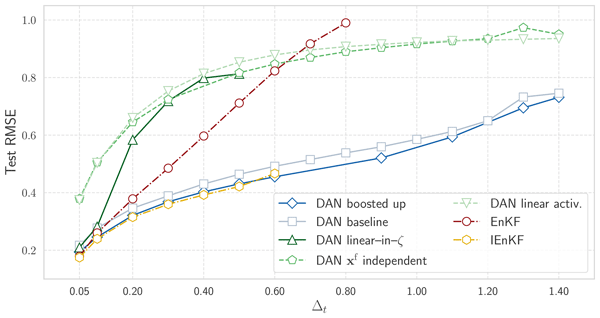
Deep learning has been used to discover new data assimilation methods to track chaotic dynamical systems. Strikingly, these data assimilation networks can match the accuracy of ensemble-based methods using only a single state forecast. This paper first investigates the reasons for this efficacy, and then shows that their performance in more nonlinear regimes matches that of the most accurate scalable data assimilation methods, with greater efficiency and robustness.
Jiahe Zheng, Zhengsen Xu, Rossella Arcucci, Sandy P. Harrison, Lincoln Linlin Xu, and Sibo Cheng
Nat. Hazards Earth Syst. Sci., 26, 2871–2895, https://doi.org/10.5194/nhess-26-2871-2026, https://doi.org/10.5194/nhess-26-2871-2026, 2026
Short summary
Short summary
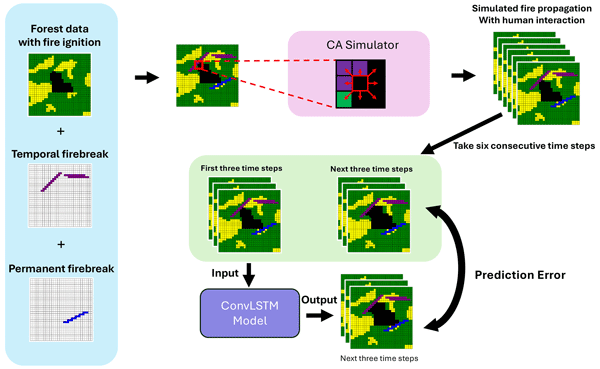
We introduce the first AI model that predicts wildfire spread with the placement of both permanent and temporary firebreaks. Our spatiotemporal model learns from simulation data to capture how fire interacts with changing suppression efforts over time. Our model runs fast enough for near real-time use and performs well across different wildfire events. This approach could lead to better tools for helping decision-makers understand where and when firebreaks are most effective.
Charlotte Durand, Tobias Sebastian Finn, Alban Farchi, Marc Bocquet, Julien Brajard, and Laurent Bertino
The Cryosphere, 19, 5613–5637, https://doi.org/10.5194/tc-19-5613-2025, https://doi.org/10.5194/tc-19-5613-2025, 2025
Short summary
Short summary
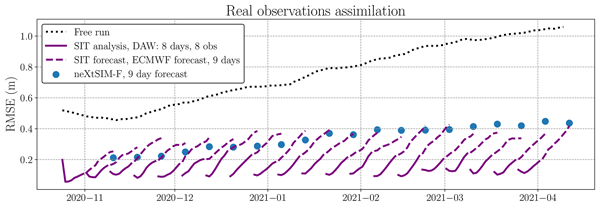
This paper presents a four-dimensional variational data assimilation system based on a neural network emulator for sea-ice thickness, learned from neXtSIM (neXt generation Sea Ice Model) simulation outputs. Testing with simulated and real observation retrievals, the system improves forecasts and bias error, performing comparably to operational methods, demonstrating the promise of sea-ice data-driven data assimilation systems.
Arianna Olivelli, Rossella Arcucci, Mark Rehkämper, and Tina van de Flierdt
Earth Syst. Sci. Data, 17, 3679–3699, https://doi.org/10.5194/essd-17-3679-2025, https://doi.org/10.5194/essd-17-3679-2025, 2025
Short summary
Short summary
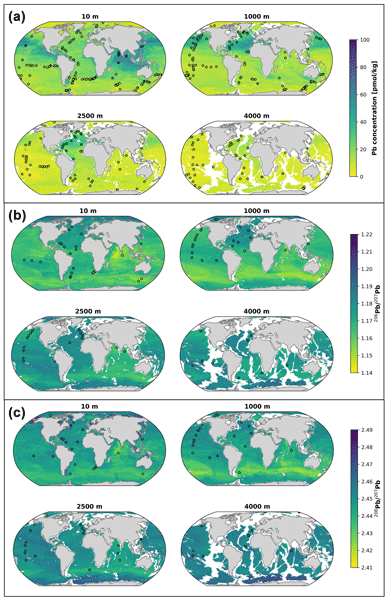
In this study, we use machine learning models to produce the first global maps of Pb concentrations and isotope compositions in the ocean. In line with observations, we find that (i) the surface Indian Ocean has the highest levels of pollution, (ii) pollution from previous decades is sinking in the North Atlantic and Pacific oceans, and (iii) waters carrying Pb pollution are spreading from the Southern Ocean throughout the Southern Hemisphere at intermediate depths.
Joffrey Dumont Le Brazidec, Pierre Vanderbecken, Alban Farchi, Grégoire Broquet, Gerrit Kuhlmann, and Marc Bocquet
Geosci. Model Dev., 18, 3607–3622, https://doi.org/10.5194/gmd-18-3607-2025, https://doi.org/10.5194/gmd-18-3607-2025, 2025
Short summary
Short summary
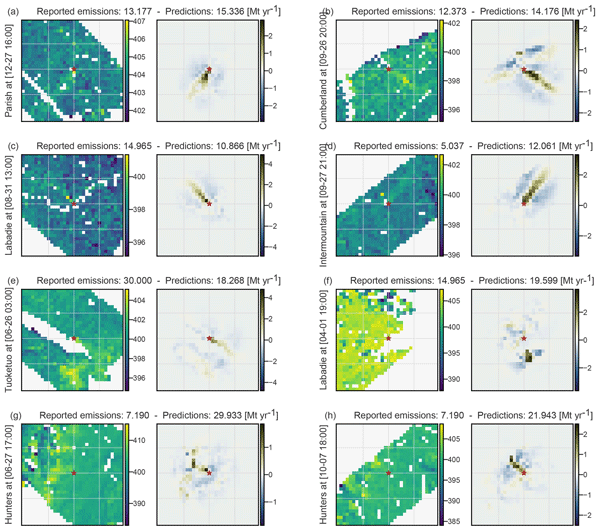
We developed a deep learning method to estimate CO2 emissions from power plants using satellite images. Trained and validated on simulated data, our model accurately predicts emissions despite challenges like cloud cover. When applied to real OCO3 satellite images, the results closely match reported emissions. This study shows that neural networks trained on simulations can effectively analyse real satellite data, offering a new way to monitor CO2 emissions from space.
Simon Driscoll, Alberto Carrassi, Julien Brajard, Laurent Bertino, Einar Ólason, Marc Bocquet, and Amos Lawless
EGUsphere, https://doi.org/10.5194/egusphere-2024-2476, https://doi.org/10.5194/egusphere-2024-2476, 2024
Preprint archived
Short summary
Short summary
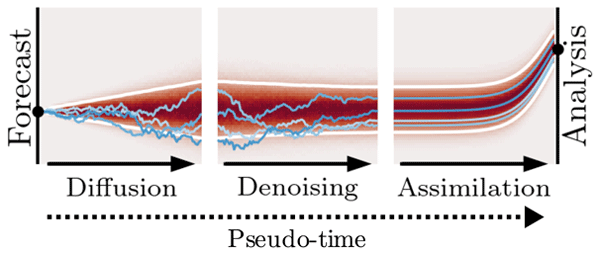
The formation and evolution of sea ice melt ponds (ponds of melted water) are complex, insufficiently understood and represented in models with considerable uncertainty. These uncertain representations are not traditionally included in climate models potentially causing the known underestimation of sea ice loss in climate models. Our work creates the first observationally based machine learning model of melt ponds that is also a ready and viable candidate to be included in climate models.
Tobias Sebastian Finn, Lucas Disson, Alban Farchi, Marc Bocquet, and Charlotte Durand
Nonlin. Processes Geophys., 31, 409–431, https://doi.org/10.5194/npg-31-409-2024, https://doi.org/10.5194/npg-31-409-2024, 2024
Short summary
Short summary
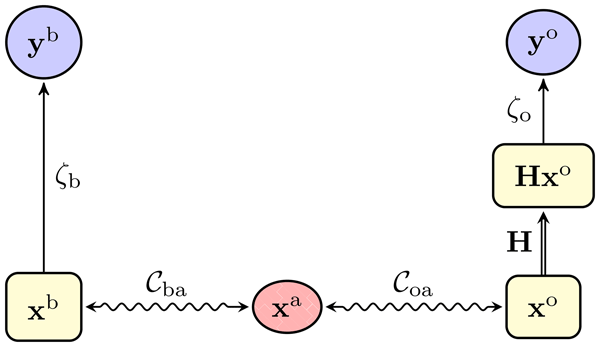
We train neural networks as denoising diffusion models for state generation in the Lorenz 1963 system and demonstrate that they learn an internal representation of the system. We make use of this learned representation and the pre-trained model in two downstream tasks: surrogate modelling and ensemble generation. For both tasks, the diffusion model can outperform other more common approaches. Thus, we see a potential of representation learning with diffusion models for dynamical systems.
Marc Bocquet, Pierre J. Vanderbecken, Alban Farchi, Joffrey Dumont Le Brazidec, and Yelva Roustan
Nonlin. Processes Geophys., 31, 335–357, https://doi.org/10.5194/npg-31-335-2024, https://doi.org/10.5194/npg-31-335-2024, 2024
Short summary
Short summary
A novel approach, optimal transport data assimilation (OTDA), is introduced to merge DA and OT concepts. By leveraging OT's displacement interpolation in space, it minimises mislocation errors within DA applied to physical fields, such as water vapour, hydrometeors, and chemical species. Its richness and flexibility are showcased through one- and two-dimensional illustrations.
Yumeng Chen, Polly Smith, Alberto Carrassi, Ivo Pasmans, Laurent Bertino, Marc Bocquet, Tobias Sebastian Finn, Pierre Rampal, and Véronique Dansereau
The Cryosphere, 18, 2381–2406, https://doi.org/10.5194/tc-18-2381-2024, https://doi.org/10.5194/tc-18-2381-2024, 2024
Short summary
Short summary
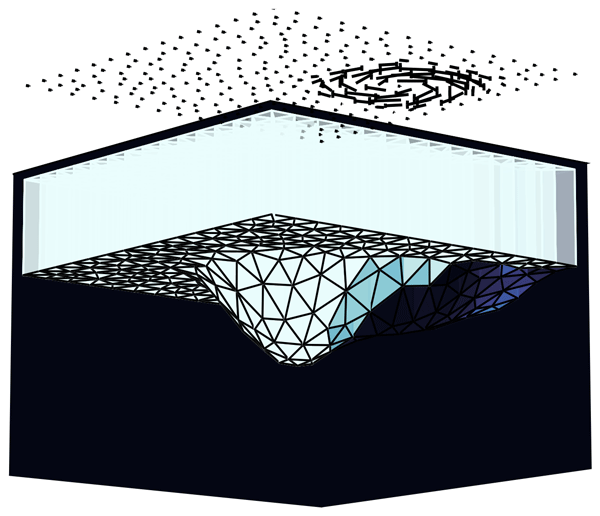
We explore multivariate state and parameter estimation using a data assimilation approach through idealised simulations in a dynamics-only sea-ice model based on novel rheology. We identify various potential issues that can arise in complex operational sea-ice models when model parameters are estimated. Even though further investigation will be needed for such complex sea-ice models, we show possibilities of improving the observed and the unobserved model state forecast and parameter accuracy.
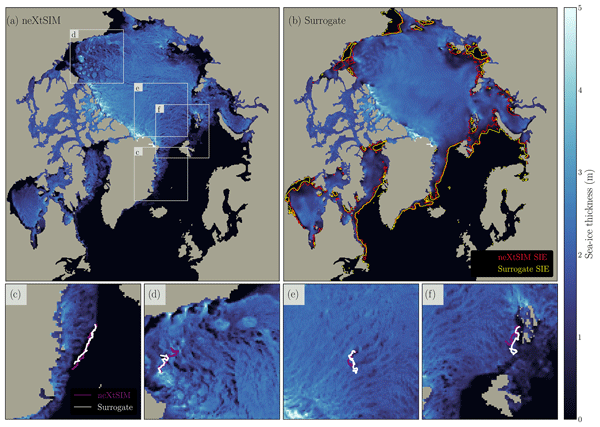
Charlotte Durand, Tobias Sebastian Finn, Alban Farchi, Marc Bocquet, Guillaume Boutin, and Einar Ólason
The Cryosphere, 18, 1791–1815, https://doi.org/10.5194/tc-18-1791-2024, https://doi.org/10.5194/tc-18-1791-2024, 2024
Short summary
Short summary
This paper focuses on predicting Arctic-wide sea-ice thickness using surrogate modeling with deep learning. The model has a predictive power of 12 h up to 6 months. For this forecast horizon, persistence and daily climatology are systematically outperformed, a result of learned thermodynamics and advection. Consequently, surrogate modeling with deep learning proves to be effective at capturing the complex behavior of sea ice.
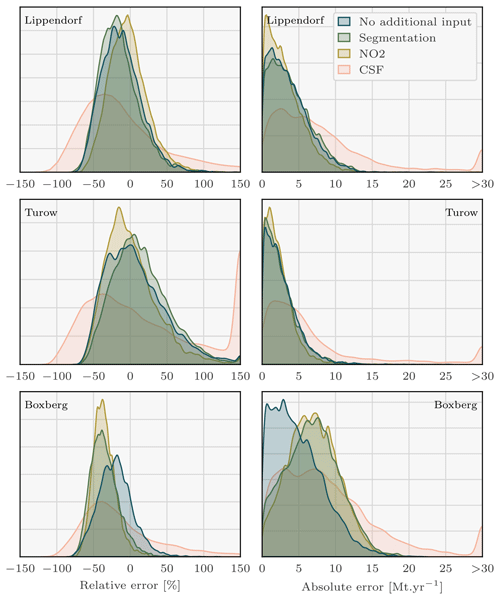
Joffrey Dumont Le Brazidec, Pierre Vanderbecken, Alban Farchi, Grégoire Broquet, Gerrit Kuhlmann, and Marc Bocquet
Geosci. Model Dev., 17, 1995–2014, https://doi.org/10.5194/gmd-17-1995-2024, https://doi.org/10.5194/gmd-17-1995-2024, 2024
Short summary
Short summary
Our research presents an innovative approach to estimating power plant CO2 emissions from satellite images of the corresponding plumes such as those from the forthcoming CO2M satellite constellation. The exploitation of these images is challenging due to noise and meteorological uncertainties. To overcome these obstacles, we use a deep learning neural network trained on simulated CO2 images. Our method outperforms alternatives, providing a positive perspective for the analysis of CO2M images.
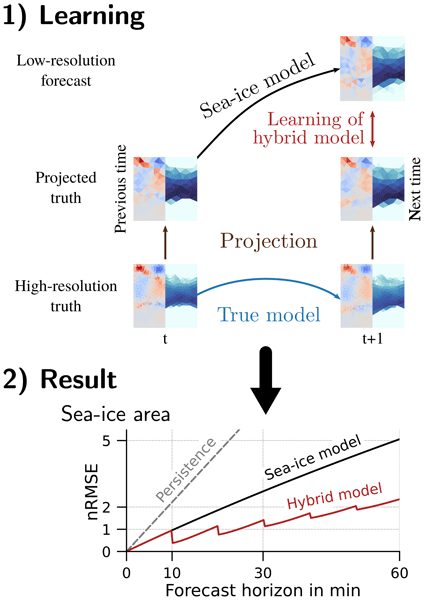
Tobias Sebastian Finn, Charlotte Durand, Alban Farchi, Marc Bocquet, Yumeng Chen, Alberto Carrassi, and Véronique Dansereau
The Cryosphere, 17, 2965–2991, https://doi.org/10.5194/tc-17-2965-2023, https://doi.org/10.5194/tc-17-2965-2023, 2023
Short summary
Short summary
We combine deep learning with a regional sea-ice model to correct model errors in the sea-ice dynamics of low-resolution forecasts towards high-resolution simulations. The combined model improves the forecast by up to 75 % and thereby surpasses the performance of persistence. As the error connection can additionally be used to analyse the shortcomings of the forecasts, this study highlights the potential of combined modelling for short-term sea-ice forecasting.
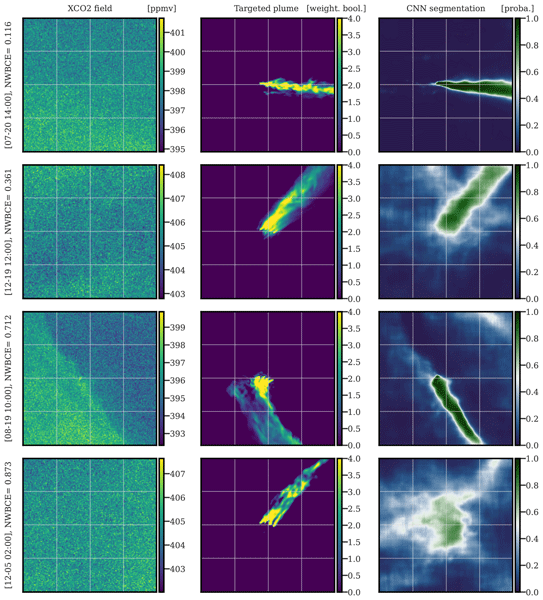
Joffrey Dumont Le Brazidec, Pierre Vanderbecken, Alban Farchi, Marc Bocquet, Jinghui Lian, Grégoire Broquet, Gerrit Kuhlmann, Alexandre Danjou, and Thomas Lauvaux
Geosci. Model Dev., 16, 3997–4016, https://doi.org/10.5194/gmd-16-3997-2023, https://doi.org/10.5194/gmd-16-3997-2023, 2023
Short summary
Short summary
Monitoring of CO2 emissions is key to the development of reduction policies. Local emissions, from cities or power plants, may be estimated from CO2 plumes detected in satellite images. CO2 plumes generally have a weak signal and are partially concealed by highly variable background concentrations and instrument errors, which hampers their detection. To address this problem, we propose and apply deep learning methods to detect the contour of a plume in simulated CO2 satellite images.
Caili Zhong, Sibo Cheng, Matthew Kasoar, and Rossella Arcucci
Nat. Hazards Earth Syst. Sci., 23, 1755–1768, https://doi.org/10.5194/nhess-23-1755-2023, https://doi.org/10.5194/nhess-23-1755-2023, 2023
Short summary
Short summary
This paper introduces a digital twin fire model using machine learning techniques to improve the efficiency of global wildfire predictions. The proposed model also manages to efficiently adjust the prediction results thanks to data assimilation techniques. The proposed digital twin runs 500 times faster than the current state-of-the-art physics-based model.
Pierre J. Vanderbecken, Joffrey Dumont Le Brazidec, Alban Farchi, Marc Bocquet, Yelva Roustan, Élise Potier, and Grégoire Broquet
Atmos. Meas. Tech., 16, 1745–1766, https://doi.org/10.5194/amt-16-1745-2023, https://doi.org/10.5194/amt-16-1745-2023, 2023
Short summary
Short summary
Instruments dedicated to monitoring atmospheric gaseous compounds from space will provide images of urban-scale plumes. We discuss here the use of new metrics to compare observed plumes with model predictions that will be less sensitive to meteorology uncertainties. We have evaluated our metrics on diverse plumes and shown that by eliminating some aspects of the discrepancies, they are indeed less sensitive to meteorological variations.
Joffrey Dumont Le Brazidec, Marc Bocquet, Olivier Saunier, and Yelva Roustan
Geosci. Model Dev., 16, 1039–1052, https://doi.org/10.5194/gmd-16-1039-2023, https://doi.org/10.5194/gmd-16-1039-2023, 2023
Short summary
Short summary
When radionuclides are released into the atmosphere, the assessment of the consequences depends on the evaluation of the magnitude and temporal evolution of the release, which can be highly variable as in the case of Fukushima Daiichi.
Here, we propose Bayesian inverse modelling methods and the reversible-jump Markov chain Monte Carlo technique, which allows one to evaluate the temporal variability of the release and to integrate different types of information in the source reconstruction.
Colin Grudzien and Marc Bocquet
Geosci. Model Dev., 15, 7641–7681, https://doi.org/10.5194/gmd-15-7641-2022, https://doi.org/10.5194/gmd-15-7641-2022, 2022
Short summary
Short summary
Iterative optimization techniques, the state of the art in data assimilation, have largely focused on extending forecast accuracy to moderate- to long-range forecast systems. However, current methodology may not be cost-effective in reducing forecast errors in online, short-range forecast systems. We propose a novel optimization of these techniques for online, short-range forecast cycles, simultaneously providing an improvement in forecast accuracy and a reduction in the computational cost.
Cited articles
Alexandridis, A., Vakalis, D., Siettos, C. I., and Bafas, G. V.: A Cellular Automata Model for Forest Fire Spread Prediction: The Case of the Wildfire That Swept through Spetses Island in 1990, Applied Mathematics and Computation, 204, 191–201, https://doi.org/10.1016/j.amc.2008.06.046, 2008. a, b, c, d, e, f, g, h, i
Ando, K., Onishi, K., Bale, R., Kuroda, A., and Tsubokura, M.: Nonlinear Reduced-Order Modeling for Three-Dimensional Turbulent Flow by Large-Scale Machine Learning, Computers & Fluids, 266, 106047, https://doi.org/10.1016/j.compfluid.2023.106047, 2023. a
Andry, G., Rozet, F., Lewin, S., Rochman, O., Mangeleer, V., Pirlet, M., Faulx, E., Grégoire, M., and Louppe, G.: Appa: Bending Weather Dynamics with Latent Diffusion Models for Global Data Assimilation, arXiv [preprint], https://doi.org/10.48550/arXiv.2504.18720, 2025. a
Austin, J., Johnson, D. D., Ho, J., Tarlow, D., and van den Berg, R.: Structured Denoising Diffusion Models in Discrete State-Spaces, Advances in Neural Information Processing Systems, 34, 17981–17993, 2021. a
Bakhshaii, A. and Johnson, E.: A Review of a New Generation of Wildfire–Atmosphere Modeling, Canadian Journal of Forest Research, 49, 565–574, https://doi.org/10.1139/cjfr-2018-0138, 2019. a
Behrens, G., Beucler, T., Iglesias-Suarez, F., Yu, S., Gentine, P., Pritchard, M., Schwabe, M., and Eyring, V.: Simulating Atmospheric Processes in ESMs and Quantifying Uncertainties with Deep Learning Multi-Member and Stochastic Parameterizations, Journal of Advances in Modeling Earth Systems, 17, e2024MS004272, https://doi.org/10.1029/2024MS004272, 2025. a
Bessho, K., Date, K., Hayashi, M., Ikeda, A., Imai, T., Inoue, H., Kumagai, Y., Miyakawa, T., Murata, H., Ohno, T., Okuyama, A., Oyama, R., Sasaki, Y., Shimazu, Y., Shimoji, K., Sumida, Y., Suzuki, M., Taniguchi, H., Tsuchiyama, H., Uesawa, D., Yokota, H., and Yoshida, R.: An Introduction to Himawari-8/9 – Japan's New-Generation Geostationary Meteorological Satellites, Journal of the Meteorological Society of Japan. Ser. II, 94, 151–183, https://doi.org/10.2151/jmsj.2016-009, 2016. a
Bhowmik, R. T., Jung, Y. S., Aguilera, J. A., Prunicki, M., and Nadeau, K.: A Multi-Modal Wildfire Prediction and Early-Warning System Based on a Novel Machine Learning Framework, Journal of Environmental Management, 341, 117908, https://doi.org/10.1016/j.jenvman.2023.117908, 2023. a
Bjånes, A., De La Fuente, R., and Mena, P.: A Deep Learning Ensemble Model for Wildfire Susceptibility Mapping, Ecological Informatics, 65, 101397, https://doi.org/10.1016/j.ecoinf.2021.101397, 2021. a
Brenowitz, N. D. and Bretherton, C. S.: Prognostic Validation of a Neural Network Unified Physics Parameterization, Geophysical Research Letters, 45, 6289–6298, https://doi.org/10.1029/2018GL078510, 2018. a
Brenowitz, N. D., Ge, T., Subramaniam, A., Manshausen, P., Gupta, A., Hall, D. M., Mardani, M., Vahdat, A., Kashinath, K., and Pritchard, M. S.: Climate in a Bottle: Towards a Generative Foundation Model for the Kilometer-Scale Global Atmosphere, arXiv [preprint], https://doi.org/10.48550/arXiv.2505.06474, 2025. a
Buch, J., Williams, A. P., Juang, C. S., Hansen, W. D., and Gentine, P.: SMLFire1.0: a stochastic machine learning (SML) model for wildfire activity in the western United States, Geoscientific Model Development, 16, 3407–3433, https://doi.org/10.5194/gmd-16-3407-2023, 2023. a, b
Casale, F. P., Dalca, A. V., Saglietti, L., Listgarten, J., and Fusi, N.: Gaussian Process Prior Variational Autoencoders, arXiv [preprint], https://doi.org/10.48550/arXiv.1810.11738, 2018. a
Chen, M., Mei, S., Fan, J., and Wang, M.: An Overview of Diffusion Models: Applications, Guided Generation, Statistical Rates and Optimization, arXiv [preprint], https://doi.org/10.48550/ARXIV.2404.07771, 2024a. a
Chen, T., Zhang, R., and Hinton, G.: Analog Bits: Generating Discrete Data Using Diffusion Models with Self-Conditioning, arXiv [preprint], https://doi.org/10.48550/arXiv.2208.04202, 2023. a, b
Chen, X., Tian, Y., Zheng, C., and Liu, X.: AutoST-Net: A Spatiotemporal Feature-Driven Approach for Accurate Forest Fire Spread Prediction from Remote Sensing Data, Forests, 15, 705, https://doi.org/10.3390/f15040705, 2024b. a, b
Dahan, K. S., Kasei, R. A., Husseini, R., Sarr, M., and Said, M. Y.: Analysis of the Future Potential Impact of Environmental and Climate Changes on Wildfire Spread in Ghana's Ecological Zones Using a Random Forest (RF) Machine Learning Approach, Remote Sensing Applications: Society and Environment, 33, 101091, https://doi.org/10.1016/j.rsase.2023.101091, 2024. a
Daunhawer, I., Sutter, T. M., Chin-Cheong, K., Palumbo, E., and Vogt, J. E.: On the Limitations of Multimodal VAEs, arXiv [preprint], https://doi.org/10.48550/arXiv.2110.04121, 2022. a
Dhariwal, P. and Nichol, A. Q.: Diffusion Models Beat GANs on Image Synthesis, Advances in Neural Information Processing Systems, 34, 8780–8794, 2021. a
Drury, S. A., Rauscher, H. M., Banwell, E. M., Huang, S., and Lavezzo, T. L.: The Interagency Fuels Treatment Decision Support System: Functionality for Fuels Treatment Planning, Fire Ecology, 12, 103–123, https://doi.org/10.4996/fireecology.1201103, 2016. a
Finn, T. S., Durand, C., Farchi, A., Bocquet, M., Rampal, P., and Carrassi, A.: Generative Diffusion for Regional Surrogate Models From Sea-Ice Simulations, Journal of Advances in Modeling Earth Systems, 16, e2024MS004395, https://doi.org/10.1029/2024MS004395, 2024. a
Finney, M. A.: Fire Growth Using Minimum Travel Time Methods, Canadian Journal of Forest Research, 32, 1420–1424, https://doi.org/10.1139/x02-068, 2002. a
Finney, M. A., Grenfell, I. C., McHugh, C. W., Seli, R. C., Trethewey, D., Stratton, R. D., and Brittain, S.: A Method for Ensemble Wildland Fire Simulation, Environmental Modeling and Assessment, 16, 153–167, https://doi.org/10.1007/s10666-010-9241-3, 2011. a, b
Freire, J. G. and DaCamara, C. C.: Using cellular automata to simulate wildfire propagation and to assist in fire management, Natural Hazards and Earth System Sciences, 19, 169–179, https://doi.org/10.5194/nhess-19-169-2019, 2019. a, b
Gajendiran, K., Kandasamy, S., and Narayanan, M.: Influences of Wildfire on the Forest Ecosystem and Climate Change: A Comprehensive Study, Environmental Research, 240, 117537, https://doi.org/10.1016/j.envres.2023.117537, 2024. a
Gao, Z., Shi, X., Han, B., Wang, H., Jin, X., Maddix, D., Zhu, Y., Li, M., and Wang, Y.: PreDiff: Precipitation Nowcasting with Latent Diffusion Models, arXiv [preprint], https://doi.org/10.48550/arXiv.2307.10422, 2023. a
Giglio, L., Schroeder, W., and Justice, C. O.: The Collection 6 MODIS Active Fire Detection Algorithm and Fire Products, Remote Sensing of Environment, 178, 31–41, https://doi.org/10.1016/j.rse.2016.02.054, 2016. a
Goldberger, Gordon, and Greenspan: An Efficient Image Similarity Measure Based on Approximations of KL-divergence between Two Gaussian Mixtures, in: Proceedings Ninth IEEE International Conference on Computer Vision, 1, 487–493, https://doi.org/10.1109/ICCV.2003.1238387, 2003. a
Gorelick, N., Hancher, M., Dixon, M., Ilyushchenko, S., Thau, D., and Moore, R.: Google Earth Engine: Planetary-scale Geospatial Analysis for Everyone, Remote Sensing of Environment, 202, 18–27, https://doi.org/10.1016/j.rse.2017.06.031, 2017. a
He, K., Zhang, X., Ren, S., and Sun, J.: Deep Residual Learning for Image Recognition, arXiv [preprint], https://doi.org/10.48550/arXiv.1512.03385, 2015. a
Heusel, M., Ramsauer, H., Unterthiner, T., Nessler, B., and Hochreiter, S.: GANs Trained by a Two Time-Scale Update Rule Converge to a Local Nash Equilibrium, arXiv [preprint], https://doi.org/10.48550/arXiv.1706.08500, 2018. a
Holsinger, L., Parks, S. A., and Miller, C.: Weather, Fuels, and Topography Impede Wildland Fire Spread in Western US Landscapes, Forest Ecology and Management, 380, 59–69, https://doi.org/10.1016/j.foreco.2016.08.035, 2016. a
Jain, P., Coogan, S. C. P., Subramanian, S. G., Crowley, M., Taylor, S., and Flannigan, M. D.: A Review of Machine Learning Applications in Wildfire Science and Management, Environmental Reviews, 28, 478–505, https://doi.org/10.1139/er-2020-0019, 2020. a
Ji, Y., Gong, B., Langguth, M., Mozaffari, A., and Zhi, X.: CLGAN: a generative adversarial network (GAN)-based video prediction model for precipitation nowcasting, Geoscientific Model Development, 16, 2737–2752, https://doi.org/10.5194/gmd-16-2737-2023, 2023. a
Jiang, W., Qiao, Y., Su, G., Li, X., Meng, Q., Wu, H., Quan, W., Wang, J., and Wang, F.: WFNet: A Hierarchical Convolutional Neural Network for Wildfire Spread Prediction, Environmental Modelling & Software, 170, 105841, https://doi.org/10.1016/j.envsoft.2023.105841, 2023. a, b
Khennou, F. and Akhloufi, M. A.: Improving Wildland Fire Spread Prediction Using Deep U-Nets, Science of Remote Sensing, 8, 100101, https://doi.org/10.1016/j.srs.2023.100101, 2023. a
Lavda, F., Gregorová, M., and Kalousis, A.: Improving VAE Generations of Multimodal Data through Data-Dependent Conditional Priors, arXiv [preprint], https://doi.org/10.48550/arXiv.1911.10885, 2019. a
Leinonen, J., Hamann, U., Nerini, D., Germann, U., and Franch, G.: Latent Diffusion Models for Generative Precipitation Nowcasting with Accurate Uncertainty Quantification, arXiv [preprint], https://doi.org/10.48550/arXiv.2304.12891, 2023. a
Maji, D., Sigedar, P., and Singh, M.: Attention Res-UNet with Guided Decoder for Semantic Segmentation of Brain Tumors, Biomedical Signal Processing and Control, 71, 103077, https://doi.org/10.1016/j.bspc.2021.103077, 2022. a
Makhaba, M. and Winberg, S.: Wildfire Path Prediction Spread Using Machine Learning, in: 2022 International Conference on Electrical, Computer and Energy Technologies (ICECET), 1–5, https://doi.org/10.1109/ICECET55527.2022.9872974, 2022. a
Mandel, J., Beezley, J. D., and Kochanski, A. K.: Coupled atmosphere-wildland fire modeling with WRF 3.3 and SFIRE 2011, Geoscientific Model Development, 4, 591–610, https://doi.org/10.5194/gmd-4-591-2011, 2011. a
Marjani, M., Ahmadi, S. A., and Mahdianpari, M.: FirePred: A Hybrid Multi-Temporal Convolutional Neural Network Model for Wildfire Spread Prediction, Ecological Informatics, 78, 102282, https://doi.org/10.1016/j.ecoinf.2023.102282, 2023. a
Meuer, J., Witte, M., Finn, T. S., Timmreck, C., Ludwig, T., and Kadow, C.: Latent Diffusion Model for Generating Ensembles of Climate Simulations, arXiv [preprint], https://doi.org/10.48550/arXiv.2407.02070, 2024. a
Mu, J., Chen, C., Zhu, W., Li, S., and Zhou, Y.: Taming Mode Collapse in Generative Adversarial Networks Using Cooperative Realness Discriminators, IET Image Processing, 16, 2240–2262, https://doi.org/10.1049/ipr2.12487, 2022. a
Nath, P., Shukla, P., Wang, S., and Quilodrán-Casas, C.: Forecasting Tropical Cyclones with Cascaded Diffusion Models, arXiv [preprint], https://doi.org/10.48550/arXiv.2310.01690, 2024. a
Ou, Z., Nai, C., Pan, B., Zheng, Y., Shen, C., Jiang, P., Liu, X., Tang, Q., Li, W., and Pan, M.: DRUM: Diffusion-based Runoff Model for Probabilistic Flood Forecasting, Geophysical Research Letters, 52, e2025GL115705, https://doi.org/10.1029/2025GL115705, 2025. a
Paçal, A., Hassler, B., Weigel, K., Fernández-Torres, M.-Á., Camps-Valls, G., and Eyring, V.: Understanding European Heatwaves with Variational Autoencoders, EGUsphere [preprint], https://doi.org/10.5194/egusphere-2025-2460, 2025. a
Pelletier, N., Millard, K., and Darling, S.: Wildfire Likelihood in Canadian Treed Peatlands Based on Remote-Sensing Time-Series of Surface Conditions, Remote Sensing of Environment, 296, 113747, https://doi.org/10.1016/j.rse.2023.113747, 2023. a
Price, I., Sanchez-Gonzalez, A., Alet, F., Andersson, T. R., El-Kadi, A., Masters, D., Ewalds, T., Stott, J., Mohamed, S., Battaglia, P., Lam, R., and Willson, M.: GenCast: Diffusion-based Ensemble Forecasting for Medium-Range Weather, arXiv [preprint], https://doi.org/10.48550/arXiv.2312.15796, 2024. a
Rasp, S., Dueben, P. D., Scher, S., Weyn, J. A., Mouatadid, S., and Thuerey, N.: WeatherBench: A Benchmark Dataset for Data-Driven Weather Forecasting, Journal of Advances in Modeling Earth Systems, 12, e2020MS002203, https://doi.org/10.1029/2020MS002203, 2020. a
Redelmeier, D. A., Bloch, D. A., and Hickam, D. H.: Assessing Predictive Accuracy: How to Compare Brier Scores, Journal of Clinical Epidemiology, 44, 1141–1146, https://doi.org/10.1016/0895-4356(91)90146-Z, 1991. a
Ronneberger, O., Fischer, P., and Brox, T.: U-Net: Convolutional Networks for Biomedical Image Segmentation, arXiv [preprint], https://doi.org/10.48550/arXiv.1505.04597, 2015. a
Saxena, D. and Cao, J.: Generative Adversarial Networks (GANs): Challenges, Solutions, and Future Directions, ACM Comput. Surv., 54, 63:1–63:42, https://doi.org/10.1145/3446374, 2021. a
Shah, K. and Pantoja, M.: Wildfire Spread Prediction Using Attention Mechanisms in U-NET, in: 2023 3rd International Conference on Electrical, Computer, Communications and Mechatronics Engineering (ICECCME), 1–6, https://doi.org/10.1109/ICECCME57830.2023.10252734, 2023. a, b
Shidqi, N., Jeong, C., Park, S., Zeller, E., Nellikkattil, A. B., and Singh, K.: Generating High-Resolution Regional Precipitation Using Conditional Diffusion Model, arXiv [preprint], https://doi.org/10.48550/arXiv.2312.07112, 2023. a
Singh, J., Aarthi, M. S., and Idikkula, A. S.: Convolutional Neural Networks for Early Detection of Forest Fires, in: 2023 2nd International Conference on Automation, Computing and Renewable Systems (ICACRS), 777–780, https://doi.org/10.1109/ICACRS58579.2023.10404568, 2023. a
Song, J., Meng, C., and Ermon, S.: Denoising Diffusion Implicit Models, arXiv [preprint], https://doi.org/10.48550/arXiv.2010.02502, 2022. a, b, c
Srivastava, A., Valkov, L., Russell, C., Gutmann, M. U., and Sutton, C.: VEEGAN: Reducing Mode Collapse in GANs Using Implicit Variational Learning, arXiv [preprint], https://doi.org/10.48550/arXiv.1705.07761, 2017. a
Sun, X., Li, N., Chen, D., Chen, G., Sun, C., Shi, M., Gao, X., Wang, K., and Hezam, I. M.: A Forest Fire Prediction Model Based on Cellular Automata and Machine Learning, IEEE Access, 12, 55389–55403, https://doi.org/10.1109/ACCESS.2024.3389035, 2024. a
Trucchia, A., D'Andrea, M., Baghino, F., Fiorucci, P., Ferraris, L., Negro, D., Gollini, A., and Severino, M.: PROPAGATOR: An Operational Cellular-Automata Based Wildfire Simulator, Fire, 3, 26, https://doi.org/10.3390/fire3030026, 2020. a
Vaswani, A., Shazeer, N., Parmar, N., Uszkoreit, J., Jones, L., Gomez, A. N., ukasz Kaiser, Ł., and Polosukhin, I.: Attention Is All You Need, Advances in Neural Information Processing Systems, 30, 5998–6008, 2017. a
Vivekananthan, S.: Comparative Analysis of Generative Models: Enhancing Image Synthesis with VAEs, GANs, and Stable Diffusion, arXiv [preprint], https://doi.org/10.48550/arXiv.2408.08751, 2024. a
Walpole, E. H., Kuligowski, E. D., Cain, L., Fitzpatrick, A., and Salley, C.: Evacuation Decision-Making in the 2016 Chimney Tops 2 Fire: Results of a Household Survey, US Department of Commerce, National Institute of Standards and Technology, 2020. a
Wang, R., Guo, X., Pan, D., Clarisse, L., van Damme, M., Coheur, P.-F., Clerbaux, C., and Zondlo, M.: Wildfire Ammonia Emissions Derived from Satellite Observations: A Case Study of the 2018 Ferguson Fire in California, AGU Fall Meeting Abstracts, 2021, A35J-1789, 2021. a
Whittaker, T., Janik, R. A., and Oz, Y.: Turbulence Scaling from Deep Learning Diffusion Generative Models, Journal of Computational Physics, 514, 113239, https://doi.org/10.1016/j.jcp.2024.113239, 2024. a
Xie, Z.-C., Xu, Z.-D., Gai, P.-P., Xia, Z.-H., and Xu, Y.-S.: A Deep Learning–Based Surrogate Model for Spatial-Temporal Temperature Field Prediction in Subway Tunnel Fires via CFD Simulation, Journal of Dynamic Disasters, 1, 100002, https://doi.org/10.1016/j.jdd.2024.100002, 2025. a
Xu, Z., Li, J., and Xu, L.: Wildfire Risk Prediction: A Review, arXiv [preprint], https://doi.org/10.48550/arXiv.2405.01607, 2024. a
Yang, G. and Sommer, S.: A Denoising Diffusion Model for Fluid Field Prediction, arXiv [preprint], https://doi.org/10.48550/arXiv.2301.11661, 2023. a
Yu, W., Ghosh, A., Finn, T., Arcucci, R., Bocquet, M., and Cheng, S.: A Probabilistic Approach to Wildfire Spread Prediction Using a Denoising Diffusion Surrogate Model, Zenodo [code and data set], https://doi.org/10.5281/zenodo.15699653, 2025. a
Short summary
We introduce the first denoising diffusion model for wildfire spread prediction, a new kind of generative AI model that learns to simulate fires not just as one fixed outcome, but as a range of possible scenarios. This allows us to capture the inherent uncertainty of wildfire dynamics. Our model produces ensembles of forecasts that reflect physically meaningful distributions of where fire might go next.
We introduce the first denoising diffusion model for wildfire spread prediction, a new kind of...


