
Articles | Volume 18, issue 23
https://doi.org/10.5194/gmd-18-9451-2025
© Author(s) 2025. This work is distributed under
the Creative Commons Attribution 4.0 License.
the Creative Commons Attribution 4.0 License.
https://doi.org/10.5194/gmd-18-9451-2025
© Author(s) 2025. This work is distributed under
the Creative Commons Attribution 4.0 License.
the Creative Commons Attribution 4.0 License.
Development and technical paper
| 
03 Dec 2025
Development and technical paper |
| 03 Dec 2025
| 03 Dec 2025
Adjoint-based simultaneous state and parameter estimation in an Arctic Sea Ice-Ocean Model using MITgcm (c63m)
Guokun Lyu
Key Laboratory for Polar Science, Polar Research Institute of China, Ministry of Natural Resources, Shanghai, 200136, China
Shanghai Key Laboratory of Polar Life and Environment Sciences, School of Oceanography, Shanghai Jiao Tong University, Shanghai, 200230, China
Longjiang Mu
Laoshan Laboratory, Qingdao, 266100, China
Armin Koehl
Center for Earth System Research and Sustainability (CEN), Universität Hamburg, Hamburg, 54662, Germany

Key Laboratory for Polar Science, Polar Research Institute of China, Ministry of Natural Resources, Shanghai, 200136, China
Key Laboratory of Marine Hazards Forecasting, National Marine Environmental Forecasting Center, Ministry of Natural Resources, Beijing, 100081, China
Chuanyu Liu
Key Laboratory of Ocean Observation and Forecasting, and Key Laboratory of Ocean Circulation and Waves, Institute of Oceanology, Chinese Academy of Sciences, Qingdao, 266000, China
Related authors
Wenyu Shen, Xiaoping Pang, Meng Qu, Guokun Lv, Xunxiang Wu, Farui Jiang, Jianbo Shao, and Na Li
EGUsphere, https://doi.org/10.5194/egusphere-2026-4430, https://doi.org/10.5194/egusphere-2026-4430, 2026
Preprint archived
Short summary
Short summary
Melt ponds play an important role in the melting of Arctic sea ice, yet their different stages remain difficult to map accurately. This study used very high-resolution aerial imagery to distinguish melt pond stages and explored how they are associated with small-scale variations in ice surface topography. The findings provide new insight into late-summer sea ice conditions and support improved observations and understanding of Arctic climate change.
Xuri Zhang, Xueming Zhu, Ziqing Zu, Guokun Lv, Hailong Wang, Yan Yan, Jian Liu, and Hui Wang
Earth Syst. Sci. Data Discuss., https://doi.org/10.5194/essd-2026-440, https://doi.org/10.5194/essd-2026-440, 2026
Preprint under review for ESSD
Short summary
Short summary
This research presents a high-resolution ocean reanalysis dataset for the South China Sea covering 2001 to 2024. The dataset assimilates satellite remote sensing data and in-situ observations. It provides daily mean three-dimensional fields of temperature, salinity, currents, and sea surface height. Validation results show good agreement with observations. The dataset has been used to support studies of marine heatwaves, mesoscale eddies, and related processes in this important region.
Guokun Lyu, Armin Koehl, Xinrong Wu, Meng Zhou, and Detlef Stammer
Ocean Sci., 19, 305–319, https://doi.org/10.5194/os-19-305-2023, https://doi.org/10.5194/os-19-305-2023, 2023
Short summary
Short summary
Data assimilation techniques are important for combining observations with numerical models. Here, we approximate the adjoint of viscous-plastic dynamics (adjoint-VP) to replace the adjoint of free-drift dynamics (adjoint-FD) for developing an advanced Arctic Ocean and sea ice modeling and adjoint-based assimilation system. We find that adjoint-VP provides a better ocean and sea ice estimation than adjoint-FD, considering the residual errors and adjustments of the atmospheric states.
Guokun Lyu, Nuno Serra, Meng Zhou, and Detlef Stammer
Ocean Sci., 18, 51–66, https://doi.org/10.5194/os-18-51-2022, https://doi.org/10.5194/os-18-51-2022, 2022
Short summary
Short summary
This study explores the Arctic sea level variability depending on different timescales and the relation to temperature, salinity and mass changes, identifying key parameters and regions that need to be observed coordinately. The decadal sea level variability reflects salinity changes. But it can only reflect salinity change at periods of greater than 1 year, highlighting the requirement for enhancing in situ hydrographic observations and complicated interpolation methods.
Bernd Uebbing, Kristin Vielberg, Roelof Rietbroek, Bene Aschenneller, Armin Köhl, and Jürgen Kusche
Earth Syst. Sci. Data, 18, 6945–6972, https://doi.org/10.5194/essd-18-6945-2026, https://doi.org/10.5194/essd-18-6945-2026, 2026
Short summary
Short summary
About 90% of the excess heat in the Earth system is stored within the oceans leading to significant ocean warming and corresponding (volumetric) sea level change. We quantify global and regional ocean heat content change (OHC) by consistently combining space-geodetic altimetry, gravity and in situ temperature profile observations. Our results agree well with published estimates and highlight the benefit of consistently processing space-geodetic datasets for deriving high quality OHC estimates.
Wenxuan Liu, Ruibo Lei, Taoyong Jin, Heyang Sun, Michel Tsamados, Isolde A. Glissenaar, Jack Christopher Landy, and Yi Zhou
The Cryosphere, 20, 4839–4876, https://doi.org/10.5194/tc-20-4839-2026, https://doi.org/10.5194/tc-20-4839-2026, 2026
Short summary
Short summary
Arctic sea ice is thinning, but its height above the ocean is still hard to measure, especially in summer when melt ponds can look like open water from space. We developed a method that uses laser measurements from the Ice, Cloud, and land Elevation Satellite-2 and nearby satellite images to better separate ice from open water. It captures small ridges more clearly, improves lead detection, and provides year-round freeboard maps that can support better estimates of ice thickness.
Wenyu Shen, Xiaoping Pang, Meng Qu, Guokun Lv, Xunxiang Wu, Farui Jiang, Jianbo Shao, and Na Li
EGUsphere, https://doi.org/10.5194/egusphere-2026-4430, https://doi.org/10.5194/egusphere-2026-4430, 2026
Preprint archived
Short summary
Short summary
Melt ponds play an important role in the melting of Arctic sea ice, yet their different stages remain difficult to map accurately. This study used very high-resolution aerial imagery to distinguish melt pond stages and explored how they are associated with small-scale variations in ice surface topography. The findings provide new insight into late-summer sea ice conditions and support improved observations and understanding of Arctic climate change.
Xuri Zhang, Xueming Zhu, Ziqing Zu, Guokun Lv, Hailong Wang, Yan Yan, Jian Liu, and Hui Wang
Earth Syst. Sci. Data Discuss., https://doi.org/10.5194/essd-2026-440, https://doi.org/10.5194/essd-2026-440, 2026
Preprint under review for ESSD
Short summary
Short summary
This research presents a high-resolution ocean reanalysis dataset for the South China Sea covering 2001 to 2024. The dataset assimilates satellite remote sensing data and in-situ observations. It provides daily mean three-dimensional fields of temperature, salinity, currents, and sea surface height. Validation results show good agreement with observations. The dataset has been used to support studies of marine heatwaves, mesoscale eddies, and related processes in this important region.
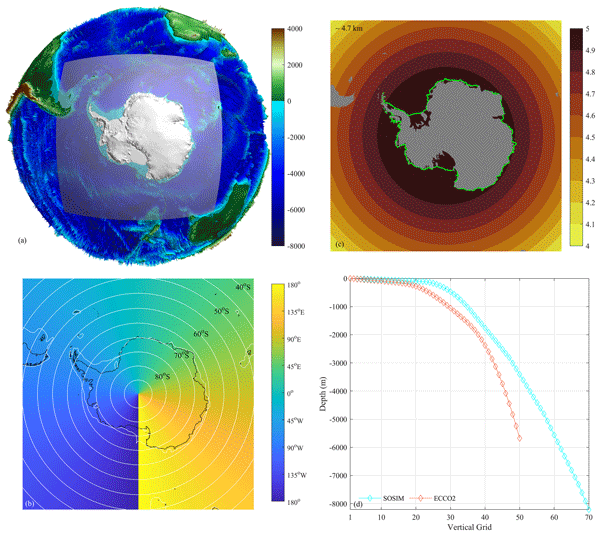
Chengyan Liu, Zhaomin Wang, Dake Chen, Xianxian Han, Hengling Leng, Xi Liang, Liangjun Yan, Xiang Li, Craig Stevens, Andrew McC. Hogg, Kazuya Kusahara, Kaihe Yamazaki, Kay I. Ohshima, Meng Zhou, Xiao Cheng, Dongxiao Wang, Changming Dong, Jiping Liu, Qinghua Yang, Xichen Li, Ruibo Lei, Minghu Ding, Zhaoru Zhang, Dujuan Kang, Di Qi, Tongya Liu, Jihai Dong, Lu An, Ru Chen, Tong Zhang, Xiaoming Hu, Bo Han, Haibo Bi, Qi Shu, Longjiang Mu, Shiming Xu, Hu Yang, Hailong Liu, Tingfeng Dou, Zhixuan Feng, Lei Zheng, Xueyuan Tang, Guitao Shi, Yongqing Cai, Bingrui Li, Yang Wu, Xia Lin, Wenjin Sun, Yu Liu, Kai Yu, Yu Zhang, Weizeng Shao, Xiaoyu Wang, Shaojun Zheng, Chengyi Yuan, Chunxia Zhou, Jian Liu, Yang Liu, Yue Xia, Xiaoyu Pan, Jiabao Zeng, Kechen Liu, Jiahao Fan, Chen Cheng, and Qi Li
Geosci. Model Dev., 19, 2985–3033, https://doi.org/10.5194/gmd-19-2985-2026, https://doi.org/10.5194/gmd-19-2985-2026, 2026
Short summary
Short summary
We developed a high-resolution computer model to simulate how the ocean, sea ice, and ice shelves interact around Antarctica. This helps us understand their critical role in global climate and sea-level rise. Our model successfully captures essential features like major currents and seasonal ice changes. Despite some remaining biases, it provides a useful tool for predicting future changes in this vital and rapidly evolving region.
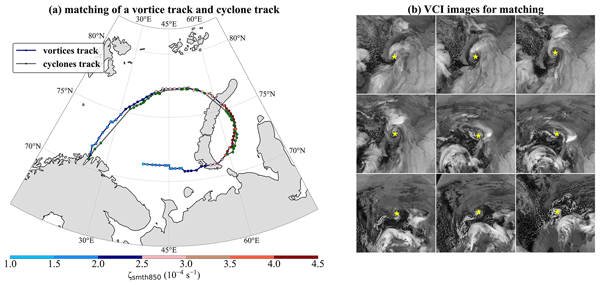
Runzhuo Fang, Jinfeng Ding, Wenjuan Gao, Xi Liang, Zhuoqi Chen, Chuanfeng Zhao, Haijin Dai, and Lei Liu
Earth Syst. Sci. Data, 17, 6049–6069, https://doi.org/10.5194/essd-17-6049-2025, https://doi.org/10.5194/essd-17-6049-2025, 2025
Short summary
Short summary
Integrated Multi-source Polar Mesoscale Cyclone Tracks (IMPMCT) is a dataset containing a 24-year record (2001–2024) of polar storms in the Nordic Seas. These storms, called Polar Mesoscale Cyclones (PMCs), sometimes cause extreme winds and waves, threatening marine operations. IMPMCT combines remote sensing measurements and reanalysis data to construct a comprehensive PMCs archive. It includes 1110 PMCs tracks, 16 001 cloud patterns, and 4472 wind records, providing fundamental data for advancing our understanding of their development mechanisms.
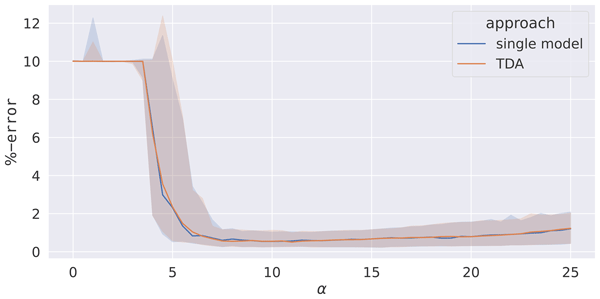
Philip David Kennedy, Abhirup Banerjee, Armin Köhl, and Detlef Stammer
Nonlin. Processes Geophys., 32, 353–365, https://doi.org/10.5194/npg-32-353-2025, https://doi.org/10.5194/npg-32-353-2025, 2025
Short summary
Short summary
This work introduces and evaluates two new tandem data assimilation techniques. The first uses two synchronised forward model runs before a single adjoint model run to consistently increase the precision of the parameter estimation. The second uses a lower-resolution model with adjoint equations to drive a higher-resolution target model through data assimilation with no loss in precision compared to data assimilation without tandem methods.
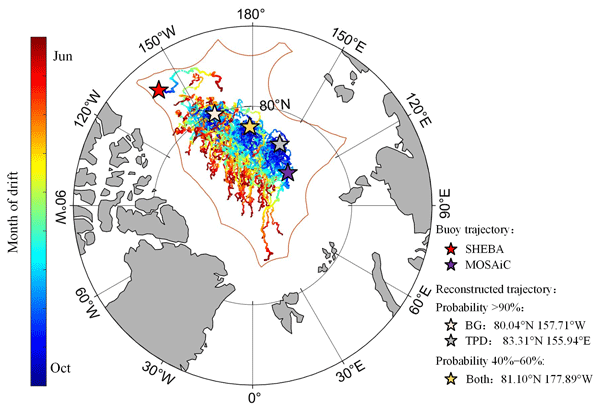
Fanyi Zhang, Ruibo Lei, Meng Qu, Na Li, Ying Chen, and Xiaoping Pang
The Cryosphere, 19, 3065–3087, https://doi.org/10.5194/tc-19-3065-2025, https://doi.org/10.5194/tc-19-3065-2025, 2025
Short summary
Short summary
We reconstructed sea ice drift trajectories and identified optimal deployment areas for Lagrangian observations in the central Arctic Ocean. The trajectories revealed a preference for ice advection towards the Transpolar Drift region over the Beaufort Gyre, with endpoints influenced by large-scale atmospheric circulation patterns. This study provides critical support for the planning and implementation of Lagrangian observations relying on ice floes in the central Arctic Ocean under changing environmental conditions.
Xiaoyu Wang, Longjiang Mu, and Xianyao Chen
Ocean Sci., 21, 577–586, https://doi.org/10.5194/os-21-577-2025, https://doi.org/10.5194/os-21-577-2025, 2025
Short summary
Short summary
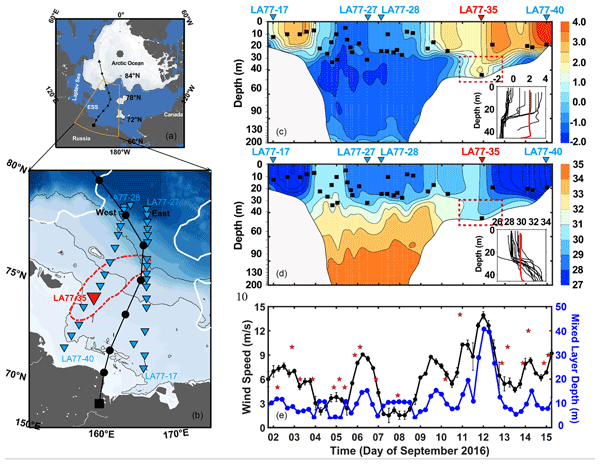
The East Siberian Sea has nearly 80 % of the subsea permafrost worldwide. The cold layer with a temperature around −1.5 ºC above the seafloor prevents heat transporting from above to melt permafrost and release methane from sediments. However, we observed a warming trend at the seafloor caused by wave-induced vertical mixing in the shelf. The intensified mixing can transport enormous heat downward, leading to warming of more than 3 °C at the bottom, putting the subsea permafrost at high risk.
Yoshihiro Nakayama, Alena Malyarenko, Hong Zhang, Ou Wang, Matthis Auger, Yafei Nie, Ian Fenty, Matthew Mazloff, Armin Köhl, and Dimitris Menemenlis
Geosci. Model Dev., 17, 8613–8638, https://doi.org/10.5194/gmd-17-8613-2024, https://doi.org/10.5194/gmd-17-8613-2024, 2024
Short summary
Short summary
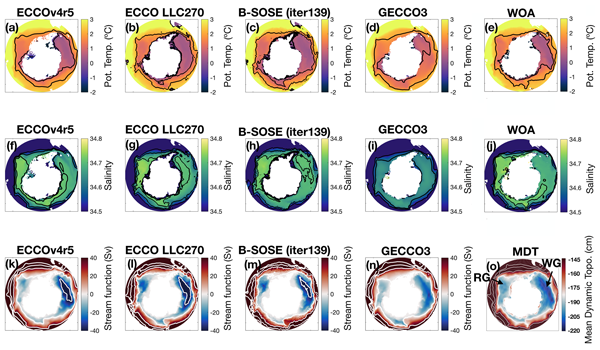
Global- and basin-scale ocean reanalyses are becoming easily accessible. However, such ocean reanalyses are optimized for their entire model domains and their ability to simulate the Southern Ocean requires evaluation. We conduct intercomparison analyses of Massachusetts Institute of Technology General Circulation Model (MITgcm)-based ocean reanalyses. They generally perform well for the open ocean, but open-ocean temporal variability and Antarctic continental shelves require improvements.
Yi Zhou, Xianwei Wang, Ruibo Lei, Arttu Jutila, Donald K. Perovich, Luisa von Albedyll, Dmitry V. Divine, Yu Zhang, and Christian Haas
EGUsphere, https://doi.org/10.5194/egusphere-2024-2821, https://doi.org/10.5194/egusphere-2024-2821, 2024
Preprint archived
Short summary
Short summary
This study examines how the bulk density of Arctic sea ice varies seasonally, a factor often overlooked in satellite measurements of sea ice thickness. From October to April, we found significant seasonal variations in sea ice bulk density at different spatial scales using direct observations as well as airborne and satellite data. New models were then developed to indirectly predict sea ice bulk density. This advance can improve our ability to monitor changes in Arctic sea ice.

Fu Zhao, Xi Liang, Zhongxiang Tian, Ming Li, Na Liu, and Chengyan Liu
Geosci. Model Dev., 17, 6867–6886, https://doi.org/10.5194/gmd-17-6867-2024, https://doi.org/10.5194/gmd-17-6867-2024, 2024
Short summary
Short summary
In this work, we introduce a newly developed Antarctic sea ice forecasting system, namely the Southern Ocean Ice Prediction System (SOIPS). The system is based on a regional sea ice‒ocean‒ice shelf coupled model and can assimilate sea ice concentration observations. By assessing the system's performance in sea ice forecasts, we find that the system can provide reliable Antarctic sea ice forecasts for the next 7 d and has the potential to guide ship navigation in the Antarctic sea ice zone.
Yi Zhou, Xianwei Wang, Ruibo Lei, Luisa von Albedyll, Donald K. Perovich, Yu Zhang, and Christian Haas
EGUsphere, https://doi.org/10.5194/egusphere-2024-1240, https://doi.org/10.5194/egusphere-2024-1240, 2024
Preprint archived
Short summary
Short summary
This study examines how the density of Arctic sea ice varies seasonally, a factor often overlooked in satellite measurements of sea ice thickness. From October to April, using direct observations and satellite data, we found that sea ice density decreases significantly until mid-January due to increased porosity as the ice ages, and then stabilizes until April. We then developed new models to estimate sea ice density. This advance can improve our ability to monitor changes in Arctic sea ice.
Miao Yu, Peng Lu, Matti Leppäranta, Bin Cheng, Ruibo Lei, Bingrui Li, Qingkai Wang, and Zhijun Li
The Cryosphere, 18, 273–288, https://doi.org/10.5194/tc-18-273-2024, https://doi.org/10.5194/tc-18-273-2024, 2024
Short summary
Short summary
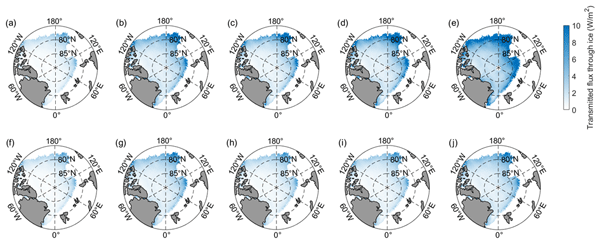
Variations in Arctic sea ice are related not only to its macroscale properties but also to its microstructure. Arctic ice cores in the summers of 2008 to 2016 were used to analyze variations in the ice inherent optical properties related to changes in the ice microstructure. The results reveal changing ice microstructure greatly increased the amount of solar radiation transmitted to the upper ocean even when a constant ice thickness was assumed, especially in marginal ice zones.
Fanyi Zhang, Ruibo Lei, Mengxi Zhai, Xiaoping Pang, and Na Li
The Cryosphere, 17, 4609–4628, https://doi.org/10.5194/tc-17-4609-2023, https://doi.org/10.5194/tc-17-4609-2023, 2023
Short summary
Short summary
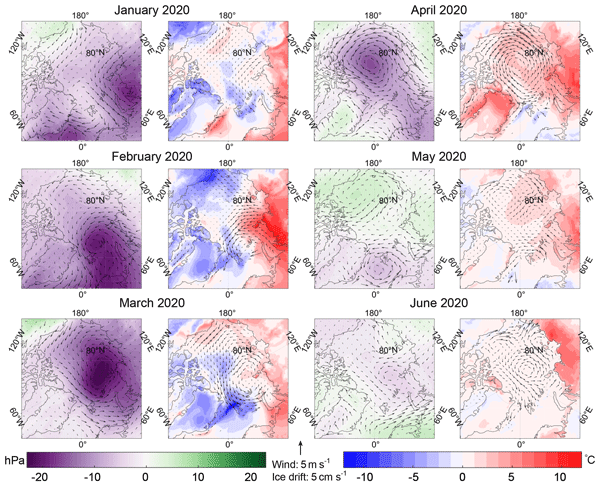
Atmospheric circulation anomalies lead to high Arctic sea ice outflow in winter 2020, causing heavy ice conditions in the Barents–Greenland seas, subsequently impeding the sea surface temperature warming. This suggests that the winter–spring Arctic sea ice outflow can be considered a predictor of changes in sea ice and other marine environmental conditions in the Barents–Greenland seas, which could help to improve our understanding of the physical connections between them.
Bin Mu, Xiaodan Luo, Shijin Yuan, and Xi Liang
Geosci. Model Dev., 16, 4677–4697, https://doi.org/10.5194/gmd-16-4677-2023, https://doi.org/10.5194/gmd-16-4677-2023, 2023
Short summary
Short summary
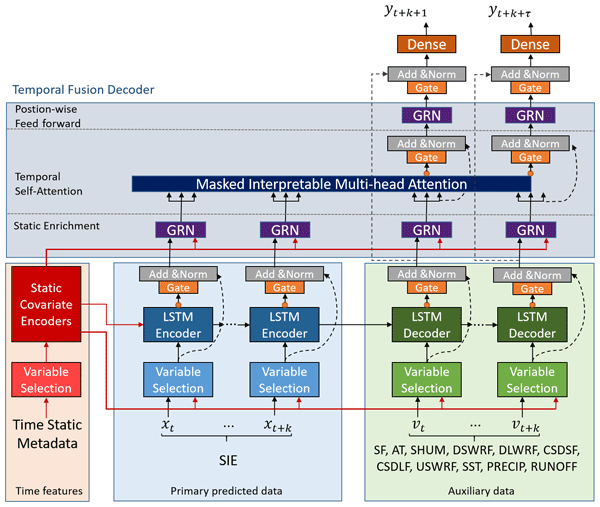
To improve the long-term forecast skill for sea ice extent (SIE), we introduce IceTFT, which directly predicts 12 months of averaged Arctic SIE. The results show that IceTFT has higher forecasting skill. We conducted a sensitivity analysis of the variables in the IceTFT model. These sensitivities can help researchers study the mechanisms of sea ice development, and they also provide useful references for the selection of variables in data assimilation or the input of deep learning models.
Ying Chen, Ruibo Lei, Xi Zhao, Shengli Wu, Yue Liu, Pei Fan, Qing Ji, Peng Zhang, and Xiaoping Pang
Earth Syst. Sci. Data, 15, 3223–3242, https://doi.org/10.5194/essd-15-3223-2023, https://doi.org/10.5194/essd-15-3223-2023, 2023
Short summary
Short summary
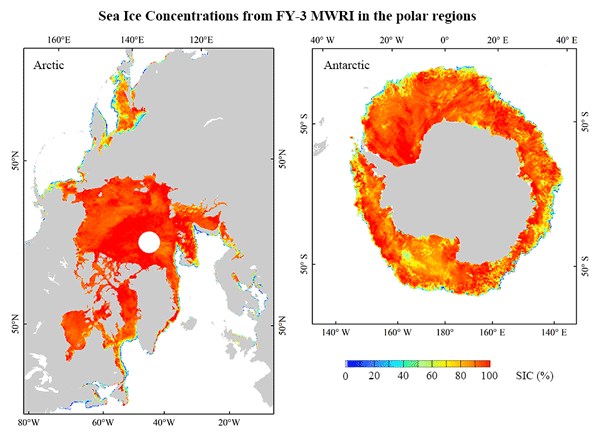
The sea ice concentration product derived from the Microwave Radiation Image sensors on board the FengYun-3 satellites can reasonably and independently identify the seasonal and long-term changes of sea ice, as well as extreme cases of annual maximum and minimum sea ice extent in polar regions. It is comparable with other sea ice concentration products and applied to the studies of climate and marine environment.
Guokun Lyu, Armin Koehl, Xinrong Wu, Meng Zhou, and Detlef Stammer
Ocean Sci., 19, 305–319, https://doi.org/10.5194/os-19-305-2023, https://doi.org/10.5194/os-19-305-2023, 2023
Short summary
Short summary
Data assimilation techniques are important for combining observations with numerical models. Here, we approximate the adjoint of viscous-plastic dynamics (adjoint-VP) to replace the adjoint of free-drift dynamics (adjoint-FD) for developing an advanced Arctic Ocean and sea ice modeling and adjoint-based assimilation system. We find that adjoint-VP provides a better ocean and sea ice estimation than adjoint-FD, considering the residual errors and adjustments of the atmospheric states.
Na Li, Ruibo Lei, Petra Heil, Bin Cheng, Minghu Ding, Zhongxiang Tian, and Bingrui Li
The Cryosphere, 17, 917–937, https://doi.org/10.5194/tc-17-917-2023, https://doi.org/10.5194/tc-17-917-2023, 2023
Short summary
Short summary
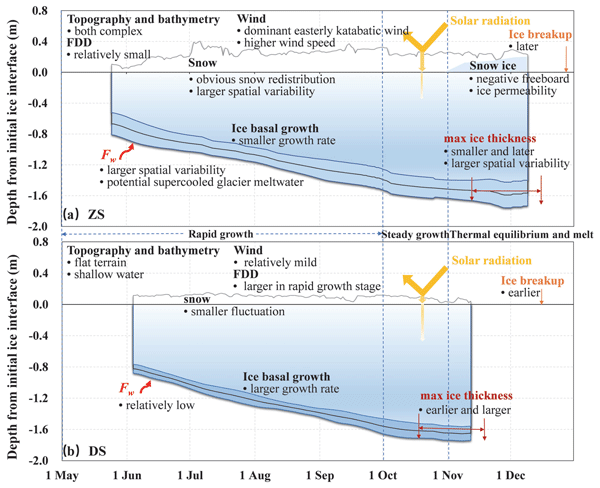
The observed annual maximum landfast ice (LFI) thickness off Zhongshan (Davis) was 1.59±0.17 m (1.64±0.08 m). Larger interannual and local spatial variabilities for the seasonality of LFI were identified at Zhongshan, with the dominant influencing factors of air temperature anomaly, snow atop, local topography and wind regime, and oceanic heat flux. The variability of LFI properties across the study domain prevailed at interannual timescales, over any trend during the recent decades.
Ruibo Lei, Mario Hoppmann, Bin Cheng, Marcel Nicolaus, Fanyi Zhang, Benjamin Rabe, Long Lin, Julia Regnery, and Donald K. Perovich
The Cryosphere Discuss., https://doi.org/10.5194/tc-2023-25, https://doi.org/10.5194/tc-2023-25, 2023
Manuscript not accepted for further review
Short summary
Short summary
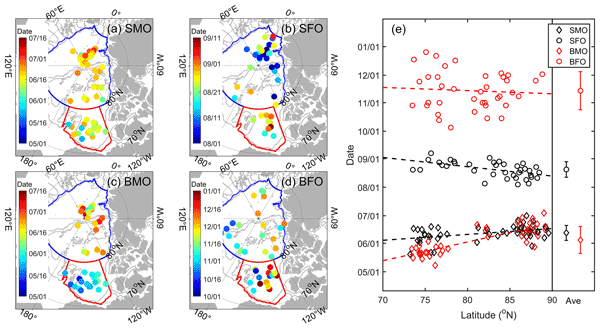
To characterize the freezing and melting of different types of sea ice, we deployed four IMBs during the MOSAiC second drift. The drifting pattern, together with a large snow accumulation, relatively warm air temperatures, and a rapid increase in oceanic heat close to Fram Strait, determined the seasonal evolution of the ice mass balance. The refreezing of ponded ice and voids within the unconsolidated ridges amplifies the anisotropy of the heat exchange between the ice and the atmosphere/ocean.
Long Lin, Ruibo Lei, Mario Hoppmann, Donald K. Perovich, and Hailun He
The Cryosphere, 16, 4779–4796, https://doi.org/10.5194/tc-16-4779-2022, https://doi.org/10.5194/tc-16-4779-2022, 2022
Short summary
Short summary
Ice mass balance observations indicated that average basal melt onset was comparable in the central Arctic Ocean and approximately 17 d earlier than surface melt in the Beaufort Gyre. The average onset of basal growth lagged behind the surface of the pan-Arctic Ocean for almost 3 months. In the Beaufort Gyre, both drifting-buoy observations and fixed-point observations exhibit a trend towards earlier basal melt onset, which can be ascribed to the earlier warming of the surface ocean.
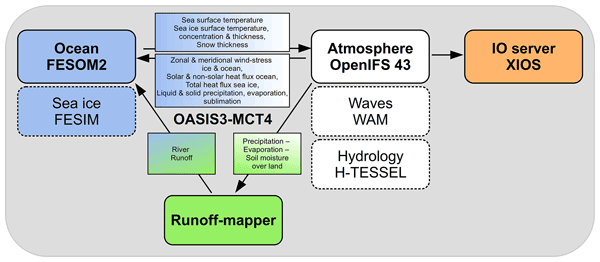
Jan Streffing, Dmitry Sidorenko, Tido Semmler, Lorenzo Zampieri, Patrick Scholz, Miguel Andrés-Martínez, Nikolay Koldunov, Thomas Rackow, Joakim Kjellsson, Helge Goessling, Marylou Athanase, Qiang Wang, Jan Hegewald, Dmitry V. Sein, Longjiang Mu, Uwe Fladrich, Dirk Barbi, Paul Gierz, Sergey Danilov, Stephan Juricke, Gerrit Lohmann, and Thomas Jung
Geosci. Model Dev., 15, 6399–6427, https://doi.org/10.5194/gmd-15-6399-2022, https://doi.org/10.5194/gmd-15-6399-2022, 2022
Short summary
Short summary
We developed a new atmosphere–ocean coupled climate model, AWI-CM3. Our model is significantly more computationally efficient than its predecessors AWI-CM1 and AWI-CM2. We show that the model, although cheaper to run, provides results of similar quality when modeling the historic period from 1850 to 2014. We identify the remaining weaknesses to outline future work. Finally we preview an improved simulation where the reduction in computational cost has to be invested in higher model resolution.
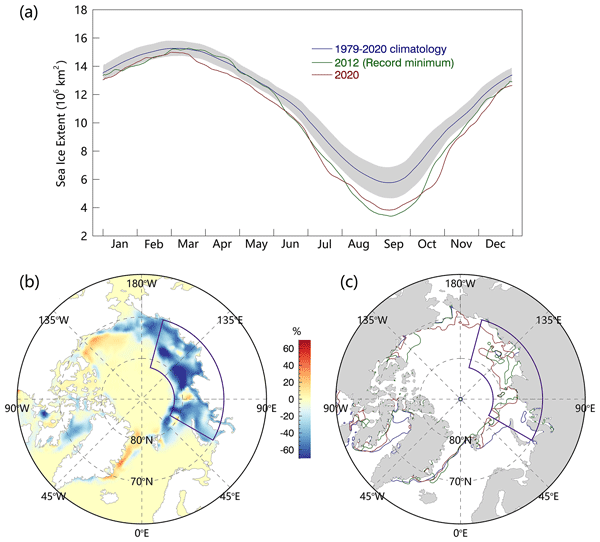
Yu Liang, Haibo Bi, Haijun Huang, Ruibo Lei, Xi Liang, Bin Cheng, and Yunhe Wang
The Cryosphere, 16, 1107–1123, https://doi.org/10.5194/tc-16-1107-2022, https://doi.org/10.5194/tc-16-1107-2022, 2022
Short summary
Short summary
A record minimum July sea ice extent, since 1979, was observed in 2020. Our results reveal that an anomalously high advection of energy and water vapor prevailed during spring (April to June) 2020 over regions with noticeable sea ice retreat. The large-scale atmospheric circulation and cyclones act in concert to trigger the exceptionally warm and moist flow. The convergence of the transport changed the atmospheric characteristics and the surface energy budget, thus causing a severe sea ice melt.
Guokun Lyu, Nuno Serra, Meng Zhou, and Detlef Stammer
Ocean Sci., 18, 51–66, https://doi.org/10.5194/os-18-51-2022, https://doi.org/10.5194/os-18-51-2022, 2022
Short summary
Short summary
This study explores the Arctic sea level variability depending on different timescales and the relation to temperature, salinity and mass changes, identifying key parameters and regions that need to be observed coordinately. The decadal sea level variability reflects salinity changes. But it can only reflect salinity change at periods of greater than 1 year, highlighting the requirement for enhancing in situ hydrographic observations and complicated interpolation methods.
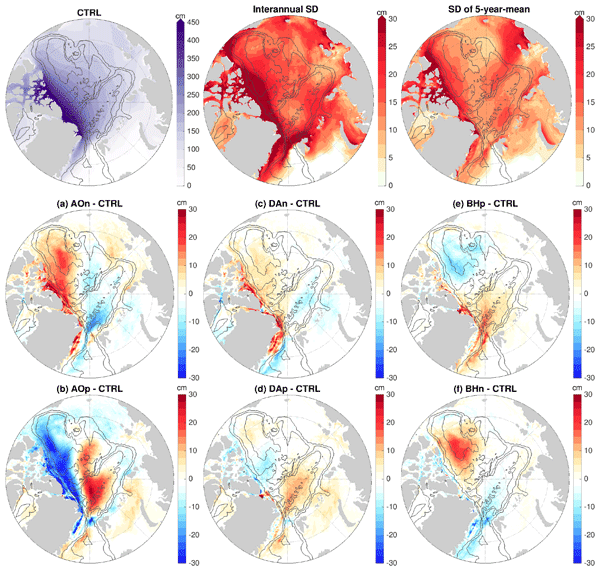
Qiang Wang, Sergey Danilov, Longjiang Mu, Dmitry Sidorenko, and Claudia Wekerle
The Cryosphere, 15, 4703–4725, https://doi.org/10.5194/tc-15-4703-2021, https://doi.org/10.5194/tc-15-4703-2021, 2021
Short summary
Short summary
Using simulations, we found that changes in ocean freshwater content induced by wind perturbations can significantly affect the Arctic sea ice drift, thickness, concentration and deformation rates years after the wind perturbations. The impact is through changes in sea surface height and surface geostrophic currents and the most pronounced in warm seasons. Such a lasting impact might become stronger in a warming climate and implies the importance of ocean initialization in sea ice prediction.
Cited articles
Annan, J. D., Hargreaves, J. C., Edwards, N. R., and Marsh, R.: Parameter estimation in an intermediate complexity earth system model using an ensemble Kalman filter, Ocean Modelling, 8, 135–154, https://doi.org/10.1016/j.ocemod.2003.12.004, 2005.
Branstator, G. and Teng, H.: Two Limits of Initial-Value Decadal Predictability in a CGCM, Journal of Climate, 23, 6292–6311, https://doi.org/10.1175/2010JCLI3678.1, 2010.
Bretherton, C. S., Henn, B., Kwa, A., Brenowitz, N. D., Watt-Meyer, O., McGibbon, J., Perkins, W. A., Clark, S. K., and Harris, L.: Correcting Coarse-Grid Weather and Climate Models by Machine Learning From Global Storm-Resolving Simulations, Journal of Advances in Modeling Earth Systems, 14, e2021MS002794, https://doi.org/10.1029/2021MS002794, 2022.
Chen, Y., Lei, R., Zhao, X., Wu, S., Liu, Y., Fan, P., Ji, Q., Zhang, P., and Pang, X.: A new sea ice concentration product in the polar regions derived from the FengYun-3 MWRI sensors, Earth Syst. Sci. Data, 15, 3223–3242, https://doi.org/10.5194/essd-15-3223-2023, 2023.
Data Unification and Altimeter Combination System (DUACS) Team: Global Ocean Along Track L 3 Sea Surface Heights Reprocessed 1993 Ongoing Tailored For Data Assimilation, Copernicus Marine Data Store [data set], https://doi.org/10.48670/moi-00146, 2025.
European Space Agency: SMOS-CryoSat L4 Sea Ice Thickness, Version 206, European Space Agency [data set], https://doi.org/10.57780/sm1-4f787c3, 2023.
Forget, G., Campin, J.-M., Heimbach, P., Hill, C. N., Ponte, R. M., and Wunsch, C.: ECCO version 4: an integrated framework for non-linear inverse modeling and global ocean state estimation, Geosci. Model Dev., 8, 3071–3104, https://doi.org/10.5194/gmd-8-3071-2015, 2015.
Fenty, I. and Heimbach, P.: Coupled Sea Ice–Ocean-State Estimation in the Labrador Sea and Baffin Bay, Journal of Physical Oceanography, 43, 884–904, https://doi.org/10.1175/JPO-D-12-065.1, 2013.
Fenty, I., Menemenlis, D., and Zhang, H.: Global coupled sea ice-ocean state estimation, Climate Dynamics, 49, 931–956, https://doi.org/10.1007/s00382-015-2796-6, 2017.
Gentemann, C. L., Wentz, F. J., Mears, C. A., and Smith, D. K.: In situ validation of Tropical Rainfall Measuring Mission microwave sea surface temperatures, Journal of Geophysical Research: Oceans, 109, C04021, https://doi.org/10.1029/2003JC002092, 2004 (data available at: https://data.remss.com/SST/daily/mw_ir/v05.1/netcdf/, last access: 25 November 2025).
Giering, R. and Kaminski, T.: Recipes for adjoint code construction, ACM Transactions on Mathematical Software (TOMS), 24, 437–474, https://doi.org/10.1145/293686.293695, 1998.
Gilbert, J. C. and Lemaréchal, C.: The module M1QN3, https://who.rocq.inria.fr/Jean-Charles.Gilbert/modulopt/optimization-routines/m1qn3/m1qn3.html (last access: 25 November 2025), 2023.
Good, S. A., Martin, M. J., and Rayner, N. A.: EN4: Quality controlled ocean temperature and salinity profiles and monthly objective analyses with uncertainty estimates, Journal of Geophysical Research: Oceans, 118, 6704-6716, https://doi.org/10.1002/2013jc009067, 2013 (data available at: https://www.metoffice.gov.uk/hadobs/en4/, last access: 25 November 2025).
Heimbach, P., Menemenlis, D., Losch, M., Campin, J.-M., and Hill, C.: On the formulation of sea-ice models. Part 2: Lessons from multi-year adjoint sea-ice export sensitivities through the Canadian Arctic Archipelago, Ocean Modelling, 33, 145–158, https://doi.org/10.1016/j.ocemod.2010.02.002, 2010.
Hibler, W.: A Dynamic Thermodynamic Sea Ice Model, Journal of Physical Oceanography, 9, 815–846, https://doi.org/10.1175/1520-0485(1979)009<0815:adtsim>2.0.co;2, 1979.
Hibler, W.: Modeling a Variable Thickness Sea Ice Cover, Monthly Weather Review, 108, 1943–1973, https://doi.org/10.1175/1520-0493(1980)108<1943:mavtsi>2.0.co;2, 1980.
Horvat, C. and Roach, L. A.: WIFF1.0: a hybrid machine-learning-based parameterization of wave-induced sea ice floe fracture, Geosci. Model Dev., 15, 803–814, https://doi.org/10.5194/gmd-15-803-2022, 2022.
Hourdin, F., Mauritsen, T., Gettelman, A., Golaz, J.-C., Balaji, V., Duan, Q., Folini, D., Ji, D., Klocke, D., Qian, Y., Rauser, F., Rio, C., Tomassini, L., Watanabe, M., and Williamson, D.: The Art and Science of Climate Model Tuning, Bulletin of the American Meteorological Society, 98, 589–602, https://doi.org/10.1175/BAMS-D-15-00135.1, 2017.
Hu, X.-M., Zhang, F., and Nielsen-Gammon, J. W.: Ensemble-based simultaneous state and parameter estimation for treatment of mesoscale model error: A real-data study, Geophysical Research Letters, 37, L08802, https://doi.org/10.1029/2010GL043017, 2010.
Hunke, E. C., Allard, R., Bailey, D. A., Blain, P., Craig, A., Dupont, F., and Winton, M.: CICE-Consortium/CICE: CICE version 6.1.2 (version 6.1.2), Zenodo [code], https://doi.org/10.5281/zenodo.3888653, 2020.
Jackson, C. S., Sen, M. K., Huerta, G., Deng, Y., and Bowman, K. P.: Error Reduction and Convergence in Climate Prediction, Journal of Climate, 21, 6698–6709, https://doi.org/10.1175/2008JCLI2112.1, 2008.
Kaleschke, L., Lüpkes, C., Vihma, T., Haarpaintner, J., Bochert, A., Hartmann, J., and Heygster, G.: SSM/I Sea Ice Remote Sensing for Mesoscale Ocean-Atmosphere Interaction Analysis, Journal of Remote Sensing, 27, 526–537, https://doi.org/10.1080/07038992.2001.10854892, 2001.
Kim, J. G., Hunke, E. C., and Lipscomb, W. H.: Sensitivity analysis and parameter tuning scheme for global sea-ice modeling, Ocean Modelling, 14, 61–80, https://doi.org/10.1016/j.ocemod.2006.03.003, 2006.
Kochkov, D., Yuval, J., Langmore, I., Norgaard, P., Smith, J., Mooers, G., Klöwer, M., Lottes, J., Rasp, S., Düben, P., Hatfield, S., Battaglia, P., Sanchez-Gonzalez, A., Willson, M., Brenner, M. P., and Hoyer, S.: Neural general circulation models for weather and climate, Nature, 632, 1060–1066, https://doi.org/10.1038/s41586-024-07744-y, 2024.
Koldunov, N. V., Köhl, A., Serra, N., and Stammer, D.: Sea ice assimilation into a coupled ocean–sea ice model using its adjoint, The Cryosphere, 11, 2265–2281, https://doi.org/10.5194/tc-11-2265-2017, 2017.
Koo, Y., Lei, R., Cheng, Y., Cheng, B., Xie, H., Hoppmann, M., Kurtz, N. T., Ackley, S. F., and Mestas-Nuñez, A. M.: Estimation of thermodynamic and dynamic contributions to sea ice growth in the Central Arctic using ICESat-2 and MOSAiC SIMBA buoy data, Remote Sensing of Environment, 267, 112730, https://doi.org/10.1016/j.rse.2021.112730, 2021.
Krishfield, R. A., Proshutinsky, A., Tateyama, K., Williams, W. J., Carmack, E. C., McLaughlin, F. A., and Timmermans, M.-L.: Deterioration of perennial sea ice in the Beaufort Gyre from 2003 to 2012 and its impact on the oceanic freshwater cycle, Journal of Geophysical Research: Oceans, 119, 1271–1305, https://doi.org/10.1002/2013JC008999, 2014.
Lavergne, T., Eastwood, S., Teffah, Z., Schyberg, H., and Breivik, L.-A.: Sea ice motion from low-resolution satellite sensors: An alternative method and its validation in the Arctic, Journal of Geophysical Research: Oceans, 115, C10032, https://doi.org/10.1029/2009JC005958, 2010.
Lavergne, T., Sørensen, A. M., Kern, S., Tonboe, R., Notz, D., Aaboe, S., Bell, L., Dybkjær, G., Eastwood, S., Gabarro, C., Heygster, G., Killie, M. A., Brandt Kreiner, M., Lavelle, J., Saldo, R., Sandven, S., and Pedersen, L. T.: Version 2 of the EUMETSAT OSI SAF and ESA CCI sea-ice concentration climate data records, The Cryosphere, 13, 49–78, https://doi.org/10.5194/tc-13-49-2019, 2019.
Lei, R., Cheng, B., Hoppmann, M., Zhang, F., Zuo, G., Hutchings, J. K., Lin, L., Lan, M., Wang, H., Regnery, J., Krumpen, T., Haapala, J., Rabe, B., Perovich, D. K., and Nicolaus, M.: Seasonality and timing of sea ice mass balance and heat fluxes in the Arctic transpolar drift during 2019–2020, Elementa: Science of the Anthropocene, 10, 000089, https://doi.org/10.1525/elementa.2021.000089, 2022.
Li, Z., Chao, Y., McWilliams, J. C., and Ide, K.: A Three-Dimensional Variational Data Assimilation Scheme for the Regional Ocean Modeling System, Journal of Atmospheric and Oceanic Technology, 25, 2074–2090, https://doi.org/10.1175/2008JTECHO594.1, 2008.
Lindsay, R. W. and Zhang, J.: Assimilation of Ice Concentration in an Ice–Ocean Model, Journal of Atmospheric and Oceanic Technology, 23, 742–749, https://doi.org/10.1175/jtech1871.1, 2006.
Liu, C., Köhl, A., and Stammer, D.: Adjoint−Based Estimation of Eddy-Induced Tracer Mixing Parameters in the Global Ocean, Journal of Physical Oceanography, 42, 1186–1206, https://doi.org/10.1175/jpo-d-11-0162.1, 2012.
Liu, X. and Zhang, L.: Study on optimization of sea ice concentration with adjoint method, Journal of Coastal Research, 84, 44–50, https://doi.org/10.2112/SI84-006.1, 2018.
Locarnini, R. A., Mishonov, A. V., Baranova, O. K., Boyer, T. P., Zweng, M. M., Garcia, H. E., Reagan, J. R., Seidov, D., Weathers, K. W., Paver, C. R., and Smolyar, I. V.: World Ocean Atlas 2018, Volume 1: Temperature, Levitus, edited by: Mishonov, A., NOAA Atlas NESDIS, 82, 52 pp., https://doi.org/10.25923/e5rn-9711, 2018.
Losch, M., Menemenlis, D., Campin, J.-M., Heimbach, P., and Hill, C.: On the formulation of sea–ice models. Part 1: Effects of different solver implementations and parameterizations, Ocean Modelling, 33, 129–144, https://doi.org/10.1016/j.ocemod.2009.12.008, 2010.
Lu, Y., Wang, X., and Dong, J.: Melt Pond Scheme Parameter Estimation Using an Adjoint Model, Advances in Atmospheric Sciences, 38, 1525–1536, https://doi.org/10.1007/s00376-021-0305-x, 2021.
Lyu, G.: MITgcm model developed for state and parameter estimation in a pan-Arctic ocean and sea ice model, Zenodo [code], https://doi.org/10.5281/zenodo.14584929, 2025.
Lyu, G., Koehl, A., Serra, N., and Stammer, D.: Assessing the current and future Arctic Ocean observing system with observing system simulating experiments, Quarterly Journal of the Royal Meteorological Society, 147, 2670–2690, https://doi.org/10.1002/qj.4044, 2021a.
Lyu, G., Koehl, A., Serra, N., Stammer, D., and Xie, J.: Arctic ocean–sea ice reanalysis for the period 2007–2016 using the adjoint method, Quarterly Journal of the Royal Meteorological Society, 147, 1908–1929, https://doi.org/10.1002/qj.4002, 2021b.
Lyu, G., Köhl, A., Matei, I., and Stammer, D.: Adjoint-Based Climate Model Tuning: Application to the Planet Simulatorm Journal of Advances in Modeling Earth Systems, 10, 207–222, https://doi.org/10.1002/2017MS001194, 2018.
Lyu, G., Koehl, A., Wu, X., Zhou, M., and Stammer, D.: Effects of including the adjoint sea ice rheology on estimating Arctic Ocean–sea ice state, Ocean Sci., 19, 305–319, https://doi.org/10.5194/os-19-305-2023, 2023.
Lyu, G., Mu, L., Koehl, A., Lei, R., Liang, X., and Liu, C.: MITgcm model developed for state and parameter estimation in a pan-Arctic ocean and sea ice model using MITgcm (c63m), Zenodo [data set], https://doi.org/10.5281/zenodo.14584780, 2025.
Marshall, J., Adcroft, A., Hill, C., Perelman, L., and Heisey, C.: A finite-volume, incompressible Navier Stokes model for studies of the ocean on parallel computers, Journal of Geophysical Research: Oceans, 102, 5753–5766, https://doi.org/10.1029/96JC02775, 1997.
Massonnet, F., Goosse, H., Fichefet, T., and Counillon, F.: Calibration of sea ice dynamic parameters in an ocean-sea ice model using an ensemble Kalman filter, Journal of Geophysical Research: Oceans, 119, 4168–4184, https://doi.org/10.1002/2013JC009705, 2014.
Mauritsen, T., Stevens, B., Roeckner, E., Crueger, T., Esch, M., Giorgetta, M., Haak, H., Jungclaus, J., Klocke, D., Matei, D., Mikolajewicz, U., Notz, D., Pincus, R., Schmidt, H., and Tomassini, L.: Tuning the climate of a global model, Journal of Advances in Modeling Earth Systems, 4, M00A01, https://doi.org/10.1029/2012MS000154, 2012.
Miller, P. A., Laxon, S. W., and Feltham, D. L.: Improving the spatial distribution of modeled Arctic sea ice thickness, Geophysical Research Letters, 32, L18503, https://doi.org/10.1029/2005GL023622, 2005.
Mu, L., Losch, M., Yang, Q., Ricker, R., Losa, S. N., and Nerger, L.: Arctic-Wide Sea Ice Thickness Estimates From Combining Satellite Remote Sensing Data and a Dynamic Ice-Ocean Model with Data Assimilation During the CryoSat-2 Period, Journal of Geophysical Research: Oceans, 123, 7763–7780, https://doi.org/10.1029/2018JC014316, 2018.
Murphy, J. M., Sexton, D. M. H., Barnett, D. N., Jones, G. S., Webb, M. J., Collins, M., and Stainforth, D. A.: Quantification of modelling uncertainties in a large ensemble of climate change simulations, Nature, 430, 768–772, https://doi.org/10.1038/nature02771, 2004.
Nie, Y., Li, C., Vancoppenolle, M., Cheng, B., Boeira Dias, F., Lv, X., and Uotila, P.: Sensitivity of NEMO4.0-SI3 model parameters on sea ice budgets in the Southern Ocean, Geosci. Model Dev., 16, 1395–1425, https://doi.org/10.5194/gmd-16-1395-2023, 2023.
Nguyen, A. T., Menemenlis, D., and Kwok, R.: Arctic ice-ocean simulation with optimized model parameters: Approach and assessment, Journal of Geophysical Research: Oceans, 116, C04025, https://doi.org/10.1029/2010JC006573, 2011.
Nguyen, A. T., Pillar, H., Ocaña, V., Bigdeli, A., Smith, T. A., and Heimbach, P.: The Arctic Subpolar Gyre sTate Estimate: Description and Assessment of a Data-Constrained, Dynamically Consistent Ocean-Sea Ice Estimate for 2002–2017, Journal of Advances in Modeling Earth Systems, 13, e2020MS002398, https://doi.org/10.1029/2020MS002398, 2021.
OSI SAF: Global Low Resolution Sea Ice Drift – Multimission, EUMETSAT SAF on Ocean and Sea Ice [data set], https://doi.org/10.15770/EUM_SAF_OSI_NRT_2007, 2010.
OSI SAF: Global Sea Ice Concentration Climate Data Record v3.0 – Multimission, EUMETSAT SAF on Ocean and Sea Ice [data set], https://doi.org/10.15770/EUM_SAF_OSI_0013, 2022.
Panteleev, G., Yaremchuk, M., Stroh, J. N., Francis, O. P., and Allard, R.: Parameter optimization in sea ice models with elastic–viscoplastic rheology, The Cryosphere, 14, 4427–4451, https://doi.org/10.5194/tc-14-4427-2020, 2020.
Perovich, D., Richter-Menge, J., and Polashenski, C.: Observing and understanding climate change: Monitoring the mass balance, motion, and thickness of Arctic sea ice, IMB CRREL Dartmouth [data set], http://imb-crrel-dartmouth.org/results/ (last access: 25 November 2025), 2025.
Pujol, M.-I., Faugère, Y., Taburet, G., Dupuy, S., Pelloquin, C., Ablain, M., and Picot, N.: DUACS DT2014: the new multi-mission altimeter data set reprocessed over 20 years, Ocean Sci., 12, 1067–1090, https://doi.org/10.5194/os-12-1067-2016, 2016.
Richter-Menge, J. A., Perovich, D. K., Elder, B. C., Claffey, K., Rigor, I., and Ortmeyer, M.: Ice mass-balance buoys: a tool for measuring and attributing changes in the thickness of the Arctic sea-ice cover, Annals of Glaciology, 44, 205–210, https://doi.org/10.3189/172756406781811727, 2006.
Ricker, R., Hendricks, S., Kaleschke, L., Tian-Kunze, X., King, J., and Haas, C.: A weekly Arctic sea-ice thickness data record from merged CryoSat-2 and SMOS satellite data, The Cryosphere, 11, 1607–1623, https://doi.org/10.5194/tc-11-1607-2017, 2017.
Spreen, G., Kaleschke, L., and Heygster, G.: Sea ice remote sensing using AMSR-E 89-GHz channels, Journal of Geophysical Research: Oceans, 113, 14 pp., https://doi.org/10.1029/2005jc003384, 2008.
Sumata, H., Kauker, F., Karcher, M., and Gerdes, R.: Simultaneous Parameter Optimization of an Arctic Sea Ice–Ocean Model by a Genetic Algorithm, Monthly Weather Review, 147, 1899–1926, https://doi.org/10.1175/mwr-d-18-0360.1, 2019.
Taburet, G., Sanchez-Roman, A., Ballarotta, M., Pujol, M.-I., Legeais, J.-F., Fournier, F., Faugere, Y., and Dibarboure, G.: DUACS DT2018: 25 years of reprocessed sea level altimetry products, Ocean Sci., 15, 1207–1224, https://doi.org/10.5194/os-15-1207-2019, 2019.
Taylor, K. E.: Summarizing multiple aspects of model performance in a single diagram, Journal of Geophysical Research: Atmospheres, 106, 7183–7192, https://doi.org/10.1029/2000JD900719, 2001.
Uotila, P., O'Farrell, S., Marsland, S. J., and Bi, D.: A sea-ice sensitivity study with a global ocean-ice model, Ocean Modelling, 51, 1–18, https://doi.org/10.1016/j.ocemod.2012.04.002, 2012.
von Albedyll, L., Hendricks, S., Grodofzig, R., Krumpen, T., Arndt, S., Belter, H. J., Birnbaum, G., Cheng, B., Hoppmann, M., Hutchings, J., Itkin, P., Lei, R., Nicolaus, M., Ricker, R., Rohde, J., Suhrhoff, M., Timofeeva, A., Watkins, D., Webster, M., and Haas, C.: Thermodynamic and dynamic contributions to seasonal Arctic sea ice thickness distributions from airborne observations, Elementa: Science of the Anthropocene, 10, 00074, https://doi.org/10.1525/elementa.2021.00074, 2022.
Weaver, A. T. and Mirouze, I.: On the diffusion equation and its application to isotropic and anisotropic correlation modelling in variational assimilation, Quarterly Journal of the Royal Meteorological Society, 139, 242–260, https://doi.org/10.1002/qj.1955, 2013.
Williamson, D., Goldstein, M., Allison, L., Blaker, A., Challenor, P., Jackson, L., and Yamazaki, K.: History matching for exploring and reducing climate model parameter space using observations and a large perturbed physics ensemble, Climate Dynamics, 41, 1703–1729, https://doi.org/10.1007/s00382-013-1896-4, 2013.
Wu, X., Zhang, S., Liu, Z., Rosati, A., Delworth, T. L., and Liu, Y.: Impact of Geographic-Dependent Parameter Optimization on Climate Estimation and Prediction: Simulation with an Intermediate Coupled Model, Monthly Weather Review, 140, 3956–3971, https://doi.org/10.1175/MWR-D-11-00298.1, 2012.
Yang, B., Qian, Y., Lin, G., Leung, L. R., Rasch, P. J., Zhang, G. J., McFarlane, S. A., Zhao, C., Zhang, Y., Wang, H., Wang, M., and Liu, X.: Uncertainty quantification and parameter tuning in the CAM5 Zhang-McFarlane convection scheme and impact of improved convection on the global circulation and climate, Journal of Geophysical Research: Atmospheres, 118, 395–415, https://doi.org/10.1029/2012JD018213, 2013.
Zampieri, L., Kauker, F., Fröhle, J., Sumata, H., Hunke, E. C., and Goessling, H. F.: Impact of Sea-Ice Model Complexity on the Performance of an Unstructured-Mesh Sea-Ice/Ocean Model under Different Atmospheric Forcings, Journal of Advances in Modeling Earth Systems, 13, e2020MS002438, https://doi.org/10.1029/2020MS002438, 2021.
Zhang, F., Pang, X., Lei, R., Zhai, M., Zhao, X., and Cai, Q.: Arctic sea ice motion change and response to atmospheric forcing between 1979 and 2019, International Journal of Climatology, 42, 1854–1876, https://doi.org/10.1002/joc.7340, 2022.
Zhang, J. and Hibler, W. D.: On an efficient numerical method for modeling sea ice dynamics, Journal of Geophysical Research: Oceans, 102, 8691–8702, https://doi.org/10.1029/96JC03744, 1997.
Zhang, S.: A Study of Impacts of Coupled Model Initial Shocks and State–Parameter Optimization on Climate Predictions Using a Simple Pycnocline Prediction Model, Journal of Climate, 24, 6210–6226, https://doi.org/10.1175/JCLI-D-10-05003.1, 2011.
Zweng, M. M., Reagan, J. R., Seidov, D., Boyer, T. P., Locarnini, R. A., Garcia, H. E., Mishonov, A. V., Baranova, O. K., Weathers, K. W., Paver, C. R., and Smolyar, I. V.: World Ocean Atlas 2018, Volume 2: Salinity. Levitus, edited by: Mishonov, A., NOAA Atlas NESDIS, 82, 50 pp., https://doi.org/10.25923/9pgv-1224, 2018.
Short summary
In the sea ice-ocean models, errors in the parameters and missing spatiotemporal variations contribute to the deviations between the simulations and the observations. We extended an adjoint method to optimize spatiotemporally varying parameters together with the atmosphere forcing and the initial conditions using satellite and in-situ observations. Seasonally, this scheme demonstrates a more prominent advantage in mid-autumn and show great potential for accurately reproducing the Arctic changes.
In the sea ice-ocean models, errors in the parameters and missing spatiotemporal variations...


