
Articles | Volume 18, issue 23
https://doi.org/10.5194/gmd-18-9349-2025
© Author(s) 2025. This work is distributed under
the Creative Commons Attribution 4.0 License.
the Creative Commons Attribution 4.0 License.
Special issue:
https://doi.org/10.5194/gmd-18-9349-2025
© Author(s) 2025. This work is distributed under
the Creative Commons Attribution 4.0 License.
the Creative Commons Attribution 4.0 License.
Development and technical paper
| 
02 Dec 2025
Development and technical paper |
| 02 Dec 2025
| 02 Dec 2025
A process-based modeling of soil organic matter physical properties for land surface models – Part 1: Soil mixture theory
Bertrand Decharme
CORRESPONDING AUTHOR

Météo-France, CNRS, Univ. Toulouse, CNRM, Toulouse, France
Related authors
Jeanne Decayeux, Bertrand Decharme, Romain Darnajoux, and Christine Delire
Geosci. Model Dev., 19, 7787–7815, https://doi.org/10.5194/gmd-19-7787-2026, https://doi.org/10.5194/gmd-19-7787-2026, 2026
Short summary
Short summary
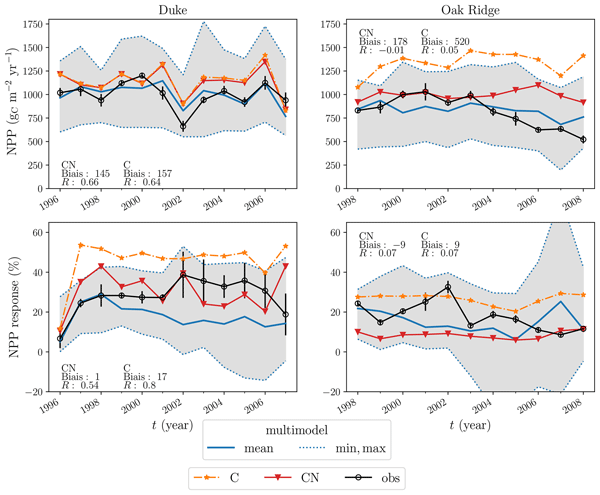
The article describes the implementation of the nitrogen cycle in the land surface model ISBA (Interaction-Soil-Biosphere-Atmosphere). The model is evaluated using Free Air CO2 Enrichment experiments. A comparison with a multi-model analysis shows that the nitrogen model version performs better than the carbon-only version, notably a reduced sensitivity to elevated CO2, and smaller C stocks. We also present a detailed analysis of the simulated N dynamics in the soil.
Bertrand Decharme, Diane Tzanos, Lucas Hardouin, Aaron Boone, Marie Minvielle, Patrick Le Moigne, and Rémi Gaillard
Geosci. Model Dev., 19, 7239–7277, https://doi.org/10.5194/gmd-19-7239-2026, https://doi.org/10.5194/gmd-19-7239-2026, 2026
Short summary
Short summary
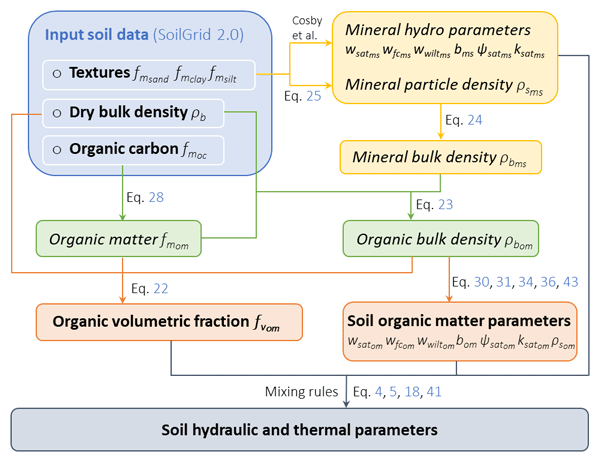
We developed a new method to represent how organic matter in soils, together with a mineral soil compactness adjustment, influences the movement of water and heat in land models. We implemented this approach in a global model and performed long-term simulations driven by weather data and global soil maps. Compared with an older empirical method, it produces more consistent soil moisture, runoff, evaporation, and ground temperature and shows closer agreement with observations.
Raphael Garisoain, Christine Delire, Bertrand Decharme, and Laure Gandois
Biogeosciences, 23, 3407–3431, https://doi.org/10.5194/bg-23-3407-2026, https://doi.org/10.5194/bg-23-3407-2026, 2026
Short summary
Short summary
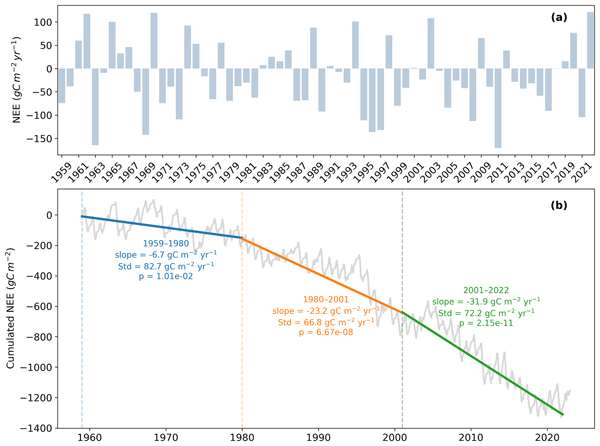
Peatlands store vast amounts of carbon, helping to slow climate change. We studied a mountain peatland in the Pyrenees to understand how warming and drought affect its ability to retain carbon. Using land surface modeling and field data from the past 64 years, we found that higher temperatures increase plant growth, but frequent and intense droughts cause large carbon losses, threatening peatlands' role as long-term carbon sinks.
Silvana Ramos Buarque, Bertrand Decharme, Alina L. Barbu, and Laurent Franchisteguy
Earth Syst. Sci. Data, 17, 7227–7249, https://doi.org/10.5194/essd-17-7227-2025, https://doi.org/10.5194/essd-17-7227-2025, 2025
Short summary
Short summary
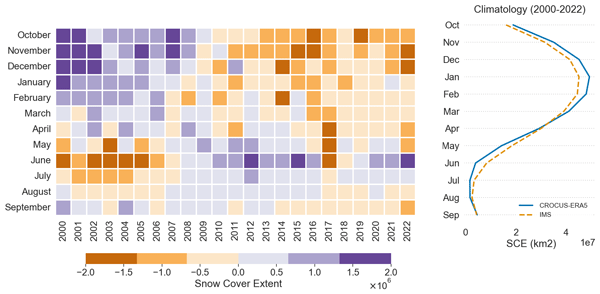
The Crocus-ERA5 snow dataset supports Arctic snow monitoring and contributes to the Arctic Report Card. It improves on its predecessor with higher spatial resolution (0.25° vs. 0.75°), enhancing topographic and land cover detail. The product’s performance is assessed in terms of snow depth and cover compared to in situ observations and satellite data. The findings show a notable improvement, though remaining biases appear in boreal forests, where snow–forest interactions are not captured.
Théo Brivoal, Virginie Guemas, Martin Vancoppenolle, Clément Rousset, and Bertrand Decharme
Geosci. Model Dev., 18, 6885–6902, https://doi.org/10.5194/gmd-18-6885-2025, https://doi.org/10.5194/gmd-18-6885-2025, 2025
Short summary
Short summary
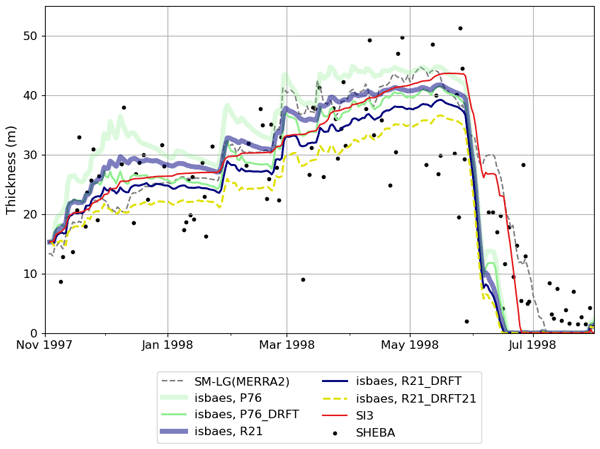
Snow in polar regions is key to sea ice formation and the Earth's climate, but current climate models simplify snow cover on sea ice. This study integrates an intermediate-complexity snow-physics scheme into a sea ice model designed for climate applications. We show that modeling the temporal changes in properties such as the density and thermal conductivity of the snow layers leads to a more accurate representation of heat transfer between the underlying sea ice and the atmosphere.
Rubaya Pervin, Scott Robeson, Mallory Barnes, Stephen Sitch, Anthony Walker, Ben Poulter, Fabienne Maignan, Qing Sun, Thomas Colligan, Sönke Zaehle, Kashif Mahmud, Peter Anthoni, Almut Arneth, Vivek Arora, Vladislav Bastrikov, Liam Bogucki, Bertrand Decharme, Christine Delire, Stefanie Falk, Akihiko Ito, Etsushi Kato, Daniel Kennedy, Jürgen Knauer, Michael O’Sullivan, Wenping Yuan, and Natasha MacBean
EGUsphere, https://doi.org/10.5194/egusphere-2025-2841, https://doi.org/10.5194/egusphere-2025-2841, 2025
Short summary
Short summary
Drylands contribute more than a third of the global vegetation productivity. Yet, these regions are not well represented in global vegetation models. Here, we tested how well 15 global models capture annual changes in dryland vegetation productivity. Models that didn’t have vegetation change over time or fire have lower variability in vegetation productivity. Models need better representation of grass cover types and their coverage. Our work highlights where and how these models need to improve.
Bertrand Decharme and Jeanne Colin
Earth Syst. Dynam., 16, 729–752, https://doi.org/10.5194/esd-16-729-2025, https://doi.org/10.5194/esd-16-729-2025, 2025
Short summary
Short summary
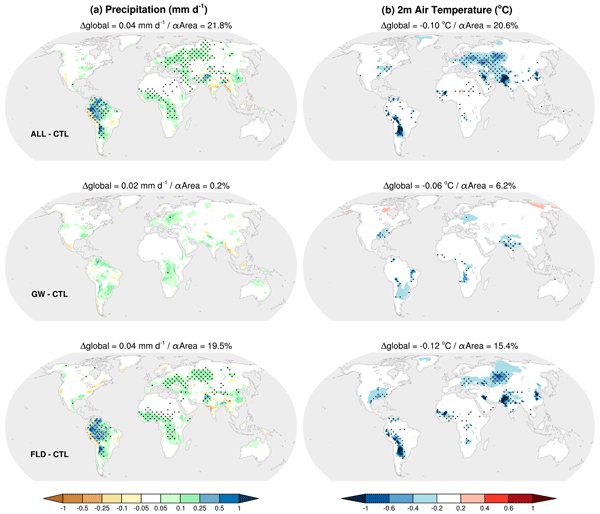
Our study uses a global climate model to investigate how groundwater and floodplains influence today's climate. We found that these continental water sources, often overlooked in climate models, can influence precipitation, temperature, and land surface hydrology. This research contributes to a better understanding of the dynamics of the Earth system and highlights the importance of considering interactions between hydrology and the atmosphere.
Pierre Friedlingstein, Michael O'Sullivan, Matthew W. Jones, Robbie M. Andrew, Dorothee C. E. Bakker, Judith Hauck, Peter Landschützer, Corinne Le Quéré, Ingrid T. Luijkx, Glen P. Peters, Wouter Peters, Julia Pongratz, Clemens Schwingshackl, Stephen Sitch, Josep G. Canadell, Philippe Ciais, Robert B. Jackson, Simone R. Alin, Peter Anthoni, Leticia Barbero, Nicholas R. Bates, Meike Becker, Nicolas Bellouin, Bertrand Decharme, Laurent Bopp, Ida Bagus Mandhara Brasika, Patricia Cadule, Matthew A. Chamberlain, Naveen Chandra, Thi-Tuyet-Trang Chau, Frédéric Chevallier, Louise P. Chini, Margot Cronin, Xinyu Dou, Kazutaka Enyo, Wiley Evans, Stefanie Falk, Richard A. Feely, Liang Feng, Daniel J. Ford, Thomas Gasser, Josefine Ghattas, Thanos Gkritzalis, Giacomo Grassi, Luke Gregor, Nicolas Gruber, Özgür Gürses, Ian Harris, Matthew Hefner, Jens Heinke, Richard A. Houghton, George C. Hurtt, Yosuke Iida, Tatiana Ilyina, Andrew R. Jacobson, Atul Jain, Tereza Jarníková, Annika Jersild, Fei Jiang, Zhe Jin, Fortunat Joos, Etsushi Kato, Ralph F. Keeling, Daniel Kennedy, Kees Klein Goldewijk, Jürgen Knauer, Jan Ivar Korsbakken, Arne Körtzinger, Xin Lan, Nathalie Lefèvre, Hongmei Li, Junjie Liu, Zhiqiang Liu, Lei Ma, Greg Marland, Nicolas Mayot, Patrick C. McGuire, Galen A. McKinley, Gesa Meyer, Eric J. Morgan, David R. Munro, Shin-Ichiro Nakaoka, Yosuke Niwa, Kevin M. O'Brien, Are Olsen, Abdirahman M. Omar, Tsuneo Ono, Melf Paulsen, Denis Pierrot, Katie Pocock, Benjamin Poulter, Carter M. Powis, Gregor Rehder, Laure Resplandy, Eddy Robertson, Christian Rödenbeck, Thais M. Rosan, Jörg Schwinger, Roland Séférian, T. Luke Smallman, Stephen M. Smith, Reinel Sospedra-Alfonso, Qing Sun, Adrienne J. Sutton, Colm Sweeney, Shintaro Takao, Pieter P. Tans, Hanqin Tian, Bronte Tilbrook, Hiroyuki Tsujino, Francesco Tubiello, Guido R. van der Werf, Erik van Ooijen, Rik Wanninkhof, Michio Watanabe, Cathy Wimart-Rousseau, Dongxu Yang, Xiaojuan Yang, Wenping Yuan, Xu Yue, Sönke Zaehle, Jiye Zeng, and Bo Zheng
Earth Syst. Sci. Data, 15, 5301–5369, https://doi.org/10.5194/essd-15-5301-2023, https://doi.org/10.5194/essd-15-5301-2023, 2023
Short summary
Short summary
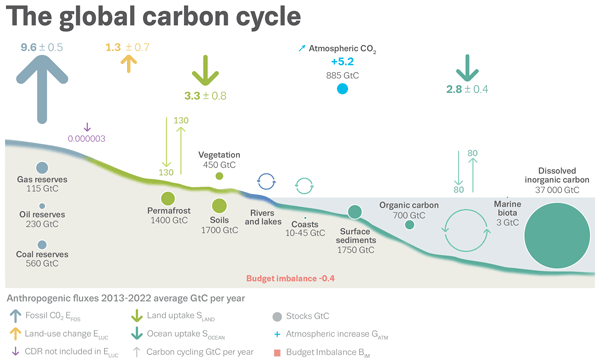
The Global Carbon Budget 2023 describes the methodology, main results, and data sets used to quantify the anthropogenic emissions of carbon dioxide (CO2) and their partitioning among the atmosphere, land ecosystems, and the ocean over the historical period (1750–2023). These living datasets are updated every year to provide the highest transparency and traceability in the reporting of CO2, the key driver of climate change.
Julia Pfeffer, Anny Cazenave, Alejandro Blazquez, Bertrand Decharme, Simon Munier, and Anne Barnoud
Hydrol. Earth Syst. Sci., 27, 3743–3768, https://doi.org/10.5194/hess-27-3743-2023, https://doi.org/10.5194/hess-27-3743-2023, 2023
Short summary
Short summary
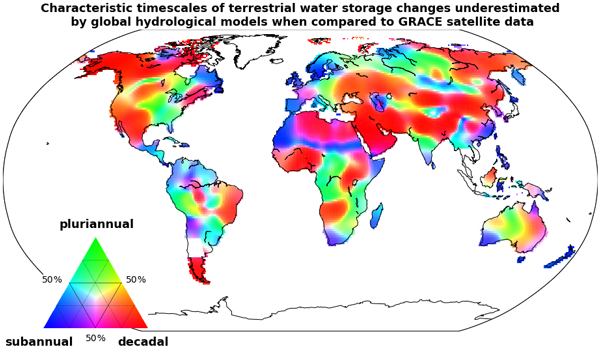
The GRACE (Gravity Recovery And Climate Experiment) satellite mission enabled the quantification of water mass redistributions from 2002 to 2017. The analysis of GRACE satellite data shows here that slow changes in terrestrial water storage occurring over a few years to a decade are severely underestimated by global hydrological models. Several sources of errors may explain such biases, likely including the inaccurate representation of groundwater storage changes.
Antoine Sobaga, Bertrand Decharme, Florence Habets, Christine Delire, Noële Enjelvin, Paul-Olivier Redon, Pierre Faure-Catteloin, and Patrick Le Moigne
Hydrol. Earth Syst. Sci., 27, 2437–2461, https://doi.org/10.5194/hess-27-2437-2023, https://doi.org/10.5194/hess-27-2437-2023, 2023
Short summary
Short summary
Seven instrumented lysimeters are used to assess the simulation of the soil water dynamic in one land surface model. Four water potential and hydraulic conductivity closed-form equations, including one mixed form, are evaluated. One form is more relevant for simulating drainage, especially during intense drainage events. The soil profile heterogeneity of one parameter of the closed-form equations is shown to be important.
Antoine Sobaga, Bertrand Decharme, Florence Habets, Christine Delire, Noële Enjelvin, Paul-Olivier Redon, Pierre Faure-Catteloin, and Patrick Le Moigne
EGUsphere, https://doi.org/10.5194/egusphere-2022-274, https://doi.org/10.5194/egusphere-2022-274, 2022
Preprint archived
Short summary
Short summary
Seven instrumented lysimeters are used to assess the simulation of the soil water dynamic in one land surface model. Three water potential and hydraulic conductivity closed-form equations including one mixed form are evaluated. The mixed form is more relevant to simulate drainage especially during intense drainage events. Soil profile heterogeneity of one parameter of the closed-form equations is shown to be important.

Simon Munier and Bertrand Decharme
Earth Syst. Sci. Data, 14, 2239–2258, https://doi.org/10.5194/essd-14-2239-2022, https://doi.org/10.5194/essd-14-2239-2022, 2022
Short summary
Short summary
This paper presents a new global-scale river network at 1/12°, generated automatically and assessed over the 69 largest basins of the world. A set of hydro-geomorphological parameters are derived at the same spatial resolution, including a description of river stretches (length, slope, width, roughness, bankfull depth), floodplains (roughness, sub-grid topography) and aquifers (transmissivity, porosity, sub-grid topography). The dataset may be useful for hydrology modelling or climate studies.
Pierre Friedlingstein, Matthew W. Jones, Michael O'Sullivan, Robbie M. Andrew, Dorothee C. E. Bakker, Judith Hauck, Corinne Le Quéré, Glen P. Peters, Wouter Peters, Julia Pongratz, Stephen Sitch, Josep G. Canadell, Philippe Ciais, Rob B. Jackson, Simone R. Alin, Peter Anthoni, Nicholas R. Bates, Meike Becker, Nicolas Bellouin, Laurent Bopp, Thi Tuyet Trang Chau, Frédéric Chevallier, Louise P. Chini, Margot Cronin, Kim I. Currie, Bertrand Decharme, Laique M. Djeutchouang, Xinyu Dou, Wiley Evans, Richard A. Feely, Liang Feng, Thomas Gasser, Dennis Gilfillan, Thanos Gkritzalis, Giacomo Grassi, Luke Gregor, Nicolas Gruber, Özgür Gürses, Ian Harris, Richard A. Houghton, George C. Hurtt, Yosuke Iida, Tatiana Ilyina, Ingrid T. Luijkx, Atul Jain, Steve D. Jones, Etsushi Kato, Daniel Kennedy, Kees Klein Goldewijk, Jürgen Knauer, Jan Ivar Korsbakken, Arne Körtzinger, Peter Landschützer, Siv K. Lauvset, Nathalie Lefèvre, Sebastian Lienert, Junjie Liu, Gregg Marland, Patrick C. McGuire, Joe R. Melton, David R. Munro, Julia E. M. S. Nabel, Shin-Ichiro Nakaoka, Yosuke Niwa, Tsuneo Ono, Denis Pierrot, Benjamin Poulter, Gregor Rehder, Laure Resplandy, Eddy Robertson, Christian Rödenbeck, Thais M. Rosan, Jörg Schwinger, Clemens Schwingshackl, Roland Séférian, Adrienne J. Sutton, Colm Sweeney, Toste Tanhua, Pieter P. Tans, Hanqin Tian, Bronte Tilbrook, Francesco Tubiello, Guido R. van der Werf, Nicolas Vuichard, Chisato Wada, Rik Wanninkhof, Andrew J. Watson, David Willis, Andrew J. Wiltshire, Wenping Yuan, Chao Yue, Xu Yue, Sönke Zaehle, and Jiye Zeng
Earth Syst. Sci. Data, 14, 1917–2005, https://doi.org/10.5194/essd-14-1917-2022, https://doi.org/10.5194/essd-14-1917-2022, 2022
Short summary
Short summary
The Global Carbon Budget 2021 describes the data sets and methodology used to quantify the emissions of carbon dioxide and their partitioning among the atmosphere, land, and ocean. These living data are updated every year to provide the highest transparency and traceability in the reporting of CO2, the key driver of climate change.
Jeanne Decayeux, Bertrand Decharme, Romain Darnajoux, and Christine Delire
Geosci. Model Dev., 19, 7787–7815, https://doi.org/10.5194/gmd-19-7787-2026, https://doi.org/10.5194/gmd-19-7787-2026, 2026
Short summary
Short summary
The article describes the implementation of the nitrogen cycle in the land surface model ISBA (Interaction-Soil-Biosphere-Atmosphere). The model is evaluated using Free Air CO2 Enrichment experiments. A comparison with a multi-model analysis shows that the nitrogen model version performs better than the carbon-only version, notably a reduced sensitivity to elevated CO2, and smaller C stocks. We also present a detailed analysis of the simulated N dynamics in the soil.
Bertrand Decharme, Diane Tzanos, Lucas Hardouin, Aaron Boone, Marie Minvielle, Patrick Le Moigne, and Rémi Gaillard
Geosci. Model Dev., 19, 7239–7277, https://doi.org/10.5194/gmd-19-7239-2026, https://doi.org/10.5194/gmd-19-7239-2026, 2026
Short summary
Short summary
We developed a new method to represent how organic matter in soils, together with a mineral soil compactness adjustment, influences the movement of water and heat in land models. We implemented this approach in a global model and performed long-term simulations driven by weather data and global soil maps. Compared with an older empirical method, it produces more consistent soil moisture, runoff, evaporation, and ground temperature and shows closer agreement with observations.
Raphael Garisoain, Christine Delire, Bertrand Decharme, and Laure Gandois
Biogeosciences, 23, 3407–3431, https://doi.org/10.5194/bg-23-3407-2026, https://doi.org/10.5194/bg-23-3407-2026, 2026
Short summary
Short summary
Peatlands store vast amounts of carbon, helping to slow climate change. We studied a mountain peatland in the Pyrenees to understand how warming and drought affect its ability to retain carbon. Using land surface modeling and field data from the past 64 years, we found that higher temperatures increase plant growth, but frequent and intense droughts cause large carbon losses, threatening peatlands' role as long-term carbon sinks.
Silvana Ramos Buarque, Bertrand Decharme, Alina L. Barbu, and Laurent Franchisteguy
Earth Syst. Sci. Data, 17, 7227–7249, https://doi.org/10.5194/essd-17-7227-2025, https://doi.org/10.5194/essd-17-7227-2025, 2025
Short summary
Short summary
The Crocus-ERA5 snow dataset supports Arctic snow monitoring and contributes to the Arctic Report Card. It improves on its predecessor with higher spatial resolution (0.25° vs. 0.75°), enhancing topographic and land cover detail. The product’s performance is assessed in terms of snow depth and cover compared to in situ observations and satellite data. The findings show a notable improvement, though remaining biases appear in boreal forests, where snow–forest interactions are not captured.
Théo Brivoal, Virginie Guemas, Martin Vancoppenolle, Clément Rousset, and Bertrand Decharme
Geosci. Model Dev., 18, 6885–6902, https://doi.org/10.5194/gmd-18-6885-2025, https://doi.org/10.5194/gmd-18-6885-2025, 2025
Short summary
Short summary
Snow in polar regions is key to sea ice formation and the Earth's climate, but current climate models simplify snow cover on sea ice. This study integrates an intermediate-complexity snow-physics scheme into a sea ice model designed for climate applications. We show that modeling the temporal changes in properties such as the density and thermal conductivity of the snow layers leads to a more accurate representation of heat transfer between the underlying sea ice and the atmosphere.
Rubaya Pervin, Scott Robeson, Mallory Barnes, Stephen Sitch, Anthony Walker, Ben Poulter, Fabienne Maignan, Qing Sun, Thomas Colligan, Sönke Zaehle, Kashif Mahmud, Peter Anthoni, Almut Arneth, Vivek Arora, Vladislav Bastrikov, Liam Bogucki, Bertrand Decharme, Christine Delire, Stefanie Falk, Akihiko Ito, Etsushi Kato, Daniel Kennedy, Jürgen Knauer, Michael O’Sullivan, Wenping Yuan, and Natasha MacBean
EGUsphere, https://doi.org/10.5194/egusphere-2025-2841, https://doi.org/10.5194/egusphere-2025-2841, 2025
Short summary
Short summary
Drylands contribute more than a third of the global vegetation productivity. Yet, these regions are not well represented in global vegetation models. Here, we tested how well 15 global models capture annual changes in dryland vegetation productivity. Models that didn’t have vegetation change over time or fire have lower variability in vegetation productivity. Models need better representation of grass cover types and their coverage. Our work highlights where and how these models need to improve.
Bertrand Decharme and Jeanne Colin
Earth Syst. Dynam., 16, 729–752, https://doi.org/10.5194/esd-16-729-2025, https://doi.org/10.5194/esd-16-729-2025, 2025
Short summary
Short summary
Our study uses a global climate model to investigate how groundwater and floodplains influence today's climate. We found that these continental water sources, often overlooked in climate models, can influence precipitation, temperature, and land surface hydrology. This research contributes to a better understanding of the dynamics of the Earth system and highlights the importance of considering interactions between hydrology and the atmosphere.
Pierre Friedlingstein, Michael O'Sullivan, Matthew W. Jones, Robbie M. Andrew, Dorothee C. E. Bakker, Judith Hauck, Peter Landschützer, Corinne Le Quéré, Ingrid T. Luijkx, Glen P. Peters, Wouter Peters, Julia Pongratz, Clemens Schwingshackl, Stephen Sitch, Josep G. Canadell, Philippe Ciais, Robert B. Jackson, Simone R. Alin, Peter Anthoni, Leticia Barbero, Nicholas R. Bates, Meike Becker, Nicolas Bellouin, Bertrand Decharme, Laurent Bopp, Ida Bagus Mandhara Brasika, Patricia Cadule, Matthew A. Chamberlain, Naveen Chandra, Thi-Tuyet-Trang Chau, Frédéric Chevallier, Louise P. Chini, Margot Cronin, Xinyu Dou, Kazutaka Enyo, Wiley Evans, Stefanie Falk, Richard A. Feely, Liang Feng, Daniel J. Ford, Thomas Gasser, Josefine Ghattas, Thanos Gkritzalis, Giacomo Grassi, Luke Gregor, Nicolas Gruber, Özgür Gürses, Ian Harris, Matthew Hefner, Jens Heinke, Richard A. Houghton, George C. Hurtt, Yosuke Iida, Tatiana Ilyina, Andrew R. Jacobson, Atul Jain, Tereza Jarníková, Annika Jersild, Fei Jiang, Zhe Jin, Fortunat Joos, Etsushi Kato, Ralph F. Keeling, Daniel Kennedy, Kees Klein Goldewijk, Jürgen Knauer, Jan Ivar Korsbakken, Arne Körtzinger, Xin Lan, Nathalie Lefèvre, Hongmei Li, Junjie Liu, Zhiqiang Liu, Lei Ma, Greg Marland, Nicolas Mayot, Patrick C. McGuire, Galen A. McKinley, Gesa Meyer, Eric J. Morgan, David R. Munro, Shin-Ichiro Nakaoka, Yosuke Niwa, Kevin M. O'Brien, Are Olsen, Abdirahman M. Omar, Tsuneo Ono, Melf Paulsen, Denis Pierrot, Katie Pocock, Benjamin Poulter, Carter M. Powis, Gregor Rehder, Laure Resplandy, Eddy Robertson, Christian Rödenbeck, Thais M. Rosan, Jörg Schwinger, Roland Séférian, T. Luke Smallman, Stephen M. Smith, Reinel Sospedra-Alfonso, Qing Sun, Adrienne J. Sutton, Colm Sweeney, Shintaro Takao, Pieter P. Tans, Hanqin Tian, Bronte Tilbrook, Hiroyuki Tsujino, Francesco Tubiello, Guido R. van der Werf, Erik van Ooijen, Rik Wanninkhof, Michio Watanabe, Cathy Wimart-Rousseau, Dongxu Yang, Xiaojuan Yang, Wenping Yuan, Xu Yue, Sönke Zaehle, Jiye Zeng, and Bo Zheng
Earth Syst. Sci. Data, 15, 5301–5369, https://doi.org/10.5194/essd-15-5301-2023, https://doi.org/10.5194/essd-15-5301-2023, 2023
Short summary
Short summary
The Global Carbon Budget 2023 describes the methodology, main results, and data sets used to quantify the anthropogenic emissions of carbon dioxide (CO2) and their partitioning among the atmosphere, land ecosystems, and the ocean over the historical period (1750–2023). These living datasets are updated every year to provide the highest transparency and traceability in the reporting of CO2, the key driver of climate change.
Julia Pfeffer, Anny Cazenave, Alejandro Blazquez, Bertrand Decharme, Simon Munier, and Anne Barnoud
Hydrol. Earth Syst. Sci., 27, 3743–3768, https://doi.org/10.5194/hess-27-3743-2023, https://doi.org/10.5194/hess-27-3743-2023, 2023
Short summary
Short summary
The GRACE (Gravity Recovery And Climate Experiment) satellite mission enabled the quantification of water mass redistributions from 2002 to 2017. The analysis of GRACE satellite data shows here that slow changes in terrestrial water storage occurring over a few years to a decade are severely underestimated by global hydrological models. Several sources of errors may explain such biases, likely including the inaccurate representation of groundwater storage changes.
Antoine Sobaga, Bertrand Decharme, Florence Habets, Christine Delire, Noële Enjelvin, Paul-Olivier Redon, Pierre Faure-Catteloin, and Patrick Le Moigne
Hydrol. Earth Syst. Sci., 27, 2437–2461, https://doi.org/10.5194/hess-27-2437-2023, https://doi.org/10.5194/hess-27-2437-2023, 2023
Short summary
Short summary
Seven instrumented lysimeters are used to assess the simulation of the soil water dynamic in one land surface model. Four water potential and hydraulic conductivity closed-form equations, including one mixed form, are evaluated. One form is more relevant for simulating drainage, especially during intense drainage events. The soil profile heterogeneity of one parameter of the closed-form equations is shown to be important.
Antoine Sobaga, Bertrand Decharme, Florence Habets, Christine Delire, Noële Enjelvin, Paul-Olivier Redon, Pierre Faure-Catteloin, and Patrick Le Moigne
EGUsphere, https://doi.org/10.5194/egusphere-2022-274, https://doi.org/10.5194/egusphere-2022-274, 2022
Preprint archived
Short summary
Short summary
Seven instrumented lysimeters are used to assess the simulation of the soil water dynamic in one land surface model. Three water potential and hydraulic conductivity closed-form equations including one mixed form are evaluated. The mixed form is more relevant to simulate drainage especially during intense drainage events. Soil profile heterogeneity of one parameter of the closed-form equations is shown to be important.
Simon Munier and Bertrand Decharme
Earth Syst. Sci. Data, 14, 2239–2258, https://doi.org/10.5194/essd-14-2239-2022, https://doi.org/10.5194/essd-14-2239-2022, 2022
Short summary
Short summary
This paper presents a new global-scale river network at 1/12°, generated automatically and assessed over the 69 largest basins of the world. A set of hydro-geomorphological parameters are derived at the same spatial resolution, including a description of river stretches (length, slope, width, roughness, bankfull depth), floodplains (roughness, sub-grid topography) and aquifers (transmissivity, porosity, sub-grid topography). The dataset may be useful for hydrology modelling or climate studies.
Pierre Friedlingstein, Matthew W. Jones, Michael O'Sullivan, Robbie M. Andrew, Dorothee C. E. Bakker, Judith Hauck, Corinne Le Quéré, Glen P. Peters, Wouter Peters, Julia Pongratz, Stephen Sitch, Josep G. Canadell, Philippe Ciais, Rob B. Jackson, Simone R. Alin, Peter Anthoni, Nicholas R. Bates, Meike Becker, Nicolas Bellouin, Laurent Bopp, Thi Tuyet Trang Chau, Frédéric Chevallier, Louise P. Chini, Margot Cronin, Kim I. Currie, Bertrand Decharme, Laique M. Djeutchouang, Xinyu Dou, Wiley Evans, Richard A. Feely, Liang Feng, Thomas Gasser, Dennis Gilfillan, Thanos Gkritzalis, Giacomo Grassi, Luke Gregor, Nicolas Gruber, Özgür Gürses, Ian Harris, Richard A. Houghton, George C. Hurtt, Yosuke Iida, Tatiana Ilyina, Ingrid T. Luijkx, Atul Jain, Steve D. Jones, Etsushi Kato, Daniel Kennedy, Kees Klein Goldewijk, Jürgen Knauer, Jan Ivar Korsbakken, Arne Körtzinger, Peter Landschützer, Siv K. Lauvset, Nathalie Lefèvre, Sebastian Lienert, Junjie Liu, Gregg Marland, Patrick C. McGuire, Joe R. Melton, David R. Munro, Julia E. M. S. Nabel, Shin-Ichiro Nakaoka, Yosuke Niwa, Tsuneo Ono, Denis Pierrot, Benjamin Poulter, Gregor Rehder, Laure Resplandy, Eddy Robertson, Christian Rödenbeck, Thais M. Rosan, Jörg Schwinger, Clemens Schwingshackl, Roland Séférian, Adrienne J. Sutton, Colm Sweeney, Toste Tanhua, Pieter P. Tans, Hanqin Tian, Bronte Tilbrook, Francesco Tubiello, Guido R. van der Werf, Nicolas Vuichard, Chisato Wada, Rik Wanninkhof, Andrew J. Watson, David Willis, Andrew J. Wiltshire, Wenping Yuan, Chao Yue, Xu Yue, Sönke Zaehle, and Jiye Zeng
Earth Syst. Sci. Data, 14, 1917–2005, https://doi.org/10.5194/essd-14-1917-2022, https://doi.org/10.5194/essd-14-1917-2022, 2022
Short summary
Short summary
The Global Carbon Budget 2021 describes the data sets and methodology used to quantify the emissions of carbon dioxide and their partitioning among the atmosphere, land, and ocean. These living data are updated every year to provide the highest transparency and traceability in the reporting of CO2, the key driver of climate change.
Cited articles
Adams, W. A.: The effect of organic matter on the bulk and true densities of some uncultivated podzolic soils, Journal of Soil Science, 24, 10–17, https://doi.org/10.1111/j.1365-2389.1973.tb00737.x, 1973. a, b, c
Arkhangelskaya, T. A. and Gvozdkova, A. A.: Thermal diffusivity of peat-sand mixtures, in: IOP Conference Series: Earth and Environmental Science, vol. 368, https://doi.org/10.1088/1755-1315/368/1/012005, 2019. a
Balland, V. and Arp, P. A.: Modeling soil thermal conductivities over a wide range of conditions, Journal of Environmental Engineering and Science, 4, https://doi.org/10.1139/s05-007, 2005. a, b
Best, M. J., Pryor, M., Clark, D. B., Rooney, G. G., Essery, R. L. H., Ménard, C. B., Edwards, J. M., Hendry, M. A., Porson, A., Gedney, N., Mercado, L. M., Sitch, S., Blyth, E., Boucher, O., Cox, P. M., Grimmond, C. S. B., and Harding, R. J.: The Joint UK Land Environment Simulator (JULES), model description – Part 1: Energy and water fluxes, Geosci. Model Dev., 4, 677–699, https://doi.org/10.5194/gmd-4-677-2011, 2011. a
Blair, T. C. and McPherson, J. G.: Grain-size and textural classification of coarse sedimentary particles, Journal of Sedimentary Research, 69, 6–19, https://doi.org/10.2110/jsr.69.6, 1999. a
Blyth, E. M., Arora, V. K., Clark, D. B., Dadson, S. J., De Kauwe, M. G., Lawrence, D. M., Melton, J. R., Pongratz, J., Turton, R. H., Yoshimura, K., and Yuan, H.: Advances in Land Surface Modelling, Current Climate Change Reports, 7, 45–71, https://doi.org/10.1007/s40641-021-00171-5, 2021. a
Boelter, D.: Important physical properties of peat materials, in: Proceedings, third internationalpeat congress; 18–23 August 1968, Quebec, Canada, Department of Engery, Minds and Resources and National Research Council of Canada, 150–154, https://research.fs.usda.gov/treesearch/12921 (last access: 26 November 2025), 1968. a, b, c, d, e
Boelter, D. H.: Physical Properties of Peats as Related to Degree of Decomposition, Soil Science Society of America Journal, 33, 606–609, https://doi.org/10.2136/sssaj1969.03615995003300040033x, 1969. a, b
Boggie, R.: Moisture characteristics of some peat-sand mixtures, Scientific Horticulture, 22, 87–91, https://www.jstor.org/stable/45128182 (last access: 26 November 2025), 1970. a
Bonan, G. B. and Doney, S. C.: Climate, ecosystems, and planetary futures: The challenge to predict life in Earth system models, Science, 359, https://doi.org/10.1126/science.aam8328, 2018. a
Buol, S. W., Southard, R. J., Graham, R. C., and McDaniel, P. A.: Soil Genesis and Classification, Wiley, ISBN 9780813807690, https://doi.org/10.1002/9780470960622, 2011. a
Campbell, G. S.: A simple method for determining unsaturated conductivity from moisture retention data, Soil Science, 117, https://doi.org/10.1097/00010694-197406000-00001, 1974. a, b
Chadburn, S., Burke, E., Essery, R., Boike, J., Langer, M., Heikenfeld, M., Cox, P., and Friedlingstein, P.: An improved representation of physical permafrost dynamics in the JULES land-surface model, Geosci. Model Dev., 8, 1493–1508, https://doi.org/10.5194/gmd-8-1493-2015, 2015. a
Chen, L., Li, Y., Chen, F., Barr, A., Barlage, M., and Wan, B.: The incorporation of an organic soil layer in the Noah-MP land surface model and its evaluation over a boreal aspen forest, Atmos. Chem. Phys., 16, 8375–8387, https://doi.org/10.5194/acp-16-8375-2016, 2016. a
Cosby, B. J., Hornberger, G. M., Clapp, R. B., and Ginn, T. R.: A Statistical Exploration of the Relationships of Soil Moisture Characteristics to the Physical Properties of Soils, Water Resources Research, 20, 682–690, https://doi.org/10.1029/WR020i006p00682, 1984. a, b, c, d, e, f, g, h, i, j, k, l, m, n, o, p, q, r, s, t
Cuynet, A., Salmon, E., Lopéz-Blanco, E., Goeckede, M., Ikawa, H., Kobayashi, H., Lohila, A., and Ottlé, C.: Enhanced prescription of soil organic and mineral content in the ORCHIDEE LSM to better simulate soil temperatures: application at nine high-latitude GEM and FLUXNET sites, Authorea, Wiley, https://doi.org/10.22541/au.173748260.01626603/v1, 2025. a
Dankers, R., Burke, E. J., and Price, J.: Simulation of permafrost and seasonal thaw depth in the JULES land surface scheme, The Cryosphere, 5, 773–790, https://doi.org/10.5194/tc-5-773-2011, 2011. a
Decharme, B.: Supporting information for the study “A process-based modeling of soil organic matter physical properties for land surface models – Part 1: Soil mixture theory”, Zenodo [data set], https://doi.org/10.5281/zenodo.15837794, 2025. a
Decharme, B. and Colin, J.: Influence of floodplains and groundwater dynamics on the present-day climate simulated by the CNRM climate model, Earth Syst. Dynam., 16, 729–752, https://doi.org/10.5194/esd-16-729-2025, 2025. a
Decharme, B., Boone, A., Delire, C., and Noilhan, J.: Local evaluation of the Interaction between Soil Biosphere Atmosphere soil multilayer diffusion scheme using four pedotransfer functions, Journal of Geophysical Research Atmospheres, 116, https://doi.org/10.1029/2011JD016002, 2011. a, b
Decharme, B., Brun, E., Boone, A., Delire, C., Le Moigne, P., and Morin, S.: Impacts of snow and organic soils parameterization on northern Eurasian soil temperature profiles simulated by the ISBA land surface model, The Cryosphere, 10, 853–877, https://doi.org/10.5194/tc-10-853-2016, 2016. a, b, c, d, e, f, g, h, i, j, k, l, m
Decharme, B., Delire, C., Minvielle, M., Colin, J., Vergnes, J., Alias, A., Saint‐Martin, D., Séférian, R., Sénési, S., and Voldoire, A.: Recent Changes in the ISBA‐CTRIP Land Surface System for Use in the CNRM‐CM6 Climate Model and in Global Off‐Line Hydrological Applications, Journal of Advances in Modeling Earth Systems, 11, 1207–1252, https://doi.org/10.1029/2018MS001545, 2019. a, b
Deeb, M., Grimaldi, M., Lerch, T. Z., Pando, A., Podwojewski, P., and Blouin, M.: Influence of Organic Matter Content on Hydro-Structural Properties of Constructed Technosols, Pedosphere, 26, 486–498, https://doi.org/10.1016/S1002-0160(15)60059-5, 2016. a
FAO and IIASA: Harmonized World Soil Database version 2.0, FAO; International Institute for Applied Systems Analysis (IIASA), ISBN 978-92-5-137499-3, https://doi.org/10.4060/cc3823en, 2023. a, b, c
Gaillard, R., Peylin, P., Cadule, P., Bastrikov, V., Chéruy, F., Cuynet, A., Ghattas, J., Zhu, D., and Guenet, B.: Arctic soil carbon insulation averts large spring cooling from surface–atmosphere feedbacks, Proceedings of the National Academy of Sciences, 122, e2410226122, https://doi.org/10.1073/pnas.2410226122, 2025. a
Guimberteau, M., Zhu, D., Maignan, F., Huang, Y., Yue, C., Dantec-Nédélec, S., Ottlé, C., Jornet-Puig, A., Bastos, A., Laurent, P., Goll, D., Bowring, S., Chang, J., Guenet, B., Tifafi, M., Peng, S., Krinner, G., Ducharne, A., Wang, F., Wang, T., Wang, X., Wang, Y., Yin, Z., Lauerwald, R., Joetzjer, E., Qiu, C., Kim, H., and Ciais, P.: ORCHIDEE-MICT (v8.4.1), a land surface model for the high latitudes: model description and validation, Geosci. Model Dev., 11, 121–163, https://doi.org/10.5194/gmd-11-121-2018, 2018. a
Gupta, S., Hengl, T., Lehmann, P., Bonetti, S., and Or, D.: SoilKsatDB: global compilation of soil saturated hydraulic conductivity measurements for geoscience applications (v0.3), Zenodo [data set], https://doi.org/10.5281/zenodo.4541586, 2020. a, b
He, H., He, D., Jin, J., Smits, K. M., Dyck, M., Wu, Q., Si, B., and Lv, J.: Room for improvement: A review and evaluation of 24 soil thermal conductivity parameterization schemes commonly used in land-surface, hydrological, and soil-vegetation-atmosphere transfer models, Earth-Science Reviews, 211, 103419, https://doi.org/10.1016/j.earscirev.2020.103419, 2020. a
Hossain, M., Chen, W., and Zhang, Y.: Bulk density of mineral and organic soils in the Canada’s arctic and sub-arctic, Information Processing in Agriculture, 2, 183–190, https://doi.org/10.1016/j.inpa.2015.09.001, 2015. a
Kristensen, J. A., Balstrøm, T., Jones, R. J. A., Jones, A., Montanarella, L., Panagos, P., and Breuning-Madsen, H.: Development of a harmonised soil profile analytical database for Europe: a resource for supporting regional soil management, SOIL, 5, 289–301, https://doi.org/10.5194/soil-5-289-2019, 2019. a, b, c, d, e, f, g, h, i, j
Lawrence, D. M. and Slater, A. G.: Incorporating organic soil into a global climate model, Climate Dynamics, 30, https://doi.org/10.1007/s00382-007-0278-1, 2008. a, b, c, d, e, f, g, h, i, j, k, l, m, n, o, p, q, r, s, t, u, v, w, x, y, z, aa, ab, ac, ad, ae, af, ag, ah, ai, aj, ak, al, am, an, ao, ap, aq, ar
Lawrence, D. M., Fisher, R. A., Koven, C. D., Oleson, K. W., Swenson, S. C., Bonan, G., Collier, N., Ghimire, B., van Kampenhout, L., Kennedy, D., Kluzek, E., Lawrence, P. J., Li, F., Li, H., Lombardozzi, D., Riley, W. J., Sacks, W. J., Shi, M., Vertenstein, M., Wieder, W. R., Xu, C., Ali, A. A., Badger, A. M., Bisht, G., van den Broeke, M., Brunke, M. A., Burns, S. P., Buzan, J., Clark, M., Craig, A., Dahlin, K., Drewniak, B., Fisher, J. B., Flanner, M., Fox, A. M., Gentine, P., Hoffman, F., Keppel-Aleks, G., Knox, R., Kumar, S., Lenaerts, J., Leung, L. R., Lipscomb, W. H., Lu, Y., Pandey, A., Pelletier, J. D., Perket, J., Randerson, J. T., Ricciuto, D. M., Sanderson, B. M., Slater, A., Subin, Z. M., Tang, J., Thomas, R. Q., Val Martin, M., and Zeng, X.: The Community Land Model Version 5: Description of New Features, Benchmarking, and Impact of Forcing Uncertainty, Journal of Advances in Modeling Earth Systems, 11, https://doi.org/10.1029/2018MS001583, 2019. a
Liu, H., Price, J., Rezanezhad, F., and Lennartz, B.: Centennial-Scale Shifts in Hydrophysical Properties of Peat Induced by Drainage, Water Resources Research, 56, https://doi.org/10.1029/2020WR027538, 2020. a, b
Liu, Z., Ballantyne, A. P., and Cooper, L. A.: Biophysical feedback of global forest fires on surface temperature, Nature Communications, 10, 1–9, https://doi.org/10.1038/s41467-018-08237-z, 2019. a
Manabe, S.: Climate and the ocean circulation, Monthly Weather Review, 97, 739–774, https://doi.org/10.1175/1520-0493(1969)097<0739:CATOC>2.3.CO;2, 1969. a
Morel, X., Decharme, B., Delire, C., Krinner, G., Lund, M., Hansen, B. U., and Mastepanov, M.: A New Process-Based Soil Methane Scheme: Evaluation Over Arctic Field Sites With the ISBA Land Surface Model, Journal of Advances in Modeling Earth Systems, 11, 293–326, https://doi.org/10.1029/2018MS001329, 2019. a
Morris, P. J., Baird, A. J., Eades, P. A., and Surridge, B. W.: Controls on Near‐Surface Hydraulic Conductivity in a Raised Bog, Water Resources Research, 55, https://doi.org/10.1029/2018WR024566, 2019. a
Morris, P. J., Davies, M. L., Baird, A. J., Balliston, N., Bourgault, M. A., Clymo, R. S., Fewster, R. E., Furukawa, A. K., Holden, J., Kessel, E., Ketcheson, S. J., Kløve, B., Larocque, M., Marttila, H., Menberu, M. W., Moore, P. A., Price, J. S., Ronkanen, A. K., Rosa, E., Strack, M., Surridge, B. W., Waddington, J. M., Whittington, P., and Wilkinson, S. L.: Saturated Hydraulic Conductivity in Northern Peats Inferred From Other Measurements, Water Resources Research, 58, https://doi.org/10.1029/2022WR033181, 2022. a, b, c, d, e, f, g, h, i, j
Nielson, K. and Rogers, V.: Mathematical model for radon diffusion in earthen materials, Tech. rep., Pacific Northwest National Laboratory (PNNL), Richland, WA (United States), https://doi.org/10.2172/6678584, 1982. a, b, c, d
Niu, G. Y., Yang, Z. L., Mitchell, K. E., Chen, F., Ek, M. B., Barlage, M., Kumar, A., Manning, K., Niyogi, D., Rosero, E., Tewari, M., and Xia, Y.: The community Noah land surface model with multiparameterization options (Noah-MP): 1. Model description and evaluation with local-scale measurements, Journal of Geophysical Research Atmospheres, 116, https://doi.org/10.1029/2010JD015139, 2011. a
Noilhan, J. and Planton, S.: A Simple Parameterization of Land Surface Processes for Meteorological Models, Monthly Weather Review, 117, 536–549, https://doi.org/10.1175/1520-0493(1989)117<0536:aspols>2.0.co;2, 1989. a
Paleologos, E. K., Neuman, S. P., and Tartakovsky, D.: Effective hydraulic conductivity of bounded, strongly heterogeneous porous media, Water Resources Research, 32, 1333–1341, https://doi.org/10.1029/95WR02712, 1996. a
Peters-Lidard, C. D., Blackburn, E., Liang, X., and Wood, E. F.: The effect of soil thermal conductivity parameterization on surface energy fluxes and temperatures, Journal of the Atmospheric Sciences, 55, https://doi.org/10.1175/1520-0469(1998)055<1209:TEOSTC>2.0.CO;2, 1998. a, b, c, d, e, f, g, h, i
Poggio, L., de Sousa, L. M., Batjes, N. H., Heuvelink, G. B. M., Kempen, B., Ribeiro, E., and Rossiter, D.: SoilGrids 2.0: producing soil information for the globe with quantified spatial uncertainty, SOIL, 7, 217–240, https://doi.org/10.5194/soil-7-217-2021, 2021. a, b, c
Pribyl, D. W.: A critical review of the conventional SOC to SOM conversion factor, Geoderma, 156, 75–83, https://doi.org/10.1016/j.geoderma.2010.02.003, 2010. a, b
Prudic, D.: Estimates of hydraulic conductivity from aquifer-test analyses and specific-capacity data, Gulf Coast Regional Aquifer Systems, south-central United States, Tech. rep., U.S. Geological Survey, https://doi.org/10.3133/wri904121, 1991. a, b, c
Raats, P. A.: Applications of the theory of mixtures in soil science, Mathematical Modelling, 9, https://doi.org/10.1016/0270-0255(87)90003-0, 1987. a, b
Rawls, W., Nemes, A., and Pachepsky, Y.: Effect of soil organic carbon on soil hydraulic properties, Developments in Soil Science, 30, 95–114, https://doi.org/10.1016/S0166-2481(04)30006-1, 2004. a
Redding, T. E. and Devito, K. J.: Particle densities of wetland soils in northern Alberta, Canada, Canadian Journal of Soil Science, 86, https://doi.org/10.4141/S05-061, 2006. a
Reynolds, W. D., Nurse, R. E., Phillips, L. A., Drury, C. F., Yang, X. M., and Page, E. R.: Characterizing mass–volume–density–porosity relationships in a sandy loam soil amended with compost, Canadian Journal of Soil Science, 100, https://doi.org/10.1139/cjss-2019-0149, 2020. a, b
Robinson, D. A., Thomas, A., Reinsch, S., Lebron, I., Feeney, C. J., Maskell, L. C., Wood, C. M., Seaton, F. M., Emmett, B. A., and Cosby, B. J.: Analytical modelling of soil porosity and bulk density across the soil organic matter and land-use continuum, Scientific Reports, 12, 7085, https://doi.org/10.1038/s41598-022-11099-7, 2022. a
Rohatgi, A.: WebPlotDigitizer – version 4.8, https://apps.automeris.io/wpd4/ (last access: 26 November 2025), 2020. a
Rojas, J. P., Ruge, J. C., and Carrillo, G. A.: Unsaturated Hydraulic Conductivity in Composite Porous Media, Applied Sciences (Switzerland), 12, https://doi.org/10.3390/app12189058, 2022. a
Ruehlmann, J.: Soil particle density as affected by soil texture and soil organic matter: 1. Partitioning of SOM in conceptional fractions and derivation of a variable SOC to SOM conversion factor, Geoderma, 375, https://doi.org/10.1016/j.geoderma.2020.114542, 2020. a, b, c, d, e, f, g, h, i, j, k, l
Ruehlmann, J. and Körschens, M.: Calculating the Effect of Soil Organic Matter Concentration on Soil Bulk Density, Soil Science Society of America Journal, 73, 876–885, https://doi.org/10.2136/sssaj2007.0149, 2009. a
Ruehlmann, J. and Körschens, M.: Soil particle density as affected by soil texture and soil organic matter: 2. Predicting the effect of the mineral composition of particle-size fractions, Geoderma, 375, https://doi.org/10.1016/j.geoderma.2020.114543, 2020. a, b
Rühlmann, J., Körschens, M., and Graefe, J.: A new approach to calculate the particle density of soils considering properties of the soil organic matter and the mineral matrix, Geoderma, 130, https://doi.org/10.1016/j.geoderma.2005.01.024, 2006. a, b, c, d
Sakaki, T. and Smits, K. M.: Water Retention Characteristics and Pore Structure of Binary Mixtures, Vadose Zone Journal, 14, https://doi.org/10.2136/vzj2014.06.0065, 2015. a
Schjønning, P., McBride, R. A., Keller, T., and Obour, P. B.: Predicting soil particle density from clay and soil organic matter contents, Geoderma, 286, https://doi.org/10.1016/j.geoderma.2016.10.020, 2017. a
Schwärzel, K., Renger, M., Sauerbrey, R., and Wessolek, G.: Soil physical characteristics of peat soils, Journal of Plant Nutrition and Soil Science, 165, https://doi.org/10.1002/1522-2624(200208)165:4<479::AID-JPLN479>3.0.CO;2-8, 2002. a
Stepanyants, Y. A. and Teodorovich, E. V.: Effective hydraulic conductivity of a randomly heterogeneous porous medium, Water Resources Research, 39, https://doi.org/10.1029/2001WR000366, 2003. a, b, c
Stewart, V. I., Adams, W. A., and Abdulla, H. H.: Quantitative pedological studies on soils derived from Silurian mudstones. 2. The relationship between stone content and apparent density of the fine earth, Journal of Soil Science, 21, 248–255, https://doi.org/10.1111/j.1365-2389.1970.tb01174.x, 1970. a, b
Sun, J., Chen, Y., Yang, K., Lu, H., Zhao, L., and Zheng, D.: Influence of Organic Matter on Soil Hydrothermal Processes in the Tibetan Plateau: Observation and Parameterization, Journal of Hydrometeorology, 22, https://doi.org/10.1175/JHM-D-21-0059.1, 2021. a
Tóth, B., Weynants, M., Nemes, A., Makó, A., Bilas, G., and Tóth, G.: New generation of hydraulic pedotransfer functions for Europe, European Journal of Soil Science, 66, https://doi.org/10.1111/ejss.12192, 2015. a, b
USDA: Soil Taxonomy: A Basic System of Soil Classification for Making and Interpreting Soil Surveys, 2nd Edition, vol. 436, USDA, https://www.nrcs.usda.gov/sites/default/files/2022-06/Soil%20Taxonomy.pdf (last access: 26 November 2025), 1999. a
Van Looy, K., Bouma, J., Herbst, M., Koestel, J., Minasny, B., Mishra, U., Montzka, C., Nemes, A., Pachepsky, Y. A., Padarian, J., Schaap, M. G., Tóth, B., Verhoef, A., Vanderborght, J., van der Ploeg, M. J., Weihermüller, L., Zacharias, S., Zhang, Y., and Vereecken, H.: Pedotransfer Functions in Earth System Science: Challenges and Perspectives, Reviews of Geophysics, 55, 1199–1256, https://doi.org/10.1002/2017RG000581, 2017. a, b
Vereecken, H., Weynants, M., Javaux, M., Pachepsky, Y., Schaap, M. G., and van Genuchten, M.: Using Pedotransfer Functions to Estimate the van Genuchten–Mualem Soil Hydraulic Properties: A Review, Vadose Zone Journal, 9, https://doi.org/10.2136/vzj2010.0045, 2010. a
Vereecken, H., Weihermüller, L., Assouline, S., Šimůnek, J., Verhoef, A., Herbst, M., Archer, N., Mohanty, B., Montzka, C., Vanderborght, J., Balsamo, G., Bechtold, M., Boone, A., Chadburn, S., Cuntz, M., Decharme, B., Ducharne, A., Ek, M., Garrigues, S., Goergen, K., Ingwersen, J., Kollet, S., Lawrence, D. M., Li, Q., Or, D., Swenson, S., de Vrese, P., Walko, R., Wu, Y., and Xue, Y.: Infiltration from the Pedon to Global Grid Scales: An Overview and Outlook for Land Surface Modeling, Vadose Zone Journal, 18, https://doi.org/10.2136/vzj2018.10.0191, 2019. a, b
Walczak, R., Rovdan, E., and Witkowska-Walczak, B.: Water retention characteristics of peat and sand mixtures, International Agrophysics, 16, http://www.international-agrophysics.org/Water-retention-characteristics-of-peat-and-sand-mixtures,106790,0,2.html (last access: 26 November 2025), 2002. a, b, c, d, e, f, g, h, i, j, k, l, m, n
Weihermüller, L., Lehmann, P., Herbst, M., Rahmati, M., Verhoef, A., Or, D., Jacques, D., and Vereecken, H.: Choice of Pedotransfer Functions Matters when Simulating Soil Water Balance Fluxes, Journal of Advances in Modeling Earth Systems, 13, 1–30, https://doi.org/10.1029/2020MS002404, 2021. a
Weynants, M., Vereecken, H., and Javaux, M.: Revisiting Vereecken Pedotransfer Functions: Introducing a Closed‐Form Hydraulic Model, Vadose Zone Journal, 8, https://doi.org/10.2136/vzj2008.0062, 2009. a, b, c, d
Willaredt, M., Nehls, T., and Peters, A.: Predicting soil hydraulic properties for binary mixtures – concept and application for constructed Technosols, Hydrol. Earth Syst. Sci., 27, 3125–3142, https://doi.org/10.5194/hess-27-3125-2023, 2023. a, b, c, d
Zhu, D., Ciais, P., Krinner, G., Maignan, F., Jornet Puig, A., and Hugelius, G.: Controls of soil organic matter on soil thermal dynamics in the northern high latitudes, Nature Communications, 10, 3172, https://doi.org/10.1038/s41467-019-11103-1, 2019. a
Short summary
This study resolves a key inconsistency in how Earth system models represent the physical properties of soil organic matter in land surface models. It introduces a new method to compute its volumetric fraction and physical effects using standard input data and soil mixture theory. Validated with experimental mixtures and field observations, the proposed framework improves the physical realism of soil property estimates.
This study resolves a key inconsistency in how Earth system models represent the physical...


Special issue