
Articles | Volume 18, issue 22
https://doi.org/10.5194/gmd-18-9101-2025
© Author(s) 2025. This work is distributed under
the Creative Commons Attribution 4.0 License.
the Creative Commons Attribution 4.0 License.
https://doi.org/10.5194/gmd-18-9101-2025
© Author(s) 2025. This work is distributed under
the Creative Commons Attribution 4.0 License.
the Creative Commons Attribution 4.0 License.
Model experiment description paper
| 
27 Nov 2025
Model experiment description paper |
| 27 Nov 2025
| 27 Nov 2025
Comparison of simulations from a state-of-the-art dynamic global vegetation model (LPJ-GUESS) driven by low- and high-resolution climate data

Institute of Meteorology and Climate Research Atmospheric Environmental Research IMK-IFU, Karlsruhe Institute of Technology KIT, Kreuzeckbahnstraße 19, 82467 Garmisch-Partenkirchen, Germany
David Martín Belda
Institute of Meteorology and Climate Research Atmospheric Environmental Research IMK-IFU, Karlsruhe Institute of Technology KIT, Kreuzeckbahnstraße 19, 82467 Garmisch-Partenkirchen, Germany
Almut Arneth
Institute of Meteorology and Climate Research Atmospheric Environmental Research IMK-IFU, Karlsruhe Institute of Technology KIT, Kreuzeckbahnstraße 19, 82467 Garmisch-Partenkirchen, Germany
Related authors
No articles found.
Jens Krause, Peter Anthoni, Mike Harfoot, Jens-Christian Svenning, and Almut Arneth
EGUsphere, https://doi.org/10.5194/egusphere-2026-5593, https://doi.org/10.5194/egusphere-2026-5593, 2026
This preprint is open for discussion and under review for Biogeosciences (BG).
Short summary
Short summary
In our novel study, we present the first usage of our ecosystem model system, that models the entire food web that lives within an ecosystem. Animals have control over the vegetation, which reacts to the exerted pressure. We model the removal of large herbivores or carnivore to investigate how their absence affect other ecosystem processes. We also analyse how fast ecosystems can recover from large removal events and how the presence of protected areas can enhance the recovery.
Ankita Saxena, Calum Brown, Karina Winkler, Almut Arneth, and Mark Rounsevell
Earth Syst. Sci. Data, 18, 6251–6292, https://doi.org/10.5194/essd-18-6251-2026, https://doi.org/10.5194/essd-18-6251-2026, 2026
Short summary
Short summary
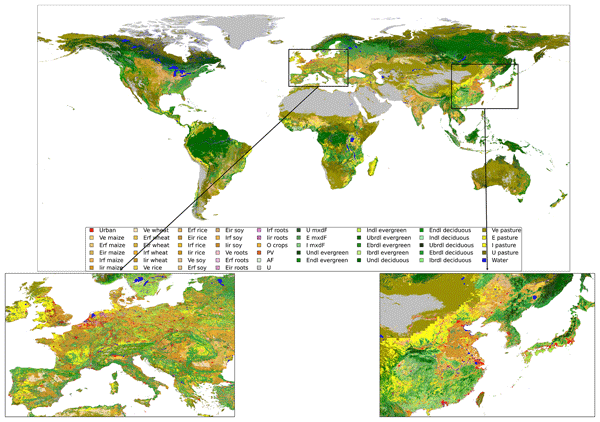
We present a globally harmonised land management intensity dataset at 0.01 ° resolution for 2020 and assess its relationship with socioeconomic, biophysical and behavioural factors. We find that economic growth doesn’t uniformly align with the intensive management instead human behaviour also influence how land is managed. Intensive management is highly concentrated with only a few countries accounting for a disproportionate share of global intensive cropland, pasture and forest management.
Katharina Ramm, Calum Brown, Almut Arneth, and Mark Rounsevell
EGUsphere, https://doi.org/10.64898/2026.04.16.718867, https://doi.org/10.64898/2026.04.16.718867, 2026
This preprint is open for discussion and under review for Earth System Dynamics (ESD).
Short summary
Short summary
Human activities are having negative impacts on biodiversity worldwide. We have developed the Biodiversity Pressure Index to track the five key threats — land use change, resource extraction, climate change, pollution, and invasive species — across the entire planet from 1990 to 2020. Results show nearly 90 % of Earth's land is under medium or high human pressure, and 96 % has worsened over 30 years. Among other pressures, rising temperatures and global trade drive much of this damage.
Zitong Jia, Shouzhi Chen, Yongshuo H. Fu, David Martín Belda, David Wårlind, Stefan Olin, Chongyu Xu, and Jing Tang
Geosci. Model Dev., 19, 1727–1747, https://doi.org/10.5194/gmd-19-1727-2026, https://doi.org/10.5194/gmd-19-1727-2026, 2026
Short summary
Short summary
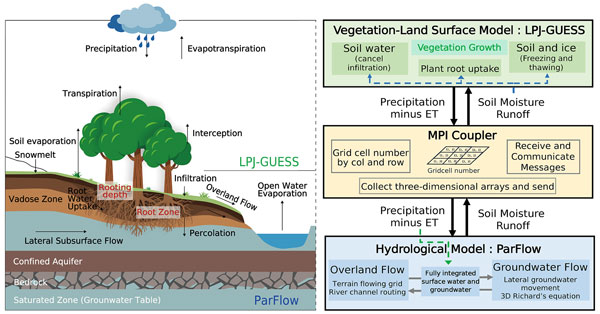
Groundwater sustains vegetation and regulates land-atmosphere exchanges, yet most Earth system models oversimplify its dynamics. Our study develops an integrated framework coupling a dynamic vegetation model with the three-dimensional hydrological model ParFlow to explicitly represent groundwater-vegetation interactions. The results provide evidence that groundwater flow strongly regulates water exchanges and provides a powerful tool to improve simulations of water cycles in Earth system models.
Jens Krause, Peter Anthoni, Mike Harfoot, Moritz Kupisch, and Almut Arneth
Geosci. Model Dev., 18, 9633–9651, https://doi.org/10.5194/gmd-18-9633-2025, https://doi.org/10.5194/gmd-18-9633-2025, 2025
Short summary
Short summary
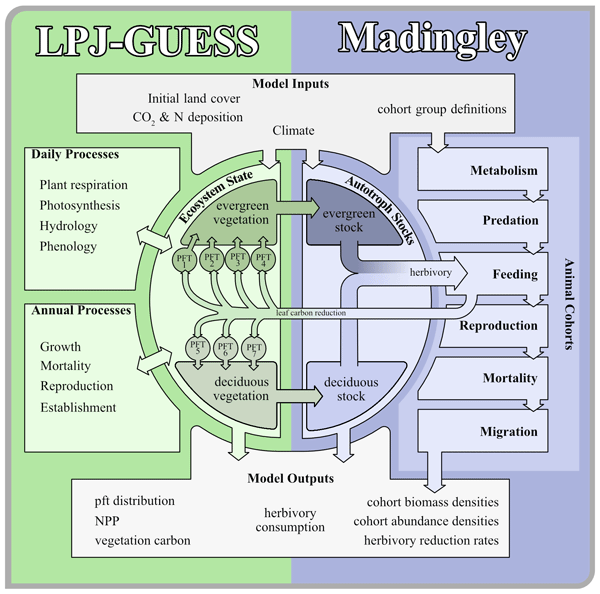
While animal biodiversity is facing a global crisis as more and more species are becoming endangered or extinct, the role of animals for the functioning of ecosystems is still not fully understood. We contribute to bridging this gap by coupling a animal population model with a vegetation and thus enable future research in this topic.
Rubaya Pervin, Scott Robeson, Mallory Barnes, Stephen Sitch, Anthony Walker, Ben Poulter, Fabienne Maignan, Qing Sun, Thomas Colligan, Sönke Zaehle, Kashif Mahmud, Peter Anthoni, Almut Arneth, Vivek Arora, Vladislav Bastrikov, Liam Bogucki, Bertrand Decharme, Christine Delire, Stefanie Falk, Akihiko Ito, Etsushi Kato, Daniel Kennedy, Jürgen Knauer, Michael O’Sullivan, Wenping Yuan, and Natasha MacBean
EGUsphere, https://doi.org/10.5194/egusphere-2025-2841, https://doi.org/10.5194/egusphere-2025-2841, 2025
Short summary
Short summary
Drylands contribute more than a third of the global vegetation productivity. Yet, these regions are not well represented in global vegetation models. Here, we tested how well 15 global models capture annual changes in dryland vegetation productivity. Models that didn’t have vegetation change over time or fire have lower variability in vegetation productivity. Models need better representation of grass cover types and their coverage. Our work highlights where and how these models need to improve.

Carolina Natel, David Martín Belda, Peter Anthoni, Neele Haß, Sam Rabin, and Almut Arneth
Geosci. Model Dev., 18, 4317–4333, https://doi.org/10.5194/gmd-18-4317-2025, https://doi.org/10.5194/gmd-18-4317-2025, 2025
Short summary
Short summary
We developed fast machine learning models to predict forest regrowth and carbon dynamics under climate change. These models mimic the outputs of a complex vegetation model but run 95 % faster, enabling global analyses and supporting climate solutions in large modeling frameworks such as LandSyMM.
Jianyong Ma, Almut Arneth, Benjamin Smith, Peter Anthoni, Xu-Ri, Peter Eliasson, David Wårlind, Martin Wittenbrink, and Stefan Olin
Geosci. Model Dev., 18, 3131–3155, https://doi.org/10.5194/gmd-18-3131-2025, https://doi.org/10.5194/gmd-18-3131-2025, 2025
Short summary
Short summary
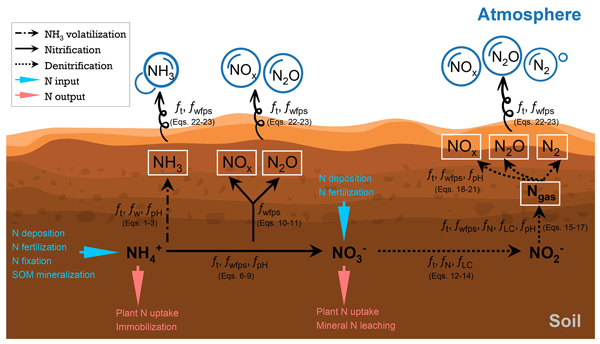
Nitrous oxide (N2O) is a powerful greenhouse gas mainly released from natural and agricultural soils. This study examines how global soil N2O emissions changed from 1961 to 2020 and identifies key factors driving these changes using an ecological model. The findings highlight croplands as the largest source, with factors like fertilizer use and climate change enhancing emissions. Rising CO2 levels, however, can partially mitigate N2O emissions through increased plant nitrogen uptake.
Pierre Friedlingstein, Michael O'Sullivan, Matthew W. Jones, Robbie M. Andrew, Judith Hauck, Peter Landschützer, Corinne Le Quéré, Hongmei Li, Ingrid T. Luijkx, Are Olsen, Glen P. Peters, Wouter Peters, Julia Pongratz, Clemens Schwingshackl, Stephen Sitch, Josep G. Canadell, Philippe Ciais, Robert B. Jackson, Simone R. Alin, Almut Arneth, Vivek Arora, Nicholas R. Bates, Meike Becker, Nicolas Bellouin, Carla F. Berghoff, Henry C. Bittig, Laurent Bopp, Patricia Cadule, Katie Campbell, Matthew A. Chamberlain, Naveen Chandra, Frédéric Chevallier, Louise P. Chini, Thomas Colligan, Jeanne Decayeux, Laique M. Djeutchouang, Xinyu Dou, Carolina Duran Rojas, Kazutaka Enyo, Wiley Evans, Amanda R. Fay, Richard A. Feely, Daniel J. Ford, Adrianna Foster, Thomas Gasser, Marion Gehlen, Thanos Gkritzalis, Giacomo Grassi, Luke Gregor, Nicolas Gruber, Özgür Gürses, Ian Harris, Matthew Hefner, Jens Heinke, George C. Hurtt, Yosuke Iida, Tatiana Ilyina, Andrew R. Jacobson, Atul K. Jain, Tereza Jarníková, Annika Jersild, Fei Jiang, Zhe Jin, Etsushi Kato, Ralph F. Keeling, Kees Klein Goldewijk, Jürgen Knauer, Jan Ivar Korsbakken, Xin Lan, Siv K. Lauvset, Nathalie Lefèvre, Zhu Liu, Junjie Liu, Lei Ma, Shamil Maksyutov, Gregg Marland, Nicolas Mayot, Patrick C. McGuire, Nicolas Metzl, Natalie M. Monacci, Eric J. Morgan, Shin-Ichiro Nakaoka, Craig Neill, Yosuke Niwa, Tobias Nützel, Lea Olivier, Tsuneo Ono, Paul I. Palmer, Denis Pierrot, Zhangcai Qin, Laure Resplandy, Alizée Roobaert, Thais M. Rosan, Christian Rödenbeck, Jörg Schwinger, T. Luke Smallman, Stephen M. Smith, Reinel Sospedra-Alfonso, Tobias Steinhoff, Qing Sun, Adrienne J. Sutton, Roland Séférian, Shintaro Takao, Hiroaki Tatebe, Hanqin Tian, Bronte Tilbrook, Olivier Torres, Etienne Tourigny, Hiroyuki Tsujino, Francesco Tubiello, Guido van der Werf, Rik Wanninkhof, Xuhui Wang, Dongxu Yang, Xiaojuan Yang, Zhen Yu, Wenping Yuan, Xu Yue, Sönke Zaehle, Ning Zeng, and Jiye Zeng
Earth Syst. Sci. Data, 17, 965–1039, https://doi.org/10.5194/essd-17-965-2025, https://doi.org/10.5194/essd-17-965-2025, 2025
Short summary
Short summary
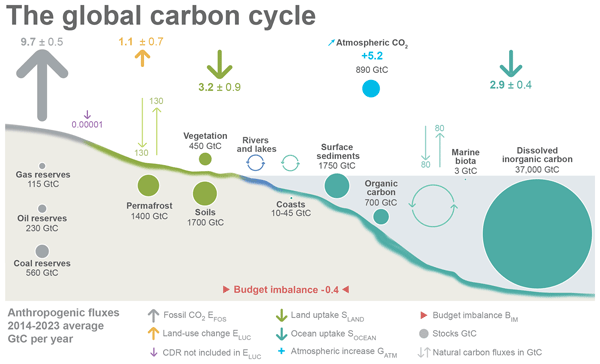
The Global Carbon Budget 2024 describes the methodology, main results, and datasets used to quantify the anthropogenic emissions of carbon dioxide (CO2) and their partitioning among the atmosphere, land ecosystems, and the ocean over the historical period (1750–2024). These living datasets are updated every year to provide the highest transparency and traceability in the reporting of CO2, the key driver of climate change.
Sian Kou-Giesbrecht, Vivek K. Arora, Christian Seiler, Almut Arneth, Stefanie Falk, Atul K. Jain, Fortunat Joos, Daniel Kennedy, Jürgen Knauer, Stephen Sitch, Michael O'Sullivan, Naiqing Pan, Qing Sun, Hanqin Tian, Nicolas Vuichard, and Sönke Zaehle
Earth Syst. Dynam., 14, 767–795, https://doi.org/10.5194/esd-14-767-2023, https://doi.org/10.5194/esd-14-767-2023, 2023
Short summary
Short summary
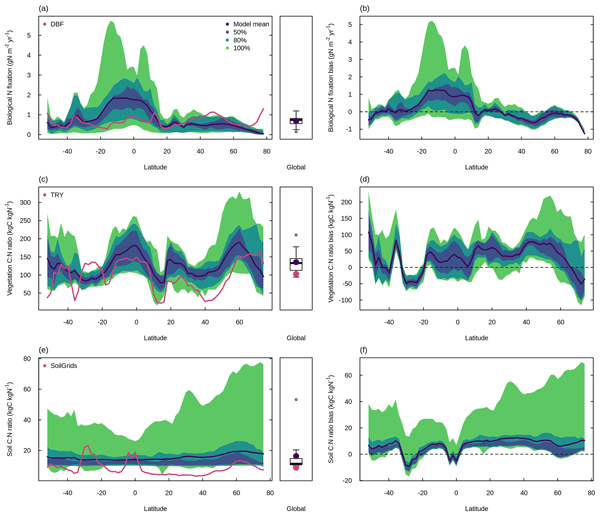
Nitrogen (N) is an essential limiting nutrient to terrestrial carbon (C) sequestration. We evaluate N cycling in an ensemble of terrestrial biosphere models. We find that variability in N processes across models is large. Models tended to overestimate C storage per unit N in vegetation and soil, which could have consequences for projecting the future terrestrial C sink. However, N cycling measurements are highly uncertain, and more are necessary to guide the development of N cycling in models.
Pierre Friedlingstein, Michael O'Sullivan, Matthew W. Jones, Robbie M. Andrew, Luke Gregor, Judith Hauck, Corinne Le Quéré, Ingrid T. Luijkx, Are Olsen, Glen P. Peters, Wouter Peters, Julia Pongratz, Clemens Schwingshackl, Stephen Sitch, Josep G. Canadell, Philippe Ciais, Robert B. Jackson, Simone R. Alin, Ramdane Alkama, Almut Arneth, Vivek K. Arora, Nicholas R. Bates, Meike Becker, Nicolas Bellouin, Henry C. Bittig, Laurent Bopp, Frédéric Chevallier, Louise P. Chini, Margot Cronin, Wiley Evans, Stefanie Falk, Richard A. Feely, Thomas Gasser, Marion Gehlen, Thanos Gkritzalis, Lucas Gloege, Giacomo Grassi, Nicolas Gruber, Özgür Gürses, Ian Harris, Matthew Hefner, Richard A. Houghton, George C. Hurtt, Yosuke Iida, Tatiana Ilyina, Atul K. Jain, Annika Jersild, Koji Kadono, Etsushi Kato, Daniel Kennedy, Kees Klein Goldewijk, Jürgen Knauer, Jan Ivar Korsbakken, Peter Landschützer, Nathalie Lefèvre, Keith Lindsay, Junjie Liu, Zhu Liu, Gregg Marland, Nicolas Mayot, Matthew J. McGrath, Nicolas Metzl, Natalie M. Monacci, David R. Munro, Shin-Ichiro Nakaoka, Yosuke Niwa, Kevin O'Brien, Tsuneo Ono, Paul I. Palmer, Naiqing Pan, Denis Pierrot, Katie Pocock, Benjamin Poulter, Laure Resplandy, Eddy Robertson, Christian Rödenbeck, Carmen Rodriguez, Thais M. Rosan, Jörg Schwinger, Roland Séférian, Jamie D. Shutler, Ingunn Skjelvan, Tobias Steinhoff, Qing Sun, Adrienne J. Sutton, Colm Sweeney, Shintaro Takao, Toste Tanhua, Pieter P. Tans, Xiangjun Tian, Hanqin Tian, Bronte Tilbrook, Hiroyuki Tsujino, Francesco Tubiello, Guido R. van der Werf, Anthony P. Walker, Rik Wanninkhof, Chris Whitehead, Anna Willstrand Wranne, Rebecca Wright, Wenping Yuan, Chao Yue, Xu Yue, Sönke Zaehle, Jiye Zeng, and Bo Zheng
Earth Syst. Sci. Data, 14, 4811–4900, https://doi.org/10.5194/essd-14-4811-2022, https://doi.org/10.5194/essd-14-4811-2022, 2022
Short summary
Short summary
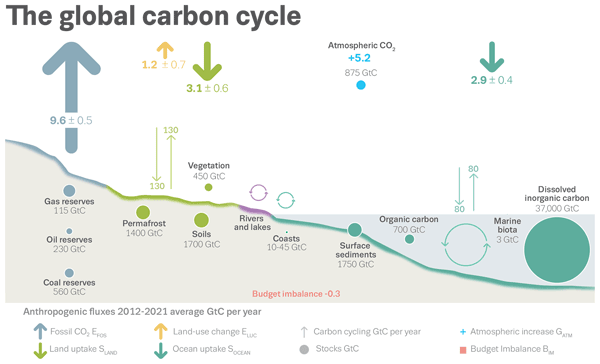
The Global Carbon Budget 2022 describes the datasets and methodology used to quantify the anthropogenic emissions of carbon dioxide (CO2) and their partitioning among the atmosphere, the land ecosystems, and the ocean. These living datasets are updated every year to provide the highest transparency and traceability in the reporting of CO2, the key driver of climate change.
David Martín Belda, Peter Anthoni, David Wårlind, Stefan Olin, Guy Schurgers, Jing Tang, Benjamin Smith, and Almut Arneth
Geosci. Model Dev., 15, 6709–6745, https://doi.org/10.5194/gmd-15-6709-2022, https://doi.org/10.5194/gmd-15-6709-2022, 2022
Short summary
Short summary
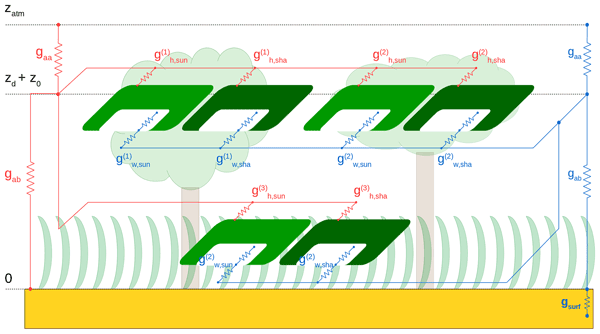
We present a number of augmentations to the ecosystem model LPJ-GUESS, which will allow us to use it in studies of the interactions between the land biosphere and the climate. The new module enables calculation of fluxes of energy and water into the atmosphere that are consistent with the modelled vegetation processes. The modelled fluxes are in fair agreement with observations across 21 sites from the FLUXNET network.
Johannes Oberpriller, Christine Herschlein, Peter Anthoni, Almut Arneth, Andreas Krause, Anja Rammig, Mats Lindeskog, Stefan Olin, and Florian Hartig
Geosci. Model Dev., 15, 6495–6519, https://doi.org/10.5194/gmd-15-6495-2022, https://doi.org/10.5194/gmd-15-6495-2022, 2022
Short summary
Short summary
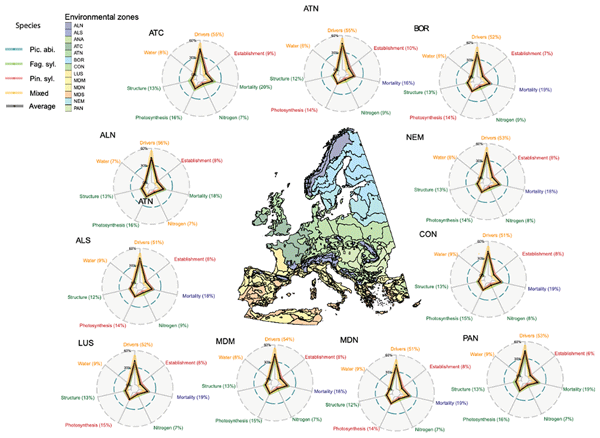
Understanding uncertainties of projected ecosystem dynamics under environmental change is of immense value for research and climate change policy. Here, we analyzed these across European forests. We find that uncertainties are dominantly induced by parameters related to water, mortality, and climate, with an increasing importance of climate from north to south. These results highlight that climate not only contributes uncertainty but also modifies uncertainties in other ecosystem processes.
Jianyong Ma, Sam S. Rabin, Peter Anthoni, Anita D. Bayer, Sylvia S. Nyawira, Stefan Olin, Longlong Xia, and Almut Arneth
Biogeosciences, 19, 2145–2169, https://doi.org/10.5194/bg-19-2145-2022, https://doi.org/10.5194/bg-19-2145-2022, 2022
Short summary
Short summary
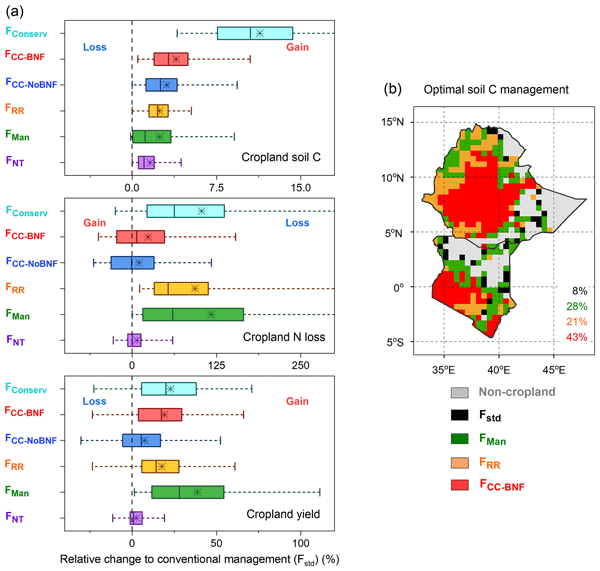
Improved agricultural management plays a vital role in protecting soils from degradation in eastern Africa. We simulated the impacts of seven management practices on soil carbon pools, nitrogen loss, and crop yield under different climate scenarios in this region. This study highlights the possibilities of conservation agriculture when targeting long-term environmental sustainability and food security in crop ecosystems, particularly for those with poor soil conditions in tropical climates.
Ralf Döscher, Mario Acosta, Andrea Alessandri, Peter Anthoni, Thomas Arsouze, Tommi Bergman, Raffaele Bernardello, Souhail Boussetta, Louis-Philippe Caron, Glenn Carver, Miguel Castrillo, Franco Catalano, Ivana Cvijanovic, Paolo Davini, Evelien Dekker, Francisco J. Doblas-Reyes, David Docquier, Pablo Echevarria, Uwe Fladrich, Ramon Fuentes-Franco, Matthias Gröger, Jost v. Hardenberg, Jenny Hieronymus, M. Pasha Karami, Jukka-Pekka Keskinen, Torben Koenigk, Risto Makkonen, François Massonnet, Martin Ménégoz, Paul A. Miller, Eduardo Moreno-Chamarro, Lars Nieradzik, Twan van Noije, Paul Nolan, Declan O'Donnell, Pirkka Ollinaho, Gijs van den Oord, Pablo Ortega, Oriol Tintó Prims, Arthur Ramos, Thomas Reerink, Clement Rousset, Yohan Ruprich-Robert, Philippe Le Sager, Torben Schmith, Roland Schrödner, Federico Serva, Valentina Sicardi, Marianne Sloth Madsen, Benjamin Smith, Tian Tian, Etienne Tourigny, Petteri Uotila, Martin Vancoppenolle, Shiyu Wang, David Wårlind, Ulrika Willén, Klaus Wyser, Shuting Yang, Xavier Yepes-Arbós, and Qiong Zhang
Geosci. Model Dev., 15, 2973–3020, https://doi.org/10.5194/gmd-15-2973-2022, https://doi.org/10.5194/gmd-15-2973-2022, 2022
Short summary
Short summary
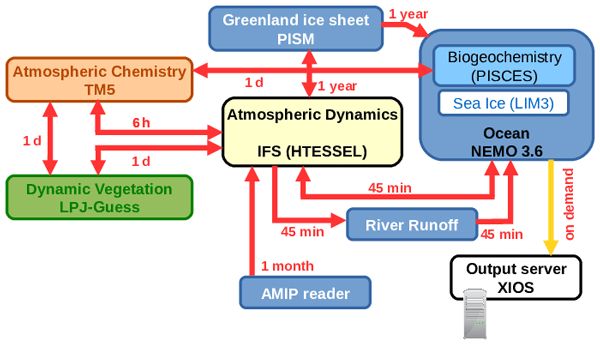
The Earth system model EC-Earth3 is documented here. Key performance metrics show physical behavior and biases well within the frame known from recent models. With improved physical and dynamic features, new ESM components, community tools, and largely improved physical performance compared to the CMIP5 version, EC-Earth3 represents a clear step forward for the only European community ESM. We demonstrate here that EC-Earth3 is suited for a range of tasks in CMIP6 and beyond.
Jianyong Ma, Stefan Olin, Peter Anthoni, Sam S. Rabin, Anita D. Bayer, Sylvia S. Nyawira, and Almut Arneth
Geosci. Model Dev., 15, 815–839, https://doi.org/10.5194/gmd-15-815-2022, https://doi.org/10.5194/gmd-15-815-2022, 2022
Short summary
Short summary
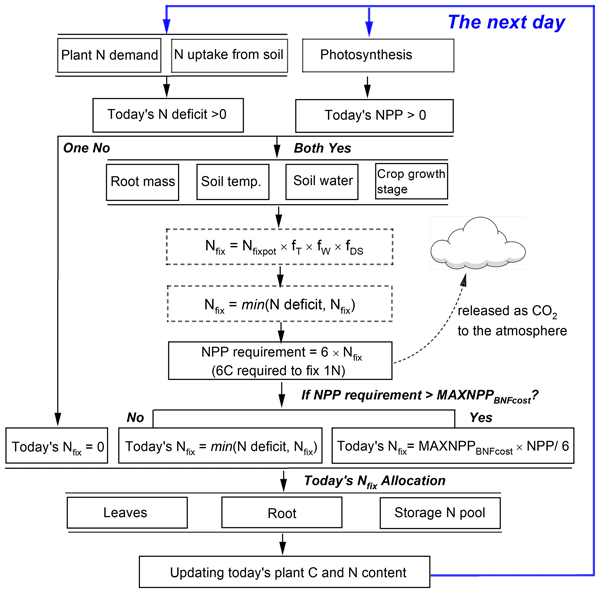
The implementation of the biological N fixation process in LPJ-GUESS in this study provides an opportunity to quantify N fixation rates between legumes and to better estimate grain legume production on a global scale. It also helps to predict and detect the potential contribution of N-fixing plants as
green manureto reducing or removing the use of N fertilizer in global agricultural systems, considering different climate conditions, management practices, and land-use change scenarios.
Ana Bastos, René Orth, Markus Reichstein, Philippe Ciais, Nicolas Viovy, Sönke Zaehle, Peter Anthoni, Almut Arneth, Pierre Gentine, Emilie Joetzjer, Sebastian Lienert, Tammas Loughran, Patrick C. McGuire, Sungmin O, Julia Pongratz, and Stephen Sitch
Earth Syst. Dynam., 12, 1015–1035, https://doi.org/10.5194/esd-12-1015-2021, https://doi.org/10.5194/esd-12-1015-2021, 2021
Short summary
Short summary
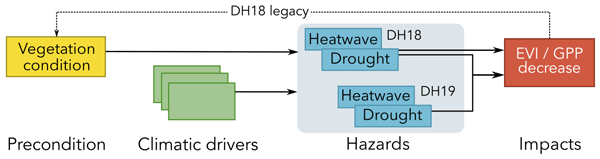
Temperate biomes in Europe are not prone to recurrent dry and hot conditions in summer. However, these conditions may become more frequent in the coming decades. Because stress conditions can leave legacies for many years, this may result in reduced ecosystem resilience under recurrent stress. We assess vegetation vulnerability to the hot and dry summers in 2018 and 2019 in Europe and find the important role of inter-annual legacy effects from 2018 in modulating the impacts of the 2019 event.
Cited articles
Canty, A. and Ripley, B. D.: boot: Bootstrap R (S-Plus) Functions, R package version 1.3-30, CRAN [code], https://doi.org/10.32614/CRAN.package.boot, 2024. a
Daly, C., Neilson, R. P., and Phillips, D. L.: A Statistical-Topographic Model for Mapping Climatological Precipitation over Mountainous Terrain, Journal of Applied Meteorology and Climatology, 33, 140–158, https://doi.org/10.1175/1520-0450(1994)033<0140:ASTMFM>2.0.CO;2, 1994. a
Daly, C., Taylor, G., and Gibson, W.: The PRISM approach to mapping precipitation and temperature, in: Proc., 10th AMS Conf. on Applied Climatology, 20–23, 1997. a
Danielson, J. J. and Gesch, D. B.: Global multi-resolution terrain elevation data 2010 (GMTED2010), US Department of the Interior, US Geological Survey Washington [data set], https://doi.org/10.3133/ofr20111073, 2011. a, b, c
Davison, A. C. and Hinkley, D. V.: Bootstrap Methods and Their Applications, Cambridge University Press, Cambridge, ISBN 0-521-57391-2, https://doi.org/10.1017/CBO9780511802843, 1997. a
Dikta, G. and Scheer, M.: Bootstrap methods: with applications in R, Springer Nature, https://doi.org/10.1007/978-3-030-73480-0, 2021. a
Gerten, D., Schaphoff, S., Haberlandt, U., Lucht, W., and Sitch, S.: Terrestrial vegetation and water balance–hydrological evaluation of a dynamic global vegetation model, Journal of Hydrology, 286, 249–270, https://doi.org/10.1016/j.jhydrol.2003.09.029, 2004. a
Giorgi, F., Jones, C., and Asrar, G. R.: Addressing climate information needs at the regional level: the CORDEX framework, World Meteorological Organization (WMO) Bulletin, 58, 175, https://www.adaptation-changement-climatique.gouv.fr/sites/cracc/files/inline-files/CORDEX1.pdf (last access: 21 November 2025), 2009. a
Gregor, K., Knoke, T., Krause, A., Reyer, C. P. O., Lindeskog, M., Papastefanou, P., Smith, B., Lansø, A.-S., and Rammig, A.: Trade-Offs for Climate-Smart Forestry in Europe Under Uncertain Future Climate, Earth's Future, 10, e2022EF002796, https://doi.org/10.1029/2022EF002796, 2022. a
Gregor, K., Krause, A., Reyer, C. P. O., Knoke, T., Meyer, B. F., Suvanto, S., and Rammig, A.: Quantifying the impact of key factors on the carbon mitigation potential of managed temperate forests, Carbon Balance and Management, 19, 10, https://doi.org/10.1186/s13021-023-00247-9, 2024. a
Hassell, D., Gregory, J., Blower, J., Lawrence, B. N., and Taylor, K. E.: A data model of the Climate and Forecast metadata conventions (CF-1.6) with a software implementation (cf-python v2.1), Geosci. Model Dev., 10, 4619–4646, https://doi.org/10.5194/gmd-10-4619-2017, 2017. a
Haxeltine, A. and Prentice, I. C.: A General Model for the Light-Use Efficiency of Primary Production, Functional Ecology, 10, 551–561, https://doi.org/10.2307/2390165, 1996. a
Hickler, T., Vohland, K., Feehan, J., Miller, P. A., Smith, B., Costa, L., Giesecke, T., Fronzek, S., Carter, T. R., Cramer, W., Kühn, I., and Sykes, M. T.: Projecting the future distribution of European potential natural vegetation zones with a generalized, tree species-based dynamic vegetation model, Global Ecology and Biogeography, 21, 50–63, https://doi.org/10.1111/j.1466-8238.2010.00613.x, 2012. a
Jungclaus, J., Bittner, M., Wieners, K.-H., Wachsmann, F., Schupfner, M., Legutke, S., Giorgetta, M., Reick, C., Gayler, V., Haak, H., de Vrese, P., Raddatz, T., Esch, M., Mauritsen, T., von Storch, J.-S., Behrens, J., Brovkin, V., Claussen, M., Crueger, T., Fast, I., Fiedler, S., Hagemann, S., Hohenegger, C., Jahns, T., Kloster, S., Kinne, S., Lasslop, G., Kornblueh, L., Marotzke, J., Matei, D., Meraner, K., Mikolajewicz, U., Modali, K., Müller, W., Nabel, J., Notz, D., Peters-von Gehlen, K., Pincus, R., Pohlmann, H., Pongratz, J., Rast, S., Schmidt, H., Schnur, R., Schulzweida, U., Six, K., Stevens, B., Voigt, A., and Roeckner, E.: MPI-M MPI-ESM1.2-HR model output prepared for CMIP6 CMIP historical, Earth System Grid Federation [data set], https://doi.org/10.22033/ESGF/CMIP6.6594, 2019. a
Karger, D. N., Conrad, O., Böhner, J., Kawohl, T., Kreft, H., Soria-Auza, R. W., Zimmermann, N. E., Linder, H. P., and Kessler, M.: Climatologies at high resolution for the earth's land surface areas, Scientific Data, 4, 170122, https://doi.org/10.1038/sdata.2017.122, 2017. a, b
Knorr, W., Kaminski, T., Arneth, A., and Weber, U.: Impact of human population density on fire frequency at the global scale, Biogeosciences, 11, 1085–1102, https://doi.org/10.5194/bg-11-1085-2014, 2014. a, b
Knorr, W., Jiang, L., and Arneth, A.: Climate, CO2 and human population impacts on global wildfire emissions, Biogeosciences, 13, 267–282, https://doi.org/10.5194/bg-13-267-2016, 2016. a, b
Lagergren, F., Björk, R. G., Andersson, C., Belušić, D., Björkman, M. P., Kjellström, E., Lind, P., Lindstedt, D., Olenius, T., Pleijel, H., Rosqvist, G., and Miller, P. A.: Kilometre-scale simulations over Fennoscandia reveal a large loss of tundra due to climate warming, Biogeosciences, 21, 1093–1116, https://doi.org/10.5194/bg-21-1093-2024, 2024. a, b
Lange, S. and Büchner, M.: ISIMIP3b bias-adjusted atmospheric climate input data, ISIMIP Repository [data set], https://doi.org/10.48364/ISIMIP.842396.1, 2021. a
Lindeskog, M., Arneth, A., Bondeau, A., Waha, K., Seaquist, J., Olin, S., and Smith, B.: Implications of accounting for land use in simulations of ecosystem carbon cycling in Africa, Earth Syst. Dynam., 4, 385–407, https://doi.org/10.5194/esd-4-385-2013, 2013. a
Lindeskog, M., Smith, B., Lagergren, F., Sycheva, E., Ficko, A., Pretzsch, H., and Rammig, A.: Accounting for forest management in the estimation of forest carbon balance using the dynamic vegetation model LPJ-GUESS (v4.0, r9710): implementation and evaluation of simulations for Europe, Geosci. Model Dev., 14, 6071–6112, https://doi.org/10.5194/gmd-14-6071-2021, 2021. a
Masson-Delmotte, V., Zhai P., Pirani, A., Connors, S. L., Pean, C., Berger, S., Caud, N., Chen, Y., Goldfarb, L., Gomis, M. I., Huang, M., Leitzell, K., Lonnoy, E., Matthews, J. B. R., Maycock, T. K., Waterfield, T., Yelekçi, O., Yu, R., and Zhou, B.: SPM – Summary for Policymakers, in: Climate change 2021: The physical science basis, Contribution of working group I to the sixth assessment report of the intergovernmental panel on climate change, Cambridge University Press, Cambridge, United Kingdom and New York, NY, USA, https://doi.org/10.1017/9781009157896.001, 2021. a
Meyer, B. F., Buras, A., Gregor, K., Layritz, L. S., Principe, A., Kreyling, J., Rammig, A., and Zang, C. S.: Frost matters: incorporating late-spring frost into a dynamic vegetation model regulates regional productivity dynamics in European beech forests , Biogeosciences, 21, 1355–1370, https://doi.org/10.5194/bg-21-1355-2024, 2024. a, b
Molinari, C., Hantson, S., and Nieradzik, L. P.: Fire Dynamics in Boreal Forests Over the 20th Century: A Data-Model Comparison, Frontiers in Ecology and Evolution, 9, https://doi.org/10.3389/fevo.2021.728958, publisher: Frontiers, 2021. a
Monsi, M. and Saeki, T.: On the Factor Light in Plant Communities and its Importance for Matter Production, Japanese Journal of Botany, 14, 22–52, 1953. a
Monsi, M. and Saeki, T.: On the Factor Light in Plant Communities and its Importance for Matter Production, Annals of Botany, 95, 549–567, https://doi.org/10.1093/aob/mci052, 2005. a
Morales, P., Hickler, T., Rowell, D. P., Smith, B., and Sykes, M. T.: Changes in European ecosystem productivity and carbon balance driven by regional climate model output, Global Change Biology, 13, 108–122, https://doi.org/10.1111/j.1365-2486.2006.01289.x, 2007. a
Morera, A., LeBlanc, H., Martínez de Aragón, J., Bonet, J. A., and de Miguel, S.: Analysis of climate change impacts on the biogeographical patterns of species-specific productivity of socioeconomically important edible fungi in Mediterranean forest ecosystems, Ecological Informatics, 81, 102557, https://doi.org/10.1016/j.ecoinf.2024.102557, 2024. a
Müller, C. and Lucht, W.: Robustness of terrestrial carbon and water cycle simulations against variations in spatial resolution, Journal of Geophysical Research: Atmospheres, 112, https://doi.org/10.1029/2006JD007875, 2007. a
Olin, S., Schurgers, G., Lindeskog, M., Wårlind, D., Smith, B., Bodin, P., Holmér, J., and Arneth, A.: Modelling the response of yields and tissue C : N to changes in atmospheric CO2 and N management in the main wheat regions of western Europe, Biogeosciences, 12, 2489–2515, https://doi.org/10.5194/bg-12-2489-2015, 2015. a
Otryakhin, D. and Belda, D. M.: Software for comparison of LPJ-GUESS simulations driven by low- and high-resolution climate data, Zenodo [code], https://doi.org/10.5281/zenodo.14941305, 2025. a
Rabin, S. S., Melton, J. R., Lasslop, G., Bachelet, D., Forrest, M., Hantson, S., Kaplan, J. O., Li, F., Mangeon, S., Ward, D. S., Yue, C., Arora, V. K., Hickler, T., Kloster, S., Knorr, W., Nieradzik, L., Spessa, A., Folberth, G. A., Sheehan, T., Voulgarakis, A., Kelley, D. I., Prentice, I. C., Sitch, S., Harrison, S., and Arneth, A.: The Fire Modeling Intercomparison Project (FireMIP), phase 1: experimental and analytical protocols with detailed model descriptions, Geosci. Model Dev., 10, 1175–1197, https://doi.org/10.5194/gmd-10-1175-2017, 2017. a, b, c
Schaphoff, S., Lucht, W., Gerten, D., Sitch, S., Cramer, W., and Prentice, I. C.: Terrestrial biosphere carbon storage under alternative climate projections, Climatic Change, 74, 97–122, https://doi.org/10.1007/s10584-005-9002-5, 2006. a
Schär, C., Fuhrer, O., Arteaga, A., Ban, N., Charpilloz, C., Di Girolamo, S., Hentgen, L., Hoefler, T., Lapillonne, X., Leutwyler, D., Osterried, K., Panosetti, D., Rüdisühli, S., Schlemmer, L., Schulthess, T. C., Sprenger, M., Ubbiali, S., and Wernli, H.: Kilometer-scale climate models: Prospects and challenges, Bulletin of the American Meteorological Society, 101, E567–E587, 2020. a
Schulzweida, U.: CDO User Guide, Zenodo, https://doi.org/10.5281/zenodo.10020800, 2023. a
Schurgers, G., Ahlström, A., Arneth, A., Pugh, T. A. M., and Smith, B.: Climate Sensitivity Controls Uncertainty in Future Terrestrial Carbon Sink, Geophysical Research Letters, 45, 4329–4336, https://doi.org/10.1029/2018GL077528, 2018. a
Shin, Y.-J., Midgley, G. F., Archer, E. R. M., Arneth, A., Barnes, D. K. A., Chan, L., Hashimoto, S., Hoegh-Guldberg, O., Insarov, G., Leadley, P., Levin, L. A., Ngo, H. T., Pandit, R., Pires, A. P. F., Pörtner, H.-O., Rogers, A. D., Scholes, R. J., Settele, J., and Smith, P.: Actions to halt biodiversity loss generally benefit the climate, Global Change Biology, 28, 2846–2874, https://doi.org/10.1111/gcb.16109, 2022. a
Sitch, S., Smith, B., Prentice, I. C., Arneth, A., Bondeau, A., Cramer, W., Kaplan, J. O., Levis, S., Lucht, W., Sykes, M. T., Thonicke, K., and Venevsky, S.: Evaluation of ecosystem dynamics, plant geography and terrestrial carbon cycling in the LPJ dynamic global vegetation model, Global Change Biology, 9, 161–185, https://doi.org/10.1046/j.1365-2486.2003.00569.x, 2003. a
Smith, B., Prentice, I. C., and Sykes, M. T.: Representation of vegetation dynamics in the modelling of terrestrial ecosystems: comparing two contrasting approaches within European climate space, Global Ecology and Biogeography, 10, 621–637, https://doi.org/10.1046/j.1466-822X.2001.t01-1-00256.x, 2001. a
Smith, B., Wårlind, D., Arneth, A., Hickler, T., Leadley, P., Siltberg, J., and Zaehle, S.: Implications of incorporating N cycling and N limitations on primary production in an individual-based dynamic vegetation model, Biogeosciences, 11, 2027–2054, https://doi.org/10.5194/bg-11-2027-2014, 2014. a, b
Smith, P., Arneth, A., Barnes, D. K. A., Ichii, K., Marquet, P. A., Popp, A., Pörtner, H.-O., Rogers, A. D., Scholes, R. J., Strassburg, B., Wu, J., and Ngo, H.: How do we best synergize climate mitigation actions to co-benefit biodiversity?, Global Change Biology, 28, 2555–2577, https://doi.org/10.1111/gcb.16056, 2022. a
Sørland, S. L., Brogli, R., Pothapakula, P. K., Russo, E., Van de Walle, J., Ahrens, B., Anders, I., Bucchignani, E., Davin, E. L., Demory, M.-E., Dosio, A., Feldmann, H., Früh, B., Geyer, B., Keuler, K., Lee, D., Li, D., van Lipzig, N. P. M., Min, S.-K., Panitz, H.-J., Rockel, B., Schär, C., Steger, C., and Thiery, W.: COSMO-CLM regional climate simulations in the Coordinated Regional Climate Downscaling Experiment (CORDEX) framework: a review, Geosci. Model Dev., 14, 5125–5154, https://doi.org/10.5194/gmd-14-5125-2021, 2021. a
Tian, H., Yang, J., Lu, C., Xu, R., Canadell, J. G., Jackson, R. B., Arneth, A., Chang, J., Chen, G., Ciais, P., Gerber, S., Ito, A., Huang, Y., Joos, F., Lienert, S., Messina, P., Olin, S., Pan, S., Peng, C., Saikawa, E., Thompson, R. L., Vuichard, N., Winiwarter, W., Zaehle, S., Zhang, B., Zhang, K., and Zhu, Q.: The Global N2O Model Intercomparison Project, Bulletin of the American Meteorological Society, 99, 1231–1251, https://doi.org/10.1175/BAMS-D-17-0212.1, 2018. a
Welch, B. L.: The Generalization of “Student's” Problem When Several Different Population Variances Are Involved, Biometrika, 34, 28–35, https://doi.org/10.1093/biomet/34.1-2.28, 1947. a
Zender, C. S.: Analysis of self-describing gridded geoscience data with netCDF Operators (NCO), Environmental Modelling & Software, 23, 1338–1342, https://doi.org/10.1016/j.envsoft.2008.03.004, 2008. a
Zobler, L.: A world soil file grobal climate modeling, NASA Technical Memorandum, 32, 1986. a
Zscheischler, J., Fischer, E. M., and Lange, S.: The effect of univariate bias adjustment on multivariate hazard estimates, Earth Syst. Dynam., 10, 31–43, https://doi.org/10.5194/esd-10-31-2019, 2019. a
Short summary
We developed a methodology for comparison of simulation results by a dynamic global vegetation model (DGVM). Using this methodology, we reveal systematic differences between high- and low-resolution DGVM simulations caused by under-representation of climate variability in the low-resolution data and poor representation of shore lines and inland water bodies. In a study area covering European Union, the differences in aggregated output variables were found to be 2.8%–7.3%.
We developed a methodology for comparison of simulation results by a dynamic global vegetation...


