
Articles | Volume 19, issue 18
https://doi.org/10.5194/gmd-19-9019-2026
© Author(s) 2026. This work is distributed under
the Creative Commons Attribution 4.0 License.
the Creative Commons Attribution 4.0 License.
https://doi.org/10.5194/gmd-19-9019-2026
© Author(s) 2026. This work is distributed under
the Creative Commons Attribution 4.0 License.
the Creative Commons Attribution 4.0 License.
Development and technical paper
| 
24 Sep 2026
Development and technical paper |
| 24 Sep 2026
| 24 Sep 2026
Consideration of radiation absorption by stems in forests for microclimate modeling
Martin Béland
CORRESPONDING AUTHOR

Digital Forest Lab, Department of Geomatics Sciences, Laval University, Quebec City, G1V 0A6, Canada
Gordon Bonan
NSF National Center for Atmospheric Research, Boulder, CO 80307, USA
Hideki Kobayashi
Institute of Arctic Climate and Environment Research, Research Institute for Global Change, Japan Agency for Marine-Earth Science and Technology, 3173-25 Showamachi, Kanazawa-ku, Yokohama, 236-0001, Japan
Dennis Baldocchi
Department of Environmental Science, Policy and Management, University of California, Berkeley, CA 94720, USA
Related authors
No articles found.
Harsh G. Kamath, Gordon B. Bonan, Zong-Liang Yang, Ronnie Abolafia-Rosenzweig, Cenlin He, Ashley Matheny, and Dev Niyogi
EGUsphere, https://doi.org/10.5194/egusphere-2026-4875, https://doi.org/10.5194/egusphere-2026-4875, 2026
This preprint is open for discussion and under review for Geoscientific Model Development (GMD).
Short summary
Short summary
Noah-MP-ML² v1.0 extends the community Noah-MP land surface model with a multilayer canopy, improved radiation and turbulence schemes, Medlyn stomatal conductance, and a mass-conserving Richards-equation solver. Evaluation at five forest FLUXNET sites shows improved simulation of friction velocity, turbulent heat fluxes, and vertical soil-moisture dynamics while identifying remaining uncertainties in soil hydraulic properties, rooting profiles, and plant hydraulics.
Anna-Maria Virkkala, Isabel Wargowsky, Judith Vogt, McKenzie A. Kuhn, Simran Madaan, Tiffany Windholz, Kyle A. Arndt, Gerard Rocher-Ros, Mathias Göckede, David Olefeldt, Edward A. G. Schuur, David Bastviken, Richard O'Keefe, Brendan M. Rogers, Jennifer D. Watts, Kelcy Kent, Kristoffer Aalstad, Kelly Aho, Joonatan Ala-Könni, Haley Alcock, Inge Althuizen, Christopher D. Arp, Jun Asanuma, Mika Aurela, Sivakiruthika Balathandayuthabani, Katrin Attermeyer, Alan Barr, Maialen Barret, Ochirbat Batkhishig, Christina Biasi, Mats P. Björkman, Andrew Black, Elena Blanc-Betes, Pascal Bodmer, Julia Boike, Abdullah Bolek, Frédéric Bouchard, Ingeborg Bussmann, Lea Cabrol, Eleonora Canfora, Sean Carey, Karel Castro-Morales, Namyi Chae, Andreas Christen, Torben R. Christensen, Casper T. Christiansen, Housen Chu, Graham Clark, Francois Clayer, Patrick Crill, Christopher Cunada, Scott J. Davidson, Joshua F. Dean, Sigrid Dengel, Matteo Detto, Catherine Dieleman, Florent Domine, Egor Dyukarev, Colin Edgar, Bo Elberling, Craig A. Emmerton, Eugenie Euskirchen, Grant Falvo, Thomas Friborg, Michelle Garneau, Mariasilvia Giamberini, Mikhail V. Glagolev, Miquel A. Gonzalez-Meler, Gustaf Granath, Jón Guðmundsson, Konsta Happonen, Yoshinobu Harazono, Lorna Harris, Josh Hashemi, Nicholas Hasson, Janna Heerah, Liam Heffernan, Manuel Helbig, Warren Helgason, Michal Heliasz, Greg Henry, Geert Hensgens, Tetsuya Hiyama, Beth Holmes, Macall Hock, David Holl, Jutta Holst, Thomas Holst, Gabriel Hould-Gosselin, Elyn Humphreys, Jacqueline Hung, Jussi Huotari, Hiroki Ikawa, Danil V. Ilyasov, Mamoru Ishikawa, Go Iwahana, Hiroki Iwata, Marcin Antoni Jackowicz-Korczynski, Joachim Jansen, Järvi Järveoja, Vincent E. J. Jassey, Rasmus Jensen, Katharina Jentzsch, Robert G. Jespersen, Carl-Fredrik Johannesson, Cheristy P. Jones, Anders Jonsson, Ji Young Jung, Sari Juutinen, Evan Kane, Jan Karlsson, Sergey Karsanaev, Kuno Kasak, Julia Kelly, Kasha Kempton, Marcus Klaus, George W. Kling, Natascha Kljun, Jacqueline Knutson, Hideki Kobayashi, John Kochendorfer, Kukka-Maaria Kohonen, Pasi Kolari, Mika Korkiakoski, Aino Korrensalo, Pirkko Kortelainen, Egle Koster, Kajar Koster, Ayumi Kotani, Praveena Krishnan, Juliya Kurbatova, Lars Kutzbach, Min Jung Kwon, Ethan D. Kyzivat, Jessica Lagroix, Theodore Langhorst, Elena Lapshina, Tuula Larmola, Klaus S. Larsen, Isabelle Laurion, Justin Ledman, Hanna Lee, A. Joshua Leffler, Lance Lesack, Anders Lindroth, David Lipson, Annalea Lohila, Efrén López-Blanco, Vincent L. St. Louis, Erik Lundin, Miska Luoto, Takashi Machimura, Marta Magnani, Avni Malhotra, Marja Maljanen, Ivan Mammarella, Elisa Männistö, Luca Belelli Marchesini, Phil Marsh, Pertti J. Martikainen, Maija E. Marushchak, Mikhail Mastepanov, Alex Mavrovic, Trofim Maximov, Christina Minions, Daniel F. Nadeau, Marco Montemayor, Tomoaki Morishita, Patrick Murphy, Erin Nicholls, Mats B. Nilsson, Anastasia Niyazova, Jenni Nordén, Koffi Dodji Noumonvi, Hannu Nykänen, Walter Oechel, Anne Ojala, Tomohiro Okadera, Sujan Pal, Alexey V. Panov, Tim Papakyriakou, Dario Papale, Sang-Jong Park, Frans-Jan W. Parmentier, Gilberto Pastorello, Mike Peacock, Matthias Peichl, Roman Petrov, Kyra St. Pierre, Norbert Pirk, Jessica Plein, Vilmantas Preskienis, Anatoly Prokushkin, Jukka Pumpanen, Hilary A. Rains, Niklas Rakos, Aleksi Räsänen, Helena Rautakoski, Riikka Rinnan, Janne Rinne, Adrian Rocha, Nigel Roulet, Alexandre Roy, Anna Rutgersson, Aleksandr F. Sabrekov, Torsten Sachs, Erik Sahlée, Alejandro Salazar, Henrique Oliveira Sawakuchi, Christopher Schulze, Roger Seco, Armando Sepulveda-Jauregui, Svetlana Serikova, Abbey Serrone, Hanna M. Silvennoinen, Sofie Sjogersten, June Skeeter, Jo Snöälv, Sebastian Sobek, Oliver Sonnentag, Emily H. Stanley, Maria Strack, Lena Strom, Patrick Sullivan, Ryan Sullivan, Anna Sytiuk, Torbern Tagesson, Pierre Taillardat, Julie Talbot, Suzanne E. Tank, Mario Tenuta, Irina Terenteva, Frederic Thalasso, Antoine Thiboult, Halldor Thorgeirsson, Fenix Garcia Tigreros, Margaret Torn, Amy Townsend-Small, Claire Treat, Alain Tremblay, Carlo Trotta, Eeva-Stiina Tuittila, Merritt Turetsky, Masahito Ueyama, Muhammad Umair, Aki Vähä, Lona van Delden, Maarten van Hardenbroek, Andrej Varlagin, Ruth K. Varner, Tarmo Virtanen, Elena Veretennikova, Timo Vesala, Carolina Voigt, Jorien E. Vonk, Robert Wagner, Katey Walter Anthony, Qinxue Wang, Masataka Watanabe, Hailey Webb, Jeffrey M. Welker, Andreas Westergaard-Nielsen, Sebastian Westermann, Jeffrey R. White, Christian Wille, Scott N. Williamson, Scott Zolkos, Donatella Zona, and Susan M. Natali
Earth Syst. Sci. Data, 18, 6357–6409, https://doi.org/10.5194/essd-18-6357-2026, https://doi.org/10.5194/essd-18-6357-2026, 2026
Short summary
Short summary
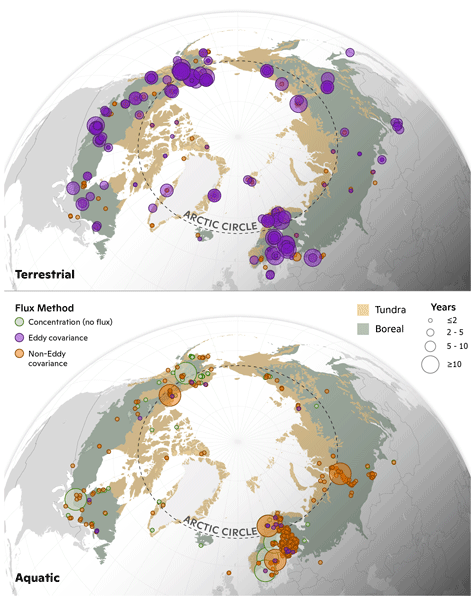
This dataset includes monthly measurements of carbon dioxide and methane exchange between land, water, and the atmosphere from over 1000 sites in Arctic and boreal regions. It combines measurements from a variety of ecosystems, including wetlands, forests, tundra, lakes, and rivers, gathered by over 260 researchers from 1984–2024. This dataset can be used to improve and reduce uncertainty in carbon budgets in order to strengthen our understanding of climate feedbacks in a warming world.
Erin F. Katz, Caleb M. Arata, Eva Y. Pfannerstill, Robert J. Weber, Darian Ng, Michael J. Milazzo, Haley Byrne, Hui Wang, Alex B. Guenther, Camilo Rey-Sanchez, Joshua Apte, Dennis D. Baldocchi, and Allen H. Goldstein
Atmos. Chem. Phys., 25, 15281–15299, https://doi.org/10.5194/acp-25-15281-2025, https://doi.org/10.5194/acp-25-15281-2025, 2025
Short summary
Short summary
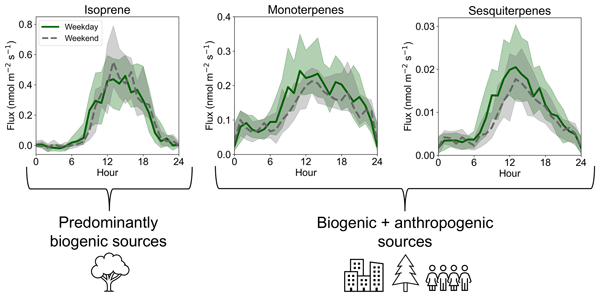
Terpenoids are organic gases that can originate from natural and human-caused sources, and their reactions in the atmosphere can cause air pollution. In this study, emissions of organic gases in an urban environment were measured. For some terpenoids, human-caused sources were responsible for about a quarter of the emissions, while others were predominantly from vegetation. This study contributes to a better understanding of urban emission sources and causes of air pollution.
Jacob A. Nelson, Sophia Walther, Fabian Gans, Basil Kraft, Ulrich Weber, Kimberly Novick, Nina Buchmann, Mirco Migliavacca, Georg Wohlfahrt, Ladislav Šigut, Andreas Ibrom, Dario Papale, Mathias Göckede, Gregory Duveiller, Alexander Knohl, Lukas Hörtnagl, Russell L. Scott, Jiří Dušek, Weijie Zhang, Zayd Mahmoud Hamdi, Markus Reichstein, Sergio Aranda-Barranco, Jonas Ardö, Maarten Op de Beeck, Dave Billesbach, David Bowling, Rosvel Bracho, Christian Brümmer, Gustau Camps-Valls, Shiping Chen, Jamie Rose Cleverly, Ankur Desai, Gang Dong, Tarek S. El-Madany, Eugenie Susanne Euskirchen, Iris Feigenwinter, Marta Galvagno, Giacomo A. Gerosa, Bert Gielen, Ignacio Goded, Sarah Goslee, Christopher Michael Gough, Bernard Heinesch, Kazuhito Ichii, Marcin Antoni Jackowicz-Korczynski, Anne Klosterhalfen, Sara Knox, Hideki Kobayashi, Kukka-Maaria Kohonen, Mika Korkiakoski, Ivan Mammarella, Mana Gharun, Riccardo Marzuoli, Roser Matamala, Stefan Metzger, Leonardo Montagnani, Giacomo Nicolini, Thomas O'Halloran, Jean-Marc Ourcival, Matthias Peichl, Elise Pendall, Borja Ruiz Reverter, Marilyn Roland, Simone Sabbatini, Torsten Sachs, Marius Schmidt, Christopher R. Schwalm, Ankit Shekhar, Richard Silberstein, Maria Lucia Silveira, Donatella Spano, Torbern Tagesson, Gianluca Tramontana, Carlo Trotta, Fabio Turco, Timo Vesala, Caroline Vincke, Domenico Vitale, Enrique R. Vivoni, Yi Wang, William Woodgate, Enrico A. Yepez, Junhui Zhang, Donatella Zona, and Martin Jung
Biogeosciences, 21, 5079–5115, https://doi.org/10.5194/bg-21-5079-2024, https://doi.org/10.5194/bg-21-5079-2024, 2024
Short summary
Short summary
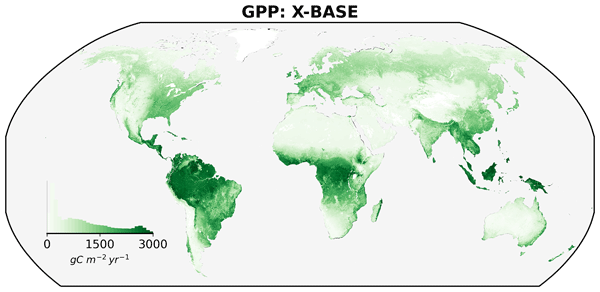
The movement of water, carbon, and energy from the Earth's surface to the atmosphere, or flux, is an important process to understand because it impacts our lives. Here, we outline a method called FLUXCOM-X to estimate global water and CO2 fluxes based on direct measurements from sites around the world. We go on to demonstrate how these new estimates of net CO2 uptake/loss, gross CO2 uptake, total water evaporation, and transpiration from plants compare to previous and independent estimates.
Danica L. Lombardozzi, William R. Wieder, Negin Sobhani, Gordon B. Bonan, David Durden, Dawn Lenz, Michael SanClements, Samantha Weintraub-Leff, Edward Ayres, Christopher R. Florian, Kyla Dahlin, Sanjiv Kumar, Abigail L. S. Swann, Claire M. Zarakas, Charles Vardeman, and Valerio Pascucci
Geosci. Model Dev., 16, 5979–6000, https://doi.org/10.5194/gmd-16-5979-2023, https://doi.org/10.5194/gmd-16-5979-2023, 2023
Short summary
Short summary
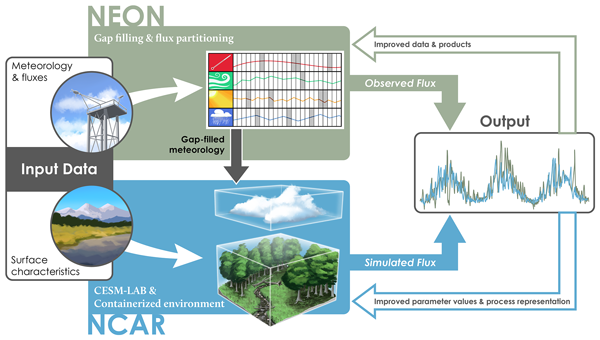
We present a novel cyberinfrastructure system that uses National Ecological Observatory Network measurements to run Community Terrestrial System Model point simulations in a containerized system. The simple interface and tutorials expand access to data and models used in Earth system research by removing technical barriers and facilitating research, educational opportunities, and community engagement. The NCAR–NEON system enables convergence of climate and ecological sciences.
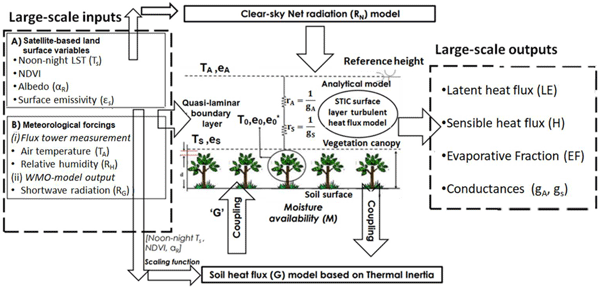
Bimal K. Bhattacharya, Kaniska Mallick, Devansh Desai, Ganapati S. Bhat, Ross Morrison, Jamie R. Clevery, William Woodgate, Jason Beringer, Kerry Cawse-Nicholson, Siyan Ma, Joseph Verfaillie, and Dennis Baldocchi
Biogeosciences, 19, 5521–5551, https://doi.org/10.5194/bg-19-5521-2022, https://doi.org/10.5194/bg-19-5521-2022, 2022
Short summary
Short summary
Evaporation retrieval in heterogeneous ecosystems is challenging due to empirical estimation of ground heat flux and complex parameterizations of conductances. We developed a parameter-sparse coupled ground heat flux-evaporation model and tested it across different limits of water stress and vegetation fraction in the Northern/Southern Hemisphere. The model performed particularly well in the savannas and showed good potential for evaporative stress monitoring from thermal infrared satellites.
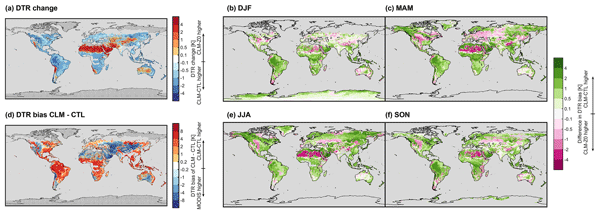
Ronny Meier, Edouard L. Davin, Gordon B. Bonan, David M. Lawrence, Xiaolong Hu, Gregory Duveiller, Catherine Prigent, and Sonia I. Seneviratne
Geosci. Model Dev., 15, 2365–2393, https://doi.org/10.5194/gmd-15-2365-2022, https://doi.org/10.5194/gmd-15-2365-2022, 2022
Short summary
Short summary
We revise the roughness of the land surface in the CESM climate model. Guided by observational data, we increase the surface roughness of forests and decrease that of bare soil, snow, ice, and crops. These modifications alter simulated temperatures and wind speeds at and above the land surface considerably, in particular over desert regions. The revised model represents the diurnal variability of the land surface temperature better compared to satellite observations over most regions.
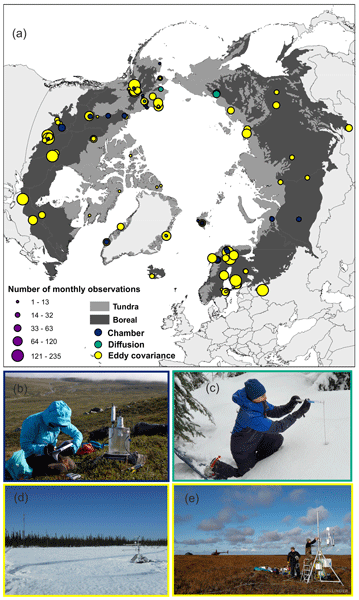
Anna-Maria Virkkala, Susan M. Natali, Brendan M. Rogers, Jennifer D. Watts, Kathleen Savage, Sara June Connon, Marguerite Mauritz, Edward A. G. Schuur, Darcy Peter, Christina Minions, Julia Nojeim, Roisin Commane, Craig A. Emmerton, Mathias Goeckede, Manuel Helbig, David Holl, Hiroki Iwata, Hideki Kobayashi, Pasi Kolari, Efrén López-Blanco, Maija E. Marushchak, Mikhail Mastepanov, Lutz Merbold, Frans-Jan W. Parmentier, Matthias Peichl, Torsten Sachs, Oliver Sonnentag, Masahito Ueyama, Carolina Voigt, Mika Aurela, Julia Boike, Gerardo Celis, Namyi Chae, Torben R. Christensen, M. Syndonia Bret-Harte, Sigrid Dengel, Han Dolman, Colin W. Edgar, Bo Elberling, Eugenie Euskirchen, Achim Grelle, Juha Hatakka, Elyn Humphreys, Järvi Järveoja, Ayumi Kotani, Lars Kutzbach, Tuomas Laurila, Annalea Lohila, Ivan Mammarella, Yojiro Matsuura, Gesa Meyer, Mats B. Nilsson, Steven F. Oberbauer, Sang-Jong Park, Roman Petrov, Anatoly S. Prokushkin, Christopher Schulze, Vincent L. St. Louis, Eeva-Stiina Tuittila, Juha-Pekka Tuovinen, William Quinton, Andrej Varlagin, Donatella Zona, and Viacheslav I. Zyryanov
Earth Syst. Sci. Data, 14, 179–208, https://doi.org/10.5194/essd-14-179-2022, https://doi.org/10.5194/essd-14-179-2022, 2022
Short summary
Short summary
The effects of climate warming on carbon cycling across the Arctic–boreal zone (ABZ) remain poorly understood due to the relatively limited distribution of ABZ flux sites. Fortunately, this flux network is constantly increasing, but new measurements are published in various platforms, making it challenging to understand the ABZ carbon cycle as a whole. Here, we compiled a new database of Arctic–boreal CO2 fluxes to help facilitate large-scale assessments of the ABZ carbon cycle.
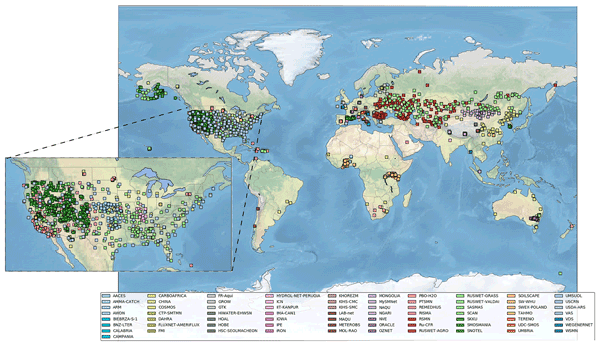
Wouter Dorigo, Irene Himmelbauer, Daniel Aberer, Lukas Schremmer, Ivana Petrakovic, Luca Zappa, Wolfgang Preimesberger, Angelika Xaver, Frank Annor, Jonas Ardö, Dennis Baldocchi, Marco Bitelli, Günter Blöschl, Heye Bogena, Luca Brocca, Jean-Christophe Calvet, J. Julio Camarero, Giorgio Capello, Minha Choi, Michael C. Cosh, Nick van de Giesen, Istvan Hajdu, Jaakko Ikonen, Karsten H. Jensen, Kasturi Devi Kanniah, Ileen de Kat, Gottfried Kirchengast, Pankaj Kumar Rai, Jenni Kyrouac, Kristine Larson, Suxia Liu, Alexander Loew, Mahta Moghaddam, José Martínez Fernández, Cristian Mattar Bader, Renato Morbidelli, Jan P. Musial, Elise Osenga, Michael A. Palecki, Thierry Pellarin, George P. Petropoulos, Isabella Pfeil, Jarrett Powers, Alan Robock, Christoph Rüdiger, Udo Rummel, Michael Strobel, Zhongbo Su, Ryan Sullivan, Torbern Tagesson, Andrej Varlagin, Mariette Vreugdenhil, Jeffrey Walker, Jun Wen, Fred Wenger, Jean Pierre Wigneron, Mel Woods, Kun Yang, Yijian Zeng, Xiang Zhang, Marek Zreda, Stephan Dietrich, Alexander Gruber, Peter van Oevelen, Wolfgang Wagner, Klaus Scipal, Matthias Drusch, and Roberto Sabia
Hydrol. Earth Syst. Sci., 25, 5749–5804, https://doi.org/10.5194/hess-25-5749-2021, https://doi.org/10.5194/hess-25-5749-2021, 2021
Short summary
Short summary
The International Soil Moisture Network (ISMN) is a community-based open-access data portal for soil water measurements taken at the ground and is accessible at https://ismn.earth. Over 1000 scientific publications and thousands of users have made use of the ISMN. The scope of this paper is to inform readers about the data and functionality of the ISMN and to provide a review of the scientific progress facilitated through the ISMN with the scope to shape future research and operations.
Cited articles
Baldocchi, D. D., Hutchison, B. A., Matt, D. R., and McMillen, R. T.: Canopy radiative-transfer models for spherical and known leaf inclination angle distributions – a test in an oak hickory forest, J. Appl. Ecol., 22, 539–555, https://doi.org/10.2307/2403184, 1985.
Bartlett, M. K., Ollinger, S. V., Hollinger, D. Y., Wicklein, H. F., and Richardson, A. D.: Canopy-scale relationships between foliar nitrogen and albedo are not observed in leaf reflectance and transmittance within temperate deciduous tree species, Botany, 89, 491–497, https://doi.org/10.1139/b11-037, 2011.
Béland, M.: Mapping wood area in forests from ground lidar and estimating their light interception using radiative transfer modeling, Agr. Forest Meteorol., 375, 110883, https://doi.org/10.1016/j.agrformet.2025.110883, 2025.
Béland, M.: VoxLAD_RT (V_0.9), Zenodo [code], https://doi.org/10.5281/zenodo.18406604, 2026a.
Béland, M.: Data for paper “Modifications in the Norman (1979) canopy radiative transfer model to consider multiple scattering in clumped layers and radiation absorption by stems”, Zenodo [data set], https://doi.org/10.5281/zenodo.15206721, 2026b.
Béland, M.: Ground lidar data, leaf and wood area density at six broadleaf deciduous forest plots, Zenodo [data set], https://doi.org/10.5281/zenodo.21537265, 2026c.
Béland, M. and Baldocchi, D.: Is foliage clumping an outcome of resource limitations within forests?, Agr. Forest Meteorol., 295, 108185, https://doi.org/10.1016/j.agrformet.2020.108185, 2020.
Béland, M. and Baldocchi, D. D.: Vertical structure heterogeneity in broadleaf forests: Effects on light interception and canopy photosynthesis, Agr. Forest Meteorol., 307, 108525, https://doi.org/10.1016/j.agrformet.2021.108525, 2021.
Béland, M. and Kobayashi, H.: Mapping forest leaf area density from multiview terrestrial lidar, Meth. Ecol. Evol., 12, 619–633, 2021.
Béland, M. and Kobayashi, H.: Drivers of deciduous forest near-infrared reflectance: A 3D radiative transfer modeling exercise based on ground lidar, Remote Sens. Environ., 302, 113951, https://doi.org/10.1016/j.rse.2023.113951, 2024.
Béland, M., Baldocchi, D. D., Widlowski, J.-L., Fournier, R. A., and Verstraete, M. M.: On seeing the wood from the leaves and the role of voxel size in determining leaf area distribution of forests with terrestrial LiDAR, Agr. Forest Meteorol., 184, 82–97, 2014.
Béland, M., Bonan, G. B., Meyers, T. P., Munger, J. W., Kobayashi, H., and Baldocchi, D.: Advances in Modelling Radiative Transfer, Heat Storage and Turbulent Transport to Evaluate CO2, Heat and Water Fluxes Over Broad‐Leaved Forests: The CanVeg2 Model, Glob. Change Biol., 32, e70867, https://doi.org/10.1111/gcb.70867, 2026.
Bonan, G.: Climate change and terrestrial ecosystem modeling, Cambridge University Press, https://doi.org/10.1017/9781107339217, 2019.
Bonan, G.: Seeing the Forest for the Trees, Cambridge University Press, https://doi.org/10.1017/9781108601559, 2023.
Bonan, G. B., Patton, E. G., Finnigan, J. J., Baldocchi, D. D., and Harman, I. N.: Moving beyond the incorrect but useful paradigm: reevaluating big-leaf and multilayer plant canopies to model biosphere-atmosphere fluxes – a review, Agr. Forest Meteorol., 306, 108435, https://doi.org/10.1016/j.agrformet.2021.108435, 2021.
Bonan, G. B., Patton, E. G., Harman, I. N., Oleson, K. W., Finnigan, J. J., Lu, Y., and Burakowski, E. A.: Modeling canopy-induced turbulence in the Earth system: a unified parameterization of turbulent exchange within plant canopies and the roughness sublayer (CLM-ml v0), Geosci. Model Dev., 11, 1467–1496, https://doi.org/10.5194/gmd-11-1467-2018, 2018.
Chen, J. M., Mo, G., Pisek, J., Liu, J., Deng, F., Ishizawa, M., and Chan, D.: Effects of foliage clumping on the estimation of global terrestrial gross primary productivity, Global Biogeochem. Cy., 26, Gb1019, https://doi.org/10.1029/2010gb003996, 2012.
Dickinson, R. E.: Land Surface Processes and Climate – Surface Albedos and Energy Balance, in: Theory of Climate, Proceedings of a Symposium Commemorating the Two-Hundredth Anniversary of the Academy of Sciences of Lisbon, Advances in Geophysics, 305–353, https://doi.org/10.1016/s0065-2687(08)60176-4, 1983.
digital-forest-lab: digital-forest-lab/Norman_stems: V1 (Version V1), Zenodo [code], https://doi.org/10.5281/zenodo.21536957, 2026.
Gastellu-Etchegorry, J.-P., Lauret, N., Yin, T., Landier, L., Kallel, A., Malenovsky, Z., Bitar, A. A., Aval, J., Benhmida, S., Qi, J., Medjdoub, G., Guilleux, J., Chavanon, E., Cook, B., Morton, D., Chrysoulakis, N., and Mitraka, Z.: DART: Recent Advances in Remote Sensing Data Modeling With Atmosphere, Polarization, and Chlorophyll Fluorescence, IEEE J. Sel. Top Appl. Earth Obs., 10, 2640–2649, https://doi.org/10.1109/jstars.2017.2685528, 2017.
Hutchison, B. A., Matt, D. R., McMillen, R. T., Gross, L. J., Tajchman, S. J., and Norman, J. M.: The architecture of a deciduous forest canopy in eastern Tennessee, USA, J. Ecol., 74, 635–646, https://doi.org/10.2307/2260387, 1986.
Kira, T., Manokaran, N., and Appanah, S.: NPP Tropical Forest: Pasoh, Malaysia, 1971–1973, R1, ORNL DAAC, 2013.
Kobayashi, H. and Iwabuchi, H.: A coupled 1-D atmosphere and 3-D canopy radiative transfer model for canopy reflectance, light environment, and photosynthesis simulation in a heterogeneous landscape, Remote Sens. Environ., 112, 173–185, 2008.
Kosugi, Y. and Takanashi, S.: FLUXNET2015 MY-PSO Pasoh Forest Reserve (PSO), FLUXNET [data set], https://doi.org/10.18140/FLX/1440240, 2009.
Kucharik, C. J., Norman, J. M., and Gower, S. T.: Measurements of branch area and adjusting leaf area index indirect measurements, Agr. Forest Meteorol., 91, 69–88, 1998.
Lanconelli, C., Gobron, N., Robustelli, M., Adams, J. S., Calders, K., Disney, M., Gastellu-Etchegorry, J.-P., Goodenough, A., Govaerts, Y., and Hogan, R. J.: The fifth phase of the radiation transfer model intercomparison exercise (RAMI-V): Experiment description and results on actual canopy scenarios, J. Remote Sens., 5, 0663, https://doi.org/10.34133/remotesensing.0663, 2025.
Lawrence, D., Fisher, R., Koven, C., Oleson, K., Swenson, S., and Vertenstein, M.: Technical Description of version 5.0 of the Community Land Model (CLM), https://escomp.github.io/CTSM/tech_note/Introduction/CLM50_Tech_Note_Introduction.html (last access: 22 September 2026), 2018.
Leuning, R., van Gorsel, E., Massman, W. J., and Isaac, P. R.: Reflections on the surface energy imbalance problem, Agr. Forest Meteorol., 156, 65–74, https://doi.org/10.1016/j.agrformet.2011.12.002, 2012.
Majasalmi, T. and Bright, R. M.: Evaluation of leaf-level optical properties employed in land surface models, Geosci. Model Dev., 12, 3923–3938, https://doi.org/10.5194/gmd-12-3923-2019, 2019.
Monsi, M. and Saeki, T.: Über den lichtfaktor in den pflanzengesellschaften und seine bedeutung für die stoffproduktion, Jpn. J. Bot., 14, 22–52, 1953.
NEON: (National Ecological Observatory Network) AmeriFlux US-xHA NEON Harvard Forest (HARV), Ver. 4-5, AmeriFlux AMP [data set], https://doi.org/10.17190/AMF/1562391, 2021a.
NEON: (National Ecological Observatory Network), AmeriFlux US-xSE NEON Smithsonian Environmental Research Center (SERC), Ver. 3-5, AmeriFlux AMP [data set], https://doi.org/10.17190/AMF/1617734, 2021b.
NEON: Field spectral data (DP1.30012.001), National Ecological Observatory Network [data set], https://doi.org/10.48443/cmwe-1d83, 2022.
Ni-Meister, W., Yang, W. Z., and Kiang, N. Y.: A clumped-foliage canopy radiative transfer model for a global dynamic terrestrial ecosystem model. I: Theory, Agr. Forest Meteorol., 150, 881–894, https://doi.org/10.1016/j.agrformet.2010.02.009, 2010.
Nilson, T.: Theoretical analysis of frequency of gaps in plant stands, Agr. Meteorol., 8, 25–38, https://doi.org/10.1016/0002-1571(71)90092-6, 1971.
Noble, D. W. A., Mayfield, M. M., Hoffmann, A. A., Chen, Z. H., Lade, S. J., Bai, X., Way, D. A., Medlyn, B. E., Atkin, O. K., Nicotra, A. B., Cook, J. M., Singh, B. K., Bentley, A. R., Wright, I. J., and Kearney, M. R.: A systems modelling approach to predict biological responses to extreme heat, Trends Ecol. Evol., https://doi.org/10.1016/j.tree.2026.01.009, 2026.
Norman, J.: Modeling the complete crop canopy, in: Modification of the Aerial Environment of Crops, edited by: EM11, American Society Agricultural Engineers, St. Joseph, Michigan., 249–277, 1979.
Novick, K. and Phillips, R.: AmeriFlux BASE US-MMS Morgan Monroe State Forest, Ver. 22-5, AmeriFlux AMP [data set], https://doi.org/10.17190/AMF/1246080, 2023.
Ross, J.: The radiation regime and architecture of plant stands, The Hague, 391 pp., 1981.
Sellers, P. J.: Canopy reflectance, photosynthesis and transpiration, Int. J. Remote Sens., 6, 1335–1372, 1985.
Smolander, S. and Stenberg, P.: A method to account for shoot scale clumping in coniferous canopy reflectance models, Remote Sens. Environ., 88, 363–373, https://doi.org/10.1016/j.rse.2003.06.003, 2003.
Stenberg, P.: Simulations of the effects of shoot structure and orientation on vertical gradients in intercepted light by conifer canopies, Tree Physiol., 16, https://doi.org/10.1093/treephys/16.1-2.99, 1996.
Stenberg, P., Linder, S., Smolander, H., and Flower-Ellis, J.: Performance of the LAI-2000 plant canopy analyzer in estimating leaf area index of some Scots pine stands, Tree Physiol., 14, 981–995, 1994.
Swenson, S. C., Burns, S. P., and Lawrence, D. M.: The Impact of Biomass Heat Storage on the Canopy Energy Balance and Atmospheric Stability in the Community Land Model, J. Adv. Model. Earth Sy., 11, 83–98, https://doi.org/10.1029/2018ms001476, 2019.
Warren Wilson, J.: Influence of spatial arrangement of foliage area on light interception and pasture growth, Proc. 8th internat. Grassl. Congr., 1960.
Widlowski, J. L., Pinty, B., Lopatka, M., Atzberger, C., Buzica, D., Chelle, M., Disney, M., Gastellu-Etchegorry, J. P., Gerboles, M., Gobron, N., Grau, E., Huang, H., Kallel, A., Kobayashi, H., Lewis, P. E., Qin, W., Schlerf, M., Stuckens, J., and Xie, D.: The 4th radiation transfer model intercomparison (RAMI-IV): Proficiency testing of canopy reflectance models with ISO-13528, J. Geophys. Res.-Atmos., https://doi.org/10.1002/jgrd.50497, 2013.
Widlowski, J.-L., Mio, C., Disney, M., Adams, J., Andredakis, I., Atzberger, C., Brennan, J., Busetto, L., Chelle, M., Ceccherini, G., Colombo, R., Côté, J.-F., Eenmäe, A., Essery, R., Gastellu-Etchegorry, J.-P., Gobron, N., Grau, E., Haverd, V., Homolová, L., Huang, H., Hunt, L., Kobayashi, H., Koetz, B., Kuusk, A., Kuusk, J., Lang, M., Lewis, P. E., Lovell, J. L., Malenovský, Z., Meroni, M., Morsdorf, F., Mõttus, M., Ni-Meister, W., Pinty, B., Rautiainen, M., Schlerf, M., Somers, B., Stuckens, J., Verstraete, M. M., Yang, W., Zhao, F., and Zenone, T.: The fourth phase of the radiative transfer model intercomparison (RAMI) exercise: Actual canopy scenarios and conformity testing, Remote Sens. Environ., 169, 418–437, https://doi.org/10.1016/j.rse.2015.08.016, 2015.
Short summary
Computer models used to simulate forest canopy microclimates rely on radiative transfer simulations. These models commonly only consider tree leaves and exclude wood structures. Here we present modifications to a commonly used model to consider stem absorption. We compared model estimates to detailed simulations using 3D data from ground lidar at four deciduous forest sites. We also compared simulations against field observations of sunlight reflected by canopies.
Computer models used to simulate forest canopy microclimates rely on radiative transfer...


