
Articles | Volume 19, issue 18
https://doi.org/10.5194/gmd-19-8815-2026
© Author(s) 2026. This work is distributed under
the Creative Commons Attribution 4.0 License.
the Creative Commons Attribution 4.0 License.
https://doi.org/10.5194/gmd-19-8815-2026
© Author(s) 2026. This work is distributed under
the Creative Commons Attribution 4.0 License.
the Creative Commons Attribution 4.0 License.
Model evaluation paper
| 
21 Sep 2026
Model evaluation paper |
| 21 Sep 2026
| 21 Sep 2026
Evaluation of the LandscapeDNDC model for drained peatland forest managements, LDNDC v1.35.2 (revision 11434)
Ahmed Hasan Shahriyer
CORRESPONDING AUTHOR

Climate System Research, Finnish Meteorological Institute, Helsinki, Finland
David Kraus
Institute of Meteorology and Climate Research Atmospheric Environmental Research (IMKIFU), Karlsruhe Institute of Technology, Garmisch-Partenkirchen, Germany
Tiina Markkanen
Climate System Research, Finnish Meteorological Institute, Helsinki, Finland
Mika Korkiakoski
Climate System Research, Finnish Meteorological Institute, Helsinki, Finland
Helena Rautakoski
Climate System Research, Finnish Meteorological Institute, Helsinki, Finland
Suvi Orttenvuori
Climate System Research, Finnish Meteorological Institute, Helsinki, Finland
Department of Civil Engineering, University of Hongkong, Hongkong, China
Henri Kajasilta
Climate System Research, Finnish Meteorological Institute, Helsinki, Finland
Rüdiger Grote
Institute of Meteorology and Climate Research Atmospheric Environmental Research (IMKIFU), Karlsruhe Institute of Technology, Garmisch-Partenkirchen, Germany
Annalea Lohila
Climate System Research, Finnish Meteorological Institute, Helsinki, Finland
Institute for Atmospheric and Earth System Research/Physics (INAR), Faculty of Science, P.O. Box 68, University of Helsinki, Helsinki 00014, Finland
Tuula Aalto
Climate System Research, Finnish Meteorological Institute, Helsinki, Finland
Related authors
No articles found.
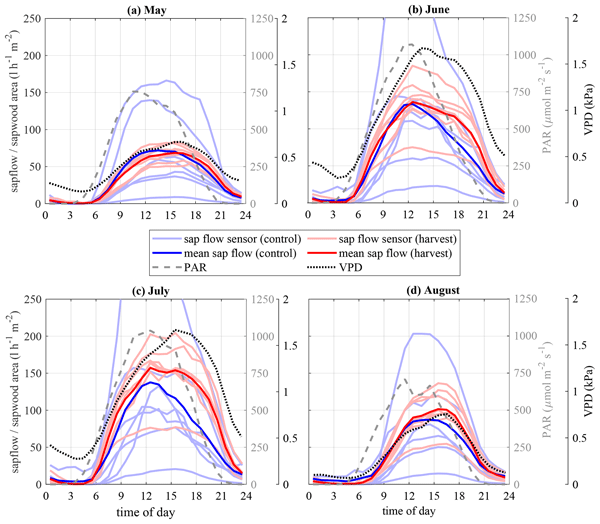
Pavel Konstantinovich Alekseychik, Mikko Peltoniemi, Raisa Mäkipää, Ville Tuominen, Tuomas Laurila, Hamlyn Jones, Mitro Müller, Evegeny Lopatin, Helena Rautakoski, Timo Vesala, and Samuli Launiainen
Biogeosciences, 23, 7091–7127, https://doi.org/10.5194/bg-23-7091-2026, https://doi.org/10.5194/bg-23-7091-2026, 2026
Short summary
Short summary
As the Boreal climate shifts towards warmer temperatures and more unpredictable precipitation patterns, forest management needs to become more efficient and climate-friendly. We monitored a managed Finnish spruce forest on peat soil for two summer seasons characterized with severe drought episodes. A wide range of data was used, including carbon dioxide exchange, evapotranspiration, tree growth, meteorology and maps of tree health obtained by drone imaging. Clear, but complex forest responses to drought were revealed.
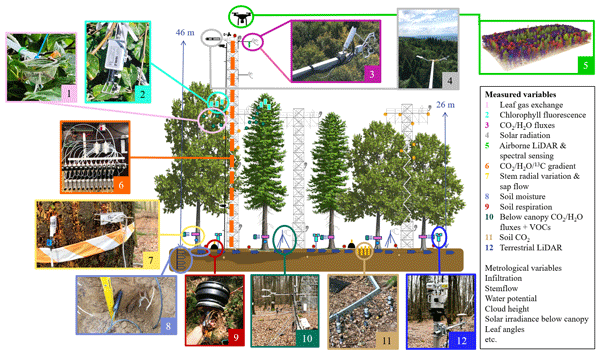
Jasmin Tesch, Kathrin Kühnhammer, Delon Wagner, Andreas Christen, Carsten Dormann, Julian Frey, Rüdiger Grote, Teja Kattenborn, Markus Sulzer, Ulrike Wallrabe, Markus Weiler, Christiane Werner, Samaneh Baghbani, Julian Brzozon, Laura Maria Comella, Lea Dedden, Stefanie Dumberger, Yasmina Frey, Matthias Gassilloud, Timo Gerach, Anna Göritz, Simon Haberstroh, Johannes Klüppel, Luis Kremer, Jürgen Kreuzwieser, Hojin Lee, Joachim Maack, Julian Müller, Oswald Prucker, Sanam K. Rajak, Jürgen Rühe, Stefan J. Rupitsch, Helmer Schack-Kirchner, Christian Scharinger, Uttunga Shinde, Till Steinmann, Clara Stock, and Josef Strack
Geosci. Instrum. Method. Data Syst., 15, 253–272, https://doi.org/10.5194/gi-15-253-2026, https://doi.org/10.5194/gi-15-253-2026, 2026
Short summary
Short summary
In the ECOSENSE forest, we developed a robust infrastructure for distributed forest sensing. Reliable power supply, stable network connection, and smart data collection systems enable the operation of hundreds of sensors under challenging conditions. By detailing the infrastructure design and implementation, we provide a transferable blueprint for building complex monitoring sites that support high-resolution, long-term ecosystem observations.
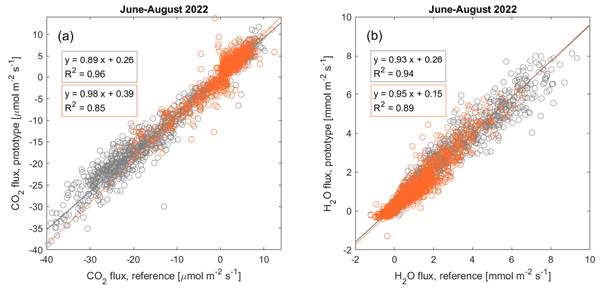
Üllar Rannik, Ivan Mammarella, Timo Vesala, Pirkko Väkimies, Hilkka Heiskari-Tuohiniemi, and Mika Korkiakoski
Atmos. Meas. Tech., 19, 6159–6169, https://doi.org/10.5194/amt-19-6159-2026, https://doi.org/10.5194/amt-19-6159-2026, 2026
Short summary
Short summary
We present a case study that aimed to develop an inexpensive yet precise fast-response carbon dioxide and water vapour sensor. A working prototype was developed and field-tested against a scientific eddy covariance setup. Attention was paid to internal auto-calibration procedure such that signal drifting was avoided and the instrument was capable of measuring fluxes with high correlation relative to the reference setup.
Vertti Kettunen, Tuula Aalto, Henry C. Bittig, Jukka-Pekka Jalkanen, Lauri Laakso, Anteneh Mengistu, Gregor Rehder, Maria Tenkanen, and Martti Honkanen
EGUsphere, https://doi.org/10.5194/egusphere-2026-5442, https://doi.org/10.5194/egusphere-2026-5442, 2026
This preprint is open for discussion and under review for Ocean Science (OS).
Short summary
Short summary
The Baltic Sea carbon balance was estimated using two independent observation-based methods during a 3-year period. One method indicated that the Baltic Sea was a carbon dioxide sink, while the other indicated a source. Ship emissions increased the net carbon dioxide flux to the atmosphere. Despite differences in the overall balance, the methods showed similar patterns in several regions. The results show that both shipping and the method used strongly affect the estimated carbon balance.
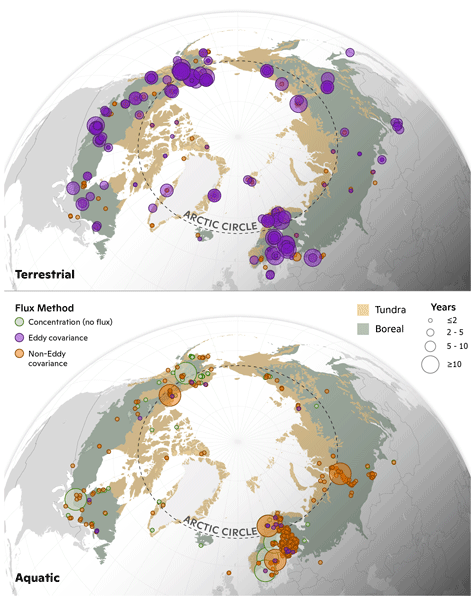
Anna-Maria Virkkala, Isabel Wargowsky, Judith Vogt, McKenzie A. Kuhn, Simran Madaan, Tiffany Windholz, Kyle A. Arndt, Gerard Rocher-Ros, Mathias Göckede, David Olefeldt, Edward A. G. Schuur, David Bastviken, Richard O'Keefe, Brendan M. Rogers, Jennifer D. Watts, Kelcy Kent, Kristoffer Aalstad, Kelly Aho, Joonatan Ala-Könni, Haley Alcock, Inge Althuizen, Christopher D. Arp, Jun Asanuma, Mika Aurela, Sivakiruthika Balathandayuthabani, Katrin Attermeyer, Alan Barr, Maialen Barret, Ochirbat Batkhishig, Christina Biasi, Mats P. Björkman, Andrew Black, Elena Blanc-Betes, Pascal Bodmer, Julia Boike, Abdullah Bolek, Frédéric Bouchard, Ingeborg Bussmann, Lea Cabrol, Eleonora Canfora, Sean Carey, Karel Castro-Morales, Namyi Chae, Andreas Christen, Torben R. Christensen, Casper T. Christiansen, Housen Chu, Graham Clark, Francois Clayer, Patrick Crill, Christopher Cunada, Scott J. Davidson, Joshua F. Dean, Sigrid Dengel, Matteo Detto, Catherine Dieleman, Florent Domine, Egor Dyukarev, Colin Edgar, Bo Elberling, Craig A. Emmerton, Eugenie Euskirchen, Grant Falvo, Thomas Friborg, Michelle Garneau, Mariasilvia Giamberini, Mikhail V. Glagolev, Miquel A. Gonzalez-Meler, Gustaf Granath, Jón Guðmundsson, Konsta Happonen, Yoshinobu Harazono, Lorna Harris, Josh Hashemi, Nicholas Hasson, Janna Heerah, Liam Heffernan, Manuel Helbig, Warren Helgason, Michal Heliasz, Greg Henry, Geert Hensgens, Tetsuya Hiyama, Beth Holmes, Macall Hock, David Holl, Jutta Holst, Thomas Holst, Gabriel Hould-Gosselin, Elyn Humphreys, Jacqueline Hung, Jussi Huotari, Hiroki Ikawa, Danil V. Ilyasov, Mamoru Ishikawa, Go Iwahana, Hiroki Iwata, Marcin Antoni Jackowicz-Korczynski, Joachim Jansen, Järvi Järveoja, Vincent E. J. Jassey, Rasmus Jensen, Katharina Jentzsch, Robert G. Jespersen, Carl-Fredrik Johannesson, Cheristy P. Jones, Anders Jonsson, Ji Young Jung, Sari Juutinen, Evan Kane, Jan Karlsson, Sergey Karsanaev, Kuno Kasak, Julia Kelly, Kasha Kempton, Marcus Klaus, George W. Kling, Natascha Kljun, Jacqueline Knutson, Hideki Kobayashi, John Kochendorfer, Kukka-Maaria Kohonen, Pasi Kolari, Mika Korkiakoski, Aino Korrensalo, Pirkko Kortelainen, Egle Koster, Kajar Koster, Ayumi Kotani, Praveena Krishnan, Juliya Kurbatova, Lars Kutzbach, Min Jung Kwon, Ethan D. Kyzivat, Jessica Lagroix, Theodore Langhorst, Elena Lapshina, Tuula Larmola, Klaus S. Larsen, Isabelle Laurion, Justin Ledman, Hanna Lee, A. Joshua Leffler, Lance Lesack, Anders Lindroth, David Lipson, Annalea Lohila, Efrén López-Blanco, Vincent L. St. Louis, Erik Lundin, Miska Luoto, Takashi Machimura, Marta Magnani, Avni Malhotra, Marja Maljanen, Ivan Mammarella, Elisa Männistö, Luca Belelli Marchesini, Phil Marsh, Pertti J. Martikainen, Maija E. Marushchak, Mikhail Mastepanov, Alex Mavrovic, Trofim Maximov, Christina Minions, Daniel F. Nadeau, Marco Montemayor, Tomoaki Morishita, Patrick Murphy, Erin Nicholls, Mats B. Nilsson, Anastasia Niyazova, Jenni Nordén, Koffi Dodji Noumonvi, Hannu Nykänen, Walter Oechel, Anne Ojala, Tomohiro Okadera, Sujan Pal, Alexey V. Panov, Tim Papakyriakou, Dario Papale, Sang-Jong Park, Frans-Jan W. Parmentier, Gilberto Pastorello, Mike Peacock, Matthias Peichl, Roman Petrov, Kyra St. Pierre, Norbert Pirk, Jessica Plein, Vilmantas Preskienis, Anatoly Prokushkin, Jukka Pumpanen, Hilary A. Rains, Niklas Rakos, Aleksi Räsänen, Helena Rautakoski, Riikka Rinnan, Janne Rinne, Adrian Rocha, Nigel Roulet, Alexandre Roy, Anna Rutgersson, Aleksandr F. Sabrekov, Torsten Sachs, Erik Sahlée, Alejandro Salazar, Henrique Oliveira Sawakuchi, Christopher Schulze, Roger Seco, Armando Sepulveda-Jauregui, Svetlana Serikova, Abbey Serrone, Hanna M. Silvennoinen, Sofie Sjogersten, June Skeeter, Jo Snöälv, Sebastian Sobek, Oliver Sonnentag, Emily H. Stanley, Maria Strack, Lena Strom, Patrick Sullivan, Ryan Sullivan, Anna Sytiuk, Torbern Tagesson, Pierre Taillardat, Julie Talbot, Suzanne E. Tank, Mario Tenuta, Irina Terenteva, Frederic Thalasso, Antoine Thiboult, Halldor Thorgeirsson, Fenix Garcia Tigreros, Margaret Torn, Amy Townsend-Small, Claire Treat, Alain Tremblay, Carlo Trotta, Eeva-Stiina Tuittila, Merritt Turetsky, Masahito Ueyama, Muhammad Umair, Aki Vähä, Lona van Delden, Maarten van Hardenbroek, Andrej Varlagin, Ruth K. Varner, Tarmo Virtanen, Elena Veretennikova, Timo Vesala, Carolina Voigt, Jorien E. Vonk, Robert Wagner, Katey Walter Anthony, Qinxue Wang, Masataka Watanabe, Hailey Webb, Jeffrey M. Welker, Andreas Westergaard-Nielsen, Sebastian Westermann, Jeffrey R. White, Christian Wille, Scott N. Williamson, Scott Zolkos, Donatella Zona, and Susan M. Natali
Earth Syst. Sci. Data, 18, 6357–6409, https://doi.org/10.5194/essd-18-6357-2026, https://doi.org/10.5194/essd-18-6357-2026, 2026
Short summary
Short summary
This dataset includes monthly measurements of carbon dioxide and methane exchange between land, water, and the atmosphere from over 1000 sites in Arctic and boreal regions. It combines measurements from a variety of ecosystems, including wetlands, forests, tundra, lakes, and rivers, gathered by over 260 researchers from 1984–2024. This dataset can be used to improve and reduce uncertainty in carbon budgets in order to strengthen our understanding of climate feedbacks in a warming world.
Anteneh Getachew Mengistu, Aki Tsuruta, Antoine Berchet, Rona Thompson, Maria Tenkanen, Hannakaisa Lindqvist, Tiina Markkanen, Antti Leppänen, Antti Laitinen, Adrien Martinez, Audrey Fortems-Cheiney, Lena Höglund-Isaksson, and Tuula Aalto
Atmos. Chem. Phys., 26, 12295–12327, https://doi.org/10.5194/acp-26-12295-2026, https://doi.org/10.5194/acp-26-12295-2026, 2026
Short summary
Short summary
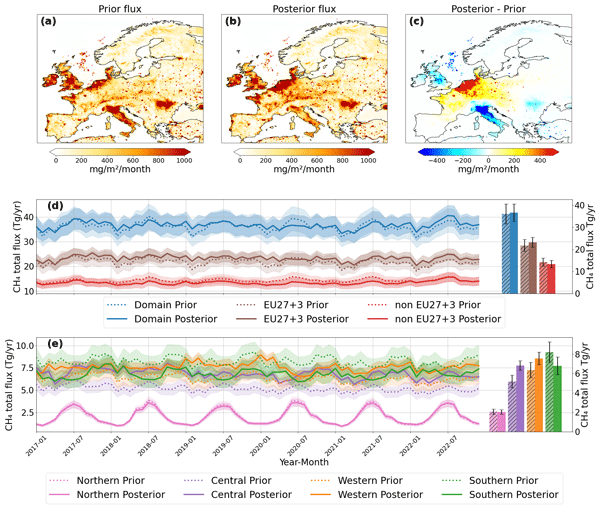
Our manuscript presents a six-year, high-resolution inversion of European methane emissions using the Community Inversion Framework and FLEXPART. Leveraging an expanded in situ network, we reconcile inventories with observations, reveal regional biases, refine European methane budgets, and highlight the dominance of agricultural emissions. Results provide policy-relevant insights for mitigation and inventory verification.
Haifan Liu, Yao Gao, and Mingfu Guan
EGUsphere, https://doi.org/10.22541/essoar.15004525/v3, https://doi.org/10.22541/essoar.15004525/v3, 2026
This preprint is open for discussion and under review for Hydrology and Earth System Sciences (HESS).
Short summary
Short summary
Rapid shifts from drought to flood threaten water supply, agriculture, and flood management, yet such events are usually identified from meteorological data alone. Analyzing simulated total runoff across mainland China, we show these shifts often differ from those identified by standard meteorological-based methods, revealing a gap in current risk assessment. Our findings identify key drivers of these hazards and support improved early warning and risk management at the river basin scale.
Andrew Smerald, Hannes Imhof, Edwin Haas, David Kraus, Lioba Martin, Kathrin Fuchs, John Akubia, Ali Sakhaee, Cora Vos, Roland Fuß, Clemens Scheer, and Ralf Kiese
EGUsphere, https://doi.org/10.5194/egusphere-2026-4010, https://doi.org/10.5194/egusphere-2026-4010, 2026
Short summary
Short summary
Countries produce a yearly greenhouse gas inventory that is used to monitor and design climate policies. Agricultural N2O emissions are especially uncertain, due to measurement difficulties. Using a process-based model combined with high resolution management data we show that, in comparison with current methods, N2O emissions can be mapped with high spatial and temporal resolution.
Meshach Ojo Aderele, Edwin Haas, Licheng Liu, João Serra, David Kraus, Klaus Butterbach-Bahl, and Jaber Rahimi
Geosci. Model Dev., 19, 6335–6356, https://doi.org/10.5194/gmd-19-6335-2026, https://doi.org/10.5194/gmd-19-6335-2026, 2026
Short summary
Short summary
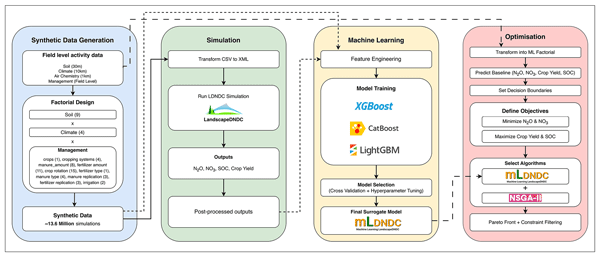
This study develops a fast, data‑driven tool to virtually test millions of ways to manage winter wheat fields in Denmark, without running slow process-based crop models each time. It finds fertilizer, residue, manure, catch crop and irrigation strategies that cut nitrogen pollution and greenhouse gases while increasing yields and soil carbon, all without using more fertilizer overall.
Pia Labenski, Allan Buras, Rüdiger Grote, Martin Thurner, and Nadine K. Ruehr
EGUsphere, https://doi.org/10.5194/egusphere-2026-3082, https://doi.org/10.5194/egusphere-2026-3082, 2026
This preprint is open for discussion and under review for Biogeosciences (BG).
Short summary
Short summary
During the 2018–2023 droughts, European forests showed widespread premature leaf shedding, but its drivers and impacts remain poorly understood. Using satellite observations across beech and oak forests, we identified drought thresholds triggering this response and showed it reflects cumulative stress rather than protection. Early senescing forests showed elevated canopy mortality, establishing it as an indicator of forest vulnerability with implications for monitoring and management.
Sara Hyvärinen, Maria K. Tenkanen, Aki Tsuruta, Anttoni Erkkilä, Kimmo Rautiainen, Hermanni Aaltonen, Motoki Sasakawa, and Tuula Aalto
Atmos. Chem. Phys., 26, 7555–7587, https://doi.org/10.5194/acp-26-7555-2026, https://doi.org/10.5194/acp-26-7555-2026, 2026
Short summary
Short summary
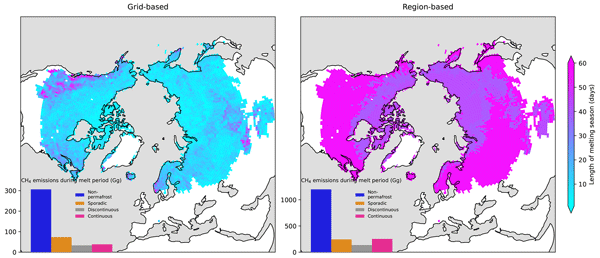
We analyzed melt period methane emissions from northern high-latitude wetlands using satellite thaw data and inverse modeling (2011–2021). Comparing region-based and grid-based approaches, we found that emissions varied with the length of the melt period, which depended on air temperature. We found spring melt period emissions ranged from 0.45 to 1.83 Tg depending on the approach, with no clear trend over the period. Our methods allow for seasonal methane monitoring across different scales.
Henri Kajasilta, Stephanie Gerin, Milla Niiranen, Miika Läpikivi, Maarit Liimatainen, David Kraus, Henriikka Vekuri, Mika Korkiakoski, Liisa Kulmala, Jari Liski, and Julius Vira
Biogeosciences, 23, 3567–3590, https://doi.org/10.5194/bg-23-3567-2026, https://doi.org/10.5194/bg-23-3567-2026, 2026
Short summary
Short summary
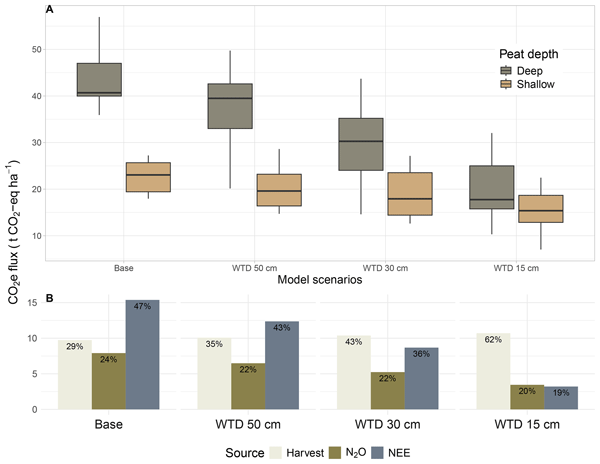
We modelled different water table scenarios in drained agricultural peatlands to investigate the impact of water management on greenhouse gas emissions. Our results show that raising the water table reduces emissions, even in fields with thinner peat layers and conservative water management practices. Carbon dioxide emissions were more affected than nitrous oxide emissions. This study sheds light on the role of peatlands in mitigating emissions. Simulations were run using a process-based model.
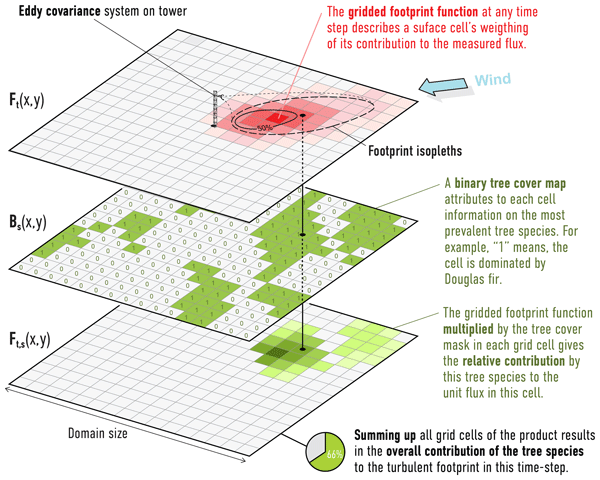
Hassane Moutahir, Markus Sulzer, Ralf Kiese, Andreas Christen, Markus Weiler, Lea Dedden, Julian Brzozon, Pia Labenski, Prajwal Khanal, Ladislav Šigut, and Rüdiger Grote
Biogeosciences, 23, 1719–1738, https://doi.org/10.5194/bg-23-1719-2026, https://doi.org/10.5194/bg-23-1719-2026, 2026
Short summary
Short summary
Eddy covariance (EC) data are vital for studying carbon and water fluxes but often mask species-specific responses in mixed forests. At a Black Forest site with beech and Douglas fir, we combined EC data with ecosystem modeling to separate species contributions. Results show EC fluxes reflect species abundance within flux footprints, though responses vary seasonally. Accounting for these differences is key for gap-filling, accurate budgets, and understanding mixed forests’ climate resilience.
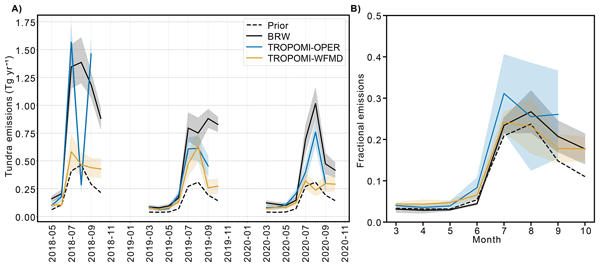
Rebecca H. Ward, Luke M. Western, Rachel L. Tunnicliffe, Elena Fillola, Aki Tsuruta, Tuula Aalto, and Anita L. Ganesan
Atmos. Meas. Tech., 19, 813–837, https://doi.org/10.5194/amt-19-813-2026, https://doi.org/10.5194/amt-19-813-2026, 2026
Short summary
Short summary
We studied methane emissions in Arctic Alaska using satellite observations to assess how well they can monitor this important greenhouse gas. We found that emission estimates varied depending on the satellite data product and were strongly affected by assumptions in the model. Our results highlight the need for careful interpretation of emissions from Arctic satellite data and thorough testing of models, with implications for reliable climate monitoring.
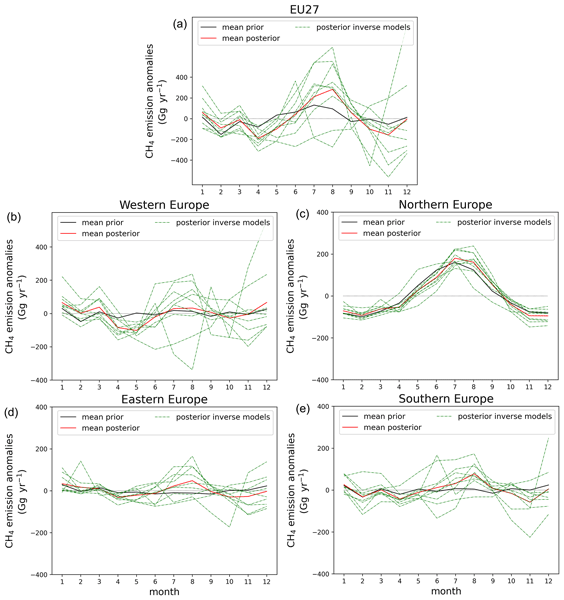
Eleftherios Ioannidis, Antoon Meesters, Michael Steiner, Dominik Brunner, Friedemann Reum, Isabelle Pison, Antoine Berchet, Rona Thompson, Espen Sollum, Frank-Thomas Koch, Christoph Gerbig, Fenjuan Wang, Shamil Maksyutov, Aki Tsuruta, Maria Tenkanen, Tuula Aalto, Guillaume Monteil, Hong Lin, Ge Ren, Marko Scholze, and Sander Houweling
Earth Syst. Sci. Data, 18, 167–198, https://doi.org/10.5194/essd-18-167-2026, https://doi.org/10.5194/essd-18-167-2026, 2026
Short summary
Short summary
This paper describes a detailed study on CH4 European emissions, using different methodologies (9 total inverse models). The study spans over 15 years and provides detailed information on European CH4 emission trends and seasonality, using in-situ data, including Integrated Carbon Observation System (ICOS) network. Our results highlight the importance of improving details in the inversion setup, such as the treatment of lateral boundary conditions to narrow the uncertainty ranges further.
Hui Tang, Samuli Launianen, Julius Vira, Liisa Kulmala, Taru Palosuo, Hermanni Aaltonen, Olli Nevalainen, Istem Fer, Henriikka Vekuri, Jari-Pekka Nousu, Mika Korkiakoski, and Jari Liski
EGUsphere, https://doi.org/10.5194/egusphere-2025-5972, https://doi.org/10.5194/egusphere-2025-5972, 2025
Short summary
Short summary
We present a modelling approach to study how crops in northern climates deal with water stress. By combining several years of field measurements with the modelling approach, we show that both oat and forage grasses use water cautiously, helping them preserve enough soil water to stay productive during dry periods. Our results highlight the need to better understand how northern crops use water for improving their food production in the future, when more frequent and severe drought will occur.
Juha Leskinen, Leif Backman, Tiina Markkanen, Jussi Lintunen, and Tuula Aalto
EGUsphere, https://doi.org/10.5194/egusphere-2025-4882, https://doi.org/10.5194/egusphere-2025-4882, 2025
Preprint archived
Short summary
Short summary
In forest management, carbon sequestration is often the main focus when it comes to climate change mitigation. However, forests impact the climate in other ways too. We examined albedo and heat fluxes alongside carbon sequestration in a boreal Finnish pine forest. For the studied management scenarios we found that the differences in carbon sequestration were the main drivers for total climate impact, albedo mitigated it by a few percentage points, the offset from the heat fluxes were even less.
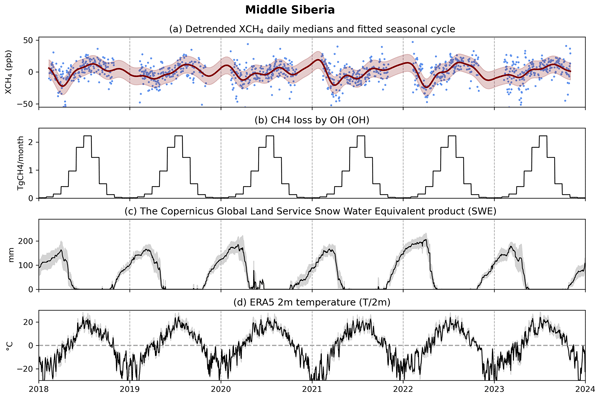
Ella Kivimäki, Maria Tenkanen, Tuula Aalto, Michael Buchwitz, Kari Luojus, Jouni Pulliainen, Kimmo Rautiainen, Oliver Schneising, Anu-Maija Sundström, Johanna Tamminen, Aki Tsuruta, and Hannakaisa Lindqvist
Biogeosciences, 22, 5193–5230, https://doi.org/10.5194/bg-22-5193-2025, https://doi.org/10.5194/bg-22-5193-2025, 2025
Short summary
Short summary
We study how environmental variables influencing natural methane fluxes explain the seasonal variability in satellite-observed methane in Northern Hemisphere high-latitude wetland areas. Using two atmospheric model set-ups, we assess consistency with satellite data. Methane loss through reaction with hydroxyl radicals and links with snow cover, temperature, and snowmelt had the strongest influence. Our study highlights the value of satellite observations for understanding large-scale wetland emissions.
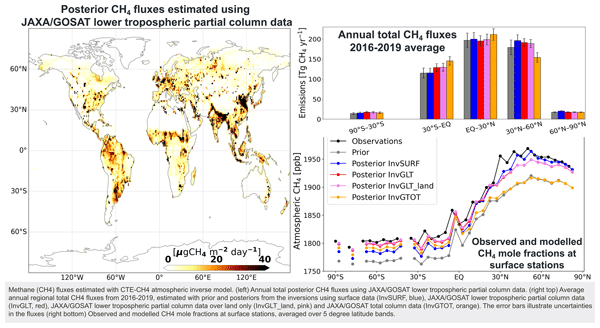
Aki Tsuruta, Akihiko Kuze, Kei Shiomi, Fumie Kataoka, Nobuhiro Kikuchi, Tuula Aalto, Leif Backman, Ella Kivimäki, Maria K. Tenkanen, Kathryn McKain, Omaira E. García, Frank Hase, Rigel Kivi, Isamu Morino, Hirofumi Ohyama, David F. Pollard, Mahesh K. Sha, Kimberly Strong, Ralf Sussmann, Yao Te, Voltaire A. Velazco, Mihalis Vrekoussis, Thorsten Warneke, Minqiang Zhou, and Hiroshi Suto
Atmos. Chem. Phys., 25, 7829–7862, https://doi.org/10.5194/acp-25-7829-2025, https://doi.org/10.5194/acp-25-7829-2025, 2025
Short summary
Short summary
Satellite data bring invaluable information about greenhouse gas emissions globally. We found that a new type of data from the Greenhouse Gas Observing Satellite (GOSAT), which contains information about methane in the lowest layer of Earth's atmosphere, could provide reliable estimates of recent methane emissions when combined with atmospheric modelling. Therefore, the use of such data is encouraged to improve emission quantification methods and advance our understanding of methane cycles.
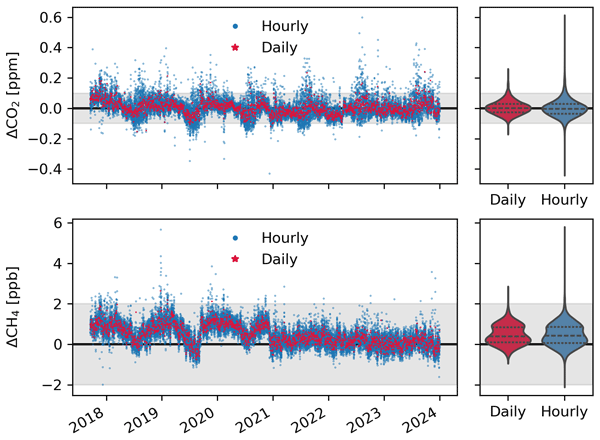
Antti Laitinen, Hermanni Aaltonen, Christoph Zellweger, Aki Tsuruta, Tuula Aalto, and Juha Hatakka
Atmos. Meas. Tech., 18, 3109–3133, https://doi.org/10.5194/amt-18-3109-2025, https://doi.org/10.5194/amt-18-3109-2025, 2025
Short summary
Short summary
This paper presents long-term observations of atmospheric CO2 and CH4 mole fractions and a comparison of two permanent and two mobile measurement systems located in Northern Finland. Furthermore, the observed mole fractions are compared against the mean marine boundary layer product for the Northern Hemisphere. The comparisons of all the systems show good agreement in relation to the World Meteorological Organization/Global Atmosphere Watch network compatibility goal limits for CO2 and CH4.
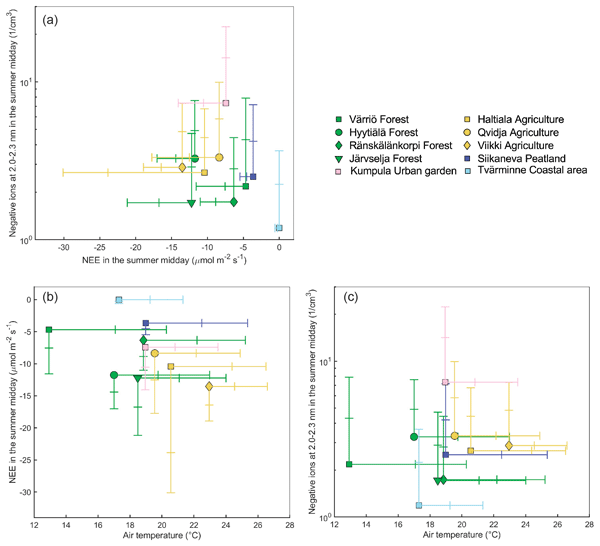
Piaopiao Ke, Anna Lintunen, Pasi Kolari, Annalea Lohila, Santeri Tuovinen, Janne Lampilahti, Roseline Thakur, Maija Peltola, Otso Peräkylä, Tuomo Nieminen, Ekaterina Ezhova, Mari Pihlatie, Asta Laasonen, Markku Koskinen, Helena Rautakoski, Laura Heimsch, Tom Kokkonen, Aki Vähä, Ivan Mammarella, Steffen Noe, Jaana Bäck, Veli-Matti Kerminen, and Markku Kulmala
Biogeosciences, 22, 3235–3251, https://doi.org/10.5194/bg-22-3235-2025, https://doi.org/10.5194/bg-22-3235-2025, 2025
Short summary
Short summary
Our research explores diverse ecosystems’ roles in climate cooling via the concept of CarbonSink+ potential. We measured CO2 uptake and local aerosol production in forests, farms, peatlands, urban gardens, and coastal areas across Finland and Estonia. The long-term data reveal that, while forests are vital with regard to CarbonSink+ potential, farms and urban gardens also play significant roles. These insights can help optimize management policy of natural resources to mitigate global warming.
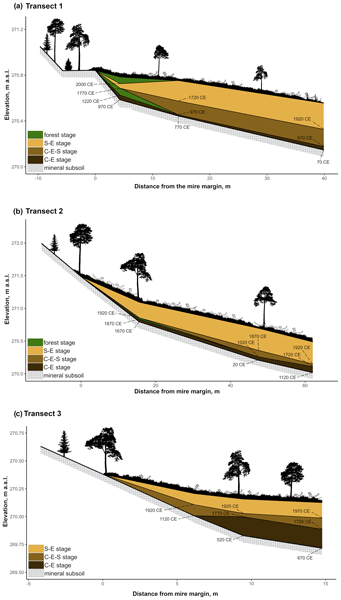
Teemu Juselius-Rajamäki, Sanna Piilo, Susanna Salminen-Paatero, Emilia Tuomaala, Tarmo Virtanen, Atte Korhola, Anna Autio, Hannu Marttila, Pertti Ala-Aho, Annalea Lohila, and Minna Väliranta
Biogeosciences, 22, 3047–3071, https://doi.org/10.5194/bg-22-3047-2025, https://doi.org/10.5194/bg-22-3047-2025, 2025
Short summary
Short summary
Vegetation can be used to infer the potential climate feedback of peatlands. New studies have shown the recent expansion of peatlands, but their plant community succession has not been studied. Although generally described as dry bog-type vegetation, our results show that peatland margins in a subarctic fen began as wet fen with high methane emissions and shifted to bog-type peatland area only after the Little Ice Age. Thus, they have acted as a carbon source for most of their history.
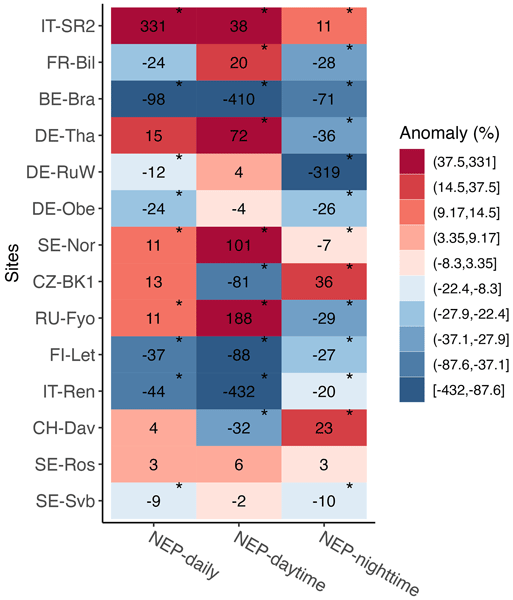
Mana Gharun, Ankit Shekhar, Lukas Hörtnagl, Luana Krebs, Nicola Arriga, Mirco Migliavacca, Marilyn Roland, Bert Gielen, Leonardo Montagnani, Enrico Tomelleri, Ladislav Šigut, Matthias Peichl, Peng Zhao, Marius Schmidt, Thomas Grünwald, Mika Korkiakoski, Annalea Lohila, and Nina Buchmann
Biogeosciences, 22, 1393–1411, https://doi.org/10.5194/bg-22-1393-2025, https://doi.org/10.5194/bg-22-1393-2025, 2025
Short summary
Short summary
The effect of winter warming on forest CO2 fluxes has rarely been investigated. We tested the effect of the warm winter of 2020 on the forest CO2 fluxes across 14 sites in Europe and found that the net ecosystem productivity (NEP) across most sites declined during the warm winter due to increased respiration fluxes.
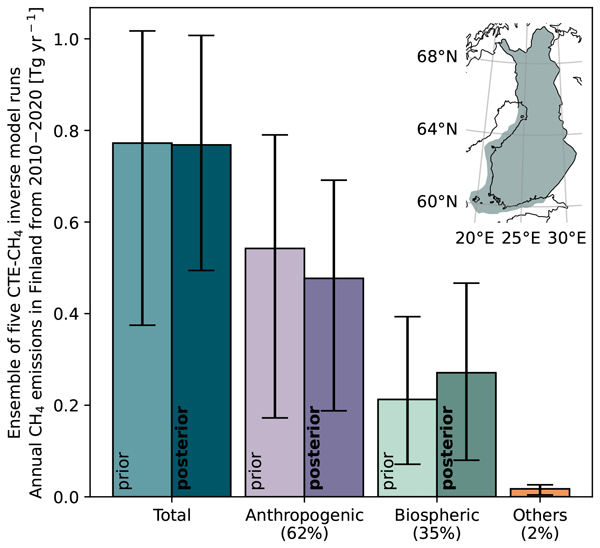
Maria K. Tenkanen, Aki Tsuruta, Hugo Denier van der Gon, Lena Höglund-Isaksson, Antti Leppänen, Tiina Markkanen, Ana Maria Roxana Petrescu, Maarit Raivonen, Hermanni Aaltonen, and Tuula Aalto
Atmos. Chem. Phys., 25, 2181–2206, https://doi.org/10.5194/acp-25-2181-2025, https://doi.org/10.5194/acp-25-2181-2025, 2025
Short summary
Short summary
Accurate national methane (CH4) emission estimates are essential for tracking progress towards climate goals. This study compares estimates from Finland, which use different methods and scales, and shows how well a global model estimates emissions within a country. The bottom-up estimates vary a lot, but constraining them with atmospheric CH4 measurements brought the estimates closer together. We also highlight the importance of quantifying natural emissions alongside anthropogenic emissions.
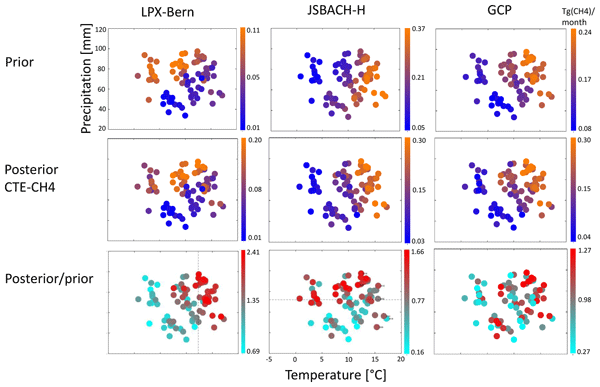
Tuula Aalto, Aki Tsuruta, Jarmo Mäkelä, Jurek Müller, Maria Tenkanen, Eleanor Burke, Sarah Chadburn, Yao Gao, Vilma Mannisenaho, Thomas Kleinen, Hanna Lee, Antti Leppänen, Tiina Markkanen, Stefano Materia, Paul A. Miller, Daniele Peano, Olli Peltola, Benjamin Poulter, Maarit Raivonen, Marielle Saunois, David Wårlind, and Sönke Zaehle
Biogeosciences, 22, 323–340, https://doi.org/10.5194/bg-22-323-2025, https://doi.org/10.5194/bg-22-323-2025, 2025
Short summary
Short summary
Wetland methane responses to temperature and precipitation were studied in a boreal wetland-rich region in northern Europe using ecosystem models, atmospheric inversions, and upscaled flux observations. The ecosystem models differed in their responses to temperature and precipitation and in their seasonality. However, multi-model means, inversions, and upscaled fluxes had similar seasonality, and they suggested co-limitation by temperature and precipitation.
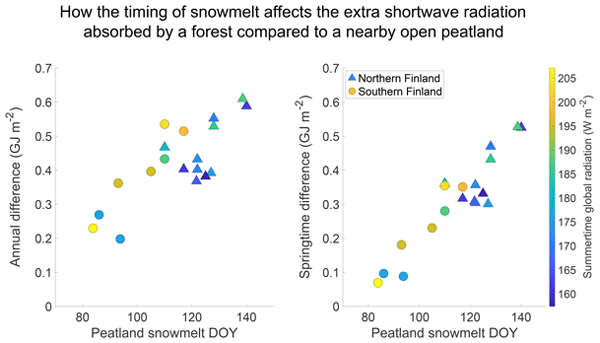
Otso Peräkylä, Erkka Rinne, Ekaterina Ezhova, Anna Lintunen, Annalea Lohila, Juho Aalto, Mika Aurela, Pasi Kolari, and Markku Kulmala
Biogeosciences, 22, 153–179, https://doi.org/10.5194/bg-22-153-2025, https://doi.org/10.5194/bg-22-153-2025, 2025
Short summary
Short summary
Forests are seen as good for climate. Yet, in areas with snow, trees break up the white snow surface and absorb more sunlight than open areas. This has a warming effect, negating some of the climate benefit of trees. We studied two site pairs in Finland, both with an open peatland and a forest. We found that the later the snow melts, the more extra energy the forest absorbs as compared to the peatland. This has implications for the future, as snow cover duration is affected by global warming.
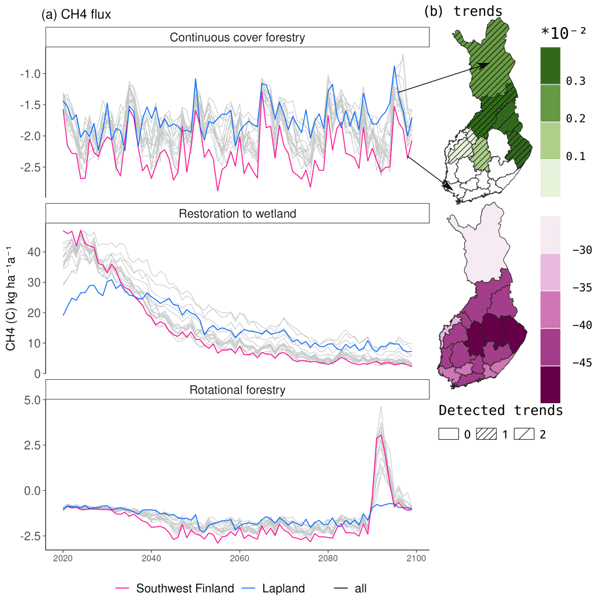
Vilna Tyystjärvi, Tiina Markkanen, Leif Backman, Maarit Raivonen, Antti Leppänen, Xuefei Li, Paavo Ojanen, Kari Minkkinen, Roosa Hautala, Mikko Peltoniemi, Jani Anttila, Raija Laiho, Annalea Lohila, Raisa Mäkipää, and Tuula Aalto
Biogeosciences, 21, 5745–5771, https://doi.org/10.5194/bg-21-5745-2024, https://doi.org/10.5194/bg-21-5745-2024, 2024
Short summary
Short summary
Drainage of boreal peatlands strongly influences soil methane fluxes, with important implications for climatic impacts. Here we simulate methane fluxes in forestry-drained and restored peatlands during the 21st century. We found that restoration turned peatlands into a source of methane, but the magnitude varied regionally. In forests, changes in the water table level influenced methane fluxes, and in general, the sink was weaker under rotational forestry compared to continuous cover forestry.
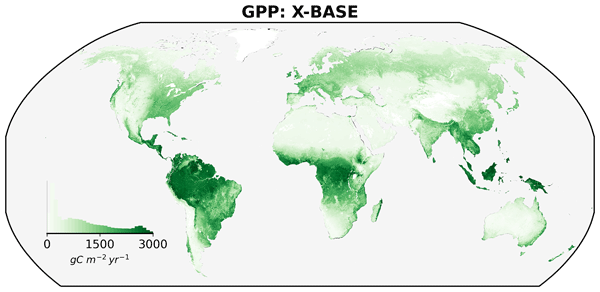
Jacob A. Nelson, Sophia Walther, Fabian Gans, Basil Kraft, Ulrich Weber, Kimberly Novick, Nina Buchmann, Mirco Migliavacca, Georg Wohlfahrt, Ladislav Šigut, Andreas Ibrom, Dario Papale, Mathias Göckede, Gregory Duveiller, Alexander Knohl, Lukas Hörtnagl, Russell L. Scott, Jiří Dušek, Weijie Zhang, Zayd Mahmoud Hamdi, Markus Reichstein, Sergio Aranda-Barranco, Jonas Ardö, Maarten Op de Beeck, Dave Billesbach, David Bowling, Rosvel Bracho, Christian Brümmer, Gustau Camps-Valls, Shiping Chen, Jamie Rose Cleverly, Ankur Desai, Gang Dong, Tarek S. El-Madany, Eugenie Susanne Euskirchen, Iris Feigenwinter, Marta Galvagno, Giacomo A. Gerosa, Bert Gielen, Ignacio Goded, Sarah Goslee, Christopher Michael Gough, Bernard Heinesch, Kazuhito Ichii, Marcin Antoni Jackowicz-Korczynski, Anne Klosterhalfen, Sara Knox, Hideki Kobayashi, Kukka-Maaria Kohonen, Mika Korkiakoski, Ivan Mammarella, Mana Gharun, Riccardo Marzuoli, Roser Matamala, Stefan Metzger, Leonardo Montagnani, Giacomo Nicolini, Thomas O'Halloran, Jean-Marc Ourcival, Matthias Peichl, Elise Pendall, Borja Ruiz Reverter, Marilyn Roland, Simone Sabbatini, Torsten Sachs, Marius Schmidt, Christopher R. Schwalm, Ankit Shekhar, Richard Silberstein, Maria Lucia Silveira, Donatella Spano, Torbern Tagesson, Gianluca Tramontana, Carlo Trotta, Fabio Turco, Timo Vesala, Caroline Vincke, Domenico Vitale, Enrique R. Vivoni, Yi Wang, William Woodgate, Enrico A. Yepez, Junhui Zhang, Donatella Zona, and Martin Jung
Biogeosciences, 21, 5079–5115, https://doi.org/10.5194/bg-21-5079-2024, https://doi.org/10.5194/bg-21-5079-2024, 2024
Short summary
Short summary
The movement of water, carbon, and energy from the Earth's surface to the atmosphere, or flux, is an important process to understand because it impacts our lives. Here, we outline a method called FLUXCOM-X to estimate global water and CO2 fluxes based on direct measurements from sites around the world. We go on to demonstrate how these new estimates of net CO2 uptake/loss, gross CO2 uptake, total water evaporation, and transpiration from plants compare to previous and independent estimates.
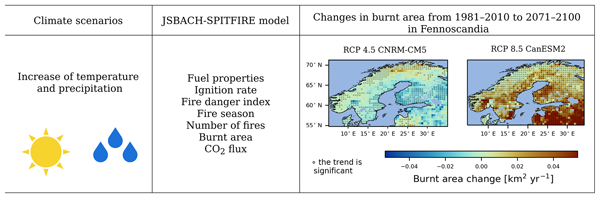
Outi Kinnunen, Leif Backman, Juha Aalto, Tuula Aalto, and Tiina Markkanen
Biogeosciences, 21, 4739–4763, https://doi.org/10.5194/bg-21-4739-2024, https://doi.org/10.5194/bg-21-4739-2024, 2024
Short summary
Short summary
Climate change is expected to increase the risk of forest fires. Ecosystem process model simulations are used to project changes in fire occurrence in Fennoscandia under six climate projections. The findings suggest a longer fire season, more fires, and an increase in burnt area towards the end of the century.

Jari-Pekka Nousu, Kersti Leppä, Hannu Marttila, Pertti Ala-aho, Giulia Mazzotti, Terhikki Manninen, Mika Korkiakoski, Mika Aurela, Annalea Lohila, and Samuli Launiainen
Hydrol. Earth Syst. Sci., 28, 4643–4666, https://doi.org/10.5194/hess-28-4643-2024, https://doi.org/10.5194/hess-28-4643-2024, 2024
Short summary
Short summary
We used hydrological models, field measurements, and satellite-based data to study the soil moisture dynamics in a subarctic catchment. The role of groundwater was studied with different ways to model the groundwater dynamics and via comparisons to the observational data. The choice of groundwater model was shown to have a strong impact, and representation of lateral flow was important to capture wet soil conditions. Our results provide insights for ecohydrological studies in boreal regions.
Carolin Boos, Sophie Reinermann, Raul Wood, Ralf Ludwig, Anne Schucknecht, David Kraus, and Ralf Kiese
EGUsphere, https://doi.org/10.5194/egusphere-2024-2864, https://doi.org/10.5194/egusphere-2024-2864, 2024
Preprint archived
Short summary
Short summary
We applied a biogeochemical model on grasslands in the pre-Alpine Ammer region in Germany and analyzed the influence of soil and climate on annual yields. In drought affected years, total yields were decreased by 4 %. Overall, yields decrease with rising elevation, but less so in drier and hotter years, whereas soil organic carbon has a positive impact on yields, especially in drier years. Our findings imply, that adapted management in the region allows to mitigate yield losses from drought.
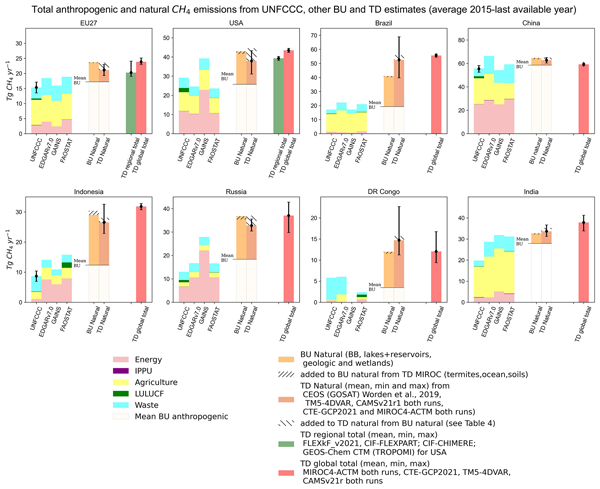
Ana Maria Roxana Petrescu, Glen P. Peters, Richard Engelen, Sander Houweling, Dominik Brunner, Aki Tsuruta, Bradley Matthews, Prabir K. Patra, Dmitry Belikov, Rona L. Thompson, Lena Höglund-Isaksson, Wenxin Zhang, Arjo J. Segers, Giuseppe Etiope, Giancarlo Ciotoli, Philippe Peylin, Frédéric Chevallier, Tuula Aalto, Robbie M. Andrew, David Bastviken, Antoine Berchet, Grégoire Broquet, Giulia Conchedda, Stijn N. C. Dellaert, Hugo Denier van der Gon, Johannes Gütschow, Jean-Matthieu Haussaire, Ronny Lauerwald, Tiina Markkanen, Jacob C. A. van Peet, Isabelle Pison, Pierre Regnier, Espen Solum, Marko Scholze, Maria Tenkanen, Francesco N. Tubiello, Guido R. van der Werf, and John R. Worden
Earth Syst. Sci. Data, 16, 4325–4350, https://doi.org/10.5194/essd-16-4325-2024, https://doi.org/10.5194/essd-16-4325-2024, 2024
Short summary
Short summary
This study provides an overview of data availability from observation- and inventory-based CH4 emission estimates. It systematically compares them and provides recommendations for robust comparisons, aiming to steadily engage more parties in using observational methods to complement their UNFCCC submissions. Anticipating improvements in atmospheric modelling and observations, future developments need to resolve knowledge gaps in both approaches and to better quantify remaining uncertainty.
Daniel Nadal-Sala, Rüdiger Grote, David Kraus, Uri Hochberg, Tamir Klein, Yael Wagner, Fedor Tatarinov, Dan Yakir, and Nadine K. Ruehr
Biogeosciences, 21, 2973–2994, https://doi.org/10.5194/bg-21-2973-2024, https://doi.org/10.5194/bg-21-2973-2024, 2024
Short summary
Short summary
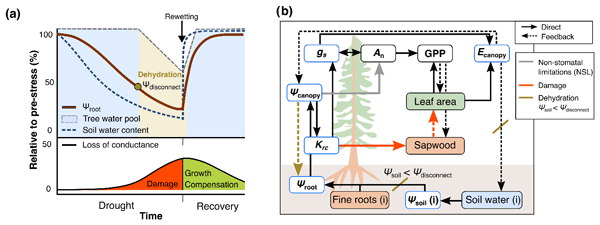
A hydraulic model approach is presented that can be added to any physiologically based ecosystem model. Simulated plant water potential triggers stomatal closure, photosynthesis decline, root–soil resistance increases, and sapwood and foliage senescence. The model has been evaluated at an extremely dry site stocked with Aleppo pine and was able to represent gas exchange, soil water content, and plant water potential. The model also responded realistically regarding leaf senescence.
Helena Rautakoski, Mika Korkiakoski, Jarmo Mäkelä, Markku Koskinen, Kari Minkkinen, Mika Aurela, Paavo Ojanen, and Annalea Lohila
Biogeosciences, 21, 1867–1886, https://doi.org/10.5194/bg-21-1867-2024, https://doi.org/10.5194/bg-21-1867-2024, 2024
Short summary
Short summary
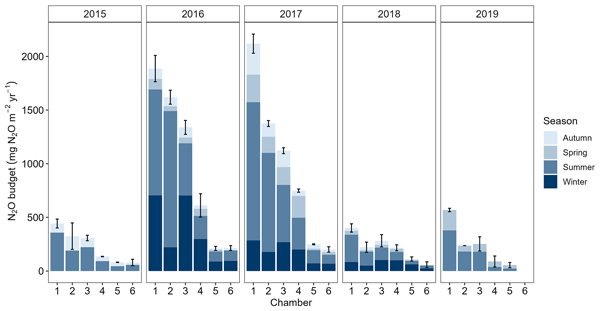
Current and future nitrous oxide (N2O) emissions are difficult to estimate due to their high variability in space and time. Several years of N2O fluxes from drained boreal peatland forest indicate high importance of summer precipitation, winter temperature, and snow conditions in controlling annual N2O emissions. The results indicate increasing year-to-year variation in N2O emissions in changing climate with more extreme seasonal weather conditions.
Jari-Pekka Nousu, Matthieu Lafaysse, Giulia Mazzotti, Pertti Ala-aho, Hannu Marttila, Bertrand Cluzet, Mika Aurela, Annalea Lohila, Pasi Kolari, Aaron Boone, Mathieu Fructus, and Samuli Launiainen
The Cryosphere, 18, 231–263, https://doi.org/10.5194/tc-18-231-2024, https://doi.org/10.5194/tc-18-231-2024, 2024
Short summary
Short summary
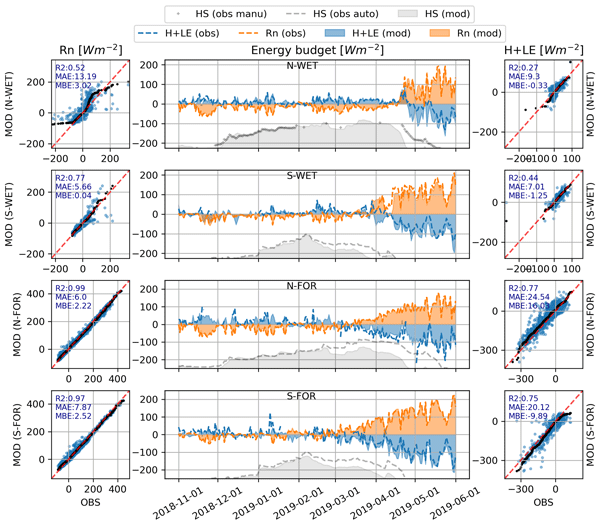
The snowpack has a major impact on the land surface energy budget. Accurate simulation of the snowpack energy budget is difficult, and studies that evaluate models against energy budget observations are rare. We compared predictions from well-known models with observations of energy budgets, snow depths and soil temperatures in Finland. Our study identified contrasting strengths and limitations for the models. These results can be used for choosing the right models depending on the use cases.
Elizabeth Gachibu Wangari, Ricky Mwangada Mwanake, Tobias Houska, David Kraus, Gretchen Maria Gettel, Ralf Kiese, Lutz Breuer, and Klaus Butterbach-Bahl
Biogeosciences, 20, 5029–5067, https://doi.org/10.5194/bg-20-5029-2023, https://doi.org/10.5194/bg-20-5029-2023, 2023
Short summary
Short summary
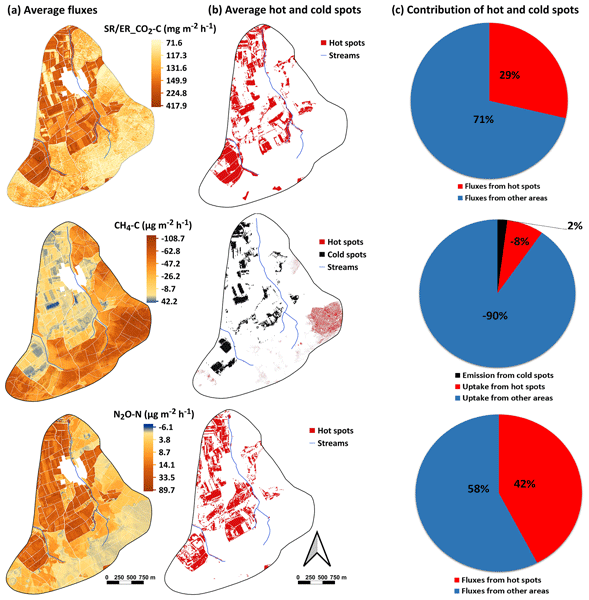
Agricultural landscapes act as sinks or sources of the greenhouse gases (GHGs) CO2, CH4, or N2O. Various physicochemical and biological processes control the fluxes of these GHGs between ecosystems and the atmosphere. Therefore, fluxes depend on environmental conditions such as soil moisture, soil temperature, or soil parameters, which result in large spatial and temporal variations of GHG fluxes. Here, we describe an example of how this variation may be studied and analyzed.
Jyrki Jauhiainen, Juha Heikkinen, Nicholas Clarke, Hongxing He, Lise Dalsgaard, Kari Minkkinen, Paavo Ojanen, Lars Vesterdal, Jukka Alm, Aldis Butlers, Ingeborg Callesen, Sabine Jordan, Annalea Lohila, Ülo Mander, Hlynur Óskarsson, Bjarni D. Sigurdsson, Gunnhild Søgaard, Kaido Soosaar, Åsa Kasimir, Brynhildur Bjarnadottir, Andis Lazdins, and Raija Laiho
Biogeosciences, 20, 4819–4839, https://doi.org/10.5194/bg-20-4819-2023, https://doi.org/10.5194/bg-20-4819-2023, 2023
Short summary
Short summary
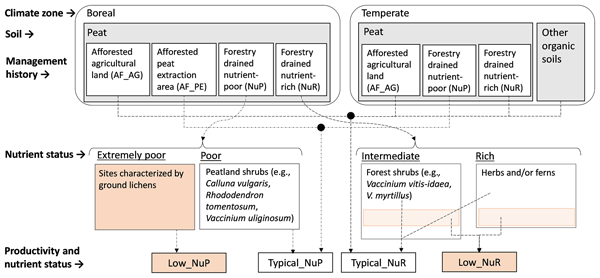
The study looked at published data on drained organic forest soils in boreal and temperate zones to revisit current Tier 1 default emission factors (EFs) provided by the IPCC Wetlands Supplement. We examined the possibilities of forming more site-type specific EFs and inspected the potential relevance of environmental variables for predicting annual soil greenhouse gas balances by statistical models. The results have important implications for EF revisions and national emission reporting.
Ana Maria Roxana Petrescu, Chunjing Qiu, Matthew J. McGrath, Philippe Peylin, Glen P. Peters, Philippe Ciais, Rona L. Thompson, Aki Tsuruta, Dominik Brunner, Matthias Kuhnert, Bradley Matthews, Paul I. Palmer, Oksana Tarasova, Pierre Regnier, Ronny Lauerwald, David Bastviken, Lena Höglund-Isaksson, Wilfried Winiwarter, Giuseppe Etiope, Tuula Aalto, Gianpaolo Balsamo, Vladislav Bastrikov, Antoine Berchet, Patrick Brockmann, Giancarlo Ciotoli, Giulia Conchedda, Monica Crippa, Frank Dentener, Christine D. Groot Zwaaftink, Diego Guizzardi, Dirk Günther, Jean-Matthieu Haussaire, Sander Houweling, Greet Janssens-Maenhout, Massaer Kouyate, Adrian Leip, Antti Leppänen, Emanuele Lugato, Manon Maisonnier, Alistair J. Manning, Tiina Markkanen, Joe McNorton, Marilena Muntean, Gabriel D. Oreggioni, Prabir K. Patra, Lucia Perugini, Isabelle Pison, Maarit T. Raivonen, Marielle Saunois, Arjo J. Segers, Pete Smith, Efisio Solazzo, Hanqin Tian, Francesco N. Tubiello, Timo Vesala, Guido R. van der Werf, Chris Wilson, and Sönke Zaehle
Earth Syst. Sci. Data, 15, 1197–1268, https://doi.org/10.5194/essd-15-1197-2023, https://doi.org/10.5194/essd-15-1197-2023, 2023
Short summary
Short summary
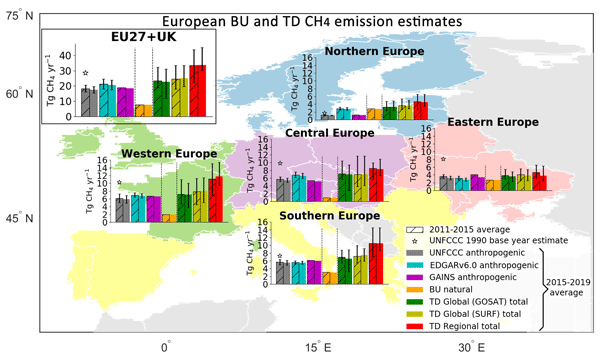
This study updates the state-of-the-art scientific overview of CH4 and N2O emissions in the EU27 and UK in Petrescu et al. (2021a). Yearly updates are needed to improve the different respective approaches and to inform on the development of formal verification systems. It integrates the most recent emission inventories, process-based model and regional/global inversions, comparing them with UNFCCC national GHG inventories, in support to policy to facilitate real-time verification procedures.

Matti Kämäräinen, Juha-Pekka Tuovinen, Markku Kulmala, Ivan Mammarella, Juha Aalto, Henriikka Vekuri, Annalea Lohila, and Anna Lintunen
Biogeosciences, 20, 897–909, https://doi.org/10.5194/bg-20-897-2023, https://doi.org/10.5194/bg-20-897-2023, 2023
Short summary
Short summary
In this study, we introduce a new method for modeling the exchange of carbon between the atmosphere and a study site located in a boreal forest in southern Finland. Our method yields more accurate results than previous approaches in this context. Accurately estimating carbon exchange is crucial for gaining a better understanding of the role of forests in regulating atmospheric carbon and addressing climate change.

Lauri Heiskanen, Juha-Pekka Tuovinen, Henriikka Vekuri, Aleksi Räsänen, Tarmo Virtanen, Sari Juutinen, Annalea Lohila, Juha Mikola, and Mika Aurela
Biogeosciences, 20, 545–572, https://doi.org/10.5194/bg-20-545-2023, https://doi.org/10.5194/bg-20-545-2023, 2023
Short summary
Short summary
We measured and modelled the CO2 and CH4 fluxes of the terrestrial and aquatic ecosystems of the subarctic landscape for 2 years. The landscape was an annual CO2 sink and a CH4 source. The forest had the largest contribution to the landscape-level CO2 sink and the peatland to the CH4 emissions. The lakes released 24 % of the annual net C uptake of the landscape back to the atmosphere. The C fluxes were affected most by the rainy peak growing season of 2017 and the drought event in July 2018.
Yao Gao, Eleanor J. Burke, Sarah E. Chadburn, Maarit Raivonen, Mika Aurela, Lawrence B. Flanagan, Krzysztof Fortuniak, Elyn Humphreys, Annalea Lohila, Tingting Li, Tiina Markkanen, Olli Nevalainen, Mats B. Nilsson, Włodzimierz Pawlak, Aki Tsuruta, Huiyi Yang, and Tuula Aalto
Biogeosciences Discuss., https://doi.org/10.5194/bg-2022-229, https://doi.org/10.5194/bg-2022-229, 2022
Manuscript not accepted for further review
Short summary
Short summary
We coupled a process-based peatland CH4 emission model HIMMELI with a state-of-art land surface model JULES. The performance of the coupled model was evaluated at six northern wetland sites. The coupled model is considered to be more appropriate in simulating wetland CH4 emission. In order to improve the simulated CH4 emission, the model requires better representation of the peat soil carbon and hydrologic processes in JULES and the methane production and transportation processes in HIMMELI.
Maiju Linkosalmi, Juha-Pekka Tuovinen, Olli Nevalainen, Mikko Peltoniemi, Cemal M. Taniş, Ali N. Arslan, Juuso Rainne, Annalea Lohila, Tuomas Laurila, and Mika Aurela
Biogeosciences, 19, 4747–4765, https://doi.org/10.5194/bg-19-4747-2022, https://doi.org/10.5194/bg-19-4747-2022, 2022
Short summary
Short summary
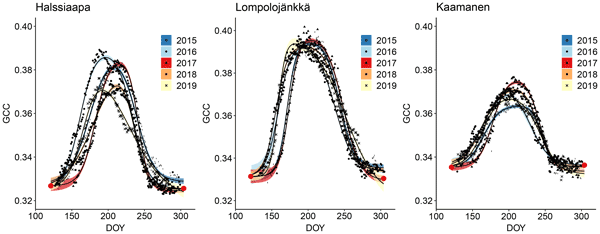
Vegetation greenness was monitored with digital cameras in three northern peatlands during five growing seasons. The greenness index derived from the images was highest at the most nutrient-rich site. Greenness indicated the main phases of phenology and correlated with CO2 uptake, though this was mainly related to the common seasonal cycle. The cameras and Sentinel-2 satellite showed consistent results, but more frequent satellite data are needed for reliable detection of phenological phases.
Miska Olin, Magdalena Okuljar, Matti P. Rissanen, Joni Kalliokoski, Jiali Shen, Lubna Dada, Markus Lampimäki, Yusheng Wu, Annalea Lohila, Jonathan Duplissy, Mikko Sipilä, Tuukka Petäjä, Markku Kulmala, and Miikka Dal Maso
Atmos. Chem. Phys., 22, 8097–8115, https://doi.org/10.5194/acp-22-8097-2022, https://doi.org/10.5194/acp-22-8097-2022, 2022
Short summary
Short summary
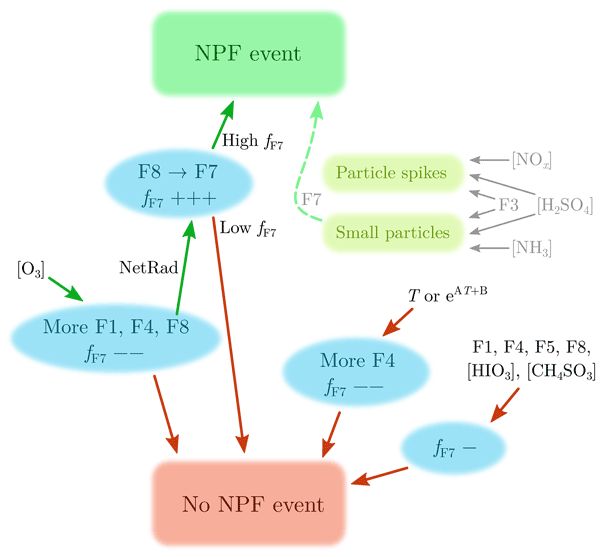
Atmospheric new particle formation is an important source of the total particle number concentration in the atmosphere. Several parameters for predicting new particle formation events have been suggested before, but the results have been inconclusive. This study proposes an another predicting parameter, related to a specific type of highly oxidized organic molecules, especially for similar locations to the measurement site in this study, which was a coastal agricultural site in Finland.

Mika Korkiakoski, Tiia Määttä, Krista Peltoniemi, Timo Penttilä, and Annalea Lohila
Biogeosciences, 19, 2025–2041, https://doi.org/10.5194/bg-19-2025-2022, https://doi.org/10.5194/bg-19-2025-2022, 2022
Short summary
Short summary
We measured CH4 fluxes and production and oxidation potentials from irrigated and non-irrigated podzolic soil in a boreal forest. CH4 sink was smaller at the irrigated site but did not cause CH4 emission, with one exception. We also showed that under laboratory conditions, not only wet conditions, but also fresh carbon, are needed to make podzolic soil into a CH4 source. Our study provides important data for improving the process models describing the upland soil CH4 dynamics.
Elodie Salmon, Fabrice Jégou, Bertrand Guenet, Line Jourdain, Chunjing Qiu, Vladislav Bastrikov, Christophe Guimbaud, Dan Zhu, Philippe Ciais, Philippe Peylin, Sébastien Gogo, Fatima Laggoun-Défarge, Mika Aurela, M. Syndonia Bret-Harte, Jiquan Chen, Bogdan H. Chojnicki, Housen Chu, Colin W. Edgar, Eugenie S. Euskirchen, Lawrence B. Flanagan, Krzysztof Fortuniak, David Holl, Janina Klatt, Olaf Kolle, Natalia Kowalska, Lars Kutzbach, Annalea Lohila, Lutz Merbold, Włodzimierz Pawlak, Torsten Sachs, and Klaudia Ziemblińska
Geosci. Model Dev., 15, 2813–2838, https://doi.org/10.5194/gmd-15-2813-2022, https://doi.org/10.5194/gmd-15-2813-2022, 2022
Short summary
Short summary
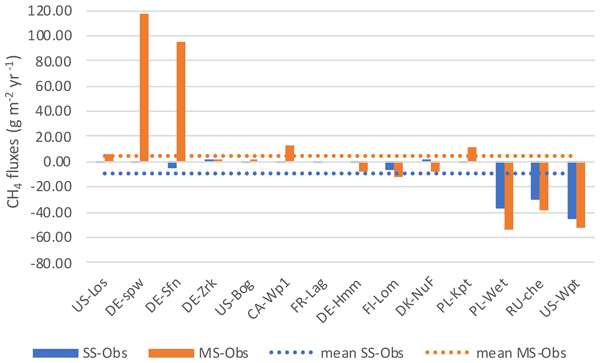
A methane model that features methane production and transport by plants, the ebullition process and diffusion in soil, oxidation to CO2, and CH4 fluxes to the atmosphere has been embedded in the ORCHIDEE-PEAT land surface model, which includes an explicit representation of northern peatlands. This model, ORCHIDEE-PCH4, was calibrated and evaluated on 14 peatland sites. Results show that the model is sensitive to temperature and substrate availability over the top 75 cm of soil depth.
Sarah E. Chadburn, Eleanor J. Burke, Angela V. Gallego-Sala, Noah D. Smith, M. Syndonia Bret-Harte, Dan J. Charman, Julia Drewer, Colin W. Edgar, Eugenie S. Euskirchen, Krzysztof Fortuniak, Yao Gao, Mahdi Nakhavali, Włodzimierz Pawlak, Edward A. G. Schuur, and Sebastian Westermann
Geosci. Model Dev., 15, 1633–1657, https://doi.org/10.5194/gmd-15-1633-2022, https://doi.org/10.5194/gmd-15-1633-2022, 2022
Short summary
Short summary
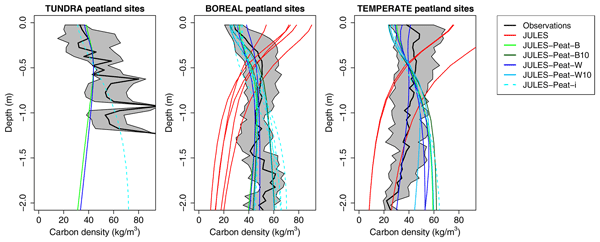
We present a new method to include peatlands in an Earth system model (ESM). Peatlands store huge amounts of carbon that accumulates very slowly but that can be rapidly destabilised, emitting greenhouse gases. Our model captures the dynamic nature of peat by simulating the change in surface height and physical properties of the soil as carbon is added or decomposed. Thus, we model, for the first time in an ESM, peat dynamics and its threshold behaviours that can lead to destabilisation.
Olli Nevalainen, Olli Niemitalo, Istem Fer, Antti Juntunen, Tuomas Mattila, Olli Koskela, Joni Kukkamäki, Layla Höckerstedt, Laura Mäkelä, Pieta Jarva, Laura Heimsch, Henriikka Vekuri, Liisa Kulmala, Åsa Stam, Otto Kuusela, Stephanie Gerin, Toni Viskari, Julius Vira, Jari Hyväluoma, Juha-Pekka Tuovinen, Annalea Lohila, Tuomas Laurila, Jussi Heinonsalo, Tuula Aalto, Iivari Kunttu, and Jari Liski
Geosci. Instrum. Method. Data Syst., 11, 93–109, https://doi.org/10.5194/gi-11-93-2022, https://doi.org/10.5194/gi-11-93-2022, 2022
Short summary
Short summary
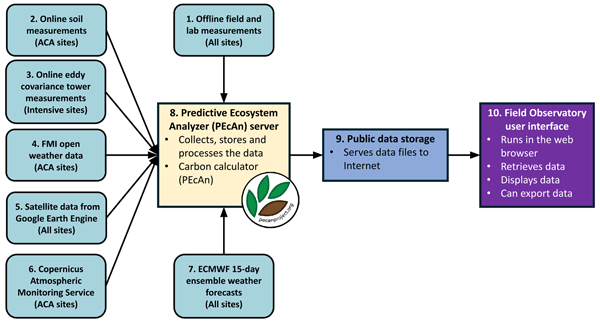
Better monitoring of soil carbon sequestration is needed to understand the best carbon farming practices in different soils and climate conditions. We, the Field Observatory Network (FiON), have therefore established a methodology for monitoring and forecasting agricultural carbon sequestration by combining offline and near-real-time field measurements, weather data, satellite imagery, and modeling. To disseminate our work, we built a website called the Field Observatory (fieldobservatory.org).
Vilma Kangasaho, Aki Tsuruta, Leif Backman, Pyry Mäkinen, Sander Houweling, Arjo Segers, Maarten Krol, Ed Dlugokencky, Sylvia Michel, James White, and Tuula Aalto
Atmos. Chem. Phys. Discuss., https://doi.org/10.5194/acp-2021-843, https://doi.org/10.5194/acp-2021-843, 2021
Revised manuscript not accepted
Short summary
Short summary
Understanding the composition of carbon isotopes can help to better understand the changes in methane budgets. This study investigates how methane sources affect the seasonal cycle of the methane carbon-13 isotope during 2000–2012 using an atmospheric transport model. We found that emissions from both anthropogenic and natural sources contribute. The findings raise a need to revise the magnitudes, proportion, and seasonal cycles of anthropogenic sources and northern wetland emissions.
Cited articles
Aalto, J., Pirinen, P., and Jylhä, K.: New gridded daily climatology of Finland: permutation-based uncertainty estimates and temporal trends in climate, J. Geophys. Res.-Atmos., 121, 3807–3823, https://doi.org/10.1002/2015JD024651, 2016. a
Baylay, S. E., Thormann, M. N., and Szumigalski, A. R.: Nitrogen mineralization and decomposition in western boreal bog and fen peat, Ecoscience, 12, 455–465, 2005. a
Butterbach-Bahl, K., Grote, R., Haas, E., Kiese, R., Klatt, S., and Kraus, D.: LandscapeDNDC (v1.35.2), Karlsruhe Institute of Technology (KIT) [code], https://doi.org/10.35097/8W3V0BF96C2XZENJ, 2026. a, b
Cade, S. M., Clemitshaw, K. C., Molina-Herrera, S., Grote, R., Haas, E., Wilkinson, M., Morison, J. I. L., and Yamulki, S.: Evaluation of LandscapeDNDC model predictions of CO2 and N2O fluxes from an Oak Forest in SE England, Forests, 12, 1517, https://doi.org/10.3390/f12111517, 2021. a, b
Dirnböck, T., Kobler, J., Kraus, D., Grote, R., and Kiese, R.: Impacts of management and climate change on nitrate leaching in a forested karst area, J. Environ. Manage., 165, 243–252, https://doi.org/10.1016/j.jenvman.2015.09.039, 2016. a
Dirnböck, T., Kraus, D., Grote, R., Klatt, S., Kobler, J., Schindlbacher, A., Seidl, R., Thom, D., and Kies, R.: Substantial understory contribution to the C sink of a European temperate mountain forest landscape, Landscape Ecol, 35, 483–499, https://doi.org/10.1007/s10980-019-00960-2, 2020. a, b
Findlay, S. E.: Chapter 4 – Organic matter decomposition, in: Fundamentals of Ecosystem Science (Second Edition), edited by: Weathers, K. C., Strayer, D. L., and Likens, G. E., Academic Press, 2nd edn., https://doi.org/10.1016/B978-0-12-812762-9.00004-6, 81–102, 2021. a
Forrester, D. I., Baker, T. G., Hobi, S. R. E. M. L., Ouyang, S., Wiedemann, J. C., Xiang, W., Zell, J., and Pulkkinen, M.: Self-thinning tree mortality models that account for vertical stand structure, species mixing and climate, Forest Ecol. Manag., 487, 118936, https://doi.org/10.1016/j.foreco.2021.118936, 2021. a
Grote, R., Mayrhofer, S., Fischbach, R., Steinbrecher, R., Staudt, M., and Schnitzler, J.-P.: Process-based modelling of isoprenoid emissions from evergreen leaves of Quercus ilex (L.), Atmos. Environ., 40, S152–S165, https://doi.org/10.1016/j.atmosenv.2005.10.071, 2006. a
Grote, R., Lavoir, A.-V., Rambal, S., Staudt, M., Zimmer, I., and Schnitzler, J.-P.: Modelling the drought impact on monoterpene fluxes from an evergreen Mediterranean forest canopy, Oecologia, 160, 213–223, https://doi.org/10.1007/s00442-009-1298-9, 2009. a
Grote, R., Kiese, R., Grünwald, T., Ourcival, J.-M., and Granier, A.: Modelling forest carbon balances considering tree mortality and removal, Agr. Forest Meteorol., 151, 179–190, https://doi.org/10.1016/j.agrformet.2010.10.002, 2011. a, b, c
Haas, E., Klatt, S., Fröhlich, A., Kraft, P., Werner, C., Kiese, R., Grote, R., Breuer, L., and Butterbach-Bahl, K.: LandscapeDNDC: a process model for simulation of biosphere–atmosphere–hydrosphere exchange processes at site and regional scale, Landscape Ecol., 28, 615–636, https://doi.org/10.1007/s10980-012-9772-x, 2013. a
Haas, E., Carozzi, M., Massad, R. S., Butterbach-Bahl, K., and Scheer, C.: Long term impact of residue management on soil organic carbon stocks and nitrous oxide emissions from European croplands, Sci. Total Environ., 836, 154932, https://doi.org/10.1016/j.scitotenv.2022.154932, 2022. a
Harmens, H., Norris, D., Cooper, D., Mills, G., Steinnes, E., Kubin, E., Thöni, L., Aboal, J., Alber, R., Carballeira, A., Coşkun, M., Temmerman, L. D., Frolova, M., González-Miqueo, L., Jeran, Z., Leblond, S., Liiv, S., Mankovská, B., Pesch, R., Poikolainen, J., Rühling, Å., Santamaria, J., Simonèiè, P., Schröder, W., Suchara, I., Yurukova, L., and Zechmeister, H.: Nitrogen concentrations in mosses indicate the spatial distribution of atmospheric nitrogen deposition in Europe, Environ. Pollut., 159, 2852–2860, https://doi.org/10.1016/j.envpol.2011.04.041, 2011. a
He, H., Jansson, P.-E., Svensson, M., Björklund, J., Tarvainen, L., Klemedtsson, L., and Kasimir, Å.: Forests on drained agricultural peatland are potentially large sources of greenhouse gases – insights from a full rotation period simulation, Biogeosciences, 13, 2305–2318, https://doi.org/10.5194/bg-13-2305-2016, 2016. a
Heimsch, L., Lohila, A., Tuovinen, J.-P., Vekuri, H., Heinonsalo, J., Nevalainen, O., Korkiakoski, M., Liski, J., Laurila, T., and Kulmala, L.: Carbon dioxide fluxes and carbon balance of an agricultural grassland in southern Finland, Biogeosciences, 18, 3467–3483, https://doi.org/10.5194/bg-18-3467-2021, 2021. a
Houska, T., Kraft, P., Chamorro-Chavez, A., and Breuer, L.: SPOTting model parameters using a ready-made Python package, PLoS ONE, 10, e0145180, https://doi.org/10.1371/journal.pone.0145180, 2015. a
Houska, T., Kraus, D., Kiese, R., and Breuer, L.: Constraining a complex biogeochemical model for CO2 and N2O emission simulations from various land uses by model–data fusion, Biogeosciences, 14, 3487–3508, https://doi.org/10.5194/bg-14-3487-2017, 2017. a, b
Huttunen, J. T., Nykänen, H., Martikainen, P. J., and Nieminen, M.: Fluxes of nitrous oxide and methane from drained peatlands following forest clear-felling in southern Finland, Plant Soil, 255, 457–462, 2003. a
Hytönen, J., Hökkä, H., and Saarinen, M.: The effect of planting, seeding and soil preparation on the regeneration success of Scots pine (Pinus Metsanduslikud Uurimused), Forest. Stud., 72, 91–106, https://doi.org/10.2478/fsmu-2020-0008, 2020. a
Kasimir, Å., He, H., Coria, J., and Nordén, A.: Land use of drained peatlands: greenhouse gas fluxes, plant production, and economics, Glob. Change Biol., 24, 3302–3316, https://doi.org/10.1111/gcb.13931, 2018. a
Korkiakoski, M., Tuovinen, J.-P., Aurela, M., Koskinen, M., Minkkinen, K., Ojanen, P., Penttilä, T., Rainne, J., Laurila, T., and Lohila, A.: Methane exchange at the peatland forest floor – automatic chamber system exposes the dynamics of small fluxes, Biogeosciences, 14, 1947–1967, https://doi.org/10.5194/bg-14-1947-2017, 2017. a, b, c, d, e
Korkiakoski, M., Tuovinen, J.-P., Penttilä, T., Sarkkola, S., Ojanen, P., Minkkinen, K., Rainne, J., Laurila, T., and Lohila, A.: Greenhouse gas and energy fluxes in a boreal peatland forest after clear-cutting, Biogeosciences, 16, 3703–3723, https://doi.org/10.5194/bg-16-3703-2019, 2019. a, b, c, d, e, f, g, h
Korkiakoski, M., Ojanen, P., Penttilä, T., Minkkinen, K., Sarkkola, S., Rainne, J., Laurila, T., and Lohila, A.: Impact of partial harvest on CH4 and N2O balances of a drained boreal peatland forest, Agr. Forest Meteorol., 295, 108168, https://doi.org/10.1016/j.agrformet.2020.108168, 2020. a, b, c, d, e, f
Korkiakoski, M., Ojanen, P., Tuovinen, J.-P., Minkkinen, K., Nevalainen, O., Penttilä, T., Aurela, M., Laurila, T., and Lohila, A.: Partial cutting of a boreal nutrient-rich peatland forest causes radically less on-site CO2 emissions than clear-cutting, Agr. Forest Meteorol., 332, 109361, https://doi.org/10.1016/j.agrformet.2023.109361, 2023. a, b, c, d, e, f, g, h, i, j, k, l, m, n, o
Kraus, D., Weller, S., Klatt, S., Haas, E., Wassmann, R., Kiese, R., and Butterbach-Bahl, K.: A new LandscapeDNDC biogeochemical module to predict CH4 and N2O emissions from lowland rice and upland cropping systems, Plant Soil, 386, 125–149, https://doi.org/10.1007/s11104-014-2255-x, 2015. a, b, c, d
Laiho, R.: Decomposition in peatlands: reconciling seemingly contrasting results on the impacts of lowered water levels, Soil Biol. Biochem., 38, 2011–2024, 2006. a
Laine, J.: Metsäojitettujen soiden luokittelu (Classification of forest drained peatlands), Suo, 40, 37–51, 1989. a
Laine, J., Silvola, J., Tolonen, K., Alm, J., Nykänen, H., Vasander, H., Sallantaus, T., Savolainen, I., Sinisalo, J., and Martikainen, P. J.: Effect of water-level drawdown on global climatic warming: northern peatlands, Ambio, 25, 179–184, 1996. a
Laurén, A., Palviainen, M., Launiainen, S., Leppä, K., Stenberg, L., Urzainki, I., Nieminen, M., Laiho, R., and Hökkä, H.: Drainage and stand growth response in peatland forests – description, testing, and application of mechanistic peatland simulator SUSI, Forests, 12, 293, https://doi.org/10.3390/f12030293, 2021. a
Lehtonen, I. and Pirinen, P.: 2018: an exceptionally dry thermal growing season in Finlands, FMI's Climate Bulletin: Research Letters, 1, 6, https://doi.org/10.35614/ISSN-2341-6408-IK-2019-04-RL, 2019. a
Leppä, K., Korkiakoski, M., Nieminen, M., Laiho, R., Hotanen, J.-P., Kieloaho, A.-J., Korpela, L., Laurila, T., Lohila, A., Minkkinen, K., Mäkipæ, R., Ojanen, P., Pearson, M., Penttilä, T., Tuovinen, J.-P., and Launiainen, S.: Vegetation controls of water and energy balance of a drained peatland forest: responses to alternative harvesting practices, Agr. Forest Meteorol., 295, 108198, https://doi.org/10.1016/j.agrformet.2020.108198, 2020. a, b, c, d, e, f, g, h, i, j, k
Li, X., Markkanen, T., Korkiakoski, M., Lohila, A., Leppänen, A., Aalto, T., Peltoniemi, M., Mäkipæ, R., Kleinen, T., and Raivonen, M.: Modelling alternative harvest effects on soil CO2 and CH4 fluxes from peatland forests, Sci. Total Environ., 951, https://doi.org/10.1016/j.scitotenv.2024.175257, 2024. a
Liu, C., Wang, Q., Mäkelä, A., Hökkä, H., Peltoniemi, M., and Hölttä, T.: A model bridging waterlogging, stomatal behavior and water use in trees in drained peatland, Tree Physiol., 42, 1736–1749, https://doi.org/10.1093/treephys/tpac037, 2022. a
Lohila, A., Laurila, T., Aro, L., Aurela, M., Tuovinen, J.-P., Laine, J., Kolari, P., and Minkkinen, K.: carbon dioxide exchange above a 30-year-old scots pine plantation established on organic-soil cropland, Boreal Environ. Res., 12, 141–157, 2007. a
Lohila, A., Minkkinen, K., Aurela, M., Tuovinen, J.-P., Penttilä, T., Ojanen, P., and Laurila, T.: Greenhouse gas flux measurements in a forestry-drained peatland indicate a large carbon sink, Biogeosciences, 8, 3203–3218, https://doi.org/10.5194/bg-8-3203-2011, 2011. a, b
Makrickas, E., Manton, M., Angelstam, P., and Grygoruk, M.: Trading wood for water and carbon in peatland forests? Rewetting is worth more than wood production, J. Environ. Manage., 341, 117952, https://doi.org/10.1016/j.jenvman.2023.117952, 2023. a
Meinshausen, M., Smith, S. J., Calvin, K., Daniel, J. S., Kainuma, M. L. T., Lamarque, J.-F., Matsumoto, K., Montzka, S. A., Raper, S. C. B., Riahi, K., Thomson, A., Velders, G. J. M., and van Vuuren, D. P. P.: The RCP greenhouse gas concentrations and their extensions from 1765 to 2300, Climatic Change, 109, 213–241, 2011. a
Mezbahuddin, M., Grant, R. F., and Flanagan, L. B.: Coupled eco-hydrology and biogeochemistry algorithms enable the simulation of water table depth effects on boreal peatland net CO2 exchange, Biogeosciences, 14, 5507–5531, https://doi.org/10.5194/bg-14-5507-2017, 2017. a
Minkkinen, K. and Laine, J.: Vegetation heterogeneity and ditches create spatial variability in methane fluxes from peatlands drained for forestr, Plant Soil, 285, 289–304, https://doi.org/10.1007/s11104-006-9016-4, 2006. a, b
Minkkinen, K., Ojanen, P., Penttilä, T., Aurela, M., Laurila, T., Tuovinen, J.-P., and Lohila, A.: Persistent carbon sink at a boreal drained bog forest, Biogeosciences, 15, 3603–3624, https://doi.org/10.5194/bg-15-3603-2018, 2018. a
Molina-Herrera, S., Grote, R., Santabárbara-Ruiz, I., Kraus, D., Klatt, S., Haas, E., Kiese, R., and Butterbach-Bahl, K.: Simulation of CO2 fluxes in European forest ecosystems with the coupled soil-vegetation process model “LandscapeDNDC”, Forests, 6, 1779–1809, https://doi.org/10.3390/f6061779, 2015. a
Mozafari, B., Bruen, M., Donohue, S., Renou-Wilson, F., and O'Loughlin, F.: Peatland dynamics: a review of process-based models and approaches, Sci. Total Environ., 877, https://doi.org/10.1016/j.scitotenv.2023.162890, 2023. a
Nevalainen, O.: ollinevalainen/satellitetools: v1.0.0, Zenodo [code], https://doi.org/10.5281/zenodo.5993292, 2022. a
Nichols, J. E. and Peteet, D. M.: Rapid expansion of northern peatlands and doubled estimate of carbon storage, Nat. Geosci., 12, 917–921, https://doi.org/10.1038/s41561-019-0454-z, 2019. a
Nieminen, M., Hökkä, H., Laiho, R., Juutinen, A., Ahtikoski, A., Pearson, M., Kojola, S., Sarkkola, S., Launiainen, S., Valkonen, S., Penttilä, T., Lohila, A., Saarinen, M., Haahti, K., Mäkipæ, R., Miettinen, J., and Ollikainen, M.: Could continuous cover forestry be an economically and environmentally feasible management option on drained boreal peatlands?, Forest Ecol. Manag., 424, 78–84, https://doi.org/10.1016/j.foreco.2018.04.046, 2018. a, b, c
Ojanen, P., Minkkinen, K., and Penttilä, T.: The current greenhouse gas impact of forestry-drained boreal peatlands, Forest Ecol. Manag., 289, 201–208, https://doi.org/10.1016/j.foreco.2012.10.008, 2013. a, b, c, d
Quesada, G. D., Rautakoski, H., Xu, J., Li, Q., Larmola, T., Salovaara, P., Anttila, V., Peltoniemi, M., Koskinen, M., Lohila, A., Aalto, J., Lehtonen, A., Bäck, J., Mäkipæ, R., Heinonsalo, J., Salmon, Y., and Lintunen, A.: Carbon dynamics after thinning in two boreal forest sites: upland and drained peatland, Forest Ecol. Manag., 595, https://doi.org/10.1016/j.foreco.2025.123024, 2026. a
Rautiainen, M., Heiskanen, J., and Korhonen, L.: Seasonal changes in canopy leaf area index and MODIS vegetation products for a boreal forest site in central Finland, Boreal Environ. Res., 17, 72–84, 2012. a
Sarkkola, S., Hökkä, H., Koivusalo, H., Nieminen, M., Ahti, E., Päivänen, J., and Laine, J.: Role of tree stand evapotranspiration in maintaining satisfactory drainage conditions in drained peatlands, Can. J. Forest Res., 40, https://doi.org/10.1139/X10-084, 2010. a
Shahriyer, A. H.: Lettosuo LDNDC drained peatland model runs, Zenodo [data set], https://doi.org/10.5281/zenodo.17397308, 2025a. a, b
Shahriyer, A. H.: Lettosuo simulation setup for LDNDC, Zenodo [data set], https://doi.org/10.5281/zenodo.17987219, 2025b. a
Shahriyer, A. H.: Sensitivity test for LDNDC on forestry on drained peatland, Zenodo [data set], https://doi.org/10.5281/zenodo.18982316, 2026a. a, b
Shahriyer, A. H.: Model_version_comparision, Zenodo [data set], https://doi.org/10.5281/zenodo.20793091, 2026b. a, b
Shi, X., Ricciuto, D. M., Thornton, P. E., Xu, X., Yuan, F., Norby, R. J., Walker, A. P., Warren, J. M., Mao, J., Hanson, P. J., Meng, L., Weston, D., and Griffiths, N. A.: Extending a land-surface model with Sphagnum moss to simulate responses of a northern temperate bog to whole ecosystem warming and elevated CO2, Biogeosciences, 18, 467–486, https://doi.org/10.5194/bg-18-467-2021, 2021. a
Silva, M. P., Healy, M. G., and Gill, L.: Reviews and syntheses: A scoping review evaluating the potential application of ecohydrological models for northern peatland restoration, Biogeosciences, 21, 3143–3163, https://doi.org/10.5194/bg-21-3143-2024, 2024. a
Simola, H., Pitkänen, A., and Turunen, J.: Carbon loss in drained forestry peatlands in Finland, estimated by re-sampling peatlands surveyed in the 1980s, Eur. J. Soil Sci., https://doi.org/10.1111/j.1365-2389.2012.01499.x, 2012. a, b
Sundqvist, E., Vestin, P., Crill, P., Persson, T., and Lindroth, A.: Short-term effects of thinning, clear-cutting and stump harvesting on methane exchange in a boreal forest, Biogeosciences, 11, 6095–6105, https://doi.org/10.5194/bg-11-6095-2014, 2014. a, b
Tong, C. H. M., Noumonvi, K. D., Ratcliffe, J., Laudon, H., Järveoja, J., Drott, A., Nilsson, M. B., and Peichl, M.: A drained nutrient-poor peatland forest in boreal Sweden constitutes a net carbon sink after integrating terrestrial and aquatic fluxes, Glob. Change Biol., 30, e17246, https://doi.org/10.1111/gcb.17246, 2024. a
Turunen, J. and Valpola, S.: The influence of anthropogenic land use on Finnish peatland area and carbon stores 1950–2015, Mires Peat, 26, https://doi.org/10.19189/MaP.2019.GDC.StA.1870, 2020. a
Vasander, H. and Laine, J.: Site type classification on drained peatlands, in: Finland – Fenland: Research and Sustainable Utilisation of Mires and Peat, edited by: Korhonen, R., Korpela, L., and Sarkkola, S., Finnish Peatland Society, Maahenki Ltd., Helsinki, 146–151, ISBN 978-952-5652-47-5, 2008. a
Werner, C., Haas, E., Grote, R., Gauder, M., Graeff-Hönninger, S., Claupein, W., and Butterbach-Bahl, K.: Biomass production potential from Populus short rotation systems in Romania, GCB Bioenergy, 4, 642–653, https://doi.org/10.1111/j.1757-1707.2012.01180.x, 2012. a
Short summary
Using the process-based model LandscapeDNDC, we successfully simulated the hydrological and carbon-cycle responses of a drained peatland ecosystem under control, rotational forestry and continuous cover forestry management. The developed framework provides a valuable tool for evaluating future management scenarios and supporting the development of forest management strategies aimed at achieving climate neutrality in peatland ecosystems.
Using the process-based model LandscapeDNDC, we successfully simulated the hydrological and...


