
Articles | Volume 19, issue 18
https://doi.org/10.5194/gmd-19-8731-2026
© Author(s) 2026. This work is distributed under
the Creative Commons Attribution 4.0 License.
the Creative Commons Attribution 4.0 License.
https://doi.org/10.5194/gmd-19-8731-2026
© Author(s) 2026. This work is distributed under
the Creative Commons Attribution 4.0 License.
the Creative Commons Attribution 4.0 License.
Methods for assessment of models
| 
18 Sep 2026
Methods for assessment of models |
| 18 Sep 2026
| 18 Sep 2026
An ESMValTool-based framework for sanity checks, physical consistency and climate fidelity during model development – ICONEval v1.0

Deutsches Zentrum für Luft- und Raumfahrt e.V. (DLR), Institut für Physik der Atmosphäre, Oberpfaffenhofen, Germany
Manuel Schlund
Deutsches Zentrum für Luft- und Raumfahrt e.V. (DLR), Institut für Physik der Atmosphäre, Oberpfaffenhofen, Germany
Lisa Bock
Deutsches Zentrum für Luft- und Raumfahrt e.V. (DLR), Institut für Physik der Atmosphäre, Oberpfaffenhofen, Germany
Birgit Hassler
Deutsches Zentrum für Luft- und Raumfahrt e.V. (DLR), Institut für Physik der Atmosphäre, Oberpfaffenhofen, Germany
Gunnar Behrens
Institute of Environmental Physics (IUP), University of Bremen, Bremen, Germany
now at: Department of Environmental and Energy Sciences, Chalmers University of Technology, Gothenburg, Sweden
Bettina Gier
Institute of Environmental Physics (IUP), University of Bremen, Bremen, Germany
Deutsches Zentrum für Luft- und Raumfahrt e.V. (DLR), Institut für Physik der Atmosphäre, Oberpfaffenhofen, Germany
Lukas Lindenlaub
Institute of Environmental Physics (IUP), University of Bremen, Bremen, Germany
Deutsches Zentrum für Luft- und Raumfahrt e.V. (DLR), Institut für Physik der Atmosphäre, Oberpfaffenhofen, Germany
Stephan Lorenz
Max-Planck Institute for Meteorology, Hamburg, Germany
Jan-Hendrik Malles
Institute of Environmental Physics (IUP), University of Bremen, Bremen, Germany
Deutsches Zentrum für Luft- und Raumfahrt e.V. (DLR), Institut für Physik der Atmosphäre, Oberpfaffenhofen, Germany
Wolfgang A. Müller
Max-Planck Institute for Meteorology, Hamburg, Germany
Trang van Pham
Deutscher Wetterdienst, Offenbach am Main, Germany
Katja Weigel
Institute of Environmental Physics (IUP), University of Bremen, Bremen, Germany
Deutsches Zentrum für Luft- und Raumfahrt e.V. (DLR), Institut für Physik der Atmosphäre, Oberpfaffenhofen, Germany
Guang Zeng
Deutscher Wetterdienst, Offenbach am Main, Germany
Veronika Eyring
Deutsches Zentrum für Luft- und Raumfahrt e.V. (DLR), Institut für Physik der Atmosphäre, Oberpfaffenhofen, Germany
Institute of Environmental Physics (IUP), University of Bremen, Bremen, Germany
Related authors
Forrest M. Hoffman, Birgit Hassler, Ranjini Swaminathan, Jared Lewis, Bouwe Andela, Nathan Collier, Dóra Hegedűs, Jiwoo Lee, Charlotte Pascoe, Mika Pflüger, Martina Stockhause, Paul Ullrich, Min Xu, Lisa Bock, Felicity Chun, Bettina K. Gier, Douglas I. Kelley, Axel Lauer, Julien Lenhardt, Manuel Schlund, Mohanan G. Sreeush, Katja Weigel, Ed Blockley, Rebecca Beadling, Romain Beucher, Demiso D. Dugassa, Valerio Lembo, Jianhua Lu, Swen Brands, Jerry Tjiputra, Elizaveta Malinina, Brian Medeiros, Enrico Scoccimarro, Jeremy Walton, Phil Kershaw, André Lanfer Marquez, Malcolm J. Roberts, Eleanor O'Rourke, Beth Dingley, Briony Turner, Helene Hewitt, and John P. Dunne
Geosci. Model Dev., 19, 7415–7455, https://doi.org/10.5194/gmd-19-7415-2026, https://doi.org/10.5194/gmd-19-7415-2026, 2026
Short summary
Short summary
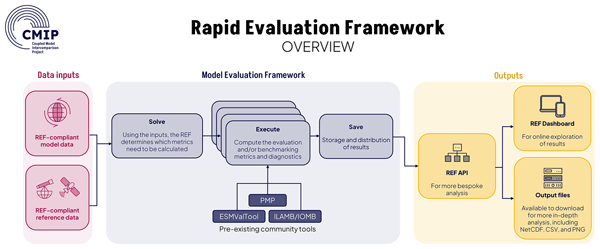
The Rapid Evaluation Framework (REF) is a community-driven platform for benchmarking and performance assessment of Earth system models. Built upon four disparate community evaluation tools, the REF is designed to provide model-data comparisons for the Assessment Fast Track for the Seventh Phase of the Coupled Model Intercomparison Project. The REF will be run at the Earth System Grid Federation to enable model devleopers and scientists to quickly identify model biases and performance issues.
Lara Leko, Gunnar Behrens, Nils Müller, Adrià Amell, Axel Lauer, and Patrick Eriksson
EGUsphere, https://doi.org/10.5194/egusphere-2026-3869, https://doi.org/10.5194/egusphere-2026-3869, 2026
This preprint is open for discussion and under review for Atmospheric Chemistry and Physics (ACP).
Short summary
Short summary
We look at daily cycles of tropical ice clouds and their representation in models. New satellite data of ice clouds captures daily cycles over land and oceans, which was not possible yet. These are often shifted in time in reanalysis, and biased depending on the variable. High-resolution models show improvements but still have regional biases. We show that combining different satellite observations helps to understand daily cycles and improve the simulation of tropical ice clouds and rainfall.
Katharina Hafner, Sara Shamekh, Guillaume Bertoli, Axel Lauer, Robert Pincus, Julien Savre, and Veronika Eyring
Geosci. Model Dev., 19, 3875–3891, https://doi.org/10.5194/gmd-19-3875-2026, https://doi.org/10.5194/gmd-19-3875-2026, 2026
Short summary
Short summary
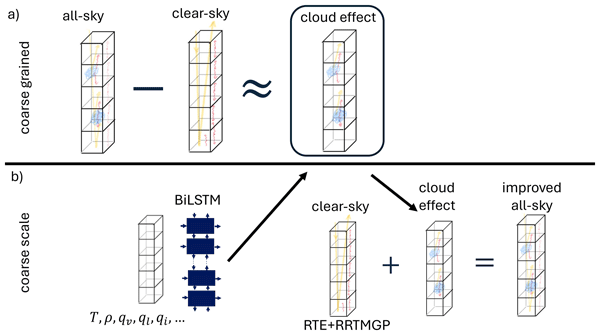
Most climate models cannot resolve clouds and cloud-radiation interactions at coarse horizontal resolutions of about 100 km, which introduces uncertainties. High-resolution models resolve clouds better but are expensive to run. We use short high-resolution simulations and artificial intelligence to learn the cloud-radiation interactions without making any assumptions about the small scales. We propose a new method that significantly reduces cloud related errors.
Manuel Schlund, Bouwe Andela, Jörg Benke, Ruth Comer, Birgit Hassler, Emma Hogan, Peter Kalverla, Axel Lauer, Bill Little, Saskia Loosveldt Tomas, Francesco Nattino, Patrick Peglar, Valeriu Predoi, Stef Smeets, Stephen Worsley, Martin Yeo, and Klaus Zimmermann
Geosci. Model Dev., 18, 4009–4021, https://doi.org/10.5194/gmd-18-4009-2025, https://doi.org/10.5194/gmd-18-4009-2025, 2025
Short summary
Short summary
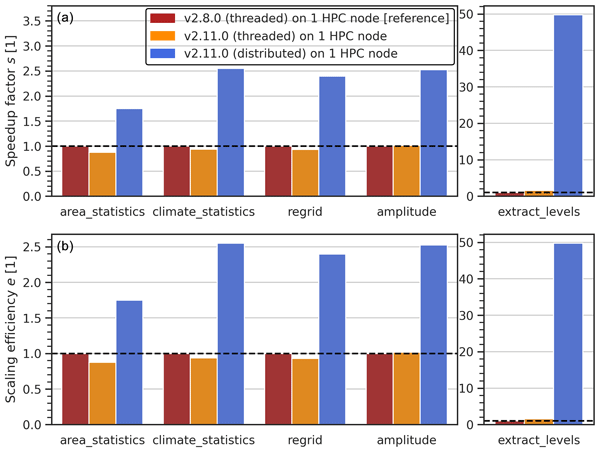
The Earth System Model Evaluation Tool (ESMValTool) is a community diagnostics and performance metrics tool for the evaluation of Earth system models. Here, we describe recent significant improvements of ESMValTool’s computational efficiency including parallel, out-of-core, and distributed computing. Evaluations with the enhanced version of ESMValTool are faster, use less computational resources, and can handle input data larger than the available memory.
Axel Lauer, Lisa Bock, Birgit Hassler, Patrick Jöckel, Lukas Ruhe, and Manuel Schlund
Geosci. Model Dev., 18, 1169–1188, https://doi.org/10.5194/gmd-18-1169-2025, https://doi.org/10.5194/gmd-18-1169-2025, 2025
Short summary
Short summary
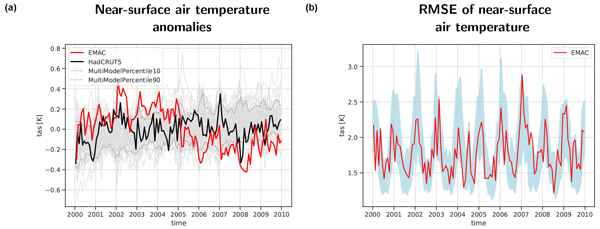
Earth system models are important tools to improve our understanding of current climate and to project climate change. Thus, it is crucial to understand possible shortcomings in the models. New features of the ESMValTool software package allow one to compare and visualize a model's performance with respect to reproducing observations in the context of other climate models in an easy and user-friendly way. We aim to help model developers assess and monitor climate simulations more efficiently.
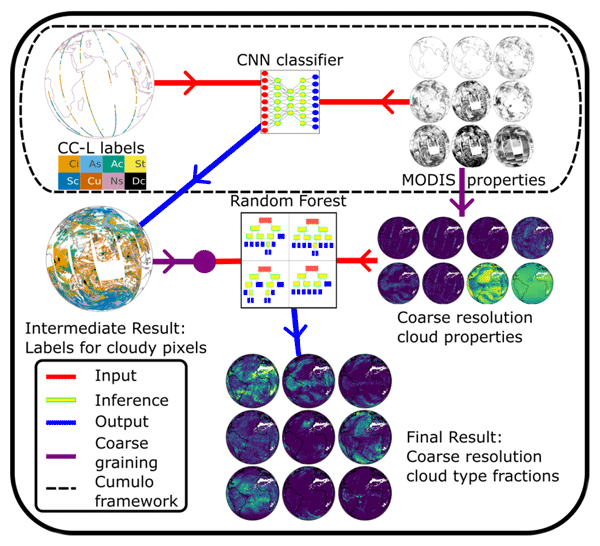
Arndt Kaps, Axel Lauer, Rémi Kazeroni, Martin Stengel, and Veronika Eyring
Earth Syst. Sci. Data, 16, 3001–3016, https://doi.org/10.5194/essd-16-3001-2024, https://doi.org/10.5194/essd-16-3001-2024, 2024
Short summary
Short summary
CCClim displays observations of clouds in terms of cloud classes that have been in use for a long time. CCClim is a machine-learning-powered product based on multiple existing observational products from different satellites. We show that the cloud classes in CCClim are physically meaningful and can be used to study cloud characteristics in more detail. The goal of this is to make real-world clouds more easily understandable to eventually improve the simulation of clouds in climate models.
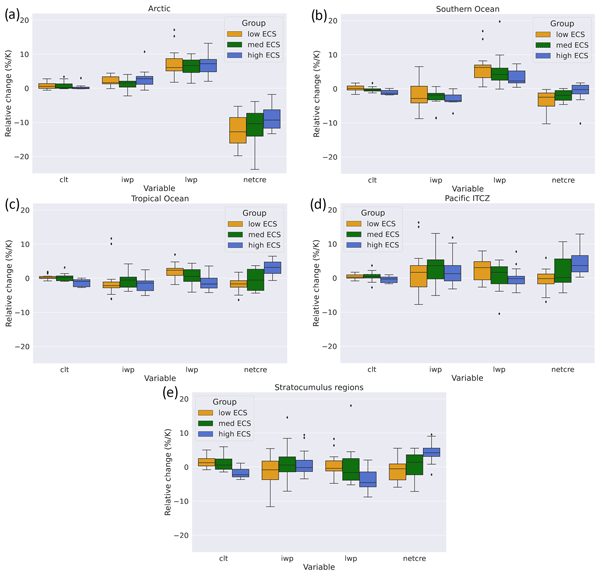
Lisa Bock and Axel Lauer
Atmos. Chem. Phys., 24, 1587–1605, https://doi.org/10.5194/acp-24-1587-2024, https://doi.org/10.5194/acp-24-1587-2024, 2024
Short summary
Short summary
Climate model simulations still show a large range of effective climate sensitivity (ECS) with high uncertainties. An important contribution to ECS is cloud climate feedback. We investigate the representation of cloud physical and radiative properties from Coupled Model Intercomparison Project models grouped by ECS. We compare the simulated cloud properties of today’s climate from three ECS groups and quantify how the projected changes in cloud properties and cloud radiative effects differ.
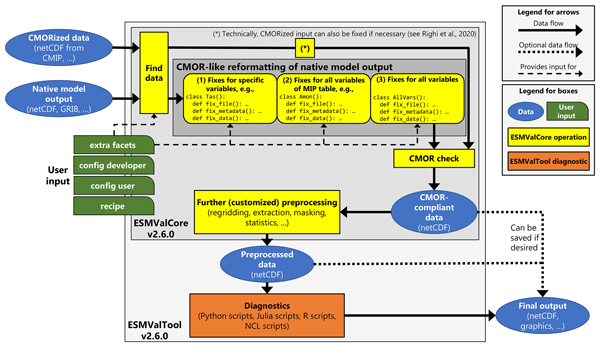
Manuel Schlund, Birgit Hassler, Axel Lauer, Bouwe Andela, Patrick Jöckel, Rémi Kazeroni, Saskia Loosveldt Tomas, Brian Medeiros, Valeriu Predoi, Stéphane Sénési, Jérôme Servonnat, Tobias Stacke, Javier Vegas-Regidor, Klaus Zimmermann, and Veronika Eyring
Geosci. Model Dev., 16, 315–333, https://doi.org/10.5194/gmd-16-315-2023, https://doi.org/10.5194/gmd-16-315-2023, 2023
Short summary
Short summary
The Earth System Model Evaluation Tool (ESMValTool) is a community diagnostics and performance metrics tool for routine evaluation of Earth system models. Originally, ESMValTool was designed to process reformatted output provided by large model intercomparison projects like the Coupled Model Intercomparison Project (CMIP). Here, we describe a new extension of ESMValTool that allows for reading and processing native climate model output, i.e., data that have not been reformatted before.
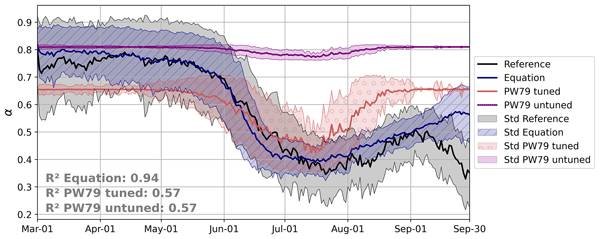
Diajeng W. Atmojo, Katja Weigel, Arthur Grundner, Marika M. Holland, Dmitry Sidorenko, and Veronika Eyring
The Cryosphere, 20, 4437–4464, https://doi.org/10.5194/tc-20-4437-2026, https://doi.org/10.5194/tc-20-4437-2026, 2026
Short summary
Short summary
This study presents an observation-driven sea ice albedo parametrisation by discovering an equation using symbolic regression, an interpretable machine learning method. Leveraging satellite and reanalyses data, our discovered equation identifies high sensitivity to thin snow and the weighted temperature difference between sea ice surface and 2 m air as critical to determine sea ice albedo. Our findings contribute to improving Arctic climate projections and understanding.
Forrest M. Hoffman, Birgit Hassler, Ranjini Swaminathan, Jared Lewis, Bouwe Andela, Nathan Collier, Dóra Hegedűs, Jiwoo Lee, Charlotte Pascoe, Mika Pflüger, Martina Stockhause, Paul Ullrich, Min Xu, Lisa Bock, Felicity Chun, Bettina K. Gier, Douglas I. Kelley, Axel Lauer, Julien Lenhardt, Manuel Schlund, Mohanan G. Sreeush, Katja Weigel, Ed Blockley, Rebecca Beadling, Romain Beucher, Demiso D. Dugassa, Valerio Lembo, Jianhua Lu, Swen Brands, Jerry Tjiputra, Elizaveta Malinina, Brian Medeiros, Enrico Scoccimarro, Jeremy Walton, Phil Kershaw, André Lanfer Marquez, Malcolm J. Roberts, Eleanor O'Rourke, Beth Dingley, Briony Turner, Helene Hewitt, and John P. Dunne
Geosci. Model Dev., 19, 7415–7455, https://doi.org/10.5194/gmd-19-7415-2026, https://doi.org/10.5194/gmd-19-7415-2026, 2026
Short summary
Short summary
The Rapid Evaluation Framework (REF) is a community-driven platform for benchmarking and performance assessment of Earth system models. Built upon four disparate community evaluation tools, the REF is designed to provide model-data comparisons for the Assessment Fast Track for the Seventh Phase of the Coupled Model Intercomparison Project. The REF will be run at the Earth System Grid Federation to enable model devleopers and scientists to quickly identify model biases and performance issues.
Lara Leko, Gunnar Behrens, Nils Müller, Adrià Amell, Axel Lauer, and Patrick Eriksson
EGUsphere, https://doi.org/10.5194/egusphere-2026-3869, https://doi.org/10.5194/egusphere-2026-3869, 2026
This preprint is open for discussion and under review for Atmospheric Chemistry and Physics (ACP).
Short summary
Short summary
We look at daily cycles of tropical ice clouds and their representation in models. New satellite data of ice clouds captures daily cycles over land and oceans, which was not possible yet. These are often shifted in time in reanalysis, and biased depending on the variable. High-resolution models show improvements but still have regional biases. We show that combining different satellite observations helps to understand daily cycles and improve the simulation of tropical ice clouds and rainfall.

Ned C. Williams, Wolfgang A. Müller, and Joaquim G. Pinto
Earth Syst. Dynam., 17, 1007–1023, https://doi.org/10.5194/esd-17-1007-2026, https://doi.org/10.5194/esd-17-1007-2026, 2026
Short summary
Short summary
Decadal forecasts use models to predict near-term natural and human-induced climate changes. Large scale pressure patterns affect surface impacts, but in summer they are hard to predict. North Atlantic surface temperatures are known to influence these patterns in summer. We find that a large set of retrospective decadal forecasts can predict this ocean-atmosphere interaction but also underestimates it, consistent with other predictable North Atlantic pressure patterns in climate forecasts.
Aytaç Paçal, Birgit Hassler, Katja Weigel, Miguel-Ángel Fernández-Torres, Gustau Camps-Valls, and Veronika Eyring
Earth Syst. Dynam., 17, 955–986, https://doi.org/10.5194/esd-17-955-2026, https://doi.org/10.5194/esd-17-955-2026, 2026
Short summary
Short summary
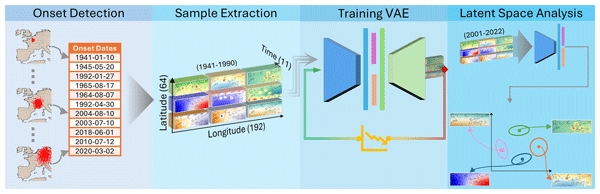
Heatwaves are among the deadliest natural hazards, yet their evolving atmospheric drivers remain unclear. We apply an unsupervised machine learning model to reanalysis data to identify multivariate heatwave patterns over Europe. The model captures seasonally distinct regimes and reveals significant shifts between historical and recent events across all seasons, highlighting changes in heatwave dynamics over time.
Dakuan Yu, Dietmar Dommenget, Holger Pohlmann, and Wolfgang A. Müller
Geosci. Model Dev., 19, 5531–5552, https://doi.org/10.5194/gmd-19-5531-2026, https://doi.org/10.5194/gmd-19-5531-2026, 2026
Short summary
Short summary
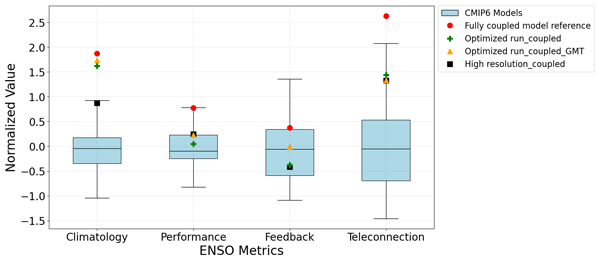
We developed a new method to improve how a leading climate model simulates El Niño, a major driver of global weather extremes. By testing how the model responds to small changes in key atmospheric settings, we identified which processes matter most and adjusted them systematically. This approach makes the model’s behavior closer to observations and shows a promising path for building more reliable climate predictions.
Evgenia Galytska, Birgit Hassler, Carlo Arosio, Martyn P. Chipperfield, Sandip S. Dhomse, Kimberlee Dubé, Wuhu Feng, Fernando Iglesias-Suarez, and Jakob Runge
Atmos. Chem. Phys., 26, 8185–8209, https://doi.org/10.5194/acp-26-8185-2026, https://doi.org/10.5194/acp-26-8185-2026, 2026
Short summary
Short summary
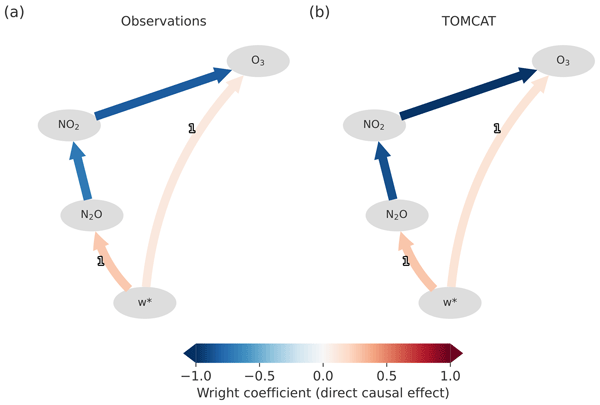
We explore how chemical and dynamical processes shape ozone in the tropical middle stratosphere using satellite data and a chemistry-transport model. We apply a framework to identify cause–effect relationships and estimate their strength. For 2004-2021 monthly data, we detect an indirect pathway controlling ozone variability, with effects increasing after two–three months. We further assess how different wind regimes influence this pathway.
Katharina Hafner, Sara Shamekh, Guillaume Bertoli, Axel Lauer, Robert Pincus, Julien Savre, and Veronika Eyring
Geosci. Model Dev., 19, 3875–3891, https://doi.org/10.5194/gmd-19-3875-2026, https://doi.org/10.5194/gmd-19-3875-2026, 2026
Short summary
Short summary
Most climate models cannot resolve clouds and cloud-radiation interactions at coarse horizontal resolutions of about 100 km, which introduces uncertainties. High-resolution models resolve clouds better but are expensive to run. We use short high-resolution simulations and artificial intelligence to learn the cloud-radiation interactions without making any assumptions about the small scales. We propose a new method that significantly reduces cloud related errors.
Yue Li, Gang Tang, Eleanor O'Rourke, Samar Minallah, Martim Mas e Braga, Sophie Nowicki, Robin S. Smith, David M. Lawrence, George C. Hurtt, Daniele Peano, Gesa Meyer, Birgit Hassler, Jiafu Mao, Yongkang Xue, and Martin Juckes
Geosci. Model Dev., 19, 3129–3155, https://doi.org/10.5194/gmd-19-3129-2026, https://doi.org/10.5194/gmd-19-3129-2026, 2026
Short summary
Short summary
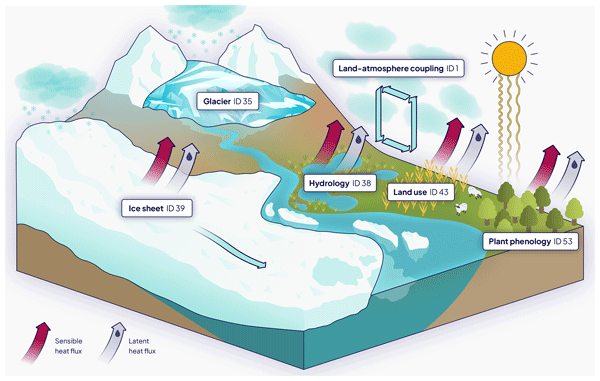
Land and Land Ice Theme Opportunities describe a list that contains 25 variable groups with 716 variables, which are potentially available to the broad scientific audience for performing analysis in land–atmosphere coupling, hydrological processes and freshwater systems, glacier and ice sheet mass balance and their influence on the sea levels, land use, and plant phenology.
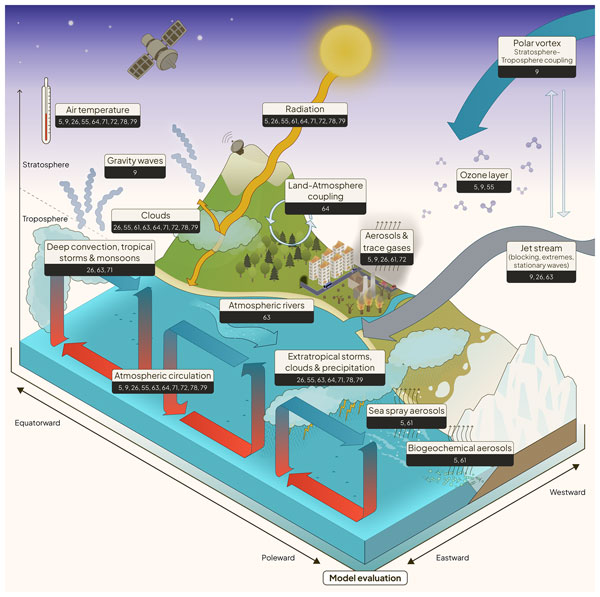
Beth Dingley, James A. Anstey, Marta Abalos, Carsten Abraham, Tommi Bergman, Lisa Bock, Sonya Fiddes, Birgit Hassler, Ryan J. Kramer, Fei Luo, Fiona M. O'Connor, Petr Šácha, Isla R. Simpson, Laura J. Wilcox, and Mark D. Zelinka
Geosci. Model Dev., 19, 2945–2984, https://doi.org/10.5194/gmd-19-2945-2026, https://doi.org/10.5194/gmd-19-2945-2026, 2026
Short summary
Short summary
This manuscript defines as a list of variables and scientific opportunities which are requested from the Coupled Model Intercomparison Project Phase 7 (CMIP7) Assessment Fast Track to address open atmospheric science questions. The list reflects the output of a large public community engagement effort, coordinated across autumn 2025 through to summer 2025.
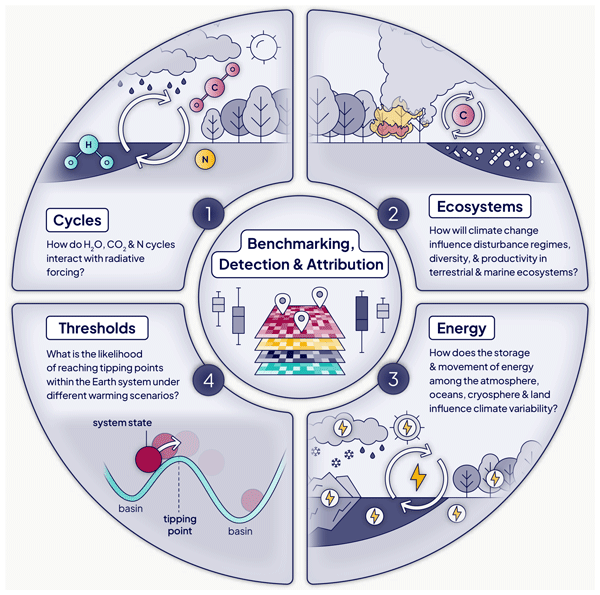
Mara Y. McPartland, Tomas Lovato, Charles Koven, Jamie D. Wilson, Briony Turner, Colleen M. Petrik, José Licón-Saláiz, Fang Li, Fanny Lhardy, Jaclyn Clement Kinney, Michio Kawamiya, Birgit Hassler, Nathan P. Gillett, Cheikh Modou Noreyni Fall, Christopher Danek, Chris M. Brierley, Ana Bastos, and Oliver Andrews
Geosci. Model Dev., 19, 2849–2880, https://doi.org/10.5194/gmd-19-2849-2026, https://doi.org/10.5194/gmd-19-2849-2026, 2026
Short summary
Short summary
The Coupled Model Intercomparison Project (CMIP) is an international consortium of climate modeling groups that produce coordinated experiments in order to evaluate human influence on the climate and test knowledge of Earth systems. This paper describes the data requested for Earth systems research in CMIP7. We detail the request for model output of the carbon cycle, the flows of energy among the atmosphere, land and the oceans, and interactions between these and the global climate.
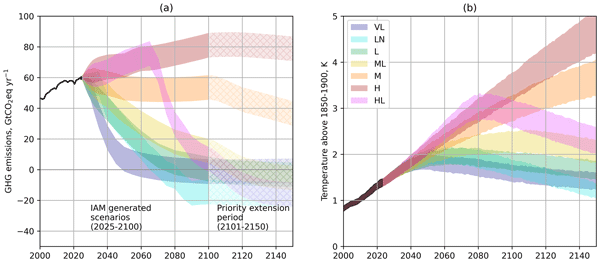
Detlef P. Van Vuuren, Brian C. O'Neill, Claudia Tebaldi, Benjamin M. Sanderson, Louise P. Chini, Pierre Friedlingstein, Tomoko Hasegawa, Keywan Riahi, Bala Govindasamy, Nico Bauer, Veronika Eyring, Cheikh M. N. Fall, Katja Frieler, Matthew J. Gidden, Laila K. Gohar, Annika Högner, Andrew D. Jones, Jarmo Kikstra, Andrew King, Reto Knutti, Elmar Kriegler, Peter Lawrence, Chris Lennard, Jason Lowe, Camilla Mathison, Shahbaz Mehmood, Zebedee Nicholls, Luciana F. Prado, Qiang Zhang, Steven K. Rose, Alex C. Ruane, Marit Sandstad, Carl-Friedrich Schleussner, Roland Seferian, Jana Sillmann, Chris Smith, Anna A. Sörensson, Swapna Panickal, Kaoru Tachiiri, Naomi Vaughan, Saritha S. Vishwanathan, Tokuta Yokohata, Marco Zecchetto, and Tilo Ziehn
Geosci. Model Dev., 19, 2627–2656, https://doi.org/10.5194/gmd-19-2627-2026, https://doi.org/10.5194/gmd-19-2627-2026, 2026
Short summary
Short summary
We propose a set of seven plausible 21st century emission scenarios, and their multi-century extensions, that will be used by the international community of climate modeling centers to produce the next generation of climate projections. These projections will support climate, impact and mitigation researchers, provide information to practitioners to address future risks from climate change, and contribute to policymakers’ considerations of the trade-offs among various levels of mitigation.
Sean Davis, William Ball, Yue Jia, Gabriel Chiodo, Justin Alsing, James Keeble, Hideharu Akiyoshi, Carlo Arosio, Ewa Bednarz, Andreas Chrysanthou, Melanie Coldewey-Egbers, Robert Damadeo, Sandip Dhomse, Mohamadou Diallo, Simone Dietmuller, Roland Eichinger, Stacey Frith, Birgit Hassler, Michaela Hegglin, Daan Hubert, Patrick Jöckel, Béatrice Josse, Natalya Kramarova, Diego Loyola, Eliane Maillard Barras, Marion Marchand, Olaf Morgenstern, David Plummer, Robert Portmann, Karen Rosenlof, Alexei Rozanov, Viktoria Sofieva, Johannes Staehelin, Timofei Sukhodolov, Kleareti Tourpali, Ronald Van der A, H. J. Ray Wang, Krzysztof Wargan, Shingo Watanabe, Mark Weber, Jeannette Wild, Yousuke Yamashita, and Jerry Ziemke
EGUsphere, https://doi.org/10.5194/egusphere-2026-532, https://doi.org/10.5194/egusphere-2026-532, 2026
Short summary
Short summary
This study investigates how tropical ozone levels have changed since 2000 in chemistry climate models and satellite observations to determine how well they agree with one another, and to see if current trends can help predict future levels. At some, satellite records disagree significantly on the magnitude of ozone changes. The study shows a connection between recent ozone trends and future ozone levels, suggesting that satellite measurements could help constrain future ozone changes.
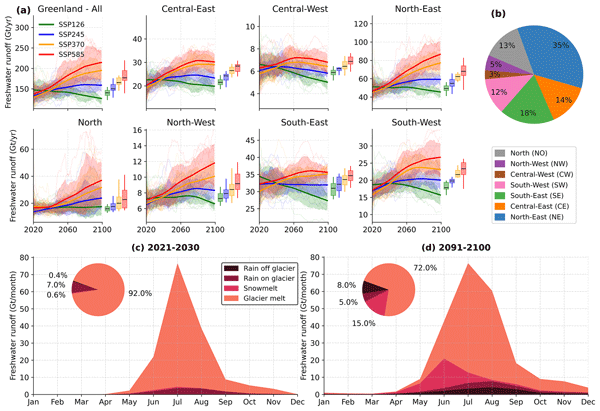
Muhammad Shafeeque, Jan-Hendrik Malles, Anouk Vlug, Marco Möller, and Ben Marzeion
The Cryosphere, 20, 875–903, https://doi.org/10.5194/tc-20-875-2026, https://doi.org/10.5194/tc-20-875-2026, 2026
Short summary
Short summary
This study projects Greenland's peripheral glaciers' response to climate change using the Open Global Glacier Model (OGGM). They may lose up to 52 % of ice mass by 2100. We predict changes in ice discharge versus melting, affecting fjords, sea levels, and ocean currents. Freshwater runoff composition and peak water timing vary by region and scenario. Our findings highlight the importance of reducing emissions to minimize impacts on these glaciers and their influence on ecosystems.
Lukas Lindenlaub, Katja Weigel, Birgit Hassler, Colin Jones, and Veronika Eyring
Earth Syst. Dynam., 17, 81–105, https://doi.org/10.5194/esd-17-81-2026, https://doi.org/10.5194/esd-17-81-2026, 2026
Short summary
Short summary
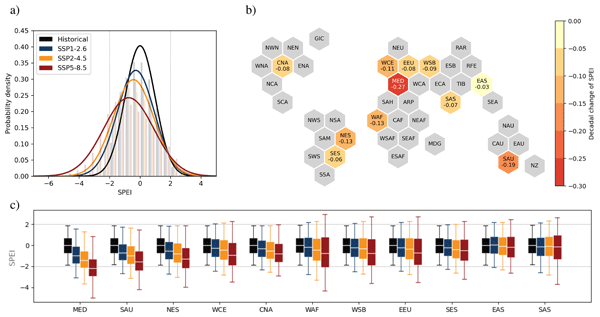
This study explores changes in drought characteristic based on projections by 18 different Earth system models. Their performance is evaluated by comparing historical simulations to observation based reanalysis. The analysis of a standardized drought index under different future scenarios revealed that the harvest area that is projected to experience extreme drought conditions towards the end of this century ranges from 10 % to 40 % depending on the emission scenario.
Jingyu Wang, Gabriel Chiodo, Blanca Ayarzagüena, William T. Ball, Mohamadou Diallo, Birgit Hassler, James Keeble, Peer Nowack, Clara Orbe, Sandro Vattioni, and Timofei Sukhodolov
Atmos. Chem. Phys., 25, 17819–17844, https://doi.org/10.5194/acp-25-17819-2025, https://doi.org/10.5194/acp-25-17819-2025, 2025
Short summary
Short summary
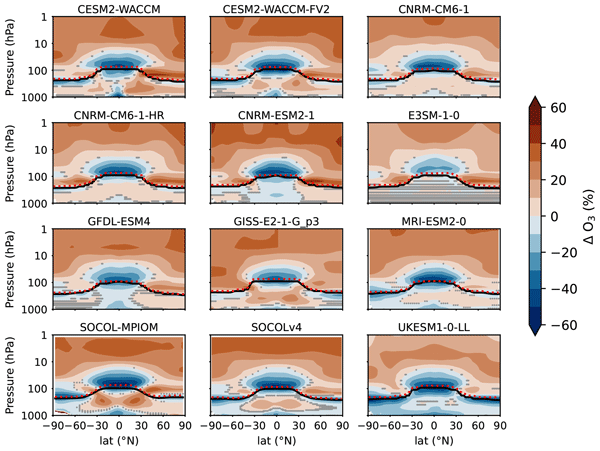
We analyzed the ozone response under elevated CO2 using the data from CMIP6 DECK experiments. We then examined the relations between ozone response and changes in temperature and circulation to identify the drivers of ozone change. The climate feedback of ozone is investigated through offline calculations and by comparing models with and without interactive chemistry. We find that ozone–climate interactions are important for Earth system models and thus should be considered in future model development.
Alex C. Ruane, Charlotte L. Pascoe, Claas Teichmann, David J. Brayshaw, Carlo Buontempo, Ibrahima Diouf, Jesus Fernandez, Paula L. M. Gonzalez, Birgit Hassler, Vanessa Hernaman, Ulas Im, Doroteaciro Iovino, Martin Juckes, Iréne L. Lake, Timothy Lam, Xiaomao Lin, Jiafu Mao, Negin Nazarian, Sylvie Parey, Indrani Roy, Wan-Ling Tseng, Briony Turner, Andrew Wiebe, Lei Zhao, and Damaris Zurell
Geosci. Model Dev., 18, 9497–9540, https://doi.org/10.5194/gmd-18-9497-2025, https://doi.org/10.5194/gmd-18-9497-2025, 2025
Short summary
Short summary
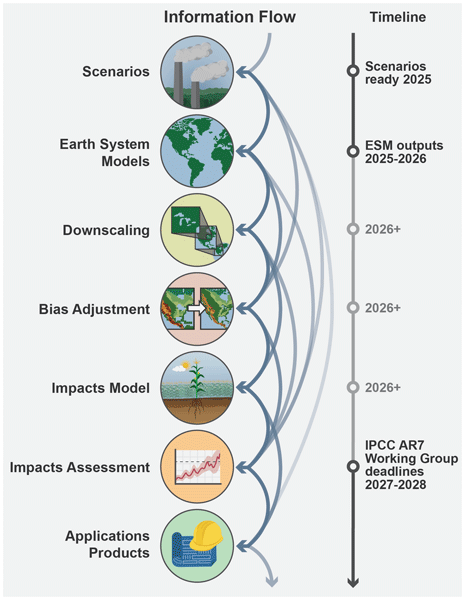
This paper describes how the Coupled Model Intercomparison Project organized its 7th phase (CMIP7) to encourage the production of Earth system model outputs relevant for impacts and adaptation. Community engagement identified 13 opportunities for application across human and natural systems, 60 variable groups and 539 unique variables. We also show how simulations can more efficiently meet applications needs by targeting appropriate resolution, time slices, experiments and variable groups.
Wolfgang A. Müller, Stephan Lorenz, Trang V. Pham, Andrea Schneidereit, Renate Brokopf, Victor Brovkin, Nils Brüggemann, Fatemeh Chegini, Dietmar Dommenget, Kristina Fröhlich, Barbara Früh, Veronika Gayler, Helmuth Haak, Stefan Hagemann, Moritz Hanke, Tatiana Ilyina, Johann Jungclaus, Martin Köhler, Peter Korn, Luis Kornblueh, Clarissa A. Kroll, Julian Krüger, Karel Castro-Morales, Ulrike Niemeier, Holger Pohlmann, Iuliia Polkova, Roland Potthast, Thomas Riddick, Manuel Schlund, Tobias Stacke, Roland Wirth, Dakuan Yu, and Jochem Marotzke
Geosci. Model Dev., 18, 9385–9415, https://doi.org/10.5194/gmd-18-9385-2025, https://doi.org/10.5194/gmd-18-9385-2025, 2025
Short summary
Short summary
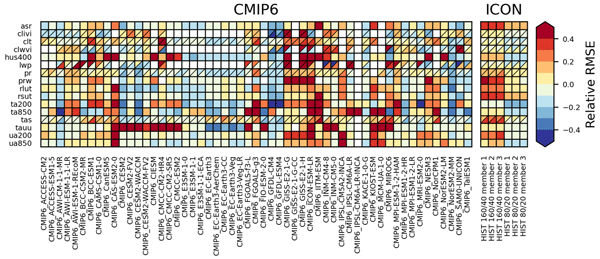
We provide a new Earth System model configuration framed into the ICON architecture, which provides the baseline for the next generation of climate predictions and projections (hereafter ICON XPP). Two resolutions of ICON XPP are presented that show high runtime performances making it suitable to run long integrations and large-ensemble experiments. ICON XPP similarly perform to CMIP6-class of climate models making it a good basis for climate forecasts and projections, and climate research.
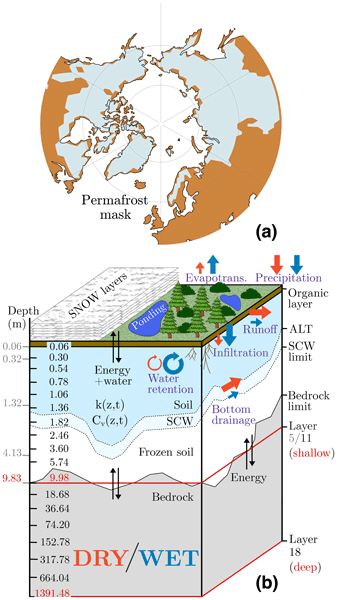
Félix García-Pereira, Jesús Fidel González-Rouco, Nagore Meabe-Yanguas, Philipp de Vrese, Norman Julius Steinert, Johann Jungclaus, and Stephan Lorenz
The Cryosphere, 19, 5959–5981, https://doi.org/10.5194/tc-19-5959-2025, https://doi.org/10.5194/tc-19-5959-2025, 2025
Short summary
Short summary
This work shows that changing the hydrological state of permafrost produces differences of up to 3 °C in the annual ground temperature, 1–2 m in the active layer thickness, and 5 million km2 in the permafrost extent. Including a deeper vertical thermal scheme reduces the extent decline by more than 2 million km2 in the highest radiative emission scenario. This is shown for the first time in fully-coupled experiments with an Earth System Model.
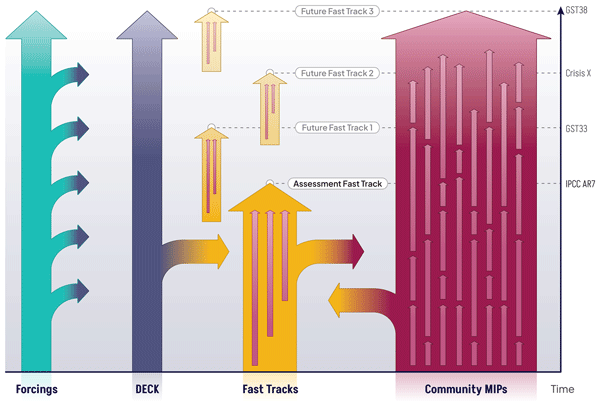
John P. Dunne, Helene T. Hewitt, Julie M. Arblaster, Frédéric Bonou, Olivier Boucher, Tereza Cavazos, Beth Dingley, Paul J. Durack, Birgit Hassler, Martin Juckes, Tomoki Miyakawa, Matt Mizielinski, Vaishali Naik, Zebedee Nicholls, Eleanor O'Rourke, Robert Pincus, Benjamin M. Sanderson, Isla R. Simpson, and Karl E. Taylor
Geosci. Model Dev., 18, 6671–6700, https://doi.org/10.5194/gmd-18-6671-2025, https://doi.org/10.5194/gmd-18-6671-2025, 2025
Short summary
Short summary
The seventh phase of the Coupled Model Intercomparison Project (CMIP7) coordinates efforts to answer key and timely climate science questions and facilitate delivery of relevant multi-model simulations for prediction and projection; characterization, attribution, and process understanding; and vulnerability, impact, and adaptation analysis. Key to the CMIP7 design are the mandatory Diagnostic, Evaluation and Characterization of Klima and optional Assessment Fast Track experiments.
Manuel Schlund, Bouwe Andela, Jörg Benke, Ruth Comer, Birgit Hassler, Emma Hogan, Peter Kalverla, Axel Lauer, Bill Little, Saskia Loosveldt Tomas, Francesco Nattino, Patrick Peglar, Valeriu Predoi, Stef Smeets, Stephen Worsley, Martin Yeo, and Klaus Zimmermann
Geosci. Model Dev., 18, 4009–4021, https://doi.org/10.5194/gmd-18-4009-2025, https://doi.org/10.5194/gmd-18-4009-2025, 2025
Short summary
Short summary
The Earth System Model Evaluation Tool (ESMValTool) is a community diagnostics and performance metrics tool for the evaluation of Earth system models. Here, we describe recent significant improvements of ESMValTool’s computational efficiency including parallel, out-of-core, and distributed computing. Evaluations with the enhanced version of ESMValTool are faster, use less computational resources, and can handle input data larger than the available memory.
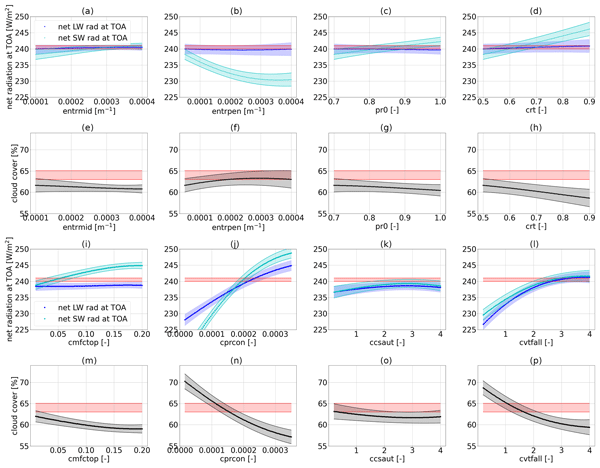
Pauline Bonnet, Lorenzo Pastori, Mierk Schwabe, Marco Giorgetta, Fernando Iglesias-Suarez, and Veronika Eyring
Geosci. Model Dev., 18, 3681–3706, https://doi.org/10.5194/gmd-18-3681-2025, https://doi.org/10.5194/gmd-18-3681-2025, 2025
Short summary
Short summary
Tuning a climate model means adjusting uncertain parameters in the model to best match observations like the global radiation balance and cloud cover. This is usually done by running many simulations of the model with different settings, which can be time-consuming and relies heavily on expert knowledge. To make this process faster and more objective, we developed a machine learning emulator to create a large ensemble and apply a method called history matching to find the best settings.
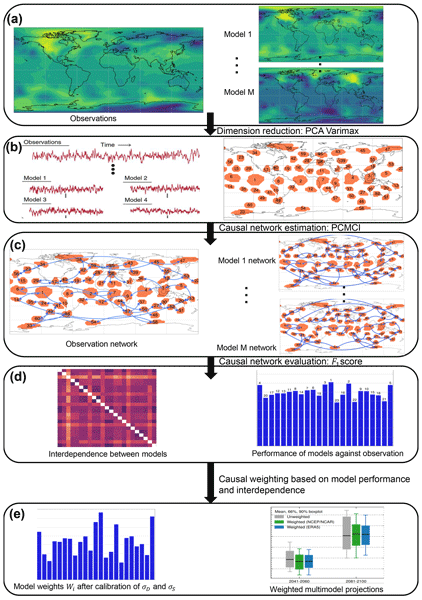
Kevin Debeire, Lisa Bock, Peer Nowack, Jakob Runge, and Veronika Eyring
Earth Syst. Dynam., 16, 607–630, https://doi.org/10.5194/esd-16-607-2025, https://doi.org/10.5194/esd-16-607-2025, 2025
Short summary
Short summary
Projecting future precipitation is essential for preparing for climate change, but current climate models still have large uncertainties, especially over land. This study presents a new method to improve precipitation projections by identifying which models best capture key climate patterns. By giving more weight to models that better represent these patterns, our approach leads to more reliable future precipitation projections over land.
Jan-Hendrik Malles, Ben Marzeion, and Paul G. Myers
Earth Syst. Dynam., 16, 347–377, https://doi.org/10.5194/esd-16-347-2025, https://doi.org/10.5194/esd-16-347-2025, 2025
Short summary
Short summary
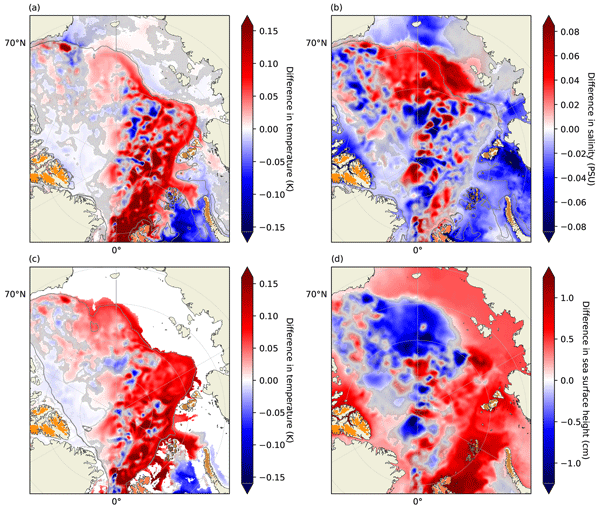
Glaciers in the high-latitude Northern Hemisphere (outside Greenland) are losing mass at roughly half the Greenland ice sheet's rate. Still, this is usually not included in the freshwater input data for ocean circulation models. Also, the submarine melt of glaciers (outside the ice sheets) has not been quantified yet. We tackle both issues by using a glacier model's output as additional fresh water for the ocean model and by using the ocean model's output to model submarine melt.
Axel Lauer, Lisa Bock, Birgit Hassler, Patrick Jöckel, Lukas Ruhe, and Manuel Schlund
Geosci. Model Dev., 18, 1169–1188, https://doi.org/10.5194/gmd-18-1169-2025, https://doi.org/10.5194/gmd-18-1169-2025, 2025
Short summary
Short summary
Earth system models are important tools to improve our understanding of current climate and to project climate change. Thus, it is crucial to understand possible shortcomings in the models. New features of the ESMValTool software package allow one to compare and visualize a model's performance with respect to reproducing observations in the context of other climate models in an easy and user-friendly way. We aim to help model developers assess and monitor climate simulations more efficiently.
Paul J. Durack, Karl E. Taylor, Peter J. Gleckler, Gerald A. Meehl, Bryan N. Lawrence, Curt Covey, Ronald J. Stouffer, Guillaume Levavasseur, Atef Ben-Nasser, Sebastien Denvil, Martina Stockhause, Jonathan M. Gregory, Martin Juckes, Sasha K. Ames, Fabrizio Antonio, David C. Bader, John P. Dunne, Daniel Ellis, Veronika Eyring, Sandro L. Fiore, Sylvie Joussaume, Philip Kershaw, Jean-Francois Lamarque, Michael Lautenschlager, Jiwoo Lee, Chris F. Mauzey, Matthew Mizielinski, Paola Nassisi, Alessandra Nuzzo, Eleanor O’Rourke, Jeffrey Painter, Gerald L. Potter, Sven Rodriguez, and Dean N. Williams
EGUsphere, https://doi.org/10.5194/egusphere-2024-3729, https://doi.org/10.5194/egusphere-2024-3729, 2025
Short summary
Short summary
CMIP6 was the most expansive and ambitious Model Intercomparison Project (MIP), the latest in a history, extending four decades. CMIP engaged a growing community focused on improving climate understanding, and quantifying and attributing observed climate change being experienced today. The project's profound impact is due to the combining the latest climate science and technology, enabling the latest-generation climate simulations and increasing community attention in every successive phase.
Bettina K. Gier, Manuel Schlund, Pierre Friedlingstein, Chris D. Jones, Colin Jones, Sönke Zaehle, and Veronika Eyring
Biogeosciences, 21, 5321–5360, https://doi.org/10.5194/bg-21-5321-2024, https://doi.org/10.5194/bg-21-5321-2024, 2024
Short summary
Short summary
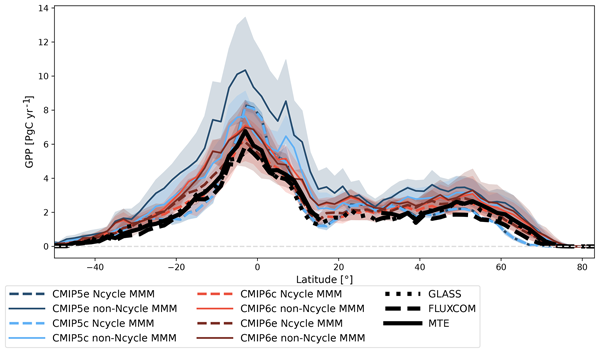
This study investigates present-day carbon cycle variables in CMIP5 and CMIP6 simulations. Overall, CMIP6 models perform better but also show many remaining biases. A significant improvement in the simulation of photosynthesis in models with a nitrogen cycle is found, with only small differences between emission- and concentration-based simulations. Thus, we recommend using emission-driven simulations in CMIP7 by default and including the nitrogen cycle in all future carbon cycle models.
Benjamin M. Sanderson, Ben B. B. Booth, John Dunne, Veronika Eyring, Rosie A. Fisher, Pierre Friedlingstein, Matthew J. Gidden, Tomohiro Hajima, Chris D. Jones, Colin G. Jones, Andrew King, Charles D. Koven, David M. Lawrence, Jason Lowe, Nadine Mengis, Glen P. Peters, Joeri Rogelj, Chris Smith, Abigail C. Snyder, Isla R. Simpson, Abigail L. S. Swann, Claudia Tebaldi, Tatiana Ilyina, Carl-Friedrich Schleussner, Roland Séférian, Bjørn H. Samset, Detlef van Vuuren, and Sönke Zaehle
Geosci. Model Dev., 17, 8141–8172, https://doi.org/10.5194/gmd-17-8141-2024, https://doi.org/10.5194/gmd-17-8141-2024, 2024
Short summary
Short summary
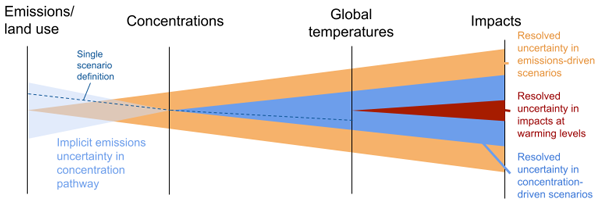
We discuss how, in order to provide more relevant guidance for climate policy, coordinated climate experiments should adopt a greater focus on simulations where Earth system models are provided with carbon emissions from fossil fuels together with land use change instructions, rather than past approaches that have largely focused on experiments with prescribed atmospheric carbon dioxide concentrations. We discuss how these goals might be achieved in coordinated climate modeling experiments.

Colin G. Jones, Fanny Adloff, Ben B. B. Booth, Peter M. Cox, Veronika Eyring, Pierre Friedlingstein, Katja Frieler, Helene T. Hewitt, Hazel A. Jeffery, Sylvie Joussaume, Torben Koenigk, Bryan N. Lawrence, Eleanor O'Rourke, Malcolm J. Roberts, Benjamin M. Sanderson, Roland Séférian, Samuel Somot, Pier Luigi Vidale, Detlef van Vuuren, Mario Acosta, Mats Bentsen, Raffaele Bernardello, Richard Betts, Ed Blockley, Julien Boé, Tom Bracegirdle, Pascale Braconnot, Victor Brovkin, Carlo Buontempo, Francisco Doblas-Reyes, Markus Donat, Italo Epicoco, Pete Falloon, Sandro Fiore, Thomas Frölicher, Neven S. Fučkar, Matthew J. Gidden, Helge F. Goessling, Rune Grand Graversen, Silvio Gualdi, José M. Gutiérrez, Tatiana Ilyina, Daniela Jacob, Chris D. Jones, Martin Juckes, Elizabeth Kendon, Erik Kjellström, Reto Knutti, Jason Lowe, Matthew Mizielinski, Paola Nassisi, Michael Obersteiner, Pierre Regnier, Romain Roehrig, David Salas y Mélia, Carl-Friedrich Schleussner, Michael Schulz, Enrico Scoccimarro, Laurent Terray, Hannes Thiemann, Richard A. Wood, Shuting Yang, and Sönke Zaehle
Earth Syst. Dynam., 15, 1319–1351, https://doi.org/10.5194/esd-15-1319-2024, https://doi.org/10.5194/esd-15-1319-2024, 2024
Short summary
Short summary
We propose a number of priority areas for the international climate research community to address over the coming decade. Advances in these areas will both increase our understanding of past and future Earth system change, including the societal and environmental impacts of this change, and deliver significantly improved scientific support to international climate policy, such as future IPCC assessments and the UNFCCC Global Stocktake.
Arndt Kaps, Axel Lauer, Rémi Kazeroni, Martin Stengel, and Veronika Eyring
Earth Syst. Sci. Data, 16, 3001–3016, https://doi.org/10.5194/essd-16-3001-2024, https://doi.org/10.5194/essd-16-3001-2024, 2024
Short summary
Short summary
CCClim displays observations of clouds in terms of cloud classes that have been in use for a long time. CCClim is a machine-learning-powered product based on multiple existing observational products from different satellites. We show that the cloud classes in CCClim are physically meaningful and can be used to study cloud characteristics in more detail. The goal of this is to make real-world clouds more easily understandable to eventually improve the simulation of clouds in climate models.
Soufiane Karmouche, Evgenia Galytska, Gerald A. Meehl, Jakob Runge, Katja Weigel, and Veronika Eyring
Earth Syst. Dynam., 15, 689–715, https://doi.org/10.5194/esd-15-689-2024, https://doi.org/10.5194/esd-15-689-2024, 2024
Short summary
Short summary
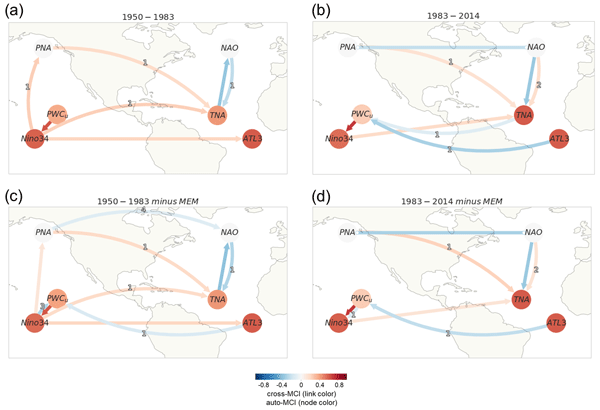
This study explores Atlantic–Pacific interactions and their response to external factors. Causal analysis of 1950–2014 data reveals a shift from a Pacific- to an Atlantic-driven regime. Contrasting impacts between El Niño and tropical Atlantic temperatures are highlighted, along with different pathways connecting the two oceans. The findings also suggest increasing remote contributions of forced Atlantic responses in modulating local Pacific responses during the most recent analyzed decades.
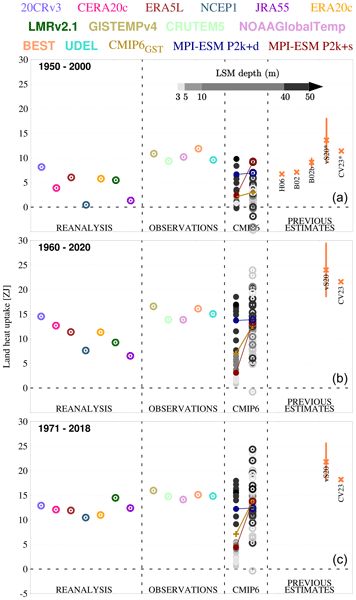
Félix García-Pereira, Jesús Fidel González-Rouco, Camilo Melo-Aguilar, Norman Julius Steinert, Elena García-Bustamante, Philip de Vrese, Johann Jungclaus, Stephan Lorenz, Stefan Hagemann, Francisco José Cuesta-Valero, Almudena García-García, and Hugo Beltrami
Earth Syst. Dynam., 15, 547–564, https://doi.org/10.5194/esd-15-547-2024, https://doi.org/10.5194/esd-15-547-2024, 2024
Short summary
Short summary
According to climate model estimates, the land stored 2 % of the system's heat excess in the last decades, while observational studies show it was around 6 %. This difference stems from these models using land components that are too shallow to constrain land heat uptake. Deepening the land component does not affect the surface temperature. This result can be used to derive land heat uptake estimates from different sources, which are much closer to previous observational reports.
Bjorn Stevens, Stefan Adami, Tariq Ali, Hartwig Anzt, Zafer Aslan, Sabine Attinger, Jaana Bäck, Johanna Baehr, Peter Bauer, Natacha Bernier, Bob Bishop, Hendryk Bockelmann, Sandrine Bony, Guy Brasseur, David N. Bresch, Sean Breyer, Gilbert Brunet, Pier Luigi Buttigieg, Junji Cao, Christelle Castet, Yafang Cheng, Ayantika Dey Choudhury, Deborah Coen, Susanne Crewell, Atish Dabholkar, Qing Dai, Francisco Doblas-Reyes, Dale Durran, Ayoub El Gaidi, Charlie Ewen, Eleftheria Exarchou, Veronika Eyring, Florencia Falkinhoff, David Farrell, Piers M. Forster, Ariane Frassoni, Claudia Frauen, Oliver Fuhrer, Shahzad Gani, Edwin Gerber, Debra Goldfarb, Jens Grieger, Nicolas Gruber, Wilco Hazeleger, Rolf Herken, Chris Hewitt, Torsten Hoefler, Huang-Hsiung Hsu, Daniela Jacob, Alexandra Jahn, Christian Jakob, Thomas Jung, Christopher Kadow, In-Sik Kang, Sarah Kang, Karthik Kashinath, Katharina Kleinen-von Königslöw, Daniel Klocke, Uta Kloenne, Milan Klöwer, Chihiro Kodama, Stefan Kollet, Tobias Kölling, Jenni Kontkanen, Steve Kopp, Michal Koran, Markku Kulmala, Hanna Lappalainen, Fakhria Latifi, Bryan Lawrence, June Yi Lee, Quentin Lejeun, Christian Lessig, Chao Li, Thomas Lippert, Jürg Luterbacher, Pekka Manninen, Jochem Marotzke, Satoshi Matsouoka, Charlotte Merchant, Peter Messmer, Gero Michel, Kristel Michielsen, Tomoki Miyakawa, Jens Müller, Ramsha Munir, Sandeep Narayanasetti, Ousmane Ndiaye, Carlos Nobre, Achim Oberg, Riko Oki, Tuba Özkan-Haller, Tim Palmer, Stan Posey, Andreas Prein, Odessa Primus, Mike Pritchard, Julie Pullen, Dian Putrasahan, Johannes Quaas, Krishnan Raghavan, Venkatachalam Ramaswamy, Markus Rapp, Florian Rauser, Markus Reichstein, Aromar Revi, Sonakshi Saluja, Masaki Satoh, Vera Schemann, Sebastian Schemm, Christina Schnadt Poberaj, Thomas Schulthess, Cath Senior, Jagadish Shukla, Manmeet Singh, Julia Slingo, Adam Sobel, Silvina Solman, Jenna Spitzer, Philip Stier, Thomas Stocker, Sarah Strock, Hang Su, Petteri Taalas, John Taylor, Susann Tegtmeier, Georg Teutsch, Adrian Tompkins, Uwe Ulbrich, Pier-Luigi Vidale, Chien-Ming Wu, Hao Xu, Najibullah Zaki, Laure Zanna, Tianjun Zhou, and Florian Ziemen
Earth Syst. Sci. Data, 16, 2113–2122, https://doi.org/10.5194/essd-16-2113-2024, https://doi.org/10.5194/essd-16-2113-2024, 2024
Short summary
Short summary
To manage Earth in the Anthropocene, new tools, new institutions, and new forms of international cooperation will be required. Earth Virtualization Engines is proposed as an international federation of centers of excellence to empower all people to respond to the immense and urgent challenges posed by climate change.
Lisa Bock and Axel Lauer
Atmos. Chem. Phys., 24, 1587–1605, https://doi.org/10.5194/acp-24-1587-2024, https://doi.org/10.5194/acp-24-1587-2024, 2024
Short summary
Short summary
Climate model simulations still show a large range of effective climate sensitivity (ECS) with high uncertainties. An important contribution to ECS is cloud climate feedback. We investigate the representation of cloud physical and radiative properties from Coupled Model Intercomparison Project models grouped by ECS. We compare the simulated cloud properties of today’s climate from three ECS groups and quantify how the projected changes in cloud properties and cloud radiative effects differ.
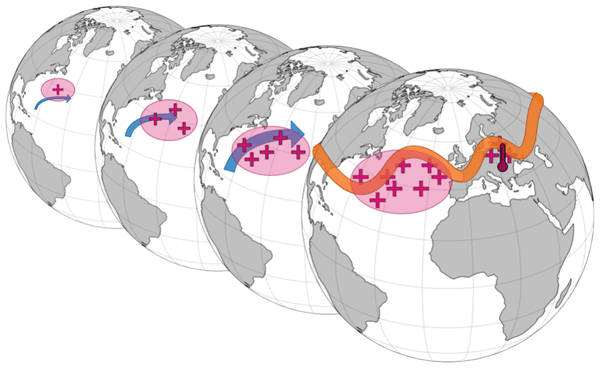
Lara Wallberg, Laura Suarez-Gutierrez, Daniela Matei, and Wolfgang A. Müller
Earth Syst. Dynam., 15, 1–14, https://doi.org/10.5194/esd-15-1-2024, https://doi.org/10.5194/esd-15-1-2024, 2024
Short summary
Short summary
European summer temperatures are influenced by mechanisms on different timescales. We find that timescales of 5 to 10 years dominate the changes in summer temperature over large parts of the continent. Further, we find that specific processes within the North Atlantic, affecting the storage and transport of heat, cause changes in the atmosphere and extremely warm European summers. Our findings could be used for better forecasts of extremely warm European summers several years ahead.
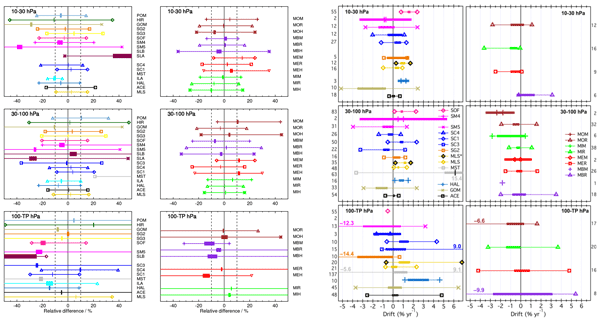
Michael Kiefer, Dale F. Hurst, Gabriele P. Stiller, Stefan Lossow, Holger Vömel, John Anderson, Faiza Azam, Jean-Loup Bertaux, Laurent Blanot, Klaus Bramstedt, John P. Burrows, Robert Damadeo, Bianca Maria Dinelli, Patrick Eriksson, Maya García-Comas, John C. Gille, Mark Hervig, Yasuko Kasai, Farahnaz Khosrawi, Donal Murtagh, Gerald E. Nedoluha, Stefan Noël, Piera Raspollini, William G. Read, Karen H. Rosenlof, Alexei Rozanov, Christopher E. Sioris, Takafumi Sugita, Thomas von Clarmann, Kaley A. Walker, and Katja Weigel
Atmos. Meas. Tech., 16, 4589–4642, https://doi.org/10.5194/amt-16-4589-2023, https://doi.org/10.5194/amt-16-4589-2023, 2023
Short summary
Short summary
We quantify biases and drifts (and their uncertainties) between the stratospheric water vapor measurement records of 15 satellite-based instruments (SATs, with 31 different retrievals) and balloon-borne frost point hygrometers (FPs) launched at 27 globally distributed stations. These comparisons of measurements during the period 2000–2016 are made using robust, consistent statistical methods. With some exceptions, the biases and drifts determined for most SAT–FP pairs are < 10 % and < 1 % yr−1.
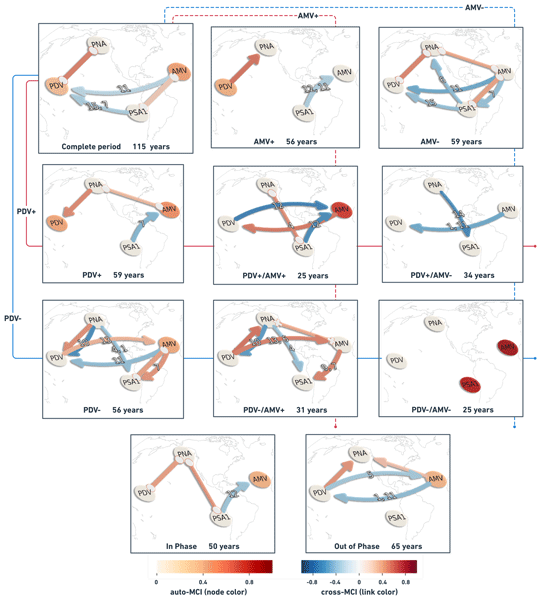
Soufiane Karmouche, Evgenia Galytska, Jakob Runge, Gerald A. Meehl, Adam S. Phillips, Katja Weigel, and Veronika Eyring
Earth Syst. Dynam., 14, 309–344, https://doi.org/10.5194/esd-14-309-2023, https://doi.org/10.5194/esd-14-309-2023, 2023
Short summary
Short summary
This study uses a causal discovery method to evaluate the ability of climate models to represent the interactions between the Atlantic multidecadal variability (AMV) and the Pacific decadal variability (PDV). The approach and findings in this study present a powerful methodology that can be applied to a number of environment-related topics, offering tremendous insights to improve the understanding of the complex Earth system and the state of the art of climate modeling.
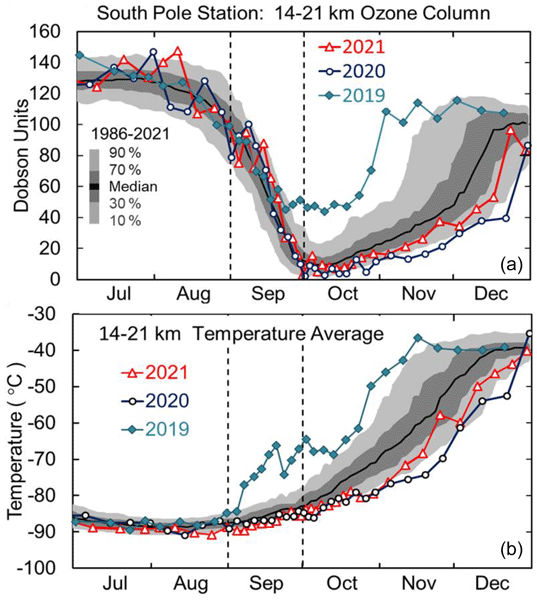
Bryan J. Johnson, Patrick Cullis, John Booth, Irina Petropavlovskikh, Glen McConville, Birgit Hassler, Gary A. Morris, Chance Sterling, and Samuel Oltmans
Atmos. Chem. Phys., 23, 3133–3146, https://doi.org/10.5194/acp-23-3133-2023, https://doi.org/10.5194/acp-23-3133-2023, 2023
Short summary
Short summary
In 1986, soon after the discovery of the Antarctic ozone hole, NOAA began year-round ozonesonde observations at South Pole Station to measure vertical profiles of ozone and temperature from the surface to 35 km. Balloon-borne ozonesondes launched at this unique site allow for tracking all phases of the yearly springtime ozone hole beginning in late winter and after sunrise, when rapid ozone depletion begins over the South Pole throughout the month of September.
Manuel Schlund, Birgit Hassler, Axel Lauer, Bouwe Andela, Patrick Jöckel, Rémi Kazeroni, Saskia Loosveldt Tomas, Brian Medeiros, Valeriu Predoi, Stéphane Sénési, Jérôme Servonnat, Tobias Stacke, Javier Vegas-Regidor, Klaus Zimmermann, and Veronika Eyring
Geosci. Model Dev., 16, 315–333, https://doi.org/10.5194/gmd-16-315-2023, https://doi.org/10.5194/gmd-16-315-2023, 2023
Short summary
Short summary
The Earth System Model Evaluation Tool (ESMValTool) is a community diagnostics and performance metrics tool for routine evaluation of Earth system models. Originally, ESMValTool was designed to process reformatted output provided by large model intercomparison projects like the Coupled Model Intercomparison Project (CMIP). Here, we describe a new extension of ESMValTool that allows for reading and processing native climate model output, i.e., data that have not been reformatted before.
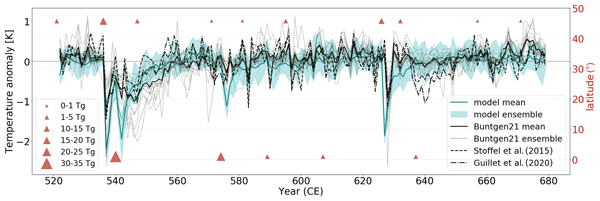
Evelien van Dijk, Johann Jungclaus, Stephan Lorenz, Claudia Timmreck, and Kirstin Krüger
Clim. Past, 18, 1601–1623, https://doi.org/10.5194/cp-18-1601-2022, https://doi.org/10.5194/cp-18-1601-2022, 2022
Short summary
Short summary
A double volcanic eruption in 536 and 540 CE caused one of the coldest decades during the last 2000 years. We analyzed new climate model simulations from that period and found a cooling of up to 2°C and a sea-ice extent up to 200 km further south. Complex interactions between sea ice and ocean circulation lead to a reduction in the northward ocean heat transport, which makes the sea ice extend further south; this in turn leads to a surface cooling up to 20 years after the eruptions.
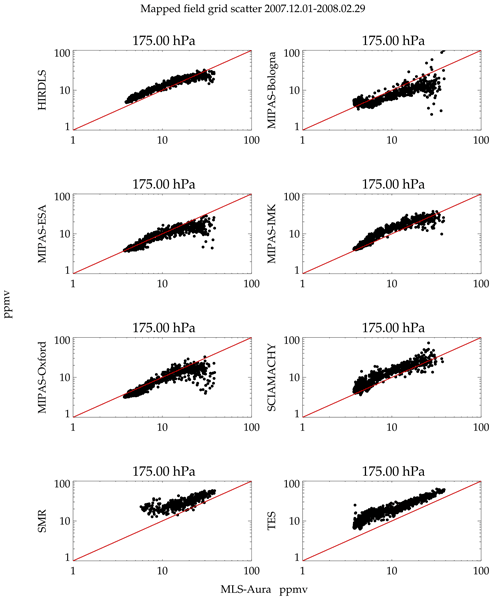
William G. Read, Gabriele Stiller, Stefan Lossow, Michael Kiefer, Farahnaz Khosrawi, Dale Hurst, Holger Vömel, Karen Rosenlof, Bianca M. Dinelli, Piera Raspollini, Gerald E. Nedoluha, John C. Gille, Yasuko Kasai, Patrick Eriksson, Christopher E. Sioris, Kaley A. Walker, Katja Weigel, John P. Burrows, and Alexei Rozanov
Atmos. Meas. Tech., 15, 3377–3400, https://doi.org/10.5194/amt-15-3377-2022, https://doi.org/10.5194/amt-15-3377-2022, 2022
Short summary
Short summary
This paper attempts to provide an assessment of the accuracy of 21 satellite-based instruments that remotely measure atmospheric humidity in the upper troposphere of the Earth's atmosphere. The instruments made their measurements from 1984 to the present time; however, most of these instruments began operations after 2000, and only a few are still operational. The objective of this study is to quantify the accuracy of each satellite humidity data set.

Anne Dallmeyer, Martin Claussen, Stephan J. Lorenz, Michael Sigl, Matthew Toohey, and Ulrike Herzschuh
Clim. Past, 17, 2481–2513, https://doi.org/10.5194/cp-17-2481-2021, https://doi.org/10.5194/cp-17-2481-2021, 2021
Short summary
Short summary
Using the comprehensive Earth system model, MPI-ESM1.2, we explore the global Holocene vegetation changes and interpret them in terms of the Holocene climate change. The model results reveal that most of the Holocene vegetation transitions seen outside the high northern latitudes can be attributed to modifications in the intensity of the global summer monsoons.
Cited articles
Adler, R. F., Sapiano, M. R. P., Huffman, George J. nd Wang, J.-J., Gu, G., Bolvin, D., Chiu, L., chneider, U., Becker, A., Nelkin, E., Xie, P., erraro, R., and Shin, D.-B.: The Global Precipitation Climatology Project (GPCP) Monthly Analysis (New Version 2.3) and a Review of 2017 Global Precipitation, Atmosphere, 9, https://doi.org/10.3390/atmos9040138, 2018. a
Andela, B., Broetz, B., de Mora, L., Drost, N., Eyring, V., Koldunov, N., Lauer, A., Mueller, B., Predoi, V., Righi, M., Schlund, M., Vegas-Regidor, J., Zimmermann, K., Adeniyi, K., Castellani, G., Arnone, E., Bellprat, O., Berg, P., Billows, C., Blockley, E., Bock, L., Bodas-Salcedo, A., Caron, L.-P., Carvalhais, N., Cionni, I., Cortesi, N., Corti, S., Crezee, B., Davin, E. L., Davini, P., Deser, C., Diblen, F., Docquier, D., Dreyer, L., Ehbrecht, C., Earnshaw, P., Geddes, T., Gier, B., Gillett, E., Gonzalez-Reviriego, N., Goodman, P., Hagemann, S., Hall, S., Hardacre, C., von Hardenberg, J., Hassler, B., Heuer, H., Hogan, E., Hunter, A., Kadow, C., Kindermann, S., Koirala, S., Kuehbacher, B., Lledó, L., Lejeune, Q., Lembo, V., Little, B., Loosveldt-Tomas, S., Lorenz, R., Lovato, T., Lucarini, V., Malinina, E., Massonnet, F., Mohr, C. W., Amarjiit, P., Parsons, N., Pérez-Zanón, N., Phillips, A., Proft, M., Russell, J., Sandstad, M., Sellar, A., Senftleben, D., Serva, F., Sillmann, J., Stacke, T., Storkey, D., Swaminathan, R., Tomkins, K., Torralba, V., Weigel, K., Sarauer, E., Schulze, K., Roberts, C., Kalverla, P., Alidoost, S., Verhoeven, S., Vreede, B., Smeets, S., Soares Siqueira, A., Kazeroni, R., Potter, J., Winterstein, F., Beucher, R., Kraft, J., Ruhe, L., Bonnet, P., Munday, G., Chun, F., and Ellis, H.: ESMValTool, Zenodo [code], https://doi.org/10.5281/zenodo.3401363, 2026a. a
Andela, B., Broetz, B., de Mora, L., Drost, N., Eyring, V., Koldunov, N., Lauer, A., Predoi, V., Righi, M., Schlund, M., Vegas-Regidor, J., Zimmermann, K., Bock, L., Diblen, F., Dreyer, L., Earnshaw, P., Hassler, B., Little, B., Loosveldt-Tomas, S., Smeets, S., Camphuijsen, J., Gier, B. K., Weigel, K., Hauser, M., Kalverla, P., Galytska, E., Cos-Espuña, P., Pelupessy, I., Koirala, S., Stacke, T., Alidoost, S., Jury, M., Sénési, S., Crocker, T., Vreede, B., Soares Siqueira, A., Kazeroni, R., Hohn, D., Bauer, J., Beucher, R., Benke, J., Martin-Martinez, E., Cammarano, D., Yousong, Z., Malinina, E., Garcia Perdomo, K., and Lenhardt, J.: ESMValCore, Zenodo [code], https://doi.org/10.5281/zenodo.3387139, 2026b. a
Atkinson, J. D., Murray, B. J., and O’Sullivan, D.: Rate of Homogenous Nucleation of Ice in Supercooled Water, J. Phys. Chem. A, 120, https://doi.org/10.1021/acs.jpca.6b03843, 2016. a
Bock, L., Lauer, A., Schlund, M., Barreiro, M., Bellouin, N., Jones, C., Meehl, G. A., Predoi, V., Roberts, M. J., and Eyring, V.: Quantifying Progress Across Different CMIP Phases With the ESMValTool, J. Geophys. Res.-Atmos., 125, e2019JD032321, https://doi.org/10.1029/2019JD032321, 2020. a, b, c
Boer, G.: Climate change and the regulation of the surface moisture and energy budgets, Clim. Dynam., 8, 225–239, https://doi.org/10.1007/BF00198617, 1993. a
Boyer, T. P., Garcia, H. E., Locarnini, R. A., Zweng, M. M., Mishonov, A. V., Reagan, J. R., Weathers, K. A., Baranova, O. K., Paver, C. R., Seidov, D., and Smolyar, I. V.: World Ocean Atlas 2018. [temperature, salinity, oxygen, nutrients], NOAA National Centers for Environmental Information, https://www.ncei.noaa.gov/archive/accession/NCEI-WOA18 (last access: 1 March 2021), 2018. a
Busecke, J. J. M., Resplandy, L., Ditkovsky, S. J., and John, J. G.: Diverging Fates of the Pacific Ocean Oxygen Minimum Zone and Its Core in a Warming World, AGU Adv., 3, e2021AV000470, https://doi.org/10.1029/2021AV000470, 2022. a
Cheng, L., Pan, Y., Tan, Z., Zheng, H., Zhu, Y., Wei, W., Du, J., Yuan, H., Li, G., Ye, H., Gouretski, V., Li, Y., Trenberth, K. E., Abraham, J., Jin, Y., Reseghetti, F., Lin, X., Zhang, B., Chen, G., Mann, M. E., and Zhu, J.: IAPv4 ocean temperature and ocean heat content gridded dataset, Earth Syst. Sci. Data, 16, 3517–3546, https://doi.org/10.5194/essd-16-3517-2024, 2024. a
Compo, G., Whitaker, J., Sardeshmukh, P., Matsui, N., Allan, R., Yin, X., Gleason, B., Vose, R., Rutledge, G., Bessemoulin, P., Brönnimann, S., Brunet, M., Crouthamel, R., Grant, A., Groisman, P., Jones, P., Kruk, M., Kruger, A., Marshall, G., Maugeri, M., Mok, H., Nordli, O., Ross, T., Trigo, R., Wang, X., Woodruff, S., and Worley, S.: The Twentieth Century Reanalysis Project, Q. J. Roy. Meteor. Soc., 137, 1–28, https://doi.org/10.1002/qj.776, 2011. a
Cunningham, S. A., Kanzow, T., Rayner, D., Baringer, M. O., Johns, W. E., Marotzke, J., Longworth, H. R., Grant, E. M., Hirschi, J. J.-M., Beal, L. M., Meinen, C. S., and Bryden, H. L.: Temporal Variability of the Atlantic Meridional Overturning Circulation at 26.5° N, Science, 317, 935–938, https://doi.org/10.1126/science.1141304, 2007. a
Dai, A.: The diurnal cycle from observations and ERA5 in precipitation, clouds, boundary layer height, buoyancy, and surface fluxes, Clim. Dynam., 62, 5879–5908, https://doi.org/10.1007/s00382-024-07182-6, 2024. a
Danabasoglu, G., Yeager, S. G., Bailey, D., Behrens, E., Bentsen, M., Bi, D., Biastoch, A., Böning, C., Bozec, A., Canuto, V. M., Cassou, C., Chassignet, E., Coward, A. C., Danilov, S., Diansky, N., Drange, H., Farneti, R., Fernandez, E., Fogli, P. G., Forget, G., Fujii, Y., Griffies, S. M., Gusev, A., Heimbach, P., Howard, A., Jung, T., Kelley, M., Large, W. G., Leboissetier, A., Lu, J., Madec, G., Marsland, S. J., Masina, S., Navarra, A., George Nurser, A., Pirani, A., y Mélia, D. S., Samuels, B. L., Scheinert, M., Sidorenko, D., Treguier, A.-M., Tsujino, H., Uotila, P., Valcke, S., Voldoire, A., and Wang, Q.: North Atlantic simulations in Coordinated Ocean-ice Reference Experiments phase II (CORE-II). Part I: Mean states, Ocean Model., 73, 76–107, https://doi.org/10.1016/j.ocemod.2013.10.005, 2014. a, b
Dee, D. P., Uppala, S. M., Simmons, A. J., Berrisford, P., Poli, P., Kobayashi, S., Andrae, U., Balmaseda, M. A., Balsamo, G., Bauer, P., Bechtold, P., Beljaars, A. C. M., van de Berg, L., Bidlot, J., Bormann, N., Delsol, C., Dragani, R., Fuentes, M., Geer, A. J., Haimberger, L., Healy, S. B., Hersbach, H., Hólm, E. V., Isaksen, L., Kållberg, P., Köhler, M., Matricardi, M., McNally, A. P., Monge-Sanz, B. M., Morcrette, J.-J., Park, B.-K., Peubey, C., de Rosnay, P., Tavolato, C., Thépaut, J.-N., and Vitart, F.: The ERA-Interim reanalysis: configuration and performance of the data assimilation system, Q. J. Roy. Meteor. Soc., 137, 553–597, https://doi.org/10.1002/qj.828, 2011. a
Dunne, J. P., Hewitt, H. T., Arblaster, J. M., Bonou, F., Boucher, O., Cavazos, T., Dingley, B., Durack, P. J., Hassler, B., Juckes, M., Miyakawa, T., Mizielinski, M., Naik, V., Nicholls, Z., O'Rourke, E., Pincus, R., Sanderson, B. M., Simpson, I. R., and Taylor, K. E.: An evolving Coupled Model Intercomparison Project phase 7 (CMIP7) and Fast Track in support of future climate assessment, Geosci. Model Dev., 18, 6671–6700, https://doi.org/10.5194/gmd-18-6671-2025, 2025. a, b
Elsaesser, G. S., O’Dell, C. W., Lebsock, M. D., Bennartz, R., Greenwald, T. J., and Wentz, F. J.: The Multisensor Advanced Climatology of Liquid Water Path (MAC-LWP), J. Climate, 30, 10193–10210, https://doi.org/10.1175/JCLI-D-16-0902.1, 2017. a
Embury, O., Merchant, C. J., Good, S. A., Rayner, N. A., Høyer, J. L., Atkinson, C., Block, T., Alerskans, E., Pearson, K. J., Worsfold, M., McCarroll, N., and Donlon, C.: Satellite-based time-series of sea-surface temperature since 1980 for climate applications, Sci. Data, 11, 5419–5454, https://doi.org/10.1038/s41597-024-03147-w, 2024. a
Eyring, V., Bony, S., Meehl, G. A., Senior, C. A., Stevens, B., Stouffer, R. J., and Taylor, K. E.: Overview of the Coupled Model Intercomparison Project Phase 6 (CMIP6) experimental design and organization, Geosci. Model Dev., 9, 1937–1958, https://doi.org/10.5194/gmd-9-1937-2016, 2016. a
Eyring, V., Bock, L., Lauer, A., Righi, M., Schlund, M., Andela, B., Arnone, E., Bellprat, O., Brötz, B., Caron, L.-P., Carvalhais, N., Cionni, I., Cortesi, N., Crezee, B., Davin, E. L., Davini, P., Debeire, K., de Mora, L., Deser, C., Docquier, D., Earnshaw, P., Ehbrecht, C., Gier, B. K., Gonzalez-Reviriego, N., Goodman, P., Hagemann, S., Hardiman, S., Hassler, B., Hunter, A., Kadow, C., Kindermann, S., Koirala, S., Koldunov, N., Lejeune, Q., Lembo, V., Lovato, T., Lucarini, V., Massonnet, F., Müller, B., Pandde, A., Pérez-Zanón, N., Phillips, A., Predoi, V., Russell, J., Sellar, A., Serva, F., Stacke, T., Swaminathan, R., Torralba, V., Vegas-Regidor, J., von Hardenberg, J., Weigel, K., and Zimmermann, K.: Earth System Model Evaluation Tool (ESMValTool) v2.0 – an extended set of large-scale diagnostics for quasi-operational and comprehensive evaluation of Earth system models in CMIP, Geosci. Model Dev., 13, 3383–3438, https://doi.org/10.5194/gmd-13-3383-2020, 2020. a
Eyring, V., Gillett, N., Achuta Rao, K., Barimalala, R., Barreiro Parrillo, M., Bellouin, N., Cassou, C., Durack, P., Kosaka, Y., McGregor, S., Min, S., Morgenstern, O., and Sun, Y.: Human Influence on the Climate System, in: Climate Change 2021: The Physical Science Basis. Contribution of Working Group I to the Sixth Assessment Report of the Intergovernmental Panel on Climate Change, edited by: Masson-Delmotte, V., Zhai, P., Pirani, A., Connors, S. L., Péan, C., Berger, S., Caud, N., Chen, Y., Goldfarb, L., Gomis, M. I., Huang, M., Leitzell, K., Lonnoy, E., Matthews, J. B. R., Maycock, T. K., Waterfield, T., Yelekçi, O., Yu, R., and Zhou, B., book section 3, 423–551, Cambridge University Press, Cambridge, UK and New York, NY, USA, https://doi.org/10.1017/9781009157896.005, 2021. a
Eyring, V., Collins, W., Gentine, P., Barnes, E., Barreiro, M., Beucler, T., Bocquet, M., Bretherton, C., Christensen, H., Dagon, K., Gagne, D., Hall, D., Hammerling, D., Hoyer, S., Iglesias-Suarez, F., Lopez-Gomez, I., McGraw, M., Meehl, G., Molina, M., Monteleoni, C., Mueller, J., Pritchard, M., Rolnick, D., Runge, J., Stier, P., Watt-Meyer, O., Weigel, K., Yu, R., and Zanna, L.: Pushing the frontiers in climate modelling and analysis with machine learning, Nat. Clim. Change, 14, 916–928, https://doi.org/10.1038/s41558-024-02095-y, 2024a. a
Eyring, V., Gentine, P., Camps-Valls, G., Lawrence, D. M., and Reichstein, M.: AI-empowered next-generation multiscale climate modelling for mitigation and adaptation, Nat. Geosci., 17, 963–971, https://doi.org/10.1038/s41561-024-01527-w, 2024b. a, b
Fox-Kemper, B., Hewitt, H., Xiao, C., Aðalgeirsdóttir, G., Drijfhout, S., Edwards, T., Golledge, N., Hemer, M., Kopp, R., Krinner, G., Mix, A., Notz, D., Nowicki, S., Nurhati, I., Ruiz, L., Sallée, J.-B., Slangen, A., and Yu, Y.: Ocean, Cryosphere and Sea Level Change, in: Climate Change 2021: The Physical Science Basis. Contribution of Working Group I to the Sixth Assessment Report of the Intergovernmental Panel on Climate Change, edited by: Masson-Delmotte, V., Zhai, P., Pirani, A., Connors, S. L., Péan, C., Berger, S., Caud, N., Chen, Y., Goldfarb, L., Gomis, M. I., Huang, M., Leitzell, K., Lonnoy, E., Matthews, J. B. R., Maycock, T. K., Waterfield, T., Yelekçi, O., Yu, R., and Zhou, B., 1211–1361, Cambridge University Press, Cambridge, UK and New York, NY, USA, https://doi.org/10.1017/9781009157896.011, 2021. a
Gelaro, R., McCarty, W., Suárez, M. J., Todling, R., Molod, A., Takacs, L., Randles, C. A., Darmenov, A., Bosilovich, M. G., Reichle, R., Wargan, K., Coy, L., Cullather, R., Draper, C., Akella, S., Buchard, V., Conaty, A., da Silva, A. M., Gu, W., Kim, G.-K., Koster, R., Lucchesi, R., Merkova, D., Nielsen, J. E., Partyka, G., Pawson, S., Putman, W., Rienecker, M., Schubert, S. D., Sienkiewicz, M., and Zhao, B.: The Modern-Era Retrospective Analysis for Research and Applications, Version 2 (MERRA-2), J. Climate, 30, 5419–5454, https://doi.org/10.1175/JCLI-D-16-0758.1, 2017. a
Gier, B. K., Buchwitz, M., Reuter, M., Cox, P. M., Friedlingstein, P., and Eyring, V.: Spatially resolved evaluation of Earth system models with satellite column-averaged CO2, Biogeosciences, 17, 6115–6144, https://doi.org/10.5194/bg-17-6115-2020, 2020. a
Good, S. A., Martin, M. J., and Rayner, N. A.: EN4: Quality controlled ocean temperature and salinity profiles and monthly objective analyses with uncertainty estimates, J. Geophys. Res.-Oceans, 118, 6704–6716, https://doi.org/10.1002/2013JC009067, 2013. a
Grundner, A., Beucler, T., Savre, J., Lauer, A., Schlund, M., and Eyring, V.: Reduced cloud cover errors in a hybrid AI-climate model through equation discovery and automatic tuning, Sci. Rep., 15, https://doi.org/10.1038/s41598-025-29155-3, 2025. a, b
Hafner, K., Shamekh, S., Bertoli, G., Lauer, A., Pincus, R., Savre, J., and Eyring, V.: Representing subgrid-scale cloud effects in a radiation parameterization using machine learning: MLe-radiation v1.0, Geosci. Model Dev., 19, 3875–3891, https://doi.org/10.5194/gmd-19-3875-2026, 2026. a
Harper, K. L., Lamarche, C., Hartley, A., Peylin, P., Ottlé, C., Bastrikov, V., San Martín, R., Bohnenstengel, S. I., Kirches, G., Boettcher, M., Shevchuk, R., Brockmann, C., and Defourny, P.: A 29-year time series of annual 300 m resolution plant-functional-type maps for climate models, Earth Syst. Sci. Data, 15, 1465–1499, https://doi.org/10.5194/essd-15-1465-2023, 2023. a
Haslauer, E., Schwabe, M., Dörnbrack, A., Gerber, E., Rapp, M., Žagar, N., and Eyring, V.: Interpretable neural networks to predict momentum fluxes of orographic gravity waves, Mach. Learn.-Earth, 2, https://doi.org/10.1088/3049-4753/ae7df2, 2026. a
Hassler, B., Hoffman, F., Beadling, R., Blockley, E., Huang, B., Lee, J., Lembo, V., Lewis, J., Lu, J., Madaus, L., Malinina, E., Medeiros, B., Pokam, W., Scoccimarro, E., and Swaminathan, R.: Systematic Benchmarking of Climate Models: Methodologies, Applications, and New Directions, Rev. Geophys., 64, e2025RG000891, https://doi.org/10.1029/2025RG000891, 2026. a, b
Heidinger, A. K., Foster, M. J., Walther, A., and Zhao, X. T.: The Pathfinder Atmospheres – Extended AVHRR Climate Dataset, B. Am. Meteorol. Soc., 95, 909–922, https://doi.org/10.1175/BAMS-D-12-00246.1, 2014. a
Hersbach, H., Bell, B., Berrisford, P., Hirahara, S., Horányi, A., Muñoz-Sabater, J., Nicolas, J., Peubey, C., Radu, R., Schepers, D., Simmons, A., Soci, C., Abdalla, S., Abellan, X., Balsamo, G., Bechtold, P., Biavati, G., Bidlot, J., Bonavita, M., De Chiara, G., Dahlgren, P., Dee, D., Diamantakis, M., Dragani, R., Flemming, J., Forbes, R., Fuentes, M., Geer, A., Haimberger, L., Healy, S., Hogan, R. J., Hólm, E., Janisková, M., Keeley, S., Laloyaux, P., Lopez, P., Lupu, C., Radnoti, G., de Rosnay, P., Rozum, I., Vamborg, F., Villaume, S., and Thépaut, J.-N.: The ERA5 global reanalysis, Q. J. Roy. Meteor. Soc., 146, 1999–2049, https://doi.org/10.1002/qj.3803, 2020. a
Heuer, H., Beucler, T., Schwabe, M., Savre, J., Schlund, M., and Eyring, V.: Beyond the Training Data: Confidence-Guided Mixing of Parameterizations in a Hybrid AI-Climate Model, J. Adv. Model. Earth Sy., 18, e2025MS005544, https://doi.org/10.1029/2025MS005544, 2026. a, b
Hoffman, F. M., Hassler, B., Swaminathan, R., Lewis, J., Andela, B., Collier, N., Hegedűs, D., Lee, J., Pascoe, C., Pflüger, M., Stockhause, M., Ullrich, P., Xu, M., Bock, L., Chun, F., Gier, B. K., Kelley, D. I., Lauer, A., Lenhardt, J., Schlund, M., Sreeush, M. G., Weigel, K., Blockley, E., Beadling, R., Beucher, R., Dugassa, D. D., Lembo, V., Lu, J., Brands, S., Tjiputra, J., Malinina, E., Medeiros, B., Scoccimarro, E., Walton, J., Kershaw, P., Lanfer Marquez, A., Roberts, M. J., O'Rourke, E., Dingley, B., Turner, B., Hewitt, H., and Dunne, J. P.: Rapid Evaluation Framework for the CMIP7 Assessment Fast Track, Geosci. Model Dev., 19, 7415–7455, https://doi.org/10.5194/gmd-19-7415-2026, 2026. a, b
IPCC: Climate Change 2021: The Physical Science Basis. Contribution of Working Group I to the Sixth Assessment Report of the Intergovernmental Panel on Climate Change, vol. In Press, Cambridge University Press, Cambridge, United Kingdom and New York, NY, USA, https://doi.org/10.1017/9781009157896, 2021. a
Jung, M., Reichstein, M., Margolis, H. A., Cescatti, A., Richardson, A. D., Arain, M. A., Arneth, A., Bernhofer, C., Bonal, D., Chen, J., Gianelle, D., Gobron, N., Kiely, G., Kutsch, W., Lasslop, G., Law, B. E., Lindroth, A., Merbold, L., Montagnani, L., Moors, E. J., Papale, D., Sottocornola, M., Vaccari, F., and Williams, C.: Global patterns of land-atmosphere fluxes of carbon dioxide, latent heat, and sensible heat derived from eddy covariance, satellite, and meteorological observations, J. Geophys. Res.-Biogeo., 116, https://doi.org/10.1029/2010jg001566, 2011. a
Karlsson, K.-G., Anttila, K., Trentmann, J., Stengel, M., Fokke Meirink, J., Devasthale, A., Hanschmann, T., Kothe, S., Jääskeläinen, E., Sedlar, J., Benas, N., van Zadelhoff, G.-J., Schlundt, C., Stein, D., Finkensieper, S., Håkansson, N., and Hollmann, R.: CLARA-A2: the second edition of the CM SAF cloud and radiation data record from 34 years of global AVHRR data, Atmos. Chem. Phys., 17, 5809–5828, https://doi.org/10.5194/acp-17-5809-2017, 2017. a
Karlsson, K.-G., Anttila, K., Trentmann, J., Stengel, M., Solodovnik, I., Meirink, J. F., Devasthale, A., Kothe, S., Jääskeläinen, E., Sedlar, J., Benas, N., van Zadelhoff, G.-J., Stein, D., Finkensieper, S., Håkansson, N., Hollmann, R., Kaiser, J., and Werscheck, M.: CLARA-A2.1: CM SAF cLoud, Albedo and surface RAdiation dataset from AVHRR data – Edition 2.1, EUMETSAF [data set], https://doi.org/10.5676/EUM_SAF_CM/CLARA_AVHRR/V002_01, 2020. a
Kobayashi, S., Ota, Y., Harada, Y., Ebita, A., Moriya, M., Onoda, H., Onogi, K., Kamahori, H., Kobayashi, C., Endo, H., Miyaoka, K., and Takahashi, K.: The JRA-55 Reanalysis: General Specifications and Basic Characteristics, J. Meteorol. Soc. Jpn. II, 93, 5–48, https://doi.org/10.2151/jmsj.2015-001, 2015. a
Kramer, S. M., Karnauskas, K. B., Elling, M. T., Zhang, L., Liu, H., Chen, Y., Amaya, D. J., Nazarenko, L., Yang, W., Vecchi, G. A., Meegan-Kumar, D., Baldwin, J. W., and Samanta, D.: ColdBlobMIP: A Multi-Model Assessment of the Atmospheric Response to the North Atlantic Warming Hole, Geophys. Res. Lett., 52, e2025GL117784, https://doi.org/10.1029/2025GL117784, 2025. a
Lauer, A., Eyring, V., Bellprat, O., Bock, L., Gier, B. K., Hunter, A., Lorenz, R., Pérez-Zanón, N., Righi, M., Schlund, M., Senftleben, D., Weigel, K., and Zechlau, S.: Earth System Model Evaluation Tool (ESMValTool) v2.0 – diagnostics for emergent constraints and future projections from Earth system models in CMIP, Geosci. Model Dev., 13, 4205–4228, https://doi.org/10.5194/gmd-13-4205-2020, 2020. a
Lauer, A., Bock, L., Hassler, B., Jöckel, P., Ruhe, L., and Schlund, M.: Monitoring and benchmarking Earth system model simulations with ESMValTool v2.12.0, Geosci. Model Dev., 18, 1169–1188, https://doi.org/10.5194/gmd-18-1169-2025, 2025. a, b, c
Lauer, A., Schlund, M., Bock, L., Hassler, B., Behrens, G., Gier, B., Lindenlaub, L., Lorenz, S., Malles, J.-H., Müller, W. A., van Pham, T., Weigel, K., Zeng, G., and Eyring, V.: An ESMValTool-based framework for sanity checks, physical consistency and climate fidelity during model development – ICONEval v1.0, Zenodo [code], https://doi.org/10.5281/zenodo.19664576, 2026. a
Llort, J., Lévy, M., Sallée, J. B., and Tagliabue, A.: Nonmonotonic Response of Primary Production and Export to Changes in Mixed‐Layer Depth in the Southern Ocean, Geophys. Res. Lett., 46, 3368–3377, https://doi.org/10.1029/2018gl081788, 2019. a
Loeb, N. G., Wielicki, B. A., Doelling, D. R., Smith, G. L., Keyes, D. F., Kato, S., Manalo-Smith, N., and Wong, T.: Toward Optimal Closure of the Earth's Top-of-Atmosphere Radiation Budget, J. Climate, 22, 748–766, https://doi.org/10.1175/2008JCLI2637.1, 2009. a
Loeb, N. G., Lyman, J. M., Johnson, G. C., Allan, R. P., Doelling, D. R., Wong, T., Soden, B. J., and Stephens, G. L.: Observed changes in top-of-the-atmosphere radiation and upper-ocean heating consistent within uncertainty, Nat. Geosci., 5, 110–113, https://doi.org/10.1038/ngeo1375, 2012. a
Marchand, R., Mace, G. G., Ackerman, T., and Stephens, G.: Hydrometeor Detection Using Cloudsat – An Earth-Orbiting 94-GHz Cloud Radar, J. Atmos. Ocean. Tech., 25, 519–533, https://doi.org/10.1175/2007JTECHA1006.1, 2008. a
McKay, D. I. A., Staal, A., Abrams, J. F., Winkelmann, R., Sakschewski, B., Loriani, S., Fetzer, I., Cornell, S. E., Rockström, J., and Lenton, T. M.: Exceeding 1.5 °C global warming could trigger multiple climate tipping points, Science, 377, eabn7950, https://doi.org/10.1126/science.abn7950, 2022. a
MDTF, N. M. D. T. F.: Phase and Amplitude of Precipitation Diurnal Cycle, https://mdtf-diagnostics.readthedocs.io/en/latest/sphinx_pods/precip_diurnal_cycle.html (last access: 17 March 2026), 2019. a
Meehl, G. A., Senior, C. A., Eyring, V., Flato, G., Lamarque, J.-F., Stouffer, R. J., Taylor, K. E., and Schlund, M.: Context for interpreting equilibrium climate sensitivity and transient climate response from the CMIP6 Earth system models, Sci. Adv., 6, eaba1981, https://doi.org/10.1126/sciadv.aba1981, 2020. a
Moat, B., Smeed, D., Rayner, D., Johns, W., Smith, R., Volkov, D., Elipot, S., Petit, T., Kajtar, J., Baringer, M., and Collins, J.: Atlantic meridional overturning circulation observed by the RAPID-MOCHA-WBTS (RAPID-Meridional Overturning Circulation and Heatflux Array-Western Boundary Time Series) array at 26N from 2004 to 2024 (v2024.1a), NERC EDS British Oceanographic Data Centre NOC [data set], https://doi.org/10.5285/48d0bf43-0598-ceb2-e063-7086abc062f1, 2026. a
Morice, C. P., Kennedy, J. J., Rayner, N. A., Winn, J. P., Hogan, E., Killick, R. E., Dunn, R. J. H., Osborn, T. J., Jones, P. D., and Simpson, I. R.: An Updated Assessment of Near-Surface Temperature Change From 1850: The HadCRUT5 Data Set, J. Geophys. Res.-Atmos., 126, e2019JD032361, https://doi.org/10.1029/2019JD032361, 2021. a
Müller, W. A., Lorenz, S., Pham, T. V., Schneidereit, A., Brokopf, R., Brovkin, V., Brüggemann, N., Chegini, F., Dommenget, D., Fröhlich, K., Früh, B., Gayler, V., Haak, H., Hagemann, S., Hanke, M., Ilyina, T., Jungclaus, J., Köhler, M., Korn, P., Kornblueh, L., Kroll, C. A., Krüger, J., Castro-Morales, K., Niemeier, U., Pohlmann, H., Polkova, I., Potthast, R., Riddick, T., Schlund, M., Stacke, T., Wirth, R., Yu, D., and Marotzke, J.: The ICON-based Earth System Model for climate predictions and projections (ICON XPP v1.0), Geosci. Model Dev., 18, 9385–9415, https://doi.org/10.5194/gmd-18-9385-2025, 2025. a, b
Müller, W. A., Früh, B., Korn, P., Potthast, R., Baehr, J., Bettems, J.-M., Bölöni, G., Brienen, S., Fröhlich, K., Helmert, J., Jungclaus, J., Köhler, M., Lorenz, S., Schneidereit, A., Schnur, R., Schulz, J.-P., Schlemmer, L., Sgoff, C., Pham, T. V., Pohlmann, H., Vogel, B., Vogel, H., Wirth, R., Zaehle, S., Zängl, G., Stevens, B., and Marotzke, J.: ICON: Toward Vertically Integrated Model Configurations for Numerical Weather Prediction, Climate Predictions, and Projections, B. Am. Meteorol. Soc., 106, E1017–E1031, https://doi.org/10.1175/BAMS-D-24-0042.1, 2025. a
NASA/LARC/SD/ASDC: CALIPSO Lidar Level 3 Ice Cloud Data, Standard V1-00, https://doi.org/10.5067/CALIOP/CALIPSO/L3_ICE_CLOUD-STANDARD-V1-00, NASA Langley Atmospheric Science Data Center Distributed Active Archive Center [data set], 2018. a
NASA/LARC/SD/ASDC: CERES Energy Balanced and Filled (EBAF) TOA Monthly means data in netCDF Edition4.2, NASA Langley Atmospheric Science Data Center Distributed Active Archive Center [data set], https://doi.org/10.5067/TERRA-AQUA-NOAA20/CERES/EBAF-TOA_L3B004.2, 2022. a
OSI SAF: Global Sea Ice Concentration Climate Data Record v3.0 – Multimission, EUMETSAT [data set], https://doi.org/10.15770/EUM_SAF_OSI_0013, 2022. a
Park, H. and Jeong, S.: Leaf area index in Earth system models: how the key variable of vegetation seasonality works in climate projections, Environ. Res. Lett., 16, 034027, https://doi.org/10.1088/1748-9326/abe2cf, 2021. a
Platnick, S., King, M., Ackerman, S., Menzel, W., Baum, B., Riedi, J., and Frey, R.: The MODIS cloud products: algorithms and examples from Terra, IEEE T. Geosci. Remote, 41, 459–473, https://doi.org/10.1109/TGRS.2002.808301, 2003. a
Praveen Kumar, B., Vialard, J., Lengaigne, M., Murty, V. S. N., and McPhaden, M. J.: TropFlux: air-sea fluxes for the global tropical oceans – description and evaluation, Clim. Dynam., 38, 1521–1543, https://doi.org/10.1007/s00382-011-1115-0, 2012. a
Praveen Kumar, B., Vialard, J., Lengaigne, M., Murty, V. S. N., McPhaden, M. J., Cronin, M. F., Pinsard, F., and Gopala Reddy, K.: TropFlux wind stresses over the tropical oceans: evaluation and comparison with other products, Clim. Dynam., 40, 2049–2071, https://doi.org/10.1007/s00382-012-1455-4, 2013. a
Rackow, T., Danilov, S., Goessling, H. F., Hellmer, H. H., Sein, D. V., Semmler, T., Sidorenko, D., and Jung, T.: Delayed Antarctic sea-ice decline in high-resolution climate change simulations, Nat. Commun., 13, https://doi.org/10.1038/s41467-022-28259-y, 2022. a
Rayner, N. A., Parker, D. E., Horton, E. B., Folland, C. K., Alexander, L. V., Rowell, D. P., Kent, E. C., and Kaplan, A.: Global analyses of sea surface temperature, sea ice, and night marine air temperature since the late nineteenth century, J. Geophys. Res.-Atmos., 108, https://doi.org/10.1029/2002JD002670, 2003. a
Righi, M., Andela, B., Eyring, V., Lauer, A., Predoi, V., Schlund, M., Vegas-Regidor, J., Bock, L., Brötz, B., de Mora, L., Diblen, F., Dreyer, L., Drost, N., Earnshaw, P., Hassler, B., Koldunov, N., Little, B., Loosveldt Tomas, S., and Zimmermann, K.: Earth System Model Evaluation Tool (ESMValTool) v2.0 – technical overview, Geosci. Model Dev., 13, 1179–1199, https://doi.org/10.5194/gmd-13-1179-2020, 2020. a
Roach, L. A., Dörr, J., Holmes, C. R., Massonnet, F., Blockley, E. W., Notz, D., Rackow, T., Raphael, M. N., O’Farrell, S. P., Bailey, D. A., and Bitz, C. M.: Antarctic Sea Ice Area in CMIP6, Geophys. Res. Lett., 47, https://doi.org/10.1029/2019gl086729, 2020. a
Rossow, W. B., Walker, A., Golea, V., Knapp, K. R., Young, A., Inamdar, A., Hankins, B., and Program, N. C. D. R.: International Satellite Cloud Climatology Project Climate Data Record, H-Series, NOAA National Centers for Environmental Information [data set], https://doi.org/10.7289/V5QZ281S, 2016. a
Sarauer, E., Schwabe, M., Weiss, P., Lauer, A., Stier, P., and Eyring, V.: A physics-informed machine learning parameterization for cloud microphysics in ICON, Environ. Data Sci., 4, e40, https://doi.org/10.1017/eds.2025.10016, 2025. a, b
Schlund, M. and Bock, L.: ICONEval, Zenodo [code], https://doi.org/10.5281/zenodo.18937451, 2026. a
Schlund, M., Hassler, B., Lauer, A., Andela, B., Jöckel, P., Kazeroni, R., Loosveldt Tomas, S., Medeiros, B., Predoi, V., Sénési, S., Servonnat, J., Stacke, T., Vegas-Regidor, J., Zimmermann, K., and Eyring, V.: Evaluation of native Earth system model output with ESMValTool v2.6.0, Geosci. Model Dev., 16, 315–333, https://doi.org/10.5194/gmd-16-315-2023, 2023. a
Schlund, M., Andela, B., Benke, J., Comer, R., Hassler, B., Hogan, E., Kalverla, P., Lauer, A., Little, B., Loosveldt Tomas, S., Nattino, F., Peglar, P., Predoi, V., Smeets, S., Worsley, S., Yeo, M., and Zimmermann, K.: Advanced climate model evaluation with ESMValTool v2.11.0 using parallel, out-of-core, and distributed computing, Geosci. Model Dev., 18, 4009–4021, https://doi.org/10.5194/gmd-18-4009-2025, 2025. a
Schröder, M., Danne, O., Falk, U., Niedorf, A., Preusker, R., Trent, T., Brockmann, C., Fischer, J., Hegglin, M., Hollmann, R., and Pinnock, S.: A combined high resolution global TCWV product from microwave and near infrared imagers – COMBI, Satellite Application Facility on Climate Monitoring [data set], https://doi.org/10.5676/EUM_SAF_CM/COMBI/V001, 2023. a
Stengel, M., Stapelberg, S., Sus, O., Finkensieper, S., Würzler, B., Philipp, D., Hollmann, R., Poulsen, C., Christensen, M., and McGarragh, G.: Cloud_cci Advanced Very High Resolution Radiometer post meridiem (AVHRR-PM) dataset version 3: 35-year climatology of global cloud and radiation properties, Earth Syst. Sci. Data, 12, 41–60, https://doi.org/10.5194/essd-12-41-2020, 2020. a
Stephens, G., Winker, D., Pelon, J., Trepte, C., Vane, D., Yuhas, C., L’Ecuyer, T., and Lebsock, M.: CloudSat and CALIPSO within the A-Train: Ten Years of Actively Observing the Earth System, B. Am. Meteorol. Soc., 99, 569–581, https://doi.org/10.1175/BAMS-D-16-0324.1, 2018. a
Stephens, G. L., Vane, D. G., Boain, R. J., Mace, G. G., Sassen, K., Wang, Z., Illingworth, A. J., O'connor, E. J., Rossow, W. B., Durden, S. L., Miller, S. D., Austin, R. T., Benedetti, A., Mitrescu, C., and Team, C. S.: THE CLOUDSAT MISSION AND THE A-TRAIN: A New Dimension of Space-Based Observations of Clouds and Precipitation, B. Am. Meteorol. Soc., 83, 1771–1790, https://doi.org/10.1175/BAMS-83-12-1771, 2002. a
Stone, P. H. and Carlson, J. H.: Atmospheric Lapse Rate Regimes and Their Parameterization, J. Atmos. Sci., 36, 415–423, https://doi.org/10.1175/1520-0469(1979)036<0415:ALRRAT>2.0.CO;2, 1979. a
Tebaldi, C., Debeire, K., Eyring, V., Fischer, E., Fyfe, J., Friedlingstein, P., Knutti, R., Lowe, J., O'Neill, B., Sanderson, B., van Vuuren, D., Riahi, K., Meinshausen, M., Nicholls, Z., Tokarska, K. B., Hurtt, G., Kriegler, E., Lamarque, J.-F., Meehl, G., Moss, R., Bauer, S. E., Boucher, O., Brovkin, V., Byun, Y.-H., Dix, M., Gualdi, S., Guo, H., John, J. G., Kharin, S., Kim, Y., Koshiro, T., Ma, L., Olivié, D., Panickal, S., Qiao, F., Rong, X., Rosenbloom, N., Schupfner, M., Séférian, R., Sellar, A., Semmler, T., Shi, X., Song, Z., Steger, C., Stouffer, R., Swart, N., Tachiiri, K., Tang, Q., Tatebe, H., Voldoire, A., Volodin, E., Wyser, K., Xin, X., Yang, S., Yu, Y., and Ziehn, T.: Climate model projections from the Scenario Model Intercomparison Project (ScenarioMIP) of CMIP6, Earth Syst. Dynam., 12, 253–293, https://doi.org/10.5194/esd-12-253-2021, 2021. a
Tian, B. and Dong, X.: The Double-ITCZ Bias in CMIP3, CMIP5, and CMIP6 Models Based on Annual Mean Precipitation, Geophys. Res. Lett., 47, e2020GL087232, https://doi.org/10.1029/2020GL087232, 2020. a
Treguier, A. M., de Boyer Montégut, C., Bozec, A., Chassignet, E. P., Fox-Kemper, B., McC. Hogg, A., Iovino, D., Kiss, A. E., Le Sommer, J., Li, Y., Lin, P., Lique, C., Liu, H., Serazin, G., Sidorenko, D., Wang, Q., Xu, X., and Yeager, S.: The mixed-layer depth in the Ocean Model Intercomparison Project (OMIP): impact of resolving mesoscale eddies, Geosci. Model Dev., 16, 3849–3872, https://doi.org/10.5194/gmd-16-3849-2023, 2023. a
Trenberth, K. E. and Smith, L.: The Mass of the Atmosphere: A Constraint on Global Analyses, J. Climate, 18, 864–875, https://doi.org/10.1175/JCLI-3299.1, 2005. a
Trenberth, K. E., Smith, L., Qian, T., Dai, A., and Fasullo, J.: Estimates of the Global Water Budget and Its Annual Cycle Using Observational and Model Data, J. Hydrometeorol., 8, 758–769, https://doi.org/10.1175/JHM600.1, 2007. a
Uchida, T., Bodner, A., Reichl, B. G., Adcroft, A. J., Fox-Kemper, B., Ilicak, M., Bentsen, M., Marques, G. M., and Large, W. G.: Representation of Surface Mixed-Layer Eddies Affects the Large-Scale Ventilation of the Global Ocean, Geophys. Res. Lett., 53, e2025GL116872, https://doi.org/10.1029/2025GL116872, 2026. a
Waliser, D. E., Li, J.-L. F., Woods, C. P., Austin, R. T., Bacmeister, J., Chern, J., Del Genio, A., Jiang, J. H., Kuang, Z., Meng, H., Minnis, P., Platnick, S., Rossow, W. B., Stephens, G. L., Sun-Mack, S., Tao, W.-K., Tompkins, A. M., Vane, D. G., Walker, C., and Wu, D.: Cloud ice: A climate model challenge with signs and expectations of progress, J. Geophys. Res.-Atmos., 114, https://doi.org/10.1029/2008JD010015, 2009. a
Wan, N., Lin, X., Pielke Sr., R. A., Zeng, X., and Nelson, A. M.: Global total precipitable water variations and trends over the period 1958–2021, Hydrol. Earth Syst. Sci., 28, 2123–2137, https://doi.org/10.5194/hess-28-2123-2024, 2024. a, b, c, d
Watson-Parris, D., Rao, Y., Olivié, D., Seland, Ø., Nowack, P., Camps-Valls, G., Stier, P., Bouabid, S., Dewey, M., Fons, E., Gonzalez, J., Harder, P., Jeggle, K., Lenhardt, J., Manshausen, P., Novitasari, M., Ricard, L., and Roesch, C.: ClimateBench v1.0: A Benchmark for Data-Driven Climate Projections, J. Adv. Model. Earth Sy., 14, e2021MS002954, https://doi.org/10.1029/2021MS002954, 2022. a, b
Weigel, K., Bock, L., Gier, B. K., Lauer, A., Righi, M., Schlund, M., Adeniyi, K., Andela, B., Arnone, E., Berg, P., Caron, L.-P., Cionni, I., Corti, S., Drost, N., Hunter, A., Lledó, L., Mohr, C. W., Paçal, A., Pérez-Zanón, N., Predoi, V., Sandstad, M., Sillmann, J., Sterl, A., Vegas-Regidor, J., von Hardenberg, J., and Eyring, V.: Earth System Model Evaluation Tool (ESMValTool) v2.0 – diagnostics for extreme events, regional and impact evaluation, and analysis of Earth system models in CMIP, Geosci. Model Dev., 14, 3159–3184, https://doi.org/10.5194/gmd-14-3159-2021, 2021. a
Wild, M.: The global energy balance as represented in CMIP6 climate models, Clim. Dynam., 55, 553–577, https://doi.org/10.1007/s00382-020-05282-7, 2020. a
Young, A. H., Knapp, K. R., Inamdar, A., Hankins, W., and Rossow, W. B.: The International Satellite Cloud Climatology Project H-Series climate data record product, Earth Syst. Sci. Data, 10, 583–593, https://doi.org/10.5194/essd-10-583-2018, 2018. a
Zhang, R., Sutton, R., Danabasoglu, G., Kwon, Y.-O., Marsh, R., Yeager, S. G., Amrhein, D. E., and Little, C. M.: A Review of the Role of the Atlantic Meridional Overturning Circulation in Atlantic Multidecadal Variability and Associated Climate Impacts, Rev. Geophys., 57, 316–375, https://doi.org/10.1029/2019RG000644, 2019. a
Zhu, Z., Bi, J., Pan, Y., Ganguly, S., Anav, A., Xu, L., Samanta, A., Piao, S., Nemani, R., and Myneni, R.: Global Data Sets of Vegetation Leaf Area Index (LAI)3g and Fraction of Photosynthetically Active Radiation (FPAR)3g Derived from Global Inventory Modeling and Mapping Studies (GIMMS) Normalized Difference Vegetation Index (NDVI3g) for the Period 1981 to 2011, Remote Sens., 5, 927–948, https://doi.org/10.3390/rs5020927, 2013. a
Zuo, H., Balmaseda, M. A., Tietsche, S., Mogensen, K., and Mayer, M.: The ECMWF operational ensemble reanalysis–analysis system for ocean and sea ice: a description of the system and assessment, Ocean Sci., 15, 779–808, https://doi.org/10.5194/os-15-779-2019, 2019. a
Short summary
ICONEval is a new framework to facilitate researchers to continuously monitor and check their climate models during the development phase. It builds on the ESMValTool software package to run tests verifying that the results are plausible, follow physical laws, and that the model has sufficient skill in reproducing the observed climate. An important aim is to make it easier to spot model errors early, for example when implementing new model components that use machine learning.
ICONEval is a new framework to facilitate researchers to continuously monitor and check their...


