
Articles | Volume 19, issue 18
https://doi.org/10.5194/gmd-19-8673-2026
© Author(s) 2026. This work is distributed under
the Creative Commons Attribution 4.0 License.
the Creative Commons Attribution 4.0 License.
https://doi.org/10.5194/gmd-19-8673-2026
© Author(s) 2026. This work is distributed under
the Creative Commons Attribution 4.0 License.
the Creative Commons Attribution 4.0 License.
Development and technical paper
| 
17 Sep 2026
Development and technical paper |
| 17 Sep 2026
| 17 Sep 2026
An online spectral nudging-based correction system: improving physical model forecasts by incorporating large-scale circulations derived from machine learning models
Yong Su
CORRESPONDING AUTHOR

CMA Earth System Modeling and Prediction Centre (CEMC), Beijing, 100081, China
State Key Laboratory of Severe Weather Meteorological Science and Technology (LaSW), Beijing, 100081, China
Key Laboratory of Earth System Modeling and Prediction, CMA, Beijing, 100081, China
CMA Earth System Modeling and Prediction Centre (CEMC), Beijing, 100081, China
State Key Laboratory of Severe Weather Meteorological Science and Technology (LaSW), Beijing, 100081, China
Key Laboratory of Earth System Modeling and Prediction, CMA, Beijing, 100081, China
School of Atmospheric Sciences, Lanzhou University, Lanzhou, 730000, China
Xueshun Shen
CMA Earth System Modeling and Prediction Centre (CEMC), Beijing, 100081, China
State Key Laboratory of Severe Weather Meteorological Science and Technology (LaSW), Beijing, 100081, China
Key Laboratory of Earth System Modeling and Prediction, CMA, Beijing, 100081, China
Couhua Liu
CMA Earth System Modeling and Prediction Centre (CEMC), Beijing, 100081, China
State Key Laboratory of Severe Weather Meteorological Science and Technology (LaSW), Beijing, 100081, China
Key Laboratory of Earth System Modeling and Prediction, CMA, Beijing, 100081, China
Xingliang Li
CMA Earth System Modeling and Prediction Centre (CEMC), Beijing, 100081, China
State Key Laboratory of Severe Weather Meteorological Science and Technology (LaSW), Beijing, 100081, China
Key Laboratory of Earth System Modeling and Prediction, CMA, Beijing, 100081, China
Jin Zhang
CMA Earth System Modeling and Prediction Centre (CEMC), Beijing, 100081, China
State Key Laboratory of Severe Weather Meteorological Science and Technology (LaSW), Beijing, 100081, China
Key Laboratory of Earth System Modeling and Prediction, CMA, Beijing, 100081, China
Hao Jing
CMA Earth System Modeling and Prediction Centre (CEMC), Beijing, 100081, China
State Key Laboratory of Severe Weather Meteorological Science and Technology (LaSW), Beijing, 100081, China
Key Laboratory of Earth System Modeling and Prediction, CMA, Beijing, 100081, China
Yingying Hu
National Meteorological Center, CMA, Beijing, 100081, China
Related authors

Jiong Chen, Yong Su, Zhe Li, Zhanshan Ma, and Xueshun Shen
Geosci. Model Dev., 18, 8253–8267, https://doi.org/10.5194/gmd-18-8253-2025, https://doi.org/10.5194/gmd-18-8253-2025, 2025
Short summary
Short summary
Weather forecasts sometimes show high-frequency noise degrading predictions. Our study reveals stripe patterns arise from mismatches between dynamic and physical calculations in models. Simplified experiments demonstrate that adjusting their connection eliminates stripes. This advances numerical weather prediction understanding, aiding forecasters and the public. Our diagnostic methods provide a framework for solving this global meteorological modeling challenge.
Xiaojuan Yao, Qiyun Guo, Xin Sun, Jincheng Wang, Yanxia Ji, Linchun Liu, Dan Wang, Feng Zhu, and Ke Liu
EGUsphere, https://doi.org/10.5194/egusphere-2026-4913, https://doi.org/10.5194/egusphere-2026-4913, 2026
This preprint is open for discussion and under review for Atmospheric Measurement Techniques (AMT).
Short summary
Short summary
The China Meteorological Administration has developed a next-generation sounding system that achieves three-phase observation from a single launch, Uniquely filling a critical upper-atmosphere data gap through sustained stratospheric sampling. However, its drifting temperatures are unreliable, especially by day. Thus this study identified key physical drivers and developed an effective temperature bias correction model. This enhances atmospheric monitoring and forecasting for societal benefit.
Honglu Sun, Hao Jing, Zhixiang Dai, Sa Xiao, Wei Xue, Jian Sun, and Qifeng Lu
Geosci. Model Dev., 19, 9235–9262, https://doi.org/10.5194/gmd-19-9235-2026, https://doi.org/10.5194/gmd-19-9235-2026, 2026
Short summary
Short summary
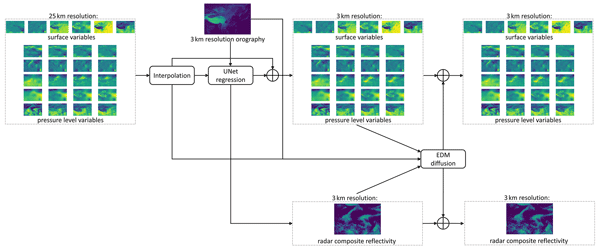
This study represents the first application of CorrDiff (Corrective Diffusion), a diffusion-based model, to achieve 3 km resolution statistical downscaling over China by integrating various variables at multiple levels. Through structural improvements to CorrDiff, our methods produce forecasts that outperform the China Meteorological Administration Mesoscale Model for almost all target variables. Our results show that for radar reflectivity prediction, CorrDiff yields more realistic outputs than regression models.
Hao Jing, Sa Xiao, Haoyu Li, Huadong Xiao, and Wei Xue
EGUsphere, https://doi.org/10.5194/egusphere-2026-1735, https://doi.org/10.5194/egusphere-2026-1735, 2026
This preprint is open for discussion and under review for Geoscientific Model Development (GMD).
Short summary
Short summary
A machine learning-based parameterization scheme for radiation is proposed for the operational Global Forecasting System of the China Meteorological Administration. We analyze and address the numerical instability issues inherent in hybrid physical–machine learning models, and propose robust coupling strategies compatible with real-time execution. A systematic performance evaluation of the hybrid model is also presented.
Xiaozhong Cao, Qiyun Guo, Haowen Luo, Jincheng Wang, Rongkang Yang, Die Xiao, Yinfeng Liu, Zhongliang Sun, Shijun Liu, Sijie Chen, Anfan Huang, Guo Jianping, and Peng Zhang
Atmos. Meas. Tech., 19, 3231–3251, https://doi.org/10.5194/amt-19-3231-2026, https://doi.org/10.5194/amt-19-3231-2026, 2026
Short summary
Short summary
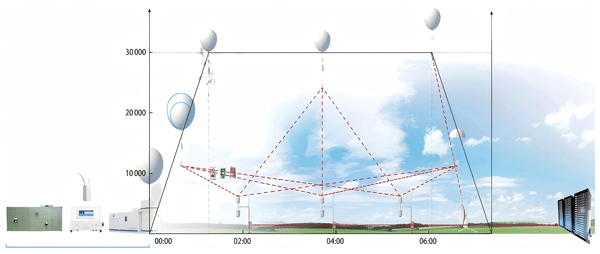
The Ascent-Drift-Descent Radiosonde System (ADDRS) represents an emerging cost-effective technology for upper-air measurements, Its 'Internet cloud + instrument terminal' design enables targeted observations for extreme weather research. Initial data application shows high potential for numerical weather prediction, The pilot application of ADDRS is list in the World Meteorological Organization Region II Coordination 2025-2027 demonstration project (No.RA II-18-I-DP-2).
Chao Wang, Yongzhu Liu, Wei Han, Deying Wang, Xueshun Shen, and Xiaoye Zhang
EGUsphere, https://doi.org/10.5194/egusphere-2026-1485, https://doi.org/10.5194/egusphere-2026-1485, 2026
This preprint is open for discussion and under review for Geoscientific Model Development (GMD).
Short summary
Short summary
We assessed the performance of a newly developed assimilation system. Using real observations of black carbon aerosol over China for nearly three months, we found that incorporating these measurements greatly improved the accuracy of air pollution analyses and forecasts, especially during severe pollution episodes. The system also helped correct near-surface temperature biases in heavily polluted areas.
Jiong Chen, Yong Su, Zhe Li, Zhanshan Ma, and Xueshun Shen
Geosci. Model Dev., 18, 8253–8267, https://doi.org/10.5194/gmd-18-8253-2025, https://doi.org/10.5194/gmd-18-8253-2025, 2025
Short summary
Short summary
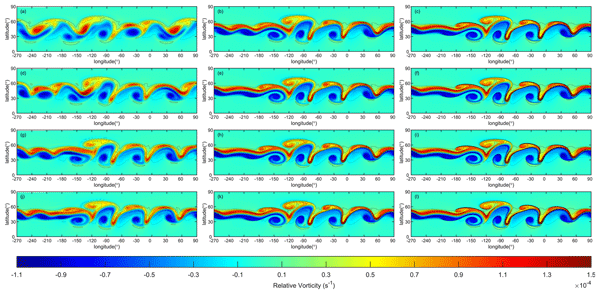
Weather forecasts sometimes show high-frequency noise degrading predictions. Our study reveals stripe patterns arise from mismatches between dynamic and physical calculations in models. Simplified experiments demonstrate that adjusting their connection eliminates stripes. This advances numerical weather prediction understanding, aiding forecasters and the public. Our diagnostic methods provide a framework for solving this global meteorological modeling challenge.
Lilong Zhou, Wei Xue, and Xueshun Shen
Geosci. Model Dev., 18, 8175–8201, https://doi.org/10.5194/gmd-18-8175-2025, https://doi.org/10.5194/gmd-18-8175-2025, 2025
Short summary
Short summary
This study develops a novel physics-based weather prediction model using artificial intelligence development platform, achieving high accuracy while maintaining strict physical conservation laws. Our algorithms are optimized for modern super computers, enabling efficient large-scale weather simulations. A key innovation is the model's inherent differentiable nature, allowing seamless integration with AI systems to enhance predictive capabilities through machine learning techniques.
Yongzhu Liu, Xiaoye Zhang, Wei Han, Chao Wang, Wenxing Jia, Deying Wang, Zhaorong Zhuang, and Xueshun Shen
Geosci. Model Dev., 18, 4855–4876, https://doi.org/10.5194/gmd-18-4855-2025, https://doi.org/10.5194/gmd-18-4855-2025, 2025
Short summary
Short summary
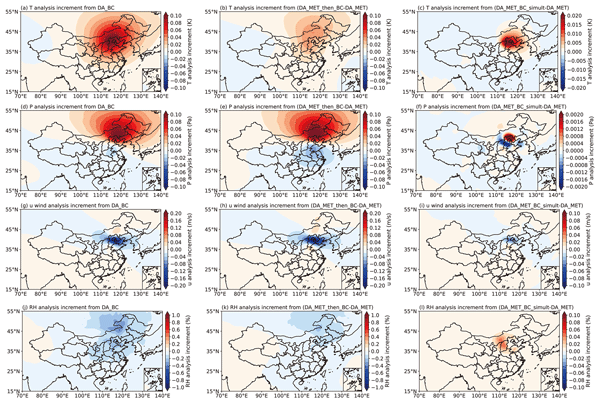
In order to investigate the feedbacks of chemical data assimilation on meteorological forecasts, we developed a strongly coupled aerosol–meteorology four-dimensional variational (4D-Var) assimilation system, CMA-GFS-AERO 4D-Var, based on the framework of the incremental analysis scheme of the China Meteorological Administration Global Forecasting System (CMA-GFS) operational global numerical weather model. The results show that assimilating BC (black carbon) observations can generate analysis increments not only for BC but also for atmospheric variables.
Xiaoze Xu, Wei Han, Jincheng Wang, Zhiqiu Gao, Fenghui Li, Yan Cheng, and Naifeng Fu
Atmos. Meas. Tech., 18, 1339–1353, https://doi.org/10.5194/amt-18-1339-2025, https://doi.org/10.5194/amt-18-1339-2025, 2025
Short summary
Short summary
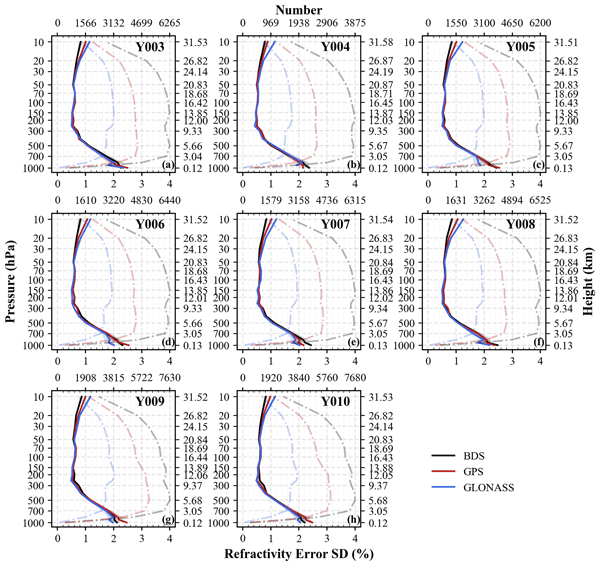
Commercial Global Navigation Satellite System (GNSS) radio occultation (RO) satellites are generally cheap and can generate a large volume of globally distributed observations in a short period of time. To evaluate the practical application value of these data, we must assess their quality. We evaluate the quality of YUNYAO RO data. By using the “three-cornered hat” method and comparing with data from Metop-C and COSMIC-2, it was found that the YUNYAO GNSS-RO data are of high quality.
Xuan Wang, Lei Bi, Hong Wang, Yaqiang Wang, Wei Han, Xueshun Shen, and Xiaoye Zhang
Geosci. Model Dev., 18, 117–139, https://doi.org/10.5194/gmd-18-117-2025, https://doi.org/10.5194/gmd-18-117-2025, 2025
Short summary
Short summary
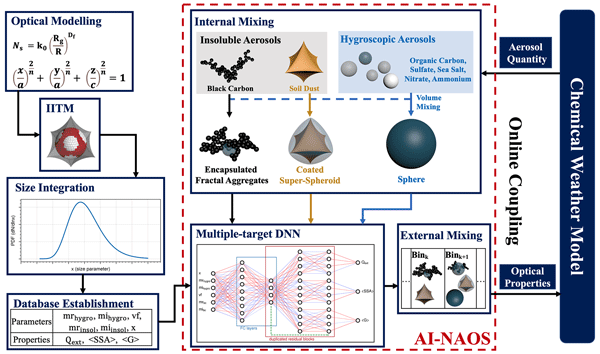
The Artificial-Intelligence-based Nonspherical Aerosol Optical Scheme (AI-NAOS) was developed to improve the estimation of the aerosol direct radiation effect and was coupled online with a chemical weather model. The AI-NAOS scheme considers black carbon as fractal aggregates and soil dust as super-spheroids, encapsulated with hygroscopic aerosols. Real-case simulations emphasize the necessity of accurately representing nonspherical and inhomogeneous aerosols in chemical weather models.
Bing Zhang, Mingjian Zeng, Anning Huang, Zhengkun Qin, Couhua Liu, Wenru Shi, Xin Li, Kefeng Zhu, Chunlei Gu, and Jialing Zhou
Geosci. Model Dev., 17, 4579–4601, https://doi.org/10.5194/gmd-17-4579-2024, https://doi.org/10.5194/gmd-17-4579-2024, 2024
Short summary
Short summary
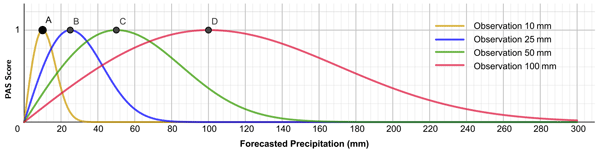
By directly analyzing the proximity of precipitation forecasts and observations, a precipitation accuracy score (PAS) method was constructed. This method does not utilize a traditional contingency-table-based classification verification; however, it can replace the threat score (TS), equitable threat score (ETS), and other skill score methods, and it can be used to calculate the accuracy of numerical models or quantitative precipitation forecasts.

Li Liu, Chao Sun, Xinzhu Yu, Hao Yu, Qingu Jiang, Xingliang Li, Ruizhe Li, Bin Wang, Xueshun Shen, and Guangwen Yang
Geosci. Model Dev., 16, 2833–2850, https://doi.org/10.5194/gmd-16-2833-2023, https://doi.org/10.5194/gmd-16-2833-2023, 2023
Short summary
Short summary
C-Coupler3.0 is an integrated coupler infrastructure with new features, i.e. a series of parallel-optimization technologies, a common halo-exchange library, a common module-integration framework, a common framework for conveniently developing a weakly coupled ensemble data assimilation system, and a common framework for flexibly inputting and outputting fields in parallel. It is able to handle coupling under much finer resolutions (e.g. more than 100 million horizontal grid cells).
Cited articles
Bauer, P., Thorpe, A., and Brunet, G.: The quiet revolution of numerical weather prediction, Nature, 525, 47–55, https://doi.org/10.1038/nature14956, 2015.
Bi, K., Xie, L., Zhang, H., Chen, X., Gu, X., Liu, Q., Tian, X., and Wang, Y.: Accurate medium-range global weather forecasting with 3D neural networks, Nature, 619, 533–538, 2023.
Bodnar, C., Bruinsma, W. P., Lucic, A., Stanley, M., Allen, A., Brandstetter, J., Garvan, P., Riechert, M., Weyn, J. A., Dong, H., Gupta, J. K., Thambiratnam, K., Archibald, A. T., Wu, C.-C., Heider, E., Welling, M., Turner, R. E., and Perdikaris, P.: A foundation model for the Earth system, Nature, 641, 1180–1187, 2025.
Chen, K., Han, T., Gong, J. C., Bai, L., Ling, F., Luo, J.-J., Chen, X., Ma, L., Zhang, T., Su, R., Ci, Y., Li, B., Yang, X., and Ouyang, W.: FengWu: Pushing the Skillful Global Medium-range Weather Forecast beyond 10 Days Lead, arXiv [preprint], https://doi.org/10.48550/arXiv.2304.02948, 2023a.
Chen, L., Zhong, X. H., Zhang, F., Cheng, Y., Xu, Y., Qi, Y., and Li, H.: FuXi: a cascade machine learning forecasting system for 15-day global weather forecast, npj Clim. Atmos. Sci., 6, 190, https://doi.org/10.1038/s41612-023-00512-1, 2023b.
Chen, J., Su, Y., Li, Z., Ma, Z., and Shen, X.: Stripe patterns in wind forecasts induced by physics-dynamics coupling on a staggered grid in CMA-GFS 3.0, Geosci. Model Dev., 18, 8253–8267, https://doi.org/10.5194/gmd-18-8253-2025, 2025.
Daub, E. G., Dunstan, T., Bennett, T., Burnand, M., Chappell, J., Coca-Castro, A., Eftekhari, N., Hosking, J. S., Janmaijaya, M., Lillis, J., Salvador-Jasin, D., Simpson, N., Strickson, O. T., Chan, R. S.-Y., Elmasri, M., France, L. A., Madge, S., Owen, A., Robinson, J., Scaife, A. A., Walters, D., Yatsyshin, P., McCaie, T., Bokeria, L., Brown, H., Dodds, T., Llewellyn-Jones, D., Moreton, S., Potter, T., Stenson, I., van Zeeland, L., Bett-Williams, K., and Dale, K. I.: Technical overview and architecture of the FastNet Machine Learning weather prediction model, version 1.0, arXiv [preprint], https://doi.org/10.48550/arXiv.2509.17658, 2025.
Denis, B., Cote, J., and Laprise, R.: Spectral decomposition of two-dimensional atmospheric fields on limited-area domains using the discrete cosine transform (DCT), Mon. Weather Rev., 130, 1812–1829, 2002.
FuXi team: FuXi Model and Sample Data, Zenodo [code and data set], https://doi.org/10.5281/zenodo.10401602, 2023.
Hu, B. and McDaniel, D.: Applying Physics-Informed Neural Networks to Solve Navier–Stokes Equations for Laminar Flow around a Particle, Math. Comput. Appl., 28, 102 https://doi.org/10.3390/mca28050102, 2023.
Husain, S. Z., Separovic, L., Caron, J.-F., Aider, R., Buehner, M., Chamberland, S., Lapalme, E., McTaggart-Cowan, R., Subich, C., Vaillancourt, P. A., Yang, J., and Zadra, A.: Leveraging Data-Driven Weather Models for Improving Numerical Weather Prediction Skill through Large-Scale Spectral Nudging, Weather Forecast., 40, 1749–1771, 2025.
Kochkov, D., Yuval, J., Langmore, I., Norgaard, P., Smith, J., Mooers, G., Klöwer, M., Lottes, J., Rasp, S., Düben, P., Hatfield, S., Battaglia, P., Sanchez-Gonzalez, A., Willson, M., Brenner, M. P., and Hoyer, S.: Neural general circulation models for weather and climate, Nature, 632, 1060–1066, 2024.
Lam, R., Sanchez-Gonzalez, A., Willson, M., Wirnsberger, P., Fortunato, M., Alet, F., Ravuri, S., Ewalds, T., Eaton-Rosen, Z., Hu, W., Merose, A., Hoyer, S., Holland, G., Vinyals, O., Stott, J., Pritzel, A., Mohamed, S., and Battaglia, P.: Learning skillful medium-range global weather forecasting, Science, 382, 1416–1421, 2023.
Lang, S., Alexe, M., Clare, M. C. A., Roberts, C., Adewoyin, R., Ben Bouallègue, Z., Chantry, M., Dramsch, J., Dueben, P. D., Hahner, S., Maciel, P., Prieto-Nemesio, A., O'Brien, C., Pinault, F., Polster, J., Raoult, B., Tietsche, S., and Leutbecher, M.: AIFS-CRPS: ensemble forecasting using a model trained with a loss function based on the continuous ranked probability score, npj Artif. Intell., 2, 18, https://doi.org/10.1038/s44387-026-00073-7, 2024.
Lang, S., Alexe, M., Chantry, M., Dramsch, J., Pinault, F., Raoult, B., Clare, M. C. A., Lessig, C., Maier-Gerber, M., Magnusson, L., Ben Bouallègue, Z., Prieto Nemesio, A., Dueben, P. D., Brown, A., Pappenberger, F., and Rabier, F.: AIFS–ECMWF's data-driven forecasting system, arXiv [preprint], https://doi.org/10.48550/arXiv.2406.01465, 2026.
Li, H., Sun, J., Yang, Y., Kong, X., and Gan, R.: Effects of large-scale constraint and constraint variables on the high-frequency assimilation of radar reflectivity data in convective precipitation forecasting, Clim. Dynam., 61, 4359–4375, https://doi.org/10.1007/s00382-023-06809-4, 2023a.
Li, Y. Y., Ju, X. T., Xiao, Y., Jia, Q., Zhou, Y., Qian, S., Lin, R., Yang, B., Shi, S., Liu, X., Gao, J., Wang, Z., Liu, S., Tan, J., Wang, X., Hu, Z., Yan, L., and Xue, W.: Rapid simulations of atmospheric data assimilation of hourly-scale phenomena with modern neural networks, in: Proceedings of the International Conference for High Performance Computing, Networking, Storage and Analysis, 79, 1–13, https://doi.org/10.1145/3581784.3607031, 2023b.
Lin, E., Yang, Y., Qiu, X., Xie, Q., Gan, R., Zhang, B., and Liu, X.: Impacts of the radar data assimilation frequency and large-scale constraint on the short-term precipitation forecast of a severe convection case, Atmos. Res., 257, 1–14, https://doi.org/10.1016/j.atmosres.2021.105590, 2021.
Lu, Y., Xu, X., Wang, L., Liu, Y., Wu, T., Jie, W., and Sun, J.: Machine Learning Emulation of Subgrid-Scale Orographic Gravity Wave Drag in a General Circulation Model with Middle Atmosphere Extension, J. Adv. Model. Earth Syst., 16, e2023MS003611, https://doi.org/10.1029/2023MS003611, 2024.
Mu, B., Chen, L., Yuan, S., and Qin, B.: A radiative transfer deep learning model coupled into WRF with a generic fortran torch adaptor, Front. Earth Sci., 11, 1149566, 2023.
Niu, Z., Huang, W., Zhang, L., Deng, L., Wang, H., Yang, Y., Wang, D., and Li, H.: Improving typhoon predictions by integrating data-driven machine learning model with physics model based on the spectral nudging and data assimilation, Earth Space Sci., 12, e2024EA003952, https://doi.org/10.1029/2024EA003952, 2025.
Pathak, J., Subramanian, S., Harrington, P., Raja, S., Chattopadhyay, A., Mardani, M., Kurth, T., Hall, D., Li, Z.-Y., Azizzadenesheli, K., Hassanzadeh, P., Kashinath, K., and Anandkumar, A.: FourCastNet: A Global Data-driven High-resolution Weather Model using Adaptive Fourier Neural Operators, arXiv [preprint], https://doi.org/10.48550/arXiv.2202.11214, 2022.
Polichtchouk, I., Chantry, M., Roberts, C., and Maier-Gerber, M.-M.: Online bias corrections at ECMWF: what do we gain?, in: WGNE annual meeting, ECMWF, https://www.wcrp-esmo.org/calendar/polichtchouk_wgne_nov2024.pdf (last access: 23 January 2026), 2024.
Polichtchouk, I., Lang, S., Lock, S.-J., Maier-Gerber, M., and Dueben, P. D.: Hybrid ensemble forecasting combining physics-based and machine-learning predictions through spectral nudging, arXiv [preprint], https://doi.org/10.48550/arXiv.2603.05570, 2026.
Price, I., Sanchez-Gonzalez, A., Alet, F., Andersson, T. R., El-Kadi, A., Masters, D., Ewalds, T., Stott, J., Mohamed, S., Battaglia, P., Lam, R., and Willson, M.: Probabilistic weather forecasting with machine learning, Nature, 637, 84–90, 2025.
Raissi, M., Perdikaris, P., and Karniadakis, G. E.: Physics-informed neural networks: A deep learning framework for solving forward and inverse problems involving nonlinear partial differential equations, J. Comput. Phys., 378, 686–707, https://doi.org/10.1016/j.jcp.2018.10.045, 2019.
Sardeshmukh, P. D. and Hoskins, B. I.: Spatial smoothing on the sphere, Mon. Weather Rev., 112, 2524–2529, 1984.
Sha, Y., Schreck, J. S., Chapman, W., and Gagne II, D. J.: Improving AI weather prediction models using global mass and energy conservation schemes, arXiv [preprint], https://doi.org/10.48550/arXiv.2501.05648, 2025.
Shen, X. S., Su, Y., Zhang, H. L., and Hu, J. L.: New version of the CMA-GFS dynamical core based on the predictor–corrector time integration scheme. J. Meteor. Res., 37, 273–285, https://doi.org/10.1007/s13351-023-3002-0, 2023.
Stauffer, D. R. and Seaman, N. L.: Use of four-dimensional data assimilation in a limited-area mesoscale model, Part I: Experiments with synoptic-scale data, Mon. Weather Rev., 118, 1250–1277, 1990.
Storch, V., Langenberg, H., and Feser, F.: A spectral nudging technique for dynamical downscaling purposes, Mon. Weather Rev., 128, 3664–3673, 2000.
Su, Y.: Online correction system based on CMA-GFS v4.2 and FuXi model, Zenodo [code], https://doi.org/10.5281/zenodo.18226973, 2026a.
Su, Y.: Scripts for plotting figures in the article: An Online Correction System Based on Spectral Nudging, Zenodo [code], https://doi.org/10.5281/zenodo.18227191, 2026b.
Su, Y., Shen, X. S., Peng, X. D., Li, X. L., Wu, X. J., Zhang, S., and Chen, X.: Application of PRM scalar advection scheme in GRAPES global forecast system, Chinese J. Atmos. Sci., 37, 1309–1325, 2013.
Su, Y., Shen, X. S., Chen, Z. T., and Zhang, H. L.: A study on the three dimensional reference atmosphere in GRAPES_GFS: Theoretical design and ideal test, Acta Meteorol. Sin., 76, 241–254, 2018.
Su, Y., Shen, X. S., Zhang, H. L., and Liu, Y.: A study on the three dimensional reference atmosphere in GRAPES_GFS: Constructive reference state and real forecast experiment, Acta Meteorol. Sin., 78, 962–971, 2020.
Tang, J., Chen, C. G., Li, X. L., Shen, X. S., Sun, H., Chen, D., and Xiao, F.: A learnable trouble-cell indicator for hybrid multi-moment finite-volume transport modeling on a cubed-sphere grid, Q. J. Roy. Meteorol. Soc., 152, e70013, https://doi.org/10.1002/qj.70013, 2025.
Waldron, K. M., Peagle, J., and Horel, J. D.: Sensitivity of a spectrally filtered and nudged limited area model to outer model options, Mon. Weather Rev., 124, 529–547, 1996.
Wang, L. and Tan, Z. M.: Deep learning parameterization of the tropical cyclone boundary layer, J. Adv. Model. Earth Syst., 15, e2022MS003611, https://doi.org/10.1029/2022MS003034, 2023.
Xiao, Y., Bai, L., Xue, W., Chen, K., Han, T., and Ouyang, W.: FengWu-4DVar: coupling the data-driven weather forecasting model with 4D variational assimilation, arXiv [preprint], https://doi.org/10.48550/arXiv.2312.12455, 2024.
Xue, J. S. and Chen, D. H.: Scientific Design and Application of Numerical Prediction System GRAPES, Science Press, Beijing, ISBN 9787030218599, 2008.
Zhang, L., Liu, Y. Z., Liu, Y., Gong, J., Lu, H., Jin, Z., Tian, W., Liu, G., Zhou, B., and Zhao, B.: The operational global four-dimensional variational data assimilation system at the China Meteorological Administration, Q. J. Roy. Meteorol. Soc., 145, 1882–1896, 2019.
Zhang, Y., Long, M., Chen, K., Xing, L., Jin, R., Jordan, M. I., and Wang, J.: Skilful nowcasting of extreme precipitation with NowcastNet, Nature, 619, 526–532, 2023.
Short summary
The traditional weather prediction models improve slowly, while machine learning models struggle with extreme weather and fine details. To address these gaps, we developed an online Spectral Nudging-based correction system that leverages a machine learning model's skillful large-scale circulation to guide a physical model. This hybrid model enhances large-scale skill while preserving small-scale features, providing a viable pathway for improving operational weather forecasting.
The traditional weather prediction models improve slowly, while machine learning models struggle...


