
Articles | Volume 19, issue 17
https://doi.org/10.5194/gmd-19-8349-2026
© Author(s) 2026. This work is distributed under
the Creative Commons Attribution 4.0 License.
the Creative Commons Attribution 4.0 License.
https://doi.org/10.5194/gmd-19-8349-2026
© Author(s) 2026. This work is distributed under
the Creative Commons Attribution 4.0 License.
the Creative Commons Attribution 4.0 License.
Model description paper
| 
09 Sep 2026
Model description paper |
| 09 Sep 2026
| 09 Sep 2026
SeapoPym v0.1: implementation of the SEAPODYM low and mid trophic levels in Python with a flexible optimization framework
Jules Victor Lehodey
CORRESPONDING AUTHOR

LEGOS, University of Toulouse, CNRS, IRD, CNES, UT, Toulouse, France
MARBEC, University of Montpellier, CNRS, IRD, IFREMER, Sète, France
ISEA – Institut des Sciences Exactes et Appliquées (EA 7484), Université de la Nouvelle-Calédonie, Noumea, New Caledonia
Alexandre Mignot
Mercator Ocean International, Toulouse, France
Alexandre Ganachaud
LEGOS, University of Toulouse, CNRS, IRD, CNES, UT, Toulouse, France
MARBEC, University of Montpellier, CNRS, IRD, IFREMER, Sète, France
Sarah Albernhe
Mercator Ocean International, Toulouse, France
Simon Nicol
Pacific Community (SPC), Noumea, New Caledonia
Related authors
Alexandre Mignot, Nina Bednaršek, Sarah Albernhe, Stefano Ciavatta, Patrick Lehodey, and Jules Lehodey
State Planet Discuss., https://doi.org/10.5194/sp-2026-21, https://doi.org/10.5194/sp-2026-21, 2026
Preprint under review for SP
Short summary
Short summary
Tiny sea snails called pteropods build delicate shells that dissolve as the ocean absorbs carbon dioxide, while warming shrinks the areas where they can live. Using satellite-based ocean data from 1995 to 2025, we built two indicators that track, worldwide, how much shell damage occurs and how much suitable habitat remains. Over three decades, shell damage rose and suitable habitat shrank, confirming that both acidification and warming are reshaping where these animals can survive.
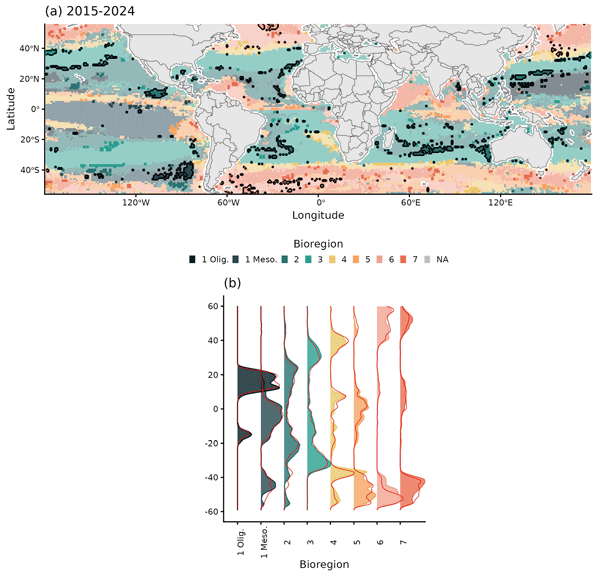
Wilhem Riom, Nicolas Mayot, Alexandre Mignot, Vincent Taillandier, and Fabrizio D'Ortenzio
State Planet, 7-osr10, 4, https://doi.org/10.5194/sp-7-osr10-4-2026, https://doi.org/10.5194/sp-7-osr10-4-2026, 2026
Short summary
Short summary
Over the ocean, phytoplankton (the microscopic algae at the basis of the marine foodweb) present characteristic cyclical patterns modulated by the passage of seasons. Climate change is modifying the marine environment and these seasonal cycles. This study presents a method that identifies the geographical displacement of these cycles applied over the last 30 years of satellite observations. It suggests that cycles normally typical of low latitude regions are extending towards high latitudes.
Alexandre Mignot, Nina Bednaršek, Sarah Albernhe, Stefano Ciavatta, Patrick Lehodey, and Jules Lehodey
State Planet Discuss., https://doi.org/10.5194/sp-2026-21, https://doi.org/10.5194/sp-2026-21, 2026
Preprint under review for SP
Short summary
Short summary
Tiny sea snails called pteropods build delicate shells that dissolve as the ocean absorbs carbon dioxide, while warming shrinks the areas where they can live. Using satellite-based ocean data from 1995 to 2025, we built two indicators that track, worldwide, how much shell damage occurs and how much suitable habitat remains. Over three decades, shell damage rose and suitable habitat shrank, confirming that both acidification and warming are reshaping where these animals can survive.
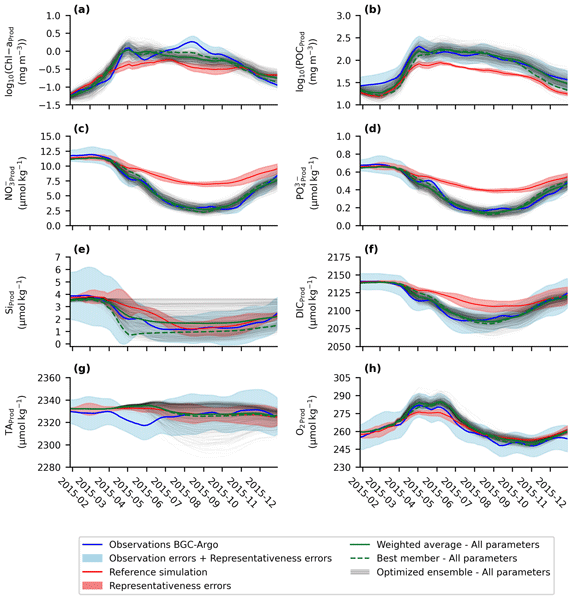
Quentin Hyvernat, Alexandre Mignot, Elodie Gutknecht, Giovanni Ruggiero, Coralie Perruche, Guillaume Samson, Raphaëlle Sauzède, Olivier Aumont, Hervé Claustre, and Fabrizio D'Ortenzio
Biogeosciences, 23, 4967–4998, https://doi.org/10.5194/bg-23-4967-2026, https://doi.org/10.5194/bg-23-4967-2026, 2026
Short summary
Short summary
We introduce an iterative Importance Sampling framework to optimize the Pelagic Interaction Scheme for Carbon and Ecosystem Studies (PISCES) model using 20 metrics from Biogeochemical-Argo data. Three strategies are compared: 29 main-effect, 66 including interaction effects, and all 95 parameters. All yield statistically indistinguishable skill gains, reducing error by 54–56 %. Optimizing all 95 parameters is recommended for comprehensive uncertainty quantification. The optimized set also improves skill in a three-dimensional regional simulation.
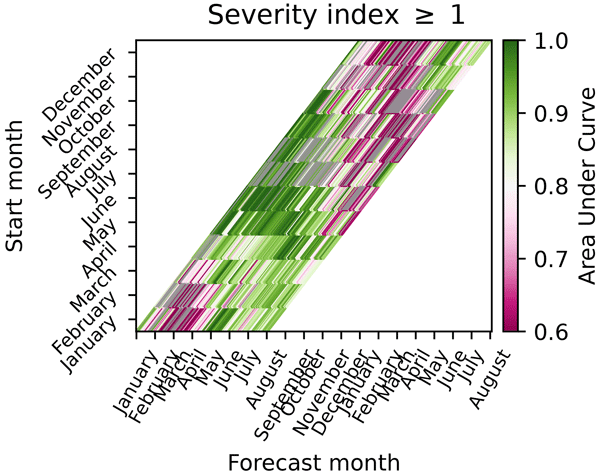
Inès Mangolte, Sophie Cravatte, Alexandre Ganachaud, and Christophe Menkes
Ocean Sci., 22, 1937–1964, https://doi.org/10.5194/os-22-1937-2026, https://doi.org/10.5194/os-22-1937-2026, 2026
Short summary
Short summary
Marine heatwaves pose a serious threat to marine ecosystems that will become increasingly important with climate change. Here we show in the Southwest Pacific that dynamical forecasting systems are able to forecast long, large-scale marine heatwaves occurring in austral winter, but have less skill in predicting smaller, shorter events, and summer events. We discuss the implications for operational forecasts dedicated to help marine managers to prepare and mitigate some of their impacts.
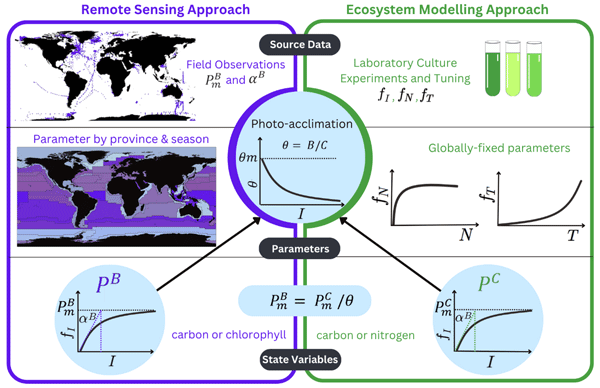
Jozef Skákala, Shubha Sathyendranath, Yuri Artioli, Deep S. Banerjee, Heather Bouman, Robert J. W. Brewin, Momme Butenschön, Stefano Ciavatta, Stephanie Dutkiewicz, Yanna Fidai, David Ford, Grinson George, Karen Guihou, Bror Jönsson, Marija Bačeković Koloper, Žarko Kovač, Lekshmi Krishnakumary, Gemma Kulk, Charlotte Laufkötter, Gennadi Lessin, Jann Paul Mattern, Angélique Melet, Alexandre Mignot, David Moffat, Fanny Monteiro, Mayra Rodriguez Bennadji, Cécile S. Rousseaux, Ranjini Swaminathan, Osvaldo Ulloa, and Jerry Tjiputra
Ocean Sci., 22, 1457–1481, https://doi.org/10.5194/os-22-1457-2026, https://doi.org/10.5194/os-22-1457-2026, 2026
Short summary
Short summary
Marine primary production (PP) is a key component of the Earth's climate system, but its current estimates and future projections are highly uncertain. We review the PP uncertainties and discuss their sources both across the ecosystem and satellite models. We propose to reduce the PP uncertainties by better addressing the PP model structures and parametrizations. We also argue that for many models it is desirable to consider spatial and temporal variability in the model parameter values.
Shilpa Lal, Sophie Cravatte, Christophe Menkes, Jed Macdonald, Romain Le Gendre, Ines Mangolte, Cyril Dutheil, Neil J. Holbrook, and Simon Nicol
Ocean Sci., 22, 1023–1049, https://doi.org/10.5194/os-22-1023-2026, https://doi.org/10.5194/os-22-1023-2026, 2026
Short summary
Short summary
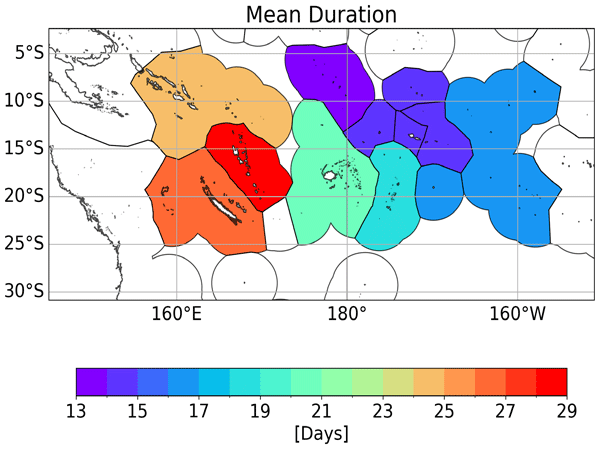
This paper characterizes historical (1981–2023) marine heatwaves in the tropical southwestern Pacific, where they pose a challenge for marine resource dependent Islands. Heatwaves are distinguished as a function of their spatial extent, signature at the coast, and seasonality, to allow a better understanding of their impacts on ecosystems. Marine heatwaves are getting longer and more frequent, with greater spatial extents. Our results aim to inform the Pacific Islands on their vulnerability.
Romain Le Gendre, David Varillon, Sylvie Fiat, Régis Hocdé, Antoine de Ramon N'Yeurt, Serge Andréfouët, Jérôme Aucan, Sophie Cravatte, Maxime Duphil, Alexandre Ganachaud, Baptiste Gaudron, Elodie Kestenare, Vetea Liao, Bernard Pelletier, Alexandre Peltier, Anne-Lou Schaefer, Thomas Trophime, Simon Van Wynsberge, Yves Dandonneau, Michel Allenbach, and Christophe Menkes
Earth Syst. Sci. Data, 17, 5277–5301, https://doi.org/10.5194/essd-17-5277-2025, https://doi.org/10.5194/essd-17-5277-2025, 2025
Short summary
Short summary
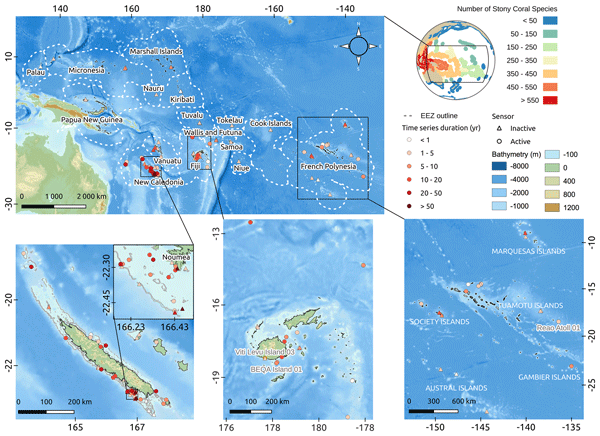
Due to ocean warming, coral reef ecosystems are strongly impacted by dystrophic events and corals experiencing increasing frequencies of bleaching events. In situ observation remains the best alternative for accurate characterization of trends and extremes in these shallow environments. This paper presents the coastal temperature dataset of the ReefTEMPS monitoring network, which spreads over multiple Pacific Island countries and territories (PICTs) in the western and central South Pacific.
Sarah Albernhe, Thomas Gorgues, Olivier Titaud, Patrick Lehodey, Christophe Menkes, and Anna Conchon
State Planet, 6-osr9, 4, https://doi.org/10.5194/sp-6-osr9-4-2025, https://doi.org/10.5194/sp-6-osr9-4-2025, 2025
Short summary
Short summary
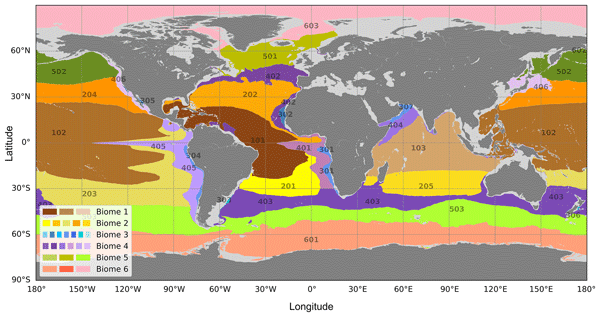
Micronekton are marine organisms gathering a wide diversity of taxa (crustaceans, fish, cephalopods) 2 to 20 cm in size. They are responsible for an important carbon export to the deep ocean and are the main prey for marine predators. We define provinces of homogeneous environmental parameters, representing areas of common micronekton biomass and vertical structure. We observe the evolution of the provinces in time from 1998 to 2023 to account for the seasonal to interannual variability.
Philippe F. V. W. Frankemölle, Peter D. Nooteboom, Joe Scutt Phillips, Lauriane Escalle, Simon Nicol, and Erik van Sebille
Ocean Sci., 20, 31–41, https://doi.org/10.5194/os-20-31-2024, https://doi.org/10.5194/os-20-31-2024, 2024
Short summary
Short summary
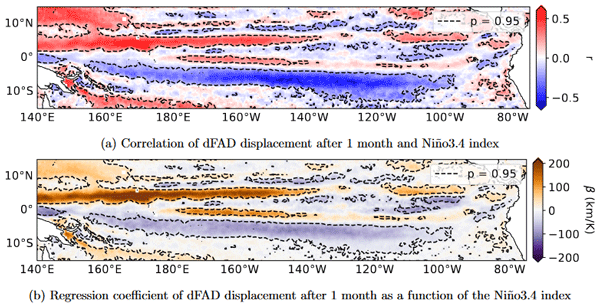
Tuna fisheries in the Pacific often use drifting fish aggregating devices (dFADs) to attract fish that are advected by subsurface flow through underwater appendages. Using a particle advection model, we find that virtual particles advected by surface flow are displaced farther than virtual dFADs. We find a relation between El Niño–Southern Oscillation and circular motion in some areas, influencing dFAD densities. This information helps us to understand processes that drive dFAD distribution.
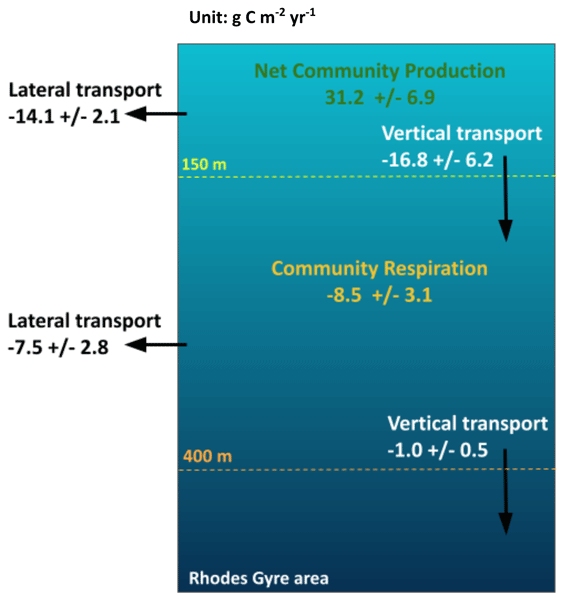
Joelle Habib, Caroline Ulses, Claude Estournel, Milad Fakhri, Patrick Marsaleix, Mireille Pujo-Pay, Marine Fourrier, Laurent Coppola, Alexandre Mignot, Laurent Mortier, and Pascal Conan
Biogeosciences, 20, 3203–3228, https://doi.org/10.5194/bg-20-3203-2023, https://doi.org/10.5194/bg-20-3203-2023, 2023
Short summary
Short summary
The Rhodes Gyre, eastern Mediterranean Sea, is the main Levantine Intermediate Water formation site. In this study, we use a 3D physical–biogeochemical model to investigate the seasonal and interannual variability of organic carbon dynamics in the gyre. Our results show its autotrophic nature and its high interannual variability, with enhanced primary production, downward exports, and onward exports to the surrounding regions during years marked by intense heat losses and deep mixed layers.
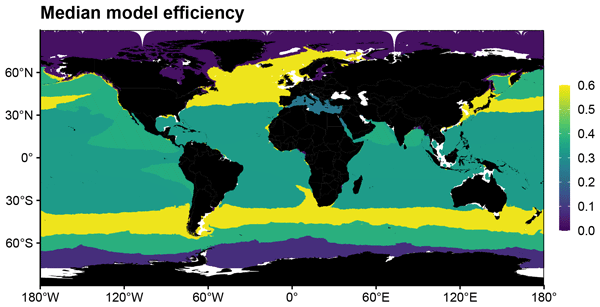
Alexandre Mignot, Hervé Claustre, Gianpiero Cossarini, Fabrizio D'Ortenzio, Elodie Gutknecht, Julien Lamouroux, Paolo Lazzari, Coralie Perruche, Stefano Salon, Raphaëlle Sauzède, Vincent Taillandier, and Anna Teruzzi
Biogeosciences, 20, 1405–1422, https://doi.org/10.5194/bg-20-1405-2023, https://doi.org/10.5194/bg-20-1405-2023, 2023
Short summary
Short summary
Numerical models of ocean biogeochemistry are becoming a major tool to detect and predict the impact of climate change on marine resources and monitor ocean health. Here, we demonstrate the use of the global array of BGC-Argo floats for the assessment of biogeochemical models. We first detail the handling of the BGC-Argo data set for model assessment purposes. We then present 23 assessment metrics to quantify the consistency of BGC model simulations with respect to BGC-Argo data.
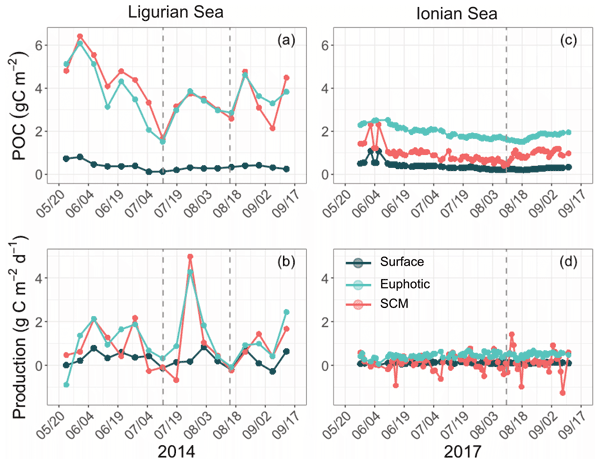
Marie Barbieux, Julia Uitz, Alexandre Mignot, Collin Roesler, Hervé Claustre, Bernard Gentili, Vincent Taillandier, Fabrizio D'Ortenzio, Hubert Loisel, Antoine Poteau, Edouard Leymarie, Christophe Penkerc'h, Catherine Schmechtig, and Annick Bricaud
Biogeosciences, 19, 1165–1194, https://doi.org/10.5194/bg-19-1165-2022, https://doi.org/10.5194/bg-19-1165-2022, 2022
Short summary
Short summary
This study assesses marine biological production in two Mediterranean systems representative of vast desert-like (oligotrophic) areas encountered in the global ocean. We use a novel approach based on non-intrusive high-frequency in situ measurements by two profiling robots, the BioGeoChemical-Argo (BGC-Argo) floats. Our results indicate substantial yet variable production rates and contribution to the whole water column of the subsurface layer, typically considered steady and non-productive.
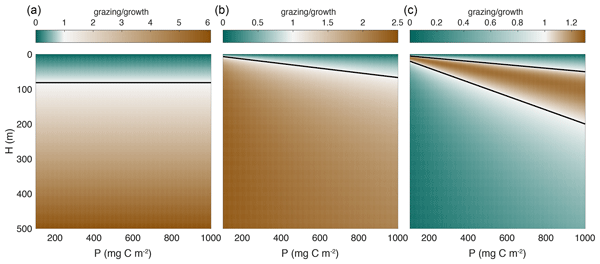
Mara Freilich, Alexandre Mignot, Glenn Flierl, and Raffaele Ferrari
Biogeosciences, 18, 5595–5607, https://doi.org/10.5194/bg-18-5595-2021, https://doi.org/10.5194/bg-18-5595-2021, 2021
Short summary
Short summary
Observations reveal that in some regions phytoplankton biomass increases during the wintertime when growth conditions are sub-optimal, which has been attributed to a release from grazing during mixed layer deepening. Measurements of grazer populations to support this theory are lacking. We demonstrate that a release from grazing when the winter mixed layer is deepening holds only for certain grazing models, extending the use of phytoplankton observations to make inferences about grazer dynamics.
Cited articles
Banse, K.: On the vertical distribution of Zooplankton in the sea, Prog. Oceanogr., 2, 53–125, https://doi.org/10.1016/0079-6611(64)90003-5, 1964. a
Behrenfeld, M. J. and Falkowski, P. G.: Photosynthetic rates derived from satellite‐based chlorophyll concentration, Limnol. Oceanogr., 42, 1–20, https://doi.org/10.4319/lo.1997.42.1.0001, 1997. a, b
Beven, K.: A manifesto for the equifinality thesis, J. Hydrol., 320, 18–36, https://doi.org/10.1016/j.jhydrol.2005.07.007, 2006. a, b
Beven, K. and Binley, A.: The future of distributed models: Model calibration and uncertainty prediction, Hydrol. Process., 6, 279–298, https://doi.org/10.1002/hyp.3360060305, 1992. a
Brodeur, R. D., Seki, M. P., Pakhomov, E. A., and Suntsov, A. V.: Micronekton – What are they and why are they important?, PICES Press, 13, 7–11, 2005. a
Conover, R. J.: Comparative life histories in the genera Calanus and Neocalanus in high latitudes of the northern hemisphere, Hydrobiologia, 167–168, 127–142, https://doi.org/10.1007/bf00026299, 1988. a
Daase, M., Falk-Petersen, S., Varpe, Ø., Darnis, G., Søreide, J. E., Wold, A., Leu, E., Berge, J., Philippe, B., and Fortier, L.: Timing of reproductive events in the marine copepod Calanus glacialis: a pan-Arctic perspective, Can. J. Fish. Aquat. Sci., 70, 871–884, https://doi.org/10.1139/cjfas-2012-0401, 2013. a
Dask Development Team: Dask: Library for dynamic task scheduling, software, https://dask.org (last access: 7 September 2026), 2016. a
Delpech, A., Conchon, A., Titaud, O., and Lehodey, P.: Influence of oceanic conditions in the energy transfer efficiency estimation of a micronekton model, Biogeosciences, 17, 833–850, https://doi.org/10.5194/bg-17-833-2020, 2020. a, b
Drago, L., Panaïotis, T., Irisson, J.-O., Babin, M., Biard, T., Carlotti, F., Coppola, L., Guidi, L., Hauss, H., Karp-Boss, L., Lombard, F., McDonnell, A. M. P., Picheral, M., Rogge, A., Waite, A. M., Stemmann, L., and Kiko, R.: Global Distribution of Zooplankton Biomass Estimated by In Situ Imaging and Machine Learning, Front. Mar. Sci., 9, https://doi.org/10.3389/fmars.2022.894372, 2022. a
Edvardsen, A., Pedersen, J. M., Slagstad, D., Semenova, T., and Timonin, A.: Distribution of overwintering Calanus in the North Norwegian Sea, Ocean Sci., 2, 87–96, https://doi.org/10.5194/os-2-87-2006, 2006. a
E.U. Copernicus Marine Service Information (CMEMS): Global Ocean Low and Mid Trophic Levels Biomass Content Hindcast, product GLOBAL_MULTIYEAR_BGC_001_033, CMEMS [data set], https://doi.org/10.48670/moi-00020, 2024. a, b, c
Gillooly, J. F.: Effect of body size and temperature on generation time in zooplankton, J. Plankton Res., 22, 241–251, https://doi.org/10.1093/plankt/22.2.241, 2000. a, b, c, d
Hansen, N.: The CMA Evolution Strategy: A Tutorial, arXiv [preprint], https://doi.org/10.48550/arXiv.1604.00772, 2016. a, b
Hansen, N. and Ostermeier, A.: Completely Derandomized Self-Adaptation in Evolution Strategies, Evol. Comput., 9, 159–195, https://doi.org/10.1162/106365601750190398, 2001. a
Hansen, N., Akimoto, Y., and Baudis, P.: CMA-ES/pycma on Github, Zenodo, https://doi.org/10.5281/zenodo.2559634, 2019. a
Harris, C. R., Millman, K. J., van der Walt, S. J., Gommers, R., Virtanen, P., Cournapeau, D., Wieser, E., Taylor, J., Berg, S., Smith, N. J., Kern, R., Picus, M., Hoyer, S., van Kerkwijk, M. H., Brett, M., Haldane, A., del Río, J. F., Wiebe, M., Peterson, P., Gérard-Marchant, P., Sheppard, K., Reddy, T., Weckesser, W., Abbasi, H., Gohlke, C., and Oliphant, T. E.: Array programming with NumPy, Nature, 585, 357–362, https://doi.org/10.1038/s41586-020-2649-2, 2020. a
Herman, J. and Usher, W.: SALib: An open-source Python library for Sensitivity Analysis, J. Open Source Softw., 2, 97, https://doi.org/10.21105/joss.00097, 2017. a
Hoffman, R. N. and Atlas, R.: Future Observing System Simulation Experiments, B. Am. Meteorol. Soc., 97, 1601–1616, https://doi.org/10.1175/BAMS-D-15-00200.1, 2016. a
Hoyer, S. and Hamman, J.: xarray: N-D labeled Arrays and Datasets in Python, J. Open Res. Softw., 5, 10, https://doi.org/10.5334/jors.148, 2017. a
Huntley, M. E. and Lopez, M. D. G.: Temperature-Dependent Production of Marine Copepods: A Global Synthesis, Am. Nat., 140, 201–242, https://doi.org/10.1086/285410, 1992. a, b, c
Iwanaga, T., Usher, W., and Herman, J.: Toward SALib 2.0: Advancing the accessibility and interpretability of global sensitivity analyses, Socio-Environ. Syst. Model., 4, 18155, https://doi.org/10.18174/sesmo.18155, 2022. a
Karl, D. M. and Lukas, R.: The Hawaii Ocean Time-series (HOT) program: Background, rationale and field implementation, Deep-Sea Res. Pt. II, 43, 129–156, https://doi.org/10.1016/0967-0645(96)00005-7, 1996. a
Kosobokova, K. N.: The reproductive cycle and life history of the Arctic copepod Calanus glacialis in the White Sea, Polar Biol., 22, 254–263, https://doi.org/10.1007/s003000050418, 1999. a
Lam, S. K., Pitrou, A., and Seibert, S.: Numba: a LLVM-based Python JIT compiler, in: Proceedings of the Second Workshop on the LLVM Compiler Infrastructure in HPC, SC15, 1–6, ACM, https://doi.org/10.1145/2833157.2833162, 2015. a
Lehodey, J. V.: SeapoPym/seapopym: SeapoPym v0.1.1, Zenodo [software], https://doi.org/10.5281/zenodo.21838667, 2026. a, b
Lehodey, J. V., Mignot, A., Ganachaud, A., Albernhe, S., and Nicol, S.: Reproducibility deposit for SeapoPym v0.1: Implementation of the SEAPODYM low and mid trophic levels in Python with a flexible optimization framework, Zenodo [software], https://doi.org/10.5281/zenodo.21849337, 2026. a
Lehodey, P.: The pelagic ecosystem of the tropical Pacific Ocean: dynamic spatial modelling and biological consequences of ENSO, Prog. Oceanogr., 49, 439–468, https://doi.org/10.1016/s0079-6611(01)00035-0, 2001. a, b
Lehodey, P., André, J.-M., Bertignac, M., Hampton, J., Stoens, A., Menkes, C., Memery, L., and Grima, N.: Predicting skipjack tuna forage distributions in the equatorial Pacific using a coupled dynamical bio-geochemical model, Fish. Oceanogr., 7, 317–325, https://doi.org/10.1046/j.1365-2419.1998.00063.x, 1998. a
Lehodey, P., Senina, I., and Murtugudde, R.: A spatial ecosystem and populations dynamics model (SEAPODYM) – Modeling of tuna and tuna-like populations, Prog. Oceanogr., 78, 304–318, https://doi.org/10.1016/j.pocean.2008.06.004, 2008. a, b, c
Lehodey, P., Conchon, A., Senina, I., Domokos, R., Calmettes, B., Jouanno, J., Hernandez, O., and Kloser, R.: Optimization of a micronekton model with acoustic data, ICES J. Mar. Sci., 72, 1399–1412, https://doi.org/10.1093/icesjms/fsu233, 2015. a, b
Lellouche, J.-M., Greiner, E., Bourdallé-Badie, R., Garric, G., Melet, A., Drévillon, M., Bricaud, C., Hamon, M., Le Galloudec, O., Regnier, C., Candela, T., Testut, C.-E., Gasparin, F., Ruggiero, G., Benkiran, M., Drillet, Y., and Le Traon, P.-Y.: The Copernicus Global
Mackas, D. and Coyle, K.: Shelf–offshore exchange processes, and their effects on mesozooplankton biomass and community composition patterns in the northeast Pacific, Deep-Sea Res. Pt. II, 52, 707–725, https://doi.org/10.1016/j.dsr2.2004.12.020, 2005. a
McKendrick, A. G.: Applications of Mathematics to Medical Problems, P. Edinburgh Math. Soc., 44, 98–130, https://doi.org/10.1017/s0013091500034428, 1926. a
Moriarty, R. and O'Brien, T. D.: Distribution of mesozooplankton biomass in the global ocean, Earth Syst. Sci. Data, 5, 45–55, https://doi.org/10.5194/essd-5-45-2013, 2013. a
O'Brien, T. D.: COPEPOD: The Global Plankton Database. An overview of the 2014 database contents, processing methods, and access interface, Tech. Rep. NOAA Tech. Memo. NMFS-F/ST-37, U.S. Department of Commerce, NOAA, https://www.st.nmfs.noaa.gov/copepod/ (last access: 7 September 2026), 2014. a
Omori, M.: Weight and chemical composition of some important oceanic zooplankton in the North Pacific Ocean, Mar. Biol., 3, 4–10, https://doi.org/10.1007/BF00355587, 1969. a
Pianosi, F., Beven, K., Freer, J., Hall, J. W., Rougier, J., Stephenson, D. B., and Wagener, T.: Sensitivity analysis of environmental models: A systematic review with practical workflow, Environ. Model. Softw., 79, 214–232, https://doi.org/10.1016/j.envsoft.2016.02.008, 2016. a, b
Rohr, T., Richardson, A. J., Lenton, A., Chamberlain, M. A., and Shadwick, E. H.: Zooplankton grazing is the largest source of uncertainty for marine carbon cycling in CMIP6 models, Commun. Earth Environ., 4, 212, https://doi.org/10.1038/s43247-023-00871-w, 2023. a
Saltelli, A.: Making best use of model evaluations to compute sensitivity indices, Comput. Phys. Commun., 145, 280–297, https://doi.org/10.1016/s0010-4655(02)00280-1, 2002. a
Sarrazin, F., Pianosi, F., and Wagener, T.: Global Sensitivity Analysis of environmental models: Convergence and validation, Environ. Model. Softw., 79, 135–152, https://doi.org/10.1016/j.envsoft.2016.02.005, 2016. a
Schartau, M., Wallhead, P., Hemmings, J., Löptien, U., Kriest, I., Krishna, S., Ward, B. A., Slawig, T., and Oschlies, A.: Reviews and syntheses: parameter identification in marine planktonic ecosystem modelling, Biogeosciences, 14, 1647–1701, https://doi.org/10.5194/bg-14-1647-2017, 2017. a
Sibert, J. R., Hampton, J., Fournier, D. A., and Bills, P. J.: An advection-diffusion-reaction model for the estimation of fish movement parameters from tagging data, with application to skipjack tuna (Katsuwonus pelamis), Can. J. Fish. Aquat. Sci., 56, 925–938, https://doi.org/10.1139/f99-017, 1999. a
Sieburth, J. M., Smetacek, V., and Lenz, J.: Pelagic ecosystem structure: Heterotrophic compartments of the plankton and their relationship to plankton size fractions 1, Limnol. Oceanogr., 23, 1256–1263, https://doi.org/10.4319/lo.1978.23.6.1256, 1978. a
Siegel, D. A., DeVries, T., Cetinić, I., and Bisson, K. M.: Quantifying the Ocean’s Biological Pump and Its Carbon Cycle Impacts on Global Scales, Annu. Rev. Mar. Sci., 15, 329–356, https://doi.org/10.1146/annurev-marine-040722-115226, 2023. a
Simons CMAP and Bermuda Atlantic Time-series Study (BATS): Bermuda Atlantic Time-Series Study (BATS) Zooplankton Biomass, Zenodo [data set], https://doi.org/10.5281/zenodo.10182499, 2023. a
Simons CMAP and Hawaii Ocean Time Series: Zooplankton Community Structure HOT v2022, Zenodo [data set], https://doi.org/10.5281/zenodo.10850539, 2024. a
Sobol', I.: Global sensitivity indices for nonlinear mathematical models and their Monte Carlo estimates, Math. Comput. Simul., 55, 271–280, https://doi.org/10.1016/s0378-4754(00)00270-6, 2001. a
Steinberg, D. K., Carlson, C. A., Bates, N. R., Goldthwait, S. A., Madin, L. P., and Michaels, A. F.: Zooplankton vertical migration and the active transport of dissolved organic and inorganic carbon in the Sargasso Sea, Deep-Sea Res. Pt. I, 47, 137–158, https://doi.org/10.1016/s0967-0637(99)00052-7, 2000. a
Steinberg, D. K., Carlson, C. A., Bates, N. R., Johnson, R. J., Michaels, A. F., and Knap, A. H.: Overview of the US JGOFS Bermuda Atlantic Time-series Study (BATS): a decade-scale look at ocean biology and biogeochemistry, Deep-Sea Res. Pt. II, 48, 1405–1447, https://doi.org/10.1016/S0967-0645(00)00148-X, 2001. a
Steinberg, D. K., Goldthwait, S. A., and Hansell, D. A.: Zooplankton vertical migration and the active transport of dissolved organic and inorganic nitrogen in the Sargasso Sea, Deep-Sea Res. Pt. I, 49, 1445–1461, https://doi.org/10.1016/s0967-0637(02)00037-7, 2002. a
St. John, M. A., Borja, A., Chust, G., Heath, M., Grigorov, I., Mariani, P., Martin, A. P., and Santos, R. S.: A Dark Hole in Our Understanding of Marine Ecosystems and Their Services: Perspectives from the Mesopelagic Community, Front. Mar. Sci., 3, https://doi.org/10.3389/fmars.2016.00031, 2016. a
Stukel, M. R., Décima, M., and Landry, M. R.: Quantifying biological carbon pump pathways with a data-constrained mechanistic model ensemble approach, Biogeosciences, 19, 3595–3624, https://doi.org/10.5194/bg-19-3595-2022, 2022. a
Tarantola, A.: Inverse Problem Theory and Methods for Model Parameter Estimation, Society for Industrial and Applied Mathematics, Philadelphia, PA, ISBN 978-0-89871-572-9, https://doi.org/10.1137/1.9780898717921, 2005. a
Titaud, O., Conchon, A., Mérillet, L., Goeman, N., and Magliano, H.: Quality Information Document, Global Ocean Low and Mid Trophic Levels Biomass Content Hindcast (GLOBAL_MULTIYEAR_BGC_001_033), Tech. Rep. CMEMS-GLO-QUID-001-033, Issue 4.2, Copernicus Marine Service, https://documentation.marine.copernicus.eu/QUID/CMEMS-GLO-QUID-001-033.pdf (last access: 7 September 2026), 2024. a, b, c, d, e, f, g, h
Von Foerster, H.: Some Remarks on Changing Populations, in: The Kinetics of Cellular Proliferation, edited by: Stohlman, J. F., 382–407, Grune and Stratton, New York, https://lccn.loc.gov/59010474 (last access: 7 September 2026), 1959. a
Short summary
Marine zooplankton transfer energy from microscopic algae to fish and larger predators. Understanding their distribution helps predict how oceans respond to climate change. We developed SeapoPym, a freely available model that simulates zooplankton using ocean temperature and plant productivity. This tool lets scientists test biological hypotheses and estimate parameters from observations.
Marine zooplankton transfer energy from microscopic algae to fish and larger predators....


