Articles | Volume 19, issue 16
https://doi.org/10.5194/gmd-19-7705-2026
© Author(s) 2026. This work is distributed under
the Creative Commons Attribution 4.0 License.
https://doi.org/10.5194/gmd-19-7705-2026
© Author(s) 2026. This work is distributed under
the Creative Commons Attribution 4.0 License.
Advancing the capabilities for efficient hurricane-centric simulations with the atmospheric model ICON

Leibniz Institute for Tropospheric Research, Leipzig, Germany
Roxana Cremer
Leibniz Institute for Tropospheric Research, Leipzig, Germany
Related authors
Kevin Ohneiser, Markus Hartmann, Heike Wex, Patric Seifert, Anja Hardt, Anna Miller, Katharina Baudrexl, Werner Thomas, Veronika Ettrichrätz, Maximilian Maahn, Tom Gaudek, Willi Schimmel, Fabian Senf, Hannes Griesche, Martin Radenz, and Jan Henneberger
Atmos. Chem. Phys., 26, 3223–3236, https://doi.org/10.5194/acp-26-3223-2026, https://doi.org/10.5194/acp-26-3223-2026, 2026
Short summary
Short summary
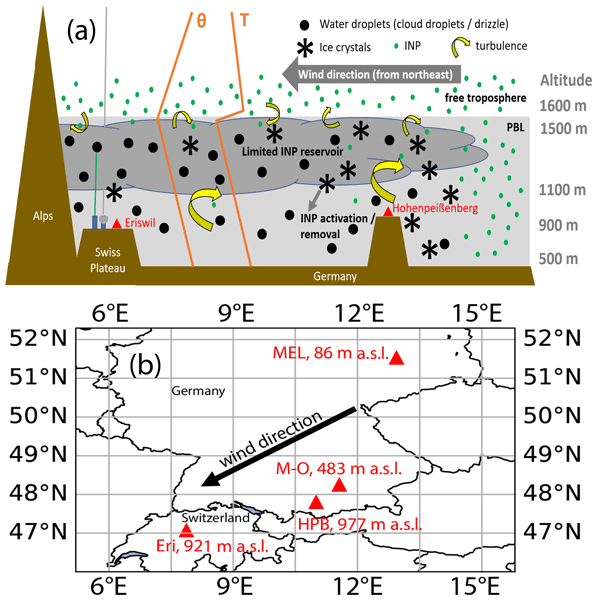
This study highlights the efficiency of supercooled liquid-dominated stratus clouds to remove ice-nucleating particles (INPs). When within the planetary boundary layer (PBL), lower concentrations of INPs were measured under supercooled stratus conditions, compared to when the stratus cloud layers occurred at temperatures above freezing. Under supercooling conditions, the free-troposphere above the supercooled stratus covered PBL was found to be an additional potential source of INP.
Kevin Ohneiser, Patric Seifert, Willi Schimmel, Fabian Senf, Tom Gaudek, Martin Radenz, Audrey Teisseire, Veronika Ettrichrätz, Teresa Vogl, Nina Maherndl, Nils Pfeifer, Jan Henneberger, Anna J. Miller, Nadja Omanovic, Christopher Fuchs, Huiying Zhang, Fabiola Ramelli, Robert Spirig, Anton Kötsche, Heike Kalesse-Los, Maximilian Maahn, Heather Corden, Alexis Berne, Majid Hajipour, Hannes Griesche, Julian Hofer, Ronny Engelmann, Annett Skupin, Albert Ansmann, and Holger Baars
Atmos. Chem. Phys., 25, 17363–17386, https://doi.org/10.5194/acp-25-17363-2025, https://doi.org/10.5194/acp-25-17363-2025, 2025
Short summary
Short summary
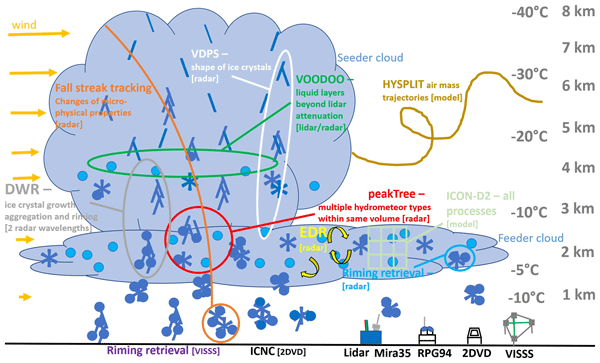
This study focuses on a seeder-feeder cloud system on 8 Jan 2024 in Eriswil, Switzerland. It is shown how the interaction of these cloud systems changes the cloud microphysical properties and the precipitation patterns. A big set of advanced remote-sensing techniques and retrieval algorithms are applied, so that a detailed view on the seeder-feeder cloud system is available. The gained knowledge can be used to improve weather models and weather forecasts.
Dennis Niedermeier, Rasmus Hoffmann, Silvio Schmalfuss, Wiebke Frey, Fabian Senf, Olaf Hellmuth, Mira Pöhlker, and Frank Stratmann
Aerosol Research, 3, 219–230, https://doi.org/10.5194/ar-3-219-2025, https://doi.org/10.5194/ar-3-219-2025, 2025
Short summary
Short summary
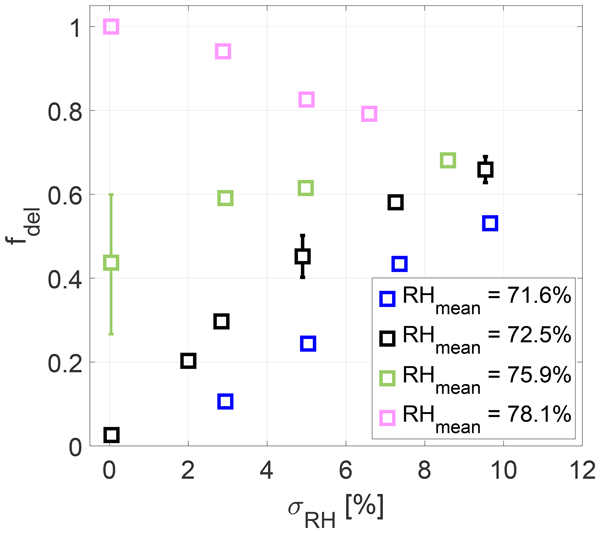
This study examines the deliquescence behavior of NaCl particles in a turbulent humidity field using the wind tunnel LACIS-T (Turbulent Leipzig Aerosol Cloud Interaction Simulator). The results show that turbulent relative humidity (RH) fluctuations affect the number of deliquesced particles, depending on the mean RH, strength of humidity fluctuations, and particle residence time. It turns out that, in addition to the mean RH, it is essential to consider humidity fluctuations and particle history when determining the phase state of the deliquescent particles.
G. Alexander Sokolowsky, Sean W. Freeman, William K. Jones, Julia Kukulies, Fabian Senf, Peter J. Marinescu, Max Heikenfeld, Kelcy N. Brunner, Eric C. Bruning, Scott M. Collis, Robert C. Jackson, Gabrielle R. Leung, Nils Pfeifer, Bhupendra A. Raut, Stephen M. Saleeby, Philip Stier, and Susan C. van den Heever
Geosci. Model Dev., 17, 5309–5330, https://doi.org/10.5194/gmd-17-5309-2024, https://doi.org/10.5194/gmd-17-5309-2024, 2024
Short summary
Short summary
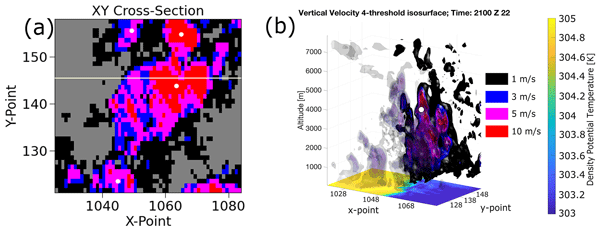
Building on previous analysis tools developed for atmospheric science, the original release of the Tracking and Object-Based Analysis (tobac) Python package, v1.2, was open-source, modular, and insensitive to the type of gridded input data. Here, we present the latest version of tobac, v1.5, which substantially improves scientific capabilities and computational efficiency from the previous version. These enhancements permit new uses for tobac in atmospheric science and potentially other fields.
Junghwa Lee, Patric Seifert, Tempei Hashino, Maximilian Maahn, Fabian Senf, and Oswald Knoth
Atmos. Chem. Phys., 24, 5737–5756, https://doi.org/10.5194/acp-24-5737-2024, https://doi.org/10.5194/acp-24-5737-2024, 2024
Short summary
Short summary
Spectral bin model simulations of an idealized supercooled stratiform cloud were performed with the AMPS model for variable CCN and INP concentrations. We performed radar forward simulations with PAMTRA to transfer the simulations into radar observational space. The derived radar reflectivity factors were compared to observational studies of stratiform mixed-phase clouds. These studies report a similar response of the radar reflectivity factor to aerosol perturbations as we found in our study.
Fabian Senf, Bernd Heinold, Anne Kubin, Jason Müller, Roland Schrödner, and Ina Tegen
Atmos. Chem. Phys., 23, 8939–8958, https://doi.org/10.5194/acp-23-8939-2023, https://doi.org/10.5194/acp-23-8939-2023, 2023
Short summary
Short summary
Wildfire smoke is a significant source of airborne atmospheric particles that can absorb sunlight. Extreme fires in particular, such as those during the 2019–2020 Australian wildfire season (Black Summer fires), can considerably affect our climate system. In the present study, we investigate the various effects of Australian smoke using a global climate model to clarify how the Earth's atmosphere, including its circulation systems, adjusted to the extraordinary amount of Australian smoke.
Kevin Ohneiser, Albert Ansmann, Jonas Witthuhn, Hartwig Deneke, Alexandra Chudnovsky, Gregor Walter, and Fabian Senf
Atmos. Chem. Phys., 23, 2901–2925, https://doi.org/10.5194/acp-23-2901-2023, https://doi.org/10.5194/acp-23-2901-2023, 2023
Short summary
Short summary
This study shows that smoke layers can reach the tropopause via the self-lofting effect within 3–7 d in the absence of pyrocumulonimbus convection if the
aerosol optical thickness is larger than approximately 2 for a longer time period. When reaching the stratosphere, wildfire smoke can sensitively influence the stratospheric composition on a hemispheric scale and thus can affect the Earth’s climate and the ozone layer.
Bernd Heinold, Holger Baars, Boris Barja, Matthew Christensen, Anne Kubin, Kevin Ohneiser, Kerstin Schepanski, Nick Schutgens, Fabian Senf, Roland Schrödner, Diego Villanueva, and Ina Tegen
Atmos. Chem. Phys., 22, 9969–9985, https://doi.org/10.5194/acp-22-9969-2022, https://doi.org/10.5194/acp-22-9969-2022, 2022
Short summary
Short summary
The extreme 2019–2020 Australian wildfires produced massive smoke plumes lofted into the lower stratosphere by pyrocumulonimbus convection. Most climate models do not adequately simulate the injection height of such intense fires. By combining aerosol-climate modeling with prescribed pyroconvective smoke injection and lidar observations, this study shows the importance of the representation of the most extreme wildfire events for estimating the atmospheric energy budget.
Kevin Ohneiser, Markus Hartmann, Heike Wex, Patric Seifert, Anja Hardt, Anna Miller, Katharina Baudrexl, Werner Thomas, Veronika Ettrichrätz, Maximilian Maahn, Tom Gaudek, Willi Schimmel, Fabian Senf, Hannes Griesche, Martin Radenz, and Jan Henneberger
Atmos. Chem. Phys., 26, 3223–3236, https://doi.org/10.5194/acp-26-3223-2026, https://doi.org/10.5194/acp-26-3223-2026, 2026
Short summary
Short summary
This study highlights the efficiency of supercooled liquid-dominated stratus clouds to remove ice-nucleating particles (INPs). When within the planetary boundary layer (PBL), lower concentrations of INPs were measured under supercooled stratus conditions, compared to when the stratus cloud layers occurred at temperatures above freezing. Under supercooling conditions, the free-troposphere above the supercooled stratus covered PBL was found to be an additional potential source of INP.
Kevin Ohneiser, Patric Seifert, Willi Schimmel, Fabian Senf, Tom Gaudek, Martin Radenz, Audrey Teisseire, Veronika Ettrichrätz, Teresa Vogl, Nina Maherndl, Nils Pfeifer, Jan Henneberger, Anna J. Miller, Nadja Omanovic, Christopher Fuchs, Huiying Zhang, Fabiola Ramelli, Robert Spirig, Anton Kötsche, Heike Kalesse-Los, Maximilian Maahn, Heather Corden, Alexis Berne, Majid Hajipour, Hannes Griesche, Julian Hofer, Ronny Engelmann, Annett Skupin, Albert Ansmann, and Holger Baars
Atmos. Chem. Phys., 25, 17363–17386, https://doi.org/10.5194/acp-25-17363-2025, https://doi.org/10.5194/acp-25-17363-2025, 2025
Short summary
Short summary
This study focuses on a seeder-feeder cloud system on 8 Jan 2024 in Eriswil, Switzerland. It is shown how the interaction of these cloud systems changes the cloud microphysical properties and the precipitation patterns. A big set of advanced remote-sensing techniques and retrieval algorithms are applied, so that a detailed view on the seeder-feeder cloud system is available. The gained knowledge can be used to improve weather models and weather forecasts.
Sini Talvinen, Paul Kim, Emanuele Tovazzi, Eemeli Holopainen, Roxana Cremer, Thomas Kühn, Harri Kokkola, Zak Kipling, David Neubauer, João C. Teixeira, Alistair Sellar, Duncan Watson-Parris, Yang Yang, Jialei Zhu, Srinath Krishnan, Annele Virtanen, and Daniel G. Partridge
Atmos. Chem. Phys., 25, 14449–14478, https://doi.org/10.5194/acp-25-14449-2025, https://doi.org/10.5194/acp-25-14449-2025, 2025
Short summary
Short summary
Climate models struggle to predict how clouds and aerosols interact, affecting Earth’s energy balance. This study compares models to observations to see how they describe effects of clouds and rain on aerosols. While both models show similar overall trends, seasonal differences emerged. These, however, align with differences in key variables participating in cloud formation. The study provides insights on how to improve the representation of aerosol-cloud interactions in climate models.
Dennis Niedermeier, Rasmus Hoffmann, Silvio Schmalfuss, Wiebke Frey, Fabian Senf, Olaf Hellmuth, Mira Pöhlker, and Frank Stratmann
Aerosol Research, 3, 219–230, https://doi.org/10.5194/ar-3-219-2025, https://doi.org/10.5194/ar-3-219-2025, 2025
Short summary
Short summary
This study examines the deliquescence behavior of NaCl particles in a turbulent humidity field using the wind tunnel LACIS-T (Turbulent Leipzig Aerosol Cloud Interaction Simulator). The results show that turbulent relative humidity (RH) fluctuations affect the number of deliquesced particles, depending on the mean RH, strength of humidity fluctuations, and particle residence time. It turns out that, in addition to the mean RH, it is essential to consider humidity fluctuations and particle history when determining the phase state of the deliquescent particles.
G. Alexander Sokolowsky, Sean W. Freeman, William K. Jones, Julia Kukulies, Fabian Senf, Peter J. Marinescu, Max Heikenfeld, Kelcy N. Brunner, Eric C. Bruning, Scott M. Collis, Robert C. Jackson, Gabrielle R. Leung, Nils Pfeifer, Bhupendra A. Raut, Stephen M. Saleeby, Philip Stier, and Susan C. van den Heever
Geosci. Model Dev., 17, 5309–5330, https://doi.org/10.5194/gmd-17-5309-2024, https://doi.org/10.5194/gmd-17-5309-2024, 2024
Short summary
Short summary
Building on previous analysis tools developed for atmospheric science, the original release of the Tracking and Object-Based Analysis (tobac) Python package, v1.2, was open-source, modular, and insensitive to the type of gridded input data. Here, we present the latest version of tobac, v1.5, which substantially improves scientific capabilities and computational efficiency from the previous version. These enhancements permit new uses for tobac in atmospheric science and potentially other fields.
Junghwa Lee, Patric Seifert, Tempei Hashino, Maximilian Maahn, Fabian Senf, and Oswald Knoth
Atmos. Chem. Phys., 24, 5737–5756, https://doi.org/10.5194/acp-24-5737-2024, https://doi.org/10.5194/acp-24-5737-2024, 2024
Short summary
Short summary
Spectral bin model simulations of an idealized supercooled stratiform cloud were performed with the AMPS model for variable CCN and INP concentrations. We performed radar forward simulations with PAMTRA to transfer the simulations into radar observational space. The derived radar reflectivity factors were compared to observational studies of stratiform mixed-phase clouds. These studies report a similar response of the radar reflectivity factor to aerosol perturbations as we found in our study.
Dominic Heslin-Rees, Peter Tunved, Johan Ström, Roxana Cremer, Paul Zieger, Ilona Riipinen, Annica M. L. Ekman, Konstantinos Eleftheriadis, and Radovan Krejci
Atmos. Chem. Phys., 24, 2059–2075, https://doi.org/10.5194/acp-24-2059-2024, https://doi.org/10.5194/acp-24-2059-2024, 2024
Short summary
Short summary
Light-absorbing atmospheric particles (e.g. black carbon – BC) exert a warming effect on the Arctic climate. We show that the amount of particle light absorption decreased from 2002 to 2023. We conclude that in addition to reductions in emissions of BC, wet removal plays a role in the long-term reduction of BC in the Arctic, given the increase in surface precipitation experienced by air masses arriving at the site. The potential impact of biomass burning events is shown to have increased.
Fabian Senf, Bernd Heinold, Anne Kubin, Jason Müller, Roland Schrödner, and Ina Tegen
Atmos. Chem. Phys., 23, 8939–8958, https://doi.org/10.5194/acp-23-8939-2023, https://doi.org/10.5194/acp-23-8939-2023, 2023
Short summary
Short summary
Wildfire smoke is a significant source of airborne atmospheric particles that can absorb sunlight. Extreme fires in particular, such as those during the 2019–2020 Australian wildfire season (Black Summer fires), can considerably affect our climate system. In the present study, we investigate the various effects of Australian smoke using a global climate model to clarify how the Earth's atmosphere, including its circulation systems, adjusted to the extraordinary amount of Australian smoke.
Kevin Ohneiser, Albert Ansmann, Jonas Witthuhn, Hartwig Deneke, Alexandra Chudnovsky, Gregor Walter, and Fabian Senf
Atmos. Chem. Phys., 23, 2901–2925, https://doi.org/10.5194/acp-23-2901-2023, https://doi.org/10.5194/acp-23-2901-2023, 2023
Short summary
Short summary
This study shows that smoke layers can reach the tropopause via the self-lofting effect within 3–7 d in the absence of pyrocumulonimbus convection if the
aerosol optical thickness is larger than approximately 2 for a longer time period. When reaching the stratosphere, wildfire smoke can sensitively influence the stratospheric composition on a hemispheric scale and thus can affect the Earth’s climate and the ozone layer.
Bernd Heinold, Holger Baars, Boris Barja, Matthew Christensen, Anne Kubin, Kevin Ohneiser, Kerstin Schepanski, Nick Schutgens, Fabian Senf, Roland Schrödner, Diego Villanueva, and Ina Tegen
Atmos. Chem. Phys., 22, 9969–9985, https://doi.org/10.5194/acp-22-9969-2022, https://doi.org/10.5194/acp-22-9969-2022, 2022
Short summary
Short summary
The extreme 2019–2020 Australian wildfires produced massive smoke plumes lofted into the lower stratosphere by pyrocumulonimbus convection. Most climate models do not adequately simulate the injection height of such intense fires. By combining aerosol-climate modeling with prescribed pyroconvective smoke injection and lidar observations, this study shows the importance of the representation of the most extreme wildfire events for estimating the atmospheric energy budget.
Cited articles
Baldauf, M., Seifert, A., Förstner, J., Majewski, D., Raschendorfer, M., and Reinhardt, T.: Operational Convective-Scale Numerical Weather Prediction with the COSMO Model: Description and Sensitivities, Mon. Weather Rev., 139, 3887–3905, https://doi.org/10.1175/mwr-d-10-05013.1, 2011. a
Bechtold, P., Köhler, M., Jung, T., Doblas-Reyes, F., Leutbecher, M., Rodwell, M. J., Vitart, F., and Balsamo, G.: Advances in simulating atmospheric variability with the ECMWF model: From synoptic to decadal time-scales, Q. J. Roy. Meteor. Soc., 134, 1337–1351, https://doi.org/10.1002/qj.289, 2008. a
Bender, M. A. and Ginis, I.: Real-Case Simulations of Hurricane–Ocean Interaction Using A High-Resolution Coupled Model: Effects on Hurricane Intensity, Mon. Weather Rev., 128, 917–946, https://doi.org/10.1175/1520-0493(2000)128<0917:RCSOHO>2.0.CO;2, 2000. a
Davis, C., Wang, W., Chen, S. S., Chen, Y., Corbosiero, K., DeMaria, M., Dudhia, J., Holland, G., Klemp, J., Michalakes, J., Reeves, H., Rotunno, R., Snyder, C., and Xiao, Q.: Prediction of Landfalling Hurricanes with the Advanced Hurricane WRF Model, Mon. Weather Rev., 136, 1990–2005, https://doi.org/10.1175/2007MWR2085.1, 2008. a
Davis, C., Wang, W., Cavallo, S., Done, J., Dudhia, J., Fredrick, S., Michalakes, J., Caldwell, G., Engel, T., and Torn, R.: High-Resolution Hurricane Forecasts, Comput. Sci. Eng., 13, 22–30, https://doi.org/10.1109/MCSE.2010.74, 2011. a
Dipankar, A., Stevens, B., Heinze, R., Moseley, C., Zängl, G., Giorgetta, M., and Brdar, S.: Large eddy simulation using the general circulation model ICON, J. Adv. Model. Earth Sy., 7, 963–986, https://doi.org/10.1002/2015MS000431, 2015. a
Dong, J., Liu, B., Zhang, Z., Wang, W., Mehra, A., Hazelton, A. T., Winterbottom, H. R., Zhu, L., Wu, K., Zhang, C., Tallapragada, V., Zhang, X., Gopalakrishnan, S., and Marks, F.: The Evaluation of Real-Time Hurricane Analysis and Forecast System (HAFS) Stand-Alone Regional (SAR) Model Performance for the 2019 Atlantic Hurricane Season, Atmosphere, 11, https://doi.org/10.3390/atmos11060617, 2020. a
Enz, B. M., Engelmann, J. P., and Lohmann, U.: Use of threshold parameter variation for tropical cyclone tracking, Geosci. Model Dev., 16, 5093–5112, https://doi.org/10.5194/gmd-16-5093-2023, 2023. a
Gao, K., Harris, L., Bender, M., Chen, J.-H., Zhou, L., and Knutson, T.: Regulating Fine-Scale Resolved Convection in High-Resolution Models for Better Hurricane Track Prediction, Geophys. Res. Lett., 50, e2023GL103329, https://doi.org/10.1029/2023GL103329, 2023. a, b
Gopalakrishnan, S. G., Bacon, D. P., Ahmad, N. N., Boybeyi, Z., Dunn, T. J., Hall, M. S., Jin, Y., Lee, P. C. S., Mays, D. E., Madala, R. V., Sarma, A., Turner, M. D., and Wait, T. R.: An Operational Multiscale Hurricane Forecasting System, Mon. Weather Rev., 130, 1830–1847, https://doi.org/10.1175/1520-0493(2002)130<1830:AOMHFS>2.0.CO;2, 2002. a
Gutmann, E. D., Rasmussen, R. M., Liu, C., Ikeda, K., Bruyere, C. L., Done, J. M., Garrè, L., Friis-Hansen, P., and Veldore, V.: Changes in Hurricanes from a 13-yr Convection-Permitting Pseudo–Global Warming Simulation, J. Climate, 31, 3643–3657, https://doi.org/10.1175/JCLI-D-17-0391.1, 2018. a
Heikenfeld, M., Marinescu, P. J., Christensen, M., Watson-Parris, D., Senf, F., van den Heever, S. C., and Stier, P.: tobac 1.2: towards a flexible framework for tracking and analysis of clouds in diverse datasets, Geosci. Model Dev., 12, 4551–4570, https://doi.org/10.5194/gmd-12-4551-2019, 2019. a
Heinze, R., Dipankar, A., Henken, C. C., Moseley, C., Sourdeval, O., Trömel, S., Xie, X., Adamidis, P., Ament, F., Baars, H., Barthlott, C., Behrendt, A., Blahak, U., Bley, S., Brdar, S., Brueck, M., Crewell, S., Deneke, H., Girolamo, P. D., Evaristo, R., Fischer, J., Frank, C., Friederichs, P., Göcke, T., Gorges, K., Hande, L., Hanke, M., Hansen, A., Hege, H.-C., Hoose, C., Jahns, T., Kalthoff, N., Klocke, D., Kneifel, S., Knippertz, P., Kuhn, A., van Laar, T., Macke, A., Maurer, V., Mayer, B., Meyer, C. I., Muppa, S. K., Neggers, R. A. J., Orlandi, E., Pantillon, F., Pospichal, B., Röber, N., Scheck, L., Seifert, A., Seifert, P., Senf, F., Siligam, P., Simmer, C., Steinke, S., Stevens, B., Wapler, K., Weniger, M., Wulfmeyer, V., Zängl, G., Zhang, D., and Quaas, J.: Large-eddy simulations over Germany using ICON: a comprehensive evaluation, Q. J. Roy. Meteor. Soc., 143, 69–100, https://doi.org/10.1002/qj.2947, 2017. a
Hersbach, H., Bell, B., Berrisford, P., Hirahara, S., Horányi, A., Muñoz-Sabater, J., Nicolas, J., Peubey, C., Radu, R., Schepers, D., Simmons, A., Soci, C., Abdalla, S., Abellan, X., Balsamo, G., Bechtold, P., Biavati, G., Bidlot, J., Bonavita, M., De Chiara, G., Dahlgren, P., Dee, D., Diamantakis, M., Dragani, R., Flemming, J., Forbes, R., Fuentes, M., Geer, A., Haimberger, L., Healy, S., Hogan, R. J., Hólm, E., Janisková, M., Keeley, S., Laloyaux, P., Lopez, P., Lupu, C., Radnoti, G., de Rosnay, P., Rozum, I., Vamborg, F., Villaume, S., and Thépaut, J.-N.: The ERA5 global reanalysis, Q. J. Roy. Meteor. Soc., 146, 1999–2049, https://doi.org/10.1002/qj.3803, 2020. a, b
Hogan, R. J. and Bozzo, A.: A Flexible and Efficient Radiation Scheme for the ECMWF Model, J. Adv. Model. Earth Sy., 10, 1990–2008, https://doi.org/10.1029/2018MS001364, 2018. a
Hohenegger, C., Korn, P., Linardakis, L., Redler, R., Schnur, R., Adamidis, P., Bao, J., Bastin, S., Behravesh, M., Bergemann, M., Biercamp, J., Bockelmann, H., Brokopf, R., Brüggemann, N., Casaroli, L., Chegini, F., Datseris, G., Esch, M., George, G., Giorgetta, M., Gutjahr, O., Haak, H., Hanke, M., Ilyina, T., Jahns, T., Jungclaus, J., Kern, M., Klocke, D., Kluft, L., Kölling, T., Kornblueh, L., Kosukhin, S., Kroll, C., Lee, J., Mauritsen, T., Mehlmann, C., Mieslinger, T., Naumann, A. K., Paccini, L., Peinado, A., Praturi, D. S., Putrasahan, D., Rast, S., Riddick, T., Roeber, N., Schmidt, H., Schulzweida, U., Schütte, F., Segura, H., Shevchenko, R., Singh, V., Specht, M., Stephan, C. C., von Storch, J.-S., Vogel, R., Wengel, C., Winkler, M., Ziemen, F., Marotzke, J., and Stevens, B.: ICON-Sapphire: simulating the components of the Earth system and their interactions at kilometer and subkilometer scales, Geosci. Model Dev., 16, 779–811, https://doi.org/10.5194/gmd-16-779-2023, 2023. a, b, c
ICON Documentation: Build and Run: Input Data – Lateral Boundary Conditions, https://docs.icon-model.org/documentation/buildrun/buildrun_input_data.html (last access: 1 July 2026), 2026. a
ICON partnership: ICON release 2025.04, dWD; MPI-M; DKRZ; KIT; C2SM, World Data Center for Climate (WDCC) at DKRZ [data set], https://doi.org/10.35089/wdcc/iconrelease2025.04, 2025. a, b
Kleppek, S., Muccione, V., Raible, C. C., Bresch, D. N., Koellner-Heck, P., and Stocker, T. F.: Tropical cyclones in ERA-40: A detection and tracking method, Geophys. Res. Lett., 35, https://doi.org/10.1029/2008GL033880, 2008. a
Klocke, D., Frauen, C., Engels, J. F., Alexeev, D., Redler, R., Schnur, R., Haak, H., Kornblueh, L., Brüggemann, N., Chegini, F., Römmer, M., Hoffmann, L., Griessbach, S., Bode, M., Coles, J., Gila, M., Sawyer, W., Calotoiu, A., Budanaz, Y., Mazumder, P., Copik, M., Weber, B., Herten, A., Bockelmann, H., Hoefler, T., Hohenegger, C., and Stevens, B.: Computing the Full Earth System at 1 km Resolution, in: Proceedings of the International Conference for High Performance Computing, Networking, Storage and Analysis, SC '25, Association for Computing Machinery, New York, NY, USA, 125–136, https://doi.org/10.1145/3712285.3771789, 2025. a, b
Kurihara, Y., Tuleya, R. E., and Bender, M. A.: The GFDL Hurricane Prediction System and Its Performance in the 1995 Hurricane Season, Mon. Weather Rev., 126, 1306–1322, https://doi.org/10.1175/1520-0493(1998)126<1306:TGHPSA>2.0.CO;2, 1998. a
Landsea, C. W. and Franklin, J. L.: Atlantic Hurricane Database Uncertainty and Presentation of a New Database Format, Mon. Weather Rev., 141, 3576–3592, https://doi.org/10.1175/MWR-D-12-00254.1, 2013. a
Mauritsen, T., Redler, R., Esch, M., Stevens, B., Hohenegger, C., Klocke, D., Brokopf, R., Haak, H., Linardakis, L., Röber, N., and Schnur, R.: Early development and tuning of a global coupled cloud resolving model, and its fast response to increasing CO2, Tellus A, 74, 346–363, https://doi.org/10.16993/tellusa.54, 2022. a
Müller, W. A., Früh, B., Korn, P., Potthast, R., Baehr, J., Bettems, J.-M., Bölöni, G., Brienen, S., Fröhlich, K., Helmert, J., Jungclaus, J., Köhler, M., Lorenz, S., Schneidereit, A., Schnur, R., Schulz, J.-P., Schlemmer, L., Sgoff, C., Pham, T. V., Pohlmann, H., Vogel, B., Vogel, H., Wirth, R., Zaehle, S., Zängl, G., Stevens, B., and Marotzke, J.: ICON: Toward Vertically Integrated Model Configurations for Numerical Weather Prediction, Climate Predictions, and Projections, B. Am. Meteorol. Soc., 106, E1017 – E1031, https://doi.org/10.1175/BAMS-D-24-0042.1, 2025. a
National Hurricane Center: Tropical Cyclone Report: Hurricane Paulette (AL172020), Tech. rep., National Hurricane Center, Miami, FL, USA, https://www.nhc.noaa.gov/data/tcr/AL172020_Paulette.pdf (last access: 5 February 2026), 2021. a
Satoh, M., Noda, A. T., Seiki, T., Chen, Y.-W., Kodama, C., Yamada, Y., Kuba, N., and Sato, Y.: Toward reduction of the uncertainties in climate sensitivity due to cloud processes using a global non-hydrostatic atmospheric model, Prog. Earth Planet. Sci., 5, 67, https://doi.org/10.1186/s40645-018-0226-1, 2018. a
Satoh, M., Stevens, B., Judt, F., Khairoutdinov, M., Lin, S.-J., Putman, W. M., and Düben, P.: Global Cloud-Resolving Models, Curr. Clim. Change Rep., https://doi.org/10.1007/s40641-019-00131-0, 2019. a
Segura, H., Pedruzo-Bagazgoitia, X., Weiss, P., Müller, S. K., Rackow, T., Lee, J., Dolores-Tesillos, E., Benedict, I., Aengenheyster, M., Aguridan, R., Arduini, G., Baker, A. J., Bao, J., Bastin, S., Baulenas, E., Becker, T., Beyer, S., Bockelmann, H., Brüggemann, N., Brunner, L., Cheedela, S. K., Das, S., Denissen, J., Dragaud, I., Dziekan, P., Ekblom, M., Engels, J. F., Esch, M., Forbes, R., Frauen, C., Freischem, L., García-Maroto, D., Geier, P., Gierz, P., González-Cervera, Á., Grayson, K., Griffith, M., Gutjahr, O., Haak, H., Hadade, I., Haslehner, K., ul Hasson, S., Hegewald, J., Kluft, L., Koldunov, A., Koldunov, N., Kölling, T., Koseki, S., Kosukhin, S., Kousal, J., Kuma, P., Kumar, A. U., Li, R., Maury, N., Meindl, M., Milinski, S., Mogensen, K., Niraula, B., Nowak, J., Praturi, D. S., Proske, U., Putrasahan, D., Redler, R., Santuy, D., Sármány, D., Schnur, R., Scholz, P., Sidorenko, D., Spät, D., Sützl, B., Takasuka, D., Tompkins, A., Uribe, A., Valentini, M., Veerman, M., Voigt, A., Warnau, S., Wachsmann, F., Wacławczyk, M., Wedi, N., Wieners, K.-H., Wille, J., Winkler, M., Wu, Y., Ziemen, F., Zimmermann, J., Bender, F. A.-M., Bojovic, D., Bony, S., Bordoni, S., Brehmer, P., Dengler, M., Dutra, E., Faye, S., Fischer, E., van Heerwaarden, C., Hohenegger, C., Järvinen, H., Jochum, M., Jung, T., Jungclaus, J. H., Keenlyside, N. S., Klocke, D., Konow, H., Klose, M., Malinowski, S., Martius, O., Mauritsen, T., Mellado, J. P., Mieslinger, T., Mohino, E., Pawłowska, H., Peters-von Gehlen, K., Sarré, A., Sobhani, P., Stier, P., Tuppi, L., Vidale, P. L., Sandu, I., and Stevens, B.: nextGEMS: entering the era of kilometer-scale Earth system modeling, Geosci. Model Dev., 18, 7735–7761, https://doi.org/10.5194/gmd-18-7735-2025, 2025. a, b
Seifert, A. and Beheng, K. D.: A two-moment cloud microphysics parameterization for mixed-phase clouds, Part 1: Model description, Meteorol. Atmos. Phys., 92, 45–66, https://doi.org/10.1007/s00703-005-0112-4, 2006. a
Senf, F.: Data for Nested Hurricane-Centric ICON Runs for Hurricane Paulette (2020), https://www.wdc-climate.de/ui/entry?acronym=DKRZ_LTA_1376_dsg0001 (last access: 18 August 2026), 2025. a
Senf, F.: ICON v2.6.6 Patch: for flexible SSTs in nested domains, Zenodo [code], https://doi.org/10.5281/zenodo.18385022, 2026a. a, b
Senf, F.: Jupyter Notebooks for Plotting Analysis of “Advancing Hurricane-Centric Simulations with ICON”, Final Release, Zenodo [code], https://doi.org/10.5281/zenodo.21836648, 2026b. a
Senf, F.: Hurricane Centric Toolset Version v2026.01 – Common Initialization and Perturbation Experiment Capabilities, Zenodo [code], https://doi.org/10.5281/zenodo.18271898, 2026c. a, b
Senf, F.: ICON v2025-04-2 Patch: for handling vertical interpolation in init of two-moment cloud microphysics, Zenodo [code], https://doi.org/10.5281/zenodo.18387047, 2026d. a, b
Senf, F., Voigt, A., Clerbaux, N., Hünerbein, A., and Deneke, H.: Increasing Resolution and Resolving Convection Improve the Simulation of Cloud-Radiative Effects Over the North Atlantic, J. Geophys. Res.-Atmos., 125, e2020JD032667, https://doi.org/10.1029/2020JD032667, 2020. a
Shukla, J., Palmer, T. N., Hagedorn, R., Hoskins, B., Kinter, J., Marotzke, J., Miller, M., and Slingo, J.: Toward a New Generation of World Climate Research and Computing Facilities, B. Am. Meteorol. Soc., 91, 1407–1412, https://doi.org/10.1175/2010BAMS2900.1, 2010. a
Sokolowsky, G. A., Freeman, S. W., Jones, W. K., Kukulies, J., Senf, F., Marinescu, P. J., Heikenfeld, M., Brunner, K. N., Bruning, E. C., Collis, S. M., Jackson, R. C., Leung, G. R., Pfeifer, N., Raut, B. A., Saleeby, S. M., Stier, P., and van den Heever, S. C.: tobac v1.5: introducing fast 3D tracking, splits and mergers, and other enhancements for identifying and analysing meteorological phenomena, Geosci. Model Dev., 17, 5309–5330, https://doi.org/10.5194/gmd-17-5309-2024, 2024. a
Stevens, B., Acquistapace, C., Hansen, A., Heinze, R., Klinger, C., Klocke, D., Rybka, H., Schubotz, W., Windmiller, J., Adamidis, P., Arka, I., Barlakas, V., Bielamowicz, J., Brück, M., Brune, S., Bühler, S. A., Burkhardt, U., Cioni, G., Costa-Surós, M., Crewell, S., Crüger, T., Deneke, H., Friedrichs, P., Henken, C. C., Hohenegger, C., Jacob, M., Jakub, F., Kälthoff, N., Köhler, M., van Laar, T. W., Li, P., Löhnert, U., Macke, A., Madenach, N., Mayer, B., Nam, C., Naumann, A. K., Peters, K., Poll, S., Quaas, J., Röber, N., Rochetin, N., Scheck, L., Schemann, V., Schnitt, S., Seifert, A., Senf, F., Shapkalijevski, M., Simmer, C., Singh, S., Sourdeval, O., Spickermann, D., Strandgren, J., Tessiot, O., Vercauteren, N., Vial, J., Voigt, A., and Zängl, G.: The Added Value of Large-eddy and Storm-resolving Models for Simulating Clouds and Precipitation, J. Meteorol. Soc. Jpn., 98, 395–435, https://doi.org/10.2151/jmsj.2020-021, 2020. a, b, c
Tiedtke, M.: A Comprehensive Mass Flux Scheme for Cumulus Parameterization in Large-Scale Models, Mon. Weather Rev., 117, 1779–1800, https://doi.org/10.1175/1520-0493(1989)117<1779:acmfsf>2.0.co;2, 1989. a
Ullrich, P. A., Zarzycki, C. M., McClenny, E. E., Pinheiro, M. C., Stansfield, A. M., and Reed, K. A.: TempestExtremes v2.1: a community framework for feature detection, tracking, and analysis in large datasets, Geosci. Model Dev., 14, 5023–5048, https://doi.org/10.5194/gmd-14-5023-2021, 2021. a
Zängl, G., Reinert, D., Rípodas, P., and Baldauf, M.: The ICON (ICOsahedral Non-hydrostatic) modelling framework of DWD and MPI-M: Description of the non-hydrostatic dynamical core, Q. J. Roy. Meteor. Soc., 141, 563–579, https://doi.org/10.1002/qj.2378, 2014. a, b, c
Zängl, G., Reinert, D., and Prill, F.: Grid refinement in ICON v2.6.4, Geosci. Model Dev., 15, 7153–7176, https://doi.org/10.5194/gmd-15-7153-2022, 2022. a, b
Short summary
Computer models for hurricane prediction are increasingly detailed but require large computing resources. We developed a flexible approach that follows hurricanes, applying high-resolution simulations only where needed. This method reduces computing costs by up to an order of magnitude compared to conventional limited-area domains, while achieving resolutions down to 300 m. The approach enables more efficient hurricane research and improved understanding of tropical dynamics.
Computer models for hurricane prediction are increasingly detailed but require large...