
Articles | Volume 19, issue 15
https://doi.org/10.5194/gmd-19-7325-2026
© Author(s) 2026. This work is distributed under
the Creative Commons Attribution 4.0 License.
the Creative Commons Attribution 4.0 License.
https://doi.org/10.5194/gmd-19-7325-2026
© Author(s) 2026. This work is distributed under
the Creative Commons Attribution 4.0 License.
the Creative Commons Attribution 4.0 License.
Model description paper
| 
07 Aug 2026
Model description paper |
| 07 Aug 2026
| 07 Aug 2026
Regional CO2 and CH4 inversion system using WRF-Chem (v4.4)/DART (v9.8.0) and continuous high-precision observations over the Korean Peninsula
Doyoon Kwon
Department of Atmospheric Sciences, Yonsei University, Seoul, 03722, Republic of Korea
Bonhoon Koo
Department of Atmospheric Sciences, Yonsei University, Seoul, 03722, Republic of Korea
Jooyeop Lee
Department of Atmospheric Sciences, Yonsei University, Seoul, 03722, Republic of Korea
Jeongwon Kim
Department of Atmospheric Sciences, Yonsei University, Seoul, 03722, Republic of Korea
Jaehyung Ahn
Department of Atmospheric Sciences, Yonsei University, Seoul, 03722, Republic of Korea

Department of Atmospheric Sciences, Yonsei University, Seoul, 03722, Republic of Korea
Eri Saikawa
Department of Environmental Sciences, Emory University, Atlanta, GA 30319, USA
Alexander Avramov
Department of Environmental Sciences, Emory University, Atlanta, GA 30319, USA
Changsub Shim
Korea Environment Institute, Sejong, 30147, Republic of Korea
Je-Woo Hong
Korea Environment Institute, Sejong, 30147, Republic of Korea
Daegeun Shin
National Institute of Meteorological Sciences, Jeju-do, 63568, Republic of Korea
Shanlan Li
National Institute of Meteorological Sciences, Jeju-do, 63568, Republic of Korea
Sumin Kim
National Institute of Meteorological Sciences, Jeju-do, 63568, Republic of Korea
Sangwon Joo
National Institute of Meteorological Sciences, Jeju-do, 63568, Republic of Korea
Related authors
No articles found.
Hayoung Park, Sujong Jeong, Jaewon Joo, Dong Yeong Chang, Yu-Ri Lee, Hyuckjae Lee, Jueun Kim, Jaewon Shin, Jonghyuk Lee, Jaemin Hong, Jae Hyun Lim, Donghee Kim, Isamu Morino, Matthias M. Frey, Gwangju Moon, Hyojin Eom, Sumin Kim, Sunran Lee, Jungho Yu, and Kyucheol Shin
EGUsphere, https://doi.org/10.5194/egusphere-2026-3755, https://doi.org/10.5194/egusphere-2026-3755, 2026
This preprint is open for discussion and under review for Atmospheric Chemistry and Physics (ACP).
Short summary
Short summary
This study analyzed greenhouse gas emissions from one of South Korea’s largest petrochemical complexes using ground, mobile, aircraft, and satellite measurements. The results revealed higher emissions, including methane leaks, than what was reported in existing inventory estimates. By integrating different types of observations, this study shows a more accurate way to measure industrial emissions and provides information that can support better emissions reporting and climate action.
Naki Yu, Hee-Jung Yoo, Sangmin Oh, Yongjoo Choi, Sunran Lee, Sumin Kim, and Saehee Lim
Atmos. Chem. Phys., 25, 15263–15280, https://doi.org/10.5194/acp-25-15263-2025, https://doi.org/10.5194/acp-25-15263-2025, 2025
Short summary
Short summary
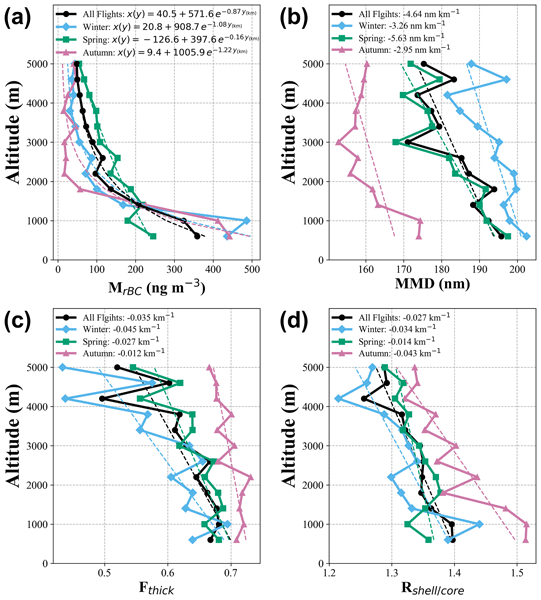
Black carbon (BC) is a short-lived climate pollutant that affects climate and cloud formation, but its physical properties are poorly represented in models. We used aircraft to measure BC, CO, and CO2 over the Yellow Sea across seasons. Our results show that BC changes in size and mixing state significantly depending on its origin and weather during transport, highlighting the need for better model representation of this pollutant.
Kyoung-Min Kim, Si-Wan Kim, Seunghwan Seo, Donald R. Blake, Seogju Cho, James H. Crawford, Louisa K. Emmons, Alan Fried, Jay R. Herman, Jinkyu Hong, Jinsang Jung, Gabriele G. Pfister, Andrew J. Weinheimer, Jung-Hun Woo, and Qiang Zhang
Geosci. Model Dev., 17, 1931–1955, https://doi.org/10.5194/gmd-17-1931-2024, https://doi.org/10.5194/gmd-17-1931-2024, 2024
Short summary
Short summary
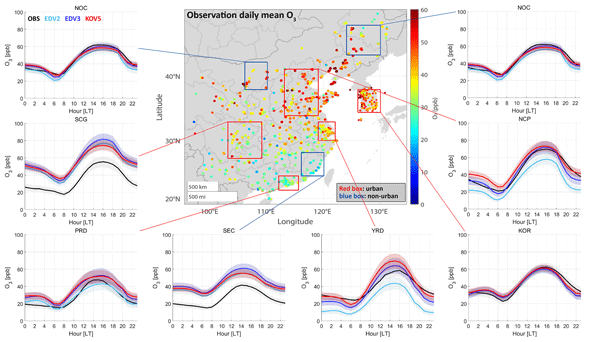
Three emission inventories were evaluated for East Asia using data acquired during a field campaign in 2016. The inventories successfully reproduced the daily variations of ozone and nitrogen dioxide. However, the spatial distributions of model ozone did not fully agree with the observations. Additionally, all simulations underestimated carbon monoxide and volatile organic compound (VOC) levels. Increasing VOC emissions over South Korea resulted in improved ozone simulations.
Haeyoung Lee, Wonick Seo, Shanlan Li, Soojeong Lee, Samuel Takele Kenea, and Sangwon Joo
Atmos. Chem. Phys., 23, 7141–7159, https://doi.org/10.5194/acp-23-7141-2023, https://doi.org/10.5194/acp-23-7141-2023, 2023
Short summary
Short summary
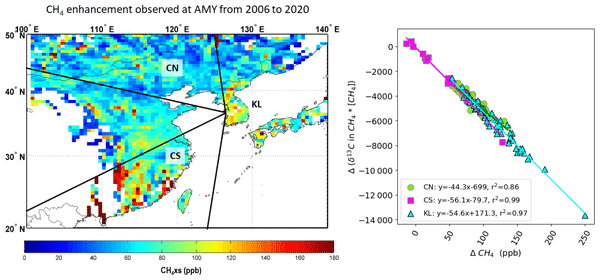
We introduced three Korea Meteorological Administration (KMA) monitoring stations with monitoring systems and measurement uncertainty. We also analyzed the regional characteristics of CH4 at each KMA station. CH4 levels measured at KMA stations are compared to those measured at other Asian stations. From the long-term records of CH4 and δ13CH4 at AMY, we confirmed that the source of CH4xs changed from the past (2006 to 2010) to recent (2016 to 2020) years in East Asia.
Mathew Lipson, Sue Grimmond, Martin Best, Winston T. L. Chow, Andreas Christen, Nektarios Chrysoulakis, Andrew Coutts, Ben Crawford, Stevan Earl, Jonathan Evans, Krzysztof Fortuniak, Bert G. Heusinkveld, Je-Woo Hong, Jinkyu Hong, Leena Järvi, Sungsoo Jo, Yeon-Hee Kim, Simone Kotthaus, Keunmin Lee, Valéry Masson, Joseph P. McFadden, Oliver Michels, Wlodzimierz Pawlak, Matthias Roth, Hirofumi Sugawara, Nigel Tapper, Erik Velasco, and Helen Claire Ward
Earth Syst. Sci. Data, 14, 5157–5178, https://doi.org/10.5194/essd-14-5157-2022, https://doi.org/10.5194/essd-14-5157-2022, 2022
Short summary
Short summary
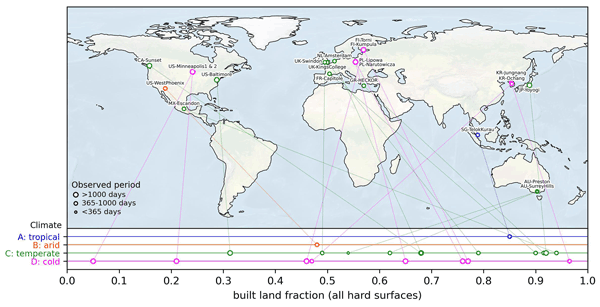
We describe a new openly accessible collection of atmospheric observations from 20 cities around the world, capturing 50 site years. The observations capture local meteorology (temperature, humidity, wind, etc.) and the energy fluxes between the land and atmosphere (e.g. radiation and sensible and latent heat fluxes). These observations can be used to improve our understanding of urban climate processes and to test the accuracy of urban climate models.

Lim-Seok Chang, Donghee Kim, Hyunkee Hong, Deok-Rae Kim, Jeong-Ah Yu, Kwangyul Lee, Hanlim Lee, Daewon Kim, Jinkyu Hong, Hyun-Young Jo, and Cheol-Hee Kim
Atmos. Chem. Phys., 22, 10703–10720, https://doi.org/10.5194/acp-22-10703-2022, https://doi.org/10.5194/acp-22-10703-2022, 2022
Short summary
Short summary
Our study explored the synergy of combined column and surface measurements during GMAP (GEMS Map of Air Pollution) campaign. It has several points to note for vertical distribution analysis. Particularly under prevailing local wind meteorological conditions, Pandora-based vertical structures sometimes showed negative correlations between column and surface measurements. Vertical analysis should be done carefully in some local meteorological conditions when employing either surface or columns.
Jooyeop Lee, Martin Claussen, Jeongwon Kim, Je-Woo Hong, In-Sun Song, and Jinkyu Hong
Clim. Past, 18, 313–326, https://doi.org/10.5194/cp-18-313-2022, https://doi.org/10.5194/cp-18-313-2022, 2022
Short summary
Short summary
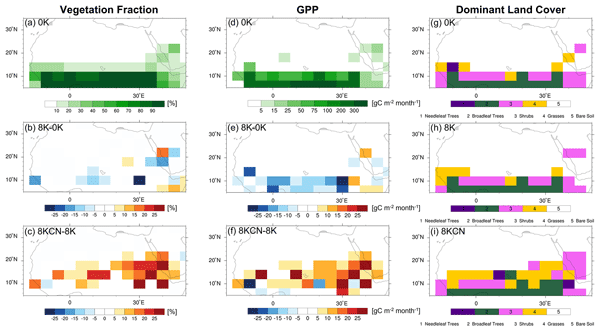
It is still a challenge to simulate the so–called Green Sahara (GS), which was a wet and vegetative Sahara region in the mid–Holocene, using current climate models. Our analysis shows that Holocene greening is simulated better if the amount of soil nitrogen and soil texture is properly modified for the humid and vegetative GS period. Future climate simulation needs to consider consequent changes in soil nitrogen and texture with changes in vegetation cover for proper climate simulations.
Chang-Hwan Park, Aaron Berg, Michael H. Cosh, Andreas Colliander, Andreas Behrendt, Hida Manns, Jinkyu Hong, Johan Lee, Runze Zhang, and Volker Wulfmeyer
Hydrol. Earth Syst. Sci., 25, 6407–6420, https://doi.org/10.5194/hess-25-6407-2021, https://doi.org/10.5194/hess-25-6407-2021, 2021
Short summary
Short summary
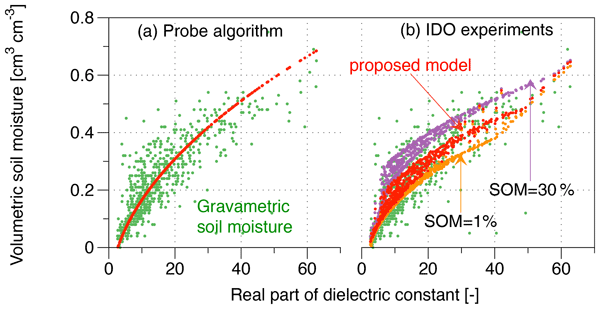
In this study, we proposed an inversion of the dielectric mixing model for a 50 Hz soil sensor for agricultural organic soil. This model can reflect the variability of soil organic matter (SOM) in wilting point and porosity, which play a critical role in improving the accuracy of SM estimation, using a dielectric-based soil sensor. The results of statistical analyses demonstrated a higher performance of the new model than the factory setting probe algorithm.

Keunmin Lee, Je-Woo Hong, Jeongwon Kim, Sungsoo Jo, and Jinkyu Hong
Atmos. Chem. Phys., 21, 17833–17853, https://doi.org/10.5194/acp-21-17833-2021, https://doi.org/10.5194/acp-21-17833-2021, 2021
Short summary
Short summary
This study examine two benefits of urban forest, thermal mitigation and carbon uptake. Our analysis indicates that the urban forest reduces both the warming trend and urban heat island intensity. Urban forest is a net CO2 source despite larger photosynthetic carbon uptake because of strong contribution of ecosystem respiration, which can be attributed to the substantial amount of soil organic carbon by intensive historical soil use and warm temperature in a city.
Cited articles
Agustí-Panareda, A., Barré, J., Massart, S., Inness, A., Aben, I., Ades, M., Baier, B. C., Balsamo, G., Borsdorff, T., Bousserez, N., Boussetta, S., Buchwitz, M., Cantarello, L., Crevoisier, C., Engelen, R., Eskes, H., Flemming, J., Garrigues, S., Hasekamp, O., Huijnen, V., Jones, L., Kipling, Z., Langerock, B., McNorton, J., Meilhac, N., Noël, S., Parrington, M., Peuch, V.-H., Ramonet, M., Razinger, M., Reuter, M., Ribas, R., Suttie, M., Sweeney, C., Tarniewicz, J., and Wu, L.: Technical note: The CAMS greenhouse gas reanalysis from 2003 to 2020, Atmos. Chem. Phys., 23, 3829–3859, https://doi.org/10.5194/acp-23-3829-2023, 2023.
Ahmadov, R., Gerbig, C., Kretschmer, R., Koerner, S., Neininger, B., Dolman, A. J., and Sarrat, C.: Mesoscale covariance of transport and CO2 fluxes: Evidence from observations and simulations using the WRF-VPRM coupled atmosphere-biosphere model, J. Geophys. Res.-Atmos., 112, https://doi.org/10.1029/2007JD008552, 2007.
Anderson, J., Hoar, T., Raeder, K., Liu, H., Collins, N., Torn, R., and Avellano, A.: The Data Assimilation Research Testbed: A Community Facility, B. Am. Meteorol. Soc., 90, 1283–1296, https://doi.org/10.1175/2009BAMS2618.1, 2009.
Anderson, J. L.: An Ensemble Adjustment Kalman Filter for Data Assimilation, Mon. Weather Rev., 129, 2884–2903, https://doi.org/10.1175/1520-0493(2001)129<2884:AEAKFF>2.0.CO;2, 2001.
Anderson, J. L.: A Local Least Squares Framework for Ensemble Filtering, Mon. Weather Rev., 131, 634–642, https://doi.org/10.1175/1520-0493(2003)131%3C0634:ALLSFF%3E2.0.CO;2, 2003.
Anderson, J. L.: Localization and Sampling Error Correction in Ensemble Kalman Filter Data Assimilation, Mon. Weather Rev., 140, 2359–2371, https://doi.org/10.1175/MWR-D-11-00013.1, 2012.
Barker, D., Huang, X.-Y., Liu, Z., Auligné, T., Zhang, X., Rugg, S., Ajjaji, R., Bourgeois, A., Bray, J., Chen, Y., Demirtas, M., Guo, Y.-R., Henderson, T., Huang, W., Lin, H.-C., Michalakes, J., Rizvi, S., and Zhang, X.: The Weather Research and Forecasting Model's Community Variational/Ensemble Data Assimilation System: WRFDA, B. Am. Meteorol. Soc., 93, 831–843, https://doi.org/10.1175/BAMS-D-11-00167.1, 2012.
Beck, V., Koch, T., Kretschmer, R., Marshall, J.and Ahmadov, R., Gerbig, C., Pillai, D., and Heimann, M.: The WRF Greenhouse Gas Model (WRF-GHG). Technical Report No. 25, Tech. rep., Max Planck Institute for Biogeochemistry, Jena, Germany, https://www.bgc-jena.mpg.de/5363366/tech_report25.pdf (last access: 22 October 2025), 2012.
Bisht, J. S. H., Patra, P. K., Takigawa, M., Sekiya, T., Kanaya, Y., Saitoh, N., and Miyazaki, K.: Estimation of CH4 emission based on an advanced 4D-LETKF assimilation system, Geosci. Model Dev., 16, 1823–1838, https://doi.org/10.5194/gmd-16-1823-2023, 2023.
Bréon, F. M., Broquet, G., Puygrenier, V., Chevallier, F., Xueref-Remy, I., Ramonet, M., Dieudonné, E., Lopez, M., Schmidt, M., Perrussel, O., and Ciais, P.: An attempt at estimating Paris area CO2 emissions from atmospheric concentration measurements, Atmos. Chem. Phys., 15, 1707–1724, https://doi.org/10.5194/acp-15-1707-2015, 2015.
Brunner, D., Suter, I., Bernet, L., Constantin, L., Grange, S. K., Rubli, P., Li, J., Chen, J., Bigi, A., and Emmenegger, L.: Building-resolving simulations of anthropogenic and biospheric CO2 in the city of Zurich with GRAMM/GRAL, Atmos. Chem. Phys., 25, 14387–14410, https://doi.org/10.5194/acp-25-14387-2025, 2025.
Bukosa, B., Mikaloff-Fletcher, S., Brailsford, G., Smale, D., Keller, E. D., Baisden, W. T., Kirschbaum, M. U. F., Giltrap, D. L., Liáng, L., Moore, S., Moss, R., Nichol, S., Turnbull, J., Geddes, A., Kennett, D., Hidy, D., Barcza, Z., Schipper, L. A., Wall, A. M., Nakaoka, S.-I., Mukai, H., and Brandon, A.: Inverse modelling of New Zealand's carbon dioxide balance estimates a larger than expected carbon sink, Atmos. Chem. Phys., 25, 6445–6473, https://doi.org/10.5194/acp-25-6445-2025, 2025.
Byrne, B., Baker, D. F., Basu, S., Bertolacci, M., Bowman, K. W., Carroll, D., Chatterjee, A., Chevallier, F., Ciais, P., Cressie, N., Crisp, D., Crowell, S., Deng, F., Deng, Z., Deutscher, N. M., Dubey, M. K., Feng, S., García, O. E., Griffith, D. W. T., Herkommer, B., Hu, L., Jacobson, A. R., Janardanan, R., Jeong, S., Johnson, M. S., Jones, D. B. A., Kivi, R., Liu, J., Liu, Z., Maksyutov, S., Miller, J. B., Miller, S. M., Morino, I., Notholt, J., Oda, T., O'Dell, C. W., Oh, Y.-S., Ohyama, H., Patra, P. K., Peiro, H., Petri, C., Philip, S., Pollard, D. F., Poulter, B., Remaud, M., Schuh, A., Sha, M. K., Shiomi, K., Strong, K., Sweeney, C., Té, Y., Tian, H., Velazco, V. A., Vrekoussis, M., Warneke, T., Worden, J. R., Wunch, D., Yao, Y., Yun, J., Zammit-Mangion, A., and Zeng, N.: National CO2 budgets (2015–2020) inferred from atmospheric CO2 observations in support of the global stocktake, Earth Syst. Sci. Data, 15, 963–1004, https://doi.org/10.5194/essd-15-963-2023, 2023.
Callewaert, S.: WRF-GHG user guide, Royal Belgian Institute for Space Aeronomy (BIRA-IASB), https://doi.org/10.18758/Q6RAPNEU, 2024.
Callewaert, S., Brioude, J., Langerock, B., Duflot, V., Fonteyn, D., Müller, J.-F., Metzger, J.-M., Hermans, C., Kumps, N., Ramonet, M., Lopez, M., Mahieu, E., and De Mazière, M.: Analysis of CO2, CH4, and CO surface and column concentrations observed at Réunion Island by assessing WRF-Chem simulations, Atmos. Chem. Phys., 22, 7763–7792, https://doi.org/10.5194/acp-22-7763-2022, 2022.
Copernicus Atmosphere Monitoring Service: CAMS global greenhouse gas reanalysis (EGG4), CAMS Atmosphere Data Store (ADS) [data set], https://doi.org/10.24381/cda4ed31, 2021.
Crippa, M., Guizzardi D., Pagani F., Banja M., Muntean M., Schaaf E., Becker, W., Monforti-Ferrario F., Quadrelli, R., Risquez Martin, A., Taghavi-Moharamli, P., Grassi, G., Rossi, S., Brandao De Melo, J., Oom, D., Branco, A., San-Miguel, J., and Vignati, E.: EDGAR v8.0 Greenhouse Gas Emissions, European Commission, Joint Research Centre (JRC) [data set], https://doi.org/10.2905/b54d8149-2864-4fb9-96b9-5fd3a020c224, 2023.
Crippa, M., Guizzardi, D., Pagani, F., Schiavina, M., Melchiorri, M., Pisoni, E., Graziosi, F., Muntean, M., Maes, J., Dijkstra, L., Van Damme, M., Clarisse, L., and Coheur, P.: Insights into the spatial distribution of global, national, and subnational greenhouse gas emissions in the Emissions Database for Global Atmospheric Research (EDGAR v8.0), Earth Syst. Sci. Data, 16, 2811–2830, https://doi.org/10.5194/essd-16-2811-2024, 2024.
Custódio, D., Borrego, C., and Relvas, H.: Worldwide evaluation of CAMS-EGG4 CO2 data re-analysis at the surface level, Toxics, 10, 331, https://doi.org/10.3390/toxics10060331, 2022.
Dayalu, A., Munger, J. W., Wofsy, S. C., Wang, Y., Nehrkorn, T., Zhao, Y., McElroy, M. B., Nielsen, C. P., and Luus, K.: Assessing biotic contributions to CO2 fluxes in northern China using the Vegetation, Photosynthesis and Respiration Model (VPRM-CHINA) and observations from 2005 to 2009, Biogeosciences, 15, 6713–6729, https://doi.org/10.5194/bg-15-6713-2018, 2018.
Dekker, I. N., Houweling, S., Aben, I., Röckmann, T., Krol, M., Martínez-Alonso, S., Deeter, M. N., and Worden, H. M.: Quantification of CO emissions from the city of Madrid using MOPITT satellite retrievals and WRF simulations, Atmos. Chem. Phys., 17, 14675–14694, https://doi.org/10.5194/acp-17-14675-2017, 2017.
Deng, Z., Ciais, P., Tzompa-Sosa, Z. A., Saunois, M., Qiu, C., Tan, C., Sun, T., Ke, P., Cui, Y., Tanaka, K., Lin, X., Thompson, R. L., Tian, H., Yao, Y., Huang, Y., Lauerwald, R., Jain, A. K., Xu, X., Bastos, A., Sitch, S., Palmer, P. I., Lauvaux, T., d'Aspremont, A., Giron, C., Benoit, A., Poulter, B., Chang, J., Petrescu, A. M. R., Davis, S. J., Liu, Z., Grassi, G., Albergel, C., Tubiello, F. N., Perugini, L., Peters, W., and Chevallier, F.: Comparing national greenhouse gas budgets reported in UNFCCC inventories against atmospheric inversions, Earth Syst. Sci. Data, 14, 1639–1675, https://doi.org/10.5194/essd-14-1639-2022, 2022.
Denison, S., Forster, P. M., and Smith, C. J.: Guidance on emissions metrics for nationally determined contributions under the Paris Agreement, Environ. Res. Lett., 14, 124002, https://doi.org/10.1088/1748-9326/ab4df4, 2019.
Dou, X., Hong, J., Ciais, P., Chevallier, F., Yan, F., Yu, Y., Hu, Y., Huo, D., Sun, Y., Wang, Y., Davis, S. J., Crippa, M., Janssens-Maenhout, G., Guizzardi, D., Solazzo, E., Lin, X., Song, X., Zhu, B., Cui, D., Ke, P., Wang, H., Zhou, W., Huang, X., Deng, Z., and Liu, Z.: Near-real-time global gridded daily CO2 emissions 2021, Sci. Data, 10, 69, https://doi.org/10.1038/s41597-023-01963-0, 2023.
Elguindi, N., Granier, C., Stavrakou, T., Darras, S., Bauwens, M., Cao, H., Chen, C., Denier Van Der Gon, H. A. C., Dubovik, O., Fu, T. M., Henze, D. K., Jiang, Z., Keita, S., Kuenen, J. J. P., Kurokawa, J., Liousse, C., Miyazaki, K., Müller, J.-F., Qu, Z., Solmon, F., and Zheng, B.: Intercomparison of Magnitudes and Trends in Anthropogenic Surface Emissions From Bottom‐Up Inventories, Top‐Down Estimates, and Emission Scenarios, Earth's Future, 8, e2020EF001520, https://doi.org/10.1029/2020EF001520, 2020.
Enting, I. G.: Inverse Problems in Atmospheric Constituent Transport, Cambridge University Press, Cambridge, https://doi.org/10.1017/CBO9780511535741, 2002.
Fay, A. R., Gregor, L., Landschützer, P., McKinley, G. A., Gruber, N., Gehlen, M., Iida, Y., Laruelle, G. G., Rödenbeck, C., Roobaert, A., and Zeng, J.: SeaFlux: harmonization of air–sea CO2 fluxes from surface pCO2 data products using a standardized approach, Earth Syst. Sci. Data, 13, 4693–4710, https://doi.org/10.5194/essd-13-4693-2021, 2021.
Gaspari, G. and Cohn, S. E.: Construction of correlation functions in two and three dimensions, Q. J. Roy. Meteor. Soc., 125, 723–757, https://doi.org/10.1002/qj.49712555417, 1999.
Gaudet, B. J., Davis, K. J., Pal, S., Jacobson, A. R., Schuh, A., Lauvaux, T., Feng, S., and Browell, E. V.: Regional-Scale, Sector-Specific Evaluation of Global CO2 Inversion Models Using Aircraft Data From the ACT-America Project, J. Geophys. Res.-Atmos., 126, e2020JD033623, https://doi.org/10.1029/2020JD033623, 2021.
Gregor, L. and Fay, A.: SeaFlux: harmonised sea-air CO2 fluxes from surface pCO2 data products using a standardised approach (2021.04.03), Zenodo [data set], https://doi.org/10.5281/zenodo.5482547, 2021.
Grell, G. A., Peckham, S. E., Schmitz, R., McKeen, S. A., Frost, G., Skamarock, W. C., and Eder, B.: Fully coupled “online” chemistry within the WRF model, Atmos. Environ., 39, 6957–6975, https://doi.org/10.1016/j.atmosenv.2005.04.027, 2005.
Gurney, K. R., Law, R. M., Denning, A. S., Rayner, P. J., Baker, D., Bousquet, P., Bruhwiler, L., Chen, Y.-H., Ciais, P., Fan, S., Fung, I. Y., Gloor, M., Heimann, M., Higuchi, K., John, J., Maki, T., Maksyutov, S., Masarie, K., Peylin, P., Prather, M., Pak, B. C., Randerson, J., Sarmiento, J., Taguchi, S., Takahashi, T., and Yuen, C.-W.: Towards robust regional estimates of CO2 sources and sinks using atmospheric transport models, Nature, 415, 626–630, https://doi.org/10.1038/415626a, 2002.
Harman, I. N.: The Role of Roughness Sublayer Dynamics Within Surface Exchange Schemes, Bound.-Lay. Meteorol., 142, 1–20, https://doi.org/10.1007/s10546-011-9651-z, 2012.
Harman, I. N. and Finnigan, J. J.: A simple unified theory for flow in the canopy and roughness sublayer, Bound.-Lay. Meteorol., 123, 339–363, https://doi.org/10.1007/s10546-006-9145-6, 2007.
Harman, I. N. and Finnigan, J. J.: Scalar Concentration Profiles in the Canopy and Roughness Sublayer, Bound.-Lay. Meteorol., 129, 323–351, https://doi.org/10.1007/s10546-008-9328-4, 2008.
Henne, S., Brunner, D., Oney, B., Leuenberger, M., Eugster, W., Bamberger, I., Meinhardt, F., Steinbacher, M., and Emmenegger, L.: Validation of the Swiss methane emission inventory by atmospheric observations and inverse modelling, Atmos. Chem. Phys., 16, 3683–3710, https://doi.org/10.5194/acp-16-3683-2016, 2016.
Hersbach, H., Bell, B., Berrisford, P., Hirahara, S., Horányi, A., Muñoz-Sabater, J., Nicolas, J., Peubey, C., Radu, R., Schepers, D., Simmons, A., Soci, C., Abdalla, S., Abellan, X., Balsamo, G., Bechtold, P., Biavati, G., Bidlot, J., Bonavita, M., De Chiara, G., Dahlgren, P., Dee, D., Diamantakis, M., Dragani, R., Flemming, J., Forbes, R., Fuentes, M., Geer, A., Haimberger, L., Healy, S., J. Hogan, R., Hólm, E., Janisková, M., Keeley, S., Laloyaux, P., Lopez, P., Lupu, C., Radnoti, G., de Rosnay, P., Rozum, I., Vamborg, F., Villaume, S., and Thépaut, J.-N.: The ERA5 global reanalysis, Q. J. Roy. Meteor. Soc., 146, 1999–2049, https://doi.org/10.1002/qj.3803, 2020.
Hersbach, H., Bell, B., Berrisford, P., Biavati, G., Horányi, A., Muñoz Sabater, J., Nicolas, J., Peubey, C., Radu, R., Rozum, I., Schepers, D., Simmons, A., Soci, C., Dee, D., and Thépaut, J.-N.: ERA5 hourly data on pressure levels from 1959 to present, Copernicus Climate Change Service (C3S) Climate Data Store (CDS) [data set], https://doi.org/10.24381/cds.bd0915c6, 2023a.
Hersbach, H., Bell, B., Berrisford, P., Biavati, G., Horányi, A., Muñoz Sabater, J., Nicolas, J., Peubey, C., Radu, R., Rozum, I., Schepers, D., Simmons, A., Soci, C., Dee, D., and Thépaut, J.-N.: ERA5 hourly data on single levels from 1959 to present, Copernicus Climate Change Service (C3S) Climate Data Store (CDS) [data set], https://doi.org/10.24381/cds.adbb2d47, 2023b.
Hilton, T. W., Davis, K. J., Keller, K., and Urban, N. M.: Improving North American terrestrial CO2 flux diagnosis using spatial structure in land surface model residuals, Biogeosciences, 10, 4607–4625, https://doi.org/10.5194/bg-10-4607-2013, 2013.
Hong, J. and Kim, J.: Impact of the Asian monsoon climate on ecosystem carbon and water exchanges: a wavelet analysis and its ecosystem modeling implications, Glob. Change Biol., 17, 1900–1916, https://doi.org/10.1111/j.1365-2486.2010.02337.x, 2011.
Hong, J.-W., Hong, J., Chun, J., Lee, Y. H., Chang, L.-S., Lee, J.-B., Yi, K., Park, Y.-S., Byun, Y.-H., and Joo, S.: Comparative assessment of net CO2 exchange across an urbanization gradient in Korea based on eddy covariance measurements, Carbon Balance Manage., 14, 13, https://doi.org/10.1186/s13021-019-0128-6, 2019.
Hong, J.-W., Lee, S.-D., Lee, K., and Hong, J.: Seasonal variations in the surface energy and CO2 flux over a high-rise, high-population, residential urban area in the East Asian monsoon region, Int. J. Climatol., 40, 4384–4407, https://doi.org/10.1002/joc.6463, 2020.
Hsu, C.-H., Henze, D. K., Mizzi, A. P., Abad, G. G., He, J., Harkins, C., Naeger, A. R., Lyu, C., Liu, X., Miller, C. C., Pierce, R. B., Johnson, M. S., and McDonald, B. C.: An Observing System Simulation Experiment Analysis of How Well Geostationary Satellite Trace-Gas Observations Constrain NOx Emissions in the US, J. Geophys. Res.-Atmos., 129, e2023JD039323, https://doi.org/10.1029/2023JD039323, 2024.
Huang, Y., Wei, J., Jin, J., Zhou, Z., and Gu, Q.: CO Fluxes in Western Europe during 2017–2020 Winter Seasons Inverted by WRF-Chem/Data Assimilation Research Testbed with MOPITT Observations, Remote Sens., 14, 1133, https://doi.org/10.3390/rs14051133, 2022.
Hutchins, M. G., Colby, J. D., Marland, G., and Marland, E.: A comparison of five high-resolution spatially-explicit, fossil-fuel, carbon dioxide emission inventories for the United States, Mitig. Adapt. Strateg. Glob Change, 22, 947–972, https://doi.org/10.1007/s11027-016-9709-9, 2017.
Inness, A., Ades, M., Agustí-Panareda, A., Barré, J., Benedictow, A., Blechschmidt, A.-M., Dominguez, J. J., Engelen, R., Eskes, H., Flemming, J., Huijnen, V., Jones, L., Kipling, Z., Massart, S., Parrington, M., Peuch, V.-H., Razinger, M., Remy, S., Schulz, M., and Suttie, M.: The CAMS reanalysis of atmospheric composition, Atmos. Chem. Phys., 19, 3515–3556, https://doi.org/10.5194/acp-19-3515-2019, 2019.
IPCC: Climate Change 2021: The Physical Science Basis. Contribution of Working Group I to the Sixth Assessment Report of the Intergovernmental Panel on Climate Change, edited by: Masson-Delmotte, V., Zhai, P., Pirani, A., Connors, S. L., Péan, C., Berger, S., Caud, N., Chen, Y., Goldfarb, L., Gomis, M. I., Huang, M., Leitzell, K., Lonnoy, E., Matthews, J. B. R., Maycock, T. K., Waterfield, T., Yelekçi, O., Yu, R., and Zhou, B., Cambridge University Press, https://doi.org/10.1017/9781009157896, 2021.
Janssens-Maenhout, G., Crippa, M., Guizzardi, D., Muntean, M., Schaaf, E., Dentener, F., Bergamaschi, P., Pagliari, V., Olivier, J. G. J., Peters, J. A. H. W., van Aardenne, J. A., Monni, S., Doering, U., Petrescu, A. M. R., Solazzo, E., and Oreggioni, G. D.: EDGAR v4.3.2 Global Atlas of the three major greenhouse gas emissions for the period 1970–2012, Earth Syst. Sci. Data, 11, 959–1002, https://doi.org/10.5194/essd-11-959-2019, 2019.
Janssens-Maenhout, G., Pinty, B., Dowell, M., Zunker, H., Andersson, E., Balsamo, G., Bézy, J.-L., Brunhes, T., Bösch, H., Bojkov, B., Brunner, D., Buchwitz, M., Crisp, D., Ciais, P., Counet, P., Dee, D., Denier Van Der Gon, H., Dolman, H., Drinkwater, M. R., Dubovik, O., Engelen, R., Fehr, T., Fernandez, V., Heimann, M., Holmlund, K., Houweling, S., Husband, R., Juvyns, O., Kentarchos, A., Landgraf, J., Lang, R., Löscher, A., Marshall, J., Meijer, Y., Nakajima, M., Palmer, P. I., Peylin, P., Rayner, P., Scholze, M., Sierk, B., Tamminen, J., and Veefkind, P.: Toward an Operational Anthropogenic CO2 Emissions Monitoring and Verification Support Capacity, B. Am. Meteorol. Soc., 101, E1439–E1451, https://doi.org/10.1175/BAMS-D-19-0017.1, 2020.
Jiménez, P. A., Dudhia, J., González-Rouco, J. F., Navarro, J., Montávez, J. P., and García-Bustamante, E.: A Revised Scheme for the WRF Surface Layer Formulation, Mon. Weather Rev., 140, 898–918, https://doi.org/10.1175/MWR-D-11-00056.1, 2012.
Jin, J., Huang, Y., Wei, C., Wang, X., Xu, X., Gu, Q., and Wang, M.: Analysis of CO2 Concentration and Fluxes of Lisbon Portugal Using Regional CO2 Assimilation Method Based on WRF-Chem, Atmosphere, 16, https://doi.org/10.3390/atmos16070847, 2025.
Jo, Y. H., Kim, S. H., Lee, Y. G., Kim, C. K., Hong, J., Lee, J., and Jang, K.: Evaluation of Topographic Effect Parameterizations in Weather Research and Forecasting Model over Complex Mountainous Terrain in Wildfire-Prone Regions, Fire, 8, https://doi.org/10.3390/fire8050196, 2025.
Jung, M., Henkel, K., Herold, M., and Churkina, G.: Exploiting synergies of global land cover products for carbon cycle modeling, Remote Sens. Environ., 101, 534–553, https://doi.org/10.1016/j.rse.2006.01.020, 2006.
Kang, J.-S., Kalnay, E., Liu, J., Fung, I., Miyoshi, T., and Ide, K.: “Variable localization” in an ensemble Kalman filter: Application to the carbon cycle data assimilation, J. Geophys. Res.-Atmos., 116, https://doi.org/10.1029/2010JD014673, 2011.
Kang, J.-S., Kalnay, E., Miyoshi, T., Liu, J., and Fung, I.: Estimation of surface carbon fluxes with an advanced data assimilation methodology, J. Geophys. Res.-Atmos., 117, https://doi.org/10.1029/2012JD018259, 2012.
Kim, J., Shin, H.-J., Lee, K., and Hong, J.: Enhancement of ANN-based wind power forecasting by modification of surface roughness parameterization over complex terrain, J. Environ. Manage., 362, 121246, https://doi.org/10.1016/j.jenvman.2024.121246, 2024.
Kwon, D., Hong, J., and Koo, B.: WRF-Chem/DART inversion system for CO2 and CH4 emissions in Korea, Zenodo [data set], https://doi.org/10.5281/zenodo.16939122, 2025a.
Kwon, D., Hong, J., and Koo, B.: WRF-Chem/DART inversion dataset for CO2 and CH4 emissions in Korea, Zenodo [data set], https://doi.org/10.5281/zenodo.16947463, 2025b.
Kwon, D., Hong, J., and Koo, B.: Data for: Regional CO2 and CH4 inversion system using WRF-Chem (v4.4)/DART (v9.8.0) and continuous high-precision observations over the Korean Peninsula, Zenodo [data set], https://doi.org/10.5281/zenodo.17402804, 2025c.
Lauvaux, T., Miles, N. L., Deng, A., Richardson, S. J., Cambaliza, M. O., Davis, K. J., Gaudet, B., Gurney, K. R., Huang, J., O'Keefe, D., Song, Y., Karion, A., Oda, T., Patarasuk, R., Razlivanov, I., Sarmiento, D., Shepson, P., Sweeney, C., Turnbull, J., and Wu, K.: High-resolution atmospheric inversion of urban CO2 emissions during the dormant season of the Indianapolis Flux Experiment (INFLUX), J. Geophys. Res.-Atmos., 121, 5213–5236, https://doi.org/10.1002/2015JD024473, 2016.
Lauvaux, T., Gurney, K. R., Miles, N. L., Davis, K. J., Richardson, S. J., Deng, A., Nathan, B. J., Oda, T., Wang, J. A., Hutyra, L., and Turnbull, J.: Policy-Relevant Assessment of Urban CO2 Emissions, Environ. Sci. Technol., 54, 10237–10245, https://doi.org/10.1021/acs.est.0c00343, 2020.
Lee, H., Han, S.-O., Ryoo, S.-B., Lee, J.-S., and Lee, G.-W.: The measurement of atmospheric CO2 at KMA GAW regional stations, its characteristics, and comparisons with other East Asian sites, Atmos. Chem. Phys., 19, 2149–2163, https://doi.org/10.5194/acp-19-2149-2019, 2019.
Lee, H., Seo, W., Li, S., Lee, S., Kenea, S. T., and Joo, S.: Measurement report: Atmospheric CH4 at regional stations of the Korea Meteorological Administration–Global Atmosphere Watch Programme: measurement, characteristics, and long-term changes of its drivers, Atmos. Chem. Phys., 23, 7141–7159, https://doi.org/10.5194/acp-23-7141-2023, 2023.
Lee, J. and Hong, J.: Implementation of spaceborne lidar-retrieved canopy height in the WRF model, J. Geophys. Res.-Atmos., 121, 6863–6876, https://doi.org/10.1002/2015JD024299, 2016.
Lee, J., Shin, H. H., Hong, S.-Y., Jiménez, P. A., Dudhia, J., and Hong, J.: Impacts of subgrid-scale orography parameterization on simulated surface layer wind and monsoonal precipitation in the high-resolution WRF model, J. Geophys. Res.-Atmos., 120, 644–653, https://doi.org/10.1002/2014JD022747, 2015.
Lee, J., Woo, H. J., Son, S.-K., Kim, M., Lee, D.-H., Tsunogai, U., and Jeong, K.-S.: Flux and distribution of methane (CH4) in the Gunsan Basin of the southeastern Yellow Sea, off the Western Korea, J. Environ. Sci. Health A, 53, 457–466, https://doi.org/10.1080/10934529.2017.1409026, 2018.
Lee, J., Hong, J., Noh, Y., and Jiménez, P. A.: Implementation of a roughness sublayer parameterization in the Weather Research and Forecasting model (WRF version 3.7.1) and its evaluation for regional climate simulations, Geosci. Model Dev., 13, 521–536, https://doi.org/10.5194/gmd-13-521-2020, 2020.
Lee, J., Lee, H.-J., Kim, K.-B., Shin, H. H., Lim, J.-M., Hong, J., and Lim, K.-S. S.: Height correction method based on the Monin–Obukhov similarity theory for better prediction of near-surface wind fields, Atmos. Res., 292, 106882, https://doi.org/10.1016/j.atmosres.2023.106882, 2023.
Lee, K., Hong, J.-W., Kim, J., and Hong, J.: Partitioning of net CO2 exchanges at the city-atmosphere interface into biotic and abiotic components, MethodsX, 8, 101231, https://doi.org/10.1016/j.mex.2021.101231, 2021.
Li, X., Hu, X.-M., Cai, C., Jia, Q., Zhang, Y., Liu, J., Xue, M., Xu, J., Wen, R., and Crowell, S. M. R.: Terrestrial CO2 Fluxes, Concentrations, Sources and Budget in Northeast China: Observational and Modeling Studies, J. Geophys. Res.-Atmos., 125, e2019JD031686, https://doi.org/10.1029/2019JD031686, 2020.
Lim, K.-S. S., Lim, J.-M., Shin, H. H., Hong, J., Ji, Y.-Y., and Lee, W.: Impacts of subgrid-scale orography parameterization on simulated atmospheric fields over Korea using a high-resolution atmospheric forecast model, Meteorol. Atmos. Phys., 131, 975–985, https://doi.org/10.1007/s00703-018-0615-4, 2019.
Liu, X., Mizzi, A. P., Anderson, J. L., Fung, I. Y., and Cohen, R. C.: Assimilation of satellite NO2 observations at high spatial resolution using OSSEs, Atmos. Chem. Phys., 17, 7067–7081, https://doi.org/10.5194/acp-17-7067-2017, 2017.
Ma, C., Wang, T., Jiang, Z., Wu, H., Zhao, M., Zhuang, B., Li, S., Xie, M., Li, M., Liu, J., and Wu, R.: Importance of Bias Correction in Data Assimilation of Multiple Observations Over Eastern China Using WRF-Chem/DART, J. Geophys. Res.-Atmos., 125, e2019JD031465, https://doi.org/10.1029/2019JD031465, 2020.
Mahadevan, P., Wofsy, S. C., Matross, D. M., Xiao, X., Dunn, A. L., Lin, J. C., Gerbig, C., Munger, J. W., Chow, V. Y., and Gottlieb, E. W.: A satellite-based biosphere parameterization for net ecosystem CO2 exchange: Vegetation Photosynthesis and Respiration Model (VPRM), Global Biogeochem. Cy., 22, https://doi.org/10.1029/2006GB002735, 2008.
Michalak, A. M., Randazzo, N. A., and Chevallier, F.: Diagnostic methods for atmospheric inversions of long-lived greenhouse gases, Atmos. Chem. Phys., 17, 7405–7421, https://doi.org/10.5194/acp-17-7405-2017, 2017.
Mizzi, A. P., Arellano Jr., A. F., Edwards, D. P., Anderson, J. L., and Pfister, G. G.: Assimilating compact phase space retrievals of atmospheric composition with WRF-Chem/DART: a regional chemical transport/ensemble Kalman filter data assimilation system, Geosci. Model Dev., 9, 965–978, https://doi.org/10.5194/gmd-9-965-2016, 2016.
Mizzi, A. P., Edwards, D. P., and Anderson, J. L.: Assimilating compact phase space retrievals (CPSRs): comparison with independent observations (MOZAIC in situ and IASI retrievals) and extension to assimilation of truncated retrieval profiles, Geosci. Model Dev., 11, 3727–3745, https://doi.org/10.5194/gmd-11-3727-2018, 2018.
Moon, J., Shim, C., Seo, J., and Han, J.: Evaluation of Korean methane emission sources with satellite retrievals by spatial correlation analysis, Environ. Monit. Assess., 196, 296, https://doi.org/10.1007/s10661-024-12449-w, 2024.
Mueller, K. L., Lauvaux, T., Gurney, K. R., Roest, G., Ghosh, S., Gourdji, S. M., Karion, A., DeCola, P., and Whetstone, J.: An emerging GHG estimation approach can help cities achieve their climate and sustainability goals, Environ. Res. Lett., 16, 084003, https://doi.org/10.1088/1748-9326/ac0f25, 2021.
Nalini, K., Lauvaux, T., Abdallah, C., Lian, J., Ciais, P., Utard, H., Laurent, O., and Ramonet, M.: High-Resolution Lagrangian Inverse Modeling of CO2 Emissions Over the Paris Region During the First 2020 Lockdown Period, J. Geophys. Res.-Atmos., 127, e2021JD036032, https://doi.org/10.1029/2021JD036032, 2022.
Nassar, R., Napier-Linton, L., Gurney, K. R., Andres, R. J., Oda, T., Vogel, F. R., and Deng, F.: Improving the temporal and spatial distribution of CO2 emissions from global fossil fuel emission data sets, J. Geophys. Res.-Atmos., 118, 917–933, https://doi.org/10.1029/2012JD018196, 2013.
National Centers for Environmental Prediction, National Weather Service, NOAA, and U.S. Department of Commerce: NCEP ADP Global Upper Air and Surface Weather Observations (PREPBUFR format), Research Data Archive at the National Center for Atmospheric Research, Computational and Information Systems Laboratory [data set], https://doi.org/10.5065/Z83F-N512, 2008.
Nisbet, E. G., Manning, M. R., Dlugokencky, E. J., Fisher, R. E., Lowry, D., Michel, S. E., Myhre, C. L., Platt, S. M., Allen, G., Bousquet, P., Brownlow, R., Cain, M., France, J. L., Hermansen, O., Hossaini, R., Jones, A. E., Levin, I., Manning, A. C., Myhre, G., Pyle, J. A., Vaughn, B. H., Warwick, N. J., and White, J. W. C.: Very Strong Atmospheric Methane Growth in the 4 Years 2014–2017: Implications for the Paris Agreement, Global Biogeochem. Cy., 33, 318–342, https://doi.org/10.1029/2018GB006009, 2019.
Oda, T. and Maksyutov, S.: ODIAC Fossil Fuel CO2 Emissions Dataset (Version name: ODIAC2022), Center for Global Environmental Research, National Institute for Environmental Studies [data set], https://doi.org/10.17595/20170411.001, 2015.
Oda, T., Maksyutov, S., and Andres, R. J.: The Open-source Data Inventory for Anthropogenic CO2, version 2016 (ODIAC2016): a global monthly fossil fuel CO2 gridded emissions data product for tracer transport simulations and surface flux inversions, Earth Syst. Sci. Data, 10, 87–107, https://doi.org/10.5194/essd-10-87-2018, 2018.
Oda, T., Bun, R., Kinakh, V., Topylko, P., Halushchak, M., Marland, G., Lauvaux, T., Jonas, M., Maksyutov, S., Nahorski, Z., Lesiv, M., Danylo, O., and Horabik-Pyzel, J.: Errors and uncertainties in a gridded carbon dioxide emissions inventory, Mitig. Adapt. Strateg. Glob. Change, 24, 1007–1050, https://doi.org/10.1007/s11027-019-09877-2, 2019.
Ogle, S. M., Buendia, L., Butterbach-Bahl, K., Breidt, F. J., Hartman, M., Yagi, K., Nayamuth, R., Spencer, S., Wirth, T., and Smith, P.: Advancing national greenhouse gas inventories for agriculture in developing countries: improving activity data, emission factors and software technology, Environ. Res. Lett., 8, 015030, https://doi.org/10.1088/1748-9326/8/1/015030, 2013.
Pauw, W. P., Klein, R. J. T., Mbeva, K., Dzebo, A., Cassanmagnago, D., and Rudloff, A.: Beyond headline mitigation numbers: we need more transparent and comparable NDCs to achieve the Paris Agreement on climate change, Climatic Change, 147, 23–29, https://doi.org/10.1007/s10584-017-2122-x, 2018.
Peng, Z., Zhang, M., Kou, X., Tian, X., and Ma, X.: A regional carbon data assimilation system and its preliminary evaluation in East Asia, Atmos. Chem. Phys., 15, 1087–1104, https://doi.org/10.5194/acp-15-1087-2015, 2015.
Pisso, I., Patra, P., Takigawa, M., Machida, T., Matsueda, H., and Sawa, Y.: Assessing Lagrangian inverse modelling of urban anthropogenic CO2 fluxes using in situ aircraft and ground-based measurements in the Tokyo area, Carbon Balance Manage., 14, 6, https://doi.org/10.1186/s13021-019-0118-8, 2019.
Pouyaei, A., Mizzi, A. P., Choi, Y., Mousavinezhad, S., and Khorshidian, N.: Downwind Ozone Changes of the 2019 Williams Flats Wildfire: Insights From WRF-Chem/DART Assimilation of OMI NO2, HCHO, and MODIS AOD Retrievals, J. Geophys. Res.-Atmos., 128, e2022JD038019, https://doi.org/10.1029/2022JD038019, 2023.
Rayner, P. J., Raupach, M. R., Paget, M., Peylin, P., and Koffi, E.: A new global gridded data set of CO2 emissions from fossil fuel combustion: Methodology and evaluation, J. Geophys. Res.-Atmos., 115, https://doi.org/10.1029/2009JD013439, 2010.
Republic of Korea: The Republic of Korea’s First Biennial Transparency Report and Fifth National Communication under the United Nations Framework Convention on Climate Change and the Paris Agreement, UNFCCC [data set], https://unfccc.int/documents/645637 (last access: 22 October 2025), 2025.
Rogelj, J., Den Elzen, M., Höhne, N., Fransen, T., Fekete, H., Winkler, H., Schaeffer, R., Sha, F., Riahi, K., and Meinshausen, M.: Paris Agreement climate proposals need a boost to keep warming well below 2 °C, Nature, 534, 631–639, https://doi.org/10.1038/nature18307, 2016.
Roobaert, A., Laruelle, G. G., Landschützer, P., and Regnier, P.: Uncertainty in the global oceanic CO2 uptake induced by wind forcing: quantification and spatial analysis, Biogeosciences, 15, 1701–1720, https://doi.org/10.5194/bg-15-1701-2018, 2018.
Roobaert, A., Laruelle, G. G., Landschützer, P., Gruber, N., Chou, L., and Regnier, P.: The Spatiotemporal Dynamics of the Sources and Sinks of CO2 in the Global Coastal Ocean, Global Biogeochem. Cy., 33, 1693–1714, https://doi.org/10.1029/2019GB006239, 2019.
Schroeder, W., Oliva, P., Giglio, L., and Csiszar, I. A.: The New VIIRS 375 m active fire detection data product: Algorithm description and initial assessment, Remote Sens. Environ., 143, 85–96, https://doi.org/10.1016/j.rse.2013.12.008, 2014.
Segato, D., Graziosi, F., and Manca, G.: Evaluation of Copernicus atmosphere monitoring service methane products 2019–2023, Publications Office of the European Union, https://data.europa.eu/doi/10.2760/8653047 (last access: 22 October 2025), 2025.
Shim, C., Han, J., Henze, D. K., and Yoon, T.: Identifying local anthropogenic CO2 emissions with satellite retrievals: a case study in South Korea, Int. J. Remote Sens., 40, 1011–1029, https://doi.org/10.1080/01431161.2018.1523585, 2019.
Sijikumar, S., Raju, A., Valsala, V., Tiwari, Y., Girach, I. A., Jain, C. D., and Ratnam, M. V.: High-Resolution Bayesian Inversion of Carbon Dioxide Flux Over Peninsular India, Atmos. Environ., 308, 119868, https://doi.org/10.1016/j.atmosenv.2023.119868, 2023.
Super, I., Denier van der Gon, H. A. C., van der Molen, M. K., Sterk, H. A. M., Hensen, A., and Peters, W.: A multi-model approach to monitor emissions of CO2 and CO from an urban–industrial complex, Atmos. Chem. Phys., 17, 13297–13316, https://doi.org/10.5194/acp-17-13297-2017, 2017.
UNFCCC: Adoption of the Paris Agreement. Report No. FCCC/CP/2015/L.9/ Rev.1, https://unfccc.int/resource/docs/2015/cop21/eng/l09r01.pdf (last access: 22 October 2025), 2015.
Velasco, E., Segovia, E., and Roth, M.: High-resolution maps of carbon dioxide and moisture fluxes over an urban neighborhood, Environ. Sci. Atmos., 3, 1110–1123, https://doi.org/10.1039/D2EA00108J, 2023.
Wang, Y., Yuan, Q., Li, T., Yang, Y., Zhou, S., and Zhang, L.: Seamless mapping of long-term (2010–2020) daily global XCO2 and XCH4 from the Greenhouse Gases Observing Satellite (GOSAT), Orbiting Carbon Observatory 2 (OCO-2), and CAMS global greenhouse gas reanalysis (CAMS-EGG4) with a spatiotemporally self-supervised fusion method, Earth Syst. Sci. Data, 15, 3597–3622, https://doi.org/10.5194/essd-15-3597-2023, 2023.
Weber, T., Wiseman, N. A., and Kock, A.: Global ocean methane emissions dominated by shallow coastal waters, Nat. Commun., 10, 4584, https://doi.org/10.1038/s41467-019-12541-7, 2019.
Weiss, R. F. and Prinn, R. G.: Quantifying greenhouse-gas emissions from atmospheric measurements: a critical reality check for climate legislation, Philos. T. Roy. Soc. A, 369, 1925–1942, https://doi.org/10.1098/rsta.2011.0006, 2011.
Wiedinmyer, C. and Emmons, L.: Fire Inventory from NCAR version 2 Fire Emission. Research Data Archive at the National Center for Atmospheric Research, Computational and Information Systems Laboratory [data set], https://doi.org/10.5065/XNPA-AF09, 2022.
Wiedinmyer, C., Akagi, S. K., Yokelson, R. J., Emmons, L. K., Al-Saadi, J. A., Orlando, J. J., and Soja, A. J.: The Fire INventory from NCAR (FINN): a high resolution global model to estimate the emissions from open burning, Geosci. Model Dev., 4, 625–641, https://doi.org/10.5194/gmd-4-625-2011, 2011.
Wiedinmyer, C., Kimura, Y., McDonald-Buller, E. C., Emmons, L. K., Buchholz, R. R., Tang, W., Seto, K., Joseph, M. B., Barsanti, K. C., Carlton, A. G., and Yokelson, R.: The Fire Inventory from NCAR version 2.5: an updated global fire emissions model for climate and chemistry applications, Geosci. Model Dev., 16, 3873–3891, https://doi.org/10.5194/gmd-16-3873-2023, 2023.
WMO: IG3IS Urban Greenhouse Gas Emission Observation and Monitoring Good Research Practice Guidelines, WMO GAW Report No 275, https://library.wmo.int/idurl/4/58055 (last access: 22 October 2025), 2022.
WMO: Integrated Global Greenhouse Gas Information System Good Practice Guidance for Estimating National-scale Greenhouse Gas Emissions using Atmospheric Observations, WMO GAW Report No. 319, https://library.wmo.int/idurl/4/69714 (last access: 3 February 2026), 2025.
Zhang, Q., Li, M., Wang, M., Mizzi, A. P., Huang, Y., Wei, C., Jin, J., and Gu, Q.: CO2 Flux over the Contiguous United States in 2016 Inverted by WRF-Chem/DART from OCO-2 XCO2 Retrievals, Remote Sens., 13, 2996, https://doi.org/10.3390/rs13152996, 2021a.
Zhang, Q., Li, M., Wei, C., Mizzi, A. P., Huang, Y., and Gu, Q.: Assimilation of OCO-2 retrievals with WRF-Chem/DART: A case study for the Midwestern United States, Atmos. Environ., 246, 118106, https://doi.org/10.1016/j.atmosenv.2020.118106, 2021b.
Zhang, Z., Poulter, B., Melton, J. R., Riley, W. J., Allen, G. H., Beerling, D. J., Bousquet, P., Canadell, J. G., Fluet-Chouinard, E., Ciais, P., Gedney, N., Hopcroft, P. O., Ito, A., Jackson, R. B., Jain, A. K., Jensen, K., Joos, F., Kleinen, T., Knox, S. H., Li, T., Li, X., Liu, X., McDonald, K., McNicol, G., Miller, P. A., Müller, J., Patra, P. K., Peng, C., Peng, S., Qin, Z., Riggs, R. M., Saunois, M., Sun, Q., Tian, H., Xu, X., Yao, Y., Xi, Y., Zhang, W., Zhu, Q., Zhu, Q., and Zhuang, Q.: Ensemble estimates of global wetland methane emissions over 2000–2020, Biogeosciences, 22, 305–321, https://doi.org/10.5194/bg-22-305-2025, 2025.
Zhao, X., Chen, J., Marshall, J., Gałkowski, M., Hachinger, S., Dietrich, F., Shekhar, A., Gensheimer, J., Wenzel, A., and Gerbig, C.: Understanding greenhouse gas (GHG) column concentrations in Munich using the Weather Research and Forecasting (WRF) model, Atmos. Chem. Phys., 23, 14325–14347, https://doi.org/10.5194/acp-23-14325-2023, 2023.
Zhao, Y., Saunois, M., Bousquet, P., Lin, X., Berchet, A., Hegglin, M. I., Canadell, J. G., Jackson, R. B., Dlugokencky, E. J., Langenfelds, R. L., Ramonet, M., Worthy, D., and Zheng, B.: Influences of hydroxyl radicals (OH) on top-down estimates of the global and regional methane budgets, Atmos. Chem. Phys., 20, 9525–9546, https://doi.org/10.5194/acp-20-9525-2020, 2020.
Short summary
Carbon dioxide and methane drive climate change, but measuring each region's emissions is hard over complex terrain. We combined a detailed computer modeling system with continuous measurements over the Korean Peninsula to estimate both gases. The estimates matched air measurements and agreed with the national carbon dioxide inventory, while suggesting methane from farming and waste may be larger than currently reported. The approach is transferable for national and regional emission monitoring.
Carbon dioxide and methane drive climate change, but measuring each region's emissions is hard...


