
Articles | Volume 19, issue 15
https://doi.org/10.5194/gmd-19-7089-2026
© Author(s) 2026. This work is distributed under
the Creative Commons Attribution 4.0 License.
the Creative Commons Attribution 4.0 License.
https://doi.org/10.5194/gmd-19-7089-2026
© Author(s) 2026. This work is distributed under
the Creative Commons Attribution 4.0 License.
the Creative Commons Attribution 4.0 License.
Model experiment description paper
| 
03 Aug 2026
Model experiment description paper |
| 03 Aug 2026
| 03 Aug 2026
Precipitation nowcasting based on convolutional LSTM with spatio-temporal information transformation using multi-meteorological factors
Dufu Liu
School of Computer, Chengdu University of Information Technology, Chengdu, 610225, China
Feihu Huang
School of Computer, Chengdu University of Information Technology, Chengdu, 610225, China
Peng Zheng
School of Computer, Chengdu University of Information Technology, Chengdu, 610225, China
Xiaomeng Huang
Department of Earth System Science, Ministry of Education Key Laboratory for Earth System Modelling Institute for Global Change Studies, Tsinghua University, Beijing, 100084, China
Xi Wu
School of Computer, Chengdu University of Information Technology, Chengdu, 610225, China
Xia Yuan
School of Computer, Chengdu University of Information Technology, Chengdu, 610225, China
Jiafeng Zheng
School of Electronic Engineering, Chengdu University of Information Technology, Chengdu, 610225, China
Xiaojie Li
School of Computer, Chengdu University of Information Technology, Chengdu, 610225, China
Jing Hu
CORRESPONDING AUTHOR

School of Computer, Chengdu University of Information Technology, Chengdu, 610225, China
Related authors
Dufu Liu, Feihu Huang, Peng Zheng, Xiaomeng Huang, Xi Wu, Xia Yuan, Jiafeng Zheng, Xiaojie Li, and Jing Hu
EGUsphere, https://doi.org/10.5194/egusphere-2025-2714, https://doi.org/10.5194/egusphere-2025-2714, 2025
Preprint archived
Short summary
Short summary
Because of the limitations of past data-based models and the high cost of NWP computing, accurate precipitation proximity forecasting remains challenging. A dual encoder-decoder framework is proposed to enhance short-term forecasting and reduce underestimation in extreme precipitation by using spatio-temporal information conversion equations and adaptive weighted gradient loss. Experiments on SEVIR datasets show greater accuracy than existing deep learning methods.
Wen Jiang, Yangruixue Chen, Jiafeng Zheng, Chong Wu, Yanyu Gao, Jiatong Liu, and Juan Zhou
EGUsphere, https://doi.org/10.5194/egusphere-2026-5422, https://doi.org/10.5194/egusphere-2026-5422, 2026
This preprint is open for discussion and under review for Natural Hazards and Earth System Sciences (NHESS).
Short summary
Short summary
Organized convective systems can bring heavy rain to South China. Four years of radar data identified 72 systems unrelated to tropical cyclones during the post-flood rainy season. Most formed over southern Guangxi or the Pearl River Delta. Southern Guangxi systems occurred mainly from midnight to morning under strong moist winds, whereas Pearl River Delta systems peaked in the afternoon and were linked to daytime heating. These results may help forecast where and when heavy rain develops.
Wen Kang, Hao Wang, Qiangyu Zeng, Tiantian Yu, Jiafeng Zheng, and Zhi Li
EGUsphere, https://doi.org/10.5194/egusphere-2026-2395, https://doi.org/10.5194/egusphere-2026-2395, 2026
Short summary
Short summary
This study tackles radar observation gaps from complex terrain and discontinuous coverage. We present CBAM-Unet, a deep learning model that reconstructs radar composite reflectivity (RCRF) using FY-4A geostationary satellite multi-channel data. By embedding the Convolutional Block Attention Module (CBAM) into U-Net, the model combines channel and spatial attention to highlight key spectral bands and spatial regions, improving the representation of echo structures and intense echo cores.
Fuhua Zhu, Zhan ao Huang, Pengfei Pan, Wenhao Huo, Fengtao Zuo, Xian Zhang, Xiaojie Li, Yongqiang Yu, and Xi Wu
EGUsphere, https://doi.org/10.5194/egusphere-2026-691, https://doi.org/10.5194/egusphere-2026-691, 2026
Preprint archived
Short summary
Short summary
To better capture ocean swirls that coarse simulations miss, we trained a learning system on high-detail ocean model data to turn low-detail currents into eight related measures of motion and forces, while keeping them mutually consistent. It improved accuracy versus strong baselines: average root mean square error fell from 0.126 to 0.113 and the coefficient of determination reached 0.947. This can help tune and test climate models.
Pingyi Dong, Xingwen Jiang, Xingbing Zhao, Yuanchang Dong, Jiafeng Zheng, Chun Hu, Guolu Gao, Lei Liu, Shulei Li, and Lingbing Bu
Atmos. Meas. Tech., 19, 1407–1419, https://doi.org/10.5194/amt-19-1407-2026, https://doi.org/10.5194/amt-19-1407-2026, 2026
Short summary
Short summary
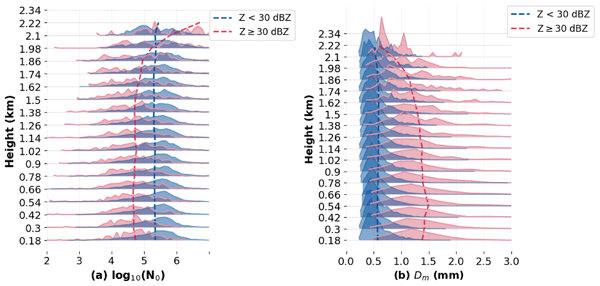
A method is developed and validated for retrieving vertical profiles of the raindrop size distributions (DSD) parameters from a single-frequency Ka-band radar in this study. Some unique characteristics of the vertical profiles of DSD parameters in the eastern Tibetan Plateau are found. The empirical relationships for quantitative precipitation estimates and attenuation correction in the eastern Tibetan Plateau with Ka-band radar are derived.
Jinhui Zheng, Le Yu, Zhenrong Du, Liujun Xiao, and Xiaomeng Huang
Geosci. Model Dev., 18, 8379–8400, https://doi.org/10.5194/gmd-18-8379-2025, https://doi.org/10.5194/gmd-18-8379-2025, 2025
Short summary
Short summary
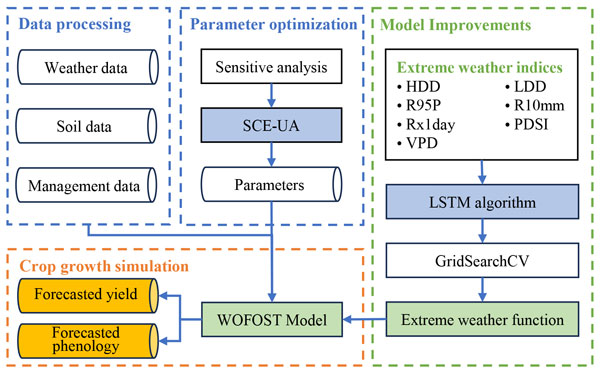
This study integrates the extreme weather index and deep learning algorithms with the World Food Studies Simulation Model (WOFOST), proposing the WOFOST-EW v1. WOFOST-EW significantly improves the simulation of winter wheat growth under extreme weather conditions, providing more accurate predictions of phenology and yield. As extreme weather events become more frequent, WOFOST-EW provides a key tool for agricultural development.
Peng Li, Zhanao Huang, Yongqiang Yu, Xi Wu, Xiaomeng Huang, and Xiaojie Li
EGUsphere, https://doi.org/10.5194/egusphere-2025-3622, https://doi.org/10.5194/egusphere-2025-3622, 2025
Short summary
Short summary
Mesoscale convective systems (MCSs) are a major cause of severe weather events. Traditional MCS identification methods rely on threshold-based approaches, which are computationally inefficient. To address this limitation, we propose a novel deep learning model for automated MCS detection. Our model achieves comparable accuracy to threshold-based methods while delivering a 200× speedup in processing efficiency.
Zhixuan Guo, Wei Li, Philippe Ciais, Stephen Sitch, Guido R. van der Werf, Simon P. K. Bowring, Ana Bastos, Florent Mouillot, Jiaying He, Minxuan Sun, Lei Zhu, Xiaomeng Du, Nan Wang, and Xiaomeng Huang
Earth Syst. Sci. Data, 17, 3599–3618, https://doi.org/10.5194/essd-17-3599-2025, https://doi.org/10.5194/essd-17-3599-2025, 2025
Short summary
Short summary
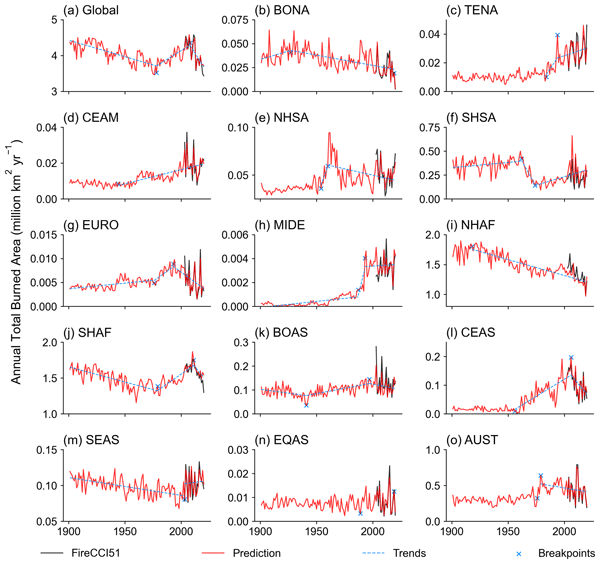
To address the limitations of short time spans in satellite data and spatiotemporal discontinuity in site records, we reconstructed global monthly burned area maps at a 0.5° resolution for 1901–2020 using machine learning models. The global burned area is predicted at 3.46 × 10⁶–4.58 × 10⁶ km² per year, showing a decline from 1901 to 1978, an increase from 1978 to 2008 and a sharper decrease from 2008 to 2020. This dataset provides a benchmark for studies on fire ecology and the carbon cycle.
Dufu Liu, Feihu Huang, Peng Zheng, Xiaomeng Huang, Xi Wu, Xia Yuan, Jiafeng Zheng, Xiaojie Li, and Jing Hu
EGUsphere, https://doi.org/10.5194/egusphere-2025-2714, https://doi.org/10.5194/egusphere-2025-2714, 2025
Preprint archived
Short summary
Short summary
Because of the limitations of past data-based models and the high cost of NWP computing, accurate precipitation proximity forecasting remains challenging. A dual encoder-decoder framework is proposed to enhance short-term forecasting and reduce underestimation in extreme precipitation by using spatio-temporal information conversion equations and adaptive weighted gradient loss. Experiments on SEVIR datasets show greater accuracy than existing deep learning methods.
Dong Wang and Xiaomeng Huang
EGUsphere, https://doi.org/10.5194/egusphere-2024-3533, https://doi.org/10.5194/egusphere-2024-3533, 2025
Short summary
Short summary
This study presents a method to enhance data output efficiency in high-resolution climate models by redistributing workloads and allowing lighter tasks to temporarily store data. We use smaller communication groups and I/O aggregation for efficient data writing. A reinforcement learning agent optimizes the approach based on performance data from two models, suggesting a promising strategy to reduce data output overhead and improve model performance.
Chuanhong Zhao, Yijun Zhang, Dong Zheng, Haoran Li, Sai Du, Xueyan Peng, Xiantong Liu, Pengguo Zhao, Jiafeng Zheng, and Juan Shi
Atmos. Chem. Phys., 24, 11637–11651, https://doi.org/10.5194/acp-24-11637-2024, https://doi.org/10.5194/acp-24-11637-2024, 2024
Short summary
Short summary
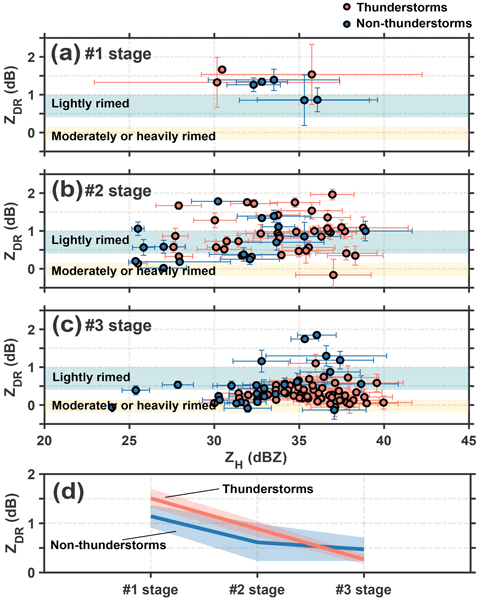
Understanding lightning activity is important for meteorology and atmospheric chemistry. However, the occurrence of lightning activity in clouds is uncertain. In this study, we quantified the difference between isolated thunderstorms and non-thunderstorms. We showed that lightning activity was more likely to occur with more graupel volume and/or riming. A deeper ZDR column was associated with lightning occurrence. This information can aid in a deeper understanding of lighting physics.
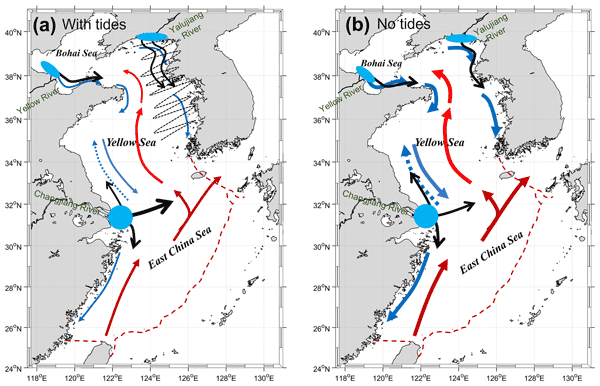
Lei Lin, Hao Liu, Xiaomeng Huang, Qingjun Fu, and Xinyu Guo
Hydrol. Earth Syst. Sci., 26, 5207–5225, https://doi.org/10.5194/hess-26-5207-2022, https://doi.org/10.5194/hess-26-5207-2022, 2022
Short summary
Short summary
Earth system (climate) model is an important instrument for projecting the global water cycle and climate change, in which tides are commonly excluded due to the much small timescales compared to the climate. However, we found that tides significantly impact the river water transport pathways, transport timescales, and concentrations in shelf seas. Thus, the tidal effect should be carefully considered in earth system models to accurately project the global water and biogeochemical cycle.
Cited articles
Amini, A., Dolatshahi, M., and Kerachian, R.: Adaptive precipitation nowcasting using deep learning and ensemble modeling, J. Hydrol., 612, 128197, https://doi.org/10.1016/j.jhydrol.2022.128197, 2022. a
An, S., Oh, T.-J., Sohn, E., and Kim, D.: Deep learning for precipitation nowcasting: A survey from the perspective of time series forecasting, Expert Syst. Appl., 268, 126301, https://doi.org/10.1016/j.eswa.2024.126301, 2025. a, b, c
Ayzel, G., Heistermann, M., and Winterrath, T.: Optical flow models as an open benchmark for radar-based precipitation nowcasting (rainymotion v0.1), Geosci. Model Dev., 12, 1387–1402, https://doi.org/10.5194/gmd-12-1387-2019, 2019. a
Ayzel, G., Scheffer, T., and Heistermann, M.: RainNet v1.0: a convolutional neural network for radar-based precipitation nowcasting, Geosci. Model Dev., 13, 2631–2644, https://doi.org/10.5194/gmd-13-2631-2020, 2020. a
Bai, C., Sun, F., Zhang, J., Song, Y., and Chen, S.: Rainformer: Features extraction balanced network for radar-based precipitation nowcasting, IEEE Geosci. Remote Sens. Lett., 19, 1–5, https://doi.org/10.1109/LGRS.2022.3162882, 2022. a
Benziane, S. and MB, U.: Survey: Rainfall prediction precipitation, review of statistical methods, WSEAS T. Syst., 23, 47–59, https://doi.org/10.37394/23202.2024.23.5, 2024. a
Brotzge, J. A., Berchoff, D., Carlis, D. L., Carr, F. H., Carr, R. H., Gerth, J. J., Gross, B. D., Hamill, T. M., Haupt, S. E., Jacobs, N., McGovern, A., Stensrud, D. J., Szatkowski, G., Szunyogh, I., and Wang, X.: Challenges and opportunities in numerical weather prediction, B. Am. Meteorol. Soc., 104, E698–E705, https://doi.org/10.1175/BAMS-D-22-0172.1, 2023. a
Byeon, W., Wang, Q., Srivastava, R. K., and Koumoutsakos, P.: Contextvp: Fully context-aware video prediction, in: Proceedings of the European Conference on Computer Vision (ECCV), 753–769, https://doi.org/10.1007/978-3-030-01270-0_46, 2018. a
Chen, C., Li, R., Shu, L., He, Z., Wang, J., Zhang, C., Ma, H., Aihara, K., and Chen, L.: Predicting future dynamics from short-term time series using an Anticipated Learning Machine, Natl. Sci. Rev., 7, 1079–1091, https://doi.org/10.1093/nsr/nwaa025, 2020a. a
Chen, P., Liu, R., Aihara, K., and Chen, L.: Autoreservoir computing for multistep ahead prediction based on the spatiotemporal information transformation, Nat. Commun., 11, 4568, https://doi.org/10.1038/s41467-020-18381-0, 2020b. a, b, c
Cheon, M., Yoon, S.-J., Kang, B., and Lee, J.: Perceptual image quality assessment with transformers, in: Proceedings of the IEEE/CVF conference on computer vision and pattern recognition, 433–442, https://doi.org/10.48550/arXiv.2104.14730, 2021. a
Gao, Z., Shi, X., Wang, H., Zhu, Y., Wang, Y. B., Li, M., and Yeung, D.-Y.: Earthformer: Exploring space-time transformers for earth system forecasting, Adv. Neur. In., 35, 25390–25403, https://doi.org/10.48550/arXiv.2207.05833, 2022a. a, b
Gao, Z., Tan, C., Wu, L., and Li, S. Z.: Simvp: Simpler yet better video prediction, in: Proceedings of the IEEE/CVF conference on computer vision and pattern recognition, 3170–3180, https://doi.org/10.48550/arXiv.2206.05099, 2022b. a
Geng, H., Wu, F., Zhuang, X., Geng, L., Xie, B., and Shi, Z.: The MS-RadarFormer: a transformer-based multi-scale deep learning model for radar echo extrapolation, Remote Sens., 16, 274, https://doi.org/10.3390/rs16020274, 2024. a
Gettelman, A., Tebaldi, C., and Leung, L. R.: Climate nowcasting, Environ. Res. Clim., 4, 013002, https://doi.org/10.1088/2752-5295/adc327, 2025. a
Guen, V. L. and Thome, N.: Disentangling physical dynamics from unknown factors for unsupervised video prediction, in: Proceedings of the IEEE/CVF conference on computer vision and pattern recognition, 11474–11484, https://doi.org/10.48550/arXiv.2003.01460, 2020. a
Han, L., Liang, H., Chen, H., Zhang, W., and Ge, Y.: Convective precipitation nowcasting using U-Net model, IEEE T. Geosci. Remote S., 60, 1–8, https://doi.org/10.1109/TGRS.2021.3100847, 2021. a
Harnist, B., Pulkkinen, S., and Mäkinen, T.: DEUCE v1.0: a neural network for probabilistic precipitation nowcasting with aleatoric and epistemic uncertainties, Geosci. Model Dev., 17, 3839–3866, https://doi.org/10.5194/gmd-17-3839-2024, 2024. a
Hodson, T. O., Over, T. M., and Foks, S. S.: Mean squared error, deconstructed, J. Adv. Model. Earth Sy., 13, e2021MS002681, https://doi.org/10.1029/2021MS002681, 2021. a
Hui, B., Yan, D., Chen, H., and Ku, W.-S.: Trajnet: A trajectory-based deep learning model for traffic prediction, in: Proceedings of the 27th ACM SIGKDD Conference on Knowledge Discovery & Data Mining, 716–724, https://doi.org/10.1145/3447548.3467236, 2021. a
Islam, S., Elmekki, H., Elsebai, A., Bentahar, J., Drawel, N., Rjoub, G., and Pedrycz, W.: A comprehensive survey on applications of transformers for deep learning tasks, Expert Syst. Appl., 241, 122666, https://doi.org/10.1016/j.eswa.2023.122666, 2024. a
Jaurigue, J., Robertson, J., Hurtado, A., Jaurigue, L., and Lüdge, K.: Post-processing methods for delay embedding and feature scaling of reservoir computers, Commun. Eng., 4, 10, https://doi.org/10.1038/s44172-024-00330-0, 2025. a
Kim, W., Jeong, C.-H., and Kim, S.: Improvements in deep learning-based precipitation nowcasting using major atmospheric factors with radar rain rate, Comput. Geosci., 184, 105529, https://doi.org/10.1016/j.cageo.2024.105529, 2024. a
Kong, Y., Wang, Z., Nie, Y., Zhou, T., Zohren, S., Liang, Y., Sun, P., and Wen, Q.: Unlocking the power of lstm for long term time series forecasting, in: Proceedings of the AAAI Conference on Artificial Intelligence, vol. 39, 11968–11976, https://doi.org/10.1609/aaai.v39i11.33303, 2025. a
Ling, X., Li, C., Qin, F., Yang, P., and Huang, Y.: RNDiff: Rainfall nowcasting with Condition Diffusion Model, Pattern Recogn., 160, 111193, https://doi.org/10.1016/j.patcog.2024.111193, 2025. a
Liu, D.: sevir, Zenodo [data set], https://doi.org/10.5281/zenodo.20781829, 2025a. a
Liu, D.: STI-DEDN, Zenodo [code], https://doi.org/10.5281/zenodo.18145601, 2025b. a
Ma, Z., Zhang, H., and Liu, J.: DB-RNN: An RNN for Precipitation Nowcasting Deblurring, IEEE J. Sel. Top. Appl., 17, 5026–5041, https://doi.org/10.1109/JSTARS.2024.3365612, 2024. a
Mienye, I. D., Swart, T. G., and Obaido, G.: Recurrent neural networks: A comprehensive review of architectures, variants, and applications, Information, 15, 517, https://doi.org/10.3390/info15090517, 2024. a
Peng, H., Wang, W., Chen, P., and Liu, R.: DEFM: Delay-embedding-based forecast machine for time series forecasting by spatiotemporal information transformation, Chaos, 34, https://doi.org/10.1063/5.0181791, 2024. a
Piran, M. J., Wang, X., Kim, H. J., and Kwon, H. H.: Precipitation nowcasting using transformer-based generative models and transfer learning for improved disaster preparedness, Int. J. Appl. Earth Obs., 132, 103962, https://doi.org/10.1016/j.jag.2024.103962, 2024. a
Rahimpour, M., Rahimzadegan, M., Nosratpour, R., Homayouni, S., and Behrangi, A.: A Novel Machine Learning-Based Clustering-Merging Method for Improving Extreme Precipitation Estimation, Adv. Atmos. Sci., 1–22, https://doi.org/10.1007/s00376-024-4315-3, 2025. a
Ravuri, S., Lenc, K., Willson, M., Kangin, D., Lam, R., Mirowski, P., Fitzsimons, M., Athanassiadou, M., Kashem, S., Madge, S., Prudden, R., Mandhane, A., Clark, A., Brock, A., Simonyan, K., Hadsell, R., Robinson, N., Clancy, E., Arribas, A., and Mohamed, S.: Skilful precipitation nowcasting using deep generative models of radar, Nature, 597, 672–677, https://doi.org/10.1038/s41586-021-03854-z, 2021. a
Seo, M., Kim, D., Shin, S., Kim, E., Ahn, S., and Choi, Y.: Domain generalization strategy to train classifiers robust to spatial-temporal shift, arXiv [preprint], https://doi.org/10.48550/arXiv.2212.02968, 2022. a
Shi, X., Gao, Z., Lausen, L., Wang, H., Yeung, D.-Y., Wong, W.-K., and Woo, W.-C.: Deep learning for precipitation nowcasting: A benchmark and a new model, Adv. Neur. Inf. 30, https://doi.org/10.48550/arXiv.1706.03458, 2017. a
Sønderby, C. K., Espeholt, L., Heek, J., Dehghani, M., Oliver, A., Salimans, T., Agrawal, S., Hickey, J., and Kalchbrenner, N.: Metnet: A neural weather model for precipitation forecasting, arXiv [preprint], https://doi.org/10.48550/arXiv.2003.12140, 2020. a
Tan, C., Gao, Z., Wu, L., Xu, Y., Xia, J., Li, S., and Li, S. Z.: Temporal attention unit: Towards efficient spatiotemporal predictive learning, in: Proceedings of the IEEE/CVF Conference on Computer Vision and Pattern Recognition, 18770–18782, https://doi.org/10.48550/arXiv.2206.12126, 2023. a
Tan, J., Huang, Q., and Chen, S.: Deep learning model based on multi-scale feature fusion for precipitation nowcasting, Geoscientific Model Development, 17, 53–69, https://doi.org/10.5194/gmd-17-53-2024, 2024. a, b
Tao, P., Hao, X., Cheng, J., and Chen, L.: Predicting time series by data-driven spatiotemporal information transformation, Inform. Sciences, 622, 859–872, https://doi.org/10.1016/j.ins.2022.11.159, 2023. a
Tong, Y., Hong, R., Zhang, Z., Aihara, K., Chen, P., Liu, R., and Chen, L.: Earthquake alerting based on spatial geodetic data by spatiotemporal information transformation learning, P. Natl. Acad. Sci. USA, 120, e2302275120, https://doi.org/10.1073/pnas.2302275120, 2023. a
Trebing, K., Stanczyk, T., and Mehrkanoon, S.: SmaAt-UNet: Precipitation nowcasting using a small attention-UNet architecture, Pattern Recogn. Lett., 145, 178–186, https://doi.org/10.1016/j.patrec.2021.01.036, 2021. a
Veillette, M., Samsi, S., and Mattioli, C.: Sevir: A storm event imagery dataset for deep learning applications in radar and satellite meteorology, Adv. Neur. Inf., 33, 22009–22019, https://doi.org/10.1007/978-3-030-01270-0_46, 2020. a, b, c
Wang, Y., Long, M., Wang, J., Gao, Z., and Yu, P. S.: Predrnn: Recurrent neural networks for predictive learning using spatiotemporal lstms, Adv. Neur. Inf., 30, https://doi.org/10.48550/arXiv.2103.09504, 2017. a, b
Wang, Y., Jiang, H., Liu, T., Yao, L., and Zhou, C.: A Patch-wise Mechanism for Enhancing Sparse Radar Echo Extrapolation in Precipitation Nowcasting, IEEE J. Sel. Top. Appl., https://doi.org/10.1109/JSTARS.2025.3543386, 2025. a
Waqas, M., Humphries, U. W., Chueasa, B., and Wangwongchai, A.: Artificial Intelligence and Numerical Weather Prediction Models: A Technical Survey, Nat. Hazards Res., https://doi.org/10.1016/j.nhres.2024.11.004, 2024. a
Wu, H., Xiong, W., Xu, F., Luo, X., Chen, C., Hua, X.-S., and Wang, H.: Pastnet: Introducing physical inductive biases for spatio-temporal video prediction, arXiv [preprint], https://doi.org/10.1145/3664647.3681489, 2023. a
Yang, N. and Li, X.: Lightweight AI-powered precipitation nowcasting, The Innovation Geoscience, 2, 100066, https://doi.org/10.59717/j.xinn-geo.2024.100066, 2024. a
Zhang, Y., Long, M., Chen, K., Xing, L., Jin, R., Jordan, M. I., and Wang, J.: Skilful nowcasting of extreme precipitation with NowcastNet, Nature, 619, 526–532, https://doi.org/10.1038/s41586-023-06184-4, 2023. a
Zhao, Q., Zheng, Y., Jing, Y., Feng, D., and Liu, J.: Research Progress of Short-Duration Heavy Precipitation in China, Adv. Earth Sci., 40, 1, https://doi.org/10.11867/j.issn.1001-8166.2025.002, 2025. a, b
Zhao, X., Wang, L., Zhang, Y., Han, X., Deveci, M., and Parmar, M.: A review of convolutional neural networks in computer vision, Artif. Intell. Rev., 57, 99, https://doi.org/10.1007/s10462-024-10721-6, 2024. a
Zheng, J., Ling, Q., Li, J., and Feng, Y.: Improving the Short-Range Precipitation Forecast of Numerical Weather Prediction through a Deep Learning-Based Mask Approach, Adv. Atmos. Sci., 41, 1601–1613, https://doi.org/10.1007/s00376-023-3085-7, 2024. a
Short summary
Due to the limitations of past data-based models and the high cost of numerical weather prediction computing, accurately forecasting precipitation proximity remains challenging. A dual encoder-decoder framework is proposed to enhance short-term forecasting and reduce underestimation in extreme precipitation by using spatio-temporal information conversion equations and adaptive weighted gradient loss. Demonstrates better accuracy than existing deep learning methods in precipitation datasets.
Due to the limitations of past data-based models and the high cost of numerical weather...


