
Articles | Volume 19, issue 14
https://doi.org/10.5194/gmd-19-6879-2026
© Author(s) 2026. This work is distributed under
the Creative Commons Attribution 4.0 License.
the Creative Commons Attribution 4.0 License.
https://doi.org/10.5194/gmd-19-6879-2026
© Author(s) 2026. This work is distributed under
the Creative Commons Attribution 4.0 License.
the Creative Commons Attribution 4.0 License.
Development and technical paper
| 
29 Jul 2026
Development and technical paper |
| 29 Jul 2026
| 29 Jul 2026
Integrating reservoirs and lakes in the CoSWAT global hydrological model
Jose P. Teran
CORRESPONDING AUTHOR

Department of Water and Climate, Vrije Universiteit Brussel, Brussel, 1050 Elsene, Belgium
Celray J. Chawanda
Department of Water and Climate, Vrije Universiteit Brussel, Brussel, 1050 Elsene, Belgium
Blackland Research & Extension Center, Texas A&M Agrilife Research, Temple, 76502 TX, USA
Albert Nkwasa
Department of Water and Climate, Vrije Universiteit Brussel, Brussel, 1050 Elsene, Belgium
Water Security Research Group, Biodiversity and Natural Resources Program, International Institute for Applied Systems Analysis (IIASA), 2361 Laxenburg, Austria
Inne Vanderkelen
Department of Earth and Environmental Sciences, KU Leuven, 3000 Leuven, Belgium
Royal Meteorological Institute of Belgium (RMIB), Brussels, 1180 Uccle, Belgium
Jeffrey G. Arnold
Grassland Soil and Water Research Laboratory, USDA Agricultural Research Service (ARS), Temple, 76502 TX, USA
Ann Van Griensven
Department of Water and Climate, Vrije Universiteit Brussel, Brussel, 1050 Elsene, Belgium
Institute for Water Education (IHE) Delft, 2611 AX Delft, the Netherlands
Related authors
Celray James Chawanda, Jeffrey G. Arnold, Raghavan Srinivasan, Olaf David, and Jose Pablo Teran Orsini
EGUsphere, https://doi.org/10.5194/egusphere-2026-6282, https://doi.org/10.5194/egusphere-2026-6282, 2026
This preprint is open for discussion and under review for Geoscientific Model Development (GMD).
Short summary
Short summary
Large Soil and Water Assessment Tool Plus projects store daily weather in thousands of text files. We added a reader that loads the same weather from one compressed file at startup and leaves the hydrological calculations unchanged. In an uncalibrated Zambezi test, the two input routes wrote identical output files. At 700 stations, the compressed climate inputs used 83.84 % less storage and reduced benchmark initialisation time about ninefold.
Jose P. Terán, Jhon Vila, Juan García-Quijano, and Anne Gobin
EGUsphere, https://doi.org/10.5194/egusphere-2026-604, https://doi.org/10.5194/egusphere-2026-604, 2026
Short summary
Short summary
Rainfall data from satellites are often used where rain gauge data is limited, but satellite data can miss local patterns and intense storms, especially in mountainous regions. We tested simple methods to increase the spatial detail of a global rainfall dataset for the Peruvian Andes and compared it with regional products and local observations. Our approach improved spatial detail without reducing overall rainfall pattern accuracy, supporting more detailed hydro-meteorological assessments.
Celray James Chawanda, Ann van Griensven, Albert Nkwasa, Jose Pablo Teran Orsini, Jaehak Jeong, Soon-Kun Choi, Raghavan Srinivasan, and Jeffrey G. Arnold
Hydrol. Earth Syst. Sci., 29, 6901–6916, https://doi.org/10.5194/hess-29-6901-2025, https://doi.org/10.5194/hess-29-6901-2025, 2025
Short summary
Short summary
Water resources face more challenges from climate change and human activities. We improved global water modeling by developing a high-resolution system using Soil and Water Assessment Tool (SWAT+), using automated reproducible workflow. This approach simplifies tracking the progress of global impact assessment modelling efforts. The global model will further help assess water stress hot-spots and inform sustainable water management as further improvements come.
Celray James Chawanda, Jeffrey G. Arnold, Raghavan Srinivasan, Olaf David, and Jose Pablo Teran Orsini
EGUsphere, https://doi.org/10.5194/egusphere-2026-6282, https://doi.org/10.5194/egusphere-2026-6282, 2026
This preprint is open for discussion and under review for Geoscientific Model Development (GMD).
Short summary
Short summary
Large Soil and Water Assessment Tool Plus projects store daily weather in thousands of text files. We added a reader that loads the same weather from one compressed file at startup and leaves the hydrological calculations unchanged. In an uncalibrated Zambezi test, the two input routes wrote identical output files. At 700 stations, the compressed climate inputs used 83.84 % less storage and reduced benchmark initialisation time about ninefold.
Inne Vanderkelen, Marie-Estelle Demory, Sean Swenson, David M. Lawrence, Benjamin D. Stocker, Myke Koopmans, and Édouard L. Davin
Biogeosciences, 23, 3829–3854, https://doi.org/10.5194/bg-23-3829-2026, https://doi.org/10.5194/bg-23-3829-2026, 2026
Short summary
Short summary
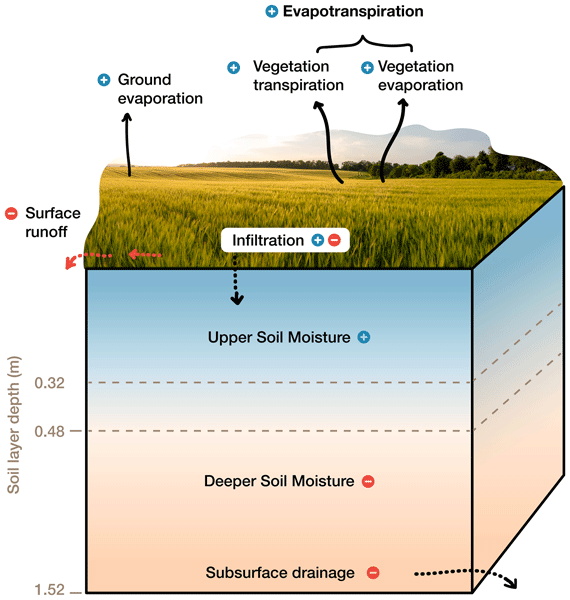
Soil carbon sequestration supports climate mitigation and may enhance water availability. Using a global land model, we show that increased soil organic carbon improves water retention in the root zone and reduces runoff, particularly in dry, sandy regions. Although hydrological changes are modest, they are systematic and suggest co-benefits for vegetation productivity and ecosystem resilience in water-limited areas.
Katoria Lekarkar, Oldrich Rakovec, Rohini Kumar, Stefaan Dondeyne, and Ann van Griensven
Hydrol. Earth Syst. Sci., 30, 2817–2835, https://doi.org/10.5194/hess-30-2817-2026, https://doi.org/10.5194/hess-30-2817-2026, 2026
Short summary
Short summary
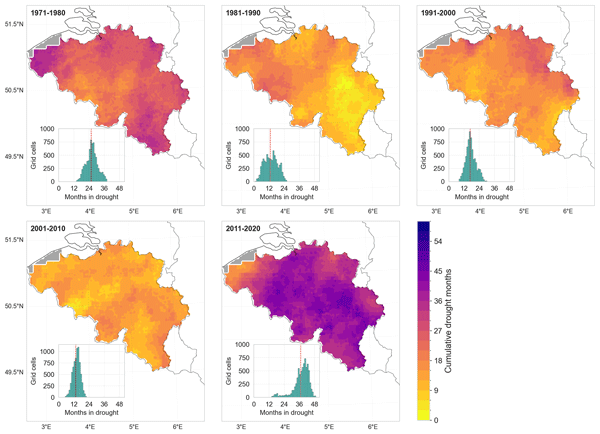
Belgium has faced intense droughts in recent years, causing major losses across sectors. To assess their rarity, we used a hydrological model to reconstruct fifty years of soil moisture in the country. We show that 2011–2020 experienced the most severe droughts since 1971, with nearly 30% of the decade under drought. We also show that rainfall-based indicators underestimate soil moisture droughts, so including soil-moisture monitoring can give decision-makers a clearer picture of drought risks.
Jose P. Terán, Jhon Vila, Juan García-Quijano, and Anne Gobin
EGUsphere, https://doi.org/10.5194/egusphere-2026-604, https://doi.org/10.5194/egusphere-2026-604, 2026
Short summary
Short summary
Rainfall data from satellites are often used where rain gauge data is limited, but satellite data can miss local patterns and intense storms, especially in mountainous regions. We tested simple methods to increase the spatial detail of a global rainfall dataset for the Peruvian Andes and compared it with regional products and local observations. Our approach improved spatial detail without reducing overall rainfall pattern accuracy, supporting more detailed hydro-meteorological assessments.
Celray James Chawanda, Ann van Griensven, Albert Nkwasa, Jose Pablo Teran Orsini, Jaehak Jeong, Soon-Kun Choi, Raghavan Srinivasan, and Jeffrey G. Arnold
Hydrol. Earth Syst. Sci., 29, 6901–6916, https://doi.org/10.5194/hess-29-6901-2025, https://doi.org/10.5194/hess-29-6901-2025, 2025
Short summary
Short summary
Water resources face more challenges from climate change and human activities. We improved global water modeling by developing a high-resolution system using Soil and Water Assessment Tool (SWAT+), using automated reproducible workflow. This approach simplifies tracking the progress of global impact assessment modelling efforts. The global model will further help assess water stress hot-spots and inform sustainable water management as further improvements come.
Hendrik Rathjens, Jens Kiesel, Jeffrey Arnold, Gerald Reinken, and Robin Sur
Hydrol. Earth Syst. Sci., 29, 6703–6714, https://doi.org/10.5194/hess-29-6703-2025, https://doi.org/10.5194/hess-29-6703-2025, 2025
Short summary
Short summary
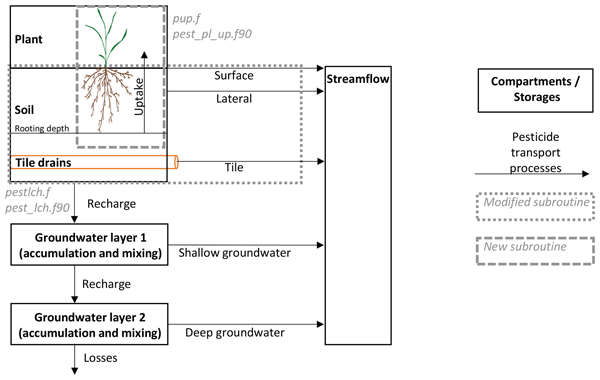
We improved the widely used SWAT (Soil and Water Assessment Tool) model to better predict how pesticides move through the environment. We added a new process that considers how plants take-up chemicals from the soil. Testing this updated model in two catchments showed very good prediction capabilities and a reduction of chemicals in river water by up to 17 % due to the plant uptake. The enhanced model offers a valuable tool for assessing the environmental impacts of agricultural management.
Ryan T. Bailey, Salam Abbas, Jeffrey G. Arnold, and Michael J. White
Geosci. Model Dev., 18, 5681–5697, https://doi.org/10.5194/gmd-18-5681-2025, https://doi.org/10.5194/gmd-18-5681-2025, 2025
Short summary
Short summary
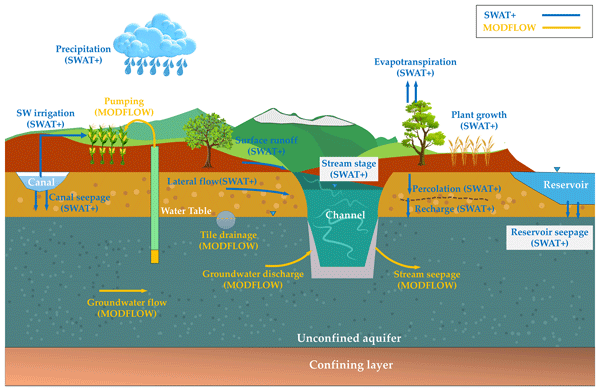
Water managers often make use of computer models to assess a region's water supply under future conditions and management scenarios. This article introduces a new computer model that combines a land surface model (SWAT+) and a groundwater model (MODFLOW) and shows how it can be applied to managed, irrigated watersheds. This new model can be used for regions that rely on both surface water and groundwater for drinking water, agriculture, and industry.
Albert Nkwasa, Celray James Chawanda, Maria Theresa Nakkazi, and Ann van Griensven
EGUsphere, https://doi.org/10.5194/egusphere-2025-703, https://doi.org/10.5194/egusphere-2025-703, 2025
Preprint archived
Short summary
Short summary
Limited monitoring data make it difficult to assess human impacts on freshwater quality, especially in low-income regions. To address this, we developed a global water quality model that simulates river nutrient loads (Total Nitrogen and Total Phosphorus). The model provides high-resolution insights into freshwater pollution, supporting ecological risk assessments and policy decisions. While some uncertainties remain, this model offers a crucial tool for addressing global water quality.
Sabin I. Taranu, David M. Lawrence, Yoshihide Wada, Ting Tang, Erik Kluzek, Sam Rabin, Yi Yao, Steven J. De Hertog, Inne Vanderkelen, and Wim Thiery
Geosci. Model Dev., 17, 7365–7399, https://doi.org/10.5194/gmd-17-7365-2024, https://doi.org/10.5194/gmd-17-7365-2024, 2024
Short summary
Short summary
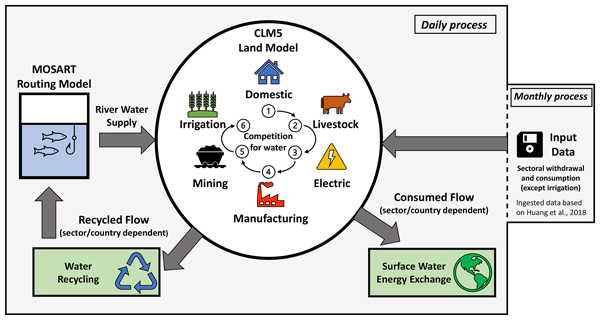
In this study, we improved a climate model by adding the representation of water use sectors such as domestic, industry, and agriculture. This new feature helps us understand how water is used and supplied in various areas. We tested our model from 1971 to 2010 and found that it accurately identifies areas with water scarcity. By modelling the competition between sectors when water availability is limited, the model helps estimate the intensity and extent of individual sectors' water shortages.
Rosa Pietroiusti, Inne Vanderkelen, Friederike E. L. Otto, Clair Barnes, Lucy Temple, Mary Akurut, Philippe Bally, Nicole P. M. van Lipzig, and Wim Thiery
Earth Syst. Dynam., 15, 225–264, https://doi.org/10.5194/esd-15-225-2024, https://doi.org/10.5194/esd-15-225-2024, 2024
Short summary
Short summary
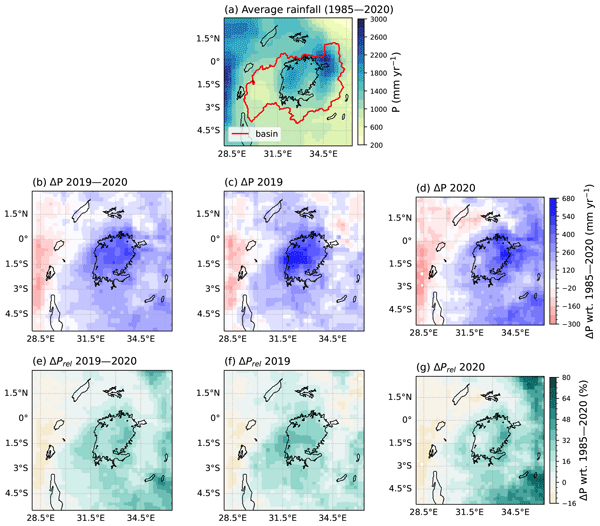
Heavy rainfall in eastern Africa between late 2019 and mid 2020 caused devastating floods and landslides and drove the levels of Lake Victoria to a record-breaking maximum in May 2020. In this study, we characterize the spatial extent and impacts of the floods in the Lake Victoria basin and investigate how human-induced climate change influenced the probability and intensity of the record-breaking lake levels and flooding by applying a multi-model extreme event attribution methodology.
Celray James Chawanda, Albert Nkwasa, Wim Thiery, and Ann van Griensven
Hydrol. Earth Syst. Sci., 28, 117–138, https://doi.org/10.5194/hess-28-117-2024, https://doi.org/10.5194/hess-28-117-2024, 2024
Short summary
Short summary
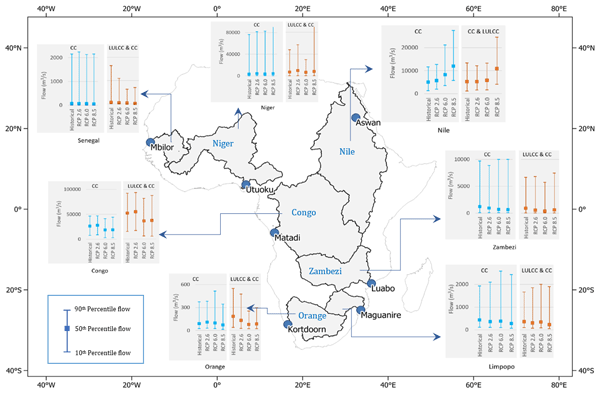
Africa's water resources are being negatively impacted by climate change and land-use change. The SWAT+ hydrological model was used to simulate the hydrological cycle in Africa, and results show likely decreases in river flows in the Zambezi and Congo rivers and highest flows in the Niger River basins due to climate change. Land cover change had the biggest impact in the Congo River basin, emphasizing the importance of including land-use change in studies.
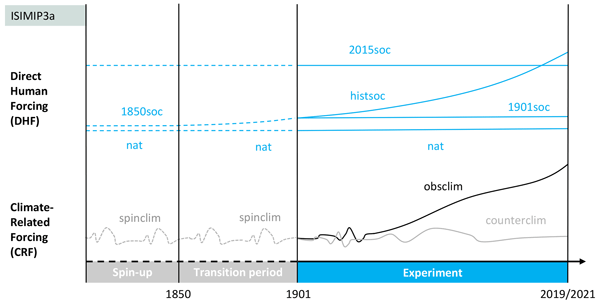
Katja Frieler, Jan Volkholz, Stefan Lange, Jacob Schewe, Matthias Mengel, María del Rocío Rivas López, Christian Otto, Christopher P. O. Reyer, Dirk Nikolaus Karger, Johanna T. Malle, Simon Treu, Christoph Menz, Julia L. Blanchard, Cheryl S. Harrison, Colleen M. Petrik, Tyler D. Eddy, Kelly Ortega-Cisneros, Camilla Novaglio, Yannick Rousseau, Reg A. Watson, Charles Stock, Xiao Liu, Ryan Heneghan, Derek Tittensor, Olivier Maury, Matthias Büchner, Thomas Vogt, Tingting Wang, Fubao Sun, Inga J. Sauer, Johannes Koch, Inne Vanderkelen, Jonas Jägermeyr, Christoph Müller, Sam Rabin, Jochen Klar, Iliusi D. Vega del Valle, Gitta Lasslop, Sarah Chadburn, Eleanor Burke, Angela Gallego-Sala, Noah Smith, Jinfeng Chang, Stijn Hantson, Chantelle Burton, Anne Gädeke, Fang Li, Simon N. Gosling, Hannes Müller Schmied, Fred Hattermann, Jida Wang, Fangfang Yao, Thomas Hickler, Rafael Marcé, Don Pierson, Wim Thiery, Daniel Mercado-Bettín, Robert Ladwig, Ana Isabel Ayala-Zamora, Matthew Forrest, and Michel Bechtold
Geosci. Model Dev., 17, 1–51, https://doi.org/10.5194/gmd-17-1-2024, https://doi.org/10.5194/gmd-17-1-2024, 2024
Short summary
Short summary
Our paper provides an overview of all observational climate-related and socioeconomic forcing data used as input for the impact model evaluation and impact attribution experiments within the third round of the Inter-Sectoral Impact Model Intercomparison Project. The experiments are designed to test our understanding of observed changes in natural and human systems and to quantify to what degree these changes have already been induced by climate change.
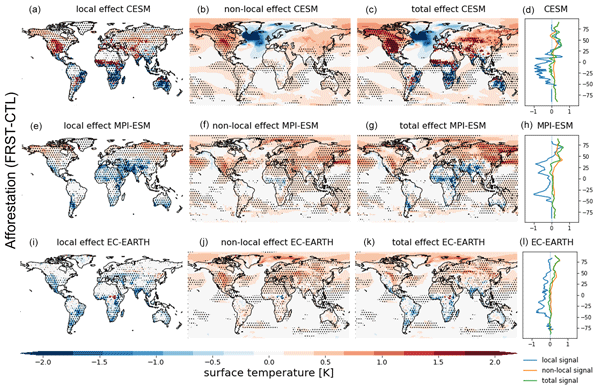
Steven J. De Hertog, Felix Havermann, Inne Vanderkelen, Suqi Guo, Fei Luo, Iris Manola, Dim Coumou, Edouard L. Davin, Gregory Duveiller, Quentin Lejeune, Julia Pongratz, Carl-Friedrich Schleussner, Sonia I. Seneviratne, and Wim Thiery
Earth Syst. Dynam., 14, 629–667, https://doi.org/10.5194/esd-14-629-2023, https://doi.org/10.5194/esd-14-629-2023, 2023
Short summary
Short summary
Land cover and land management changes are important strategies for future land-based mitigation. We investigate the climate effects of cropland expansion, afforestation, irrigation and wood harvesting using three Earth system models. Results show that these have important implications for surface temperature where the land cover and/or management change occur and in remote areas. Idealized afforestation causes global warming, which might offset the cooling effect from enhanced carbon uptake.
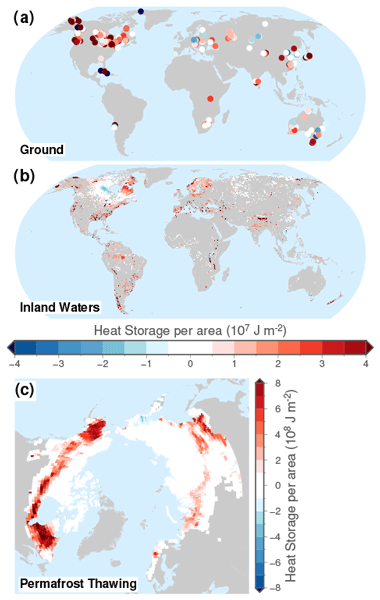
Francisco José Cuesta-Valero, Hugo Beltrami, Almudena García-García, Gerhard Krinner, Moritz Langer, Andrew H. MacDougall, Jan Nitzbon, Jian Peng, Karina von Schuckmann, Sonia I. Seneviratne, Wim Thiery, Inne Vanderkelen, and Tonghua Wu
Earth Syst. Dynam., 14, 609–627, https://doi.org/10.5194/esd-14-609-2023, https://doi.org/10.5194/esd-14-609-2023, 2023
Short summary
Short summary
Climate change is caused by the accumulated heat in the Earth system, with the land storing the second largest amount of this extra heat. Here, new estimates of continental heat storage are obtained, including changes in inland-water heat storage and permafrost heat storage in addition to changes in ground heat storage. We also argue that heat gains in all three components should be monitored independently of their magnitude due to heat-dependent processes affecting society and ecosystems.
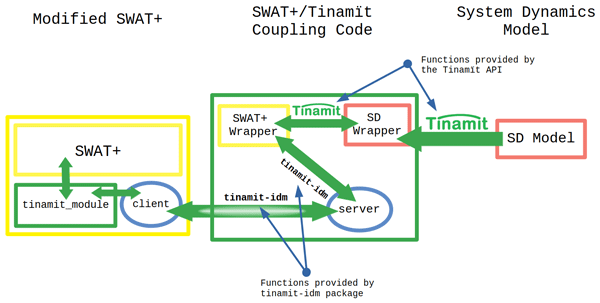
Joel Z. Harms, Julien J. Malard-Adam, Jan F. Adamowski, Ashutosh Sharma, and Albert Nkwasa
Hydrol. Earth Syst. Sci., 27, 1683–1693, https://doi.org/10.5194/hess-27-1683-2023, https://doi.org/10.5194/hess-27-1683-2023, 2023
Short summary
Short summary
To facilitate the meaningful participation of stakeholders in water management, model choice is crucial. We show how system dynamics models (SDMs), which are very visual and stakeholder-friendly, can be automatically combined with physically based hydrological models that may be more appropriate for modelling the water processes of a human–water system. This allows building participatory SDMs with stakeholders and delegating hydrological components to an external hydrological model.
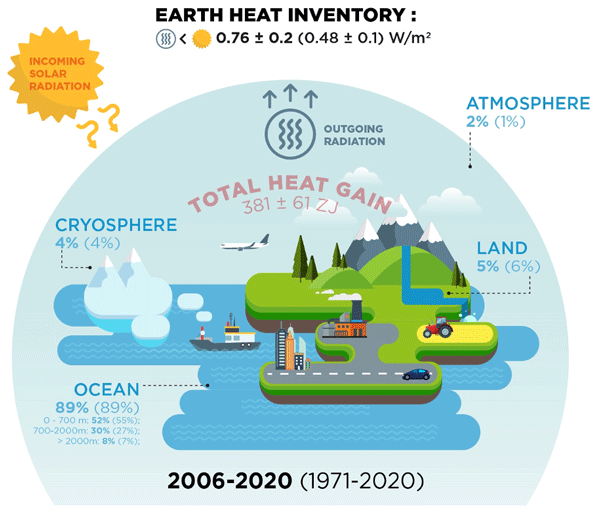
Karina von Schuckmann, Audrey Minière, Flora Gues, Francisco José Cuesta-Valero, Gottfried Kirchengast, Susheel Adusumilli, Fiammetta Straneo, Michaël Ablain, Richard P. Allan, Paul M. Barker, Hugo Beltrami, Alejandro Blazquez, Tim Boyer, Lijing Cheng, John Church, Damien Desbruyeres, Han Dolman, Catia M. Domingues, Almudena García-García, Donata Giglio, John E. Gilson, Maximilian Gorfer, Leopold Haimberger, Maria Z. Hakuba, Stefan Hendricks, Shigeki Hosoda, Gregory C. Johnson, Rachel Killick, Brian King, Nicolas Kolodziejczyk, Anton Korosov, Gerhard Krinner, Mikael Kuusela, Felix W. Landerer, Moritz Langer, Thomas Lavergne, Isobel Lawrence, Yuehua Li, John Lyman, Florence Marti, Ben Marzeion, Michael Mayer, Andrew H. MacDougall, Trevor McDougall, Didier Paolo Monselesan, Jan Nitzbon, Inès Otosaka, Jian Peng, Sarah Purkey, Dean Roemmich, Kanako Sato, Katsunari Sato, Abhishek Savita, Axel Schweiger, Andrew Shepherd, Sonia I. Seneviratne, Leon Simons, Donald A. Slater, Thomas Slater, Andrea K. Steiner, Toshio Suga, Tanguy Szekely, Wim Thiery, Mary-Louise Timmermans, Inne Vanderkelen, Susan E. Wjiffels, Tonghua Wu, and Michael Zemp
Earth Syst. Sci. Data, 15, 1675–1709, https://doi.org/10.5194/essd-15-1675-2023, https://doi.org/10.5194/essd-15-1675-2023, 2023
Short summary
Short summary
Earth's climate is out of energy balance, and this study quantifies how much heat has consequently accumulated over the past decades (ocean: 89 %, land: 6 %, cryosphere: 4 %, atmosphere: 1 %). Since 1971, this accumulated heat reached record values at an increasing pace. The Earth heat inventory provides a comprehensive view on the status and expectation of global warming, and we call for an implementation of this global climate indicator into the Paris Agreement’s Global Stocktake.

Steven J. De Hertog, Felix Havermann, Inne Vanderkelen, Suqi Guo, Fei Luo, Iris Manola, Dim Coumou, Edouard L. Davin, Gregory Duveiller, Quentin Lejeune, Julia Pongratz, Carl-Friedrich Schleussner, Sonia I. Seneviratne, and Wim Thiery
Earth Syst. Dynam., 13, 1305–1350, https://doi.org/10.5194/esd-13-1305-2022, https://doi.org/10.5194/esd-13-1305-2022, 2022
Short summary
Short summary
Land cover and land management changes are important strategies for future land-based mitigation. We investigate the climate effects of cropland expansion, afforestation, irrigation, and wood harvesting using three Earth system models. Results show that these have important implications for surface temperature where the land cover and/or management change occurs and in remote areas. Idealized afforestation causes global warming, which might offset the cooling effect from enhanced carbon uptake.
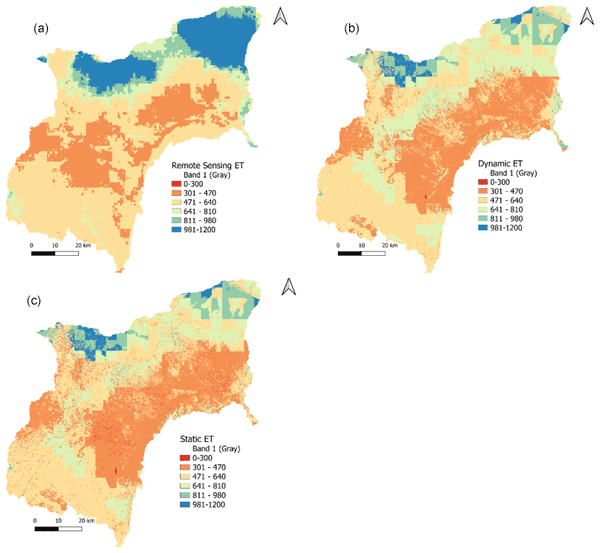
Anna Msigwa, Celray James Chawanda, Hans C. Komakech, Albert Nkwasa, and Ann van Griensven
Hydrol. Earth Syst. Sci., 26, 4447–4468, https://doi.org/10.5194/hess-26-4447-2022, https://doi.org/10.5194/hess-26-4447-2022, 2022
Short summary
Short summary
Studies using agro-hydrological models, like the Soil and Water Assessment Tool (SWAT), to map evapotranspiration (ET) do not account for cropping seasons. A comparison between the default SWAT+ set-up (with static land use representation) and a dynamic SWAT+ model set-up (with seasonal land use representation) is made by spatial mapping of the ET. The results show that ET with seasonal representation is closer to remote sensing estimates, giving better performance than ET with static land use.
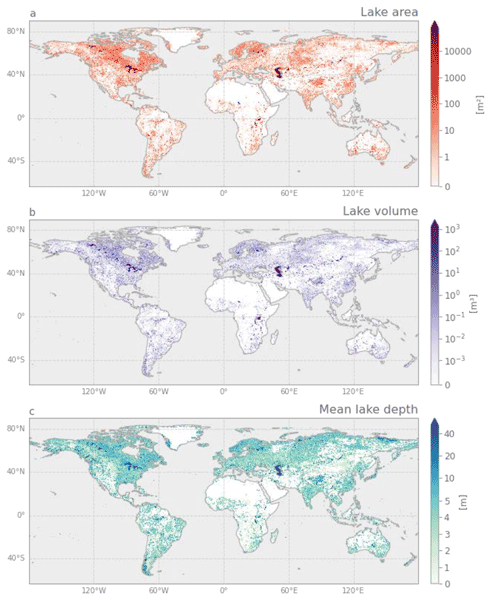
Malgorzata Golub, Wim Thiery, Rafael Marcé, Don Pierson, Inne Vanderkelen, Daniel Mercado-Bettin, R. Iestyn Woolway, Luke Grant, Eleanor Jennings, Benjamin M. Kraemer, Jacob Schewe, Fang Zhao, Katja Frieler, Matthias Mengel, Vasiliy Y. Bogomolov, Damien Bouffard, Marianne Côté, Raoul-Marie Couture, Andrey V. Debolskiy, Bram Droppers, Gideon Gal, Mingyang Guo, Annette B. G. Janssen, Georgiy Kirillin, Robert Ladwig, Madeline Magee, Tadhg Moore, Marjorie Perroud, Sebastiano Piccolroaz, Love Raaman Vinnaa, Martin Schmid, Tom Shatwell, Victor M. Stepanenko, Zeli Tan, Bronwyn Woodward, Huaxia Yao, Rita Adrian, Mathew Allan, Orlane Anneville, Lauri Arvola, Karen Atkins, Leon Boegman, Cayelan Carey, Kyle Christianson, Elvira de Eyto, Curtis DeGasperi, Maria Grechushnikova, Josef Hejzlar, Klaus Joehnk, Ian D. Jones, Alo Laas, Eleanor B. Mackay, Ivan Mammarella, Hampus Markensten, Chris McBride, Deniz Özkundakci, Miguel Potes, Karsten Rinke, Dale Robertson, James A. Rusak, Rui Salgado, Leon van der Linden, Piet Verburg, Danielle Wain, Nicole K. Ward, Sabine Wollrab, and Galina Zdorovennova
Geosci. Model Dev., 15, 4597–4623, https://doi.org/10.5194/gmd-15-4597-2022, https://doi.org/10.5194/gmd-15-4597-2022, 2022
Short summary
Short summary
Lakes and reservoirs are warming across the globe. To better understand how lakes are changing and to project their future behavior amidst various sources of uncertainty, simulations with a range of lake models are required. This in turn requires international coordination across different lake modelling teams worldwide. Here we present a protocol for and results from coordinated simulations of climate change impacts on lakes worldwide.

Inne Vanderkelen, Shervan Gharari, Naoki Mizukami, Martyn P. Clark, David M. Lawrence, Sean Swenson, Yadu Pokhrel, Naota Hanasaki, Ann van Griensven, and Wim Thiery
Geosci. Model Dev., 15, 4163–4192, https://doi.org/10.5194/gmd-15-4163-2022, https://doi.org/10.5194/gmd-15-4163-2022, 2022
Short summary
Short summary
Human-controlled reservoirs have a large influence on the global water cycle. However, dam operations are rarely represented in Earth system models. We implement and evaluate a widely used reservoir parametrization in a global river-routing model. Using observations of individual reservoirs, the reservoir scheme outperforms the natural lake scheme. However, both schemes show a similar performance due to biases in runoff timing and magnitude when using simulated runoff.
Estifanos Addisu Yimer, Ryan T. Bailey, Lise Leda Piepers, Jiri Nossent, and Ann van Griensven
Hydrol. Earth Syst. Sci. Discuss., https://doi.org/10.5194/hess-2022-169, https://doi.org/10.5194/hess-2022-169, 2022
Manuscript not accepted for further review
Short summary
Short summary
A recently developed groundwater module (gwflow) coupled with the soil water assessment tool (SWAT+) is used to simulate the streamflow of the Dijle catchment, Belgium. The standalone model (SWAT+) resulted in unsatisfactory streamflow simulations while SWAT+gwflow produced streamflow that considerably mimics the measured river discharge. Furthermore, modifications to the gwflow module are made to account for the vital hydrological process (groundwater-soil profile interactions).
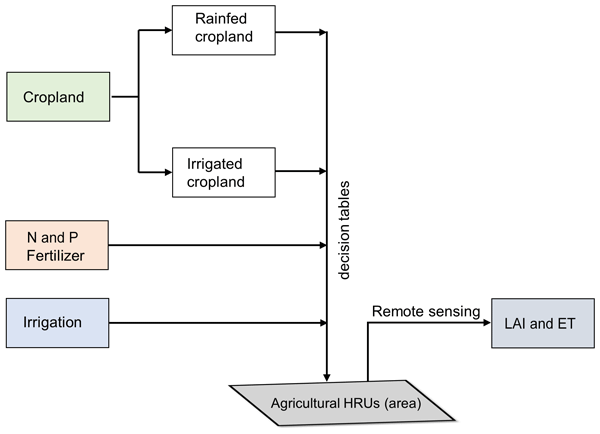
Albert Nkwasa, Celray James Chawanda, Jonas Jägermeyr, and Ann van Griensven
Hydrol. Earth Syst. Sci., 26, 71–89, https://doi.org/10.5194/hess-26-71-2022, https://doi.org/10.5194/hess-26-71-2022, 2022
Short summary
Short summary
We present an approach on how to incorporate crop phenology in a regional hydrological model using decision tables and global datasets of rainfed and irrigated cropland with the associated cropping calendar and management practices. Results indicate improved temporal patterns of leaf area index (LAI) and evapotranspiration (ET) simulations in comparison with remote sensing data. In addition, the improvement of the cropping season also helps to improve soil erosion estimates in cultivated areas.
Alemu Yenehun, Mekete Dessie, Fenta Nigate, Ashebir Sewale Belay, Mulugeta Azeze, Marc Van Camp, Derbew Fenetie Taye, Desale Kidane, Enyew Adgo, Jan Nyssen, Ann van Griensven, and Kristine Walraevens
Hydrol. Earth Syst. Sci. Discuss., https://doi.org/10.5194/hess-2021-527, https://doi.org/10.5194/hess-2021-527, 2021
Manuscript not accepted for further review
Short summary
Short summary
Population growth, industrial expansion, and climate change are causing stress on the limited freshwater resources of the globe. Groundwater is one of the important freshwater resources. Hence, managing these limited resources is a key task for the sector experts. To do so, understanding recharge processes and its quantification is vital. In this study, three different methods using measured data are applied to estimate recharge and identify the controlling factors.
Cited articles
Abbaspour, K. C., Rouholahnejad, E., Vaghefi, S., Srinivasan, R., Yang, H., and Kløve, B.: A continental-scale hydrology and water quality model for Europe: Calibration and uncertainty of a high-resolution large-scale SWAT model, J. Hydrol., 524, 733–752, https://doi.org/10.1016/j.jhydrol.2015.03.027, 2015.
Abdellatif, G., Gaafar, I., Van Der Vat, M., Hellegers, P., El-Naggar, H. E.-D., De Miguel Garcia, A., and Seijger, C.: Impact of irrigation modernization and high Aswan Dam inflow on Nile water system efficiency and water reuse in Egypt, Agr. Water Manage., 316, 109576, https://doi.org/10.1016/j.agwat.2025.109576, 2025.
Abrams, M.: ASTER Global DEM Version 3, and new ASTER water body dataset, Int. Arch. Photogramm. Remote Sens. Spat. Inf. Sci., XLI-B4, 107–110, https://doi.org/10.5194/isprs-archives-XLI-B4-107-2016, 2016.
Arnold, J. G., Srinivasan, R., Muttiah, R. S., and Williams, J. R.: Large area hydrologic modeling and assessment Part I: model development, J. Am. Water Resour. Assoc., 34, 73–89, https://doi.org/10.1111/j.1752-1688.1998.tb05961.x, 1998.
Arnold, J. G., Moriasi, D. N., Gassman, P. W., Abbaspour, K. C., White, M. J., Srinivasan, R., Santhi, C., Harmel, R. D., Van Griensven, A., Van Liew, M. W., Kannan, N., and Jha, M. K.: SWAT: Model Use, Calibration, and Validation, T. ASABE, 55, 1491–1508, https://doi.org/10.13031/2013.42256, 2012.
Arnold, J. G., Bieger, K., White, M., Srinivasan, R., Dunbar, J., and Allen, P.: Use of Decision Tables to Simulate Management in SWAT, Water, 10, 713, https://doi.org/10.3390/W10060713, 2018.
Arnold, J. G., Čerkasova, N., White, M. J., Bailey, R., Thorp, K., Jeong, J., Zhang, X., Ugraskan, T., Griensven, A., Rathjens, H., Raj, C., Cai, X., Geter, W. F., David, O., Carlson, J. R., and Le, K. N.: Soil and Water Assessment Tool Plus (SWAT+) (v61.0.2.11-coswat1.5.0), Zenodo [code], https://doi.org/10.5281/zenodo.18727784, 2026.
Ayala, A. I., Hinostroza, J. L., Mercado-Bettín, D., Marcé, R., Gosling, S. N., Pierson, D. C., and Sobek, S.: Integration of the Global Water and Lake Sectors within the ISIMIP framework through scaling of streamflow inputs to lakes, Geosci. Model Dev., 19, 41–56, https://doi.org/10.5194/gmd-19-41-2026, 2026.
Bai, B., Mu, L., Ma, C., Chen, G., and Tan, Y.: Extreme water level changes in global lakes revealed by altimetry satellites since the 2000s, Int. J. Appl. Earth Obs. Geoinf., 127, 103694, https://doi.org/10.1016/j.jag.2024.103694, 2024.
Beck, H. E., McVicar, T. R., Vergopolan, N., Berg, A., Lutsko, N. J., Dufour, A., Zeng, Z., Jiang, X., Van Dijk, A. I. J. M., and Miralles, D. G.: High-resolution (1 km) Köppen–Geiger maps for 1901–2099 based on constrained CMIP6 projections, Sci. Data, 10, 724, https://doi.org/10.1038/s41597-023-02549-6, 2023.
Bieger, K., Arnold, J. G., Rathjens, H., White, M. J., Bosch, D. D., Allen, P. M., Volk, M., and Srinivasan, R.: Introduction to SWAT+, a completely restructured version of the soil and water assessment tool, J. Am. Water Resour. Assoc., 53, 115–130, 2017.
Biemans, H., Haddeland, I., Kabat, P., Ludwig, F., Hutjes, R. W. A., Heinke, J., Von Bloh, W., and Gerten, D.: Impact of reservoirs on river discharge and irrigation water supply during the 20th century, Water Resour. Res., 47, 2009WR008929, https://doi.org/10.1029/2009WR008929, 2011.
Burek, P., Satoh, Y., Kahil, T., Tang, T., Greve, P., Smilovic, M., Guillaumot, L., Zhao, F., and Wada, Y.: Development of the Community Water Model (CWatM v1.04) – a high-resolution hydrological model for global and regional assessment of integrated water resources management, Geosci. Model Dev., 13, 3267–3298, https://doi.org/10.5194/gmd-13-3267-2020, 2020.
Calvin, K., Dasgupta, D., Krinner, G., Mukherji, A., Thorne, P. W., Trisos, C., Romero, J., Aldunce, P., Barrett, K., Blanco, G., Cheung, W. W. L., Connors, S., Denton, F., Diongue-Niang, A., Dodman, D., Garschagen, M., Geden, O., Hayward, B., Jones, C., Jotzo, F., Krug, T., Lasco, R., Lee, Y.-Y., Masson-Delmotte, V., Meinshausen, M., Mintenbeck, K., Mokssit, A., Otto, F. E. L., Pathak, M., Pirani, A., Poloczanska, E., Pörtner, H.-O., Revi, A., Roberts, D. C., Roy, J., Ruane, A. C., Skea, J., Shukla, P. R., Slade, R., Slangen, A., Sokona, Y., Sörensson, A. A., Tignor, M., Van Vuuren, D., Wei, Y.-M., Winkler, H., Zhai, P., Zommers, Z., Hourcade, J.-C., Johnson, F. X., Pachauri, S., Simpson, N. P., Singh, C., Thomas, A., Totin, E., Arias, P., Bustamante, M., Elgizouli, I., Flato, G., Howden, M., Méndez-Vallejo, C., Pereira, J. J., Pichs-Madruga, R., Rose, S. K., Saheb, Y., Sánchez Rodríguez, R., Ürge-Vorsatz, D., Xiao, C., Yassaa, N., Alegría, A., Armour, K., Bednar-Friedl, B., Blok, K., Cissé, G., Dentener, F., Eriksen, S., Fischer, E., Garner, G., Guivarch, C., Haasnoot, M., Hansen, G., Hauser, M., Hawkins, E., Hermans, T., Kopp, R., Leprince-Ringuet, N., Lewis, J., Ley, D., Ludden, C., Niamir, L., Nicholls, Z., Some, S., Szopa, S., Trewin, B., Van Der Wijst, K.-I., Winter, G., Witting, M., Birt, A., Ha, M., Romero, J., Kim, J., Haites, E. F., Jung, Y., Stavins, R., Birt, A., Ha, M., Orendain, D. J. A., Ignon, L., Park, S., Park, Y., Reisinger, A., Cammaramo, D., Fischlin, A., Fuglestvedt, J. S., Hansen, G., Ludden, C., Masson-Delmotte, V., Matthews, J. B. R., Mintenbeck, K., Pirani, A., Poloczanska, E., Leprince-Ringuet, N., and Péan, C.: IPCC, 2023: Climate Change 2023: Synthesis Report, in: Contribution of Working Groups I, II and III to the Sixth Assessment Report of the Intergovernmental Panel on Climate Change, edited by: Core Writing Team, Lee, H., and Romero, J., IPCC – Intergovernmental Panel on Climate Change, Geneva, Switzerland, https://doi.org/10.59327/IPCC/AR6-9789291691647, 2023.
Chawanda, C. J. and Teran, J. P.: jopator/CoSWAT-Framework: CoSWAT-Framework: Integrated reservoirs and lakes. (v1.5.0), Zenodo [code], https://doi.org/10.5281/zenodo.18746453, 2026.
Chawanda, C. J., Arnold, J., Thiery, W., and Van Griensven, A.: Mass balance calibration and reservoir representations for large-scale hydrological impact studies using SWAT+, Climatic Change, 163, 1307–1327, https://doi.org/10.1007/s10584-020-02924-x, 2020a.
Chawanda, C. J., George, C., Thiery, W., Griensven, A. V., Tech, J., Arnold, J., and Srinivasan, R.: User-friendly workflows for catchment modelling: Towards reproducible SWAT+ model studies, Environ. Model. Softw., 134, 104812, https://doi.org/10.1016/j.envsoft.2020.104812, 2020b.
Chawanda, C. J., Nkwasa, A., Thiery, W., and Van Griensven, A.: Combined impacts of climate and land-use change on future water resources in Africa, Hydrol. Earth Syst. Sci., 28, 117–138, https://doi.org/10.5194/hess-28-117-2024, 2024.
Chawanda, C. J., Van Griensven, A., Nkwasa, A., Teran Orsini, J. P., Jeong, J., Choi, S.-K., Srinivasan, R., and Arnold, J. G.: CoSWAT Model v1: A high-resolution global SWAT+ hydrological model, Hydrol. Earth Syst. Sci., 29, 6901–6916, https://doi.org/10.5194/hess-29-6901-2025, 2025.
Coe, M. T.: Modeling Terrestrial Hydrological Systems at the Continental Scale: Testing the Accuracy of an Atmospheric GCM, J. Climate, 13, 686–704, https://doi.org/10.1175/1520-0442(2000)013<0686:MTHSAT>2.0.CO;2, 2000.
Dang, T. D., Vu, D. T., Chowdhury, A. F. M. K., and Galelli, S.: A software package for the representation and optimization of water reservoir operations in the VIC hydrologic model, Environ. Model. Softw., 126, 104673, https://doi.org/10.1016/j.envsoft.2020.104673, 2020a.
Dang, T. D., Chowdhury, A. F. M. K., and Galelli, S.: On the representation of water reservoir storage and operations in large-scale hydrological models: implications on model parameterization and climate change impact assessments, Hydrol. Earth Syst. Sci., 24, 397–416, https://doi.org/10.5194/hess-24-397-2020, 2020b.
Döll, P., Kaspar, F., and Lehner, B.: A global hydrological model for deriving water availability indicators: model tuning and validation, J. Hydrol., 270, 105–134, https://doi.org/10.1016/S0022-1694(02)00283-4, 2003.
ESA: Land Cover CCI Product User Guide Version 2, http://maps.elie.ucl.ac.be/CCI/viewer/download/ESACCI-LC-Ph2-PUGv2_2.0.pdf (last access: 14 July 2024), 2017.
Fenocchi, A., Rogora, M., Sibilla, S., and Dresti, C.: Relevance of inflows on the thermodynamic structure and on the modeling of a deep subalpine lake (Lake Maggiore, Northern Italy/Southern Switzerland), Limnologica, 63, 42–56, https://doi.org/10.1016/j.limno.2017.01.006, 2017.
Fischer, G., Nachtergaele, F., Prieler, S., van Velthuizen, H. T., Verelst, L., and Wiberg, D.: Harmonized World Soil Database (1.2), Global Agro-ecological Zones Assessment for Agriculture (GAEZ 2008) [dataset], https://www.fao.org/soils-portal/data-hub/soil-maps-and-databases/harmonized-world-soil-database-v12/en/ (last access: 14 July 2026), 2008.
Gharari, S., Vanderkelen, I., Tefs, A., Mizukami, N., Kluzek, E., Stadnyk, T., Lawrence, D., and Clark, M. P.: A Flexible Framework for Simulating the Water Balance of Lakes and Reservoirs From Local to Global Scales: mizuRoute-Lake, Water Resour. Res., 60, e2022WR032400, https://doi.org/10.1029/2022WR032400, 2024.
Golub, M., Thiery, W., Marcé, R., Pierson, D., Vanderkelen, I., Mercado-Bettin, D., Woolway, R. I., Grant, L., Jennings, E., Kraemer, B. M., Schewe, J., Zhao, F., Frieler, K., Mengel, M., Bogomolov, V. Y., Bouffard, D., Côté, M., Couture, R.-M., Debolskiy, A. V., Droppers, B., Gal, G., Guo, M., Janssen, A. B. G., Kirillin, G., Ladwig, R., Magee, M., Moore, T., Perroud, M., Piccolroaz, S., Raaman Vinnaa, L., Schmid, M., Shatwell, T., Stepanenko, V. M., Tan, Z., Woodward, B., Yao, H., Adrian, R., Allan, M., Anneville, O., Arvola, L., Atkins, K., Boegman, L., Carey, C., Christianson, K., De Eyto, E., DeGasperi, C., Grechushnikova, M., Hejzlar, J., Joehnk, K., Jones, I. D., Laas, A., Mackay, E. B., Mammarella, I., Markensten, H., McBride, C., Özkundakci, D., Potes, M., Rinke, K., Robertson, D., Rusak, J. A., Salgado, R., Van Der Linden, L., Verburg, P., Wain, D., Ward, N. K., Wollrab, S., and Zdorovennova, G.: A framework for ensemble modelling of climate change impacts on lakes worldwide: the ISIMIP Lake Sector, Geosci. Model Dev., 15, 4597–4623, https://doi.org/10.5194/gmd-15-4597-2022, 2022.
Gosling, S. N., Müller Schmied, H., Burek, P., Guillaumot, L., Hanasaki, N., Kou-Giesbrecht, S., Otta, K., Sahu, R.-K., Satoh, Y., and Schewe, J.: ISIMIP3b Simulation Data from the Global Water Sector (1.1), ISIMIP, https://doi.org/10.48364/ISIMIP.230418.1, 2024.
Grant, L., Vanderkelen, I., Gudmundsson, L., Tan, Z., Perroud, M., Stepanenko, V. M., Debolskiy, A. V., Droppers, B., Janssen, A. B. G., Woolway, R. I., Choulga, M., Balsamo, G., Kirillin, G., Schewe, J., Zhao, F., Del Valle, I. V., Golub, M., Pierson, D., Marcé, R., Seneviratne, S. I., and Thiery, W.: Attribution of global lake systems change to anthropogenic forcing, Nat. Geosci., 14, 849–854, https://doi.org/10.1038/s41561-021-00833-x, 2021.
Grogan, D. S., Zuidema, S., Prusevich, A., Wollheim, W. M., Glidden, S., and Lammers, R. B.: Water balance model (WBM) v.1.0.0: a scalable gridded global hydrologic model with water-tracking functionality, Geosci. Model Dev., 15, 7287–7323, https://doi.org/10.5194/gmd-15-7287-2022, 2022.
Gudmundsson, L., Boulange, J., Do, H. X., Gosling, S. N., Grillakis, M. G., Koutroulis, A. G., Leonard, M., Liu, J., Müller Schmied, H., Papadimitriou, L., Pokhrel, Y., Seneviratne, S. I., Satoh, Y., Thiery, W., Westra, S., Zhang, X., and Zhao, F.: Globally observed trends in mean and extreme river flow attributed to climate change, Science, 371, 1159–1162, https://doi.org/10.1126/science.aba3996, 2021.
Haddeland, I., Skaugen, T., and Lettenmaier, D. P.: Anthropogenic impacts on continental surface water fluxes, Geophys. Res. Lett., 33, 2006GL026047, https://doi.org/10.1029/2006GL026047, 2006.
Hanasaki, N., Kanae, S., and Oki, T.: A reservoir operation scheme for global river routing models, J. Hydrol., 327, 22–41, https://doi.org/10.1016/j.jhydrol.2005.11.011, 2006.
Hanasaki, N., Yoshikawa, S., Pokhrel, Y., and Kanae, S.: A global hydrological simulation to specify the sources of water used by humans, Hydrol. Earth Syst. Sci., 22, 789–817, https://doi.org/10.5194/hess-22-789-2018, 2018.
Heiskanen, J. J., Mammarella, I., Ojala, A., Stepanenko, V., Erkkilä, K., Miettinen, H., Sandström, H., Eugster, W., Leppäranta, M., Järvinen, H., Vesala, T., and Nordbo, A.: Effects of water clarity on lake stratification and lake-atmosphere heat exchange, J. Geophys. Res.-Atmos., 120, 7412–7428, https://doi.org/10.1002/2014JD022938, 2015.
Hipsey, M. R., Bruce, L. C., Boon, C., Busch, B., Carey, C. C., Hamilton, D. P., Hanson, P. C., Read, J. S., De Sousa, E., Weber, M., and Winslow, L. A.: A General Lake Model (GLM 3.0) for linking with high-frequency sensor data from the Global Lake Ecological Observatory Network (GLEON), Geosci. Model Dev., 12, 473–523, https://doi.org/10.5194/gmd-12-473-2019, 2019.
Hosseini-Moghari, S.-M. and Döll, P.: The value of observed reservoir storage anomalies for improving the simulation of reservoir dynamics in large-scale hydrological models, Hydrol. Earth Syst. Sci., 29, 4073–4092, https://doi.org/10.5194/hess-29-4073-2025, 2025.
Janssen, A. B., Janse, J. H., Beusen, A. H., Chang, M., Harrison, J. A., Huttunen, I., Kong, X., Rost, J., Teurlincx, S., Troost, T. A., Van Wijk, D., and Mooij, W. M.: How to model algal blooms in any lake on earth, Curr. Opin. Environ. Sustain., 36, 1–10, https://doi.org/10.1016/j.cosust.2018.09.001, 2019.
Jiménez-Navarro, I. C., Mesman, J. P., Pierson, D., Trolle, D., Nielsen, A., and Senent-Aparicio, J.: Application of an integrated catchment-lake model approach for simulating effects of climate change on lake inputs and biogeochemistry, Sci. Total Environ., 885, 163946, https://doi.org/10.1016/j.scitotenv.2023.163946, 2023.
Khazaei, B., Read, L. K., Casali, M., Sampson, K. M., and Yates, D. N.: GLOBathy, the global lakes bathymetry dataset, Sci. Data, 9, 36, https://doi.org/10.1038/s41597-022-01132-9, 2022.
Knoben, W. J. M., Freer, J. E., and Woods, R. A.: Technical note: Inherent benchmark or not? Comparing Nash–Sutcliffe and Kling–Gupta efficiency scores, Hydrol. Earth Syst. Sci., 23, 4323–4331, https://doi.org/10.5194/hess-23-4323-2019, 2019.
Kumar, A., Gosling, S. N., Johnson, M. F., Jones, M. D., Zaherpour, J., Kumar, R., Leng, G., Schmied, H. M., Kupzig, J., Breuer, L., Hanasaki, N., Tang, Q., Ostberg, S., Stacke, T., Pokhrel, Y., Wada, Y., and Masaki, Y.: Multi-model evaluation of catchment- and global-scale hydrological model simulations of drought characteristics across eight large river catchments, Adv. Water Resour., 165, 104212, https://doi.org/10.1016/j.advwatres.2022.104212, 2022.
La Fuente, S., Jennings, E., Lenters, J. D., Verburg, P., Kirillin, G., Shatwell, T., Couture, R.-M., Côté, M., Vinnå, C. L. R., and Woolway, R. I.: Increasing warm-season evaporation rates across European lakes under climate change, Climatic Change, 177, 173, https://doi.org/10.1007/s10584-024-03830-2, 2024.
Lange, S., Mengel, M., Treu, S., and Büchner, M.: ISIMIP3a atmospheric climate input data (1.2), ISIMIP, https://doi.org/10.48364/ISIMIP.982724.2, 2022.
Lehner, B. and Grill, G.: Global river hydrography and network routing: baseline data and new approaches to study the world's large river systems, Hydrol. Process., 27, 2171–2186, https://doi.org/10.1002/hyp.9740, 2013.
Lehner, B., Verdin, K., and Jarvis, A.: New Global Hydrography Derived From Spaceborne Elevation Data, Eos Trans. Am. Geophys. Union, 89, 93–94, https://doi.org/10.1029/2008EO100001, 2008.
Lehner, B., Liermann, C. R., Revenga, C., Vörösmarty, C., Fekete, B., Crouzet, P., Döll, P., Endejan, M., Frenken, K., Magome, J., Nilsson, C., Robertson, J. C., Rödel, R., Sindorf, N., and Wisser, D.: High-resolution mapping of the world's reservoirs and dams for sustainable river-flow management, Front. Ecol. Environ., 9, 494–502, https://doi.org/10.1890/100125, 2011.
Li, Y.: Global Reservoir Storage (GRS) dataset, Zenodo [data set], https://doi.org/10.5281/ZENODO.7855477, 2023.
Lindsay, J. B.: Whitebox GAT: A case study in geomorphometric analysis, Comput. Geosci., 95, 75–84, https://doi.org/10.1016/j.cageo.2016.07.003, 2016.
Meigh, J. R., McKenzie, A. A., and Sene, K. J.: A Grid-Based Approach to Water Scarcity Estimates for Eastern and Southern Africa, Water Resour. Manage., 13, 85–115, https://doi.org/10.1023/A:1008025703712, 1999.
Messager, M. L., Lehner, B., Grill, G., Nedeva, I., and Schmitt, O.: Estimating the volume and age of water stored in global lakes using a geo-statistical approach, Nat. Commun., 7, 13603, https://doi.org/10.1038/ncomms13603, 2016.
Moriasi, D. N., Arnold, J. G., Van Liew, M. W., Bingner, R. L., Harmel, R. D., and Veith, T. L.: Model Evaluation Guidelines for Systematic Quantification of Accuracy in Watershed Simulations, T. ASABE, 50, 885–900, https://doi.org/10.13031/2013.23153, 2007.
Müller Schmied, H., Trautmann, T., Ackermann, S., Cáceres, D., Flörke, M., Gerdener, H., Kynast, E., Peiris, T. A., Schiebener, L., Schumacher, M., and Döll, P.: The global water resources and use model WaterGAP v2.2e: description and evaluation of modifications and new features, Geosci. Model Dev., 17, 8817–8852, https://doi.org/10.5194/gmd-17-8817-2024, 2024.
Neitsch, S. L., Arnold, J. G., Kiniry, J. R., and Williams, J. R.: Soil and water asessment tool theoritical documentation: version 2009, Texas Water Resources Institute technical report No. 406, Texas Water Resources Institute, https://swat.tamu.edu/media/99192/swat2009-theory.pdf (last access: 14 July 2026), 2011.
Nkwasa, A., Chawanda, C. J., Jägermeyr, J., and Van Griensven, A.: Improved representation of agricultural land use and crop management for large-scale hydrological impact simulation in Africa using SWAT+, Hydrol. Earth Syst. Sci., 26, 71–89, https://doi.org/10.5194/hess-26-71-2022, 2022a.
Nkwasa, A., Chawanda, C. J., and Van Griensven, A.: Regionalization of the SWAT+ model for projecting climate change impacts on sediment yield: An application in the Nile basin, J. Hydrol.: Reg. Stud., 42, 101152, https://doi.org/10.1016/j.ejrh.2022.101152, 2022b.
Nkwasa, A., Chawanda, C. J., Theresa Nakkazi, M., Tang, T., Eisenreich, S. J., Warner, S., and Van Griensven, A.: One third of African rivers fail to meet the `good ambient water quality' nutrient targets, Ecol. Indic., 166, 112544, https://doi.org/10.1016/j.ecolind.2024.112544, 2024.
Nkwasa, A., James Chawanda, C., Theresa Nakkazi, M., and van Griensven, A.: CoSWAT-WQ v1.0: a high-resolution community global SWAT+ water quality model, EGUsphere [preprint], https://doi.org/10.5194/egusphere-2025-703, 2025a.
Nkwasa, A., Pelorosso, R., Nicolina Ripa, M., Nilca, M., Puiu, I., and Kahil, T.: Nutrient mitigation pathways for sustainable lake ecosystems in Europe, EGU General Assembly 2025, Vienna, Austria, 27 April–2 May 2025, EGU25-5193, https://doi.org/10.5194/egusphere-egu25-5193, 2025b.
Peng, J., Jones, N. L., Rayson, M. D., Schmitt, M., Umlauf, L., Whitwell, C., Keating, S. R., Shakespeare, C. J., and Ivey, G. N.: Interactions Between Diurnal Warm Layers and Surface-Layer Fronts, J. Geophys. Res.-Oceans, 130, e2024JC021380, https://doi.org/10.1029/2024JC021380, 2025.
Perera, D., Williams, S., and Smakhtin, V.: Present and Future Losses of Storage in Large Reservoirs Due to Sedimentation: A Country-Wise Global Assessment, Sustainability, 15, 219, https://doi.org/10.3390/su15010219, 2022.
Pillco Zolá, R., Bengtsson, L., Berndtsson, R., Martí-Cardona, B., Satgé, F., Timouk, F., Bonnet, M.-P., Mollericon, L., Gamarra, C., and Pasapera, J.: Modelling Lake Titicaca's daily and monthly evaporation, Hydrol. Earth Syst. Sci., 23, 657–668, https://doi.org/10.5194/hess-23-657-2019, 2019.
Porkka, M., Virkki, V., Wang-Erlandsson, L., Gerten, D., Gleeson, T., Mohan, C., Fetzer, I., Jaramillo, F., Staal, A., te Wierik, S., Tobian, A., van der Ent, R., Döll, P., Flörke, M., Gosling, S. N., Hanasaki, N., Satoh, Y., Müller Schmied, H., Wanders, N., Famiglietti, J. S., Rockström, J., and Kummu, M.: Notable shifts beyond pre-industrial streamflow and soil moisture conditions transgress the planetary boundary for freshwater change, Nat. Water, 2, 262–273, https://doi.org/10.1038/s44221-024-00208-7, 2024.
Samaniego, L., Kumar, R., and Attinger, S.: Multiscale parameter regionalization of a grid-based hydrologic model at the mesoscale, Water Resour. Res., 46, 2008WR007327, https://doi.org/10.1029/2008WR007327, 2010.
Sánchez-Gómez, A., Arnold, J. G., Bieger, K., Čerkasova, N., Sammons, N. B., Martínez-Pérez, S., and Molina-Navarro, E.: Modelling Water Management using SWAT+: Application of Reservoirs Release Tables and the New Water Allocation Module in a Highly Managed River Basin, Water Resour. Manage., 39, 2357–2399, https://doi.org/10.1007/s11269-024-04071-9, 2025.
Shin, S., Pokhrel, Y., and Miguez-Macho, G.: High-Resolution Modeling of Reservoir Release and Storage Dynamics at the Continental Scale, Water Resour. Res., 55, 787–810, https://doi.org/10.1029/2018WR023025, 2019.
Shin, S., Pokhrel, Y., Yamazaki, D., Huang, X., Torbick, N., Qi, J., Pattanakiat, S., Ngo-Duc, T., and Nguyen, T. D.: High Resolution Modeling of River-Floodplain-Reservoir Inundation Dynamics in the Mekong River Basin, Water Resour. Res., 56, e2019WR026449, https://doi.org/10.1029/2019WR026449, 2020.
Shrestha, P. K., Samaniego, L., Rakovec, O., Kumar, R., Mi, C., Rinke, K., and Thober, S.: Toward Improved Simulations of Disruptive Reservoirs in Global Hydrological Modeling, Water Resour. Res., 60, e2023WR035433, https://doi.org/10.1029/2023WR035433, 2024.
Siebert, S., Henrich, V., Frenken, K., and Burke, J.: Global Map of Irrigation Areas version 5, AQUASTAT [data set], https://www.fao.org/aquastat/en/geospatial-information/global-maps-irrigated-areas/latest-version (last access: 14 July 2026), 2013.
Steyaert, J. C., Condon, L. E., Turner, S. W. D., and Voisin, N.: ResOpsUS, a dataset of historical reservoir operations in the contiguous United States, Sci. Data, 9, 34, https://doi.org/10.1038/s41597-022-01134-7, 2022.
Sutanudjaja, E. H., Van Beek, R., Wanders, N., Wada, Y., Bosmans, J. H. C., Drost, N., Van Der Ent, R. J., De Graaf, I. E. M., Hoch, J. M., De Jong, K., Karssenberg, D., López López, P., Peßenteiner, S., Schmitz, O., Straatsma, M. W., Vannametee, E., Wisser, D., and Bierkens, M. F. P.: PCR-GLOBWB 2: a 5 arcmin global hydrological and water resources model, Geosci. Model Dev., 11, 2429–2453, https://doi.org/10.5194/gmd-11-2429-2018, 2018.
Tan, M. L., Gassman, P. W., Yang, X., and Haywood, J.: A review of SWAT applications, performance and future needs for simulation of hydro-climatic extremes, Adv. Water Resour., 143, 103662, https://doi.org/10.1016/j.advwatres.2020.103662, 2020.
Tang, L., Liu, G., Sun, X., and Liu, P.: Optimizing storage-based reservoir operation schemes for enhanced large-scale hydrological modeling: A comprehensive sensitivity analysis, J. Hydrol., 657, 133173, https://doi.org/10.1016/j.jhydrol.2025.133173, 2025.
Tarboton, G. D., Schreuders, K. A. T., Watson, D. W., and Baker, M. E.: Generalized terrain-based flow analysis of digital elevation models, in: 18th World IMACS Congress and MODSIM09 International Congress on Modelling and Simulation, http://www.mssanz.org.au/modsim09/F4/tarboton_F4.pdf (last access: 14 July 2026), 2009.
Telteu, C.-E., Müller Schmied, H., Thiery, W., Leng, G., Burek, P., Liu, X., Boulange, J. E. S., Andersen, L. S., Grillakis, M., Gosling, S. N., Satoh, Y., Rakovec, O., Stacke, T., Chang, J., Wanders, N., Shah, H. L., Trautmann, T., Mao, G., Hanasaki, N., Koutroulis, A., Pokhrel, Y., Samaniego, L., Wada, Y., Mishra, V., Liu, J., Döll, P., Zhao, F., Gädeke, A., Rabin, S. S., and Herz, F.: Understanding each other's models: an introduction and a standard representation of 16 global water models to support intercomparison, improvement, and communication, Geosci. Model Dev., 14, 3843–3878, https://doi.org/10.5194/gmd-14-3843-2021, 2021.
Teran, J. P.: Integrating reservoirs and Lakes in the CoSWAT model. [Data set], Zenodo [data set], https://doi.org/10.5281/zenodo.18733431, 2026a.
Teran, J. P.: jopator/teran_2026_coswat_reservoirs: teran_2026 (v1.0.0), Zenodo [data set], https://doi.org/10.5281/zenodo.18746130, 2026b.
Teran, J. P., Schlemm, A., Nyamweya, C. S., Nkwasa, A., Chawanda, C. J., Frieler, K., Nyolei, D., and Van Griensven, A.: Stakeholder-informed mapping of climate change impacts on the Water-Energy-Food-Environment nexus in the Lake Victoria basin, Environ. Res.: Water, 2, 035001, https://doi.org/10.1088/3033-4942/ae6e69, 2026.
Terink, W., Lutz, A. F., Simons, G. W. H., Immerzeel, W. W., and Droogers, P.: SPHY v2.0: Spatial Processes in HYdrology, Geosci. Model Dev., 8, 2009–2034, https://doi.org/10.5194/gmd-8-2009-2015, 2015.
Thober, S., Cuntz, M., Kelbling, M., Kumar, R., Mai, J., and Samaniego, L.: The multiscale routing model mRM v1.0: simple river routing at resolutions from 1 to 50 km, Geosci. Model Dev., 12, 2501–2521, https://doi.org/10.5194/gmd-12-2501-2019, 2019.
Thompson, J. R., Gosling, S. N., Zaherpour, J., and Laizé, C. L. R.: Increasing Risk of Ecological Change to Major Rivers of the World With Global Warming, Earths Future, 9, e2021EF002048, https://doi.org/10.1029/2021EF002048, 2021.
Towner, J., Cloke, H. L., Zsoter, E., Flamig, Z., Hoch, J. M., Bazo, J., Coughlan De Perez, E., and Stephens, E. M.: Assessing the performance of global hydrological models for capturing peak river flows in the Amazon basin, Hydrol. Earth Syst. Sci., 23, 3057–3080, https://doi.org/10.5194/hess-23-3057-2019, 2019.
Van Beek, L. P. H., Wada, Y., and Bierkens, M. F. P.: Global monthly water stress: 1. Water balance and water availability, Water Resour. Res., 47, 2010WR009791, https://doi.org/10.1029/2010WR009791, 2011.
Vanderkelen, I., Van Lipzig, N. P. M., and Thiery, W.: Modelling the water balance of Lake Victoria (East Africa) – Part 1: Observational analysis, Hydrol. Earth Syst. Sci., 22, 5509–5525, https://doi.org/10.5194/hess-22-5509-2018, 2018.
Vanderkelen, I., Gharari, S., Mizukami, N., Clark, M. P., Lawrence, D. M., Swenson, S., Pokhrel, Y., Hanasaki, N., Van Griensven, A., and Thiery, W.: Evaluating a reservoir parametrization in the vector-based global routing model mizuRoute (v2.0.1) for Earth system model coupling, Geosci. Model Dev., 15, 4163–4192, https://doi.org/10.5194/gmd-15-4163-2022, 2022.
West, B. D., Maxwell, R. M., and Condon, L. E.: A scalable and modular reservoir implementation for large-scale integrated hydrologic simulations, Hydrol. Earth Syst. Sci., 29, 245–259, https://doi.org/10.5194/hess-29-245-2025, 2025.
Wirth, S. B., Braun, J., Heinke, J., Ostberg, S., Rolinski, S., Schaphoff, S., Stenzel, F., Von Bloh, W., Taube, F., and Müller, C.: Biological nitrogen fixation of natural and agricultural vegetation simulated with LPJmL 5.7.9, Geosci. Model Dev., 17, 7889–7914, https://doi.org/10.5194/gmd-17-7889-2024, 2024.
Wisser, D., Fekete, B. M., Vörösmarty, C. J., and Schumann, A. H.: Reconstructing 20th century global hydrography: a contribution to the Global Terrestrial Network-Hydrology (GTN-H), Hydrol. Earth Syst. Sci., 14, 1–24, https://doi.org/10.5194/hess-14-1-2010, 2010.
Wisser, D., Frolking, S., Hagen, S., and Bierkens, M. F. P.: Beyond peak reservoir storage? A global estimate of declining water storage capacity in large reservoirs: Beyond Peak Reservoir Storage?, Water Resour. Res., 49, 5732–5739, https://doi.org/10.1002/wrcr.20452, 2013.
Woolway, R. I. and Merchant, C. J.: Worldwide alteration of lake mixing regimes in response to climate change, Nat. Geosci., 12, 271–276, https://doi.org/10.1038/s41561-019-0322-x, 2019.
Wu, J., Yen, H., Arnold, J. G., Yang, Y. C. E., Cai, X., White, M. J., Santhi, C., Miao, C., and Srinivasan, R.: Development of reservoir operation functions in SWAT+ for national environmental assessments, J. Hydrol., 583, 124556, https://doi.org/10.1016/j.jhydrol.2020.124556, 2020.
Yassin, F.: Reservoir inflow, storage and realease, Zenodo [data set], https://doi.org/10.5281/ZENODO.1492043, 2018.
Yassin, F., Razavi, S., Elshamy, M., Davison, B., Sapriza-Azuri, G., and Wheater, H.: Representation and improved parameterization of reservoir operation in hydrological and land-surface models, Hydrol. Earth Syst. Sci., 23, 3735–3764, https://doi.org/10.5194/hess-23-3735-2019, 2019.
Yokohata, T., Kinoshita, T., Sakurai, G., Pokhrel, Y., Ito, A., Okada, M., Satoh, Y., Kato, E., Nitta, T., Fujimori, S., Felfelani, F., Masaki, Y., Iizumi, T., Nishimori, M., Hanasaki, N., Takahashi, K., Yamagata, Y., and Emori, S.: MIROC-INTEG-LAND version 1: a global biogeochemical land surface model with human water management, crop growth, and land-use change, Geosci. Model Dev., 13, 4713–4747, https://doi.org/10.5194/gmd-13-4713-2020, 2020.
Zajac, Z., Revilla-Romero, B., Salamon, P., Burek, P., Hirpa, F. A., and Beck, H.: The impact of lake and reservoir parameterization on global streamflow simulation, J. Hydrol., 548, 552–568, https://doi.org/10.1016/j.jhydrol.2017.03.022, 2017.
Zhao, G. and Gao, H.: Estimating reservoir evaporation losses for the United States: Fusing remote sensing and modeling approaches, Remote Sens. Environ., 226, 109–124, https://doi.org/10.1016/j.rse.2019.03.015, 2019.
Short summary
Global water models help us understand how human activities and climate change affect water resources. One of them is the CoSWAT Global Model. In this study we enhanced this model by adding a better representations of lakes, reservoirs, and irrigation demand. Evaluation shows these changes improve river flow simulation and enable explicit assessment of lake and reservoir water balances, producing a more robust tool for global freshwater studies.
Global water models help us understand how human activities and climate change affect water...


