
Articles | Volume 19, issue 14
https://doi.org/10.5194/gmd-19-6587-2026
© Author(s) 2026. This work is distributed under
the Creative Commons Attribution 4.0 License.
the Creative Commons Attribution 4.0 License.
https://doi.org/10.5194/gmd-19-6587-2026
© Author(s) 2026. This work is distributed under
the Creative Commons Attribution 4.0 License.
the Creative Commons Attribution 4.0 License.
Development and technical paper
| 
22 Jul 2026
Development and technical paper |
| 22 Jul 2026
| 22 Jul 2026
Modeling PFAS in the global atmosphere – the PRIEST extension for the ICON-ART modeling framework

Chemistry Transport Modeling Department, Helmholtz-Zentrum Hereon, Geesthacht, Germany
Julia Bruckert
Institute of Meteorology and Climate Research – Troposphere Research, Karlsruhe Institute of Technology (KIT), Karlsruhe, Germany
Ronny Petrik
German Navy Headquarters, Directorate Ops, MGeo Division, Branch GeoInfo Support, Rostock, Germany
Pascal Simon
Matter Transport and Ecosystem Dynamics Department, Helmholtz-Zentrum Hereon, Geesthacht, Germany
Elena Mikheeva
Matter Transport and Ecosystem Dynamics Department, Helmholtz-Zentrum Hereon, Geesthacht, Germany
Heike Vogel
Institute of Meteorology and Climate Research – Troposphere Research, Karlsruhe Institute of Technology (KIT), Karlsruhe, Germany
Volker Matthias
Chemistry Transport Modeling Department, Helmholtz-Zentrum Hereon, Geesthacht, Germany
Johannes Bieser
Matter Transport and Ecosystem Dynamics Department, Helmholtz-Zentrum Hereon, Geesthacht, Germany
Martin Otto Paul Ramacher
Chemistry Transport Modeling Department, Helmholtz-Zentrum Hereon, Geesthacht, Germany
Related authors
No articles found.
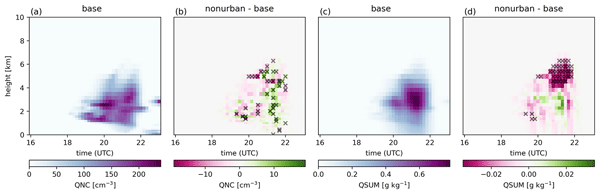
Friederike Keil, Markus Quante, Bernd Heinold, and Volker Matthias
Atmos. Chem. Phys., 26, 11561–11582, https://doi.org/10.5194/acp-26-11561-2026, https://doi.org/10.5194/acp-26-11561-2026, 2026
Short summary
Short summary
Using model simulations, we studied convective weather events to see how urban aerosol emissions influence cloud microphysics and precipitation. By tracing urban air volumes from convective clouds back to their emission sources, we could isolate the effects of emissions. The results show that urban emissions affect precipitation differently depending on the meteorological situation, highlighting the complex and case-dependent role of cities in shaping local rainfall.
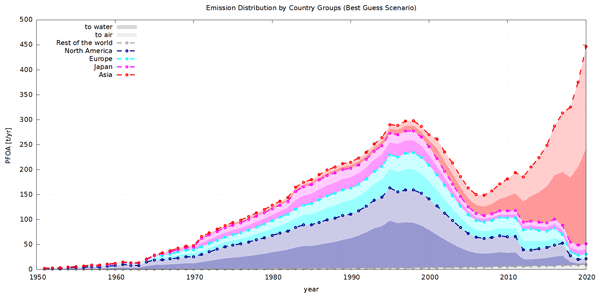
Pascal Simon, Martin Otto Paul Ramacher, Stefan Hagemann, Volker Matthias, Hanna Joerss, and Johannes Bieser
Earth Syst. Sci. Data, 18, 5713–5737, https://doi.org/10.5194/essd-18-5713-2026, https://doi.org/10.5194/essd-18-5713-2026, 2026
Short summary
Short summary
Per- and Polyfluorinated Alkyl Substances (PFAS) constitute a group of often toxic, persistent, and bioaccumulative substances. We constructed a global Emissions model and inventory based on multiple datasets for 23 widely used PFAS. The model computes temporally and spatially resolved model ready emissions distinguishing between emissions to air and emissions to water covering the time span from 1950 up until 2020 on an annual basis to be used for chemistry transport modelling.
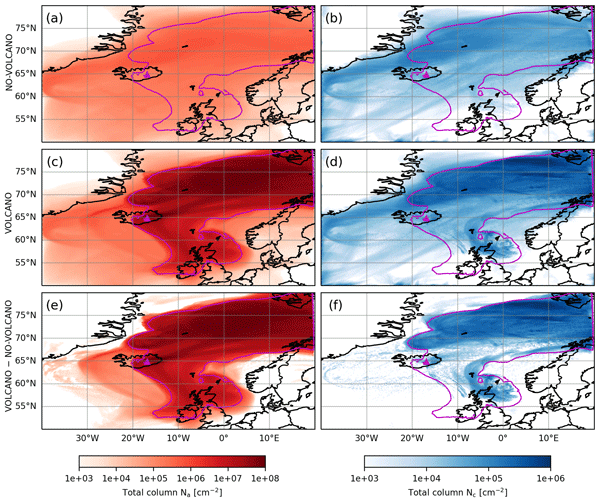
Fatemeh Zarei, Julia Bruckert, Gholam Ali Hoshyaripour, and Corinna Hoose
Atmos. Chem. Phys., 26, 9697–9719, https://doi.org/10.5194/acp-26-9697-2026, https://doi.org/10.5194/acp-26-9697-2026, 2026
Short summary
Short summary
Volcanic eruptions are a rich source of aerosol particles, such as sulfate and ash, that can impact cloud droplet and ice crystal formation. They lead to strong local perturbations of clouds. In this study, these processes were simulated with a numerical model. In two contrasting case studies of an Icelandic and a Caribbean volcano, the perturbations to processes involving liquid droplets and ice crystals are investigated.
N'Datchoh Evelyne Touré, Peter Knippertz, Andreas H. Fink, Marlon Maranan, Julia Bruckert, Gholamali Hoshyaripour, Jasmin Haupt, and Arona Diedhiou
EGUsphere, https://doi.org/10.5194/egusphere-2026-3128, https://doi.org/10.5194/egusphere-2026-3128, 2026
Short summary
Short summary
Rapid urbanization in Africa drives increasing air pollution. Once released, pollutants can travel long distances and impact remote areas. Here, we investigate the dispersion of pollutants from cities along the West African Guinean Coast by the land-sea breeze (LSB) circulation during the dry season using idealized tracer experiments with a weather prediction model. The experiments quantify the typical inland penetration of pollutants and show a transport to the Atlantic Ocean aloft.
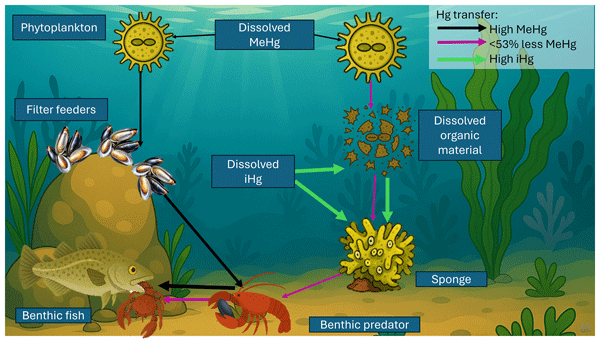
David J. Amptmeijer, Ulrike Hanz, Corinna Schrum, and Johannes Bieser
Biogeosciences, 23, 4057–4081, https://doi.org/10.5194/bg-23-4057-2026, https://doi.org/10.5194/bg-23-4057-2026, 2026
Short summary
Short summary
Sponges have unusually low methylmercury (MeHg) and high inorganic mercury (iHg) bioaccumulation compared to other macrobenthos. This pattern has been attributed to MeHg demethylation by symbiotic bacteria. Our model demonstrates an alternative explanation that dissolved organic matter (DOM) consumption by sponges can increase iHg and decrease MeHg levels. Low MeHg in sponges at the food web base may further limit MeHg bioaccumulation in higher trophic levels.
Friederike Keil, Markus Quante, Bernd Heinold, and Volker Matthias
EGUsphere, https://doi.org/10.5194/egusphere-2026-2934, https://doi.org/10.5194/egusphere-2026-2934, 2026
Short summary
Short summary
Using simulations of two differing rain events, we investigated how sensitive convective precipitation is to urban emission levels by varying emission strengths across a wide range. Low emissions produce only modest effects, but high levels can trigger systematic changes, including substantial increases in ice content and precipitation intensity accompanied by spatial and temporal shifts. The magnitude of these responses depends critically on the prevailing meteorological conditions.
Lisa Janina Muth, Gholam Ali Hoshyaripour, Bernhard Vogel, Heike Vogel, and Corinna Hoose
Atmos. Chem. Phys., 26, 8505–8528, https://doi.org/10.5194/acp-26-8505-2026, https://doi.org/10.5194/acp-26-8505-2026, 2026
Short summary
Short summary
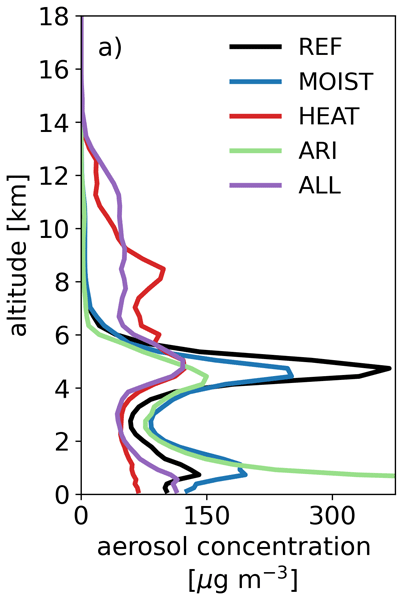
Wildfire plume injection height is key for atmospheric impact but hard to model. This study simulates the 2019/2020 Australian wildfires, testing fire-atmosphere feedbacks. Heat release increases plume rise; moisture has minor effects. Aerosol-radiation interaction lowers injection height initially, then lofts it. Only the combined simulation matches observed upper troposphere aerosol layers, especially during peak fire intensity.
Kevin Sieck, Joaquim G. Pinto, Beate Geyer, Klaus Keuler, Christian Beier, Christoph Braun, Florian Ehmele, Hendrik Feldmann, Thomas Frisius, Philipp Heinrich, Marie Hundhausen, Ronny Petrik, and Katja Trachte
EGUsphere, https://doi.org/10.5194/egusphere-2026-1024, https://doi.org/10.5194/egusphere-2026-1024, 2026
Short summary
Short summary
In this study we present the evaluation of a new generation of user informed climate simulations at scales of typical weather forecasts. It provides detailed information that are vital for climate impact studies at municipal level. Besides typical short comings of climate models in terms of deviations compared to reference data, the simulations show good agreement with observed climate especially in terms of regional patterns.
Tilman Leo Hohenberger, Marya el Malki, Antoon Visschedijk, Marc Guevara, Martin Otto Paul Ramacher, Alessandro Marongiu, Guido Giuseppe Lanzani, Giuseppe Fossati, Anu Kousa, Eleni Athanasopoulou, Anastasia Kakouri, and Jeroen Kuenen
Earth Syst. Sci. Data, 18, 3959–3978, https://doi.org/10.5194/essd-18-3959-2026, https://doi.org/10.5194/essd-18-3959-2026, 2026
Short summary
Short summary
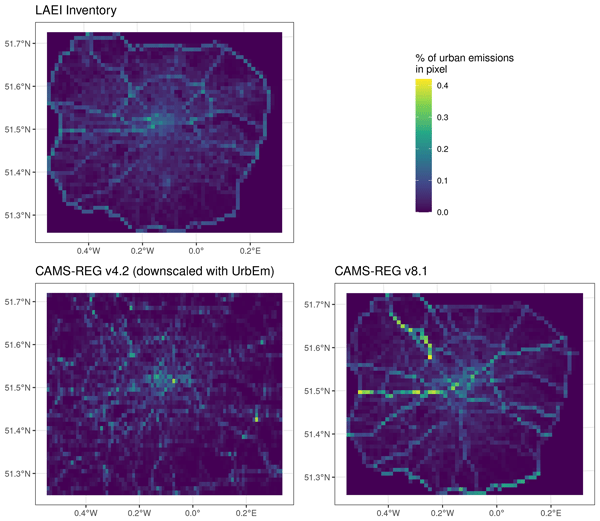
Spatial road transport emission data is fundamental for challenges of air pollution and climate change. In the existing European CAMS-REG (Copernicus Atmosphere Service-regional) inventory, several improvement opportunities exist, especially an underestimation in urban centers of ~35 %. We calculate emissions by combining gap-filled road information and emission factors, for the first time giving detailed emissions for most roads in Europe. With this, our dataset is much closer in line with independently combined city inventories.
Gholam Ali Hoshyaripour, Andreas Baer, Sascha Bierbauer, Julia Bruckert, Dominik Brunner, Jochen Förstner, Arash Hamzehloo, Valentin Hanft, Corina Keller, Martina Klose, Pankaj Kumar, Patrick Ludwig, Enrico Metzner, Lisa Muth, Andreas Pauling, Nikolas Porz, Maryam Ramezani Ziarani, Thomas Reddmann, Luca Reißig, Roland Ruhnke, Khompat Satitkovitchai, Axel Seifert, Miriam Sinnhuber, Michael Steiner, Stefan Versick, Heike Vogel, Michael Weimer, Sven Werchner, and Corinna Hoose
Geosci. Model Dev., 19, 1645–1681, https://doi.org/10.5194/gmd-19-1645-2026, https://doi.org/10.5194/gmd-19-1645-2026, 2026
Short summary
Short summary
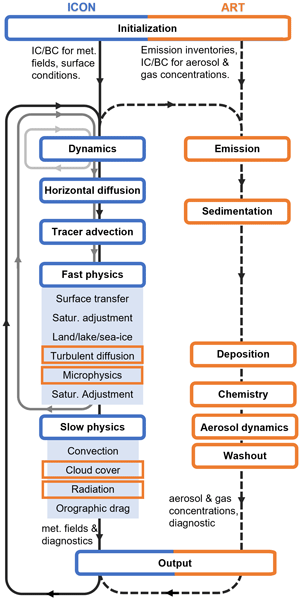
This paper presents recent advances in ICON-ART, a modeling system that simulates atmospheric composition – such as gases and particles – and their interactions with weather and climate. By integrating updated chemistry, emissions, and aerosol processes, ICON-ART enables detailed, scale-spanning simulations. It supports both scientific research and operational forecasts, contributing to improved air quality, weather and climate predictions.
Hengheng Zhang, Gholam Ali Hoshyaripour, Heike Vogel, Frank Wagner, Thomas Leisner, Jochen Förstner, and Harald Saathoff
EGUsphere, https://doi.org/10.5194/egusphere-2025-5980, https://doi.org/10.5194/egusphere-2025-5980, 2026
Short summary
Short summary
We studied several major dust storms that traveled from the Sahara to Europe using ground-based light measurements, sunlight sensors, particle counters, and a modern weather and dust model. We reveal when the dust arrived, how it moved and mixed in the air, and why each event behaved differently. Our results help improve forecasts of dust episodes that influence air quality, visibility, and solar energy across Europe.
David J. Amptmeijer, Elena Mikheeva, Ute Daewel, Johannes Bieser, and Corinna Schrum
Biogeosciences, 22, 7929–7960, https://doi.org/10.5194/bg-22-7929-2025, https://doi.org/10.5194/bg-22-7929-2025, 2025
Short summary
Short summary
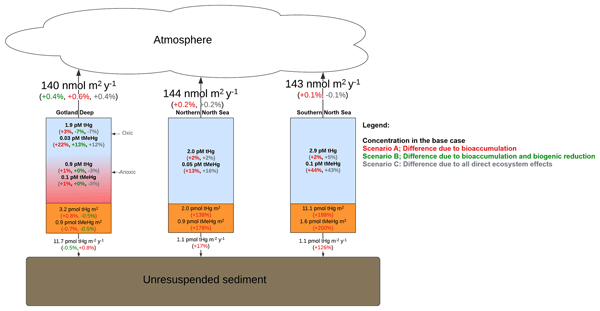
We integrate bioaccumulation and biotic Hg transformations into a coupled ecosystem–mercury model to assess their effect on marine Hg cycling. Bioaccumulation increases methylmercury levels, especially in productive coastal waters, and alters Hg exchange between the Baltic and North Seas. These results highlight strong ecosystem feedbacks on marine Hg dynamics.
David J. Amptmeijer, Andrea Padilla, Sofia Modesti, Corinna Schrum, and Johannes Bieser
Biogeosciences, 22, 7483–7503, https://doi.org/10.5194/bg-22-7483-2025, https://doi.org/10.5194/bg-22-7483-2025, 2025
Short summary
Short summary
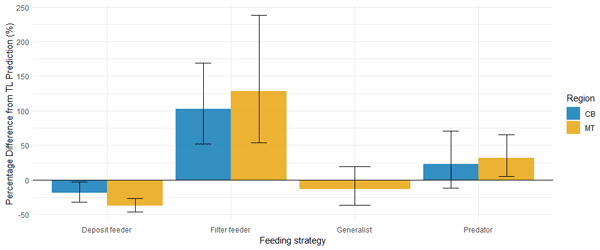
This paper combines a literature review with a 1D Hg speciation and bioaccumulation model to assess how feeding strategy affects inorganic and methylmercury at the base of marine food webs. We find filter feeders have higher MeHg, while suspension feeders have very low MeHg, highlighting feeding strategy as a key driver of MeHg variability.
David J. Amptmeijer and Johannes Bieser
Biogeosciences, 22, 7425–7440, https://doi.org/10.5194/bg-22-7425-2025, https://doi.org/10.5194/bg-22-7425-2025, 2025
Short summary
Short summary
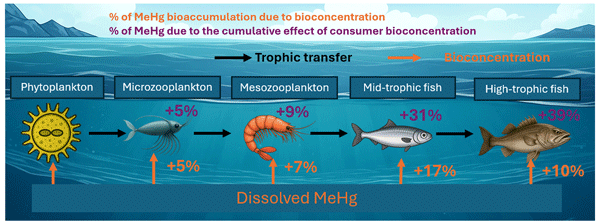
The mercury (Hg) form of most concern is monomethylmercury (MMHg⁺) due to its neurotoxicity and ability to bioaccumulate in seafood. Bioaccumulation in seafood occurs via bioconcentration (direct uptake) and biomagnification (trophic transfer). Our study separates these processes, showing that bioconcentration increases MMHg⁺ in high trophic level fish by 15 % per level, contributing 28–49 % of MMHg⁺ in Atlantic cod. These findings can be used to inform efficient Hg modeling strategies.
Lisa Janina Muth, Sascha Bierbauer, Corinna Hoose, Bernhard Vogel, Heike Vogel, and Gholam Ali Hoshyaripour
Atmos. Chem. Phys., 25, 16027–16040, https://doi.org/10.5194/acp-25-16027-2025, https://doi.org/10.5194/acp-25-16027-2025, 2025
Short summary
Short summary
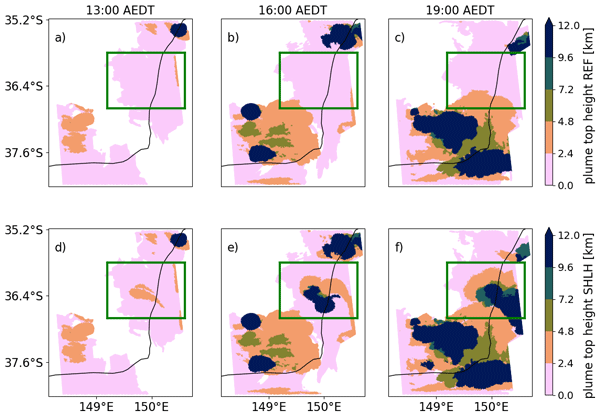
In our study, we explore how intense wildfires create thunderstorm-like clouds that can affect weather and climate globally. Using simulations with high resolution, we found that fire heat and moisture help form these clouds, lifting particles high into the atmosphere. This process is crucial for understanding how fires affect the environment. Despite some differences from observational data, our findings match well over time, showing the importance of fire-induced heat in cloud formation.
Julia Bruckert, Simran Chopra, Richard Siddans, Charlotte Wedler, and Gholam Ali Hoshyaripour
Atmos. Chem. Phys., 25, 9859–9884, https://doi.org/10.5194/acp-25-9859-2025, https://doi.org/10.5194/acp-25-9859-2025, 2025
Short summary
Short summary
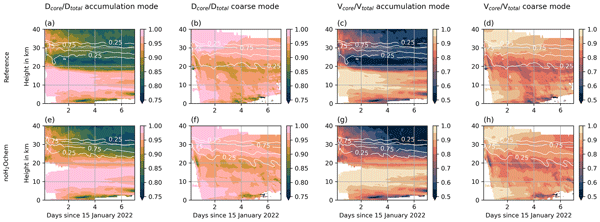
The 2022 Hunga eruption emitted about 150 Tg of water vapor into the stratosphere. Here, we show that the water vapor injection not only accelerates SO2 oxidation and sulfate production but also increases the aging of ash (coating of ash by sulfate). Our study shows that aerosol aging alone does not explain the rapid loss of ash after the Hunga eruption as observed by satellite instruments. However, some ash might be masked in the observation due to the strong coating.
Koketso M. Molepo, Johannes Bieser, Alkuin M. Koenig, Ian M. Hedgecock, Ralf Ebinghaus, Aurélien Dommergue, Olivier Magand, Hélène Angot, Oleg Travnikov, Lynwill Martin, Casper Labuschagne, Katie Read, and Yann Bertrand
Atmos. Chem. Phys., 25, 9645–9668, https://doi.org/10.5194/acp-25-9645-2025, https://doi.org/10.5194/acp-25-9645-2025, 2025
Short summary
Short summary
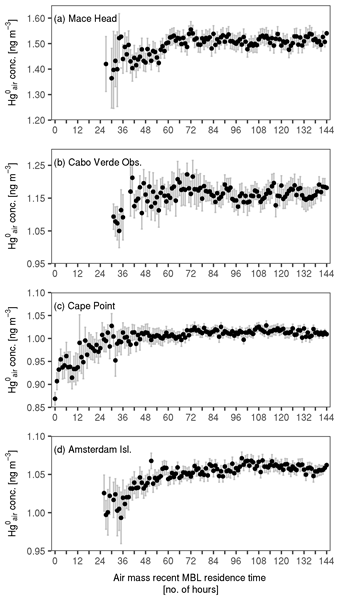
Mercury exchange between the ocean and atmosphere is poorly understood due to limited in situ data. Here, using atmospheric mercury observations from ground-based monitoring stations along with air mass trajectories, we found that atmospheric Hg levels increase with air mass ocean exposure time, matching predictions for ocean Hg emissions. This finding indicates that ocean emissions directly influence atmospheric Hg levels and enables us to estimate these emissions on a global scale.
Ashu Dastoor, Hélène Angot, Johannes Bieser, Flora Brocza, Brock Edwards, Aryeh Feinberg, Xinbin Feng, Benjamin Geyman, Charikleia Gournia, Yipeng He, Ian M. Hedgecock, Ilia Ilyin, Jane Kirk, Che-Jen Lin, Igor Lehnherr, Robert Mason, David McLagan, Marilena Muntean, Peter Rafaj, Eric M. Roy, Andrei Ryjkov, Noelle E. Selin, Francesco De Simone, Anne L. Soerensen, Frits Steenhuisen, Oleg Travnikov, Shuxiao Wang, Xun Wang, Simon Wilson, Rosa Wu, Qingru Wu, Yanxu Zhang, Jun Zhou, Wei Zhu, and Scott Zolkos
Geosci. Model Dev., 18, 2747–2860, https://doi.org/10.5194/gmd-18-2747-2025, https://doi.org/10.5194/gmd-18-2747-2025, 2025
Short summary
Short summary
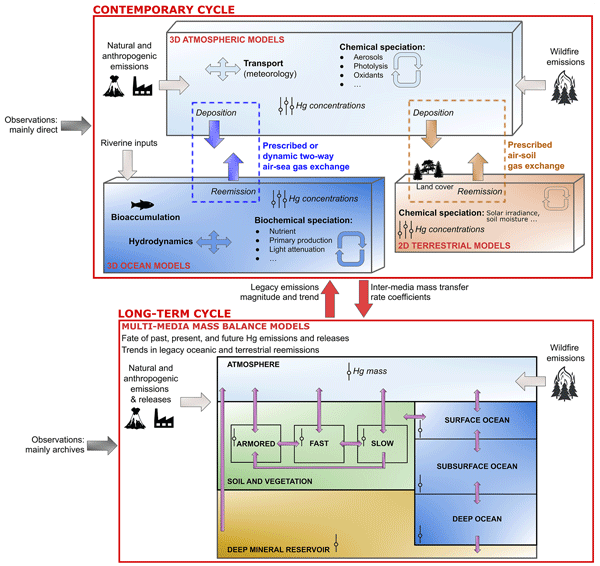
This paper introduces the Multi-Compartment Mercury (Hg) Modeling and Analysis Project (MCHgMAP) aimed at informing the effectiveness evaluations of two multilateral environmental agreements: the Minamata Convention on Mercury and the Convention on Long-Range Transboundary Air Pollution. The experimental design exploits a variety of models (atmospheric, land, oceanic ,and multimedia mass balance models) to assess the short- and long-term influences of anthropogenic Hg releases into the environment.
Lea Fink, Matthias Karl, Volker Matthias, Sonia Oppo, Richard Kranenburg, Jeroen Kuenen, Sara Jutterström, Jana Moldanova, Elisa Majamäki, and Jukka-Pekka Jalkanen
Atmos. Chem. Phys., 23, 10163–10189, https://doi.org/10.5194/acp-23-10163-2023, https://doi.org/10.5194/acp-23-10163-2023, 2023
Short summary
Short summary
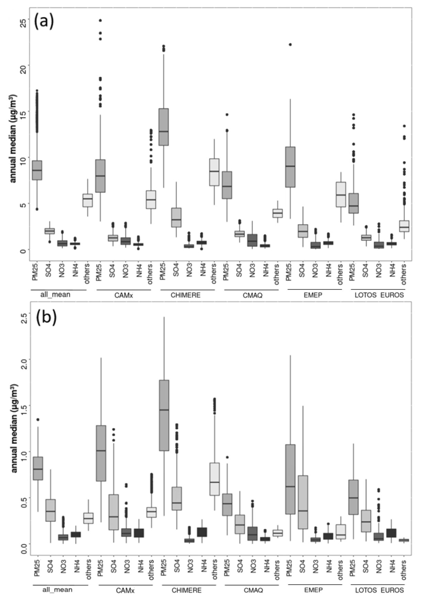
The Mediterranean Sea is a heavily trafficked shipping area, and air quality monitoring stations in numerous cities along the Mediterranean coast have detected high levels of air pollutants originating from shipping emissions. The current study investigates how existing restrictions on shipping-related emissions to the atmosphere ensure compliance with legislation. Focus was laid on fine particles and particle species, which were simulated with five different chemical transport models.
Axel Seifert, Vanessa Bachmann, Florian Filipitsch, Jochen Förstner, Christian M. Grams, Gholam Ali Hoshyaripour, Julian Quinting, Anika Rohde, Heike Vogel, Annette Wagner, and Bernhard Vogel
Atmos. Chem. Phys., 23, 6409–6430, https://doi.org/10.5194/acp-23-6409-2023, https://doi.org/10.5194/acp-23-6409-2023, 2023
Short summary
Short summary
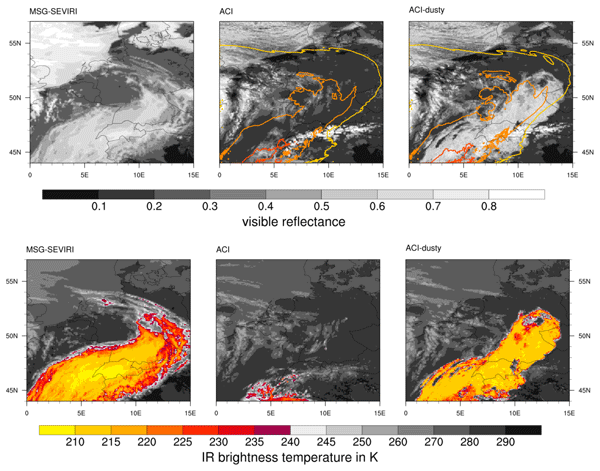
We investigate how mineral dust can lead to the formation of cirrus clouds. Dusty cirrus clouds lead to a reduction in solar radiation at the surface and, hence, a reduced photovoltaic power generation. Current weather prediction systems are not able to predict this interaction between mineral dust and cirrus clouds. We have developed a new physical description of the formation of dusty cirrus clouds. Overall we can show a considerable improvement in the forecast quality of clouds and radiation.

Johannes Bieser, David J. Amptmeijer, Ute Daewel, Joachim Kuss, Anne L. Soerensen, and Corinna Schrum
Geosci. Model Dev., 16, 2649–2688, https://doi.org/10.5194/gmd-16-2649-2023, https://doi.org/10.5194/gmd-16-2649-2023, 2023
Short summary
Short summary
MERCY is a 3D model to study mercury (Hg) cycling in the ocean. Hg is a highly harmful pollutant regulated by the UN Minamata Convention on Mercury due to widespread human emissions. These emissions eventually reach the oceans, where Hg transforms into the even more toxic and bioaccumulative pollutant methylmercury. MERCY predicts the fate of Hg in the ocean and its buildup in the food chain. It is the first model to consider Hg accumulation in fish, a major source of Hg exposure for humans.
Lea Fink, Matthias Karl, Volker Matthias, Sonia Oppo, Richard Kranenburg, Jeroen Kuenen, Jana Moldanova, Sara Jutterström, Jukka-Pekka Jalkanen, and Elisa Majamäki
Atmos. Chem. Phys., 23, 1825–1862, https://doi.org/10.5194/acp-23-1825-2023, https://doi.org/10.5194/acp-23-1825-2023, 2023
Short summary
Short summary
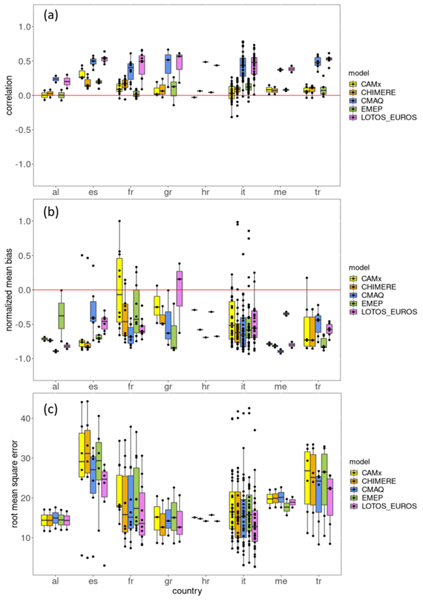
Potential ship impact on air pollution in the Mediterranean Sea was simulated with five chemistry transport models. An evaluation of the results for NO2 and O3 air concentrations and dry deposition is presented. Emission data, modeled year and domain were the same. Model run outputs were compared to measurements from background stations. We focused on comparing model outputs regarding the concentration of regulatory pollutants and the relative ship impact on total air pollution concentrations.
Ákos Horváth, James L. Carr, Dong L. Wu, Julia Bruckert, Gholam Ali Hoshyaripour, and Stefan A. Buehler
Atmos. Chem. Phys., 22, 12311–12330, https://doi.org/10.5194/acp-22-12311-2022, https://doi.org/10.5194/acp-22-12311-2022, 2022
Short summary
Short summary
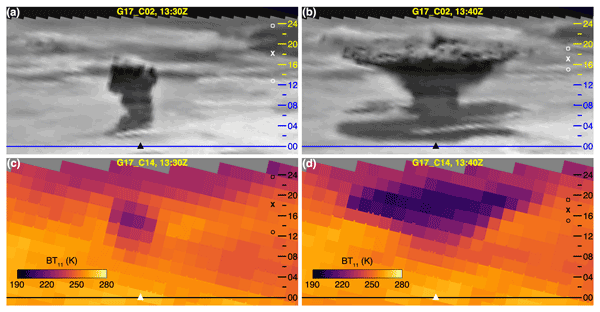
We estimate plume heights for the April 2021 La Soufrière daytime eruptions using GOES-17 near-limb side views and GOES-16–MODIS stereo views. These geometric heights are then compared with brightness-temperature-based radiometric height estimates to characterize the biases of the latter. We also show that the side view method can be applied to infrared imagery and thus nighttime eruptions, albeit with larger uncertainty.

Natalia E. Chubarova, Heike Vogel, Elizaveta E. Androsova, Alexander A. Kirsanov, Olga B. Popovicheva, Bernhard Vogel, and Gdaliy S. Rivin
Atmos. Chem. Phys., 22, 10443–10466, https://doi.org/10.5194/acp-22-10443-2022, https://doi.org/10.5194/acp-22-10443-2022, 2022
Short summary
Short summary
Effects of urban aerosol pollution in Moscow were analyzed using the COSMO-ART chemical transport model and intensive measurement campaigns. We show that urban aerosol comprises about 15–20% of columnar aerosol content, consisting mainly of fine aerosol mode. The black carbon (BC) fraction is about 5 %, depending on particle dispersion intensity (IPD). The BC fraction low value explains weak absorbing properties of the Moscow atmosphere. IPD also defines the daily cycle of urban aerosol species.
Ronny Badeke, Volker Matthias, Matthias Karl, and David Grawe
Geosci. Model Dev., 15, 4077–4103, https://doi.org/10.5194/gmd-15-4077-2022, https://doi.org/10.5194/gmd-15-4077-2022, 2022
Short summary
Short summary
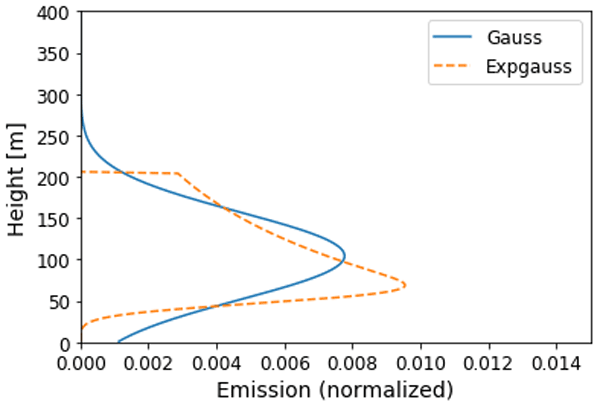
For air quality modeling studies, it is very important to distribute pollutants correctly into the model system. This has not yet been done for shipping pollution in great detail. We studied the effects of different vertical distributions of shipping pollutants on the urban air quality and derived advanced formulas for it. These formulas take weather conditions and ship-specific parameters like the exhaust gas temperature into account.
Danilo Custódio, Katrine Aspmo Pfaffhuber, T. Gerard Spain, Fidel F. Pankratov, Iana Strigunova, Koketso Molepo, Henrik Skov, Johannes Bieser, and Ralf Ebinghaus
Atmos. Chem. Phys., 22, 3827–3840, https://doi.org/10.5194/acp-22-3827-2022, https://doi.org/10.5194/acp-22-3827-2022, 2022
Short summary
Short summary
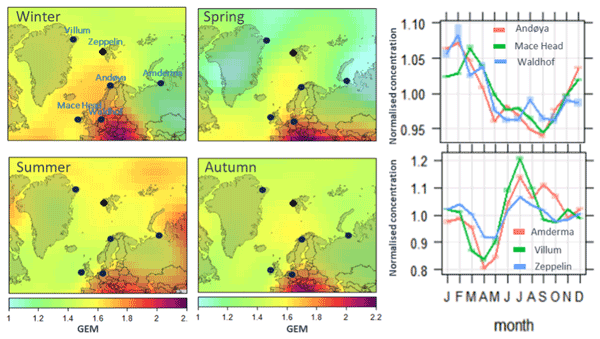
As a poison in the air that we breathe and the food that we eat, mercury is a human health concern for society as a whole. In that regard, this work deals with monitoring and modelling mercury in the environment, improving wherewithal, identifying the strength of the different components at play, and interpreting information to support the efforts that seek to safeguard public health.

Julia Bruckert, Gholam Ali Hoshyaripour, Ákos Horváth, Lukas O. Muser, Fred J. Prata, Corinna Hoose, and Bernhard Vogel
Atmos. Chem. Phys., 22, 3535–3552, https://doi.org/10.5194/acp-22-3535-2022, https://doi.org/10.5194/acp-22-3535-2022, 2022
Short summary
Short summary
Volcanic emissions endanger aviation and public health and also influence weather and climate. Forecasting the volcanic-plume dispersion is therefore a critical yet sophisticated task. Here, we show that explicit treatment of volcanic-plume dynamics and eruption source parameters significantly improves volcanic-plume dispersion forecasts. We further demonstrate the lofting of the SO2 due to a heating of volcanic particles by sunlight with major implications for volcanic aerosol research.
Sara Jutterström, Filip Moldan, Jana Moldanová, Matthias Karl, Volker Matthias, and Maximilian Posch
Atmos. Chem. Phys., 21, 15827–15845, https://doi.org/10.5194/acp-21-15827-2021, https://doi.org/10.5194/acp-21-15827-2021, 2021
Short summary
Short summary
For the Baltic Sea countries, shipping emissions are an important source of air pollution. This study investigates the contribution of shipping emissions to the acidification and eutrophication of soils and freshwater within the airshed of the Baltic Sea in the years 2012 and 2040. The implementation of emission control areas and improving energy efficiency significantly reduces the negative impact on ecosystems expressed as a decrease in the exceedance of critical loads for sulfur and nitrogen.
Stefano Galmarini, Paul Makar, Olivia E. Clifton, Christian Hogrefe, Jesse O. Bash, Roberto Bellasio, Roberto Bianconi, Johannes Bieser, Tim Butler, Jason Ducker, Johannes Flemming, Alma Hodzic, Christopher D. Holmes, Ioannis Kioutsioukis, Richard Kranenburg, Aurelia Lupascu, Juan Luis Perez-Camanyo, Jonathan Pleim, Young-Hee Ryu, Roberto San Jose, Donna Schwede, Sam Silva, and Ralf Wolke
Atmos. Chem. Phys., 21, 15663–15697, https://doi.org/10.5194/acp-21-15663-2021, https://doi.org/10.5194/acp-21-15663-2021, 2021
Short summary
Short summary
This technical note presents the research protocols for phase 4 of the Air Quality Model Evaluation International Initiative (AQMEII4). This initiative has three goals: (i) to define the state of wet and dry deposition in regional models, (ii) to evaluate how dry deposition influences air concentration and flux predictions, and (iii) to identify the causes for prediction differences. The evaluation compares LULC-specific dry deposition and effective conductances and fluxes.
Cited articles
Abusallout, I., Holton, C., Wang, J., and Hanigan, D.: Henry's Law constants of 15 per- and polyfluoroalkyl substances determined by static headspace analysis, Journal of Hazardous Materials Letters, 3, https://doi.org/10.1016/j.hazl.2022.100070, 2022. a
Armitage, J., Cousins, I. T., Buck, R. C., Prevedouros, K., Russell, M. H., MacLeod, M., and Korzeniowski, S. H.: Modeling Global-Scale Fate and Transport of Perfluorooctanoate Emitted from Direct Sources, Environ. Sci. Technol., 40, 6969–6975, https://doi.org/10.1021/es0614870, 2006. a
Arp, H. P. H., Niederer, C., and Goss, K.-U.: Predicting the Partitioning Behavior of Various Highly Fluorinated Compounds, Environ. Sci. Technol., 40, 7298–7304, https://doi.org/10.1021/es060744y, 2006. a
Barber, J. L., Berger, U., Chaemfa, C., Huber, S., Jahnke, A., Temme, C., and Jones, K. C.: Analysis of per- and polyfluorinated alkyl substances in air samples from Northwest Europe, J. Environ. Monitor., 9, 530–541, https://doi.org/10.1039/b701417a, 2007. a
Barton, C. A., Kaiser, M. A., and Russell, M. H.: Partitioning and removal of perfluorooctanoate during rain events: the importance of physical-chemical properties, J. Environ. Monitor., 9, 839, https://doi.org/10.1039/b703510a, 2007. a
Brennan, N. M., Evans, A. T., Fritz, M. K., Peak, S. A., and von Holst, H. E.: Trends in the regulation of per-and polyfluoroalkyl substances (PFAS): A scoping review, Int. J. Env. Res. Pub. He., 18, 10900, https://doi.org/10.3390/ijerph182010900, 2021. a
Bruckert, J. R.: Impact of eruption dynamics and gas – aerosol interaction on the early stage evolution of volcanic plumes, PhD thesis, Karlsruher Instituts für Technologie (KIT), https://doi.org/10.5445/IR/1000160429, 2023. a
Buck, R. C., Franklin, J., Berger, U., Conder, J. M., Cousins, I. T., Voogt, P. D., Jensen, A. A., Kannan, K., Mabury, S. A., and van Leeuwen, S. P.: Perfluoroalkyl and polyfluoroalkyl substances in the environment: Terminology, classification, and origins, Integr. Environ. Assess., 7, 513–541, https://doi.org/10.1002/ieam.258, 2011. a, b, c
Burkholder, J. B., Sander, S. P., Abbatt, J. P. D., Barker, J. R., Huie, R. E., Kolb, C. E., Kurylo, M. J., Orkin, V. L., Wilmouth, D. M., and Wine, P. H.: Chemical Kinetics and Photochemical Data for Use in Atmospheric Studies Evaluation Number 18 NASA Panel for Data Evaluation, Tech. rep., http://jpldataeval.jpl.nasa.gov/ (last access: 20 July 2026), 2015. a
Chambers, J.: Hybrid gridded demographic data for the world, 1950–2020 0.25° resolution, Zenodo, https://doi.org/10.5281/ZENODO.3768003, 2022. a
Coperchini, F., Greco, A., Croce, L., Teliti, M., Calì, B., Chytiris, S., Magri, F., and Rotondi, M.: Do PFCAs drive the establishment of thyroid cancer microenvironment? Effects of C6O4, PFOA and PFHxA exposure in two models of human thyroid cells in primary culture, Environ. Int., 187, 108717, https://doi.org/10.1016/j.envint.2024.108717, 2024. a
Cserbik, D., Redondo-Hasselerharm, P. E., Farré, M. J., Sanchís, J., Bartolomé, A., Paraian, A., Herrera, E. M., Caixach, J., Villanueva, C. M., and Flores, C.: Human exposure to per- and polyfluoroalkyl substances and other emerging contaminants in drinking water, npj Clean Water, 6, https://doi.org/10.1038/s41545-023-00236-y, 2023. a
Dalmijn, J., Glüge, J., Scheringer, M., and Cousins, I. T.: Emission inventory of PFASs and other fluorinated organic substances for the fluoropolymer production industry in Europe, Environ. Sci.-Proc. Imp., 26, 269–287, https://doi.org/10.1039/D3EM00426K, 2024. a
Damian, V., Sandu, A., Damian, M., Potra, F., and Carmichael, G. R.: The kinetic preprocessor KPP-a software environment for solving chemical kinetics, Comput. Chem. Eng., 26, 1567–1579, https://doi.org/10.1016/S0098-1354(02)00128-X, 2002. a
Dee, D. P., Uppala, S. M., Simmons, A. J., Berrisford, P., Poli, P., Kobayashi, S., Andrae, U., Balmaseda, M. A., Balsamo, G., Bauer, P., Bechtold, P., Beljaars, A. C. M., van de Berg, L., Bidlot, J., Bormann, N., Delsol, C., Dragani, R., Fuentes, M., Geer, A. J., Haimberger, L., Healy, S. B., Hersbach, H., Hólm, E. V., Isaksen, L., Kållberg, P., Köhler, M., Matricardi, M., McNally, A. P., Monge‐Sanz, B. M., Morcrette, J., Park, B., Peubey, C., de Rosnay, P., Tavolato, C., Thépaut, J., and Vitart, F.: The ERA‐Interim reanalysis: configuration and performance of the data assimilation system, Q. J. Roy. Meteor. Soc., 137, 553–597, https://doi.org/10.1002/qj.828, 2011. a
Dong, Z., Fan, X., Li, Y., Wang, Z., Chen, L., Wang, Y., Zhao, X., Fan, W., and Wu, F. C.: A web-based database on exposure to persistent organic pollutants in China, Environ. Health Persp., 129, 4–6, https://doi.org/10.1289/EHP8685, 2021. a
Dreyer, A., Kirchgeorg, T., Weinberg, I., and Matthias, V.: Particle-size distribution of airborne poly- and perfluorinated alkyl substances, Chemosphere, 129, 142–149, https://doi.org/10.1016/j.chemosphere.2014.06.069, 2015. a
Ellis, D. A., Martin, J. W., Silva, A. O. D., Mabury, S. A., Hurley, M. D., Andersen, M. P. S., and Wallington, T. J.: Degradation of fluorotelomer alcohols: A likely atmospheric source of perfluorinated carboxylic acids, Environ. Sci. Technol., 38, 3316–3321, https://doi.org/10.1021/es049860w, 2004. a
Emmons, L. K., Schwantes, R. H., Orlando, J. J., Tyndall, G., Kinnison, D., Lamarque, J., Marsh, D., Mills, M. J., Tilmes, S., Bardeen, C., Buchholz, R. R., Conley, A., Gettelman, A., Garcia, R., Simpson, I., Blake, D. R., Meinardi, S., and Pétron, G.: The Chemistry Mechanism in the Community Earth System Model Version 2 (CESM2), J. Adv. Model. Earth Sy., 12, https://doi.org/10.1029/2019MS001882, 2020. a, b
Endo, S., Hammer, J., and Matsuzawa, S.: Experimental Determination of Air/Water Partition Coefficients for 21 Per- and Polyfluoroalkyl Substances Reveals Variable Performance of Property Prediction Models, Environ. Sci. Technol., 57, 8406–8413, https://doi.org/10.1021/acs.est.3c02545, 2023. a
Environment and Climate Change Canada: Toxic substances list: long-chain perfluorocarboxylic acids (LC-PFCAs), their salts and precursors, https://www.canada.ca/en/environment-climate-change/services/management-toxic-substances/list-canadian-environmental-protection-act/long-chain-perfluorocarboxylic-acids.html (last access: 20 July 2026), 2023. a
Environment Canada: Draft Screening Assessment Perfluorooctanoic Acid, its Salts, and its Precursors, Tech. rep., https://www.canada.ca/en/environment-climate-change/services/canadian-environmental-protection-act-registry/historical/substances-lists/draft-screening-assessment-perfluorooctanoic-acid-salts-precursors.html (last access: 20 July 2026), 2010. a
Evich, M. G., Davis, M. J. B., McCord, J. P., Acrey, B., Awkerman, J. A., Knappe, D. R. U., Lindstrom, A. B., Speth, T. F., Tebes-Stevens, C., Strynar, M. J., Wang, Z., Weber, E. J., Henderson, W. M., and Washington, J. W.: Per- and polyfluoroalkyl substances in the environment, Science, 375, eabg9065, https://doi.org/10.1126/science.abg9065, 2022. a
Faust, J. A.: PFAS on atmospheric aerosol particles: a review, Environ. Sci. Proc. Imp., 25, 133–150, https://doi.org/10.1039/d2em00002d, 2022. a
Filipovic, M., Woldegiorgis, A., Norström, K., Bibi, M., Lindberg, M., and Österås, A. H.: Historical usage of aqueous film forming foam: A case study of the widespread distribution of perfluoroalkyl acids from a military airport to groundwater, lakes, soils and fish, Chemosphere, 129, 39–45, https://doi.org/10.1016/j.chemosphere.2014.09.005, 2015. a
GMP DWH, Hůlek, R., Borůvková, J., Kalina, J., Bednářová, Z., Šebková, K., Hruban, T., Novotný, V., Ismael, M., and Klánová, J.: Global Monitoring Plan Data Warehouse of the Stockholm Convention on Persistent Organic Pollutants: visualisation platform and on-line tool for the analysis of global levels of POPs in air, water, breast milk and blood, https://data.pops-gmp.org/2020/all/#/gmp3/spatial-distribution (last access: 20 July 2026), 2020. a
Hagemann, S. and Dümenil Gates, L.: Validation of the hydrological cycle of ECMWF and NCEP reanalyses using the MPI hydrological discharge model, J. Geophys. Res.-Atmos., 106, 1503–1510, https://doi.org/10.1029/2000JD900568, 2001. a
Harada, K., Nakanishi, S., Saito, N., Tsutsui, T., and Koizumi, A.: Airborne perfluorooctanoate may be a substantial source contamination in Kyoto Area, Japan, B. Environ. Contam. Tox., 74, 64–69, https://doi.org/10.1007/s00128-004-0548-0, 2005. a
Heydebreck, F., Tang, J., Xie, Z., and Ebinghaus, R.: Alternative and Legacy Perfluoroalkyl Substances: Differences between European and Chinese River/Estuary Systems, Environ. Sci. Technol., 49, 8386–8395, https://doi.org/10.1021/acs.est.5b01648, 2015. a
ICON partnership (DWD; MPI-M; DKRZ; KIT; C2SM): ICON release 2025.04, World Data Center for Climate (WDCC) at DKRZ, https://doi.org/10.35089/wdcc/iconrelease2025.04, 2025. a
Jahnke, A., Berger, U., Ebinghaus, R., and Temme, C.: Latitudinal gradient of airborne polyfluorinated alkyl substances in the marine atmosphere between Germany and South Africa (53° N–33° S), Environ. Sci. Technol., 41, 3055–3061, https://doi.org/10.1021/es062389h, 2007. a, b, c
John, D. A. and William, B. A.: Solar engineering of thermal process, Jhon Wiley & Sons, Inc, 2nd edn., ISBN 9780511271755, 1991. a
Kay, J. E., Deser, C., Phillips, A., Mai, A., Hannay, C., Strand, G., Arblaster, J. M., Bates, S. C., Danabasoglu, G., Edwards, J., Holland, M., Kushner, P., Lamarque, J.-F., Lawrence, D., Lindsay, K., Middleton, A., Munoz, E., Neale, R., Oleson, K., Polvani, L., and Vertenstein, M.: The Community Earth System Model (CESM) Large Ensemble Project: A Community Resource for Studying Climate Change in the Presence of Internal Climate Variability, B. Am. Meteorol. Soc., 96, 1333–1349, https://doi.org/10.1175/BAMS-D-13-00255.1, 2015. a
Kim, S.-K. and Kannan, K.: Perfluorinated Acids in Air, Rain, Snow, Surface Runoff, and Lakes: Relative Importance of Pathways to Contamination of Urban Lakes, Environ. Sci. Technol., 41, 8328–8334, https://doi.org/10.1021/es072107t, 2007. a, b
Kirchgeorg, T., Dreyer, A., Gabrieli, J., Kehrwald, N., Sigl, M., Schwikowski, M., Boutron, C., Gambaro, A., Barbante, C., and Ebinghaus, R.: Temporal variations of perfluoroalkyl substances and polybrominated diphenyl ethers in alpine snow, Environ. Pollut., 178, 367–374, https://doi.org/10.1016/j.envpol.2013.03.043, 2013. a
Kummu, M., Taka, M., and Guillaume, J. H.: Gridded global datasets for Gross Domestic Product and Human Development Index over 1990–2015, Sci. Data, 5, 1–16, https://doi.org/10.1038/sdata.2018.4, 2018. a
Kutsuna, S. and Hori, H.: Experimental determination of Henry's law constant of perfluorooctanoic acid (PFOA) at 298K by means of an inert-gas stripping method with a helical plate, Atmos. Environ., 42, 8883–8892, https://doi.org/10.1016/j.atmosenv.2008.09.008, 2008. a
Kwok, K. Y., Taniyasu, S., Yeung, L. W. Y., Murphy, M. B., Lam, P. K. S., Horii, Y., Kannan, K., Petrick, G., Sinha, R. K., and Yamashita, N.: Flux of Perfluorinated Chemicals through Wet Deposition in Japan, the United States, And Several Other Countries, Environ. Sci. Technol., 44, 7043–7049, https://doi.org/10.1021/es101170c, 2010. a
Lamarque, J.-F., Emmons, L. K., Hess, P. G., Kinnison, D. E., Tilmes, S., Vitt, F., Heald, C. L., Holland, E. A., Lauritzen, P. H., Neu, J., Orlando, J. J., Rasch, P. J., and Tyndall, G. K.: CAM-chem: description and evaluation of interactive atmospheric chemistry in the Community Earth System Model, Geosci. Model Dev., 5, 369–411, https://doi.org/10.5194/gmd-5-369-2012, 2012. a, b
Lauritzen, P. H., Erath, C., and Mittal, R.: On simplifying “incremental remap”–based transport schemes, J. Comput. Phys., 230, 7957–7963, https://doi.org/10.1016/j.jcp.2011.06.030, 2011. a
Leuenberger, D., Koller, M., Fuhrer, O., and Schär, C.: A Generalization of the SLEVE Vertical Coordinate, Mon. Weather Rev., 138, 3683–3689, https://doi.org/10.1175/2010MWR3307.1, 2010. a, b
Liu, W., Jin, Y., Quan, X., Sasaki, K., Saito, N., Nakayama, S. F., Sato, I., and Tsuda, S.: Perfluorosulfonates and perfluorocarboxylates in snow and rain in Dalian, China, Environ. Int., 35, 737–742, https://doi.org/10.1016/j.envint.2009.01.016, 2009. a
Longpré, D., Lorusso, L., Levicki, C., Carrier, R., and Cureton, P.: PFOS, PFOA, LC-PFCAS, and certain other PFAS: A focus on Canadian guidelines and guidance for contaminated sites management, Environmental Technology & Innovation, 18, 100752, https://doi.org/10.1016/j.eti.2020.100752, 2020. a
Mclachlan, M. S., Holmstrom, K. E., Reth, M., and Berger, U.: Riverine discharge of perfluorinated carboxylates from the European continent, Environ. Sci. Technol., 41, 7260–7265, https://doi.org/10.1021/es071471p, 2007. a
Meza-Landero, H. A. and Simon, P.: POPE monthly emissions for ICON-ART PRIEST v1.0, Zenodo [data set], https://doi.org/10.5281/zenodo.16539566, 2025. a
Meza-Landero, H. A., Bruckert, J., Petrik, R., Simon, P., Vogel, H., Matthias, V., Bieser, J., and Ramacher, M. O. P.: ICON-ART PRIEST extension code, Zenodo [code], https://doi.org/10.5281/zenodo.16615114, 2025a. a
Meza-Landero, H. A., Bruckert, J., Petrik, R., Simon, P., Vogel, H., Matthias, V., Bieser, J., and Ramacher, M. O. P.: CAM-chem Data initial and boundary conditions for ICON-ART PRIEST v1.0, Zenodo [data set], https://doi.org/10.5281/zenodo.16510044, 2025b. a
Meza-Landero, H. A., Bruckert, J., Petrik, R., Simon, P., Vogel, H., Matthias, V., Bieser, J., and Ramacher, M. O. P.: ICON-ART PRIEST v1.0 monthly model output, Zenodo [code], https://doi.org/10.5281/zenodo.16740291, 2025c. a
Meza-Landero, H. A., Bruckert, J., Petrik, R., Simon, P., Vogel, H., Matthias, V., Bieser, J., and Ramacher, M. O. P.: CON-ART PRIEST v1.0 model output interpolated to measurement sites, Zenodo [code], https://doi.org/10.5281/zenodo.16795424, 2025d. a
Miura, H.: An Upwind-Biased Conservative Advection Scheme for Spherical Hexagonal–Pentagonal Grids, Mon. Weather Rev., 135, 4038–4044, https://doi.org/10.1175/2007MWR2101.1, 2007. a
Müller, C. E., Spiess, N., Gerecke, A. C., Scheringer, M., and Hungerbühler, K.: Quantifying Diffuse and Point Inputs of Perfluoroalkyl Acids in a Nonindustrial River Catchment, Environ. Sci. Technol., 45, 9901–9909, https://doi.org/10.1021/es202140e, 2011. a
Müller, C. E., Gerecke, A. C., Bogdal, C., Wang, Z., Scheringer, M., and Hungerbühler, K.: Atmospheric fate of poly- and perfluorinated alkyl substances (PFASs): I. Day–night patterns of air concentrations in summer in Zurich, Switzerland, Environ. Pollut., 169, 196–203, https://doi.org/10.1016/j.envpol.2012.04.010, 2012. a
Nguyen, V. T., Reinhard, M., and Karina, G. Y.-H.: Occurrence and source characterization of perfluorochemicals in an urban watershed, Chemosphere, 82, 1277–1285, https://doi.org/10.1016/j.chemosphere.2010.12.030, 2011. a
OECD: Summary report on the new comprehensive global database of Per- and Polyfluoroalkyl Substances (PFASs), OECD Series on Risk Management of Chemicals, OECD Publishing, Paris, ISBN 9789264884434, https://doi.org/10.1787/1a14ad6c-en, 2018. a
Paustenbach, D. J., Panko, J. M., Scott, P. K., and Unice, K. M.: A methodology for estimating human exposure to perfluorooctanoic acid (PFOA): A retrospective exposure assessment of a community (1951–2003), J. Toxicol. Env. Heal. A, 70, 28–57, https://doi.org/10.1080/15287390600748815, 2007. a
Pistocchi, A. and Loos, R.: A map of European emissions and concentrations of PFOS and PFOA, Environ. Sci. Technol., 43, 9237–9244, https://doi.org/10.1021/es901246d, 2009. a
Prill, F., Reinert, D., Rieger, D., and Zängl, G.: ICON Tutorial 2024, Deutscher Wetterdienst, https://doi.org/10.5676/DWD_pub/nwv/icon_tutorial2024, 2024. a
Rand, A. A. and Mabury, S. A.: Is there a human health risk associated with indirect exposure to perfluoroalkyl carboxylates (PFCAs)?, Toxicology, 375, 28–36, https://doi.org/10.1016/j.tox.2016.11.011, 2017. a
Rauert, C., Harner, T., Schuster, J. K., Eng, A., Fillmann, G., Castillo, L. E., Fentanes, O., Ibarra, M. V., Miglioranza, K. S., Rivadeneira, I. M., Pozo, K., and Zuluaga, B. H. A.: Atmospheric Concentrations of New Persistent Organic Pollutants and Emerging Chemicals of Concern in the Group of Latin America and Caribbean (GRULAC) Region, Environ. Sci. Technol., 52, 7240–7249, https://doi.org/10.1021/acs.est.8b00995, 2018. a
Richardson, K., Steffen, W., Lucht, W., Bendtsen, J., Cornell, S. E., Donges, J. F., Drüke, M., Fetzer, I., Bala, G., von Bloh, W., Feulner, G., Fiedler, S., Gerten, D., Gleeson, T., Hofmann, M., Huiskamp, W., Kummu, M., Mohan, C., Nogués-Bravo, D., Petri, S., Porkka, M., Rahmstorf, S., Schaphoff, S., Thonicke, K., Tobian, A., Virkki, V., Wang-Erlandsson, L., Weber, L., and Rockström, J.: Earth beyond six of nine planetary boundaries, Sci. Adv., 9, https://doi.org/10.1126/sciadv.adh2458, 2023. a
Rieger, D., Bangert, M., Bischoff-Gauss, I., Förstner, J., Lundgren, K., Reinert, D., Schröter, J., Vogel, H., Zängl, G., Ruhnke, R., and Vogel, B.: ICON–ART 1.0 – a new online-coupled model system from the global to regional scale, Geosci. Model Dev., 8, 1659–1676, https://doi.org/10.5194/gmd-8-1659-2015, 2015. a, b, c
Rockel, B. and Geyer, B.: SPICE (Starter Package for ICON-CLM Experiments), Zenodo, https://doi.org/10.5281/zenodo.7298390, 2022. a
Sander, R.: Compilation of Henry's law constants (version 5.0.0) for water as solvent, Atmos. Chem. Phys., 23, 10901–12440, https://doi.org/10.5194/acp-23-10901-2023, 2023. a
Sander, R., Baumgaertner, A., Cabrera-Perez, D., Frank, F., Gromov, S., Grooß, J.-U., Harder, H., Huijnen, V., Jöckel, P., Karydis, V. A., Niemeyer, K. E., Pozzer, A., Riede, H., Schultz, M. G., Taraborrelli, D., and Tauer, S.: The community atmospheric chemistry box model CAABA/MECCA-4.0, Geosci. Model Dev., 12, 1365–1385, https://doi.org/10.5194/gmd-12-1365-2019, 2019. a
Schär, C., Leuenberger, D., Fuhrer, O., Lüthi, D., and Girard, C.: A New Terrain-Following Vertical Coordinate Formulation for Atmospheric Prediction Models, Mon. Weather Rev., 130, 2459–2480, https://doi.org/10.1175/1520-0493(2002)130<2459:ANTFVC>2.0.CO;2, 2002. a, b
Schröter, J., Rieger, D., Stassen, C., Vogel, H., Weimer, M., Werchner, S., Förstner, J., Prill, F., Reinert, D., Zängl, G., Giorgetta, M., Ruhnke, R., Vogel, B., and Braesicke, P.: ICON-ART 2.1: a flexible tracer framework and its application for composition studies in numerical weather forecasting and climate simulations, Geosci. Model Dev., 11, 4043–4068, https://doi.org/10.5194/gmd-11-4043-2018, 2018. a, b
Schwartz, S. E.: Mass-Transport Considerations Pertinent to Aqueous Phase Reactions of Gases in Liquid-Water Clouds, in: Chemistry of Multiphase Atmospheric Systems, 415–471, Springer Berlin Heidelberg, Berlin, Heidelberg, https://doi.org/10.1007/978-3-642-70627-1_16, 1986. a
Schymanski, E. L., Zhang, J., Thiessen, P. A., Chirsir, P., Kondic, T., and Bolton, E. E.: Per- and Polyfluoroalkyl Substances (PFAS) in PubChem: 7 Million and Growing, Environ. Sci. Technol., 57, 16918–16928, https://doi.org/10.1021/acs.est.3c04855, 2023. a
Scott, B. F., De Silva, A. O., Spencer, C., Lopez, E., Backus, S. M., and Muir, D. C.: Perfluoroalkyl acids in Lake Superior water: Trends and sources, J. Great Lakes Res., 36, 277–284, https://doi.org/10.1016/j.jglr.2010.03.003, 2010. a
Silva, A. O. D., Armitage, J. M., Bruton, T. A., Dassuncao, C., Heiger-Bernays, W., Hu, X. C., Kärrman, A., Kelly, B., Ng, C., Robuck, A., Sun, M., Webster, T. F., and Sunderland, E. M.: PFAS Exposure Pathways for Humans and Wildlife: A Synthesis of Current Knowledge and Key Gaps in Understanding, Environ. Toxicol. Chem., 40, 631–657, https://doi.org/10.1002/ETC.4935, 2021. a
Simon, P., Ramacher, M. O. P., Hagemann, S., Matthias, V., Joerss, H., and Bieser, J.: POPE: a Global Gridded Emission Inventory for PFAS 1950–2020, Earth Syst. Sci. Data Discuss. [preprint], https://doi.org/10.5194/essd-2024-236, in review, 2024. a, b, c
Sosnowska, A., Mudlaff, M., Gorb, L., Bulawska, N., Zdybel, S., Bakker, M., Peijnenburg, W., and Puzyn, T.: Expanding the applicability domain of QSPRs for predicting water solubility and vapor pressure of PFAS, Chemosphere, 340, https://doi.org/10.1016/j.chemosphere.2023.139965, 2023. a
Steinfeld, J. I.: Atmospheric Chemistry and Physics: From Air Pollution to Climate Change, Vol. 40, Routledge, https://doi.org/10.1080/00139157.1999.10544295, 1998. a
Stockholm Convention on Persistent Organic Pollutants (POPs): POPRC-17/6: Long-chain perfluorocarboxylic acids, their salts and related compounds, Tech. rep., Persistent Organic Pollutants Review Committee (POPRC.17), https://www.pops.int/TheConvention/POPsReviewCommittee/Meetings/POPRC17/Overview/tabid/8900/ctl/Download/mid/25875/Default.aspx?id=77&ObjID=31061 (last access: 20 July 2026), 2022. a, b
Sunderland, E. M., Hu, X. C., Dassuncao, C., Tokranov, A. K., Wagner, C. C., and Allen, J. G.: A review of the pathways of human exposure to poly- and perfluoroalkyl substances (PFASs) and present understanding of health effects, J. Expo. Sci. Env. Epid., 29, 131–147, https://doi.org/10.1038/s41370-018-0094-1, 2019. a, b
Thackray, C. P. and Selin, N. E.: Uncertainty and variability in atmospheric formation of PFCAs from fluorotelomer precursors, Atmos. Chem. Phys., 17, 4585–4597, https://doi.org/10.5194/acp-17-4585-2017, 2017. a, b, c, d
Tilmes, S., Lamarque, J.-F., Emmons, L. K., Kinnison, D. E., Ma, P.-L., Liu, X., Ghan, S., Bardeen, C., Arnold, S., Deeter, M., Vitt, F., Ryerson, T., Elkins, J. W., Moore, F., Spackman, J. R., and Val Martin, M.: Description and evaluation of tropospheric chemistry and aerosols in the Community Earth System Model (CESM1.2), Geosci. Model Dev., 8, 1395–1426, https://doi.org/10.5194/gmd-8-1395-2015, 2015. a
UNEP: Results of Air Monitoring of Persistent Organic Pollutants – Sectoral Report, Vol. 175, United Nations Environment Programme, ISBN 9789280741537, https://doi.org/10.59117/20.500.11822/45466, 2024. a
Urbánek, J., Brabec, K., Dušek, L., Holoubek, I., Hřebíček, J., and Kubásek, M.: Monitoring and assessment of environmental impact by persistent organic pollutants, Lecture Notes in Computer Science (including subseries Lecture Notes in Artificial Intelligence and Lecture Notes in Bioinformatics), 6354 LNCS, 483–488, https://doi.org/10.1007/978-3-642-15825-4_65, 2010. a
Urraca, R., Gracia-Amillo, A. M., Huld, T., de Pison, F. J. M., Trentmann, J., Lindfors, A. V., Riihelä, A., and Sanz-Garcia, A.: Quality control of global solar radiation data with satellite-based products, Sol. Energy, 158, 49–62, https://doi.org/10.1016/j.solener.2017.09.032, 2017. a
Wallington, T. J., Hurley, M. D., Xia, J., Wuebbles, D. J., Sillman, S., Ito, A., Penner, J. E., Ellis, D. A., Martin, J., Mabury, S. A., Nielsen, O. J., and Sulbaek Andersen, M. P.: Formation of C7F15COOH (PFOA) and other perfluorocarboxylic acids during the atmospheric oxidation of 8 : 2 fluorotelomer alcohol, Environ. Sci. Technol., 40, 924–930, https://doi.org/10.1021/es051858x, 2006. a, b, c, d, e, f, g, h
Wang, Y., Adgent, M., Su, P.-H., Chen, H.-Y., Chen, P.-C., Hsiung, C. A., and Wang, S.-L.: Prenatal Exposure to Perfluorocarboxylic Acids (PFCAs) and Fetal and Postnatal Growth in the Taiwan Maternal and Infant Cohort Study, Environ. Health Persp., 124, 1794–1800, https://doi.org/10.1289/ehp.1509998, 2016. a
Wang, Z., Cousins, I. T., Scheringer, M., Buck, R. C., and Hungerbühler, K.: Global emission inventories for C4–C14 perfluoroalkyl carboxylic acid (PFCA) homologues from 1951 to 2030, Part I: Production and emissions from quantifiable sources, Environ. Int., 70, https://doi.org/10.1016/j.envint.2014.04.013, 2014. a, b, c, d
Wang, Z., Cousins, I. T., Scheringer, M., and Hungerbuehler, K.: Hazard assessment of fluorinated alternatives to long-chain perfluoroalkyl acids (PFAAs) and their precursors: Status quo, ongoing challenges and possible solutions, Environ. Int., 75, 172–179, https://doi.org/10.1016/j.envint.2014.11.013, 2015. a
Weimer, M., Schröter, J., Eckstein, J., Deetz, K., Neumaier, M., Fischbeck, G., Hu, L., Millet, D. B., Rieger, D., Vogel, H., Vogel, B., Reddmann, T., Kirner, O., Ruhnke, R., and Braesicke, P.: An emission module for ICON-ART 2.0: implementation and simulations of acetone, Geosci. Model Dev., 10, 2471–2494, https://doi.org/10.5194/gmd-10-2471-2017, 2017. a, b, c, d, e
Will, R., Kälin, T., and Kishi, A.: Fluoropolymers. In CEH Marketing Research Report, SRI International: Menlo Park, CA, 2005. a
Yarwood, G., Kemball-Cook, S., Keinath, M., Waterland, R. L., Korzeniowski, S. H., Buck, R. C., Russell, M. H., and Washburn, S. T.: High-Resolution Atmospheric Modeling of Fluorotelomer Alcohols and Perfluorocarboxylic Acids in the North American Troposphere, Environ. Sci. Technol., 41, 5756–5762, https://doi.org/10.1021/es0708971, 2007. a, b, c, d, e, f
Young, C. J. and Mabury, S. A.: Atmospheric Perfluorinated Acid Precursors: Chemistry, Occurrence, and Impacts, vol. 208 of Reviews of Environmental Contamination and Toxicology, 1–109, Springer New York, New York, NY, ISBN 978-1-4419-6879-1, https://doi.org/10.1007/978-1-4419-6880-7_1, 2010. a, b, c, d, e, f
Zängl, G., Reinert, D., Rípodas, P., and Baldauf, M.: The ICON (ICOsahedral Non-hydrostatic) modelling framework of DWD and MPI-M: Description of the non-hydrostatic dynamical core, Q. J. Roy. Meteor. Soc., 141, 563–579, https://doi.org/10.1002/qj.2378, 2015. a, b
Zango, Z. U., Ethiraj, B., Al-Mubaddel, F. S., Alam, M. M., Lawal, M. A., Kadir, H. A., Khoo, K. S., Garba, Z. N., Usman, F., Zango, M. U., and Lim, J. W.: An overview on human exposure, toxicity, solid-phase microextraction and adsorptive removal of perfluoroalkyl carboxylic acids (PFCAs) from water matrices, Environ. Res., 231, 116102, https://doi.org/10.1016/j.envres.2023.116102, 2023. a
Zdunkowski, W., Trautmann, T., and Bott, A.: Radiation in the Atmosphere – A Course in Theoretical Meteorology, Cambridge University Press, ISBN 9780521871075, https://www.cambridge.org/9780521871075 (last access: 20 July 2026), 2007. a
Zhou, J., Baumann, K., Mead, R. N., Skrabal, S. A., Kieber, R. J., Avery, G. B., Shimizu, M., Dewitt, J. C., Sun, M., Vance, S. A., Bodnar, W., Zhang, Z., Collins, L. B., Surratt, J. D., and Turpin, B. J.: PFOS dominates PFAS composition in ambient fine particulate matter (PM2.5) collected across North Carolina nearly 20 years after the end of its US production, Environ. Sci.-Proc. Imp., 23, 580–587, https://doi.org/10.1039/d0em00497a, 2021. a
Short summary
To understand how persistent hazardous industrial chemicals travel through the air and are deposited back on Earth's surface, we created a new computer model that combines meteorology and chemistry in clouds and clean air. Using the most recent global emissions data, this model represents the trajectory and changes of these chemicals, matching patterns in many areas and overlooking others. The work seeks to improve global monitoring and modeling of hazardous chemicals.
To understand how persistent hazardous industrial chemicals travel through the air and are...


