
Articles | Volume 19, issue 13
https://doi.org/10.5194/gmd-19-5933-2026
© Author(s) 2026. This work is distributed under
the Creative Commons Attribution 4.0 License.
the Creative Commons Attribution 4.0 License.
https://doi.org/10.5194/gmd-19-5933-2026
© Author(s) 2026. This work is distributed under
the Creative Commons Attribution 4.0 License.
the Creative Commons Attribution 4.0 License.
Development and technical paper
| 
07 Jul 2026
Development and technical paper |
| 07 Jul 2026
| 07 Jul 2026
ClimateBenchPress (v1.0): a benchmark for lossy compression of climate data
Tim Reichelt
CORRESPONDING AUTHOR

University of Oxford, Oxford, United Kingdom
Juniper Tyree
INAR, University of Helsinki, Helsinki, Finland
Milan Klöwer
University of Oxford, Oxford, United Kingdom
Peter Dueben
European Centre for Medium-Range Weather Forecasts, Reading, United Kingdom
Bryan N. Lawrence
Department of Meteorology, University of Reading, Reading, UK
National Centre for Atmospheric Science (NCAS), Reading, UK
Allison H. Baker
The NSF National Center for Atmospheric Research, Boulder, CO, United States of America
Sara Faghih-Naini
European Centre for Medium-Range Weather Forecasts, Reading, United Kingdom
Torsten Hoefler
ADIA Lab Fellow & ETH Zurich, Zurich, Switzerland
Philip Stier
University of Oxford, Oxford, United Kingdom
Related authors
Juniper Tyree, Robert Underwood, Clément Bouvier, Daniel Köhler, Tim Reichelt, Peter Dueben, Sara Faghih-Naini, Heikki Järvinen, and Milan Klöwer
EGUsphere, https://doi.org/10.5194/egusphere-2026-4266, https://doi.org/10.5194/egusphere-2026-4266, 2026
Short summary
Short summary
Many scientists use computers to simulate our world. This is producing too much data. Data can be made smaller using lossy compression. But many scientists fear losing important details and avoid it. We created Compression Safeguards to protect scientists and make lossy compression safe. First, scientists say what’s important in their data. Then the Safeguards correct the compressed data so that nothing important is lost. We test many examples: Safeguards protect but make the data less smaller.
Ofer Cohen, Neil Hart, Satoru Okajima, Philip Stier, and Tim Woollings
EGUsphere, https://doi.org/10.5194/egusphere-2026-5066, https://doi.org/10.5194/egusphere-2026-5066, 2026
This preprint is open for discussion and under review for Weather and Climate Dynamics (WCD).
Short summary
Short summary
Mid-latitude storm tracks strongly influence weather and extreme events. Using observations and climate-model experiments, we show that recent changes in storm tracks are closely linked to changes in north–south temperature differences. We also show that greenhouse gases and aerosols produce competing effects on storm tracks, with changing aerosol emissions particularly important for understanding regional changes, especially over the North Pacific, over recent decades.
Maor Sela, Philipp Weiss, and Philip Stier
Geosci. Model Dev., 19, 8191–8212, https://doi.org/10.5194/gmd-19-8191-2026, https://doi.org/10.5194/gmd-19-8191-2026, 2026
Short summary
Short summary
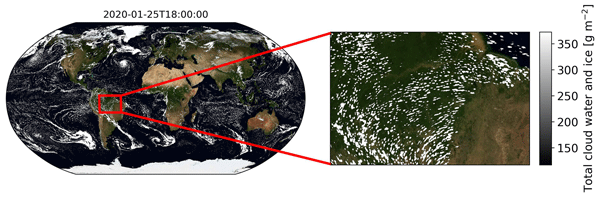
Clouds play a key role in Earth’s climate, but their representation in models remains uncertain. We use high-resolution simulations to examine how two statistical representations of cloud processes influence cloud and rain formation, and how these effects manifest in global models. We find that simulated clouds are highly sensitive to the chosen representation, and that the behaviour of features such as rain, fog, and ice becomes even more variable when moving to the global scale.
Reinhard K. H. Schiemann, Grenville Lister, Rosalyn Hatcher, Dan Hodson, Bryan Lawrence, Len Shaffrey, Jeff Cole, Andrea Dittus, Jenny Mecking, Jon Robson, Simon Wilson, Yevgeny Aksenov, Adam T. Blaker, Ben Harvey, Oscar Martínez-Alvarado, Annette Osprey, Stephanie Rynders, Sharar Ahmadi, Jake Aylmer, Laura Baker, David Case, Emanuele Silvio Gentile, Steve George, Kevin Hodges, Eliza Karlowska, Charlotte Lang, Hua Lu, Niamh O'Callaghan, Weronika Osmolska, Scott Osprey, Tony Phillips, David Schröder, Robin Smith, Andrew G. Turner, Steve Woolnough, Martin Andrews, Andrew Coward, Steven Hardiman, James Harle, John W. Rostron, David M. H. Sexton, Bablu Sinha, Jonny Williams, and Chris Wilson
EGUsphere, https://doi.org/10.5194/egusphere-2026-2281, https://doi.org/10.5194/egusphere-2026-2281, 2026
This preprint is open for discussion and under review for Geoscientific Model Development (GMD).
Short summary
Short summary
This paper presents a new large ensemble of climate model simulations: The CANARI HadGEM3 Large Ensemble (CANARI LE). The CANARI LE has a comparatively high resolution, provides sub-daily output on atmospheric pressure levels, and boundary conditions for driving regional model simulations. The CANARI LE is thus a community resource that lends itself for the study of physical coupled climate processes, weather systems, and impacts in a changing climate.
Juniper Tyree, Robert Underwood, Clément Bouvier, Daniel Köhler, Tim Reichelt, Peter Dueben, Sara Faghih-Naini, Heikki Järvinen, and Milan Klöwer
EGUsphere, https://doi.org/10.5194/egusphere-2026-4266, https://doi.org/10.5194/egusphere-2026-4266, 2026
Short summary
Short summary
Many scientists use computers to simulate our world. This is producing too much data. Data can be made smaller using lossy compression. But many scientists fear losing important details and avoid it. We created Compression Safeguards to protect scientists and make lossy compression safe. First, scientists say what’s important in their data. Then the Safeguards correct the compressed data so that nothing important is lost. We test many examples: Safeguards protect but make the data less smaller.
Hailing Jia, David Neubauer, Yusuf Bhatti, Duncan Watson-Parris, Philip Stier, Johannes Quaas, Daniel Partridge, Ardit Arifi, Anne Kubin, Athanasios Nenes, Muhammed Irfan, Ulas Im, Carl Svenhag, Nick Schutgens, Bastiaan van Diedenhoven, Sylvaine Ferrachat, Ulrike Lohmann, Ina Tegen, Alice Henkes, Guangliang Fu, and Otto Hasekamp
EGUsphere, https://doi.org/10.5194/egusphere-2026-3275, https://doi.org/10.5194/egusphere-2026-3275, 2026
Short summary
Short summary
Tiny aerosol particles affect Earth’s climate by interacting with clouds and sunlight, but their impact remains uncertain. Combining climate model simulations and emulators, we explored millions of model variants across different aerosol and cloud settings to identify the causes of the uncertainty. We found that aerosol emissions and cloud convection are key contributors. Our work suggests that better integration of existing observations could help reduce these uncertainties in the future.
Nina Raoult, Ewan Pinnington, Mario Santa Cruz, Florian Pinault, Baudouin Raoult, Natalie Zelenka, Gabriele Arduini, Gianpaolo Balsamo, Souhail Boussetta, Matthew Chantry, Patricia de Rosnay, Peter Dueben, and Christoph Rüdiger
EGUsphere, https://doi.org/10.5194/egusphere-2026-3620, https://doi.org/10.5194/egusphere-2026-3620, 2026
Short summary
Short summary
The land surface shapes our weather and climate by controlling how heat and water move between the ground and the air, so the models representing it matter enormously. But they are costly to run and carry built-in errors. We built a faster artificial-intelligence version of one, then used real measurements from sites worldwide to correct some of these errors. The result stays reliable over years and better captures these heat and water exchanges—a quicker, more accurate tool for forecasting.
Bernd Heinold, Philipp Weiss, Sadhitro De, Anne Kubin, Jason Müller, Fabian Senf, Philip Stier, and Ina Tegen
Geosci. Model Dev., 19, 6167–6187, https://doi.org/10.5194/gmd-19-6167-2026, https://doi.org/10.5194/gmd-19-6167-2026, 2026
Short summary
Short summary
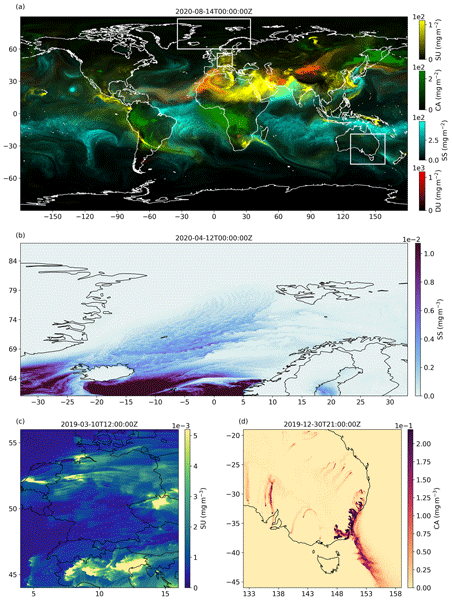
Understanding climate effects of airborne particles requires computer models that can represent small-scale dynamics. We introduce a new regional configuration of a kilometre-scale aerosol–climate model and apply it to air pollution in Central Europe, sea spray in the Atlantic Arctic, and smoke and dust over Australia. The simulations reproduce key particle patterns and variability, but also reveal limitations due to simplified sources and chemistry. The results guide future model improvements.
Heikki Järvinen, Jouni Räisänen, Lauri Tuppi, Clément Bouvier, Antonio Sanchez-Benitez, Juniper Tyree, Antti Toropainen, Paolo Davini, Francisco Doblas-Reyes, Thomas Jung, Daniel Klocke, Jenni Kontkanen, Sebastian Milinski, Matteo Nurisso, Himansu Kesari Pradhan, and Irina Sandu
EGUsphere, https://doi.org/10.5194/egusphere-2026-3364, https://doi.org/10.5194/egusphere-2026-3364, 2026
Short summary
Short summary
There is rich process-level variability present in the new-generation kilometre-scale climate simulations. The EU’s Climate Change Adaptation Digital Twin (Climate DT) integrates global Earth observing systems and observation modelling capabilities – until now common only in weather prediction – into operational climate simulation workflow. This provides a novel framework for precise evaluation of fine-scale details of simulation data and informing adaptation decisions at local (city) scales.
Ezequiel Cimadevilla, David Hassell, and Bryan N. Lawrence
EGUsphere, https://doi.org/10.5194/egusphere-2026-3249, https://doi.org/10.5194/egusphere-2026-3249, 2026
Short summary
Short summary
Climate science is increasingly adopting cloud-based infrastructures for data access and analysis. Contrary to the widespread belief that traditional formats such as NetCDF/HDF5 are unsuitable for remote cloud access, this study demonstrates that they can perform efficiently in cloud environments. These findings challenge current assumptions and provide practical insights that could support CMIP7 data workflows while reducing the need for major changes to existing climate data infrastructures.
Mathilde Ritman, William Jones, and Philip Stier
Atmos. Chem. Phys., 26, 7105–7126, https://doi.org/10.5194/acp-26-7105-2026, https://doi.org/10.5194/acp-26-7105-2026, 2026
Short summary
Short summary
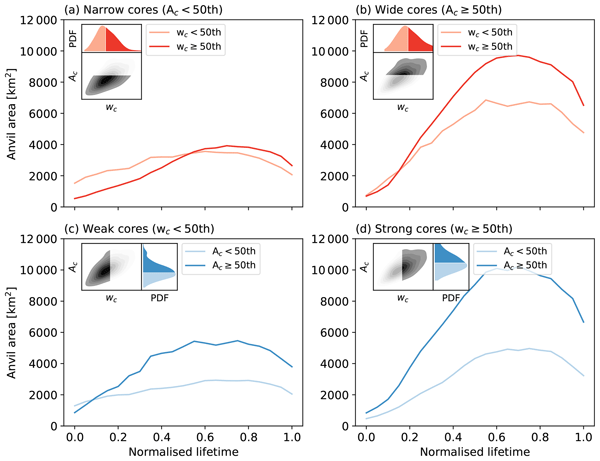
The link between storm updrafts and the high clouds they produce has been difficult to study at large scale but may be important for understanding climate sensitivity. This study uses a new high-resolution global climate model and cloud tracking approach to study this link. More intense updrafts saw larger clouds, but this relationship was much stronger when the updrafts themselves were wider. That means changes in the usual size of updrafts could link to changes in high-cloud area.
Petri Clusius, Metin Baykara, Carlton Xavier, Putian Zhou, Juniper Tyree, Benjamin Foreback, Mikko Äijälä, Frans Graeffe, Tuukka Petäjä, Markku Kulmala, Pauli Paasonen, Paul I. Palmer, and Michael Boy
Atmos. Chem. Phys., 26, 1967–1992, https://doi.org/10.5194/acp-26-1967-2026, https://doi.org/10.5194/acp-26-1967-2026, 2026
Short summary
Short summary
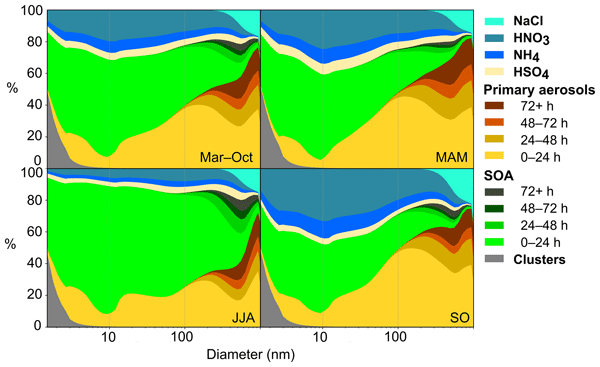
Cloud condensation nuclei are necessary to form clouds, and their size distribution affects cloud properties and therefore Earth’s energy budget. This study modelled the origins of cloud condensation nuclei at SMEAR II, Hyytiälä, Finland, and found that primary emissions and new particle formation separately contribute to more than half of the condensation nuclei, but they suppress each other, leading to current concentrations. Largest condensation nuclei originated mostly from emissions.
William K. Jones and Philip Stier
EGUsphere, https://doi.org/10.5194/egusphere-2025-6391, https://doi.org/10.5194/egusphere-2025-6391, 2025
Preprint archived
Short summary
Short summary
Deep convective storm clouds produce large areas of high-altitude anvil clouds which are vital to balancing the Earth's energy budget due to both the reflection of sunlight and absorption of infrared radiation. Recent research has highlighted important changes in the anvil cloud thickness. In this study, we investigate how changes of convective intensity and convective organisation have different effects on anvil structure across the entire anvil cloud lifecycle using a cloud tracking approach.
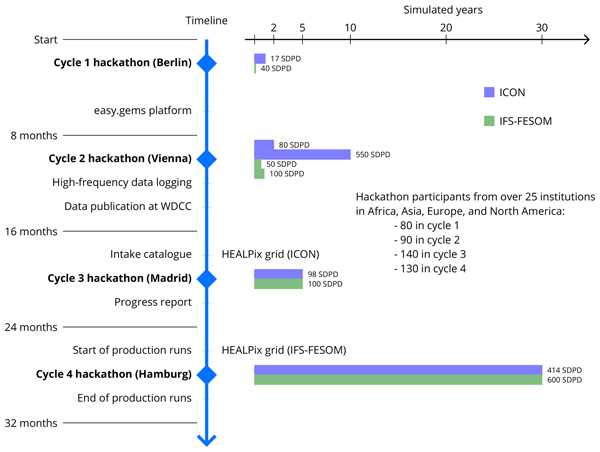
Hans Segura, Xabier Pedruzo-Bagazgoitia, Philipp Weiss, Sebastian K. Müller, Thomas Rackow, Junhong Lee, Edgar Dolores-Tesillos, Imme Benedict, Matthias Aengenheyster, Razvan Aguridan, Gabriele Arduini, Alexander J. Baker, Jiawei Bao, Swantje Bastin, Eulàlia Baulenas, Tobias Becker, Sebastian Beyer, Hendryk Bockelmann, Nils Brüggemann, Lukas Brunner, Suvarchal K. Cheedela, Sushant Das, Jasper Denissen, Ian Dragaud, Piotr Dziekan, Madeleine Ekblom, Jan Frederik Engels, Monika Esch, Richard Forbes, Claudia Frauen, Lilli Freischem, Diego García-Maroto, Philipp Geier, Paul Gierz, Álvaro González-Cervera, Katherine Grayson, Matthew Griffith, Oliver Gutjahr, Helmuth Haak, Ioan Hadade, Kerstin Haslehner, Shabeh ul Hasson, Jan Hegewald, Lukas Kluft, Aleksei Koldunov, Nikolay Koldunov, Tobias Kölling, Shunya Koseki, Sergey Kosukhin, Josh Kousal, Peter Kuma, Arjun U. Kumar, Rumeng Li, Nicolas Maury, Maximilian Meindl, Sebastian Milinski, Kristian Mogensen, Bimochan Niraula, Jakub Nowak, Divya Sri Praturi, Ulrike Proske, Dian Putrasahan, René Redler, David Santuy, Domokos Sármány, Reiner Schnur, Patrick Scholz, Dmitry Sidorenko, Dorian Spät, Birgit Sützl, Daisuke Takasuka, Adrian Tompkins, Alejandro Uribe, Mirco Valentini, Menno Veerman, Aiko Voigt, Sarah Warnau, Fabian Wachsmann, Marta Wacławczyk, Nils Wedi, Karl-Hermann Wieners, Jonathan Wille, Marius Winkler, Yuting Wu, Florian Ziemen, Janos Zimmermann, Frida A.-M. Bender, Dragana Bojovic, Sandrine Bony, Simona Bordoni, Patrice Brehmer, Marcus Dengler, Emanuel Dutra, Saliou Faye, Erich Fischer, Chiel van Heerwaarden, Cathy Hohenegger, Heikki Järvinen, Markus Jochum, Thomas Jung, Johann H. Jungclaus, Noel S. Keenlyside, Daniel Klocke, Heike Konow, Martina Klose, Szymon Malinowski, Olivia Martius, Thorsten Mauritsen, Juan Pedro Mellado, Theresa Mieslinger, Elsa Mohino, Hanna Pawłowska, Karsten Peters-von Gehlen, Abdoulaye Sarré, Pajam Sobhani, Philip Stier, Lauri Tuppi, Pier Luigi Vidale, Irina Sandu, and Bjorn Stevens
Geosci. Model Dev., 18, 7735–7761, https://doi.org/10.5194/gmd-18-7735-2025, https://doi.org/10.5194/gmd-18-7735-2025, 2025
Short summary
Short summary
The Next Generation of Earth Modeling Systems project (nextGEMS) developed two Earth system models that use horizontal grid spacing of 10 km and finer, giving more fidelity to the representation of local phenomena, globally. In its fourth cycle, nextGEMS simulated the Earth System climate over the 2020–2049 period under the SSP3-7.0 scenario. Here, we provide an overview of nextGEMS, insights into the model development, and the realism of multi-decadal, kilometer-scale simulations.
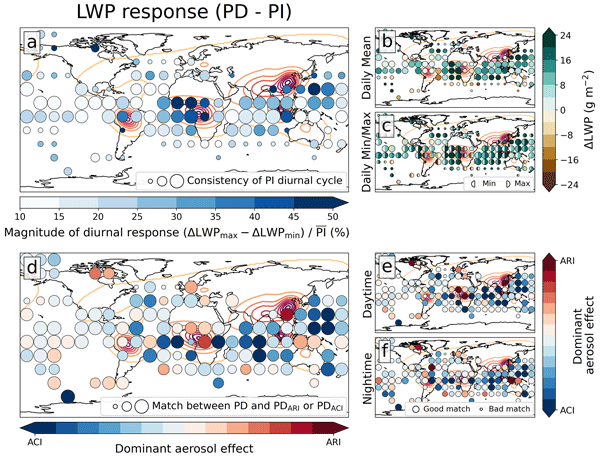
Ross J. Herbert, Andrew I. L. Williams, Philipp Weiss, Duncan Watson-Parris, Elisabeth Dingley, Daniel Klocke, and Philip Stier
Atmos. Chem. Phys., 25, 7789–7814, https://doi.org/10.5194/acp-25-7789-2025, https://doi.org/10.5194/acp-25-7789-2025, 2025
Short summary
Short summary
Clouds exist at scales that climate models struggle to represent, limiting our knowledge of how climate change may impact clouds. Here we use a new kilometer-scale global model representing an important step towards the necessary scale. We focus on how aerosol particles modify clouds, radiation, and precipitation. We find the magnitude and manner of responses tend to vary from region to region, highlighting the potential of global kilometer-scale simulations and a need to represent aerosols in climate models.
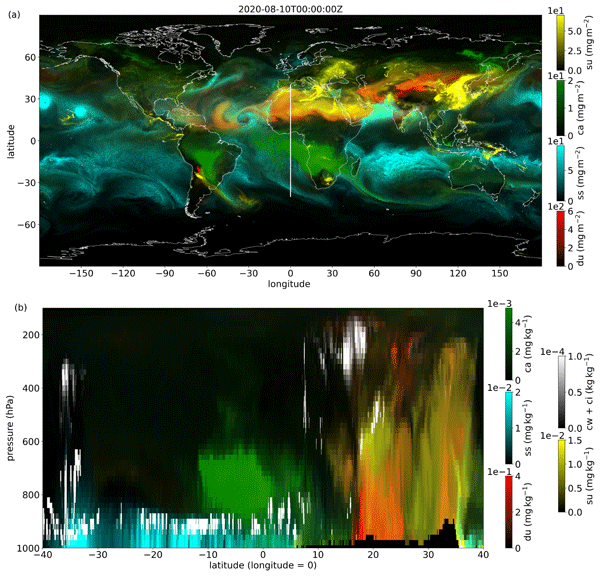
Philipp Weiss, Ross Herbert, and Philip Stier
Geosci. Model Dev., 18, 3877–3894, https://doi.org/10.5194/gmd-18-3877-2025, https://doi.org/10.5194/gmd-18-3877-2025, 2025
Short summary
Short summary
Aerosols strongly influence Earth's climate as they interact with radiation and clouds. New Earth system models run at resolutions of a few kilometers. To simulate the Earth system with interactive aerosols, we developed a new aerosol module. It represents aerosols as an ensemble of lognormal modes with given sizes and compositions. We present a year-long simulation with four modes at a resolution of 5 km. It captures key processes like the formation of dust storms in the Sahara.
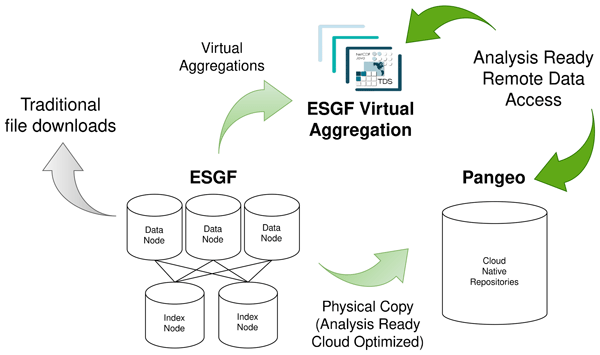
Ezequiel Cimadevilla, Bryan N. Lawrence, and Antonio S. Cofiño
Geosci. Model Dev., 18, 2461–2478, https://doi.org/10.5194/gmd-18-2461-2025, https://doi.org/10.5194/gmd-18-2461-2025, 2025
Short summary
Short summary
The Earth System Grid Federation (ESGF) stores an enormous amount of climate data spread across millions of files in data centres all over the world. Accessing and working with this scientific information is quite complex. This work presents ESGF Virtual Aggregation, an approach that combines data from different sources into a format that is ready for analysis straightaway.
Teo Price-Broncucia, Allison Baker, Dorit Hammerling, Michael Duda, and Rebecca Morrison
Geosci. Model Dev., 18, 2349–2372, https://doi.org/10.5194/gmd-18-2349-2025, https://doi.org/10.5194/gmd-18-2349-2025, 2025
Short summary
Short summary
The ensemble consistency test (ECT) and its ultrafast variant (UF-ECT) have become powerful tools in the development community for the identification of unwanted changes in the Community Earth System Model (CESM). We develop a generalized setup framework to enable easy adoption of the ECT approach for other model developers and communities. This framework specifies test parameters to accurately characterize model variability and balance test sensitivity and computational cost.
Mariya Petrenko, Ralph Kahn, Mian Chin, Susanne E. Bauer, Tommi Bergman, Huisheng Bian, Gabriele Curci, Ben Johnson, Johannes W. Kaiser, Zak Kipling, Harri Kokkola, Xiaohong Liu, Keren Mezuman, Tero Mielonen, Gunnar Myhre, Xiaohua Pan, Anna Protonotariou, Samuel Remy, Ragnhild Bieltvedt Skeie, Philip Stier, Toshihiko Takemura, Kostas Tsigaridis, Hailong Wang, Duncan Watson-Parris, and Kai Zhang
Atmos. Chem. Phys., 25, 1545–1567, https://doi.org/10.5194/acp-25-1545-2025, https://doi.org/10.5194/acp-25-1545-2025, 2025
Short summary
Short summary
We compared smoke plume simulations from 11 global models to each other and to satellite smoke amount observations aimed at constraining smoke source strength. In regions where plumes are thick and background aerosol is low, models and satellites compare well. However, the input emission inventory tends to underestimate in many places, and particle property and loss rate assumptions vary enormously among models, causing uncertainties that require systematic in situ measurements to resolve.
Paul J. Durack, Karl E. Taylor, Peter J. Gleckler, Gerald A. Meehl, Bryan N. Lawrence, Curt Covey, Ronald J. Stouffer, Guillaume Levavasseur, Atef Ben-Nasser, Sebastien Denvil, Martina Stockhause, Jonathan M. Gregory, Martin Juckes, Sasha K. Ames, Fabrizio Antonio, David C. Bader, John P. Dunne, Daniel Ellis, Veronika Eyring, Sandro L. Fiore, Sylvie Joussaume, Philip Kershaw, Jean-Francois Lamarque, Michael Lautenschlager, Jiwoo Lee, Chris F. Mauzey, Matthew Mizielinski, Paola Nassisi, Alessandra Nuzzo, Eleanor O’Rourke, Jeffrey Painter, Gerald L. Potter, Sven Rodriguez, and Dean N. Williams
EGUsphere, https://doi.org/10.5194/egusphere-2024-3729, https://doi.org/10.5194/egusphere-2024-3729, 2025
Short summary
Short summary
CMIP6 was the most expansive and ambitious Model Intercomparison Project (MIP), the latest in a history, extending four decades. CMIP engaged a growing community focused on improving climate understanding, and quantifying and attributing observed climate change being experienced today. The project's profound impact is due to the combining the latest climate science and technology, enabling the latest-generation climate simulations and increasing community attention in every successive phase.
Thomas Rackow, Xabier Pedruzo-Bagazgoitia, Tobias Becker, Sebastian Milinski, Irina Sandu, Razvan Aguridan, Peter Bechtold, Sebastian Beyer, Jean Bidlot, Souhail Boussetta, Willem Deconinck, Michail Diamantakis, Peter Dueben, Emanuel Dutra, Richard Forbes, Rohit Ghosh, Helge F. Goessling, Ioan Hadade, Jan Hegewald, Thomas Jung, Sarah Keeley, Lukas Kluft, Nikolay Koldunov, Aleksei Koldunov, Tobias Kölling, Josh Kousal, Christian Kühnlein, Pedro Maciel, Kristian Mogensen, Tiago Quintino, Inna Polichtchouk, Balthasar Reuter, Domokos Sármány, Patrick Scholz, Dmitry Sidorenko, Jan Streffing, Birgit Sützl, Daisuke Takasuka, Steffen Tietsche, Mirco Valentini, Benoît Vannière, Nils Wedi, Lorenzo Zampieri, and Florian Ziemen
Geosci. Model Dev., 18, 33–69, https://doi.org/10.5194/gmd-18-33-2025, https://doi.org/10.5194/gmd-18-33-2025, 2025
Short summary
Short summary
Detailed global climate model simulations have been created based on a numerical weather prediction model, offering more accurate spatial detail down to the scale of individual cities ("kilometre-scale") and a better understanding of climate phenomena such as atmospheric storms, whirls in the ocean, and cracks in sea ice. The new model aims to provide globally consistent information on local climate change with greater precision, benefiting environmental planning and local impact modelling.
Anna Tippett, Edward Gryspeerdt, Peter Manshausen, Philip Stier, and Tristan W. P. Smith
Atmos. Chem. Phys., 24, 13269–13283, https://doi.org/10.5194/acp-24-13269-2024, https://doi.org/10.5194/acp-24-13269-2024, 2024
Short summary
Short summary
Ship emissions can form artificially brightened clouds, known as ship tracks, and provide us with an opportunity to investigate how aerosols interact with clouds. Previous studies that used ship tracks suggest that clouds can experience large increases in the amount of water (LWP) from aerosols. Here, we show that there is a bias in previous research and that, when we account for this bias, the LWP response to aerosols is much weaker than previously reported.

Colin G. Jones, Fanny Adloff, Ben B. B. Booth, Peter M. Cox, Veronika Eyring, Pierre Friedlingstein, Katja Frieler, Helene T. Hewitt, Hazel A. Jeffery, Sylvie Joussaume, Torben Koenigk, Bryan N. Lawrence, Eleanor O'Rourke, Malcolm J. Roberts, Benjamin M. Sanderson, Roland Séférian, Samuel Somot, Pier Luigi Vidale, Detlef van Vuuren, Mario Acosta, Mats Bentsen, Raffaele Bernardello, Richard Betts, Ed Blockley, Julien Boé, Tom Bracegirdle, Pascale Braconnot, Victor Brovkin, Carlo Buontempo, Francisco Doblas-Reyes, Markus Donat, Italo Epicoco, Pete Falloon, Sandro Fiore, Thomas Frölicher, Neven S. Fučkar, Matthew J. Gidden, Helge F. Goessling, Rune Grand Graversen, Silvio Gualdi, José M. Gutiérrez, Tatiana Ilyina, Daniela Jacob, Chris D. Jones, Martin Juckes, Elizabeth Kendon, Erik Kjellström, Reto Knutti, Jason Lowe, Matthew Mizielinski, Paola Nassisi, Michael Obersteiner, Pierre Regnier, Romain Roehrig, David Salas y Mélia, Carl-Friedrich Schleussner, Michael Schulz, Enrico Scoccimarro, Laurent Terray, Hannes Thiemann, Richard A. Wood, Shuting Yang, and Sönke Zaehle
Earth Syst. Dynam., 15, 1319–1351, https://doi.org/10.5194/esd-15-1319-2024, https://doi.org/10.5194/esd-15-1319-2024, 2024
Short summary
Short summary
We propose a number of priority areas for the international climate research community to address over the coming decade. Advances in these areas will both increase our understanding of past and future Earth system change, including the societal and environmental impacts of this change, and deliver significantly improved scientific support to international climate policy, such as future IPCC assessments and the UNFCCC Global Stocktake.
Sarah Wilson Kemsley, Paulo Ceppi, Hendrik Andersen, Jan Cermak, Philip Stier, and Peer Nowack
Atmos. Chem. Phys., 24, 8295–8316, https://doi.org/10.5194/acp-24-8295-2024, https://doi.org/10.5194/acp-24-8295-2024, 2024
Short summary
Short summary
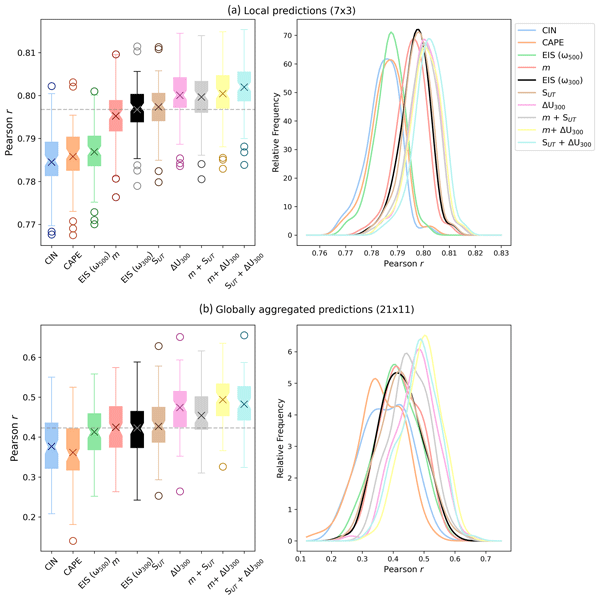
Aiming to inform parameter selection for future observational constraint analyses, we incorporate five candidate meteorological drivers specifically targeting high clouds into a cloud controlling factor framework within a range of spatial domain sizes. We find a discrepancy between optimal domain size for predicting locally and globally aggregated cloud radiative anomalies and identify upper-tropospheric static stability as an important high-cloud controlling factor.
G. Alexander Sokolowsky, Sean W. Freeman, William K. Jones, Julia Kukulies, Fabian Senf, Peter J. Marinescu, Max Heikenfeld, Kelcy N. Brunner, Eric C. Bruning, Scott M. Collis, Robert C. Jackson, Gabrielle R. Leung, Nils Pfeifer, Bhupendra A. Raut, Stephen M. Saleeby, Philip Stier, and Susan C. van den Heever
Geosci. Model Dev., 17, 5309–5330, https://doi.org/10.5194/gmd-17-5309-2024, https://doi.org/10.5194/gmd-17-5309-2024, 2024
Short summary
Short summary
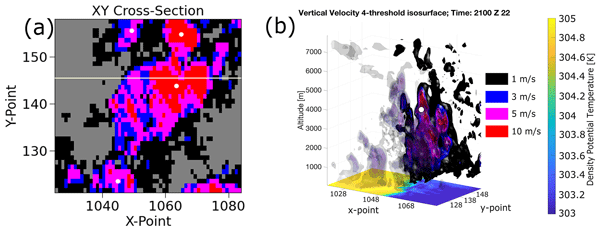
Building on previous analysis tools developed for atmospheric science, the original release of the Tracking and Object-Based Analysis (tobac) Python package, v1.2, was open-source, modular, and insensitive to the type of gridded input data. Here, we present the latest version of tobac, v1.5, which substantially improves scientific capabilities and computational efficiency from the previous version. These enhancements permit new uses for tobac in atmospheric science and potentially other fields.
Johannes Mülmenstädt, Edward Gryspeerdt, Sudhakar Dipu, Johannes Quaas, Andrew S. Ackerman, Ann M. Fridlind, Florian Tornow, Susanne E. Bauer, Andrew Gettelman, Yi Ming, Youtong Zheng, Po-Lun Ma, Hailong Wang, Kai Zhang, Matthew W. Christensen, Adam C. Varble, L. Ruby Leung, Xiaohong Liu, David Neubauer, Daniel G. Partridge, Philip Stier, and Toshihiko Takemura
Atmos. Chem. Phys., 24, 7331–7345, https://doi.org/10.5194/acp-24-7331-2024, https://doi.org/10.5194/acp-24-7331-2024, 2024
Short summary
Short summary
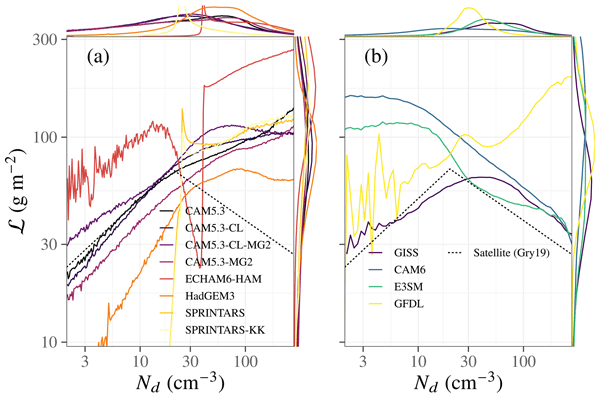
Human activities release copious amounts of small particles called aerosols into the atmosphere. These particles change how much sunlight clouds reflect to space, an important human perturbation of the climate, whose magnitude is highly uncertain. We found that the latest climate models show a negative correlation but a positive causal relationship between aerosols and cloud water. This means we need to be very careful when we interpret observational studies that can only see correlation.

William K. Jones, Martin Stengel, and Philip Stier
Atmos. Chem. Phys., 24, 5165–5180, https://doi.org/10.5194/acp-24-5165-2024, https://doi.org/10.5194/acp-24-5165-2024, 2024
Short summary
Short summary
Storm clouds cover large areas of the tropics. These clouds both reflect incoming sunlight and trap heat from the atmosphere below, regulating the temperature of the tropics. Over land, storm clouds occur in the late afternoon and evening and so exist both during the daytime and at night. Changes in this timing could upset the balance of the respective cooling and heating effects of these clouds. We find that isolated storms have a larger effect on this balance than their small size suggests.
Bjorn Stevens, Stefan Adami, Tariq Ali, Hartwig Anzt, Zafer Aslan, Sabine Attinger, Jaana Bäck, Johanna Baehr, Peter Bauer, Natacha Bernier, Bob Bishop, Hendryk Bockelmann, Sandrine Bony, Guy Brasseur, David N. Bresch, Sean Breyer, Gilbert Brunet, Pier Luigi Buttigieg, Junji Cao, Christelle Castet, Yafang Cheng, Ayantika Dey Choudhury, Deborah Coen, Susanne Crewell, Atish Dabholkar, Qing Dai, Francisco Doblas-Reyes, Dale Durran, Ayoub El Gaidi, Charlie Ewen, Eleftheria Exarchou, Veronika Eyring, Florencia Falkinhoff, David Farrell, Piers M. Forster, Ariane Frassoni, Claudia Frauen, Oliver Fuhrer, Shahzad Gani, Edwin Gerber, Debra Goldfarb, Jens Grieger, Nicolas Gruber, Wilco Hazeleger, Rolf Herken, Chris Hewitt, Torsten Hoefler, Huang-Hsiung Hsu, Daniela Jacob, Alexandra Jahn, Christian Jakob, Thomas Jung, Christopher Kadow, In-Sik Kang, Sarah Kang, Karthik Kashinath, Katharina Kleinen-von Königslöw, Daniel Klocke, Uta Kloenne, Milan Klöwer, Chihiro Kodama, Stefan Kollet, Tobias Kölling, Jenni Kontkanen, Steve Kopp, Michal Koran, Markku Kulmala, Hanna Lappalainen, Fakhria Latifi, Bryan Lawrence, June Yi Lee, Quentin Lejeun, Christian Lessig, Chao Li, Thomas Lippert, Jürg Luterbacher, Pekka Manninen, Jochem Marotzke, Satoshi Matsouoka, Charlotte Merchant, Peter Messmer, Gero Michel, Kristel Michielsen, Tomoki Miyakawa, Jens Müller, Ramsha Munir, Sandeep Narayanasetti, Ousmane Ndiaye, Carlos Nobre, Achim Oberg, Riko Oki, Tuba Özkan-Haller, Tim Palmer, Stan Posey, Andreas Prein, Odessa Primus, Mike Pritchard, Julie Pullen, Dian Putrasahan, Johannes Quaas, Krishnan Raghavan, Venkatachalam Ramaswamy, Markus Rapp, Florian Rauser, Markus Reichstein, Aromar Revi, Sonakshi Saluja, Masaki Satoh, Vera Schemann, Sebastian Schemm, Christina Schnadt Poberaj, Thomas Schulthess, Cath Senior, Jagadish Shukla, Manmeet Singh, Julia Slingo, Adam Sobel, Silvina Solman, Jenna Spitzer, Philip Stier, Thomas Stocker, Sarah Strock, Hang Su, Petteri Taalas, John Taylor, Susann Tegtmeier, Georg Teutsch, Adrian Tompkins, Uwe Ulbrich, Pier-Luigi Vidale, Chien-Ming Wu, Hao Xu, Najibullah Zaki, Laure Zanna, Tianjun Zhou, and Florian Ziemen
Earth Syst. Sci. Data, 16, 2113–2122, https://doi.org/10.5194/essd-16-2113-2024, https://doi.org/10.5194/essd-16-2113-2024, 2024
Short summary
Short summary
To manage Earth in the Anthropocene, new tools, new institutions, and new forms of international cooperation will be required. Earth Virtualization Engines is proposed as an international federation of centers of excellence to empower all people to respond to the immense and urgent challenges posed by climate change.
Mario C. Acosta, Sergi Palomas, Stella V. Paronuzzi Ticco, Gladys Utrera, Joachim Biercamp, Pierre-Antoine Bretonniere, Reinhard Budich, Miguel Castrillo, Arnaud Caubel, Francisco Doblas-Reyes, Italo Epicoco, Uwe Fladrich, Sylvie Joussaume, Alok Kumar Gupta, Bryan Lawrence, Philippe Le Sager, Grenville Lister, Marie-Pierre Moine, Jean-Christophe Rioual, Sophie Valcke, Niki Zadeh, and Venkatramani Balaji
Geosci. Model Dev., 17, 3081–3098, https://doi.org/10.5194/gmd-17-3081-2024, https://doi.org/10.5194/gmd-17-3081-2024, 2024
Short summary
Short summary
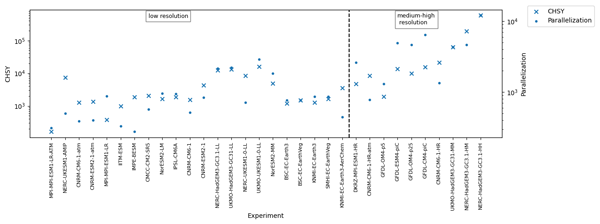
We present a collection of performance metrics gathered during the Coupled Model Intercomparison Project Phase 6 (CMIP6), a worldwide initiative to study climate change. We analyse the metrics that resulted from collaboration efforts among many partners and models and describe our findings to demonstrate the utility of our study for the scientific community. The research contributes to understanding climate modelling performance on the current high-performance computing (HPC) architectures.
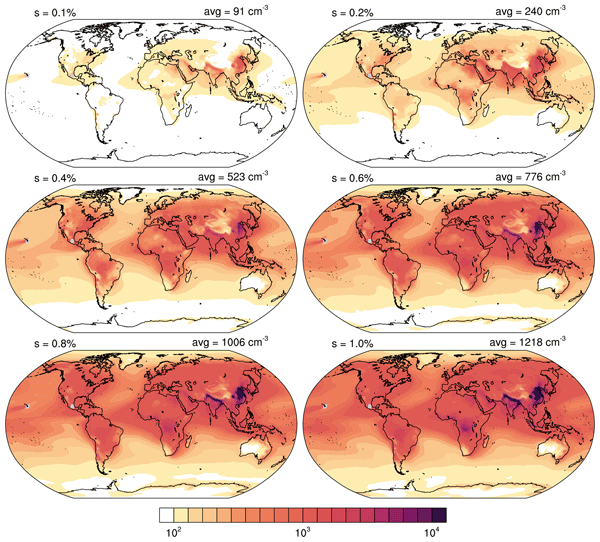
Karoline Block, Mahnoosh Haghighatnasab, Daniel G. Partridge, Philip Stier, and Johannes Quaas
Earth Syst. Sci. Data, 16, 443–470, https://doi.org/10.5194/essd-16-443-2024, https://doi.org/10.5194/essd-16-443-2024, 2024
Short summary
Short summary
Aerosols being able to act as condensation nuclei for cloud droplets (CCNs) are a key element in cloud formation but very difficult to determine. In this study we present a new global vertically resolved CCN dataset for various humidity conditions and aerosols. It is obtained using an atmospheric model (CAMS reanalysis) that is fed by satellite observations of light extinction (AOD). We investigate and evaluate the abundance of CCNs in the atmosphere and their temporal and spatial occurrence.
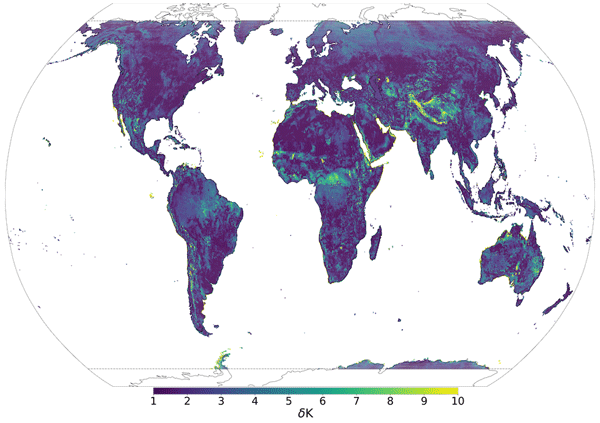
Tom Kimpson, Margarita Choulga, Matthew Chantry, Gianpaolo Balsamo, Souhail Boussetta, Peter Dueben, and Tim Palmer
Hydrol. Earth Syst. Sci., 27, 4661–4685, https://doi.org/10.5194/hess-27-4661-2023, https://doi.org/10.5194/hess-27-4661-2023, 2023
Short summary
Short summary
Lakes play an important role when we try to explain and predict the weather. More accurate and up-to-date description of lakes all around the world for numerical models is a continuous task. However, it is difficult to assess the impact of updated lake description within a weather prediction system. In this work, we develop a method to quickly and automatically define how, where, and when updated lake description affects weather prediction.
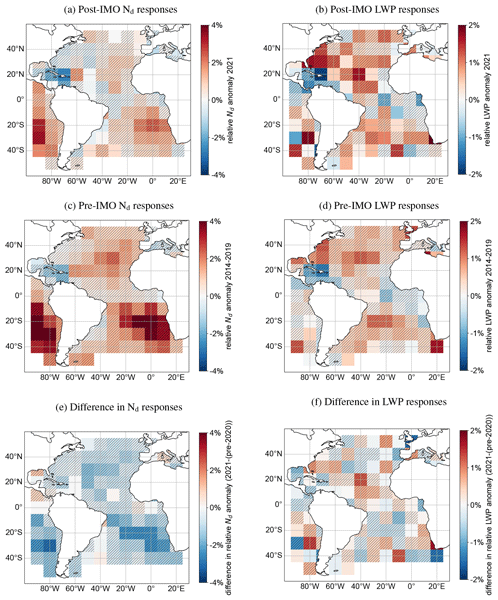
Peter Manshausen, Duncan Watson-Parris, Matthew W. Christensen, Jukka-Pekka Jalkanen, and Philip Stier
Atmos. Chem. Phys., 23, 12545–12555, https://doi.org/10.5194/acp-23-12545-2023, https://doi.org/10.5194/acp-23-12545-2023, 2023
Short summary
Short summary
Aerosol from burning fuel changes cloud properties, e.g., the number of droplets and the content of water. Here, we study how clouds respond to different amounts of shipping aerosol. Droplet numbers increase linearly with increasing aerosol over a broad range until they stop increasing, while the amount of liquid water always increases, independently of emission amount. These changes in cloud properties can make them reflect more or less sunlight, which is important for the earth's climate.
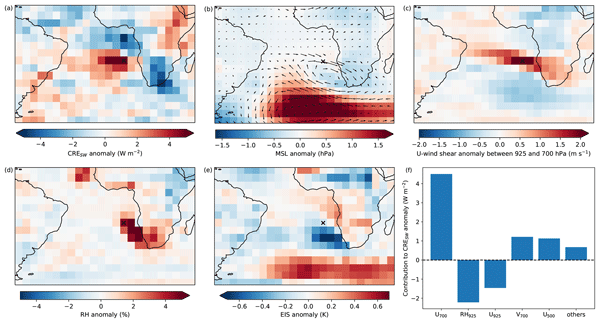
Hendrik Andersen, Jan Cermak, Alyson Douglas, Timothy A. Myers, Peer Nowack, Philip Stier, Casey J. Wall, and Sarah Wilson Kemsley
Atmos. Chem. Phys., 23, 10775–10794, https://doi.org/10.5194/acp-23-10775-2023, https://doi.org/10.5194/acp-23-10775-2023, 2023
Short summary
Short summary
This study uses an observation-based cloud-controlling factor framework to study near-global sensitivities of cloud radiative effects to a large number of meteorological and aerosol controls. We present near-global sensitivity patterns to selected thermodynamic, dynamic, and aerosol factors and discuss the physical mechanisms underlying the derived sensitivities. Our study hopes to guide future analyses aimed at constraining cloud feedbacks and aerosol–cloud interactions.
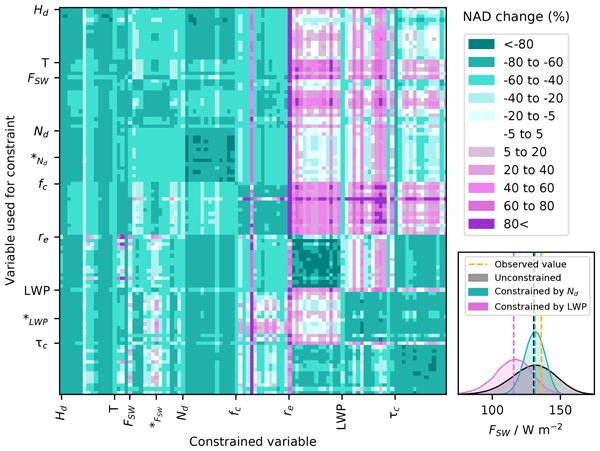
Leighton A. Regayre, Lucia Deaconu, Daniel P. Grosvenor, David M. H. Sexton, Christopher Symonds, Tom Langton, Duncan Watson-Paris, Jane P. Mulcahy, Kirsty J. Pringle, Mark Richardson, Jill S. Johnson, John W. Rostron, Hamish Gordon, Grenville Lister, Philip Stier, and Ken S. Carslaw
Atmos. Chem. Phys., 23, 8749–8768, https://doi.org/10.5194/acp-23-8749-2023, https://doi.org/10.5194/acp-23-8749-2023, 2023
Short summary
Short summary
Aerosol forcing of Earth’s energy balance has persisted as a major cause of uncertainty in climate simulations over generations of climate model development. We show that structural deficiencies in a climate model are exposed by comprehensively exploring parametric uncertainty and that these deficiencies limit how much the model uncertainty can be reduced through observational constraint. This provides a future pathway towards building models with greater physical realism and lower uncertainty.
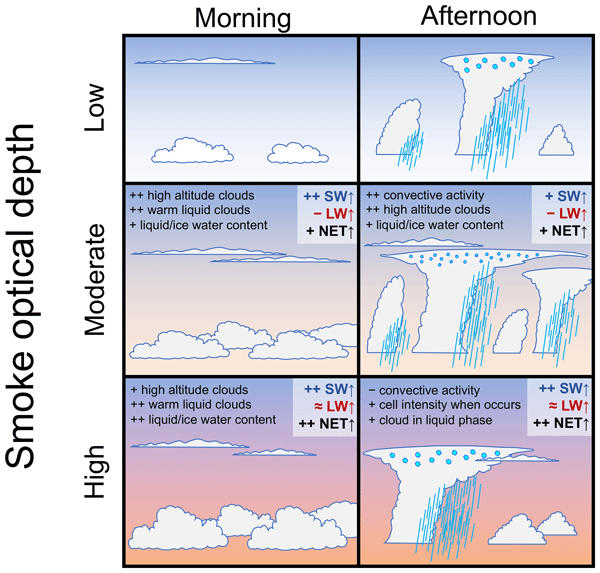
Ross Herbert and Philip Stier
Atmos. Chem. Phys., 23, 4595–4616, https://doi.org/10.5194/acp-23-4595-2023, https://doi.org/10.5194/acp-23-4595-2023, 2023
Short summary
Short summary
We provide robust evidence from multiple sources showing that smoke from fires in the Amazon rainforest significantly modifies the diurnal cycle of convection and cools the climate. Low to moderate amounts of smoke increase deep convective clouds and rain, whilst beyond a threshold amount, the smoke starts to suppress the convection and rain. We are currently at this threshold, suggesting increases in fires from agricultural practices or droughts will reduce cloudiness and rain over the region.
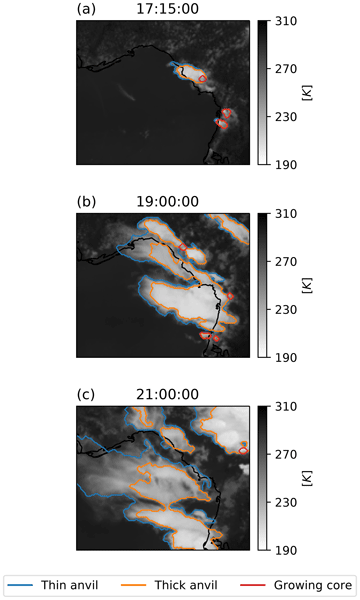
William K. Jones, Matthew W. Christensen, and Philip Stier
Atmos. Meas. Tech., 16, 1043–1059, https://doi.org/10.5194/amt-16-1043-2023, https://doi.org/10.5194/amt-16-1043-2023, 2023
Short summary
Short summary
Geostationary weather satellites have been used to detect storm clouds since their earliest applications. However, this task remains difficult as imaging satellites cannot observe the strong vertical winds that are characteristic of storm clouds. Here we introduce a new method that allows us to detect the early development of storms and continue to track them throughout their lifetime, allowing us to study how their early behaviour affects subsequent weather.

Thibault Hallouin, Richard J. Ellis, Douglas B. Clark, Simon J. Dadson, Andrew G. Hughes, Bryan N. Lawrence, Grenville M. S. Lister, and Jan Polcher
Geosci. Model Dev., 15, 9177–9196, https://doi.org/10.5194/gmd-15-9177-2022, https://doi.org/10.5194/gmd-15-9177-2022, 2022
Short summary
Short summary
A new framework for modelling the water cycle in the land system has been implemented. It considers the hydrological cycle as three interconnected components, bringing flexibility in the choice of the physical processes and their spatio-temporal resolutions. It is designed to foster collaborations between land surface, hydrological, and groundwater modelling communities to develop the next-generation of land system models for integration in Earth system models.
Leighton A. Regayre, Lucia Deaconu, Daniel P. Grosvenor, David Sexton, Christopher C. Symonds, Tom Langton, Duncan Watson-Paris, Jane P. Mulcahy, Kirsty J. Pringle, Mark Richardson, Jill S. Johnson, John Rostron, Hamish Gordon, Grenville Lister, Philip Stier, and Ken S. Carslaw
EGUsphere, https://doi.org/10.5194/egusphere-2022-1330, https://doi.org/10.5194/egusphere-2022-1330, 2022
Preprint archived
Short summary
Short summary
We show that potential structural deficiencies in a climate model can be exposed by comprehensively exploring its parametric uncertainty, and that these deficiencies limit how much the model uncertainty can be reduced through observational constraint. Combined consideration of parametric and structural uncertainties provides a future pathway towards building models that have greater physical realism and lower uncertainty.
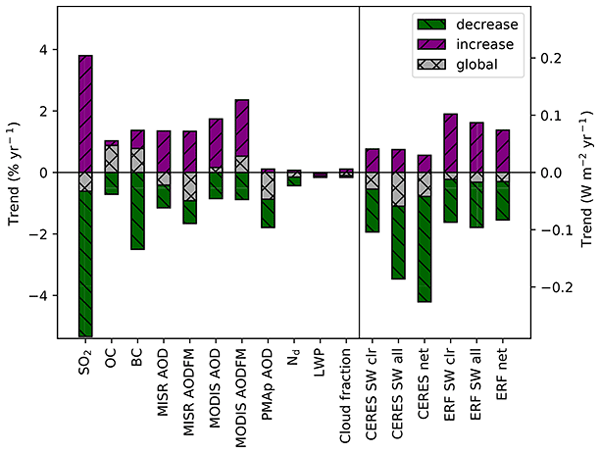
Johannes Quaas, Hailing Jia, Chris Smith, Anna Lea Albright, Wenche Aas, Nicolas Bellouin, Olivier Boucher, Marie Doutriaux-Boucher, Piers M. Forster, Daniel Grosvenor, Stuart Jenkins, Zbigniew Klimont, Norman G. Loeb, Xiaoyan Ma, Vaishali Naik, Fabien Paulot, Philip Stier, Martin Wild, Gunnar Myhre, and Michael Schulz
Atmos. Chem. Phys., 22, 12221–12239, https://doi.org/10.5194/acp-22-12221-2022, https://doi.org/10.5194/acp-22-12221-2022, 2022
Short summary
Short summary
Pollution particles cool climate and offset part of the global warming. However, they are washed out by rain and thus their effect responds quickly to changes in emissions. We show multiple datasets to demonstrate that aerosol emissions and their concentrations declined in many regions influenced by human emissions, as did the effects on clouds. Consequently, the cooling impact on the Earth energy budget became smaller. This change in trend implies a relative warming.
Haochi Che, Philip Stier, Duncan Watson-Parris, Hamish Gordon, and Lucia Deaconu
Atmos. Chem. Phys., 22, 10789–10807, https://doi.org/10.5194/acp-22-10789-2022, https://doi.org/10.5194/acp-22-10789-2022, 2022
Short summary
Short summary
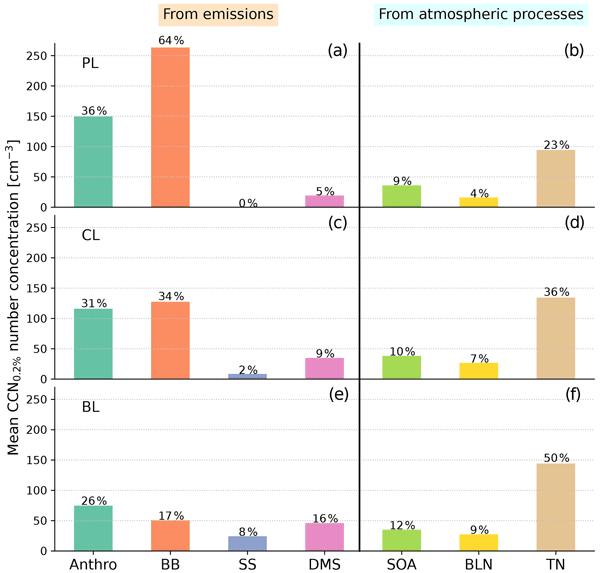
Extensive stratocumulus clouds over the south-eastern Atlantic (SEA) can lead to a cooling effect on the climate. A key pathway by which aerosols affect cloud properties is by acting as cloud condensation nuclei (CCN). Here, we investigated the source attribution of CCN in the SEA as well as the cloud responses. Our results show that aerosol nucleation contributes most to CCN in the marine boundary layer. In terms of emissions, anthropogenic sources contribute most to the CCN and cloud droplets.

Matthew W. Christensen, Andrew Gettelman, Jan Cermak, Guy Dagan, Michael Diamond, Alyson Douglas, Graham Feingold, Franziska Glassmeier, Tom Goren, Daniel P. Grosvenor, Edward Gryspeerdt, Ralph Kahn, Zhanqing Li, Po-Lun Ma, Florent Malavelle, Isabel L. McCoy, Daniel T. McCoy, Greg McFarquhar, Johannes Mülmenstädt, Sandip Pal, Anna Possner, Adam Povey, Johannes Quaas, Daniel Rosenfeld, Anja Schmidt, Roland Schrödner, Armin Sorooshian, Philip Stier, Velle Toll, Duncan Watson-Parris, Robert Wood, Mingxi Yang, and Tianle Yuan
Atmos. Chem. Phys., 22, 641–674, https://doi.org/10.5194/acp-22-641-2022, https://doi.org/10.5194/acp-22-641-2022, 2022
Short summary
Short summary
Trace gases and aerosols (tiny airborne particles) are released from a variety of point sources around the globe. Examples include volcanoes, industrial chimneys, forest fires, and ship stacks. These sources provide opportunistic experiments with which to quantify the role of aerosols in modifying cloud properties. We review the current state of understanding on the influence of aerosol on climate built from the wide range of natural and anthropogenic laboratories investigated in recent decades.
Duncan Watson-Parris, Andrew Williams, Lucia Deaconu, and Philip Stier
Geosci. Model Dev., 14, 7659–7672, https://doi.org/10.5194/gmd-14-7659-2021, https://doi.org/10.5194/gmd-14-7659-2021, 2021
Short summary
Short summary
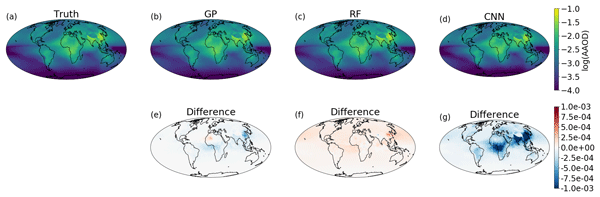
The Earth System Emulator (ESEm) provides a fast and flexible framework for emulating a wide variety of Earth science datasets and tools for constraining (or tuning) models of any complexity. Three distinct use cases are presented that demonstrate the utility of ESEm and provide some insight into the use of machine learning for emulation in these different settings. The open-source Python package is freely available so that it might become a valuable tool for the community.
Maria Sand, Bjørn H. Samset, Gunnar Myhre, Jonas Gliß, Susanne E. Bauer, Huisheng Bian, Mian Chin, Ramiro Checa-Garcia, Paul Ginoux, Zak Kipling, Alf Kirkevåg, Harri Kokkola, Philippe Le Sager, Marianne T. Lund, Hitoshi Matsui, Twan van Noije, Dirk J. L. Olivié, Samuel Remy, Michael Schulz, Philip Stier, Camilla W. Stjern, Toshihiko Takemura, Kostas Tsigaridis, Svetlana G. Tsyro, and Duncan Watson-Parris
Atmos. Chem. Phys., 21, 15929–15947, https://doi.org/10.5194/acp-21-15929-2021, https://doi.org/10.5194/acp-21-15929-2021, 2021
Short summary
Short summary
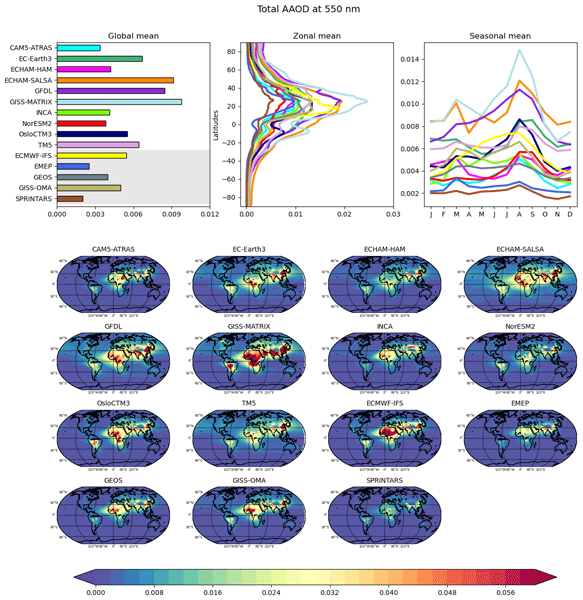
Absorption of shortwave radiation by aerosols can modify precipitation and clouds but is poorly constrained in models. A total of 15 different aerosol models from AeroCom phase III have reported total aerosol absorption, and for the first time, 11 of these models have reported in a consistent experiment the contributions to absorption from black carbon, dust, and organic aerosol. Here, we document the model diversity in aerosol absorption.
Cited articles
Baker, A. H., Hammerling, D. M., Mickelson, S. A., Xu, H., Stolpe, M. B., Naveau, P., Sanderson, B., Ebert-Uphoff, I., Samarasinghe, S., De Simone, F., Carbone, F., Gencarelli, C. N., Dennis, J. M., Kay, J. E., and Lindstrom, P.: Evaluating lossy data compression on climate simulation data within a large ensemble, Geosci. Model Dev., 9, 4381–4403, https://doi.org/10.5194/gmd-9-4381-2016, 2016. a
Baker, A. H., Xu, H., Hammerling, D. M., Li, S., and Clyne, J. P.: Toward a Multi-method Approach: Lossy Data Compression for Climate Simulation Data, in: High Performance Computing, edited by: Kunkel, J. M., Yokota, R., Taufer, M., and Shalf, J., 30–42, Springer International Publishing, Cham, ISBN 978-3-319-67630-2, https://doi.org/10.1007/978-3-319-67630-2_3, 2017. a
Ballester-Ripoll, R., Lindstrom, P., and Pajarola, R.: TTHRESH: Tensor compression for multidimensional visual data, IEEE T. Vis. Comput. Gr., 26, 2891–2903, 2019. a
Binder, W. and Hulaas, J.: Using Bytecode Instruction Counting as Portable CPU Consumption Metric, Electronic Notes in Theoretical Computer Science, 153, 57–77, https://doi.org/10.1016/j.entcs.2005.10.032, 2006. a
Delaunay, X., Courtois, A., and Gouillon, F.: Evaluation of lossless and lossy algorithms for the compression of scientific datasets in netCDF-4 or HDF5 files, Geosci. Model Dev., 12, 4099–4113, https://doi.org/10.5194/gmd-12-4099-2019, 2019. a
Dey, C., Sanders, C., Clochard, J., Hennessy, J., and Elliott, S.: Guide to the WMO table driven code form used for the representation and exchange of regularly spaced data in binary form: FM 92 GRIB, World Meteorological Organization, https://www.yumpu.com/en/document/read/11723135/guide-to-wmo-table-driven-code-forms/1 (last access: 2 July 2026), 2007. a
Eyring, V., Bony, S., Meehl, G. A., Senior, C. A., Stevens, B., Stouffer, R. J., and Taylor, K. E.: Overview of the Coupled Model Intercomparison Project Phase 6 (CMIP6) experimental design and organization, Geosci. Model Dev., 9, 1937–1958, https://doi.org/10.5194/gmd-9-1937-2016, 2016. a
Fallin, A. and Burtscher, M.: Lessons Learned on the Path to Guaranteeing the Error Bound in Lossy Quantizers, arXiv [preprint], https://doi.org/10.48550/arXiv.2407.15037, 2024. a
Hammerling, D. M., Baker, A. H., Pinard, A., and Lindstrom, P.: A collaborative effort to improve lossy compression methods for climate data, in: 2019 IEEE/ACM 5th International Workshop on Data Analysis and Reduction for Big Scientific Data (DRBSD-5), 16–22, IEEE, https://doi.org/10.1109/DRBSD-549595.2019.00008, 2019. a, b
Han, T., Chen, Z., Guo, S., Xu, W., and Bai, L.: CRA5: Extreme Compression of ERA5 for Portable Global Climate and Weather Research via an Efficient Variational Transformer, arXiv, https://doi.org/10.48550/arXiv.2405.03376, 2024. a, b
Hassell, D. and Cimadevilla Alvarez, E.: cmip7repack: Repack CMIP7 netCDF-4 datasets, Zenodo, https://doi.org/10.5281/zenodo.17550920, 2025. a
Hersbach, H., Bell, B., Berrisford, P., Biavati, G., Horányi, A., Muñoz Sabater, J., Nicolas, J., Peubey, C., Radu, R., Rozum, I., Schepers, D., Simmons, A., Soci, C., Dee, D., and Thépaut, J.-N.: ERA5 hourly data on single levels from 1940 to present, Climate Data Store, https://doi.org/10.24381/cds.adbb2d47, 2023. a
Huang, L. and Hoefler, T.: Compressing Multidimensional Weather and Climate Data into Neural Networks, arXiv, https://doi.org/10.48550/arXiv.2210.12538, 2023. a, b
Huang, L., Fusco, L., Scheidl, F., Zibell, J., Sprenger, M. A., Schemm, S., and Hoefler, T.: Error bounded compression for weather and climate applications, arXiv, https://doi.org/10.48550/arXiv.2510.22265, 2026. a
Ibarria, L., Lindstrom, P., Rossignac, J., and Szymczak, A.: Out-of-core compression and decompression of large n-dimensional scalar fields, in: Computer Graphics Forum, vol. 22, 343–348, Wiley Online Library, https://doi.org/10.1111/1467-8659.00681, 2003. a
Illingworth, A. J., Barker, H. W., Beljaars, A., Ceccaldi, M., Chepfer, H., Clerbaux, N., Cole, J., Delanoë, J., Domenech, C., Donovan, D. P., Fukuda, S., Hirakata, M., Hogan, R. J., Huenerbein, A., Kollias, P., Kubota, T., Nakajima, T., Nakajima, T. Y., Nishizawa, T., Ohno, Y., Okamoto, H., Oki, R., Sato, K., Satoh, M., Shephard, M. W., Velázquez-Blázquez, A., Wandinger, U., Wehr, T., and van Zadelhoff, G.-J.: The EarthCARE satellite: The next step forward in global measurements of clouds, aerosols, precipitation, and radiation, B. Am. Meteorol. Soc., 96, 1311–1332, 2015. a
Inness, A., Ades, M., Agustí-Panareda, A., Barré, J., Benedictow, A., Blechschmidt, A.-M., Dominguez, J. J., Engelen, R., Eskes, H., Flemming, J., Huijnen, V., Jones, L., Kipling, Z., Massart, S., Parrington, M., Peuch, V.-H., Razinger, M., Remy, S., Schulz, M., and Suttie, M.: The CAMS reanalysis of atmospheric composition, Atmos. Chem. Phys., 19, 3515–3556, https://doi.org/10.5194/acp-19-3515-2019, 2019. a
Jangda, A., Powers, B., Berger, E. D., and Guha, A.: Not so fast: analyzing the performance of webassembly vs. native code, in: Proceedings of the 2019 USENIX Conference on Usenix Annual Technical Conference, USENIX ATC '19, 107–120, USENIX Association, USA, arXiv, https://doi.org/10.48550/arXiv.1901.09056, 2019. a, b
Klöwer, M., Razinger, M., Dominguez, J. J., Düben, P. D., and Palmer, T. N.: Compressing Atmospheric Data into Its Real Information Content, Nature Computational Science, 1, 713–724, https://doi.org/10.1038/s43588-021-00156-2, 2021. a, b, c
Koldunov, N., Kölling, T., Pedruzo-Bagazgoitia, X., Rackow, T., Redler, R., Sidorenko, D., Wieners, K.-H., and Ziemen, F. A.: nextGEMS: output of the model development cycle 3 simulations for ICON and IFS, WDC Climate, https://doi.org/10.26050/WDCC/nextGEMS_cyc3, 2023. a
Li, S., Lindstrom, P., and Clyne, J.: Lossy scientific data compression with sperr, in: 2023 IEEE International Parallel and Distributed Processing Symposium (IPDPS), 1007–1017, IEEE, https://doi.org/10.1109/IPDPS54959.2023.00104, 2023. a
Liang, X., Di, S., Tao, D., Chen, Z., and Cappello, F.: An Efficient Transformation Scheme for Lossy Data Compression with Point-Wise Relative Error Bound, in: 2018 IEEE International Conference on Cluster Computing (CLUSTER), 179–189, https://doi.org/10.1109/CLUSTER.2018.00036, 2018. a, b
Loncaric, M., Jeppesen, N., and Zinberg, B.: Pcodec: Better Compression for Numerical Sequences, arXiv, https://doi.org/10.48550/arXiv.2502.06112, 2025. a
Miles, A., Kirkham, J., Durant, M., Bourbeau, J., Onalan, T., Hamman, J., Patel, Z., shikharsg, Rocklin, M., raphael dussin, Schut, V., de Andrade, E. S., Abernathey, R., Noyes, C., sbalmer, pyup.io bot, Tran, T., Saalfeld, S., Swaney, J., Moore, J., Jevnik, J., Kelleher, J., Funke, J., Sakkis, G., Barnes, C., and Banihirwe, A.: zarr-developers/zarr-python: v2.4.0, Zenodo, https://doi.org/10.5281/zenodo.3773450, 2020. a
Mirowski, P., Warde-Farley, D., Rosca, M., Grimes, M. K., Hasson, Y., Kim, H., Rey, M., Osindero, S., Ravuri, S., and Mohamed, S.: Neural Compression of Atmospheric States, arXiv, https://doi.org/10.48550/arXiv.2407.11666, 2024. a, b
Pellicer-Valero, O. J., Aybar, C., and Valls, G. C.: Video Compression for Spatiotemporal Earth System Data, arXiv [preprint], https://doi.org/10.48550/arXiv.2506.19656, 2025. a
Poppick, A., Nardi, J., Feldman, N., Baker, A., and Hammerling, D.: A statistical analysis of compressed climate model data, Proc. DRBSD, 1–6, 2018. a
Pulkkinen, S., Nerini, D., Pérez Hortal, A. A., Velasco-Forero, C., Seed, A., Germann, U., and Foresti, L.: Pysteps: an open-source Python library for probabilistic precipitation nowcasting (v1.0), Geosci. Model Dev., 12, 4185–4219, https://doi.org/10.5194/gmd-12-4185-2019, 2019. a
Rackow, T., Pedruzo-Bagazgoitia, X., Becker, T., Milinski, S., Sandu, I., Aguridan, R., Bechtold, P., Beyer, S., Bidlot, J., Boussetta, S., Deconinck, W., Diamantakis, M., Dueben, P., Dutra, E., Forbes, R., Ghosh, R., Goessling, H. F., Hadade, I., Hegewald, J., Jung, T., Keeley, S., Kluft, L., Koldunov, N., Koldunov, A., Kölling, T., Kousal, J., Kühnlein, C., Maciel, P., Mogensen, K., Quintino, T., Polichtchouk, I., Reuter, B., Sármány, D., Scholz, P., Sidorenko, D., Streffing, J., Sützl, B., Takasuka, D., Tietsche, S., Valentini, M., Vannière, B., Wedi, N., Zampieri, L., and Ziemen, F.: Multi-year simulations at kilometre scale with the Integrated Forecasting System coupled to FESOM2.5 and NEMOv3.4, Geosci. Model Dev., 18, 33–69, https://doi.org/10.5194/gmd-18-33-2025, 2025. a
Rasp, S., Hoyer, S., Merose, A., Langmore, I., Battaglia, P., Russell, T., Sanchez-Gonzalez, A., Yang, V., Carver, R., Agrawal, S., Chantry, M., Ben Bouallegue, Z., Dueben, P., Bromberg, C., Sisk, J., Barrington, L., Bell, A., Sha, F.: WeatherBench 2: A benchmark for the next generation of data-driven global weather models, J. Adv. Model. Earth Sy., 16, e2023MS004019, https://doi.org/10.1029/2023MS004019, 2024. a
Reichelt, T. and Tyree, J.: ClimateBenchPress data-loader, Zenodo [data set], https://doi.org/10.5281/zenodo.18015682, 2025. a
Reichelt, T. and Tyree, J.: ClimateBenchPress compressor, Zenodo [code], https://doi.org/10.5281/zenodo.20666484, 2026. a
Rossow, W. B. and Schiffer, R. A.: ISCCP cloud data products, B. Am. Meteorol. Soc., 72, 2–20, 1991. a
Santoro, M., Cartus, O., Quegan, S., et al.: Design and performance of the Climate Change Initiative Biomass global retrieval algorithm, Science of Remote Sensing, 10, 100169, https://doi.org/10.1016/j.srs.2024.100169, 2024. a
Schmit, T. J., Griffith, P., Gunshor, M. M., Daniels, J. M., Goodman, S. J., and Lebair, W. J.: A closer look at the ABI on the GOES-R series, B. Am. Meteorol. Soc., 98, 681–698, https://doi.org/10.1175/BAMS-D-15-00230.1, 2017. a
Segura, H., Pedruzo-Bagazgoitia, X., Weiss, P., Müller, S. K., Rackow, T., Lee, J., Dolores-Tesillos, E., Benedict, I., Aengenheyster, M., Aguridan, R., Arduini, G., Baker, A. J., Bao, J., Bastin, S., Baulenas, E., Becker, T., Beyer, S., Bockelmann, H., Brüggemann, N., Brunner, L., Cheedela, S. K., Das, S., Denissen, J., Dragaud, I., Dziekan, P., Ekblom, M., Engels, J. F., Esch, M., Forbes, R., Frauen, C., Freischem, L., García-Maroto, D., Geier, P., Gierz, P., González-Cervera, Á., Grayson, K., Griffith, M., Gutjahr, O., Haak, H., Hadade, I., Haslehner, K., ul Hasson, S., Hegewald, J., Kluft, L., Koldunov, A., Koldunov, N., Kölling, T., Koseki, S., Kosukhin, S., Kousal, J., Kuma, P., Kumar, A. U., Li, R., Maury, N., Meindl, M., Milinski, S., Mogensen, K., Niraula, B., Nowak, J., Praturi, D. S., Proske, U., Putrasahan, D., Redler, R., Santuy, D., Sármány, D., Schnur, R., Scholz, P., Sidorenko, D., Spät, D., Sützl, B., Takasuka, D., Tompkins, A., Uribe, A., Valentini, M., Veerman, M., Voigt, A., Warnau, S., Wachsmann, F., Wacławczyk, M., Wedi, N., Wieners, K.-H., Wille, J., Winkler, M., Wu, Y., Ziemen, F., Zimmermann, J., Bender, F. A.-M., Bojovic, D., Bony, S., Bordoni, S., Brehmer, P., Dengler, M., Dutra, E., Faye, S., Fischer, E., van Heerwaarden, C., Hohenegger, C., Järvinen, H., Jochum, M., Jung, T., Jungclaus, J. H., Keenlyside, N. S., Klocke, D., Konow, H., Klose, M., Malinowski, S., Martius, O., Mauritsen, T., Mellado, J. P., Mieslinger, T., Mohino, E., Pawłowska, H., Peters-von Gehlen, K., Sarré, A., Sobhani, P., Stier, P., Tuppi, L., Vidale, P. L., Sandu, I., and Stevens, B.: nextGEMS: entering the era of kilometer-scale Earth system modeling, Geosci. Model Dev., 18, 7735–7761, https://doi.org/10.5194/gmd-18-7735-2025, 2025. a, b
Shannon, C. E.: A mathematical theory of communication, Bell Syst. Tech. J., 27, 379–423, 1948. a
Silver, J. D. and Zender, C. S.: The compression–error trade-off for large gridded data sets, Geosci. Model Dev., 10, 413–423, https://doi.org/10.5194/gmd-10-413-2017, 2017. a, b
Skodras, A., Christopoulos, C., and Ebrahimi, T.: The JPEG 2000 still image compression standard, IEEE Signal Proc. Mag., 18, 36–58, 2001. a
Spies, B. and Mock, M.: An Evaluation of WebAssembly in Non-Web Environments, in: 2021 XLVII Latin American Computing Conference (CLEI), IEEE, 1–10, https://doi.org/10.1109/CLEI53233.2021.9640153, 2021. a
Stephens, G. L., Vane, D. G., Boain, R. J., Mace, G. G., Sassen, K., Wang, Z., Illingworth, A. J., O'Connor, E. J., Rossow, W. B., Durden, S. L., Miller, S. D., Austin, R. T., Benedetti, A., Mitrescu, C., and the CloudSat Science Team: The CloudSat mission and the A-Train: A new dimension of space-based observations of clouds and precipitation, B. Am. Meteorol. Soc., 83, 1771–1790, 2002. a
Stevens, B., Satoh, M., Auger, L., Biercamp, J., Bretherton, C. S., Chen, X., Düben, P., Judt, F., Khairoutdinov, M., Klocke, D., Kodama, C., Kornblueh, L., Lin, S.-J., Neumann, P., Putman, W. M., Röber, N., Shibuya, R., Vanniere, B., Vidale, P. L., Wedi, N., Zhou, L.: DYAMOND: the DYnamics of the Atmospheric general circulation Modeled On Non-hydrostatic Domains, Prog. Earth Planet. Sc., https://doi.org/10.1186/s40645-019-0304-z, 2019. a
Thomas, M. and Joy, A. T.: Elements of information theory, Wiley-Interscience, https://doi.org/10.1002/047174882X, 2006. a
Underwood, R., Bessac, J., Di, S., and Cappello, F.: Understanding the Effects of Modern Compressors on the Community Earth Science Model, in: 2022 IEEE/ACM 8th International Workshop on Data Analysis and Reduction for Big Scientific Data (DRBSD), 1–10, IEEE, Dallas, TX, USA, ISBN 978-1-66546-337-9, https://doi.org/10.1109/DRBSD56682.2022.00006, 2022. a, b
WebAssembly Community Group: WebAssembly Specification Release 3.0 (Draft 2025-09-16), https://webassembly.github.io/spec/versions/core/WebAssembly-3.0-draft.pdf (last access: 5 December 2025), 2025. a
WebAssembly Working Group: WebAssembly Core Specification, https://www.w3.org/TR/2019/REC-wasm-core-1-20191205 (last access: 23 January 2024), 2019. a
Wieners, K.-H., Rackow, T., Aguridan, R., Becker, T., Beyer, S., Cheedela, S. K., Dreier, N.-A., Engels, J. F., Esch, M., Frauen, C., Klocke, D., Kölling, T., Pedruzo-Bagazgoitia, X., Putrasahan, D., Sidorenko, D., Schnur, R., Stevens, B., and Zimmermann, J.: nextGEMS: output of the production simulations for ICON and IFS, https://www.wdc-climate.de/ui/entry?acronym=nextGEMS_prod (last access: 2 July 2026), 2024. a
Woodring, J., Mniszewski, S., Brislawn, C., DeMarle, D., and Ahrens, J.: Revisiting wavelet compression for large-scale climate data using JPEG 2000 and ensuring data precision, in: 2011 IEEE symposium on large data analysis and visualization, 31–38, IEEE, https://doi.org/10.1109/LDAV.2011.6092314, 2011. a
Zender, C. S.: Bit Grooming: statistically accurate precision-preserving quantization with compression, evaluated in the netCDF Operators (NCO, v4.4.8+), Geosci. Model Dev., 9, 3199–3211, https://doi.org/10.5194/gmd-9-3199-2016, 2016. a
Zhao, K., Di, S., Liang, X., Li, S., Tao, D., Bessac, J., Chen, Z., and Cappello, F.: SDRBench: Scientific Data Reduction Benchmark for Lossy Compressors, in: 2020 IEEE International Conference on Big Data (Big Data), 2716–2724, https://doi.org/10.1109/BigData50022.2020.9378449, 2020. a
Short summary
The growing size of datasets used in climate science makes it difficult to store, analyze, and distribute dataset. Lossy compression algorithms can significantly reduce the disk space required to store datasets, but it can be difficult to understand and compare the behavior of different compression algorithms. ClimateBenchPress provides a benchmark to standardize comparisons between lossy compression algorithms and guide development of novel algorithms specifically targeted towards climate data.
The growing size of datasets used in climate science makes it difficult to store, analyze, and...


