
Articles | Volume 19, issue 12
https://doi.org/10.5194/gmd-19-5277-2026
© Author(s) 2026. This work is distributed under
the Creative Commons Attribution 4.0 License.
the Creative Commons Attribution 4.0 License.
https://doi.org/10.5194/gmd-19-5277-2026
© Author(s) 2026. This work is distributed under
the Creative Commons Attribution 4.0 License.
the Creative Commons Attribution 4.0 License.
Model evaluation paper
| 
19 Jun 2026
Model evaluation paper |
| 19 Jun 2026
| 19 Jun 2026
From single storms to large-scale waves: a multi-year kilometer-scale global simulation

Institute for Atmospheric and Climate Science, ETH Zürich, 8092 Zurich, Switzerland
Praveen K. Pothapakula
Institute for Atmospheric and Climate Science, ETH Zürich, 8092 Zurich, Switzerland
Christian Zeman
Institute for Atmospheric and Climate Science, ETH Zürich, 8092 Zurich, Switzerland
Morgane Lalonde
Institute for Atmospheric and Climate Science, ETH Zürich, 8092 Zurich, Switzerland
Marius Rixen
Institute for Atmospheric and Climate Science, ETH Zürich, 8092 Zurich, Switzerland
Anurag Dipankar
Center for Climate Systems Modeling (C2SM), ETH Zürich, Zurich, Switzerland
Matthieu Leclair
Center for Climate Systems Modeling (C2SM), ETH Zürich, Zurich, Switzerland
Andreas Jocksch
Swiss National Supercomputing Centre (CSCS), ETH Zürich, Lugano, Switzerland
Related authors
Sofía Segovia-Escafi, Pablo A. Mendoza, Miguel Lagos-Zúñiga, Lucía Scaff, and Andreas F. Prein
Hydrol. Earth Syst. Sci., 30, 6481–6510, https://doi.org/10.5194/hess-30-6481-2026, https://doi.org/10.5194/hess-30-6481-2026, 2026
Short summary
Short summary
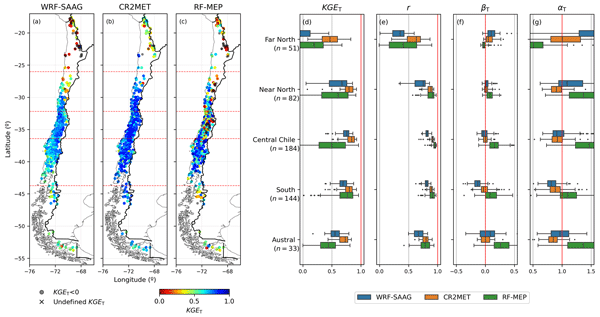
High-resolution climate simulations can improve our understanding of precipitation and temperature patterns in regions with complex terrain. We evaluate a new climate dataset against in-situ observations and assess its potential for hydrological modeling. Our results show that, despite some limitations in dry areas, high-resolution climate models can provide useful daily-scale information for hydrological applications, supporting their use in water resources planning and decision-making.
Marius Rixen, Praveen K. Pothapakula, Michael Sprenger, Christian Zeman, and Andreas F. Prein
Weather Clim. Dynam., 7, 2065–2086, https://doi.org/10.5194/wcd-7-2065-2026, https://doi.org/10.5194/wcd-7-2065-2026, 2026
Short summary
Short summary
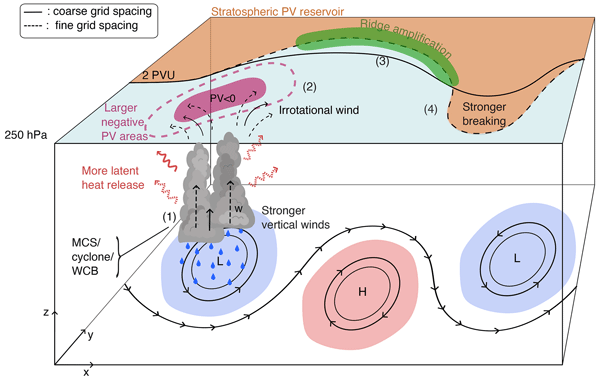
Despite steady improvements in forecasting skill, episodes of low forecast skill, called forecast busts, still persist. Using global ensemble simulations at different grid spacings, we show that coarse-grid simulations fail to resolve key mesoscale diabatic processes, and that errors upscale and propagate downstream, leading to large forecast errors. Fine grid spacing simulations better capture scale interactions in strongly diabatic flow, highlighting the potential of kilometer-scale models.
Andres Barrio-Martin, Carlos Calvo-Sancho, Nuria P. Plaza-Martin, Cesar Azorin-Molina, Andreas F. Prein, Tim R. McVicar, Sergio M. Vicente-Serrano, Luis Gimeno, Raquel Nieto, Zhenzhong Zeng, Ana Morata, and Deliang Chen
EGUsphere, https://doi.org/10.5194/egusphere-2026-5202, https://doi.org/10.5194/egusphere-2026-5202, 2026
This preprint is open for discussion and under review for Natural Hazards and Earth System Sciences (NHESS).
Short summary
Short summary
We identified the atmospheric conditions that distinguish ordinary thunderstorms from four severe weather hazards, highlighting numerical proxies for their modelling in the Mediterranean. Severe winds occur in warm, unstable air (summer) or with strong mid-level winds (other seasons); tornadoes are favored by instability near the ground; large hail occurs when instability and strong winds combine; and short-duration heavy precipitation is favored by high moisture and slow-moving thunderstorms.
Samir Pokhrel, Verma Utkarsh, Patita Kalyana Sahoo, Praveen K. Pothapakula, Anusha Sunkisala, Nishant Gautam, Kolady P. Pribin, Shivamurthy Yashas, Hemantkumar S. Chaudhari, Archana Rai, Hasibur Rahaman, Andreas F. Prein, Anurag Dipankar, and Subodh Kumar Saha
Weather Clim. Dynam., 7, 1447–1477, https://doi.org/10.5194/wcd-7-1447-2026, https://doi.org/10.5194/wcd-7-1447-2026, 2026
Short summary
Short summary
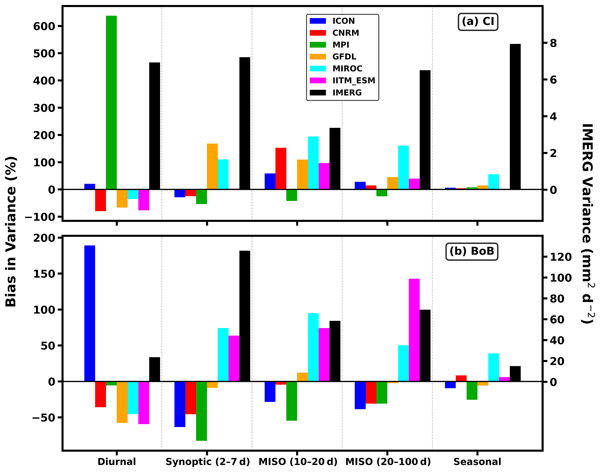
We studied how well climate models simulate Indian monsoon rainfall at different time scales, from daily cycles to longer variations. We found that models may match seasonal averages but still fail to capture when and how rainfall occurs. These errors differ over land and ocean and affect overall monsoon patterns. Improving how models represent rainfall processes across scales is essential for better prediction.
Praveen K. Pothapakula, Andreas F. Prein, Anusha Sunkisala, and Anurag Dipankar
Weather Clim. Dynam., 7, 979–1007, https://doi.org/10.5194/wcd-7-979-2026, https://doi.org/10.5194/wcd-7-979-2026, 2026
Short summary
Short summary
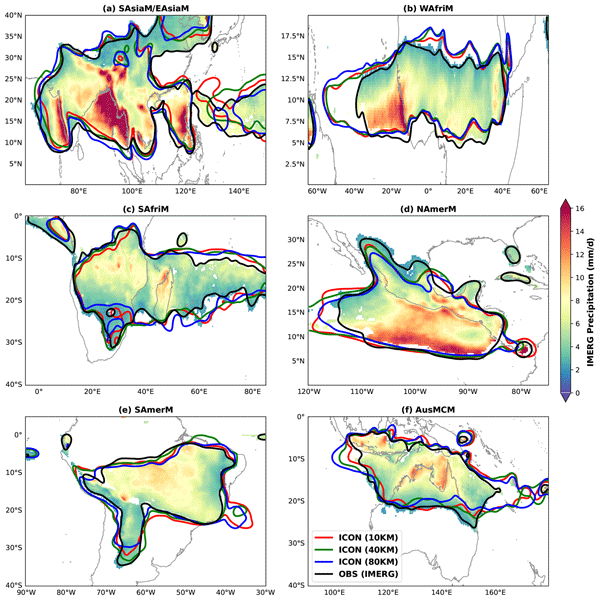
Monsoons provide vital rainfall for billions but are hard to forecast. Using a next-generation climate model, we simulated monsoons at different grid spacings. The model captures key seasonal patterns, but finer grids do not always improve accuracy. They can worsen predictions by overproducing intense rain, as they artificially strengthen weather systems like monsoon lows and waves. Our work shows that smarter model physics is needed for reliable future forecasts and climate projections.
Anurag Dipankar, Mauro Bianco, Mona Bukenberger, Till Ehrengruber, Nicoletta Farabullini, Oliver Fuhrer, Abishek Gopal, Daniel Hupp, Andreas Jocksch, Samuel Kellerhals, Clarissa A. Kroll, Xavier Lapillonne, Matthieu Leclair, Magdalena Luz, Christoph Müller, Chia Rui Ong, Carlos Osuna, Praveen Pothapakula, Andreas Prein, Matthias Röthlin, William Sawyer, Christoph Schär, Sebastian Schemm, Giacomo Serafini, Hannes Vogt, Ben Weber, Robert C. Jnglin Wills, Nicolas Gruber, and Thomas C. Schulthess
Geosci. Model Dev., 19, 713–729, https://doi.org/10.5194/gmd-19-713-2026, https://doi.org/10.5194/gmd-19-713-2026, 2026
Short summary
Short summary
Climate models are becoming more detailed and accurate by simulating weather at scales of just a few kilometers. Simulating at km-scale is computationally demanding requiring powerful supercomputers and efficient code. This work presents a refactored dynamical core of a state-of-the-art climate model using a Python-based approach. The refactored code has passed through a sequence of verification and validation demonstrating its usability in performing km-scale global simulations.
Bjorn Stevens, Stefan Adami, Tariq Ali, Hartwig Anzt, Zafer Aslan, Sabine Attinger, Jaana Bäck, Johanna Baehr, Peter Bauer, Natacha Bernier, Bob Bishop, Hendryk Bockelmann, Sandrine Bony, Guy Brasseur, David N. Bresch, Sean Breyer, Gilbert Brunet, Pier Luigi Buttigieg, Junji Cao, Christelle Castet, Yafang Cheng, Ayantika Dey Choudhury, Deborah Coen, Susanne Crewell, Atish Dabholkar, Qing Dai, Francisco Doblas-Reyes, Dale Durran, Ayoub El Gaidi, Charlie Ewen, Eleftheria Exarchou, Veronika Eyring, Florencia Falkinhoff, David Farrell, Piers M. Forster, Ariane Frassoni, Claudia Frauen, Oliver Fuhrer, Shahzad Gani, Edwin Gerber, Debra Goldfarb, Jens Grieger, Nicolas Gruber, Wilco Hazeleger, Rolf Herken, Chris Hewitt, Torsten Hoefler, Huang-Hsiung Hsu, Daniela Jacob, Alexandra Jahn, Christian Jakob, Thomas Jung, Christopher Kadow, In-Sik Kang, Sarah Kang, Karthik Kashinath, Katharina Kleinen-von Königslöw, Daniel Klocke, Uta Kloenne, Milan Klöwer, Chihiro Kodama, Stefan Kollet, Tobias Kölling, Jenni Kontkanen, Steve Kopp, Michal Koran, Markku Kulmala, Hanna Lappalainen, Fakhria Latifi, Bryan Lawrence, June Yi Lee, Quentin Lejeun, Christian Lessig, Chao Li, Thomas Lippert, Jürg Luterbacher, Pekka Manninen, Jochem Marotzke, Satoshi Matsouoka, Charlotte Merchant, Peter Messmer, Gero Michel, Kristel Michielsen, Tomoki Miyakawa, Jens Müller, Ramsha Munir, Sandeep Narayanasetti, Ousmane Ndiaye, Carlos Nobre, Achim Oberg, Riko Oki, Tuba Özkan-Haller, Tim Palmer, Stan Posey, Andreas Prein, Odessa Primus, Mike Pritchard, Julie Pullen, Dian Putrasahan, Johannes Quaas, Krishnan Raghavan, Venkatachalam Ramaswamy, Markus Rapp, Florian Rauser, Markus Reichstein, Aromar Revi, Sonakshi Saluja, Masaki Satoh, Vera Schemann, Sebastian Schemm, Christina Schnadt Poberaj, Thomas Schulthess, Cath Senior, Jagadish Shukla, Manmeet Singh, Julia Slingo, Adam Sobel, Silvina Solman, Jenna Spitzer, Philip Stier, Thomas Stocker, Sarah Strock, Hang Su, Petteri Taalas, John Taylor, Susann Tegtmeier, Georg Teutsch, Adrian Tompkins, Uwe Ulbrich, Pier-Luigi Vidale, Chien-Ming Wu, Hao Xu, Najibullah Zaki, Laure Zanna, Tianjun Zhou, and Florian Ziemen
Earth Syst. Sci. Data, 16, 2113–2122, https://doi.org/10.5194/essd-16-2113-2024, https://doi.org/10.5194/essd-16-2113-2024, 2024
Short summary
Short summary
To manage Earth in the Anthropocene, new tools, new institutions, and new forms of international cooperation will be required. Earth Virtualization Engines is proposed as an international federation of centers of excellence to empower all people to respond to the immense and urgent challenges posed by climate change.
James M. Done, Gary M. Lackmann, and Andreas F. Prein
Weather Clim. Dynam., 3, 693–711, https://doi.org/10.5194/wcd-3-693-2022, https://doi.org/10.5194/wcd-3-693-2022, 2022
Short summary
Short summary
We know that warm oceans generally favour tropical cyclones (TCs). Less is known about the role of air temperature above the oceans extending into the lower stratosphere. Our global analysis of historical records and computer simulations suggests that TCs strengthen in response to historical temperature change while also being influenced by other environmental factors. Ocean warming drives much of the strengthening, with relatively small contributions from temperature changes aloft.
Sofía Segovia-Escafi, Pablo A. Mendoza, Miguel Lagos-Zúñiga, Lucía Scaff, and Andreas F. Prein
Hydrol. Earth Syst. Sci., 30, 6481–6510, https://doi.org/10.5194/hess-30-6481-2026, https://doi.org/10.5194/hess-30-6481-2026, 2026
Short summary
Short summary
High-resolution climate simulations can improve our understanding of precipitation and temperature patterns in regions with complex terrain. We evaluate a new climate dataset against in-situ observations and assess its potential for hydrological modeling. Our results show that, despite some limitations in dry areas, high-resolution climate models can provide useful daily-scale information for hydrological applications, supporting their use in water resources planning and decision-making.
Edgar Dolores-Tesillos, Praveen K. Pothapakula, Christian Zeman, and Daniela I. V. Domeisen
EGUsphere, https://doi.org/10.5194/egusphere-2026-5758, https://doi.org/10.5194/egusphere-2026-5758, 2026
This preprint is open for discussion and under review for Weather and Climate Dynamics (WCD).
Short summary
Short summary
We tested whether increasing climate-model resolution and changing how convection is represented improve the simulation of heatwaves. Using a hierarchy of global atmosphere-only simulations, we found that finer resolution does not consistently reduce heatwave biases. Heatwave persistence depends on regional interactions among convection, rainfall, land conditions, and large-scale circulation, showing that higher resolution alone is not enough.
Marius Rixen, Praveen K. Pothapakula, Michael Sprenger, Christian Zeman, and Andreas F. Prein
Weather Clim. Dynam., 7, 2065–2086, https://doi.org/10.5194/wcd-7-2065-2026, https://doi.org/10.5194/wcd-7-2065-2026, 2026
Short summary
Short summary
Despite steady improvements in forecasting skill, episodes of low forecast skill, called forecast busts, still persist. Using global ensemble simulations at different grid spacings, we show that coarse-grid simulations fail to resolve key mesoscale diabatic processes, and that errors upscale and propagate downstream, leading to large forecast errors. Fine grid spacing simulations better capture scale interactions in strongly diabatic flow, highlighting the potential of kilometer-scale models.
Morgane Lalonde, Sophie Bastin, Ludovic Oudin, Pedro Felipe Arboleda-Obando, and Agnès Ducharne
Geosci. Model Dev., 19, 9463–9488, https://doi.org/10.5194/gmd-19-9463-2026, https://doi.org/10.5194/gmd-19-9463-2026, 2026
Short summary
Short summary
Some climate models still represent cities as if they were natural ground. For one of these models, we built a new way to represent cities. The update includes how reflective surfaces are, building height, stored heat, and how much ground is sealed. The novelty is to treat sealed ground not only at the surface, but also below it. Tested at twenty urban sites, the new version better represents exchanges of energy between the ground and the air, supporting more reliable urban climate studies.
Andres Barrio-Martin, Carlos Calvo-Sancho, Nuria P. Plaza-Martin, Cesar Azorin-Molina, Andreas F. Prein, Tim R. McVicar, Sergio M. Vicente-Serrano, Luis Gimeno, Raquel Nieto, Zhenzhong Zeng, Ana Morata, and Deliang Chen
EGUsphere, https://doi.org/10.5194/egusphere-2026-5202, https://doi.org/10.5194/egusphere-2026-5202, 2026
This preprint is open for discussion and under review for Natural Hazards and Earth System Sciences (NHESS).
Short summary
Short summary
We identified the atmospheric conditions that distinguish ordinary thunderstorms from four severe weather hazards, highlighting numerical proxies for their modelling in the Mediterranean. Severe winds occur in warm, unstable air (summer) or with strong mid-level winds (other seasons); tornadoes are favored by instability near the ground; large hail occurs when instability and strong winds combine; and short-duration heavy precipitation is favored by high moisture and slow-moving thunderstorms.
Samir Pokhrel, Verma Utkarsh, Patita Kalyana Sahoo, Praveen K. Pothapakula, Anusha Sunkisala, Nishant Gautam, Kolady P. Pribin, Shivamurthy Yashas, Hemantkumar S. Chaudhari, Archana Rai, Hasibur Rahaman, Andreas F. Prein, Anurag Dipankar, and Subodh Kumar Saha
Weather Clim. Dynam., 7, 1447–1477, https://doi.org/10.5194/wcd-7-1447-2026, https://doi.org/10.5194/wcd-7-1447-2026, 2026
Short summary
Short summary
We studied how well climate models simulate Indian monsoon rainfall at different time scales, from daily cycles to longer variations. We found that models may match seasonal averages but still fail to capture when and how rainfall occurs. These errors differ over land and ocean and affect overall monsoon patterns. Improving how models represent rainfall processes across scales is essential for better prediction.
Huiying Zhang, Chia Rui Ong, Anurag Dipankar, Ulrike Lohmann, and Jan Henneberger
Atmos. Chem. Phys., 26, 8677–8693, https://doi.org/10.5194/acp-26-8677-2026, https://doi.org/10.5194/acp-26-8677-2026, 2026
Short summary
Short summary
We used computer simulations to study cloud seeding. We discovered a 'self-lofting' mechanism whereby, as the seeded ice crystals grow, they release heat, generating an upward air current. This enables the ice plume to rise and spread vertically, even when the surrounding air is sinking. This is why seeded ice survives in unfavourable wind conditions. Our results demonstrate that this internal heating is essential for the effectiveness and validation of weather modification technologies.
Praveen K. Pothapakula, Andreas F. Prein, Anusha Sunkisala, and Anurag Dipankar
Weather Clim. Dynam., 7, 979–1007, https://doi.org/10.5194/wcd-7-979-2026, https://doi.org/10.5194/wcd-7-979-2026, 2026
Short summary
Short summary
Monsoons provide vital rainfall for billions but are hard to forecast. Using a next-generation climate model, we simulated monsoons at different grid spacings. The model captures key seasonal patterns, but finer grids do not always improve accuracy. They can worsen predictions by overproducing intense rain, as they artificially strengthen weather systems like monsoon lows and waves. Our work shows that smarter model physics is needed for reliable future forecasts and climate projections.
Marius Winkler, Marius Rixen, Florent Beucher, Fleur Couvreux, Chaehyeon C. Nam, Philippe Peyrillé, Hauke Schmidt, Hans Segura, Karl-Hermann Wieners, Ezri Alkilani-Brown, Abdou Aziz Coly, Giovanni Biagioli, Michael M. Bell, Ester Brito, Emma Chauvin, Julie Capo, Delián Colón-Burgos, Akeem Dawes, Jose Carlos da Luz, Zekican Demiralay, Vincent Douet, Vincent Ducastin, Clarisse Dufaux, Jean-Louis Dufresne, Florence Favot, Thomas Fiolleau, Emilie Fons, Geet George, Helene M. Gloeckner, Suelly Gonçalves, Laurent Gouttesoulard, Lennéa Hayo, Wei-Ting Hsiao, Sarah Kennison, Michael Kopelman, Tsung-Yung Lee, Enora Le Gall, Mateo Lovato, Emily Luschen, Nicolas Maury, Brett McKim, Louis Netz, Diouf Ousseynou, Karsten Peters-von Gehlen, Chavez Pope, Basile Poujol, Niwde Rivera Maldonado, Nina Robbins-Blanch, Nicolas Rochetin, Daniel Rowe, Paula Romero Jure, James H. Ruppert Jr., Jairo Segura Bermudez, Jarrett C. Starr, Martin Stelzner, Connor Stoll, Macintyre Syrett, Abraham Tekoe, Jeremie Trules, Colin Welty, Daniel Klocke, Raphaela Vogel, Sandrine Bony, Allison A. Wing, and Bjorn Stevens
Earth Syst. Sci. Data, 18, 1833–1854, https://doi.org/10.5194/essd-18-1833-2026, https://doi.org/10.5194/essd-18-1833-2026, 2026
Short summary
Short summary
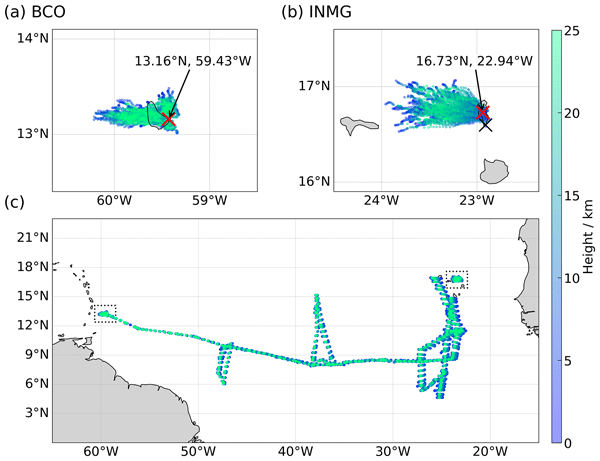
The RAPSODI dataset compiles 624 radiosonde profiles collected during the 2024 ORCESTRA campaign across the tropical Atlantic: from Cape Verde (INMG), the R/V Meteor, and the Barbados Cloud Observatory. It provides high-resolution temperature, humidity, wind, and pressure data to study convection, tropical waves, and ITCZ dynamics. Data are quality-controlled and openly available in Zarr format via IPFS.
Anurag Dipankar, Mauro Bianco, Mona Bukenberger, Till Ehrengruber, Nicoletta Farabullini, Oliver Fuhrer, Abishek Gopal, Daniel Hupp, Andreas Jocksch, Samuel Kellerhals, Clarissa A. Kroll, Xavier Lapillonne, Matthieu Leclair, Magdalena Luz, Christoph Müller, Chia Rui Ong, Carlos Osuna, Praveen Pothapakula, Andreas Prein, Matthias Röthlin, William Sawyer, Christoph Schär, Sebastian Schemm, Giacomo Serafini, Hannes Vogt, Ben Weber, Robert C. Jnglin Wills, Nicolas Gruber, and Thomas C. Schulthess
Geosci. Model Dev., 19, 713–729, https://doi.org/10.5194/gmd-19-713-2026, https://doi.org/10.5194/gmd-19-713-2026, 2026
Short summary
Short summary
Climate models are becoming more detailed and accurate by simulating weather at scales of just a few kilometers. Simulating at km-scale is computationally demanding requiring powerful supercomputers and efficient code. This work presents a refactored dynamical core of a state-of-the-art climate model using a Python-based approach. The refactored code has passed through a sequence of verification and validation demonstrating its usability in performing km-scale global simulations.
Gesa K. Eirund, Matthieu Leclair, Matthias Muennich, and Nicolas Gruber
Geosci. Model Dev., 18, 6255–6274, https://doi.org/10.5194/gmd-18-6255-2025, https://doi.org/10.5194/gmd-18-6255-2025, 2025
Short summary
Short summary
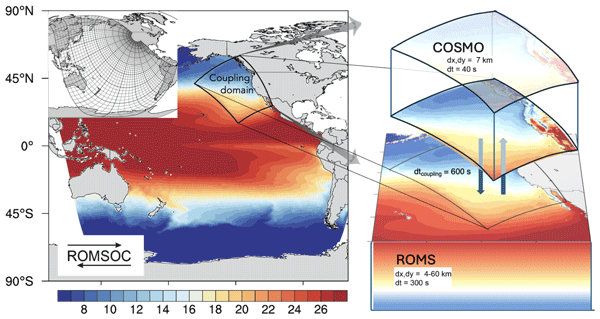
To realistically simulate small-scale processes in the atmosphere and ocean, such as clouds or mixing, high-resolution numerical models are needed. However, these models are computationally very demanding. Here, we present a recently developed atmosphere–ocean model which is able to resolve most of these processes and is less expensive to run due to its computational design. Our model can be used for a wide range of applications like the investigation of marine heatwaves or future projections.
Hugo Banderier, Christian Zeman, David Leutwyler, Stefan Rüdisühli, and Christoph Schär
Geosci. Model Dev., 17, 5573–5586, https://doi.org/10.5194/gmd-17-5573-2024, https://doi.org/10.5194/gmd-17-5573-2024, 2024
Short summary
Short summary
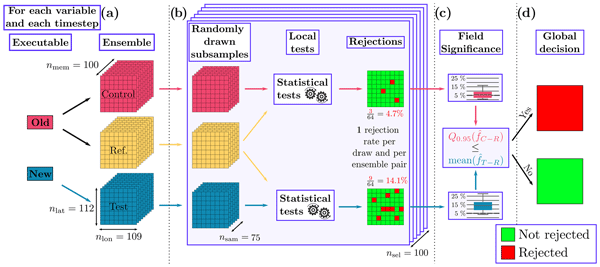
We investigate the effects of reduced-precision arithmetic in a state-of-the-art regional climate model by studying the results of 10-year-long simulations. After this time, the results of the reduced precision and the standard implementation are hardly different. This should encourage the use of reduced precision in climate models to exploit the speedup and memory savings it brings. The methodology used in this work can help researchers verify reduced-precision implementations of their model.
Bjorn Stevens, Stefan Adami, Tariq Ali, Hartwig Anzt, Zafer Aslan, Sabine Attinger, Jaana Bäck, Johanna Baehr, Peter Bauer, Natacha Bernier, Bob Bishop, Hendryk Bockelmann, Sandrine Bony, Guy Brasseur, David N. Bresch, Sean Breyer, Gilbert Brunet, Pier Luigi Buttigieg, Junji Cao, Christelle Castet, Yafang Cheng, Ayantika Dey Choudhury, Deborah Coen, Susanne Crewell, Atish Dabholkar, Qing Dai, Francisco Doblas-Reyes, Dale Durran, Ayoub El Gaidi, Charlie Ewen, Eleftheria Exarchou, Veronika Eyring, Florencia Falkinhoff, David Farrell, Piers M. Forster, Ariane Frassoni, Claudia Frauen, Oliver Fuhrer, Shahzad Gani, Edwin Gerber, Debra Goldfarb, Jens Grieger, Nicolas Gruber, Wilco Hazeleger, Rolf Herken, Chris Hewitt, Torsten Hoefler, Huang-Hsiung Hsu, Daniela Jacob, Alexandra Jahn, Christian Jakob, Thomas Jung, Christopher Kadow, In-Sik Kang, Sarah Kang, Karthik Kashinath, Katharina Kleinen-von Königslöw, Daniel Klocke, Uta Kloenne, Milan Klöwer, Chihiro Kodama, Stefan Kollet, Tobias Kölling, Jenni Kontkanen, Steve Kopp, Michal Koran, Markku Kulmala, Hanna Lappalainen, Fakhria Latifi, Bryan Lawrence, June Yi Lee, Quentin Lejeun, Christian Lessig, Chao Li, Thomas Lippert, Jürg Luterbacher, Pekka Manninen, Jochem Marotzke, Satoshi Matsouoka, Charlotte Merchant, Peter Messmer, Gero Michel, Kristel Michielsen, Tomoki Miyakawa, Jens Müller, Ramsha Munir, Sandeep Narayanasetti, Ousmane Ndiaye, Carlos Nobre, Achim Oberg, Riko Oki, Tuba Özkan-Haller, Tim Palmer, Stan Posey, Andreas Prein, Odessa Primus, Mike Pritchard, Julie Pullen, Dian Putrasahan, Johannes Quaas, Krishnan Raghavan, Venkatachalam Ramaswamy, Markus Rapp, Florian Rauser, Markus Reichstein, Aromar Revi, Sonakshi Saluja, Masaki Satoh, Vera Schemann, Sebastian Schemm, Christina Schnadt Poberaj, Thomas Schulthess, Cath Senior, Jagadish Shukla, Manmeet Singh, Julia Slingo, Adam Sobel, Silvina Solman, Jenna Spitzer, Philip Stier, Thomas Stocker, Sarah Strock, Hang Su, Petteri Taalas, John Taylor, Susann Tegtmeier, Georg Teutsch, Adrian Tompkins, Uwe Ulbrich, Pier-Luigi Vidale, Chien-Ming Wu, Hao Xu, Najibullah Zaki, Laure Zanna, Tianjun Zhou, and Florian Ziemen
Earth Syst. Sci. Data, 16, 2113–2122, https://doi.org/10.5194/essd-16-2113-2024, https://doi.org/10.5194/essd-16-2113-2024, 2024
Short summary
Short summary
To manage Earth in the Anthropocene, new tools, new institutions, and new forms of international cooperation will be required. Earth Virtualization Engines is proposed as an international federation of centers of excellence to empower all people to respond to the immense and urgent challenges posed by climate change.
Qinggang Gao, Christian Zeman, Jesus Vergara-Temprado, Daniela C. A. Lima, Peter Molnar, and Christoph Schär
Weather Clim. Dynam., 4, 189–211, https://doi.org/10.5194/wcd-4-189-2023, https://doi.org/10.5194/wcd-4-189-2023, 2023
Short summary
Short summary
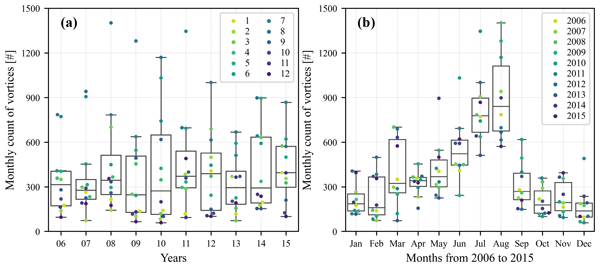
We developed a vortex identification algorithm for realistic atmospheric simulations. The algorithm enabled us to obtain a climatology of vortex shedding from Madeira Island for a 10-year simulation period. This first objective climatological analysis of vortex streets shows consistency with observed atmospheric conditions. The analysis shows a pronounced annual cycle with an increasing vortex shedding rate from April to August and a sudden decrease in September.
Oliver Douglas Levers, Dorien Herremans, Anurag Dipankar, and Lucienne Blessing
EGUsphere, https://doi.org/10.5194/egusphere-2022-234, https://doi.org/10.5194/egusphere-2022-234, 2022
Preprint withdrawn
Short summary
Short summary
Southeast Asia is a region which is very sensitive to climate change and has numerous islands and peninsulas which are not well resolved within many General Circulation Models (GCMs). Here, deep convolutional encoders are employed to increase the spatial resolution of climate model data (downscaling) and address systematic errors in model outputs (bias correction). Technique and region-specific issues are identified for surface temperature data and compared with other model outputs.
Praveen Kumar Pothapakula, Amelie Hoff, Anika Obermann-Hellhund, Timo Keber, and Bodo Ahrens
Earth Syst. Dynam. Discuss., https://doi.org/10.5194/esd-2022-24, https://doi.org/10.5194/esd-2022-24, 2022
Preprint withdrawn
Short summary
Short summary
The Vb-cyclones simulated with a coupled regional climate model with two different driving data sets are compared against each other in historical period, thereafter the future climate predictions were analyzed. The Vb-cyclones in two simulations agree well in terms of their occurrence, intensity and track in two simulations, though there are discrepancies in seasonal cycles and their process linking Mediterranean Sea in historical period. So significant changes were observed in the future.
James M. Done, Gary M. Lackmann, and Andreas F. Prein
Weather Clim. Dynam., 3, 693–711, https://doi.org/10.5194/wcd-3-693-2022, https://doi.org/10.5194/wcd-3-693-2022, 2022
Short summary
Short summary
We know that warm oceans generally favour tropical cyclones (TCs). Less is known about the role of air temperature above the oceans extending into the lower stratosphere. Our global analysis of historical records and computer simulations suggests that TCs strengthen in response to historical temperature change while also being influenced by other environmental factors. Ocean warming drives much of the strengthening, with relatively small contributions from temperature changes aloft.
Christian Zeman and Christoph Schär
Geosci. Model Dev., 15, 3183–3203, https://doi.org/10.5194/gmd-15-3183-2022, https://doi.org/10.5194/gmd-15-3183-2022, 2022
Short summary
Short summary
Our atmosphere is a chaotic system, where even a tiny change can have a big impact. This makes it difficult to assess if small changes, such as the move to a new hardware architecture, will significantly affect a weather and climate model. We present a methodology that allows to objectively verify this. The methodology is applied to several test cases, showing a high sensitivity. Results also show that a major system update of the underlying supercomputer did not significantly affect our model.
Cited articles
Ahlgrimm, M. and Forbes, R.: The impact of low clouds on surface shortwave radiation in the ECMWF model, Mon. Weather Rev., 140, 3783–3794, 2012. a
Argüeso, D., Di Luca, A., and Evans, J. P.: Precipitation over urban areas in the western Maritime Continent using a convection-permitting model, Clim. Dynam., 47, 1143–1159, 2016. a
Asensio, H., Messmer, M., Lüthi, D., and Osterried, K.: External Parameters for Numerical Weather Prediction and Climate Application EXTPAR v5_0, User and Implementation Guide, http://www.cosmo-model.org/content/support/software/ethz/EXTPAR_user_and_implementation_manual_202003.pdf (last access: 16 November 2018), 2020. a
Aurela, M., Tuovinen, J.-P., Hatakka, J., Lohila, A., Mäkelä, T., Rainne, J., and Lauria, T.: FLUXNET2015 FI-Sod Sodankyla [data set], https://doi.org/10.18140/FLX/1440160, 2001–2014. a
Ban, N., Brisson, E., Caillaud, C., Coppola, E., Pichelli, E., Sobolowski, S., Adinolfi, M., Ahrens, B., Alias, A., Anders, I., Bastin, S., Belusic, D., Berthou, S., Cardoso, R., Chan, S., Christensen, O., Fernandez, J., Fita, L., Frisius, T., and Goergen, K.: The first multi-model ensemble of regional climate simulations at kilometer-scale resolution, part I: evaluation of precipitation, Clim. Dynam., 57, 275–302, 2021. a
Barlage, M., Chen, F., Rasmussen, R., Zhang, Z., and Miguez-Macho, G.: The importance of scale-dependent groundwater processes in land-atmosphere interactions over the central United States, Geophys. Res. Lett., 48, e2020GL092171, https://doi.org/10.1029/2020gl092171, 2021. a, b, c
Brown, A., Dowdy, A., and Lane, T. P.: Convection-permitting climate model representation of severe convective wind gusts and future changes in southeastern Australia, Nat. Hazards Earth Syst. Sci., 24, 3225–3243, https://doi.org/10.5194/nhess-24-3225-2024, 2024. a
Chu, H., Christianson, D. S., Cheah, Y.-W., Pastorello, G., O’Brien, F., Geden, J., Ngo, S.-T., Hollowgrass, R., Leibowitz, K., Beekwilder, N. F., Sandesh, M., Dengel, S., Chan, S. W., Santos, A., Delwiche, K., Yi, K., Buechner, C., Baldocchi, D., Papale, D., Keenan, T. F., Biraud, S. C., Agarwal, D. A., and Torn, M. S.: AmeriFlux BASE data pipeline to support network growth and data sharing, Sci. Data, 10, 614, https://doi.org/10.1038/s41597-023-02531-2, 2023. a
Clark, P., Roberts, N., Lean, H., Ballard, S. P., and Charlton-Perez, C.: Convection-permitting models: A step-change in rainfall forecasting, Meteorol. Appl., 23, 165–181, 2016. a
Dee, D. P., Uppala, S. M., Simmons, A. J., Berrisford, P., Poli, P., Kobayashi, S., Andrae, U., Balmaseda, M. A., Balsamo, G., Bauer, P., Bechtold, P., Beljaars, A. C. M., van de Berg, L., Bidlot, J., Bormann, N., Delsol, C., Dragani, R., Fuentes, M., Geer, A. J., Haimberger, L., Healy, S. B., Hersbach, H., Hólm, E. V., Isaksen, L., Kållberg, P., Köhler, M., Matricardi, M., McNally, A. P., Monge-Sanz, B. M., Morcrette, J., Park, B., Peubey, C., de Rosnay, P., Tavolato, C., Thépaut, J., and Vitart, F.: The ERA-Interim reanalysis: Configuration and performance of the data assimilation system, Q. J. Roy. Meteor. Soc., 137, 553–597, https://doi.org/10.1002/qj.828, 2011. a
DeMott, C. A., Klingaman, N. P., and Woolnough, S. J.: Atmosphere-ocean coupled processes in the Madden-Julian oscillation, Rev. Geophys., 53, 1099–1154, 2015. a
Deser, C., Phillips, A., Bourdette, V., and Teng, H.: Uncertainty in climate change projections: the role of internal variability, Clim. Dynam., 38, 527–546, 2012. a
Dipankar, A.: EXCLAIM use cases, Zenodo [code], https://doi.org/10.5281/zenodo.17250248, 2025. a, b, c
Dipankar, A., Bianco, M., Bukenberger, M., Ehrengruber, T., Farabullini, N., Gopal, A., Hupp, D., Jocksch, A., Kellerhals, S., Kroll, C. A., Lapillonne, X., Leclair, M., Luz, M., Müller, C., Ong, C. R., Osuna, C., Pothapakula, P., Röthlin, M., Sawyer, W., Serafini, G., Vogt, H., Weber, B., and Schulthess, T.: Toward Exascale Climate Modelling: A Python DSL Approach to ICON’s (Icosahedral Non-hydrostatic) Dynamical Core (icon-exclaim v0.2.0), EGUsphere [preprint], https://doi.org/10.5194/egusphere-2025-4808, 2025. a
Dipankar, A., Bianco, M., Bukenberger, M., Ehrengruber, T., Farabullini, N., Fuhrer, O., Gopal, A., Hupp, D., Jocksch, A., Kellerhals, S., Kroll, C. A., Lapillonne, X., Leclair, M., Luz, M., Müller, C., Ong, C. R., Osuna, C., Pothapakula, P., Prein, A., Röthlin, M., Sawyer, W., Schär, C., Schemm, S., Serafini, G., Vogt, H., Weber, B., Wills, R. C. J., Gruber, N., and Schulthess, T. C.: Toward exascale climate modelling: a python DSL approach to ICON's (icosahedral non-hydrostatic) dynamical core (icon-exclaim v0.2.0), Geoscientific Model Development, 19, 713–729, https://doi.org/10.5194/gmd-19-713-2026, 2026. a, b, c, d, e, f
Dominguez, F., Rasmussen, R., Liu, C., Ikeda, K., Prein, A., Varble, A., Arias, P. A., Bacmeister, J., Bettolli, M. L., Callaghan, P., Carvalho, L. M. V., Castro, C. L., Chen, F., Chug, D., Chun, K. P. S., Dai, A., Danaila, L., da Rocha, R. P., de Lima Nascimento, E., Dougherty, E., Dudhia, J., Eidhammer, T., Feng, Z., Fita, L., Fu, R., Giles, J., Gilmour, H., Halladay, K., Huang, Y., Wong, A. M. I., Lagos-Zúñiga, M. , Jones, C., Llamocca, J., Llopart, M., Martinez, J. A., Martinez, J. C., Minder, J. R., Morrison, M., Moon, Z. L., Mu, Y., Neale, R. B., Núñez Ocasio, K. M., Pal, S., Potter, E., Poveda, G., Puhales, F., Rasmussen, K. L., Rehbein, A., Rios-Berrios, R., Risanto, C. B., Rosales, A., Scaff, L., Seimon, A., Somos-Valenzuela, M., Tian, Y., Van Oevelen, P., Veloso-Aguila, D., Xue, L., and Schneider, T.: Advancing South American water and climate science through multidecadal convection-permitting modeling, B. Am. Meteorol. Soc., 105, E32–E44, 2024. a, b, c
Donahue, A. S., Caldwell, P. M., Bertagna, L., Beydoun, H., Bogenschutz, P. A., Bradley, A. M., Clevenger, T. C., Foucar, J., Golaz, C., Guba, O., Hannah, W., Hillman, B. R., Johnson, J. N., Keen, N., Lin, W., Singh, B., Sreepathi, S., Taylor, M. A., Tian, J., Terai, C. R., Ullrich, P. A., Yuan, X., and Zhang, Y.: To exascale and beyond – The Simple Cloud-Resolving E3SM Atmosphere Model (SCREAM), a performance portable global atmosphere model for cloud-resolving scales, J. Adv. Model. Earth Sy., 16, e2024MS004314, https://doi.org/10.1029/2024ms004314, 2024. a, b
Donat, M. G., Lowry, A. L., Alexander, L. V., O’Gorman, P. A., and Maher, N.: More extreme precipitation in the world’s dry and wet regions, Nat. Clim. Change, 6, 508–513, 2016. a
Dunn, R. J. H.: HadISD.3.4.0: Product User Guide, Met Office Hadley Centre, Exeter, UK, version 3.4.0 (2023f) of the HadISD dataset, updated 12 January 2024, https://hadleyserver.metoffice.gov.uk/hadisd/hadisd_v340_2023f_product_user_guide.pdf (last access: 27 May 2026), 2024. a
Dunn, R. J. H., Willett, K. M., Parker, D. E., and Mitchell, L.: Expanding HadISD: quality-controlled, sub-daily station data from 1931, Geosci. Instrum. Method. Data Syst., 5, 473–491, https://doi.org/10.5194/gi-5-473-2016, 2016. a, b
Feng, Z., Prein, A. F., Kukulies, J., Fiolleau, T., Jones, W. K., Maybee, B., Moon, Z. L., Núñez Ocasio, K. M., Dong, W., Molina, M. J., Albright, M. G., Rajagopal, M., Robledo, V., Song, J., Song, F., Leung, L. R., Varble, A. C., Klein, C., Roca, R., Feng, R., and Mejia, J. F.: Mesoscale convective systems tracking method intercomparison (MCSMIP): Application to DYAMOND global km-scale simulations, J. Geophys. Res.-Atmos., 130, e2024JD042204, https://doi.org/10.1029/2024jd042204, 2025. a, b, c, d
Gahtan, J., Knapp, K. R., Schreck, C. J. I., Diamond, H. J., Kossin, J. P., and Kruk, M. C.: International Best Track Archive for Climate Stewardship (IBTrACS) Project, Version 4.01, NOAA National Centers for Environmental Information [data set], https://doi.org/10.25921/82ty-9e16, 2024. a, b
Gentry, M. S. and Lackmann, G. M.: Sensitivity of simulated tropical cyclone structure and intensity to horizontal resolution, Mon. Weather Rev., 138, 688–704, 2010. a
Giorgetta, M. A., Sawyer, W., Lapillonne, X., Adamidis, P., Alexeev, D., Clément, V., Dietlicher, R., Engels, J. F., Esch, M., Franke, H., Frauen, C., Hannah, W. M., Hillman, B. R., Kornblueh, L., Marti, P., Norman, M. R., Pincus, R., Rast, S., Reinert, D., Schnur, R., Schulzweida, U., and Stevens, B.: The ICON-A model for direct QBO simulations on GPUs (version icon-cscs:baf28a514), Geosci. Model Dev., 15, 6985–7016, https://doi.org/10.5194/gmd-15-6985-2022, 2022. a
Giorgi, F. and Gutowski Jr., W. J.: Regional dynamical downscaling and the CORDEX initiative, Annu. Rev. Environ. Resour., 40, 467–490, 2015. a
Giorgi, F., Jones, C., and Asrar, G. R.: Addressing climate information needs at the regional level: the CORDEX framework, World Meteorological Organization (WMO) Bulletin, 58, 175, ISSN 0042-9767, 2009. a
Grasselt, R., Schuttemeyer, D., Warrach-Sagi, K., Ament, F., and Simmer, C.: Validation of TERRA-ML with discharge measurements, Meteorol. Z., 17, 763, https://doi.org/10.1127/0941-2948/2008/0334, 2008. a
Guilloteau, C. and Foufoula-Georgiou, E.: Multiscale evaluation of satellite precipitation products: Effective resolution of IMERG, in: Satellite Precipitation Measurement: Volume 2, Springer, 533–558, https://doi.org/10.1007/978-3-030-35798-6_5, 2020. a
Gutmann, E. D., Rasmussen, R. M., Liu, C., Ikeda, K., Bruyere, C. L., Done, J. M., Garrè, L., Friis-Hansen, P., and Veldore, V.: Changes in hurricanes from a 13-yr convection-permitting pseudo–global warming simulation, J. Climate, 31, 3643–3657, 2018. a
Hayden, L. and Liu, C.: Differences in the diurnal variation of precipitation estimated by spaceborne radar, passive microwave radiometer, and IMERG, J. Geophys. Res.-Atmos., 126, e2020JD033020, https://doi.org/10.1029/2020jd033020, 2021. a
He, J., Hong, L., Shao, C., and Tang, W.: Global evaluation of simulated surface shortwave radiation in CMIP6 models, Atmos. Res., 292, 106896, https://doi.org/10.1016/j.atmosres.2023.106896, 2023. a
Hersbach, H., Bell, B., Berrisford, P., Biavati, G., Horányi, A., Muñoz Sabater, J., Nicolas, J., Peubey, C., Radu, R., Rozum, I., Schepers, D., Simmons, A., Soci, C., Dee, D., and Thépaut, J.-N.: ERA5 hourly data on single levels from 1940 to present, Copernicus Climate Change Service (C3S) Climate Data Store (CDS) [data set], https://doi.org/10.24381/cds.adbb2d47, 2023. a
Hohenegger, C., Brockhaus, P., Bretherton, C. S., and Schär, C.: The soil moisture–precipitation feedback in simulations with explicit and parameterized convection, J. Climate, 22, 5003–5020, 2009. a
Hohenegger, C., Korn, P., Linardakis, L., Redler, R., Schnur, R., Adamidis, P., Bao, J., Bastin, S., Behravesh, M., Bergemann, M., Biercamp, J., Bockelmann, H., Brokopf, R., Brüggemann, N., Casaroli, L., Chegini, F., Datseris, G., Esch, M., George, G., Giorgetta, M., Gutjahr, O., Haak, H., Hanke, M., Ilyina, T., Jahns, T., Jungclaus, J., Kern, M., Klocke, D., Kluft, L., Kölling, T., Kornblueh, L., Kosukhin, S., Kroll, C., Lee, J., Mauritsen, T., Mehlmann, C., Mieslinger, T., Naumann, A. K., Paccini, L., Peinado, A., Praturi, D. S., Putrasahan, D., Rast, S., Riddick, T., Roeber, N., Schmidt, H., Schulzweida, U., Schütte, F., Segura, H., Shevchenko, R., Singh, V., Specht, M., Stephan, C. C., von Storch, J.-S., Vogel, R., Wengel, C., Winkler, M., Ziemen, F., Marotzke, J., and Stevens, B.: ICON-Sapphire: simulating the components of the Earth system and their interactions at kilometer and subkilometer scales, Geosci. Model Dev., 16, 779–811, https://doi.org/10.5194/gmd-16-779-2023, 2023. a
Huffman, G. J., Bolvin, D. T., Joyce, R., Kelley, O. A., Nelkin, E. J., Tan, J., Watters, D. C., and West, B. J.: Integrated Multi-satellitE Retrievals for GPM (IMERG) Technical Documentation, NASA Goddard Space Flight Center, version 07, https://gpm.nasa.gov/sites/default/files/2023-07/IMERG_TechnicalDocumentation_final_230713.pdf (last access: 28 May 2026), 2023a. a
Huffman, G. J., Stocker, E. F., Bolvin, D. T., Nelkin, E. J., and Tan, J.: Title: GPM IMERG Final Precipitation L3 Half Hourly 0.1 degree x 0.1 degree V07Version, Goddard Earth Sciences Data and Information Services Center (GES DISC) [data set], https://doi.org/10.5067/GPM/IMERG/3B-HH/07, 2023b. a
Ikeda, K., Rasmussen, R., Liu, C., Newman, A., Chen, F., Barlage, M., Gutmann, E., Dudhia, J., Dai, A., Luce, C., and Musselman, K.: Snowfall and snowpack in the Western US as captured by convection permitting climate simulations: Current climate and pseudo global warming future climate, Clim. Dynam., 57, 2191–2215, 2021. a
IPCC: Climate Change 2023: Synthesis Report. Contribution of Working Groups I, II and III to the Sixth Assessment Report of the Intergovernmental Panel on Climate Change, Intergovernmental Panel on Climate Change (IPCC), Geneva, Switzerland, https://doi.org/10.59327/IPCC/AR6-9789291691647, 2023. a, b
Janowiak, J., Joyce, B., and Xie, P.: NCEP/CPC L3 Half Hourly 4km global (60S–60N) Merged IR V1. Greenbelt, MD, Goddard Earth Sciences Data and Information Services Center (GES DISC) [data set], https://doi.org/10.5067/P4HZB9N27EKU, 2017. a, b, c
Judt, F. and Rios-Berrios, R.: Resolved convection improves the representation of equatorial waves and tropical rainfall variability in a global nonhydrostatic model, Geophys. Res. Lett., 48, e2021GL093265, https://doi.org/10.1029/2021gl093265, 2021. a, b
Judt, F., Klocke, D., Rios-Berrios, R., Vanniere, B., Ziemen, F., Auger, L., Biercamp, J., Bretherton, C., Chen, X., Düben, P., Hohenegger, C., Khairoutdinov, M., Kodama, C., Kornblueh, L., Lin, S.-J., Nakano, M., Neumann, P., Putman, W., Röber, N., Roberts, M., Satoh, M., Shibuya, R., Stevens, B., Vidale, P. L., Wedi, N., and Zhou, L.: Tropical cyclones in global storm-resolving models, J. Meteor. Soc. Jpn. Ser. II, 99, 579–602, 2021. a
Jung, H. and Knippertz, P.: Link between the time-space behavior of rainfall and 3d dynamical structures of equatorial waves in global convection-permitting simulations, Geophys. Res. Lett., 50, e2022GL100973, https://doi.org/10.1029/2022gl100973, 2023. a, b
Kendon, E., Prein, A. F., Senior, C., and Stirling, A.: Challenges and outlook for convection-permitting climate modelling, Philos. T. Roy. Soc. A, 379, 20190547, https://doi.org/10.1175/bams-d-15-0004.1, 2021. a
Kiladis, G. N., Wheeler, M. C., Haertel, P. T., Straub, K. H., and Roundy, P. E.: Convectively coupled equatorial waves, Rev. Geophys., 47, https://doi.org/10.1029/2008RG000266, 2009. a, b
Kinne, S.: The MACv2 aerosol climatology, Tellus B, 71, 1–21, 2019. a
Klocke, D., Frauen, C., Engels, J. F., Alexeev, D., Redler, R., Schnur, R., Haak, H., Kornblueh, L., Brüggemann, N., Chegini, F., Römmer, M., Hoffmann, L., Griessbach, S., Bode, M., Coles, J., Gila, M., Sawyer, W., Calotoiu, A., Budanaz, Y., Mazumder, P., Copik, M., Weber, B., Herten, A., Bockelmann, H., Hoefler, T., Hohenegger, C., and Stevens, B.: Computing the Full Earth System at 1km Resolution, in: Proceedings of the International Conference for High Performance Computing, Networking, Storage and Analysis, 125–136, https://doi.org/10.1145/3712285.3771789, 2025. a
Knaff, J. A. and Zehr, R. M.: Reexamination of tropical cyclone wind–pressure relationships, Weather Forecast., 22, 71–88, 2007. a
Knapp, K. R., Kruk, M. C., Levinson, D. H., Diamond, H. J., and Neumann, C. J.: The international best track archive for climate stewardship (IBTrACS) unifying tropical cyclone data, B. Am. Meteorol. Soc., 91, 363–376, 2010. a
Lange, S.: EartH2Observe, WFDEI and ERA-Interim Data Merged and Bias-Corrected for ISIMIP (EWEMBI), https://doi.org/10.5880/pik.2016.004, 2016. a
Lange, S.: Bias correction of surface downwelling longwave and shortwave radiation for the EWEMBI dataset, Earth Syst. Dynam., 9, 627–645, https://doi.org/10.5194/esd-9-627-2018, 2018. a, b
Langendijk, G., Rechid, D., Sieck, K., and Jacob, D.: Added value of convection-permitting simulations for understanding future urban humidity extremes: case studies for Berlin and its surroundings, Weather Climate Extremes, 33, 100367, https://doi.org/10.1016/j.wace.2021.100367, 2021. a
Lee, J. and Hohenegger, C.: Weaker land–atmosphere coupling in global storm-resolving simulation, P. Natl. Acad. Sci. USA, 121, e2314265121, https://doi.org/10.1073/pnas.2314265121, 2024. a
Liebmann, B. and Smith, C. A.: Description of a Complete (Interpolated) Outgoing Longwave Radiation Dataset, B. Am. Meteorol. Soc., 77, 1275–1277, https://doi.org/10.1175/1520-0477-77.6.1274, 1996. a, b, c
Liu, C., Ikeda, K., Rasmussen, R., Barlage, M., Newman, A. J., Prein, A. F., Chen, F., Chen, L., Clark, M., Dai, A., Dudhia, J., Eidhammer, T., Gochis, D., Gutmann, E., Kurkute, S., Li, Y., Thompson, G., and Yates, D.: Continental-scale convection-permitting modeling of the current and future climate of North America, Clim. Dynam., 49, 71–95, 2017. a
Lucas-Picher, P., Argüeso, D., Brisson, E., Tramblay, Y., Berg, P., Lemonsu, A., Kotlarski, S., and Caillaud, C.: Convection-permitting modeling with regional climate models: Latest developments and next steps, Wires Clim. Change, 12, e731, https://doi.org/10.1007/s00382-022-06637-y, 2021. a
Lucas-Picher, P., Brisson, E., Caillaud, C., Alias, A., Nabat, P., Lemonsu, A., Poncet, N., Cortés Hernandez, V. E., Michau, Y., Doury, A., Monteiro, D., and Somot, S.: Evaluation of the convection-permitting regional climate model CNRM-AROME41t1 over Northwestern Europe, Clim. Dynam., 62, 4587–4615, 2024. a, b
Mapes, B., Tulich, S., Lin, J., and Zuidema, P.: The mesoscale convection life cycle: Building block or prototype for large-scale tropical waves?, Dynam. Atmos. Oceans, 42, 3–29, 2006. a
Merchant, C. J., Embury, O., Bulgin, C. E., Block, T., Corlett, G. K., Fiedler, E., Good, S. A., Mittaz, J., Rayner, N. A., Berry, D., Eastwood, S., Taylor, M., Tsushima, Y., Waterfall, A., Wilson, R., and Donlon, C.: Satellite-based time-series of sea-surface temperature since 1981 for climate applications, Sci. Data, 6, 223, https://doi.org/10.1038/s41597-019-0236-x, 2019. a
Miura, H., Satoh, M., Tomita, H., Noda, A. T., Nasuno, T., and Iga, S.-I.: A short-duration global cloud-resolving simulation with a realistic land and sea distribution, Geophys. Res. Lett., 34, https://doi.org/10.1029/2006gl027448, 2007b. a
Miura, H., Suematsu, T., Kawai, Y., Yamagami, Y., Takasuka, D., Takano, Y., Hung, C.-S., Yamazaki, K., Kodama, C., Kajikawa, Y., and Masumoto, Y.: Asymptotic matching between weather and climate models, B. Am. Meteorol. Soc., 104, E2308–E2315, 2023. a
Nakamura, Y. and Takayabu, Y. N.: Convective couplings with equatorial Rossby waves and equatorial Kelvin waves. Part I: Coupled wave structures, J. Atmos. Sci., 79, 247–262, 2022. a
Nasuno, T., Tomita, H., Iga, S., Miura, H., and Satoh, M.: Convectively coupled equatorial waves simulated on an aquaplanet in a global nonhydrostatic experiment, J. Atmos. Sci., 65, 1246–1265, 2008. a
North, R. C., Mittermaier, M. P., and Milton, S. F.: Using SEEPS with a TRMM-derived climatology to assess global NWP precipitation forecast skill, Mon. Weather Rev., 150, 135–155, 2022. a
Ortega, S., Segura, H., Mayta, V. C., Fiévet, R., Bravo, A. P., Lee, J., Giorgetta, M. A., and Stevens, B.: Convectively Coupled Equatorial Waves in a Global Storm-Resolving Model, Authorea [preprint], https://doi.org/10.22541/essoar.177046512.21613885/v1, 2026. a
Paredes, E. G., Groner, L., Ubbiali, S., Vogt, H., Madonna, A., Mariotti, K., Cruz, F., Benedicic, L., Bianco, M., Vande- Vondele, J., and Schulthess, T. C.: Gt4py: High performance stencils for weather and climate applications using python, arXiv [preprint], https://doi.org/10.48550/arXiv.2311.08322, 2023. a
Pastorello, G., Trotta, C., Canfora, E., Chu, H., Christianson, D., Cheah, Y.-W., Poindexter, C., Chen, J., Elbashandy, A., Humphrey, M., et al.: The FLUXNET2015 dataset and the ONEFlux processing pipeline for eddy covariance data, Sci. Data, 7, 225, https://doi.org/10.1038/s41597-020-0534-3, 2020. a, b
Perkins-Kirkpatrick, S. and Lewis, S.: Increasing trends in regional heatwaves, Nat. Commun., 11, 3357, https://doi.org/10.1038/s41467-020-16970-7, 2020. a
Pichelli, E., Coppola, E., Sobolowski, S., Ban, N., Giorgi, F., Stocchi, P., Alias, A., Beluši´c, D., Berthou, S., Caillaud, C., Cardoso, R. M., Chan, S., Christensen, O. B., Dobler, A., de Vries, H., Goergen, K., Kendon, E. J., Keuler, K., Lenderink, G., Lorenz, T., Mishra, A. N., Panitz, H.-J., Schär, C., Soares, P. M. M., Truhetz, H., and Vergara-Temprado, J.: The first multi-model ensemble of regional climate simulations at kilometer-scale resolution part 2: historical and future simulations of precipitation, Clim. Dynam., 56, 3581–3602, 2021. a
Pothapakula, P. K., Prein, A. F., Sunkisala, A., and Dipankar, A.: Global Monsoon in ICON: The Scale-Dependent Response of Northern Hemisphere Monsoons, EGUsphere [preprint], https://doi.org/10.5194/egusphere-2026-782, 2026. a
Prein, A.: andreas-prein/icon2.5_dyamond3_paper: vo.1.0.0, Zenodo [code], https://doi.org/10.5281/zenodo.18007290, 2025. a
Prein, A. F.: Thunderstorm straight line winds intensify with climate change, Nat. Clim. Change, 13, 1353–1359, 2023. a
Prein, A. F.: Data used in the publication: From Single Storms to Global Waves: A Global 2.5 km ICON Simulation of Weather and Climate, figshare [data set], https://doi.org/10.6084/m9.figshare.31341982, 2026. a, b
Prein, A. F. and Gobiet, A.: Impacts of uncertainties in European gridded precipitation observations on regional climate analysis, Int. J. Climatol., 37, 305–327, 2017. a
Prein, A. F., Langhans, W., Fosser, G., Ferrone, A., Ban, N., Goergen, K., Keller, M., Tölle, M., Gutjahr, O., Feser, F., Brisson, E., Kollet, S., Schmidli, J., van Lipzig, N. P. M., and Leung, R.: A review on regional convection-permitting climate modeling: Demonstrations, prospects, and challenges, Rev. Geophys., 53, 323–361, 2015. a, b, c
Prein, A. F., Rasmussen, R. M., Ikeda, K., Liu, C., Clark, M. P., and Holland, G. J.: The future intensification of hourly precipitation extremes, Nat. Clim. Change, 7, 48–52, 2017. a
Prein, A. F., Liu, C., Ikeda, K., Bullock, R., Rasmussen, R. M., Holland, G. J., and Clark, M.: Simulating North American mesoscale convective systems with a convection-permitting climate model, Clim. Dynam., 55, 95–110, 2020. a
Prein, A. F., Rasmussen, R., Wang, D., and Giangrande, S.: Sensitivity of organized convective storms to model grid spacing in current and future climates, Philos. T. Roy. Soc. A, 379, 20190546, https://doi.org/10.1098/rsta.2019.0546, 2021. a
Prein, A. F., Ge, M., Valle, A. R., Wang, D., and Giangrande, S. E.: Towards a unified setup to simulate mid-latitude and tropical mesoscale convective systems at kilometer-scales, Earth Space Sci., 9, e2022EA002295, https://doi.org/10.1029/2022EA002295, 2022. a
Prein, A. F., Ban, N., Ou, T., Tang, J., Sakaguchi, K., Collier, E., Jayanarayanan, S., Li, L., Sobolowski, S., Chen, X., Zhou, X., Lai, H.-W., Sugimoto, S., Zou, L., Hasson, S. u., Ekstrom, M., Pothapakula, P. K., Stuart, R., Steen-Larsen, H. C., Leung, R., Belusic, D., Kukulies, J., Curio, J., and Chen, D.: Towards ensemble-based kilometer-scale climate simulations over the third pole region, Clim. Dynam., 60, 4055–4081, 2023a. a
Prein, A. F., Mooney, P. A., and Done, J. M.: The multi-scale interactions of atmospheric phenomenon in mean and extreme precipitation, Earth's Future, 11, e2023EF003534, https://doi.org/10.1029/2023ef003534, 2023b. a, b, c, d
Prein, A. F., Feng, Z., fiolleau, T., Moon, Z., Ocasio, K. M. N., Kukulies, J., Roca, R., Varble, A., Rehbein, A., Liu, C., Ikeda, K., Mu, Y., and Rasmussen, R.: Km-scale simulations of mesoscale convective systems over South America – A feature tracker intercomparison, J. Geophys. Res.-Atmos., 129, e2023JD040254, https://doi.org/10.1029/2023JD040254, 2024. a, b
Rackow, T., Pedruzo-Bagazgoitia, X., Becker, T., Milinski, S., Sandu, I., Aguridan, R., Bechtold, P., Beyer, S., Bidlot, J., Boussetta, S., Deconinck, W., Diamantakis, M., Dueben, P., Dutra, E., Forbes, R., Ghosh, R., Goessling, H. F., Hadade, I., Hegewald, J., Jung, T., Keeley, S., Kluft, L., Koldunov, N., Koldunov, A., Kölling, T., Kousal, J., Kühnlein, C., Maciel, P., Mogensen, K., Quintino, T., Polichtchouk, I., Reuter, B., Sármány, D., Scholz, P., Sidorenko, D., Streffing, J., Sützl, B., Takasuka, D., Tietsche, S., Valentini, M., Vannière, B., Wedi, N., Zampieri, L., and Ziemen, F.: Multi-year simulations at kilometre scale with the Integrated Forecasting System coupled to FESOM2.5 and NEMOv3.4, Geosci. Model Dev., 18, 33–69, https://doi.org/10.5194/gmd-18-33-2025, 2025. a
Raschendorfer, M., Simmer, C., and Gross, P.: Parameterisation of turbulent transport in the atmosphere, in: Dynamics of multiscale earth systems, Springer, 167–185, ISBN 9783540417965, 2003. a
Roberts, M. J., Camp, J., Seddon, J., Vidale, P. L., Hodges, K., Vanniere, B., Mecking, J., Haarsma, R., Bellucci, A., Scoccimarro, E., Caron, L.-P., Chauvin, F., Terray, L., Valcke, S., Moine, M.-P., Putrasahan, D., Roberts, C., Senan, R., Zarzycki, C., and Ullrich, P.: Impact of model resolution on tropical cyclone simulation using the HighResMIP–PRIMAVERA multimodel ensemble, J. Climate, 33, 2557–2583, 2020. a
Sato, T., Miura, H., Satoh, M., Takayabu, Y. N., and Wang, Y.: Diurnal cycle of precipitation in the tropics simulated in a global cloud-resolving model, J. Climate, 22, 4809–4826, 2009. a
Satoh, M., Matsuno, T., Tomita, H., Miura, H., Nasuno, T., and Iga, S.-I.: Nonhydrostatic icosahedral atmospheric model (NICAM) for global cloud resolving simulations, J. Comput. Phys., 227, 3486–3514, 2008. a
Savre, J. and Craig, G.: Fitting cumulus cloud size distributions from idealized cloud resolving model simulations, J. Adv. Model. Earth Sy., 15, e2022MS003360, https://doi.org/10.1029/2022ms003360, 2023. a
Schär, C., Leuenberger, D., Fuhrer, O., Lüthi, D., and Girard, C.: A new terrain-following vertical coordinate formulation for atmospheric prediction models, Mon. Weather Rev., 130, 2459–2480, 2002. a
Schär, C., Fuhrer, O., Arteaga, A., Ban, N., Charpilloz, C., Di Girolamo, S., Hentgen, L., Hoefler, T., Lapillonne, X., Leutwyler, D., Osterried, K., Panosetti, D., Rüdisühli, S., Schlemmer, L., Schulthess, T. C., Sprenger, M., Ubbiali, S., and Wernli, H.: Kilometer-scale climate models: Prospects and challenges, B. Am. Meteorol. Soc., 101, E567–E587, 2020. a, b
Schellekens, J., Dutra, E., Martínez-de la Torre, A., Balsamo, G., van Dijk, A., Sperna Weiland, F., Minvielle, M., Calvet, J.-C., Decharme, B., Eisner, S., Fink, G., Flörke, M., Peßenteiner, S., van Beek, R., Polcher, J., Beck, H., Orth, R., Calton, B., Burke, S., Dorigo, W., and Weedon, G. P.: A global water resources ensemble of hydrological models: the eartH2Observe Tier-1 dataset, Earth Syst. Sci. Data, 9, 389–413, https://doi.org/10.5194/essd-9-389-2017, 2017. a
Schenkel, B. A. and Hart, R. E.: An examination of tropical cyclone position, intensity, and intensity life cycle within atmospheric reanalysis datasets, J. Climate, 25, 3453–3475, 2012. a
Schmidli, J., Böing, S., and Fuhrer, O.: Accuracy of simulated diurnal valley winds in the Swiss Alps: Influence of grid resolution, topography filtering, and land surface datasets, Atmosphere, 9, 196, https://doi.org/10.3390/atmos9050196, 2018. a
Schrodin, R. and Heise, E.: The multi-layer version of the DWD soil model TERRA_LM, DWD Offenbach, Germany, https://doi.org/10.5676/DWD_pub/nwv/cosmo-tr_2, 2001. a
Schulz, J.-P. and Vogel, G.: Improving the processes in the land surface scheme TERRA: Bare soil evaporation and skin temperature, Atmosphere, 11, 513, https://doi.org/10.3390/atmos11050513, 2020. a
Segura, H. and Hohenegger, C.: How do the tropics precipitate? Daily variations in precipitation and cloud distribution, J. Meteor. Soc. Jpn. Ser. II, 102, 525–537, 2024. a
Segura, H., Hohenegger, C., Wengel, C., and Stevens, B.: Learning by doing: Seasonal and diurnal features of tropical precipitation in a global-coupled storm-resolving model, Geophys. Res. Lett., 49, e2022GL101796, https://doi.org/10.1029/2022gl101796, 2022. a, b
Segura, H., Bayley, C., Fievét, R., Glöckner, H., Günther, M., Kluft, L., Naumann, A. K., Ortega, S., Praturi, D. S., Rixen, M., Schmidt, H., Winkler, M., Hohenegger, C., and Stevens, B.: A single tropical rainbelt in global storm-resolving models: The role of surface heat fluxes over the warm pool, J. Adv. Model. Earth Sy., 17, e2024MS004897, https://doi.org/10.1029/2024ms004897, 2025a. a, b, c
Segura, H., Pedruzo-Bagazgoitia, X., Weiss, P., Müller, S. K., Rackow, T., Lee, J., Dolores-Tesillos, E., Benedict, I., Aengenheyster, M., Aguridan, R., Arduini, G., Baker, A. J., Bao, J., Bastin, S., Baulenas, E., Becker, T., Beyer, S., Bockelmann, H., Brüggemann, N., Brunner, L., Cheedela, S. K., Das, S., Denissen, J., Dragaud, I., Dziekan, P., Ekblom, M., Engels, J. F., Esch, M., Forbes, R., Frauen, C., Freischem, L., García-Maroto, D., Geier, P., Gierz, P., González-Cervera, Á., Grayson, K., Griffith, M., Gutjahr, O., Haak, H., Hadade, I., Haslehner, K., ul Hasson, S., Hegewald, J., Kluft, L., Koldunov, A., Koldunov, N., Kölling, T., Koseki, S., Kosukhin, S., Kousal, J., Kuma, P., Kumar, A. U., Li, R., Maury, N., Meindl, M., Milinski, S., Mogensen, K., Niraula, B., Nowak, J., Praturi, D. S., Proske, U., Putrasahan, D., Redler, R., Santuy, D., Sármány, D., Schnur, R., Scholz, P., Sidorenko, D., Spät, D., Sützl, B., Takasuka, D., Tompkins, A., Uribe, A., Valentini, M., Veerman, M., Voigt, A., Warnau, S., Wachsmann, F., Wacławczyk, M., Wedi, N., Wieners, K.-H., Wille, J., Winkler, M., Wu, Y., Ziemen, F., Zimmermann, J., Bender, F. A.-M., Bojovic, D., Bony, S., Bordoni, S., Brehmer, P., Dengler, M., Dutra, E., Faye, S., Fischer, E., van Heerwaarden, C., Hohenegger, C., Järvinen, H., Jochum, M., Jung, T., Jungclaus, J. H., Keenlyside, N. S., Klocke, D., Konow, H., Klose, M., Malinowski, S., Martius, O., Mauritsen, T., Mellado, J. P., Mieslinger, T., Mohino, E., Pawłowska, H., Peters-von Gehlen, K., Sarré, A., Sobhani, P., Stier, P., Tuppi, L., Vidale, P. L., Sandu, I., and Stevens, B.: nextGEMS: entering the era of kilometer-scale Earth system modeling, Geosci. Model Dev., 18, 7735–7761, https://doi.org/10.5194/gmd-18-7735-2025, 2025b. a, b
Seifert, A.: A revised cloud microphysical parameterization for COSMO-LME, COSMO Newsletter 7, Consortium for Small-Scale Modelling, proceedings from the 8th COSMO General Meeting, Bucharest, 2006, http://www.cosmo-model.org (last access: 29 May 2026), 2008. a
Seneviratne, S. I., Zhang, X., Adnan, M., Badi, W., Dereczynski, C., Di Luca, A., Ghosh, S., Iskandar, I., Kossin, J., Lewis, S., Otto, F., Pinto, I., Satoh, M., Vicente-Serrano, S. M., Wehner, M., and Zhou, B.: Intergovernmental Panel on Climate Change (IPCC). Weather and Climate Extreme Events in a Changing Climate, in: Climate Change 2021 – The Physical Science Basis: Working Group I Contribution to the Sixth Assessment Report of the Intergovernmental Panel on Climate Change, Cambridge University Press, 1513–1766, 2023. a
Soares, P. M. M., Careto, J. A. M., Cardoso, R. M., Goergen, K., Katragkou, E., Sobolowski, S., Coppola, E., Ban, N., Beluši´c, D., Berthou, S., Caillaud, C., Dobler, A., Hodnebrog, , Kartsios, S., Lenderink, G., Lorenz, T., Milovac, J., Feldmann, H., Pichelli, E., Truhetz, H., Demory, M. E., de Vries, H., Warrach-Sagi, K., Keuler, K., Raffa, M., Tölle, M., Sieck, K., and Bastin, S.: The added value of km-scale simulations to describe temperature over complex orography: the CORDEX FPS-Convection multi-model ensemble runs over the Alps, Clim. Dynam., 62, 4491–4514, 2024. a
Song, Y., Broxton, P. D., Ehsani, M. R., and Behrangi, A.: Assessment of snowfall accumulation from satellite and reanalysis products using SNOTEL observations in Alaska, Remote Sens., 13, 2922, https://doi.org/10.3390/rs13152922, 2021. a
Stevens, B., Satoh, M., Auger, L., Biercamp, J., Bretherton, C. S., Chen, X., Düben, P., Judt, F., Khairoutdinov, M., Klocke, D., Kodama, C., Kornblueh, L., Lin, S.-J., Neumann, P., Putman, W. M., Röber, N., Shibuya, R., Vanniere, B., Vidale, P. L., Wedi, N., and Zhou, L.: DYAMOND: the DYnamics of the Atmospheric general circulation Modeled On Non-hydrostatic Domains, Prog. Earth Planet. Sci., 6, 1–17, 2019. a, b
Takasuka, D., Kodama, C., Suematsu, T., Ohno, T., Yamada, Y., Seiki, T., Yashiro, H., Nakano, M., Miura, H., Noda, A. T., Nasuno, T., Miyakawa, T., and Masunaga, R. How can we improve the seamless representation of climatological statistics and weather toward reliable global K-scale climate simulations?, J. Adv. Model. Earth Sy., 16, e2023MS003701, https://doi.org/10.1029/2023ms003701, 2024a. a, b, c
Takasuka, D., Satoh, M., Miyakawa, T., Kodama, C., Klocke, D., Stevens, B., Vidale, P. L., and Terai, C. R.: A protocol and analysis of year-long simulations of global storm-resolving models and beyond, Prog. Earth Planet. Sc., 11, 66, https://doi.org/10.21203/rs.3.rs-4458164/v1, 2024b. a, b, c, d, e, f
Takasuka, D., Becker, T., and Bao, J.: Precipitation characteristics and thermodynamic-convection coupling in global kilometer-scale simulations, J. Adv. Model. Earth Sy., 18, e2025MS005343, https://doi.org/10.1029/2025ms005343, 2026. a, b
Taylor, M. A., Caldwell, P. M., Bertagna, L., Clevenger, C., Donahue, A. S., Foucar, J. G., Guba, O., Hillman, B. R., Keen, N., Krishna, J., Norman, M. R., Sreepathi, S., Terai, C. R., White, J. B., Wu, D., Salinger, A. G., McCoy, R. B., Leung, L. R., and Bader, D. C.: The simple cloud-resolving E3SM atmosphere model running on the Frontier exascale system, in: Proceedings of the international conference for high performance computing, networking, storage and analysis, 1–11, https://doi.org/10.1145/3581784.3627044, 2023. a
Tomita, H., Miura, H., Iga, S.-I., Nasuno, T., and Satoh, M.: A global cloud-resolving simulation: Preliminary results from an aqua planet experiment, Geophys. Res. Lett., 32, https://doi.org/10.1029/2005gl022459, 2005. a
Trenberth, K. E.: 24.5-Year Surface Radiation Budget Data Set Released, 2011. a
VP., Gommers, R., Oliphant, T. E., Haberland, M., Reddy, T., Cournapeau, D., Burovski, E., Peterson, P., Weckesser, W., Bright, J., van der Walt, S. J., Brett, M., Wilson, J., Millman, K. J., Mayorov, N., Nelson, A. R. J., Jones, E., Kern, R., Larson, E., Carey, C. J., Polat, ˙I., Feng, Y., Moore, E. W., VanderPlas, J., Laxalde, D., Perktold, J., Cimrman, R., Henriksen, I., Quintero, E. A., Harris, C. R., Archibald, A. M., Ribeiro, A. H., Pedregosa, F., van Mulbregt, P., and SciPy 1.0 Contributors: SciPy 1.0: fundamental algorithms for scientific computing in Python, Nature Meth., 17, 261–272, 2020. a
Weber, N. J. and Mass, C. F.: Subseasonal weather prediction in a global convection-permitting model, B. Am. Meteorol. Soc., 100, 1079–1089, 2019. a
Weedon, G. P., Balsamo, G., Bellouin, N., Gomes, S., Best, M. J., and Viterbo, P.: The WFDEI meteorological forcing data set: WATCH Forcing Data methodology applied to ERA-Interim reanalysis data, Water Resour. Res., 50, 7505–7514, https://doi.org/10.1002/2014WR015638, 2014. a
Wheeler, M. and Kiladis, G. N.: Convectively Coupled Equatorial Waves: Analysis of Clouds and Temperature in the Wavenumber–Frequency Domain, J. Atmos. Sci., 56, 374–399, https://doi.org/10.1175/1520-0469(1999)056<0374:CCEWAO>2.0.CO;2, 1999. a
World Climate Research Programme: Report of the WCRP km-scale modeling workshop, 3–7 October 2022, hybrid format, Tech. Rep. 08/2022, World Climate Research Programme (WCRP), Geneva, Switzerland, https://www.wcrp-climate.org/WCRP-publications/2022/WCRP_Report_08-2022_k-scale-report-final.pdf (last access: 29 May 2026), 2022. a
Yasunaga, K. and Mapes, B.: Differences between more divergent and more rotational types of convectively coupled equatorial waves. Part I: Space–time spectral analyses, J. Atmos. Sci., 69, 3–16, 2012. a
Yasunaga, K., Yokoi, S., Inoue, K., and Mapes, B. E.: Space–time spectral analysis of the moist static energy budget equation, J. Climate, 32, 501–529, 2019. a
Yu, H., Prein, A. F., Qi, D., and Wang, K.: Mesoscale convective systems in Northeast China from satellite products, global reanalysis, and kilometer-scale modeling, Geophys. Res. Lett., 52, e2024GL112349, https://doi.org/10.1029/2024gl112349, 2025. a
Zängl, G., Reinert, D., Rípodas, P., and Baldauf, M.: The ICON (ICOsahedral Non-hydrostatic) modelling framework of DWD and MPI-M: Description of the non-hydrostatic dynamical core, Q. J. Roy. Meteor. Soc., 141, 563–579, 2015. a
Zhang, Z., Varble, A. C., Feng, Z., Marquis, J. N., Hardin, J. C., and Zipser, E. J.: Dependencies of simulated convective cell and system growth biases on atmospheric instability and model resolution, J. Geophys. Res.-Atmos., 129, e2024JD041090, https://doi.org/10.1029/2024jd041090, 2024. a
Short summary
We produce one of the world's most detailed global weather and climate simulations, spanning 4 years and enabling the direct representation of storms rather than approximations. This allows the capture of dangerous events such as strong wind gusts, heavy rain, and powerful tropical and mid-latitude storms everywhere on Earth. Our results show major improvements over traditional climate models, but also reveal remaining challenges in representing large, organized storm systems in the tropics.
We produce one of the world's most detailed global weather and climate simulations, spanning 4...


