
Articles | Volume 19, issue 11
https://doi.org/10.5194/gmd-19-4977-2026
© Author(s) 2026. This work is distributed under
the Creative Commons Attribution 4.0 License.
the Creative Commons Attribution 4.0 License.
https://doi.org/10.5194/gmd-19-4977-2026
© Author(s) 2026. This work is distributed under
the Creative Commons Attribution 4.0 License.
the Creative Commons Attribution 4.0 License.
Model experiment description paper
| 
12 Jun 2026
Model experiment description paper |
| 12 Jun 2026
| 12 Jun 2026
Development and preliminary validation of an EnKF-like image assimilation system for the Common Land Model
Xuesong Bai
State Key Laboratory of Climate System Prediction and Risk Management, Nanjing University of Information Science and Technology, Nanjing, 210044, China

International Center for Climate and Environment Sciences, Institute of Atmospheric Physics, Chinese Academy of Sciences, Beijing, 100029, China
Collaborative Innovation Center on Forecast and Evaluation of Meteorological Disasters, Nanjing University of Information Science and Technology, Nanjing, 210044, China
State Key Laboratory of Climate System Prediction and Risk Management, Nanjing University of Information Science and Technology, Nanjing, 210044, China
Collaborative Innovation Center on Forecast and Evaluation of Meteorological Disasters, Nanjing University of Information Science and Technology, Nanjing, 210044, China
Juan Li
CMA Earth System Modeling and Prediction Centre, Beijing, 100081, China
State Key Laboratory of Severe Weather, Chinese Academy of Meteorological Sciences, Beijing, 100081, China
Related authors
Xuesong Bai, Zhaohui Lin, Zhengkun Qin, and Juan Li
EGUsphere, https://doi.org/10.5194/egusphere-2025-5721, https://doi.org/10.5194/egusphere-2025-5721, 2026
Short summary
Short summary
Accurate soil moisture data is essential for predicting weather. This study examined how observations from three satellites can be combined to improve land-surface simulations. While each satellite helps, their value changes with vegetation type. Merging these data sources gives a more reliable estimate of soil wetness, especially in central and western China. This approach strengthens soil-water monitoring and supports more dependable climate forecasting.
Didier Swingedouw, Laura Jackson, Aixue Hu, Anastasia Romanou, Nicole C. Laureanti, Wilbert Weijer, Sina Loriani, Bette Otto-Bliesner, Ayako Abe-Ouchi, Lucas Almeida, Alessio Bellucci, Reyk Börner, Gokhan Danabasoglu, Donovan P. Dennis, Marion Devilliers, Sybren Drijfhout, Jonathan Donges, Friederike Fröb, Thomas L. Frölicher, Guillaume Gastineau, Heiko Goelzer, Chuncheng Guo, Urs Hofmann, Anna Höse, Colin Jones, Torben Koenigk, Ann Kristin Klose, Valerio Lembo, Jose Licon-Salaiz, Ken Mankoff, Virna Meccia, Irina Melnikova, Oliver Mehling, Laurie Menviel, Juliette Mignot, Jon I. Robson, Gavin A. Schmidt, Robin Smith, Yuchen Sun, Irene Trombini, Matteo Willeit, Richard Wood, Fanghua Wu, Lin Zhaohui, and Ricarda Winkelmann
EGUsphere, https://doi.org/10.5194/egusphere-2026-1698, https://doi.org/10.5194/egusphere-2026-1698, 2026
Short summary
Short summary
This study presents a plan for climate model experiments to better understand how changes in freshwater in the North Atlantic affect major ocean currents. We designed coordinated simulations to test their response to warming, added freshwater, and possible recovery after weakening. Comparing results across models and past climate evidence helps improve confidence in projections and assess risks of large ocean circulation changes.
Xuesong Bai, Zhaohui Lin, Zhengkun Qin, and Juan Li
EGUsphere, https://doi.org/10.5194/egusphere-2025-5721, https://doi.org/10.5194/egusphere-2025-5721, 2026
Short summary
Short summary
Accurate soil moisture data is essential for predicting weather. This study examined how observations from three satellites can be combined to improve land-surface simulations. While each satellite helps, their value changes with vegetation type. Merging these data sources gives a more reliable estimate of soil wetness, especially in central and western China. This approach strengthens soil-water monitoring and supports more dependable climate forecasting.
Guangxing Lin, Wei Liao, Zhaohui Lin, He Zhang, Wenbin Kou, Xiaojie Guo, Zhenghui Xie, Qiu Yang, Chenglai Wu, and Minghua Zhang
Geosci. Model Dev., 19, 327–343, https://doi.org/10.5194/gmd-19-327-2026, https://doi.org/10.5194/gmd-19-327-2026, 2026
Short summary
Short summary
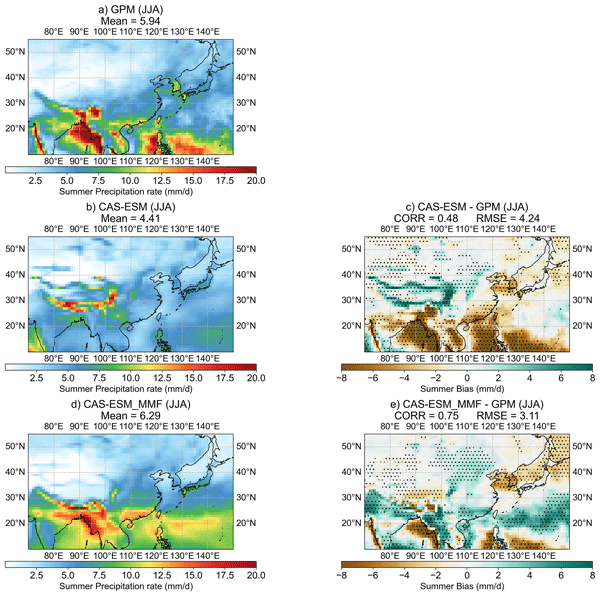
Traditional climate models struggle to accurately represent storm clouds, leading to large rainfall biases over East Asia. To address this, we used a multiscale modeling framework that embeds a high-resolution cloud model into each grid cell of the Chinese Academy of Sciences Earth System Model. This approach greatly improves the simulation of East Asian precipitation.
Minghui Zhang, Yunjie Chen, Fan Yang, and Zhengkun Qin
Geosci. Model Dev., 19, 73–91, https://doi.org/10.5194/gmd-19-73-2026, https://doi.org/10.5194/gmd-19-73-2026, 2026
Short summary
Short summary
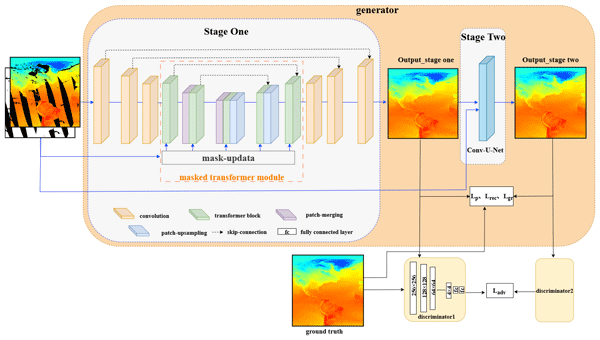
Considering the crucial role of high-resolution surface observation temperature data in the study of surface atmospheric temperature in Marine areas, we propose a new two-stage deep learning model. This model is used to fill in the ocean surface temperature data that is missing in satellite observations due to the orbital gap of polar-orbiting satellites.
Bing Zhang, Mingjian Zeng, Anning Huang, Zhengkun Qin, Couhua Liu, Wenru Shi, Xin Li, Kefeng Zhu, Chunlei Gu, and Jialing Zhou
Geosci. Model Dev., 17, 4579–4601, https://doi.org/10.5194/gmd-17-4579-2024, https://doi.org/10.5194/gmd-17-4579-2024, 2024
Short summary
Short summary
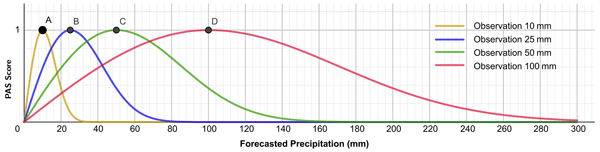
By directly analyzing the proximity of precipitation forecasts and observations, a precipitation accuracy score (PAS) method was constructed. This method does not utilize a traditional contingency-table-based classification verification; however, it can replace the threat score (TS), equitable threat score (ETS), and other skill score methods, and it can be used to calculate the accuracy of numerical models or quantitative precipitation forecasts.
Wangbin Shen, Zhaohui Lin, Zhengkun Qin, and Juan Li
Geosci. Model Dev., 17, 3447–3465, https://doi.org/10.5194/gmd-17-3447-2024, https://doi.org/10.5194/gmd-17-3447-2024, 2024
Short summary
Short summary
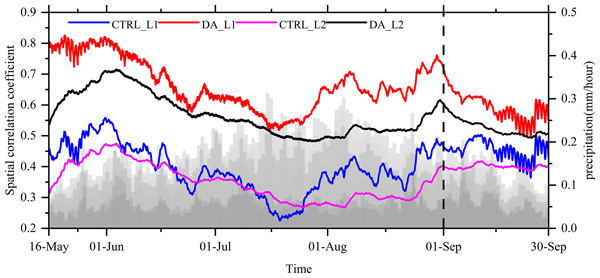
In this study, a land surface image assimilation system capable of optimizing the spatial structure of the background field is constructed by introducing the curvelet analysis method and taking the similarity of image structure as a weak constraint. The findings demonstrate that the assimilation of surface soil moisture observation images effectively and reasonably enhances the spatial structure of soil moisture analysis field.
Cited articles
Bai, X.: Development and Preliminary Validation of an EnKF-Like Image Assimilation System for the Common Land Model, Zenodo [data set and code], https://doi.org/10.5281/zenodo.18031412, 2025.
Barton, E. J., Klein, C., Taylor, C. M., Marsham, J., Parker, D. J., Maybee, B., Feng, Z., and Leung, L. R.: Soil moisture gradients strengthen mesoscale convective systems by increasing wind shear, Nat. Geosci., 18, 330–336, https://doi.org/10.1038/s41561-025-01666-8, 2025.
Beaudoing, H. and Rodell, M.: GLDAS Noah Land Surface Model L4 3 hourly 1.0 × 1.0 degree, Version 2.1, Goddard Earth Sciences Data and Information Services Center (GES DISC), https://doi.org/10.5067/IIG8FHR17DA9, 2020.
Beven, K. and Germann, P.: Macropores and water flow in soils revisited, Water Resour. Res., 49, 3071–3092, https://doi.org/10.1002/wrcr.20156, 2013.
Bonan, G. B., Oleson, K. W., Vertenstein, M., Levis, S., Zeng, X., Dai, Y., Dickinson, R. E., and Yang, Z.-L.: The land surface climatology of the community land model coupled to the NCAR community climate model, J. Climate, 15, 3123–3149, https://doi.org/10.1175/1520-0442(2002)015%3C3123:TLSCOT%3E2.0.CO;2, 2002.
Candès, E. J. and Donoho, D. L.: Curvelets: a surprisingly effective nonadaptive representation for objects with edges, in: Curves and Surface Fitting: Saint-Malo 1999, edited by: Cohen, A., Rabut, C., and Schumaker, L. L., Vanderbilt University Press, Nashville, TN, USA, 105–120, ISBN 978-0-8265-1357-1, 2000.
Cheng, Y., Chan, P. W., Wei, X., Hu, Z., Kuang, Z., and McColl, K. A.: Soil Moisture Control of Precipitation Reevaporation over a Heterogeneous Land Surface, J. Atmos. Sci., 78, 3369–3383, https://doi.org/10.1175/JAS-D-21-0059.1, 2021.
Dai, Y. and Zeng, Q.: A land surface model (IAP94) for climate studies part I: Formulation and validation in off-line experiments, Chinese Sci. Bull., 14, 433–460, https://doi.org/10.1007/s00376-997-0063-4, 2007.
Dai, Y., Zeng, X., Dickinson, R. E., Baker, I., Bonan, G. B., Bosilovich, M. G., Denning, A. S., Dirmeyer, P. A., Houser, P. R., Niu, G., Oleson, K. W., Schlosser, C. A., and Yang, Z.-L.: The Common Land Model, B. Am. Meteorol. Soc., 84, 1013–1024, https://doi.org/10.1175/BAMS-84-8-1013, 2003.
Dai, Y., Wei, N., Huang, A., Zhu, S., Shangguan, W., Yuan, H., Zhang, S., and Liu, S.: The lake scheme of the Common Land Model and its performance evaluation, Chinese Sci. Bull., 63, 3002–3021, https://doi.org/10.1360/N972018-00609, 2018.
Dan, B., Zheng, X., Wu, G., and Li, T.: Assimilating shallow soil moisture observations into land models with a water budget constraint, Hydrol. Earth Syst. Sci., 24, 5187–5201, https://doi.org/10.5194/hess-24-5187-2020, 2020.
Dickinson, R. E., Henderson-Sellers, A., and Kennedy, P. J.: Biosphere-atmosphere transfer scheme (BATS) version le as coupled to the NCAR community climate model, Technical note, National Center for Atmospheric Research, Boulder, CO, United States, 1993.
Dorigo, W., Himmelbauer, I., Aberer, D., Schremmer, L., Petrakovic, I., Zappa, L., Preimesberger, W., Xaver, A., Annor, F., Ardö, J., Baldocchi, D., Bitelli, M., Blöschl, G., Bogena, H., Brocca, L., Calvet, J.-C., Camarero, J. J., Capello, G., Choi, M., Cosh, M. C., van de Giesen, N., Hajdu, I., Ikonen, J., Jensen, K. H., Kanniah, K. D., de Kat, I., Kirchengast, G., Kumar Rai, P., Kyrouac, J., Larson, K., Liu, S., Loew, A., Moghaddam, M., Martínez Fernández, J., Mattar Bader, C., Morbidelli, R., Musial, J. P., Osenga, E., Palecki, M. A., Pellarin, T., Petropoulos, G. P., Pfeil, I., Powers, J., Robock, A., Rüdiger, C., Rummel, U., Strobel, M., Su, Z., Sullivan, R., Tagesson, T., Varlagin, A., Vreugdenhil, M., Walker, J., Wen, J., Wenger, F., Wigneron, J. P., Woods, M., Yang, K., Zeng, Y., Zhang, X., Zreda, M., Dietrich, S., Gruber, A., van Oevelen, P., Wagner, W., Scipal, K., Drusch, M., and Sabia, R.: The International Soil Moisture Network: serving Earth system science for over a decade, Hydrol. Earth Syst. Sci., 25, 5749–5804, https://doi.org/10.5194/hess-25-5749-2021, 2021.
Dorigo, W. A., Gruber, A., De Jeu, R. A. M., Wagner, W., Stacke, T., Loew, A., Albergel, C., Brocca, L., Chung, D., Parinussa, R. M., and Kidd, R.: Evaluation of the ESA CCI soil moisture product using ground-based observations, Remote Sens. Environ., 162, 380–395, https://doi.org/10.1016/j.rse.2014.07.023, 2015.
Draper, C. and Reichle, R. H.: Assimilation of Satellite Soil Moisture for Improved Atmospheric Reanalyses, Mon. Weather Rev., 147, 2163–2188, https://doi.org/10.1175/MWR-D-18-0393.1, 2019.
Duan, Y., Kumar, S., Maruf, M., Kavoo, T. M., Rangwala, I., Richter, J. H., Glanville, A. A., King, T., Esit, M., Raczka, B., and Raeder, K.: Enhancing sub-seasonal soil moisture forecasts through land initialization, npj Clim. Atmos. Sci., 8, 100, https://doi.org/10.1038/s41612-025-00987-0, 2025.
Esit, M., Kumar, S., Pandey, A., Lawrence, D. M., Rangwala, I., and Yeager, S.: Seasonal to multi-year soil moisture drought forecasting, npj Clim. Atmos. Sci., 4, 1–8, https://doi.org/10.1038/s41612-021-00172-z, 2021.
Fatichi, S., Or, D., Walko, R., Vereecken, H., Young, M. H., Ghezzehei, T. A., Hengl, T., Kollet, S., Agam, N., and Avissar, R.: Soil structure is an important omission in Earth system models, Nat. Commun., 11, 522, https://doi.org/10.1038/s41467-020-14411-z, 2020.
Ji, D., Wang, L., Feng, J., Wu, Q., Cheng, H., Zhang, Q., Yang, J., Dong, W., Dai, Y., Gong, D., Zhang, R.-H., Wang, X., Liu, J., Moore, J. C., Chen, D., and Zhou, M.: Description and basic evaluation of Beijing Normal University Earth System Model (BNU-ESM) version 1, Geosci. Model Dev., 7, 2039–2064, https://doi.org/10.5194/gmd-7-2039-2014, 2014.
Klein, C. and Taylor, C. M.: Dry soils can intensify mesoscale convective systems, P. Natl. Acad. Sci. USA, 117, 21132–21137, https://doi.org/10.1073/pnas.2007998117, 2020.
Klein, C., Taylor, C. M., Han, X., Li, X., Rigon, R., Jin, R., and Endrizzi, S.: Soil Moisture Estimation by Assimilating L-Band Microwave Brightness Temperature with Geostatistics and Observation Localization, PLOS ONE, 10, e0116435, https://doi.org/10.1371/journal.pone.0116435, 2015.
Kolassa, J., Reichle, R. H., and Draper, C. S.: Merging active and passive microwave observations in soil moisture data assimilation, Remote Sens. Environ., 191, 117–130, https://doi.org/10.1016/j.rse.2017.01.015, 2017.
Koster, R. D., Dirmeyer, P. A., Guo, Z., Bonan, G., Chan, E., Cox, P., Gordon, C. T., Kanae, S., Kowalczyk, E., Lawrence, D., Liu, P., Lu, C.-H., Malyshev, S., McAvaney, B., Mitchell, K., Mocko, D., Oki, T., Oleson, K., Pitman, A., Sud, Y. C., Taylor, C. M., Verseghy, D., Vasic, R., Xue, Y., and Yamada, T.: Regions of Strong Coupling Between Soil Moisture and Precipitation, Science, 305, 1138–1140, https://doi.org/10.1126/science.1100217, 2004.
Le Dimet, F.-X., Souopgui, I., Titaud, O., Shutyaev, V., and Hussaini, M. Y.: Toward the assimilation of images, Nonlin. Processes Geophys., 22, 15–32, https://doi.org/10.5194/npg-22-15-2015, 2015.
Li, L., Bisht, G., and Leung, L. R.: Spatial heterogeneity effects on land surface modeling of water and energy partitioning, Geosci. Model Dev., 15, 5489–5510, https://doi.org/10.5194/gmd-15-5489-2022, 2022.
Li, X., Liu, F., Ma, C., Hou, J., Zheng, D., Ma, H., Bai, Y., Han, X., Vereecken, H., Yang, K., Duan, Q., and Huang, C.: Land Data Assimilation: Harmonizing Theory and Data in Land Surface Process Studies, Rev. Geophys., 62, e2022RG000801, https://doi.org/10.1029/2022RG000801, 2024.
Lin, L.-F., Ebtehaj, A. M., Flores, A. N., Bastola, S., and Bras, R. L.: Combined Assimilation of Satellite Precipitation and Soil Moisture: A Case Study Using TRMM and SMOS Data, Mon. Weather Rev., 145, 4997–5014, https://doi.org/10.1175/MWR-D-17-0125.1, 2017.
Ling, X., Huang, Y., Guo, W., Wang, Y., Chen, C., Qiu, B., Ge, J., Qin, K., Xue, Y., and Peng, J.: Comprehensive evaluation of satellite-based and reanalysis soil moisture products using in situ observations over China, Hydrol. Earth Syst. Sci., 25, 4209–4229, https://doi.org/10.5194/hess-25-4209-2021, 2021.
McLaughlin, D., Zhou, Y., Entekhabi, D., and Chatdarong, V.: Computational Issues for Large-Scale Land Surface Data Assimilation Problems, J. Hydrometeorol., 7, 494–510, https://doi.org/10.1175/JHM493.1, 2006.
Miralles, D. G., Teuling, A. J., van Heerwaarden, C. C., and Vilà-Guerau de Arellano, J.: Mega-heatwave temperatures due to combined soil desiccation and atmospheric heat accumulation, Nat. Geosci., 7, 345–349, https://doi.org/10.1038/ngeo2141, 2014.
Montaldo, N., Gaspa, A., and Corona, R.: Multiscale Assimilation of Sentinel and Landsat Data for Soil Moisture and Leaf Area Index Predictions Using an Ensemble-Kalman-Filter-Based Assimilation Approach in a Heterogeneous Ecosystem, Remote Sens., 14, 3458, https://doi.org/10.3390/rs14143458, 2022.
Nair, A. S., Counillon, F., and Keenlyside, N.: Improving subseasonal forecast skill in the Norwegian Climate Prediction Model using soil moisture data assimilation, Clim. Dynam., 62, 10483–10502, https://doi.org/10.1007/s00382-024-07444-3, 2024.
Niu, G., Yang, Z., Dickinson, R. E., and Gulden, L. E.: A simple TOPMODEL-based runoff parameterization (SIMTOP) for use in global climate models, J. Geophys. Res., 110, https://doi.org/10.1029/2005JD006111, 2005.
Pinnington, E., Amezcua, J., Cooper, E., Dadson, S., Ellis, R., Peng, J., Robinson, E., Morrison, R., Osborne, S., and Quaife, T.: Improving soil moisture prediction of a high-resolution land surface model by parameterising pedotransfer functions through assimilation of SMAP satellite data, Hydrol. Earth Syst. Sci., 25, 1617–1641, https://doi.org/10.5194/hess-25-1617-2021, 2021.
Qin, J., Tian, J., Yang, K., Lu, H., Li, X., Yao, L., and Shi, J.: Bias correction of satellite soil moisture through data assimilation, J. Hydrol., 610, 127947, https://doi.org/10.1016/j.jhydrol.2022.127947, 2022.
Rahmati, M., Amelung, W., Brogi, C., Dari, J., Flammini, A., Bogena, H., Brocca, L., Chen, H., Groh, J., Koster, R. D., McColl, K. A., Montzka, C., Moradi, S., Rahi, A., Sharghi S., F., and Vereecken, H.: Soil Moisture Memory: State-Of-The-Art and the Way Forward, Rev. Geophys., 62, e2023RG000828, https://doi.org/10.1029/2023RG000828, 2024.
Rodell, M., Houser, P. R., Jambor, U., Gottschalck, J., Mitchell, K., Meng, C.-J., Arsenault, K., Cosgrove, B., Radakovich, J., Bosilovich, M., Entin, J. K., Walker, J. P., Lohmann, D., and Toll, D.: The Global Land Data Assimilation System, B. Am. Meteorol. Soc., 85, 381–394, https://doi.org/10.1175/BAMS-85-3-381, 2004.
Schumacher, D. L., Hauser, M., and Seneviratne, S. I.: Drivers and Mechanisms of the 2021 Pacific Northwest Heatwave, Earths Future, 10, e2022EF002967, https://doi.org/10.1029/2022EF002967, 2022.
Seneviratne, S. I., Corti, T., Davin, E. L., Hirschi, M., Jaeger, E. B., Lehner, I., Orlowsky, B., and Teuling, A. J.: Investigating soil moisture–climate interactions in a changing climate: A review, Earth Sci. Rev., 99, 125–161, https://doi.org/10.1016/j.earscirev.2010.02.004, 2010.
Shan, X., Steele-Dunne, S., Hahn, S., Wagner, W., Bonan, B., Albergel, C., Calvet, J.-C., and Ku, O.: Assimilating ASCAT normalized backscatter and slope into the land surface model ISBA-A-gs using a Deep Neural Network as the observation operator: Case studies at ISMN stations in western Europe, Remote Sens. Environ., 308, 114167, https://doi.org/10.1016/j.rse.2024.114167, 2024.
Shen, W., Lin, Z., Qin, Z., and Li, J.: Development and preliminary validation of a land surface image assimilation system based on the Common Land Model, Geosci. Model Dev., 17, 3447–3465, https://doi.org/10.5194/gmd-17-3447-2024, 2024.
Shen, Y., Zhao, P., Pan, Y., and Yu, J.: A high spatiotemporal gauge-satellite merged precipitation analysis over China, J. Geophys. Res.-Atmos., 119, 3063–3075, https://doi.org/10.1002/2013JD020686, 2014.
Taylor, C. M.: Detecting soil moisture impacts on convective initiation in Europe, Geophys. Res. Lett., 42, 4631–4638, https://doi.org/10.1002/2015GL064030, 2015.
Tong, X. T.: Performance Analysis of Local Ensemble Kalman Filter, J. Nonlinear Sci., 28, 1397–1442, https://doi.org/10.1007/s00332-018-9453-2, 2018.
Wanders, N., Karssenberg, D., de Roo, A., de Jong, S. M., Bierkens, M. F. P., Han, C., Brdar, S., and Kollet, S.: Response of Convective Boundary Layer and Shallow Cumulus to Soil Moisture Heterogeneity: A Large-Eddy Simulation Study, J. Adv. Model. Earth Sy., 11, 4305–4322, https://doi.org/10.1029/2019MS001772, 2019.
Wang, F. and Tian, D.: Multivariate bias correction and downscaling of climate models with trend-preserving deep learning, Clim. Dynam., 62, 9651–9672, https://doi.org/10.1007/s00382-024-07406-9, 2024.
Wang, J., Zhao, Y., Ren, Z., and Gao, J.: Design and Verification of Quality Control Methods for Automatic Soil Moisture Observation Data in China, Meteorological Monthly, 44, 244–257, 2018.
Wei, J., Dickinson, R. E., and Zeng, N.: Climate variability in a simple model of warm climate land-atmosphere interaction, J. Geophys. Res., 111, https://doi.org/10.1029/2005JG000096, 2006.
Xue, Y., Yao, T., Boone, A. A., Diallo, I., Liu, Y., Zeng, X., Lau, W. K. M., Sugimoto, S., Tang, Q., Pan, X., van Oevelen, P. J., Klocke, D., Koo, M.-S., Sato, T., Lin, Z., Takaya, Y., Ardilouze, C., Materia, S., Saha, S. K., Senan, R., Nakamura, T., Wang, H., Yang, J., Zhang, H., Zhao, M., Liang, X.-Z., Neelin, J. D., Vitart, F., Li, X., Zhao, P., Shi, C., Guo, W., Tang, J., Yu, M., Qian, Y., Shen, S. S. P., Zhang, Y., Yang, K., Leung, R., Qiu, Y., Peano, D., Qi, X., Zhan, Y., Brunke, M. A., Chou, S. C., Ek, M., Fan, T., Guan, H., Lin, H., Liang, S., Wei, H., Xie, S., Xu, H., Li, W., Shi, X., Nobre, P., Pan, Y., Qin, Y., Dozier, J., Ferguson, C. R., Balsamo, G., Bao, Q., Feng, J., Hong, J., Hong, S., Huang, H., Ji, D., Ji, Z., Kang, S., Lin, Y., Liu, W., Muncaster, R., de Rosnay, P., Takahashi, H. G., Wang, G., Wang, S., Wang, W., Zhou, X., and Zhu, Y.: Impact of Initialized Land Surface Temperature and Snowpack on Subseasonal to Seasonal Prediction Project, Phase I (LS4P-I): organization and experimental design, Geosci. Model Dev., 14, 4465–4494, https://doi.org/10.5194/gmd-14-4465-2021, 2021.
Zafarmomen, N., Alizadeh, H., Bayat, M., Ehtiat, M., and Moradkhani, H.: Assimilation of sentinel-based leaf area index for modeling surface-ground water interactions in irrigation districts, Water Resour. Res., 60, e2023WR036080, https://doi.org/10.1029/2023WR036080, 2024.
Zeng, X.: Global vegetation root distribution for land modeling, J. Hydrometeorol., 2, 525–530, https://doi.org/10.1175/1525-7541(2001)002<0525:GVRDFL>2.0.CO;2, 2001.
Zhao, H., Montzka, C., Keller, J., Li, F., Vereecken, H., Hendricks Franssen, H., Lin, L.-F., Ebtehaj, A. M., Flores, A. N., Bastola, S., and Bras, R. L.: How Does Assimilating SMAP Soil Moisture Improve Characterization of the Terrestrial Water Cycle in an Integrated Land Surface-Subsurface Model?, Water Resour. Res., 61, e2024WR038647, https://doi.org/10.1029/2024WR038647, 2025.
Zhou, J., Wu, Z., Crow, W. T., Dong, J., and He, H.: Improving Spatial Patterns Prior to Land Surface Data Assimilation via Model Calibration Using SMAP Surface Soil Moisture Data, Water Resour. Res., 56, e2020WR027770, https://doi.org/10.1029/2020WR027770, 2020.
Zhou, J., Crow, W. T., Wu, Z., Dong, J., He, H., and Feng, H.: Improving soil moisture assimilation efficiency via model calibration using SMAP surface soil moisture climatology information, Remote Sens. Environ., 280, 113161, https://doi.org/10.1016/j.rse.2022.113161, 2022.
Short summary
Accurate soil moisture is crucial for weather prediction, but traditional methods often miss correct spatial patterns. We addressed this by treating moisture data as cohesive images rather than isolated points. Using image processing, we optimized both the location and intensity of moisture anomalies. This approach doubled the accuracy of spatial patterns and reduced errors in China and the United States.
Accurate soil moisture is crucial for weather prediction, but traditional methods often miss...


