
Articles | Volume 19, issue 11
https://doi.org/10.5194/gmd-19-4885-2026
© Author(s) 2026. This work is distributed under
the Creative Commons Attribution 4.0 License.
the Creative Commons Attribution 4.0 License.
https://doi.org/10.5194/gmd-19-4885-2026
© Author(s) 2026. This work is distributed under
the Creative Commons Attribution 4.0 License.
the Creative Commons Attribution 4.0 License.
Development and technical paper
| 
11 Jun 2026
Development and technical paper |
| 11 Jun 2026
| 11 Jun 2026
A method for assessing model extensions: application to modelling winter precipitation with a microscale obstacle-resolving meteorological model (MITRAS v3.3)
Karolin S. Samsel
CORRESPONDING AUTHOR

Climate Service Center Germany (GERICS), Helmholtz-Zentrum Hereon, Chilehaus, Fischertwiete 1, 20095 Hamburg, Germany
University of Hamburg, Meteorological Institute, Earth and Society Research Hub (ESRAH), Bundesstr. 55, 20146 Hamburg, Germany
Marita Boettcher
University of Hamburg, Meteorological Institute, Earth and Society Research Hub (ESRAH), Bundesstr. 55, 20146 Hamburg, Germany
David Grawe
University of Hamburg, Meteorological Institute, Earth and Society Research Hub (ESRAH), Bundesstr. 55, 20146 Hamburg, Germany
K. Heinke Schlünzen
University of Hamburg, Meteorological Institute, Earth and Society Research Hub (ESRAH), Bundesstr. 55, 20146 Hamburg, Germany
Kevin Sieck
Climate Service Center Germany (GERICS), Helmholtz-Zentrum Hereon, Chilehaus, Fischertwiete 1, 20095 Hamburg, Germany
Related authors
Vivien Voss, K. Heinke Schlünzen, David Grawe, and Karolin S. Samsel
EGUsphere, https://doi.org/10.5194/egusphere-2025-5521, https://doi.org/10.5194/egusphere-2025-5521, 2025
Short summary
Short summary
This work describes necessary adaptations and extensions to the post-processing of the obstacle-resolving microscale model MITRAS, with the aim of producing and publishing well-described model results that adhere to established meteorological data standards. The described process may help data producers facing similar difficulties to find ideas and solutions and addresses the need for standardisation within the urban microscale modelling community.
Christoph Braun, Florian Ehmele, Christian Beier, Edgar Fabián Espitia-Sarmiento, Hendrik Feldmann, Thomas Frisius, Beate Geyer, Marie Hundhausen, Klaus Keuler, Jürg Luterbacher, Kevin Sieck, Katja Trachte, Elena Xoplaki, and Joaquim G. Pinto
EGUsphere, https://doi.org/10.5194/egusphere-2026-2517, https://doi.org/10.5194/egusphere-2026-2517, 2026
Short summary
Short summary
Adaptation to future climatic changes requires robust climate information. Here, a newly produced set of high-resolution climate simulations using multiple regional climate models over Germany is compared to observation-based datasets over the period 1961 to 1990. Overall, the simulations represent the observed climate well and, together with their future counterparts considering global warming, expand our knowledge about projected climatic changes to inform climate adaptation measures.
Kevin Sieck, Joaquim G. Pinto, Beate Geyer, Klaus Keuler, Christian Beier, Christoph Braun, Florian Ehmele, Hendrik Feldmann, Thomas Frisius, Philipp Heinrich, Marie Hundhausen, Ronny Petrik, and Katja Trachte
EGUsphere, https://doi.org/10.5194/egusphere-2026-1024, https://doi.org/10.5194/egusphere-2026-1024, 2026
Short summary
Short summary
In this study we present the evaluation of a new generation of user informed climate simulations at scales of typical weather forecasts. It provides detailed information that are vital for climate impact studies at municipal level. Besides typical short comings of climate models in terms of deviations compared to reference data, the simulations show good agreement with observed climate especially in terms of regional patterns.
Vivien Voss, K. Heinke Schlünzen, David Grawe, and Karolin S. Samsel
EGUsphere, https://doi.org/10.5194/egusphere-2025-5521, https://doi.org/10.5194/egusphere-2025-5521, 2025
Short summary
Short summary
This work describes necessary adaptations and extensions to the post-processing of the obstacle-resolving microscale model MITRAS, with the aim of producing and publishing well-described model results that adhere to established meteorological data standards. The described process may help data producers facing similar difficulties to find ideas and solutions and addresses the need for standardisation within the urban microscale modelling community.
Joni-Pekka Pietikäinen, Kevin Sieck, Lars Buntemeyer, Thomas Frisius, Christine Nam, Peter Hoffmann, Christina Pop, Diana Rechid, and Daniela Jacob
Geosci. Model Dev., 18, 7907–7949, https://doi.org/10.5194/gmd-18-7907-2025, https://doi.org/10.5194/gmd-18-7907-2025, 2025
Short summary
Short summary
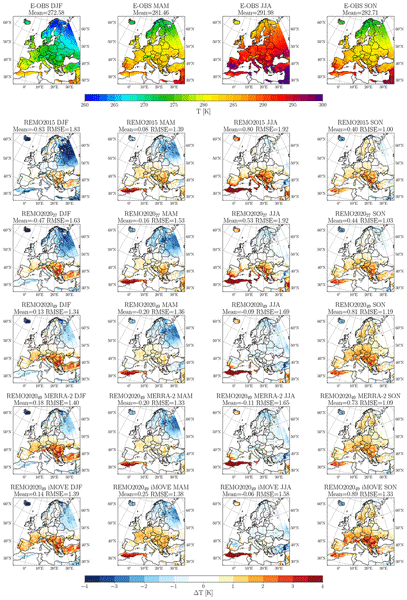
This paper introduces REMO2020, a modernised version of the well-known and widely used REMO regional climate model. We demonstrate why REMO2020 will be our new model version for future dynamical downscaling activities. REMO2020 outperforms the previous REMO version in almost all areas used to evaluate the European climate. It also supports climate service need-based developments through a new, more modular structure.
Ronny Badeke, Volker Matthias, Matthias Karl, and David Grawe
Geosci. Model Dev., 15, 4077–4103, https://doi.org/10.5194/gmd-15-4077-2022, https://doi.org/10.5194/gmd-15-4077-2022, 2022
Short summary
Short summary
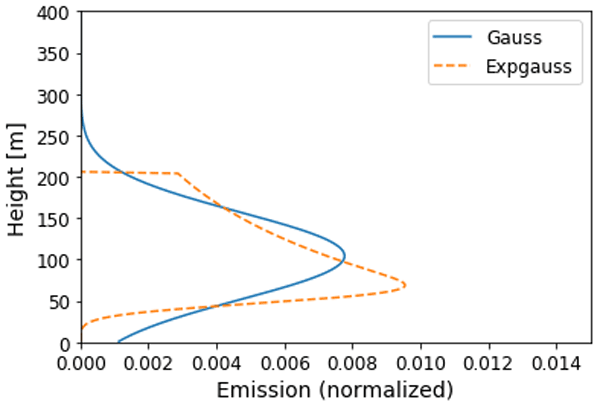
For air quality modeling studies, it is very important to distribute pollutants correctly into the model system. This has not yet been done for shipping pollution in great detail. We studied the effects of different vertical distributions of shipping pollutants on the urban air quality and derived advanced formulas for it. These formulas take weather conditions and ship-specific parameters like the exhaust gas temperature into account.
Cited articles
Arakawa, A. and Lamb, V. R.: Computational Design of the Basic Dynamical Processes of the UCLA General Circulation Model, Method. Comput. Phys., 17, 173–265, https://doi.org/10.1016/b978-0-12-460817-7.50009-4, 1977. a
Asai, T.: A Numerical Study of the Air-Mass Transformation over the Japan Sea in Winter, J. Meteorol. Soc. Jpn., 43, 1–15, https://doi.org/10.2151/JMSJ1965.43.1_1, 1965. a
Badeke, R., Matthias, V., and Grawe, D.: Parameterizing the vertical downward dispersion of ship exhaust gas in the near field, Atmos. Chem. Phys., 21, 5935–5951, https://doi.org/10.5194/acp-21-5935-2021, 2021. a, b
Baker, D. G., Skaggs, R. H., and Ruschy, D. L.: Snow Depth Required to Mask the Underlying Surface, J. Appl. Meteorol. Clim., 30, 387–392, https://doi.org/10.1175/1520-0450(1991)030<0387:SDRTMT>2.0.CO;2, 1991. a
Bergeron, O. and Strachan, I. B.: Wintertime radiation and energy budget along an urbanization gradient in Montreal, Canada, Int. J. Climatol., 32, 137–152, https://doi.org/10.1002/JOC.2246, 2012. a
Bhumralkar, C. M.: Numerical Experiments on the Computation of Ground Surface Temperature in an Atmospheric General Circulation Model, J. Appl. Meteorol. Clim., 14, 1246–1258, https://doi.org/10.1175/1520-0450(1975)014<1246:NEOTCO>2.0.CO;2, 1975. a
Bouteloup, Y., Seity, Y., and Bazile, E.: Description of the sedimentation scheme used operationally in all Météo-France NWP models, Tellus A, 63, 300–311, https://doi.org/10.1111/j.1600-0870.2010.00484.x, 2011. a
Briscolini, M. and Santangelo, P.: Development of the mask method for incompressible unsteady flows, J. Comput. Phys., 84, 57–75, https://doi.org/10.1016/0021-9991(89)90181-2, 1989. a
Castelli, S. T. and Reisin, T. G.: Evaluation of the atmospheric RAMS model in an obstacle resolving configuration, Environ. Fluid Mech., 10, 555–576, https://doi.org/10.1007/s10652-010-9167-y, 2010. a
Cox, R., Bauer, B. L., and Smith, T.: A Mesoscale Model Intercomparison, American Meteorological Society, 79, 265–284, https://doi.org/10.1175/1520-0477(1998)079<0265:AMMI>2.0.CO;2, 1998. a
Deardorff, J. W.: Efficient prediction of ground surface temperature and moisture, with inclusion of a layer of vegetation, J. Geophys. Res.-Oceans, 83, 1889–1903, https://doi.org/10.1029/JC083IC04P01889, 1978. a
Doms, G., Förstner, J., Heise, E., Herzog, H.-J., Mironov, D., Raschendorfer, M., Reinhardt, T., Ritter, B., Schrodin, R., Schulz, J.-P., and Vogel, G.: A Description of the Nonhydrostatic Regional COSMO Model Part II: Physical Parameterizations, Deutscher Wetterdienst, Offenbach, Germany, https://www.cosmo-model.org/content/model/cosmo/coreDocumentation/cosmo_physics_4.20.pdf (last access: 6 April 2026), 2011. a, b, c, d, e, f, g, h, i, j, k, l, m, n, o, p, q, r
Douville, H., Royer, J. F., and Mahfouf, J. F.: A new snow parameterization for the Météo-France climate model, Clim. Dynam., 12, 21–35, https://doi.org/10.1007/BF00208760, 1995. a, b, c
Dutra, E., Balsamo, G., Viterbo, P., Miranda, P. M., Beljaars, A., Schar, C., and Elder, K.: An Improved Snow Scheme for the ECMWF Land Surface Model: Description and Offline Validation, J. Hydrometeorol., 11, 899–916, https://doi.org/10.1175/2010JHM1249.1, 2010. a, b
Eichhorn, J. and Kniffka, A.: The numerical flow model MISKAM: State of development and evaluation of the basic version, Meteorol. Z., 19, 81–90, https://doi.org/10.1127/0941-2948/2010/0425, 2010. a
Franke, J., Sturm, M., and Kalmbach, C.: Validation of OpenFOAM 1.6.x with the German VDI guideline for obstacle resolving micro-scale models, J. Wind Eng. Ind. Aerod., 104–106, 350–359, https://doi.org/10.1016/J.JWEIA.2012.02.021, 2012. a, b
Geletič, J., Lehnert, M., Resler, J., Krč, P., Middel, A., Krayenhoff, E. S., and Krüger, E.: High-fidelity simulation of the effects of street trees, green roofs and green walls on the distribution of thermal exposure in Prague-Dejvice, Build. Environ., 223, 109484, https://doi.org/10.1016/J.BUILDENV.2022.109484, 2022. a
Geleyn, J.-F., Catry, B., Bouteloup, Y., and Brožková, R.: A statistical approach for sedimentation inside a microphysical precipitation scheme, Tellus A, 60, 649–662, https://doi.org/10.1111/j.1600-0870.2008.00323.x, 2008. a
Grawe, D., Schlünzen, K. H., and Pascheke, F.: Comparison of results of an obstacle resolving microscale model with wind tunnel data, Atmos. Environ., 79, 495–509, https://doi.org/10.1016/j.atmosenv.2013.06.039, 2013. a, b, c, d
Grawe, D., Bächlin, W., Brünger, H., Eichhorn, J., Franke, J., Leitl, B., Müller, W., Öttl, D., Salim, M. H., Schlünzen, K. H., Winkler, C., and Zimmer, M.: An Updated Evaluation Guideline for Prognostic Microscale Wind Field Models, 9th International Conference on Urban Climate, Toulouse, France, 20–24 July, https://www.researchgate.net/publication/327057500_An_updated_evaluation_guideline_for_prognostic_microscale_wind_field_models (last access: 5 May 2026), 2015. a, b
Gunn, K. L. S. and Marshall, J. S.: The Distribution with Size of Aggregate Snowflakes, J. Meteorol., 15, 452–461, https://doi.org/10.1175/1520-0469(1958)015<0452:tdwsoa>2.0.co;2, 1958. a
Hirota, T., Pomeroy, J. W., Granger, R. J., and Maule, C. P.: An extension of the force-restore method to estimating soil temperature at depth and evaluation for frozen soils under snow, J. Geophys. Res.-Atmos., 107, ACL 11-1–ACL 11-10, https://doi.org/10.1029/2001JD001280, 2002. a
Ho, C. L. and Valeo, C.: Observations of urban snow properties in Calgary, Canada, Hydrol. Process., 19, 459–473, https://doi.org/10.1002/HYP.5544, 2005. a
Hu, C., Tam, C. Y., liang Yang, Z., and Wang, Z.: Analyzing urban influence on extreme winter precipitation through observations and numerical simulation of two South China case studies, Sci. Rep., 14, 1–21, https://doi.org/10.1038/s41598-024-52193-2, 2024. a
Kessler, E.: On the Distribution and Continuity of Water Substance in Atmospheric Circulations, Meteor. Mon., 10, https://doi.org/10.1007/978-1-935704-36-2, 1969. a
Khain, A. P., Beheng, K. D., Heymsfield, A., Korolev, A., Krichak, S. O., Levin, Z., Pinsky, M., Phillips, V., Prabhakaran, T., Teller, A., Heever, S. C. V. D., and Yano, J. I.: Representation of microphysical processes in cloud-resolving models: Spectral (bin) microphysics versus bulk parameterization, Rev. Geophys., 53, 247–322, https://doi.org/10.1002/2014RG000468, 2015. a, b
Köhler, A.: Parametrisierung der Wolkenmikrophysik und der Strahlung in einem mesoskaligen Transport- und Strömungsmodell, Diploma thesis, University of Hamburg, Hamburg, Germany, https://katalogplus.sub.uni-hamburg.de/vufind/Record/356037215 (last access: 21 April 2026), 1990. a, b, c, d, e, f, g, h, i, j
Lemonsu, A., Bélair, S., Mailhot, J., Benjamin, M., Chagnon, F., Morneau, G., Harvey, B., Voogt, J., and Jean, M.: Overview and First Results of the Montreal Urban Snow Experiment 2005, J. Appl. Meteorol. Clim., 47, 59–75, https://doi.org/10.1175/2007JAMC1639.1, 2008. a
Lemonsu, A., Bélair, S., Mailhot, J., and Leroyer, S.: Evaluation of the Town Energy Balance Model in Cold and Snowy Conditions during the Montreal Urban Snow Experiment 2005, J. Appl. Meteorol. Clim., 49, 346–362, https://doi.org/10.1175/2009JAMC2131.1, 2010. a
Liu, J. and Niyogi, D.: Meta-analysis of urbanization impact on rainfall modification, Sci. Rep., 9, https://doi.org/10.1038/s41598-019-42494-2, 2019. a
Lu, Y., Yu, Z., Albertson, J. D., Chen, H., Hu, L., Pendergrass, A., Chen, X., and Li, Q.: Understanding the Influence of Urban Form on the Spatial Pattern of Precipitation, Earths Future, 12, https://doi.org/10.1029/2023EF003846, 2024. a
Malevich, S. B. and Klink, K.: Relationships between Snow and the Wintertime Minneapolis Urban Heat Island, J. Appl. Meteorol. Clim., 50, 1884–1894, https://doi.org/10.1175/JAMC-D-11-05.1, 2011. a
Maronga, B., Gross, G., Raasch, S., Banzhaf, S., Forkel, R., Heldens, W., Kanani-Sühring, F., Matzarakis, A., Mauder, M., Pavlik, D., Pfafferott, J., Schubert, S., Seckmeyer, G., Sieker, H., and Winderlich, K.: Development of a new urban climate model based on the model PALM – Project overview, planned work, and first achievements, Meteorol. Z., 28, 105–119, https://doi.org/10.1127/metz/2019/0909, 2019. a
Maronga, B., Banzhaf, S., Burmeister, C., Esch, T., Forkel, R., Fröhlich, D., Fuka, V., Gehrke, K. F., Geletič, J., Giersch, S., Gronemeier, T., Groß, G., Heldens, W., Hellsten, A., Hoffmann, F., Inagaki, A., Kadasch, E., Kanani-Sühring, F., Ketelsen, K., Khan, B. A., Knigge, C., Knoop, H., Krč, P., Kurppa, M., Maamari, H., Matzarakis, A., Mauder, M., Pallasch, M., Pavlik, D., Pfafferott, J., Resler, J., Rissmann, S., Russo, E., Salim, M., Schrempf, M., Schwenkel, J., Seckmeyer, G., Schubert, S., Sühring, M., von Tils, R., Vollmer, L., Ward, S., Witha, B., Wurps, H., Zeidler, J., and Raasch, S.: Overview of the PALM model system 6.0, Geosci. Model Dev., 13, 1335–1372, https://doi.org/10.5194/gmd-13-1335-2020, 2020. a
Marshall, J. S. and Palmer, W. M.: The Distribution of Raindrops with Size, J. Meteorol., 5, 165–166, https://doi.org/10.1175/1520-0469(1948)005<0165:TDORWS>2.0.CO;2, 1948. a
Meinke, I., Rechid, D., Tinz, B., Maneke, M., Lefebvre, C., and Isokeit, E.: Klima der Region – Zustand, bisherige Entwicklung und mögliche Änderungen bis 2100, Hamburger Klimabericht – Wissen über Klima, Klimawandel und Auswirkungen in Hamburg und Norddeutschland, 15–36, https://doi.org/10.1007/978-3-662-55379-4_2, 2018. a
Mittal, R. and Iaccarino, G.: Immersed Boundary Methods, Annu. Rev. Fluid Mech., 37, 239–261, https://doi.org/10.1146/annurev.fluid.37.061903.175743, 2005. a
Mori, K. and Sato, T.: Evaluating the Role of Snow Cover in Urban Canopy Layer on the Urban Heat Island in Sapporo, Japan with a Regional Climate Model, J. Meteorol. Soc. Jpn., 93, 581–592, https://doi.org/10.2151/JMSJ.2015-039, 2015. a
Pielke, R. A.: Mesoscale Meteorological Modeling, Academic Press, 3rd edn., ISBN 978-0-12-385237-3, 2013. a
Pielke, R. A., Cotton, W. R., Walko, R. L., Tremback, C. J., Lyons, W. A., Grasso, L. D., Nicholls, M. E., Moran, M. D., Wesley, D. A., Lee, T. J., and Copeland, J. H.: A comprehensive meteorological modeling system – RAMS, Meteorol. Atmos. Phys., 49, 69–91, https://doi.org/10.1007/BF01025401, 1992. a
Purr, C., Brisson, E., and Ahrens, B.: Convective rain cell characteristics and scaling in climate projections for Germany, Int. J. Climatol., 41, 3174–3185, https://doi.org/10.1002/JOC.7012, 2021. a
Roeckner, E., Baeuml, G., Bonventura, L., Brokopf, R., Esch, M., Giorgetta, M., Hagemann, S., Kirchner, I., Kornblueh, L., Manzini, E., Rhodin, A., Schlese, U., Schulzweida, U., and Tompkins, A. K.: The atmospheric general circulation model ECHAM5. PART I: Model description, Max Planck Institute for Meteorology, Hamburg, Germany, https://pure.mpg.de/rest/items/item_995269_4/component/file_995268/content (last access: 6 April 2026), 2003. a
Salvi, K. A. and Kumar, M.: Imprint of urbanization on snow precipitation over the continental USA, Nat. Commun., 15, 1–11, https://doi.org/10.1038/s41467-024-46699-6, 2024. a
Samsel, K. S.: Analysis and plotting scripts supporting: “A method for assessing model extensions: Application to modelling winter precipitation with a microscale obstacle-resolving meteorological model (MITRAS v4.0)”, Zenodo [code], https://doi.org/10.5281/zenodo.15194835, 2025. a
Samsel, K. S., Boettcher, M., Grawe, D., Schlünzen, K. H., and Sieck, K.: Simulations for assessing model extensions using an obstacle-resolving model, World Data Center for Climate (WDCC) at DKRZ [data set], https://doi.org/10.26050/WDCC/WINTER_HAM_MitrasModEx, 2025. a
Schatz, J. and Kucharik, C. J.: Seasonality of the Urban Heat Island Effect in Madison, Wisconsin, J. Appl. Meteorol. Clim., 53, 2371–2386, https://doi.org/10.1175/JAMC-D-14-0107.1, 2014. a
Schatzmann, M., Bächlin, W., Emeis, S., Kühlwein, J., Leitl, B., Müller, W. J., Schäfer, K., and Schlünzen, H.: Development and validation of tools for the implementation of european air quality policy in Germany (Project VALIUM), Atmos. Chem. Phys., 6, 3077–3083, https://doi.org/10.5194/acp-6-3077-2006, 2006. a, b
Schlünzen, K. and Sokhi, R. (Eds.): Overview of Tools and Methods for Meteorological and Air Pollution Mesoscale Model Evaluation and User Training. Joint Report of COST Action 728 and GURME, GAW Report 181, World Meteorological Organization (WMO), Geneva, Switzerland, ISBN 978-1-905313-59-4, https://library.wmo.int/idurl/4/47523 (last access: 12 April 2026), 2008. a
Schlünzen, K. H., Hinneburg, D., Knoth, O., Lambrecht, M., Leitl, B., López, S., Lüpkes, C., Panskus, H., Renner, E., Schatzmann, M., Schoenemeyer, T., Trepte, S., and Wolke, R.: Flow and transport in the obstacle layer: First results of the micro-scale model MITRAS, J. Atmos. Chem., 44, 113–130, https://doi.org/10.1023/A:1022420130032, 2003. a, b, c
Schlünzen, K. H., Boettcher, M., Fock, B. H., Gierisch, A., Grawe, D., and Salim, M.: Scientific Documentation of the Multiscale Model System M-SYS, Meteorologisches Institut, University of Hamburg, MeMi Technical Report 4, https://www.mi.uni-hamburg.de/en/arbeitsgruppen/memi/modelle/dokumentation/msys-scientific-documentation-20180706.pdf (last access: 6 April 2026), 2018a. a, b, c, d, e, f, g, h, i, j, k, l, m, n, o, p, q, r, s, t
Schlünzen, K. H., Boettcher, M., Fock, B. H., Gierisch, A., Grawe, D., and Salim, M.: Technical Documentation of the Multiscale Model System M-SYS, Meteorologisches Institut, University of Hamburg, MeMi Technical Report 3, https://www.mi.uni-hamburg.de/en/arbeitsgruppen/memi/modelle/dokumentation/msys-technical-documentation-20180706.pdf (last access: 12 April 2026), 2018b. a
Shui, T., Liu, J., Zhang, P., Liu, S., and Zhao, Z.: Development of an urban canopy model for the evaluation of urban thermal climate with snow cover in severe cold regions, Build. Environ., 95, 160–170, https://doi.org/10.1016/J.BUILDENV.2015.09.016, 2016. a
Shui, T., Liu, J., Xiao, Y., and Shi, L.: Effects of snow cover on urban surface energy exchange: Observations in Harbin, China during the winter season, Int. J. Climatol., 39, 1230–1242, https://doi.org/10.1002/JOC.5873, 2019. a
Smoliak, B. V., Snyder, P. K., Twine, T. E., Mykleby, P. M., and Hertel, W. F.: Dense Network Observations of the Twin Cities Canopy-Layer Urban Heat Island, J. Appl. Meteorol. Clim., 54, 1899–1917, https://doi.org/10.1175/JAMC-D-14-0239.1, 2015. a
Trukenmüller, A., Grawe, D., and Schlünzen, K. H.: A model system for the assessment of ambient air quality conforming to EC directives, Meteorol. Z., 13, 387–394, https://doi.org/10.1127/0941-2948/2004/0013-0387, 2004. a, b
University of Hamburg, Meteorological Institute, MEMI: MITRAS version 3.0, Zenodo [code], https://doi.org/10.5281/zenodo.15705546, 2025a. a
University of Hamburg, Meteorological Institute, MEMI: MITRAS version 3.1, Zenodo [code], https://doi.org/10.5281/zenodo.15705665, 2025b. a
University of Hamburg, Meteorological Institute, MEMI: MITRAS version 3.3, Zenodo [code], https://doi.org/10.5281/zenodo.15705609, 2025c. a
VDI: Environmental meteorology – Prognostic microscale wind field models – Evaluation for flow around buildings and obstacles, Technical report, VDI Guideline 3783, Blatt 9, https://www.vdi.de/en/home/vdi-standards/details/vdi-3783-blatt-9-environmental-meteorology-prognostic-microscale-wind-field-models-evaluation-for-flow-around-buildings-and-obstacles (last access: 12 April 2026), 2017. a, b, c, d, e
von Salzen, K., Claussen, M., and Schlünzen, K. H.: Application of the concept of blending height to the calculation of surface fluxes in a mesoscale model, Meteorol. Z., 5, 60–66, https://doi.org/10.1127/METZ/5/1996/60, 1996. a
Watanabe, N., Setoguchi, T., Maeda, K., Iwakuni, D., Guo, Z., and Tsutsumi, T.: Sustainable Block Design Process for High-Rise and High-Density Districts with Snow and Wind Simulations for Winter Cities, Sustainability, 9, 2132, https://doi.org/10.3390/SU9112132, 2017. a
Weder, C., Müller, G., and Brümmer, B.: Precipitation extremes on time scales from minute to month measured at the Hamburg Weather Mast 1997 – 2014 and their relation to synoptic weather types, Meteorol. Z., 26, 507–524, https://doi.org/10.1127/metz/2017/0812, 2017. a
WMO: Guide to Instruments and Methods of Observation Volume I – Measurement of Meteorological Variables, 2023 edition, WMO-No. 8, World Meteorological Organization (WMO), Geneva, Switzerland, ISBN 978-92-63-10008-5, https://library.wmo.int/idurl/4/68695 (last access: 12 April 2026), 2023. a, b, c, d, e, f, g
Zhang, Q., Zhang, Y., Yin, Z., Zhang, G., Mo, H., and Fan, F.: Experimental Study of Interference Effects of a High-Rise Building on the Snow Load on a Low-Rise Building with a Flat Roof, Appl. Sci., 11, 11163, https://doi.org/10.3390/APP112311163, 2021. a
Zhang, W., Yang, J., Yang, L., and Niyogi, D.: Impacts of City Shape on Rainfall in Inland and Coastal Environments, Earths Future, 10, https://doi.org/10.1029/2022EF002654, 2022. a
Zhou, X., Liu, Z., Ma, W., Kosugi, K., and Gu, M.: Experimental investigation of snow drifting on flat roofs during snowfall: Impact of roof span and snowfall intensity, Cold Reg. Sci. Technol., 190, 103356, https://doi.org/10.1016/J.COLDREGIONS.2021.103356, 2021. a
Short summary
A microscale, obstacle-resolving meteorological model has been extended with a snow cover and precipitation scheme making it the first model of its kind that includes rain and snow. The model allows first estimates on the influence of different city characteristics on precipitation heterogeneities. The performance of the model extension is assessed by comparing the results of different model versions. For the comparisons, threshold values were derived based on computational accuracy.
A microscale, obstacle-resolving meteorological model has been extended with a snow cover and...


