
Articles | Volume 19, issue 11
https://doi.org/10.5194/gmd-19-4797-2026
© Author(s) 2026. This work is distributed under
the Creative Commons Attribution 4.0 License.
the Creative Commons Attribution 4.0 License.
https://doi.org/10.5194/gmd-19-4797-2026
© Author(s) 2026. This work is distributed under
the Creative Commons Attribution 4.0 License.
the Creative Commons Attribution 4.0 License.
Model description paper
| 
04 Jun 2026
Model description paper |
| 04 Jun 2026
| 04 Jun 2026
Ammonia bidirectional flux model tailored for satellite retrieval parameter inversions

Air Quality Research Division, Environment and Climate Change Canada, Toronto, Ontario, Canada
Mark W. Shephard
Air Quality Research Division, Environment and Climate Change Canada, Toronto, Ontario, Canada
Shailesh K. Kharol
Air Quality Research Division, Environment and Climate Change Canada, Toronto, Ontario, Canada
Related authors
Michael Sitwell
EGUsphere, https://doi.org/10.48550/arXiv.2504.16024, https://doi.org/10.48550/arXiv.2504.16024, 2026
Short summary
Short summary
EnsAI is a newly developed artificial intelligence based program for efficiently generating ensembles of atmospheric chemical concentrations that can be used in assimilation and emissions inversions systems. Ensemble-based data assimilation methods are widely used for assimilation and emissions inversions, but are usually very computationally demanding. Once trained, EnsAI can run thousands of times faster than the physics-based models when run on graphics processing units.
Mark Buehner, Jean-Francois Caron, Ervig Lapalme, Alain Caya, Ping Du, Yves Rochon, Sergey Skachko, Maziar Bani Shahabadi, Sylvain Heilliette, Martin Deshaies-Jacques, Weiguang Chang, and Michael Sitwell
Geosci. Model Dev., 18, 1–18, https://doi.org/10.5194/gmd-18-1-2025, https://doi.org/10.5194/gmd-18-1-2025, 2025
Short summary
Short summary
The Modular and Integrated Data Assimilation System (MIDAS) software is described. The flexible design of MIDAS enables both deterministic and ensemble prediction applications for the atmosphere and several other Earth system components. It is currently used for all main operational weather prediction systems in Canada and also for sea ice and sea surface temperature analysis. The use of MIDAS for multiple Earth system components will facilitate future research on coupled data assimilation.
Michael Sitwell, Mark W. Shephard, Yves Rochon, Karen Cady-Pereira, and Enrico Dammers
Atmos. Chem. Phys., 22, 6595–6624, https://doi.org/10.5194/acp-22-6595-2022, https://doi.org/10.5194/acp-22-6595-2022, 2022
Short summary
Short summary
Observations of ammonia made using the satellite-borne CrIS instrument were used to improve the ammonia emissions used in the GEM-MACH model. These observations were used to refine estimates of the monthly mean ammonia emissions over North America for May to August 2016. The updated ammonia emissions reduced biases of GEM-MACH surface ammonia fields with surface observations and showed some improvements in the forecasting of species involved in inorganic particulate matter formation.
Jesse O. Bash, John T. Walker, Zhiyong Wu, Ian C. Rumsey, Ben Murphy, Christian Hogrefe, Kathleen M. Fahey, Havala O. T. Pye, Matthew R. Jones, K. Wyat Appel, Mark W. Shephard, Najwa I. Alnsour, and Karen E. Cady-Periera
Geosci. Model Dev., 19, 9377–9393, https://doi.org/10.5194/gmd-19-9377-2026, https://doi.org/10.5194/gmd-19-9377-2026, 2026
Short summary
Short summary
We applied a consistent modeling approach for both field and regional scales of multi-pollutants to evaluate the air-surface exchange processes contributing to regional air quality modeling biases when evaluated against observed network and satellite ammonia concentrations. This multi-resolution approach will serve the modeling and measurement community in their future development and generalization of air-surface exchange models utilizing flux, routine network and satellite observations.
Simeng Li, Enrico Dammers, Beatriz Herrera, Arjo Segers, Mark W. Shephard, Martin Van Damme, Lieven Clarisse, Shelley van der Graaf, Roy Wichink Kruit, and Jan Willem Erisman
EGUsphere, https://doi.org/10.5194/egusphere-2026-4245, https://doi.org/10.5194/egusphere-2026-4245, 2026
This preprint is open for discussion and under review for Geoscientific Instrumentation, Methods and Data Systems (GI).
Short summary
Short summary
Ammonia from agriculture can harm ecosystems and air quality, but tracking emissions accurately is difficult. We developed a method combining in situ measurements and satellite observations to estimate ammonia emissions across the Netherlands. In situ measurement captures local detail while satellites provide broad coverage; combining both improves estimates. We also identified where new measurement stations would most improve emission monitoring, helping guide future network design.
Tyler Wizenberg, Enrico Dammers, Arjo Segers, Mark W. Shephard, Pierre Coheur, Lieven Clarisse, Martin Van Damme, Henk Eskes, Roy Wichink Kruit, Shelley van der Graaf, and Martijn Schaap
Atmos. Chem. Phys., 26, 9589–9623, https://doi.org/10.5194/acp-26-9589-2026, https://doi.org/10.5194/acp-26-9589-2026, 2026
Short summary
Short summary
We combined five years of satellite data on ammonia and nitrogen dioxide concentrations with a regional model to better estimate nitrogen emissions and deposition in the Netherlands. This improved the accuracy of pollution maps and trends, especially in agricultural regions. Our approach helps identify when and where emissions are highest, supporting better air quality management and environmental protection by showing the benefits of using multiple complimentary satellite datasets together.
Mengya Sheng, Runyi Zhou, Jiancong Hua, Shan Han, Shangyi Liu, Lin Zhang, Wei Wang, Ruijun Dang, Hansen Cao, Zichong Chen, Yixuan Gu, Mingxu Liu, Lu Lee, Chengli Qi, Feng Lu, Changpei Han, Mark W. Shephard, Nadir Guendouz, Camille Viatte, Lieven Clarisse, Martin Van Damme, Cathy Clerbaux, and Zhao-Cheng Zeng
Atmos. Chem. Phys., 26, 7803–7826, https://doi.org/10.5194/acp-26-7803-2026, https://doi.org/10.5194/acp-26-7803-2026, 2026
Short summary
Short summary
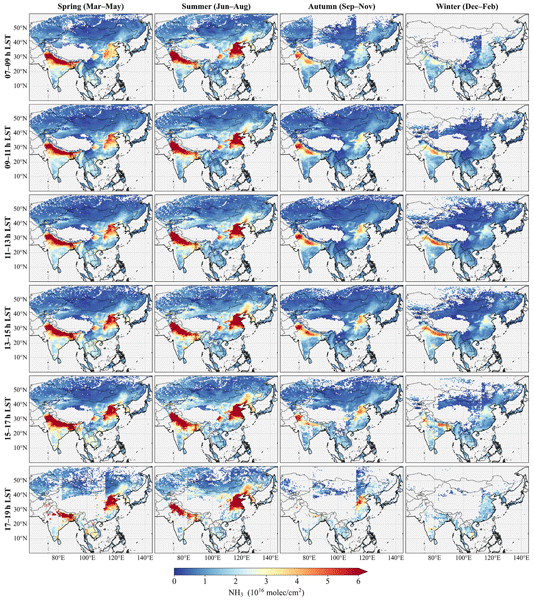
Geostationary observations of NH3 provide an unprecedented opportunity to monitor spatial and temporal variations in emissions and their evolution throughout the day. Using 3 years of observations from FY-4B/GIIRS over East Asia, we demonstrated the enhanced capability of geostationary observations to identify emission sources and capture daytime variations associated with agricultural activities. This shows the potential of future geostationary satellites for monitoring air quality globally.
Michael Sitwell
EGUsphere, https://doi.org/10.48550/arXiv.2504.16024, https://doi.org/10.48550/arXiv.2504.16024, 2026
Short summary
Short summary
EnsAI is a newly developed artificial intelligence based program for efficiently generating ensembles of atmospheric chemical concentrations that can be used in assimilation and emissions inversions systems. Ensemble-based data assimilation methods are widely used for assimilation and emissions inversions, but are usually very computationally demanding. Once trained, EnsAI can run thousands of times faster than the physics-based models when run on graphics processing units.
Debora Griffin, Colin Hempel, Chris McLinden, Shailesh Kumar Kharol, Colin Lee, Andre Fogal, Christopher Sioris, Mark Shephard, and Yuan You
Atmos. Meas. Tech., 18, 7497–7511, https://doi.org/10.5194/amt-18-7497-2025, https://doi.org/10.5194/amt-18-7497-2025, 2025
Short summary
Short summary
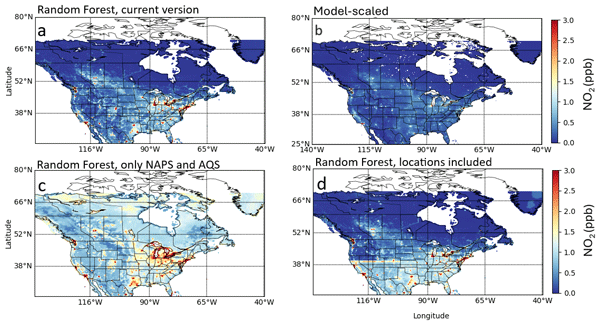
NO2 surface concentrations are obtained across North America using satellite data and machine learning, and compared to traditional approaches to determine surface NO2 from satellite observations.
Fan Sun, Yu Cui, Jiayin Su, Mark W. Shephard, Shailesh K. Kharol, Yifan Zhang, Xuejing Shi, Junqing Zhang, Huili Liu, Qitao Xiao, Xiao Lu, Zhao-Cheng Zeng, Timothy J. Griffis, and Cheng Hu
Atmos. Chem. Phys., 25, 17907–17932, https://doi.org/10.5194/acp-25-17907-2025, https://doi.org/10.5194/acp-25-17907-2025, 2025
Short summary
Short summary
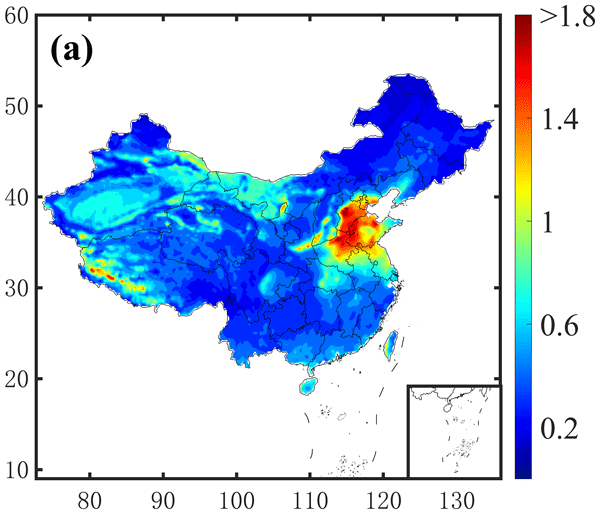
This study used satellite data and models to track ammonia concentration and dry deposition across China from 2013 to 2023. Ammonia levels rose sharply, especially in urban and farming regions, with the North China Plain showing the highest values. Human activity was the main driver of change. These findings highlight growing environmental risks and provide key insights for managing air quality and nitrogen pollution in one of the world's major emission hotspots.
Paul A. Makar, Philip Cheung, Christian Hogrefe, Ayodeji Akingunola, Ummugulsum Alyuz, Jesse O. Bash, Michael D. Bell, Roberto Bellasio, Roberto Bianconi, Tim Butler, Hazel Cathcart, Olivia E. Clifton, Alma Hodzic, Ioannis Kioutsioukis, Richard Kranenburg, Aurelia Lupascu, Jason A. Lynch, Kester Momoh, Juan L. Perez-Camanyo, Jonathan Pleim, Young-Hee Ryu, Roberto San Jose, Donna Schwede, Thomas Scheuschner, Mark W. Shephard, Ranjeet S. Sokhi, and Stefano Galmarini
Atmos. Chem. Phys., 25, 3049–3107, https://doi.org/10.5194/acp-25-3049-2025, https://doi.org/10.5194/acp-25-3049-2025, 2025
Short summary
Short summary
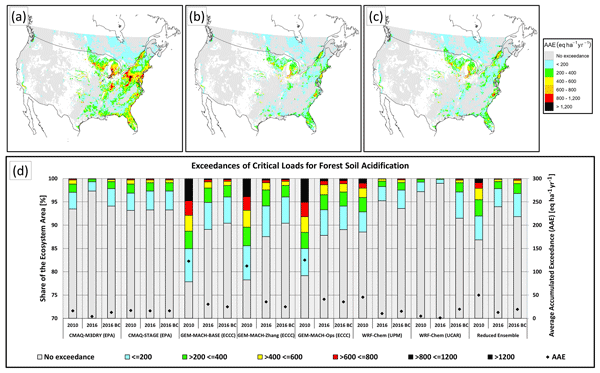
The large range of sulfur and nitrogen deposition estimates from air quality models results in a large range of predicted impacts. We used models and deposition diagnostics to identify the processes controlling atmospheric sulfur and nitrogen deposition variability. Controlling factors included the uptake of gases and aerosols by hydrometeors, aerosol inorganic chemistry, particle dry deposition, ammonia bidirectional fluxes, gas deposition via plant cuticles and soil, and land use data.
Mark Buehner, Jean-Francois Caron, Ervig Lapalme, Alain Caya, Ping Du, Yves Rochon, Sergey Skachko, Maziar Bani Shahabadi, Sylvain Heilliette, Martin Deshaies-Jacques, Weiguang Chang, and Michael Sitwell
Geosci. Model Dev., 18, 1–18, https://doi.org/10.5194/gmd-18-1-2025, https://doi.org/10.5194/gmd-18-1-2025, 2025
Short summary
Short summary
The Modular and Integrated Data Assimilation System (MIDAS) software is described. The flexible design of MIDAS enables both deterministic and ensemble prediction applications for the atmosphere and several other Earth system components. It is currently used for all main operational weather prediction systems in Canada and also for sea ice and sea surface temperature analysis. The use of MIDAS for multiple Earth system components will facilitate future research on coupled data assimilation.
Jieying Ding, Ronald van der A, Henk Eskes, Enrico Dammers, Mark Shephard, Roy Wichink Kruit, Marc Guevara, and Leonor Tarrason
Atmos. Chem. Phys., 24, 10583–10599, https://doi.org/10.5194/acp-24-10583-2024, https://doi.org/10.5194/acp-24-10583-2024, 2024
Short summary
Short summary
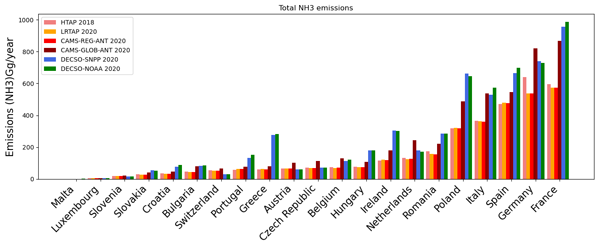
Here we applied the existing Daily Emissions Constrained by Satellite Observations (DECSO) inversion algorithm to NH3 observations from the CrIS satellite instrument to estimate NH3 emissions. As NH3 in the atmosphere is influenced by NOx, we implemented DECSO to estimate NOx and NH3 emissions simultaneously. The emissions are derived over Europe for 2020 at a spatial resolution of 0.2° using daily observations from CrIS and TROPOMI. Results are compared to bottom-up emission inventories.
Karen E. Cady-Pereira, Xuehui Guo, Rui Wang, April B. Leytem, Chase Calkins, Elizabeth Berry, Kang Sun, Markus Müller, Armin Wisthaler, Vivienne H. Payne, Mark W. Shephard, Mark A. Zondlo, and Valentin Kantchev
Atmos. Meas. Tech., 17, 15–36, https://doi.org/10.5194/amt-17-15-2024, https://doi.org/10.5194/amt-17-15-2024, 2024
Short summary
Short summary
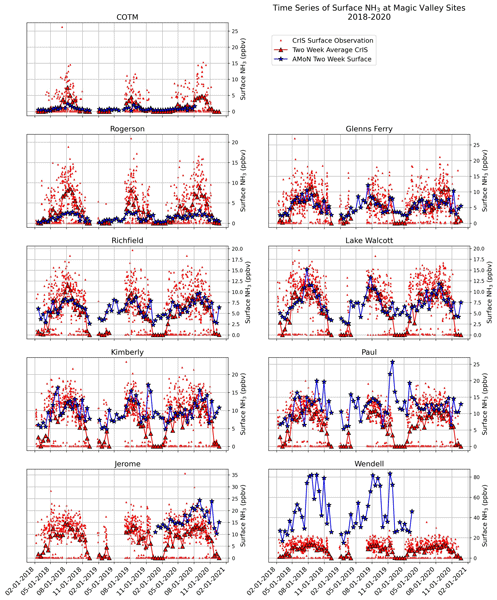
Ammonia is a significant precursor of PM2.5 particles and thus contributes to poor air quality in many regions. Furthermore, ammonia concentrations are rising due to the increase of large-scale, intensive agricultural activities. Here we evaluate satellite measurements of ammonia against aircraft and surface network data, and show that there are differences in magnitude, but the satellite data are spatially and temporally well correlated with the in situ data.
Zhipeng Qu, David P. Donovan, Howard W. Barker, Jason N. S. Cole, Mark W. Shephard, and Vincent Huijnen
Atmos. Meas. Tech., 16, 4927–4946, https://doi.org/10.5194/amt-16-4927-2023, https://doi.org/10.5194/amt-16-4927-2023, 2023
Short summary
Short summary
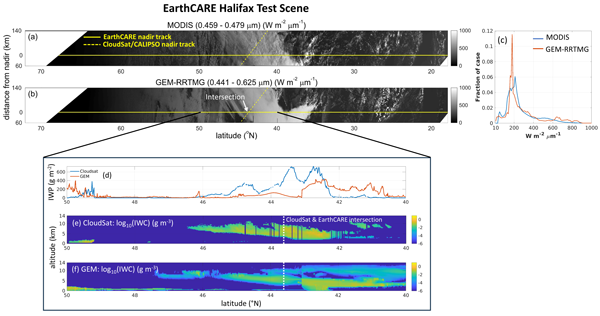
The EarthCARE satellite mission Level 2 algorithm development requires realistic 3D cloud and aerosol scenes along the satellite orbits. One of the best ways to produce these scenes is to use a high-resolution numerical weather prediction model to simulate atmospheric conditions at 250 m horizontal resolution. This paper describes the production and validation of three EarthCARE test scenes.
Jason N. S. Cole, Howard W. Barker, Zhipeng Qu, Najda Villefranque, and Mark W. Shephard
Atmos. Meas. Tech., 16, 4271–4288, https://doi.org/10.5194/amt-16-4271-2023, https://doi.org/10.5194/amt-16-4271-2023, 2023
Short summary
Short summary
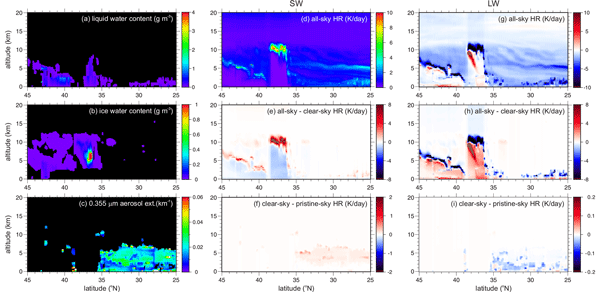
Measurements from the EarthCARE satellite mission will be used to retrieve profiles of cloud and aerosol properties. These retrievals are combined with auxiliary information about surface properties and atmospheric state, e.g., temperature and water vapor. This information allows computation of 1D and 3D solar and thermal radiative transfer for small domains, which are compared with coincident radiometer observations to continually assess EarthCARE retrievals.

Zhipeng Qu, Howard W. Barker, Jason N. S. Cole, and Mark W. Shephard
Atmos. Meas. Tech., 16, 2319–2331, https://doi.org/10.5194/amt-16-2319-2023, https://doi.org/10.5194/amt-16-2319-2023, 2023
Short summary
Short summary
This paper describes EarthCARE’s L2 product ACM-3D. It includes the scene construction algorithm (SCA) used to produce the indexes for reconstructing 3D atmospheric scene based on satellite nadir retrievals. It also provides the information about the buffer zone sizes of 3D assessment domains and the ranking scores for selecting the best 3D assessment domains. These output variables are needed to run 3D radiative transfer models for the radiative closure assessment of EarthCARE’s L2 retrievals.
Michael Sitwell, Mark W. Shephard, Yves Rochon, Karen Cady-Pereira, and Enrico Dammers
Atmos. Chem. Phys., 22, 6595–6624, https://doi.org/10.5194/acp-22-6595-2022, https://doi.org/10.5194/acp-22-6595-2022, 2022
Short summary
Short summary
Observations of ammonia made using the satellite-borne CrIS instrument were used to improve the ammonia emissions used in the GEM-MACH model. These observations were used to refine estimates of the monthly mean ammonia emissions over North America for May to August 2016. The updated ammonia emissions reduced biases of GEM-MACH surface ammonia fields with surface observations and showed some improvements in the forecasting of species involved in inorganic particulate matter formation.
Shelley van der Graaf, Enrico Dammers, Arjo Segers, Richard Kranenburg, Martijn Schaap, Mark W. Shephard, and Jan Willem Erisman
Atmos. Chem. Phys., 22, 951–972, https://doi.org/10.5194/acp-22-951-2022, https://doi.org/10.5194/acp-22-951-2022, 2022
Short summary
Short summary
CrIS NH3 satellite observations are assimilated into the LOTOS-EUROS model using two different methods. In the first method the data are used to fit spatially varying NH3 emission time factors. In the second method a local ensemble transform Kalman filter is used. Compared to in situ observations, combining both methods led to the most significant improvements in the modeled concentrations and deposition, illustrating the usefulness of CrIS NH3 to improve the spatiotemporal distribution of NH3.
Cited articles
Anderson, N., Strader, R., and Davidson, C.: Airborne reduced nitrogen: ammonia emissions from agriculture and other sources, Environ. Int., 29, 277–286, 2003. a
Bash, J. O., Cooter, E. J., Dennis, R. L., Walker, J. T., and Pleim, J. E.: Evaluation of a regional air-quality model with bidirectional NH3 exchange coupled to an agroecosystem model, Biogeosciences, 10, 1635–1645, https://doi.org/10.5194/bg-10-1635-2013, 2013. a
Batjes, N. H., Ribeiro, E., and van Oostrum, A.: Standardised soil profile data to support global mapping and modelling (WoSIS snapshot 2019), Earth Syst. Sci. Data, 12, 299–320, https://doi.org/10.5194/essd-12-299-2020, 2020. a
Buehner, M., McTaggart-Cowan, R., Beaulne, A., Charette, C., Garand, L., Heilliette, S., Lapalme, E., Laroche, S., Macpherson, S. R., Morneau, J., and Zadra, A.: Implementation of deterministic weather forecasting systems based on ensemble–variational data assimilation at Environment Canada. Part I: The global system, Mon. Weather Rev., 143, 2532–2559, 2015. a
Burnett, R. T., Pope III, C. A., Ezzati, M., Olives, C., Lim, S. S., Mehta, S., Shin, H. H., Singh, G., Hubbell, B., Brauer, M., Anderson, H. R., Smith, K. R., Balmes, J. R., Bruce, N. G., Kan, H., Laden, F., Prüss-Ustün, A., Turner, M. C., Gapstur, S. M., Diver, W. R., and Cohen, A.: An integrated risk function for estimating the global burden of disease attributable to ambient fine particulate matter exposure, Environ. Health. Persp., 122, 397–403, https://doi.org/10.1289/ehp.1307049, 2014. a
Cao, H., Henze, D. K., Shephard, M., Dammers, E., Cady-Pereira, K., Alvarado, M., Lonsdale, C., Luo, G., Yu, F., Zhu, L., Danielson, C., and Edgerton, E.: Inverse modeling of NH3 sources using CrIS remote sensing measurements, Environ. Res. Lett., 15, 104082, https://doi.org/10.1088/1748-9326/abb5cc, 2020. a
Cao, H., Henze, D. K., Zhu, L., Shephard, M. W., Cady-Pereira, K., Dammers, E., Sitwell, M., Heath, N., Lonsdale, C., Bash, J. O., Miyazaki, K., Flechard, C., Fauvel, Y., Wichink Kruit, R., Feigenspan, S., Brümmer, C., Schrader, F., Twigg, M. M., Leeson, S., Tang, Y. S., Stephens, A. C. M., Braban, C., Vincent, K., Meier, M., Seitler, E., Geels, C., Ellermann, T., Sanocka, A., and Capps, S. L.: 4D-Var inversion of European NH3 emissions using CrIS NH3 measurements and GEOS-Chem adjoint with bi-directional and uni-directional flux schemes, J. Geophys. Res.-Atmos., 127, e2021JD035687, https://doi.org/10.1029/2021JD035687, 2022. a, b, c, d, e
Chen, Y., Shen, H., Kaiser, J., Hu, Y., Capps, S. L., Zhao, S., Hakami, A., Shih, J.-S., Pavur, G. K., Turner, M. D., Henze, D. K., Resler, J., Nenes, A., Napelenok, S. L., Bash, J. O., Fahey, K. M., Carmichael, G. R., Chai, T., Clarisse, L., Coheur, P.-F., Van Damme, M., and Russell, A. G.: High-resolution hybrid inversion of IASI ammonia columns to constrain US ammonia emissions using the CMAQ adjoint model, Atmos. Chem. Phys., 21, 2067–2082, https://doi.org/10.5194/acp-21-2067-2021, 2021. a
Clarisse, L., Clerbaux, C., Dentener, F., Hurtmans, D., and Coheur, P.-F.: Global ammonia distribution derived from infrared satellite observations, Nat. Geosci., 2, 479–483, https://doi.org/10.1038/ngeo551, 2009. a
Cooter, E. J., Bash, J. O., Walker, J. T., Jones, M., and Robarge, W.: Estimation of NH3 bi-directional flux from managed agricultural soils, Atmos. Environ., 44, 2107–2115, 2010. a
Côté, J., Desmarais, J.-G., Gravel, S., Méthot, A., Patoine, A., Roch, M., and Staniforth, A.: The operational CMC–MRB global environmental multiscale (GEM) model. Part II: Results, Mon. Weather. Rev., 126, 1397–1418, https://doi.org/10.1175/1520-0493(1998)126<1397:TOCMGE>2.0.CO;2, 1998a. a
Côté, J., Gravel, S., Méthot, A., Patoine, A., Roch, M., and Staniforth, A.: The operational CMC–MRB global environmental multiscale (GEM) model. Part I: Design considerations and formulation, Mon. Weather. Rev., 126, 1373–1395, https://doi.org/10.1175/1520-0493(1998)126<1373:TOCMGE>2.0.CO;2, 1998b. a
Davis, M., Murphy, J., and Sitwell, M.: Modeling the impact of the bidirectional exchange of NH3 from the Great Lakes on a regional and local scale using GEM-MACH, J. Geophys. Res.-Atmos., 130, e2024JD041962, https://doi.org/10.1029/2024JD041962, 2025. a, b
Ding, J., van der A, R., Eskes, H., Dammers, E., Shephard, M., Wichink Kruit, R., Guevara, M., and Tarrason, L.: Ammonia emission estimates using CrIS satellite observations over Europe, Atmos. Chem. Phys., 24, 10583–10599, https://doi.org/10.5194/acp-24-10583-2024, 2024. a
Earl, N. and Simmonds, I.: Spatial and temporal variability and trends in 2001–2016 global fire activity, J. Geophys. Res.-Atmos., 123, 2524–2536, https://doi.org/10.1002/2017JD027749, 2018. a
Fangmeier, A., Hadwiger-Fangmeier, A., Van der Eerden, L., and Jäger, H.-J.: Effects of atmospheric ammonia on vegetation – a review, Environ. Pollut., 86, 43–82, https://doi.org/10.1016/0269-7491(94)90008-6, 1994. a
GEM-MACH: GEM-MACHv3.1.0a.2, Zenodo [code], https://doi.org/10.5281/zenodo.16883567, 2025. a
Genedy, R. and Ogejo, J.: Quantifying ammonia lost to the atmosphere during manure storage on a dairy farm as influenced by management and meteorological parameters, Agr. Ecosyst. Environ., 354, 108563, https://doi.org/10.1016/j.agee.2023.108563, 2023. a
Gilliland, A. B., Dennis, R. L., Roselle, S. J., and Pierce, T. E.: Seasonal NH3 emission estimates for the eastern United States based on ammonium wet concentrations and an inverse modeling method, J. Geophys. Res.-Atmos., 108, https://doi.org/10.1029/2002JD003063, 2003. a
Gilliland, A. B., Appel, K. W., Pinder, R. W., and Dennis, R. L.: Seasonal NH3 emissions for the continental United States: Inverse model estimation and evaluation, Atmos. Environ., 40, 4986–4998, https://doi.org/10.1016/j.atmosenv.2005.12.066, 2006. a
Girard, C., Plante, A., Desgagné, M., McTaggart-Cowan, R., Côté, J., Charron, M., Gravel, S., Lee, V., Patoine, A., Qaddouri, A., Roch, M., Spacek, L., Tanguay, M., Vaillancourt, P., and Zadra, A.: Staggered vertical discretization of the Canadian Environmental Multiscale (GEM) model using a coordinate of the log-hydrostatic-pressure type, Mon. Weather. Rev., 142, 1183–1196, https://doi.org/10.1175/MWR-D-13-00255.1, 2014. a
Gong, W., Dastoor, A., Bouchet, V., Gong, S., Makar, P., Moran, M., Pabla, B., Ménard, S., Crevier, L.-P., Cousineau, S., and Venkatesh, S.: Cloud processing of gases and aerosols in a regional air quality model (AURAMS), Atmos. Res., 82, 248–275, https://doi.org/10.1016/j.atmosres.2005.10.012, 2006. a
Gong, W., Makar, P., Zhang, J., Milbrandt, J., Gravel, S., Hayden, K., Macdonald, A., and Leaitch, W.: Modelling aerosol–cloud–meteorology interaction: A case study with a fully coupled air quality model (GEM-MACH), Atmos. Environ., 115, 695–715, https://doi.org/10.1016/j.atmosenv.2015.05.062, 2015. a
Hafner, S. D., Pacholski, A., Bittman, S., Burchill, W., Bussink, W., Chantigny, M., Carozzi, M., Génermont, S., Häni, C., Hansen, M. N., Huijsmans, J., Hunt, D., Kupper, T., Lanigan, G., Loubet, B., Misselbrook, T., Meisinger, J. J., Neftel, A., Nyord, T., Pedersen, S. V., Sintermann, J., Thompson, R. B., Vermeulen, B., Vestergaard, A. V., Voylokov, P., Williams, J. R., and Sommer, S. G.: The ALFAM2 database on ammonia emission from field-applied manure: Description and illustrative analysis, Agr. Forest Meteorol., 258, 66–79, 2018. a
Jin, J., Fang, L., Li, B., Liao, H., Wang, Y., Han, W., Li, K., Pang, M., Wu, X., and Lin, H. X.: 4DEnVar-based inversion system for ammonia emission estimation in China through assimilating IASI ammonia retrievals, Environ. Res. Lett., 18, 034005, https://doi.org/10.1088/1748-9326/acb835, 2023. a
Krupa, S.: Effects of atmospheric ammonia (NH3) on terrestrial vegetation: a review, Environ. Pollut., 124, 179–221, https://doi.org/10.1016/S0269-7491(02)00434-7, 2003. a
Lee, M., Auvermann, B. W., Tedeschi, L. O., Koziel, J. A., Brandani, C. B., Gouvêa, V. N., Smith, J. K., and Casey, K. D.: Ammonia emissions from beef cattle feedyards: a review, Frontiers in Animal Science, 6, 1608387, https://doi.org/10.3389/fanim.2025.1608387, 2025. a
Makar, P. A., Moran, M. D., Zheng, Q., Cousineau, S., Sassi, M., Duhamel, A., Besner, M., Davignon, D., Crevier, L.-P., and Bouchet, V. S.: Modelling the impacts of ammonia emissions reductions on North American air quality, Atmos. Chem. Phys., 9, 7183–7212, https://doi.org/10.5194/acp-9-7183-2009, 2009. a
Moncet, J.-L., Uymin, G., Lipton, A. E., and Snell, H. E.: Infrared radiance modeling by optimal spectral sampling, J. Atmos. Sci., 65, 3917–3934, 2008. a
Moran, M., Ménard, S., Talbot, D., Huang, P., Makar, P., Gong, W., Landry, H., Gravel, S., Gong, S., Crevier, L.-P., Kallaur, A., and Sassi, M.: Particulate-matter forecasting with GEM-MACH15, a new Canadian air-quality forecast model, Air Pollution Modelling and Its Application XX, 289–292, Springer, ISBN 9789048138111, 2010. a
Munoz-Alpizar, R., Pavlovic, R., Moran, M. D., Chen, J., Gravel, S., Henderson, S. B., Ménard, S., Racine, J., Duhamel, A., Gilbert, S., Beaulieu, P.-A., Landry, H., Davignon, D., Cousineau, S., and Bouchet, V.: Multi-year (2013–2016) PM2.5 wildfire pollution exposure over North America as determined from operational air quality forecasts, Atmosphere, 8, 179, https://doi.org/10.3390/atmos8090179, 2017. a
Noilhan, J. and Mahfouf, J.-F.: The ISBA land surface parameterisation scheme, Glob. Planet. Change, 13, 145–159, 1996. a
Paulot, F., Jacob, D. J., Pinder, R., Bash, J., Travis, K., and Henze, D.: Ammonia emissions in the United States, European Union, and China derived by high-resolution inversion of ammonium wet deposition data: Interpretation with a new agricultural emissions inventory (MASAGE_NH3), J. Geophys. Res.-Atmos., 119, 4343–4364, https://doi.org/10.1002/2013JD021130, 2014. a
Pavlovic, R., Chen, J., Anderson, K., Moran, M. D., Beaulieu, P.-A., Davignon, D., and Cousineau, S.: The FireWork air quality forecast system with near-real-time biomass burning emissions: Recent developments and evaluation of performance for the 2015 North American wildfire season, J. Air. Waste. Manage., 66, 819–841, https://doi.org/10.1080/10962247.2016.1158214, 2016. a
Pope III, C. A., Burnett, R. T., Thun, M. J., Calle, E. E., Krewski, D., Ito, K., and Thurston, G. D.: Lung cancer, cardiopulmonary mortality, and long-term exposure to fine particulate air pollution, JAMA, 287, 1132–1141, https://doi.org/10.1001/jama.287.9.1132, 2002. a
Rodgers, C. D.: Inverse methods for atmospheric sounding: theory and practice, vol. 2, World scientific, https://doi.org/10.1142/3171, 2000. a
Shephard, M. W. and Cady-Pereira, K. E.: Cross-track Infrared Sounder (CrIS) satellite observations of tropospheric ammonia, Atmos. Meas. Tech., 8, 1323–1336, https://doi.org/10.5194/amt-8-1323-2015, 2015. a, b, c
Shephard, M. W., Cady-Pereira, K. E., Luo, M., Henze, D. K., Pinder, R. W., Walker, J. T., Rinsland, C. P., Bash, J. O., Zhu, L., Payne, V. H., and Clarisse, L.: TES ammonia retrieval strategy and global observations of the spatial and seasonal variability of ammonia, Atmos. Chem. Phys., 11, 10743–10763, https://doi.org/10.5194/acp-11-10743-2011, 2011. a, b
Shephard, M. W., McLinden, C. A., Cady-Pereira, K. E., Luo, M., Moussa, S. G., Leithead, A., Liggio, J., Staebler, R. M., Akingunola, A., Makar, P., Lehr, P., Zhang, J., Henze, D. K., Millet, D. B., Bash, J. O., Zhu, L., Wells, K. C., Capps, S. L., Chaliyakunnel, S., Gordon, M., Hayden, K., Brook, J. R., Wolde, M., and Li, S.-M.: Tropospheric Emission Spectrometer (TES) satellite observations of ammonia, methanol, formic acid, and carbon monoxide over the Canadian oil sands: validation and model evaluation, Atmos. Meas. Tech., 8, 5189–5211, https://doi.org/10.5194/amt-8-5189-2015, 2015. a
Shephard, M. W., Dammers, E., Cady-Pereira, K. E., Kharol, S. K., Thompson, J., Gainariu-Matz, Y., Zhang, J., McLinden, C. A., Kovachik, A., Moran, M., Bittman, S., Sioris, C. E., Griffin, D., Alvarado, M. J., Lonsdale, C., Savic-Jovcic, V., and Zheng, Q.: Ammonia measurements from space with the Cross-track Infrared Sounder: characteristics and applications, Atmos. Chem. Phys., 20, 2277–2302, https://doi.org/10.5194/acp-20-2277-2020, 2020. a, b
Sitwell, M., Shephard, M. W., Rochon, Y., Cady-Pereira, K., and Dammers, E.: An ensemble-variational inversion system for the estimation of ammonia emissions using CrIS satellite ammonia retrievals, Atmos. Chem. Phys., 22, 6595–6624, https://doi.org/10.5194/acp-22-6595-2022, 2022. a, b, c, d
Stange, C. F. and Neue, H.-U.: Measuring and modelling seasonal variation of gross nitrification rates in response to long-term fertilisation, Biogeosciences, 6, 2181–2192, https://doi.org/10.5194/bg-6-2181-2009, 2009. a
Sutton, M., Asman, W., and Schøring, J.: Dry deposition of reduced nitrogen, Tellus B, 46, 255–273, 1994. a
Sutton, M., Nemitz, E., Fowler, D., Wyers, G., Otjes, R., Schjoerring, J., Husted, S., Nielsen, K., San Jose, R., Moreno, J., Gallagher, M. W., and Gut, A.: Fluxes of ammonia over oilseed rape: Overview of the EXAMINE experiment, Agr. Forest Meteorol., 105, 327–349, 2000. a
Sutton, M. A., Reis, S., Riddick, S. N., Dragosits, U., Nemitz, E., Theobald, M. R., Tang, Y. S., Braban, C. F., Vieno, M., Dore, A. J., Mitchell, R. F., Wanless, S., Daunt, F., Fowler, D., Blackall, T. D., Milford, C., Flechard, C. R., Loubet, B., Massad, R., Cellier, P., Personne, E., Coheur, P. F., Clarisse, L., Van Damme, M., Ngadi, Y., Clerbaux, C., Ambelas Skjøth, C., Geels, C., Hertel, O., Wichink Kruit, R. J., Pinder, R. W., Bash, J. O., Walker, J. T., Simpson, D., Horváth, L., Misselbrook, T. H., Bleeker, A., Dentener, F., and de Vries, W.: Towards a climate-dependent paradigm of ammonia emission and deposition, Philos. T. Roy. Soc. B, 368, 20130166, https://doi.org/10.1098/rstb.2013.0166, 2013. a
Tsimpidi, A. P., Karydis, V. A., and Pandis, S. N.: Response of inorganic fine particulate matter to emission changes of sulfur dioxide and ammonia: The eastern United States as a case study, J. Air. Waste. Manage., 57, 1489–1498, https://doi.org/10.3155/1047-3289.57.12.1489, 2007. a
Van Damme, M., Clarisse, L., Heald, C. L., Hurtmans, D., Ngadi, Y., Clerbaux, C., Dolman, A. J., Erisman, J. W., and Coheur, P. F.: Global distributions, time series and error characterization of atmospheric ammonia (NH3) from IASI satellite observations, Atmos. Chem. Phys., 14, 2905–2922, https://doi.org/10.5194/acp-14-2905-2014, 2014. a
Van Damme, M., Clarisse, L., Franco, B., Sutton, M. A., Erisman, J. W., Kruit, R. W., van Zanten, M., Whitburn, S., Hadji-Lazaro, J., Hurtmans, D., Clerbaux, C., and Coheur, P.-F.: Global, regional and national trends of atmospheric ammonia derived from a decadal (2008–2018) satellite record, Environ. Res. Lett., 16, 055017, https://doi.org/10.1088/1748-9326/abd5e0, 2021. a
van der Graaf, S., Dammers, E., Segers, A., Kranenburg, R., Schaap, M., Shephard, M. W., and Erisman, J. W.: Data assimilation of CrIS NH3 satellite observations for improving spatiotemporal NH3 distributions in LOTOS-EUROS, Atmos. Chem. Phys., 22, 951–972, https://doi.org/10.5194/acp-22-951-2022, 2022. a
Vira, J., Hess, P., Melkonian, J., and Wieder, W. R.: An improved mechanistic model for ammonia volatilization in Earth system models: Flow of Agricultural Nitrogen version 2 (FANv2), Geosci. Model Dev., 13, 4459–4490, https://doi.org/10.5194/gmd-13-4459-2020, 2020. a, b
Warner, J., Dickerson, R., Wei, Z., Strow, L., Wang, Y., and Liang, Q.: Increased atmospheric ammonia over the world's major agricultural areas detected from space, Geophys. Res. Lett., 44, 2875–2884, https://doi.org/10.1002/2016GL072305, 2017. a
Warner, J. X., Wei, Z., Strow, L. L., Dickerson, R. R., and Nowak, J. B.: The global tropospheric ammonia distribution as seen in the 13-year AIRS measurement record, Atmos. Chem. Phys., 16, 5467–5479, https://doi.org/10.5194/acp-16-5467-2016, 2016. a
Wesely, M.: Parameterization of surface resistances to gaseous dry deposition in regional-scale numerical models, Atmos. Environ., 23, 1293––1304, 1989. a
Whaley, C. H., Makar, P. A., Shephard, M. W., Zhang, L., Zhang, J., Zheng, Q., Akingunola, A., Wentworth, G. R., Murphy, J. G., Kharol, S. K., and Cady-Pereira, K. E.: Contributions of natural and anthropogenic sources to ambient ammonia in the Athabasca Oil Sands and north-western Canada, Atmos. Chem. Phys., 18, 2011–2034, https://doi.org/10.5194/acp-18-2011-2018, 2018. a, b, c
White, E., Shephard, M. W., Cady-Pereira, K. E., Kharol, S. K., Ford, S., Dammers, E., Chow, E., Thiessen, N., Tobin, D., Quinn, G., O'Brien, J., and Bash, J.: Accounting for non-detects: Application to satellite ammonia observations, Remote Sens., 15, 2610, https://doi.org/10.3390/rs15102610, 2023. a, b
Wichink Kruit, R. J., Schaap, M., Sauter, F. J., van Zanten, M. C., and van Pul, W. A. J.: Modeling the distribution of ammonia across Europe including bi-directional surface–atmosphere exchange, Biogeosciences, 9, 5261–5277, https://doi.org/10.5194/bg-9-5261-2012, 2012. a, b, c
Zhang, L., Gong, S., Padro, J., and Barrie, L.: A size-segregated particle dry deposition scheme for an atmospheric aerosol module, Atmos. Environ., 35, 549–560, https://doi.org/10.1016/S1352-2310(00)00326-5, 2001. a
Zhang, L., Moran, M. D., Makar, P. A., Brook, J. R., and Gong, S.: Modelling gaseous dry deposition in AURAMS: a unified regional air-quality modelling system, Atmos. Environ., 36, 537–560, 2002. a
Zhang, L., Wright, L., and Asman, W.: Bi-directional air-surface exchange of atmospheric ammonia: A review of measurements and a development of a big-leaf model for applications in regional-scale air-quality models, J. Geophys. Res.-Atmos., 115, https://doi.org/10.1029/2009JD013589, 2010. a, b
Zhang, L., Chen, Y., Zhao, Y., Henze, D. K., Zhu, L., Song, Y., Paulot, F., Liu, X., Pan, Y., Lin, Y., and Huang, B.: Agricultural ammonia emissions in China: reconciling bottom-up and top-down estimates, Atmos. Chem. Phys., 18, 339–355, https://doi.org/10.5194/acp-18-339-2018, 2018. a
Zhu, L., Henze, D., Cady-Pereira, K., Shephard, M., Luo, M., Pinder, R., Bash, J., and Jeong, G.-R.: Constraining US ammonia emissions using TES remote sensing observations and the GEOS-Chem adjoint model, J. Geophys. Res.-Atmos., 118, 3355–3368, https://doi.org/10.1002/jgrd.50166, 2013. a
Zhu, L., Henze, D., Bash, J., Jeong, G.-R., Cady-Pereira, K., Shephard, M., Luo, M., Paulot, F., and Capps, S.: Global evaluation of ammonia bidirectional exchange and livestock diurnal variation schemes, Atmos. Chem. Phys., 15, 12823–12843, https://doi.org/10.5194/acp-15-12823-2015, 2015a. a, b, c, d, e
Zhu, L., Henze, D. K., Bash, J. O., Cady-Pereira, K. E., Shephard, M. W., Luo, M., and Capps, S. L.: Sources and impacts of atmospheric NH3: Current understanding and frontiers for modeling, measurements, and remote sensing in North America, Current Pollution Reports, 1, 95–116, 2015b. a
Short summary
Bidirectional flux models give a unified model for emission and dry deposition, but few studies have been conducted in which satellite observations are used to refine the parameters in these models. A new bidirectional flux model for ammonia was developed that was designed specifically for use with satellite observations. Ammonia satellite observations were used to refine bidirectional flux model parameters, which improved the agreement of the model with ammonia surface observations.
Bidirectional flux models give a unified model for emission and dry deposition, but few studies...


