
Articles | Volume 19, issue 7
https://doi.org/10.5194/gmd-19-2717-2026
© Author(s) 2026. This work is distributed under
the Creative Commons Attribution 4.0 License.
the Creative Commons Attribution 4.0 License.
Special issue:
https://doi.org/10.5194/gmd-19-2717-2026
© Author(s) 2026. This work is distributed under
the Creative Commons Attribution 4.0 License.
the Creative Commons Attribution 4.0 License.
Development and technical paper
| 
10 Apr 2026
Development and technical paper |
| 10 Apr 2026
| 10 Apr 2026
Automated forward and adjoint modelling of viscoelastic deformation of the solid Earth

Research School of Earth Sciences, The Australian National University, Canberra, ACT, Australia
Mark Hoggard
Research School of Earth Sciences, The Australian National University, Canberra, ACT, Australia
Thomas Duvernay
Research School of Earth Sciences, The Australian National University, Canberra, ACT, Australia
Sia Ghelichkhan
Research School of Earth Sciences, The Australian National University, Canberra, ACT, Australia
Institute for Water Futures, The Australian National University, Canberra, ACT, Australia
Angus Gibson
Research School of Earth Sciences, The Australian National University, Canberra, ACT, Australia
Dale Roberts
Research School of Earth Sciences, The Australian National University, Canberra, ACT, Australia
Stephan C. Kramer
Department of Earth Science and Engineering, Imperial College London, London, UK
D. Rhodri Davies
Research School of Earth Sciences, The Australian National University, Canberra, ACT, Australia
Related authors
No articles found.
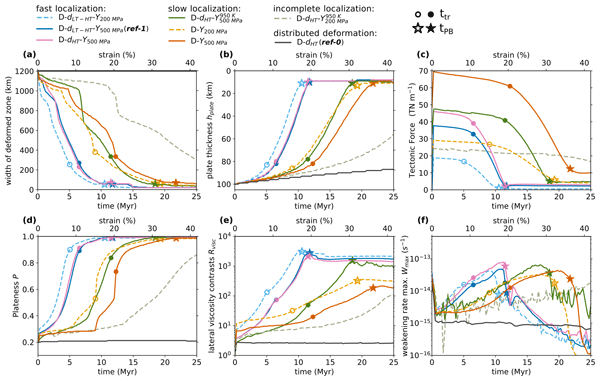
Etienne Van Broeck, Fanny Garel, Catherine Thoraval, Diane Arcay, and D. Rhodri Davies
Solid Earth, 17, 947–977, https://doi.org/10.5194/se-17-947-2026, https://doi.org/10.5194/se-17-947-2026, 2026
Short summary
Short summary
Earth’s solid shell is made of stiff tectonic plates which can break apart to form new weak plate boundaries. We use numerical models of plate extension to investigate how mechanical properties control the concentration of deformation leading to such a boundary as hot mantle rises underneath. We highlight feedbacks, and quantify how and why, under various deformation mechanisms, the plate weakens as temperature and strain rate increase. We compare the model predictions to natural rifting cases.
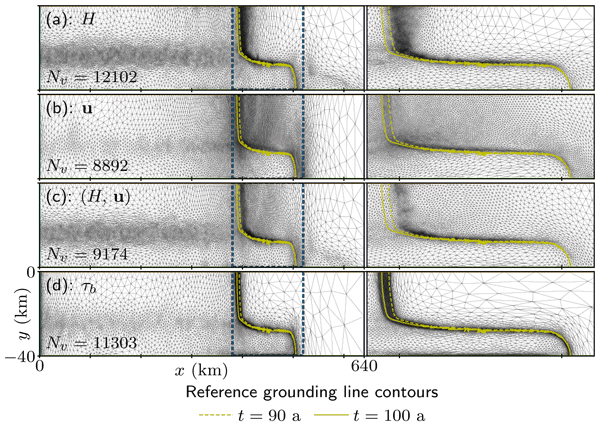
Davor Dundovic, Joseph G. Wallwork, Stephan C. Kramer, Fabien Gillet-Chaulet, Regine Hock, and Matthew D. Piggott
Geosci. Model Dev., 18, 4023–4044, https://doi.org/10.5194/gmd-18-4023-2025, https://doi.org/10.5194/gmd-18-4023-2025, 2025
Short summary
Short summary
Accurate numerical studies of glaciers often require high-resolution simulations, which often prove too demanding even for modern computers. In this paper we develop a method that identifies whether different parts of a glacier require high or low resolution based on its physical features, such as its thickness and velocity. We show that by doing so we can achieve a more optimal simulation accuracy for the available computing resources compared to uniform-resolution simulations.
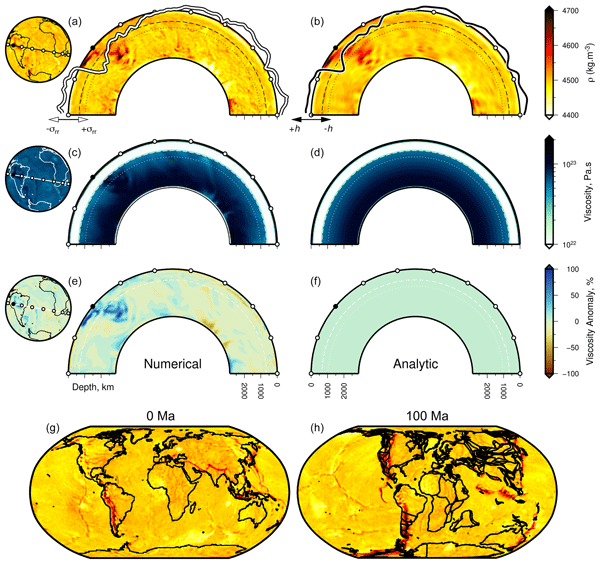
Conor P. B. O'Malley, Gareth G. Roberts, James Panton, Fred D. Richards, J. Huw Davies, Victoria M. Fernandes, and Sia Ghelichkhan
Geosci. Model Dev., 17, 9023–9049, https://doi.org/10.5194/gmd-17-9023-2024, https://doi.org/10.5194/gmd-17-9023-2024, 2024
Short summary
Short summary
We wish to understand how the history of flowing rock within Earth's interior impacts deflection of its surface. Observations exist to address this problem, and mathematics and different computing tools can be used to predict histories of flow. We explore how modeling choices impact calculated vertical deflections. The sensitivity of vertical motions at Earth's surface to deep flow is assessed, demonstrating how surface observations can enlighten flow histories.
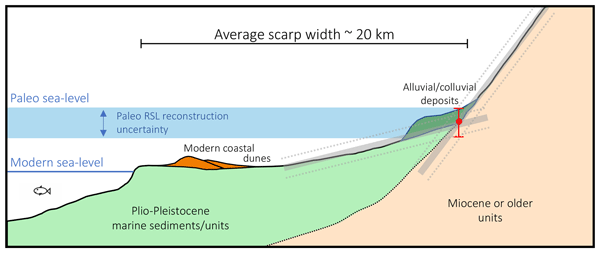
Andrew Hollyday, Maureen E. Raymo, Jacqueline Austermann, Fred Richards, Mark Hoggard, and Alessio Rovere
Earth Surf. Dynam., 12, 883–905, https://doi.org/10.5194/esurf-12-883-2024, https://doi.org/10.5194/esurf-12-883-2024, 2024
Short summary
Short summary
Sea level was significantly higher during the Pliocene epoch, around 3 million years ago. The present-day elevations of shorelines that formed in the past provide a data constraint on the extent of ice sheet melt and the global sea level response under warm Pliocene conditions. In this study, we identify 10 escarpments that formed from wave-cut erosion during Pliocene times and compare their elevations with model predictions of solid Earth deformation processes to estimate past sea level.
Sia Ghelichkhan, Angus Gibson, D. Rhodri Davies, Stephan C. Kramer, and David A. Ham
Geosci. Model Dev., 17, 5057–5086, https://doi.org/10.5194/gmd-17-5057-2024, https://doi.org/10.5194/gmd-17-5057-2024, 2024
Short summary
Short summary
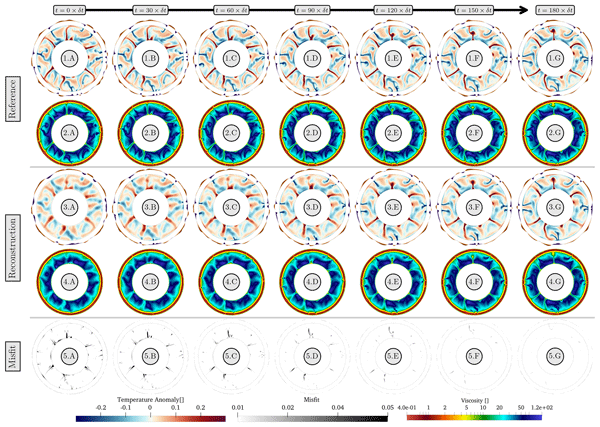
We introduce the Geoscientific ADjoint Optimisation PlaTform (G-ADOPT), designed for inverse modelling of Earth system processes, with an initial focus on mantle dynamics. G-ADOPT is built upon Firedrake, Dolfin-Adjoint and the Rapid Optimisation Library, which work together to optimise models using an adjoint method, aligning them with seismic and geologic datasets. We demonstrate G-ADOPT's ability to reconstruct mantle evolution and thus be a powerful tool in geosciences.
D. Rhodri Davies, Stephan C. Kramer, Sia Ghelichkhan, and Angus Gibson
Geosci. Model Dev., 15, 5127–5166, https://doi.org/10.5194/gmd-15-5127-2022, https://doi.org/10.5194/gmd-15-5127-2022, 2022
Short summary
Short summary
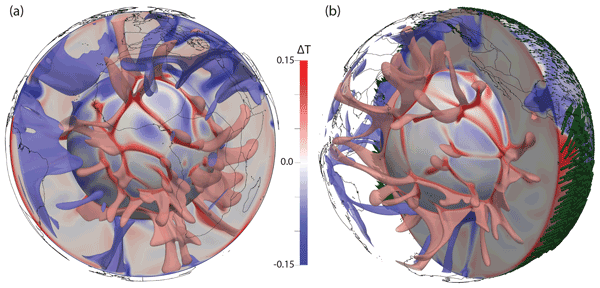
Firedrake is a state-of-the-art system that automatically generates highly optimised code for simulating finite-element (FE) problems in geophysical fluid dynamics. It creates a separation of concerns between employing the FE method and implementing it. Here, we demonstrate the applicability and benefits of Firedrake for simulating geodynamical flows, with a focus on the slow creeping motion of Earth's mantle over geological timescales, which is ultimately the engine driving our dynamic Earth.
Cited articles
A, G., Wahr, J., and Zhong, S.: Computations of the viscoelastic response of a 3-D compressible Earth to surface loading: an application to Glacial Isostatic Adjustment in Antarctica and Canada, Geophys. J. Int., 192, 557–572, https://doi.org/10.1093/gji/ggs030, 2013. a
Adhikari, S., Milne, G., Caron, L., Khan, S., Kjeldsen, K., Nilsson, J., Larour, E., and Ivins, E.: Decadal to centennial timescale mantle viscosity inferred from modern crustal uplift rates in Greenland, Geophys. Res. Lett., 48, e2021GL094040, https://doi.org/10.1029/2021GL094040, 2021. a
Austermann, J., Mitrovica, J. X., Latychev, K., and Milne, G. A.: Barbados-based estimate of ice volume at Last Glacial Maximum affected by subducted plate, Nat. Geosci., 6, 553–557, 2013. a
Austermann, J., Chen, C. Y., Lau, H. C., Maloof, A. C., and Latychev, K.: Constraints on mantle viscosity and Laurentide ice sheet evolution from pluvial paleolake shorelines in the western United States, Earth Planet. Sc. Lett., 532, 116006, https://doi.org/10.1016/j.epsl.2019.116006, 2020. a
Austermann, J., Hoggard, M. J., Latychev, K., Richards, F. D., and Mitrovica, J. X.: The effect of lateral variations in Earth structure on Last Interglacial sea level, Geophys. J. Int., 227, 1938–1960, 2021. a
Bailey, R. C.: Large time step numerical modelling of the flow of Maxwell materials, Geophys. J. Int., 164, 460–466, https://doi.org/10.1111/j.1365-246X.2005.02788.x, 2006. a
Balay, S., Gropp, W. D., McInnes, L. C., and Smith, B. F.: Efficient management of parallelism in object-oriented numerical software libraries, in: Modern Software Tools for Scientific Computing, edited by: Arge, E., Bruaset, A. M., and Langtangen, H. P., chap. 8, Springer, New York, 163–202, https://doi.org/10.1007/978-1-4612-1986-6_8, 1997. a
Balay, S., Abhyankar, S., Adams, M. F., Benson, S., Brown, J., Brune, P., Buschelman, K., Constantinescu, E., Dalcin, L., Dener, A., Eijkhout, V., Faibussowitsch, J., Gropp, W. D., Hapla, V., Isaac, T., Jolivet, P., Karpeev, D., Kaushik, D., Knepley, M. G., Kong, F., Kruger, S., May, D. A., McInnes, L. C., Mills, R. T., Mitchell, L., Munson, T., Roman, J. E., Rupp, K., Sanan, P., Sarich, J., Smith, B. F., Suh, H., Zampini, S., Zhang, H., Zhang, H., and Zhang, J.: PETSc/TAO Users Manual, Tech. Rep. ANL-21/39 – Revision 3.23, Argonne National Laboratory, https://doi.org/10.2172/2476320, 2025a. a
Balay, S., Abhyankar, S., Adams, M. F., Benson, S., Brown, J., Brune, P., Buschelman, K., Constantinescu, E. M., Dalcin, L., Dener, A., Eijkhout, V., Faibussowitsch, J., Gropp, W. D., Hapla, V., Isaac, T., Jolivet, P., Karpeev, D., Kaushik, D., Knepley, M. G., Kong, F., Kruger, S., May, D. A., McInnes, L. C., Mills, R. T., Mitchell, L., Munson, T., Roman, J. E., Rupp, K., Sanan, P., Sarich, J., Smith, B. F., Zampini, S., Zhang, H., Zhang, H., and Zhang, J.: PETSc Web page, https://petsc.org/ (last access: 6 March 2026), 2025b. a
Barletta, V. R., Bevis, M., Smith, B. E., Wilson, T., Brown, A., Bordoni, A., Willis, M., Khan, S. A., Rovira-Navarro, M., Dalziel, I., Smalley Jr., R., Kendrick, E., Konfal, S., Caccamise II, D. J., Aster, R. C., Nyblade, A., and Wiens, D. A.: Observed rapid bedrock uplift in Amundsen Sea Embayment promotes ice-sheet stability, Science, 360, 1335–1339, https://doi.org/10.1126/science.aao1447, 2018. a, b
Bercea, G.-T., McRae, A. T. T., Ham, D. A., Mitchell, L., Rathgeber, F., Nardi, L., Luporini, F., and Kelly, P. H. J.: A structure-exploiting numbering algorithm for finite elements on extruded meshes, and its performance evaluation in Firedrake, Geosci. Model Dev., 9, 3803–3815, https://doi.org/10.5194/gmd-9-3803-2016, 2016. a
Bunge, H.-P., Hagelberg, C., and Travis, B.: Mantle circulation models with variational data assimilation: inferring past mantle flow and structure from plate motion histories and seismic tomography, Geophys. J. Int., 152, 280–301, 2003. a
Caron, L. and Ivins, E. R.: A baseline Antarctic GIA correction for space gravimetry, Earth Planet. Sc. Lett., 531, 115957, https://doi.org/10.1016/j.epsl.2019.115957, 2020. a
Cathles, L.: On calculating glacial isostatic adjustment, Geodesy Geodyn., 15, 441–452, 2024. a
Cathles, L. M.: Viscosity of the Earth's Mantle, Princeton University Press, ISBN 978-0-691-64492-9, 2016. a
Chaljub, E. and Valette, B.: Spectral element modelling of three-dimensional wave propagation in a self-gravitating Earth with an arbitrarily stratified outer core, Geophys. J. Int., 158, 131–141, 2004. a
Chao, B. F., Wu, Y.-H., and Li, Y.: Impact of artificial reservoir water impoundment on global sea level, Science, 320, 212–214, 2008. a
Church, J. A., White, N. J., Coleman, R., Lambeck, K., and Mitrovica, J. X.: Estimates of the regional distribution of sea level rise over the 1950–2000 period, J. Climate, 17, 2609–2625, 2004. a
Crittenden Jr., M. D.: Effective viscosity of the earth derived from isostatic loading of Pleistocene Lake Bonneville, J. Geophys. Res., 68, 5517–5530, 1963. a
Crowley, J. W., Mitrovica, J. X., Bailey, R. C., Tamisiea, M. E., and Davis, J. L.: Land water storage within the Congo Basin inferred from GRACE satellite gravity data, Geophys. Res. Lett., 33, https://doi.org/10.1029/2006GL027070, 2006. a
Dahlen, A. F. and Tromp, J.: Theoretical Global Seismology, Princeton University Press, ISBN 978-0-691-00124-1, 1998. a
Daly, R. A.: Pleistocene changes of level, Am. J. Sci., 10, 281, https://doi.org/10.2475/ajs.s5-10.58.281, 1925. a
Dehant, V., Defraigne, P., and Wahr, J.: Tides for a convective Earth, J. Geophys. Res.-Sol. Ea., 104, 1035–1058, 1999. a
Epshteyn, Y. and Rivière, B.: Estimation of penalty parameters for symmetric interior penalty Galerkin methods, J. Comput. Appl. Math., 206, 843–872, https://doi.org/10.1016/j.cam.2006.08.029, 2007. a
Errico, R. M.: What is an adjoint model?, B. Am. Meteorol. Soc., 78, 2577–2591, 1997. a
Faul, U. and Jackson, I.: Transient Creep and Strain Energy Dissipation: An Experimental Perspective, Annu. Rev. Earth Pl. Sc., 43, 541–569, 2015. a
Fichtner, A., Bunge, H.-P., and Igel, H.: The adjoint method in seismology: I. Theory, Phys. Earth Planet. In., 157, 86–104, 2006. a
firedrake zenodo: Software used in “Automated forward and adjoint modelling of viscoelastic deformation of the solid Earth”, Zenodo [code], https://doi.org/10.5281/zenodo.18880361, 2026. a
Forget, G., Campin, J.-M., Heimbach, P., Hill, C. N., Ponte, R. M., and Wunsch, C.: ECCO version 4: an integrated framework for non-linear inverse modeling and global ocean state estimation, Geosci. Model Dev., 8, 3071–3104, https://doi.org/10.5194/gmd-8-3071-2015, 2015. a
Gasperini, P., Dal Forno, G., and Boschi, E.: Linear or non-linear rheology in the Earth's mantle: the prevalence of power-law creep in the postglacial isostatic readjustment of Laurentia, Geophys. J. Int., 157, 1297–1302, 2004. a
Geuzaine, C. and Remacle, J.-F.: Gmsh: A 3-D finite element mesh generator with built-in pre-and post-processing facilities, Int. J. Numer. Meth. Eng., 79, 1309–1331, 2009. a
Gharti, H. N. and Tromp, J.: A spectral-infinite-element solution of Poisson's equation: an application to self gravity, arXiv [preprint], https://doi.org/10.48550/arXiv.1706.00855, 2017. a
Ghelichkhan, S., Gibson, A., Davies, D. R., Kramer, S. C., and Ham, D. A.: Automatic adjoint-based inversion schemes for geodynamics: reconstructing the evolution of Earth's mantle in space and time, Geosci. Model Dev., 17, 5057–5086, https://doi.org/10.5194/gmd-17-5057-2024, 2024. a, b, c
Gibson, A., Davies, R., Kramer, S., Ghelichkhan, S., Turner, R., Duvernay, T., and Scott, W.: G-ADOPT, Zenodo [code], https://doi.org/10.5281/zenodo.5644391, 2024. a
Gilbert, G. K.: The inculcation of scientific method by example, with an illustration drawn from the Quaternary geology of Utah, Am. J. Sci., 3, 284–299, 1886. a
Gowan, E. J., Zhang, X., Khosravi, S., Rovere, A., Stocchi, P., Hughes, A. L., Gyllencreutz, R., Mangerud, J., Svendsen, J.-I., and Lohmann, G.: A new global ice sheet reconstruction for the past 80 000 years, Nat. Commun., 12, 1199, https://doi.org/10.1038/s41467-021-21469-w, 2021. a
Ham, D. A., Kelly, P. H. J., Mitchell, L., Cotter, C. J., Kirby, R. C., Sagiyama, K., Bouziani, N., Vorderwuelbecke, S., Gregory, T. J., Betteridge, J., Shapero, D. R., Nixon-Hill, R. W., Ward, C. J., Farrell, P. E., Brubeck, P. D., Marsden, I., Gibson, T. H., Homolya, M., Sun, T., McRae, A. T. T., Luporini, F., Gregory, A., Lange, M., Funke, S. W., Rathgeber, F., Bercea, G.-T., and Markall, G. R.: Firedrake User Manual, Imperial College London and University of Oxford and Baylor University and University of Washington, 1st Edn., https://doi.org/10.25561/104839, 2023. a
Hay, C. C., Lau, H. C., Gomez, N., Austermann, J., Powell, E., Mitrovica, J. X., Latychev, K., and Wiens, D. A.: Sea-level fingerprints in a region of complex earth structure: The case of WAIS, J. Climate, 30, 1881–1892, 2017. a
Hillewaert, K.: Development of the discontinuous Galerkin method for high-resolution, large scale CFD and acoustics in industrial geometries, Ph.D. thesis, University of Liege, ISBN-13 9782875581198, 2013. a
Ivins, E. R., James, T. S., Wahr, J., O. Schrama, E. J., Landerer, F. W., and Simon, K. M.: Antarctic contribution to sea level rise observed by GRACE with improved GIA correction, J. Geophys. Res.-Sol. Ea., 118, 3126–3141, 2013. a
Kalnay, E.: Atmospheric modeling, data assimilation and predictability, Cambridge University Press, ISBN-13 978-0521796293, 2003. a
Kim, A. J., Crawford, O., Al-Attar, D., Lau, H. C. P., Mitrovica, J. X., and Latychev, K.: Ice age effects on the satellite-derived J2 datum: Mapping the sensitivity to 3D variations in mantle viscosity, Earth Planet. Sc. Lett., 581, 117372, https://doi.org/10.1016/j.epsl.2022.117372, 2022. a
King, M. A., Bingham, R. J., Moore, P., Whitehouse, P. L., Bentley, M. J., and Milne, G. A.: Lower satellite-gravimetry estimates of Antarctic sea-level contribution, Nature, 491, 586–589, 2012. a
Kramer, S. C., Wilson, C. R., and Davies, D. R.: An implicit free surface algorithm for geodynamical simulations, Phys. Earth Planet. Int., 194–195, 25–37, https://doi.org/10.1016/j.pepi.2012.01.001, 2012. a
Latychev, K., Mitrovica, J. X., Tromp, J., Tamisiea, M. E., Komatitsch, D., and Christara, C. C.: Glacial isostatic adjustment on 3-D Earth models: a finite-volume formulation, Geophys. J. Int., 161, 421–444, https://doi.org/10.1111/j.1365-246X.2005.02536.x, 2005. a, b
Lau, H. C., Mitrovica, J. X., Davis, J. L., Tromp, J., Yang, H.-Y., and Al-Attar, D.: Tidal tomography constrains Earth’s deep-mantle buoyancy, Nature, 551, 321–326, 2017. a
Lau, H. C., Austermann, J., Holtzman, B. K., Havlin, C., Lloyd, A. J., Book, C., and Hopper, E.: Frequency dependent mantle viscoelasticity via the complex viscosity: Cases from Antarctica, J. Geophys. Res.-Sol. Ea., 126, e2021JB022622, https://doi.org/10.1029/2021JB022622, 2021. a
Li, D., Gurnis, M., and Stadler, G.: Towards adjoint-based inversion of time-dependent mantle convection with nonlinear viscosity, Geophys. J. Int., 209, 86–105, 2017. a
Lin, C.-J. and Moré, J. J.: Newton's method for large bound-constrained optimization problems, SIAM J. Optimiz., 9, 1100–1127, 1999. a
Lloyd, A. J., Crawford, O., Al-Attar, D., Austermann, J., Hoggard, M. J., Richards, F. D., and Syvret, F.: GIA imaging of 3-D mantle viscosity based on palaeo sea level observations – Part I: Sensitivity kernels for an Earth with laterally varying viscosity, Geophys. J. Int., 236, 1139–1171, 2024. a, b, c, d
Martinec, Z.: Spectral–finite element approach to three-dimensional viscoelastic relaxation in a spherical earth, Geophys. J. Int., 142, 117–141, 2000. a
Matviichuk, B., King, M., and Watson, C.: Estimating ocean tide loading displacements with GPS and GLONASS, Solid Earth, 11, 1849–1863, https://doi.org/10.5194/se-11-1849-2020, 2020. a
May, D. A. and Knepley, M. G.: Optimal, scalable forward models for computing gravity anomalies, Geophys. J. Int., 187, 161–177, 2011. a
McRae, A. T. T., Bercea, G.-T., Mitchell, L., Ham, D. A., and Cotter, C. J.: Automated Generation and Symbolic Manipulation of Tensor Product Finite Elements, SIAM J. Sci. Comput., 38, S25–S47, https://doi.org/10.1137/15M1021167, 2016. a
Mitrovica, J. X.: Haskell [1935] revisited, J. Geophys. Res.-Sol. Ea., 101, 555–569, 1996. a
Mitrovica, J. X., Wahr, J., Matsuyama, I., and Paulson, A.: The rotational stability of an ice-age Earth, Geophys. J. Int., 161, 491–506, 2005. a
Mitrovica, J. X., Gomez, N., Morrow, E., Hay, C., Latychev, K., and Tamisiea, M.: On the robustness of predictions of sea level fingerprints, Geophys. J. Int., 187, 729–742, 2011. a
Mitusch, S. K., Funke, S. W., and Dokken, J. S.: dolfin-adjoint 2018.1: Automated adjoints for FEniCS and Firedrake, J. Open Source Softw., 4, 1292, https://doi.org/10.21105/joss.01292, 2019. a, b
Moore, J.: Relationship between subsidence and volcanic load, Hawaii, Bulletin Volcanologique, 34, 562–576, 1970. a
Moresi, L. and Solomatov, V.: Mantle convection with a brittle lithosphere: thoughts on the global tectonic styles of the Earth and Venus, Geophys. J. Int., 133, 669–682, 1998. a
Nield, G. A., Whitehouse, P. L., van der Wal, W., Blank, B., O'Donnell, J. P., and Stuart, G. W.: The impact of lateral variations in lithospheric thickness on glacial isostatic adjustment in West Antarctica, Geophys. J. Int., 214, 811–824, 2018. a
Paxman, G. J., Lau, H. C., Austermann, J., Holtzman, B. K., and Havlin, C.: Inference of the timescale-dependent apparent viscosity structure in the upper mantle beneath Greenland, AGU Adv., 4, e2022AV000751, https://doi.org/10.1029/2022AV000751, 2023. a
Pollitz, F. F.: Coseismic deformation from earthquake faulting on a layered spherical Earth, Geophys. J. Int., 125, 1–14, 1996. a
Pollitz, F. F.: Transient rheology of the uppermost mantle beneath the Mojave Desert, California, Earth Planet. Sc. Lett., 215, 89–104, https://doi.org/10.1016/S0012-821X(03)00432-1, 2003. a
Pollitz, F. F., Bürgmann, R., and Banerjee, P.: Post-seismic relaxation following the great 2004 Sumatra-Andaman earthquake on a compressible self-gravitating Earth, Geophys. J. Int., 167, 397–420, https://doi.org/10.1111/j.1365-246X.2006.03018.x, 2006. a
Powell, E., Gomez, N., Hay, C., Latychev, K., and Mitrovica, J. X.: Viscous effects in the solid Earth response to modern Antarctic ice mass flux: Implications for geodetic studies of WAIS stability in a warming world, J. Climate, 33, 443–459, 2020. a
Rathgeber, F., Ham, D. A., Mitchell, L., Lange, M., Luporini, F., Mcrae, A. T. T., Bercea, G.-t., Markall, G. R., Kelly, P. H. J., and London, I. C.: Firedrake: Automating the finite element method by composing abstractions, ACM T. Math. Softw., 43, https://doi.org/10.1145/2998441, 2016. a
Rundle, J. B.: Deformation, gravity, and potential changes due to volcanic loading of the crust, J. Geophys. Res.-Sol. Ea., 87, 10729–10744, 1982. a
Scott, W.: G-ADOPT code and runscripts associated with “Automated forward and adjoint modelling of viscoelastic deformation of the solid Earth”, Zenodo [code], https://doi.org/10.5281/zenodo.17096074, 2025. a
Scott, W., Ghelichkhan, S., Kramer, S., Gibson, A., Davies, R., Duvernay, T., and Roberts, D.: g-adopt/g-adopt: Zenodo_20260306.0, Zenodo [code], https://doi.org/10.5281/zenodo.18886888, 2026. a
Shapero, D. R., Badgeley, J. A., Hoffman, A. O., and Joughin, I. R.: icepack: a new glacier flow modeling package in Python, version 1.0, Geosci. Model Dev., 14, 4593–4616, https://doi.org/10.5194/gmd-14-4593-2021, 2021. a
Simon, K. M., Riva, R. E., and Broerse, T.: Identifying geographical patterns of transient deformation in the geological sea level record, J. Geophys. Res.-Sol. Ea., 127, e2021JB023693, https://doi.org/10.1029/2021JB023693, 2022. a
Spada, G., Antonioli, A., Boschi, L., Boschi, L., Brandi, V., Cianetti, S., Galvani, G., Giunchi, C., Perniola, B., Agostinetti, N. P., Piersanti, A., and Stocchi, P.: Modeling Earth's post-glacial rebound, Eos, T. Am. Geophys. Un., 85, 62–64, https://doi.org/10.1029/2004EO060007, 2004. a
Spada, G., Barletta, V. R., Klemann, V., Riva, R. E. M., Martinec, Z., Gasperini, P., Lund, B., Wolf, D., Vermeersen, L. L. A., and King, M. A.: A benchmark study for glacial isostatic adjustment codes, Geophys. J. Int., 185, 106–132, https://doi.org/10.1111/j.1365-246X.2011.04952.x, 2011. a, b, c, d
Tackley, P. J.: Self-consistent generation of tectonic plates in time-dependent, three-dimensional mantle convection simulations, Geochem. Geophy. Geosy., 1, https://doi.org/10.1029/2000GC000036, 2000. a
The ROL Project Team: The ROL Project Website, https://trilinos.github.io/rol.html (last access: 6 March 2026), 2022. a
Tregoning, P., Ramillien, G., McQueen, H., and Zwartz, D.: Glacial isostatic adjustment and nonstationary signals observed by GRACE, J. Geophys. Res.-Sol. Ea., 114, https://doi.org/10.1029/2008JB006161, 2009. a
Tromp, J., Tape, C., and Liu, Q.: Seismic tomography, adjoint methods, time reversal and banana-doughnut kernels, Geophys. J. Int., 160, 195–216, 2005. a
Vermeersen, L. L. A. and Mitrovica, J. X.: Gravitational stability of spherical self-gravitating relaxation models, Geophys. J. Int., 142, 351–360, 2000. a
Weerdesteijn, M. F. and Conrad, C. P.: Recent ice melt above a mantle plume track is accelerating the uplift of Southeast Greenland, Commun. Earth Environ. 5, 791, https://doi.org/10.1038/s43247-024-01968-6, 2024. a
Weerdesteijn, M. F., Naliboff, J. B., Conrad, C. P., Reusen, J. M., Steffen, R., Heister, T., and Zhang, J.: Modeling viscoelastic solid Earth deformation due to ice age and contemporary glacial mass changes in ASPECT, Geochem. Geophy. Geosy., 24, e2022GC010813, https://doi.org/10.1029/2022GC010813, 2023. a, b, c, d, e, f, g, h, i, j, k, l
Wilkinson, M. D., Dumontier, M., Aalbersberg, I. J., Appleton, G., Axton, M., Baak, A., Blomberg, N., Boiten, J.-W., da Silva Santos, L. B., Bourne, P. E., Bouwman, J., Brookes, A. J., Clark, T., Crosas, M., Dillo, I., Dumon, O., Edmunds, S., Evelo, C. T., Finkers, R., Gonzalez-Beltran, A., Gray, A. J. G., Groth, P., Goble, C., Grethe, J. S., Heringa, J., 't Hoen, P. A. C., Hooft, R., Kuhn, T., Kok, R., Kok, J., Lusher, S. J., Martone, M. E., Mons, A., Packer, A. L., Persson, B., Rocca-Serra, P., Roos, M., van Schaik, R., Sansone, S.-A., Schultes, E., Sengstag, T., Slater, T., Strawn, G., Swertz, M. A., Thompson, M., van der Lei, J., van Mulligen, E., Velterop, J., Waagmeester, A., Wittenburg, P., Wolstencroft, K., Zhao, J., and Mons, B.: The FAIR Guiding Principles for scientific data management and stewardship, Sci. Data, 3, 1–9, 2016. a
Wolf, D.: The normal modes of a uniform, compressible Maxwell half-space, J. Geophys., 56, 100–105, 1985. a
Wu, P.: Can observations of postglacial rebound tell whether the rheology of the mantle is linear or nonlinear?, Geophys. Res. Lett., 22, 1645–1648, 1995. a
Wu, P.: Using commercial finite element packages for the study of earth deformations, sea levels and the state of stress, Geophys. J. Int., 158, 401–408, https://doi.org/10.1111/j.1365-246X.2004.02338.x, 2004. a, b
Wu, P. and Peltier, W. R.: Viscous gravitational relaxation, Geophys. J. Int., 70, 435–485, https://doi.org/10.1111/j.1365-246X.1982.tb04976.x, 1982. a, b
Wu, P. and van der Wal, W.: Postglacial sealevels on a spherical, self-gravitating viscoelastic Earth: Effects of lateral viscosity variations in the upper mantle on the inference of viscosity contrasts in the lower mantle, Earth Planet. Sc. Lett., 211, 57–68, 2003. a
Yamauchi, H. and Takei, Y.: Polycrystal anelasticity at near-solidus temperatures, J. Geophys. Res.-Sol. Ea., 121, 7790–7820, 2016. a
Zhong, S., Paulson, A., and Wahr, J.: Three-dimensional finite-element modelling of Earth's viscoelastic deformation: effects of lateral variations in lithospheric thickness, Geophys. J. Int., 155, 679–695, https://doi.org/10.1046/j.1365-246X.2003.02084.x, 2003. a, b, c
Zhong, S., Kang, K., A, G., and Qin, C.: CitcomSVE: A Three-Dimensional Finite Element Software Package for Modeling Planetary Mantle’s Viscoelastic Deformation in Response to Surface and Tidal Loads, Geochem. Geophy. Geosy., 23, e2022GC010359, https://doi.org/10.1029/2022GC010359, 2022. a
Zwinger, T., Nield, G. A., Ruokolainen, J., and King, M. A.: A new open-source viscoelastic solid earth deformation module implemented in Elmer (v8.4), Geosci. Model Dev., 13, 1155–1164, https://doi.org/10.5194/gmd-13-1155-2020, 2020. a
Short summary
Melting ice sheets drive solid Earth deformation and sea-level change on timescales of decades to thousands of years. Here, we present G-ADOPT (Geoscientific Adjoint Optimisation Platform), which models movement of the solid Earth in response to surface loads. It has flexibility in domain geometry, deformation mechanism parameterisation, and is scalable on high performance computers. Automatic derivation of adjoint sensitivity kernels also provides a means to assimilate historical and modern observations into future sea-level forecasts.
Melting ice sheets drive solid Earth deformation and sea-level change on timescales of decades...


Special issue