
Articles | Volume 19, issue 7
https://doi.org/10.5194/gmd-19-2691-2026
© Author(s) 2026. This work is distributed under
the Creative Commons Attribution 4.0 License.
the Creative Commons Attribution 4.0 License.
https://doi.org/10.5194/gmd-19-2691-2026
© Author(s) 2026. This work is distributed under
the Creative Commons Attribution 4.0 License.
the Creative Commons Attribution 4.0 License.
Development and technical paper
| 
10 Apr 2026
Development and technical paper |
| 10 Apr 2026
| 10 Apr 2026
Machine learning-driven characterization and prescription of aerosol optical properties for atmospheric models
Nilton Évora do Rosário
CORRESPONDING AUTHOR

Departamento de Ciências Ambientais, Universidade Federal de São Paulo, Diadema, SP, Brazil
Karla M. Longo
Instituto Nacional de Pesquisas Espaciais (INPE), São José dos Campos, SP, Brazil
Pedro H. Toso
Departamento de Ciências Ambientais, Universidade Federal de São Paulo, Diadema, SP, Brazil
Saulo R. Freitas
Instituto Nacional de Pesquisas Espaciais (INPE), São José dos Campos, SP, Brazil
Marcia A. Yamasoe
Departamento de Ciências Atmosféricas, Instituto de Astronomia, Geofísica e Ciências Atmosféricas, Universidade de São Paulo, Cidade Universitária, São Paulo, SP, Brazil
Luiz Flávio Rodrigues
Instituto Nacional de Pesquisas Espaciais (INPE), São José dos Campos, SP, Brazil
Otavio Medeiros
Instituto Nacional de Pesquisas Espaciais (INPE), São José dos Campos, SP, Brazil
Haroldo Campos Velho
Instituto Nacional de Pesquisas Espaciais (INPE), São José dos Campos, SP, Brazil
Isilda da Cunha Menezes
Center for Environmental and Marine Studies (CESAM), Department of Environment and Planning, University of Aveiro, Campus Universitário de Santiago, 3810-193 Aveiro, Portugal
Ana Isabel Miranda
Center for Environmental and Marine Studies (CESAM), Department of Environment and Planning, University of Aveiro, Campus Universitário de Santiago, 3810-193 Aveiro, Portugal
Related authors
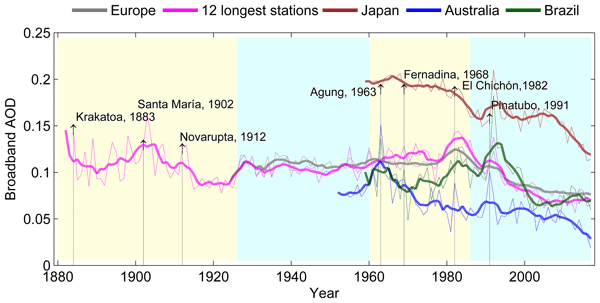
William Wandji Nyamsi, Ville Leinonen, Antti Lipponen, Else van den Besselaar, Santtu Mikkonen, Arturo Sanchez-Lorenzo, Martin Wild, Doris Folini, Tero Mielonen, Harri Kokkola, Antti Kukkurainen, Neus Sabater, Rei Kudo, Ben Liley, Raghav Srinivasan, Bruce W. Forgan, Alexandru Dumitrescu, Grzegorz Urban, Michał K. Kowalewski, Márcia Akemi Yamasoe, Nilton Évora do Rosário, Dimitra Founda, Stelios Kazadzis, Veronica Manara, Derbetini A. Vondou, Christian Gueymard, Anders V. Lindfors, Atsumu Ohmura, and Antti Arola
Atmos. Chem. Phys., 26, 10767–10788, https://doi.org/10.5194/acp-26-10767-2026, https://doi.org/10.5194/acp-26-10767-2026, 2026
Short summary
Short summary
Worldwide reconstructed historical aerosol load reveals that during the period of:
- 1900–1959: the atmosphere became cleaner in most European cities;
- 1960–1985: anthropogenic aerosols were responsible for the dimming phenomenon in Europe. AOD increased over Southeast Brazil and decreased noticeably over Japan while a small negative trend was found over Oceania;
- 1986–2015: generally, the atmosphere has become much cleaner everywhere after the reversal trend around 1980s mainly observed in Europe.
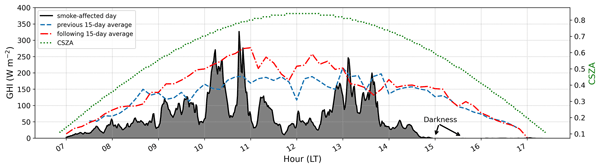
Jorge Rosas Santana, Gabriela Lima da Silva, Marcia Akemi Yamasoe, and Nilton Èvora do Rosario
Atmos. Chem. Phys., 25, 15935–15951, https://doi.org/10.5194/acp-25-15935-2025, https://doi.org/10.5194/acp-25-15935-2025, 2025
Short summary
Short summary
This study examines a rare event in São Paulo, Brazil, where wildfire smoke from South America mixed with clouds, causing midday darkness on 19 August 2019. Satellite data, surface measurements and air mass modeling tracked the smoke from fires in Brazil, Bolivia and Paraguay, transported to São Paulo within 2 d. The smoke–cloud interaction reduced surface irradiance to zero for 40 min and increased radiative efficiency by 7 %, highlighting impacts on air quality and radiation budget.

Nilton Évora do Rosário, Elisa Thomé Sena, and Marcia Akemi Yamasoe
Atmos. Chem. Phys., 22, 15021–15033, https://doi.org/10.5194/acp-22-15021-2022, https://doi.org/10.5194/acp-22-15021-2022, 2022
Short summary
Short summary
The 2020 burning season in Brazil was marked by an atypically high number of fire spots across Pantanal, leading to high amounts of smoke within the biome. This study shows that smoke over Pantanal, usually a fraction of that over Amazonia, was higher and resulted mainly from fires in conservation and indigenous areas. It also contributes to highlighting Pantanal's 2020 burning season as the worst combination of a climate extreme scenario and inadequately enforced environmental regulations.
Jordan Schnell, Ravan Ahmadov, Georg A. Grell, Joseph B. Olson, Eric James, Ming Hu, Ka Yee Wong, Brian McDonald, Rebecca H. Schwantes, Jian He, Colin Harkins, Wayne M. Angevine, Brian Jamison, R. Bradley Pierce, Matthew Coggon, Barry Baker, Saulo Freitas, Gabriel Pereira, and Marina Tsidulko
EGUsphere, https://doi.org/10.5194/egusphere-2026-4786, https://doi.org/10.5194/egusphere-2026-4786, 2026
Short summary
Short summary
The Rapid-Refresh model coupled to Chemistry is an experimental weather and chemistry model that includes emissions from human and natural sources that are connected to simulated weather, the effect of aerosols on radiation and clouds, and updated vertical mixing. We compare simulated air quality and weather to ground-based and remotely-sensed observations during the 2020 North American wildfires, demonstrating that our model physics developments and coupling with chemistry improves predictions.
Roberto Neves Salles, César Magno Leite de Oliveira Jr., Yoshitaka Saiki, and Haroldo Fraga de Campos Velho
EGUsphere, https://doi.org/10.5194/egusphere-2026-3775, https://doi.org/10.5194/egusphere-2026-3775, 2026
This preprint is open for discussion and under review for Nonlinear Processes in Geophysics (NPG).
Short summary
Short summary
We studied whether interventions can help reduce the effects of dangerous natural events. We tested a computer approach that combines many forecasts with observations to decide when to act in a system that behaves unpredictably. Our method matched or outperformed a widely used forecasting approach, especially when information was updated more often. These results suggest it could support earlier, more effective actions that help protect lives and reduce damage.
William Wandji Nyamsi, Ville Leinonen, Antti Lipponen, Else van den Besselaar, Santtu Mikkonen, Arturo Sanchez-Lorenzo, Martin Wild, Doris Folini, Tero Mielonen, Harri Kokkola, Antti Kukkurainen, Neus Sabater, Rei Kudo, Ben Liley, Raghav Srinivasan, Bruce W. Forgan, Alexandru Dumitrescu, Grzegorz Urban, Michał K. Kowalewski, Márcia Akemi Yamasoe, Nilton Évora do Rosário, Dimitra Founda, Stelios Kazadzis, Veronica Manara, Derbetini A. Vondou, Christian Gueymard, Anders V. Lindfors, Atsumu Ohmura, and Antti Arola
Atmos. Chem. Phys., 26, 10767–10788, https://doi.org/10.5194/acp-26-10767-2026, https://doi.org/10.5194/acp-26-10767-2026, 2026
Short summary
Short summary
Worldwide reconstructed historical aerosol load reveals that during the period of:
- 1900–1959: the atmosphere became cleaner in most European cities;
- 1960–1985: anthropogenic aerosols were responsible for the dimming phenomenon in Europe. AOD increased over Southeast Brazil and decreased noticeably over Japan while a small negative trend was found over Oceania;
- 1986–2015: generally, the atmosphere has become much cleaner everywhere after the reversal trend around 1980s mainly observed in Europe.
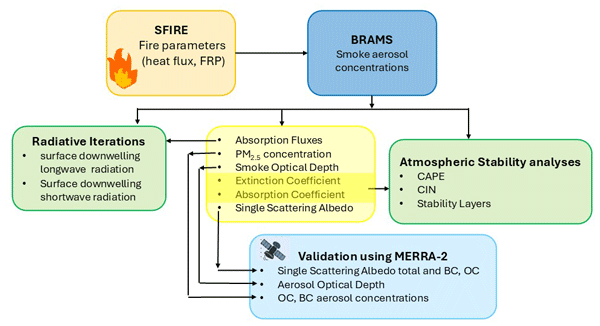
Isilda Cunha Menezes, Luiz Flávio Rodrigues, Karla M. Longo, Mateus Ferreira e Freitas, Saulo R. Freitas, Rodrigo Braz, Valter Ferreira de Oliveira, Sílvia Coelho, and Ana Isabel Miranda
Geosci. Model Dev., 19, 3801–3851, https://doi.org/10.5194/gmd-19-3801-2026, https://doi.org/10.5194/gmd-19-3801-2026, 2026
Short summary
Short summary
The Brazilian Regional Atmospheric Modeling System (BRAMS) was enhanced with crown fire spread in the surface fire spread (SFIRE) module and dynamic smoke emissions, enabling coupled fire–atmosphere–radiation simulations. Applied to the 2017 Sertã wildfire, the results show qualitative agreement with MERRA-2 aerosol optical depth (AOD), capturing the main plume structure, timing, and smoke-driven radiative effects, as well as interactions affecting atmospheric instability and inversion layers.
Jorge Rosas Santana, Gabriela Lima da Silva, Marcia Akemi Yamasoe, and Nilton Èvora do Rosario
Atmos. Chem. Phys., 25, 15935–15951, https://doi.org/10.5194/acp-25-15935-2025, https://doi.org/10.5194/acp-25-15935-2025, 2025
Short summary
Short summary
This study examines a rare event in São Paulo, Brazil, where wildfire smoke from South America mixed with clouds, causing midday darkness on 19 August 2019. Satellite data, surface measurements and air mass modeling tracked the smoke from fires in Brazil, Bolivia and Paraguay, transported to São Paulo within 2 d. The smoke–cloud interaction reduced surface irradiance to zero for 40 min and increased radiative efficiency by 7 %, highlighting impacts on air quality and radiation budget.
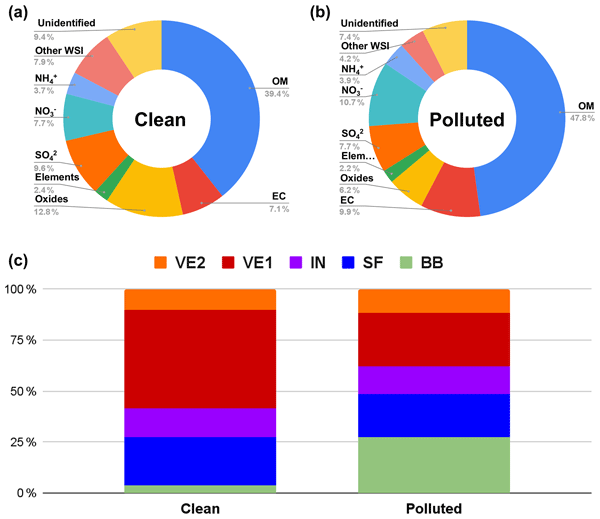
Guilherme Martins Pereira, Leonardo Yoshiaki Kamigauti, Rubens Fabio Pereira, Djacinto Monteiro dos Santos, Thayná da Silva Santos, José Vinicius Martins, Célia Alves, Cátia Gonçalves, Ismael Casotti Rienda, Nora Kováts, Thiago Nogueira, Luciana Rizzo, Paulo Artaxo, Regina Maura de Miranda, Marcia Akemi Yamasoe, Edmilson Dias de Freitas, Pérola de Castro Vasconcellos, and Maria de Fatima Andrade
Atmos. Chem. Phys., 25, 4587–4616, https://doi.org/10.5194/acp-25-4587-2025, https://doi.org/10.5194/acp-25-4587-2025, 2025
Short summary
Short summary
The chemical composition of fine particulate matter was studied in the megacity of São Paulo (Brazil) during a polluted period. Vehicular-related sources remain relevant; however, a high contribution of biomass burning was observed and correlated with sample ecotoxicity. Emerging biomass burning sources, such as forest fires and sugarcane-bagasse-based power plants, highlight the need for additional control measures alongside stricter rules concerning vehicular emissions.
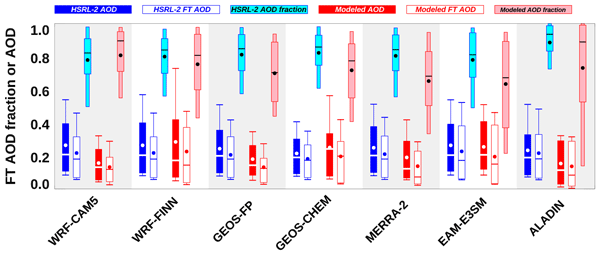
Ian Chang, Lan Gao, Connor J. Flynn, Yohei Shinozuka, Sarah J. Doherty, Michael S. Diamond, Karla M. Longo, Gonzalo A. Ferrada, Gregory R. Carmichael, Patricia Castellanos, Arlindo M. da Silva, Pablo E. Saide, Calvin Howes, Zhixin Xue, Marc Mallet, Ravi Govindaraju, Qiaoqiao Wang, Yafang Cheng, Yan Feng, Sharon P. Burton, Richard A. Ferrare, Samuel E. LeBlanc, Meloë S. Kacenelenbogen, Kristina Pistone, Michal Segal-Rozenhaimer, Kerry G. Meyer, Ju-Mee Ryoo, Leonhard Pfister, Adeyemi A. Adebiyi, Robert Wood, Paquita Zuidema, Sundar A. Christopher, and Jens Redemann
Atmos. Chem. Phys., 23, 4283–4309, https://doi.org/10.5194/acp-23-4283-2023, https://doi.org/10.5194/acp-23-4283-2023, 2023
Short summary
Short summary
Abundant aerosols are present above low-level liquid clouds over the southeastern Atlantic during late austral spring. The model simulation differences in the proportion of aerosol residing in the planetary boundary layer and in the free troposphere can greatly affect the regional aerosol radiative effects. This study examines the aerosol loading and fractional aerosol loading in the free troposphere among various models and evaluates them against measurements from the NASA ORACLES campaign.
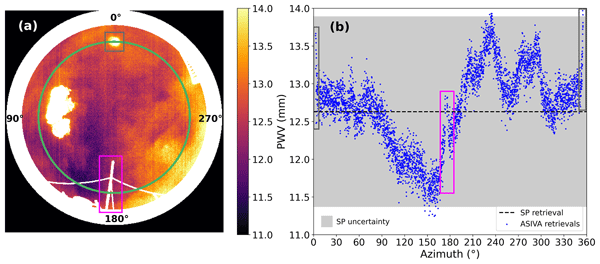
Elion Daniel Hack, Theotonio Pauliquevis, Henrique Melo Jorge Barbosa, Marcia Akemi Yamasoe, Dimitri Klebe, and Alexandre Lima Correia
Atmos. Meas. Tech., 16, 1263–1278, https://doi.org/10.5194/amt-16-1263-2023, https://doi.org/10.5194/amt-16-1263-2023, 2023
Short summary
Short summary
Water vapor is a key factor when seeking to understand fast-changing processes when clouds and storms form and develop. We show here how images from a calibrated infrared camera can be used to derive how much water vapor there is in the atmosphere at a given time. Comparing our results to an established technique, for a case of stable atmospheric conditions, we found an agreement within 2.8 %. Water vapor sky maps can be retrieved every few minutes, day or night, under partly cloudy skies.
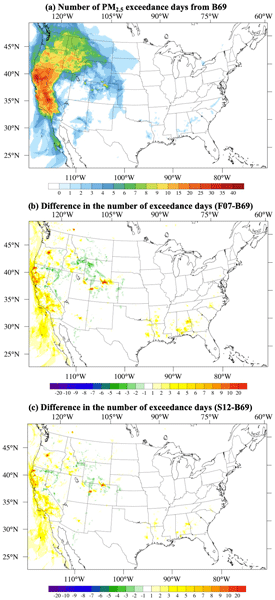
Yunyao Li, Daniel Tong, Siqi Ma, Saulo R. Freitas, Ravan Ahmadov, Mikhail Sofiev, Xiaoyang Zhang, Shobha Kondragunta, Ralph Kahn, Youhua Tang, Barry Baker, Patrick Campbell, Rick Saylor, Georg Grell, and Fangjun Li
Atmos. Chem. Phys., 23, 3083–3101, https://doi.org/10.5194/acp-23-3083-2023, https://doi.org/10.5194/acp-23-3083-2023, 2023
Short summary
Short summary
Plume height is important in wildfire smoke dispersion and affects air quality and human health. We assess the impact of plume height on wildfire smoke dispersion and the exceedances of the National Ambient Air Quality Standards. A higher plume height predicts lower pollution near the source region, but higher pollution in downwind regions, due to the faster spread of the smoke once ejected, affects pollution exceedance forecasts and the early warning of extreme air pollution events.
Nilton Évora do Rosário, Elisa Thomé Sena, and Marcia Akemi Yamasoe
Atmos. Chem. Phys., 22, 15021–15033, https://doi.org/10.5194/acp-22-15021-2022, https://doi.org/10.5194/acp-22-15021-2022, 2022
Short summary
Short summary
The 2020 burning season in Brazil was marked by an atypically high number of fire spots across Pantanal, leading to high amounts of smoke within the biome. This study shows that smoke over Pantanal, usually a fraction of that over Amazonia, was higher and resulted mainly from fires in conservation and indigenous areas. It also contributes to highlighting Pantanal's 2020 burning season as the worst combination of a climate extreme scenario and inadequately enforced environmental regulations.
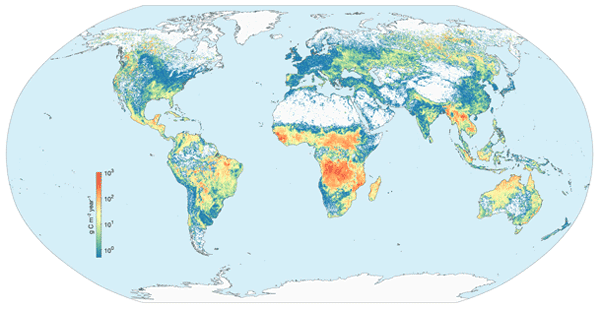
Gonzalo A. Ferrada, Meng Zhou, Jun Wang, Alexei Lyapustin, Yujie Wang, Saulo R. Freitas, and Gregory R. Carmichael
Geosci. Model Dev., 15, 8085–8109, https://doi.org/10.5194/gmd-15-8085-2022, https://doi.org/10.5194/gmd-15-8085-2022, 2022
Short summary
Short summary
The smoke from fires is composed of different compounds that interact with the atmosphere and can create poor air-quality episodes. Here, we present a new fire inventory based on satellite observations from the Visible Infrared Imaging Radiometer Suite (VIIRS). We named this inventory the VIIRS-based Fire Emission Inventory (VFEI). Advantages of VFEI are its high resolution (~500 m) and that it provides information for many species. VFEI is publicly available and has provided data since 2012.
Vinícius Albuquerque de Almeida, Haroldo Fraga de Campos Velho, Gutemberg Borges França, and Nelson Francisco Favilla Ebecken
Geosci. Model Dev. Discuss., https://doi.org/10.5194/gmd-2022-50, https://doi.org/10.5194/gmd-2022-50, 2022
Publication in GMD not foreseen
Short summary
Short summary
The paper focuses on data assimilation for the WRF model by employing neural network. The applied supervised ML technique was designed to emulate the 3D-Var in a regional atmospheric model. The proposed technique has the potential to significantly reduce the computational effort of data assimilation. Indeed, in the worked example the neural network scheme was more 70 times faster than 3D-Var method, with similar quality for the analysis.
Aditya Kumar, R. Bradley Pierce, Ravan Ahmadov, Gabriel Pereira, Saulo Freitas, Georg Grell, Chris Schmidt, Allen Lenzen, Joshua P. Schwarz, Anne E. Perring, Joseph M. Katich, John Hair, Jose L. Jimenez, Pedro Campuzano-Jost, and Hongyu Guo
Atmos. Chem. Phys., 22, 10195–10219, https://doi.org/10.5194/acp-22-10195-2022, https://doi.org/10.5194/acp-22-10195-2022, 2022
Short summary
Short summary
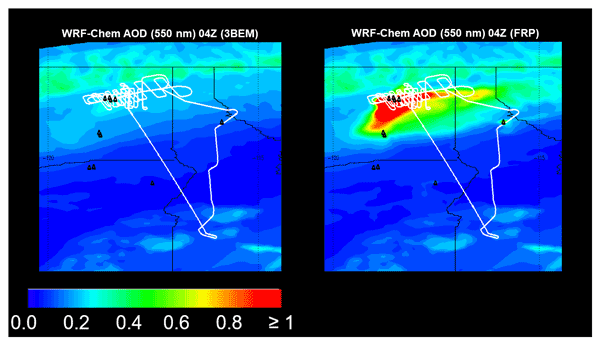
We use the WRF-Chem model with new implementations of GOES-16 wildfire emissions and plume rise based on fire radiative power (FRP) to interpret aerosol observations during the 2019 NASA–NOAA FIREX-AQ field campaign and perform model evaluations. The model shows significant improvements in simulating the variety of aerosol loading environments sampled during FIREX-AQ. Our results also highlight the importance of accurate wildfire diurnal cycle and aerosol chemical mechanisms in models.
Carlos Alberti, Frank Hase, Matthias Frey, Darko Dubravica, Thomas Blumenstock, Angelika Dehn, Paolo Castracane, Gregor Surawicz, Roland Harig, Bianca C. Baier, Caroline Bès, Jianrong Bi, Hartmut Boesch, André Butz, Zhaonan Cai, Jia Chen, Sean M. Crowell, Nicholas M. Deutscher, Dragos Ene, Jonathan E. Franklin, Omaira García, David Griffith, Bruno Grouiez, Michel Grutter, Abdelhamid Hamdouni, Sander Houweling, Neil Humpage, Nicole Jacobs, Sujong Jeong, Lilian Joly, Nicholas B. Jones, Denis Jouglet, Rigel Kivi, Ralph Kleinschek, Morgan Lopez, Diogo J. Medeiros, Isamu Morino, Nasrin Mostafavipak, Astrid Müller, Hirofumi Ohyama, Paul I. Palmer, Mahesh Pathakoti, David F. Pollard, Uwe Raffalski, Michel Ramonet, Robbie Ramsay, Mahesh Kumar Sha, Kei Shiomi, William Simpson, Wolfgang Stremme, Youwen Sun, Hiroshi Tanimoto, Yao Té, Gizaw Mengistu Tsidu, Voltaire A. Velazco, Felix Vogel, Masataka Watanabe, Chong Wei, Debra Wunch, Marcia Yamasoe, Lu Zhang, and Johannes Orphal
Atmos. Meas. Tech., 15, 2433–2463, https://doi.org/10.5194/amt-15-2433-2022, https://doi.org/10.5194/amt-15-2433-2022, 2022
Short summary
Short summary
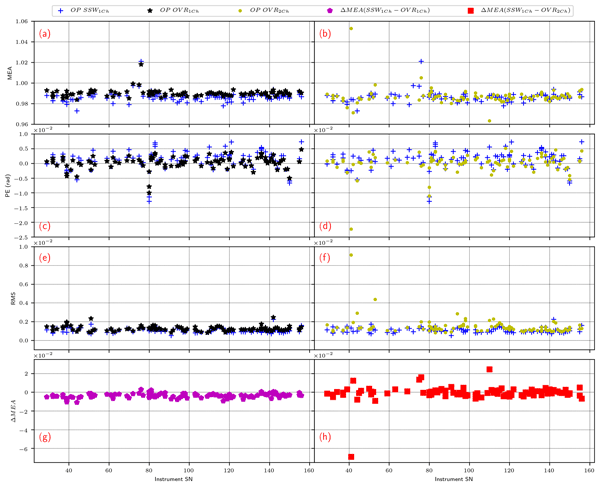
Space-borne greenhouse gas missions require ground-based validation networks capable of providing fiducial reference measurements. Here, considerable refinements of the calibration procedures for the COllaborative Carbon Column Observing Network (COCCON) are presented. Laboratory and solar side-by-side procedures for the characterization of the spectrometers have been refined and extended. Revised calibration factors for XCO2, XCO and XCH4 are provided, incorporating 47 new spectrometers.
Cited articles
Abraham, A., Pedregosa, F., Eickenberg, M., Gervais, P., Mueller, A., Kossaifi, J., Gramfort, A., Thirion, B., and Varoquaux, G.: Machine Learning for Neuroimaging with Scikit-Learn, Front. Neuroinform., 8, 14, https://doi.org/10.3389/fninf.2014.00014, 2014.
Adebiyi, A. A., Huang, Y., and Samset, B. H.: Observations suggest that North African dust absorbs less solar radiation than models estimate, Commun. Earth Environ., 4, 168, https://doi.org/10.1038/s43247-023-00825-2, 2023.
Alvarez, A., Lecina-Diaz, J., Batllori, E., Duane, A., Brotons, L., and Retana, J.: Spatiotemporal patterns and drivers of extreme fire severity in Spain for the period 1985–2018, Agr. Forest Meteorol., 358, 110185, https://doi.org/10.1016/j.agrformet.2024.110185, 2024.
Asfaw, H. W., McGee, T. K., and Correia, F. J.: Wildfire preparedness and response during the 2016 Arouca wildfires in rural Portugal, Int. J. Disast. Risk Reduct., 73, 102895, https://doi.org/10.1016/j.ijdrr.2022.102895, 2022.
Breiman, L.: Random Forests, Mach. Learn., 45, 5–32, https://doi.org/10.1023/a:1010933404324, 2001.
Brown, H., Liu, X., Pokhrel, R., Murphy, S., Lu, Z., Saleh, R., Mielonen, T., Kokkola, H., Bergman, T., Myhre, G., Skeie, R. B., Watson-Paris, D., Stier, P., Johnson, B., Bellouin, N., Schulz, M., Vakkari, V., Beukes, J. P., van Zyl, P. G., Liu, S., and Chand, D.: Biomass burning aerosols in most climate models are too absorbing, Nat. Commun., 12, 277, https://doi.org/10.1038/s41467-020-20482-9, 2021.
Buchard, V. J., Randles, C. A., da Silva, A. M., Darmenov, A., Colarco, P. R., Govindaraju, R., Ferrare, R. A., Hair, J., Beyersdorf, A., Ziemba, L. D., and Yu, H.: The MERRA-2 Aerosol Reanalysis, 1980 Onward. Part II: Evaluation and Case Studies, J. Climate, 30, 6851–6872, https://doi.org/10.1175/JCLI-D-16-0613.1, 2017.
Cachorro, V. E., Burgos, M. A., Mateos, D., Toledano, C., Bennouna, Y., Torres, B., de Frutos, Á. M., and Herguedas, Á.: Inventory of African desert dust events in the north-central Iberian Peninsula in 2003–2014 based on sun-photometer–AERONET and particulate-mass–EMEP data, Atmos. Chem. Phys., 16, 8227–8248, https://doi.org/10.5194/acp-16-8227-2016, 2016.
Chen, G., Wang, J., Wang, Y., Wang, J., Jin, Y., and Cheng, Y.: An aerosol optical module with observation-constrained black carbon properties for global climate models, J. Adv. Model. Earth Syst., 15, e2022MS003501, https://doi.org/10.1029/2022MS003501, 2023.
Chin, M., Ginoux, P., Kinne, S., Torres, O., Holben, B. N., Duncan, B. N., Martin, R. V., Logan, J. A., Higurashi, A., and Nakajima, T.: Tropospheric aerosol optical thickness from the GOCART model and comparisons with satellite and sun photometer measurements, J. Atmos. Sci., 59, 461–483, https://doi.org/10.1175/1520-0469(2002)059<0461:taotft>2.0.co;2, 2002.
Colarco, P., Da Silva, A., Chin, M., and Diehl, T.: Online simulations of global aerosol distributions in the NASA GEOS-4 model and comparisons to satellite and ground-based aerosol optical depth, J. Geophys. Res.-Atmos., 115, D14207, https://doi.org/10.1029/2009JD012820, 2010.
Colarco, P. R., Nowottnick, E. P., Randles, C. A., Yi, B., Yang, P., Kim, K. M., Smith, J. A., and Bardeen, C. G.: Impact of radiatively interactive dust aerosols in the NASA GEOS-5 climate model: Sensitivity to dust particle shape and refractive index, J. Geophys. Res.-Atmos., 119, 753–786, https://doi.org/10.1002/2013JD020046, 2014.
Dubovik, O. and King, M. D.: A flexible inversion algorithm for retrieval of aerosol optical properties from Sun and sky radiance measurements, J. Geophys. Res., 105, 20673–20696, https://doi.org/10.1029/2000JD900282, 2000.
Dubovik, O., Holben, B., Eck, T. F., Smirnov, A., Kaufman, Y. J., King, M. D., Tanré, D., and Slutsker, I.: Variability of Absorption and Optical Properties of Key Aerosol Types Observed in Worldwide Locations, J. Atmos. Sci., 59, 590–608, https://doi.org/10.1175/1520-0469(2002)059<0590:VOAAOP>2.0.CO;2, 2002.
Eck, T. F., Holben, B. N., Reid, J. S., Dubovik, O., Smirnov, A., O'Neill, N. T., Slutsker, I., and Kinne, S.: Wavelength dependence of the optical depth of biomass burning, urban, and desert dust aerosols, J. Geophys. Res., 104, 31333–31349, https://doi.org/10.1029/1999jd900923, 1999.
Elias, T. G., Silva, A. M., Figueira, M. J., Belo, N., Pereira, S., Formenti, P., and Helas, G.: Aerosol extinction and absorption in Évora, Portugal, during the European 2003 summer heat wave, in: Proc. SPIE 5571, Remote Sensing of Clouds and the Atmosphere IX, https://doi.org/10.1117/12.566579, 2004.
Ermitão, T., Páscoa, P., Trigo, I., Alonso, C., and Gouveia, C.: Mapping the Most Susceptible Regions to Fire in Portugal, Fire, 6, 254, https://doi.org/10.3390/fire6070254, 2023.
Fan, Y., Sun, X., Huang, H., Ti, R., and Liu, X.: The primary aerosol models and distribution characteristics over China based on the AERONET data, J. Quant. Spectrosc. Ra., 275, 107888, https://doi.org/10.1016/j.jqsrt.2021.107888, 2021.
Gelaro, R., McCarty, W., Suárez, M. J., Todling, R., Molod, A., Takacs, L., Randles, C. A., Darmenov, A., Bosilovich, M. G., Reichle, R., Wargan, K., Coy, L., Cullather, R., Draper, C., Akella, S., Buchard, V., Conaty, A., da Silva, A. M., Gu, W., Postylyakov, S., Keller, J. H., Gelaro, R., and Pawson, S.: The Modern-Era Retrospective Analysis for Research and Applications, Version 2 (MERRA-2), J. Climate, 30, 5419–5454, https://doi.org/10.1175/JCLI-D-16-0758.1, 2017.
Giles, D. M., Sinyuk, A., Sorokin, M. G., Schafer, J. S., Smirnov, A., Slutsker, I., Eck, T. F., Holben, B. N., Lewis, J. R., Campbell, J. R., Welton, E. J., Korkin, S. V., and Lyapustin, A. I.: Advancements in the Aerosol Robotic Network (AERONET) Version 3 database – automated near-real-time quality control algorithm with improved cloud screening for Sun photometer aerosol optical depth (AOD) measurements, Atmos. Meas. Tech., 12, 169–209, https://doi.org/10.5194/amt-12-169-2019, 2019.
Gliß, J., Mortier, A., Schulz, M., Andrews, E., Balkanski, Y., Bauer, S. E., Benedictow, A. M. K., Bian, H., Checa-Garcia, R., Chin, M., Ginoux, P., Griesfeller, J. J., Heckel, A., Kipling, Z., Kirkevåg, A., Kokkola, H., Laj, P., Le Sager, P., Lund, M. T., Lund Myhre, C., Matsui, H., Myhre, G., Neubauer, D., van Noije, T., North, P., Olivié, D. J. L., Rémy, S., Sogacheva, L., Takemura, T., Tsigaridis, K., and Tsyro, S. G.: AeroCom phase III multi-model evaluation of the aerosol life cycle and optical properties using ground- and space-based remote sensing as well as surface in situ observations, Atmos. Chem. Phys., 21, 87–128, https://doi.org/10.5194/acp-21-87-2021, 2021.
Gómez-Amo, J. L., Estellés, V., Marcos, C., Segura, S., Esteve, A. R., Pedrós, R., Utrillas, M. P., and Martínez-Lozano, J. A.: Impact of dust and smoke mixing on column-integrated aerosol properties from observations during a severe wildfire episode over Valencia (Spain), Sci. Total Environ., 599–600, 2121–2134, https://doi.org/10.1016/j.scitotenv.2017.05.041, 2017.
Groß, S., Tesche, M., Freudenthaler, V., Toledano, C., Wiegner, M., Ansmann, A., Althausen, D., and Seefeldner, M.: Characterization of Saharan dust, marine aerosols and mixtures of biomass-burning aerosols and dust by means of multi-wavelength depolarization and Raman lidar measurements during SAMUM 2, Tellus B, 63, 706–724, https://doi.org/10.1111/j.1600-0889.2011.00556.x, 2011.
Gupta, P., Remer, L. A., Levy, R. C., and Mattoo, S.: Validation of MODIS 3 km land aerosol optical depth from NASA's EOS Terra and Aqua missions, Atmos. Meas. Tech., 11, 3145–3159, https://doi.org/10.5194/amt-11-3145-2018, 2018.
Hammed, R. A., Alawode, G. L., Montoya, L. E., Krasovskiy, A., and Kraxner, F.: Exploring Drivers of Wildfires in Spain, Land, 13, 762, https://doi.org/10.3390/land13060762, 2024.
Hess, M., Koepke, P., and Schult, I.: Optical properties of aerosols and clouds: The software package OPAC, B. Am. Meteorol. Soc., 79, 831–844, 1998.
Hoelzemann, J. J., Longo, K. M., Fonseca, R. M., do Rosario, N. M. E., Elbern, H., Freitas, S. R., and Pires, C.: Regional representativity of AERONET observation sites during the biomass burning season in South America determined by correlation studies with MODIS Aerosol Optical Depth, J. Geophys. Res., 114, D13301, https://doi.org/10.1029/2008jd010369, 2009.
Holben, B. N., Eck, T. F., Slutsker, I., Tanre, D., Buis, J. P., Setzer, A., Vermote, E., Reagan, J. A., Kaufman, Y. J., Nakajima, T., Lavenu, F., Jankowiak, I., and Smirnov, A.: AERONET– A Federated Instrument Network and Data Archive for Aerosol Characterization, Remote Sens. Environ., 66, 1–16, https://doi.org/10.1016/s0034-4257(98)00031-5, 1998.
Holben, B. N., Eck, T. F., Slutsker, I., Smirnov, A., Sinyuk, A., Schafer, J., Giles, D., and Dubovik, O.: AERONET's version 2.0 quality assurance criteria, Proc. SPIE, 6408, 64080Q, https://doi.org/10.1117/12.706524, 2006.
Illingworth, A. J., Barker, H. W., Beljaars, A., Ceccaldi, M., Chepfer, H., Clerbaux, N., Cole, J., Delanoë, J., Domenech, C., Donovan, D. P., Fukuda, S., Hirakata, M., Hogan, R. J., Huenerbein, A., Kollias, P., Kubota, T., Nakajima, T., Nakajima, T. Y., Nishizawa, T., Ohno, Y., Okada, K., Oki, R., Sato, K., Satoh, M., Shephard, M. W., Velázquez-Blázquez, A., Wandinger, U., Wehr, T., and van Zadelhoff, G. J.: The EarthCARE Satellite: The Next Step Forward in Global Measurements of Clouds, Aerosols, Precipitation, and Radiation, B. Am. Meteorol. Soc., 96, 1311–1332, https://doi.org/10.1175/BAMS-D-12-00227.1, 2015.
IPCC: Climate Change 2021 – the Physical Science Basis, in: Contribution of Working Group I to the Sixth Assessment Report of the Intergovernmental Panel on Climate Change, edited by: Masson-Delmotte, V., Zhai, P., Pirani, A., Connors, S. L., Péan, C., Berger, S., Caud, N., Chen, Y., Goldfarb, L., Gomis, M. I., Huang, M., Leitzell, K., Lonnoy, E., Matthews, J. B. R., Maycock, T. K., Waterfield, T., Yelekçi, O., Yu, R., and Zhou, B., Cambridge University Press, Cambridge, UK and New York, NY, USA, https://doi.org/10.1017/9781009157896, 2021.
Kanitz, T., Ansmann, A., Engelmann, R., and Althausen, D.: North-south cross sections of the vertical aerosol distribution over the Atlantic Ocean from multiwavelength Raman/polarization lidar during Polarstern cruises, J. Geophys. Res.-Atmos., 118, 2643–2655, https://doi.org/10.1002/jgrd.50273, 2013.
Kim, D. and Ramanathan, V.: Solar Radiation Budget and Radiative Forcing Due to Aerosols and Clouds, J. Geophys. Res.-Atmos., 113, D02203, https://doi.org/10.1029/2007JD008434, 2008.
Koepke, P., Hess, M., Schult, I., and Shettle, E. P.: Global aerosol data set, Rep. 243, Max-Planck-Inst. für Meteorol., Hamburg, Germany, https://mpimet.mpg.de/fileadmin/publikationen/Reports/max_scirep_243.pdf (last access: 1 April 2026), 1997.
Krishnaveni, S. A., Madhavan, B. L., and Ratnam, M. V.: Aerosol classification using fuzzy clustering over a tropical rural site, Atmos. Res., 282, 106518, https://doi.org/10.1016/j.atmosres.2022.106518, 2023.
Levy, R. C., Remer, L. A., and Dubovik, O.: Global aerosol optical properties and application to Moderate Resolution Imaging Spectroradiometer aerosol retrieval over land, J. Geophys. Res.-Atmos., 112, D13210, https://doi.org/10.1029/2006JD007815, 2007.
Levy, R. C., Remer, L. A., Kleidman, R. G., Mattoo, S., Ichoku, C., Kahn, R., and Eck, T. F.: Global evaluation of the Collection 5 MODIS dark-target aerosol products over land, Atmos. Chem. Phys., 10, 10399–10420, https://doi.org/10.5194/acp-10-10399-2010, 2010.
Li, J., Liu, L., Lacis, A. A., and Carlson, B. E.: An optimal fitting approach to improve the GISS ModelE aerosol optical property parameterization using AERONET data, J. Geophys. Res., 115, D16211, https://doi.org/10.1029/2010JD013909, 2010.
Li, J., Carlson, B. E., and Yung, Y. L.: Scattering and absorbing aerosols in the climate system, Natl. Rev. Earth Environ., 3, 363–379, https://doi.org/10.1038/s43017-022-00296-7, 2022.
Li, Z., Zhang, Y., Xu, H., Li, K., Dubovik, O., and Goloub, P.: The Fundamental Aerosol Models Over China Region: A Cluster Analysis of the Ground-Based Remote Sensing Measurements of Total Columnar Atmosphere, Geophys. Res. Lett., 46, 4924–4932, 2019.
Martins, J. V., Artaxo, P., Kaufman, Y. J., Castanho, A. D., and Remer, L. A.: Spectral absorption properties of aerosol particles from 350–2500 nm, Geophys. Res. Lett., 36, L13810, https://doi.org/10.1029/2009GL037435, 2009.
Moise, T., Flores, J. M., and Rudich, Y.: Optical properties of secondary organic aerosols and their changes by chemical processes, Chem. Rev., 115, 4400–4439, 2015.
Omar, A. H., Won, J.-G., Winker, D. M., Yoon, S.-C., Dubovik, O., and McCormick, M. P.: Development of global aerosol models using cluster analysis of Aerosol Robotic Network (AERONET) measurements, J. Geophys. Res., 110, D10S14, https://doi.org/10.1029/2004JD004874, 2005.
Osborne, M., Malavelle, F. F., Adam, M., Buxmann, J., Sugier, J., Marenco, F., and Haywood, J.: Saharan dust and biomass burning aerosols during ex-hurricane Ophelia: observations from the new UK lidar and sun-photometer network, Atmos. Chem. Phys., 19, 3557–3578, https://doi.org/10.5194/acp-19-3557-2019, 2019.
Pokhrel, R. P., Beamesderfer, E. R., Wagner, N. L., Langridge, J. M., Lack, D. A., Jayarathne, T., Stone, E. A., Stockwell, C. E., Yokelson, R. J., and Murphy, S. M.: Relative importance of black carbon, brown carbon, and absorption enhancement from clear coatings in biomass burning emissions, Atmos. Chem. Phys., 17, 5063–5078, https://doi.org/10.5194/acp-17-5063-2017, 2017.
Proske, U., Ferrachat, S., and Lohmann, U.: Developing a climatological simplification of aerosols to enter the cloud microphysics of a global climate model, Atmos. Chem. Phys., 24, 5907–5933, https://doi.org/10.5194/acp-24-5907-2024, 2024.
Reid, J. S. and Hobbs, P. V.: Physical and optical properties of young smoke from individual biomass fires in Brazil, J. Geophys. Res., 103, 32013–32030, 1998.
Reid, J. S., Eck, T. F., Christopher, S. A., Koppmann, R., Dubovik, O., Eleuterio, D. P., Holben, B. N., Reid, E. A., and Zhang, J.: A review of biomass burning emissions part III: intensive optical properties of biomass burning particles, Atmos. Chem. Phys., 5, 827–849, https://doi.org/10.5194/acp-5-827-2005, 2005.
Rodríguez, S. and López-Darias, J.: Extreme Saharan dust events expand northward over the Atlantic and Europe, prompting record-breaking PM10 and PM2.5 episodes, Atmos. Chem. Phys., 24, 12031–12053, https://doi.org/10.5194/acp-24-12031-2024, 2024.
Rosario, N. E.: Machine learning-driven characterization and prescription of aerosol optical properties for atmospheric models, Zenodo [code an data set], https://doi.org/10.5281/zenodo.14825197, 2025.
Rosário, N. E., Longo, K. M., Freitas, S. R., Yamasoe, M. A., and Fonseca, R. M.: Modeling the South American regional smoke plume: aerosol optical depth variability and surface shortwave flux perturbation, Atmos. Chem. Phys., 13, 2923–2938, https://doi.org/10.5194/acp-13-2923-2013, 2013.
Russell, P. B., Kacenelenbogen, M., Livingston, J. M., Hasekamp, O. P., Burton, S. P., Schuster, G. L., Johnson, M. S., Knobelspiesse, K. D., Redemann, J., Ramachandran, S., and Holben, B.: A multiparameter aerosol classification method and its application to retrievals from spaceborne polarimetry, J. Geophys. Res.-Atmos., 119, 9838–9863, https://doi.org/10.1002/2013JD021411, 2014.
Saleh, R., Robinson, E. S., Tkacik, D. S., Ahern, A. T., Liu, S., Aiken, A. C., Sullivan, R. C., Presto, A. A., Dubey, M. K., Yokelson, R. J., Donahue, N. M., and Robinson, A. L.: Brownness of organics in aerosols from biomass burning linked to their black carbon content, Nat. Geosci., 7, 647–650, https://doi.org/10.1038/ngeo2220, 2014.
Samset, B. H., Stjern, C. W., Andrews, E., Kahn, R. A., Myhre, G., Schulz, M., and Schuster, G. L.: Aerosol Absorption: Progress Towards Global and Regional Constraints, Curr. Clim. Change Rep., 4, 65–83, https://doi.org/10.1007/s40641-018-0091-4, 2018.
Sand, M., Samset, B. H., Myhre, G., Gliß, J., Bauer, S. E., Bian, H., Chin, M., Checa-Garcia, R., Ginoux, P., Kipling, Z., Kirkevåg, A., Kokkola, H., Le Sager, P., Lund, M. T., Matsui, H., van Noije, T., Olivié, D. J. L., Remy, S., Schulz, M., Stier, P., Stjern, C. W., Takemura, T., Tsigaridis, K., Tsyro, S. G., and Watson-Parris, D.: Aerosol absorption in global models from AeroCom phase III, Atmos. Chem. Phys., 21, 15929–15947, https://doi.org/10.5194/acp-21-15929-2021, 2021.
Schwink, S. K., Mael, L. E., Dunnington, T. H., Schmid, M. J., Silberstein, J. M., Heck, A., Gotlib, N., Hannigan, M. P., and Vance, M. E.: Impacts of Aging and Relative Humidity on Properties of Biomass Burning Smoke Particles, ACS EST Air, 2, 109–118, https://doi.org/10.1021/acsestair.4c00224, 2024.
Shettle, E. P. and Fenn, R. W.: Models for the aerosols of the lower atmosphere and the effects of humidity variations on their optical properties, Environmental Research Papers No. 676, AFGL-TR-79-0214, Optical Physics Division, Air Force Geophysics Laboratory, Hanscom AFB, MA, USA, 94 pp., https://books.google.com/books?id=JSlkjReviS4C (last access: 1 April 2026), 1979.
Shi, C., Wei, B., and Wei, S.: A quantitative discriminant method of elbow point for the optimal number of clusters in clustering algorithm, J. Wireless Commun. Network, 2021, 31, https://doi.org/10.1186/s13638-021-01910-w, 2021.
Shin, S. K., Tesche, M., Kim, K., Kezoudi, M., Tatarov, B., Müller, D., and Noh, Y.: On the spectral depolarisation and lidar ratio of mineral dust provided in the AERONET version 3 inversion product, Atmos. Chem. Phys., 18, 12735–12746, https://doi.org/10.5194/acp-18-12735-2018, 2018.
Silva, P., Carmo, M., Rio, J., and Novo, I.: Changes in the Seasonality of Fire Activity and Fire Weather in Portugal: Is the Wildfire Season Really Longer?, Meteorology, 2, 74–86, https://doi.org/10.3390/meteorology2010006, 2023.
Sinyuk, A., Holben, B. N., Eck, T. F., Giles, D. M., Slutsker, I., Korkin, S., Schafer, J. S., Smirnov, A., Sorokin, M., and Lyapustin, A.: The AERONET Version 3 aerosol retrieval algorithm, associated uncertainties and comparisons to Version 2, Atmos. Meas. Tech., 13, 3375–3411, https://doi.org/10.5194/amt-13-3375-2020, 2020.
Smirnov, A., Holben, B. N., Kaufman, Y. J., Dubovik, O., Eck, T. F., Slutsker, I., Pietras, C., and Halthore, R. N.: Optical Properties of Atmospheric Aerosol in Maritime Environments, J. Atmos. Sci., 59, 501–523, https://doi.org/10.1175/1520-0469(2002)059<0501:OPOAAI>2.0.CO;2, 2002.
Spencer, R. S., Levy, R. C., Remer, L. A., Mattoo, S., Arnold, G. T., Hlavka, D. L., Meyer, K. G., Marshak, A., Wilcox, E. M., and Platnick, S. E.: Exploring Aerosols near Clouds with High-Spatial-Resolution Aircraft Remote Sensing during SEAC(4)RS, J. Geophys. Res.-Atmos., 124, 2148–2173, 2019.
Toledano, C., Cachorro, V. E., de Frutos, A. M., Sorribas, M., and Prats, N.: Inventory of African Desert Dust Events Over the Southwestern Iberian Peninsula in 2000–2005 with an AERONET Cimel Sun Photometer, J. Geophys. Res., 112, D21201, https://doi.org/10.1029/2006JD008307, 2007.
Zhao, A., Ryder, C. L., and Wilcox, L. J.: How well do the CMIP6 models simulate dust aerosols?, Atmos. Chem. Phys., 22, 2095–2119, https://doi.org/10.5194/acp-22-2095-2022, 2022.
Zhao, G., Tan, T., Zhao, W., Guo, S., Tian, P., and Zhao, C.: A new parameterization scheme for the real part of the ambient urban aerosol refractive index, Atmos. Chem. Phys., 19, 12875–12885, https://doi.org/10.5194/acp-19-12875-2019, 2019.
Zhong, Q., Schutgens, N., van der Werf, G. R., van Noije, T., Bauer, S. E., Tsigaridis, K., Mielonen, T., Checa-Garcia, R., Neubauer, D., Kipling, Z., Kirkevåg, A., Olivié, D. J. L., Kokkola, H., Matsui, H., Ginoux, P., Takemura, T., Le Sager, P., Rémy, S., Bian, H., and Chin, M.: Using modelled relationships and satellite observations to attribute modelled aerosol biases over biomass burning regions, Nat. Commun., 13, 5914, https://doi.org/10.1038/s41467-022-33680-4, 2022.
Zhou, P., Wang, Y., Liu, J., Xu, L., Chen, X., and Zhang, L.: Difference between global and regional aerosol model classifications and associated implications for spaceborne aerosol optical depth retrieval, Atmos. Environ., 300, 119674, https://doi.org/10.1016/j.atmosenv.2023.119674, 2023.
Short summary
This study maps aerosol regimes over the Iberian Peninsula using AERONET data and machine learning. Five types were identified, from Saharan dust to smoke, highlighting differences in particle size and absorption. Combining observations with model data improves aerosol representation in climate simulations, reducing uncertainties and enhancing understanding of regional air quality and climate impacts.
This study maps aerosol regimes over the Iberian Peninsula using AERONET data and machine...


