
Articles | Volume 19, issue 5
https://doi.org/10.5194/gmd-19-2239-2026
© Author(s) 2026. This work is distributed under
the Creative Commons Attribution 4.0 License.
the Creative Commons Attribution 4.0 License.
https://doi.org/10.5194/gmd-19-2239-2026
© Author(s) 2026. This work is distributed under
the Creative Commons Attribution 4.0 License.
the Creative Commons Attribution 4.0 License.
Model experiment description paper
| 
18 Mar 2026
Model experiment description paper |
| 18 Mar 2026
| 18 Mar 2026
Assessing the impact of solar climate intervention on future U.S. weather using a convection-permitting WRF model

Department of Atmospheric Science, Colorado State University, Fort Collins, CO, USA
James W. Hurrell
Department of Atmospheric Science, Colorado State University, Fort Collins, CO, USA
Kristen L. Rasmussen
Department of Atmospheric Science, Colorado State University, Fort Collins, CO, USA
Bali Summers
Department of Atmospheric Science, Colorado State University, Fort Collins, CO, USA
Erin A. Sherman
Department of Atmospheric Science, Colorado State University, Fort Collins, CO, USA
Ben Kravitz
Department of Earth and Atmospheric Sciences, Indiana University Bloomington, Bloomington, IN, USA
Atmospheric, Climate, and Earth Sciences Division, Pacific Northwest National Laboratory, Richland, WA, USA
Related authors
No articles found.
Cuini Qi, Chloe Yuchao Gao, Ben Kravitz, Hyemi Kim, Xiaohan Sally Li, and Lili Xia
EGUsphere, https://doi.org/10.5194/egusphere-2026-5613, https://doi.org/10.5194/egusphere-2026-5613, 2026
This preprint is open for discussion and under review for Atmospheric Chemistry and Physics (ACP).
Short summary
Short summary
Stratospheric aerosol injection can mitigate global warming, but its impacts on combined heat and drought extremes are uneven. Using climate models, we show this intervention broadly decreases the frequency and severity of these events globally. However, Central Africa experiences the opposite, where reduced rainfall drives more persistent extremes. This highlights that lowering global temperatures does not guarantee uniform reductions in severe climate risks everywhere.

Daniele Visioni, Alan Robock, Alistair Duffey, Matthew Henry, Haruki Hirasawa, Walker Raymond Lee, Cindy Wang, Kelsey Roberts, Shingo Watanabe, Michelle Simões Reboita, Masahiro Sugiyama, Ben Kravitz, Jim Haywood, Simone Tilmes, Frédéric K. Bonou, Jack Chen, Timofei Sukhodolov, Sandro Vattioni, Andrin Jörimann, Diego Villanueva, Ryan Vella, Paul Farron, Ewa Bednarz, Ulrike Niemeier, Colleen Golja, and Juan A. Añel
Geosci. Model Dev., 19, 8469–8499, https://doi.org/10.5194/gmd-19-8469-2026, https://doi.org/10.5194/gmd-19-8469-2026, 2026
Short summary
Short summary
The Geoengineering Model Intercomparison Project is a coordinated international model intercomparison effort aiming to provide robust experimental protocols for simulations of various Solar Radiation Modification (SRM) methods. In this manuscript, we describe a list of novel experiments decided by the community, to be run by climate models to better understand sources of uncertainty in SRM. We also show and discuss some preliminary results from a few climate models.
Ewa M. Bednarz, Amy H. Butler, James M. Haywood, Matthew Henry, Andy Jones, Ben Kravitz, Walker R. Lee, Douglas G. MacMartin, Amanda C. Maycock, Takashi Sekiya, Shingo Watanabe, and Daniele Visioni
Atmos. Chem. Phys., 26, 12751–12770, https://doi.org/10.5194/acp-26-12751-2026, https://doi.org/10.5194/acp-26-12751-2026, 2026
Short summary
Short summary
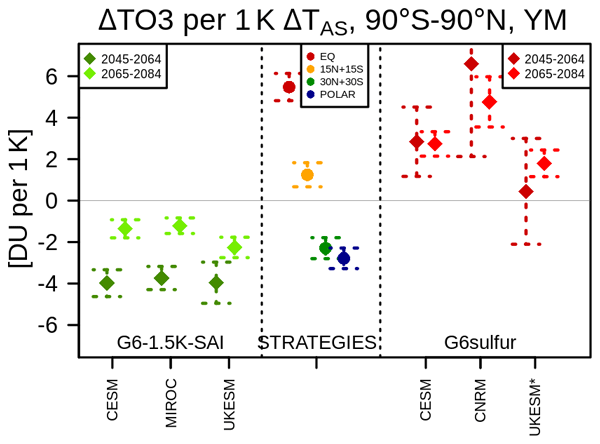
An assessment of the potential impacts of Stratospheric Aerosol Injection, a proposed method to offset global warming, on stratospheric ozone projections over the 21st century using the new multi-model GeoMIP (Geoengineering Model Intercomparison Project) G6-1.5K-SAI (Stratospheric Aerosol Injection) experiment. We discuss drivers of the responses, identify areas of model agreement and disagreement and sources of uncertainty. Our results highlight the need to assess any projected SAI impacts in wider strategy and scenario dimension using a multi-model framework.
Colleen Marie Golja, Marianna Linz, Ewa Monika Bednarz, Daniele Visioni, Ben Kravitz, John A. Dykema, Michelle E. Frazer, Anthony C. Jones, Isla R. Simpson, and Shingo Watanabe
EGUsphere, https://doi.org/10.5194/egusphere-2026-4200, https://doi.org/10.5194/egusphere-2026-4200, 2026
Short summary
Short summary
Adding reflective particles to the stratosphere has been proposed to cool the planet, but how the resulting lower-stratospheric heating affects the broader climate remains unclear. This study simulates idealized lower-stratospheric heating across five climate models finding large inter-model differences in the stratospheric and surface response. The results highlight ways in which these differences may be explained by biases in the stratospheric climatological mean state.
Walker Raymond Lee, Daniele Visioni, Benjamin Moore Wagman, Christopher Robert Wentland, Ben Kravitz, Shingo Watanabe, Takashi Sekiya, Andy Jones, Jim Haywood, Matthew Henry, and Ewa Monika Bednarz
Atmos. Chem. Phys., 26, 7463–7483, https://doi.org/10.5194/acp-26-7463-2026, https://doi.org/10.5194/acp-26-7463-2026, 2026
Short summary
Short summary
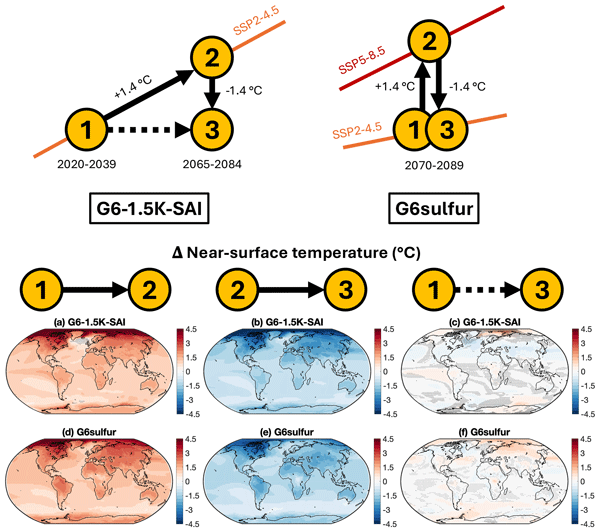
Stratospheric aerosol injection (SAI) is a proposed method of cooling the planet by introducing reflective particles called aerosols into the middle atmosphere to reflect sunlight back into space. We consider recent simulations of SAI from four different climate models. SAI cools the planet effectively in all four models; we examine the impacts on temperature and precipitation in each model and compare to previous experiments. Our simulations will help inform future research and policy.
Jared Farley, Douglas G. MacMartin, Daniele Visioni, Ben Kravitz, Ewa M. Bednarz, Alistair Duffey, Matthew Henry, and Ali Akherati
Geosci. Model Dev., 19, 1809–1831, https://doi.org/10.5194/gmd-19-1809-2026, https://doi.org/10.5194/gmd-19-1809-2026, 2026
Short summary
Short summary
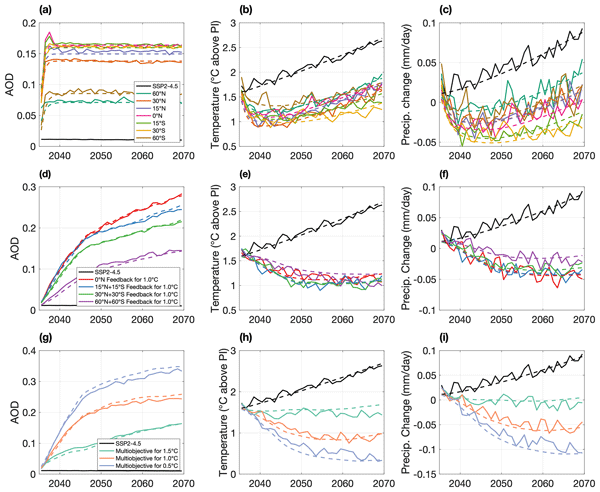
As the climate changes, many are studying sunlight reflection as a potential method of cooling. Such climate intervention could be deployed in many possible ways, including in scenarios where not every actor agrees on the strategy of cooling. These scenarios are so diverse that to explore all of them using earth system models proves to be too costly. In this paper, we develop a simplified climate model that allows users to easily explore climate intervention scenarios of their choice.
Ezra Brody, Yan Zhang, Douglas G. MacMartin, Daniele Visioni, Ben Kravitz, and Ewa M. Bednarz
Earth Syst. Dynam., 16, 1325–1341, https://doi.org/10.5194/esd-16-1325-2025, https://doi.org/10.5194/esd-16-1325-2025, 2025
Short summary
Short summary
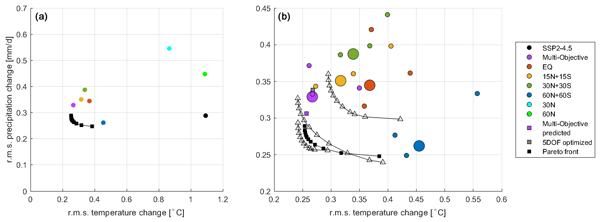
Stratospheric aerosol injection (SAI) is being studied as a possible supplement to emission reduction to temporarily mitigate some of the risks associated with climate change. The latitudes at which SAI is done determine the effect on the climate. We try to find if there are combinations of latitudes that do a better job of counteracting climate change than existing strategies. We found that there are, but just how significant these improvements are depends on the amount of cooling.
Daniele Visioni, Alan Robock, Jim Haywood, Matthew Henry, Simone Tilmes, Douglas G. MacMartin, Ben Kravitz, Sarah J. Doherty, John Moore, Chris Lennard, Shingo Watanabe, Helene Muri, Ulrike Niemeier, Olivier Boucher, Abu Syed, Temitope S. Egbebiyi, Roland Séférian, and Ilaria Quaglia
Geosci. Model Dev., 17, 2583–2596, https://doi.org/10.5194/gmd-17-2583-2024, https://doi.org/10.5194/gmd-17-2583-2024, 2024
Short summary
Short summary
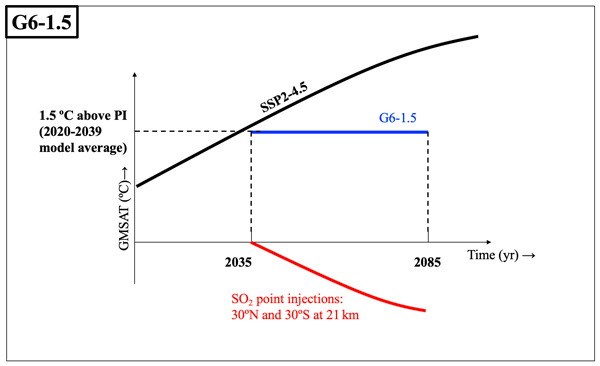
This paper describes a new experimental protocol for the Geoengineering Model Intercomparison Project (GeoMIP). In it, we describe the details of a new simulation of sunlight reflection using the stratospheric aerosols that climate models are supposed to run, and we explain the reasons behind each choice we made when defining the protocol.
Yan Zhang, Douglas G. MacMartin, Daniele Visioni, Ewa M. Bednarz, and Ben Kravitz
Earth Syst. Dynam., 15, 191–213, https://doi.org/10.5194/esd-15-191-2024, https://doi.org/10.5194/esd-15-191-2024, 2024
Short summary
Short summary
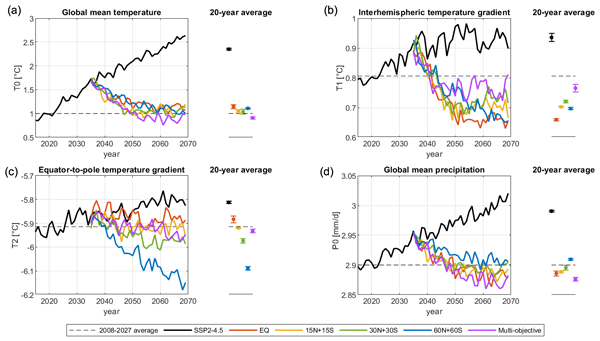
Injecting SO2 into the lower stratosphere can temporarily reduce global mean temperature and mitigate some risks associated with climate change, but injecting it at different latitudes and seasons would have different impacts. This study introduces new stratospheric aerosol injection (SAI) strategies and explores the importance of the choice of SAI strategy, demonstrating that it notably affects the distribution of aerosol cloud, injection efficiency, and various surface climate impacts.
Ewa M. Bednarz, Amy H. Butler, Daniele Visioni, Yan Zhang, Ben Kravitz, and Douglas G. MacMartin
Atmos. Chem. Phys., 23, 13665–13684, https://doi.org/10.5194/acp-23-13665-2023, https://doi.org/10.5194/acp-23-13665-2023, 2023
Short summary
Short summary
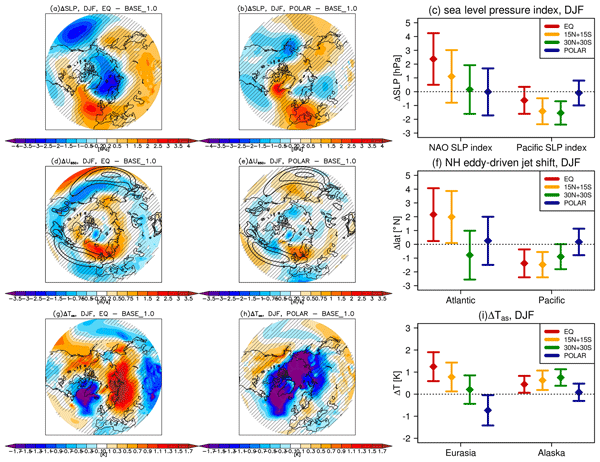
We use a state-of-the-art Earth system model and a set of stratospheric aerosol injection (SAI) strategies to achieve the same level of global mean surface cooling through different combinations of location and/or timing of the injection. We demonstrate that the choice of SAI strategy can lead to contrasting impacts on stratospheric and tropospheric temperatures, circulation, and chemistry (including stratospheric ozone), thereby leading to different impacts on regional surface climate.
Daniele Visioni, Ben Kravitz, Alan Robock, Simone Tilmes, Jim Haywood, Olivier Boucher, Mark Lawrence, Peter Irvine, Ulrike Niemeier, Lili Xia, Gabriel Chiodo, Chris Lennard, Shingo Watanabe, John C. Moore, and Helene Muri
Atmos. Chem. Phys., 23, 5149–5176, https://doi.org/10.5194/acp-23-5149-2023, https://doi.org/10.5194/acp-23-5149-2023, 2023
Short summary
Short summary
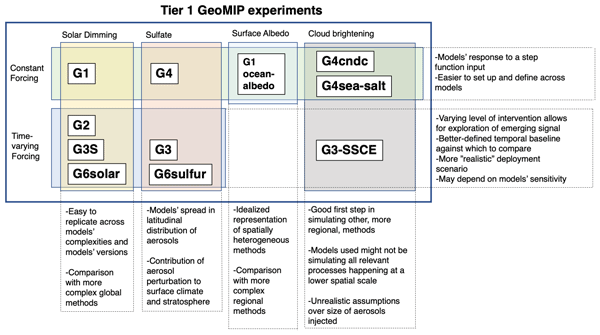
Geoengineering indicates methods aiming to reduce the temperature of the planet by means of reflecting back a part of the incoming radiation before it reaches the surface or allowing more of the planetary radiation to escape into space. It aims to produce modelling experiments that are easy to reproduce and compare with different climate models, in order to understand the potential impacts of these techniques. Here we assess its past successes and failures and talk about its future.
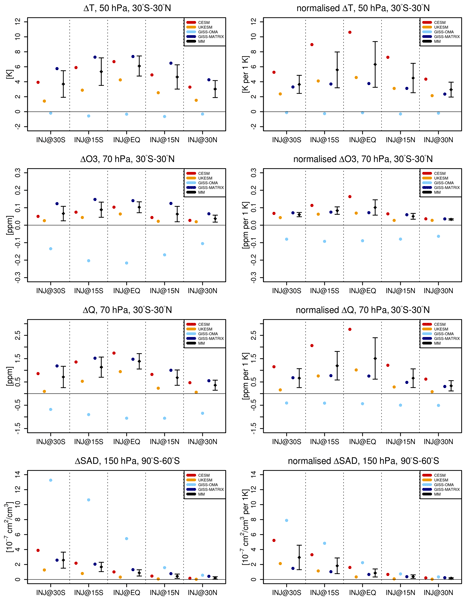
Ewa M. Bednarz, Daniele Visioni, Ben Kravitz, Andy Jones, James M. Haywood, Jadwiga Richter, Douglas G. MacMartin, and Peter Braesicke
Atmos. Chem. Phys., 23, 687–709, https://doi.org/10.5194/acp-23-687-2023, https://doi.org/10.5194/acp-23-687-2023, 2023
Short summary
Short summary
Building on Part 1 of this two-part study, we demonstrate the role of biases in climatological circulation and specific aspects of model microphysics in driving the differences in simulated sulfate distributions amongst three Earth system models. We then characterize the simulated changes in stratospheric and free-tropospheric temperatures, ozone, water vapor, and large-scale circulation, elucidating the role of the above aspects in the surface responses discussed in Part 1.

Daniele Visioni, Ewa M. Bednarz, Walker R. Lee, Ben Kravitz, Andy Jones, Jim M. Haywood, and Douglas G. MacMartin
Atmos. Chem. Phys., 23, 663–685, https://doi.org/10.5194/acp-23-663-2023, https://doi.org/10.5194/acp-23-663-2023, 2023
Short summary
Short summary
The paper constitutes Part 1 of a study performing a first systematic inter-model comparison of the atmospheric responses to stratospheric sulfate aerosol injections (SAIs) at various latitudes as simulated by three state-of-the-art Earth system models. We identify similarities and differences in the modeled aerosol burden, investigate the differences in the aerosol approaches between the models, and ultimately show the differences produced in surface climate, temperature and precipitation.
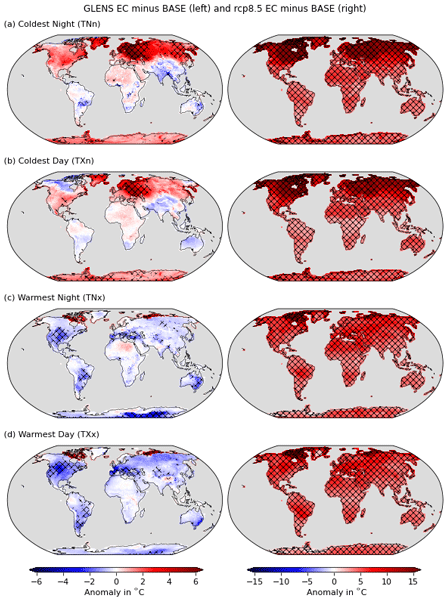
Mari R. Tye, Katherine Dagon, Maria J. Molina, Jadwiga H. Richter, Daniele Visioni, Ben Kravitz, and Simone Tilmes
Earth Syst. Dynam., 13, 1233–1257, https://doi.org/10.5194/esd-13-1233-2022, https://doi.org/10.5194/esd-13-1233-2022, 2022
Short summary
Short summary
We examined the potential effect of stratospheric aerosol injection (SAI) on extreme temperature and precipitation. SAI may cause daytime temperatures to cool but nighttime to warm. Daytime cooling may occur in all seasons across the globe, with the largest decreases in summer. In contrast, nighttime warming may be greatest at high latitudes in winter. SAI may reduce the frequency and intensity of extreme rainfall. The combined changes may exacerbate drying over parts of the global south.
Ilaria Quaglia, Daniele Visioni, Giovanni Pitari, and Ben Kravitz
Atmos. Chem. Phys., 22, 5757–5773, https://doi.org/10.5194/acp-22-5757-2022, https://doi.org/10.5194/acp-22-5757-2022, 2022
Short summary
Short summary
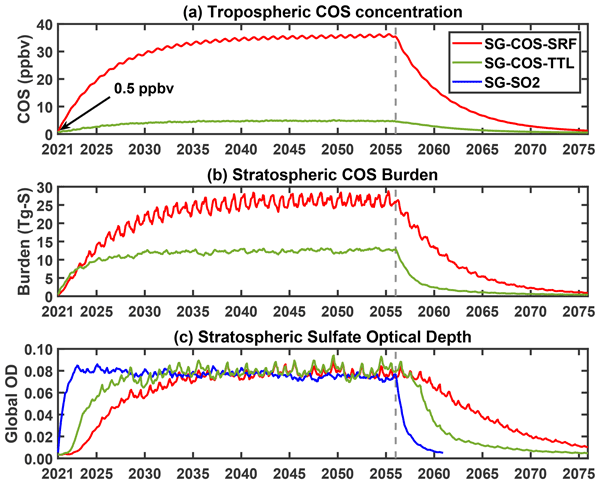
Carbonyl sulfide is a gas that mixes very well in the atmosphere and can reach the stratosphere, where it reacts with sunlight and produces aerosol. Here we propose that, by increasing surface fluxes by an order of magnitude, the number of stratospheric aerosols produced may be enough to partially offset the warming produced by greenhouse gases. We explore what effect this would have on the atmospheric composition.
Huiying Ren, Erol Cromwell, Ben Kravitz, and Xingyuan Chen
Hydrol. Earth Syst. Sci., 26, 1727–1743, https://doi.org/10.5194/hess-26-1727-2022, https://doi.org/10.5194/hess-26-1727-2022, 2022
Short summary
Short summary
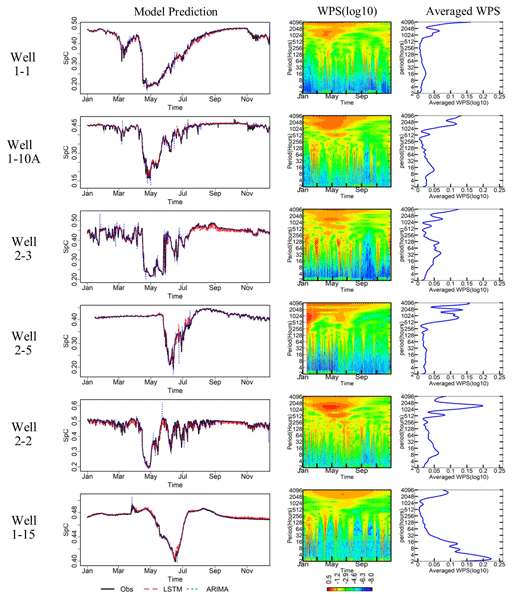
We used a deep learning method called long short-term memory (LSTM) to fill gaps in data collected by hydrologic monitoring networks. LSTM accounted for correlations in space and time and nonlinear trends in data. Compared to a traditional regression-based time-series method, LSTM performed comparably when filling gaps in data with smooth patterns, while it better captured highly dynamic patterns in data. Capturing such dynamics is critical for understanding dynamic complex system behaviors.
Andy Jones, Jim M. Haywood, Adam A. Scaife, Olivier Boucher, Matthew Henry, Ben Kravitz, Thibaut Lurton, Pierre Nabat, Ulrike Niemeier, Roland Séférian, Simone Tilmes, and Daniele Visioni
Atmos. Chem. Phys., 22, 2999–3016, https://doi.org/10.5194/acp-22-2999-2022, https://doi.org/10.5194/acp-22-2999-2022, 2022
Short summary
Short summary
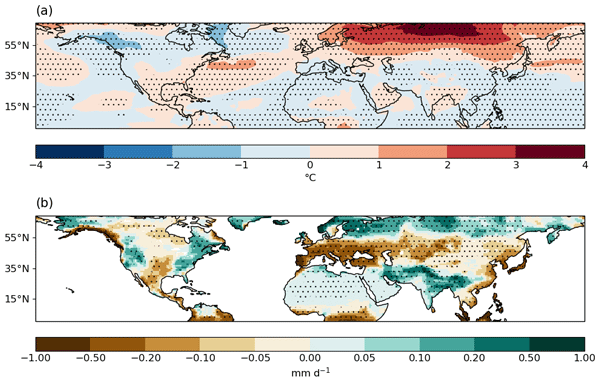
Simulations by six Earth-system models of geoengineering by introducing sulfuric acid aerosols into the tropical stratosphere are compared. A robust impact on the northern wintertime North Atlantic Oscillation is found, exacerbating precipitation reduction over parts of southern Europe. In contrast, the models show no consistency with regard to impacts on the Quasi-Biennial Oscillation, although results do indicate a risk that the oscillation could become locked into a permanent westerly phase.
Daniele Visioni, Simone Tilmes, Charles Bardeen, Michael Mills, Douglas G. MacMartin, Ben Kravitz, and Jadwiga H. Richter
Atmos. Chem. Phys., 22, 1739–1756, https://doi.org/10.5194/acp-22-1739-2022, https://doi.org/10.5194/acp-22-1739-2022, 2022
Short summary
Short summary
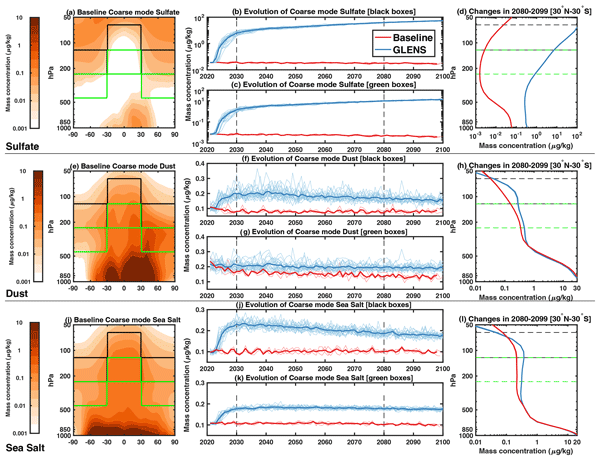
Aerosols are simulated in a simplified way in climate models: in the model analyzed here, they are represented in every grid as described by three simple logarithmic distributions, mixing all different species together. The size can evolve when new particles are formed, particles merge together to create a larger one or particles are deposited to the surface. This approximation normally works fairly well. Here we show however that when large amounts of sulfate are simulated, there are problems.
Yan Zhang, Douglas G. MacMartin, Daniele Visioni, and Ben Kravitz
Earth Syst. Dynam., 13, 201–217, https://doi.org/10.5194/esd-13-201-2022, https://doi.org/10.5194/esd-13-201-2022, 2022
Short summary
Short summary
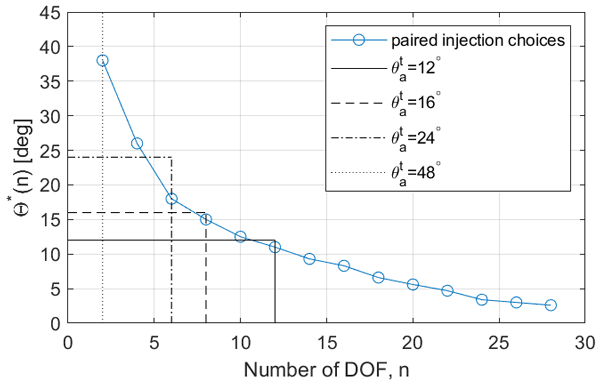
Adding SO2 to the stratosphere could temporarily cool the planet by reflecting more sunlight back to space. However, adding SO2 at different latitude(s) and season(s) leads to significant differences in regional surface climate. This study shows that, to cool the planet by 1–1.5 °C, there are likely six to eight choices of injection latitude(s) and season(s) that lead to meaningfully different distributions of climate impacts.
Cited articles
Banerjee, A., Butler, A. H., Polvani, L. M., Robock, A., Simpson, I. R., and Sun, L.: Robust winter warming over Eurasia under stratospheric sulfate geoengineering – the role of stratospheric dynamics, Atmos. Chem. Phys., 21, 6985–6997, https://doi.org/10.5194/acp-21-6985-2021, 2021.
Barlage, M., Chen, F., Rasmussen, R., Zhang, Z., and Miguez-Macho, G.: The importance of scale-dependent groundwater processes in land-atmosphere interactions over the central United States. Geophys. Res. Lett., 48, e2020GL092171, https://doi.org/10.1029/2020GL092171, 2021.
Brogli, R., Heim, C., Mensch, J., Sørland, S. L., and Schär, C.: The pseudo-global-warming (PGW) approach: methodology, software package PGW4ERA5 v1.1, validation, and sensitivity analyses, Geosci. Model Dev., 16, 907–926, https://doi.org/10.5194/gmd-16-907-2023, 2023.
Budyko, M. I.: On present-day climatic changes, Tellus, 29, 193–204, https://doi.org/10.3402/tellusa.v29i3.11347, 1977.
Chen, J., Dai, A., Zhang, Y., and Rasmussen, K. L.: Changes in Convective Available Potential Energy and Convective Inhibition under Global Warming, J. Climate, 33, https://doi.org/10.1175/JCLI-D-19-0461.1, 2020.
Cheng, W., MacMartin, D. G., Dagon, K., Kravitz, B., Tilmes, S., Richter, J. H., Mills, M. J., and Simpson, I. R.: Soil moisture and other hydrological changes in a stratospheric aerosol geoengineering large ensemble, J. Geophys. Res.-Atmos., 124, https://doi.org/10.1029/2018JD030237, 2019.
Cui, W., Galarneau, T., and Hoogewind, K.: Changes in mesoscale convective system precipitation structures in response to a warming climate, J. Geophys. Res.-Atmos., 128, e2023JD039920, https://doi.org/10.1029/2023JD039920, 2024.
Curry, C. L., Sillmann, J., Bronaugh, D., Alterskjær, K., Cole, J. N. S., Ji, D., Kravitz, B., Link, R. P., Moore, J. C., Muri, H., Niemeier, U., Robock, A., Tilmes, S., and Yang, S.: A multimodel examination of climate extremes in an idealized geoengineering experiment, J. Geophys. Res.-Atmos., 119, 3900–3923, https://doi.org/10.1002/2013JD020648, 2014.
Da-Allada, C. Y., Baloïtcha, E., Alamou, E. A., Awo, F. M., Bonou, F., Pomalegni, Y., Biao, E. I., Obada, E., Zandagba, J. E., Tilmes, S., and Irvine, P. J.: Changes in West African summer monsoon precipitation under stratospheric aerosol geoengineering, Earth's Future, 8, e2020EF001595, https://doi.org/10.1029/2020EF001595, 2020.
Daly, C., Taylor, G. H., and Gibson, W. P.: The PRISM approach to mapping precipitation and temperature, Proceedings of the 10th Conference on Applied Climatology, Reno, NV, American Meteorological Society, 20–23, https://prism.oregonstate.edu/pubs/link/1997_daly-etal_conf-appl-climat.pdf (last access: 26 February 2026), 1997.
Danabasoglu, G., Lamarque, J.-F., Bacmeister, J., Bailey, D. A., DuVivier, A. K., Edwards, J., Emmons, L. K., Fasullo, J., Garcia, R., Gettelman, A., Hannay, C., Holland, M. M., Large, W. G., Lauritzen, P. H., Lawrence, D. M., Lenaerts, J. T. M., Lindsay, K., Lipscomb, W. H., Mills, M. J., Neale, R., Oleson, K. W., Otto-Bliesner, B., Phillips, A. S., Sacks, W., Tilmes, S., van Kampenhout, L., Vertenstein, M., Bertini, A., Dennis, J., Deser, C., Fischer, C., Fox-Kemper, B., Kay, J. E., Kinni- son, D., Kushner, P. J., Larson, V. E., Long, M. C., Mickel- son, S., Moore, J. K., Nienhouse, E., Polvani, L., Rasch, P. J., and Strand, W. G.: The Community Earth System Model Version 2 (CESM2), J. Adv. Model. Earth Sy., 12, e2019MS001916, https://doi.org/10.1029/2019MS001916, 2020.
Deierling, W. and Petersen, W. A.: Total lightning activity as an indicator of updraft characteristics, J. Geophys. Res., 113, D16210, https://doi.org/10.1029/2007JD009598, 2008.
Diffenbaugh, N. S., Scherer, M., and Trapp, R. J.: Robust increases in severe thunderstorm environments in response to greenhouse forcing, Proceedings of the National Academy of Sciences, 110, 16361–16366, https://doi.org/10.1073/pnas.1307758110, 2013.
Dominguez, F., Rasmussen, R., Liu, C., Ikeda, K., Prein, A., Varble, A., Arias, P. A., Bacmeister, J., Bettolli, M. L., Callaghan, P., Carvalho, L. M. V., Castro, C. L., Chen, F., Chug, D., Chun, K. P., Dai, A., Danaila, L., da Rocha, R. P., de Lima Nascimento, E., Dougherty, E., Dudhia, J., Eidhammer, T., Feng, Z., Fita, L., Fu, R., Giles, J., Gilmour, H., Halladay, K., Huang, Y., Iza Wong, A. M., Lagos-Zúñiga, M. Á., Jones, C., Llamocca, J., Llopart, M., Martinez, J. A., Martinez, J. C., Minder, J. R., Morrison, M., Moon, Z. L., Mu, Y., Neale, R. B., Núñez Ocasio, K. M., Pal, S., Potter, E., Poveda, G., Puhales, F., Rasmussen, K. L., Rehbein, A., Rios-Berrios, R., Risanto, C. B., Rosales, A., Scaff, L., Seimon, A., Somos-Valenzuela, M., Tian, Y., Van Oevelen, P., Veloso-Aguila, D., Xue, L., and Schneider, T.: Advancing South American water and climate science through multidecadal convection-permitting modeling, B. Am. Meteorol. Soc., 105, E32–E44, https://doi.org/10.1175/BAMS-D-22-0226.1, 2024.
Dougherty, E. and Rasmussen, K. L.: Changes in flash flood-producing storms in the U.S., Journal of Hydrometeorology, 21, 2221–2236, https://doi.org/10.1175/JHM-D-20-0014.1, 2020.
Dougherty, E. and Rasmussen, K. L.: Variations in flash flood-producing storm characteristics associated with changes in vertical velocity in a future climate in the Mississippi River Basin, Journal of Hydrometeorology, 22, 671–687, 2021.
Dougherty, E., Sherman, E., and Rasmussen, K. L.: Future changes in the hydrologic cycle associated with flood-producing storms in California, Journal of Hydrometeorology, 21, 2607–2621, 2020.
Fasullo, J. T., Tilmes, S., Richter, J. H., Kravitz, B., MacMartin, D. G., Mills, M. J., and Simpson, I. R.: Persistent polar ocean warming in a strategically geoengineered climate, Nature Geoscience, https://doi.org/10.1038/s41561-018-0249-7, 2018.
Franke, M. J., Hurrell, J. W., Rasmussen, K. L., and Sun, L.: Impact of forced and internal climate variability on changes in convective environments over the eastern United States, Front. Clim., 6, 1385527, https://doi.org/10.3389/fclim.2024.1385527, 2024.
Gensini, V. A. and Mote, T. L.: Estimations of hazardous convective weather in the United States using dynamical downscaling, Journal of Climate, 27, 6581–6598, 2014.
Gettelman, A., Mills, M. J., Kinnison, D. E., Garcia, R. R., Smith, A. K., Marsh, D. R., Times, S., Vitt F., Bardeen, C. G., McInerny, J., Liu, H.-L., Solomon, S. C., Polvani, L. M., Emmons, L. K., Lamarque, J.-F., Richter, J. H., Glanville, A. S., Bacmeister, J. T., Philips, A. S., Neale, R. B., Simp- son, I. R., DuVivier, A. K., Hodzic, A., and Randel, W. J.: The whole atmosphere community climate model version 6 (WACCM6), J. Geophys. Res.-Atmos., 124, 12380–12403, https://doi.org/10.1029/2019JD030943, 2019.
Glade, I., Hurrell, J. W., Sun, L., and Rasmussen, K. L.: Assessing the impact of stratospheric aerosol injection on US convective weather environments, Earth's Future, 11, e2023EF004041, https://doi.org/10.1029/2023EF004041, 2023.
Gutmann, E. D., Rasmussen, R. M., Liu, C., Ikeda, K., Bruyère, C. L., Done, J. M., and Clark, M. P.: Changes in hurricanes from a 13-yr convection-permitting pseudo–global warming simulation, J. Climate, 31, 3643–3657, https://doi.org/10.1175/JCLI-D-17-0391.1, 2018.
Hall, A., Rahimi, S., Norris, J., Ban, N., Siler, N., Leung, L. R., Ullrich, P., Reed, K. A., Prein, A. F., and Qian, Y.: An Evaluation of Dynamical Downscaling Methods Used to Project Regional Climate Change, J. Geophys. Res.-Atmos., 129, https://doi.org/10.1029/2023JD040591, 2024.
Hara, M., Yoshikane, T., Kawase, H., and Kimura, F.: Estimation of the impact of global warming on snow depth in Japan by the pseudo-global warming method, Hydrological Research Letters, 2, 61–64, 2008.
Hersbach, H., Bell, B., Berrisford, P., Hirahara, S., Horányi, A., Muñoz-Sabater, J., Nicolas, J., Peubey, C., Radu, R., Schepers, D., Simmons, A., Soci, C., Abdalla, S., Abellan, X., Balsamo, G., Bechtold, P., Biavati, G., Bidlot, J., Bonavita, M., De Chiara, G., Dahlgren, P., Dee, D., Diamantakis, M., Dragani, R., Flemming, J., Forbes, R., Fuentes, M., Geer, A., Haimberger, L., Healy, S., Hogan, R. J., Hólm, E., Janisková, M., Keeley, S., Laloyaux, P., Lopez, P., Lupu, C., Radnoti, G., de Rosnay, P., Rozum, I., Vamborg, F., Villaume, S., and Thépaut, J.-N.: The ERA5 global reanalysis, Quarterly Journal of the Royal Meteorological Society, 146, 1999–2049, https://doi.org/10.1002/qj.3803, 2020.
Herrington, A. R. and Reed, K. A.: On resolution sensitivity in the Community Atmosphere Model, Q. J. Roy. Meteorol. Soc., 146, 3789–3807, https://doi.org/10.1002/qj.3873, 2020.
Hong, S.-Y., Noh, Y., and Dudhia, J.: A new vertical diffusion package with an explicit treatment of entrainment processes, Monthly Weather Review, 134, 2318–2341, https://doi.org/10.1175/MWR3199.1, 2006.
Houze Jr., R. A., Rasmussen, K. L., Zuluaga, M. D., and Brodzik, S. R.: The variable nature of convection in the tropics and subtropics: A legacy of 16 years of the Tropical Rainfall Measuring Mission satellite, Rev. Geophys., 53, 994–1021, https://doi.org/10.1002/2015RG000488, 2015.
Hueholt, D. M., Barnes, E. A., Hurrell, J. W., and Morrison, A. L.: Speed of environmental change frames relative ecological risk in climate change and climate intervention scenarios, Nat. Commun., 15, 3332, https://doi.org/10.1038/s41467-024-47656-z, 2024.
Hurrell, J. W., Holland, M. M., Gent, P. R., Ghan, S., Kay, J. E., Kushner, P. J., Lamarque, J.-F., Large, W. G., Lawrence, D., and Lindsay, K.: The community earth system model: a framework for collaborative research, B. Am. Meteorol. Soc., 94, 1339–1360, 2013.
Iacono, M. J., Delamere, J. S., Mlawer, E. J., Shephard, M. W., Clough, S. A., and Collins, W. D.: Radiative forcing by long-lived greenhouse gases: calculations with the AER radiative transfer models, Journal of Geophysical Research, https://doi.org/10.1029/2008JD009944, 2008.
IPCC: Climate Change 2013 – The Physical Science Basis, Contribution of Working Group I to the Fifth Assessment Report of the Intergovernmental Panel on Climate Change, Chap. 10, edited by: Stocker, T. F., Qin, D., Plattner, G.-K., Tignor, M., Allen, S. K., Boschung, J., Nauels, A., Xia, Y., Bex, V., and Midgley, P. M., Cambridge University Press, Cambridge, UK and New York, NY, USA, https://www.ipcc.ch/site/assets/uploads/2018/02/WG1AR5_Chapter10_FINAL.pdf (last access: 26 February 2026), 2013.
Irvine, P. J. and Keith, D. W.: Halving warming with stratospheric aerosol geoengineering moderates policy-relevant climate hazards, Environmental Research Letters, 15, 044011, https://doi.org/10.1088/1748-9326/ab76de, 2020.
Jiang, J., Cao, L., MacMartin, D. G., Simpson, I. R., Kravitz, B., Cheng, W., Visioni, D., Tilmes, S., Richter, J. H., and Mills, M. J.: Stratospheric sulfate aerosol geoengineering could alter the high-latitude seasonal cycle, Geophys. Res. Lett., 46, 14153–14163, 2019.
Kawase, H., Yoshikane, T., Hara, M., Kimura, F., Yasunari, T., Ailikun, B., Ueda, H., and Inoue, T.: Intermodel variability of future changes in the Baiu rainband estimated by the pseudo global warming downscaling method, Journal of Geophysical Research, 114, D24110, https://doi.org/10.1029/2009JD011803, 2009.
Kravitz, B., Robock, A., Tilmes, S., Boucher, O., English, J. M., Irvine, P. J., Jones, A., Lawrence, M. G., MacCracken, M., Muri, H., Moore, J. C., Niemeier, U., Phipps, S. J., Sillmann, J., Storelvmo, T., Wang, H., and Watanabe, S.: The Geoengineering Model Intercomparison Project Phase 6 (GeoMIP6): simulation design and preliminary results, Geosci. Model Dev., 8, 3379–3392, https://doi.org/10.5194/gmd-8-3379-2015, 2015.
Kravitz, B., MacMartin, D. G., Wang, H., and Rasch, P. J.: Geoengineering as a design problem, Earth Syst. Dynam., 7, 469–497, https://doi.org/10.5194/esd-7-469-2016, 2016.
Kravitz, B., MacMartin, D. G., Mills, M. J., Richter, J. H., Tilmes, S., Lamarque, J. F., Tribbia, J. J., and Vitt, F.: First simulations of designing stratospheric sulfate aerosol geoengineering to meet multiple simultaneous climate objectives, J. Geophys. Res.-Atmos., https://doi.org/10.1002/2017JD026874, 2017.
Lackmann, G. M.: The South-Central US flood of May 2010: present and future, Journal of Climate, 26, 4688–4709, 2013.
Liu, C., Ikeda, K., Rasmussen, R., Barlage, M., Newman, A. J., Prein, A. F., Chen, F., Chen, L., Clark, M., Dai, A., Dudhia, J., Eidhammer, T., Gochis, D., Gutmann, E., Kurkute, S., Li, Y., Thompson, G., and Yates, D.: Continental-scale convection-permitting modeling of the current and future climate of North America, Climate Dynamics, https://doi.org/10.1007/s00382-016-3327-9, 2017.
MacMartin, D. G., Kravitz, B., Keith, D. W., and Jarvis, A.: Dynamics of the coupled human-climate system resulting from closed-loop control of solar geoengineering, Climate Dynamics, 43, 243–258, 2014.
MacMartin, D. G., Kravitz, B., Long, J. C. S., and Rasch, P. J.: Geoengineering with stratospheric aerosols: What don't we know after a decade of research? Earth's Future, 4, 543–548, 2016.
MacMartin, D. G., Kravitz, B., Tilmes, S., Richter, J. H., Mills, M. J., Lamarque, J. F., Tribbia, J. J., and Vitt, F.: The climate response to stratospheric aerosol geoengineering can be tailored using multiple injection locations, J. Geophys. Res.-Atmos., https://doi.org/10.1002/2017JD026868, 2017.
Mills, M. J., Richter, J. H., Tilmes, S., Kravitz, B., MacMartin, D., Glanville, S., Schmidt, A., Tribbia, J. J., Gettelman, A., Hannay, C., Bacmeister, J. T., Kinnison, D. E., Vitt, F., and Lamarque, J. F.: Radiative and chemical response to interactive stratospheric aerosols in fully coupled CESM1(WACCM), J. Geophys. Res.-Atmos., https://doi.org/10.1002/2017JD027006, 2017.
Morrison, A. L., Barnes, E. A., and Hurrell, J. W.: Stratospheric aerosol injection to stabilize Northern Hemisphere terrestrial permafrost under the ARISE-SAI-1.5 scenario, Earth's Future, 12, e2023EF004151, https://doi.org/10.1029/2023EF004151, 2024.
Munich Re.: Thunderstorms, hail and tornadoes, localised but extremely destructive, https://www.munichre.com/en/risks/natural-disasters-losses-are-trending-upwards/thunderstorms-hail-and-tornados.html (last access: 17 November 2024), 2024.
National Academies of Sciences, Engineering, and Medicine: Reflecting Sunlight: Recommendations for Solar Geoengineering Research and Research Governance, Washington, DC, The National Academies Press, https://doi.org/10.17226/25762, 2021.
NCEI: U.S. billion-dollar weather and climate disasters, NOAA, https://doi.org/10.25921/stkw-7w73, 2024.
Niu, G. Y., Yang, Z.-L., Mitchell, K. E., Chen, F., Ek, M. B., Barlage, M., Longuevergne, L., Manning, K., Niyogi, D., Rosero, E., Tewari, M., and Xia, Y.: The community Noah land surface model with multiparameterization options (Noah-MP): 1. Model description and evaluation with local-scale measurements, Journal of Geophysical Research, https://doi.org/10.1029/2010JD015139, 2011.
Palmer, T. and Stevens, B.: The scientific challenge of understanding and estimating climate change, P. Natl. Acad. Sci. USA, 116, 24390–24395, https://doi.org/10.1073/pnas.1906691116, 2019.
Patrick, S. M.: Reflecting Sunlight to Reduce Climate Risk: Priorities for Research and International Cooperation, Council Special Report No. 93, Council on Foreign Relations, New York, USA, https://www.cfr.org/report/reflecting-sunlight-reduce-climate-risk (last access: 26 February 2026), 2022.
Pinto, I., Jack, C., Lennard, C., Tilmes, S., and Odoulami, R. C.: Africa's climate response to solar radiation management with stratospheric aerosol, Geophys. Res. Lett., 47, e2019GL086047, https://doi.org/10.1029/2019GL086047, 2020.
Prein, A. F., Langhans, W., Fosser, G., Ferrone, A., Ban, N., Goergen, K., Keller, M., Tölle, M., Gutjahr, O., Feser, F., Brisson, E., Kollet, S., Schmidli, J., Van Lipzig, N. P. M., and Leung, R.: A review on regional convection-permitting climate modeling: demonstrations, prospects, and challenges, Reviews of Geophysics, 53, 323–361, 2015.
Prein, A. F., Liu, C., Ikeda, K., Bullock, R., Rasmussen, R. M., Holland, G. J., and Clark, M.: Simulating North American mesoscale convective systems with a convection-permitting climate model, Climate Dynamics, https://doi.org/10.1007/s00382-017-3993-2, 2017a.
Prein, A. F., Liu, C., Ikeda, K., Bullock, R., Rasmussen, R. M., Holland, G. J., and Clark, M. P.: The future intensification of hourly precipitation extremes, Nat. Clim. Change, 7, 48–52, https://doi.org/10.1038/nclimate3168, 2017b.
Rasmussen, K. L., Prein, A. F., Rasmussen, R. M., Liu, C., Ikeda, K., and Chen, F.: Changes in the convective population and thermodynamic environments in convection-permitting regional climate simulations over the United States, Climate Dynamics, 55, 383–408, https://doi.org/10.1007/s00382-017-4000-7, 2017.
Rasmussen, R. M., Liu, C., Ikeda, K., Gochis, D., Yates, D., Chen, F., Tewari, M., Barlage, M., Dudhia, J., Yu, W., Miller, K., Arsenault, K., Grubišić, V., Thompson, G., and Gutmann, E.: High-resolution coupled climate runoff simulations of seasonal snowfall over Colorado: a process study of current and warmer climate, Journal of Climate, 24, 3015–3048, 2011.
Rasmussen, R. M., Liu, C., Ikeda, K., Prein, A. F., Chen, F., Chen, L., Barlage, M., Yates, D., and Zhang, G.: Climate change impacts on the water balance of the Colorado headwaters: high-resolution regional climate model simulations, Journal of Hydrometeorology, 15, 1091–1116, 2014.
Rasmussen, R. M., Chen, F., Liu, C. H., Ikeda, K., Prein, A., Kim, J., Schneider, T., Dai, A., Gochis, D., Dugger, A., Zhang, Y., Jaye, A., Dudhia, J., He, C., Harrold, M., Xue, L., Chen, S., Newman, A., Dougherty, E., Abolafia-Rosenzweig, R., Lybarger, N. D., Viger, R., Lesmes, D., Skalak, K., Brakebill, J., Cline, D., Dunne, K., Rasmussen, K., and Miguez-Macho, G.: CONUS404: The NCAR–USGS 4-km Long-Term Regional Hydroclimate Reanalysis over the CONUS, B. Am. Meteorol. Soc., 104, E1382–E1408, https://doi.org/10.1175/BAMS-D-21-0326.1, 2023.
Rauscher, S. A., O'Brien, T. A., Piani, C., Coppola, E., Giorgi, F., Collins, W. D., and Lawston, P. M.: A multimodel intercomparison of resolution effects on precipitation: simulations and theory, Clim. Dynam., 47, 2205–2218, https://doi.org/10.1007/s00382-015-2959-5, 2016.
Richter, J. H., Visioni, D., MacMartin, D. G., Bailey, D. A., Rosenbloom, N., Dobbins, B., Lee, W. R., Tye, M., and Lamarque, J.-F.: Assessing Responses and Impacts of Solar climate intervention on the Earth system with stratospheric aerosol injection (ARISE-SAI): protocol and initial results from the first simulations, Geosci. Model Dev., 15, 8221–8243, https://doi.org/10.5194/gmd-15-8221-2022, 2022.
Robock, A.: Volcanic eruptions and climate, Reviews of Geophysics, 38, 191–219, 2000.
Robrecht, S., Vogel, B., Tilmes, S., and Müller, R.: Potential of future stratospheric ozone loss in the midlatitudes under global warming and sulfate geoengineering, Atmos. Chem. Phys., 21, 2427–2455, https://doi.org/10.5194/acp-21-2427-2021, 2021.
Sato, T., Kimura, F., and Kitoh, A.: Projection of global warming onto regional precipitation over Mongolia using a regional climate model, Journal of Hydrology, 333, 144–154, 2007.
Scaff, L., Prein, A. F., Li, Y., Liu, C., Rasmussen, R., and Ikeda, K.: Simulating the convective precipitation diurnal cycle in North America's current and future climate, Climate Dynamics, 55, 369–382, https://doi.org/10.1007/s00382-019-04754-9, 2020.
Schär, C., Frie, C., Lüthi, D., and Davies, H. C.: Surrogate climate-change scenarios for regional climate models, Geophys. Res. Lett., 23, 669–672, 1996.
Senior, C. A., Marsham, J. H., Berthou, S., Burgin, L. E., Folwell, S. S., Kendon, E. J., Klein, C. M., Jones, R. G., Mittal, N., Rowell, D. P., Tomassini, L., Vischel, T., Becker, B., Birch, C. E., Crook, J., Dougill, A. J., Finney, D. L., Graham, R. J., Hart, N. C. G., Jack, C. D., Jackson, L. S., James, R., Koelle, B., Misiani, H., Mwalukanga, B., Parker, D. J., Stratton, R. A., Taylor, C. M., Tucker, S. O., Wainwright, C. M., Washington, R., and Willet, M. R.: Convection-permitting regional climate change simulations for understanding future climate and informing decision-making in Africa, B. Am. Meteorol. Soc., 102, E1206–E1223, https://doi.org/10.1175/BAMS-D-20-0020.1, 2021.
Simpson, I. R., Tilmes, S., Richter, J. H., Kravitz, B., Mac- Martin, D. G., Mills, M. J., Fasullo, J. T., and Pendergrass, A. G.: The regional hydroclimate response to stratospheric sulfate geoengineering and the role of stratospheric heating, J. Geophys. Res.-Atmos., 124, 12587–12616, https://doi.org/10.1029/2019JD031093, 2019.
Skamarock, W. C., Klemp, J. B., Dudhia, J., Gill, D. O., Barker, D., Duda, M. G., Huang, X.-Y., Wang, W., and Powers, J. G.: A description of the Advanced Research WRF Version 3 (No. NCAR/TN-475+STR), University Corporation for Atmospheric Research, https://doi.org/10.5065/D68S4MVH, 2008.
Stevens, B., Satoh, M., Auger, L., Biercamp, J., Bretherton, C. S., Chen, X., Düben, P., Judt, F., Khairoutdinov, M., Klocke, D., Kodama, C., Kornblueh, L., Lin, S.-J., Neumann, P., Putman, W. M., Röber, N., Shibuya, R., Vanniere, B., Vidale, P. L., Wedi, N., and Zhou, L.: DYAMOND: the DYnamics of the Atmospheric general circulation Modeled On Non-hydrostatic Domains, Prog. Earth Planet. Sci., 6, 61, https://doi.org/10.1186/s40645-019-0304-z, 2019.
Summers, B., Rasmussen, K., Hurrell, J. W., Sun, L., and Yu, H.: Future projections of the 2011 super tornado outbreak under global warming and stratospheric aerosol injection, Earth's Future, submitted, 2026.
Sun, L., Hurrell, J., Rasmussen, K., Kravitz, B., and Summers, B.: Model codes for “Assessing the impact of solar climate intervention on future U.S. weather using a convection-permitting model”, Zenodo [code], https://doi.org/10.5281/zenodo.16374211, 2025a.
Sun, L., Hurrell, J., Rasmussen, K., Kravitz, B., and Summers, B.: Global Climate Model Model codes for “Assessing the impact of solar climate intervention on future U.S. weather using a convection-permitting model”, Zenodo [data set], https://doi.org/10.5281/zenodo.16374758, 2025b.
Sun, L., Hurrell, J., Rasmussen, K., Kravitz, B., and Summers, B.: WRF data for “Assessing the impact of solar climate intervention on future U.S. weather using a convection-permitting model”, Zenodo [data set], https://doi.org/10.5281/zenodo.16376739, 2025c.
Sun, L., Hurrell, J., Rasmussen, K., Kravitz, B., and Summers, B.: Data for “Assessing the impact of solar climate intervention on future U.S. weather using a convection-permitting model”, Zenodo [data set], https://doi.org/10.5281/zenodo.16062478, 2025d.
Tegen, I., Hollrig, P., Chin, M., Fung, I., Jacob, D., and Penner, J.: Contribution of different aerosol species to the global aerosol extinction optical thickness: Estimates from model results, Journal of Geophysical Research, 102, 23895–23915, https://doi.org/10.1029/97JD01864, 1997.
The Royal Society: Solar Radiation Modification: Policy Briefing, The Royal Society, London, UK, https://royalsociety.org/news-resources/projects/solar-radiation-modification/ (last access: 26 February 2026), 2025.
Tilmes, S., Richter, J. H., Mills, M. J., Kravitz, B., MacMartin, D. G., Vitt, F., Tribbia, J. J., and Lamarque, J. F.: Sensitivity of aerosol distribution and climate response to stratospheric SO2 injection locations, J. Geophys. Res.-Atmos., https://doi.org/10.1002/2017JD026888, 2017.
Tilmes, S., Richter, J. H., Kravitz, B., MacMartin, D. G., Mills, M. J., Simpson, I. R., Glanville, A. S., Fasullo, J. T., Phillips, A. S., Lamarque, J., Tribbia, J., Edwards, J., Mickelson, S., and Gosh, S.: CESM1(WACCM) Stratospheric Aerosol Geoengineering Large Ensemble (GLENS) Project, B. Am. Meteorol. Soc., https://doi.org/10.1175/BAMS-D-17-0267.1, 2018.
Tilmes, S., Richter, J. H., Kravitz, B., MacMartin, D. G., Glanville, A. S., Visioni, D., Kinnison, D. E., and Müller, R.: Sensitivity of total column ozone to stratospheric sulfur injection strategies, Geophys. Res. Lett., 48, e2021GL094058, https://doi.org/10.1029/2021GL094058, 2021.
Thompson, G., Field, P., Rasmussen, R. M., and Hall, W. D.: Explicit forecasts of winter precipitation using an improved bulk microphysics scheme. Part II: Implementation of a new snow parameterization, Monthly Weather Review, 136, 5095–5115, 2008.
Touma, D., Hurrell, J. W., Tye, M. R., and Dagon, K.: The impact of stratospheric aerosol injection on extreme fire weather risk, Earth's Future, 11, e2023EF003626, https://doi.org/10.1029/2023EF003626, 2023.
Trapp, R., Diffenbaugh, N. S., Brooks, H. E., Baldwin, M. E., Robinson, E. D., and Pal, J. S.: Changes in severe thunderstorm environment frequency during the 21st century caused by anthropogenically enhanced global radiative forcing, Proceedings of the National Academy of Sciences, 104, 19719–19723, https://doi.org/10.1073/pnas.0705494104, 2007.
Trapp, R. J. and Hoogewind, K. A.: The realization of extreme tornadic storm events under future anthropogenic climate change, Journal of Climate, 29, 5251–5265, 2016.
Trapp, R. J., Robinson, E. D., Baldwin, M. E., Diffenbaugh, N. S., and Schwedler, B. R. J.: Regional climate of hazardous convective weather through high-resolution dynamical downscaling, Climate Dynamics, 37, 677–688, https://doi.org/10.1007/s00382-010-0826-y, 2011.
Tye, M. R., Dagon, K., Molina, M. J., Richter, J. H., Visioni, D., Kravitz, B., and Tilmes, S.: Indices of extremes: geographic patterns of change in extremes and associated vegetation impacts under climate intervention, Earth Syst. Dynam., 13, 1233–1257, https://doi.org/10.5194/esd-13-1233-2022, 2022.
Viceto, C., Marta-Almeida, M., and Rocha, A.: Future climate change of stability indices for the Iberian Peninsula, International Journal of Climatology, 37, 4390-4408, https://doi.org/10.1002/joc.5094, 2017.
Visioni, D., MacMartin, D. G., Kravitz, B., Tilmes, S., Mills, M. J., Richter, J. H., and Boudreau, M. P.: Seasonal injection strategies for stratospheric aerosol geoengineering, Geophys. Res. Lett., 46, 7790–7799, https://doi.org/10.1029/2019GL083680, 2019.
Visioni, D., MacMartin, D. G., Kravitz, B., Richter, J. H., Tilmes, S., and Mills, M. J.: Seasonally modulated stratospheric aerosol geoengineering alters the climate outcomes, Geophys. Res. Lett., 47, e2020GL088337, https://doi.org/10.1029/2020GL088337, 2020.
Visioni, D., Robock, A., Haywood, J., Henry, M., Tilmes, S., MacMartin, D. G., Kravitz, B., Doherty, S. J., Moore, J., Lennard, C., Watanabe, S., Muri, H., Niemeier, U., Boucher, O., Syed, A., Egbebiyi, T. S., Séférian, R., and Quaglia, I.: G6-1.5K-SAI: a new Geoengineering Model Intercomparison Project (GeoMIP) experiment integrating recent advances in solar radiation modification studies, Geosci. Model Dev., 17, 2583–2596, https://doi.org/10.5194/gmd-17-2583-2024, 2024.
Wilson, J. W. and Megenhardt, D. L.: Thunderstorm initiation, organization, and lifetime associated with Florida boundary layer convergence lines, Mon. Weather Rev., 125, 1507–1525, https://doi.org/10.1175/1520-0493(1997)125<1507:TIOALA>2.0.CO;2, 1997.
Xia, L., Nowack, P. J., Tilmes, S., and Robock, A.: Impacts of stratospheric sulfate geoengineering on tropospheric ozone, Atmos. Chem. Phys., 17, 11913–11928, https://doi.org/10.5194/acp-17-11913-2017, 2017.
Yang, C.-E., Hoffman, F. M., Ricciuto, D. M., Tilmes, S., Xia, L., MacMartin, D. G., Richter, J. H., Mills, M., Kravitz, B., and Fu, J. S.: Assessing terrestrial biogeochemical feedbacks in a strategically geoengineered climate, Environmental Research Letters, 15, 104043, https://doi.org/10.1088/1748-9326/abacf7, 2020.
Short summary
We develop a novel framework using the convection-permitting Weather Research and Forecasting (WRF) model to assess how stratospheric aerosol injection, a solar climate intervention strategy, affects future convective weather over the contiguous U.S. Results demonstrate the feasibility and scientific potential of this approach for evaluating weather-scale impacts and suggest that such intervention may mitigate changes in temperature, precipitation, and convective activity due to warming.
We develop a novel framework using the convection-permitting Weather Research and Forecasting...


