
Articles | Volume 19, issue 5
https://doi.org/10.5194/gmd-19-2039-2026
© Author(s) 2026. This work is distributed under
the Creative Commons Attribution 4.0 License.
the Creative Commons Attribution 4.0 License.
https://doi.org/10.5194/gmd-19-2039-2026
© Author(s) 2026. This work is distributed under
the Creative Commons Attribution 4.0 License.
the Creative Commons Attribution 4.0 License.
Model description paper
| 
11 Mar 2026
Model description paper |
| 11 Mar 2026
| 11 Mar 2026
CHANS-SD-YRB V1.0: a system dynamics model of the coupled human-natural systems for the Yellow River Basin
Shan Sang
State Key Laboratory of Earth Surface Processes and Hazards Risk Governance (ESPHR), Beijing Normal University, Beijing, China
Institute of Land Surface System and Sustainable Development, Faculty of Geographical Science, Beijing Normal University, Beijing, China

State Key Laboratory of Earth Surface Processes and Hazards Risk Governance (ESPHR), Beijing Normal University, Beijing, China
Institute of Land Surface System and Sustainable Development, Faculty of Geographical Science, Beijing Normal University, Beijing, China
Shuang Zong
State Key Laboratory of Earth Surface Processes and Hazards Risk Governance (ESPHR), Beijing Normal University, Beijing, China
Institute of Land Surface System and Sustainable Development, Faculty of Geographical Science, Beijing Normal University, Beijing, China
Lu Yu
State Key Laboratory of Earth Surface Processes and Hazards Risk Governance (ESPHR), Beijing Normal University, Beijing, China
Institute of Land Surface System and Sustainable Development, Faculty of Geographical Science, Beijing Normal University, Beijing, China
Shuai Wang
State Key Laboratory of Earth Surface Processes and Hazards Risk Governance (ESPHR), Beijing Normal University, Beijing, China
Institute of Land Surface System and Sustainable Development, Faculty of Geographical Science, Beijing Normal University, Beijing, China
Yanxu Liu
State Key Laboratory of Earth Surface Processes and Hazards Risk Governance (ESPHR), Beijing Normal University, Beijing, China
Institute of Land Surface System and Sustainable Development, Faculty of Geographical Science, Beijing Normal University, Beijing, China
Xutong Wu
State Key Laboratory of Earth Surface Processes and Hazards Risk Governance (ESPHR), Beijing Normal University, Beijing, China
Institute of Land Surface System and Sustainable Development, Faculty of Geographical Science, Beijing Normal University, Beijing, China
Shuang Song
State Key Laboratory of Earth Surface Processes and Hazards Risk Governance (ESPHR), Beijing Normal University, Beijing, China
Institute of Land Surface System and Sustainable Development, Faculty of Geographical Science, Beijing Normal University, Beijing, China
Wenwu Zhao
State Key Laboratory of Earth Surface Processes and Hazards Risk Governance (ESPHR), Beijing Normal University, Beijing, China
Institute of Land Surface System and Sustainable Development, Faculty of Geographical Science, Beijing Normal University, Beijing, China
Xuhui Wang
Institute of Carbon Neutrality, Laboratory for Earth Surface Processes, College of Urban and Environmental Sciences, Peking University, Beijing 100871, China
Bojie Fu
State Key Laboratory of Regional and Urban Ecology, Research Center for Eco-Environmental Sciences, Chinese Academy of Sciences, Beijing 100085, China
Related authors
Shan Sang, Yan Li, Chengcheng Hou, Shuangshuang Zi, and Huiqing Lin
Hydrol. Earth Syst. Sci., 29, 67–84, https://doi.org/10.5194/hess-29-67-2025, https://doi.org/10.5194/hess-29-67-2025, 2025
Short summary
Short summary
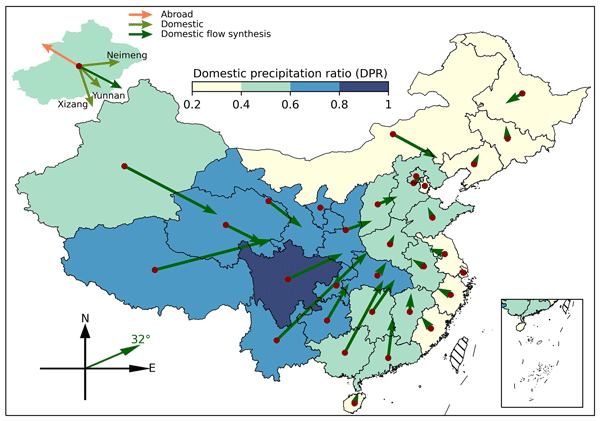
Green water exchanges between each province in China form an interconnected flow network and have substantial socioeconomic values. Green water flow and its teleconnected socioeconomic effects should be considered in water resource management in addition to blue water.
Chengcheng Hou, Yan Li, Shan Sang, Xu Zhao, Yanxu Liu, Yinglu Liu, and Fang Zhao
Earth Syst. Sci. Data, 16, 2449–2464, https://doi.org/10.5194/essd-16-2449-2024, https://doi.org/10.5194/essd-16-2449-2024, 2024
Short summary
Short summary
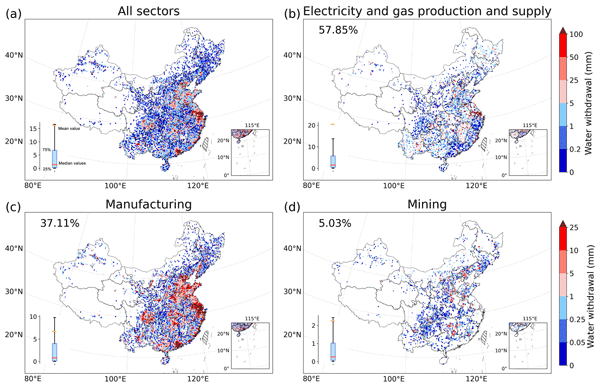
To fill the gap in the gridded industrial water withdrawal (IWW) data in China, we developed the China Industrial Water Withdrawal (CIWW) dataset, which provides monthly IWWs from 1965 to 2020 at a spatial resolution of 0.1°/0.25° and auxiliary data including subsectoral IWW and industrial output value in 2008. This dataset can help understand the human water use dynamics and support studies in hydrology, geography, sustainability sciences, and water resource management and allocation in China.
En Hua, Ling Huang, Liangliang Zhang, Quanbo Zhao, Yingxuan Wang, Bowei Wu, Sien Li, Yaokui Cui, Yubao Wang, and Xuhui Wang
Earth Syst. Sci. Data, 18, 4097–4112, https://doi.org/10.5194/essd-18-4097-2026, https://doi.org/10.5194/essd-18-4097-2026, 2026
Short summary
Short summary
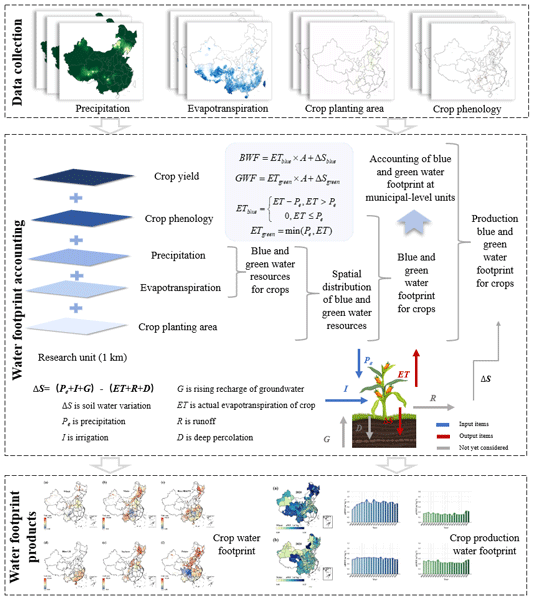
Accurately quantifying the blue and green water footprints of crops is essential for addressing unsustainable agricultural water use. However, long-term, high spatiotemporal resolution data have been lacking. Hence, multi-source remote sensing was integrated with high-resolution crop distribution and phenology within a detailed water footprint framework. ChinaCropWF provides daily, 1-km resolution blue and green water footprints for China's five major food crops from 2001 to 2020.
Peng Chen, Qiang Tang, Yanxu Liu, Yuchuan Luo, Linhai Cheng, Yijia Wang, Wenxuan Xu, and Shuai Wang
Earth Syst. Sci. Data, 18, 3289–3302, https://doi.org/10.5194/essd-18-3289-2026, https://doi.org/10.5194/essd-18-3289-2026, 2026
Short summary
Short summary
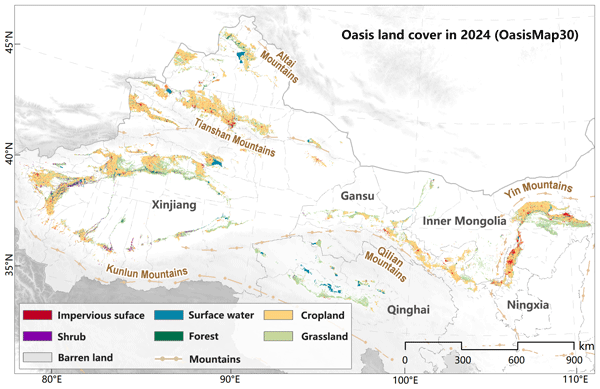
We developed OasisMap30, a 30 m annual land-cover dataset for Chinese oases covering 1987–2024, with an overall accuracy exceeding 90 %. The dataset reveals a 45.87 % expansion of Chinese oases, mainly driven by cropland expansion and grassland restoration. The consistent, high-resolution OasisMap30 dataset provides a valuable basis for investigating oasis landscape dynamics, socio-ecological responses, and sustainable development in dryland regions.
Yue Liu, Wenwu Zhao, Zhijie Zhang, Jingyi Ding, and Lixin Wang
Earth Syst. Sci. Data, 18, 1519–1540, https://doi.org/10.5194/essd-18-1519-2026, https://doi.org/10.5194/essd-18-1519-2026, 2026
Short summary
Short summary
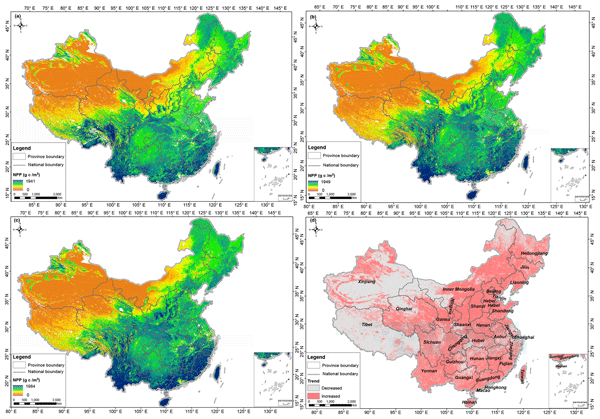
This study integrated the high resolution remote sensing data and ground observations to produce 30 m spatial resolution maps of four key ecosystem services in China – net primary productivity, soil conservation, sandstorm prevention, and water yield – for the years 2000, 2010, and 2020. Through comparison and cross-validation with other data sources, this dataset has been proven to have significant advantages in accuracy and applicability.
Zhengyang Lin, Ling Huang, Hanqin Tian, Anping Chen, and Xuhui Wang
Geosci. Model Dev., 18, 2509–2520, https://doi.org/10.5194/gmd-18-2509-2025, https://doi.org/10.5194/gmd-18-2509-2025, 2025
Short summary
Short summary
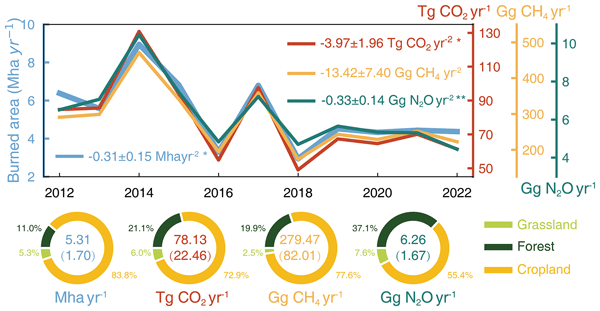
The China Wildfire Emission Dataset (ChinaWED v1) estimated wildfire emissions in China during 2012–2022 as 78.13 Tg CO2, 279.47 Gg CH4, and 6.26 Gg N2O annually. Agricultural fires dominated emissions, while forest and grassland emissions decreased. Seasonal peaks occurred in late spring, with hotspots in northeast, southwest, and east China. The model emphasizes the importance of using localized emission factors and high-resolution fire estimates for accurate assessments.
Pierre Friedlingstein, Michael O'Sullivan, Matthew W. Jones, Robbie M. Andrew, Judith Hauck, Peter Landschützer, Corinne Le Quéré, Hongmei Li, Ingrid T. Luijkx, Are Olsen, Glen P. Peters, Wouter Peters, Julia Pongratz, Clemens Schwingshackl, Stephen Sitch, Josep G. Canadell, Philippe Ciais, Robert B. Jackson, Simone R. Alin, Almut Arneth, Vivek Arora, Nicholas R. Bates, Meike Becker, Nicolas Bellouin, Carla F. Berghoff, Henry C. Bittig, Laurent Bopp, Patricia Cadule, Katie Campbell, Matthew A. Chamberlain, Naveen Chandra, Frédéric Chevallier, Louise P. Chini, Thomas Colligan, Jeanne Decayeux, Laique M. Djeutchouang, Xinyu Dou, Carolina Duran Rojas, Kazutaka Enyo, Wiley Evans, Amanda R. Fay, Richard A. Feely, Daniel J. Ford, Adrianna Foster, Thomas Gasser, Marion Gehlen, Thanos Gkritzalis, Giacomo Grassi, Luke Gregor, Nicolas Gruber, Özgür Gürses, Ian Harris, Matthew Hefner, Jens Heinke, George C. Hurtt, Yosuke Iida, Tatiana Ilyina, Andrew R. Jacobson, Atul K. Jain, Tereza Jarníková, Annika Jersild, Fei Jiang, Zhe Jin, Etsushi Kato, Ralph F. Keeling, Kees Klein Goldewijk, Jürgen Knauer, Jan Ivar Korsbakken, Xin Lan, Siv K. Lauvset, Nathalie Lefèvre, Zhu Liu, Junjie Liu, Lei Ma, Shamil Maksyutov, Gregg Marland, Nicolas Mayot, Patrick C. McGuire, Nicolas Metzl, Natalie M. Monacci, Eric J. Morgan, Shin-Ichiro Nakaoka, Craig Neill, Yosuke Niwa, Tobias Nützel, Lea Olivier, Tsuneo Ono, Paul I. Palmer, Denis Pierrot, Zhangcai Qin, Laure Resplandy, Alizée Roobaert, Thais M. Rosan, Christian Rödenbeck, Jörg Schwinger, T. Luke Smallman, Stephen M. Smith, Reinel Sospedra-Alfonso, Tobias Steinhoff, Qing Sun, Adrienne J. Sutton, Roland Séférian, Shintaro Takao, Hiroaki Tatebe, Hanqin Tian, Bronte Tilbrook, Olivier Torres, Etienne Tourigny, Hiroyuki Tsujino, Francesco Tubiello, Guido van der Werf, Rik Wanninkhof, Xuhui Wang, Dongxu Yang, Xiaojuan Yang, Zhen Yu, Wenping Yuan, Xu Yue, Sönke Zaehle, Ning Zeng, and Jiye Zeng
Earth Syst. Sci. Data, 17, 965–1039, https://doi.org/10.5194/essd-17-965-2025, https://doi.org/10.5194/essd-17-965-2025, 2025
Short summary
Short summary
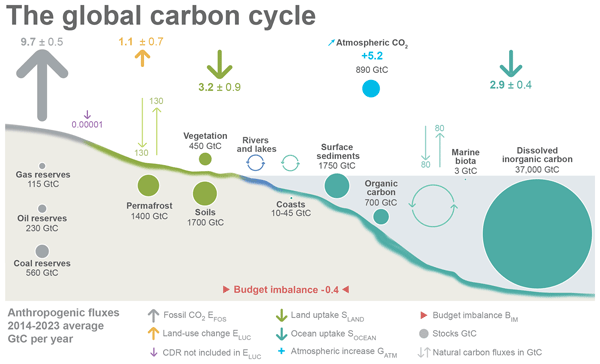
The Global Carbon Budget 2024 describes the methodology, main results, and datasets used to quantify the anthropogenic emissions of carbon dioxide (CO2) and their partitioning among the atmosphere, land ecosystems, and the ocean over the historical period (1750–2024). These living datasets are updated every year to provide the highest transparency and traceability in the reporting of CO2, the key driver of climate change.
Shan Sang, Yan Li, Chengcheng Hou, Shuangshuang Zi, and Huiqing Lin
Hydrol. Earth Syst. Sci., 29, 67–84, https://doi.org/10.5194/hess-29-67-2025, https://doi.org/10.5194/hess-29-67-2025, 2025
Short summary
Short summary
Green water exchanges between each province in China form an interconnected flow network and have substantial socioeconomic values. Green water flow and its teleconnected socioeconomic effects should be considered in water resource management in addition to blue water.
Yichu Huang, Xiaoming Feng, Chaowei Zhou, and Bojie Fu
EGUsphere, https://doi.org/10.5194/egusphere-2024-3393, https://doi.org/10.5194/egusphere-2024-3393, 2024
Preprint archived
Short summary
Short summary
This study uses an integrated water-energy-land optimization model to explore sustainable water use pathways in the Yellow River Basin. We find water conflicts between energy and irrigation water use, and quantify the mitigation and spillover effects of water transfer. We also highlight the critical role of energy production, implying that the energy sector transformation is key to the water system of the Yellow River Basin.
Chengcheng Hou, Yan Li, Shan Sang, Xu Zhao, Yanxu Liu, Yinglu Liu, and Fang Zhao
Earth Syst. Sci. Data, 16, 2449–2464, https://doi.org/10.5194/essd-16-2449-2024, https://doi.org/10.5194/essd-16-2449-2024, 2024
Short summary
Short summary
To fill the gap in the gridded industrial water withdrawal (IWW) data in China, we developed the China Industrial Water Withdrawal (CIWW) dataset, which provides monthly IWWs from 1965 to 2020 at a spatial resolution of 0.1°/0.25° and auxiliary data including subsectoral IWW and industrial output value in 2008. This dataset can help understand the human water use dynamics and support studies in hydrology, geography, sustainability sciences, and water resource management and allocation in China.
Zhiwei Yang, Jian Peng, Yanxu Liu, Song Jiang, Xueyan Cheng, Xuebang Liu, Jianquan Dong, Tiantian Hua, and Xiaoyu Yu
Earth Syst. Sci. Data, 16, 2407–2424, https://doi.org/10.5194/essd-16-2407-2024, https://doi.org/10.5194/essd-16-2407-2024, 2024
Short summary
Short summary
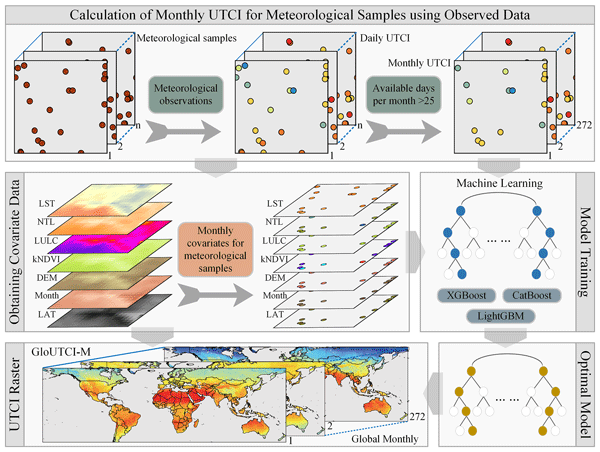
We produced a monthly Universal Thermal Climate Index dataset (GloUTCI-M) boasting global coverage and an extensive time series spanning March 2000 to October 2022 with a high spatial resolution of 1 km. This dataset is the product of a comprehensive approach leveraging multiple data sources and advanced machine learning models. GloUTCI-M can enhance our capacity to evaluate thermal stress experienced by the human, offering substantial prospects across a wide array of applications.
Nannan An, Nan Lu, Weiliang Chen, Yongzhe Chen, Hao Shi, Fuzhong Wu, and Bojie Fu
Earth Syst. Sci. Data, 16, 1771–1810, https://doi.org/10.5194/essd-16-1771-2024, https://doi.org/10.5194/essd-16-1771-2024, 2024
Short summary
Short summary
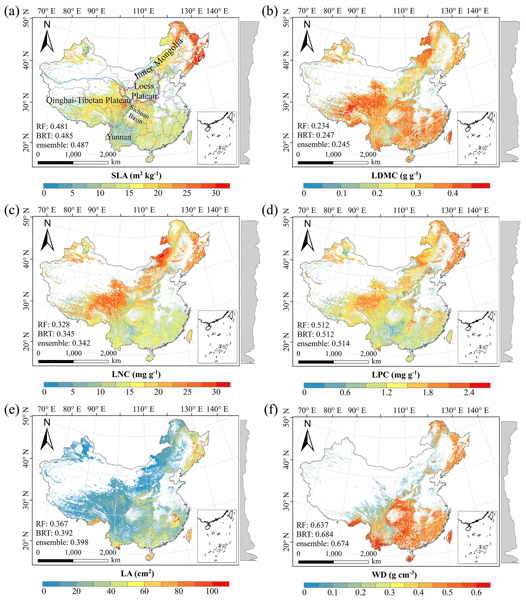
This study generated a spatially continuous plant functional trait dataset (~1 km) in China in combination with field observations, environmental variables and vegetation indices using machine learning methods. Results showed that wood density, leaf P concentration and specific leaf area showed good accuracy with an average R2 of higher than 0.45. This dataset could provide data support for development of Earth system models to predict vegetation distribution and ecosystem functions.
Yongzhe Chen, Xiaoming Feng, Bojie Fu, Haozhi Ma, Constantin M. Zohner, Thomas W. Crowther, Yuanyuan Huang, Xutong Wu, and Fangli Wei
Earth Syst. Sci. Data, 15, 897–910, https://doi.org/10.5194/essd-15-897-2023, https://doi.org/10.5194/essd-15-897-2023, 2023
Short summary
Short summary
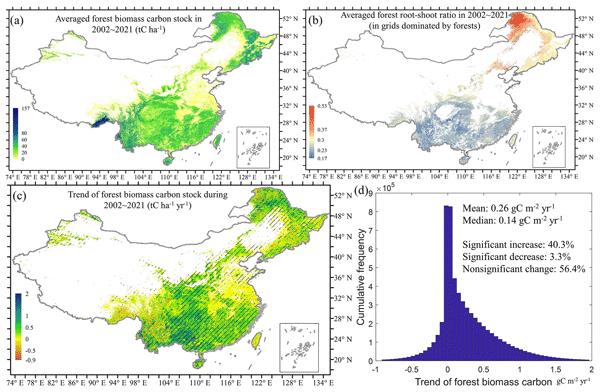
This study presented a long-term (2002–2021) above- and belowground biomass dataset for woody vegetation in China at 1 km resolution. It was produced by combining various types of remote sensing observations with adequate plot measurements. Over 2002–2021, China’s woody biomass increased at a high rate, especially in the central and southern parts. This dataset can be applied to evaluate forest carbon sinks across China and the efficiency of ecological restoration programs in China.
Jianquan Dong, Stefan Brönnimann, Tao Hu, Yanxu Liu, and Jian Peng
Earth Syst. Sci. Data, 14, 5651–5664, https://doi.org/10.5194/essd-14-5651-2022, https://doi.org/10.5194/essd-14-5651-2022, 2022
Short summary
Short summary
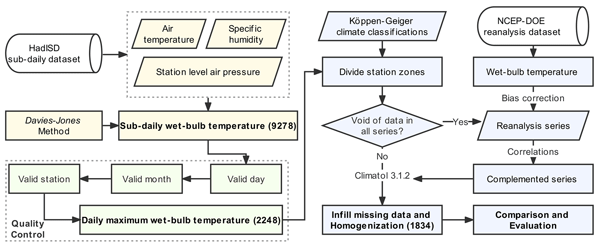
We produced a new dataset of global station-based daily maximum wet-bulb temperature (GSDM-WBT) through the calculation of wet-bulb temperature, data quality control, infilling missing values, and homogenization. The GSDM-WBT covers the complete daily series of 1834 stations from 1981 to 2020. The GSDM-WBT dataset handles stations with many missing values and possible inhomogeneities, which could better support the studies on global and regional humid heat events.
Jinxia An, Guangyao Gao, Chuan Yuan, Juan Pinos, and Bojie Fu
Hydrol. Earth Syst. Sci., 26, 3885–3900, https://doi.org/10.5194/hess-26-3885-2022, https://doi.org/10.5194/hess-26-3885-2022, 2022
Short summary
Short summary
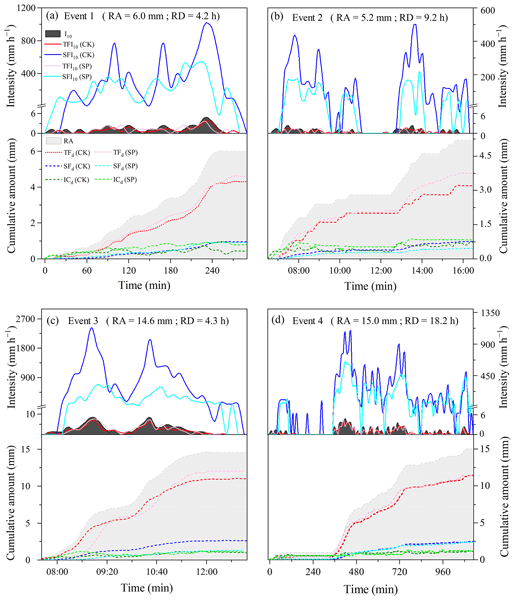
An in-depth investigation was conducted of all rainfall-partitioning components at inter- and intra-event scales for two xerophytic shrubs. Inter-event rainfall partitioning amount and percentage depended more on rainfall amount, and rainfall intensity and duration controlled intra-event rainfall-partitioning variables. One shrub has larger branch angle, small branch and smaller canopy area to produce stemflow more efficiently, and the other has larger biomass to intercept more rainfall.
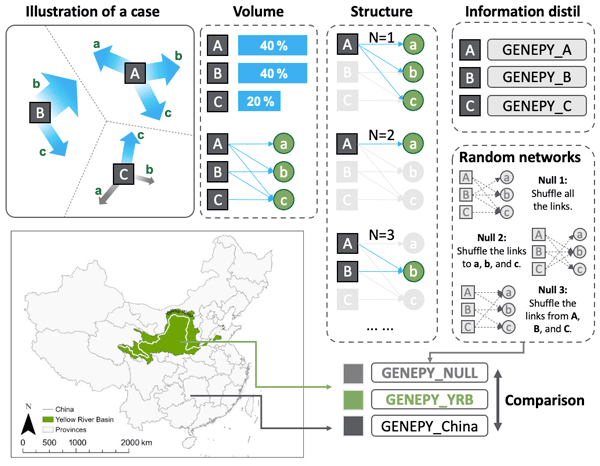
Shuang Song, Shuai Wang, Xutong Wu, Yongyuan Huang, and Bojie Fu
Hydrol. Earth Syst. Sci., 26, 2035–2044, https://doi.org/10.5194/hess-26-2035-2022, https://doi.org/10.5194/hess-26-2035-2022, 2022
Short summary
Short summary
A reasonable assessment of the contribution of the water resources in a river basin to domestic crops supplies will be the first step in balancing the water–food nexus. Our results showed that although the Yellow River basin had reduced its virtual water outflow, its importance to crop production in China had been increasing when water footprint networks were considered. Our complexity-based approach provides a new perspective for understanding changes in a basin with a severe water shortage.
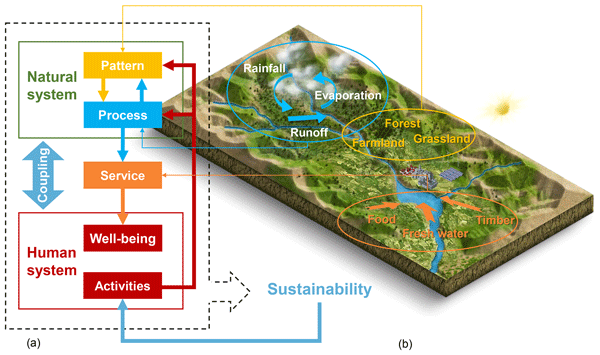
Bojie Fu, Xutong Wu, Zhuangzhuang Wang, Xilin Wu, and Shuai Wang
Earth Syst. Dynam., 13, 795–808, https://doi.org/10.5194/esd-13-795-2022, https://doi.org/10.5194/esd-13-795-2022, 2022
Short summary
Short summary
To understand the dynamics of a coupled human and natural system (CHANS) and promote its sustainability, we propose a conceptual
pattern–process–service–sustainabilitycascade framework. The use of this framework is systematically illustrated by a review of CHANS research experience in China's Loess Plateau in terms of coupling landscape patterns and ecological processes, linking ecological processes to ecosystem services, and promoting social–ecological sustainability.
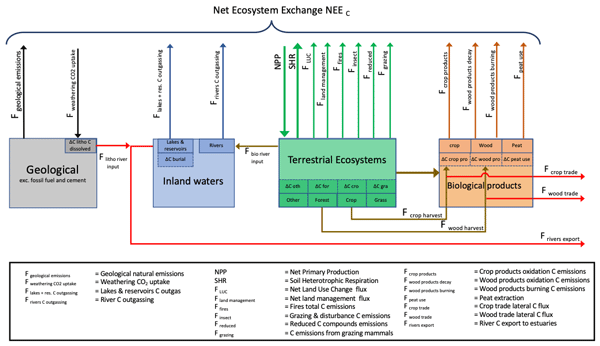
Philippe Ciais, Ana Bastos, Frédéric Chevallier, Ronny Lauerwald, Ben Poulter, Josep G. Canadell, Gustaf Hugelius, Robert B. Jackson, Atul Jain, Matthew Jones, Masayuki Kondo, Ingrid T. Luijkx, Prabir K. Patra, Wouter Peters, Julia Pongratz, Ana Maria Roxana Petrescu, Shilong Piao, Chunjing Qiu, Celso Von Randow, Pierre Regnier, Marielle Saunois, Robert Scholes, Anatoly Shvidenko, Hanqin Tian, Hui Yang, Xuhui Wang, and Bo Zheng
Geosci. Model Dev., 15, 1289–1316, https://doi.org/10.5194/gmd-15-1289-2022, https://doi.org/10.5194/gmd-15-1289-2022, 2022
Short summary
Short summary
The second phase of the Regional Carbon Cycle Assessment and Processes (RECCAP) will provide updated quantification and process understanding of CO2, CH4, and N2O emissions and sinks for ten regions of the globe. In this paper, we give definitions, review different methods, and make recommendations for estimating different components of the total land–atmosphere carbon exchange for each region in a consistent and complete approach.
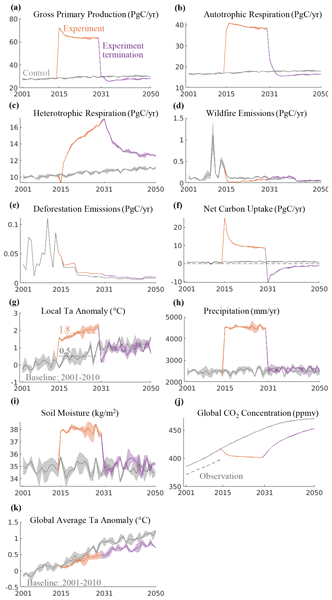
Xueyuan Gao, Shunlin Liang, Dongdong Wang, Yan Li, Bin He, and Aolin Jia
Earth Syst. Dynam., 13, 219–230, https://doi.org/10.5194/esd-13-219-2022, https://doi.org/10.5194/esd-13-219-2022, 2022
Short summary
Short summary
Numerical experiments with a coupled Earth system model show that large-scale nighttime artificial lighting in tropical forests will significantly increase carbon sink, local temperature, and precipitation, and it requires less energy than direct air carbon capture for capturing 1 t of carbon, suggesting that it could be a powerful climate mitigation option. Side effects include CO2 outgassing after the termination of the nighttime lighting and impacts on local wildlife.
Jonathan Rizzi, Ana M. Tarquis, Anne Gobin, Mikhail Semenov, Wenwu Zhao, and Paolo Tarolli
Nat. Hazards Earth Syst. Sci., 21, 3873–3877, https://doi.org/10.5194/nhess-21-3873-2021, https://doi.org/10.5194/nhess-21-3873-2021, 2021
Maierdang Keyimu, Zongshan Li, Bojie Fu, Guohua Liu, Fanjiang Zeng, Weiliang Chen, Zexin Fan, Keyan Fang, Xiuchen Wu, and Xiaochun Wang
Clim. Past, 17, 2381–2392, https://doi.org/10.5194/cp-17-2381-2021, https://doi.org/10.5194/cp-17-2381-2021, 2021
Short summary
Short summary
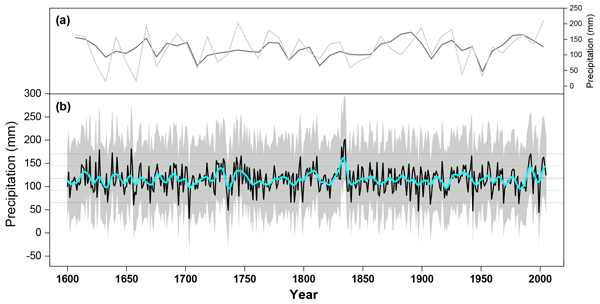
We created a residual tree-ring width chronology and reconstructed non-growth-season precipitation (NGSP) over the period spanning 1600–2005 in the southeastern Tibetan Plateau (SETP), China. Reconstruction model verification as well as similar variations of NGSP reconstruction and Palmer Drought Severity Index reconstructions from the surrounding region indicate the reliability of the present reconstruction. Our reconstruction is representative of NGSP variability of a large region in the SETP.
Xuejing Leng, Xiaoming Feng, Bojie Fu, and Yu Zhang
Hydrol. Earth Syst. Sci. Discuss., https://doi.org/10.5194/hess-2021-377, https://doi.org/10.5194/hess-2021-377, 2021
Manuscript not accepted for further review
Short summary
Short summary
At present, there is a lack of time series of runoff generated by glacial regions in the world. In this paper, we quantified glacial runoff (including meltwater runoff and delayed runoff) in arid regions of China from 1961 to 2015 by using remote sensing datasets of glacier mass balance with high resolution. Glacier runoff is the water resource used by oases in arid regions of China. The long-term glacial runoff data can indicate the climate risk faced by different basins in arid regions.
Cited articles
Allen, C., Metternicht, G., Wiedmann, T., and Pedercini, M.: Greater gains for Australia by tackling all SDGs but the last steps will be the most challenging, Nat. Sustain., 2, 1041–1050, https://doi.org/10.1038/s41893-019-0409-9, 2019.
Breach, P. A. and Simonovic, S. P.: ANEMI3: An updated tool for global change analysis, PLoS ONE, 16, e0251489, https://doi.org/10.1371/journal.pone.0251489, 2021.
Calvin, K. and Bond-Lamberty, B.: Integrated human-earth system modeling – state of the science and future directions, Environ. Res. Lett., 13, 063006, https://doi.org/10.1088/1748-9326/aac642, 2018.
Changming, L. and Shifeng, Z.: Drying up of the yellow river: its impacts and counter-measures, Mitig. Adapt. Strat. Gl., 7, 203–214, https://doi.org/10.1023/A:1024408310869, 2002.
Cheng, Y., Huang, M., Lawrence, D. M., Calvin, K., Lombardozzi, D. L., Sinha, E., Pan, M., and He, X.: Future bioenergy expansion could alter carbon sequestration potential and exacerbate water stress in the United States, Science Advances, 8, eabm8237, https://doi.org/10.1126/sciadv.abm8237, 2022.
Cobb, C. W. and Douglas, P. H.: A theory of production, Am. Econom. Rev., 18, 139–165, 1928.
Cong, Z., Yang, D., Gao, B., Yang, H., and Hu, H.: Hydrological trend analysis in the Yellow River basin using a distributed hydrological model, Water Resour. Res., 45, 2008WR006852, https://doi.org/10.1029/2008WR006852, 2009.
Cui, T., Wang, Y., Sun, R., Qiao, C., Fan, W., Jiang, G., Hao, L., and Zhang, L.: Estimating Vegetation Primary Production in the Heihe River Basin of China with Multi-Source and Multi-Scale Data, PLOS ONE, 11, e0153971, https://doi.org/10.1371/journal.pone.0153971, 2016.
Davies, E. G. R. and Simonovic, S. P.: ANEMI: a new model for integrated assessment of global change, Interdisciplin. Environ. Rev., 11, 127–161, https://doi.org/10.1504/IER.2010.037903, 2010.
Di Vittorio, A. V., Sinha, E., Hao, D., Singh, B., Calvin, K. V., Shippert, T., Patel, P., and Bond-Lamberty, B.: E3SM-GCAM: A Synchronously Coupled Human Component in the E3SM Earth System Model Enables Novel Human-Earth Feedback Research, J. Adv. Model. Earth Sy., 17, e2024MS004806, https://doi.org/10.1029/2024MS004806, 2025.
Dobbs, G. R., Liu, N., Caldwell, P. V., Miniat, C. F., Sun, G., Duan, K., and Bolstad, P. V.: Inter-basin surface water transfers database for public water supplies in conterminous United States, 1986–2015, Sci. Data, 10, 255, https://doi.org/10.1038/s41597-023-02148-5, 2023.
Dottori, F., Szewczyk, W., Ciscar, J.-C., Zhao, F., Alfieri, L., Hirabayashi, Y., Bianchi, A., Mongelli, I., Frieler, K., Betts, R. A., and Feyen, L.: Increased human and economic losses from river flooding with anthropogenic warming, Nat. Clim. Change, 8, 781–786, https://doi.org/10.1038/s41558-018-0257-z, 2018.
European Environment Agency (EEA): Trends in atmospheric concentrations of CO2 (ppm), CH4 (ppb) and N2O (ppb), between 1800 and 2017, https://www.eea.europa.eu/en/analysis/maps-and-charts/atmospheric-concentration-of-carbon-dioxide-5 (last access: 8 March 2026), 2019.
Feng, X., Fu, B., Piao, S., Wang, S., Ciais, P., Zeng, Z., Lü, Y., Zeng, Y., Li, Y., Jiang, X., and Wu, B.: Revegetation in China's Loess Plateau is approaching sustainable water resource limits, Nat. Clim. Change, 6, 1019–1022, https://doi.org/10.1038/nclimate3092, 2016.
Feng, Y. and Zhu, A.: Spatiotemporal differentiation and driving patterns of water utilization intensity in Yellow River Basin of China: Comprehensive perspective on the water quantity and quality, J. Clean. Product., 369, 133395, https://doi.org/10.1016/j.jclepro.2022.133395, 2022.
Flörke, M., Kynast, E., Bärlund, I., Eisner, S., Wimmer, F., and Alcamo, J.: Domestic and industrial water uses of the past 60 years as a mirror of socio-economic development: A global simulation study, Global Environ. Change, 23, 144–156, https://doi.org/10.1016/j.gloenvcha.2012.10.018, 2013.
Forrester, J. W.: Principles of systems, Pegasus Communications, Inc, Waltham, MA, https://doi.org/10.1007/978-3-663-02094-3, 1968.
Fu, B. and Li, Y.: Bidirectional coupling between the Earth and human systems is essential for modeling sustainability, Natl. Sci. Rev., 3, 397–398, https://doi.org/10.1093/nsr/nww094, 2016.
Fu, B., Liu, Y., Lü, Y., He, C., Zeng, Y., and Wu, B.: Assessing the soil erosion control service of ecosystems change in the Loess Plateau of China, Ecol. Complex., 8, 284–293, https://doi.org/10.1016/j.ecocom.2011.07.003, 2011.
Fu, B., Liu, Y., and Meadows, M. E.: Ecological restoration for sustainable development in China, Natl. Sci. Rev., 10, nwad033, https://doi.org/10.1093/nsr/nwad033, 2023.
Fujimori, S., Masui, T., and Matsuoka, Y.: Development of a global computable general equilibrium model coupled with detailed energy end-use technology, Appl. Energ., 128, 296–306, https://doi.org/10.1016/j.apenergy.2014.04.074, 2014.
Fujimori, S., Wu, W., Doelman, J., Frank, S., Hristov, J., Kyle, P., Sands, R., van Zeist, W.-J., Havlik, P., Domínguez, I. P., Sahoo, A., Stehfest, E., Tabeau, A., Valin, H., van Meijl, H., Hasegawa, T., and Takahashi, K.: Land-based climate change mitigation measures can affect agricultural markets and food security, Nat. Food, 3, 110–121, https://doi.org/10.1038/s43016-022-00464-4, 2022.
Gou, J., Miao, C., Samaniego, L., Xiao, M., Wu, J., and Guo, X.: CNRD v1.0: A High-Quality Natural Runoff Dataset for Hydrological and Climate Studies in China, B. Am. Meteorol. Soc., 102, E929–E947, https://doi.org/10.1175/BAMS-D-20-0094.1, 2021.
Hasegawa, T., Sakurai, G., Fujimori, S., Takahashi, K., Hijioka, Y., and Masui, T.: Extreme climate events increase risk of global food insecurity and adaptation needs, Nat. Food, 2, 587–595, https://doi.org/10.1038/s43016-021-00335-4, 2021.
Hyun, J.-Y., Huang, S.-Y., Yang, Y.-C. E., Tidwell, V., and Macknick, J.: Using a coupled agent-based modeling approach to analyze the role of risk perception in water management decisions, Hydrol. Earth Syst. Sci., 23, 2261–2278, https://doi.org/10.5194/hess-23-2261-2019, 2019.
Jain, S., Mindlin, J., Koren, G., Gulizia, C., Steadman, C., Langendijk, G. S., Osman, M., Abid, M. A., Rao, Y., and Rabanal, V.: Are We at Risk of Losing the Current Generation of Climate Researchers to Data Science?, AGU Adv., 3, e2022AV000676, https://doi.org/10.1029/2022AV000676, 2022.
Jia, K., Liang, S., Liu, S., Li, Y., Xiao, Z., Yao, Y., Jiang, B., Zhao, X., Wang, X., Xu, S., and Cui, J.: Global Land Surface Fractional Vegetation Cover Estimation Using General Regression Neural Networks From MODIS Surface Reflectance, IEEE T. Geosci. Remote, 53, 4787–4796, https://doi.org/10.1109/TGRS.2015.2409563, 2015.
Jia, K., Yang, L., Liang, S., Xiao, Z., Zhao, X., Yao, Y., Zhang, X., Jiang, B., and Liu, D.: Long-Term Global Land Surface Satellite (GLASS) Fractional Vegetation Cover Product Derived From MODIS and AVHRR Data, IEEE J. Sel. Top. Appl., 12, 508–518, https://doi.org/10.1109/JSTARS.2018.2854293, 2019.
Jiang, H., Simonovic, S. P., and Yu, Z.: ANEMI_Yangtze v1.0: a coupled human–natural systems model for the Yangtze Economic Belt – model description, Geosci. Model Dev., 15, 4503–4528, https://doi.org/10.5194/gmd-15-4503-2022, 2022.
Kemei, Z., Rotich, T., and Bitok, J.: Modelling population dynamics using age-structured system of partial differential equations, IJAMR, 13, 110–116, https://doi.org/10.14419/m81azj37, 2024.
Li, M., Shan, R., Abdulla, A., Virguez, E., and Gao, S.: The role of dispatchability in China's power system decarbonization, Energy Environ. Sci., 17, 2193–2205, https://doi.org/10.1039/D3EE04293F, 2024.
Li, X., Cheng, G., Lin, H., Cai, X., Fang, M., Ge, Y., Hu, X., Chen, M., and Li, W.: Watershed System Model: The Essentials to Model Complex Human-Nature System at the River Basin Scale, J. Geophys. Res.-Atmos., 123, 3019–3034, https://doi.org/10.1002/2017JD028154, 2018.
Li, X., Zhang, L., Zheng, Y., Yang, D., Wu, F., Tian, Y., Han, F., Gao, B., Li, H., Zhang, Y., Ge, Y., Cheng, G., Fu, B., Xia, J., Song, C., and Zheng, C.: Novel hybrid coupling of ecohydrology and socioeconomy at river basin scale: A watershed system model for the Heihe River basin, Environ. Model. Softw., 141, 105058, https://doi.org/10.1016/j.envsoft.2021.105058, 2021.
Li, Z., Liu, X., Niu, T., Kejia, D., Zhou, Q., Ma, T., and Gao, Y.: Ecological Restoration and Its Effects on a Regional Climate: The Source Region of the Yellow River, China, Environ. Sci. Technol., 49, 5897–5904, https://doi.org/10.1021/es505985q, 2015.
Liu, C., Golding, D., and Gong, G.: Farmers' coping response to the low flows in the lower Yellow River: A case study of temporal dimensions of vulnerability, Global Environ. Chang., 18, 543–553, https://doi.org/10.1016/j.gloenvcha.2008.09.002, 2008.
Liu, J.: Integration across a metacoupled world, E&S, 22, 29, https://doi.org/10.5751/ES-09830-220429, 2017.
Liu, J., Dietz, T., Carpenter, S. R., Alberti, M., Folke, C., Moran, E., Pell, A. N., Deadman, P., Kratz, T., Lubchenco, J., Ostrom, E., Ouyang, Z., Provencher, W., Redman, C. L., Schneider, S. H., and Taylor, W. W.: Complexity of Coupled Human and Natural Systems, Science, 317, 1513–1516, https://doi.org/10.1126/science.1144004, 2007.
Ministry of Agriculture and Rural Affairs of the People's Republic of China (MARA): China Agriculture Yearbook, https://data.cnki.net/yearBook?type=type&code=A (last access: 8 March 2026), 2020.
Miao, C., Kong, D., Wu, J., and Duan, Q.: Functional degradation of the water–sediment regulation scheme in the lower Yellow River: Spatial and temporal analyses, Sci. Total Environ., 551–552, 16–22, https://doi.org/10.1016/j.scitotenv.2016.02.006, 2016.
Miao, C., Gou, J., Fu, B., Tang, Q., Duan, Q., Chen, Z., Lei, H., Chen, J., Guo, J., Borthwick, A. G. L., Ding, W., Duan, X., Li, Y., Kong, D., Guo, X., and Wu, J.: High-quality reconstruction of China's natural streamflow, Sci. Bull., 67, 547–556, https://doi.org/10.1016/j.scib.2021.09.022, 2022.
Monier, E., Paltsev, S., Sokolov, A., Chen, Y.-H. H., Gao, X., Ejaz, Q., Couzo, E., Schlosser, C. A., Dutkiewicz, S., Fant, C., Scott, J., Kicklighter, D., Morris, J., Jacoby, H., Prinn, R., and Haigh, M.: Toward a consistent modeling framework to assess multi-sectoral climate impacts, Nat. Commun., 9, 1–8, https://doi.org/10.1038/s41467-018-02984-9, 2018.
Motesharrei, S., Rivas, J., Kalnay, E., Asrar, G. R., Busalacchi, A. J., Cahalan, R. F., Cane, M. A., Colwell, R. R., Feng, K., Franklin, R. S., Hubacek, K., Miralles-Wilhelm, F., Miyoshi, T., Ruth, M., Sagdeev, R., Shirmohammadi, A., Shukla, J., Srebric, J., Yakovenko, V. M., and Zeng, N.: Modeling sustainability: population, inequality, consumption, and bidirectional coupling of the Earth and Human Systems, Natl. Sci. Rev., 3, 470–494, https://doi.org/10.1093/nsr/nww081, 2016.
National Bureau of Statistics of China (NBSC): China Energy Statistical Yearbook, https://data.cnki.net/yearBook?type=type&code=A (last access: 8 March 2026), 2020a.
National Bureau of Statistics of China (NBSC): China Population Census Yearbook, https://data.cnki.net/yearBook?type=type&code=A (last access: 8 March 2026), 2020b.
National Bureau of Statistics of China (NBSC): China Statistical Yearbooks, https://www.stats.gov.cn/english/ (last access: 8 March 2026), 2020c.
Ning, X., Zhu, N., Liu, Y., and Wang, H.: Quantifying impacts of climate and human activities on the grassland in the Three-River Headwater Region after two phases of Ecological Project, Geography and Sustainability, 3, 164–176, https://doi.org/10.1016/j.geosus.2022.05.003, 2022.
Nordhaus, W. D.: Revisiting the social cost of carbon, P. Natl. Acad. Sci. USA, 114, 1518–1523, https://doi.org/10.1073/pnas.1609244114, 2017.
Qu, W., Shi, W., Zhang, J., and Liu, T.: T21 China 2050: A Tool for National Sustainable Development Planning, Geography and Sustainability, 1, 33–46, https://doi.org/10.1016/j.geosus.2020.03.004, 2020.
Rajah, J. K., Blanz, B., Kopainsky, B., and Schoenberg, W.: An endogenous modelling framework of dietary behavioural change in the fully coupled human-climate FRIDA v2.1 model, Geosci. Model Dev., 18, 5997–6022, https://doi.org/10.5194/gmd-18-5997-2025, 2025.
Ren, M., Huang, C., Wu, Y., Deppermann, A., Frank, S., Havlík, P., Zhu, Y., Fang, C., Ma, X., Liu, Y., Zhao, H., Chang, J., Ma, L., Bai, Z., Xu, S., and Dai, H.: Enhanced food system efficiency is the key to China's 2060 carbon neutrality target, Nat. Food, 4, 552–564, https://doi.org/10.1038/s43016-023-00790-1, 2023.
Richardson, G. P.: Reflections on the foundations of system dynamics, Syst. Dynam. Rev., 27, 219–243, https://doi.org/10.1002/sdr.462, 2011.
Ristaino, J. B., Anderson, P. K., Bebber, D. P., Brauman, K. A., Cunniffe, N. J., Fedoroff, N. V., Finegold, C., Garrett, K. A., Gilligan, C. A., Jones, C. M., Martin, M. D., MacDonald, G. K., Neenan, P., Records, A., Schmale, D. G., Tateosian, L., and Wei, Q.: The persistent threat of emerging plant disease pandemics to global food security, P. Natl. Acad. Sci. USA, 118, e2022239118, https://doi.org/10.1073/pnas.2022239118, 2021.
Rydzak, F., Obersteiner, M., Kraxner, F., Fritz, S., and McCallum, I.: FeliX3–Impact Assessment Model: Systemic View across Societal Benefit Areas beyond Global Earth Observation, Laxenburg: International Institute for Applied Systems Analysis (IIASA), https://iiasa.ac.at/models-tools-data/felix (last access: 8 March 2026), 2013.
Sang, S.: CHANS-SD-YRB V1.0: A System Dynamics model of the coupled human-natural systems for the Yellow River Basin (1.0.0), Zenodo [code], https://doi.org/10.5281/zenodo.17568962, 2025.
Sang, S., Li, Y., Hou, C., Zi, S., and Lin, H.: The interprovincial green water flow in China and its teleconnected effects on the social economy, Hydrol. Earth Syst. Sci., 29, 67–84, https://doi.org/10.5194/hess-29-67-2025, 2025a.
Sang, S., Li, Y., Zong, S., Yu, L., Wang, S., Liu, Y., Wu, X., Song, S., Wang, X., and Fu, B.: The modeling framework of the coupled human and natural systems in the Yellow River Basin, Geography and Sustainability, 6, 100294, https://doi.org/10.1016/j.geosus.2025.100294, 2025b.
Shan, Y., Guan, D., Zheng, H., Ou, J., Li, Y., Meng, J., Mi, Z., Liu, Z., and Zhang, Q.: China CO2 emission accounts 1997–2015, Sci. Data, 5, 170201, https://doi.org/10.1038/sdata.2017.201, 2018.
Song, S., Wen, H., Wang, S., Wu, X., Cumming, G. S., and Fu, B.: Quantifying the effects of institutional shifts on water governance in the Yellow River Basin: A social-ecological system perspective, J. Hydrol., 629, 130638, https://doi.org/10.1016/j.jhydrol.2024.130638, 2024.
Vaidyanathan, G.: Integrated assessment climate policy models have proven useful, with caveats, P. Natl. Acad. Sci. USA, 118, e2101899118, https://doi.org/10.1073/pnas.2101899118, 2021.
van Vliet, J.: Direct and indirect loss of natural area from urban expansion, Nat. Sustain., 2, 755–763, https://doi.org/10.1038/s41893-019-0340-0, 2019.
Ventana Systems, Inc.: Vensim DSS (version 9.3), https://vensim.com/software/ (last access: 8 March 2026), 2023.
Verburg, P. H., Dearing, J. A., Dyke, J. G., van der Leeuw, S., Seitzinger, S., Steffen, W., and Syvitski, J.: Methods and approaches to modelling the Anthropocene, Global Environ. Chang., 39, 328–340, https://doi.org/10.1016/j.gloenvcha.2015.08.007, 2016.
Waidelich, P., Batibeniz, F., Rising, J., Kikstra, J. S., and Seneviratne, S. I.: Climate damage projections beyond annual temperature, Nat. Clim. Change, 14, 592–599, https://doi.org/10.1038/s41558-024-01990-8, 2024a.
Waidelich, P., Batibeniz, F., Rising, J., Kikstra, J. S., and Seneviratne, S. I.: Climate damage projections beyond annual temperature, Nat. Clim. Change, 14, 592–599, https://doi.org/10.1038/s41558-024-01990-8, 2024b.
Wang, M., Sun, R., Zhu, A., and Xiao, Z.: Evaluation and Comparison of Light Use Efficiency and Gross Primary Productivity Using Three Different Approaches, Remote Sens., 12, 1003, https://doi.org/10.3390/rs12061003, 2020a.
Wang, S., Fu, B., Piao, S., Lü, Y., Ciais, P., Feng, X., and Wang, Y.: Reduced sediment transport in the Yellow River due to anthropogenic changes, Nat. Geosci., 9, 38–41, https://doi.org/10.1038/ngeo2602, 2016.
Wang, S., Song, S., Zhang, H., Yu, L., Jiao, C., Li, C., Wu, X., Zhao, W., Best, J., Roberts, P., and Fu, B.: Anthropogenic impacts on the Yellow River Basin, Nat. Rev. Earth Environ., 6, 656–671, https://doi.org/10.1038/s43017-025-00718-2, 2025.
Wang, T., Teng, F., and Zhang, X.: Assessing global and national economic losses from climate change: a study based on CGEM-IAM in China, Clim. Change Econ., 11, 2041003, https://doi.org/10.1142/S2010007820410031, 2020b.
Wang, Y., Zhao, W., Wang, S., Feng, X., and Liu, Y.: Yellow River water rebalanced by human regulation, Sci. Rep., 9, 9707, https://doi.org/10.1038/s41598-019-46063-5, 2019.
Wei, Z., Jian, Z., Sun, Y., Pan, F., Han, H., Liu, Q., and Mei, Y.: Ecological sustainability and high-quality development of the Yellow River Delta in China based on the improved ecological footprint model, Sci. Rep., 13, 3821, https://doi.org/10.1038/s41598-023-30896-2, 2023.
Wells, C. D., Blanz, B., Ramme, L., Breier, J., Callegari, B., Muralidhar, A., Rajah, J. K., Lindqvist, A. N., Eriksson, A. E., Schoenberg, W. A., Köberle, A. C., Wang-Erlandsson, L., Mauritzen, C., Grimeland, M. B., and Smith, C.: The representation of climate impacts in the FRIDAv2.1 Integrated Assessment Model, Geosci. Model Dev., 19, 1229–1260, https://doi.org/10.5194/gmd-19-1229-2026, 2026.
Wu, J. and Gao, X.: Agridded daily observation dataset over China region and comparison with the other datasets, Chinese J. Geophys., 56, 1102–1111, https://doi.org/10.6038/cjg20130406, 2013.
Wu, X., Yan, Z., Yang, H., Wang, S., Zhang, H., Shen, Y., Song, S., Liu, Y., Guo, Y., Yang, D., and Fu, B.: Ecological restoration in the Yellow River Basin enhances hydropower potential, Nat. Commun., 16, 2566, https://doi.org/10.1038/s41467-025-57891-7, 2025.
Wu, Z., Li, Y., Wang, R., Xu, X., Ren, D., Huang, Q., Xiong, Y., and Huang, G.: Evaluation of irrigation water saving and salinity control practices of maize and sunflower in the upper Yellow River basin with an agro-hydrological model based method, Agr. Water Manage., 278, 108157, https://doi.org/10.1016/j.agwat.2023.108157, 2023.
Xu, S., Wang, R., Gasser, T., Ciais, P., Peñuelas, J., Balkanski, Y., Boucher, O., Janssens, I. A., Sardans, J., Clark, J. H., Cao, J., Xing, X., Chen, J., Wang, L., Tang, X., and Zhang, R.: Delayed use of bioenergy crops might threaten climate and food security, Nature, 609, 299–306, https://doi.org/10.1038/s41586-022-05055-8, 2022.
Xu, W., Xiao, Y., Zhang, J., Yang, W., Zhang, L., Hull, V., Wang, Z., Zheng, H., Liu, J., Polasky, S., Jiang, L., Xiao, Y., Shi, X., Rao, E., Lu, F., Wang, X., Daily, G. C., and Ouyang, Z.: Strengthening protected areas for biodiversity and ecosystem services in China, P. Natl. Acad. Sci. USA, 114, 1601–1606, https://doi.org/10.1073/pnas.1620503114, 2017.
Xu, X., Liu, J., Zhang, S., Li, R., Yan, C., and Wu, S.: China land use remote sensing monitoring dataset, https://doi.org/10.12078/2018070201, 2018.
Yan, Z., Wang, T., Ma, T., and Yang, D.: Water-carbon-sediment synergies and trade-offs: Multi-faceted impacts of large-scale ecological restoration in the Middle Yellow River Basin, J. Hydrol., 634, 131099, https://doi.org/10.1016/j.jhydrol.2024.131099, 2024.
Yang, D., Shao, W., Yeh, P. J.-F., Yang, H., Kanae, S., and Oki, T.: Impact of vegetation coverage on regional water balance in the nonhumid regions of China, Water Resour. Res., 45, https://doi.org/10.1029/2008WR006948, 2009.
Yang, Z., Li, Q., Xue, W., and Xu, Z.: Impacts of nature reserves on local residents' income in China, Ecol. Econ., 199, 107494, https://doi.org/10.1016/j.ecolecon.2022.107494, 2022.
Ye, Q., Liu, Q., Swamy, D., Gao, L., Moallemi, E. A., Rydzak, F., and Eker, S.: FeliX 2.0: An integrated model of climate, economy, environment, and society interactions, Environ. Modell. Softw., 179, 106121, https://doi.org/10.1016/j.envsoft.2024.106121, 2024.
Yellow River Conservancy Commission of the Ministry of Water Resources (YRCC, MWR): Yellow River Basin Comprehensive Planning (2012–2030), http://www.yrcc.gov.cn/zwzc/ghjh/202312/t20231220_365017.html (last access: 8 March 2026), 2015.
Yellow River Conservancy Commission of the Ministry of Water Resources (YRCC, MWR): Yellow River Water Resources Bulletin, http://www.yrcc.gov.cn/gzfw/szygb/l (last access: 8 March 2026), 2020.
Yin, P., Gao, Y., Chen, R., Liu, W., He, C., Hao, J., Zhou, M., and Kan, H.: Temperature-related death burden of various neurodegenerative diseases under climate warming: a nationwide modelling study, Nat. Commun., 14, 8236, https://doi.org/10.1038/s41467-023-44066-5, 2023a.
Yin, S., Gao, G., Ran, L., Lu, X., and Fu, B.: Spatiotemporal Variations of Sediment Discharge and In-Reach Sediment Budget in the Yellow River From the Headwater to the Delta, Water Resour. Res., 57, e2021WR030130, https://doi.org/10.1029/2021WR030130, 2021.
Yin, S., Gao, G., Ran, L., Li, D., Lu, X., and Fu, B.: Extreme streamflow and sediment load changes in the Yellow River Basin: Impacts of climate change and human activities, J. Hydrol., 619, 129372, https://doi.org/10.1016/j.jhydrol.2023.129372, 2023b.
Yoon, J., Klassert, C., Selby, P., Lachaut, T., Knox, S., Avisse, N., Harou, J., Tilmant, A., Klauer, B., Mustafa, D., Sigel, K., Talozi, S., Gawel, E., Medellín-Azuara, J., Bataineh, B., Zhang, H., and Gorelick, S. M.: A coupled human–natural system analysis of freshwater security under climate and population change, P. Natl. Acad. Sci. USA, 118, e2020431118, https://doi.org/10.1073/pnas.2020431118, 2021.
Yu, T., Sun, R., Xiao, Z., Zhang, Q., Liu, G., Cui, T., and Wang, J.: Estimation of Global Vegetation Productivity from Global LAnd Surface Satellite Data, Remote Sens., 10, 327, https://doi.org/10.3390/rs10020327, 2018.
Zhang, H., Li, R., Cai, X., Zheng, C., Liu, L., Liu, M., Zhang, Q., Lin, H., Chen, L., and Wang, X.: Do electricity flows hamper regional economic–environmental equity?, Appl. Energ., 326, 120001, https://doi.org/10.1016/j.apenergy.2022.120001, 2022a.
Zhang, Q., Gu, X., Singh, V. P., Kong, D., and Chen, X.: Spatiotemporal behavior of floods and droughts and their impacts on agriculture in China, Global Planet. Change, 131, 63–72, https://doi.org/10.1016/j.gloplacha.2015.05.007, 2015.
Zhang, T., Su, X., Zhang, G., Wu, H., and Liu, Y.: Projections of the characteristics and probability of spatially concurrent hydrological drought in a cascade reservoirs area under CMIP6, J. Hydrol., 613, 128472, https://doi.org/10.1016/j.jhydrol.2022.128472, 2022b.
Zhou, F., Bo, Y., Ciais, P., Dumas, P., Tang, Q., Wang, X., Liu, J., Zheng, C., Polcher, J., Yin, Z., Guimberteau, M., Peng, S., Ottle, C., Zhao, X., Zhao, J., Tan, Q., Chen, L., Shen, H., Yang, H., Piao, S., Wang, H., and Wada, Y.: Deceleration of China's human water use and its key drivers, P. Natl. Acad. Sci. USA, 117, 7702–7711, https://doi.org/10.1073/pnas.1909902117, 2020.
Zhu, Y., Jia, X., Qiao, J., and Shao, M.: What is the mass of loess in the Loess Plateau of China?, Sci. Bull., 64, 534–539, https://doi.org/10.1016/j.scib.2019.03.021, 2019.
Short summary
Regional coupled human–natural systems models are essential for regional sustainability. We developed a new model, CHANS-SD-YRB, using System Dynamics for the Yellow River Basin in China, which faces severe human-water conflicts. The model links 10 components, including Population, Economy, Energy, Food, Water, Sediment, Land, Carbon, and Climate to simulate basin's key human-natural interactions. The model is applicable for sustainable development through scenario analyses and predictions.
Regional coupled human–natural systems models are essential for regional sustainability. We...


