
Articles | Volume 19, issue 1
https://doi.org/10.5194/gmd-19-187-2026
© Author(s) 2026. This work is distributed under
the Creative Commons Attribution 4.0 License.
the Creative Commons Attribution 4.0 License.
https://doi.org/10.5194/gmd-19-187-2026
© Author(s) 2026. This work is distributed under
the Creative Commons Attribution 4.0 License.
the Creative Commons Attribution 4.0 License.
Model experiment description paper
| 
07 Jan 2026
Model experiment description paper |
| 07 Jan 2026
| 07 Jan 2026
Assessing vertical coordinate system performance in the Regional Modular Ocean Model 6 configuration for Northwest Pacific
Inseong Chang
Division of Earth Environmental System Science, Pukyong National University, Busan, Republic of Korea
Ocean Circulation and Climate Research Department, Korea Institute of Ocean Sciences and Technology, Busan, Republic of Korea

Division of Earth Environmental System Science, Pukyong National University, Busan, Republic of Korea
Young-Gyu Park
Ocean Circulation and Climate Research Department, Korea Institute of Ocean Sciences and Technology, Busan, Republic of Korea
Hyunkeun Jin
Ocean Circulation and Climate Research Department, Korea Institute of Ocean Sciences and Technology, Busan, Republic of Korea
Gyundo Pak
Ocean Circulation and Climate Research Department, Korea Institute of Ocean Sciences and Technology, Busan, Republic of Korea
Andrew C. Ross
NOAA OAR Geophysical Fluid Dynamics Laboratory, Princeton, NJ, USA
Robert Hallberg
NOAA OAR Geophysical Fluid Dynamics Laboratory, Princeton, NJ, USA
Related authors
No articles found.
Michael Jacox, Dmitry Dukhovskoy, Jessie Liu, Michael Alexander, Elizabeth Drenkard, Andrew Ross, Natalie Freeman, Dillon Amaya, Steven Bograd, Allison Cluett, Nicole Lovenduski, Samuel Mogen, Mercedes Pozo Buil, Charles Stock, Wei Cheng, Albert Hermann, Liwei Jia, Nathaniel Johnson, Kelly Kearney, Colleen McHugh, and Darren Pilcher
EGUsphere, https://doi.org/10.5194/egusphere-2026-5844, https://doi.org/10.5194/egusphere-2026-5844, 2026
This preprint is open for discussion and under review for Ocean Science (OS).
Short summary
Short summary
We present a new system to predict conditions in the Northeast Pacific Ocean up to one year in advance. By comparing past forecasts with ocean measurements, we show that we can accurately predict temperature and oxygen levels several months in advance. These predictions will soon be available to the public, enabling coastal communities, managers, and industries to make better proactive decisions.
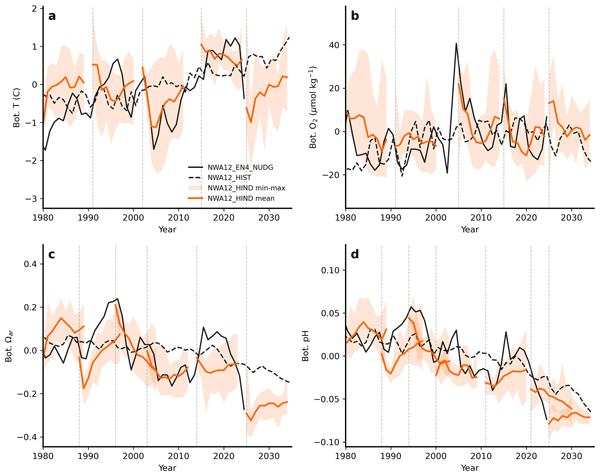
Vimal Koul, Andrew C. Ross, Charles Stock, Liping Zhang, Andrew T. Wittenberg, and Thomas Delworth
Ocean Sci., 22, 3017–3036, https://doi.org/10.5194/os-22-3017-2026, https://doi.org/10.5194/os-22-3017-2026, 2026
Short summary
Short summary
Predicting coastal ocean conditions years ahead has been difficult due to complex regional dynamics. This work shows we can forecast bottom temperature, oxygen, and acidity up to a decade ahead for the Northeast US Shelf. Our forecasts indicate increasing Labrador water may accelerate acidification, threatening shell-forming organisms. This provides a foundation for early warning systems to help communities and fisheries adapt proactively.
Andrew Ross, Charles Stock, Vimal Koul, Liwei Jia, Nathaniel Johnson, and Colleen McHugh
EGUsphere, https://doi.org/10.5194/egusphere-2026-5262, https://doi.org/10.5194/egusphere-2026-5262, 2026
This preprint is open for discussion and under review for Ocean Science (OS).
Short summary
Short summary
This paper examines the accuracy of forecasts of ocean oxygen and acidity, both critical for the healthy functioning of fish and marine ecosystems, along the continental shelf off the Northeast U.S. coastline. The forecasts are produced using a novel numerical model able to resolve fine oceanographic details. Comparison with a reference dataset shows that the model often accurately predicts oxygen and acidity up to several months in advance.
Joseph K. Ansong, Brian K. Arbic, Romain Bourdalle-Badié, Clément Bricaud, Jérôme Chanut, Dimitris Menemenlis, Richard D. Ray, Michael Schindelegger, Alan J. Wallcraft, He Wang, Alistair J. Adcroft, Frédéric Briol, Maarten C. Buijsman, Loren Carrère, Eric P. Chassignet, Gerald Dibarboure, Robert W. Hallberg, Christopher N. Hill, Ariane Koch-Larrouy, Florent Lyard, Matthew R. Mazloff, An T. Nguyen, Nicolas Picot, Rui M. Ponte, and Jay F. Shriver
EGUsphere, https://doi.org/10.5194/egusphere-2026-5064, https://doi.org/10.5194/egusphere-2026-5064, 2026
This preprint is open for discussion and under review for Ocean Science (OS).
Short summary
Short summary
We assess how well four high-resolution global ocean models reproduce surface and internal tides compared with satellite observations. Some models produce internal tides that are too strong, but including energy loss over rough seafloor improves their accuracy. Longer model records and higher resolution also improve agreement with observations. We further identify errors in the tidal forcing of widely used MITgcm simulations that reduce the accuracy of their simulated tides.
Hong Thi My Tran, Young-Gyu Park, and Jun Myoung Choi
Ocean Sci., 22, 2533–2558, https://doi.org/10.5194/os-22-2533-2026, https://doi.org/10.5194/os-22-2533-2026, 2026
Short summary
Short summary
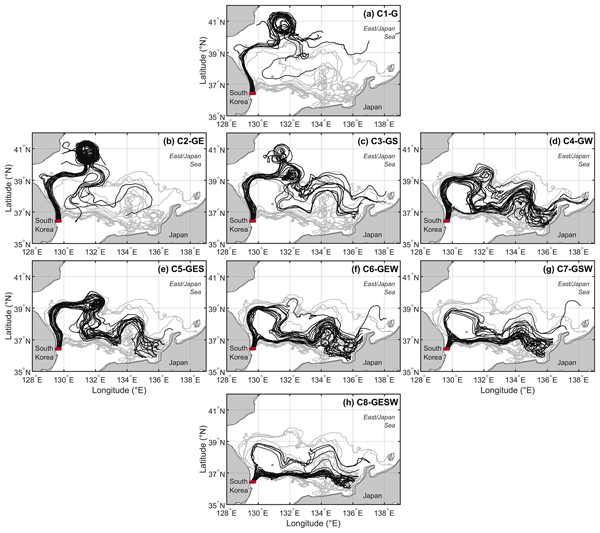
We tracked 33 floating devices released off the Korean coast to understand how debris moves across the East/Japan Sea. Their paths showed a route toward Japan and an early split caused by ocean circulation. By comparing observations with computer simulations, we found that the best predictions combine geostrophic currents, Stoke drift, and windage, while deeper devices also require Ekman currents. Winter favored faster eastward transport and beaching, whereas summer caused wider spreading.
Dmitry S. Dukhovskoy, Theresa Cordero, Katherine Hedstrom, Michael Alexander, Michael Jacox, Robert Hallberg, Matthew Harrison, and Jessie Liu
Geosci. Model Dev., 19, 7169–7196, https://doi.org/10.5194/gmd-19-7169-2026, https://doi.org/10.5194/gmd-19-7169-2026, 2026
Short summary
Short summary
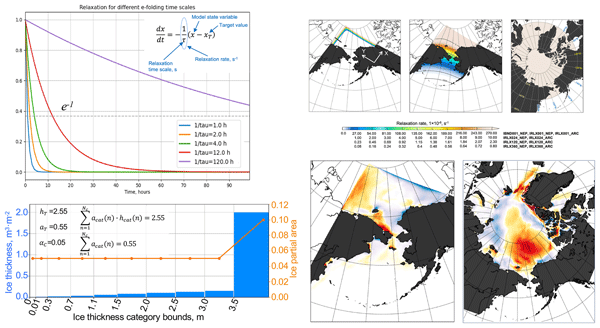
Regional sea ice models often struggle to represent sea ice near model domain boundaries, where errors can accumulate over time. We implemented and tested a method that gradually adjusts simulated sea ice toward prescribed conditions while preserving a realistic evolution of the ice cover. Experiments in the Arctic and Northeast Pacific show improved sea ice simulations and ocean surface conditions, providing a practical tool for regional forecasting and research applications.
Gabriela Negrete García, Dax Matthews, Charles A. Stock, Brian Powell, Ryan R. Rykaczewski, Kisei Tanaka, Hannah Barkley, Tobias Friedrich, Jessica Y. Luo, Andrew C. Ross, and Yi-Cheng Teng
EGUsphere, https://doi.org/10.5194/egusphere-2026-1877, https://doi.org/10.5194/egusphere-2026-1877, 2026
This preprint is open for discussion and under review for Geoscientific Model Development (GMD).
Short summary
Short summary
Ocean waters near the Hawaiian Islands support billions of dollars in fisheries, tourism, and coral reefs, yet managing these resources requires understanding ocean dynamics at multiple scales. We developed and tested a high-resolution ocean model for the central North Pacific against satellite data, long-term ocean monitoring, and coral temperatures. The model reliably reproduced key patterns across all scales, offering a tool for forecasting fish habitat, reef health, and ocean acidification.
Dongmin Kim, Andrew C. Ross, Sang-Ik Shin, Fabian A. Gomez, Jasmin G. John, Denis L. Volkov, Sang-Ki Lee, Michael A. Alexander, and Charles A. Stock
Ocean Sci., 22, 1987–2009, https://doi.org/10.5194/os-22-1987-2026, https://doi.org/10.5194/os-22-1987-2026, 2026
Short summary
Short summary
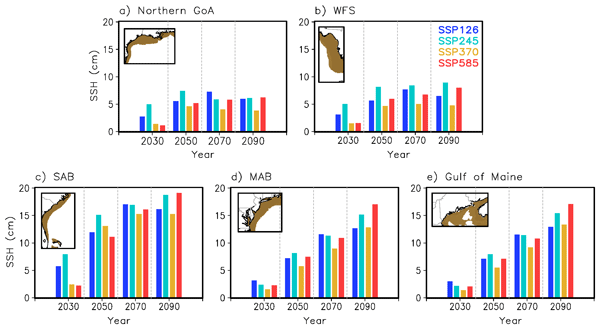
Using high-resolution Modular Ocean Model version 6, we projected Northwest Atlantic changes under four future emission scenarios. Results show a weakening Gulf Stream reduces upwelling, causing significant shelf warming and salinification. This also leads to dynamic sea-level rise along the US East Coast, particularly in the South Atlantic Bight, with critical implications for marine ecosystems and coastal risks.
Jacob Steinberg, John Krasting, and Andrew Ross
EGUsphere, https://doi.org/10.5194/egusphere-2026-3057, https://doi.org/10.5194/egusphere-2026-3057, 2026
Short summary
Short summary
We build and analyze an ensemble of year-long hindcasts of sea level in the northwest Atlantic Ocean. With a particular focus at US East Coast tide gauge stations, we reveal regional differences in simulated variability resulting from different parent and downscaled ocean model horizontal resolution. We consider differences among parent model, downscaled model, and observed variability as a function of frequency and find downscaled enhancements increase with decreasing latitude.
Meena Raju, David J. Cannon, Peter Alsip, He Wang, Jia Wang, Theresa Cordero, Robert W. Hallberg, Charles A. Stock, and Joseph A. Langan
Geosci. Model Dev., 19, 4331–4356, https://doi.org/10.5194/gmd-19-4331-2026, https://doi.org/10.5194/gmd-19-4331-2026, 2026
Short summary
Short summary
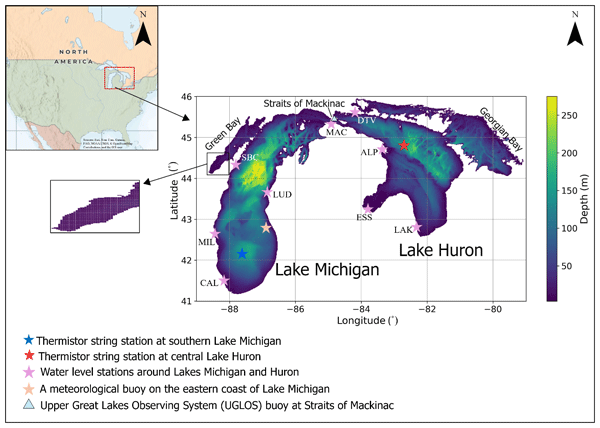
This study developed the Modular Ocean Model version 6.0 coupled with Sea Ice Simulator version 2.0 for the Great Lakes, validated against observations and an operational model. This study also tested two vertical coordinate systems, z* and hybrid. The model reproduced lake physics with good skill. The hybrid vertical coordinate improved thermocline representation and preserved deep cold-water during stratification, demonstrating the model’s suitability for large freshwater systems.
Nicole Cristine Laureanti, Enrique Curchitser, Katherine Hedstrom, Alistair Adcroft, Robert Hallberg, Matthew J. Harrison, Raphael Dussin, Sin Chan Chou, Paulo Nobre, Emanuel Giarolla, and Rosio Camayo
Geosci. Model Dev., 19, 3109–3128, https://doi.org/10.5194/gmd-19-3109-2026, https://doi.org/10.5194/gmd-19-3109-2026, 2026
Short summary
Short summary
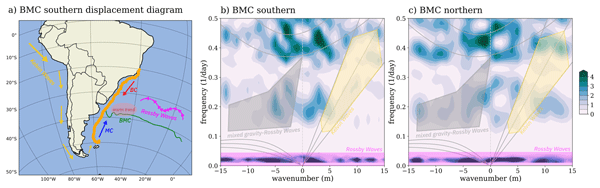
This study investigates the variability of currents in the Southwestern Atlantic Ocean using a high-resolution simulation. Particularly in the Brazil-Malvinas Confluence (BMC), it finds that the southward movement of the BMC, induced by the warming trends in the region, is balanced by northward flow from the Malvinas Current and Pacific Waves. The analysis also examines the intense northward displacement of the North Brazil Current, where inconsistencies in the simulation affect its evolution.
Inseong Chang, Young Ho Kim, Young-Gyu Park, Hyunkeun Jin, Gyundo Pak, Andrew C. Ross, and Robert Hallberg
Geosci. Model Dev., 19, 3053–3074, https://doi.org/10.5194/gmd-19-3053-2026, https://doi.org/10.5194/gmd-19-3053-2026, 2026
Short summary
Short summary
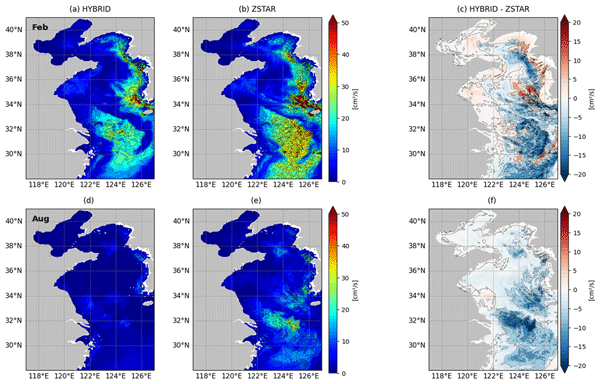
This study assesses how vertical coordinate choice shapes barotropic and baroclinic tide simulations in a high-resolution, MOM6 (Modular Ocean Model version 6) regional model. Focusing on the Yellow Sea under realistic forcing and seasonal stratification, we compare z* and z*-isopycnal hybrid to quantify coordinate-dependent impacts on tidal energetics and vertical structure. The results underscore that vertical representation is critical for accurately reproducing coastal stratification and tide–stratification interactions.
Claire K. Yung, Xylar S. Asay-Davis, Alistair Adcroft, Christopher Y. S. Bull, Jan De Rydt, Michael S. Dinniman, Benjamin K. Galton-Fenzi, Daniel Goldberg, David E. Gwyther, Robert Hallberg, Matthew Harrison, Tore Hattermann, David M. Holland, Denise Holland, Paul R. Holland, James R. Jordan, Nicolas C. Jourdain, Kazuya Kusahara, Gustavo Marques, Pierre Mathiot, Dimitris Menemenlis, Adele K. Morrison, Yoshihiro Nakayama, Olga Sergienko, Robin S. Smith, Alon Stern, Ralph Timmermann, and Qin Zhou
The Cryosphere, 20, 2053–2088, https://doi.org/10.5194/tc-20-2053-2026, https://doi.org/10.5194/tc-20-2053-2026, 2026
Short summary
Short summary
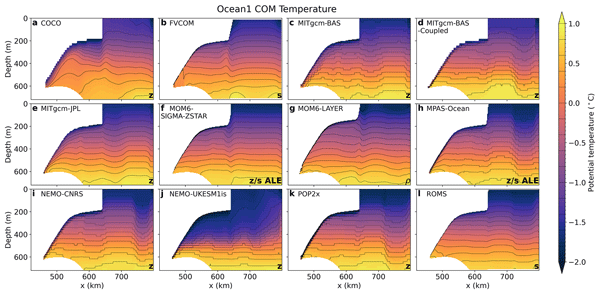
The second Ice Shelf-Ocean Model Intercomparison Project, ISOMIP+, compares 12 ice shelf-ocean models with a common, idealised, static configuration, aiming to assess inter-model variability. Models show similar basal melt rate patterns, ocean profiles and circulation but differ in ice-ocean boundary layer properties. Ice-ocean boundary layer representation is a key area for future work, as are realistic-domain ice sheet-ocean model intercomparisons.
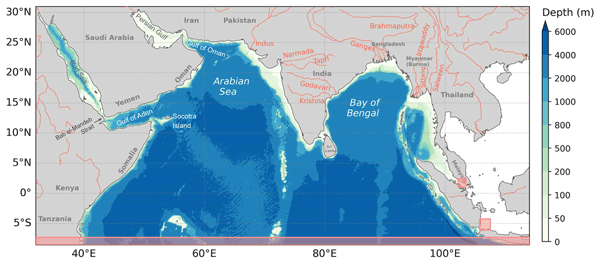
Enhui Liao, Laure Resplandy, Fan Yang, Yangyang Zhao, Sam Ditkovsky, Manon Malsang, Jenna Pearson, Andrew C. Ross, Robert Hallberg, and Charles Stock
Geosci. Model Dev., 18, 6553–6596, https://doi.org/10.5194/gmd-18-6553-2025, https://doi.org/10.5194/gmd-18-6553-2025, 2025
Short summary
Short summary
The northern Indian Ocean is central to the livelihoods and economies of countries that comprise about one-third of the world's population. We present a high-resolution (~10 km) ocean model that simulates seasonal and year-to-year variability in ocean, including currents, oxygen levels, and phytoplankton growth. This model is a powerful tool to study how climate change and human activities influence the northern Indian Ocean, which can be used for marine resource applications and management.
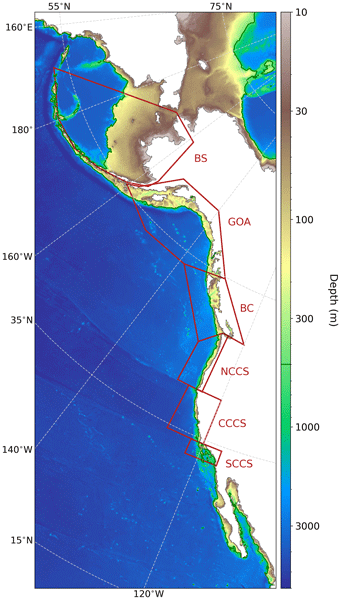
Elizabeth J. Drenkard, Charles A. Stock, Andrew C. Ross, Yi-Cheng Teng, Theresa Cordero, Wei Cheng, Alistair Adcroft, Enrique Curchitser, Raphael Dussin, Robert Hallberg, Claudine Hauri, Katherine Hedstrom, Albert Hermann, Michael G. Jacox, Kelly A. Kearney, Rémi Pagès, Darren J. Pilcher, Mercedes Pozo Buil, Vivek Seelanki, and Niki Zadeh
Geosci. Model Dev., 18, 5245–5290, https://doi.org/10.5194/gmd-18-5245-2025, https://doi.org/10.5194/gmd-18-5245-2025, 2025
Short summary
Short summary
We made a new regional ocean model to assist fisheries and ecosystem managers in making decisions in the Northeast Pacific Ocean (NEP). We found that the model did well simulating past ocean conditions like temperature and nutrient and oxygen levels and can even reproduce metrics used by, and important to, ecosystem managers.
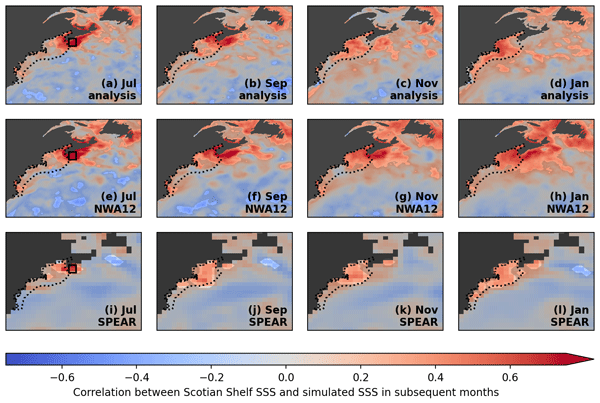
Andrew C. Ross, Charles A. Stock, Vimal Koul, Thomas L. Delworth, Feiyu Lu, Andrew Wittenberg, and Michael A. Alexander
Ocean Sci., 20, 1631–1656, https://doi.org/10.5194/os-20-1631-2024, https://doi.org/10.5194/os-20-1631-2024, 2024
Short summary
Short summary
In this paper, we use a high-resolution regional ocean model to downscale seasonal ocean forecasts from the Seamless System for Prediction and EArth System Research (SPEAR) model of the Geophysical Fluid Dynamics Laboratory (GFDL). We find that the downscaled model has significantly higher prediction skill in many cases.
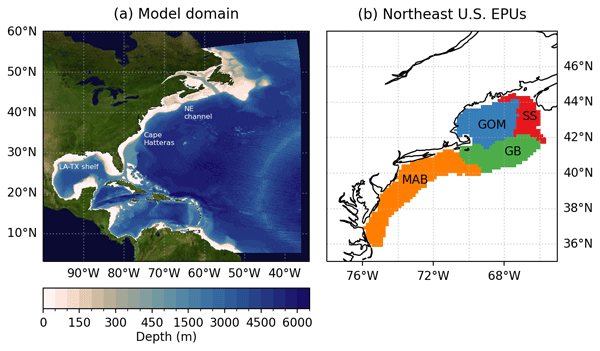
Andrew C. Ross, Charles A. Stock, Alistair Adcroft, Enrique Curchitser, Robert Hallberg, Matthew J. Harrison, Katherine Hedstrom, Niki Zadeh, Michael Alexander, Wenhao Chen, Elizabeth J. Drenkard, Hubert du Pontavice, Raphael Dussin, Fabian Gomez, Jasmin G. John, Dujuan Kang, Diane Lavoie, Laure Resplandy, Alizée Roobaert, Vincent Saba, Sang-Ik Shin, Samantha Siedlecki, and James Simkins
Geosci. Model Dev., 16, 6943–6985, https://doi.org/10.5194/gmd-16-6943-2023, https://doi.org/10.5194/gmd-16-6943-2023, 2023
Short summary
Short summary
We evaluate a model for northwest Atlantic Ocean dynamics and biogeochemistry that balances high resolution with computational economy by building on the new regional features in the MOM6 ocean model and COBALT biogeochemical model. We test the model's ability to simulate impactful historical variability and find that the model simulates the mean state and variability of most features well, which suggests the model can provide information to inform living-marine-resource applications.
Fabian A. Gomez, Sang-Ki Lee, Charles A. Stock, Andrew C. Ross, Laure Resplandy, Samantha A. Siedlecki, Filippos Tagklis, and Joseph E. Salisbury
Earth Syst. Sci. Data, 15, 2223–2234, https://doi.org/10.5194/essd-15-2223-2023, https://doi.org/10.5194/essd-15-2223-2023, 2023
Short summary
Short summary
We present a river chemistry and discharge dataset for 140 rivers in the United States, which integrates information from the Water Quality Database of the US Geological Survey (USGS), the USGS’s Surface-Water Monthly Statistics for the Nation, and the U.S. Army Corps of Engineers. This dataset includes dissolved inorganic carbon and alkalinity, two key properties to characterize the carbonate system, as well as nutrient concentrations, such as nitrate, phosphate, and silica.
Gustavo M. Marques, Nora Loose, Elizabeth Yankovsky, Jacob M. Steinberg, Chiung-Yin Chang, Neeraja Bhamidipati, Alistair Adcroft, Baylor Fox-Kemper, Stephen M. Griffies, Robert W. Hallberg, Malte F. Jansen, Hemant Khatri, and Laure Zanna
Geosci. Model Dev., 15, 6567–6579, https://doi.org/10.5194/gmd-15-6567-2022, https://doi.org/10.5194/gmd-15-6567-2022, 2022
Short summary
Short summary
We present an idealized ocean model configuration and a set of simulations performed using varying horizontal grid spacing. While the model domain is idealized, it resembles important geometric features of the Atlantic and Southern oceans. The simulations described here serve as a framework to effectively study mesoscale eddy dynamics, to investigate the effect of mesoscale eddies on the large-scale dynamics, and to test and evaluate eddy parameterizations.
Cited articles
Adcroft, A. and Campin, J. M.: Rescaled height coordinates for accurate representation of free-surface flows in ocean circulation models, Ocean Model., 7, 269–284, https://doi.org/10.1016/j.ocemod.2003.09.003, 2004.
Adcroft, A., Anderson, W., Balaji, V., Blanton, C., Bushuk, M., Dufour, C. O., Dunne, J. P., Griffies, S. M., Hallberg, R., Harrison, M. J., Held, I. M., Jansen, M. F., John, J. G., Krasting, J. P., Langenhorst, A. R., Legg, S., Liang, Z., McHugh, C., Radhakrishnan, A., Reichl, B. G., Rosati, T., Samuels, B. L., Shao, A., Stouffer, R., Winton, M., Wittenberg, A. T., Xiang, B., Zadeh, N., Zhang, R.: The GFDL global ocean and sea ice model OM4.0: Model description and simulation features, J. Adv. Model. Earth Syst., 11, 3167–3211, https://doi.org/10.1029/2019MS001726, 2019.
Alfieri, L., Lorini, V., Hirpa, F. A., Harrigan, S., Zsoter, E., Prudhomme, C., and Salamon, P.: A global streamflow reanalysis for 1980–2018, J. Hydrol. X, 6, 100049, https://doi.org/10.1016/j.hydroa.2019.100049, 2020.
Arakawa, A. and Lamb, V. R.: Computational design of the basic dynamical processes of the UCLA general circulation model, Adv. Geophys., 17, 173–265, https://doi.org/10.1016/B978-0-12-460817-7.50009-4, 1977.
Beckmann, A. and Haidvogel, D. B.: Numerical simulation of flow around a tall isolated seamount. Part I: Problem formulation and model accuracy, J. Phys. Oceanogr., 23, 1736–1753, https://doi.org/10.1175/1520-0485(1993)023<1736:NSOFAA>2.0.CO;2, 1993.
Belkin, I. M.: Rapid warming of large marine ecosystems, Prog. Oceanogr., 81, 207–213, https://doi.org/10.1016/j.pocean.2009.04.011, 2009.
Bernie, D. J., Woolnough, S. J., Slingo, J. M., and Guilyardi, E.: Modeling diurnal and intraseasonal variability of the ocean mixed layer, J. Climate, 18, 1190–1202, https://doi.org/10.1175/JCLI3319.1, 2005.
Bleck, R.: An oceanic general circulation model framed in hybrid isopycnic–Cartesian coordinates, Ocean Model., 4, 55–88, https://doi.org/10.1016/S1463-5003(01)00012-9, 2002.
Chang, I., Ho Kim, Y. H., Park, Y. G., Jin, H., Pak, G., Kwon, J. I., and Chang, Y. S.: Assessment of high-resolution regional ocean reanalysis K-ORA22 for the northwest Pacific, Prog. Oceanogr., 229, 103359, https://doi.org/10.1016/j.pocean.2024.103359, 2024.
Chang, I., Kim, Y. H., Jin, H., Park, Y. G., Pak, G., and Chang, Y. S.: Impact of satellite and regional in-situ profile data assimilation on a high-resolution ocean prediction system in the northwest Pacific, Front. Mar. Sci., 10, 1085542, https://doi.org/10.3389/fmars.2023.1085542, 2023.
Chang, I., Kim, H. Y., Park, Y.-G., Jin, H., Pak, G., Andrews, C. R., and Hallberg, R.: Model output for “Assessing Vertical Coordinate System Performance in the Regional Modular Ocean Model 6 configuration for Northwest Pacific” (Version v1) [Data set], Zenodo, https://doi.org/10.5281/zenodo.15054536, 2025a.
Chang, I., Kim, Y. H., Park, Y.-G., Jin, H., Pak, G., Andrews, C. R., and Hallberg, R.: Model input for “Assessing Vertical Coordinate System Performance in the Regional Modular Ocean Model 6 configuration for Northwest Pacific” (Version v1) [Data set], Zenodo, https://doi.org/10.5281/zenodo.15054924, 2025b.
Chang, I., Kim, Y. H., Young-Gyu, P., Jin, H., Pak, G., Ross, A. C., and Hallberg, R.: Model source code for initial submission of “Assessing Vertical Coordinate System Performance in the Regional Modular Ocean Model 6 configuration for Northwest Pacific” (Version v1) [Code], Zenodo, https://doi.org/10.5281/zenodo.15054440, 2025c.
Chassignet, E. P., Smith, L. T., Bleck, R., and Bryan, F. O.: A model comparison: Numerical simulations of the North and Equatorial Atlantic oceanic circulation in depth and isopycnic coordinates, J. Phys. Oceanogr., 26, 1849–1867, https://doi.org/10.1175/1520-0485(1996)026<1849:AMCNSO>2.0.CO;2, 1996.
Chen, C., Wang, G., Xie, S. P., and Liu, W.: Why does global warming weaken the Gulf Stream but intensify the Kuroshio?, J. Climate, 32, 7437–7451, https://doi.org/10.1175/JCLI-D-18-0895.1, 2019.
Chu, P. C. and Fan, C.: Sixth-order difference scheme for sigma coordinate ocean models, J. Phys. Oceanogr., 27, 2064–2071, https://doi.org/10.1175/1520-0485(1997)027<2064:SODSFS>2.0.CO;2, 1997.
Codiga, D. L.: Unified tidal analysis and prediction using the UTide MATLAB functions, Tech. Rep., Graduate School of Oceanography, University of Rhode Island, 59 pp., http://www.po.gso.uri.edu/~codiga/utide/2011Codiga-UTide-Report.pdf (last access: 22 January 2024), 2011.
de Boyer Montégut, C.: Mixed layer depth over the global ocean: a climatology computed with a density threshold criterion of 0.03
Drenkard, E. J., Stock, C. A., Ross, A. C., Teng, Y.-C., Cordero, T., Cheng, W., Adcroft, A., Curchitser, E., Dussin, R., Hallberg, R., Hauri, C., Hedstrom, K., Hermann, A., Jacox, M. G., Kearney, K. A., Pagès, R., Pilcher, D. J., Pozo Buil, M., Seelanki, V., and Zadeh, N.: A regional physical–biogeochemical ocean model for marine resource applications in the Northeast Pacific (MOM6-COBALT-NEP10k v1.0), Geosci. Model Dev., 18, 5245–5290, https://doi.org/10.5194/gmd-18-5245-2025, 2025.
Egbert, G. D. and Erofeeva, S. Y.: Efficient inverse modeling of barotropic ocean tides, J. Atmos. Ocean. Technol., 19, 183–204, https://doi.org/10.1175/1520-0426(2002)019<0183:EIMOBO>2.0.CO;2, 2002.
E.U. Copernicus Marine Service Information (CMEMS): Global Ocean Gridded L 4 Sea Surface Heights And Derived Variables Reprocessed 1993 Ongoing, Marine Data Store (MDS) [data set], https://doi.org/10.48670/moi-00148, 2023.
Ezer, T., Arango, H., and Shchepetkin, A. F.: Developments in terrain-following ocean models: Intercomparisons of numerical aspects, Ocean Model., 4, 249–267, https://doi.org/10.1016/S1463-5003(02)00003-3, 2002.
Flather, R. A.: A tidal model of the northwest European continental shelf, Mem. Soc. R. Sci. Liège, 10, 141–164, 1976.
Fox-Kemper, B., Danabasoglu, G., Ferrari, R., Griffies, S. M., Hallberg, R. W., Holland, M. M., Maltrud, M. E., Peacock, S., and Samuels, B. L.: Parameterization of mixed layer eddies. III: Implementation and impact in global ocean climate simulations, Ocean Model., 39, 61–78, https://doi.org/10.1016/j.ocemod.2010.09.002, 2011.
Gan, J., Liu, Z., and Liang, L.: Numerical modeling of intrinsically and extrinsically forced seasonal circulation in the China Seas: A kinematic study, J. Geophys. Res.-Oceans, 121, 4697–4715, https://doi.org/10.1002/2016JC011800, 2016.
Gibson, A. H., Hogg, A. M., Kiss, A. E., Shakespeare, C. J., and Adcroft, A.: Attribution of horizontal and vertical contributions to spurious mixing in an Arbitrary Lagrangian–Eulerian ocean model, Ocean Model., 119, 45–56, https://doi.org/10.1016/j.ocemod.2017.09.008, 2017.
Griffies, S. M.: Elements of the Modular Ocean Model (MOM) (2012 release with updates), GFDL Ocean Group Tech. Rep. No. 7, , https://mom-ocean.github.io/assets/pdfs/MOM5_manual.pdf (last access: 8 April 2022), 2012.
Griffies, S. M. and Hallberg, R. W.: Biharmonic friction with a Smagorinsky-like viscosity for use in large-scale eddy-permitting ocean models, Mon. Weather Rev., 128, 2935–2946, https://doi.org/10.1175/1520-0493(2000)128<2935:BFWASL>2.0.CO;2, 2000.
Griffies, S. M., Pacanowski, R. C., and Hallberg, R. W.: Spurious diapycnal mixing associated with advection in a z-coordinate ocean model, Mon. Weather Rev., 128, 538–564, https://doi.org/10.1175/1520-0493(2000)128<0538:SDMAWA>2.0.CO;2, 2000.
Griffies, S. M., Adcroft, A., and Hallberg, R. W.: A primer on the vertical Lagrangian-remap method in ocean models based on finite volume generalized vertical coordinates, J. Adv. Model. Earth Syst., 12, e2019MS001954, https://doi.org/10.1029/2019MS001954, 2020.
Hallberg, R.: Stable split time stepping schemes for large-scale ocean modeling, J. Comput. Phys., 135, 54–65, https://doi.org/10.1006/jcph.1997.5734, 1997.
Hallberg, R.: Using a resolution function to regulate parameterizations of oceanic mesoscale eddy effects, Ocean Model., 72, 92–103, https://doi.org/10.1016/j.ocemod.2013.08.007, 2013.
Hallberg, R. and Adcroft, A.: Reconciling estimates of the free surface height in Lagrangian vertical coordinate ocean models with mode-split time stepping, Ocean Model., 29, 15–26, https://doi.org/10.1016/j.ocemod.2009.02.008, 2009.
Han, S., Hirose, N., Usui, N., and Miyazawa, Y.: Multi-model ensemble estimation of volume transport through the straits of the East/Japan Sea, Ocean Dyn., 66, 59–76, https://doi.org/10.1007/s10236-015-0896-9, 2016.
Haney, R. L.: On the pressure gradient force over steep topography in sigma coordinate ocean models, J. Phys. Oceanogr., 21, 610–619, https://doi.org/10.1175/1520-0485(1991)021<0610:OTPGFO>2.0.CO;2, 1991.
Hattersley, R., Little, B., Peglar, P., Elson, P., Campbell, E., Killick, P., Blay, B., De Andrade, E. S., Lbdreyer, D., A., Yeo, M., Comer, R., Bosley, C., Kirkham, D., Tkknight, S., Benfold, W., Kwilliams-Mo, Tv3141, Filipe, Gm-S, Elias, Leuprecht, A., Hoyer, S., Robinson, N., and Penn, J.: SciTools/iris: v3.7.0, Zenodo [code], https://doi.org/10.5281/zenodo.595182, 2023.
Hersbach, H., Bell, B., Berrisford, P., Hirahara, S., Horányi, A., Muñoz-Sabater, J., Nicolas, J., Peubey, C., Radu, R., Schepers, D., Simmons, A., Soci, C., Abdalla, S., Abellan, X., Balsamo, G., Bechtold, P., Biavati, G., Bidlot, J., Bonavita, M., De Chiara, G., Dahlgren, P., Dee, D., Diamantakis, M., Dragani, R., Flemming, J., Forbes, R., Fuentes, M., Geer, A., Haimberger, L., Healy, S., Hogan, R. J., Hólm, E., Janisková, M., Keeley, S., Laloyaux, P., Lopez, P., Lupu, C., Radnoti, G., de Rosnay, P., Rozum, I., Vamborg, F., Villaume, S., and Thépaut, J.-N.: The ERA5 global reanalysis, Q. J. R. Meteorol. Soc., 146, 1999–2049, https://doi.org/10.1002/qj.3803, 2020.
Horton, D. E., Johnson, N. C., Singh, D., Swain, D. L., Rajaratnam, B., and Diffenbaugh, N. S.: Contribution of changes in atmospheric circulation patterns to extreme temperature trends, Nature, 522, 465–469, https://doi.org/10.1038/nature14550, 2015.
Huang, B., Liu, C., Banzon, V., Freeman, E., Graham, G., Hankins, B., Smith, T., and Zhang, H.-M.: Improvements of the Daily Optimum Interpolation Sea Surface Temperature (DOISST) Version 2.1, J. Climate, 34, 2923–2939, https://doi.org/10.1175/JCLI-D-20-0166.1, 2021.
Huo, Y., Sun, S., Zhang, F., Wang, M., Li, C., and Yang, B.: Biomass and estimated production properties of size-fractionated zooplankton in the Yellow Sea, China, J. Mar. Syst., 94, 1–8, https://doi.org/10.1016/j.jmarsys.2011.09.013, 2012.
Ichiye, T.: Some problems of circulation and hydrography of the Japan Sea and the Tsushima Current, Elsevier Oceanogr. Ser., 39, https://doi.org/10.1016/S0422-9894(08)70289-7, 1984.
Ilıcak, M., Adcroft, A. J., Griffies, S. M., and Hallberg, R. W.: Spurious dianeutral mixing and the role of momentum closure, Ocean Model., 45, 37–58, https://doi.org/10.1016/j.ocemod.2011.10.003, 2012.
Isobe, A.: Recent advances in ocean-circulation research on the Yellow Sea and East China Sea shelves, J. Oceanogr., 64, 569–584, https://doi.org/10.1007/s10872-008-0048-7, 2008.
Jackson, L., Hallberg, R., and Legg, S.: A parameterization of shear-driven turbulence for ocean climate models, J. Phys. Oceanogr., 38, 1033–1053, https://doi.org/10.1175/2007JPO3779.1, 2008.
Jin, H., Kim, Y. H., Park, Y. G., Chang, I., Chang, Y. S., Park, H., and Pak, G.: Simulation Characteristics of Ocean Predictability Experiment for Marine environment (OPEM): A western North Pacific Regional Ocean Prediction System, Ocean Sci. J., 59, 1–24, https://doi.org/10.1007/s12601-024-00195-6, 2024.
Kang, S. K., Foreman, M. G. G., Lie, H. J., Lee, J. H., Cherniawsky, J., and Yum, K. D.: Two-layer tidal modeling of the Yellow and East China Seas with application to seasonal variability of the M2 tide, J. Geophys. Res.-Oceans, 107, 6–1, https://doi.org/10.1029/2001JC000838, 2002.
Kawakami, Y., Nakano, H., Urakawa, L. S., Toyoda, T., Aoki, K., and Usui, N.: Northward shift of the Kuroshio Extension during 1993–2021, Sci. Rep., 13, 16223, https://doi.org/10.1038/s41598-023-43009-w, 2023.
Kim, C. H. and Kim, K.: Characteristics and origin of the cold water mass along the east coast of Korea, J. Oceanol. Soc. Korea, 18, 73–83, 1983.
Kim, K., Kim, K. R., Min, D. H., Volkov, Y., Yoon, J. H., and Takematsu, M.: Warming and structural changes in the East (Japan) Sea: A clue to future changes in global oceans?, Geophys. Res. Lett., 28, 3293–3296, https://doi.org/10.1029/2001GL013078, 2001.
Kim, S. Y., Park, Y. G., Kim, Y. H., Seo, S., Jin, H., Pak, G., and Lee, H. J.: Origin, variability, and pathways of East Sea intermediate water in a high-resolution ocean reanalysis, J. Geophys. Res.-Oceans, 126, e2020JC017158, https://doi.org/10.1029/2020JC017158, 2021.
Kim, Y. H., Chang, K. I., Park, J. J., Park, S. K., Lee, S. H., Kim, Y. G., Jung, K. T., and Kim, K.: Comparison between a reanalyzed product by 3-dimensional variational assimilation technique and observations in the Ulleung Basin of the East/Japan Sea, J. Mar. Syst., 78, 249–264, https://doi.org/10.1016/j.jmarsys.2009.02.017, 2009.
Kim, Y. H., Hwang, C., and Choi, B. J.: An assessment of ocean climate reanalysis by the data assimilation system of KIOST from 1947 to 2012, Ocean Model., 91, 1–22, https://doi.org/10.1016/j.ocemod.2015.02.006, 2015.
Large, W. G. and Yeager, S. G.: Diurnal to decadal global forcing for ocean and sea-ice models: The data sets and flux climatologies, UCAR Tech. Rep., https://doi.org/10.5065/D6KK98Q6, 2004.
Large, W. G., McWilliams, J. C., and Doney, S. C.: Oceanic vertical mixing: A review and a model with a nonlocal boundary layer parameterization, Rev. Geophys., 32, 363–403, https://doi.org/10.1029/94RG01872, 1994.
Lee, S., Park, M.-S., Kwon, M., Kim, Y. H., and Park, Y.-G.: Two major modes of East Asian marine heatwaves, Environ. Res. Lett., 15, 074008, https://doi.org/10.1088/1748-9326/ab8527, 2020.
Legg, S., Hallberg, R. W., and Girton, J. B.: Comparison of entrainment in overflows simulated by z-coordinate, isopycnal and non-hydrostatic models, Ocean Model., 11, 69–97, https://doi.org/10.1016/j.ocemod.2004.11.006, 2006.
Lellouche, J.-M., Greiner, E., Bourdallé-Badie, R., Gilles, G., Melet, A., Drévillon, M., Bricaud, C., Hamon, M., Le Galloudec, O., Regnier, C., Candela, T., Testut, C.-E., Gasparin, F., Ruggiero, G., Benkiran, M., Drillet, Y., and Le Traon, P.-Y.: The Copernicus Global Oceanic and Sea Ice GLORYS12 Reanalysis, Front. Earth Sci., 9, 698876, https://doi.org/10.3389/feart.2021.698876, 2021.
Li, D., Chen, Y., Qi, J., Zhu, Y., Lu, C., and Yin, B.: Attribution of the July 2021 record-breaking northwest Pacific marine heatwave to global warming, atmospheric circulation, and ENSO, Bull. Am. Meteorol. Soc., 104, E291–E297, https://doi.org/10.1175/BAMS-D-22-0142.1, 2023.
Li, J., Jiang, F., Wu, R., Zhang, C., Tian, Y., Sun, P., Yu, H., Liu, Y., Ye, Z., Ma, S., Liu, S., and Dong, X.: Tidally induced temporal variations in growth of young-of-the-year Pacific cod in the Yellow Sea, J. Geophys. Res.-Oceans, 126, e2020JC016696, https://doi.org/10.1029/2020JC016696, 2021.
Liao, E., Resplandy, L., Yang, F., Zhao, Y., Ditkovsky, S., Malsang, M., Pearson, J., Ross, A. C., Hallberg, R., and Stock, C.: A high-resolution physical-biogeochemical model for marine resource applications in the Northern Indian Ocean (MOM6-COBALT-IND12 v1.0), EGUsphere [preprint], https://doi.org/10.5194/egusphere-2024-3646, 2025.
Marchesiello, P., McWilliams, J. C., and Shchepetkin, A.: Open boundary conditions for long-term integration of regional oceanic models, Ocean Model., 3, 1–20, https://doi.org/10.1016/S1463-5003(00)00013-5, 2001.
McDougall, T. J. and Jackett, D. R.: An assessment of orthobaric density in the global ocean, J. Phys. Oceanogr., 35, 2054–2075, https://doi.org/10.1175/JPO2796.1, 2005.
Megann, A.: Estimating the numerical diapycnal mixing in an eddy-permitting ocean model, Ocean Model., 121, 19–33, https://doi.org/10.1016/j.ocemod.2017.11.001, 2018.
Mellor, G. L., Ezer, T., and Oey, L. Y.: The pressure gradient conundrum of sigma coordinate ocean models, J. Atmos. Ocean. Technol., 11, 1126–1134, https://doi.org/10.1175/1520-0426(1994)011<1126:TPGCOS>2.0.CO;2, 1994.
Mellor, G. L., Oey, L. Y., and Ezer, T.: Sigma coordinate pressure gradient errors and the seamount problem, J. Atmos. Ocean. Technol., 15, 1122–1131, https://doi.org/10.1175/1520-0426(1998)015<1122:SCPGEA>2.0.CO;2, 1998.
Met Office: Cartopy: A cartographic python library with a Matplotlib interface, Zenodo [code], https://doi.org/10.5281/zenodo.1182735, 2022.
Moon, I. J. and Kwon, S. J.: Impact of upper-ocean thermal structure on the intensity of Korean peninsular landfall typhoons, Prog. Oceanogr., 105, 61–66, https://doi.org/10.1016/j.pocean.2012.04.008, 2012.
Mueller, M., Cherniawsky, J. Y., Foreman, M. G. G., and von Storch, J. S.: Seasonal variation of the M2 tide, Ocean Dyn., 64, 159–177, https://doi.org/10.1007/s10236-013-0679-0, 2014.
Na, H., Isoda, Y., Kim, K., Kim, Y. H., and Lyu, S. J.: Recent observations in the straits of the East/Japan Sea: A review of hydrography, currents and volume transports, J. Mar. Syst., 78, 200–205, https://doi.org/10.1016/j.jmarsys.2009.02.018, 2009.
NOAA-GFDL: MOM6, GitHub [code], https://github.com/NOAA-GFDL/MOM6, last access: 2 August 2024a.
NOAA-GFDL: NOAA-GFDL, GitHub [code], https://github.com/NOAA-GFDL, last access: 2 August 2024b.
NOAA-GFDL: CEFI-regional-MOM6, GitHub [code], https://github.com/NOAA-GFDL/CEFI-regional-MOM6/, last access: 2 August 2024c.
Ohshima, K. I. and Kuga, M.: 50-year volume transport of the Soya Warm Current estimated from the sea-level difference and its relationship with the Tsushima and Tsugaru Warm Currents, J. Oceanogr., 79, 499–515, https://doi.org/10.1007/s10872-023-00693-6, 2023.
Oliver, E. C. J., Donat, M. G., Burrows, M. T., Moore, P. J., Smale, D. A., Alexander, L. V., Benthuysen, J. A., Feng, M., Sen Gupta, A., Hobday, A. J., Holbrook, N. J., Perkins-Kirkpatrick, S. E., Scannell, H. A., Straub, S. C., and Wernberg, T.: Longer and more frequent marine heatwaves over the past century, Nat. Commun., 9, 1324, https://doi.org/10.1038/s41467-018-03732-9, 2018.
Orlanski, I.: A simple boundary condition for unbounded hyperbolic flows, J. Comput. Phys., 21, 251–269, https://doi.org/10.1016/0021-9991(76)90023-1, 1976.
Pacanowski, R. C. and Griffies, S. M.: MOM3.0 manual, GFDL Tech. Rep., https://mom-ocean.github.io/assets/pdfs/MOM3_manual.pdf (last access: December 2025), 1999.
Park, Y. G. and Bryan, K.: Comparison of thermally driven circulations from a depth-coordinate model and an isopycnal-layer model. Part I: Scaling-law sensitivity to vertical diffusivity, J. Phys. Oceanogr., 30, 590–605, https://doi.org/10.1175/1520-0485(2000)030<0590:COTDCF>2.0.CO;2, 2000.
Park, Y. G. and Bryan, K.: Comparison of thermally driven circulations from a depth-coordinate model and an isopycnal-layer model. Part II: The difference and structure of the circulations, J. Phys. Oceanogr., 31, 2612–2624, https://doi.org/10.1175/1520-0485(2001)031<2612:COTDCF>2.0.CO;2, 2001.
Park, Y. G., Choi, A., Kim, Y. H., Min, H. S., Hwang, J. H., and Choi, S. H.: Direct flows from the Ulleung Basin into the Yamato Basin in the East/Japan Sea, Deep-Sea Res. I, 57, 731–738, https://doi.org/10.1016/j.dsr.2010.03.006, 2010.
Qiu, B.: Observational and theoretical studies on the North Pacific upper ocean circulation and its variability, Oceanogr. Jpn., 32, 67–93, https://doi.org/10.5928/kaiyou.32.3-4_67, 2023.
Reichl, B. G. and Hallberg, R.: A simplified energetics-based planetary boundary layer (ePBL) approach for ocean climate simulations, Ocean Model., 132, 112–129, https://doi.org/10.1016/j.ocemod.2018.10.004, 2018.
Reichl, B. G. and Li, Q.: A parameterization with a constrained potential energy conversion rate of vertical mixing due to Langmuir turbulence, J. Phys. Oceanogr., 49, 2935–2959, https://doi.org/10.1175/JPO-D-18-0258.1, 2019.
Ross, A. C., Stock, C. A., Adcroft, A., Curchitser, E., Hallberg, R., Harrison, M. J., Hedstrom, K., Zadeh, N., Alexander, M., Chen, W., Drenkard, E. J., du Pontavice, H., Dussin, R., Gomez, F., John, J. G., Kang, D., Lavoie, D., Resplandy, L., Roobaert, A., Saba, V., Shin, S.-I., Siedlecki, S., and Simkins, J.: A high-resolution physical–biogeochemical model for marine resource applications in the northwest Atlantic (MOM6-COBALT-NWA12 v1.0), Geosci. Model Dev., 16, 6943–6985, https://doi.org/10.5194/gmd-16-6943-2023, 2023.
Seelanki, V., Cheng, W., Stabeno, P. J., Hermann, A. J., Drenkard, E. J., Stock, C. A., and Hedstrom, K.: Evaluation of a coupled ocean and sea-ice model (MOM6-NEP10k) over the Bering Sea and its sensitivity to turbulence decay scales, EGUsphere [preprint], https://doi.org/10.5194/egusphere-2025-1229, 2025.
Seijo-Ellis, G., Giglio, D., Marques, G., and Bryan, F.: CARIB12: a regional Community Earth System Model/Modular Ocean Model 6 configuration of the Caribbean Sea, Geosci. Model Dev., 17, 8989–9021, https://doi.org/10.5194/gmd-17-8989-2024, 2024.
Senjyu, T.: The Japan Sea intermediate water; its characteristics and circulation, J. Oceanogr., 55, 111–122, https://doi.org/10.1023/A:1007825609622, 1999.
Seo, S. N.: Digital 30 sec gridded bathymetric data of Korea marginal seas – KorBathy30s, J. Korean Soc. Coast. Ocean Eng., 20, 110–120, 2008.
Shin, H. R., Lee, J. H., Kim, C. H., Yoon, J. H., Hirose, N., Takikawa, T., and Cho, K.: Long-term variation in volume transport of the Tsushima warm current estimated from ADCP current measurement and sea level differences in the Korea/Tsushima Strait, J. Mar. Syst., 232, 103750, https://doi.org/10.1016/j.jmarsys.2022.103750, 2022.
Siddorn, J. R. and Furner, R.: An analytical stretching function that combines the best attributes of geopotential and terrain-following vertical coordinates, Ocean Model., 66, 1–13, https://doi.org/10.1016/j.ocemod.2013.02.001, 2013.
Stock, C. A., Dunne, J. P., Fan, S., Ginoux, P., John, J., Krasting, J. P., Laufkötter, C., Paulot, F., and Zadeh, N.: Ocean biogeochemistry in GFDL's Earth System Model 4.1 and its response to increasing atmospheric CO2, J. Adv. Model. Earth Syst., 12, e2019MS002043, https://doi.org/10.1029/2019MS002043, 2020.
Su, N., Du, J., Liu, S., and Zhang, J.: Nutrient fluxes via radium isotopes from the coast to offshore and from the seafloor to upper waters after the 2009 spring bloom in the Yellow Sea, Deep-Sea Res. II, 97, 33–42, https://doi.org/10.1016/j.dsr2.2013.05.003, 2013.
Tan, H. and Cai, R.: What caused the record-breaking warming in East China seas during August 2016?, Atmos. Sci. Lett., 19, e853, https://doi.org/10.1002/asl.853, 2018.
Wei, Y., Huang, D., and Zhu, X. H.: Interannual to decadal variability of the Kuroshio Current in the East China Sea from 1955 to 2010 as indicated by in-situ hydrographic data, J. Oceanogr., 69, 571–589, https://doi.org/10.1007/s10872-013-0193-5, 2013.
Yamaguchi, J., Kanno, Y., Chen, G., and Iwasaki, T.: Cold air mass analysis of the record-breaking cold surge event over East Asia in January 2016, J. Meteorol. Soc. Jpn., 97, 275–293, https://doi.org/10.2151/jmsj.2019-015, 2019.
Yeo, J.-H. and Ha, K.-J.: Combined effects of blocking and AO on a prolonged snowstorm in Jeju island, Asia-Pac. J. Atmos. Sci., 55, 401–414, https://doi.org/10.1007/s13143-018-0088-x, 2019.
Yoon, J. N., Lee, M., Jin, H., Lim, Y. K., Ro, H., Park, Y. G., and Baek, S. H.: Summer distributional characteristics of surface phytoplankton related with multiple environmental variables in the Korean coastal waters, J. Mar. Sci. Eng., 10, 850, https://doi.org/10.3390/jmse10070850, 2022.
Zhang, S. W., Wang, Q. Y., Lü, Y., Cui, H., and Yuan, Y. L.: Observation of the seasonal evolution of the Yellow Sea Cold Water Mass in 1996–1998, Cont. Shelf Res., 28, 442–457, https://doi.org/10.1016/j.csr.2007.10.002, 2008.
Short summary
We conducted sensitivity experiments to examine how different vertical coordinates influence the representation of water masses and tides using a high-resolution regional ocean model for the Northwest Pacific. We found that the choice of vertical coordinate strongly affects the degree of artificial mixing, which in turn changes how well the model reproduces key ocean features. This highlights the importance of selecting a vertical coordinate when developing regional ocean models.
We conducted sensitivity experiments to examine how different vertical coordinates influence the...


